Softpanorama

May the source be with you, but remember the KISS principle ;-)
Home Switchboard Unix Administration Red Hat TCP/IP Networks Neoliberalism Toxic Managers
(slightly skeptical) Educational society promoting "Back to basics" movement against IT overcomplexity and  bastardization of classic Unix

Neoliberalism Bulletin, 2017

Neoliberalism as a New Form of Corporatism

Neoliberalism Bulletin, 2017

Neoliberalism Bulletin, 2016 Neoliberalism Bulletin, 2015 Neoliberalism Bulletin, 2014 Neoliberalism Bulletin, 2013 Neoliberalism Bulletin, 2011 Neoliberalism Bulletin, 2010 Neoliberalism Bulletin 2009 Neoliberalism Bulletin 2008

For the list of top articles see Recommended Links section


Top Visited
Switchboard
Latest
Past week
Past month

NEWS CONTENTS

Old News ;-)

[Jun 16, 2020] "That's why they call it the American Dream, because you have to be asleep to believe it." by George Carlin

Highly recommended!
Notable quotes:
"... Old saying: A Recession is when your neighbor loses their Job. A Depression is when you lose your Job. ..."
"... A lot of mega wealthy people are cheats. They get insider info, they don't pay people and do all they can to provide the least amount of value possible while tricking suckers into buying their crap. Don't even get me started on trust fund brats who come out of the womb thinking they are Warren buffet level genius in business. ..."
"... There's a documentary about Wal-Mart that has the best title ever: The High Cost of Low Cost ..."
"... Globalism killed the American dream. We can buy cheap goods made somewhere else if we have a job here that pays us enough money. ..."
Jun 16, 2020 | www.youtube.com

Dave C , 4 days ago

"That's why they call it the American Dream, because you have to be asleep to believe it." -George Carlin

Robert Schupp , 4 days ago

You can't just move to American cities to pursue opportunity; even the high wages paid in New York are rendered unhelpful because the cost of housing is so high.


Dingo Jones
, 3 days ago

@JOHN GAGLIANO Cost of living is ridiculous too.

Dirtysparkles , 4 days ago

Our country has become the American Nightmare

Jean-Pierre S , 4 days ago

Martin Luther King, Jr. was vilified and ultimately murdered when he was helping organize a Poor People's Campaign. Racial justice means economic justice.

John Sanders , 3 days ago

Old saying: A Recession is when your neighbor loses their Job. A Depression is when you lose your Job.

Adriano de Jesus , 4 days ago

A lot of mega wealthy people are cheats. They get insider info, they don't pay people and do all they can to provide the least amount of value possible while tricking suckers into buying their crap. Don't even get me started on trust fund brats who come out of the womb thinking they are Warren buffet level genius in business.

Ammon Weser , 4 days ago

There's a documentary about Wal-Mart that has the best title ever: The High Cost of Low Cost

crazyman8472 , 4 days ago

Night Owl: "What the hell happened to us? What happened to the American Dream?"

Comedian: "What happened to the American Dream? It came true! You're looking at it."

-- Watchmen

David Tidwell , 4 days ago

Nailed it. As a millennial, I'm sick of being told to just "deal with it" when the cards have always been stacked against me. Am I surviving? Yes. Am I thriving? No.

D dicin , 4 days ago

When the reserve status of the American dollar goes away, then it will become apparent how poor the US really is. You cannot maintain a country without retention of the ability to manufacture the articles you use on a daily basis. The military budget and all the jobs it brings will have to shrink catastrophically.

farber2 , 4 days ago

American trance. The billionaires hypnotized people with this lie.

Michael D , 4 days ago (edited)

...and sometimes you CAN'T afford to move. You can't find a decent job. You certainly can't build a meaningful savings. You can't find an apartment. And if you have kids? That makes it even harder. I've been trying to move for years, but the conditions have to be perfect to do it responsibly. The American Dream died for me once I realized that no matter the choices I made, my four years of college, my years of saving and working hard....I do NOT have upward mobility. For me, the American Dream is dead. I've been finding a new dream. The human dream.

B Sim , 3 days ago

This is a very truncated view. You need to expand your thinking. WHY has the system been so overtly corrupted? It's globalism that has pushed all this economic pressure on the millennials and the middle class. It was the elites, working with corrupt politicians, that rigged the game so the law benefited them.

This is all reversible. History shows that capitalism can be properly regulated in a way that benefits all. The answer to the problem is to bring back those rules, not implement socialism.

Trump has:

The result? before COVID hit the average American worker saw the first inflation adjusted wage increase in over 30 years!

This is why the fake news and hollywood continue to propagandize the masses into hating Trump.

Trump is implementing economic policies good for the people and bad for the elites

Sound Author , 3 days ago

The dream was never alive in the first place. It was always bullshit.

Julia Galaudet , 4 days ago

Maybe it's time for a maximum wage.

Scott Clark , 4 days ago

Private equity strips the country for years! It's the AMERICAN DREAM!!!

Siri Erieott , 4 days ago

A dream for 1%, a nightmare for 99%.

andrew kubiak , 4 days ago

Globalism killed the American dream. We can buy cheap goods made somewhere else if we have a job here that pays us enough money.

[Jun 16, 2020] Krystal Ball: The American dream is dead, good riddance

Highly recommended!
Notable quotes:
"... Debt-free is the new American dream ..."
Jun 12, 2020 | www.youtube.com

Krystal Ball exposes the delusion of the American dream.

About Rising: Rising is a weekday morning show with bipartisan hosts that breaks the mold of morning TV by taking viewers inside the halls of Washington power like never before. The show leans into the day's political cycle with cutting edge analysis from DC insiders who can predict what is going to happen.

It also sets the day's political agenda by breaking exclusive news with a team of scoop-driven reporters and demanding answers during interviews with the country's most important political newsmakers.

Owen Cousino , 4 days ago

Debt-free is the new American dream

poppaDehorn , 4 days ago

Got my degree just as the great recession hit. Couldn't find real work for 3 years, not using my degree... But it was work. now after 8 years, im laid off. I did everything "right". do good in school, go to college, get a job...

I've never been fired in my life. its always, "Your contract is up" "Sorry we cant afford to keep you", "You can make more money collecting! but we'll give a recommendation if you find anything."

Now I'm back where i started... only now I have new house and a family to support... no pressure.

[Feb 23, 2020] Never Let a Serious Crisis Go to Waste How Neoliberalism Survived the Financial Meltdown by Philip Mirowski

Highly recommended!
Oct 12, 2017 | www.amazon.com

protestantworkethic on August 14, 2013

An excellent cultural/intellectual history

Short review:

Mirowski's book is one of the best on the crisis: he mixes the eye of an anthropologist or journalist examining our daily lives and then leaps up to 20,000 feet with ease to provide a wider intellectual and historical context. His take is novel, certainly from the Left, but well informed of debates on the Right. Empirical, but with a theoretical lens as well. If you want to understand not just the economics or politics of what happened, but to situate those events within a wider history of the ideas that played in a role in the Recession, Mirowski has an incredibly erudite account.

Long review:

Mirowski is a member of the "Institute for New Economic Thinking", an non-profit aimed to correct the orthodoxies of economics, "neoliberal" ideas in particular. He opens this book with a report from one of the first meetings, which happened to feature "bold and original thinkers" like Ken "Excel for Dummies" Rogoff, Larry Summers and Niall Ferguson. The meeting ended with a timid call to add an extra chapter to standard Econ101 textbooks briefly describing the crisis. Mirowski further rightly groans at hand-wringing over "happiness measurements", morality in markets and peevish complaints of "greedy bankers" (as if avarice has only existed in the past ten years.)

How did this rigidity come to be? Mirowski answers by suggesting that we must understand neoliberalism as a Russian doll. The innermost doll of experts emerged from the Mont Pelerlin Society, an organization that was by design very hierarchical. He describes, for instance, correspondence between Popper and Hayek. Popper, following his philosophy of open debate suggested that MPS should have at least one respectable socialist. Hayek shut down this idea, insisting that agreement on first principles was a necessary condition for membership. This tightly networked group of intellectuals slowly incubated neoliberalism and developed a political strategy for propagating it.

Mirowski further points out that the Neoliberal Thought Collective were excellent sloganeers. Friedman's most famous academic text, for instance, argues that a lack of government intervention caused the Great Depression: a series of rural bank failures caused by an overly tight supply of money. However, when Friedman penned his Newsweek column he claimed with a straight face that the government *caused* the Recession, that is, by a lack of action in expanding the supply of money and reducing interest rates. This is how the Russian doll works: nuance for the insiders, ignorance for the outsiders.

There is a further layer to the doll though. Pivoting off of Foucault's final lectures at the College of France, Mirowski argues that there is an everyday neoliberalism that has emerged. Beyond political theory and public policy, neoliberalism is experienced on a quotidian level and it is on that potent terrain that it has survived the crisis. I, right now, am taking time out of my day to write a book review which I will be paid nothing for, which is in the service of the Bezo empire to sell even more books and probably destroy more local bookshops and which will be used to further quantify me into some bits of data in the sky so I can be marketed to even more heavily. But but but: I am individually expressing myself! How free am I! The neoliberal self is a creature coerced into being a "free" entrepreneur. It is the poor un/underemployed soul who thinks himself to be a failure or inadequate because he was not lucky enough to ride the right wave. The old liberal arts dictum to "know thy self" becomes "express thy self, and monetize it too!" This middle chapter here is the most engrossing part of the book. Mirowski delves into a sundry of sources on our culture and then leverages a novel and erudite analysis of Foucault to bring it all into sharp focus.

In closing, it is truly ironic that the other review of this book is so gravely concerned that Mirowski might be a socialist. We have a wonderful little anthropological artifact here of the NTC at work: "Whatever this book says, it's got 'Red' in a chapter title. I am a Very Reasonable Person and thus must be suspicious." Let me assure him/her: there are no calls for a violent revolution of the proletariat. On the contrary, Mirowski heads out to the outermost layer of the doll and analyzes why neoliberalism won. In particular, he argues that the NTC provided a powerful account of the market as a natural entity that *cannot* be messed with. Consequently, the Recession had nothing to do with the structure of capitalism itself, it was just a "once in a lifetime" moment akin to a natural disaster. An act of God.

Mirowski's careful history here shows that just the opposite is true. There was a concerted effort to propagate a particular ignorance and the Recession itself is by no means removed from that particular effort.

[Feb 19, 2020] During the stagflation crisis of the 1970s, a "neoliberal revolution from above" was staged in the USA by "managerial elite" which like Soviet nomenklatura (which also staged a neoliberal coup d' tat) changed sides and betrayed the working class

Highly recommended!
This was an outright declaration of "class war" against working-class voters by a "university-credentialed overclass" -- "managerial elite" which changed sides and allied with financial oligrchy. See "The New Class War: Saving Democracy from the Managerial Elite" by Michael Lind
Notable quotes:
"... By canceling the class compromise that governed the capitalist societies after World War II, the neoliberal elite saws the seed of the current populist backlash. The "soft neoliberal" backbone of the Democratic Party (Clinton wing) were incapable of coming to terms with Hillary Clinton's defeat -- the rejection of the establishment candidate by the US population and first of all by the working class. The result has been the neo-McCarthyism campaign and the attempt to derail Trump via color revolution spearheaded by Brennan-Obama factions in CIA and FBI. ..."
Feb 19, 2020 | angrybearblog.com

likbez , February 19, 2020 12:31 pm

Does not matter.

It looks like Bloomberg is finished. He just committed political suicide with his comments about farmers and metal workers.

BTW Bloomberg's plan is highly hypocritical -- like is Bloomberg himself.

During the stagflation crisis of the 1970s, a "neoliberal revolution from above" was staged in the USA by "managerial elite" which like Soviet nomenklatura (which also staged a neoliberal coup d'état) changed sides and betrayed the working class.

So those neoliberal scoundrels reversed the class compromise embodied in the New Deal.

The most powerful weapon in the arsenal of the neoliberal managerial class and financial oligarchy who got to power via the "Quiet Coup" was the global labor arbitrage in which production is outsourced to countries with lower wage levels and laxer regulations.

So all those "improving education" plans are, to a large extent, the smoke screen over the fact that the US workers now need to compete against highly qualified and lower cost immigrants and outsourced workforce.

The fact is that it is very difficult to find for US graduates in STEM disciplines a decent job, and this is by design.

Also, after the "Reagan neoliberal revolution" ( actually a coup d'état ), profits were maximized by putting downward pressure on domestic wages through the introduction of the immigrant workforce (the collapse of the USSR helped greatly ). They push down wages and compete for jobs with their domestic counterparts, including the recent graduates. So the situation since 1991 was never too bright for STEM graduates.

By canceling the class compromise that governed the capitalist societies after World War II, the neoliberal elite saws the seed of the current populist backlash. The "soft neoliberal" backbone of the Democratic Party (Clinton wing) were incapable of coming to terms with Hillary Clinton's defeat -- the rejection of the establishment candidate by the US population and first of all by the working class. The result has been the neo-McCarthyism campaign and the attempt to derail Trump via color revolution spearheaded by Brennan-Obama factions in CIA and FBI.

See also recently published "The New Class War: Saving Democracy from the Managerial Elite" by Michael Lind.

One of his quotes:

The American oligarchy spares no pains in promoting the belief that it does not exist, but the success of its disappearing act depends on equally strenuous efforts on the part of an American public anxious to believe in egalitarian fictions and unwilling to see what is hidden in plain sight.

[Feb 19, 2020] On Michael Lind's "The New Class War" by Gregor Baszak

Highly recommended!
Notable quotes:
"... To writer Michael Lind, Trump's victory, along with Brexit and other populist stirrings in Europe, was an outright declaration of "class war" by alienated working-class voters against what he calls a "university-credentialed overclass" of managerial elites. ..."
"... Lind cautions against a turn to populism, which he believes to be too personality-centered and intellectually incoherent -- not to mention, too demagogic -- to help solve the terminal crisis of "technocratic neoliberalism" with its rule by self-righteous and democratically unaccountable "experts" with hyperactive Twitter handles. Only a return to what Lind calls "democratic pluralism" will help stem the tide of the populist revolt. ..."
"... Many on the left have been incapable of coming to terms with Hillary Clinton's defeat. The result has been the stifling climate of a neo-McCarthyism, in which the only explanation for Trump's success was an unholy alliance of "Putin stooges" and unrepentant "white supremacists." ..."
"... To Lind, the case is much more straightforward: while the vast majority of Americans supports Social Security spending and containing unskilled immigration, the elites of the bipartisan swamp favor libertarian free trade policies combined with the steady influx of unskilled migrants to help suppress wage levels in the United States. Trump had outflanked his opponents in the Republican primaries and Clinton in the general election by tacking left on the economy (he refused to lay hands on Social Security) and right on immigration. ..."
"... Then, in the 1930s, while the world was writhing from the consequences of the Great Depression, a series of fascist parties took the reigns in countries from Germany to Spain. To spare the United States a similar descent into barbarism, President Franklin D. Roosevelt implemented the New Deal, in which the working class would find a seat at the bargaining table under a government-supervised tripartite system where business and organized labor met seemingly as equals and in which collective bargaining would help the working class set sector-wide wages. ..."
"... This class compromise ruled unquestioned for the first decades of the postwar era. It was made possible thanks to the system of democratic pluralism, which allowed working-class and rural constituencies to actively partake in mass-membership organizations like unions as well as civic and religious institutions that would empower these communities to shape society from the ground up. ..."
"... But then, amid the stagflation crisis of the 1970s, a "neoliberal revolution from above" set in that sought to reverse the class compromise. The most powerful weapon in the arsenal of the newly emboldened managerial class was "global labor arbitrage" in which production is outsourced to countries with lower wage levels and laxer regulations; alternatively, profits can be maximized by putting downward pressure on domestic wages through the introduction of an unskilled, non-unionized immigrant workforce that competes for jobs with its unionized domestic counterparts. By one-sidedly canceling the class compromise that governed the capitalist societies after World War II, Lind concludes, the managerial elite had brought the recent populist backlash on itself. ..."
"... American parties are not organized parties built around active members and policy platforms; they are shifting coalitions of entrepreneurial candidate campaign organizations. Hence, the Democratic and Republican Parties are not only capitalist ideologically; they are capitalistically run enterprises. ..."
"... In the epigraph to the book, Lind cites approvingly the 1949 treatise The Vital Center by historian Arthur Schlesinger Jr. who wrote that "class conflict, pursued to excess, may well destroy the underlying fabric of common principle which sustains free society." Schlesinger was just one among many voices who believed that Western societies after World War II were experiencing the "end of ideology." From now on, the reasoning went, the ideological battles of yesteryear were settled in favor of a more disinterested capitalist (albeit New Deal–inflected) governance. This, in turn, gave rise to the managerial forces in government, the military, and business whose unchecked hold on power Lind laments. The midcentury social-democratic thinker Michael Harrington had it right when he wrote that "[t]he end of ideology is a shorthand way of saying the end of socialism." ..."
"... A cursory glance at the recent impeachment hearings bears witness to this, as career bureaucrats complained that President Trump unjustifiably sought to change the course of an American foreign policy that had been nobly steered by them since the onset of the Cold War. In their eyes, Trump, like the Brexiteers or the French yellow vest protesters, are vulgar usurpers who threaten the stability of the vital center from polar extremes. ..."
Jan 08, 2020 | lareviewofbooks.org

A FEW DAYS AFTER Donald Trump's electoral upset in 2016, Club for Growth co-founder Stephen Moore told an audience of Republican House members that the GOP was "now officially a Trump working class party." No longer the party of traditional Reaganite conservatism, the GOP had been converted instead "into a populist America First party." As he uttered these words, Moore says, "the shock was palpable" in the room.

The Club for Growth had long dominated Republican orthodoxy by promoting low tax rates and limited government. Any conservative candidate for political office wanting to reap the benefits of the Club's massive fundraising arm had to pay homage to this doctrine. For one of its formerly leading voices to pronounce the transformation of this orthodoxy toward a more populist nationalism showed just how much the ground had shifted on election night.

To writer Michael Lind, Trump's victory, along with Brexit and other populist stirrings in Europe, was an outright declaration of "class war" by alienated working-class voters against what he calls a "university-credentialed overclass" of managerial elites. The title of Lind's new book, The New Class War: Saving Democracy from the Managerial Elite , leaves no doubt as to where his sympathies lie, though he's adamant that he's not some sort of guru for a " smarter Trumpism ," as some have labeled him.

Lind cautions against a turn to populism, which he believes to be too personality-centered and intellectually incoherent -- not to mention, too demagogic -- to help solve the terminal crisis of "technocratic neoliberalism" with its rule by self-righteous and democratically unaccountable "experts" with hyperactive Twitter handles. Only a return to what Lind calls "democratic pluralism" will help stem the tide of the populist revolt.

The New Class War is a breath of fresh air. Many on the left have been incapable of coming to terms with Hillary Clinton's defeat. The result has been the stifling climate of a neo-McCarthyism, in which the only explanation for Trump's success was an unholy alliance of "Putin stooges" and unrepentant "white supremacists."

To Lind, the case is much more straightforward: while the vast majority of Americans supports Social Security spending and containing unskilled immigration, the elites of the bipartisan swamp favor libertarian free trade policies combined with the steady influx of unskilled migrants to help suppress wage levels in the United States. Trump had outflanked his opponents in the Republican primaries and Clinton in the general election by tacking left on the economy (he refused to lay hands on Social Security) and right on immigration.

The strategy has since been successfully repeated in the United Kingdom by Boris Johnson, and it looks, for now, like a foolproof way for conservative parties in the West to capture or defend their majorities against center-left parties that are too beholden to wealthy, metropolitan interests to seriously attract working-class support. Berating the latter as irredeemably racist certainly doesn't help either.

What happened in the preceding decades to produce this divide in Western democracies? Lind's narrative begins with the New Deal, which had brought to an end what he calls "the first class war" in favor of a class compromise between management and labor. This first class war is the one we are the most familiar with: originating in the Industrial Revolution, which had produced the wretchedly poor proletariat, it soon led to the rise of competing parties of organized workers on the one hand and the liberal bourgeoisie on the other, a clash that came to a head in the Bolshevik Revolution of 1917. Then, in the 1930s, while the world was writhing from the consequences of the Great Depression, a series of fascist parties took the reigns in countries from Germany to Spain. To spare the United States a similar descent into barbarism, President Franklin D. Roosevelt implemented the New Deal, in which the working class would find a seat at the bargaining table under a government-supervised tripartite system where business and organized labor met seemingly as equals and in which collective bargaining would help the working class set sector-wide wages.

This class compromise ruled unquestioned for the first decades of the postwar era. It was made possible thanks to the system of democratic pluralism, which allowed working-class and rural constituencies to actively partake in mass-membership organizations like unions as well as civic and religious institutions that would empower these communities to shape society from the ground up.

But then, amid the stagflation crisis of the 1970s, a "neoliberal revolution from above" set in that sought to reverse the class compromise. The most powerful weapon in the arsenal of the newly emboldened managerial class was "global labor arbitrage" in which production is outsourced to countries with lower wage levels and laxer regulations; alternatively, profits can be maximized by putting downward pressure on domestic wages through the introduction of an unskilled, non-unionized immigrant workforce that competes for jobs with its unionized domestic counterparts. By one-sidedly canceling the class compromise that governed the capitalist societies after World War II, Lind concludes, the managerial elite had brought the recent populist backlash on itself.

Likewise, only it can contain this backlash by returning to the bargaining table and reestablishing the tripartite system it had walked away from. According to Lind, the new class peace can only come about on the level of the individual nation-state because transnational treaty organizations like the EU cannot allow the various national working classes to escape the curse of labor arbitrage. This will mean that unskilled immigration will necessarily have to be curbed to strengthen the bargaining power of domestic workers. The free-market orthodoxy of the Club for Growth will also have to take a backseat, to be replaced by government-promoted industrial strategies that invest in innovation to help modernize their national economies.

Under which circumstances would the managerial elites ever return to the bargaining table? "The answer is fear," Lind suggests -- fear of working-class resentment of hyper-woke, authoritarian elites. Ironically, this leaves all the agency with the ruling class, who first acceded to the class compromise, then canceled it, and is now called on to forge a new one lest its underlings revolt.

Lind rightly complains all throughout the book that the old mass-membership based organizations of the 20th century have collapsed. He's coy, however, about who would reconstitute them and how. At best, Lind argues for a return to the old system where party bosses and ward captains served their local constituencies through patronage, but once more this leaves the agency with entities like the Republicans and Democrats who have a combined zero members. As the third-party activist Howie Hawkins remarked cunningly elsewhere ,

American parties are not organized parties built around active members and policy platforms; they are shifting coalitions of entrepreneurial candidate campaign organizations. Hence, the Democratic and Republican Parties are not only capitalist ideologically; they are capitalistically run enterprises.

Thus, they would hardly be the first options one would think of to reinvigorate the forces of civil society toward self-rule from the bottom up.

The key to Lind's fraught logic lies hidden in plain sight -- in the book's title. Lind does not speak of "class struggle ," the heroic Marxist narrative in which an organized proletariat strove for global power; no, "class war " smacks of a gloomy, Hobbesian war of all against all in which no side truly stands to win.

In the epigraph to the book, Lind cites approvingly the 1949 treatise The Vital Center by historian Arthur Schlesinger Jr. who wrote that "class conflict, pursued to excess, may well destroy the underlying fabric of common principle which sustains free society." Schlesinger was just one among many voices who believed that Western societies after World War II were experiencing the "end of ideology." From now on, the reasoning went, the ideological battles of yesteryear were settled in favor of a more disinterested capitalist (albeit New Deal–inflected) governance. This, in turn, gave rise to the managerial forces in government, the military, and business whose unchecked hold on power Lind laments. The midcentury social-democratic thinker Michael Harrington had it right when he wrote that "[t]he end of ideology is a shorthand way of saying the end of socialism."

Looked at from this perspective, the break between the postwar Fordist regime and technocratic neoliberalism isn't as massive as one would suppose. The overclass antagonists of The New Class War believe that they derive their power from the same "liberal order" of the first-class peace that Lind upholds as a positive utopia. A cursory glance at the recent impeachment hearings bears witness to this, as career bureaucrats complained that President Trump unjustifiably sought to change the course of an American foreign policy that had been nobly steered by them since the onset of the Cold War. In their eyes, Trump, like the Brexiteers or the French yellow vest protesters, are vulgar usurpers who threaten the stability of the vital center from polar extremes.

A more honest account of capitalism would also acknowledge its natural tendencies to persistently contract and to disrupt the social fabric. There is thus no reason to believe why some future class compromise would once and for all quell these tendencies -- and why nationalistically operating capitalist states would not be inclined to confront each other again in war.

Gregor Baszak is a PhD candidate in English at the University of Illinois at Chicago. His Twitter handle is @gregorbas1.

Stourley Kracklite 20 days ago • edited ,

Reagan was a free-trader and a union buster. Lind's people jumped the Democratic ship to vote for Reagan in (lemming-like) droves. As Republicans consolidated power over labor with cheap goods from China and the meth of deficit spending Democrats struggled with being necklaced as the party of civil rights.
The idea that people who are well-informed ought not to govern is a sad and sick cover story that the culpable are forced to chant in their caves until their days are done, the reckoning being too great.

[Jan 11, 2020] Atomization of workforce as a part of atomization of society under neoliberalism

Highly recommended!
Notable quotes:
"... a friend of mine, born in Venice and a long-time resident of Rome, pointed out to me that dogs are a sign of loneliness. ..."
"... And the cafes and restaurants on weekends in Chicago–chockfull of people, each on his or her own Powerbook, surfing the WWW all by themselves. ..."
"... The preaching of self-reliance by those who have never had to practice it is galling. ..."
"... Katherine: Agreed. It is also one of the reasons why I am skeptical of various evangelical / fundi pastors, who are living at the expense of their churches, preaching about individual salvation. ..."
"... So you have the upper crust (often with inheritances and trust funds) preaching economic self-reliances, and you have divines preaching individual salvation as they go back to the house provided by the members of the church. ..."
Apr 18, 2017 | www.nakedcapitalism.com
DJG , April 17, 2017 at 11:09 am
Neoliberalism is creating loneliness. That's what's wrenching society apart George Monbiot, Guardian

George Monbiot on human loneliness and its toll. I agree with his observations. I have been cataloguing them in my head for years, especially after a friend of mine, born in Venice and a long-time resident of Rome, pointed out to me that dogs are a sign of loneliness.

A couple of recent trips to Rome have made that point ever more obvious to me: Compared to my North Side neighborhood in Chicago, where every other person seems to have a dog, and on weekends Clark Street is awash in dogs (on their way to the dog boutiques and the dog food truck), Rome has few dogs. Rome is much more densely populated, and the Italians still have each other, for good or for ill. And Americans use the dog as an odd means of making human contact, at least with other dog owners.

But Americanization advances: I was surprised to see people bring dogs into the dining room of a fairly upscale restaurant in Turin. I haven't seen that before. (Most Italian cafes and restaurants are just too small to accommodate a dog, and the owners don't have much patience for disruptions.) The dogs barked at each other for while–violating a cardinal rule in Italy that mealtime is sacred and tranquil. Loneliness rules.

And the cafes and restaurants on weekends in Chicago–chockfull of people, each on his or her own Powerbook, surfing the WWW all by themselves.

That's why the comments about March on Everywhere in Harper's, recommended by Lambert, fascinated me. Maybe, to be less lonely, you just have to attend the occasional march, no matter how disorganized (and the Chicago Women's March organizers made a few big logistical mistakes), no matter how incoherent. Safety in numbers? (And as Monbiot points out, overeating at home alone is a sign of loneliness: Another argument for a walk with a placard.)

Katharine , April 17, 2017 at 11:39 am

I particularly liked this point:

In Britain, men who have spent their entire lives in quadrangles – at school, at college, at the bar, in parliament – instruct us to stand on our own two feet.

With different imagery, the same is true in this country. The preaching of self-reliance by those who have never had to practice it is galling.

DJG , April 17, 2017 at 11:48 am

Katherine: Agreed. It is also one of the reasons why I am skeptical of various evangelical / fundi pastors, who are living at the expense of their churches, preaching about individual salvation.

So you have the upper crust (often with inheritances and trust funds) preaching economic self-reliances, and you have divines preaching individual salvation as they go back to the house provided by the members of the church.

[Dec 21, 2019] In places like Yemen, Syria and Iraq, the United States is deepening its involvement in wars while diplomacy becomes largely an afterthought

Mar 31, 2017 | economistsview.typepad.com
anne , March 30, 2017 at 12:47 PM
https://www.nytimes.com/2017/03/29/world/middleeast/us-war-footprint-grows-in-middle-east.html

March 29, 2017

U.S. War Footprint Grows, With No Endgame in Sight
By BEN HUBBARD and MICHAEL R. GORDON

In places like Yemen, Syria and Iraq, the United States is deepening its involvement in wars while diplomacy becomes largely an afterthought.

ilsm -> anne... , March 30, 2017 at 01:51 PM
14 years as if US were going strong on Hanoi in '79!

Putin is a Tibetan Buddhist compared to Obama and so forth

mulp -> anne... , March 30, 2017 at 04:30 PM
Well, sending US troops is a US jobs program.

Why would you object to government creating more demand for labor? Over time, wages will rise and higher wages will fund more demand for labor produced goods.

[Apr 21, 2019] Mark Ames: The FBI Has No Legal Charter But Lots of Kompromat

Notable quotes:
"... Today, it seems, the best description of the FBI's main activity is corporate enforcer for the white-collar mafia known as Wall Street. There is an analogy to organized crime, where the most powerful mobsters settled disputes between other gangs of criminals. Similarly, if a criminal gang is robbed by one of its own members, the mafia would go after the guilty party; the FBI plays this role for Wall Street institutions targeted by con artists and fraudsters. Compare and contrast a pharmaceutical company making opiates which is targeted by thieves vs. a black market drug cartel targeted by thieves. In one case, the FBI investigates; in the other, a violent vendetta ensues (such as street murders in Mexico). ..."
"... The FBI executives are rewarded for this service with lucrative post-retirement careers within corporate America – Louis Freeh went to credit card fraudster, MBNA, Richard Mueller to a corporate Washington law firm, WilmerHale, and Comey, before Obama picked him as Director, worked for Lockheed Martin and HSBC (cleaning up after their $2 billion drug cartel marketing scandal) after leaving the FBI in 2005. ..."
"... Some say they have a key role to play in national security and terrorism – but their record on the 2001 anthrax attacks is incredibly shady and suspicious. The final suspect, Bruce Ivins, is clearly innocent of the crime, just as their previous suspect, Steven Hatfill was. Ivins, if still alive, could have won a similar multi-million dollar defamation lawsuit against the FBI. All honest bioweapons experts know this to be true – the perpetrators of those anthrax letters are still at large, and may very well have had close associations with the Bush Administration itself. ..."
"... Comey's actions over the past year are certainly highly questionable, as well. Neglecting to investigate the Clinton Foundation ties to Saudi Arabia and other foreign governments and corporations, particularly things like State Department approval of various arms deals in which bribes may have been paid, is as much a dereliction of duty as neglecting to investigate Trump ties to Russian business interests – but then, Trump has a record of shady business dealings dating back to the 1970s, of strange bankruptcies and bailouts and government sales that the FBI never looked at either. ..."
May 16, 2017 | www.nakedcapitalism.com

By Mark Ames, founding editor of the Moscow satirical paper The eXile and co-host of the Radio War Nerd podcast with Gary Brecher (aka John Dolan). Subscribe here . Originally published at The Exiled

I made the mistake of listening to NPR last week to find out what Conventional Wisdom had to say about Trump firing Comey, on the assumption that their standardized Mister-Rogers-on-Nyquil voice tones would rein in the hysteria pitch a little. And on the surface, it did-the NPR host and guests weren't directly shrieking "the world is ending! We're all gonna die SHEEPLE!" the way they were on CNN. But in a sense they were screaming "fire!", if you know how to distinguish the very minute pitch level differences in the standard NPR Nyquil voice.

The host of the daytime NPR program asked his guests how serious, and how "unprecedented" Trump's decision to fire his FBI chief was. The guests answers were strange: they spoke about "rule of law" and "violating the Constitution" but then switched to Trump "violating norms"-and back again, interchanging "norms" and "laws" as if they're synonyms. One of the guests admitted that Trump firing Comey was 100% legal, but that didn't seem to matter in this talk about Trump having abandoned rule-of-law for a Putinist dictatorship. These guys wouldn't pass a high school civics class, but there they were, garbling it all up. What mattered was the proper sense of panic and outrage-I'm not sure anyone really cared about the actual legality of the thing, or the legal, political or "normative" history of the FBI.

For starters, the FBI hardly belongs in the same set with concepts like "constitutional" or " rule of law." That's because the FBI was never established by a law. US Lawmakers refused to approve an FBI bureau over a century ago when it was first proposed by Teddy Roosevelt. So he ignored Congress, and went ahead and set it up by presidential fiat. That's one thing the civil liberties crowd hates discussing - how centralized US political power is in the executive branch, a feature in the constitutional system put there by the holy Founders.

In the late 1970s, at the tail end of our brief Glasnost, there was a lot of talk in Washington about finally creating a legal charter for the FBI -70 years after its founding. A lot of serious ink was spilled trying to transform the FBI from an extralegal secret police agency to something legal and defined. If you want to play archeologist to America's recent history, you can find this in the New York Times' archives, articles with headlines like "Draft of Charter for F.B.I. Limits Inquiry Methods" :

The Carter Administration will soon send to Congress the first governing charter for the Federal Bureau of Investigation. The proposed charter imposes extensive but not absolute restrictions on the bureau's employment of controversial investigative techniques, .including the use of informers, undercover agents and covert criminal activity.

The charter also specifies the duties and powers of the bureau, setting precise standards and procedures for the initiation ,and conduct of investigations. It specifically requires the F.B.I. to observe constitutional rights and establishes safeguards against unchecked harassment, break‐ins and other abuses.

followed by the inevitable lament, like this editorial from the Christian Science Monitor a year later, "Don't Forget the FBI Charter". Which of course we did forget-that was Reagan's purpose and value for the post-Glasnost reaction: forgetting. As historian Athan Theoharis wrote , "After 1981, Congress never seriously considered again any of the FBI charter proposals."

The origins of the FBI have been obscured both because of its dubious legality and because of its original political purpose-to help the president battle the all-powerful American capitalists. It wasn't that Teddy Roosevelt was a radical leftist-he was a Progressive Republican, which sounds like an oxymoron today but which was mainstream and ascendant politics in his time. Roosevelt was probably the first president since Andrew Jackson to try to smash concentrated wealth-power, or at least some of it. He could be brutally anti-labor, but so were the powerful capitalists he fought, and all the structures of government power. He met little opposition pursuing his imperial Social Darwinist ambitions outside America's borders-but he had a much harder time fighting the powerful capitalists at home against Roosevelt's most honorable political obsession: preserving forests, parks and public lands from greedy capitalists. An early FBI memo to Hoover about the FBI's origins explains,

"Roosevelt, in his characteristic dynamic fashion, asserted that the plunderers of the public domain would be prosecuted and brought to justice."

According to New York Times reporter Tim Wiener's Enemies: A History of the FBI , it was the Oregon land fraud scandal of 1905-6 that put the idea of an FBI in TR's hyperactive mind. The scandal involved leading Oregon politicians helping railroad tycoon Edward Harriman illegally sell off pristine Oregon forest lands to timber interests, and it ended with an Oregon senator and the state's only two House representatives criminally charged and put on trial-along with dozens of other Oregonians. Basically, they were raping the state's public lands and forests like colonists stripping a foreign country-and that stuck in TR's craw.

TR wanted his attorney general-Charles Bonaparte (yes, he really was a descendant of that Bonaparte)-to make a full report to on the rampant land fraud scams that the robber barons were running to despoil the American West, and which threatened TR's vision of land and forest conservation and parks. Bonaparte created an investigative team from the US Secret Service, but TR thought their report was a "whitewash" and proposed a new separate federal investigative service within Bonaparte's Department of Justice that would report only to the Attorney General.

Until then, the US government had to rely on private contractors like the notorious, dreaded Pinkerton Agency, who were great at strikebreaking, clubbing workers and shooting organizers, but not so good at taking down down robber barons, who happened to also be important clients for the private detective agencies.

In early 1908, Attorney General Bonaparte wrote to Congress asking for the legal authority (and budget funds) to create a "permanent detective force" under the DOJ. Congress rebelled, denouncing it as a plan to create an American okhrana . Democrat Joseph Sherley wrote that "spying on men and prying into what would ordinarily be considered their private affairs" went against "American ideas of government"; Rep. George Waldo, a New York Republican, said the proposed FBI was a "great blow to freedom and to free institutions if there should arise in this country any such great central secret-service bureau as there is in Russia."

So Congress's response was the opposite, banning Bonaparte's DOJ from spending any funds at all on a proposed FBI. Another Congressman wrote another provision into the budget bill banning the DOJ from hiring Secret Service employees for any sort of FBI type agency. So Bonaparte waited until Congress took its summer recess, set aside some DOJ funds, recruited some Secret Service agents, and created a new federal detective bureau with 34 agents. This was how the FBI was born. Congress wasn't notified until the end of 1908, in a few lines in a standard report - "oh yeah, forgot to tell you-the executive branch went ahead and created an American okhrana because, well, the ol' joke about dogs licking their balls. Happy New Year!"

The sordid history of America's extralegal secret police-initially named the Bureau of Investigation, changed to the FBI ("Federal") in the 30's, is mostly a history of xenophobic panic-mongering, illegal domestic spying, mass roundups and plans for mass-roundups, false entrapment schemes, and planting what Russians call "kompromat"- compromising information about a target's sex life-to blackmail or destroy American political figures that the FBI didn't like.

The first political victim of J Edgar Hoover's kompromat was Louis Post, the assistant secretary of labor under Woodrow Wilson. Post's crime was releasing over 1,000 alleged Reds from detention facilities near the end of the FBI's Red Scare crackdown, when they jailed and deported untold thousands on suspicion of being Communists. The FBI's mass purge began with popular media support in 1919, but by the middle of 1920, some (not the FBI) were starting to get a little queasy. A legal challenge to the FBI's mass purges and exiles in Boston ended with a federal judge denouncing the FBI. After that ruling, assistant secretary Louis Post, a 71-year-old well-meaning progressive, reviewed the cases against the last 1500 detainees that the FBI wanted to deport, and found that there was absolutely nothing on at least 75 percent of the cases. Post's review threatened to undo thousands more FBI persecutions of alleged Moscow-controlled radicals.

So one of the FBI's most ambitious young agents, J Edgar Hoover, collected kompromat on Post and his alleged associations with other alleged Moscow-controlled leftists, and gave the file to the Republican-controlled House of Representatives-which promptly announced it would hold hearings to investigate Post as a left subversive. The House tried to impeach Post, but ultimately he defended himself. Post's lawyer compared his political persecutors to the okhrana (Russia, again!): "We in America have sunk to the level of the government of Russia under the Czarist regime," describing the FBI's smear campaign as "even lower in some of their methods than the old Russian officials."

Under Harding, the FBI had a new chief, William Burns, who made headlines blaming the terror bombing attack on Wall Street of 1920 that killed 34 people on a Kremlin-run conspiracy. The FBI claimed it had a highly reliable inside source who told them that Lenin sent $30,000 to the Soviets' diplomatic mission in New York, which was distributed to four local Communist agents who arranged the Wall Street bombing. The source claimed to have personally spoken with Lenin, who boasted that the bombing was so successful he'd ordered up more.

The only problem was that the FBI's reliable source, a Jewish-Polish petty criminal named Wolf Lindenfeld, turned out to be a bullshitter-nicknamed "Windy Linde"-who thought his fake confession about Lenin funding the bombing campaign would get him out of Poland's jails and set up in a comfortable new life in New York.

By 1923, the FBI had thoroughly destroyed America's communist and radical labor movements-allowing it to focus on its other favorite pastime: spying on and destroying political opponents. The FBI spied on US Senators who supported opening diplomatic relations with the Soviet Union: Idaho's William Borah, chairman of the Foreign Relations Committee; Thomas Walsh of the Judiciary Committee, and Burton K Wheeler, the prairie Populist senator from Montana, who visited the Soviet Union and pushed for diplomatic relations. Harding's corrupt Attorney General Dougherty denounced Sen. Wheeler as "the Communist leader in the Senate" and "no more a Democrat than Stalin, his comrade in Moscow." Dougherty accused Sen. Wheeler of being part of a conspiracy "to capture, by deceit and design, as many members of the Senate as possible and to spread through Washington and the cloakrooms of Congress a poison gas as deadly as that which sapped and destroyed brave soldiers in the last war."

Hoover, now a top FBI official, quietly fed kompromat to journalists he cultivated, particularly an AP reporter named Richard Whitney, who published a popular book in 1924, "Reds In America" alleging Kremlin agents "had an all-pervasive influence over American institutions; they had infiltrated every corner of American life." Whitney named Charlie Chaplin as a Kremlin agent, along with Felix Frankfurter and members of the Senate pushing for recognition of the Soviet Union. That killed any hope for diplomatic recognition for the next decade.

Then the first Harding scandals broke-Teapot Dome, Veterans Affairs, bribery at the highest rungs. When Senators Wheeler and Walsh opened bribery investigations, the FBI sent agents to the senators' home state to drum up false bribery charges against Sen. Wheeler. The charges were clearly fake, and a jury dismissed the charges. But Attorney General Dougherty was indicted for fraud and forced to resign, as was his FBI chief Burns-but not Burns' underling Hoover, who stayed in the shadows.

"We want no Gestapo or Secret Police. FBI is tending in that direction. They are dabbling in sex-life scandals and plain blackmail This must stop."

With the Cold War, the FBI became obsessed with homosexuals as America's Fifth Column under Moscow's control. Homosexuals, the FBI believed, were susceptible to Kremlin kompromat-so the FBI collected and disseminated its own kompromat on alleged American homosexuals, supposedly to protect America from the Kremlin. In the early 1950s, Hoover launched the Sex Deviates Program to spy on American homosexuals and purge them from public life. The FBI built up 300,000 pages of files on suspected homosexuals and contacted their employers, local law enforcement and universities to "to drive homosexuals from every institution of government, higher learning, and law enforcement in the nation," according to Tim Weiner's book Enemies. No one but the FBI knows exactly how many Americans' lives and careers were destroyed by the FBI's Sex Deviants Program but Hoover-who never married, lived with his mother until he was 40, and traveled everywhere with his "friend" Clyde Tolson .

In the 1952 election, Hoover was so committed to helping the Republicans and Eisenhower win that he compiled and disseminated a 19-page kompromat file alleging that his Democratic Party rival Adlai Stevenson was gay. The FBI's file on Stevenson was kept in the Sex Deviants Program section-it included libelous gossip, claiming that Stevenson was one of Illinois' "best known homosexuals" who went by the name "Adeline" in gay cruising circles.

In the 1960s, Hoover and his FBI chiefs collected kompromat on the sex lives of JFK and Martin Luther King. Hoover presented some of his kompromat on JFK to Bobby Kennedy, in a concern-trollish way claiming to "warn" him that the president was opening himself up to blackmail. It was really a way for Hoover to let the despised Kennedy brothers know he could destroy them, should they try to Comey him out of his FBI office. Hoover's kompromat on MLK's sex life was a particular obsession of his-he now believed that African-Americans, not homosexuals, posed the greatest threat to become a Kremlin Fifth Column. The FBI wiretapped MLK's private life, collecting tapes of his affairs with other women, which a top FBI official then mailed to Martin Luther King's wife, along with a note urging King to commit suicide.

FBI letter anonymously mailed to Martin Luther King Jr's wife, along with kompromat sex tapes

After JFK was murdered, when Bobby Kennedy ran for the Senate in 1964, he recounted another disturbing FBI/kompromat story that President Johnson shared with him on the campaign trail. LBJ told Bobby about a stack of kompromat files - FBI reports "detailing the sexual debauchery of members of the Senate and House who consorted with prostitutes." LBJ asked RFK if the kompromat should be leaked selectively to destroy Republicans before the 1964 elections. Kennedy recalled,

"He told me he had spent all night sitting up and reading the files of the FBI on all these people. And Lyndon talks about that information and material so freely. Lyndon talks about everybody, you see, with everybody. And of course that's dangerous."

Kennedy had seen some of the same FBI kompromat files as attorney general, but he was totally opposed to releasing such unsubstantiated kompromat-such as, say, the Trump piss files-because doing so would "destroy the confidence that people in the United States had in their government and really make us a laughingstock around the world."

Imagine that.

Which brings me to the big analogy every hack threw around last week, calling Trump firing Comey "Nixonian." Actually, what Trump did was more like the very opposite of Nixon, who badly wanted to fire Hoover in 1971-2, but was too afraid of the kompromat Hoover might've had on him to make the move. Nixon fell out with his old friend and onetime mentor J Edgar Hoover in 1971, when the ailing old FBI chief refused to get sucked in to the Daniel Ellsberg/Pentagon Papers investigation, especially after the Supreme Court ruled in favor of the New York Times. Part of the reason Nixon created his Plumbers team of black bag burglars was because Hoover had become a bit skittish in his last year on this planet-and that drove Nixon crazy.

Nixon called his chief of staff Haldeman:

Nixon: I talked to Hoover last night and Hoover is not going after this case [Ellsberg] as strong as I would like. There's something dragging him.

Haldeman: You don't have the feeling the FBI is really pursuing this?

Nixon: Yeah, particularly the conspiracy side. I want to go after everyone. I'm not so interested in Ellsberg, but we have to go after everybody who's a member of this conspiracy.

Hoover's ambitious deputies in the FBI were smelling blood, angling to replace him. His number 3, Bill Sullivan (who sent MLK the sex tapes and suicide note) was especially keen to get rid of Hoover and take his place. So as J Edgar was stonewalling the Daniel Ellsberg investigation, Sullivan showed up in a Department of Justice office with two suitcases packed full of transcripts and summaries of illegal wiretaps that Kissinger and Nixon had ordered on their own staff and on American journalists. The taps were ordered in Nixon's first months in the White House in 1969, to plug up the barrage of leaks, the likes of which no one had ever seen before. Sullivan took the leaks from J Edgar's possession and told the DOJ official that they needed to be hidden from Hoover, who planned to use them as kompromat to blackmail Nixon.

Nixon decided he was going to fire J Edgar the next day. This was in September, 1971. But the next day came, and Nixon got scared. So he tried to convince his attorney general John Mitchell to fire Hoover for him, but Mitchell said only the President could fire J Edgar Hoover. So Nixon met him for breakfast, and, well, he just didn't have the guts. Over breakfast, Hoover flattered Nixon and told him there was nothing more in the world he wanted than to see Nixon re-elected. Nixon caved; the next day, J Edgar Hoover unceremoniously fired his number 3 Bill Sullivan, locking him out of the building and out of his office so that he couldn't take anything with him. Sullivan was done.

The lesson here, I suppose, is that if an FBI director doesn't want to be fired, it's best to keep your kompromat a little closer to your chest, as a gun to hold to your boss's head. Comey's crew already released the piss tapes kompromat on Trump-the damage was done. What was left to hold back Trump from firing Comey? "Laws"? The FBI isn't even legal. "Norms" would be the real reason. Which pretty much sums up everything Trump has been doing so far. We've learned the past two decades that we're hardly a nation of laws, at least not when it comes to the plutocratic ruling class. What does bind them are "norms"-and while those norms may mean everything to the ruling class, it's an open question how much these norms mean to a lot of Americans outside that club.

Huey Long , May 16, 2017 at 2:33 am

Wow, and this whole time I thought the NSA had a kompromat monopoly as they have everybody's porn site search terms and viewing habits on file.

I had no idea the FBI practically invented it!

3.14e-9 , May 16, 2017 at 3:04 am

The Native tribes don't have a great history with the FBI, either.

https://indiancountrymedianetwork.com/culture/thing-about-skins/comey-fbi-destructive-history-native-people/

voteforno6 , May 16, 2017 at 6:06 am

Has anyone ever used the FBI's lack of a charter as a defense in court?

Disturbed Voter , May 16, 2017 at 6:42 am

The USA doesn't have a legal basis either, it is a revolting crown colony of the British Empire. Treason and heresy all the way down. Maybe the British need to burn Washington DC again?

Synoia , May 16, 2017 at 9:46 pm

Britain burning DC, and the so call ed "war" of 1812, got no mention in my History Books. Napoleon on the other hand, featured greatly

In 1812 Napoleon was busy going to Russia. That went well.

Ignim Brites , May 16, 2017 at 7:55 am

Wondered how Comey thought he could get away with his conviction and pardon of Sec Clinton. Seems like part of the culture of FBI is a "above and beyond" the law mentality.

Watt4Bob , May 16, 2017 at 7:56 am

Back in the early 1970s a high school friend moved to Alabama because his father was transferred by his employer.

My friend sent a post card describing among other things the fact that Alabama had done away with the requirement of a math class to graduate high school, and substituted a required class called "The Evils of Communism" complete with a text-book written by J. Edgar Hoover; Masters of Deceit.

JMarco , May 16, 2017 at 2:52 pm

In Dallas,Texas my 1959 Civics class had to read the same book. We all were given paperback copies of it to take home and read. It was required reading enacted by Texas legislature.

Watt4Bob , May 16, 2017 at 4:47 pm

So I'd guess you weren't fooled by any of those commie plots of the sixties, like the campaigns for civil rights or against the Vietnamese war.

I can't really brag, I didn't stop worrying about the Red Menace until 1970 or so, that's when I started running into returning vets who mostly had no patience for that stuff.

Carolinian , May 16, 2017 at 8:35 am

We've learned the past two decades that we're hardly a nation of laws, at least not when it comes to the plutocratic ruling class. What does bind them are "norms"

Or as David Broder put it (re Bill Clinton): he came in and trashed the place and it wasn't his place.

It was David Broder's place. Of course the media play a key role with all that kompromat since they are the ones needed to convey it to the public. The tragedy is that even many of the sensible in their ranks such as Bill Moyers have been sucked into the kompromat due to their hysteria over Trump. Ames is surely on point in this great article. The mistake was allowing secret police agencies like the FBI and CIA to be created in the first place.

Katharine , May 16, 2017 at 8:37 am

Sorry, my initial reaction was that people who don't know the difference between "rein" and "reign" are not to be trusted to provide reliable information. Recognizing that as petty, I kept reading, and presently found the statement that Congress was not informed of the founding of the FBI until a century after the fact, which seems implausible. If in fact the author meant the end of 1908 it was quite an achievement to write 2008.

Interesting to the extent it may be true, but with few sources, no footnotes, and little evidence of critical editing who knows what that may be?

Carolinian , May 16, 2017 at 9:12 am

Do you even know who Mark Ames is?

Petty .yes.

Katharine , May 16, 2017 at 10:08 am

Who he is is irrelevant. I don't take things on faith because "the Pope said" or because Mark Ames said. People who expect their information to be taken seriously should substantiate it.

Bill Smith , May 16, 2017 at 12:00 pm

Yeah, in the first sentence

Interesting article though.

Fiery Hunt , May 16, 2017 at 9:21 am

Yeah, Kathatine, you're right .very petty.

And completely missed the point.

Or worse, you got the point and your best rejection of that point was pointing out a typo.

Katharine , May 16, 2017 at 10:13 am

I neither missed the point nor rejected it. I reserved judgment, as I thought was apparent from my comment.

sid_finster , May 16, 2017 at 10:50 am

But Trump is bad. Very Bad.

So anything the FBI does to get rid of him must by definition be ok! Besides, surely our civic-minded IC would never use their power on the Good Guys™!

Right?

JTMcPhee , May 16, 2017 at 9:21 am

Ah yes, the voice of "caution." And such attention to the lack of footnotes, in this day when the curious can so easily cut and paste a bit of salient text into a search engine and pull up a feast of parse-able writings and video, from which they can "judiciously assess" claims and statements. If they care to spend the time, which is in such short supply among those who are struggling to keep up with the horrors and revelations people of good will confront every blinking day

Classic impeachment indeed. All from the height of "academic rigor" and "caution." Especially the "apologetic" bit about "reign" vs "rein." Typos destroy credibility, don't they? And the coup de grass (sic), the unrebuttable "plausibility" claim.

One wonders at the nature of the author's curriculum vitae. One also marvels at the yawning gulf between the Very Serious Stuff I was taught in grade and high school civics and history, back in the late '50s and the '60s, about the Fundamental Nature Of Our Great Nation and its founding fathers and the Beautiful Documents they wrote, on the one hand, and what we mopes learn, through a drip-drip-drip process punctuated occasionally by Major Revelations, about the real nature of the Empire and our fellow creatures

PS: My earliest memory of television viewing was a day at a friend's house - his middle-class parents had the first "set" in the neighborhood, I think an RCA, in a massive sideboard cabinet where the picture tube pointed up and you viewed the "content" in a mirror mounted to the underside of the lid. https://m.youtube.com/watch?v=5onSwx7_Cn0 The family was watching a hearing of Joe McCarthy's kangaroo court, complete with announcements of the latest number in the "list of known Communists in the State Department" and how Commyanism was spreading like an unstoppable epidemic mortal disease through the Great US Body Politic and its Heroic Institutions of Democracy. I was maybe 6 years old, but that grainy black and white "reality TV" content had me asking "WTF?" at a very early age. And I'd say it's on the commentor to show that the "2008" claim is wrong, by something other than "implausible" as drive-by impeachment. Given the content of the original post, and what people paying attention to all this stuff have a pretty good idea is the general contours of a vast corruption and manipulation.

"Have you stopped beating your wife? Yes or no."

Katharine , May 16, 2017 at 10:19 am

It is the author's job to substantiate information, not the reader's. If he thinks his work is so important, why does he not make a better job of it?

Edward , May 16, 2017 at 9:22 pm

I think the MLK blackmail scheme is well-established. Much of the article seems to be based on Tim Wiener's "Enemies: A History of the FBI".

nonsense factory , May 16, 2017 at 11:16 am

Interesting article on the history of the FBI, although the post-Hoover era doesn't get any treatment. The Church Committee hearings on the CIA and FBI, after the exposure of notably Operation CHAOS (early 60s to early 70s) by the CIA and COINTELPRO(late 1950s to early 1970s) by the FBI, didn't really get to the bottom of the issue although some reforms were initiated.

Today, it seems, the best description of the FBI's main activity is corporate enforcer for the white-collar mafia known as Wall Street. There is an analogy to organized crime, where the most powerful mobsters settled disputes between other gangs of criminals. Similarly, if a criminal gang is robbed by one of its own members, the mafia would go after the guilty party; the FBI plays this role for Wall Street institutions targeted by con artists and fraudsters. Compare and contrast a pharmaceutical company making opiates which is targeted by thieves vs. a black market drug cartel targeted by thieves. In one case, the FBI investigates; in the other, a violent vendetta ensues (such as street murders in Mexico).

The FBI executives are rewarded for this service with lucrative post-retirement careers within corporate America – Louis Freeh went to credit card fraudster, MBNA, Richard Mueller to a corporate Washington law firm, WilmerHale, and Comey, before Obama picked him as Director, worked for Lockheed Martin and HSBC (cleaning up after their $2 billion drug cartel marketing scandal) after leaving the FBI in 2005.

Maybe this is legitimate, but this only applies to their protection of the interests of large corporations – as the 2008 economic collapse and aftermath showed, they don't prosecute corporate executives who rip off poor people and middle-class homeowners. Banks who rob people, they aren't investigated or prosecuted; that's just for people who rob banks.

When it comes to political issues and national security, however, the FBI has such a terrible record on so many issues over the years that anything they claim has to be taken with a grain or two of salt. Consider domestic political activity: from the McCarthyite 'Red Scare' of the 1950s to COINTELPRO in the 1960s and 1970s to targeting of environmental groups in the 1980s and 1990s to targeting anti-war protesters under GW Bush to their obsession with domestic mass surveillance under Obama, it's not a record that should inspire any confidence.

Some say they have a key role to play in national security and terrorism – but their record on the 2001 anthrax attacks is incredibly shady and suspicious. The final suspect, Bruce Ivins, is clearly innocent of the crime, just as their previous suspect, Steven Hatfill was. Ivins, if still alive, could have won a similar multi-million dollar defamation lawsuit against the FBI. All honest bioweapons experts know this to be true – the perpetrators of those anthrax letters are still at large, and may very well have had close associations with the Bush Administration itself.

As far as terrorist activities? Many of their low-level agents did seem concerned about the Saudis and bin Laden in the late 1990s and pre-9/11 – but Saudi investigations were considered politically problematic due to "geostrategic relationships with our Saudi allies" – hence people like John O'Neil and Coleen Rowley were sidelined and ignored, with disastrous consequences. The Saudi intelligence agency role in 9/11 was buried for over a decade, as well. Since 9/11, most of the FBI investigations seem to have involved recruiting mentally disabled young Islamic men in sting operations in which the FBI provides everything needed. You could probably get any number of mentally ill homeless people across the U.S., regardless of race or religion, to play this role.

Comey's actions over the past year are certainly highly questionable, as well. Neglecting to investigate the Clinton Foundation ties to Saudi Arabia and other foreign governments and corporations, particularly things like State Department approval of various arms deals in which bribes may have been paid, is as much a dereliction of duty as neglecting to investigate Trump ties to Russian business interests – but then, Trump has a record of shady business dealings dating back to the 1970s, of strange bankruptcies and bailouts and government sales that the FBI never looked at either.

Ultimately, this is because FBI executives are paid off not to investigate Wall Street criminality, nor shady U.S. government activity, with lucrative positions as corporate board members and so on after their 'retirements'. I don't doubt that many of their junior members mean well and are dedicated to their jobs – but the fish rots from the head down.

Andrew Watts , May 16, 2017 at 3:58 pm

As far as terrorist activities? Many of their low-level agents did seem concerned about the Saudis and bin Laden in the late 1990s and pre-9/11 – but Saudi investigations were considered politically problematic due to "geostrategic relationships with our Saudi allies" – hence people like John O'Neil and Coleen Rowley were sidelined and ignored, with disastrous consequences.

The Clinton Administration had other priorities. You know, I think I'll let ex-FBI Director Freeh explain what happened when the FBI tried to get the Saudis to cooperate with their investigation into the bombing of the Khobar Towers.

"That September, Crown Prince Abdullah and his entourage took over the entire 143-room Hay-Adams Hotel, just across from Lafayette Park from the White House, for six days. The visit, I figured, was pretty much our last chance. Again, we prepared talking points for the president. Again, I contacted Prince Bandar and asked him to soften up the crown prince for the moment when Clinton, -- or Al Gore I didn't care who -- would raise the matter and start to exert the necessary pressure."

"The story that came back to me, from "usually reliable sources," as they say in Washington, was that Bill Clinton briefly raised the subject only to tell the Crown Prince that he certainly understood the Saudis; reluctance to cooperate. Then, according to my sources, he hit Abdullah up for a contribution to the still-to-be-built Clinton presidential library. Gore, who was supposed to press hardest of all in his meeting with the crown Prince, barely mentioned the matter, I was told." -Louis J. Freeh, My FBI (2005)

In my defense I picked the book up to see if there was any dirt on the DNC's electoral funding scandal in 1996. I'm actually glad I did. The best part of the book is when Freeh recounts running into a veteran of the Lincoln Brigade and listens to how Hoover's FBI ruined his life despite having broken no laws. As if a little thing like laws mattered to Hoover. The commies were after our precious bodily fluids!

verifyfirst , May 16, 2017 at 12:53 pm

I'm not sure there are many functioning norms left within the national political leadership. Seemed to me Gingrich started blowing those up and it just got worse from there. McConnell not allowing Garland to be considered comes to mind

lyman alpha blob , May 16, 2017 at 1:14 pm

Great article – thanks for this. I had no idea the FBI never had a legal charter – very enlightening.

JMarco , May 16, 2017 at 2:59 pm

Thanks to Mark Ames now we know what Pres. Trump meant when he tweeted about his tapes with AG Comey. Not some taped conversation between Pres. Trump & AG Comey but bunch of kompromat tapes that AG Comey has provided Pres. Trump that might not make departing AG Comey looked so clean.

[Feb 26, 2019] Neoliberalism by Julie Wilson

Highly recommended!
The book adhere to "classic" line of critique of neoliberalism as a new "secular religion" ( the author thinking is along the lines of Gramsci idea of "cultural hegemony"; Gramsci did not use the term 'secular religion" at all, but this close enough concept) that deified the market. It stress the role of the state in enforcing the neoliberalism.
Oct 09, 2017 | www.amazon.com

skeptic on October 8, 2017

A solid book on neoliberal ideology and neoliberal rationality. Highly recommended

The book adhere to "classic" line of critique of neoliberalism as a new "secular religion" ( the author thinking is along the lines of Gramsci idea of "cultural hegemony"; Gramsci did not use the term 'secular religion" at all, but this is close enough concept) that deified the market. It stresses the role of the state in enforcing the neoliberal ideology much like was the case with Bolsheviks in the USSR:

Gramsci's question is still pressing: How and why do ordinary working folks come to accept a system where wealth is produced by their collective labors and energies but appropriated individually by only a few at the top? The theory of hegemony suggests that the answer to this question is not simply a matter of direct exploitation and control by the capitalist class. Rather, hegemony posits that power is maintained through ongoing, ever-shifting cultural processes of winning the consent of the governed, that is, ordinary people like you and me.

According to Gramsci, there was not one ruling class, but rather a historical bloc, "a moving equilibrium" of class interests and values. Hegemony names a cultural struggle for moral, social, economic, and political leadership; in this struggle, a field -- or assemblage -- of practices, discourses, values, and beliefs come to be dominant. While this field is powerful and firmly entrenched, it is also open to contestation. In other words, hegemonic power is always on the move; it has to keep winning our consent to survive, and sometimes it fails to do so.
Through the lens of hegemony, we can think about the rise of neoliberalism as an ongoing political project -- and class struggle -- to shift society's political equilibrium and create a new dominant field. Specifically, we are going to trace the shift from liberal to neoliberal hegemony. This shift is represented in the two images below.

Previous versions of liberal hegemony imagined society to be divided into distinct public and private spheres. The public sphere was the purview of the state, and its role was to ensure the formal rights and freedoms of citizens through the rule of law. The private sphere included the economy and the domestic sphere of home and family.

For the most part, liberal hegemony was animated by a commitment to limited government, as the goal was to allow for as much freedom in trade, associations, and civil society as possible, while preserving social order and individual rights. Politics took shape largely around the line between public and private; more precisely, it was a struggle over where and how to draw the line. In other words, within the field of liberal hegemony, politics was a question of how to define the uses and limits of the state and its public function in a capitalist society. Of course, political parties often disagreed passionately about where and how to draw that line. As we'll see below, many advocated for laissez-faire capitalism, while others argued for a greater public role in ensuring the health, happiness, and rights of citizens. What's crucial though is that everyone agreed that there was a line to be drawn, and that there was a public function for the state.

As Figure 1.1 shows, neoliberal hegemony works to erase this line between public and private and to create an entire society -- in fact, an entire world -- based on private, market competition. In this way, neoliberalism represents a radical reinvention of liberalism and thus of the horizons of hegemonic struggle. Crucially, within neoliberalism, the state's function does not go away; rather, it is deconstructed and reconstructed toward the new' end of expanding private markets.

This view correlates well with the analysis of Professor Wendy Brown book "Undoing the Demos" and her paper "Neoliberalism and the End of Liberal Democracy" (pdf is freely available)

In this sense neoliberalism are just "Trotskyism for the rich" with the same utopian dream of global neoliberal revolution, but much more sinister motives. And is as ruthless in achieving its goals, if necessary bring neoliberal "regime change" on the tips of bayonets, or via 'cultural revolutions".

If we follow the line of thinking put forward by Professor Philip Mirowski's in his book "Never Let a Serious Crisis Go to Waste: How Neoliberalism Survived the Financial Meltdown," we can say that neoliberals essentially "reverse-engineered" Bolsheviks methods of acquiring and maintaining political power, replacing "dictatorship of proletariat" with the "dictatorship of financial oligarchy".

I would say more: The "professional revolutionary" cadre that were the core of Bolshevik's Party were replaced with well paid, talented intellectual prostitutes at specially created neoliberal think tanks. And later "infiltrated" in economic departments (kind of stealth coup d'état in academia financed by usual financial players).

Which eventually created a critical mass of ideas which were able to depose New Deal Capitalism ideology, putting forward the set of remedies that restore the power the financial oligarchy enjoyed in 1920th. Technological changes such as invention of computers and telecommunication revolution also helped greatly.

At the same time unlike Bolsheviks, neoliberals are carefully hiding their agenda. Funny, neoliberalism is the only known to me major ideology which the US MSM are prohibited to mention by name ;-)

The role of state under neoliberalism is very close to the role of state under Bolsheviks' "dictatorship of proletariats". It no way this still a liberal democracy -- this is what Sheldon Wolin called "inverted totalitarism". Less brutal then Bolsheviks' regime, but still far from real democracy. Under neoliberalism the state is a powerful agent needed to enforce markets on unsuspecting population in all spheres of life, whether they want it or not (supported by 12" guns of neoliberal MSM battleships):

As Figure 1.1 shows, neoliberal hegemony works to erase this line between public and private and to create an entire society -- in fact, an entire world -- based on private, market competition. In this way, neoliberalism represents a radical reinvention of liberalism and thus of the horizons of hegemonic struggle. Crucially, within neoliberalism, the state's function does not go away; rather, it is deconstructed and reconstructed toward the new' end of expanding private markets. Consequently, contemporary politics take shape around questions of how best to promote competition. For the most part, politics on both the left and right have been subsumed by neoliberal hegemony. For example, while neoliberalism made its debut in Western politics with the right-wing administrations of Ronald Reagan and Margaret Thatcher, leaders associated with the left have worked to further neoliberal hegemony in stunning ways. As we will explore in more depth below and in die coming chapters, both U.S. presidents Bill Clinton and Barack Obama have governed to create a privatized, market society. In other words, there is both a left and a right hegemonic horizon of neoliberalism. Thus, moving beyond neoliberalism will ultimately require a whole new field of politics.

One of the most interesting part of the book is the brief analysis of the recent elections (with very precise characterization of Hillary Clinton defeat as the defeat of the "neoliberal status quo"). The author claims that Trump supporters were mainly representatives of the strata of the US society which were sick-and-tied of neoliberalism (note the percentage of Spanish speaking electorate who voted for Trump), but they were taken for a ride, as instead of rejection of globalism and free movement of labor, Trump actually represented more right wing, more bastardized version of "hard neoliberalism".

In the period which followed the elections Trump_vs_deep_state emerged as a kind of "neoliberalism in one country" -- much like Stalin's "socialism in one country". It and did not care one bit about those who voted for him during election . As in classic "The Moor has done his duty, the Moor can go."

So in a way Trump represents the mirror image of Obama who in the same way betrayed his votes (twice) acting from "soft neoliberalism" position, while Trump is acting from "hard neoliberalism" position.

On the other hand, we saw' the rise of the Tea Party, a right-wing response to the crisis. While the Tea Party was critical of status-quo neoliberalism -- especially its cosmopolitanism and embrace of globalization and diversity, which was perfectly embodied by Obama's election and presidency -- it was not exactly anti-neoliberal. Rather, it was anti-left neoliberalism-, it represented a more authoritarian, right [wing] version of neoliberalism.

Within the context of the 2016 election, Clinton embodied the neoliberal center that could no longer hold. Inequality. Suffering. Collapsing infrastructures. Perpetual war. Anger. Disaffected consent. There were just too many fissures and fault lines in the glossy, cosmopolitan world of left neoliberalism and marketized equality. Indeed, while Clinton ran on status-quo stories of good governance and neoliberal feminism, confident that demographics and diversity would be enough to win the election, Trump effectively tapped into the unfolding conjunctural crisis by exacerbating the cracks in the system of marketized equality, channeling political anger into his celebrity brand that had been built on saying "f*** you" to the culture of left neoliberalism (corporate diversity, political correctness, etc.) In fact, much like Clinton's challenger in the Democratic primary, Benie Sanders, Trump was a crisis candidate.
... ... ...

In other words, Trump supporters may not have explicitly voted for neoliberalism, but that's what they got. In fact, as Rottenberg argues, they got a version of right neoliberalism "on steroids" -- a mix of blatant plutocracy and authoritarianism that has many concerned about the rise of U.S. fascism.

We can't know what would have happened had Sanders run against Trump, but we can think seriously about Trump, right and left neoliberalism, and the crisis of neoliberal hegemony. In other words, we can think about where and how we go from here. As I suggested in the previous chapter, if we want to construct a new world, we are going to have to abandon the entangled politics of both right and left neoliberalism; we have to reject the hegemonic frontiers of both disposability and marketized equality. After all, as political philosopher Nancy Fraser argues, what was rejected in the election of 2016 was progressive, left neoliberalism.

While the rise of hyper-right neoliberalism is certainly nothing to celebrate, it does present an opportunity for breaking with neoliberal hegemony. We have to proceed, as Gary Younge reminds us, with the realization that people "have not rejected the chance of a better world. They have not yet been offered one."'

[Feb 26, 2019] THE CRISIS OF NEOLIBERALISM by Julie A. Wilson

Highly recommended!
Notable quotes:
"... While the Tea Party was critical of status-quo neoliberalism -- especially its cosmopolitanism and embrace of globalization and diversity, which was perfectly embodied by Obama's election and presidency -- it was not exactly anti-neoliberal. Rather, it was anti-left neoliberalism-, it represented a more authoritarian, right [wing] version of neoliberalism. ..."
"... Within the context of the 2016 election, Clinton embodied the neoliberal center that could no longer hold. Inequality. Suffering. Collapsing infrastructures. Perpetual war. Anger. Disaffected consent. ..."
"... Both Sanders and Trump were embedded in the emerging left and right responses to neoliberalism's crisis. Specifically, Sanders' energetic campaign -- which was undoubtedly enabled by the rise of the Occupy movement -- proposed a decidedly more "commongood" path. Higher wages for working people. Taxes on the rich, specifically the captains of the creditocracy. ..."
"... In other words, Trump supporters may not have explicitly voted for neoliberalism, but that's what they got. In fact, as Rottenberg argues, they got a version of right neoliberalism "on steroids" -- a mix of blatant plutocracy and authoritarianism that has many concerned about the rise of U.S. fascism. ..."
"... We can't know what would have happened had Sanders run against Trump, but we can think seriously about Trump, right and left neoliberalism, and the crisis of neoliberal hegemony. In other words, we can think about where and how we go from here. As I suggested in the previous chapter, if we want to construct a new world, we are going to have to abandon the entangled politics of both right and left neoliberalism; we have to reject the hegemonic frontiers of both disposability and marketized equality. After all, as political philosopher Nancy Fraser argues, what was rejected in the election of 2016 was progressive, left neoliberalism. ..."
"... While the rise of hyper-right neoliberalism is certainly nothing to celebrate, it does present an opportunity for breaking with neoliberal hegemony. We have to proceed, as Gary Younge reminds us, with the realization that people "have not rejected the chance of a better world. They have not yet been offered one."' ..."
Oct 08, 2017 | www.amazon.com

Quote from the book is courtesy of Amazon preview of the book Neoliberalism (Key Ideas in Media & Cultural Studies)

In Chapter 1, we traced the rise of our neoliberal conjuncture back to the crisis of liberalism during the late nineteenth and early twentieth centuries, culminating in the Great Depression. During this period, huge transformations in capitalism proved impossible to manage with classical laissez-faire approaches. Out of this crisis, two movements emerged, both of which would eventually shape the course of the twentieth century and beyond. The first, and the one that became dominant in the aftermath of the crisis, was the conjuncture of embedded liberalism. The crisis indicated that capitalism wrecked too much damage on the lives of ordinary citizens. People (white workers and families, especially) warranted social protection from the volatilities and brutalities of capitalism. The state's public function was expanded to include the provision of a more substantive social safety net, a web of protections for people and a web of constraints on markets. The second response was the invention of neoliberalism. Deeply skeptical of the common-good principles that undergirded the emerging social welfare state, neoliberals began organizing on the ground to develop a "new" liberal govemmentality, one rooted less in laissez-faire principles and more in the generalization of competition and enterprise. They worked to envision a new society premised on a new social ontology, that is, on new truths about the state, the market, and human beings. Crucially, neoliberals also began building infrastructures and institutions for disseminating their new' knowledges and theories (i.e., the Neoliberal Thought Collective), as well as organizing politically to build mass support for new policies (i.e., working to unite anti-communists, Christian conservatives, and free marketers in common cause against the welfare state). When cracks in embedded liberalism began to surface -- which is bound to happen with any moving political equilibrium -- neoliberals were there with new stories and solutions, ready to make the world anew.

We are currently living through the crisis of neoliberalism. As I write this book, Donald Trump has recently secured the U.S. presidency, prevailing in the national election over his Democratic opponent Hillary Clinton. Throughout the election, I couldn't help but think back to the crisis of liberalism and the two responses that emerged. Similarly, after the Great Recession of 2008, we've saw two responses emerge to challenge our unworkable status quo, which dispossesses so many people of vital resources for individual and collective life. On the one hand, we witnessed the rise of Occupy Wall Street. While many continue to critique the movement for its lack of leadership and a coherent political vision, Occupy was connected to burgeoning movements across the globe, and our current political horizons have been undoubtedly shaped by the movement's success at repositioning class and economic inequality within our political horizon. On the other hand, we saw' the rise of the Tea Party, a right-wing response to the crisis. While the Tea Party was critical of status-quo neoliberalism -- especially its cosmopolitanism and embrace of globalization and diversity, which was perfectly embodied by Obama's election and presidency -- it was not exactly anti-neoliberal. Rather, it was anti-left neoliberalism-, it represented a more authoritarian, right [wing] version of neoliberalism.

Within the context of the 2016 election, Clinton embodied the neoliberal center that could no longer hold. Inequality. Suffering. Collapsing infrastructures. Perpetual war. Anger. Disaffected consent. There were just too many fissures and fault lines in the glossy, cosmopolitan world of left neoliberalism and marketized equality. Indeed, while Clinton ran on status-quo stories of good governance and neoliberal feminism, confident that demographics and diversity would be enough to win the election, Trump effectively tapped into the unfolding conjunctural crisis by exacerbating the cracks in the system of marketized equality, channeling political anger into his celebrity brand that had been built on saying "f*** you" to the culture of left neoliberalism (corporate diversity, political correctness, etc.) In fact, much like Clinton's challenger in the Democratic primary, Benie Sanders, Trump was a crisis candidate.

Both Sanders and Trump were embedded in the emerging left and right responses to neoliberalism's crisis. Specifically, Sanders' energetic campaign -- which was undoubtedly enabled by the rise of the Occupy movement -- proposed a decidedly more "commongood" path. Higher wages for working people. Taxes on the rich, specifically the captains of the creditocracy.

Universal health care. Free higher education. Fair trade. The repeal of Citizens United. Trump offered a different response to the crisis. Like Sanders, he railed against global trade deals like NAFTA and the Trans-Pacific Partnership (TPP). However, Trump's victory was fueled by right neoliberalism's culture of cruelty. While Sanders tapped into and mobilized desires for a more egalitarian and democratic future, Trump's promise was nostalgic, making America "great again" -- putting the nation back on "top of the world," and implying a time when women were "in their place" as male property, and minorities and immigrants were controlled by the state.

Thus, what distinguished Trump's campaign from more traditional Republican campaigns was that it actively and explicitly pitted one group's equality (white men) against everyone else's (immigrants, women, Muslims, minorities, etc.). As Catherine Rottenberg suggests, Trump offered voters a choice between a multiracial society (where folks are increasingly disadvantaged and dispossessed) and white supremacy (where white people would be back on top). However, "[w]hat he neglected to state," Rottenberg writes,

is that neoliberalism flourishes in societies where the playing field is already stacked against various segments of society, and that it needs only a relatively small select group of capital-enhancing subjects, while everyone else is ultimately dispensable. 1

In other words, Trump supporters may not have explicitly voted for neoliberalism, but that's what they got. In fact, as Rottenberg argues, they got a version of right neoliberalism "on steroids" -- a mix of blatant plutocracy and authoritarianism that has many concerned about the rise of U.S. fascism.

We can't know what would have happened had Sanders run against Trump, but we can think seriously about Trump, right and left neoliberalism, and the crisis of neoliberal hegemony. In other words, we can think about where and how we go from here. As I suggested in the previous chapter, if we want to construct a new world, we are going to have to abandon the entangled politics of both right and left neoliberalism; we have to reject the hegemonic frontiers of both disposability and marketized equality. After all, as political philosopher Nancy Fraser argues, what was rejected in the election of 2016 was progressive, left neoliberalism.

While the rise of hyper-right neoliberalism is certainly nothing to celebrate, it does present an opportunity for breaking with neoliberal hegemony. We have to proceed, as Gary Younge reminds us, with the realization that people "have not rejected the chance of a better world. They have not yet been offered one."'

Mark Fisher, the author of Capitalist Realism, put it this way:

The long, dark night of the end of history has to be grasped as an enormous opportunity. The very oppressive pervasiveness of capitalist realism means that even glimmers of alternative political and economic possibilities can have a disproportionately great effect. The tiniest event can tear a hole in the grey curtain of reaction which has marked the horizons of possibility under capitalist realism. From a situation in which nothing can happen, suddenly anything is possible again.4

I think that, for the first time in the history of U.S. capitalism, the vast majority of people might sense the lie of liberal, capitalist democracy. They feel anxious, unfree, disaffected. Fantasies of the good life have been shattered beyond repair for most people. Trump and this hopefully brief triumph of right neoliberalism will soon lay this bare for everyone to see. Now, with Trump, it is absolutely clear: the rich rule the world; we are all disposable; this is no democracy. The question becomes: How will we show up for history? Will there be new stories, ideas, visions, and fantasies to attach to? How can we productively and meaningful intervene in the crisis of neoliberalism? How can we "tear a hole in the grey curtain" and open up better worlds? How can we put what we've learned to use and begin to imagine and build a world beyond living in competition? I hope our critical journey through the neoliberal conjuncture has enabled you to begin to answer these questions.

More specifically, in recent decades, especially since the end of the Cold War, our common-good sensibilities have been channeled into neoliberal platforms for social change and privatized action, funneling our political energies into brand culture and marketized struggles for equality (e.g., charter schools, NGOs and non-profits, neoliberal antiracism and feminism). As a result, despite our collective anger and disaffected consent, we find ourselves stuck in capitalist realism with no real alternative. Like the neoliberal care of the self, we are trapped in a privatized mode of politics that relies on cruel optimism; we are attached, it seems, to politics that inspire and motivate us to action, while keeping us living in competition.

To disrupt the game, we need to construct common political horizons against neoliberal hegemony. We need to use our common stories and common reason to build common movements against precarity -- for within neoliberalism, precarity is what ultimately has the potential to thread all of our lives together. Put differently, the ultimate fault line in the neoliberal conjiuicture is the way it subjects us all to precarity and the biopolitics of disposability, thereby creating conditions of possibility for new coalitions across race, gender, citizenship, sexuality, and class. Recognizing this potential for coalition in the face of precarization is the most pressing task facing those who are yearning for a new world. The question is: How do we get there? How do we realize these coalitional potentialities and materialize common horizons?

HOW WE GET THERE

Ultimately, mapping the neoliberal conjuncture through everyday life in enterprise culture has not only provided some direction in terms of what we need; it has also cultivated concrete and practical intellectual resources for political interv ention and social interconnection -- a critical toolbox for living in common. More specifically, this book has sought to provide resources for thinking and acting against the four Ds: resources for engaging in counter-conduct, modes of living that refuse, on one hand, to conduct one's life according to the norm of enterprise, and on the other, to relate to others through the norm of competition. Indeed, we need new ways of relating, interacting, and living as friends, lovers, workers, vulnerable bodies, and democratic people if we are to write new stories, invent new govemmentalities, and build coalitions for new worlds.

Against Disimagination: Educated Hope and Affirmative Speculation

We need to stop turning inward, retreating into ourselves, and taking personal responsibility for our lives (a task which is ultimately impossible). Enough with the disimagination machine! Let's start looking outward, not inward -- to the broader structures that undergird our lives. Of course, we need to take care of ourselves; we must survive. But I firmly believe that we can do this in ways both big and small, that transform neoliberal culture and its status-quo stories.

Here's the thing I tell my students all the time. You cannot escape neoliberalism. It is the air we breathe, the water in which we swim. No job, practice of social activism, program of self-care, or relationship will be totally free from neoliberal impingements and logics. There is no pure "outside" to get to or work from -- that's just the nature of the neoliberalism's totalizing cultural power. But let's not forget that neoliberalism's totalizing cultural power is also a source of weakness. Potential for resistance is everywhere, scattered throughout our everyday lives in enterprise culture. Our critical toolbox can help us identify these potentialities and navigate and engage our conjuncture in ways that tear open up those new worlds we desire.

In other words, our critical perspective can help us move through the world with what Henry Giroux calls educated hope. Educated hope means holding in tension the material realities of power and the contingency of history. This orientation of educated hope knows very well what we're up against. However, in the face of seemingly totalizing power, it also knows that neoliberalism can never become total because the future is open. Educated hope is what allows us to see the fault lines, fissures, and potentialities of the present and emboldens us to think and work from that sliver of social space where we do have political agency and freedom to construct a new world. Educated hope is what undoes the power of capitalist realism. It enables affirmative speculation (such as discussed in Chapter 5), which does not try to hold the future to neoliberal horizons (that's cruel optimism!), but instead to affirm our commonalities and the potentialities for the new worlds they signal. Affirmative speculation demands a different sort of risk calculation and management. It senses how little we have to lose and how much we have to gain from knocking the hustle of our lives.

Against De-democratization: Organizing and Collective Coverning

We can think of educated hope and affirmative speculation as practices of what Wendy Brown calls "bare democracy" -- the basic idea that ordinary' people like you and me should govern our lives in common, that we should critique and try to change our world, especially the exploitative and oppressive structures of power that maintain social hierarchies and diminish lives. Neoliberal culture works to stomp out capacities for bare democracy by transforming democratic desires and feelings into meritocratic desires and feelings. In neoliberal culture, utopian sensibilities are directed away from the promise of collective utopian sensibilities are directed away from the promise of collective governing to competing for equality.

We have to get back that democractic feeling! As Jeremy Gilbert taught us, disaffected consent is a post-democratic orientation. We don't like our world, but we don't think we can do anything about it. So, how do we get back that democratic feeling? How do we transform our disaffected consent into something new? As I suggested in the last chapter, we organize. Organizing is simply about people coming together around a common horizon and working collectively to materialize it. In this way, organizing is based on the idea of radical democracy, not liberal democracy. While the latter is based on formal and abstract rights guaranteed by the state, radical democracy insists that people should directly make the decisions that impact their lives, security, and well-being. Radical democracy is a practice of collective governing: it is about us hashing out, together in communities, what matters, and working in common to build a world based on these new sensibilities.

The work of organizing is messy, often unsatisfying, and sometimes even scary. Organizing based on affirmative speculation and coalition-building, furthermore, will have to be experimental and uncertain. As Lauren Berlant suggests, it means "embracing the discomfort of affective experience in a truly open social life that no

one has ever experienced." Organizing through and for the common "requires more adaptable infrastructures. Keep forcing the existing infrastructures to do what they don't know how to do. Make new ways to be local together, where local doesn't require a physical neighborhood." 5 What Berlant is saying is that the work of bare democracy requires unlearning, and detaching from, our current stories and infrastructures in order to see and make things work differently. Organizing for a new world is not easy -- and there are no guarantees -- but it is the only way out of capitalist realism.

Against Disposability: Radical Equality

Getting back democratic feeling will at once require and help us lo move beyond the biopolitics of disposability and entrenched systems of inequality. On one hand, organizing will never be enough if it is not animated by bare democracy, a sensibility that each of us is equally important when it comes to the project of determining our lives in common. Our bodies, our hurts, our dreams, and our desires matter regardless of our race, gender, sexuality, or citizenship, and regardless of how r much capital (economic, social, or cultural) we have. Simply put, in a radical democracy, no one is disposable. This bare-democratic sense of equality must be foundational to organizing and coalition-building. Otherwise, we will always and inevitably fall back into a world of inequality.

On the other hand, organizing and collective governing will deepen and enhance our sensibilities and capacities for radical equality. In this context, the kind of self-enclosed individualism that empowers and underwrites the biopolitics of disposability melts away, as we realize the interconnectedness of our lives and just how amazing it feels to

fail, we affirm our capacities for freedom, political intervention, social interconnection, and collective social doing.

Against Dispossession: Shared Security and Common Wealth

Thinking and acting against the biopolitics of disposability goes hand-in-hand with thinking and acting against dispossession. Ultimately, when we really understand and feel ourselves in relationships of interconnection with others, we want for them as we want for ourselves. Our lives and sensibilities of what is good and just are rooted in radical equality, not possessive or self-appreciating individualism. Because we desire social security and protection, we also know others desire and deserve the same.

However, to really think and act against dispossession means not only advocating for shared security and social protection, but also for a new society that is built on the egalitarian production and distribution of social wealth that we all produce. In this sense, we can take Marx's critique of capitalism -- that wealth is produced collectively but appropriated individually -- to heart. Capitalism was built on the idea that one class -- the owners of the means of production -- could exploit and profit from the collective labors of everyone else (those who do not own and thus have to work), albeit in very different ways depending on race, gender, or citizenship. This meant that, for workers of all stripes, their lives existed not for themselves, but for others (the appropriating class), and that regardless of what we own as consumers, we are not really free or equal in that bare-democratic sense of the word.

If we want to be really free, we need to construct new material and affective social infrastructures for our common wealth. In these new infrastructures, wealth must not be reduced to economic value; it must be rooted in social value. Here, the production of wealth does not exist as a separate sphere from the reproduction of our lives. In other words, new infrastructures, based on the idea of common wealth, will not be set up to exploit our labor, dispossess our communities, or to divide our lives. Rather, they will work to provide collective social resources and care so that we may all be free to pursue happiness, create beautiful and/or useful things, and to realize our potential within a social world of living in common. Crucially, to create the conditions for these new, democratic forms of freedom rooted in radical equality, we need to find ways to refuse and exit the financial networks of Empire and the dispossessions of creditocracy, building new systems that invite everyone to participate in the ongoing production of new worlds and the sharing of the wealth that we produce in common.

It's not up to me to tell you exactly where to look, but I assure you that potentialities for these new worlds are everywhere around you.

[Aug 28, 2018] A Colony in a Nation by Chris Hayes

Highly recommended!
Notable quotes:
"... Here is an except from "A Colony in a Nation" by Chris Hayes that she recently discussed (Chris Hayes is also the author of Twilight of the Elites ) ..."
"... ...we have built a colony in a nation, not in the classic Marxist sense but in the deep sense we can appreciate as a former colony ourselves: A territory that isn't actually free. A place controlled from outside rather than within. A place where the mechanisms of representation don't work enough to give citizens a sense of ownership over their own government. A place where the law is a tool of control rather than a foundation for prosperity. ..."
"... A Colony in a Nation is not primarily a history lesson, though it does provide a serious, empathetic look at the problems facing the Colony, as well as at the police officers tasked with making rapid decisions in a gun-rich environment. ..."
"... Elsewhere, Hayes examines his own experiences with the law, such as an incident when he was almost caught accidentally smuggling "about thirty dollars' worth of marijuana stuffed into my eyeglass case" into the 2000 Republican National Convention. Hayes got away without so much as a slap on the wrist, protected by luck, circumstances and privilege. ..."
Mar 23, 2017 | economistsview.typepad.com
"Listening to this show by MSNB is so disguising that I lost any respect for it. "

I actually jumped the gun. That's does not mean that it should not be viewed. There are some positive aspects of MSNBC http://www.msnbc.com/rachel-maddow-show

Here is an except from "A Colony in a Nation" by Chris Hayes that she recently discussed (Chris Hayes is also the author of Twilight of the Elites )

...we have built a colony in a nation, not in the classic Marxist sense but in the deep sense we can appreciate as a former colony ourselves: A territory that isn't actually free. A place controlled from outside rather than within. A place where the mechanisms of representation don't work enough to give citizens a sense of ownership over their own government. A place where the law is a tool of control rather than a foundation for prosperity.

... ... ...

A Colony in a Nation is not primarily a history lesson, though it does provide a serious, empathetic look at the problems facing the Colony, as well as at the police officers tasked with making rapid decisions in a gun-rich environment.

Hayes takes us through his less-than-successful experience putting himself in the latter's shoes by trying out an unusual training tool, a virtually reality simulator: "We're only one scene in, and already the self-righteous liberal pundit has drawn his weapon on an unarmed man holding a cinder block."

Elsewhere, Hayes examines his own experiences with the law, such as an incident when he was almost caught accidentally smuggling "about thirty dollars' worth of marijuana stuffed into my eyeglass case" into the 2000 Republican National Convention. Hayes got away without so much as a slap on the wrist, protected by luck, circumstances and privilege.

For black men living in the Colony, encounters with the police are much more fraught. Racial profiling and minor infractions can lead to "being swept into the vortex of a penal system that captures more than half the black men his age in his neighborhood... an adulthood marked by prison, probation, and dismal job prospects...."

[Jul 24, 2018] The think-tank topics and views tend to dominate discussions and steal the oxygen from outside ideas

Milton Friedman and George Stigler – with the help of corporate and political support – found the adequate tool to empower their ideas, which was the network of think-tanks, the use of scholarships provide by them, and the intensive use of media. This think-tank network wasn't for creating new ideas, but for being a gatekeeper and disseminating the existing set of ideas, and the "philosophy of freedom".
Notable quotes:
"... the successful businessmen created The Atlas Economic Research Foundation in 1981, which established 150 think-tanks around the globe. These institutions were set up based on the model of Institute for Economic Affairs (IEA), a think tank founded in 1955 by Fisher, which is a good example how the marginalized group of neoliberal thinkers got into intellectual and political power. ..."
"... Today, "more than 450 free-market organizations in over 90 countries" serve the "cause of liberty" through the network. The network of Fisher was largely directed by the members of Mont Pelerin Society (Djelic, 2014). ..."
"... This think-tank network wasn't for creating new ideas, but for being a gatekeeper and disseminating the existing set of ideas, and the „philosophy of freedom". ..."
"... Awareness of gatekeeper roles and their ramifications is one issue of grave concern to many citizens. There are variations of the role playing in different parts of society whether in the Ivory Tower, Think Tanks (self-designated with initial capitals), media or other areas. Recently, that role in media has come under scrutiny as seen during and after the US campaign and election. Who gets to control what appears as news ..."
"... The increasing impact of social media in dissemination of information and use of influencers represents a type of Barbarians at the Literal Gate. The boards and think tanks won't easily relinquish their positions, any more than the gatekeepers of prior eras would willingly do so. ..."
Oct 30, 2017 | www.nakedcapitalism.com

Not only Backhouse (2005) , but also Adam Curtis(2011) , the British documentary film-maker also researched how Fisher created his global think-tank network, spreading the libertarian values of individual and economic – but never social and political – freedom, and also the freedom for capital owners from the state.

According to Curtis (2011) , the „ideologically motivated PR organisations" intended to achieve a technocratic, elitist system, which preserves actual power structures. As he notes, the successful businessmen created The Atlas Economic Research Foundation in 1981, which established 150 think-tanks around the globe. These institutions were set up based on the model of Institute for Economic Affairs (IEA), a think tank founded in 1955 by Fisher, which is a good example how the marginalized group of neoliberal thinkers got into intellectual and political power.

Today, "more than 450 free-market organizations in over 90 countries" serve the "cause of liberty" through the network. The network of Fisher was largely directed by the members of Mont Pelerin Society (Djelic, 2014).

Enquiring Mind , October 29, 2017 at 10:48 am

This think-tank network wasn't for creating new ideas, but for being a gatekeeper and disseminating the existing set of ideas, and the „philosophy of freedom".

Awareness of gatekeeper roles and their ramifications is one issue of grave concern to many citizens. There are variations of the role playing in different parts of society whether in the Ivory Tower, Think Tanks (self-designated with initial capitals), media or other areas. Recently, that role in media has come under scrutiny as seen during and after the US campaign and election. Who gets to control what appears as news , and will the NY Times editorial board cede any of that, for example?

The increasing impact of social media in dissemination of information and use of influencers represents a type of Barbarians at the Literal Gate. The boards and think tanks won't easily relinquish their positions, any more than the gatekeepers of prior eras would willingly do so.

This era is unsettling to the average person on the street, and particularly to those living on the street, because they have been told one thing with certainty and gravitas and then found out something else that was materially opposed. In the meantime, truth continues to seek an audience.

Jeremy Grimm , October 29, 2017 at 3:50 pm

The assertion you selected from today's post seems clearly false to me. The think-tank organizations definitely create new ideas and often conflict with each other. Their topics and views also tend to dominate discussions and steal the oxygen from outside ideas.

They are schools of agnotology flooding discussion of every policy with their "answers" and contributing to the Marketplace of ideas.

[Jul 24, 2018] How think tanks sell war...

Notable quotes:
"... The idea behind offset agreements is simple: When a country buys weapons from a firm overseas, it pumps a large amount of money out of its economy, instead of investing in its own defense industry or in other domestic projects. So to make large weapons deals more attractive, arms companies offer programs to "offset" that effect. As part of a weapons package, they often sign an agreement to invest in the country's economy, either in defense or civilian sectors. ..."
"... According to an email from Clarke, the UAE accepted unpaid offset obligations as cash payments to a large financial firm called Tawazun Holding. Tawazun sent the $20 million to a UAE think tank called the Emirates Center for Strategic Studies and Research . ECSSR then began sending that money to the Middle East Institute, a prestigious D.C. think tank that has a history of promoting arms sales to Gulf dictatorships. ... ..."
"... So essentially, in a roundabout way, the UAE took money from international firms that was meant for economic development and funneled it to a supportive think tank in the United States. ..."
Aug 18, 2017 | ronpaulinstitute.org

Weapons Money Intended for Economic Development Being Secretly Diverted to Lobbying Alex Emmons Aug 18, 2017 undefined

The United Arab Emirates created a "slush fund" using money meant for domestic economic development projects and funneled it to a high-profile think tank in the United States, emails obtained by The Intercept show.

Last week, The Intercept reported that the UAE gave a $20 million grant to the Middle East Institute, flooding a well-regarded D.C. think tank with a monetary grant larger than its annual budget . According to an email from Richard Clarke, MEI's chairman of the board, the UAE got the money from offset investments -- development investments by international companies that are made as part of trade agreements.

The idea behind offset agreements is simple: When a country buys weapons from a firm overseas, it pumps a large amount of money out of its economy, instead of investing in its own defense industry or in other domestic projects. So to make large weapons deals more attractive, arms companies offer programs to "offset" that effect. As part of a weapons package, they often sign an agreement to invest in the country's economy, either in defense or civilian sectors.

Offsets provide a way to sell weapons at inflated prices, when companies offer juicier offset packages. Critics say the lack of transparency in how offset investments are carried out leaves a window open for a form of legalized corruption. The emails lift a veil on what has long been an obscure element of the arms trade.

According to an email from Clarke, the UAE accepted unpaid offset obligations as cash payments to a large financial firm called Tawazun Holding. Tawazun sent the $20 million to a UAE think tank called the Emirates Center for Strategic Studies and Research . ECSSR then began sending that money to the Middle East Institute, a prestigious D.C. think tank that has a history of promoting arms sales to Gulf dictatorships. ...

So essentially, in a roundabout way, the UAE took money from international firms that was meant for economic development and funneled it to a supportive think tank in the United States.

Fair use excerpt. Full article here .

[Apr 02, 2018] Russophobia Anti-Russian Lobby and American Foreign Policy by A. Tsygankov

Highly recommended!
Notable quotes:
"... I wanted to investigate whether the growing volume of criticism toward Russia, sometimes by people who could hardly claim to be knowledgeable about the country, concealed a political agenda. ..."
"... I discovered evidence of Russophobia shared by different circles within the American political class and promoted through programs and conferences at various think tanks, congressional testimonies, activities of NGOs, and the media. Russophobia is not merely a critique of Russia, but a critique beyond any sense of proportion, waged with the purpose of undermining the nation's political reputation. ..."
"... To these individuals, Russophobia is merely a means to pressure the Kremlin into submitting to the United States in the execution of its grand plans to control the world's most precious resources and geostrategic sites. In the meantime, Russia has grown increasingly resentful, and the war in the Caucasus in August 2008 has demonstrated that Russia is prepared to act unilaterally to stop what it views as US unilateralism in the former Soviet region. ..."
"... Anti-American attitudes are strongly present in Russian media and cultural products, as a response to the US policies of nuclear, energy, and military supremacy in the world. Extreme hegemonic policies tend to provoke an extreme response, and Russian nationalist movements and often commentators react harshly to what they view as unilateral encroachment on Russia's political system and foreign policy interests. Russia's reactions to these policies by the United States are highly negative and frequently inadequate, but hardly more extreme than the American hegemonic and imperial discourse. ..."
"... The central objective of the Lobby has been to preserve and strengthen America's power in the post-Cold War world through imperial or hegemonic policies. The Lobby has viewed Russia with its formidable nuclear power, energy reserves, and important geostrategic location as a major obstacle in achieving this objective. Even during the 1990s, when Russia looked more like a failing state3 than one capable of projecting power, some members of the American political class were worried about the future revival of the Eurasian giant as a revisionist power. In their percep- tion, it was essential to keep Russia in a state of military and economic weakness-not so much out of emotional hatred for the Russian people and their culture, but to preserve American security and promote its val- ues across the world. To many within the Lobby, Russophobia became a useful device for exerting pressures on Russia and controlling its policies. Although to some the idea of undermining and, possibly, dismembering Russia was personal, to others it was a necessity of power dictated by the realities of international politics. ..."
"... According to this dominant vision, there was simply no place in this "New American Century" for power competitors, and America was destined eventually to assume control over potentially threatening military capabilities and energy reserves of others. As the two founders of the Project for the New' American Century (PNAC), William Kristol and Robert Kagan, asserted when referring to the large military forces of Russia and China, "American statesmen today ought to recognize that their charge is not to await the arrival of the next great threat, but rather to shape the international environment to prevent such a threat from arising in the first place."4 ..."
"... Russia was either to agree to assist the United States in preserving its world-power status or be forced to agree. It had to either follow the U.S. interpretation of world affairs and develop a political and economic system sufficiently open to American influences or live as a pariah state, smeared by accusations of pernicious behavior, and in constant fear for its survival in the America-centered world. As far as the U.S. hegemonic elites were concerned, no other choice was available. ..."
"... This hegemonic mood was largely consistent with mainstream ideas within the American establishment immediately following the end of the Cold War. For example, 1989 saw the unification of Germany and the further meltdown of the Soviet Union, which some characterized as "the best period of U.S. foreign policy ever."5 President Jimmy Carter's former national security advisor Zbigniew Brzezinski envisioned the upcoming victory of the West by celebrating the Soviet Union's "grand failure."6 ..."
"... Charles Krauthammer, went as far as to proclaim the arrival of the United States' "unipolar moment," a period in which only one super- power, the United States, would stand above the rest of the world in its military, economic, and ideological capacity ..."
"... The mid-1990s saw the emergence of post-Soviet Russophobia. The Lobby's ideology was not principally new, as it still contained the three central myths of Sovietophobia left over from the Cold War era: Russia is inherently imperialist, autocratic, and anti-Western. This ideology now had to be modified to the new conditions and promoted politically, which required a tightening of the Lobby's unity, winning new allies within the establishment, and gaining public support.15 ..."
"... During the period of 2003-2008, Vice President Richard Dick Cheney formed a cohesive and bipartisan group of Russia critics, who pushed for a more confrontational approach with the Kremlin. ..."
"... Cheney could not tolerate opposition to what he saw as a critical step in establishing worldwide US hegemony. He was also harboring the idea of controlling Russia's energy reserves.91 ..."
"... In Russia, however, the Cold War story has been mainly about sovereignty and independence, rather than Western-style liberalism. To many Russians it is a story of freedom from colonization by the West and of preserving important attributes of sovereign statehood. ..."
"... In a world where neocolonialism and cultural imperialism are potent forces, the idea of freedom as independence continues to have strong international appeal and remains a powerful alternative to the notion of liberal democracy. ..."
"... The West's unwillingness to recognize the importance of this legitimizing myth in the role of communist ideology has served as a key reason for the Cold War.5 Like their Western counterparts, the Soviets were debating over methods but not the larger assumptions that defined their struggle. ..."
"... Yet another analyst wrote "at the Cold War's end, the United States was given one of the great opportunities of history: to embrace Russia, the largest nation on earth, as partner, friend, ally. Our mutual interests meshed almost perfectly. There was no ideological, territorial, his- toric or economic quarrel between us, once communist ideology was interred. We blew it. We moved NATO onto Russia's front porch, ignored her valid interests and concerns, and, with our 'indispensable-nation' arrogance, treated her as a defeated power, as France treated Weimar Germany after Versailles."114 ..."
Jun 09, 2017 | www.amazon.com

It was during the spring of 2006 that I began this project. I wanted to investigate whether the growing volume of criticism toward Russia, sometimes by people who could hardly claim to be knowledgeable about the country, concealed a political agenda.

As I researched the subject, I discovered evidence of Russophobia shared by different circles within the American political class and promoted through programs and conferences at various think tanks, congressional testimonies, activities of NGOs, and the media. Russophobia is not merely a critique of Russia, but a critique beyond any sense of proportion, waged with the purpose of undermining the nation's political reputation.

... ... ....

Although a critical analysis of Russia and its political system is entirely legitimate, the issue is the balance of such analysis. Russia's role in the world is growing, yet many U.S. politicians feel that Russia doesn't matter in the global arena. Preoccupied with international issues, such as Iraq and Afghanistan, they find it difficult to accept that they now have to nego- tiate and coordinate their international policies with a nation that only yesterday seemed so weak, introspective, and dependent on the West. To these individuals, Russophobia is merely a means to pressure the Kremlin into submitting to the United States in the execution of its grand plans to control the world's most precious resources and geostrategic sites. In the meantime, Russia has grown increasingly resentful, and the war in the Caucasus in August 2008 has demonstrated that Russia is prepared to act unilaterally to stop what it views as US unilateralism in the former Soviet region.

And some in Moscow are tempted to provoke a much greater confrontation with Western states. The attitude of ignorance and self-righteousness toward Russia tells us volumes about the United States' lack of preparation for the twenty-first century's central challenges that include political instability, weapons proliferation, and energy insecurity. Despite the dislike of Russia by a considerable number of American elites, this attitude is far from universally shared. Many Americans understand that Russia has gone a long way from communism and that the overwhelming support for Putin's policies at home cannot be adequately explained by high oil prices and the Kremlin's manipulation of the public-despite the frequent assertions of Russophobic observers.

Balanced analysts are also aware that many Russian problems are typical difficulties that nations encounter with state-building, and should not be presented as indicative of Russia's "inherent drive" to autocracy or empire. As the United States and Russia move further to the twenty-first century, it will be increasingly important to redefine the relationship between the two nations in a mutually enriching way.

Political and cultural phobias are, of course, not limited to those of an anti-Russian nature. For instance, Russia has its share of America-phobia -- a phenomenon that I have partly researched in my book Whose World Order (Notre Dame, 2004) and in several articles. Anti-American attitudes are strongly present in Russian media and cultural products, as a response to the US policies of nuclear, energy, and military supremacy in the world. Extreme hegemonic policies tend to provoke an extreme response, and Russian nationalist movements and often commentators react harshly to what they view as unilateral encroachment on Russia's political system and foreign policy interests. Russia's reactions to these policies by the United States are highly negative and frequently inadequate, but hardly more extreme than the American hegemonic and imperial discourse.

The Anti-Russian Lobby

When the facile optimism was disappointed, Western euphoria faded, and Russophobia returned ... The new Russophobia was expressed not by the governments, but in the statements of out-of-office politicians, the publications of academic experts, the sensational writings of jour- nalists, and the products of the entertainment industry. (Rodric Braithwaite, Across the Moscow River, 2002)1

....

Russophobia is not a myth, not an invention of the Red-Brovvns, but a real phenomenon of political thought in the main political think tanks in the West . .. [T]he Yeltsin-Kozyrev's pro-U.S. "giveaway game" was approved across the ocean. There is reason to say that the period in ques- tion left the West with the illusion that Russia's role was to serve Washington's interests and that it would remain such in the future. (Sergei Mikoyati, International Affairs /October 2006j)2

This chapter formulates a theory of Russophobia and the anti-Russian lobby's influence on the U.S. Russia policy. 1 discuss the Lobby's objec- tives, its tactics to achieve them, the history of its formation and rise to prominence, and the conditions that preserved its influence in the after- math of 9/11.1 argue that Russophobia has been important to American hegemonic elites in pressuring Russia for economic and political conces- sions in the post-Cold War era.

1. Goals and Means

Objectives

The central objective of the Lobby has been to preserve and strengthen America's power in the post-Cold War world through imperial or hegemonic policies. The Lobby has viewed Russia with its formidable nuclear power, energy reserves, and important geostrategic location as a major obstacle in achieving this objective. Even during the 1990s, when Russia looked more like a failing state3 than one capable of projecting power, some members of the American political class were worried about the future revival of the Eurasian giant as a revisionist power. In their percep- tion, it was essential to keep Russia in a state of military and economic weakness-not so much out of emotional hatred for the Russian people and their culture, but to preserve American security and promote its val- ues across the world. To many within the Lobby, Russophobia became a useful device for exerting pressures on Russia and controlling its policies. Although to some the idea of undermining and, possibly, dismembering Russia was personal, to others it was a necessity of power dictated by the realities of international politics.

According to this dominant vision, there was simply no place in this "New American Century" for power competitors, and America was destined eventually to assume control over potentially threatening military capabilities and energy reserves of others. As the two founders of the Project for the New' American Century (PNAC), William Kristol and Robert Kagan, asserted when referring to the large military forces of Russia and China, "American statesmen today ought to recognize that their charge is not to await the arrival of the next great threat, but rather to shape the international environment to prevent such a threat from arising in the first place."4

Russia was either to agree to assist the United States in preserving its world-power status or be forced to agree. It had to either follow the U.S. interpretation of world affairs and develop a political and economic system sufficiently open to American influences or live as a pariah state, smeared by accusations of pernicious behavior, and in constant fear for its survival in the America-centered world. As far as the U.S. hegemonic elites were concerned, no other choice was available.

This hegemonic mood was largely consistent with mainstream ideas within the American establishment immediately following the end of the Cold War. For example, 1989 saw the unification of Germany and the further meltdown of the Soviet Union, which some characterized as "the best period of U.S. foreign policy ever."5 President Jimmy Carter's former national security advisor Zbigniew Brzezinski envisioned the upcoming victory of the West by celebrating the Soviet Union's "grand failure."6

In his view, the Soviet "totalitarian" state was incapable of reform. Communism's decline was therefore irreversible and inevitable. It would have made the system's "practice and its dogma largely irrelevant to the human conditions," and communism would be remembered as the twentieth century's "political and intellectual aberration."7 Other com- mentators argued the case for a global spread of Western values. In 1990 Francis Fukuyama first formulated his triumphalist "end of history" thesis, arguing a global ascendancy of the Western-style market democracy.®

... ... ...

Marc Plattner declared the emergence of a "world with one dominant principle of legitimacy, democracy."9 When the Soviet system had indeed disintegrated, the leading establishment journal Foreign Affairs pronounced that "the Soviet system collapsed because of what it was, or more exactly, because of what it was not. The West 'won' because of what the democracies were-because they were free, prosperous and successful, because they did justice, or convincingly tried to do so."10 Still others, such as Charles Krauthammer, went as far as to proclaim the arrival of the United States' "unipolar moment," a period in which only one super- power, the United States, would stand above the rest of the world in its military, economic, and ideological capacity.11

In this context of U.S. triumphalism, at least some Russophobes expected Russia to follow the American agenda. Still, they were worried that Russia may still have surprises to offer and would recover as an enemy.12

Soon after the Soviet disintegration, Russia indeed surprised many, although not quite in the sense of presenting a power challenge to the United States. Rather, the surprise was the unexpectedly high degree of corruption, social and economic decay, and the rapid disappointment of pro-Western reforms inside Russia. By late 1992, the domestic economic situation was much worsened, as the failure of Western-style shock ther- apy reform put most of the population on the verge of poverty. Russia was preoccupied not with the projection of power but with survival, as poverty, crime, and corruption degraded it from the status of the indus- trialized country it once was. In the meantime, the economy was largely controlled by and divided among former high-ranking party and state officials and their associates. The so-called oligarchs, or a group of extremely wealthy individuals, played the role of the new post-Soviet nomenklatura; they influenced many key decisions of the state and suc- cessfully blocked the development of small- and medium-sized business in the country.13 Under these conditions, the Russophobes warned that the conditions in Russia may soon be ripe for the rise of an anti-Western nationalist regime and that Russia was not fit for any partnership with the United States.14

The mid-1990s saw the emergence of post-Soviet Russophobia. The Lobby's ideology was not principally new, as it still contained the three central myths of Sovietophobia left over from the Cold War era: Russia is inherently imperialist, autocratic, and anti-Western. This ideology now had to be modified to the new conditions and promoted politically, which required a tightening of the Lobby's unity, winning new allies within the establishment, and gaining public support.15

... ... ...

The impact of structural and institutional factors is further reinforced by policy factors, such as the divide within the policy community and the lack of presidential leadership. Not infrequently, politicians tend to defend their personal and corporate interests, and lobbying makes a difference in the absence of firm policy commitments.

Experts recognize that the community of Russia watchers is split and that the split, which goes all the way to the White House, has been responsible for the absence of a coherent policy toward the country. During the period of 2003-2008, Vice President Richard Dick Cheney formed a cohesive and bipartisan group of Russia critics, who pushed for a more confrontational approach with the Kremlin. The brain behind the invasion of Iraq, Cheney could not tolerate opposition to what he saw as a critical step in establishing worldwide US hegemony. He was also harboring the idea of controlling Russia's energy reserves.91

Since November 2004, when the administration launched a review of its policy on Russia,92 Cheney became a critically important voice in whom the Lobby found its advocate. Secretaries of State Condoleezza Rice and, until November 2004, Colin Powell opposed the vice president's approach, arguing for a softer and more accommodating style in relations with Moscow.

President Bush generally sided with Rice and Powell, but he proved unable to form a consistent Russia policy. Because of America's involvement in the Middle East, Bush failed to provide the leadership committed to devising mutually acceptable rules in relations with Russia that could have prevented the deterioration in their relationship. Since the end of 2003, he also became doubtful about the direction of Russia's domestic transformation.93 As a result, the promising post-9/11 cooperation never materialized. The new cold war and the American Sense of History

It's time we start thinking of Vladimir Putin's Russia as an enemy of the United States. (Bret Stephens, "Russia: The Enemy," The Wall Street Journal, November 28, 2006)

If today's reality of Russian politics continues ... then there is the real risk that Russia's leadership will be seen, externally and internally, as illegitimate. (John Edwards and Jack Kemp, "We Need to Be Tough with Russia," International Herald Tribune, July 12, 2006)

On Iran, Kosovo, U.S. missile defense, Iraq, the Caucasus and Caspian basin, Ukraine-the list goes on-Russia puts itself in conflict with the U.S. and its allies . . . here are worse models than the united Western stand that won the Cold War the first time around.

("Putin Institutionalized," The Wall Street Journal, November 19, 2007) In order to derail the U.S.-Russia partnership, the Lobby has sought to revive the image of Russias as an enemy of the United States. The Russophobic groups have exploited important differences between the two countries' historical self-perceptions, presenting those differences as incompatible.

1. Contested History

Two versions of history

The story of the Cold War as told from the U.S. perspective is about American ideas of Western-style democracy as rescued from the Soviet threat of totalitarian communism. Although scholars and politicians disagreed over the methods of responding to the Soviet threat, they rarely questioned their underlying assumptions about history and freedom.' It therefore should not come as surprise that many in the United States have interpreted the end of the Cold War as a victory of the Western freedom narrative. Celebrating the Soviet Union's "grand failure"-as Zbigniew Brzezinski put it2-the American discourse assumed that from now on there would be little resistance to freedom's worldwide progression. When Francis Fukuyama offered his bold summary of these optimistic feelings and asserted in a famous passage that "what we may be witnessing is not just the end of the Cold War... but the end of history as such,"3 he meant to convey the disappearance of an alternative to the familiar idea of free- dom, or "the universalization of Western liberal democracy as the final form of human government."4

In Russia, however, the Cold War story has been mainly about sovereignty and independence, rather than Western-style liberalism. To many Russians it is a story of freedom from colonization by the West and of preserving important attributes of sovereign statehood.

In a world where neocolonialism and cultural imperialism are potent forces, the idea of freedom as independence continues to have strong international appeal and remains a powerful alternative to the notion of liberal democracy. Russians formulated the narrative of independence centuries ago, as they successfully withstood external invasions from Napoleon to Hitler. The defeat of the Nazi regime was important to the Soviets because it legitimized their claims to continue with the tradition of freedom as independence.

The West's unwillingness to recognize the importance of this legitimizing myth in the role of communist ideology has served as a key reason for the Cold War.5 Like their Western counterparts, the Soviets were debating over methods but not the larger assumptions that defined their struggle.

This helps to understand why Russians could never agree with the Western interpretation of the end of the Cold War. What they find missing from the U.S. narrative is the tribute to Russia's ability to defend its freedom from expansionist ambitions of larger powers. The Cold War too is viewed by many Russians as a necessarily defensive response to the West's policies, and it is important that even while occupying Eastern Europe, the Soviets never celebrated the occupation, emphasizing instead the war vic- tory.6 The Russians officially admitted "moral responsibility" and apolo- gized for the Soviet invasions of Hungary and Czechoslovakia.7 They may be prepared to fully recognize the postwar occupation of Eastern Europe, but only in the context of the two sides' responsibility for the Cold War. Russians also find it offensive that Western VE Day celebrations ignore the crucial contribution of Soviet troops, even though none of the Allies, as one historian put it, "paid dearer than the Soviet Union for the victory. Forty Private Ivans fell in battle to every Private Ryan."8 Victory over Nazi Germany constitutes, as another Russian wrote, "the only undisputable foundation of the national myth."9

If the two sides are to build foundations for a future partnership, the two historical narratives must be bridged. First, it is important to recognize the difficulty of negotiating a common meaning of freedom and accept that the idea of freedom may vary greatly across nations. The urge for freedom may be universal, but its social content is a specific product of national his- tories and local circumstances. For instance, the American vision of democracy initially downplayed the role of elections and emphasized selection by merit or meritocracy. Under the influence of the Great Depression, the notion of democracy incorporated a strong egalitarian and poverty-fighting component, and it was not until the Cold War- and not without its influence-that democracy has become associated with elections and pluralistic institutions.10 Second, it is essential to acknowledge the two nations' mutual respon- sibility for the misunderstanding that has resulted in the Cold War. A historically sensitive account will recognize that both sides were thinking in terms of expanding a territorial space to protect their visions of security. While the Soviets wanted to create a buffer zone to prevent a future attack from Germany, the Americans believed in reconstructing the European continent in accordance with their ideas of security and democracy. A mutual mistrust of the two countries' leaders exacerbated the situation, making it ever more difficult to prevent a full-fledged political confronta- tion. Western leaders had reason to be suspicious of Stalin, who, in his turn, was driven by the perception of the West's greed and by betrayals from the dubious Treaty of Versailles to the appeasement of Hitler in Munich. Arrangements for the post-World War II world made by Britain, the USSR, and the United States proved insufficient to address these deep-seated suspicions.

In addition, most Eastern European states created as a result of the Versailles Treaty were neither free nor democratic and collaborated with Nazi Germany in its racist and expansionist policies. The European post-World War 1 security system was not working properly, and it was only a matter of time before it would have to be transformed.

Third, if an agreeable historical account is to emerge, it would have to accept that the end of the Cold War was a product of mutually beneficial a second Cold War, "it also does not want the reversal of the U.S. geopolitical gains that it made in the decade or so after the end of the Cold War."112 Another expert asked, "What possible explanation is there for the fact that today-at a moment when both the U.S. and Russia face the common enemy of Islamist terrorism-hard-liners within the Bush administration, and especially in the office of Vice President Dick Cheney, are arguing for a new tough line against Moscow along the lines of a scaled-down Cold War?"113

Yet another analyst wrote "at the Cold War's end, the United States was given one of the great opportunities of history: to embrace Russia, the largest nation on earth, as partner, friend, ally. Our mutual interests meshed almost perfectly. There was no ideological, territorial, his- toric or economic quarrel between us, once communist ideology was interred. We blew it. We moved NATO onto Russia's front porch, ignored her valid interests and concerns, and, with our 'indispensable-nation' arrogance, treated her as a defeated power, as France treated Weimar Germany after Versailles."114

[Apr 02, 2018] Russophobia Anti-Russian Lobby and American Foreign Policy by A. Tsygankov

Highly recommended!
Notable quotes:
"... I wanted to investigate whether the growing volume of criticism toward Russia, sometimes by people who could hardly claim to be knowledgeable about the country, concealed a political agenda. ..."
"... I discovered evidence of Russophobia shared by different circles within the American political class and promoted through programs and conferences at various think tanks, congressional testimonies, activities of NGOs, and the media. Russophobia is not merely a critique of Russia, but a critique beyond any sense of proportion, waged with the purpose of undermining the nation's political reputation. ..."
"... To these individuals, Russophobia is merely a means to pressure the Kremlin into submitting to the United States in the execution of its grand plans to control the world's most precious resources and geostrategic sites. In the meantime, Russia has grown increasingly resentful, and the war in the Caucasus in August 2008 has demonstrated that Russia is prepared to act unilaterally to stop what it views as US unilateralism in the former Soviet region. ..."
"... Anti-American attitudes are strongly present in Russian media and cultural products, as a response to the US policies of nuclear, energy, and military supremacy in the world. Extreme hegemonic policies tend to provoke an extreme response, and Russian nationalist movements and often commentators react harshly to what they view as unilateral encroachment on Russia's political system and foreign policy interests. Russia's reactions to these policies by the United States are highly negative and frequently inadequate, but hardly more extreme than the American hegemonic and imperial discourse. ..."
"... The central objective of the Lobby has been to preserve and strengthen America's power in the post-Cold War world through imperial or hegemonic policies. The Lobby has viewed Russia with its formidable nuclear power, energy reserves, and important geostrategic location as a major obstacle in achieving this objective. Even during the 1990s, when Russia looked more like a failing state3 than one capable of projecting power, some members of the American political class were worried about the future revival of the Eurasian giant as a revisionist power. In their percep- tion, it was essential to keep Russia in a state of military and economic weakness-not so much out of emotional hatred for the Russian people and their culture, but to preserve American security and promote its val- ues across the world. To many within the Lobby, Russophobia became a useful device for exerting pressures on Russia and controlling its policies. Although to some the idea of undermining and, possibly, dismembering Russia was personal, to others it was a necessity of power dictated by the realities of international politics. ..."
"... According to this dominant vision, there was simply no place in this "New American Century" for power competitors, and America was destined eventually to assume control over potentially threatening military capabilities and energy reserves of others. As the two founders of the Project for the New' American Century (PNAC), William Kristol and Robert Kagan, asserted when referring to the large military forces of Russia and China, "American statesmen today ought to recognize that their charge is not to await the arrival of the next great threat, but rather to shape the international environment to prevent such a threat from arising in the first place."4 ..."
"... Russia was either to agree to assist the United States in preserving its world-power status or be forced to agree. It had to either follow the U.S. interpretation of world affairs and develop a political and economic system sufficiently open to American influences or live as a pariah state, smeared by accusations of pernicious behavior, and in constant fear for its survival in the America-centered world. As far as the U.S. hegemonic elites were concerned, no other choice was available. ..."
"... This hegemonic mood was largely consistent with mainstream ideas within the American establishment immediately following the end of the Cold War. For example, 1989 saw the unification of Germany and the further meltdown of the Soviet Union, which some characterized as "the best period of U.S. foreign policy ever."5 President Jimmy Carter's former national security advisor Zbigniew Brzezinski envisioned the upcoming victory of the West by celebrating the Soviet Union's "grand failure."6 ..."
"... Charles Krauthammer, went as far as to proclaim the arrival of the United States' "unipolar moment," a period in which only one super- power, the United States, would stand above the rest of the world in its military, economic, and ideological capacity ..."
"... The mid-1990s saw the emergence of post-Soviet Russophobia. The Lobby's ideology was not principally new, as it still contained the three central myths of Sovietophobia left over from the Cold War era: Russia is inherently imperialist, autocratic, and anti-Western. This ideology now had to be modified to the new conditions and promoted politically, which required a tightening of the Lobby's unity, winning new allies within the establishment, and gaining public support.15 ..."
"... During the period of 2003-2008, Vice President Richard Dick Cheney formed a cohesive and bipartisan group of Russia critics, who pushed for a more confrontational approach with the Kremlin. ..."
"... Cheney could not tolerate opposition to what he saw as a critical step in establishing worldwide US hegemony. He was also harboring the idea of controlling Russia's energy reserves.91 ..."
"... In Russia, however, the Cold War story has been mainly about sovereignty and independence, rather than Western-style liberalism. To many Russians it is a story of freedom from colonization by the West and of preserving important attributes of sovereign statehood. ..."
"... In a world where neocolonialism and cultural imperialism are potent forces, the idea of freedom as independence continues to have strong international appeal and remains a powerful alternative to the notion of liberal democracy. ..."
"... The West's unwillingness to recognize the importance of this legitimizing myth in the role of communist ideology has served as a key reason for the Cold War.5 Like their Western counterparts, the Soviets were debating over methods but not the larger assumptions that defined their struggle. ..."
"... Yet another analyst wrote "at the Cold War's end, the United States was given one of the great opportunities of history: to embrace Russia, the largest nation on earth, as partner, friend, ally. Our mutual interests meshed almost perfectly. There was no ideological, territorial, his- toric or economic quarrel between us, once communist ideology was interred. We blew it. We moved NATO onto Russia's front porch, ignored her valid interests and concerns, and, with our 'indispensable-nation' arrogance, treated her as a defeated power, as France treated Weimar Germany after Versailles."114 ..."
Jun 09, 2017 | www.amazon.com

It was during the spring of 2006 that I began this project. I wanted to investigate whether the growing volume of criticism toward Russia, sometimes by people who could hardly claim to be knowledgeable about the country, concealed a political agenda.

As I researched the subject, I discovered evidence of Russophobia shared by different circles within the American political class and promoted through programs and conferences at various think tanks, congressional testimonies, activities of NGOs, and the media. Russophobia is not merely a critique of Russia, but a critique beyond any sense of proportion, waged with the purpose of undermining the nation's political reputation.

... ... ....

Although a critical analysis of Russia and its political system is entirely legitimate, the issue is the balance of such analysis. Russia's role in the world is growing, yet many U.S. politicians feel that Russia doesn't matter in the global arena. Preoccupied with international issues, such as Iraq and Afghanistan, they find it difficult to accept that they now have to nego- tiate and coordinate their international policies with a nation that only yesterday seemed so weak, introspective, and dependent on the West. To these individuals, Russophobia is merely a means to pressure the Kremlin into submitting to the United States in the execution of its grand plans to control the world's most precious resources and geostrategic sites. In the meantime, Russia has grown increasingly resentful, and the war in the Caucasus in August 2008 has demonstrated that Russia is prepared to act unilaterally to stop what it views as US unilateralism in the former Soviet region.

And some in Moscow are tempted to provoke a much greater confrontation with Western states. The attitude of ignorance and self-righteousness toward Russia tells us volumes about the United States' lack of preparation for the twenty-first century's central challenges that include political instability, weapons proliferation, and energy insecurity. Despite the dislike of Russia by a considerable number of American elites, this attitude is far from universally shared. Many Americans understand that Russia has gone a long way from communism and that the overwhelming support for Putin's policies at home cannot be adequately explained by high oil prices and the Kremlin's manipulation of the public-despite the frequent assertions of Russophobic observers.

Balanced analysts are also aware that many Russian problems are typical difficulties that nations encounter with state-building, and should not be presented as indicative of Russia's "inherent drive" to autocracy or empire. As the United States and Russia move further to the twenty-first century, it will be increasingly important to redefine the relationship between the two nations in a mutually enriching way.

Political and cultural phobias are, of course, not limited to those of an anti-Russian nature. For instance, Russia has its share of America-phobia -- a phenomenon that I have partly researched in my book Whose World Order (Notre Dame, 2004) and in several articles. Anti-American attitudes are strongly present in Russian media and cultural products, as a response to the US policies of nuclear, energy, and military supremacy in the world. Extreme hegemonic policies tend to provoke an extreme response, and Russian nationalist movements and often commentators react harshly to what they view as unilateral encroachment on Russia's political system and foreign policy interests. Russia's reactions to these policies by the United States are highly negative and frequently inadequate, but hardly more extreme than the American hegemonic and imperial discourse.

The Anti-Russian Lobby

When the facile optimism was disappointed, Western euphoria faded, and Russophobia returned ... The new Russophobia was expressed not by the governments, but in the statements of out-of-office politicians, the publications of academic experts, the sensational writings of jour- nalists, and the products of the entertainment industry. (Rodric Braithwaite, Across the Moscow River, 2002)1

....

Russophobia is not a myth, not an invention of the Red-Brovvns, but a real phenomenon of political thought in the main political think tanks in the West . .. [T]he Yeltsin-Kozyrev's pro-U.S. "giveaway game" was approved across the ocean. There is reason to say that the period in ques- tion left the West with the illusion that Russia's role was to serve Washington's interests and that it would remain such in the future. (Sergei Mikoyati, International Affairs /October 2006j)2

This chapter formulates a theory of Russophobia and the anti-Russian lobby's influence on the U.S. Russia policy. 1 discuss the Lobby's objec- tives, its tactics to achieve them, the history of its formation and rise to prominence, and the conditions that preserved its influence in the after- math of 9/11.1 argue that Russophobia has been important to American hegemonic elites in pressuring Russia for economic and political conces- sions in the post-Cold War era.

1. Goals and Means

Objectives

The central objective of the Lobby has been to preserve and strengthen America's power in the post-Cold War world through imperial or hegemonic policies. The Lobby has viewed Russia with its formidable nuclear power, energy reserves, and important geostrategic location as a major obstacle in achieving this objective. Even during the 1990s, when Russia looked more like a failing state3 than one capable of projecting power, some members of the American political class were worried about the future revival of the Eurasian giant as a revisionist power. In their percep- tion, it was essential to keep Russia in a state of military and economic weakness-not so much out of emotional hatred for the Russian people and their culture, but to preserve American security and promote its val- ues across the world. To many within the Lobby, Russophobia became a useful device for exerting pressures on Russia and controlling its policies. Although to some the idea of undermining and, possibly, dismembering Russia was personal, to others it was a necessity of power dictated by the realities of international politics.

According to this dominant vision, there was simply no place in this "New American Century" for power competitors, and America was destined eventually to assume control over potentially threatening military capabilities and energy reserves of others. As the two founders of the Project for the New' American Century (PNAC), William Kristol and Robert Kagan, asserted when referring to the large military forces of Russia and China, "American statesmen today ought to recognize that their charge is not to await the arrival of the next great threat, but rather to shape the international environment to prevent such a threat from arising in the first place."4

Russia was either to agree to assist the United States in preserving its world-power status or be forced to agree. It had to either follow the U.S. interpretation of world affairs and develop a political and economic system sufficiently open to American influences or live as a pariah state, smeared by accusations of pernicious behavior, and in constant fear for its survival in the America-centered world. As far as the U.S. hegemonic elites were concerned, no other choice was available.

This hegemonic mood was largely consistent with mainstream ideas within the American establishment immediately following the end of the Cold War. For example, 1989 saw the unification of Germany and the further meltdown of the Soviet Union, which some characterized as "the best period of U.S. foreign policy ever."5 President Jimmy Carter's former national security advisor Zbigniew Brzezinski envisioned the upcoming victory of the West by celebrating the Soviet Union's "grand failure."6

In his view, the Soviet "totalitarian" state was incapable of reform. Communism's decline was therefore irreversible and inevitable. It would have made the system's "practice and its dogma largely irrelevant to the human conditions," and communism would be remembered as the twentieth century's "political and intellectual aberration."7 Other com- mentators argued the case for a global spread of Western values. In 1990 Francis Fukuyama first formulated his triumphalist "end of history" thesis, arguing a global ascendancy of the Western-style market democracy.®

... ... ...

Marc Plattner declared the emergence of a "world with one dominant principle of legitimacy, democracy."9 When the Soviet system had indeed disintegrated, the leading establishment journal Foreign Affairs pronounced that "the Soviet system collapsed because of what it was, or more exactly, because of what it was not. The West 'won' because of what the democracies were-because they were free, prosperous and successful, because they did justice, or convincingly tried to do so."10 Still others, such as Charles Krauthammer, went as far as to proclaim the arrival of the United States' "unipolar moment," a period in which only one super- power, the United States, would stand above the rest of the world in its military, economic, and ideological capacity.11

In this context of U.S. triumphalism, at least some Russophobes expected Russia to follow the American agenda. Still, they were worried that Russia may still have surprises to offer and would recover as an enemy.12

Soon after the Soviet disintegration, Russia indeed surprised many, although not quite in the sense of presenting a power challenge to the United States. Rather, the surprise was the unexpectedly high degree of corruption, social and economic decay, and the rapid disappointment of pro-Western reforms inside Russia. By late 1992, the domestic economic situation was much worsened, as the failure of Western-style shock ther- apy reform put most of the population on the verge of poverty. Russia was preoccupied not with the projection of power but with survival, as poverty, crime, and corruption degraded it from the status of the indus- trialized country it once was. In the meantime, the economy was largely controlled by and divided among former high-ranking party and state officials and their associates. The so-called oligarchs, or a group of extremely wealthy individuals, played the role of the new post-Soviet nomenklatura; they influenced many key decisions of the state and suc- cessfully blocked the development of small- and medium-sized business in the country.13 Under these conditions, the Russophobes warned that the conditions in Russia may soon be ripe for the rise of an anti-Western nationalist regime and that Russia was not fit for any partnership with the United States.14

The mid-1990s saw the emergence of post-Soviet Russophobia. The Lobby's ideology was not principally new, as it still contained the three central myths of Sovietophobia left over from the Cold War era: Russia is inherently imperialist, autocratic, and anti-Western. This ideology now had to be modified to the new conditions and promoted politically, which required a tightening of the Lobby's unity, winning new allies within the establishment, and gaining public support.15

... ... ...

The impact of structural and institutional factors is further reinforced by policy factors, such as the divide within the policy community and the lack of presidential leadership. Not infrequently, politicians tend to defend their personal and corporate interests, and lobbying makes a difference in the absence of firm policy commitments.

Experts recognize that the community of Russia watchers is split and that the split, which goes all the way to the White House, has been responsible for the absence of a coherent policy toward the country. During the period of 2003-2008, Vice President Richard Dick Cheney formed a cohesive and bipartisan group of Russia critics, who pushed for a more confrontational approach with the Kremlin. The brain behind the invasion of Iraq, Cheney could not tolerate opposition to what he saw as a critical step in establishing worldwide US hegemony. He was also harboring the idea of controlling Russia's energy reserves.91

Since November 2004, when the administration launched a review of its policy on Russia,92 Cheney became a critically important voice in whom the Lobby found its advocate. Secretaries of State Condoleezza Rice and, until November 2004, Colin Powell opposed the vice president's approach, arguing for a softer and more accommodating style in relations with Moscow.

President Bush generally sided with Rice and Powell, but he proved unable to form a consistent Russia policy. Because of America's involvement in the Middle East, Bush failed to provide the leadership committed to devising mutually acceptable rules in relations with Russia that could have prevented the deterioration in their relationship. Since the end of 2003, he also became doubtful about the direction of Russia's domestic transformation.93 As a result, the promising post-9/11 cooperation never materialized. The new cold war and the American Sense of History

It's time we start thinking of Vladimir Putin's Russia as an enemy of the United States. (Bret Stephens, "Russia: The Enemy," The Wall Street Journal, November 28, 2006)

If today's reality of Russian politics continues ... then there is the real risk that Russia's leadership will be seen, externally and internally, as illegitimate. (John Edwards and Jack Kemp, "We Need to Be Tough with Russia," International Herald Tribune, July 12, 2006)

On Iran, Kosovo, U.S. missile defense, Iraq, the Caucasus and Caspian basin, Ukraine-the list goes on-Russia puts itself in conflict with the U.S. and its allies . . . here are worse models than the united Western stand that won the Cold War the first time around.

("Putin Institutionalized," The Wall Street Journal, November 19, 2007) In order to derail the U.S.-Russia partnership, the Lobby has sought to revive the image of Russias as an enemy of the United States. The Russophobic groups have exploited important differences between the two countries' historical self-perceptions, presenting those differences as incompatible.

1. Contested History

Two versions of history

The story of the Cold War as told from the U.S. perspective is about American ideas of Western-style democracy as rescued from the Soviet threat of totalitarian communism. Although scholars and politicians disagreed over the methods of responding to the Soviet threat, they rarely questioned their underlying assumptions about history and freedom.' It therefore should not come as surprise that many in the United States have interpreted the end of the Cold War as a victory of the Western freedom narrative. Celebrating the Soviet Union's "grand failure"-as Zbigniew Brzezinski put it2-the American discourse assumed that from now on there would be little resistance to freedom's worldwide progression. When Francis Fukuyama offered his bold summary of these optimistic feelings and asserted in a famous passage that "what we may be witnessing is not just the end of the Cold War... but the end of history as such,"3 he meant to convey the disappearance of an alternative to the familiar idea of free- dom, or "the universalization of Western liberal democracy as the final form of human government."4

In Russia, however, the Cold War story has been mainly about sovereignty and independence, rather than Western-style liberalism. To many Russians it is a story of freedom from colonization by the West and of preserving important attributes of sovereign statehood.

In a world where neocolonialism and cultural imperialism are potent forces, the idea of freedom as independence continues to have strong international appeal and remains a powerful alternative to the notion of liberal democracy. Russians formulated the narrative of independence centuries ago, as they successfully withstood external invasions from Napoleon to Hitler. The defeat of the Nazi regime was important to the Soviets because it legitimized their claims to continue with the tradition of freedom as independence.

The West's unwillingness to recognize the importance of this legitimizing myth in the role of communist ideology has served as a key reason for the Cold War.5 Like their Western counterparts, the Soviets were debating over methods but not the larger assumptions that defined their struggle.

This helps to understand why Russians could never agree with the Western interpretation of the end of the Cold War. What they find missing from the U.S. narrative is the tribute to Russia's ability to defend its freedom from expansionist ambitions of larger powers. The Cold War too is viewed by many Russians as a necessarily defensive response to the West's policies, and it is important that even while occupying Eastern Europe, the Soviets never celebrated the occupation, emphasizing instead the war vic- tory.6 The Russians officially admitted "moral responsibility" and apolo- gized for the Soviet invasions of Hungary and Czechoslovakia.7 They may be prepared to fully recognize the postwar occupation of Eastern Europe, but only in the context of the two sides' responsibility for the Cold War. Russians also find it offensive that Western VE Day celebrations ignore the crucial contribution of Soviet troops, even though none of the Allies, as one historian put it, "paid dearer than the Soviet Union for the victory. Forty Private Ivans fell in battle to every Private Ryan."8 Victory over Nazi Germany constitutes, as another Russian wrote, "the only undisputable foundation of the national myth."9

If the two sides are to build foundations for a future partnership, the two historical narratives must be bridged. First, it is important to recognize the difficulty of negotiating a common meaning of freedom and accept that the idea of freedom may vary greatly across nations. The urge for freedom may be universal, but its social content is a specific product of national his- tories and local circumstances. For instance, the American vision of democracy initially downplayed the role of elections and emphasized selection by merit or meritocracy. Under the influence of the Great Depression, the notion of democracy incorporated a strong egalitarian and poverty-fighting component, and it was not until the Cold War- and not without its influence-that democracy has become associated with elections and pluralistic institutions.10 Second, it is essential to acknowledge the two nations' mutual respon- sibility for the misunderstanding that has resulted in the Cold War. A historically sensitive account will recognize that both sides were thinking in terms of expanding a territorial space to protect their visions of security. While the Soviets wanted to create a buffer zone to prevent a future attack from Germany, the Americans believed in reconstructing the European continent in accordance with their ideas of security and democracy. A mutual mistrust of the two countries' leaders exacerbated the situation, making it ever more difficult to prevent a full-fledged political confronta- tion. Western leaders had reason to be suspicious of Stalin, who, in his turn, was driven by the perception of the West's greed and by betrayals from the dubious Treaty of Versailles to the appeasement of Hitler in Munich. Arrangements for the post-World War II world made by Britain, the USSR, and the United States proved insufficient to address these deep-seated suspicions.

In addition, most Eastern European states created as a result of the Versailles Treaty were neither free nor democratic and collaborated with Nazi Germany in its racist and expansionist policies. The European post-World War 1 security system was not working properly, and it was only a matter of time before it would have to be transformed.

Third, if an agreeable historical account is to emerge, it would have to accept that the end of the Cold War was a product of mutually beneficial a second Cold War, "it also does not want the reversal of the U.S. geopolitical gains that it made in the decade or so after the end of the Cold War."112 Another expert asked, "What possible explanation is there for the fact that today-at a moment when both the U.S. and Russia face the common enemy of Islamist terrorism-hard-liners within the Bush administration, and especially in the office of Vice President Dick Cheney, are arguing for a new tough line against Moscow along the lines of a scaled-down Cold War?"113

Yet another analyst wrote "at the Cold War's end, the United States was given one of the great opportunities of history: to embrace Russia, the largest nation on earth, as partner, friend, ally. Our mutual interests meshed almost perfectly. There was no ideological, territorial, his- toric or economic quarrel between us, once communist ideology was interred. We blew it. We moved NATO onto Russia's front porch, ignored her valid interests and concerns, and, with our 'indispensable-nation' arrogance, treated her as a defeated power, as France treated Weimar Germany after Versailles."114

[Jan 07, 2018] Seymour Hirsh has been forced to get his stories published in Europe because the US and UK media have conspired to ban his exposes of their fake news

This article is one year old but still looks like it was written yesterday...
Notable quotes:
"... Some American military and intelligence officials were especially distressed by the president's determination to ignore the evidence. ..."
"... "None of this makes any sense," one officer told colleagues upon learning of the decision to bomb. "We KNOW that there was no chemical attack ... the Russians are furious. Claiming we have the real Intel and know the truth ... I guess it didn't matter whether we elected Clinton or Trump." ..."
"... Hersh's investigations have not only undermined evidence-free claims being promoted in the west to destabilise Assad's goverment but threatened a wider US policy seeking to "remake the Middle East". His work has challenged a political and corporate media consensus that portrays Russia's Vladimir Putin, Assad's main ally against the extremist Islamic forces fighting in Syria, as another dangerous monster the West needs to bring into line. ..."
"... For all these reasons, Hersh has found himself increasingly friendless. The New Yorker refused to publish his Syria investigations. Instead, he had to cross the Atlantic to find a home at the prestigious but far less prominent London Review of Books. ..."
Jun 27, 2017 | economistsview.typepad.com

RGC, June 27, 2017 at 07:27 AM

On April 6, United States President Donald Trump authorized an early morning Tomahawk missile strike on Shayrat Air Base in central Syria in retaliation for what he said was a deadly nerve agent attack carried out by the Syrian government two days earlier in the rebel-held town of Khan Sheikhoun.

Trump issued the order despite having been warned by the U.S. intelligence community that it had found no evidence that the Syrians had used a chemical weapon.

The available intelligence made clear that the Syrians had targeted a jihadist meeting site on April 4 using a Russian-supplied guided bomb equipped with conventional explosives.

Details of the attack, including information on its so-called high-value targets, had been provided by the Russians days in advance to American and allied military officials in Doha, whose mission is to coordinate all U.S., allied, Syrian and Russian Air Force operations in the region.

Some American military and intelligence officials were especially distressed by the president's determination to ignore the evidence.

"None of this makes any sense," one officer told colleagues upon learning of the decision to bomb. "We KNOW that there was no chemical attack ... the Russians are furious. Claiming we have the real Intel and know the truth ... I guess it didn't matter whether we elected Clinton or Trump."

Within hours of the April 4 bombing, the world's media was saturated with photographs and videos from Khan Sheikhoun. Pictures of dead and dying victims, allegedly suffering from the symptoms of nerve gas poisoning, were uploaded to social media by local activists, including the White Helmets, a first responder group known for its close association with the Syrian opposition.
........................
https://www.welt.de/politik/ausland/article165905578/Trump-s-Red-Line.html

RGC -> RGC... , June 27, 2017 at 07:33 AM
June 27, 2017

Hersh's New Syria Revelations Buried From View

by Jonathan Cook

.................

Hersh's investigations have not only undermined evidence-free claims being promoted in the west to destabilise Assad's goverment but threatened a wider US policy seeking to "remake the Middle East". His work has challenged a political and corporate media consensus that portrays Russia's Vladimir Putin, Assad's main ally against the extremist Islamic forces fighting in Syria, as another dangerous monster the West needs to bring into line.

For all these reasons, Hersh has found himself increasingly friendless. The New Yorker refused to publish his Syria investigations. Instead, he had to cross the Atlantic to find a home at the prestigious but far less prominent London Review of Books.
................
https://www.counterpunch.org/2017/06/27/hershs-new-syria-revelations-buried-from-view/

RGC -> RGC... , June 27, 2017 at 07:37 AM
White House Says It Will Fake "Chemical Weapon Attack" In Syria

The White House claims that the Syrian government is preparing "chemical weapon attacks". This is clearly not the case. Syria is winning the war against the country. Any such attack would clearly be to its disadvantage.

The White House announcement must thereby be understood as preparation for another U.S. attack on Syria in "retaliation" for an upcoming staged "chemical weapon attack" which will be blamed on the Syrian government.
.................
http://www.moonofalabama.org/2017/06/white-house-says-it-will-fake-chemical-weapon-attacks-in-syria.html#more

JohnH -> RGC... , June 27, 2017 at 07:38 AM
When the going gets tough, the US fakes a chemical weapons attack...
JohnH -> RGC... , June 27, 2017 at 07:37 AM
Seymour Hirsh has been forced to get his stories published in Europe because the US and UK media have conspired to ban his exposes of their fake news.

Hirsh has been a thorn in the side of the national security state ever since his expose of the My Lai massacre in 1969...and they're doing their best to shut him up.

[Jan 07, 2018] Neoliberal MSM want to control the narrative

"Controlling the narrative" is politically correct term for censorship.
Notable quotes:
"... I suspect most of the people who write all that furious invective on the Internet, professional polemicists and semiliterate commenters alike, are lashing out because they've been hurt -- their sense of fairness or decency has been outraged, or they feel personally wounded or threatened. ..."
"... "controlling the narrative" by neoliberal MSM is the key of facilitating the neoliberal "groupthink". Much like was in the USSR with "communist" groupthink. This is a step in the direction of the theocratic society (which the USSR definitely was). ..."
"... In other words "controlling the narrative" is the major form of neoliberal MSM "war on reality" as the neoliberal ideology is now completely discredited and can be sustained only by cult-style methods. ..."
Jan 30, 2017 | economistsview.typepad.com
libezkova -> Fred C. Dobbs... January 29, 2017 at 08:31 AM , 2017 at 08:31 AM
Neoliberal MSM want to control the narrative.

That's why "alternative facts" should be called an "alternative narrative".

https://opinionator.blogs.nytimes.com/2014/06/09/controlling-the-narrative/?_r=0

== quote ==

Maybe this is the same kind of clinical detachment doctors have to cultivate, a way of distancing oneself from the subject, protecting yourself against a crippling empathy. I won't say that writers or artists are more sensitive than other people, but it may be that they're less able to handle their own emotions.

It may be that art, like drugs, is a way of dulling or controlling pain. Eloquently articulating a feeling is one way to avoid actually experiencing it.

Words are only symbols, noises or marks on paper, and turning the messy, ugly stuff of life into language renders it inert and manageable for the author, even as it intensifies it for the reader.

It's a nerdy, sensitive kid's way of turning suffering into something safely abstract, an object of contemplation.

I suspect most of the people who write all that furious invective on the Internet, professional polemicists and semiliterate commenters alike, are lashing out because they've been hurt -- their sense of fairness or decency has been outraged, or they feel personally wounded or threatened.

libezkova -> libezkova... , January 29, 2017 at 09:24 AM
"controlling the narrative" by neoliberal MSM is the key of facilitating the neoliberal "groupthink". Much like was in the USSR with "communist" groupthink. This is a step in the direction of the theocratic society (which the USSR definitely was).

In other words "controlling the narrative" is the major form of neoliberal MSM "war on reality" as the neoliberal ideology is now completely discredited and can be sustained only by cult-style methods.

They want to invoke your emotions in the necessary direction and those emotions serve as a powerful filter, a firewall which will prevents you from seeing any alternative facts which taken as whole form an "alternative narrative".

It also creates certain taboo, such as "don't publish anything from RT", or you automatically become "Putin's stooge." But some incoherent blabbing of a crazy neocon in Boston Globe is OK.

This is an old and a very dirty game, a variation of method used for centuries by high demand cults:

"Why, of course, the people don't want war. Why would some poor slob on a farm want to risk his life in a war when the best that he can get out of it is to come back to his farm in one piece.

Naturally, the common people don't want war; neither in Russia nor in England nor in America, nor for that matter in Germany. That is understood.

But, after all, it is the leaders of the country who determine the policy and it is always a simple matter to drag the people along, whether it is a democracy or a fascist dictatorship or a Parliament or a Communist dictatorship

Voice or no voice, the people can always be brought to the bidding of the leaders. That is easy. All you have to do is tell them they are being attacked and denounce the pacifists for lack of patriotism and exposing the country to danger. It works the same way in any country."

– Hermann Goering (as told to Gustav Gilbert during the Nuremberg trials)

You need to be able to decipher this "suggested" set of emotions and detach it from the set of facts provided by neoliberal MSM. It might help to view things "Sine ira et studio" ( https://en.wikipedia.org/wiki/Sine_ira_et_studio )

That helps to destroy the official neoliberal narrative.

Here skepticism (whether natural or acquired) can be of great help in fighting groupthink pushed by neoliberal MSM.

We are all guilty of this one sidedness, but I think that we need to put some efforts to move in direction of higher level of skepticism toward our own views and probably provide at least links to alternative views.

[Dec 31, 2017] Is [neo]Liberalism a Dying Faith by Pat Buchanan

Highly recommended!
Nationalism really represent a growing threat to neoliberalism. It is clear the the rise of nationalism was caused by the triumph of neoliberalism all over the globe. As neoliberal ideology collapsed in 2008, thing became really interesting now. Looks like 1920th-1940th will be replayed on a new level with the USA neoliberal empire under stress from new challengers instead of British empire.
Rumor about the death of neoliberalism are slightly exaggerated ;-). This social system still has a lot of staying power. you need some external shock like the need of cheap oil (defined as sustainable price of oil over $100 per barrel) to shake it again. Of some financial crisis similar to the crisis of 2008. Currently there is still no alternative social order that can replace it. Collapse of the USSR discredited both socialism even of different flavors then was practiced in the USSR. National socialism would be a step back from neoliberalism.
Notable quotes:
"... The retreat of [neo]liberalism is very visible in Asia. All Southeast Asian states have turned their backs on liberal democracy, especially Indonesia, the Philippines and Myanmar in the last decade. This NYT article notes that liberalism has essentially died in Japan, and that all political contests are now between what the west would consider conservatives: https://www.nytimes.com/2017/10/15/opinion/liberalism-japan-election.html ..."
"... What is today called "Liberalism" and "Conservatism" both are simply corrupted labels applied to the same top-down corporate-fascistic elite rule that I think Mr. Buchanan once referred to as "two wings of the same bird of prey." ..."
"... Nobody at the top cares about 'diversity.' They care about the easy profits that come from ever cheaper labor. 'Diversity' is not suicide but rather murder: instigated by a small number of very powerful people who have decided that the long-term health of their nations and civilization is less important than short-term profits and power. ..."
"... Hillary and Obama are to the right of the President that Buchanan served in his White House. Richard Nixon was to the Left of both Hillary and Obama. I can't even imagine Hillary accepting and signing into law a 'Clean Water Act' or enacting Price Controls to fight inflation. No way. Heck would freeze over before Hillary would do something so against her Banker Backers. ..."
"... It's sure that financial (neo)liberalism was in a growth phase prior to year 2000 (under Greenspan, the "Maestro") with a general belief that the economy could be "fine tuned" with risk eliminated using sophisticated financial instruments, monetary policy etc. ..."
"... If [neo] Liberalism is a package, then two heavy financial blows that shook the whole foundation were the collapse of the dot.com bubble (2000) and the mortgage bubble (2008). ..."
"... And, other (self-serving) neoliberal stories are now seen as false. For example, that the US is an "advanced post-industrial service economy", that out-sourcing would "free up Americans for higher skilled/higher wage employment" or that "the US would always gain from tariff free trade". ..."
"... The basic divide is surely Nationalism (America First) vs. Globalism (Neo-Liberalism), as shown by the last US Presidential election. ..."
"... Neoliberalism, of which the Clintons are acolytes, supports Free Trade and Open Borders. Although it claims to support World Government, in actual fact it supports corporatism. This is explicit in the TPPA Trump vetoed. Under the corporate state, the state controls the corporations, as Don Benito did in Italy. Under corporatism, the corporations tell the state what to do, as has been the case in America since at least the Clinton Presidency. ..."
"... But I recall that Pat B also said neoconservatism was on its way out a few years after Iraq war II and yet it's stronger than ever and its adherents are firmly ensconced in the joint chiefs of staff, the pentagon, Congress and the White House. It's also spawned a close cousin in liberal interventionism. ..."
Oct 01, 2002 | www.unz.com

Asked to name the defining attributes of the America we wish to become, many liberals would answer that we must realize our manifest destiny since 1776, by becoming more equal, more diverse and more democratic -- and the model for mankind's future.

Equality, diversity, democracy -- this is the holy trinity of the post-Christian secular state at whose altars Liberal Man worships.

But the congregation worshiping these gods is shrinking. And even Europe seems to be rejecting what America has on offer.

In a retreat from diversity, Catalonia just voted to separate from Spain. The Basque and Galician peoples of Spain are following the Catalan secession crisis with great interest.

The right-wing People's Party and far-right Freedom Party just swept 60 percent of Austria's vote, delivering the nation to 31-year-old Sebastian Kurz, whose anti-immigrant platform was plagiarized from the Freedom Party. Summarized it is: Austria for the Austrians!

Lombardy, whose capital is Milan, and Veneto will vote Sunday for greater autonomy from Rome.

South Tyrol (Alto Adige), severed from Austria and ceded to Italy at Versailles, written off by Hitler to appease Mussolini after his Anschluss, is astir anew with secessionism. Even the Sicilians are talking of separation.

By Sunday, the Czech Republic may have a new leader, billionaire Andrej Babis. Writes The Washington Post, Babis "makes a sport of attacking the European Union and says NATO's mission is outdated."

Platform Promise: Keep the Muslim masses out of the motherland.

To ethnonationalists, their countrymen are not equal to all others, but superior in rights. Many may nod at Thomas Jefferson's line that "All men are created equal," but they no more practice that in their own nations than did Jefferson in his

... ... ...

European peoples and parties are today using democratic means to achieve "illiberal" ends. And it is hard to see what halts the drift away from liberal democracy toward the restrictive right. For in virtually every nation, there is a major party in opposition, or a party in power, that holds deeply nationalist views.

European elites may denounce these new parties as "illiberal" or fascist, but it is becoming apparent that it may be liberalism itself that belongs to yesterday. For more and more Europeans see the invasion of the continent along the routes whence the invaders came centuries ago, not as a manageable problem but an existential crisis.

To many Europeans, it portends an irreversible alteration in the character of the countries their grandchildren will inherit, and possibly an end to their civilization. And they are not going to be deterred from voting their fears by being called names that long ago lost their toxicity from overuse.

And as Europeans decline to celebrate the racial, ethnic, creedal and cultural diversity extolled by American elites, they also seem to reject the idea that foreigners should be treated equally in nations created for their own kind.

Europeans seem to admire more, and model their nations more, along the lines of the less diverse America of the Eisenhower era, than on the polyglot America of 2017.

And Europe seems to be moving toward immigration polices more like the McCarran-Walter Act of 1950 than the open borders bill that Sen. Edward Kennedy shepherded through the Senate in 1965.

Kennedy promised that the racial and ethnic composition of the America of the 1960s would not be overturned, and he questioned the morality and motives of any who implied that it would.

Jason Liu , October 20, 2017 at 12:02 pm GMT
Yes. Fuck yes.

Liberalism is the naivete of 18th century elites, no different than today. Modernity as you know it is unsustainable, mostly because equality isn't real, identity has value for most humans, pluralism is by definition fractious, and deep down most people wish to follow a wise strongman leader who represents their interests first and not a vague set of universalist values.

Blind devotion to liberal democracy is another one of those times when white people take an abstract concept to weird extremes. It is short-sighted and autistically narrow minded. Just because you have an oppressive king doesn't mean everyone should be equals. Just because there was slavery/genocide doesn't mean diversity is good.

The retreat of [neo]liberalism is very visible in Asia. All Southeast Asian states have turned their backs on liberal democracy, especially Indonesia, the Philippines and Myanmar in the last decade. This NYT article notes that liberalism has essentially died in Japan, and that all political contests are now between what the west would consider conservatives: https://www.nytimes.com/2017/10/15/opinion/liberalism-japan-election.html

Good riddance. The idea that egalitarianism is more advanced than hierarchy has always been false, and flies against the long arc of history. Time for nationalists around the world to smash liberal democracy and build a new modernity based on actual humanism, with respect to hierarchies and the primacy of majorities instead of guilt and pathological compassion dressed up as political ideology.

TG , October 20, 2017 at 1:10 pm GMT
"Liberalism" is not dying. "Liberalism" is dead, and has been since at least 1970.

What is today called "Liberalism" and "Conservatism" both are simply corrupted labels applied to the same top-down corporate-fascistic elite rule that I think Mr. Buchanan once referred to as "two wings of the same bird of prey."

Nobody at the top cares about 'diversity.' They care about the easy profits that come from ever cheaper labor. 'Diversity' is not suicide but rather murder: instigated by a small number of very powerful people who have decided that the long-term health of their nations and civilization is less important than short-term profits and power.

Paul's Ghost , October 20, 2017 at 6:08 pm GMT
Its been dead for nearly 20 years now. Liberalism has long been the Monty Python parrot nailed to its perch. At this point, the term is mainly kept alive in right-wing attacks by people who lack the imagination to change their habitual targets for so long.

To my eye, the last 'liberal' politician died in a susupicious plane crash in 2000 as the Bush Republicans were taking the White House by their famous 5-4 vote/coup and also needed to claim control of the Senate. So, the last authentic 'liberal' Senator, Paul Wellstone of MN was killed in a suspicious plane crash that was never properly explained.

Hillary and Obama are to the right of the President that Buchanan served in his White House. Richard Nixon was to the Left of both Hillary and Obama. I can't even imagine Hillary accepting and signing into law a 'Clean Water Act' or enacting Price Controls to fight inflation. No way. Heck would freeze over before Hillary would do something so against her Banker Backers.

And, at the root, that is the key. The 'Liberals' that the right now rails against are strongly backed and supported by the Wall Street Banks and other corporate leaders. The 'Liberals' have pushed for a government Of the Bankers, By the Bankers and For the Bankers. The 'Liberals' now are in favor of Endless Unconstitutional War around the world.

Which can only mean that the term 'Liberal' has been so completely morphed away from its original meanings to be completely worthless.

The last true Liberal in American politics was Paul Wellstone. And even by the time he died for his sins, he was calling himself a "progressive" because after the Clintons and the Gores had so distorted the term Liberal it was meaningless. Or it had come to mean a society ruled by bankers, a society at constant war and throwing money constantly at a gigantic war machine, a society of censorship where the government needed to control all music lyrics, the same corrupt government where money could by anything from a night in the Lincoln Bedroom to a Presidential Pardon or any other government favor.

Thus, 'Liberals' were a dead movement even by 2000, when the people who actually believed in the American People over the profits of bankers were calling themselves Progressives in disgust at the misuse of the term Liberal. And now, Obama and Hillary have trashed and distorted even the term Progressive into bombing the world 365 days a year and still constantly throwing money at the military machine and the problems it invents.

So, Liberalism is so long dead that if you exumed the grave you'd only find dust. And Pat must be getting senile and just throwing back out the same lines he once wrote as a speechwriter for the last Great Lefty President Richard Nixon.

Miro23 , October 20, 2017 at 6:17 pm GMT

Is Liberalism a Dying Faith?

Another question is whether this is wishful thinking from Pat or some kind of reality.

I think that he's right, that Liberalism is a dying faith, and it's interesting to check the decline.

It's sure that financial (neo)liberalism was in a growth phase prior to year 2000 (under Greenspan, the "Maestro") with a general belief that the economy could be "fine tuned" with risk eliminated using sophisticated financial instruments, monetary policy etc.

If [neo] Liberalism is a package, then two heavy financial blows that shook the whole foundation were the collapse of the dot.com bubble (2000) and the mortgage bubble (2008).

And, other (self-serving) neoliberal stories are now seen as false. For example, that the US is an "advanced post-industrial service economy", that out-sourcing would "free up Americans for higher skilled/higher wage employment" or that "the US would always gain from tariff free trade".

In fact, the borderless global "world is flat" dogma is now seen as enabling a rootless hyper-rich global elite to draw on a sea of globalized serf labour with little or no identity, while their media and SWJ activists operate a scorched earth defense against any sign of opposition.

The basic divide is surely Nationalism (America First) vs. Globalism (Neo-Liberalism), as shown by the last US Presidential election.

reiner Tor , October 20, 2017 at 6:39 pm GMT
@Randal

A useful analogy might be Viktor Orbán. He started out as a leader of a liberal party, Fidesz, but then over time started moving to the right. It is often speculated that he started it for cynical reasons, like seeing how the right was divided and that there was essentially a vacuum there for a strong conservative party, but there's little doubt he totally internalized it. There's also little doubt (and at the time he and a lot of his fellow party leaders talked about it a lot) that as he (they) started a family and having children, they started to realize how conservatism kinda made more sense than liberalism.

With Kurz, there's the possibility for this path. However, he'd need to start a family soon for that to happen. At that age Orbán was already married with children

Verymuchalive , October 20, 2017 at 10:10 pm GMT
@Paul's Ghost

Liberalism ( large L) is indeed long dead.

Neoliberalism, of which the Clintons are acolytes, supports Free Trade and Open Borders. Although it claims to support World Government, in actual fact it supports corporatism. This is explicit in the TPPA Trump vetoed. Under the corporate state, the state controls the corporations, as Don Benito did in Italy. Under corporatism, the corporations tell the state what to do, as has been the case in America since at least the Clinton Presidency.

Richard Nixon was a capitalist, not a corporatist. He was a supporter of proper competition laws, unlike any President since Clinton. Socially, he was interventionist, though this may have been to lessen criticism of his Vietnam policies. Anyway, his bussing and desegregation policies were a long-term failure.

Price Control was quickly dropped, as it was in other Western countries. Long term Price Control, as in present day Venezuela, is economically disastrous.

KenH , October 21, 2017 at 1:51 pm GMT
Let's hope liberalism is a dying faith and that is passes from the Western world. If not it will destroy the West, so if it doesn't die a natural death then we must euthanize it. For the evidence is in and it has begat feminism, anti-white racism, demographic winter, mass third world immigration and everything else that ails the West and has made it the sick and dying man of the world.

But I recall that Pat B also said neoconservatism was on its way out a few years after Iraq war II and yet it's stronger than ever and its adherents are firmly ensconced in the joint chiefs of staff, the pentagon, Congress and the White House. It's also spawned a close cousin in liberal interventionism.

What Pat refers to as "liberalism" is now left wing totalitarianism and anti-white hatred and it's fanatically trying to remain relevant by lashing out and blacklisting, deplatforming, demonetizing, and physically assaulting all of its enemies on the right who are gaining strength much to their chagrin. They resort to these methods because they can't win an honest debate and in a true free marketplace of ideas they lose.

[Dec 31, 2017] Anti-Populism Ideology of the Ruling Class by James Petras

Highly recommended!
Notable quotes:
"... ' Anti-populism' is the simple ruling class formula for covering-up their real agenda, which is pro-militarist, pro-imperialist (globalization), pro-'rebels' (i.e. mercenary terrorists working for regime change), pro crisis makers and pro-financial swindlers. ..."
"... The economic origins of ' anti-populism' are rooted in the deep and repeated crises of capitalism and the need to deflect and discredit mass discontent and demoralize the popular classes in struggle. By demonizing ' populism', the elites seek to undermine the rising tide of anger over the elite-imposed wage cuts, the rise of low-paid temporary jobs and the massive increase in the reserve army of cheap immigrant labor to compete with displaced native workers. ..."
"... Demonization of independent popular movements ignores the fundamental programmatic differences and class politics of genuine populist struggles compared with the contemporary right-wing capitalist political scarecrows and clowns. ..."
"... The anti-populist ideologues label President Trump a 'populist' when his policies and proposals are the exact opposite. Trump champions the repeal of all pro-labor and work safety regulation, as well as the slashing of public health insurance programs while reducing corporate taxes for the ultra-elite. ..."
"... The media's ' anti-populists' ideologues denounce pro-business rightwing racists as ' populists' . In Italy, Finland, Holland, Austria, Germany and France anti-working class parties are called ' populist' for attacking immigrants instead of bankers and militarists. ..."
"... In other words, the key to understanding contemporary ' anti-populism' is to see its role in preempting and undermining the emergence of authentic populist movements while convincing middle class voters to continue to vote for crisis-prone, austerity-imposing neo-liberal regimes. ' Anti-populism' has become the opium (or OxyContin) of frightened middle class voters. ..."
Jul 07, 2017 | www.unz.com

Introduction

Throughout the US and European corporate and state media, right and left, we are told that ' populism' has become the overarching threat to democracy, freedom and . . . free markets. The media's ' anti-populism' campaign has been used and abused by ruling elites and their academic and intellectual camp followers as the principal weapon to distract, discredit and destroy the rising tide of mass discontent with ruling class-imposed austerity programs, the accelerating concentration of wealth and the deepening inequalities.

We will begin by examining the conceptual manipulation of ' populism' and its multiple usages. Then we will turn to the historic economic origins of populism and anti-populism. Finally, we will critically analyze the contemporary movements and parties dubbed ' populist' by the ideologues of ' anti-populism' .

Conceptual Manipulation

In order to understand the current ideological manipulation accompanying ' anti-populism ' it is necessary to examine the historical roots of populism as a popular movement.

Populism emerged during the 19 th and 20 th century as an ideology, movement and government in opposition to autocracy, feudalism, capitalism, imperialism and socialism. In the United States, populist leaders led agrarian struggles backed by millions of small farmers in opposition to bankers, railroad magnates and land speculators. Opposing monopolistic practices of the 'robber barons', the populist movement supported broad-based commercial agriculture, access to low interest farm credit and reduced transport costs.

In all cases, the populist governments in Latin America were based on a coalition of nationalist capitalists, urban workers and the rural poor. In some notable cases, nationalist military officers brought populist governments to power. What they had in common was their opposition to foreign capital and its local supporters and exporters ('compradores'), bankers and their elite military collaborators. Populists promoted 'third way' politics by opposing imperialism on the right, and socialism and communism on the left. The populists supported the redistribution of wealth but not the expropriation of property. They sought to reconcile national capitalists and urban workers. They opposed class struggle but supported state intervention in the economy and import-substitution as a development strategy.

Imperialist powers were the leading anti-populists of that period. They defended property privileges and condemned nationalism as 'authoritarian' and undemocratic. They demonized the mass support for populism as 'a threat to Western Christian civilization'. Not infrequently, the anti-populists ideologues would label the national-populists as 'fascists' . . . even as they won numerous elections at different times and in a variety of countries.

The historical experience of populism, in theory and practice, has nothing to do with what today's ' anti-populists' in the media are calling ' populism' . In reality, current anti-populism is still a continuation of anti-communism , a political weapon to disarm working class and popular movements. It advances the class interest of the ruling class. Both 'anti's' have been orchestrated by ruling class ideologues seeking to blur the real nature of their 'pro-capitalist' privileged agenda and practice. Presenting your program as 'pro-capitalist', pro-inequalities, pro-tax evasion and pro-state subsidies for the elite is more difficult to defend at the ballot box than to claim to be ' anti-populist' .

' Anti-populism' is the simple ruling class formula for covering-up their real agenda, which is pro-militarist, pro-imperialist (globalization), pro-'rebels' (i.e. mercenary terrorists working for regime change), pro crisis makers and pro-financial swindlers.

The economic origins of ' anti-populism' are rooted in the deep and repeated crises of capitalism and the need to deflect and discredit mass discontent and demoralize the popular classes in struggle. By demonizing ' populism', the elites seek to undermine the rising tide of anger over the elite-imposed wage cuts, the rise of low-paid temporary jobs and the massive increase in the reserve army of cheap immigrant labor to compete with displaced native workers.

Historic 'anti-populism' has its roots in the inability of capitalism to secure popular consent via elections. It reflects their anger and frustration at their failure to grow the economy, to conquer and exploit independent countries and to finance growing fiscal deficits.

The Amalgamation of Historical Populism with the Contemporary Fabricated Populism

What the current anti-populists ideologues label ' populism' has little to do with the historical movements.

Unlike all of the past populist governments, which sought to nationalize strategic industries, none of the current movements and parties, denounced as 'populist' by the media, are anti-imperialists. In fact, the current ' populists' attack the lowest classes and defend the imperialist-allied capitalist elites. The so-called current ' populists' support imperialist wars and bank swindlers, unlike the historical populists who were anti-war and anti-bankers.

Ruling class ideologues simplistically conflate a motley collection of rightwing capitalist parties and organizations with the pro-welfare state, pro-worker and pro-farmer parties of the past in order to discredit and undermine the burgeoning popular multi-class movements and regimes.

Demonization of independent popular movements ignores the fundamental programmatic differences and class politics of genuine populist struggles compared with the contemporary right-wing capitalist political scarecrows and clowns.

One has only to compare the currently demonized ' populist' Donald Trump with the truly populist US President Franklin Roosevelt, who promoted social welfare, unionization, labor rights, increased taxes on the rich, income redistribution, and genuine health and workplace safety legislation within a multi-class coalition to see how absurd the current media campaign has become.

The anti-populist ideologues label President Trump a 'populist' when his policies and proposals are the exact opposite. Trump champions the repeal of all pro-labor and work safety regulation, as well as the slashing of public health insurance programs while reducing corporate taxes for the ultra-elite.

The media's ' anti-populists' ideologues denounce pro-business rightwing racists as ' populists' . In Italy, Finland, Holland, Austria, Germany and France anti-working class parties are called ' populist' for attacking immigrants instead of bankers and militarists.

In other words, the key to understanding contemporary ' anti-populism' is to see its role in preempting and undermining the emergence of authentic populist movements while convincing middle class voters to continue to vote for crisis-prone, austerity-imposing neo-liberal regimes. ' Anti-populism' has become the opium (or OxyContin) of frightened middle class voters.

The anti-populism of the ruling class serves to confuse the 'right' with the 'left'; to sidelight the latter and promote the former; to amalgamate rightwing 'rallies' with working class strikes; and to conflate rightwing demagogues with popular mass leaders.

Unfortunately, too many leftist academics and pundits are loudly chanting in the 'anti-populist' chorus. They have failed to see themselves among the shock troops of the right. The left ideologues join the ruling class in condemning the corporate populists in the name of 'anti-fascism'. Leftwing writers, claiming to 'combat the far-right enemies of the people' , overlook the fact that they are 'fellow-travelling' with an anti-populist ruling class, which has imposed savage cuts in living standards, spread imperial wars of aggression resulting in millions of desperate refugees- not immigrants –and concentrated immense wealth.

The bankruptcy of today's ' anti-populist' left will leave them sitting in their coffee shops, scratching at fleas, as the mass popular movements take to the streets!

[Dec 31, 2017] Anti-Populism Ideology of the Ruling Class by James Petras

Highly recommended!
Notable quotes:
"... ' Anti-populism' is the simple ruling class formula for covering-up their real agenda, which is pro-militarist, pro-imperialist (globalization), pro-'rebels' (i.e. mercenary terrorists working for regime change), pro crisis makers and pro-financial swindlers. ..."
"... The economic origins of ' anti-populism' are rooted in the deep and repeated crises of capitalism and the need to deflect and discredit mass discontent and demoralize the popular classes in struggle. By demonizing ' populism', the elites seek to undermine the rising tide of anger over the elite-imposed wage cuts, the rise of low-paid temporary jobs and the massive increase in the reserve army of cheap immigrant labor to compete with displaced native workers. ..."
"... Demonization of independent popular movements ignores the fundamental programmatic differences and class politics of genuine populist struggles compared with the contemporary right-wing capitalist political scarecrows and clowns. ..."
"... The anti-populist ideologues label President Trump a 'populist' when his policies and proposals are the exact opposite. Trump champions the repeal of all pro-labor and work safety regulation, as well as the slashing of public health insurance programs while reducing corporate taxes for the ultra-elite. ..."
"... The media's ' anti-populists' ideologues denounce pro-business rightwing racists as ' populists' . In Italy, Finland, Holland, Austria, Germany and France anti-working class parties are called ' populist' for attacking immigrants instead of bankers and militarists. ..."
"... In other words, the key to understanding contemporary ' anti-populism' is to see its role in preempting and undermining the emergence of authentic populist movements while convincing middle class voters to continue to vote for crisis-prone, austerity-imposing neo-liberal regimes. ' Anti-populism' has become the opium (or OxyContin) of frightened middle class voters. ..."
Jul 07, 2017 | www.unz.com

Introduction

Throughout the US and European corporate and state media, right and left, we are told that ' populism' has become the overarching threat to democracy, freedom and . . . free markets. The media's ' anti-populism' campaign has been used and abused by ruling elites and their academic and intellectual camp followers as the principal weapon to distract, discredit and destroy the rising tide of mass discontent with ruling class-imposed austerity programs, the accelerating concentration of wealth and the deepening inequalities.

We will begin by examining the conceptual manipulation of ' populism' and its multiple usages. Then we will turn to the historic economic origins of populism and anti-populism. Finally, we will critically analyze the contemporary movements and parties dubbed ' populist' by the ideologues of ' anti-populism' .

Conceptual Manipulation

In order to understand the current ideological manipulation accompanying ' anti-populism ' it is necessary to examine the historical roots of populism as a popular movement.

Populism emerged during the 19 th and 20 th century as an ideology, movement and government in opposition to autocracy, feudalism, capitalism, imperialism and socialism. In the United States, populist leaders led agrarian struggles backed by millions of small farmers in opposition to bankers, railroad magnates and land speculators. Opposing monopolistic practices of the 'robber barons', the populist movement supported broad-based commercial agriculture, access to low interest farm credit and reduced transport costs.

In all cases, the populist governments in Latin America were based on a coalition of nationalist capitalists, urban workers and the rural poor. In some notable cases, nationalist military officers brought populist governments to power. What they had in common was their opposition to foreign capital and its local supporters and exporters ('compradores'), bankers and their elite military collaborators. Populists promoted 'third way' politics by opposing imperialism on the right, and socialism and communism on the left. The populists supported the redistribution of wealth but not the expropriation of property. They sought to reconcile national capitalists and urban workers. They opposed class struggle but supported state intervention in the economy and import-substitution as a development strategy.

Imperialist powers were the leading anti-populists of that period. They defended property privileges and condemned nationalism as 'authoritarian' and undemocratic. They demonized the mass support for populism as 'a threat to Western Christian civilization'. Not infrequently, the anti-populists ideologues would label the national-populists as 'fascists' . . . even as they won numerous elections at different times and in a variety of countries.

The historical experience of populism, in theory and practice, has nothing to do with what today's ' anti-populists' in the media are calling ' populism' . In reality, current anti-populism is still a continuation of anti-communism , a political weapon to disarm working class and popular movements. It advances the class interest of the ruling class. Both 'anti's' have been orchestrated by ruling class ideologues seeking to blur the real nature of their 'pro-capitalist' privileged agenda and practice. Presenting your program as 'pro-capitalist', pro-inequalities, pro-tax evasion and pro-state subsidies for the elite is more difficult to defend at the ballot box than to claim to be ' anti-populist' .

' Anti-populism' is the simple ruling class formula for covering-up their real agenda, which is pro-militarist, pro-imperialist (globalization), pro-'rebels' (i.e. mercenary terrorists working for regime change), pro crisis makers and pro-financial swindlers.

The economic origins of ' anti-populism' are rooted in the deep and repeated crises of capitalism and the need to deflect and discredit mass discontent and demoralize the popular classes in struggle. By demonizing ' populism', the elites seek to undermine the rising tide of anger over the elite-imposed wage cuts, the rise of low-paid temporary jobs and the massive increase in the reserve army of cheap immigrant labor to compete with displaced native workers.

Historic 'anti-populism' has its roots in the inability of capitalism to secure popular consent via elections. It reflects their anger and frustration at their failure to grow the economy, to conquer and exploit independent countries and to finance growing fiscal deficits.

The Amalgamation of Historical Populism with the Contemporary Fabricated Populism

What the current anti-populists ideologues label ' populism' has little to do with the historical movements.

Unlike all of the past populist governments, which sought to nationalize strategic industries, none of the current movements and parties, denounced as 'populist' by the media, are anti-imperialists. In fact, the current ' populists' attack the lowest classes and defend the imperialist-allied capitalist elites. The so-called current ' populists' support imperialist wars and bank swindlers, unlike the historical populists who were anti-war and anti-bankers.

Ruling class ideologues simplistically conflate a motley collection of rightwing capitalist parties and organizations with the pro-welfare state, pro-worker and pro-farmer parties of the past in order to discredit and undermine the burgeoning popular multi-class movements and regimes.

Demonization of independent popular movements ignores the fundamental programmatic differences and class politics of genuine populist struggles compared with the contemporary right-wing capitalist political scarecrows and clowns.

One has only to compare the currently demonized ' populist' Donald Trump with the truly populist US President Franklin Roosevelt, who promoted social welfare, unionization, labor rights, increased taxes on the rich, income redistribution, and genuine health and workplace safety legislation within a multi-class coalition to see how absurd the current media campaign has become.

The anti-populist ideologues label President Trump a 'populist' when his policies and proposals are the exact opposite. Trump champions the repeal of all pro-labor and work safety regulation, as well as the slashing of public health insurance programs while reducing corporate taxes for the ultra-elite.

The media's ' anti-populists' ideologues denounce pro-business rightwing racists as ' populists' . In Italy, Finland, Holland, Austria, Germany and France anti-working class parties are called ' populist' for attacking immigrants instead of bankers and militarists.

In other words, the key to understanding contemporary ' anti-populism' is to see its role in preempting and undermining the emergence of authentic populist movements while convincing middle class voters to continue to vote for crisis-prone, austerity-imposing neo-liberal regimes. ' Anti-populism' has become the opium (or OxyContin) of frightened middle class voters.

The anti-populism of the ruling class serves to confuse the 'right' with the 'left'; to sidelight the latter and promote the former; to amalgamate rightwing 'rallies' with working class strikes; and to conflate rightwing demagogues with popular mass leaders.

Unfortunately, too many leftist academics and pundits are loudly chanting in the 'anti-populist' chorus. They have failed to see themselves among the shock troops of the right. The left ideologues join the ruling class in condemning the corporate populists in the name of 'anti-fascism'. Leftwing writers, claiming to 'combat the far-right enemies of the people' , overlook the fact that they are 'fellow-travelling' with an anti-populist ruling class, which has imposed savage cuts in living standards, spread imperial wars of aggression resulting in millions of desperate refugees- not immigrants –and concentrated immense wealth.

The bankruptcy of today's ' anti-populist' left will leave them sitting in their coffee shops, scratching at fleas, as the mass popular movements take to the streets!

[Dec 31, 2017] Anti-Populism Ideology of the Ruling Class by James Petras

Highly recommended!
Notable quotes:
"... ' Anti-populism' is the simple ruling class formula for covering-up their real agenda, which is pro-militarist, pro-imperialist (globalization), pro-'rebels' (i.e. mercenary terrorists working for regime change), pro crisis makers and pro-financial swindlers. ..."
"... The economic origins of ' anti-populism' are rooted in the deep and repeated crises of capitalism and the need to deflect and discredit mass discontent and demoralize the popular classes in struggle. By demonizing ' populism', the elites seek to undermine the rising tide of anger over the elite-imposed wage cuts, the rise of low-paid temporary jobs and the massive increase in the reserve army of cheap immigrant labor to compete with displaced native workers. ..."
"... Demonization of independent popular movements ignores the fundamental programmatic differences and class politics of genuine populist struggles compared with the contemporary right-wing capitalist political scarecrows and clowns. ..."
"... The anti-populist ideologues label President Trump a 'populist' when his policies and proposals are the exact opposite. Trump champions the repeal of all pro-labor and work safety regulation, as well as the slashing of public health insurance programs while reducing corporate taxes for the ultra-elite. ..."
"... The media's ' anti-populists' ideologues denounce pro-business rightwing racists as ' populists' . In Italy, Finland, Holland, Austria, Germany and France anti-working class parties are called ' populist' for attacking immigrants instead of bankers and militarists. ..."
"... In other words, the key to understanding contemporary ' anti-populism' is to see its role in preempting and undermining the emergence of authentic populist movements while convincing middle class voters to continue to vote for crisis-prone, austerity-imposing neo-liberal regimes. ' Anti-populism' has become the opium (or OxyContin) of frightened middle class voters. ..."
Jul 07, 2017 | www.unz.com

Introduction

Throughout the US and European corporate and state media, right and left, we are told that ' populism' has become the overarching threat to democracy, freedom and . . . free markets. The media's ' anti-populism' campaign has been used and abused by ruling elites and their academic and intellectual camp followers as the principal weapon to distract, discredit and destroy the rising tide of mass discontent with ruling class-imposed austerity programs, the accelerating concentration of wealth and the deepening inequalities.

We will begin by examining the conceptual manipulation of ' populism' and its multiple usages. Then we will turn to the historic economic origins of populism and anti-populism. Finally, we will critically analyze the contemporary movements and parties dubbed ' populist' by the ideologues of ' anti-populism' .

Conceptual Manipulation

In order to understand the current ideological manipulation accompanying ' anti-populism ' it is necessary to examine the historical roots of populism as a popular movement.

Populism emerged during the 19 th and 20 th century as an ideology, movement and government in opposition to autocracy, feudalism, capitalism, imperialism and socialism. In the United States, populist leaders led agrarian struggles backed by millions of small farmers in opposition to bankers, railroad magnates and land speculators. Opposing monopolistic practices of the 'robber barons', the populist movement supported broad-based commercial agriculture, access to low interest farm credit and reduced transport costs.

In all cases, the populist governments in Latin America were based on a coalition of nationalist capitalists, urban workers and the rural poor. In some notable cases, nationalist military officers brought populist governments to power. What they had in common was their opposition to foreign capital and its local supporters and exporters ('compradores'), bankers and their elite military collaborators. Populists promoted 'third way' politics by opposing imperialism on the right, and socialism and communism on the left. The populists supported the redistribution of wealth but not the expropriation of property. They sought to reconcile national capitalists and urban workers. They opposed class struggle but supported state intervention in the economy and import-substitution as a development strategy.

Imperialist powers were the leading anti-populists of that period. They defended property privileges and condemned nationalism as 'authoritarian' and undemocratic. They demonized the mass support for populism as 'a threat to Western Christian civilization'. Not infrequently, the anti-populists ideologues would label the national-populists as 'fascists' . . . even as they won numerous elections at different times and in a variety of countries.

The historical experience of populism, in theory and practice, has nothing to do with what today's ' anti-populists' in the media are calling ' populism' . In reality, current anti-populism is still a continuation of anti-communism , a political weapon to disarm working class and popular movements. It advances the class interest of the ruling class. Both 'anti's' have been orchestrated by ruling class ideologues seeking to blur the real nature of their 'pro-capitalist' privileged agenda and practice. Presenting your program as 'pro-capitalist', pro-inequalities, pro-tax evasion and pro-state subsidies for the elite is more difficult to defend at the ballot box than to claim to be ' anti-populist' .

' Anti-populism' is the simple ruling class formula for covering-up their real agenda, which is pro-militarist, pro-imperialist (globalization), pro-'rebels' (i.e. mercenary terrorists working for regime change), pro crisis makers and pro-financial swindlers.

The economic origins of ' anti-populism' are rooted in the deep and repeated crises of capitalism and the need to deflect and discredit mass discontent and demoralize the popular classes in struggle. By demonizing ' populism', the elites seek to undermine the rising tide of anger over the elite-imposed wage cuts, the rise of low-paid temporary jobs and the massive increase in the reserve army of cheap immigrant labor to compete with displaced native workers.

Historic 'anti-populism' has its roots in the inability of capitalism to secure popular consent via elections. It reflects their anger and frustration at their failure to grow the economy, to conquer and exploit independent countries and to finance growing fiscal deficits.

The Amalgamation of Historical Populism with the Contemporary Fabricated Populism

What the current anti-populists ideologues label ' populism' has little to do with the historical movements.

Unlike all of the past populist governments, which sought to nationalize strategic industries, none of the current movements and parties, denounced as 'populist' by the media, are anti-imperialists. In fact, the current ' populists' attack the lowest classes and defend the imperialist-allied capitalist elites. The so-called current ' populists' support imperialist wars and bank swindlers, unlike the historical populists who were anti-war and anti-bankers.

Ruling class ideologues simplistically conflate a motley collection of rightwing capitalist parties and organizations with the pro-welfare state, pro-worker and pro-farmer parties of the past in order to discredit and undermine the burgeoning popular multi-class movements and regimes.

Demonization of independent popular movements ignores the fundamental programmatic differences and class politics of genuine populist struggles compared with the contemporary right-wing capitalist political scarecrows and clowns.

One has only to compare the currently demonized ' populist' Donald Trump with the truly populist US President Franklin Roosevelt, who promoted social welfare, unionization, labor rights, increased taxes on the rich, income redistribution, and genuine health and workplace safety legislation within a multi-class coalition to see how absurd the current media campaign has become.

The anti-populist ideologues label President Trump a 'populist' when his policies and proposals are the exact opposite. Trump champions the repeal of all pro-labor and work safety regulation, as well as the slashing of public health insurance programs while reducing corporate taxes for the ultra-elite.

The media's ' anti-populists' ideologues denounce pro-business rightwing racists as ' populists' . In Italy, Finland, Holland, Austria, Germany and France anti-working class parties are called ' populist' for attacking immigrants instead of bankers and militarists.

In other words, the key to understanding contemporary ' anti-populism' is to see its role in preempting and undermining the emergence of authentic populist movements while convincing middle class voters to continue to vote for crisis-prone, austerity-imposing neo-liberal regimes. ' Anti-populism' has become the opium (or OxyContin) of frightened middle class voters.

The anti-populism of the ruling class serves to confuse the 'right' with the 'left'; to sidelight the latter and promote the former; to amalgamate rightwing 'rallies' with working class strikes; and to conflate rightwing demagogues with popular mass leaders.

Unfortunately, too many leftist academics and pundits are loudly chanting in the 'anti-populist' chorus. They have failed to see themselves among the shock troops of the right. The left ideologues join the ruling class in condemning the corporate populists in the name of 'anti-fascism'. Leftwing writers, claiming to 'combat the far-right enemies of the people' , overlook the fact that they are 'fellow-travelling' with an anti-populist ruling class, which has imposed savage cuts in living standards, spread imperial wars of aggression resulting in millions of desperate refugees- not immigrants –and concentrated immense wealth.

The bankruptcy of today's ' anti-populist' left will leave them sitting in their coffee shops, scratching at fleas, as the mass popular movements take to the streets!

[Dec 31, 2017] Truth-Killing as a Meta-Issue

Highly recommended!
Notable quotes:
"... What we know, first and foremost, is that it hardly matters what Trump says because what he says is as likely as not to have no relationship to the truth, no relationship to what he said last year during the campaign or even what he said last week. ..."
May 05, 2017 | nationalinterest.org
One of the best summary observations in this regard is from Washington Post columnist Steven Pearlstein , who writes on business and financial matters but whose conclusions could apply as well to Trump's handling of a wide range of foreign and domestic matters: " What we know, first and foremost, is that it hardly matters what Trump says because what he says is as likely as not to have no relationship to the truth, no relationship to what he said last year during the campaign or even what he said last week. What he says bears no relationship to any consistent political or policy ideology or world-view. What he says is also likely to bear no relationship to what his top advisers or appointees have said or believe, making them unreliable interlocutors even if they agreed among themselves, which they don't. This lack of clear policy is compounded by the fact that the president, despite his boasts to the contrary, knows very little about the topics at hand and isn't particularly interested in learning. In other words, he's still making it up as he goes along."

Many elements of dismay can follow from the fact of having this kind of president. We are apt to get a better idea of which specific things are most worthy of dismay as the rest of this presidency unfolds. I suggest, however, that a prime, overarching reason to worry is Trump's utter disregard for the truth. Not just a disregard, actually, but a determination to crush the truth and to instill falsehood in the minds of as many people as possible. The Post 's fact checker, Glenn Kessler , summarizes the situation by noting that "the pace and volume of the president's misstatements" are so great that he and other fact checkers "cannot possibly keep up."

Kessler also observes how Trump's handling of falsehoods is qualitatively as well as quantitatively different from the garden variety of lying in which many politicians indulge: "Many will drop a false claim after it has been deemed false. But Trump just repeats the claim over and over." It is a technique reminiscent of the Big Lie that totalitarian regimes have used, in which the repetition and brazenness of a lie help lead to its acceptance.

The problem is fundamental, and relates to a broad spectrum of policy issues both foreign and domestic, because truth-factual reality -- is a necessary foundation to consider and evaluate and debate policy on any subject. Crushing the truth means not just our having to endure any one misdirected policy; it means losing the ability even to address policy intelligently. To the extent that falsehood is successfully instilled in the minds of enough people, the political system loses what would otherwise be its ability to provide a check on policy that is bad policy because it is inconsistent with factual reality.

[Dec 31, 2017] Truth-Killing as a Meta-Issue

Highly recommended!
Notable quotes:
"... What we know, first and foremost, is that it hardly matters what Trump says because what he says is as likely as not to have no relationship to the truth, no relationship to what he said last year during the campaign or even what he said last week. ..."
May 05, 2017 | nationalinterest.org
One of the best summary observations in this regard is from Washington Post columnist Steven Pearlstein , who writes on business and financial matters but whose conclusions could apply as well to Trump's handling of a wide range of foreign and domestic matters: " What we know, first and foremost, is that it hardly matters what Trump says because what he says is as likely as not to have no relationship to the truth, no relationship to what he said last year during the campaign or even what he said last week. What he says bears no relationship to any consistent political or policy ideology or world-view. What he says is also likely to bear no relationship to what his top advisers or appointees have said or believe, making them unreliable interlocutors even if they agreed among themselves, which they don't. This lack of clear policy is compounded by the fact that the president, despite his boasts to the contrary, knows very little about the topics at hand and isn't particularly interested in learning. In other words, he's still making it up as he goes along."

Many elements of dismay can follow from the fact of having this kind of president. We are apt to get a better idea of which specific things are most worthy of dismay as the rest of this presidency unfolds. I suggest, however, that a prime, overarching reason to worry is Trump's utter disregard for the truth. Not just a disregard, actually, but a determination to crush the truth and to instill falsehood in the minds of as many people as possible. The Post 's fact checker, Glenn Kessler , summarizes the situation by noting that "the pace and volume of the president's misstatements" are so great that he and other fact checkers "cannot possibly keep up."

Kessler also observes how Trump's handling of falsehoods is qualitatively as well as quantitatively different from the garden variety of lying in which many politicians indulge: "Many will drop a false claim after it has been deemed false. But Trump just repeats the claim over and over." It is a technique reminiscent of the Big Lie that totalitarian regimes have used, in which the repetition and brazenness of a lie help lead to its acceptance.

The problem is fundamental, and relates to a broad spectrum of policy issues both foreign and domestic, because truth-factual reality -- is a necessary foundation to consider and evaluate and debate policy on any subject. Crushing the truth means not just our having to endure any one misdirected policy; it means losing the ability even to address policy intelligently. To the extent that falsehood is successfully instilled in the minds of enough people, the political system loses what would otherwise be its ability to provide a check on policy that is bad policy because it is inconsistent with factual reality.

[Dec 29, 2017] As former CIA Director William Casey allegedly once said: "We'll know our disinformation program is complete when everything the American public believes is false."

Notable quotes:
"... Russiagate and corporate media scapegoating Putin's trolls are information operations to keep the little people misinformed. The Ukraine Putsch and the MH-17 shoot down were handled poorly by Russia. They've come back in Syria. Russian intelligence wouldn't be doing their job if they weren't surveilling the West. ..."
"... What got western oligarchs upset is the disclosure of the truth; the system is rigged. Obama voters in mid-America voted for Donald Trump. Hillary Clinton's loss triggered a witch hunt rather than addressing the root causes of her defeat. A group of oligarchs want the upstart NY casino boss gone. The only question is what will be the collateral damage from the mob war. ..."
"... As former CIA Director William Casey allegedly once said: "We'll know our disinformation program is complete when everything the American public believes is false." His error here was saying Americans were the target and not the global population as well, but at least as far as America goes I think its pretty much a thumbs up. Mission Accomplished. ..."
"... Media and social media tycoons - all could be taken down very fast if they did not toe the CIA line, though for most, it seems their work with CIA is voluntary and enthusiastic. ..."
"... I guess you don't get that rich by having ethics or scruples. ..."
Dec 29, 2017 | www.moonofalabama.org

VietnamVet , Dec 26, 2017 3:40:43 PM | 30

Russiagate and corporate media scapegoating Putin's trolls are information operations to keep the little people misinformed. The Ukraine Putsch and the MH-17 shoot down were handled poorly by Russia. They've come back in Syria. Russian intelligence wouldn't be doing their job if they weren't surveilling the West.

Victoria Nuland's EU rant was released. Vladimir Putin preferred Donald Trump over Hillary Clinton.

What got western oligarchs upset is the disclosure of the truth; the system is rigged. Obama voters in mid-America voted for Donald Trump. Hillary Clinton's loss triggered a witch hunt rather than addressing the root causes of her defeat. A group of oligarchs want the upstart NY casino boss gone. The only question is what will be the collateral damage from the mob war.

NemesisCalling , Dec 26, 2017 4:39:00 PM | 36 karlof1 , Dec 26, 2017 4:42:57 PM | 37
Name of Me | Dec 26, 2017 12:13:28 PM | 2

The US Government was controlling media well before the CIA's creation. Please take a little time to learn about George Seldes whose 1929 book You Can't Print That!: The Truth Behind the News, 1918–1928 is vastly informative with original copies easy to find under $15, or even online through this link . Indeed, numerous works of his are digitized. I.F. Stone followed in Seldes's footsteps, and the website with his collected writings is here . Perhaps one of the least known episodes of US Government media manipulation was related to the atomic bomb crimes, an event nearly 100% airbrushed from history books, and of course the ongoing attempt to cover up one of the biggest crimes of all time.

My mention of media manipulation by the US Government wouldn't be complete without including the 100% blackout that was to apply to the discussions in Philadelphia that led to the 1787 Constitution -- the document that elevated the "natural aristocracy" into the catbird seat ensuring their control of the federal government until it's overthrown via revolution.

Fortunately, Madison and others kept copious notes that were eventually published long after the fate of Commoners was sealed, so we know that Aristocracy viewed its contemporary deplorables no differently than how HRC and today's 1% view them/us.

Pft , Dec 26, 2017 7:09:07 PM | 43
Americans and much of the rest of the world are the target of an immense psyop . Propaganda techniques going back to Bernay and WWI have been expanded on and perfected. Infiltration and control is lot limited to the print media and TV news stations but also , hollywood movies/TV shows , academia (history, economics, etc) , book publishing, blogs and social media. The last few bastions of truth will be eliminated with the end of net neutrality.

As former CIA Director William Casey allegedly once said: "We'll know our disinformation program is complete when everything the American public believes is false." His error here was saying Americans were the target and not the global population as well, but at least as far as America goes I think its pretty much a thumbs up. Mission Accomplished.

Peter AU 1 , Dec 26, 2017 7:58:27 PM | 49
"We do not know what the billionaires get for their service. The CIA surely has many ways to let them gain information on their competition or to influence business regulations in foreign countries. One hand will wash the other."

Something I have often thought about. Media and social media tycoons - all could be taken down very fast if they did not toe the CIA line, though for most, it seems their work with CIA is voluntary and enthusiastic.

I guess you don't get that rich by having ethics or scruples.

[Dec 26, 2017] What is the GOP goal A return to the "gilded age" (or worse) by Linda Beale

Notable quotes:
"... The tone deafness of Debbie Wasserman Schultz and, much of the time, Hillary Clinton, meant that ordinary people didn't understand that Trump is merely a blowhard capitalist who doesn't care if he cheats or lies or exploits other people so long as he gets notoriety and money, while the Democrats have been the party working for a decent sustainable economy, environmental protection and preservation, protection from pollution and diseases, and working wages for ordinary folk. ..."
Dec 26, 2017 | angrybearblog.com

run75441 , December 24, 2017 3:10 pm

Linda:

I believe this to be mostly correct;

Indeed, having an able, sympathetic messenger who can translate the issues that truly matter into terms that make sense to ordinary people is something the Democratic Party lacked in the last election. The tone deafness of Debbie Wasserman Schultz and, much of the time, Hillary Clinton, meant that ordinary people didn't understand that Trump is merely a blowhard capitalist who doesn't care if he cheats or lies or exploits other people so long as he gets notoriety and money, while the Democrats have been the party working for a decent sustainable economy, environmental protection and preservation, protection from pollution and diseases, and working wages for ordinary folk.

Dems have done us a disservice in not being able to communicate in terms many people could understand, relate to, and embrace.

Lyle , December 24, 2017 6:28 pm

Yet the Gilded age was one where the average person was better off in 1900 than in 1870. It was the period of the great deflation https://en.wikipedia.org/wiki/The_Great_Deflation which meant the cost of everything was in general dropping 2% per year in the us.

A large part of this at least for folks in larger cities was the integration of the US into essentially 1 market from several markets as most larger cities had at least 2 railroad groups serving them. I recall reading that in general estate inventories in 1900 show more goods than those in 1870. Just a bit outside this time frame My grandparents bought a farm in 1910 and build a new house.

The house on the property was a 2 room house that was turned into a coal shed and wash house. The new house had 6 rooms plus a root cellar. (Still off grid of course because this was in the country) this period was one of both rapid adoption of technologies developed in the first 1/2 of the 19th century, (railroad, telegraph, steamship) and the development and implementation of new technologies (auto, telephone, electricity, etc) See Creating the 20th century by Smil for details.

Of course some folks lost because they could no longer compete with imported goods, One example I have read is that up to 1869 a lot of furniture was built in Utah because it was so hard to get stuff there, The Union Pacific solved the problem and the local furniture makers found a new line of work.
So in general life was better in the US in 1900 than 1870 and things did at least then trickle down.

This was the period of the great deflation where the cost of living was declining about 2% a year: https://en.wikipedia.org/wiki/The_Great_Deflation And this document from the department of labor from 1898 listing wages shows roughly flat wages over that time (depending on the field although some went up (locomotive engineers went up 25% in this period for example) https://fraser.stlouisfed.org/scribd/?toc_id=498267&filepath=/files/docs/publications/bls/bls_v03_0018_1898.pdf&start_page=10

So it appears that if you look at unbiased statistics of the time a rising tide back then did lift all boats, even as a few got extremely rich, and as a result inequality increased.

likbez , December 26, 2017 5:55 am

Neoliberalism actually means restoration of Gilded Age on a new level. So the return to Gilded Age commenced not now, but with the election of Reagan, or slightly earlier. Trump actually professed "bastard neoliberalism" (neoliberalism without neoliberal globalizations).

Election of Trump IMHO signified the deep crisis of neoliberalism and loss of legitimacy of neoliberal elite in the USA. That's why Trump was elected and Hillary was not.

The fact that Trump quickly betrayed all his election promises does not change this. We saw such tricks before. He just proved that he is Republican Obama. Much less slick in that, but still belonging to the same brand of "change we can believe in" snake oil salesmen.

The key problem here is that as the neoliberal elite feels less and less secure at home it tries to suppress dissent with rampant jingoism (look at Trumps National security strategy) and Russophobia:

== quote ==
"China and Russia challenge American power, influence, and interests, attempting to erode American security and prosperity. They are determined to make economies less free and less fair, to grow their militaries, and to control information and data to repress their societies and expand their influence. At the same time, the dictatorships of the Democratic People's Republic of Korea and the Islamic Republic of Iran are determined to destabilize regions, threaten Americans and our allies, and brutalize their own people."
=== end of quote ===

That's why we have the current neo-McCarthyism campaign. The goal is to both to rally the nation around the flag rather than turning against the government, and to suppress the growing dissent by conflating it with pro-Russian sentiments. Turing the majority of US public and public opinion against Russian government. Along with the attempt to swipe Hillary Clinton fiasco and the corruption of DNC (and now the corruption of FBI which suppressed "emailgate") which pushed Sanders under the bus by illegal means. .

My impression is that while there is no clear alternative to neoliberalism as a social system, the growth and success of far-right movement both in Europe and the USA means that people badly want an alternative, whatever it can be. Even if this is far right nationalism.

[Dec 26, 2017] As we move into 2018, I am swinging away from the Republicans. I don't support the Paul Ryan "Better Way" agenda. I don't support neoliberal economics by Brad Griffin

Dec 26, 2017 | www.unz.com

As we move into 2018, I am swinging away from the Republicans. I don't support the Paul Ryan "Better Way" agenda . I don't support neoliberal economics. I think we have been going in the wrong direction since the 1970s and don't want to continue going down this road.

Opioid Deaths:

As we all know, the opioid epidemic has become a national crisis and the White working class has been hit the hardest by it. It is a "sea of despair" out there .

[Dec 25, 2017] The USA as neocons occupied country

Apr 28, 2017 | economistsview.typepad.com
XXX, April 28, 2017 at 06:29 PM
Sanjait,

"Hillary Clinton, following a long tradition of mainstream Democrats, had a grab bag of proposals that, if enacted, would collectively make a huge difference in the lives of working people. "

I think you are wrong here.

Hillary was/is a neoliberal, and as such is hostile to the interests of working people and middle class in general. Like most neoliberals she is a Machiavellian elitist. Her election promises are pure demagogy, much like Trump or Obama election promised (immortalized in the slogan "change we can believe in" which now became the synonym of election fraud)

Also she was/is hell-bent of preserving/expanding the US neoliberal empire and the wars for neoliberal dominance (in ME mainly for the benefit of Israel and Saudis). War are pretty costly ventures and they are financed at the expense of working class and lower middle class, never at the expense of "fat cats" from Wall Street.

All-in-all I think the role of POTUS is greatly "misunderestimated" in your line of thinking. As we can see differences between Trump and Hillary in foreign policy are marginal. Why are you assuming that the differences in domestic economic policies would be greater ?

In reality there are other powerful factors in play that diminish the importance of POTUS:

  1. The US Presidential Elections are no longer an instrument for change. They are completely corrupted and are mostly of "bread and circuses" type of events, where two gladiators preselected by financial elite fight for the coveted position, using all kind of dirty tricks for US public entertainment.
  2. While the appearance of democracy remains, in reality the current system represents that rule of "deep state". In the classic form of "National security state". In the National Security State, the US people no longer have the any chances to change the policies.
  3. Political emasculation of US voters has led to frustration, depression and rage. It feeds radical right movement including neo-fascists, which embrace more extreme remedies to the current problems because they correctly feel that the traditional parties no longer represent the will of the people.
  4. Insulated and partially degenerated US elite have grown more obtuse and is essentially a hostage for neocons. They chose to ignore the seething anger that lies just below the surface of brainwashed Us electorate.
  5. The "American Dream" is officially dead. People at a and below lower middle class level see little hope for themselves, their children or the country. The chasm between top 1% (or let's say top 20%) and the rest continues to fuel populist anger.
  6. While Trump proved to be "yet another turncoat" like Barak Obama (who just got his first silver coin in the form of the $400K one hour speech) Trump's election signify a broad rejection of the country's neoliberal elite, including neoliberal MSM, neocon foreign policy as well as neoliberal economic system (and first of all neoliberal globalization).
  7. The country foreign policy remains hijacked by neocons (this time in the form of fiends of Paul Wolfowitz among the military brass appointed by Trump to top positions in his administration) and that might spell major conflict or even WWIII.

The level of subservience to neocon agenda in Trump administration might well be higher then in previous administration. And "make America first" was already transformed into "full spectrum dominance" == "America uber alles". http://www.newyorker.com/culture/culture-desk/deutschland-uber-alles-and-america-first-in-song

8. We can now talk about the USA as "neocon occupied country" (NOC), because the neocons policies contradict the USA national interests and put heavy burden of taxpayers, especially in lower income categories. Due to neglect in maintaining infrastructure, in some areas the USA already looks like third word country. Still we finance Israel and several other countries to the tune of $40 billion dollars in military aid alone (that that's in case of Israel just the tip of the iceberg; real figure is probably double of that) https://fas.org/sgp/crs/mideast/RL33222.pdf

Since Bill Clinton POTUS is more or less a marionette of financial oligarchy (which Obama -- as a person without the past (or with a very fuzzy past) - symbolizes all too well).

[Dec 25, 2017] American Carnage by Brad Griffin

Notable quotes:
"... It tells me that the bottom line is that Christmas has become a harder season for White families. We are worse off because of BOTH social and economic liberalism which has only benefited an elite few. The bottom half of the White population is now in total disarray – drug addiction, demoralization, divorce, suicide, abortion, atomization, stagnant wages, declining household income and investments – and this dysfunction is creeping up the social ladder. The worst thing we can do is step on the accelerator. ..."
Dec 24, 2017 | www.unz.com

As we move into 2018, I am swinging away from the Republicans. I don't support the Paul Ryan "Better Way" agenda. I don't support neoliberal economics. I think we have been going in the wrong direction since the 1970s and don't want to continue going down this road.

  1. Opioid Deaths: As we all know, the opioid epidemic has become a national crisis and the White working class has been hit the hardest by it. It is a "sea of despair" out there.
  2. White Mortality: As the family crumbles, religion recedes in his life, and his job prospects dwindle, the middle aged White working class man is turning to drugs, alcohol and suicide: The White suicide rate has soared since 2000:
  3. Median Household Income: The average household in the United States is poorer in 2017 than it was in 1997:
  4. Real GDP: Since the late 1990s, real GDP and real median household income have parted ways:
  5. Productivity and Real Wages: Since the 1970s, the minimum wage has parted ways with productivity gains in the US economy:
  6. Stock Market: Since 2000, the stock market has soared, but 10% of Americans own 80% of stocks. The top 1% owns 38% of stocks. In 2007, 3/4th of middle class households were invested in the stock market, but now only 50% are investors. Overall, 52% of Americans now own stocks, which is down from 65%. The average American has less than $1,000 in their combined checking and savings accounts.

Do you know what this tells me?

It tells me that the bottom line is that Christmas has become a harder season for White families. We are worse off because of BOTH social and economic liberalism which has only benefited an elite few. The bottom half of the White population is now in total disarray – drug addiction, demoralization, divorce, suicide, abortion, atomization, stagnant wages, declining household income and investments – and this dysfunction is creeping up the social ladder. The worst thing we can do is step on the accelerator.

Paul Ryan and his fellow conservatives look at this and conclude we need MORE freedom. We need lower taxes, more free trade, more deregulation, weaker unions, more immigration and less social safety net spending. He wants to follow up tax reform with entitlement reform in 2018. I can't but see how this is going to make an already bad situation for the White working class even worse.

I'm not rightwing in the sense that these people are. I think their policies are harmful to the nation. I don't think they feel any sense of duty and obligation to the working class like we do. They believe in liberal abstractions and make an Ayn Rand fetish out of freedom whereas we feel a sense of solidarity with them grounded in race, ethnicity and culture which tempers class division. We recoil at the evisceration of the social fabric whereas conservatives celebrate this blind march toward plutocracy.

Do the wealthy need to own a greater share of the stock market? Do they need to own a greater share of our national wealth? Do we need to loosen up morals and the labor market? Do we need more White children growing up in financially stressed, broken homes on Christmas? Is the greatest problem facing the nation spending on anti-poverty programs? Paul Ryan and the True Cons think so.

Yeah, I don't think so. I also think it is a good thing right now that we aren't associated with the mainstream Right. In the long run, I bet this will pay off for us. I predict this platform they have been standing on for decades now, which they call the conservative base, is going to implode on them. Donald Trump was only the first sign that Atlas is about to shrug.

(Republished from Occidental Dissent by permission of author or representative)

[Dec 25, 2017] The USA as neocons occupied country

Apr 28, 2017 | economistsview.typepad.com
XXX, April 28, 2017 at 06:29 PM
Sanjait,

"Hillary Clinton, following a long tradition of mainstream Democrats, had a grab bag of proposals that, if enacted, would collectively make a huge difference in the lives of working people. "

I think you are wrong here.

Hillary was/is a neoliberal, and as such is hostile to the interests of working people and middle class in general. Like most neoliberals she is a Machiavellian elitist. Her election promises are pure demagogy, much like Trump or Obama election promised (immortalized in the slogan "change we can believe in" which now became the synonym of election fraud)

Also she was/is hell-bent of preserving/expanding the US neoliberal empire and the wars for neoliberal dominance (in ME mainly for the benefit of Israel and Saudis). War are pretty costly ventures and they are financed at the expense of working class and lower middle class, never at the expense of "fat cats" from Wall Street.

All-in-all I think the role of POTUS is greatly "misunderestimated" in your line of thinking. As we can see differences between Trump and Hillary in foreign policy are marginal. Why are you assuming that the differences in domestic economic policies would be greater ?

In reality there are other powerful factors in play that diminish the importance of POTUS:

  1. The US Presidential Elections are no longer an instrument for change. They are completely corrupted and are mostly of "bread and circuses" type of events, where two gladiators preselected by financial elite fight for the coveted position, using all kind of dirty tricks for US public entertainment.
  2. While the appearance of democracy remains, in reality the current system represents that rule of "deep state". In the classic form of "National security state". In the National Security State, the US people no longer have the any chances to change the policies.
  3. Political emasculation of US voters has led to frustration, depression and rage. It feeds radical right movement including neo-fascists, which embrace more extreme remedies to the current problems because they correctly feel that the traditional parties no longer represent the will of the people.
  4. Insulated and partially degenerated US elite have grown more obtuse and is essentially a hostage for neocons. They chose to ignore the seething anger that lies just below the surface of brainwashed Us electorate.
  5. The "American Dream" is officially dead. People at a and below lower middle class level see little hope for themselves, their children or the country. The chasm between top 1% (or let's say top 20%) and the rest continues to fuel populist anger.
  6. While Trump proved to be "yet another turncoat" like Barak Obama (who just got his first silver coin in the form of the $400K one hour speech) Trump's election signify a broad rejection of the country's neoliberal elite, including neoliberal MSM, neocon foreign policy as well as neoliberal economic system (and first of all neoliberal globalization).
  7. The country foreign policy remains hijacked by neocons (this time in the form of fiends of Paul Wolfowitz among the military brass appointed by Trump to top positions in his administration) and that might spell major conflict or even WWIII.

The level of subservience to neocon agenda in Trump administration might well be higher then in previous administration. And "make America first" was already transformed into "full spectrum dominance" == "America uber alles". http://www.newyorker.com/culture/culture-desk/deutschland-uber-alles-and-america-first-in-song

8. We can now talk about the USA as "neocon occupied country" (NOC), because the neocons policies contradict the USA national interests and put heavy burden of taxpayers, especially in lower income categories. Due to neglect in maintaining infrastructure, in some areas the USA already looks like third word country. Still we finance Israel and several other countries to the tune of $40 billion dollars in military aid alone (that that's in case of Israel just the tip of the iceberg; real figure is probably double of that) https://fas.org/sgp/crs/mideast/RL33222.pdf

Since Bill Clinton POTUS is more or less a marionette of financial oligarchy (which Obama -- as a person without the past (or with a very fuzzy past) - symbolizes all too well).

[Dec 24, 2017] Congress in Search of a Bordello by James Petras

Dec 24, 2017 | www.unz.com

... ... ...

Presidential Leadership and Abuse in the Workplace

Several Presidents have been accused of gross sexual abuse and humiliation of office staff and interns, most ignobly William Jefferson Clinton. However, the Congressional Office of Compliance, in accord with the Congressional Accountability Act of 1995 does not collect statistics on presidential abuses and financial settlements. Nevertheless, we can examine the number of Congressional victims and payments during the tenures of the various Presidents during the past 20 years. This can tell us if the Presidents chose to issue any directives or exercise any leadership with regard to stopping the abuses occurring during their administrations.

Under Presidents William Clinton and Barack Obama we have data for 12 years 1997-2000, and 2009-2016. Under President George W Bush and Donald Trump we have data for 9 years 2001-2008 and 2017.

Under the two Democratic Presidents, 148 legislative employees were abused and the Treasury paid out approximately $5 million dollars and under the Republican Presidents, 116 were abused and Treasury and over $12 million dollars was paid out.

Under the Democratic Presidents, the average number of abuse victims was 12 per year; under the Republicans the average number was 13 per year. As in the case of Congressional leadership, US Presidents of both parties showed remarkable bipartisan consistency in tolerating Congressional abuse.

Congressional Abuse: The Larger Meaning

Workplace abuse by elected leaders in Washington is encouraged by Party cronyism, loyalties and shameless bootlicking. It is reinforced by the structure of power pervasive in the ruling class. Congress people exercise near total power over their employees because they are not accountable to their peers or their voters. They are protected by their financial donors, the special Congressional 'judicial' system and by the mass media with a complicity of silence.

The entire electoral system is based on a hierarchy of power, where those on the top can demand subordination and enforce their demands for sexual submission with threats of retaliation against the victim or the victim's outraged family members. This mirrors a feudal plantation system.

However, like sporadic peasant uprisings in the Middle Ages, some employees rise up, resist and demand justice. It is common to see Congressional abusers turn to their office managers, often female, to act as 'capos' to first threaten and then buy off the accuser – using US taxpayer funds. This added abuse never touches the wallet of the abuser or the office enforcer. Compensation is paid by the US Treasury. The social and financial status of the abusers and the abusers' families remain intact as they look forward to lucrative future employment as lobbyists.

This does not occur in isolation from the broader structure of class and power.

The sexual exploitation of workers in the Halls of the US Congress is part of the larger socio-economic system. Elected officials, who abuse their office employees and interns, share the same values with corporate and cultural bosses, who exploit their workers and subordinates. At an even larger level, they share the same values and culture with the ImperialState as it brutalizes and rapes independent nations and peoples.

The system of abuse and exploitation by the Congress and the corporate, cultural, academic, religious and political elite depends on complicit intermediaries who frequently come from upwardly mobile groups. The most abusive legislators will hire upwardly mobile women as public relations officers and office managers to recruit victims and, when necessary, arrange pay-offs. In the corporate sphere, CEOs frequently rely on former plant workers, trade union leaders, women and minorities to serve as 'labor relations' experts to provide a progressive façade in order to oust dissidents and enforce directives persecuting whistleblowers. On a global scale, the political warlords work hand in glove with the mass media and humanitarian interventionist NGO's to demonize independent voices and to glorify the military as they slaughter resistance fighters, while claiming to champion gender and minority rights. Thus, the US invasion and occupation of Afghanistan was widely propagandized and celebrated as the 'liberation of Afghan women'.

The Congressional perverts have their own private, secret mission: to abuse staff, to nurture the rich, enforce silence and approve legislation to make taxpayers pay the bill.

Let us hope that the current ' Me Too !' movement against workplace sexual abuse will grow to include a broader movement against the neo-feudalism within politics, business, and culture and lead to a political movement uniting workers in all fields.

[Dec 23, 2017] Neither party is on our side. The establishment in both parties is crooked and corrupt.

Notable quotes:
"... Of course, the notion of 'reform' within the Democratic Party is an oxymoron. Its been around since Nader, when the corrupt-corporate Democrats tried to tell us that the way forward was to work within the corrupt-corporate Democratic Party and change things that way. ..."
"... And I see Steve Bannon trying to wage the fight within the Republican party that the fake-reformers in the Democrats never even tried . ie, numerous primary challenges to corrupt-corporate Democrats. ..."
"... Neither party represents any but the richest of the rich these days. Both parties lie to voters and try to pretend that they might actually give a damn about the rest of us. But the only sign of life that I see of anyone trying to fight back against this Bannon inside the Republicans. I'm not thrilled with Bannon, although he's not nearly as bad as the loony-lefties in the corrupt-corporate Democratic Party and their many satellites call him. But he's the only one putting up a fight. I just hope that maybe someone will run in primaries against the corrupt-corporate-Republicans who fake-represent the part of the map where I live. ..."
Dec 23, 2017 | www.unz.com

Liverpool , December 22, 2017 at 9:16 pm GMT

I was raised by Democrats, and used to vote for them. But these days, I think heck would freeze over before I'd vote Democrat again. From my point of view, Bernie tried to pull them back to sanity. But the hard core Clinton-corporate-corrupt Democrats have declared war on any movement for reform within the Democratic Party. And there is no way that I'm voting for any of these corrupt-corporate Democrats ever again.

Of course, the notion of 'reform' within the Democratic Party is an oxymoron. Its been around since Nader, when the corrupt-corporate Democrats tried to tell us that the way forward was to work within the corrupt-corporate Democratic Party and change things that way. We saw the way the corrupt-corporate Democrats colluded and rigged the last Presidential Primaries so that Corrupt-Corporate-Clinton was guaranteed the corrupt-corporate Democrat nomination. That's a loud and clear message to anyone who thinks they can achieve change within the corrupt-corporate-colluding-rigged Democratic Party.

Since I've always been anti-war, I've been forced to follow what anti-war movement there is over to the Republicans. And I see Steve Bannon trying to wage the fight within the Republican party that the fake-reformers in the Democrats never even tried . ie, numerous primary challenges to corrupt-corporate Democrats. That never happened, and by 2012 I was convinced that even the fake-reformers within the corrupt-corporate Democrats were fakes who only wanted fund-raising but didn't really fight for reform.

Neither party represents any but the richest of the rich these days. Both parties lie to voters and try to pretend that they might actually give a damn about the rest of us. But the only sign of life that I see of anyone trying to fight back against this Bannon inside the Republicans. I'm not thrilled with Bannon, although he's not nearly as bad as the loony-lefties in the corrupt-corporate Democratic Party and their many satellites call him. But he's the only one putting up a fight. I just hope that maybe someone will run in primaries against the corrupt-corporate-Republicans who fake-represent the part of the map where I live.

Neither party is on our side. The establishment in both parties is crooked and corrupt. Someone needs to fight them. And I sure as heck won't vote for the corrupt and the crooked. Since the Democrats are doubling down on corrupt and crooked and telling such big lies that even Goebbels would blush, it doesn't look like I'll ever vote Dem0crat again.

[Dec 22, 2017] Beyond Cynicism America Fumbles Towards Kafka s Castle by James Howard Kunstler

Highly recommended!
Notable quotes:
"... With the election of 2016, symptoms of the long emergency seeped into the political system. Disinformation rules. There is no coherent consensus about what is happening and no coherent proposals to do anything about it. The two parties are mired in paralysis and dysfunction and the public's trust in them is at epic lows. Donald Trump is viewed as a sort of pirate president, a freebooting freak elected by accident, "a disrupter" of the status quo at best and at worst a dangerous incompetent playing with nuclear fire. A state of war exists between the White House, the permanent D.C. bureaucracy, and the traditional news media. Authentic leadership is otherwise AWOL. Institutions falter. The FBI and the CIA behave like enemies of the people. ..."
"... They chatter about electric driverless car fleets, home delivery drone services, and as-yet-undeveloped modes of energy production to replace problematic fossil fuels, while ignoring the self-evident resource and capital constraints now upon us and even the laws of physics -- especially entropy , the second law of thermodynamics. Their main mental block is their belief in infinite industrial growth on a finite planet, an idea so powerfully foolish that it obviates their standing as technocrats. ..."
"... The universities beget a class of what Nassim Taleb prankishly called "intellectuals-yet-idiots," hierophants trafficking in fads and falsehoods, conveyed in esoteric jargon larded with psychobabble in support of a therapeutic crypto-gnostic crusade bent on transforming human nature to fit the wished-for utopian template of a world where anything goes. In fact, they have only produced a new intellectual despotism worthy of Stalin, Mao Zedong, and Pol Pot. ..."
"... Until fairly recently, the Democratic Party did not roll that way. It was right-wing Republicans who tried to ban books, censor pop music, and stifle free expression. If anything, Democrats strenuously defended the First Amendment, including the principle that unpopular and discomforting ideas had to be tolerated in order to protect all speech. Back in in 1977 the ACLU defended the right of neo-Nazis to march for their cause (National Socialist Party of America v. Village of Skokie, 432 U.S. 43). ..."
"... This is the recipe for what we call identity politics, the main thrust of which these days, the quest for "social justice," is to present a suit against white male privilege and, shall we say, the horse it rode in on: western civ. A peculiar feature of the social justice agenda is the wish to erect strict boundaries around racial identities while erasing behavioral boundaries, sexual boundaries, and ethical boundaries. Since so much of this thought-monster is actually promulgated by white college professors and administrators, and white political activists, against people like themselves, the motives in this concerted campaign might appear puzzling to the casual observer. ..."
"... The evolving matrix of rackets that prompted the 2008 debacle has only grown more elaborate and craven as the old economy of stuff dies and is replaced by a financialized economy of swindles and frauds . Almost nothing in America's financial life is on the level anymore, from the mendacious "guidance" statements of the Federal Reserve, to the official economic statistics of the federal agencies, to the manipulation of all markets, to the shenanigans on the fiscal side, to the pervasive accounting fraud that underlies it all. Ironically, the systematic chiseling of the foundering middle class is most visible in the rackets that medicine and education have become -- two activities that were formerly dedicated to doing no harm and seeking the truth ! ..."
"... Um, forgotten by Kunstler is the fact that 1965 was also the year when the USA reopened its doors to low-skilled immigrants from the Third World – who very quickly became competitors with black Americans. And then the Boom ended, and corporate American, influenced by thinking such as that displayed in Lewis Powell's (in)famous 1971 memorandum, decided to claw back the gains made by the working and middle classes in the previous 3 decades. ..."
"... "Wow – is there ever negative!" ..."
"... You also misrepresent reality to your readers. No, the black underclass is not larger, more dysfunctional, and more alienated now than in the 1960's, when cities across the country burned and machine guns were stationed on the Capitol steps. The "racial divide" is not "starker now than ever"; that's just preposterous to anyone who was alive then. And nobody I've ever known felt "shame" over the "outcome of the civil rights campaign". I know nobody who seeks to "punish and humiliate" the 'privileged'. ..."
"... My impression is that what Kunstler is doing here is diagnosing the long crisis of a decadent liberal post-modernity, and his stance is not that of either of the warring sides within our divorced-from-reality political establishment, neither that of the 'right' or 'left.' Which is why, logically, he published it here. National Review would never have accepted this piece ..."
"... "Globalization has acted, meanwhile, as a great leveler. It destroyed what was left of the working class -- the lower-middle class -- which included a great many white Americans who used to be able to support a family with simple labor." ..."
"... Young black people are told by their elders how lucky they are to grow up today because things are much better than when grandpa was our age and we all know this history.\ ..."
"... It's clear that this part of the article was written from absolute ignorance of the actual black experience with no interest in even looking up some facts. Hell, Obama even gave a speech at Howard telling graduates how lucky they were to be young and black Today compared to even when he was their age in the 80's! ..."
"... E.g. Germany. Germany is anything but perfect and its recent government has screwed up with its immigration policies. But Germany has a high standard of living, an educated work force (including unions and skilled crafts-people), a more rational distribution of wealth and high quality universal health care that costs 47% less per capita than in the U.S. and with no intrinsic need to maraud around the planet wasting gobs of taxpayer money playing Global Cop. ..."
"... The larger subtext is that the U.S. house of cards was planned out and constructed as deliberately as the German model was. Only the objective was not to maximize the health and happiness of the citizenry, but to line the pockets of the parasitic Elites. (E.g., note that Mitch McConnell has been a government employee for 50 years but somehow acquired a net worth of over $10 Million.) ..."
Dec 12, 2017 | www.theamericanconservative.com

On America's 'long emergency' of recession, globalization, and identity politics.

Can a people recover from an excursion into unreality? The USA's sojourn into an alternative universe of the mind accelerated sharply after Wall Street nearly detonated the global financial system in 2008. That debacle was only one manifestation of an array of accumulating threats to the postmodern order, which include the burdens of empire, onerous debt, population overshoot, fracturing globalism, worries about energy, disruptive technologies, ecological havoc, and the specter of climate change.

A sense of gathering crisis, which I call the long emergency , persists. It is systemic and existential. It calls into question our ability to carry on "normal" life much farther into this century, and all the anxiety that attends it is hard for the public to process. It manifested itself first in finance because that was the most abstract and fragile of all the major activities we depend on for daily life, and therefore the one most easily tampered with and shoved into criticality by a cadre of irresponsible opportunists on Wall Street. Indeed, a lot of households were permanently wrecked after the so-called Great Financial Crisis of 2008, despite official trumpet blasts heralding "recovery" and the dishonestly engineered pump-up of capital markets since then.

With the election of 2016, symptoms of the long emergency seeped into the political system. Disinformation rules. There is no coherent consensus about what is happening and no coherent proposals to do anything about it. The two parties are mired in paralysis and dysfunction and the public's trust in them is at epic lows. Donald Trump is viewed as a sort of pirate president, a freebooting freak elected by accident, "a disrupter" of the status quo at best and at worst a dangerous incompetent playing with nuclear fire. A state of war exists between the White House, the permanent D.C. bureaucracy, and the traditional news media. Authentic leadership is otherwise AWOL. Institutions falter. The FBI and the CIA behave like enemies of the people.

Bad ideas flourish in this nutrient medium of unresolved crisis. Lately, they actually dominate the scene on every side. A species of wishful thinking that resembles a primitive cargo cult grips the technocratic class, awaiting magical rescue remedies that promise to extend the regime of Happy Motoring, consumerism, and suburbia that makes up the armature of "normal" life in the USA. They chatter about electric driverless car fleets, home delivery drone services, and as-yet-undeveloped modes of energy production to replace problematic fossil fuels, while ignoring the self-evident resource and capital constraints now upon us and even the laws of physics -- especially entropy , the second law of thermodynamics. Their main mental block is their belief in infinite industrial growth on a finite planet, an idea so powerfully foolish that it obviates their standing as technocrats.

The non-technocratic cohort of the thinking class squanders its waking hours on a quixotic campaign to destroy the remnant of an American common culture and, by extension, a reviled Western civilization they blame for the failure in our time to establish a utopia on earth. By the logic of the day, "inclusion" and "diversity" are achieved by forbidding the transmission of ideas, shutting down debate, and creating new racially segregated college dorms. Sexuality is declared to not be biologically determined, yet so-called cis-gendered persons (whose gender identity corresponds with their sex as detected at birth) are vilified by dint of not being "other-gendered" -- thereby thwarting the pursuit of happiness of persons self-identified as other-gendered. Casuistry anyone?

The universities beget a class of what Nassim Taleb prankishly called "intellectuals-yet-idiots," hierophants trafficking in fads and falsehoods, conveyed in esoteric jargon larded with psychobabble in support of a therapeutic crypto-gnostic crusade bent on transforming human nature to fit the wished-for utopian template of a world where anything goes. In fact, they have only produced a new intellectual despotism worthy of Stalin, Mao Zedong, and Pol Pot.

In case you haven't been paying attention to the hijinks on campus -- the attacks on reason, fairness, and common decency, the kangaroo courts, diversity tribunals, assaults on public speech and speakers themselves -- here is the key take-away: it's not about ideas or ideologies anymore; it's purely about the pleasures of coercion, of pushing other people around. Coercion is fun and exciting! In fact, it's intoxicating, and rewarded with brownie points and career advancement. It's rather perverse that this passion for tyranny is suddenly so popular on the liberal left.

Until fairly recently, the Democratic Party did not roll that way. It was right-wing Republicans who tried to ban books, censor pop music, and stifle free expression. If anything, Democrats strenuously defended the First Amendment, including the principle that unpopular and discomforting ideas had to be tolerated in order to protect all speech. Back in in 1977 the ACLU defended the right of neo-Nazis to march for their cause (National Socialist Party of America v. Village of Skokie, 432 U.S. 43).

The new and false idea that something labeled "hate speech" -- labeled by whom? -- is equivalent to violence floated out of the graduate schools on a toxic cloud of intellectual hysteria concocted in the laboratory of so-called "post-structuralist" philosophy, where sundry body parts of Michel Foucault, Jacques Derrida, Judith Butler, and Gilles Deleuze were sewn onto a brain comprised of one-third each Thomas Hobbes, Saul Alinsky, and Tupac Shakur to create a perfect Frankenstein monster of thought. It all boiled down to the proposition that the will to power negated all other human drives and values, in particular the search for truth. Under this scheme, all human relations were reduced to a dramatis personae of the oppressed and their oppressors, the former generally "people of color" and women, all subjugated by whites, mostly males. Tactical moves in politics among these self-described "oppressed" and "marginalized" are based on the credo that the ends justify the means (the Alinsky model).

This is the recipe for what we call identity politics, the main thrust of which these days, the quest for "social justice," is to present a suit against white male privilege and, shall we say, the horse it rode in on: western civ. A peculiar feature of the social justice agenda is the wish to erect strict boundaries around racial identities while erasing behavioral boundaries, sexual boundaries, and ethical boundaries. Since so much of this thought-monster is actually promulgated by white college professors and administrators, and white political activists, against people like themselves, the motives in this concerted campaign might appear puzzling to the casual observer.

I would account for it as the psychological displacement among this political cohort of their shame, disappointment, and despair over the outcome of the civil rights campaign that started in the 1960s and formed the core of progressive ideology. It did not bring about the hoped-for utopia. The racial divide in America is starker now than ever, even after two terms of a black president. Today, there is more grievance and resentment, and less hope for a better future, than when Martin Luther King made the case for progress on the steps of the Lincoln Memorial in 1963. The recent flash points of racial conflict -- Ferguson, the Dallas police ambush, the Charleston church massacre, et cetera -- don't have to be rehearsed in detail here to make the point that there is a great deal of ill feeling throughout the land, and quite a bit of acting out on both sides.

The black underclass is larger, more dysfunctional, and more alienated than it was in the 1960s. My theory, for what it's worth, is that the civil rights legislation of 1964 and '65, which removed legal barriers to full participation in national life, induced considerable anxiety among black citizens over the new disposition of things, for one reason or another. And that is exactly why a black separatism movement arose as an alternative at the time, led initially by such charismatic figures as Malcolm X and Stokely Carmichael. Some of that was arguably a product of the same youthful energy that drove the rest of the Sixties counterculture: adolescent rebellion. But the residue of the "Black Power" movement is still present in the widespread ambivalence about making covenant with a common culture, and it has only been exacerbated by a now long-running "multiculturalism and diversity" crusade that effectively nullifies the concept of a national common culture.

What follows from these dynamics is the deflection of all ideas that don't feed a narrative of power relations between oppressors and victims, with the self-identified victims ever more eager to exercise their power to coerce, punish, and humiliate their self-identified oppressors, the "privileged," who condescend to be abused to a shockingly masochistic degree. Nobody stands up to this organized ceremonial nonsense. The punishments are too severe, including the loss of livelihood, status, and reputation, especially in the university. Once branded a "racist," you're done. And venturing to join the oft-called-for "honest conversation about race" is certain to invite that fate.

Globalization has acted, meanwhile, as a great leveler. It destroyed what was left of the working class -- the lower-middle class -- which included a great many white Americans who used to be able to support a family with simple labor. Hung out to dry economically, this class of whites fell into many of the same behaviors as the poor blacks before them: absent fathers, out-of-wedlock births, drug abuse. Then the Great Financial Crisis of 2008 wiped up the floor with the middle-middle class above them, foreclosing on their homes and futures, and in their desperation many of these people became Trump voters -- though I doubt that Trump himself truly understood how this all worked exactly. However, he did see that the white middle class had come to identify as yet another victim group, allowing him to pose as their champion.

The evolving matrix of rackets that prompted the 2008 debacle has only grown more elaborate and craven as the old economy of stuff dies and is replaced by a financialized economy of swindles and frauds . Almost nothing in America's financial life is on the level anymore, from the mendacious "guidance" statements of the Federal Reserve, to the official economic statistics of the federal agencies, to the manipulation of all markets, to the shenanigans on the fiscal side, to the pervasive accounting fraud that underlies it all. Ironically, the systematic chiseling of the foundering middle class is most visible in the rackets that medicine and education have become -- two activities that were formerly dedicated to doing no harm and seeking the truth !

Life in this milieu of immersive dishonesty drives citizens beyond cynicism to an even more desperate state of mind. The suffering public ends up having no idea what is really going on, what is actually happening. The toolkit of the Enlightenment -- reason, empiricism -- doesn't work very well in this socioeconomic hall of mirrors, so all that baggage is discarded for the idea that reality is just a social construct, just whatever story you feel like telling about it. On the right, Karl Rove expressed this point of view some years ago when he bragged, of the Bush II White House, that "we make our own reality." The left says nearly the same thing in the post-structuralist malarkey of academia: "you make your own reality." In the end, both sides are left with a lot of bad feelings and the belief that only raw power has meaning.

Erasing psychological boundaries is a dangerous thing. When the rackets finally come to grief -- as they must because their operations don't add up -- and the reckoning with true price discovery commences at the macro scale, the American people will find themselves in even more distress than they've endured so far. This will be the moment when either nobody has any money, or there is plenty of worthless money for everyone. Either way, the functional bankruptcy of the nation will be complete, and nothing will work anymore, including getting enough to eat. That is exactly the moment when Americans on all sides will beg someone to step up and push them around to get their world working again. And even that may not avail.

James Howard Kunstler's many books include The Geography of Nowhere, The Long Emergency, Too Much Magic: Wishful Thinking, Technology, and the Fate of the Nation , and the World Made by Hand novel series. He blogs on Mondays and Fridays at Kunstler.com .

Whine Merchant December 20, 2017 at 10:49 pm

Wow – is there ever negative!
Celery , says: December 20, 2017 at 11:33 pm
I think I need to go listen to an old-fashioned Christmas song now.

The ability to be financially, or at least resource, sustaining is the goal of many I know since we share a lack of confidence in any of our institutions. We can only hope that God might look down with compassion on us, but He's not in the practical plan of how to feed and sustain ourselves when things play out to their inevitable end. Having come from a better time, we joke about our dystopian preparations, self-conscious about our "overreaction," but preparing all the same.

Merry Christmas!

Fran Macadam , says: December 20, 2017 at 11:55 pm
Look at it this way: Germany had to be leveled and its citizens reduced to abject penury, before Volkswagen could become the world's biggest car company, and autobahns built throughout the world. It will be darkest before the dawn, and hopefully, that light that comes after, won't be the miniature sunrise of a nuclear conflagration.
KD , says: December 21, 2017 at 6:02 am
Eat, Drink, and be Merry, you can charge it on your credit card!
Rock Stehdy , says: December 21, 2017 at 6:38 am
Hard words, but true. Kunstler is always worth reading for his common-sense wisdom.
Helmut , says: December 21, 2017 at 7:04 am
An excellent summary and bleak reminder of what our so-called civilization has become. How do we extricate ourselves from this strange death spiral?
I have long suspected that we humans are creatures of our own personal/group/tribal/national/global fables and mythologies. We are compelled by our genes, marrow, and blood to tell ourselves stories of our purpose and who we are. It is time for new mythologies and stories of "who we are". This bizarre hyper-techno all-for-profit world needs a new story.
Liam , says: December 21, 2017 at 7:38 am
"The black underclass is larger, more dysfunctional, and more alienated than it was in the 1960s. My theory, for what it's worth, is that the civil rights legislation of 1964 and '65, which removed legal barriers to full participation in national life, induced considerable anxiety among black citizens over the new disposition of things, for one reason or another."

Um, forgotten by Kunstler is the fact that 1965 was also the year when the USA reopened its doors to low-skilled immigrants from the Third World – who very quickly became competitors with black Americans. And then the Boom ended, and corporate American, influenced by thinking such as that displayed in Lewis Powell's (in)famous 1971 memorandum, decided to claw back the gains made by the working and middle classes in the previous 3 decades.

Peter , says: December 21, 2017 at 8:34 am
I have some faith that the American people can recover from an excursion into unreality. I base it on my own survival to the end of this silly rant.
SteveM , says: December 21, 2017 at 9:08 am
Re: Whine Merchant, "Wow – is there ever negative!"

Can't argue with the facts

P.S. Merry Christmas.

Dave Wright , says: December 21, 2017 at 9:22 am
Hey Jim, I know you love to blame Wall Street and the Republicans for the GFC. I remember back in '08 you were urging Democrats to blame it all on Republicans to help Obama win. But I have news for you. It wasn't Wall Street that caused the GFC. The crisis actually had its roots in the Clinton Administration's use of the Community Reinvestment Act to pressure banks to relax mortgage underwriting standards. This was done at the behest of left wing activists who claimed (without evidence, of course) that the standards discriminated against minorities. The result was an effective repeal of all underwriting standards and an explosion of real estate speculation with borrowed money. Speculation with borrowed money never ends well.

I have to laugh, too, when you say that it's perverse that the passion for tyranny is popular on the left. Have you ever heard of the French Revolution? How about the USSR? Communist China? North Korea? Et cetera.

Leftism is leftism. Call it Marxism, Communism, socialism, liberalism, progressivism, or what have you. The ideology is the same. Only the tactics and methods change. Destroy the evil institutions of marriage, family, and religion, and Man's innate goodness will shine forth, and the glorious Godless utopia will naturally result.

Of course, the father of lies is ultimately behind it all. "He was a liar and a murderer from the beginning."

When man turns his back on God, nothing good happens. That's the most fundamental problem in Western society today. Not to say that there aren't other issues, but until we return to God, there's not much hope for improvement.

NoahK , says: December 21, 2017 at 10:15 am
It's like somebody just got a bunch of right-wing talking points and mashed them together into one incohesive whole. This is just lazy.
Andrew Imlay , says: December 21, 2017 at 10:36 am
Hmm. I just wandered over here by accident. Being a construction contractor, I don't know enough about globalization, academia, or finance to evaluate your assertions about those realms. But being in a biracial family, and having lived, worked, and worshiped equally in white and black communities, I can evaluate your statements about social justice, race, and civil rights. Long story short, you pick out fringe liberal ideas, misrepresent them as mainstream among liberals, and shoot them down. Casuistry, anyone?

You also misrepresent reality to your readers. No, the black underclass is not larger, more dysfunctional, and more alienated now than in the 1960's, when cities across the country burned and machine guns were stationed on the Capitol steps. The "racial divide" is not "starker now than ever"; that's just preposterous to anyone who was alive then. And nobody I've ever known felt "shame" over the "outcome of the civil rights campaign". I know nobody who seeks to "punish and humiliate" the 'privileged'.

I get that this column is a quick toss-off before the holiday, and that your strength is supposed to be in your presentation, not your ideas. For me, it's a helpful way to rehearse debunking common tropes that I'll encounter elsewhere.

But, really, your readers deserve better, and so do the people you misrepresent. We need bad liberal ideas to be critiqued while they're still on the fringe. But by calling fringe ideas mainstream, you discredit yourself, misinform your readers, and contribute to stereotypes both of liberals and of conservatives. I'm looking for serious conservative critiques that help me take a second look at familiar ideas. I won't be back.

peter in boston , says: December 21, 2017 at 10:48 am
Love Kunstler -- and love reading him here -- but he needs a strong editor to get him to turn a formless harangue into clear essay.
Someone in the crowd , says: December 21, 2017 at 11:07 am
I disagree, NoahK, that the whole is incohesive, and I also disagree that these are right-wing talking points.

The theme of this piece is the long crisis in the US, its nature and causes. At no point does this essay, despite it stream of consciousness style, veer away from that theme. Hence it is cohesive.

As for the right wing charge, though it is true, to be sure, that Kunstler's position is in many respects classically conservative -- he believes for example that there should be a national consensus on certain fundamentals, such as whether or not there are two sexes (for the most part), or, instead, an infinite variety of sexes chosen day by day at whim -- you must have noticed that he condemned both the voluntarism of Karl Rove AND the voluntarism of the post-structuralist crowd.

My impression is that what Kunstler is doing here is diagnosing the long crisis of a decadent liberal post-modernity, and his stance is not that of either of the warring sides within our divorced-from-reality political establishment, neither that of the 'right' or 'left.' Which is why, logically, he published it here. National Review would never have accepted this piece. QED.

Jon , says: December 21, 2017 at 11:10 am
This malaise is rooted in human consciousness that when reflecting on itself celebrating its capacity for apperception suffers from the tension that such an inquiry, such an inward glance produces. In a word, the capacity for the human being to be aware of his or herself as an intelligent being capable of reflecting on aspects of reality through the artful manipulation of symbols engenders this tension, this angst.

Some will attempt to extinguish this inner tension through intoxication while others through the thrill of war, and it has been played out since the dawn of man and well documented when the written word emerged.

The malaise which Mr. Kunstler addresses as the problem of our times is rooted in our existence from time immemorial. But the problem is not only existential but ontological. It is rooted in our being as self-aware creatures. Thus no solution avails itself as humanity in and of itself is the problem. Each side (both right and left) seeks its own anodyne whether through profligacy or intolerance, and each side mans the barricades to clash experiencing the adrenaline rush that arises from the perpetual call to arms.

Joe the Plutocrat , says: December 21, 2017 at 11:27 am
"Globalization has acted, meanwhile, as a great leveler. It destroyed what was left of the working class -- the lower-middle class -- which included a great many white Americans who used to be able to support a family with simple labor."

And to whom do we hand the tab for this? Globalization is a word. It is a concept, a talking point. Globalization is oligarchy by another name. Unfortunately, under-educated, deplorable, Americans; regardless of party affiliation/ideology have embraced. And the most ironic part?

Russia and China (the eventual surviving oligarchies) will eventually have to duke it out to decide which superpower gets to make the USA it's b*tch (excuse prison reference, but that's where we're headed folks).

And one more irony. Only in American, could Christianity, which was grew from concepts like compassion, generosity, humility, and benevolence; be re-branded and 'weaponized' to further greed, bigotry, misogyny, intolerance, and violence/war. Americans fiddled (over same sex marriage, abortion, who has to bake wedding cakes, and who gets to use which public restroom), while the oligarchs burned the last resources (natural, financial, and even legal).

The scientist 880 , says: December 21, 2017 at 11:48 am
"Today, there is more grievance and resentment, and less hope for a better future, than when Martin Luther King made the case for progress on the steps of the Lincoln Memorial in 1963."

Spoken like a white guy who has zero contact with black people. I mean, even a little bit of research and familiarity would give lie to the idea that blacks are more pessimistic about life today than in the 1960's.

Black millenials are the most optimistic group of Americans about the future. Anyone who has spent any significant time around older black people will notice that you don't hear the rose colored memories of the past. Black people don't miss the 1980's, much less the 1950's. Young black people are told by their elders how lucky they are to grow up today because things are much better than when grandpa was our age and we all know this history.\

It's clear that this part of the article was written from absolute ignorance of the actual black experience with no interest in even looking up some facts. Hell, Obama even gave a speech at Howard telling graduates how lucky they were to be young and black Today compared to even when he was their age in the 80's!

Here is the direct quote;

"In my inaugural address, I remarked that just 60 years earlier, my father might not have been served in a D.C. restaurant -- at least not certain of them. There were no black CEOs of Fortune 500 companies. Very few black judges. Shoot, as Larry Wilmore pointed out last week, a lot of folks didn't even think blacks had the tools to be a quarterback. Today, former Bull Michael Jordan isn't just the greatest basketball player of all time -- he owns the team. (Laughter.) When I was graduating, the main black hero on TV was Mr. T. (Laughter.) Rap and hip hop were counterculture, underground. Now, Shonda Rhimes owns Thursday night, and Beyoncé runs the world. (Laughter.) We're no longer only entertainers, we're producers, studio executives. No longer small business owners -- we're CEOs, we're mayors, representatives, Presidents of the United States. (Applause.)

I am not saying gaps do not persist. Obviously, they do. Racism persists. Inequality persists. Don't worry -- I'm going to get to that. But I wanted to start, Class of 2016, by opening your eyes to the moment that you are in. If you had to choose one moment in history in which you could be born, and you didn't know ahead of time who you were going to be -- what nationality, what gender, what race, whether you'd be rich or poor, gay or straight, what faith you'd be born into -- you wouldn't choose 100 years ago. You wouldn't choose the fifties, or the sixties, or the seventies. You'd choose right now. If you had to choose a time to be, in the words of Lorraine Hansberry, "young, gifted, and black" in America, you would choose right now. (Applause.)"

https://www.politico.com/story/2016/05/obamas-howard-commencement-transcript-222931

https://www.google.com/amp/s/m.huffpost.com/us/entry/us_58cf1d9ae4b0ec9d29dcf283/amp

Adam , says: December 21, 2017 at 11:57 am
I love reading about how the Community Reinvestment Act was the catalyst of all that is wrong in the world. As someone in the industry the issue was actually twofold. The Commodities Futures Modernization Act turned the mortgage securities market into a casino with the underlying actual debt instruments multiplied through the use of additional debt instruments tied to the performance but with no actual underlying value. These securities were then sold around the world essentially infecting the entire market. In order that feed the beast, these NON GOVERNMENT loans had their underwriting standards lowered to rediculous levels. If you run out of qualified customers, just lower the qualifications. Government loans such as FHA, VA, and USDA were avoided because it was easier to qualify people with the new stuff. And get paid. The short version is all of the incentives that were in place at the time, starting with the Futures Act, directly led to the actions that culminated in the Crash. So yes, it was the government, just a different piece of legislation.
SteveM , says: December 21, 2017 at 12:29 pm
Kunstler itemizing the social and economic pathologies in the United States is not enough. Because there are other models that demonstrate it didn't have to be this way.

E.g. Germany. Germany is anything but perfect and its recent government has screwed up with its immigration policies. But Germany has a high standard of living, an educated work force (including unions and skilled crafts-people), a more rational distribution of wealth and high quality universal health care that costs 47% less per capita than in the U.S. and with no intrinsic need to maraud around the planet wasting gobs of taxpayer money playing Global Cop.

The larger subtext is that the U.S. house of cards was planned out and constructed as deliberately as the German model was. Only the objective was not to maximize the health and happiness of the citizenry, but to line the pockets of the parasitic Elites. (E.g., note that Mitch McConnell has been a government employee for 50 years but somehow acquired a net worth of over $10 Million.)

P.S. About the notionally high U.S. GDP. Factor out the TRILLIONS inexplicably hoovered up by the pathological health care system, the metastasized and sanctified National Security State (with its Global Cop shenanigans) and the cronied-up Ponzi scheme of electron-churn financialization ginned up by Goldman Sachs and the rest of the Banksters, and then see how much GDP that reflects the actual wealth of the middle class is left over.

One Guy , says: December 21, 2017 at 1:10 pm
Right-Wing Dittoheads and Fox Watchers love to blame the Community Reinvestment Act. It allows them to blame both poor black people AND the government. The truth is that many parties were to blame.
LouB , says: December 21, 2017 at 1:14 pm
One of the things I love about this rag is that almost all of the comments are included. You may be sure that similar commenting privilege doesn't exist most anywhere else.

Any disfavor regarding the supposed bleakness with the weak hearted souls aside, Mr K's broadside seems pretty spot on to me.

tzx4 , says: December 21, 2017 at 1:57 pm
I think the author overlooks the fact that government over the past 30 to 40 years has been tilting the playing field ever more towards the uppermost classes and against the middle class. The evisceration of the middle class is plain to see.

If the the common man had more money and security, lots of our current intrasocial conflicts would be far less intense.

Jeeves , says: December 21, 2017 at 2:09 pm
Andrew Imlay: You provide a thoughtful corrective to one of Kunstler's more hyperbolic claims. And you should know that his jeremiad doesn't represent usual fare at TAC. So do come back.

Whether or not every one of Kunstler's assertions can withstand a rigorous fact-check, he is a formidable rhetorician. A generous serving of Weltschmerz is just what the season calls for.

Wezz , says: December 21, 2017 at 2:44 pm
America is stupefied from propaganda on steroids for, largely from the right wing, 25? years of Limbaugh, Fox, etc etc etc Clinton hate x 10, "weapons of mass destruction", "they hate us because we are free", birtherism, death panels, Jade Helm, pedophile pizza, and more Clinton hate porn.

Americans have been taught to worship the wealthy regardless of how they got there. Americans have been taught they are "Exceptional" (better, smarter, more godly than every one else) in spite of outward appearances. Americans are under educated and encouraged to make decisions based on emotion from constant barrage of extra loud advertising from birth selling illusion.

Americans brain chemistry is most likely as messed up as the rest of their bodies from junk or molested food. Are they even capable of normal thought?

Donald Trump has convinced at least a third of Americans that only he, Fox, Breitbart and one or two other sources are telling the Truth, every one else is lying and that he is their friend.

Is it possible we are just plane doomed and there's no way out?

John Blade Wiederspan , says: December 21, 2017 at 4:26 pm
I loathe the cotton candy clown and his Quislings; however, I must admit, his presence as President of the United States has forced everyone (left, right, religious, non-religious) to look behind the curtain. He has done more to dis-spell the idealism of both liberal and conservative, Democrat and Republican, rich and poor, than any other elected official in history. The sheer amount of mind-numbing absurdity resulting from a publicity stunt that got out of control ..I am 70 and I have seen a lot. This is beyond anything I could ever imagine. America is not going to improve or even remain the same. It is in a 4 year march into worse, three years to go.
EarlyBird , says: December 21, 2017 at 5:23 pm
Sheesh. Should I shoot myself now, or wait until I get home?
dvxprime , says: December 21, 2017 at 5:46 pm
Mr. Kuntzler has an honest and fairly accurate assessment of the situation. And as usual, the liberal audience that TAC is trying so hard to reach, is tossing out their usual talking points whilst being in denial of the situation.

The Holy Bible teaches us that repentance is the first crucial step on the path towards salvation. Until the progressives, from their alleged "elite" down the rank and file at Kos, HuffPo, whatever, take a good, long, hard look at the current national dumpster fire and start claiming some responsibility, America has no chance of solving problems or fixing anything.

Slooch , says: December 21, 2017 at 7:03 pm
Kunstler must have had a good time writing this, and I had a good time reading it. Skewed perspective, wild overstatement, and obsessive cherry-picking of the rare checkable facts are mixed with a little eye of newt and toe of frog and smothered in a oar and roll of rhetoric that was thrilling to be immersed in. Good work!
jp , says: December 21, 2017 at 8:09 pm
aah, same old Kunstler, slightly retailored for the Trump years.

for those of you familiar with him, remember his "peak oil" mania from the late 00s and early 2010s? every blog post was about it. every new year was going to be IT: the long emergency would start, people would be Mad Maxing over oil supplies cos prices at the pump would be $10 a gallon or somesuch.

in this new rant, i did a control-F for "peak oil" and hey, not a mention. I guess even cranks like Kunstler know when to give a tired horse a rest.

c.meyer , says: December 21, 2017 at 8:30 pm
So what else is new. Too 'clever', overwritten, no new ideas. Can't anyone move beyond clichés?
Active investor , says: December 22, 2017 at 12:35 am
Kunstler once again waxes eloquent on the American body politic. Every word rings true, except when it doesn't. At times poetic, at other times paranoid, Kunstler does us a great service by pointing a finger at the deepest pain points in America, any one of which could be the geyser that brings on catastrophic failure.

However, as has been pointed out, he definitely does not hang out with black people. For example, the statement:

But the residue of the "Black Power" movement is still present in the widespread ambivalence about making covenant with a common culture, and it has only been exacerbated by a now long-running "multiculturalism and diversity" crusade that effectively nullifies the concept of a national common culture.

The notion of a 'national common culture' is interesting but pretty much a fantasy that never existed, save colonial times.

Yet Kunstler's voice is one that must be heard, even if he is mostly tuning in to the widespread radicalism on both ends of the spectrum, albeit in relatively small numbers. Let's face it, people are in the streets marching, yelling, and hating and mass murders keep happening, with the regularity of Old Faithful. And he makes a good point about academia loosing touch with reality much of the time. He's spot on about the false expectations of what technology can do for the economy, which is inflated with fiat currency and God knows how many charlatans and hucksters. And yes, the white working class is feeling increasingly like a 'victim group.'

While Kunstler may be more a poet than a lawyer, more songwriter than historian, my gut feeling is that America had better take notice of him, as The American ship of state is being swept by a ferocious tide and the helmsman is high on Fentanyl (made in China).

JonF , says: December 22, 2017 at 9:52 am
Re: The crisis actually had its roots in the Clinton Administration's use of the Community Reinvestment Act

Here we go again with this rotting zombie which rises from its grave no matter how many times it has been debunked by statisticians and reputable economists (and no, not just those on the left– the ranks include Bruce Bartlett for example, a solid Reaganist). To reiterate again : the CRA played no role in the mortgage boom and bust. Among other facts in the way of that hypothesis is the fact that riskiest loans were being made by non-bank lenders (Countrywide) who were not covered by the CRA which only applied to actual banks– and the banks did not really get into the game full tilt, lowering their lending standards, until late in the game, c. 2005, in response to their loss of business to the non-bank lenders. Ditto for the GSEs, which did not lower their standards until 2005 and even then relied on wall Street to vet the subprime loans they were buying.

To be sure, blaming Wall Street for everything is also wrong-headed, though wall Street certainly did some stupid, greedy and shady things (No, I am not letting them off the hook!) But the cast of miscreants is numbered in the millions and it stretches around the planet. Everyone (for example) who got into the get-rich-quick Ponzi scheme of house flipping, especially if they lied about their income to do so. And everyone who took out a HELOC (Home Equity Line of Credit) and foolishly charged it up on a consumption binge. And shall we talk about the mortgage brokers who coached people into lying, the loan officers who steered customers into the riskiest (and highest earning) loans they could, the sellers who asked palace-prices for crackerbox hovels, the appraisers who rubber-stamped such prices, the regulators who turned a blind eye to all the fraud and malfeasance, the ratings agencies who handed out AAA ratings to securities full of junk, the politicians who rejoiced over the apparent "Bush Boom" well, I could continue, but you get the picture.

We have met the enemy and he was us.

kevin on the left , says: December 22, 2017 at 10:49 am
"The Holy Bible teaches us that repentance is the first crucial step on the path towards salvation. Until the progressives, from their alleged "elite" down the rank and file at Kos, HuffPo, whatever, take a good, long, hard look at the current national dumpster fire and start claiming some responsibility, America has no chance of solving problems or fixing anything."

Pretty sure that calling other people to repent of their sin of disagreeing with you is not quite what the Holy Bible intended.

[Dec 22, 2017] Latin America The Pendulum Swings to the Right, by James Petras

Argentina is essentially the case of neoliberalism renaissance after 2008 debacle. So this is about strange non-death of neoliberalism after 2008. This is not traditional right wing regime (which usually isolationalist for smaller countries and suspicious of the USA and international financial capital)
Notable quotes:
"... populism for the plutocrats' ..."
Dec 22, 2017 | www.unz.com

Introduction

Clearly the pendulum has swung to the right in the past few years. Numerous questions arise. What kind of right? How far right? How did they gain power? What is their appeal? How sustainable are the right wing regimes? Who are their international allies and adversaries? Having taken power, how have the rightist regimes performed and by what criteria is success or failure measured?

While the left has been in retreat, they still retain power in some states. Numerous questions arise. What is the nature of the left today? Why have some regimes continued while others have declined or been vanquished? Can the left recover its influence and under what conditions and with what programmatic appeal.

We will proceed by discussing the character and policies of the right and left and their direction. We will conclude by analyzing the dynamics of right and left policies, alignments and future perspectives.

Right-Radicalism: The Face of Power

The right wing regimes are driven by intent to implement structural changes: they look to reordering the nature of the state, economic and social relations and international political and economic alignments.

Radical right regimes rule in Brazil, Argentina, Mexico, Colombia, Peru, Paraguay, Guatemala, Honduras and Chile.

In several countries extreme right regimes have made abrupt changes, while in others they build on incremental changes constituted over time.

The changes in Argentina and Brazil represent examples of extreme regressive transformations directed at reversing income distribution, property relations, international alignments and military strategies. The goal is to redistribute income upwardly, to re-concentrate wealth, property-ownership upward and externally and to subscribe to imperial doctrine. These pluto-populist regimes are run by rulers, who openly speak to and for very powerful domestic and overseas investors and are generous in their distribution of subsidies and state resources – a kind of ' populism for the plutocrats' .

The rise and consolidation of extremist right regimes in Argentina and Brazil are based on several decisive interventions, combining elections and violence, purges and co-optation, mass media propaganda and deep corruption.

Mauricio Macri was backed by the major media, led by the Clarin conglomerate, as well as by the international financial press (Financial Times, Wall Street Journal, etc.). Wall Street speculators and Washington's overseas political apparatus subsidized his electoral campaign.

Macri, his family, cronies and financial accomplices, transferred public resources to private accounts. Provincial political bosses and their patronage operations joined forces with the wealthy financial sectors of Buenos Aires to secure votes in the Capital.

Upon his election, the Mauricio Macri regime transferred five billion dollars to the notorious Wall Street speculator, Paul Singer, signed off on multi-billion dollar, high interest loans, increased utility fees six fold, privatized oil, gas and public lands and fired tens of thousands of public sector employees.

Macri organized a political purge and arrest of opposition political leaders, including former President Cristina Fernandez Kirchner. Several provincial activists were jailed or even assassinated.

Macri is a success story from the perspective of Wall Street, Washington and the Porteño business elite. Wages and salaries have declined for Argentine workers. Utility companies secured their highest profits ever. Bankers doubled interest rate returns. Importers became millionaires. Agro-business incomes skyrocketed as their taxes were reduced.

From the perspective of Argentina's small and medium business enterprises President Macri's regime has been a disaster: Many thousands have gone bankrupt because of high utility costs and harsh competition from cheap Chinese imports. In addition to the drop in wages and salaries, unemployment and under employment doubled and the rate of extreme poverty tripled

The economy, as a whole, floundered. Debt financing failed to promote growth, productivity, innovation and exports. Foreign investment experienced easy entry, big profits and fast departure. The promise of prosperity was narrowly based around a quarter of the population. To weaken the expected public discontent – the regime shut down independent media voices, unleashed thugs against critics and co-opted pliable gangster trade union bosses to break strikes.

Public protests and strikes multiplied but were ignored and repressed. Popular leaders and activists are stigmatized by the Macri-financed media hacks.

Barring a major social upheaval or economic collapse, Macri will exploit the fragmentation of the opposition to secure re-election as a model gangster for Wall Street. Macri is prepared to sign off on US military bases, EU free trade agreements, and greater police liaison with Israel's sinister secret police, Mossad.

Brazil has followed Macri's far right policies.

Seizing power through a phony impeachment operation, the mega-swindler Michel Temer immediately proceeded to dismantle the entire public sector, freeze salaries for twenty years, and extend retirement age for pensioners by five to ten years. Temer led over a thousand bribe-taking elected officials in the multi-billion dollar pillage of the state oil company and every major public infrastructure project.

Coup, corruption and contempt were hidden by a system granting Congressional impunity until independent prosecutors investigated, charged and jailed several dozen politicians, but not Temer. Despite 95% public disapproval, President Temer remains in power with the total backing of Wall Street, the Pentagon and Sao Paolo bankers.

Mexico, the long-standing narco-assassin state, continues elect one thieving PRI-PAN political regime after another. Billions in illicit profits flows to the overseas tax havens of money laundering bankers, US and Canadian mine owners. Mexican and international manufacturers extracted double digit profits sent, to overseas accounts and tax havens. Mexico broke its own miserable record in elite tax avoidance, while extending low wage-tax 'free trade zones'. Millions of Mexicans have fled across the border to escape predatory gangster capitalism. The flow of hundreds of millions of dollars of profits by US and Canadian multi-nationals were a result of the 'unequal exchange' between US capital and Mexican labor, held in place by Mexico's fraudulent electoral system.

In at least two well-known presidential elections in 1988 and 2006, left of center candidates, Cuahtemoc Cardenas and Manuel Lopez Obrador, won with healthy margins of victory, only to have their victories stolen by fraudulent vote counts.

Peru's rightist mining regimes, alternated between the overtly bloody Fujimori dictatorship and corrupt electoral regimes. What is consistent in Peruvian politics is the handover of mineral resources to foreign capital, pervasive corruption and the brutal exploitation of natural resources by US and Canadian mining and drilling corporations in regions inhabited by Indian communities.

The extreme right ousted elected left-of-center governments, including President Fernando Lugo in Paraguay (2008-2012) and Manuel Zelaya in Honduras (2006-2009), with the active support and approval of the US State Department. Narco-presidents now wield power by means of repression, including violence against popular movements and the killing of scores of peasant and urban activists. This year, a grossly rigged election in Honduras ensured the continuity of narco-regimes and US military bases.

The spread of the extreme right from Central America and Mexico to the Southern Cone provides the groundwork for the re-assertion of US centered military alliances and regional trade pacts.

The rise of the extreme right ensures the most lucrative privatizations and the highest rates of return on overseas bank loans. The far right is quick to crack down on popular dissent and electoral challenges with violence. At most the far right allows a few rotating elites with nationalist pretensions to provide a façade of electoral democracy.

The Shift from the Center-Left to the Center-Right

The political swings to the far right have had profound ripple effects – as nominal center-left regimes have swung to the center-right.

Two regimes have moved decisively from the center-left to the center-right: Uruguay under Tabare Vazquez of the 'Broad Front' and Ecuador with the recent election of Lenin Moreno of PAIS Alliance. In both cases the groundwork was established via accommodations with oligarchs of the traditional right parties. The previous center-left regimes of Ecuadorean President Rafael Correa and Uruguayan President Jose Mujica succeeded in pushing for public investments and social reforms. They combined their leftist rhetoric while capitalizing on the global high prices and high demand for agro-mineral exports to finance their reforms. With the decline in world prices and the public exposure of corruption, the newly elected center-left parties nominated and elected center –right candidates who turned anti-corruption campaigns into vehicles for embracing neoliberal economic policies. The center-right presidents rejected economic nationalism, encouraged large scale foreign investment and implemented fiscal austerity programs appealing to the upper middle class and ruling class.

The center-right regimes marginalized the leftist sectors of their parties. In the case of Ecuador, they split the party, with the newly elected president realigning international policies away from the left (Bolivia, Venezuela) and toward the US and the far right– while shedding the legacy of their predecessor in terms of popular social programs.

With the decline in export prices the center-right regimes offered generous subsidies to foreign investors in agriculture and forestry in Uruguay, and mine owners and exporters in Ecuador.

The newly converted center-right regimes joined with their established counterparts in Chile and joined the Trans Pacific Partnership with Asian nations, the EU and the US.

The center-right sought to manipulate the social rhetoric of the previous center-left regimes in order to retain popular voters while securing support from the business elite.

The Left Moves to the Center Left

Bolivia, under Evo Morales, has demonstrated an exceptional capacity for sustaining growth, securing re-election and neutralizing the opposition by combining a radical left foreign policy with a moderate, mixed public-private export economy. While Bolivia condemns US imperialism, major oil, gas, metals and lithium multi-nationals have invested heavily in Bolivia. Evo Morales has moderated his ideological posture shifting from revolutionary socialism to a local version of liberal democratic cultural politics.

Evo Morales' embrace of a mixed economy has neutralized any overt hostility from the US and the new far-right regimes in the region

Though remaining politically independent, Bolivia has integrated its exports with the far right neoliberal regimes in the region. President Evo Morales's moderate economic policies, diversity of mineral exports, fiscal responsibility, incremental social reforms, and support from well-organized social movements has led to political stability and social continuity despite the volatility of commodity prices.

Venezuela's left regimes under President Hugo Chavez and Maduro have followed a divergent course with harsh consequences. Totally dependent on extraordinary global oil prices, Venezuela proceeded to finance generous welfare programs at home and abroad. Under President Chavez leadership, Venezuela adopted a consequential anti-imperialist policy successfully opposing a US centered free trade agreement (LAFTA) and launching an anti-imperialist alternative, the Bolivarian Alliance for the Americas (ALBA).

Advancing social welfare and financing overseas allies without diversifying the economy and markets and increasing production was predicated on continuous high returns on a single volatile export – oil.

Unlike Bolivia under President Evo Morales, who built his power with the support of an organized, class conscious and disciplined mass base, Venezuela counted on an amorphous electoral alliance, which included slum dwellers, defectors from the corrupt traditional parties (across the spectrum) and opportunists intent on grabbing office and perks. Political education was reduced to mouthing slogans, cheering the President and distributing consumer goods.

Venezuelan technocrats and political loyalists occupied highly lucrative positions, especially in the petroleum sector and were not held to account by workers' councils or competent state auditors. Corruption was rampant and billions of dollars of oil wealth was stolen. This pillage was tolerated because of the huge influx of petro-dollars due to historic high prices and high demand. This led to a bizarre situation where the regime spoke of socialism and funded massive social programs, while the major banks, food distributers, importers and transportation operators were controlled by hostile private oligarchs who pocketed enormous profits while manufacturing shortages and promoting inflation. Despite the problems, the Venezuelan voters gave the regime a series of electoral victories over the US proxies and oligarch politicians. This tended to create overconfidence in the regime that the Bolivarian socialist model was irrevocable.

The precipitous drop of oil prices, global demand, and export earnings led to the decline of imports and consumption. Unlike Bolivia, foreign reserves declined, the rampant theft of billions was belatedly uncovered and the US-backed rightwing opposition returned to violent 'direct action' and sabotage while hoarding essential food, consumer goods and medicine. Shortages led to widespread black marketeering. Public sector corruption and hostile opposition control of the private banking, retail and industrial sectors, backed by the US, paralyzed the economy. The economy has been in a free-fall and electoral support has eroded. Despite the regime's severe problems, the majority of low income voters correctly understood that their chances of surviving under the US-backed oligarchic opposition would be worse and the embattled left continued to win gubernatorial and municipal elections up through 2017.

Venezuela's economic vulnerability and negative growth rate led to increased indebtedness. The opposition of the extreme right regimes in Latin America and Washington's economic sanctions has intensified food shortages and increased unemployment.

In contrast, Bolivia effectively defeated US-elite coup plots between 2008-10. The Santa Cruz-based oligarchs faced the clear choice of either sharing profits and social stability by signing off on social pacts (workers/peasants, capital and state) with the Morales government or facing an alliance of the government and the militant labor movement prepared to expropriate their holdings. The elites chose economic collaboration while pursuing low intensity electoral opposition.

Conclusion

Left opposition is in retreat from state power. Opposition to the extreme right is likely to grow, given the harsh, uncompromising assault on income, pensions, the rise in the cost of living, severe reductions in social programs and attacks on private and public sector employment. The extreme right has several options, none of which offer any concessions to the left. They have chosen to heighten police state measures (the Macri solution); they attempt to fragment the opposition by negotiating with the opportunist trade union and political party bosses; and they reshuffle degraded rulers with new faces to continue policies (the Brazilian solution).

The formerly revolutionary left parties, movements and leaders have evolved toward electoral politics, protests and job action. So far they do not represent an effective political option at the national level

The center-left, especially in Brazil and Ecuador, is in a strong position with dynamic political leaders (Lula DaSilva and Correa) but face trumped up charges by right-wing prosecutors who intend to exclude them from running for office. Unless the center-left reformers engage in prolonged large-scale mass activity, the far right will effectively undermine their political recovery.

The US imperial state has temporarily regained proxy regimes, military allies and economic resources and markets. China and the European Union profit from optimal economic conditions offered by the far right regimes. The US military program has effectively neutralized the radical opposition in Colombia, and the Trump regime has intensified and imposed new sanctions on Venezuela and Cuba.

The Trump regimes 'triumphalist' celebration is premature – no decisive strategic victory has taken place, despite important short term advances in Mexico, Brazil and Argentina. However large outflows of profits, major transfers of ownership to foreign investors, favorable tax rates, low tariff and trade policies have yet to generate new productive facilities, sustainable growth and to ensure economic fundamentals. Maximizing profits and ignoring investments in productivity and innovation to promote domestic markets and demand has bankrupted tens of thousands of medium and small local commercial and manufacturing firms. This has led to rising chronic unemployment and underemployment. Marginalization and social polarization without political leadership is growing. Such conditions led to 'spontaneous' uprisings in Argentina 2001, Ecuador 2000 and Bolivia 2005.

The far right in power may not evoke a rebellion of the far left but its policies can certainly undermine the stability and continuity of the current regimes. At a minimum, it can lead to some version of the center left and restoration of the welfare and employment regimes now in tatters.

In the meantime the far right will press ahead with their perverse agenda combining deep reversals of social welfare, the degradation of national sovereignty and economic stagnation with a formidable profit maximizing performance.

Jason Liu , December 19, 2017 at 7:04 pm GMT

I think this author is on the wrong site. None of those countries have "radical right" governments. Right wing radicals believe in social hierarchy regardless of wealth distribution.
Miro23 , December 20, 2017 at 3:11 am GMT

In contrast, Bolivia effectively defeated US-elite coup plots between 2008-10. The Santa Cruz-based oligarchs faced the clear choice of either sharing profits and social stability by signing off on social pacts (workers/peasants, capital and state) with the Morales government or facing an alliance of the government and the militant labor movement prepared to expropriate their holdings. The elites chose economic collaboration while pursuing low intensity electoral opposition.

This is an intelligent form of Bolivia First, looking for good relations with International Capital, but putting the wellbeing of all Bolivians first.

And interestingly it works.

According to a report by the Centre for Economic and Policy Research (CEPR) in Washington, "Bolivia has grown much faster over the last eight years than in any period over the past three and a half decades." The benefits of such growth have been felt by the Bolivian people: under Morales, poverty has declined by 25% and extreme poverty has declined by 43%; social spending has increased by more than 45%; the real minimum wage has increased by 87.7%; and, perhaps unsurprisingly, the Economic Commission on Latin America and the Caribbean has praised Bolivia for being "one of the few countries that has reduced inequality". In this respect, the re-election of Morales is really very simple: people like to be economically secure – so if you reduce poverty, they'll probably vote for you.

https://www.theguardian.com/commentisfree/2014/oct/14/evo-morales-reelected-socialism-doesnt-damage-economies-bolivia

Turns out the difference between Bolivia and Venezuela has nothing to do with abstract ideological labels, and everything to do with fiscal prudence.
I know, I know, fiscal prudence sounds deadly dull, but it makes an enormous difference in real people's lives. While Venezuela's reckless socialists were impoverishing the country's once thriving middle class, Bolivia's socialists were creating an entirely new indigenous middle class, even spawning a whole new style of architecture along with it. Why? Because newly affluent Bolivians can afford it: Per capita GDP more than tripled from just $1,000 a year to over $3,200 over a decade. At the same time, new government social programs designed to help older people, mothers and other at-risk groups saw to major improvements in social indicators. To take just one, consider this: Thirty-two percent of Bolivians were chronically malnourished in 2003. By 2012, just 18 percent were.

https://www.washingtonpost.com/news/global-opinions/wp/2017/01/05/as-socialist-venezuela-collapses-socialist-bolivia-thrives-heres-why/?utm_term=.9f988144dca4

The "CONSERVATIVE SOCIALISM" of Bolivia's Evo Morales

https://panampost.com/editor/2017/05/10/conservative-bolivia-evo-morales/

Lemurmaniac , December 20, 2017 at 10:03 am GMT
Oligarchic regimes pursuing the factional, plutocratic, trans-national good are merely an older form of the liberal left.

They're a cargo cult of the true hierarchical expressions of a right wing order in the realm of gross materialism.

The post-liberal right is interested in securing the COMMON GOOD.

[Dec 20, 2017] Bill Black DSGE Dilettantes v. ADM God Devotees

Notable quotes:
"... By Bill Black, the author of The Best Way to Rob a Bank is to Own One, an associate professor of economics and law at the University of Missouri-Kansas City, and co-founder of Bank Whistleblowers United. Originally published at New Economic Perspectives ..."
"... A dilettante is a person who cultivates an area of interest, such as the arts, without real commitment or knowledge. The Dilettante Doctrine takes modern macro's arrogance to a new pinnacle. Only their model is legitimate, and it is illegitimate to criticize their DSGE models, even though they repeatedly fail. Instead, we must all "like" their models. We cannot make any statements about macroeconomics unless we "like [DSGE] models." The Dilettante Doctrine is a sure-fire means of winning academic disputes. You demand that your critics endorse your views, or you dismiss them as dilettantes unworthy of respect. ..."
"... Readers may recall that the scientific method works in the opposite direction of the Dilettante Doctrine. Modern macro proposes a theory (DSGE) and tests its predictive ability. The DSGE models fail recurrently, on the most important macro events, and the failures are massive. The scientific method requires the theorist of the failed model to declare it falsified. Economists who "like" repeatedly falsified DSGE models are, as Paul Romer famously declared, engaged in "pseudoscience." ..."
"... BTW, one of the best takes of macroeconomics I've encountered is Steve Keen's work, which I gratefully acknowledge I first read here on NC. Keen's critique of DSGE models is utterly spot-on and mathematically sophisticated. Part of the problem with economics is that it has been afflicted with 'math envy' since its earliest days, and the ADM results were proved with Banach Space methods, so they just *had* to be right. Google the phrase "spherical cow" for more on this mindset, not to mention one of the few really funny math jokes I know. ..."
Dec 20, 2017 | www.nakedcapitalism.com

By Bill Black, the author of The Best Way to Rob a Bank is to Own One, an associate professor of economics and law at the University of Missouri-Kansas City, and co-founder of Bank Whistleblowers United. Originally published at New Economic Perspectives

The truly exceptional thing about 'modern macroeconomics' devotees is not that they are so consistently and horrifically wrong or that they persist in their errors – but their exceptional combination of arrogance and disdain for those who have dramatically better records and broader and more relevant expertise. Kartik Athreya, the Richmond Fed's Research Director, led the modern macro parade on June 17, 2010 with his blog (which he later withdrew in embarrassment) when he announced the Athreya Axiom of Absolute Arrogance.

So far, I've claimed something a bit obnoxious-sounding: that writers who have not taken a year of PhD coursework in a decent economics department (and passed their PhD qualifying exams), cannot meaningfully advance the discussion on economic policy. Taken literally, I am almost certainly wrong. Some of them have great ideas, for sure. But this is irrelevant. The real issue is that there is extremely low likelihood that the speculations of the untrained, on a topic almost pathologically riddled by dynamic considerations and feedback effects, will offer anything new. Moreover, there is a substantial likelihood that it will instead offer something incoherent or misleading.

Modern macro devotees suffered far worse substantive embarrassment than Athreya's personal embarrassment. After Athreya (briefly) published his Axiom, a flurry of the world's top economists issued devastating critiques of modern macro's foundational myths in their dynamic stochastic general equilibrium (DSGE) models. The takedowns enraged and humiliated modern macro devotees, and because they are incapable of staying embarrassed, they doubled-down on Athreya's Axiom by announcing the Dilettante Doctrine .

People who don't like dynamic stochastic general equilibrium (DSGE) models are dilettantes. By this we mean they aren't serious about policy analysis.

Lawrence J. Christiano, Martin S. Eichenbaum, and Mathias Trabandt, authored "On DSGE Models on November 9, 2017. Christiano and Eichenbaum are freshwater modern macro devotees trained largely at the University of Minnesota, and now holding prominent positions at Northwestern. Trabandt is a German modern macro devotee.

A dilettante is a person who cultivates an area of interest, such as the arts, without real commitment or knowledge. The Dilettante Doctrine takes modern macro's arrogance to a new pinnacle. Only their model is legitimate, and it is illegitimate to criticize their DSGE models, even though they repeatedly fail. Instead, we must all "like" their models. We cannot make any statements about macroeconomics unless we "like [DSGE] models." The Dilettante Doctrine is a sure-fire means of winning academic disputes. You demand that your critics endorse your views, or you dismiss them as dilettantes unworthy of respect.

Readers may recall that the scientific method works in the opposite direction of the Dilettante Doctrine. Modern macro proposes a theory (DSGE) and tests its predictive ability. The DSGE models fail recurrently, on the most important macro events, and the failures are massive. The scientific method requires the theorist of the failed model to declare it falsified. Economists who "like" repeatedly falsified DSGE models are, as Paul Romer famously declared, engaged in "pseudoscience."

Athreya then inadvertently compounded modern macro's failures by putting in writing a bit too many of modern macro's darker secrets in his 2013 book about macroeconomics. Athreya confirmed many of the most fundamental criticisms of modern macro devotees, revealed additional failures that were even more devastating, and illustrated perfectly the blindness of modern macro's devotees to their dogmas and logic. Athreya did recognize clearly one dogma that made modern macro devotees unable to spot even the world's largest bubble – but treated that failure as if it were a virtue. Modern macro devotees train macroeconomists to be unable to identify warn against, or take action to end even the most destructive bubbles. This is like training surgeons to believe that shock cannot occur and they should ignore shock in treating patients.

I will return to these errors in subsequent columns, but in this initial column, I introduce Athreya's most embarrassing and devastating admission. Athreya goes on for over 100 pages on how wondrous his fellow modern macro devotees are. They are brilliant specialists who are the world's top practitioners of ultra-rigorous logic and ultra-sophisticated mathematics skills that make it impossible for them to be anything other than transparent and scrupulously honest. In particular, Athreya tells the reader that the paramount problem in macro and microeconomics is recognizing, understanding, and countering deceit, the defining element at law of fraud. (Actually, he does that only in an exceptionally opaque manner.) On p.103, however, Athreya admits that modern macro devotees know that their vaunted DSGE models rest on a fatal premise that is so preposterous and embarrassing that they dare not state it. "A silent assumption of the ADM model" is that "the ADM God" perfectly prevents all crimes, predation, and deceit – at no cost. Note that this means that modern macro devotees (silently) designed their DSGE models to be incapable of recognizing, understanding, measuring, or countering deceit, which they admit is their paramount and fatal failure.

It is never good to be arrogant. It is always dangerous and limiting to be (proudly) ignorant of fields that are likely to have superior understanding of issues such as deceit, fraud, and predation. Athreya's book displays his pride in both of these faults.

The authors of the Dilettante Doctrine inadvertently revealed another embarrassing modern macro failure of great importance. It is the combination of repeated, devastating failure and unfailing arrogance that defines (and dooms) modern macro as pseudoscientists. In fairness to the authors, they announced their Dilettante Doctrine in the context of an article admitting catastrophic errors in modern macro. They also unintentionally admit the non-scientific nature of their enterprise. Consider this passage:

For [IMF's leader] to take DSGE model-based recommendations seriously, the economic intuition underlying those recommendations has to be made in compelling and intuitive ways.

Yes, they actually wrote that for anyone to take DSGE models "seriously" their "economic intuition" must "be made intuitive." Wow, who knew science could be so 'intuitive?' Not satisfied with announcing their new "intuitive method" as a substitute for the scientific method, the authors double-down on the concept that 'intuition' is the secret sauce of economics declaring that the super-secret is to keep that 'intuition' "simple."

To be convincing, it is critical for a DSGE modeler to understand and convey the economic intuition behind the model's implications in simple and intuitive terms.

Notice that the authors are not stating the conditions required to make the DSGE models 'correct.' They are only interested in what practices will make the models' results "convincing" to the bosses.

The bosses decide "actual policymaking." The Dilettante Doctrine authors declare policymaking to be even less scientific than relying on 'simple' 'intuition' to convey DSGE model results. It turns out that DSGE models are the 'canvas' on which modern macro devotees "see the combined effect of the different colors" of their "art."

Inevitably, actual policymaking will always be to some extent an art. But even an artist needs a canvas to see the combined effect of the different colors. A DSGE model is that canvas.

These passages are not simply embarrassing, they are revealing. DSGE is a substantive farce that repeatedly fails because modern macro devotees shaped their models from the beginning to embrace laissez faire dogmas. The 'simple' 'intuitions' underlying DSGE models are the most destructive laissez faire dogmas. Narayana Kocherlakota's sly use of the word "almost" reveals his agreement with this point.

[A]lmost coincidentally -- in these [early DSGE] models, all government interventions (including all forms of stabilization policy) are undesirable.

The authors of the Dilettante Doctrine agree with Kocherlakota's observation about the original DSGE models.

The associated policy implications are clear: there was no need for any form of government intervention. In fact, government policies aimed at stabilizing the business cycle are welfare-reducing.

Modern macro is proud that its 'freshwater' and 'saltwater' factions have achieved a grand fusion. The saltwater types agreed to use DSGE models and the freshwater types agreed that the freshwater types could add 'frictions' to the DSGE models that would allow the models to at least purport to address some of the actual macroeconomic problems. There is a misleading view that because the 'saltwater' types often call themselves "New Keynesians" they must have views sympathetic to Keynesian thought. The Dilettante Doctrine authors make the useful point that "New Keynesian" dogma is actually Milton Friedman's core laissez faire dogmas.

Prototypical pre-crisis DSGE models built upon the chassis of the RBC model to allow for nominal frictions, both in labor and goods markets. These models are often referred to as New Keynesian (NK) DSGE models. But, it would be just as appropriate to refer to them as Friedmanite DSGE models. The reason is that they embody the fundamental world view articulated in Friedman's seminal Presidential Address .

The Dilettante Doctrine authors admit that DSGE models failed at the most fundamental level – they could not even spot that the economy was becoming progressively more dangerous and harmful.

Pre-crisis DSGE models didn't predict the increasing vulnerability of the US economy to a financial crisis.

The authors go badly wrong in multiple ways when they attempt to explain the DSGE models failures and their implications for economic theory and policy.

There is still an ongoing debate about the causes of the financial crisis. Our view, shared by Bernanke (2009) and many others, is that the financial crisis was precipitated by a rollover crisis in a very large and highly levered shadow-banking sector that relied on short-term debt to fund long-term assets.19

The trigger for the rollover crisis was developments in the housing sector. U.S. housing prices had risen rapidly in the 1990's with the S&P/Case-Shiller U.S. National Home Price Index rising by a factor of roughly 2.5 between 1991 and 2006. The precise role played by expectations, the subprime market, declining lending standards in mortgage markets, and overly-loose monetary policy is not critical for our purposes. What is critical is that housing prices began to decline in mid-2006, causing a fall in the value of the assets of shadow banks that had heavily invested in mortgage-backed securities. The Fed's willingness to provide a safety net for the shadow banking system was at best implicit, creating the conditions under which a roll-over crisis was possible. In fact a rollover crisis did occur and shadow banks had to sell their asset-backed securities at fire-sale prices, precipitating the Great Recession.

In sum, the pre-crisis mainstream DSGE models failed to forecast the financial crisis because they did not integrate the shadow banking system into their analysis.

I begin with the most fundamental failure – the failure to ask the right questions. Two prominent examples are why didn't the DSGE models warn us decades ago that the economy was systematically misallocating assets and creating the largest bubble in world history and what should we do to change the perverse incentives harming the economy and economic stability? Kocherlakota, in the same article from which I quoted above, emphasized that modern macro failed to warn about the coming financial crisis and the Great Recession and failed to provide effective policies to respond to them.

The dilettante article only uses the word 'bubble' once – to describe the tech bubble. It never labels the vastly larger housing bubble a 'bubble.' The dilettante article's authors claim it is not relevant for their purposes to know how the bubble arose, why it continued to inflate for over a decade, why it burst, or why it triggered the global financial crisis and the Great Recession. Only a dilettante could make or believe that claim.

Recall that Athreya emphasizes that deceit is the key factor that screws up economies – and that DSGE models "silently" assume "the ADM God" makes deceit impossible. I have explained in scores of columns why deceit, fraud, and predation were the central causes of the housing bubble hyper-inflating, the financial crisis, and the creation of the Great Recession. The dilettante authors refusal to call the housing bubble a bubble does not change the fact that they claim that the dramatic fall in housing values after 2005 was the paramount "trigger" of the financial crisis and the Great Recession.

The dilettante authors create a fiction about what "precipitat[ed] the Great Recession.

In fact a rollover crisis did occur and shadow banks had to sell their asset-backed securities at fire-sale prices, precipitating the Great Recession.

The dilettante authors then make their twin ' mea culpa ' on behalf of modern macro.

Against this background, we turn to the first of the two criticisms of DSGE models mentioned above, namely their failure to signal the increasing vulnerability of the U.S. economy to a financial crisis. This criticism is correct. The failure reflected a broader failure of the economics community.

The failure was to allow a small shadow-banking system to metastasize into a massive, poorly-regulated wild west-like sector that was not protected by deposit insurance or lender-of-last-resort backstops.

We now turn to the second criticism of DSGE models, namely that they did not sufficiently emphasize financial frictions. One reason why modelers did not emphasize financial frictions in DSGE models is that until the recent crisis, post-war recessions in the U.S. and Western Europe did not seem closely tied to disturbances in financial markets. The Savings and Loans crisis in the US was a localized affair that did not grow into anything like the Great Recession. Similarly, the stock market meltdown in the late 1980's and the bursting of the tech-bubble in 2001 only had minor effects on aggregate economic activity.

At the same time, the financial frictions that were included in DSGE models did not seem to have very big effects.

The dilettante authors have no idea how important their concessions are. Their premise is that it was government regulation, deposit insurance, and the central bank's 'lender of last resort' function that prevented prior epidemics of accounting control fraud from causing anything worse than "minor effects on aggregate economic activity." The obvious problem is that since its inception 30 years ago modern macro ideologues have claimed the opposite is true – that governmental action is unnecessary and harmful. They constructed their DSGE models to valorize their Friedmanite dogmas.

The less obvious problem is that freshwater modern macro has claimed that the lesson of the financial crisis is the opposite. Athreya and the Richmond Fed have preached for years that the federal safety net caused the housing problem, the financial crisis, and the Great Recession. The Richmond Fed claims that the key policy response to future financial crises is allowing the shadow sector to collapse in an orgy of "rollover cris[e]s."

The broader problem is why the dilettante authors are so wedded to their failed models, which at their core assume out of existence the institutions and events they say are most critical to explaining the catastrophic failures of their models. Why, for example, start with a general equilibrium model based on absurdly utopian assumptions (stated and unstated) that invariably produces equilibrium when the things we most need to study involve the failure of markets to function? It is nonsensical to make contradictory assumptions in different parts of your model about human behavior. Modern macro models keep failing and their devotees' response is to add (over time) dozens of fudges that posit that humans typically act in a manner that contradicts to the explicit and unstated assumptions of the DSGE model about human behavior. DSGE models increasingly resemble Borg constructs. The Borg also claim that there is no alternative to assimilation into their collective.

Aaron Layman , December 20, 2017 at 10:23 am

Excellent points. Helps to explain how you get a supposedly serious site covering real estate falling for ridiculous tripe about the root cause of the housing crisis (aka Great Recession). Take a careful look at the bombshell "working paper" and the new "narrative" cited, and you can see the groupstink of the Fed written all over it
https://betterdwelling.com/forget-subprime-canadian-real-estate-buyers-investors-crashed-the-us-market/

diptherio , December 20, 2017 at 11:07 am

Great article.

Modern mainstream macro is like a police detective whose model of the world states that people are nice and the body heals itself, and that therefore we will all live happily ever after. When confronted by a murder victim lying in a pool of their own blood, and that fact's apparent incompatibility with their model of the world, they respond, "My model is correct only, you see, it failed to account for sudden massive blood loss. How that loss of blood happened is beyond the scope of my investigation, the important thing is that I've now incorporated that knowledge in my new improved model, which proves that we will all live happily ever after -- except in cases of a sudden, massive loss of blood ."

Altandmain , December 20, 2017 at 12:01 pm

There has not been a big mea-culpa from neoliberal economists after the 2008 Financial Crisis. I don't think there will be. Many are essentially the equal of religious fundamentalists.

However, we should also remember that the very wealthy have backed the neoliberal economists against the general public. Neolibe3ralism provides a pseudoscientific economic excuse for what amounts to turning society into a plutocracy, which is precisely what the rich want.

shinola , December 20, 2017 at 2:10 pm

" essentially the equal of religious fundamentalists."

Yes – nailed it!

flora , December 20, 2017 at 3:26 pm

aka: The divine right of markets. /s

Skip Intro , December 20, 2017 at 3:12 pm

The GFC worked out very well for the neoliberal agenda. What you can't predict, you don't need to prevent or protect against. If the result happens to be a massive transfer of funds from states to speculators that eases the path to austerity and asset stripping, what's to apologize for?

Matthew G. Saroff , December 20, 2017 at 12:16 pm

What is ADM, aside from the agribusiness?

Robert Denne , December 20, 2017 at 12:50 pm

ADM is the Arrow-Debreu-McKenzie (ADM) model, as revealed in the blurb for the Athreya book on Amazon.

Jean , December 20, 2017 at 12:31 pm

Lack of higher math skills precludes citizen involvement in economics.
Blame it on the math card in PCs that makes doing it by hand and thus learning and understanding how numbers work.

voislav , December 20, 2017 at 1:28 pm

Most economists lack higher math skills too, but that doesn't seem to be obstacle for them. It's spherical chickens in a vacuum, models that are supposedly related to real world but are simplified beyond recognition because most economists are ignorant of even rudimentary statistics.

djrichard , December 20, 2017 at 1:31 pm

You don't need math to follow the money.

Amfortas the Hippie , December 20, 2017 at 3:59 pm

and you don't need math to discover that the holy Models rely on downright silly assumptions about Human Beings.
"rational actors with perfect information".
lol.
Most of the economic actors I know do not even remotely resemble that.
and whomever said that modern econ is akin to fundamentalist religion is right on.
I can't read "Money" or watch CNBC without thinking about Pat Robertson or Billy Graham.
It's just a different god they worship.
With this in mind, I think it's hilarious that the current hyperventilation about "cryptocurrency" could possibly be the bubble that, in popping, brings the whole mess down.
"Masters of the Universe", indeed.

Know Thy Farmer.

Synoia , December 20, 2017 at 12:48 pm

Personally I believe economic as practiced is an example of telling the boss (the King) what they want to hear.

Economist appear descended form a long line of Court Magicians, telling the futures from the entrails of an animal, consulting the spirits for guidance, or using a Chrystal ball.

Of more pointedly Bullshit, baffles brains.

Prof Black make the point that he DSGE models assume away fraud. They also assume people are "rational actors, driven only by logic," that is: we are all Vulcans from Star Trek.

A simple view of women's fashions (high heels) with regard to comfort or safety would demolish any theory of people as "rational actors." Or men's behavior over their "sports teams."

To assume away human behavior and emotion, and thus chaos or catastrophe theory, would put economists at odds with their masters, and cut their income, by the nearly always fatal, or career limiting "telling truth to power."

It's interesting to speculate what would be the scope or size of common ground in a dialog between anthropologists and economists. Null set perhaps?

PB , December 20, 2017 at 1:28 pm

Hi all,

Just a quick note for those who were initially confused by Bill Black's use of "modern macroeconomic theory" and thought "modern monetary theory". (I know I did, and was initially really confused by his take, and had to re-read the first three paragraphs a few times to re-set my mental pointers). As far as I know (and I did a year of Ph.D economics at Stanford, so I pass Arthreya's first test) I haven't heard of "modern" applied to DSGE macro but that probably reflects my choice of reading material more than anything else. In short, "modern macro" is bad, "modern monetary" is good.

BTW, one of the best takes of macroeconomics I've encountered is Steve Keen's work, which I gratefully acknowledge I first read here on NC. Keen's critique of DSGE models is utterly spot-on and mathematically sophisticated. Part of the problem with economics is that it has been afflicted with 'math envy' since its earliest days, and the ADM results were proved with Banach Space methods, so they just *had* to be right. Google the phrase "spherical cow" for more on this mindset, not to mention one of the few really funny math jokes I know.

Cheers,

P

[Dec 19, 2017] Do not Underestimate the Power of Microfoundations

Highly recommended!
Nice illustration of ideologically based ostrakism as practiced in Academia: "Larry [Summers] leaned back in his chair and offered me some advice. I had a choice. I could be an insider or I could be an outsider. Outsiders can say whatever they want. But people on the inside don't listen to them. Insiders, however, get lots of access and a chance to push their ideas. People - powerful people - listen to what they have to say. But insiders also understand one unbreakable rule: they don't criticize other insiders."
Notable quotes:
"... A more probable school of thought is that this game was created as a con and a cover for the status quo capitalist establishment to indulge themselves in their hard money and liquidity fetishes, consequences be damned. ..."
"... The arguments over internal and external consistency of models is just a convenient misdirection from what policy makers are willing to risk and whose interests they are willing to risk policy decisions for ..."
"... Mathematical masturbations are just a smoke screen used to conceal a simple fact that those "economists" are simply banking oligarchy stooges. Hired for the specific purpose to provide a theoretical foundation for revanschism of financial oligarchy after New Deal run into problems. Revanschism that occurred in a form of installing neoliberal ideology in the USA in exactly the same role which Marxism was installed in the USSR. With "iron hand in velvet gloves" type of repressive apparatus to enforce it on each and every university student and thus to ensure the continues, recurrent brainwashing much like with Marxism on the USSR universities. ..."
"... To ensure continuation of power of "nomenklatura" in the first case and banking oligarchy in the second. Connections with reality be damned. Money does not smell. ..."
"... Economic departments fifth column of neoliberal stooges is paid very good money for their service of promoting and sustaining this edifice of neoliberal propaganda. Just look at Greg Mankiw and Rubin's boys. ..."
"... "Larry [Summers] leaned back in his chair and offered me some advice. I had a choice. I could be an insider or I could be an outsider. Outsiders can say whatever they want. But people on the inside don't listen to them. Insiders, however, get lots of access and a chance to push their ideas. People - powerful people - listen to what they have to say. But insiders also understand one unbreakable rule: they don't criticize other insiders." ..."
Apr 04, 2015 | Economist's View

Darryl FKA Ron -> pgl...

At the risk of oversimplifying might it not be as simple as stronger leanings towards IS-LM and kind are indicative of a bias towards full employment and stronger leanings towards DSGE, microfoundations, and kind are indicative of a bias towards low inflation?

IN general I consider over-simplification a fault, if and only if, it is a rigidly adhered to final position. This is to say that over-simplification is always a good starting point and never a good ending point. If in the end your problem was simple to begin with, then the simplified answer would not be OVER-simplified anyway. It is just as bad to over-complicate a simple problem as it is to over-simplify a complex problem. It is easier to build complexity on top of a simple foundation than it is to extract simplicity from a complex foundation.

A lot of the Chicago School initiative into microfoundations and DSGE may have been motivated by a desire to bind Keynes in a NAIRU straight-jacket. Even though economic policy making is largely done just one step at a time then that is still one step too much if it might violate rentier interests.

Darryl FKA Ron -> Barry...

There are two possible (but unlikely) schools of (generously attributed to as) thought for which internal consistency might take precedence over external consistency. One such school wants to consider what would be best in a perfect world full of perfect people and then just assume that is best for the real world just to let the chips fall where they may according to the faults and imperfections of the real world. The second such school is the one whose eyes just glaze over mesmerized by how over their heads they are and remain affraid to ask any question lest they appear stupid.

A more probable school of thought is that this game was created as a con and a cover for the status quo capitalist establishment to indulge themselves in their hard money and liquidity fetishes, consequences be damned.

Richard H. Serlin

Consistency sounds so good, Oh, of course we want consistency, who wouldn't?! But consistent in what way? What exactly do you mean? Consistent with reality, or consistent with people all being superhumans? Which concept is usually more useful, or more useful for the task at hand?

Essentially, they want models that are consistent with only certain things, and often because this makes their preferred ideology look far better. They want models, typically, that are consistent with everyone in the world having perfect expertise in every subject there is, from finance to medicine to engineering, perfect public information, and perfect self-discipline, and usually on top, frictionless and perfectly complete markets, often perfectly competitive too.

But a big thing to note is that perfectly consistent people means a level of perfection in expertise, public information, self-discipline, and "rationality", that's extremely at odds with how people actually are. And as a result, this can make the model extremely misleading if it's interpreted very literally (as so often it is, especially by freshwater economists), or taken as The Truth, as Paul Krugman puts it.

You get things like the equity premium "puzzle", which involves why people don't invest more in stocks when the risk-adjusted return appears to usually be so abnormally good, and this "puzzle" can only be answered with "consistency", that people are all perfectly expert in finance, with perfect information, so they must have some mysterious hidden good reason. It can't be at all that it's because 65% of people answered incorrectly when asked how many reindeer would remain if Santa had to lay off 25% of his eight reindeer ( http://richardhserlin.blogspot.com/2013/12/surveys-showing-massive-ignorance-and.html ).

Yes, these perfect optimizer consistency models can give useful insights, and help to see what is best, what we can do better, and they can, in some cases, be good as approximations. But to say they should be used only, and interpreted literally, is, well, inconsistent with optimal, rational behavior -- of the economist using them.

Richard H. Serlin -> Richard H. Serlin...
Of course, unless the economist using them is doing so to mislead people into supporting his libertarian/plutocratic ideology.

dilbert dogbert

As an old broken down mech engineer, I wonder why all the pissing and moaning about micro foundations vs aggregation. In strength of materials equations that aggregate properties work quite well within the boundaries of the questions to be answered. We all know that at the level of crystals, materials have much complexity. Even within crystals there is deeper complexities down to the molecular levels. However, the addition of quantum mechanics adds no usable information about what materials to build a bridge with.

But, when working at the scale of the most advanced computer chips quantum mechanics is required. WTF! I guess in economics there is no quantum mechanics theories or even reliable aggregation theories.

Poor economists, doomed to argue, forever, over how many micro foundations can dance on the head of a pin.

RGC -> dilbert dogbert...

Endless discussions about how quantum effects aggregate to produce a material suitable for bridge building crowd out discussions about where and when to build bridges. And if plutocrats fund the endless discussions, we get the prominent economists we have today.

Darryl FKA Ron -> dilbert dogbert...

"...I guess in economics there is no quantum mechanics theories or even reliable aggregation theories..."

[I guess it depends upon what your acceptable confidence interval on reliability is. Most important difference that controls all the domain differences between physical science and economics is that underlying physical sciences there is a deterministic methodology for which probable error is merely a function of the inaccuracy in input metrics WHEREAS economics models are incomplete probabilistic estimating models with no ability to provide a complete system model in a full range of circumstances.

YOu can design and build a bridge to your load and span requirements with alternative models for various designs with confidence and highly effective accuracy repeatedly. No ecomomic theory, model, or combination of models and theories was ever intended to be used as the blueprint for building an economy from the foundation up.

With all the formal trappings of economics the only effective usage is to decide what should be done in a given set of predetermined circumstance to reach some modest desired effect. Even that modest goal is exposed to all kinds of risks inherent in assumptions, incomplete information, externalities, and so on that can produce errors of uncertain potential bounds.

Nonetheless, well done economics can greatly reduce the risks encountered in the random walk of economics policy making. So much so is this true, that the bigger questions in macro-economics policy making is what one is willing to risk and for whom.

The arguments over internal and external consistency of models is just a convenient misdirection from what policy makers are willing to risk and whose interests they are willing to risk policy decisions for.]

Darryl FKA Ron -> Peter K....

unless you have a model which maps the real world fairly closely like quantum mechanics.

[You set a bar too high. Macro models at best will tell you what to do to move the economy in the direction that you seek to go. They do not even ocme close to the notion of a theory of everything that you have in physics, even the theory of every little thing that is provided by quantum mechanics. Physics is an empty metaphor for economics. Step one is to forgo physics envy in pursuit of understanding suitable applications and domain constraints for economics models.

THe point is to reach a decision and to understand cause and effect directions. All precision is in the past and present. The future is both imprecise and all that there is that is available to change.

For the most part an ounce of common sense and some simple narrative models are all that are essential for making those policy decisions in and of themselves. HOWEVER, nation states are not ruled by economist philosopher kings and in the process of concensus decision making by (little r)republican governments then human language is a very imprecise vehicle for communicating logic and reason with respect to the management of complex systems. OTOH, mathematics has given us a universal language for communicating logic and reason that is understood the same by everyone that really understands that language at all. Hence mathematical models were born for the economists to write down their own thinking in clear precise terms and check their own work first and then share it with others so equipped to understand the language of mathematics. Krugman has said as much many times and so has any and every economist worth their salt.]

likbez -> Syaloch...

I agree with Pgl and PeterK. Certain commenters like Darryl seem convinced that the Chicago School (if not all of econ) is driven by sinister, class-based motives to come up justifications for favoring the power elite over the masses. But based on what I've read, it seems pretty obvious that the microfoundation guys just got caught up in their fancy math and their desire to produce more elegant, internally consistent models and lost sight of the fact that their models didn't track reality.

That's completely wrong line of thinking, IMHO.

Mathematical masturbations are just a smoke screen used to conceal a simple fact that those "economists" are simply banking oligarchy stooges. Hired for the specific purpose to provide a theoretical foundation for revanschism of financial oligarchy after New Deal run into problems. Revanschism that occurred in a form of installing neoliberal ideology in the USA in exactly the same role which Marxism was installed in the USSR.
With "iron hand in velvet gloves" type of repressive apparatus to enforce it on each and every university student and thus to ensure the continues, recurrent brainwashing much like with Marxism on the USSR universities.

To ensure continuation of power of "nomenklatura" in the first case and banking oligarchy in the second. Connections with reality be damned. Money does not smell.

Economic departments fifth column of neoliberal stooges is paid very good money for their service of promoting and sustaining this edifice of neoliberal propaganda. Just look at Greg Mankiw and Rubin's boys.

But the key problem with neoliberalism is that the cure is worse then disease. And here mathematical masturbations are very handy as a smoke screen to hide this simple fact.

likbez -> likbez...

Here is how Rubin's neoliberal boy Larry explained the situation to Elizabeth Warren:

"Larry [Summers] leaned back in his chair and offered me some advice. I had a choice. I could be an insider or I could be an outsider. Outsiders can say whatever they want. But people on the inside don't listen to them. Insiders, however, get lots of access and a chance to push their ideas. People - powerful people - listen to what they have to say. But insiders also understand one unbreakable rule: they don't criticize other insiders."

Elizabeth Warren, A Fighting Chance

Syaloch -> likbez...

Yeah, case in point.

[Dec 19, 2017] Mark Ames Kathy Lally Was Caught Trying To Censor Journalism In Russia and Now Deceitfully Claims She's a Victim

Dec 19, 2017 | www.nakedcapitalism.com

We accompanied that with a prank in which we posed as Potanin calling the Washington Wizards for courtside seats, Harvard University business school to purchase a degree, and the Augusta National Golf Club -- brandishing Hiatt's article for access:

eXile : I am Russian banker, so-called robber baron capitalist, am interested in purchasing your degree.

Harvard : ( pause ) Uh, sir, you can't buy the degree, but you can enroll in our program. It's an intensive 9 week program, and you receive a certificate, not a degree.

eXile : No, this is no good. Do you realize who I am? Fred Hiatt wrote about me in today Washington Post, that I am not typical robber baron. I am ze baby billionaire.

Harvard : We read a lot about Russia and it sounds very exciting.

eXile : Of course it exciting. Now I vant Harvard degree.

Harvard : You can't buy a degree.

eXile : Maybe instead I build nice cafe for you on campus. Or I can donate small nightclub for Harvard degree.

Harvard : Sir, Harvard is a 350-year-old institution. It's not all just about money. We've turned down princes.

eXile : NOT ABOUT MONEY? Hah!

[Dec 18, 2017] Gaius Publius: Explosive WikiLeaks Release Exposes Massive, Aggressive CIA Cyber Spying, Hacking Capability

Notable quotes:
"... Recently, the CIA lost control of the majority of its hacking arsenal including malware, viruses, trojans, weaponized "zero day" exploits, malware remote control systems and associated documentation. ..."
"... Donald Trump is deep in the world of spooks now, the world of spies, agents and operatives. He and his inner circle have a nest of friends, but an even larger, more varied nest of enemies. As John Sevigny writes below, his enemies include not only the intel and counter-intel people, but also "Republican lawmakers, journalists, the Clintons, the Bush family, Barack Obama, the ACLU, every living Democrat and even Rand Paul." ..."
"... A total of 8,761 documents have been published as part of 'Year Zero', the first in a series of leaks the whistleblower organization has dubbed 'Vault 7.' WikiLeaks said that 'Year Zero' revealed details of the CIA's "global covert hacking program," including "weaponized exploits" used against company products including " Apple's iPhone , Google's Android and Microsoft's Windows and even Samsung TVs , which are turned into covert microphones." ..."
"... According to the statement from WikiLeaks, government hackers can penetrate Android phones and collect "audio and message traffic before encryption is applied." ..."
"... "CIA turned every Microsoft Windows PC in the world into spyware. Can activate backdoors on demand, including via Windows update "[.] ..."
"... Do you still trust Windows Update? ..."
"... As of October 2014 the CIA was also looking at infecting the vehicle control systems used by modern cars and trucks. ..."
"... "Richard Clarke, the counterterrorism chief under both Bill Clinton and George W. Bush, told the Huffington Post that Hastings's crash looked consistent with a car cyber attack.'" Full and fascinating article here . ..."
"... Recently, the CIA lost control of the majority of its hacking arsenal including malware, viruses, trojans, weaponized "zero day" exploits, malware remote control systems and associated documentation. This extraordinary collection, which amounts to more than several hundred million lines of code, gives its possessor the entire hacking capacity of the CIA The archive appears to have been circulated among former U.S. government hackers and contractors in an unauthorized manner, one of whom has provided WikiLeaks with portions of the archive. ..."
"... Since 2001 the CIA has gained political and budgetary preeminence over the U.S. National Security Agency (NSA). The CIA found itself building not just its now infamous drone fleet, but a very different type of covert, globe-spanning force - its own substantial fleet of hackers. The agency's hacking division freed it from having to disclose its often controversial operations to the NSA (its primary bureaucratic rival) in order to draw on the NSA's hacking capacities. ..."
"... By the end of 2016, the CIA's hacking division, which formally falls under the agency's Center for Cyber Intelligence (CCI), had over 5000 registered users and had produced more than a thousand hacking systems, trojans, viruses, and other "weaponized" malware. Such is the scale of the CIA's undertaking that by 2016, its hackers had utilized more code than that used to run Facebook. The CIA had created, in effect, its "own NSA" with even less accountability and without publicly answering the question as to whether such a massive budgetary spend on duplicating the capacities of a rival agency could be justified. ..."
"... I learned this when I was in my 20s. The Catholic Church was funding my early critique of American foreign aid as being imperialist. I asked whether they thought I should go into politics. They said, "No, you'd never make it". And I said, "Why?" and they said, "Well, nobody has a police record or any other dirt on you." I asked what they meant. They said, "Unless they have something over you to blackmail you with, you're not going to be able to get campaign funding. Because they believe that you might do something surprising," in other words, something they haven't asked you to do. So basically throughout politics, on both sides of the spectrum, voters have candidates who are funded by backers who have enough over them that they can always blackmail. ..."
"... The campaign to frame up and discredit Trump and his associates is characteristic of how a police state routinely operates. A national security apparatus that vacuums up all our communications and stores them for later retrieval has been utilized by political operatives to go after their enemies – and not even the President of the United States is immune. This is something that one might expect to occur in, say, Turkey, or China: that it is happening here, to the cheers of much of the media and the Democratic party, is beyond frightening. ..."
"... 4th impressions – I went looking for the "juicy bits" of interest to me – SOHO routers, small routers – sadly its just a table documenting routers sold around the world, and whether these guys have put the firmware in their Stash Repository. Original firmware, not hacked one. But the repository isn't in the vault dump, AFAIK. ..."
"... The WikiLeaks docs show that CIA has developed means to use all personal digital device microphones and cameras even when they are "off," and to send all of your files and personal data to themselves, and to send your private messages to themselves before they are encrypted. They have installed these spyware in the released version of Windows 10, and can easily install them on all common systems and devices. ..."
"... So we have a zillion ways to spy and hack and deceive and assassinate, but no control. I think this is what the military refers to as "being overtaken by events." ..."
"... My godfather was in the CIA in the late sixties and early seventies, and he said that outside of the President's pet projects there was no way to sift through and bring important information to decision makers before it made the Washington Post (he is aware of the irony) and hit the President's breakfast table. ..."
"... To what extent do these hacks represent the CIA operating within the US? To what extent is that illegal? With the democrats worshipping the IC, will anyone in an official position dare to speak out? ..."
"... Schumer said that as he understands, intelligence officials are "very upset with how [Trump] has treated them and talked about them ..."
"... The CIA's internal security is crap, too. Really a lot of people should be fired over that, as well as over Snowden's release. We didn't hear of it happening in the NSA, though I'm not sure we would have. Given Gaius's description of Trump's situation, it seems unlikely it will happen this time, either. One of my hopes for a Trump administration, as long as we're stuck with it, was a thorough cleanout of the upper echelons in the IC. It's obviously long overdue, and Obama wasn't up to it. But I used the past tense because I don't think it's going to happen. Trump seems more interested in sucking up to them, presumably so they won't kill him or his family. That being one of their options. ..."
"... "The CIA had created, in effect, its "own NSA" with even less accountability ." [My emphasis]. It seems to characterize an organization that operates outside of any control and oversight – and one that is intentionally structuring itself that way. That worries me. ..."
"... It's a dangerous world out there and only our brave IC can protect us from it. Come on. Stop blaming the victim and place the blame where it belongs–our IC and MIC. I say stop feeding the beast with your loyalty to a government that has ceased to be yours. ..."
"... "These CIA revelations in conjunction with those of the NSA paints a pretty dark future for privacy and freedom. Edward Snowden made us aware of the NSA's program XKEYSCORE and PRISM which are utilized to monitor and bulk collect information from virtually any electronic device on the planet and put it into a searchable database. Now Wikileaks has published what appears to be additional Big Brother techniques used by a competing agency. Say what you want about the method of discovery, but Pandora's box has been opened." ..."
Mar 09, 2017 | www.nakedcapitalism.com

Yves here. The first release of the Wikileaks Vault 7 trove has curiously gone from being a MSM lead story yesterday to a handwave today. On the one hand, anyone who was half awake during the Edward Snowden revelations knows that the NSA is in full spectrum surveillance and data storage mode, and members of the Five Eyes back-scratch each other to evade pesky domestic curbs on snooping. So the idea that the CIA (and presumably the NSA) found a way to circumvent encryption tools on smartphones, or are trying to figure out how to control cars remotely, should hardly come as a surprise.

However, at a minimum, reminding the generally complacent public that they are being spied on any time they use the Web, and increasingly the times in between, makes the officialdom Not Happy.

And if this Wikileaks claim is even halfway true, its Vault 7 publication is a big deal:

Recently, the CIA lost control of the majority of its hacking arsenal including malware, viruses, trojans, weaponized "zero day" exploits, malware remote control systems and associated documentation. This extraordinary collection, which amounts to more than several hundred million lines of code, gives its possessor the entire hacking capacity of the CIA The archive appears to have been circulated among former U.S. government hackers and contractors in an unauthorized manner, one of whom has provided WikiLeaks with portions of the archive.

This is an indictment of the model of having the intelligence services rely heavily on outside contractors. It is far more difficult to control information when you have multiple organizations involved. In addition, neolibearlism posits that workers are free agents who have no loyalties save to their own bottom lines (or for oddballs, their own sense of ethics). Let us not forget that Snowden planned his career job moves , which included a stint at NSA contractor Dell, before executing his information haul at a Booz Allen site that he had targeted.

Admittedly, there are no doubt many individuals who are very dedicated to the agencies for which they work and aspire to spend most it not all of their working lives there. But I would assume that they are a minority.

The reason outsiders can attempt to pooh-pooh the Wikileaks release is that the organization redacted sensitive information like the names of targets and attack machines. The CIA staffers who have access to the full versions of these documents as well as other major components in the hacking toolkit will be the ones who can judge how large and serious the breach really is. 1 And their incentives are to minimize it no matter what.

By Gaius Publius , a professional writer living on the West Coast of the United States and frequent contributor to DownWithTyranny, digby, Truthout, and Naked Capitalism. Follow him on Twitter @Gaius_Publius , Tumblr and Facebook . GP article archive here . Originally published at DownWithTyranny

CIA org chart from the WikiLeaks cache (click to enlarge). "The organizational chart corresponds to the material published by WikiLeaks so far. Since the organizational structure of the CIA below the level of Directorates is not public, the placement of the EDG [Engineering Development Group] and its branches is reconstructed from information contained in the documents released so far. It is intended to be used as a rough outline of the internal organization; please be aware that the reconstructed org chart is incomplete and that internal reorganizations occur frequently."
* * *
"O brave new world, that has such people in it."

Bottom line first. As you read what's below, consider:

Now the story.

WikiLeaks just dropped a huge cache of documents (the first of several promised releases), leaked from a person or people associated with the CIA in one or more capacities (examples, employee, contractor), which shows an agency out-of-control in its spying and hacking overreach. Read through to the end. If you're like me, you'll be stunned, not just about what they can do, but that they would want to do it, in some cases in direct violation of President Obama's orders. This story is bigger than anything you can imagine.

Consider this piece just an introduction, to make sure the story stays on your radar as it unfolds - and to help you identify those media figures who will try to minimize or bury it. (Unless I missed it, on MSNBC last night, for example, the first mention of this story was not Chris Hayes, not Maddow, but the Lawrence O'Donnell show, and then only to support his guest's "Russia gave us Trump" narrative. If anything, this leak suggests a much muddier picture, which I'll explore in a later piece.)

So I'll start with just a taste, a few of its many revelations, to give you, without too much time spent, the scope of the problem. Then I'll add some longer bullet-point detail, to indicate just how much of American life this revelation touches.

While the cache of documents has been vetted and redacted , it hasn't been fully explored for implications. I'll follow this story as bits and piece are added from the crowd sourced research done on the cache of information. If you wish to play along at home, the WikiLeaks torrent file is here . The torrent's passphrase is here . WikiLeaks press release is here (also reproduced below). Their FAQ is here .

Note that this release covers the years 2013–2016. As WikiLeaks says in its FAQ, "The series is the largest intelligence publication in history."

Preface - Trump and Our "Brave New World"

But first, this preface, consisting of one idea only. Donald Trump is deep in the world of spooks now, the world of spies, agents and operatives. He and his inner circle have a nest of friends, but an even larger, more varied nest of enemies. As John Sevigny writes below, his enemies include not only the intel and counter-intel people, but also "Republican lawmakers, journalists, the Clintons, the Bush family, Barack Obama, the ACLU, every living Democrat and even Rand Paul." Plus Vladimir Putin, whose relationship with Trump is just "business," an alliance of convenience, if you will.

I have zero sympathy for Donald Trump. But his world is now our world, and with both of his feet firmly planted in spook world, ours are too. He's in it to his neck, in fact, and what happens in that world will affect every one of us. He's so impossibly erratic, so impossibly unfit for his office, that everyone on the list above wants to remove him. Many of them are allied, but if they are, it's also only for convenience.

How do spooks remove the inconvenient and unfit? I leave that to your imagination;they have their ways. Whatever method they choose, however, it must be one without fingerprints - or more accurately, without their fingerprints - on it.

Which suggests two more questions. One, who will help them do it, take him down? Clearly, anyone and everyone on the list. Second, how do you bring down the president, using extra-electoral, extra-constitutional means, without bringing down the Republic? I have no answer for that.

Here's a brief look at "spook world" (my phrase, not the author's) from " The Fox Hunt " by John Sevigny:

Several times in my life – as a journalist and rambling, independent photographer - I've ended up rubbing shoulders with spooks. Long before that was a racist term, it was a catch-all to describe intelligence community people, counter intel types, and everyone working for or against them. I don't have any special insight into the current situation with Donald Trump and his battle with the IC as the intelligence community calls itself, but I can offer a few first hand observations about the labyrinth of shadows, light, reflections, paranoia, perceptions and misperceptions through which he finds himself wandering, blindly. More baffling and scary is the thought he may have no idea his ankles are already bound together in a cluster of quadruple gordian knots, the likes of which very few people ever escape.

Criminal underworlds, of which the Trump administration is just one, are terrifying and confusing places. They become far more complicated once they've been penetrated by authorities and faux-authorities who often represent competing interests, but are nearly always in it for themselves.

One big complication - and I've written about this before - is that you never know who's working for whom . Another problem is that the hierarchy of handlers, informants, assets and sources is never defined. People who believe, for example, they are CIA assets are really just being used by people who are perhaps not in the CIA at all but depend on controlling the dupe in question. It is very simple - and I have seen this happen - for the subject of an international investigation to claim that he is part of that operation. [emphasis added]

Which leads Sevigny to this observation about Trump, which I partially quoted above: "Donald Trump may be crazy, stupid, evil or all three but he knows the knives are being sharpened and there are now too many blades for him to count. The intel people are against him, as are the counter intel people. His phone conversations were almost certainly recorded by one organization or another, legal or quasi legal. His enemies include Republican lawmakers, journalists, the Clintons, the Bush family, Barack Obama, the ACLU, every living Democrat and even Rand Paul. Putin is not on his side - that's a business matter and not an alliance."

Again, this is not to defend Trump, or even to generate sympathy for him - I personally have none. It's to characterize where he is, and we are, at in this pivotal moment. Pivotal not for what they're doing, the broad intelligence community. But pivotal for what we're finding out, the extent and blatancy of the violations.

All of this creates an incredibly complex story, with only a tenth or less being covered by anything like the mainstream press. For example, the Trump-Putin tale is much more likely to be part of a much broader "international mobster" story, whose participants include not only Trump and Putin, but Wall Street (think HSBC) and major international banks, sovereign wealth funds, major hedge funds, venture capital (vulture capital) firms, international drug and other trafficking cartels, corrupt dictators and presidents around the world and much of the highest reaches of the "Davos crowd."

Much of the highest reaches of the .01 percent, in other words, all served, supported and "curated" by the various, often competing elements of the first-world military and intelligence communities. What a stew of competing and aligned interests, of marriages and divorces of convenience, all for the common currencies of money and power, all of them dealing in death .

What this new WikiLeaks revelation shows us is what just one arm of that community, the CIA, has been up to. Again, the breadth of the spying and hacking capability is beyond imagination. This is where we've come to as a nation.

What the CIA Is Up To - A Brief Sample

Now about those CIA spooks and their surprising capabilities. A number of other outlets have written up the story, but this from Zero Hedge has managed to capture the essence as well as the breadth in not too many words (emphasis mine throughout):

WikiLeaks has published what it claims is the largest ever release of confidential documents on the CIA It includes more than 8,000 documents as part of 'Vault 7', a series of leaks on the agency, which have allegedly emerged from the CIA's Center For Cyber Intelligence in Langley , and which can be seen on the org chart below, which Wikileaks also released : [org chart reproduced above]

A total of 8,761 documents have been published as part of 'Year Zero', the first in a series of leaks the whistleblower organization has dubbed 'Vault 7.' WikiLeaks said that 'Year Zero' revealed details of the CIA's "global covert hacking program," including "weaponized exploits" used against company products including " Apple's iPhone , Google's Android and Microsoft's Windows and even Samsung TVs , which are turned into covert microphones."

WikiLeaks tweeted the leak, which it claims came from a network inside the CIA's Center for Cyber Intelligence in Langley, Virginia.

Among the more notable disclosures which, if confirmed, " would rock the technology world ", the CIA had managed to bypass encryption on popular phone and messaging services such as Signal, WhatsApp and Telegram. According to the statement from WikiLeaks, government hackers can penetrate Android phones and collect "audio and message traffic before encryption is applied."

With respect to hacked devices like you smart phone, smart TV and computer, consider the concept of putting these devices in "fake-off" mode:

Among the various techniques profiled by WikiLeaks is "Weeping Angel", developed by the CIA's Embedded Devices Branch (EDB), which infests smart TVs , transforming them into covert microphones. After infestation, Weeping Angel places the target TV in a 'Fake-Off' mode , so that the owner falsely believes the TV is off when it is on. In 'Fake-Off' mode the TV operates as a bug, recording conversations in the room and sending them over the Internet to a covert CIA server.

As Kim Dotcom chimed in on Twitter, "CIA turns Smart TVs, iPhones, gaming consoles and many other consumer gadgets into open microphones" and added "CIA turned every Microsoft Windows PC in the world into spyware. Can activate backdoors on demand, including via Windows update "[.]

Do you still trust Windows Update?

About "Russia did it"

Adding to the "Russia did it" story, note this:

Another profound revelation is that the CIA can engage in "false flag" cyberattacks which portray Russia as the assailant . Discussing the CIA's Remote Devices Branch's UMBRAGE group, Wikileaks' source notes that it "collects and maintains a substantial library of attack techniques 'stolen' from malware produced in other states including the Russian Federation.["]

As Kim Dotcom summarizes this finding, " CIA uses techniques to make cyber attacks look like they originated from enemy state ."

This doesn't prove that Russia didn't do it ("it" meaning actually hacking the presidency for Trump, as opposed to providing much influence in that direction), but again, we're in spook world, with all the phrase implies. The CIA can clearly put anyone's fingerprints on any weapon they wish, and I can't imagine they're alone in that capability.

Hacking Presidential Devices?

If I were a president, I'd be concerned about this, from the WikiLeaks " Analysis " portion of the Press Release (emphasis added):

"Year Zero" documents show that the CIA breached the Obama administration's commitments [that the intelligence community would reveal to device manufacturers whatever vulnerabilities it discovered]. Many of the vulnerabilities used in the CIA's cyber arsenal are pervasive [across devices and device types] and some may already have been found by rival intelligence agencies or cyber criminals.

As an example, specific CIA malware revealed in "Year Zero" [that it] is able to penetrate, infest and control both the Android phone and iPhone software that runs or has run presidential Twitter accounts . The CIA attacks this software by using undisclosed security vulnerabilities ("zero days") possessed by the CIA[,] but if the CIA can hack these phones then so can everyone else who has obtained or discovered the vulnerability. As long as the CIA keeps these vulnerabilities concealed from Apple and Google (who make the phones) they will not be fixed, and the phones will remain hackable.

Does or did the CIA do this (hack presidential devices), or is it just capable of it? The second paragraph implies the latter. That's a discussion for another day, but I can say now that both Lawrence Wilkerson, aide to Colin Powell and a non-partisan (though an admitted Republican) expert in these matters, and William Binney, one of the triumvirate of major pre-Snowden leakers, think emphatically yes. (See Wilkerson's comments here . See Binney's comments here .)

Whether or not you believe Wilkerson and Binney, do you doubt that if our intelligence people can do something, they would balk at the deed itself, in this world of "collect it all "? If nothing else, imagine the power this kind of bugging would confer on those who do it.

The Breadth of the CIA Cyber-Hacking Scheme

But there is so much more in this Wikileaks release than suggested by the brief summary above. Here's a bullet-point overview of what we've learned so far, again via Zero Hedge:

Key Highlights from the Vault 7 release so far:

Also this scary possibility:

Journalist Michael Hastings, who in 2010 destroyed the career of General Stanley McChrystal and was hated by the military for it, was killed in 2013 in an inexplicably out-of-control car. This isn't to suggest the CIA, specifically, caused his death. It's to ask that, if these capabilities existed in 2013, what would prevent their use by elements of the military, which is, after all a death-delivery organization?

And lest you consider this last speculation just crazy talk, Richard Clarke (that Richard Clarke ) agrees: "Richard Clarke, the counterterrorism chief under both Bill Clinton and George W. Bush, told the Huffington Post that Hastings's crash looked consistent with a car cyber attack.'" Full and fascinating article here .

WiliLeaks Press Release

Here's what WikiLeaks itself says about this first document cache (again, emphasis mine):

Press Release

Today, Tuesday 7 March 2017, WikiLeaks begins its new series of leaks on the U.S. Central Intelligence Agency. Code-named "Vault 7" by WikiLeaks, it is the largest ever publication of confidential documents on the agency.

The first full part of the series, "Year Zero", comprises 8,761 documents and files from an isolated, high-security network situated inside the CIA's Center for Cyber Intelligence in Langley, Virgina. It follows an introductory disclosure last month of CIA targeting French political parties and candidates in the lead up to the 2012 presidential election .

Recently, the CIA lost control of the majority of its hacking arsenal including malware, viruses, trojans, weaponized "zero day" exploits, malware remote control systems and associated documentation. This extraordinary collection, which amounts to more than several hundred million lines of code, gives its possessor the entire hacking capacity of the CIA The archive appears to have been circulated among former U.S. government hackers and contractors in an unauthorized manner, one of whom has provided WikiLeaks with portions of the archive.

"Year Zero" introduces the scope and direction of the CIA's global covert hacking program, its malware arsenal and dozens of "zero day" weaponized exploits against a wide range of U.S. and European company products, include Apple's iPhone, Google's Android and Microsoft's Windows and even Samsung TVs, which are turned into covert microphones.

Since 2001 the CIA has gained political and budgetary preeminence over the U.S. National Security Agency (NSA). The CIA found itself building not just its now infamous drone fleet, but a very different type of covert, globe-spanning force - its own substantial fleet of hackers. The agency's hacking division freed it from having to disclose its often controversial operations to the NSA (its primary bureaucratic rival) in order to draw on the NSA's hacking capacities.

By the end of 2016, the CIA's hacking division, which formally falls under the agency's Center for Cyber Intelligence (CCI), had over 5000 registered users and had produced more than a thousand hacking systems, trojans, viruses, and other "weaponized" malware. Such is the scale of the CIA's undertaking that by 2016, its hackers had utilized more code than that used to run Facebook. The CIA had created, in effect, its "own NSA" with even less accountability and without publicly answering the question as to whether such a massive budgetary spend on duplicating the capacities of a rival agency could be justified.

In a statement to WikiLeaks the source details policy questions that they say urgently need to be debated in public , including whether the CIA's hacking capabilities exceed its mandated powers and the problem of public oversight of the agency. The source wishes to initiate a public debate about the security, creation, use, proliferation and democratic control of cyberweapons.

Once a single cyber 'weapon' is 'loose' it can spread around the world in seconds, to be used by rival states, cyber mafia and teenage hackers alike.

Julian Assange, WikiLeaks editor stated that "There is an extreme proliferation risk in the development of cyber 'weapons'. Comparisons can be drawn between the uncontrolled proliferation of such 'weapons', which results from the inability to contain them combined with their high market value, and the global arms trade. But the significance of "Year Zero" goes well beyond the choice between cyberwar and cyberpeace. The disclosure is also exceptional from a political, legal and forensic perspective."

Wikileaks has carefully reviewed the "Year Zero" disclosure and published substantive CIA documentation while avoiding the distribution of 'armed' cyberweapons until a consensus emerges on the technical and political nature of the CIA's program and how such 'weapons' should analyzed, disarmed and published.

Wikileaks has also decided to redact and anonymise some identifying information in "Year Zero" for in depth analysis. These redactions include ten of thousands of CIA targets and attack machines throughout Latin America, Europe and the United States. While we are aware of the imperfect results of any approach chosen, we remain committed to our publishing model and note that the quantity of published pages in "Vault 7" part one ("Year Zero") already eclipses the total number of pages published over the first three years of the Edward Snowden NSA leaks.

Be sure to click through for the Analysis, Examples and FAQ sections as well.

"O brave new world," someone once wrote . Indeed. Brave new world, that only the brave can live in.

____

1 Mind you, the leakers may have had a comprehensive enough view to be making an accurate call. But the real point is there are no actors who will be allowed to make an independent assessment.

That's all I needed.
https://www.theguardian.com/us-news/2017/jan/10/fbi-chief-given-dossier-by-john-mccain-alleging-secret-trump-russia-contacts

Senator John McCain passed documents to the FBI director, James Comey, last month alleging secret contacts between the Trump campaign and Moscow and that Russian intelligence had personally compromising material on the president-elect himself.

The material, which has been seen by the Guardian, is a series of reports on Trump's relationship with Moscow. They were drawn up by a former western counter-intelligence official, now working as a private consultant. BuzzFeed on Tuesday published the documents, which it said were "unverified and potentially unverifiable".

The Guardian has not been able to confirm the veracity of the documents' contents,

Emphases mine. I had been sitting on this link trying to make sense of this part. Clearly, the Trump Whitehouse has some major leaks, which the MSM is exploiting. But the start of this article suggests that para-intelligence (is that a word? Eh, it is now) was the source of the allegedly damaging info.

This is no longer about the deep-state, but a rouge state, possibly guns for higher, each having fealty to specific political interests. The CIA arsenal wasn't leaked. It was delivered.

salvo , March 9, 2017 at 3:13 am

hmm.. as far as I can see, noone seems to care here in Germany anymore about being spied on by our US friends, apart from a few alternative sources which are being accused of spreading fake news, of being anti-american, russian trolls, the matter is widely ignored

visitor , March 9, 2017 at 3:40 am

I have read a few articles about the Vault 7 leak that typically raise a few alarms I would like to comment on.

1) The fact that the

CIA had managed to bypass encryption on popular phone and messaging services

does not mean that it has broken encryption, just that it has a way to install a program at a lower level, close to the operating system, that will read messages before they are encrypted and sent by the messaging app, or just after they have been decrypted by it.

As a side note: banks have now largely introduced two-factor authentication when accessing online services. One enters username (or account number) and password; the bank site returns a code; the user must then enter this code into a smartphone app or a tiny specialized device, which computes and returns a value out of it; the user enters this last value into the entry form as a throw-away additional password, and gains access to the bank website.

I have always refused to use such methods on a smartphone and insist on getting the specialized "single-use password computer", precisely because the smartphone platform can be subverted.

2) The fact that

"Weeping Angel", developed by the CIA's Embedded Devices Branch (EDB), [ ] infests smart TVs, transforming them into covert microphones.

is possible largely because smart TVs are designed by their manufacturers to serve as spying devices. "Weeping Angel" is not some kind of virus that turns normal devices into zombies, but a tool to take control of existing zombie devices.

The fact that smart TVs from Vizio , Samsung or LG constitute an outrageous intrusion into the privacy of their owners has been a known topic for years already.

3) The

CIA [ ] also looking at infecting the vehicle control systems used by modern cars and trucks

is not a "scary possibility" either; various demonstrations of such feats on Tesla , Nissan , or Chrysler vehicles have been demonstrated in the past few years.

And the consequences have already been suggested (killing people by disabling their car controls on the highway for instance).

My take on this is that we should seriously look askance not just at the shenanigans of the CIA, but at the entire "innovative technology" that is imposed upon (computerized cars) or joyfully adopted by (smartphones) consumers. Of course, most NC readers are aware of the pitfalls already, but alas not the majority of the population.

4) Finally this:

He's so impossibly erratic, so impossibly unfit for his office,

Trump is arguably unfit for office, does not have a clue about many things (such as foreign relations), but by taxing him of being "erratic" Gaius Publius shows that he still does not "get" the Donald.

Trump has a completely different modus operandi than career politicians, formed by his experience as a real-estate mogul and media star. His world has been one where one makes outrageous offers to try anchoring the negotiation before reducing one's claims - even significantly, or abruptly exiting just before an agreement to strike a deal with another party that has been lured to concessions through negotiations with the first one. NC once included a video of Trump doing an interactive A/B testing of his slogans during a campaign meeting; while changing one's slogans on the spot might seem "erratic", it is actually a very systematic market probing technique.

So stop asserting that Trump is "unpredictable" or "irrational"; this is underestimating him (a dangerous fault), as he is very consistent, though in an uncommon fashion amongst political pundits.

Yves Smith Post author , March 9, 2017 at 5:53 am

While I agree that it's worth pointing out that the CIA has not broken any of the major encryption tools, even Snowden regards being able to circumvent them as worse, since people using encryption are presumably those who feel particularly at risk and will get a false sense of security and say things or keep data on their devices that they never never would if they thought they were insecure.

Re Gaius on Trump, I agree the lady doth protest too much. But I said repeatedly that Trump would not want to be President if he understood the job. It is not like being the CEO of a private company. Trump has vastly more control over his smaller terrain in his past life than he does as President.

And Trump is no longer campaigning. No more a/b testing.

The fact is that he still does not have effective control of the Executive branch. He has lots of open positions in the political appointee slots (largely due to not having even submitted candidates!) plus has rebellion in some organizations (like folks in the EPA storing data outside the agency to prevent its destruction).

You cannot pretend that Trump's former MO is working at all well for him. And he isn't showing an ability to adapt or learn (not surprising at his age). For instance, he should have figured out by now that DC is run by lawyers, yet his team has hardly any on it. This is continuing to be a source of major self inflicted wounds.

His erraticness may be keeping his opponents off base, but it is also keeping him from advancing any of his goals.

visitor , March 9, 2017 at 6:59 am

I believe we are in agreement.

Yes, not breaking encryption is devious, as it gives a false sense of security - this is precisely why I refuse to use those supposedly secure e-banking login apps on smartphones whose system software can be subverted, and prefer those non-connected, non-reprogrammable, special-purpose password generating devices.

As for Trump being incompetent for his job, and his skills in wheeling-dealing do not carrying over usefully to conducting high political offices, that much is clear. But he is not "erratic", rather he is out of place and out of his depth.

RBHoughton , March 9, 2017 at 9:00 pm

I am writing this in the shower with a paper bag over my head and my iPhone in the microwave.

I have for years had a password-protected document on computer with all my important numbers and passwords. I have today deleted that document and reverted to a paper record.

Ivy , March 9, 2017 at 10:09 am

Please tell readers more about the following for our benefit:

"single-use password computer"

visitor , March 9, 2017 at 11:34 am

That is an example of the sort of thing I am talking about.

PhilM , March 9, 2017 at 11:35 am

I think he means a machine dedicated to high-security operations like anything financial or bill-pay. Something that is not exposed to email or web-browsing operations that happen on a casual-use computer that can easily compromise. That's not a bad way to go; it's cheaper in terms of time than the labor-intensive approaches I use, but those are a hobby more than anything else. It depends on how much you have at stake if they get your bank account or brokerage service password.

I take a few basic security measures, which would not impress the IT crowd I hang out with elsewhere, but at least would not make me a laughingstock. I run Linux and use only open-source software; run ad-blockers and script blockers; confine risky operations, which means any non-corporate or non-mainstream website to a virtual machine that is reset after each use; use separate browsers with different cookie storage policies and different accounts for different purposes. I keep a well-maintained pfSense router with a proxy server and an intrusion detection system, allowing me to segregate my secure network, home servers, guest networks, audiovisual streaming and entertainment devices, and IoT devices each on their own VLANs with appropriate ACLs between them. No device on the more-secured network is allowed out to any port without permission, and similar rules are there for the IoT devices, and the VoIP tools.

The hardware to do all of that costs at least $700, but the real expense is in the time to learn the systems properly. Of course if you use Linux, you could save that on software in a year if you are too cheap to send a contribution to the developers.

It's not perfect, because I still have computers turned on :) , but I feel a bit safer this way.

That said, absolutely nothing that I have here would last 30 milliseconds against anything the "hats" could use, if they wanted in. It would be over before it began. If I had anything to hide, really, I would have something to fear; so guess I'm OK.

jrs , March 9, 2017 at 2:36 pm

open source software often has a lot of bugs to be exploioted. Wouldn't it be easier to just do banking in person?

visitor , March 9, 2017 at 2:45 pm

Banks discourage that by

a) charging extortionate fees for "in-person" operations at the counter;

b) closing subsidiaries, thus making it tedious and time-consuming to visit a branch to perform banking operations in person;

c) eliminating the possibility to perform some or even all usual operations in any other form than online (see the advent of "Internet only" banks).

In theoretical terms, all this is called "nudging".

cfraenkel , March 9, 2017 at 12:07 pm

They're key fobs handed to you by your IT dept. The code displayed changes every couple of minutes. The plus is there's nothing sent over the air. The minus is the fobs are subject to theft, and are only good for connecting to 'home'. And since they have a cost, and need to be physically handed to you, they're not good fit for most two factor login applications (ie logging into your bank account).

see https://en.wikipedia.org/wiki/RSA_SecurID

meme , March 9, 2017 at 3:53 am

I watched (fast forwarded through, really) Morning Joe yesterday to see what they would have to say about Wikileaks. The show mostly revolved around the health care bill and Trump's lying and tweeting about Obama wiretapping him. They gave Tim Kaine plenty of time to discuss his recent trip to London talking to "some of our allies there" saying that they are concerned that "all the intelligence agencies" say the Rooskies "cyber hacked" our election, and since it looks like we aren't doing anything when we are attacked, they KNOW we won't do anything when they are attacked. (more red baiting)

The only two mentions I saw was about Wikileaks were, first, a question asked of David Cohen, ex Deputy Director of the CIA, who refused to confirm the Wikileaks were authentic, saying whatever tools and techniques the CIA had were used against foreign persons overseas, so there is no reason to worry that your TV is looking at you. And second, Senator Tom Cotton, who didn't want to comment on the contents of Wikileaks, only saying that the CIA is a foreign intelligence service, collecting evidence on foreign targets to keep our country safe, and it does not do intelligence work domestically.

So that appears to be their story, the CIA doesn't spy on us, and they are sticking with it, probably hoping the whole Wikileaks thing just cycles out of the news.

Direction , March 9, 2017 at 4:23 am

Thanks for mentioning Hastings. His death has always been more than suspicious.

skippy , March 9, 2017 at 5:46 am

Elite risk management reduction tool goes walkabout inverting its potential ..

disheveled . love it when a plan comes together ..

james wordsworth , March 9, 2017 at 5:50 am

The unwillingness of the main stream media (so far) to really cover the Wikileaks reveal is perhaps the bigger story. This should be ongoing front page stuff .. but it is not.

As for using ZeroHedge as a source for anything, can we give that a rest. That site has become a cesspool of insanity. It used to have some good stuff. Now it is just unreadable. SAD

And yes I know the hypocrisy of slamming ZH and the MSM at the same time we live in interesting times.

Yves Smith Post author , March 9, 2017 at 7:52 am

Your remarks on ZH are an ad hominem attack and therefore a violation of site policies. The onus is on you to say what ZH got wrong and not engage in an ungrounded smear. The mainstream media often cites ZH.

NC more than just about any other finance site is loath to link to ZH precisely because it is off base or hyperventilating a not acceptably high percent of the time, and is generally wrong about the Fed (as in governance and how money works). We don't want to encourage readers to see it as reliable. However, it is good on trader gossip and mining Bloomberg data.

And I read through its summary of the Wikileaks material as used by Gaius and there was nothing wrong with it. It was careful about attributing certain claims to Wikileaks as opposed to depicting them as true.

3urypteris , March 9, 2017 at 12:14 pm

My rules for reading ZH:
1- Skip every article with no picture
2- Skip every article where the picture is a graph
3- Skip every article where the picture is of a single person's face
4- Skip every afticle where the picture is a cartoon
5- Skip every article about gold, BitCoin, or high-frequency trading
6- Skip all the "Guest Posts"
7- ALWAYS click through to the source
8- NEVER read the comments

It is in my opinion a very high noise-to-signal source, but there is some there there.

sunny129 , March 9, 2017 at 7:20 pm

Finding the TRUTH is NOT that easy.

Discerning a 'news from noise' is NEVER that easy b/c it is an art, developed by years of shifting through ever increasing 'DATA information' load. This again has to be filtered and tested against one's own 'critical' thinking or reasoning! You have to give ZH, deserved credit, when they are right!

There is no longer a Black or white there, even at ZH! But it is one of the few, willing to challenge the main stream narrative 'kool aid'

TheCatSaid , March 9, 2017 at 6:14 am

In addition to the "para-intelligence" community (hat tip Code named D) there are multiple enterprises with unique areas of expertise that interface closely with the CIA The long-exposed operations, which include entrapment and blackmailing of key actors to guarantee complicity, "loyalty" and/or sealed lips, infect businesses, NGOs, law enforcement agencies, judges, politicians, and other government agencies. Equal opportunity employment for those with strong stomachs and a weak moral compass.

Romancing The Loan , March 9, 2017 at 8:43 am

Yes I can't remember where I read it but it was a tale passed around supposedly by an FBI guy that had, along with his colleagues, the job of vetting candidates for political office. They'd do their background research and pass on either a thick or thin folder full of all the compromising dirt on each potential appointee. Over time he said he was perturbed to notice a persistent pattern where the thickest folders were always the ones who got in.

nobody , March 9, 2017 at 10:10 am

Michael Hudson :

I learned this when I was in my 20s. The Catholic Church was funding my early critique of American foreign aid as being imperialist. I asked whether they thought I should go into politics. They said, "No, you'd never make it". And I said, "Why?" and they said, "Well, nobody has a police record or any other dirt on you." I asked what they meant. They said, "Unless they have something over you to blackmail you with, you're not going to be able to get campaign funding. Because they believe that you might do something surprising," in other words, something they haven't asked you to do. So basically throughout politics, on both sides of the spectrum, voters have candidates who are funded by backers who have enough over them that they can always blackmail.

craazyboy , March 9, 2017 at 8:20 am

I find the notion that my consumer electronics may be CIA microphones somewhat irritating, but my imagination quickly runs off to far worse scenarios. (although the popular phase, "You're tax dollars at work." keeps running thru my head like a earworm. And whenever I hear "conservatives" speak of their desire for "small government", usually when topics of health care, Medicare and social security come up, I can only manage a snort of incredulousness anymore)

One being malware penetrating our nuke power plants and shutting down the cooling system. Then the reactor slowly overheats over the next 3 days, goes critical, and blows the surrounding area to high heaven. We have plants all around the coast of the country and also around the Great Lakes Region – our largest fresh water store in a drought threatened future.

Then the same happening in our offensive nuke missile systems.

Some other inconvenient truths – the stuxnet virus has been redesigned. Kaspersky – premier anti malware software maker – had a variant on their corporate network for months before finally discovering it. What chance have we?

In China, hacking is becoming a consumer service industry. There are companies building high power data centers with a host of hacking tools. Anyone, including high school script kiddies, can rent time to use the sophisticated hacking tools, web search bots, and whatever, all hosted on powerful servers with high speed internet bandwidth.

Being a bit "spooked" by all this, I began to worry about my humble home computer and decided to research whatever products I could get to at least ward off annoying vandalism. Among other things, I did sign up for a VPN service. I'm looking at the control app for my VPN connection here and I see that with a simple checkbox mouse click I can make my IP address appear to be located in my choice of 40 some countries around the world. Romania is on the list!

flora , March 9, 2017 at 11:11 am

"my consumer electronics may be CIA microphones "

I haven't tested this, so can't confirm it works, but it sounds reasonable.
http://www.komando.com/tips/390304/secure-your-webcam-and-microphone-from-hackers

craazyboy , March 9, 2017 at 12:40 pm

Actually, I very much doubt that does work. The mic "pickup" would feed its analog output to a DAC (digital to analog converter) which would convert the signal to digital. This then goes to something similar to a virtual com port in the operating system. Here is where a malware program would pick it up and either create a audio file to be sent to an internet address, or stream it directly there.

The article is just plugging in a microphone at the output jack. The malware got the data long before it goes thru another DAC and analog amp to get to the speakers or output jack.

craazyboy , March 9, 2017 at 12:46 pm

s/b "plugging in a earbud at the output jack". They're confusing me too.

flora , March 9, 2017 at 2:43 pm

ah. thanks for vetting.

Stephen Gardner , March 9, 2017 at 2:53 pm

It's actually a input/output jack or, if you will, a mic/headphone jack.

Stephen Gardner , March 9, 2017 at 2:52 pm

It depends on how it is hooked up internally. Old fashioned amateur radio headphones would disable the speakers when plugged in because the physical insertion of the plug pushed open the connection to the speakers. The jack that you plug the ear buds into might do the same, disconnecting the path between the built-in microphone and the ADC (actually it is an ADC not a DAC). The only way to know is to take it apart and see how it is connected.

Pat , March 9, 2017 at 8:27 am

The CIA is not allowed to operate in the US is also the panacea for the public. And some are buying it. Along with everyone knows they can do this is fueling the NOTHING to see here keep walking weak practically non existent coverage.

Eureka Springs , March 9, 2017 at 8:31 am

At what point do people quit negotiating in terrorism and errorism? For this is what the police, the very State itself has long been. Far beyond being illegitimate, illegal, immoral, this is a clear and ever present danger to not just it's own people, but the rule of law itself. Blanket statements like we all know this just makes the dangerously absurd normal I'll never understand that part of human nature. But hey, the TSA literally just keeps probing further each and every year. Bend over!

Trump may not be the one for the task but we the people desperately need people 'unfit', for it is the many fit who brought us to this point. His unfit nature is as refreshing on these matters in its chaotic honest disbelief as Snowden and Wiki revelations. Refreshing because it's all we've got. One doesn't have to like Trump to still see missed opportunity so many should be telling him he could be the greatest pres ever if (for two examples) he fought tirelessly for single payer and to bring down this police state rather than the EPA or public education.

This cannot stand on so many levels. Not only is the fourth amendment rendered utterly void, but even if it weren't it falls far short of the protections we deserve.

No enemy could possibly be as bad as who we are and what we allow/do among ourselves. If an election can be hacked (not saying it was by Russia).. as these and other files prove anything can and will be hacked then our system is to blame, not someone else.

What amazes me is that the spooks haven't manufactured proof needed to take Trump out of office Bonfire of The Vanities style. I'd like to think the people have moved beyond the point they would believe manufactured evidence but the Russia thing proves otherwise.

These people foment world war while probing our every move and we do nothing!

If we wait for someone fit nothing will ever change because we wait for the police/media/oligarch state to tell us who is fit.

Anon , March 9, 2017 at 2:40 pm

being "unfit" does not automatically make someone a savior.

Stephen Gardner , March 9, 2017 at 3:05 pm

But being fit by the standards of our ruling class, the "real owners" as Carlin called them is, in my book, an automatic proof that they are up to no good. Trump is not my cup of tea as a president but no one we have had in a while wasn't clearly compromised by those who fund them. Did you ever wonder why we have never had a president or even a powerful member of congress that was not totally in the tank for that little country on the Eastern Mediterranean? Or the Gulf Monarchies? Do you think that is by accident? Do you think money isn't involved? Talk about hacked elections! We should be so lucky as to have ONLY Russians attempting to affect our elections. Money is what hacks US elections and never forget that. To me it is laughable to discuss hacking the elections without discussing the real way our "democracy" is subverted–money not document leaks or voting machine hacks. It's money.

Why isn't Saudi Arabia on Trump's list? Iran that has never been involved in a terrorist act on US soil is but not Saudi Arabia? How many 911 hijackers came from Iran? If anything saves Trump from destruction by the real owners of our democracy it is his devotion to the aforementioned countries.

Allegorio , March 9, 2017 at 4:00 pm

The point again is not to remove him from office but to control him. With Trump's past you better believe the surveillance state has more than enough to remove him from office. Notice the change in his rhetoric since inauguration? More and more he is towing the establishment Republican line. Of course this depends on whether you believe Trump is a break with the past or just the best liar out there. A very unpopular establishment would be clever in promoting their agent by pretending to be against him.

Anyone who still believes that the US is a democratic republic and not a mafia state needs to stick their heads deeper into the sands. When will the low information voters and police forces on whom a real revolution depends realize this is anyone's guess. The day is getting closer especially for the younger generation. The meme among the masses is that government has always been corrupt and that this is nothing new. I do believe the level of immorality among the credentialed classes is indeed very new and has become the new normal. Generations of every man for himself capitalist philosophy undermining any sense of morality or community has finally done its work.

HBE , March 9, 2017 at 8:47 am

Go take a jaunt over to huffpo, at the time of this post there was not a single mention of vault 7 on the front page. Just a long series of anti trump administration articles.

Glad to know for sure who the true warmongers were all along.

Arizona Slim , March 9, 2017 at 8:50 am

We need another Church Commission.

Eureka Springs , March 9, 2017 at 8:59 am

No.. The Church commission was a sweep it under the rug operation. It got us FISA courts. More carte blanche secrecy, not less. The commission nor the rest of the system didn't even hold violators of the time accountable.

We have files like Vault 7. Commissions rarely get in secret what we have right here before our eyes.

Arizona Slim , March 9, 2017 at 1:31 pm

Well, how about a Truth and Reconciliation Commission?

Foppe , March 9, 2017 at 1:55 pm

Cute but the ANC lost the war by acceding to WTO entry (which "forbade" distributive politics, land/resource redistribution, nationalizations, etc.).

River , March 9, 2017 at 10:59 am

Need Langley surrounded and fired upon by tanks at this point.

Err on the side of caution.

DJG , March 9, 2017 at 12:49 pm

River: Interesting historic parallel? I believe that the Ottomans got rid of the Janissaries that way, after the Janissaries had become a state within a state, by using cannons on their HQ

From Wiki entry, Janissaries:

The corps was abolished by Sultan Mahmud II in 1826 in the Auspicious Incident in which 6,000 or more were executed.[8]

polecat , March 9, 2017 at 12:53 pm

"Nuke it from orbit it's the only way to be sure . "

knowbuddhau , March 9, 2017 at 9:01 am

Took less than a minute to download the 513.33MB file. The passphrase is what JFK said he'd like to do to CIA: SplinterItIntoAThousandPiecesAndScatterItIntoTheWinds.

"The illegal we do immediately; the unconstitutional takes a little longer." Henry Kissinger, 1975.

Stormcrow , March 9, 2017 at 9:35 am

Here is Raimondo's take:
Spygate
http://original.antiwar.com/justin/2017/03/07/spygate-americas-political-police-vs-donald-j-trump/

The campaign to frame up and discredit Trump and his associates is characteristic of how a police state routinely operates. A national security apparatus that vacuums up all our communications and stores them for later retrieval has been utilized by political operatives to go after their enemies – and not even the President of the United States is immune. This is something that one might expect to occur in, say, Turkey, or China: that it is happening here, to the cheers of much of the media and the Democratic party, is beyond frightening.

The irony is that the existence of this dangerous apparatus – which civil libertarians have warned could and probably would be used for political purposes – has been hailed by Trump and his team as a necessary and proper function of government. Indeed, Trump has called for the execution of the person who revealed the existence of this sinister engine of oppression – Edward Snowden. Absent Snowden's revelations, we would still be in the dark as to the existence and vast scope of the NSA's surveillance.

And now the monster Trump embraced in the name of "national security" has come back to bite him.

We hear all the time that what's needed is an open and impartial "investigation" of Trump's alleged "ties" to Russia. This is dangerous nonsense: does every wild-eyed accusation from embittered losers deserve a congressional committee armed with subpoena power bent on conducting an inquisition? Certainly not.

What must be investigated is the incubation of a clandestine political police force inside the national security apparatus, one that has been unleashed against Trump – and could be deployed against anyone.

This isn't about Donald Trump. It's about preserving what's left of our old republic.

Perhapps overstated but well worth pondering.

SplinterItIntoAThousandPiecesAndScatterItIntoTheWinds. , March 9, 2017 at 10:06 am

Yeah I downloaded it the day it came out and spent an hour or so looking at it last night. First impressions – "heyyy this is like a Hackers Guide – the sort I used in the 80s, or DerEngel's Cable Modem Hacking" of the 00s.

2nd impressions – wow it really gives foundational stuff – like "Enable Debug on PolarSSL".

3rd impressions – "I could spend hours going thru this happily ".

4th impressions – I went looking for the "juicy bits" of interest to me – SOHO routers, small routers – sadly its just a table documenting routers sold around the world, and whether these guys have put the firmware in their Stash Repository. Original firmware, not hacked one. But the repository isn't in the vault dump, AFAIK.

Its quite fascinating. But trying to find the "juicy stuff" is going to be tedious. One can spend hours and hours going thru it. To speed up going thru it, I'm going to need some tech sites to say "where to go".

flora , March 9, 2017 at 11:21 am

It seems clear that Wikileaks has not and will not release actual ongoing method "how-to" info or hacking scripts. They are releasing the "whats", not the tech level detailed "hows". This seems like a sane approach to releasing the data. The release appears to be for political discussion, not for spreading the hacking tools. So I wouldn't look for "juicy bits" about detailed methodology. Just my guess.

That said, love what you're doing digging into this stuff. I look forward to a more detailed report in future. Thanks.

Sam F , March 9, 2017 at 10:10 am

Yves, I think that you much underestimate the extremity of these exposed violations of the security of freedom of expression, and of the security of private records. The WikiLeaks docs show that CIA has developed means to use all personal digital device microphones and cameras even when they are "off," and to send all of your files and personal data to themselves, and to send your private messages to themselves before they are encrypted. They have installed these spyware in the released version of Windows 10, and can easily install them on all common systems and devices.

This goes far beyond the kind of snooping that required specialized devices installed near the target, which could be controlled by warrant process. There is no control over this extreme spying. It is totalitarianism now.

This is probably the most extreme violation of the rights of citizens by a government in all of history. It is far worse than the "turnkey tyranny" against which Snowden warned, on the interception of private messages. It is tyranny itself, the death of democracy.

Outis Philalithopoulos , March 9, 2017 at 10:58 am

Your first sentence is a bit difficult to understand. If you read Yves' remarks introducing the post, she says that the revelations are "a big deal" "if the Wikileaks claim is even halfway true," while coming down hard on the MSM and others for "pooh-pooh[ing]" the story. Did you want her to add more exclamation points?

susan the other , March 9, 2017 at 10:59 am

So we have a zillion ways to spy and hack and deceive and assassinate, but no control. I think this is what the military refers to as "being overtaken by events."

It's easy to gather information; not so easy to analyze it, and somehow impossible to act on it in good faith. With all this ability to know stuff and surveil people the big question is, Why does everything seem so beyond our ability to control it?

We should know well in advance that banks will fail catastrophically; that we will indeed have sea level rise; that resources will run out; that water will be undrinkable; that people will be impossible to manipulate when panic hits – but what do we do? We play dirty tricks, spy on each other like voyeurs, and ignore the inevitable. Like the Stasi, we clearly know what happened, what is happening and what is going to happen. But we have no control.

NotTimothyGeithner , March 9, 2017 at 11:34 am

My godfather was in the CIA in the late sixties and early seventies, and he said that outside of the President's pet projects there was no way to sift through and bring important information to decision makers before it made the Washington Post (he is aware of the irony) and hit the President's breakfast table.

Arizona Slim , March 9, 2017 at 1:33 pm

Do you mean to say that the CIA leaked like a sieve? That's my understanding of your post.

Old Jake , March 9, 2017 at 6:05 pm

AS, I would interpret it as saying that there was so much coming in it was like trying to classify snowflakes in a snowstorm. They could pick a few subject areas to look at closely but the rest just went into the files.

Leaking like a sieve is also likely, but perhaps not the main point.

Andrew , March 9, 2017 at 11:14 am

The archive appears to have been circulated among government hackers and contractors in a authorized manner

There, that looks the more likely framing considering CIA & DNI on behalf of the whole US IC seemingly fostered wide dissimilation of these tools, information. Demonstration of media control an added plus.

Cheers Yves

Stormcrow , March 9, 2017 at 11:20 am

The Empire Strikes Back

WikiLeaks Has Joined the Trump Administration
Max Boot
Foreign Policy magazine

https://foreignpolicy.com/2017/03/08/wikileaks-has-joined-the-trump-administration/?utm_source=Sailthru&utm_medium=email&utm_campaign=New+Campaign&utm_term=%2AEditors+Picks

I guess we can only expect more of this.

Todd Pierce , on the other hand, nails it. (From his Facebook page.)
The East German Stasi could only dream of the sort of surveillance the NSA and CIA do now, with just as nefarious of purposes.

lyman alpha blob , March 9, 2017 at 11:42 am

Perhaps the scare quotes around "international mobster" aren't really necessary.

In all this talk about the various factions aligned with and against Trump, that's one I haven't heard brought up by anybody. With all the cement poured in Trump's name over the years, it would be naive to think his businesses had not brushed up against organized crime at some point. Question is, whose side are they on?

JTMcPhee , March 9, 2017 at 3:02 pm

Like all the other players, the "side" they are on is them-effing-selves. And isn't that the whole problem with our misbegotten species, writ large?

Then there's this: https://www.youtube.com/watch?v=s1Hzds9aGdA Maybe these people will be around and still eating after us urban insects and rodents are long gone? Or will our rulers decide no one should survive if they don't?

Skip Intro , March 9, 2017 at 12:55 pm

To what extent do these hacks represent the CIA operating within the US? To what extent is that illegal? With the democrats worshipping the IC, will anyone in an official position dare to speak out?

tegnost , March 9, 2017 at 1:05 pm

Well we know chuckie won't speak out..

http://thehill.com/homenews/administration/312605-schumer-trump-being-really-dumb-by-going-after-intelligence-community

FTA "Schumer said that as he understands, intelligence officials are "very upset with how [Trump] has treated them and talked about them.""

Oregoncharles , March 9, 2017 at 2:17 pm

I've long thought that the reason Snowden was pursued so passionately was that he exposed the biggest, most embarrassing secret: that the National "Security" Agency's INTERNAL security was crap.

And here it is: "Wikileaks claims that the CIA lost control of the majority of its hacking arsenal "

The CIA's internal security is crap, too. Really a lot of people should be fired over that, as well as over Snowden's release. We didn't hear of it happening in the NSA, though I'm not sure we would have. Given Gaius's description of Trump's situation, it seems unlikely it will happen this time, either. One of my hopes for a Trump administration, as long as we're stuck with it, was a thorough cleanout of the upper echelons in the IC. It's obviously long overdue, and Obama wasn't up to it. But I used the past tense because I don't think it's going to happen. Trump seems more interested in sucking up to them, presumably so they won't kill him or his family. That being one of their options.

Stephen Gardner , March 9, 2017 at 3:51 pm

Ah, that's the beauty of contracting it out. No one gets fired. Did anyone get fired because of Snowden? It was officially a contractor problem and since there are only a small number of contractors capable of doing the work, well you know. We can't get new ones.

tiebie66 , March 9, 2017 at 2:59 pm

What I find by far the most distressing is this: "The CIA had created, in effect, its "own NSA" with even less accountability ." [My emphasis]. It seems to characterize an organization that operates outside of any control and oversight – and one that is intentionally structuring itself that way. That worries me.

It is becoming increasingly clear that the Republic is lost because we didn't stand guard for it. Blaming others don't cut it either – we let it happen. And like the Germans about the Nazi atrocities, we will say that we didn't know about it.

JTMcPhee , March 9, 2017 at 3:06 pm

Hey, I didn't let it happen. Stuff that spooks and sh!tes do behind the Lycra ™ curtain happens because it is, what is the big word again, "ineluctable." Is my neighbor to blame for having his house half eaten by both kinds of termites, where the construction is such that the infestation and damage are invisible until the vast damage is done?

Stephen Gardner , March 9, 2017 at 4:08 pm

And just how were we supposed to stand guard against a secret and unaccountable organization that protected itself with a shield of lies? And every time some poor misfit complained about it they were told that they just didn't know the facts. If they only knew what our IC knows they would not complain.

It's a dangerous world out there and only our brave IC can protect us from it. Come on. Stop blaming the victim and place the blame where it belongs–our IC and MIC. I say stop feeding the beast with your loyalty to a government that has ceased to be yours.

Studiously avoid any military celebrations. Worship of the military is part of the problem. Remember, the people you thank for "their service" are as much victims as you are. Sadly they don't realize that their service is to a rotten empire that is not worthy of their sacrifice but every time we perform the obligatory ritual of thankfulness we participate in the lie that the service is to a democratic country instead of an undemocratic empire.

It's clearly a case of Wilfred Owen's classic "Dulce et Decorum Est". Read the poem, google it and read it. It is instructive: " you would not tell with such high zest To children ardent for some desperate glory, The old Lie: Dulce et decorum est Pro patria mori." Make no mistake. It is a lie and it can only be undone if we all cease to tell it.

nonsense factory , March 9, 2017 at 8:57 pm

Here's a pretty decent review of the various CIA programs revealed by Wikileaks:

http://www.libertyforjoe.com/2017/03/what-is-vault-7.html

"These CIA revelations in conjunction with those of the NSA paints a pretty dark future for privacy and freedom. Edward Snowden made us aware of the NSA's program XKEYSCORE and PRISM which are utilized to monitor and bulk collect information from virtually any electronic device on the planet and put it into a searchable database. Now Wikileaks has published what appears to be additional Big Brother techniques used by a competing agency. Say what you want about the method of discovery, but Pandora's box has been opened."

[Dec 18, 2017] Gaius Publius: Explosive WikiLeaks Release Exposes Massive, Aggressive CIA Cyber Spying, Hacking Capability

Notable quotes:
"... Recently, the CIA lost control of the majority of its hacking arsenal including malware, viruses, trojans, weaponized "zero day" exploits, malware remote control systems and associated documentation. ..."
"... Donald Trump is deep in the world of spooks now, the world of spies, agents and operatives. He and his inner circle have a nest of friends, but an even larger, more varied nest of enemies. As John Sevigny writes below, his enemies include not only the intel and counter-intel people, but also "Republican lawmakers, journalists, the Clintons, the Bush family, Barack Obama, the ACLU, every living Democrat and even Rand Paul." ..."
"... A total of 8,761 documents have been published as part of 'Year Zero', the first in a series of leaks the whistleblower organization has dubbed 'Vault 7.' WikiLeaks said that 'Year Zero' revealed details of the CIA's "global covert hacking program," including "weaponized exploits" used against company products including " Apple's iPhone , Google's Android and Microsoft's Windows and even Samsung TVs , which are turned into covert microphones." ..."
"... According to the statement from WikiLeaks, government hackers can penetrate Android phones and collect "audio and message traffic before encryption is applied." ..."
"... "CIA turned every Microsoft Windows PC in the world into spyware. Can activate backdoors on demand, including via Windows update "[.] ..."
"... Do you still trust Windows Update? ..."
"... As of October 2014 the CIA was also looking at infecting the vehicle control systems used by modern cars and trucks. ..."
"... "Richard Clarke, the counterterrorism chief under both Bill Clinton and George W. Bush, told the Huffington Post that Hastings's crash looked consistent with a car cyber attack.'" Full and fascinating article here . ..."
"... Recently, the CIA lost control of the majority of its hacking arsenal including malware, viruses, trojans, weaponized "zero day" exploits, malware remote control systems and associated documentation. This extraordinary collection, which amounts to more than several hundred million lines of code, gives its possessor the entire hacking capacity of the CIA The archive appears to have been circulated among former U.S. government hackers and contractors in an unauthorized manner, one of whom has provided WikiLeaks with portions of the archive. ..."
"... Since 2001 the CIA has gained political and budgetary preeminence over the U.S. National Security Agency (NSA). The CIA found itself building not just its now infamous drone fleet, but a very different type of covert, globe-spanning force - its own substantial fleet of hackers. The agency's hacking division freed it from having to disclose its often controversial operations to the NSA (its primary bureaucratic rival) in order to draw on the NSA's hacking capacities. ..."
"... By the end of 2016, the CIA's hacking division, which formally falls under the agency's Center for Cyber Intelligence (CCI), had over 5000 registered users and had produced more than a thousand hacking systems, trojans, viruses, and other "weaponized" malware. Such is the scale of the CIA's undertaking that by 2016, its hackers had utilized more code than that used to run Facebook. The CIA had created, in effect, its "own NSA" with even less accountability and without publicly answering the question as to whether such a massive budgetary spend on duplicating the capacities of a rival agency could be justified. ..."
"... I learned this when I was in my 20s. The Catholic Church was funding my early critique of American foreign aid as being imperialist. I asked whether they thought I should go into politics. They said, "No, you'd never make it". And I said, "Why?" and they said, "Well, nobody has a police record or any other dirt on you." I asked what they meant. They said, "Unless they have something over you to blackmail you with, you're not going to be able to get campaign funding. Because they believe that you might do something surprising," in other words, something they haven't asked you to do. So basically throughout politics, on both sides of the spectrum, voters have candidates who are funded by backers who have enough over them that they can always blackmail. ..."
"... The campaign to frame up and discredit Trump and his associates is characteristic of how a police state routinely operates. A national security apparatus that vacuums up all our communications and stores them for later retrieval has been utilized by political operatives to go after their enemies – and not even the President of the United States is immune. This is something that one might expect to occur in, say, Turkey, or China: that it is happening here, to the cheers of much of the media and the Democratic party, is beyond frightening. ..."
"... 4th impressions – I went looking for the "juicy bits" of interest to me – SOHO routers, small routers – sadly its just a table documenting routers sold around the world, and whether these guys have put the firmware in their Stash Repository. Original firmware, not hacked one. But the repository isn't in the vault dump, AFAIK. ..."
"... The WikiLeaks docs show that CIA has developed means to use all personal digital device microphones and cameras even when they are "off," and to send all of your files and personal data to themselves, and to send your private messages to themselves before they are encrypted. They have installed these spyware in the released version of Windows 10, and can easily install them on all common systems and devices. ..."
"... So we have a zillion ways to spy and hack and deceive and assassinate, but no control. I think this is what the military refers to as "being overtaken by events." ..."
"... My godfather was in the CIA in the late sixties and early seventies, and he said that outside of the President's pet projects there was no way to sift through and bring important information to decision makers before it made the Washington Post (he is aware of the irony) and hit the President's breakfast table. ..."
"... To what extent do these hacks represent the CIA operating within the US? To what extent is that illegal? With the democrats worshipping the IC, will anyone in an official position dare to speak out? ..."
"... Schumer said that as he understands, intelligence officials are "very upset with how [Trump] has treated them and talked about them ..."
"... The CIA's internal security is crap, too. Really a lot of people should be fired over that, as well as over Snowden's release. We didn't hear of it happening in the NSA, though I'm not sure we would have. Given Gaius's description of Trump's situation, it seems unlikely it will happen this time, either. One of my hopes for a Trump administration, as long as we're stuck with it, was a thorough cleanout of the upper echelons in the IC. It's obviously long overdue, and Obama wasn't up to it. But I used the past tense because I don't think it's going to happen. Trump seems more interested in sucking up to them, presumably so they won't kill him or his family. That being one of their options. ..."
"... "The CIA had created, in effect, its "own NSA" with even less accountability ." [My emphasis]. It seems to characterize an organization that operates outside of any control and oversight – and one that is intentionally structuring itself that way. That worries me. ..."
"... It's a dangerous world out there and only our brave IC can protect us from it. Come on. Stop blaming the victim and place the blame where it belongs–our IC and MIC. I say stop feeding the beast with your loyalty to a government that has ceased to be yours. ..."
"... "These CIA revelations in conjunction with those of the NSA paints a pretty dark future for privacy and freedom. Edward Snowden made us aware of the NSA's program XKEYSCORE and PRISM which are utilized to monitor and bulk collect information from virtually any electronic device on the planet and put it into a searchable database. Now Wikileaks has published what appears to be additional Big Brother techniques used by a competing agency. Say what you want about the method of discovery, but Pandora's box has been opened." ..."
Mar 09, 2017 | www.nakedcapitalism.com

Yves here. The first release of the Wikileaks Vault 7 trove has curiously gone from being a MSM lead story yesterday to a handwave today. On the one hand, anyone who was half awake during the Edward Snowden revelations knows that the NSA is in full spectrum surveillance and data storage mode, and members of the Five Eyes back-scratch each other to evade pesky domestic curbs on snooping. So the idea that the CIA (and presumably the NSA) found a way to circumvent encryption tools on smartphones, or are trying to figure out how to control cars remotely, should hardly come as a surprise.

However, at a minimum, reminding the generally complacent public that they are being spied on any time they use the Web, and increasingly the times in between, makes the officialdom Not Happy.

And if this Wikileaks claim is even halfway true, its Vault 7 publication is a big deal:

Recently, the CIA lost control of the majority of its hacking arsenal including malware, viruses, trojans, weaponized "zero day" exploits, malware remote control systems and associated documentation. This extraordinary collection, which amounts to more than several hundred million lines of code, gives its possessor the entire hacking capacity of the CIA The archive appears to have been circulated among former U.S. government hackers and contractors in an unauthorized manner, one of whom has provided WikiLeaks with portions of the archive.

This is an indictment of the model of having the intelligence services rely heavily on outside contractors. It is far more difficult to control information when you have multiple organizations involved. In addition, neolibearlism posits that workers are free agents who have no loyalties save to their own bottom lines (or for oddballs, their own sense of ethics). Let us not forget that Snowden planned his career job moves , which included a stint at NSA contractor Dell, before executing his information haul at a Booz Allen site that he had targeted.

Admittedly, there are no doubt many individuals who are very dedicated to the agencies for which they work and aspire to spend most it not all of their working lives there. But I would assume that they are a minority.

The reason outsiders can attempt to pooh-pooh the Wikileaks release is that the organization redacted sensitive information like the names of targets and attack machines. The CIA staffers who have access to the full versions of these documents as well as other major components in the hacking toolkit will be the ones who can judge how large and serious the breach really is. 1 And their incentives are to minimize it no matter what.

By Gaius Publius , a professional writer living on the West Coast of the United States and frequent contributor to DownWithTyranny, digby, Truthout, and Naked Capitalism. Follow him on Twitter @Gaius_Publius , Tumblr and Facebook . GP article archive here . Originally published at DownWithTyranny

CIA org chart from the WikiLeaks cache (click to enlarge). "The organizational chart corresponds to the material published by WikiLeaks so far. Since the organizational structure of the CIA below the level of Directorates is not public, the placement of the EDG [Engineering Development Group] and its branches is reconstructed from information contained in the documents released so far. It is intended to be used as a rough outline of the internal organization; please be aware that the reconstructed org chart is incomplete and that internal reorganizations occur frequently."
* * *
"O brave new world, that has such people in it."

Bottom line first. As you read what's below, consider:

Now the story.

WikiLeaks just dropped a huge cache of documents (the first of several promised releases), leaked from a person or people associated with the CIA in one or more capacities (examples, employee, contractor), which shows an agency out-of-control in its spying and hacking overreach. Read through to the end. If you're like me, you'll be stunned, not just about what they can do, but that they would want to do it, in some cases in direct violation of President Obama's orders. This story is bigger than anything you can imagine.

Consider this piece just an introduction, to make sure the story stays on your radar as it unfolds - and to help you identify those media figures who will try to minimize or bury it. (Unless I missed it, on MSNBC last night, for example, the first mention of this story was not Chris Hayes, not Maddow, but the Lawrence O'Donnell show, and then only to support his guest's "Russia gave us Trump" narrative. If anything, this leak suggests a much muddier picture, which I'll explore in a later piece.)

So I'll start with just a taste, a few of its many revelations, to give you, without too much time spent, the scope of the problem. Then I'll add some longer bullet-point detail, to indicate just how much of American life this revelation touches.

While the cache of documents has been vetted and redacted , it hasn't been fully explored for implications. I'll follow this story as bits and piece are added from the crowd sourced research done on the cache of information. If you wish to play along at home, the WikiLeaks torrent file is here . The torrent's passphrase is here . WikiLeaks press release is here (also reproduced below). Their FAQ is here .

Note that this release covers the years 2013–2016. As WikiLeaks says in its FAQ, "The series is the largest intelligence publication in history."

Preface - Trump and Our "Brave New World"

But first, this preface, consisting of one idea only. Donald Trump is deep in the world of spooks now, the world of spies, agents and operatives. He and his inner circle have a nest of friends, but an even larger, more varied nest of enemies. As John Sevigny writes below, his enemies include not only the intel and counter-intel people, but also "Republican lawmakers, journalists, the Clintons, the Bush family, Barack Obama, the ACLU, every living Democrat and even Rand Paul." Plus Vladimir Putin, whose relationship with Trump is just "business," an alliance of convenience, if you will.

I have zero sympathy for Donald Trump. But his world is now our world, and with both of his feet firmly planted in spook world, ours are too. He's in it to his neck, in fact, and what happens in that world will affect every one of us. He's so impossibly erratic, so impossibly unfit for his office, that everyone on the list above wants to remove him. Many of them are allied, but if they are, it's also only for convenience.

How do spooks remove the inconvenient and unfit? I leave that to your imagination;they have their ways. Whatever method they choose, however, it must be one without fingerprints - or more accurately, without their fingerprints - on it.

Which suggests two more questions. One, who will help them do it, take him down? Clearly, anyone and everyone on the list. Second, how do you bring down the president, using extra-electoral, extra-constitutional means, without bringing down the Republic? I have no answer for that.

Here's a brief look at "spook world" (my phrase, not the author's) from " The Fox Hunt " by John Sevigny:

Several times in my life – as a journalist and rambling, independent photographer - I've ended up rubbing shoulders with spooks. Long before that was a racist term, it was a catch-all to describe intelligence community people, counter intel types, and everyone working for or against them. I don't have any special insight into the current situation with Donald Trump and his battle with the IC as the intelligence community calls itself, but I can offer a few first hand observations about the labyrinth of shadows, light, reflections, paranoia, perceptions and misperceptions through which he finds himself wandering, blindly. More baffling and scary is the thought he may have no idea his ankles are already bound together in a cluster of quadruple gordian knots, the likes of which very few people ever escape.

Criminal underworlds, of which the Trump administration is just one, are terrifying and confusing places. They become far more complicated once they've been penetrated by authorities and faux-authorities who often represent competing interests, but are nearly always in it for themselves.

One big complication - and I've written about this before - is that you never know who's working for whom . Another problem is that the hierarchy of handlers, informants, assets and sources is never defined. People who believe, for example, they are CIA assets are really just being used by people who are perhaps not in the CIA at all but depend on controlling the dupe in question. It is very simple - and I have seen this happen - for the subject of an international investigation to claim that he is part of that operation. [emphasis added]

Which leads Sevigny to this observation about Trump, which I partially quoted above: "Donald Trump may be crazy, stupid, evil or all three but he knows the knives are being sharpened and there are now too many blades for him to count. The intel people are against him, as are the counter intel people. His phone conversations were almost certainly recorded by one organization or another, legal or quasi legal. His enemies include Republican lawmakers, journalists, the Clintons, the Bush family, Barack Obama, the ACLU, every living Democrat and even Rand Paul. Putin is not on his side - that's a business matter and not an alliance."

Again, this is not to defend Trump, or even to generate sympathy for him - I personally have none. It's to characterize where he is, and we are, at in this pivotal moment. Pivotal not for what they're doing, the broad intelligence community. But pivotal for what we're finding out, the extent and blatancy of the violations.

All of this creates an incredibly complex story, with only a tenth or less being covered by anything like the mainstream press. For example, the Trump-Putin tale is much more likely to be part of a much broader "international mobster" story, whose participants include not only Trump and Putin, but Wall Street (think HSBC) and major international banks, sovereign wealth funds, major hedge funds, venture capital (vulture capital) firms, international drug and other trafficking cartels, corrupt dictators and presidents around the world and much of the highest reaches of the "Davos crowd."

Much of the highest reaches of the .01 percent, in other words, all served, supported and "curated" by the various, often competing elements of the first-world military and intelligence communities. What a stew of competing and aligned interests, of marriages and divorces of convenience, all for the common currencies of money and power, all of them dealing in death .

What this new WikiLeaks revelation shows us is what just one arm of that community, the CIA, has been up to. Again, the breadth of the spying and hacking capability is beyond imagination. This is where we've come to as a nation.

What the CIA Is Up To - A Brief Sample

Now about those CIA spooks and their surprising capabilities. A number of other outlets have written up the story, but this from Zero Hedge has managed to capture the essence as well as the breadth in not too many words (emphasis mine throughout):

WikiLeaks has published what it claims is the largest ever release of confidential documents on the CIA It includes more than 8,000 documents as part of 'Vault 7', a series of leaks on the agency, which have allegedly emerged from the CIA's Center For Cyber Intelligence in Langley , and which can be seen on the org chart below, which Wikileaks also released : [org chart reproduced above]

A total of 8,761 documents have been published as part of 'Year Zero', the first in a series of leaks the whistleblower organization has dubbed 'Vault 7.' WikiLeaks said that 'Year Zero' revealed details of the CIA's "global covert hacking program," including "weaponized exploits" used against company products including " Apple's iPhone , Google's Android and Microsoft's Windows and even Samsung TVs , which are turned into covert microphones."

WikiLeaks tweeted the leak, which it claims came from a network inside the CIA's Center for Cyber Intelligence in Langley, Virginia.

Among the more notable disclosures which, if confirmed, " would rock the technology world ", the CIA had managed to bypass encryption on popular phone and messaging services such as Signal, WhatsApp and Telegram. According to the statement from WikiLeaks, government hackers can penetrate Android phones and collect "audio and message traffic before encryption is applied."

With respect to hacked devices like you smart phone, smart TV and computer, consider the concept of putting these devices in "fake-off" mode:

Among the various techniques profiled by WikiLeaks is "Weeping Angel", developed by the CIA's Embedded Devices Branch (EDB), which infests smart TVs , transforming them into covert microphones. After infestation, Weeping Angel places the target TV in a 'Fake-Off' mode , so that the owner falsely believes the TV is off when it is on. In 'Fake-Off' mode the TV operates as a bug, recording conversations in the room and sending them over the Internet to a covert CIA server.

As Kim Dotcom chimed in on Twitter, "CIA turns Smart TVs, iPhones, gaming consoles and many other consumer gadgets into open microphones" and added "CIA turned every Microsoft Windows PC in the world into spyware. Can activate backdoors on demand, including via Windows update "[.]

Do you still trust Windows Update?

About "Russia did it"

Adding to the "Russia did it" story, note this:

Another profound revelation is that the CIA can engage in "false flag" cyberattacks which portray Russia as the assailant . Discussing the CIA's Remote Devices Branch's UMBRAGE group, Wikileaks' source notes that it "collects and maintains a substantial library of attack techniques 'stolen' from malware produced in other states including the Russian Federation.["]

As Kim Dotcom summarizes this finding, " CIA uses techniques to make cyber attacks look like they originated from enemy state ."

This doesn't prove that Russia didn't do it ("it" meaning actually hacking the presidency for Trump, as opposed to providing much influence in that direction), but again, we're in spook world, with all the phrase implies. The CIA can clearly put anyone's fingerprints on any weapon they wish, and I can't imagine they're alone in that capability.

Hacking Presidential Devices?

If I were a president, I'd be concerned about this, from the WikiLeaks " Analysis " portion of the Press Release (emphasis added):

"Year Zero" documents show that the CIA breached the Obama administration's commitments [that the intelligence community would reveal to device manufacturers whatever vulnerabilities it discovered]. Many of the vulnerabilities used in the CIA's cyber arsenal are pervasive [across devices and device types] and some may already have been found by rival intelligence agencies or cyber criminals.

As an example, specific CIA malware revealed in "Year Zero" [that it] is able to penetrate, infest and control both the Android phone and iPhone software that runs or has run presidential Twitter accounts . The CIA attacks this software by using undisclosed security vulnerabilities ("zero days") possessed by the CIA[,] but if the CIA can hack these phones then so can everyone else who has obtained or discovered the vulnerability. As long as the CIA keeps these vulnerabilities concealed from Apple and Google (who make the phones) they will not be fixed, and the phones will remain hackable.

Does or did the CIA do this (hack presidential devices), or is it just capable of it? The second paragraph implies the latter. That's a discussion for another day, but I can say now that both Lawrence Wilkerson, aide to Colin Powell and a non-partisan (though an admitted Republican) expert in these matters, and William Binney, one of the triumvirate of major pre-Snowden leakers, think emphatically yes. (See Wilkerson's comments here . See Binney's comments here .)

Whether or not you believe Wilkerson and Binney, do you doubt that if our intelligence people can do something, they would balk at the deed itself, in this world of "collect it all "? If nothing else, imagine the power this kind of bugging would confer on those who do it.

The Breadth of the CIA Cyber-Hacking Scheme

But there is so much more in this Wikileaks release than suggested by the brief summary above. Here's a bullet-point overview of what we've learned so far, again via Zero Hedge:

Key Highlights from the Vault 7 release so far:

Also this scary possibility:

Journalist Michael Hastings, who in 2010 destroyed the career of General Stanley McChrystal and was hated by the military for it, was killed in 2013 in an inexplicably out-of-control car. This isn't to suggest the CIA, specifically, caused his death. It's to ask that, if these capabilities existed in 2013, what would prevent their use by elements of the military, which is, after all a death-delivery organization?

And lest you consider this last speculation just crazy talk, Richard Clarke (that Richard Clarke ) agrees: "Richard Clarke, the counterterrorism chief under both Bill Clinton and George W. Bush, told the Huffington Post that Hastings's crash looked consistent with a car cyber attack.'" Full and fascinating article here .

WiliLeaks Press Release

Here's what WikiLeaks itself says about this first document cache (again, emphasis mine):

Press Release

Today, Tuesday 7 March 2017, WikiLeaks begins its new series of leaks on the U.S. Central Intelligence Agency. Code-named "Vault 7" by WikiLeaks, it is the largest ever publication of confidential documents on the agency.

The first full part of the series, "Year Zero", comprises 8,761 documents and files from an isolated, high-security network situated inside the CIA's Center for Cyber Intelligence in Langley, Virgina. It follows an introductory disclosure last month of CIA targeting French political parties and candidates in the lead up to the 2012 presidential election .

Recently, the CIA lost control of the majority of its hacking arsenal including malware, viruses, trojans, weaponized "zero day" exploits, malware remote control systems and associated documentation. This extraordinary collection, which amounts to more than several hundred million lines of code, gives its possessor the entire hacking capacity of the CIA The archive appears to have been circulated among former U.S. government hackers and contractors in an unauthorized manner, one of whom has provided WikiLeaks with portions of the archive.

"Year Zero" introduces the scope and direction of the CIA's global covert hacking program, its malware arsenal and dozens of "zero day" weaponized exploits against a wide range of U.S. and European company products, include Apple's iPhone, Google's Android and Microsoft's Windows and even Samsung TVs, which are turned into covert microphones.

Since 2001 the CIA has gained political and budgetary preeminence over the U.S. National Security Agency (NSA). The CIA found itself building not just its now infamous drone fleet, but a very different type of covert, globe-spanning force - its own substantial fleet of hackers. The agency's hacking division freed it from having to disclose its often controversial operations to the NSA (its primary bureaucratic rival) in order to draw on the NSA's hacking capacities.

By the end of 2016, the CIA's hacking division, which formally falls under the agency's Center for Cyber Intelligence (CCI), had over 5000 registered users and had produced more than a thousand hacking systems, trojans, viruses, and other "weaponized" malware. Such is the scale of the CIA's undertaking that by 2016, its hackers had utilized more code than that used to run Facebook. The CIA had created, in effect, its "own NSA" with even less accountability and without publicly answering the question as to whether such a massive budgetary spend on duplicating the capacities of a rival agency could be justified.

In a statement to WikiLeaks the source details policy questions that they say urgently need to be debated in public , including whether the CIA's hacking capabilities exceed its mandated powers and the problem of public oversight of the agency. The source wishes to initiate a public debate about the security, creation, use, proliferation and democratic control of cyberweapons.

Once a single cyber 'weapon' is 'loose' it can spread around the world in seconds, to be used by rival states, cyber mafia and teenage hackers alike.

Julian Assange, WikiLeaks editor stated that "There is an extreme proliferation risk in the development of cyber 'weapons'. Comparisons can be drawn between the uncontrolled proliferation of such 'weapons', which results from the inability to contain them combined with their high market value, and the global arms trade. But the significance of "Year Zero" goes well beyond the choice between cyberwar and cyberpeace. The disclosure is also exceptional from a political, legal and forensic perspective."

Wikileaks has carefully reviewed the "Year Zero" disclosure and published substantive CIA documentation while avoiding the distribution of 'armed' cyberweapons until a consensus emerges on the technical and political nature of the CIA's program and how such 'weapons' should analyzed, disarmed and published.

Wikileaks has also decided to redact and anonymise some identifying information in "Year Zero" for in depth analysis. These redactions include ten of thousands of CIA targets and attack machines throughout Latin America, Europe and the United States. While we are aware of the imperfect results of any approach chosen, we remain committed to our publishing model and note that the quantity of published pages in "Vault 7" part one ("Year Zero") already eclipses the total number of pages published over the first three years of the Edward Snowden NSA leaks.

Be sure to click through for the Analysis, Examples and FAQ sections as well.

"O brave new world," someone once wrote . Indeed. Brave new world, that only the brave can live in.

____

1 Mind you, the leakers may have had a comprehensive enough view to be making an accurate call. But the real point is there are no actors who will be allowed to make an independent assessment.

That's all I needed.
https://www.theguardian.com/us-news/2017/jan/10/fbi-chief-given-dossier-by-john-mccain-alleging-secret-trump-russia-contacts

Senator John McCain passed documents to the FBI director, James Comey, last month alleging secret contacts between the Trump campaign and Moscow and that Russian intelligence had personally compromising material on the president-elect himself.

The material, which has been seen by the Guardian, is a series of reports on Trump's relationship with Moscow. They were drawn up by a former western counter-intelligence official, now working as a private consultant. BuzzFeed on Tuesday published the documents, which it said were "unverified and potentially unverifiable".

The Guardian has not been able to confirm the veracity of the documents' contents,

Emphases mine. I had been sitting on this link trying to make sense of this part. Clearly, the Trump Whitehouse has some major leaks, which the MSM is exploiting. But the start of this article suggests that para-intelligence (is that a word? Eh, it is now) was the source of the allegedly damaging info.

This is no longer about the deep-state, but a rouge state, possibly guns for higher, each having fealty to specific political interests. The CIA arsenal wasn't leaked. It was delivered.

salvo , March 9, 2017 at 3:13 am

hmm.. as far as I can see, noone seems to care here in Germany anymore about being spied on by our US friends, apart from a few alternative sources which are being accused of spreading fake news, of being anti-american, russian trolls, the matter is widely ignored

visitor , March 9, 2017 at 3:40 am

I have read a few articles about the Vault 7 leak that typically raise a few alarms I would like to comment on.

1) The fact that the

CIA had managed to bypass encryption on popular phone and messaging services

does not mean that it has broken encryption, just that it has a way to install a program at a lower level, close to the operating system, that will read messages before they are encrypted and sent by the messaging app, or just after they have been decrypted by it.

As a side note: banks have now largely introduced two-factor authentication when accessing online services. One enters username (or account number) and password; the bank site returns a code; the user must then enter this code into a smartphone app or a tiny specialized device, which computes and returns a value out of it; the user enters this last value into the entry form as a throw-away additional password, and gains access to the bank website.

I have always refused to use such methods on a smartphone and insist on getting the specialized "single-use password computer", precisely because the smartphone platform can be subverted.

2) The fact that

"Weeping Angel", developed by the CIA's Embedded Devices Branch (EDB), [ ] infests smart TVs, transforming them into covert microphones.

is possible largely because smart TVs are designed by their manufacturers to serve as spying devices. "Weeping Angel" is not some kind of virus that turns normal devices into zombies, but a tool to take control of existing zombie devices.

The fact that smart TVs from Vizio , Samsung or LG constitute an outrageous intrusion into the privacy of their owners has been a known topic for years already.

3) The

CIA [ ] also looking at infecting the vehicle control systems used by modern cars and trucks

is not a "scary possibility" either; various demonstrations of such feats on Tesla , Nissan , or Chrysler vehicles have been demonstrated in the past few years.

And the consequences have already been suggested (killing people by disabling their car controls on the highway for instance).

My take on this is that we should seriously look askance not just at the shenanigans of the CIA, but at the entire "innovative technology" that is imposed upon (computerized cars) or joyfully adopted by (smartphones) consumers. Of course, most NC readers are aware of the pitfalls already, but alas not the majority of the population.

4) Finally this:

He's so impossibly erratic, so impossibly unfit for his office,

Trump is arguably unfit for office, does not have a clue about many things (such as foreign relations), but by taxing him of being "erratic" Gaius Publius shows that he still does not "get" the Donald.

Trump has a completely different modus operandi than career politicians, formed by his experience as a real-estate mogul and media star. His world has been one where one makes outrageous offers to try anchoring the negotiation before reducing one's claims - even significantly, or abruptly exiting just before an agreement to strike a deal with another party that has been lured to concessions through negotiations with the first one. NC once included a video of Trump doing an interactive A/B testing of his slogans during a campaign meeting; while changing one's slogans on the spot might seem "erratic", it is actually a very systematic market probing technique.

So stop asserting that Trump is "unpredictable" or "irrational"; this is underestimating him (a dangerous fault), as he is very consistent, though in an uncommon fashion amongst political pundits.

Yves Smith Post author , March 9, 2017 at 5:53 am

While I agree that it's worth pointing out that the CIA has not broken any of the major encryption tools, even Snowden regards being able to circumvent them as worse, since people using encryption are presumably those who feel particularly at risk and will get a false sense of security and say things or keep data on their devices that they never never would if they thought they were insecure.

Re Gaius on Trump, I agree the lady doth protest too much. But I said repeatedly that Trump would not want to be President if he understood the job. It is not like being the CEO of a private company. Trump has vastly more control over his smaller terrain in his past life than he does as President.

And Trump is no longer campaigning. No more a/b testing.

The fact is that he still does not have effective control of the Executive branch. He has lots of open positions in the political appointee slots (largely due to not having even submitted candidates!) plus has rebellion in some organizations (like folks in the EPA storing data outside the agency to prevent its destruction).

You cannot pretend that Trump's former MO is working at all well for him. And he isn't showing an ability to adapt or learn (not surprising at his age). For instance, he should have figured out by now that DC is run by lawyers, yet his team has hardly any on it. This is continuing to be a source of major self inflicted wounds.

His erraticness may be keeping his opponents off base, but it is also keeping him from advancing any of his goals.

visitor , March 9, 2017 at 6:59 am

I believe we are in agreement.

Yes, not breaking encryption is devious, as it gives a false sense of security - this is precisely why I refuse to use those supposedly secure e-banking login apps on smartphones whose system software can be subverted, and prefer those non-connected, non-reprogrammable, special-purpose password generating devices.

As for Trump being incompetent for his job, and his skills in wheeling-dealing do not carrying over usefully to conducting high political offices, that much is clear. But he is not "erratic", rather he is out of place and out of his depth.

RBHoughton , March 9, 2017 at 9:00 pm

I am writing this in the shower with a paper bag over my head and my iPhone in the microwave.

I have for years had a password-protected document on computer with all my important numbers and passwords. I have today deleted that document and reverted to a paper record.

Ivy , March 9, 2017 at 10:09 am

Please tell readers more about the following for our benefit:

"single-use password computer"

visitor , March 9, 2017 at 11:34 am

That is an example of the sort of thing I am talking about.

PhilM , March 9, 2017 at 11:35 am

I think he means a machine dedicated to high-security operations like anything financial or bill-pay. Something that is not exposed to email or web-browsing operations that happen on a casual-use computer that can easily compromise. That's not a bad way to go; it's cheaper in terms of time than the labor-intensive approaches I use, but those are a hobby more than anything else. It depends on how much you have at stake if they get your bank account or brokerage service password.

I take a few basic security measures, which would not impress the IT crowd I hang out with elsewhere, but at least would not make me a laughingstock. I run Linux and use only open-source software; run ad-blockers and script blockers; confine risky operations, which means any non-corporate or non-mainstream website to a virtual machine that is reset after each use; use separate browsers with different cookie storage policies and different accounts for different purposes. I keep a well-maintained pfSense router with a proxy server and an intrusion detection system, allowing me to segregate my secure network, home servers, guest networks, audiovisual streaming and entertainment devices, and IoT devices each on their own VLANs with appropriate ACLs between them. No device on the more-secured network is allowed out to any port without permission, and similar rules are there for the IoT devices, and the VoIP tools.

The hardware to do all of that costs at least $700, but the real expense is in the time to learn the systems properly. Of course if you use Linux, you could save that on software in a year if you are too cheap to send a contribution to the developers.

It's not perfect, because I still have computers turned on :) , but I feel a bit safer this way.

That said, absolutely nothing that I have here would last 30 milliseconds against anything the "hats" could use, if they wanted in. It would be over before it began. If I had anything to hide, really, I would have something to fear; so guess I'm OK.

jrs , March 9, 2017 at 2:36 pm

open source software often has a lot of bugs to be exploioted. Wouldn't it be easier to just do banking in person?

visitor , March 9, 2017 at 2:45 pm

Banks discourage that by

a) charging extortionate fees for "in-person" operations at the counter;

b) closing subsidiaries, thus making it tedious and time-consuming to visit a branch to perform banking operations in person;

c) eliminating the possibility to perform some or even all usual operations in any other form than online (see the advent of "Internet only" banks).

In theoretical terms, all this is called "nudging".

cfraenkel , March 9, 2017 at 12:07 pm

They're key fobs handed to you by your IT dept. The code displayed changes every couple of minutes. The plus is there's nothing sent over the air. The minus is the fobs are subject to theft, and are only good for connecting to 'home'. And since they have a cost, and need to be physically handed to you, they're not good fit for most two factor login applications (ie logging into your bank account).

see https://en.wikipedia.org/wiki/RSA_SecurID

meme , March 9, 2017 at 3:53 am

I watched (fast forwarded through, really) Morning Joe yesterday to see what they would have to say about Wikileaks. The show mostly revolved around the health care bill and Trump's lying and tweeting about Obama wiretapping him. They gave Tim Kaine plenty of time to discuss his recent trip to London talking to "some of our allies there" saying that they are concerned that "all the intelligence agencies" say the Rooskies "cyber hacked" our election, and since it looks like we aren't doing anything when we are attacked, they KNOW we won't do anything when they are attacked. (more red baiting)

The only two mentions I saw was about Wikileaks were, first, a question asked of David Cohen, ex Deputy Director of the CIA, who refused to confirm the Wikileaks were authentic, saying whatever tools and techniques the CIA had were used against foreign persons overseas, so there is no reason to worry that your TV is looking at you. And second, Senator Tom Cotton, who didn't want to comment on the contents of Wikileaks, only saying that the CIA is a foreign intelligence service, collecting evidence on foreign targets to keep our country safe, and it does not do intelligence work domestically.

So that appears to be their story, the CIA doesn't spy on us, and they are sticking with it, probably hoping the whole Wikileaks thing just cycles out of the news.

Direction , March 9, 2017 at 4:23 am

Thanks for mentioning Hastings. His death has always been more than suspicious.

skippy , March 9, 2017 at 5:46 am

Elite risk management reduction tool goes walkabout inverting its potential ..

disheveled . love it when a plan comes together ..

james wordsworth , March 9, 2017 at 5:50 am

The unwillingness of the main stream media (so far) to really cover the Wikileaks reveal is perhaps the bigger story. This should be ongoing front page stuff .. but it is not.

As for using ZeroHedge as a source for anything, can we give that a rest. That site has become a cesspool of insanity. It used to have some good stuff. Now it is just unreadable. SAD

And yes I know the hypocrisy of slamming ZH and the MSM at the same time we live in interesting times.

Yves Smith Post author , March 9, 2017 at 7:52 am

Your remarks on ZH are an ad hominem attack and therefore a violation of site policies. The onus is on you to say what ZH got wrong and not engage in an ungrounded smear. The mainstream media often cites ZH.

NC more than just about any other finance site is loath to link to ZH precisely because it is off base or hyperventilating a not acceptably high percent of the time, and is generally wrong about the Fed (as in governance and how money works). We don't want to encourage readers to see it as reliable. However, it is good on trader gossip and mining Bloomberg data.

And I read through its summary of the Wikileaks material as used by Gaius and there was nothing wrong with it. It was careful about attributing certain claims to Wikileaks as opposed to depicting them as true.

3urypteris , March 9, 2017 at 12:14 pm

My rules for reading ZH:
1- Skip every article with no picture
2- Skip every article where the picture is a graph
3- Skip every article where the picture is of a single person's face
4- Skip every afticle where the picture is a cartoon
5- Skip every article about gold, BitCoin, or high-frequency trading
6- Skip all the "Guest Posts"
7- ALWAYS click through to the source
8- NEVER read the comments

It is in my opinion a very high noise-to-signal source, but there is some there there.

sunny129 , March 9, 2017 at 7:20 pm

Finding the TRUTH is NOT that easy.

Discerning a 'news from noise' is NEVER that easy b/c it is an art, developed by years of shifting through ever increasing 'DATA information' load. This again has to be filtered and tested against one's own 'critical' thinking or reasoning! You have to give ZH, deserved credit, when they are right!

There is no longer a Black or white there, even at ZH! But it is one of the few, willing to challenge the main stream narrative 'kool aid'

TheCatSaid , March 9, 2017 at 6:14 am

In addition to the "para-intelligence" community (hat tip Code named D) there are multiple enterprises with unique areas of expertise that interface closely with the CIA The long-exposed operations, which include entrapment and blackmailing of key actors to guarantee complicity, "loyalty" and/or sealed lips, infect businesses, NGOs, law enforcement agencies, judges, politicians, and other government agencies. Equal opportunity employment for those with strong stomachs and a weak moral compass.

Romancing The Loan , March 9, 2017 at 8:43 am

Yes I can't remember where I read it but it was a tale passed around supposedly by an FBI guy that had, along with his colleagues, the job of vetting candidates for political office. They'd do their background research and pass on either a thick or thin folder full of all the compromising dirt on each potential appointee. Over time he said he was perturbed to notice a persistent pattern where the thickest folders were always the ones who got in.

nobody , March 9, 2017 at 10:10 am

Michael Hudson :

I learned this when I was in my 20s. The Catholic Church was funding my early critique of American foreign aid as being imperialist. I asked whether they thought I should go into politics. They said, "No, you'd never make it". And I said, "Why?" and they said, "Well, nobody has a police record or any other dirt on you." I asked what they meant. They said, "Unless they have something over you to blackmail you with, you're not going to be able to get campaign funding. Because they believe that you might do something surprising," in other words, something they haven't asked you to do. So basically throughout politics, on both sides of the spectrum, voters have candidates who are funded by backers who have enough over them that they can always blackmail.

craazyboy , March 9, 2017 at 8:20 am

I find the notion that my consumer electronics may be CIA microphones somewhat irritating, but my imagination quickly runs off to far worse scenarios. (although the popular phase, "You're tax dollars at work." keeps running thru my head like a earworm. And whenever I hear "conservatives" speak of their desire for "small government", usually when topics of health care, Medicare and social security come up, I can only manage a snort of incredulousness anymore)

One being malware penetrating our nuke power plants and shutting down the cooling system. Then the reactor slowly overheats over the next 3 days, goes critical, and blows the surrounding area to high heaven. We have plants all around the coast of the country and also around the Great Lakes Region – our largest fresh water store in a drought threatened future.

Then the same happening in our offensive nuke missile systems.

Some other inconvenient truths – the stuxnet virus has been redesigned. Kaspersky – premier anti malware software maker – had a variant on their corporate network for months before finally discovering it. What chance have we?

In China, hacking is becoming a consumer service industry. There are companies building high power data centers with a host of hacking tools. Anyone, including high school script kiddies, can rent time to use the sophisticated hacking tools, web search bots, and whatever, all hosted on powerful servers with high speed internet bandwidth.

Being a bit "spooked" by all this, I began to worry about my humble home computer and decided to research whatever products I could get to at least ward off annoying vandalism. Among other things, I did sign up for a VPN service. I'm looking at the control app for my VPN connection here and I see that with a simple checkbox mouse click I can make my IP address appear to be located in my choice of 40 some countries around the world. Romania is on the list!

flora , March 9, 2017 at 11:11 am

"my consumer electronics may be CIA microphones "

I haven't tested this, so can't confirm it works, but it sounds reasonable.
http://www.komando.com/tips/390304/secure-your-webcam-and-microphone-from-hackers

craazyboy , March 9, 2017 at 12:40 pm

Actually, I very much doubt that does work. The mic "pickup" would feed its analog output to a DAC (digital to analog converter) which would convert the signal to digital. This then goes to something similar to a virtual com port in the operating system. Here is where a malware program would pick it up and either create a audio file to be sent to an internet address, or stream it directly there.

The article is just plugging in a microphone at the output jack. The malware got the data long before it goes thru another DAC and analog amp to get to the speakers or output jack.

craazyboy , March 9, 2017 at 12:46 pm

s/b "plugging in a earbud at the output jack". They're confusing me too.

flora , March 9, 2017 at 2:43 pm

ah. thanks for vetting.

Stephen Gardner , March 9, 2017 at 2:53 pm

It's actually a input/output jack or, if you will, a mic/headphone jack.

Stephen Gardner , March 9, 2017 at 2:52 pm

It depends on how it is hooked up internally. Old fashioned amateur radio headphones would disable the speakers when plugged in because the physical insertion of the plug pushed open the connection to the speakers. The jack that you plug the ear buds into might do the same, disconnecting the path between the built-in microphone and the ADC (actually it is an ADC not a DAC). The only way to know is to take it apart and see how it is connected.

Pat , March 9, 2017 at 8:27 am

The CIA is not allowed to operate in the US is also the panacea for the public. And some are buying it. Along with everyone knows they can do this is fueling the NOTHING to see here keep walking weak practically non existent coverage.

Eureka Springs , March 9, 2017 at 8:31 am

At what point do people quit negotiating in terrorism and errorism? For this is what the police, the very State itself has long been. Far beyond being illegitimate, illegal, immoral, this is a clear and ever present danger to not just it's own people, but the rule of law itself. Blanket statements like we all know this just makes the dangerously absurd normal I'll never understand that part of human nature. But hey, the TSA literally just keeps probing further each and every year. Bend over!

Trump may not be the one for the task but we the people desperately need people 'unfit', for it is the many fit who brought us to this point. His unfit nature is as refreshing on these matters in its chaotic honest disbelief as Snowden and Wiki revelations. Refreshing because it's all we've got. One doesn't have to like Trump to still see missed opportunity so many should be telling him he could be the greatest pres ever if (for two examples) he fought tirelessly for single payer and to bring down this police state rather than the EPA or public education.

This cannot stand on so many levels. Not only is the fourth amendment rendered utterly void, but even if it weren't it falls far short of the protections we deserve.

No enemy could possibly be as bad as who we are and what we allow/do among ourselves. If an election can be hacked (not saying it was by Russia).. as these and other files prove anything can and will be hacked then our system is to blame, not someone else.

What amazes me is that the spooks haven't manufactured proof needed to take Trump out of office Bonfire of The Vanities style. I'd like to think the people have moved beyond the point they would believe manufactured evidence but the Russia thing proves otherwise.

These people foment world war while probing our every move and we do nothing!

If we wait for someone fit nothing will ever change because we wait for the police/media/oligarch state to tell us who is fit.

Anon , March 9, 2017 at 2:40 pm

being "unfit" does not automatically make someone a savior.

Stephen Gardner , March 9, 2017 at 3:05 pm

But being fit by the standards of our ruling class, the "real owners" as Carlin called them is, in my book, an automatic proof that they are up to no good. Trump is not my cup of tea as a president but no one we have had in a while wasn't clearly compromised by those who fund them. Did you ever wonder why we have never had a president or even a powerful member of congress that was not totally in the tank for that little country on the Eastern Mediterranean? Or the Gulf Monarchies? Do you think that is by accident? Do you think money isn't involved? Talk about hacked elections! We should be so lucky as to have ONLY Russians attempting to affect our elections. Money is what hacks US elections and never forget that. To me it is laughable to discuss hacking the elections without discussing the real way our "democracy" is subverted–money not document leaks or voting machine hacks. It's money.

Why isn't Saudi Arabia on Trump's list? Iran that has never been involved in a terrorist act on US soil is but not Saudi Arabia? How many 911 hijackers came from Iran? If anything saves Trump from destruction by the real owners of our democracy it is his devotion to the aforementioned countries.

Allegorio , March 9, 2017 at 4:00 pm

The point again is not to remove him from office but to control him. With Trump's past you better believe the surveillance state has more than enough to remove him from office. Notice the change in his rhetoric since inauguration? More and more he is towing the establishment Republican line. Of course this depends on whether you believe Trump is a break with the past or just the best liar out there. A very unpopular establishment would be clever in promoting their agent by pretending to be against him.

Anyone who still believes that the US is a democratic republic and not a mafia state needs to stick their heads deeper into the sands. When will the low information voters and police forces on whom a real revolution depends realize this is anyone's guess. The day is getting closer especially for the younger generation. The meme among the masses is that government has always been corrupt and that this is nothing new. I do believe the level of immorality among the credentialed classes is indeed very new and has become the new normal. Generations of every man for himself capitalist philosophy undermining any sense of morality or community has finally done its work.

HBE , March 9, 2017 at 8:47 am

Go take a jaunt over to huffpo, at the time of this post there was not a single mention of vault 7 on the front page. Just a long series of anti trump administration articles.

Glad to know for sure who the true warmongers were all along.

Arizona Slim , March 9, 2017 at 8:50 am

We need another Church Commission.

Eureka Springs , March 9, 2017 at 8:59 am

No.. The Church commission was a sweep it under the rug operation. It got us FISA courts. More carte blanche secrecy, not less. The commission nor the rest of the system didn't even hold violators of the time accountable.

We have files like Vault 7. Commissions rarely get in secret what we have right here before our eyes.

Arizona Slim , March 9, 2017 at 1:31 pm

Well, how about a Truth and Reconciliation Commission?

Foppe , March 9, 2017 at 1:55 pm

Cute but the ANC lost the war by acceding to WTO entry (which "forbade" distributive politics, land/resource redistribution, nationalizations, etc.).

River , March 9, 2017 at 10:59 am

Need Langley surrounded and fired upon by tanks at this point.

Err on the side of caution.

DJG , March 9, 2017 at 12:49 pm

River: Interesting historic parallel? I believe that the Ottomans got rid of the Janissaries that way, after the Janissaries had become a state within a state, by using cannons on their HQ

From Wiki entry, Janissaries:

The corps was abolished by Sultan Mahmud II in 1826 in the Auspicious Incident in which 6,000 or more were executed.[8]

polecat , March 9, 2017 at 12:53 pm

"Nuke it from orbit it's the only way to be sure . "

knowbuddhau , March 9, 2017 at 9:01 am

Took less than a minute to download the 513.33MB file. The passphrase is what JFK said he'd like to do to CIA: SplinterItIntoAThousandPiecesAndScatterItIntoTheWinds.

"The illegal we do immediately; the unconstitutional takes a little longer." Henry Kissinger, 1975.

Stormcrow , March 9, 2017 at 9:35 am

Here is Raimondo's take:
Spygate
http://original.antiwar.com/justin/2017/03/07/spygate-americas-political-police-vs-donald-j-trump/

The campaign to frame up and discredit Trump and his associates is characteristic of how a police state routinely operates. A national security apparatus that vacuums up all our communications and stores them for later retrieval has been utilized by political operatives to go after their enemies – and not even the President of the United States is immune. This is something that one might expect to occur in, say, Turkey, or China: that it is happening here, to the cheers of much of the media and the Democratic party, is beyond frightening.

The irony is that the existence of this dangerous apparatus – which civil libertarians have warned could and probably would be used for political purposes – has been hailed by Trump and his team as a necessary and proper function of government. Indeed, Trump has called for the execution of the person who revealed the existence of this sinister engine of oppression – Edward Snowden. Absent Snowden's revelations, we would still be in the dark as to the existence and vast scope of the NSA's surveillance.

And now the monster Trump embraced in the name of "national security" has come back to bite him.

We hear all the time that what's needed is an open and impartial "investigation" of Trump's alleged "ties" to Russia. This is dangerous nonsense: does every wild-eyed accusation from embittered losers deserve a congressional committee armed with subpoena power bent on conducting an inquisition? Certainly not.

What must be investigated is the incubation of a clandestine political police force inside the national security apparatus, one that has been unleashed against Trump – and could be deployed against anyone.

This isn't about Donald Trump. It's about preserving what's left of our old republic.

Perhapps overstated but well worth pondering.

SplinterItIntoAThousandPiecesAndScatterItIntoTheWinds. , March 9, 2017 at 10:06 am

Yeah I downloaded it the day it came out and spent an hour or so looking at it last night. First impressions – "heyyy this is like a Hackers Guide – the sort I used in the 80s, or DerEngel's Cable Modem Hacking" of the 00s.

2nd impressions – wow it really gives foundational stuff – like "Enable Debug on PolarSSL".

3rd impressions – "I could spend hours going thru this happily ".

4th impressions – I went looking for the "juicy bits" of interest to me – SOHO routers, small routers – sadly its just a table documenting routers sold around the world, and whether these guys have put the firmware in their Stash Repository. Original firmware, not hacked one. But the repository isn't in the vault dump, AFAIK.

Its quite fascinating. But trying to find the "juicy stuff" is going to be tedious. One can spend hours and hours going thru it. To speed up going thru it, I'm going to need some tech sites to say "where to go".

flora , March 9, 2017 at 11:21 am

It seems clear that Wikileaks has not and will not release actual ongoing method "how-to" info or hacking scripts. They are releasing the "whats", not the tech level detailed "hows". This seems like a sane approach to releasing the data. The release appears to be for political discussion, not for spreading the hacking tools. So I wouldn't look for "juicy bits" about detailed methodology. Just my guess.

That said, love what you're doing digging into this stuff. I look forward to a more detailed report in future. Thanks.

Sam F , March 9, 2017 at 10:10 am

Yves, I think that you much underestimate the extremity of these exposed violations of the security of freedom of expression, and of the security of private records. The WikiLeaks docs show that CIA has developed means to use all personal digital device microphones and cameras even when they are "off," and to send all of your files and personal data to themselves, and to send your private messages to themselves before they are encrypted. They have installed these spyware in the released version of Windows 10, and can easily install them on all common systems and devices.

This goes far beyond the kind of snooping that required specialized devices installed near the target, which could be controlled by warrant process. There is no control over this extreme spying. It is totalitarianism now.

This is probably the most extreme violation of the rights of citizens by a government in all of history. It is far worse than the "turnkey tyranny" against which Snowden warned, on the interception of private messages. It is tyranny itself, the death of democracy.

Outis Philalithopoulos , March 9, 2017 at 10:58 am

Your first sentence is a bit difficult to understand. If you read Yves' remarks introducing the post, she says that the revelations are "a big deal" "if the Wikileaks claim is even halfway true," while coming down hard on the MSM and others for "pooh-pooh[ing]" the story. Did you want her to add more exclamation points?

susan the other , March 9, 2017 at 10:59 am

So we have a zillion ways to spy and hack and deceive and assassinate, but no control. I think this is what the military refers to as "being overtaken by events."

It's easy to gather information; not so easy to analyze it, and somehow impossible to act on it in good faith. With all this ability to know stuff and surveil people the big question is, Why does everything seem so beyond our ability to control it?

We should know well in advance that banks will fail catastrophically; that we will indeed have sea level rise; that resources will run out; that water will be undrinkable; that people will be impossible to manipulate when panic hits – but what do we do? We play dirty tricks, spy on each other like voyeurs, and ignore the inevitable. Like the Stasi, we clearly know what happened, what is happening and what is going to happen. But we have no control.

NotTimothyGeithner , March 9, 2017 at 11:34 am

My godfather was in the CIA in the late sixties and early seventies, and he said that outside of the President's pet projects there was no way to sift through and bring important information to decision makers before it made the Washington Post (he is aware of the irony) and hit the President's breakfast table.

Arizona Slim , March 9, 2017 at 1:33 pm

Do you mean to say that the CIA leaked like a sieve? That's my understanding of your post.

Old Jake , March 9, 2017 at 6:05 pm

AS, I would interpret it as saying that there was so much coming in it was like trying to classify snowflakes in a snowstorm. They could pick a few subject areas to look at closely but the rest just went into the files.

Leaking like a sieve is also likely, but perhaps not the main point.

Andrew , March 9, 2017 at 11:14 am

The archive appears to have been circulated among government hackers and contractors in a authorized manner

There, that looks the more likely framing considering CIA & DNI on behalf of the whole US IC seemingly fostered wide dissimilation of these tools, information. Demonstration of media control an added plus.

Cheers Yves

Stormcrow , March 9, 2017 at 11:20 am

The Empire Strikes Back

WikiLeaks Has Joined the Trump Administration
Max Boot
Foreign Policy magazine

https://foreignpolicy.com/2017/03/08/wikileaks-has-joined-the-trump-administration/?utm_source=Sailthru&utm_medium=email&utm_campaign=New+Campaign&utm_term=%2AEditors+Picks

I guess we can only expect more of this.

Todd Pierce , on the other hand, nails it. (From his Facebook page.)
The East German Stasi could only dream of the sort of surveillance the NSA and CIA do now, with just as nefarious of purposes.

lyman alpha blob , March 9, 2017 at 11:42 am

Perhaps the scare quotes around "international mobster" aren't really necessary.

In all this talk about the various factions aligned with and against Trump, that's one I haven't heard brought up by anybody. With all the cement poured in Trump's name over the years, it would be naive to think his businesses had not brushed up against organized crime at some point. Question is, whose side are they on?

JTMcPhee , March 9, 2017 at 3:02 pm

Like all the other players, the "side" they are on is them-effing-selves. And isn't that the whole problem with our misbegotten species, writ large?

Then there's this: https://www.youtube.com/watch?v=s1Hzds9aGdA Maybe these people will be around and still eating after us urban insects and rodents are long gone? Or will our rulers decide no one should survive if they don't?

Skip Intro , March 9, 2017 at 12:55 pm

To what extent do these hacks represent the CIA operating within the US? To what extent is that illegal? With the democrats worshipping the IC, will anyone in an official position dare to speak out?

tegnost , March 9, 2017 at 1:05 pm

Well we know chuckie won't speak out..

http://thehill.com/homenews/administration/312605-schumer-trump-being-really-dumb-by-going-after-intelligence-community

FTA "Schumer said that as he understands, intelligence officials are "very upset with how [Trump] has treated them and talked about them.""

Oregoncharles , March 9, 2017 at 2:17 pm

I've long thought that the reason Snowden was pursued so passionately was that he exposed the biggest, most embarrassing secret: that the National "Security" Agency's INTERNAL security was crap.

And here it is: "Wikileaks claims that the CIA lost control of the majority of its hacking arsenal "

The CIA's internal security is crap, too. Really a lot of people should be fired over that, as well as over Snowden's release. We didn't hear of it happening in the NSA, though I'm not sure we would have. Given Gaius's description of Trump's situation, it seems unlikely it will happen this time, either. One of my hopes for a Trump administration, as long as we're stuck with it, was a thorough cleanout of the upper echelons in the IC. It's obviously long overdue, and Obama wasn't up to it. But I used the past tense because I don't think it's going to happen. Trump seems more interested in sucking up to them, presumably so they won't kill him or his family. That being one of their options.

Stephen Gardner , March 9, 2017 at 3:51 pm

Ah, that's the beauty of contracting it out. No one gets fired. Did anyone get fired because of Snowden? It was officially a contractor problem and since there are only a small number of contractors capable of doing the work, well you know. We can't get new ones.

tiebie66 , March 9, 2017 at 2:59 pm

What I find by far the most distressing is this: "The CIA had created, in effect, its "own NSA" with even less accountability ." [My emphasis]. It seems to characterize an organization that operates outside of any control and oversight – and one that is intentionally structuring itself that way. That worries me.

It is becoming increasingly clear that the Republic is lost because we didn't stand guard for it. Blaming others don't cut it either – we let it happen. And like the Germans about the Nazi atrocities, we will say that we didn't know about it.

JTMcPhee , March 9, 2017 at 3:06 pm

Hey, I didn't let it happen. Stuff that spooks and sh!tes do behind the Lycra ™ curtain happens because it is, what is the big word again, "ineluctable." Is my neighbor to blame for having his house half eaten by both kinds of termites, where the construction is such that the infestation and damage are invisible until the vast damage is done?

Stephen Gardner , March 9, 2017 at 4:08 pm

And just how were we supposed to stand guard against a secret and unaccountable organization that protected itself with a shield of lies? And every time some poor misfit complained about it they were told that they just didn't know the facts. If they only knew what our IC knows they would not complain.

It's a dangerous world out there and only our brave IC can protect us from it. Come on. Stop blaming the victim and place the blame where it belongs–our IC and MIC. I say stop feeding the beast with your loyalty to a government that has ceased to be yours.

Studiously avoid any military celebrations. Worship of the military is part of the problem. Remember, the people you thank for "their service" are as much victims as you are. Sadly they don't realize that their service is to a rotten empire that is not worthy of their sacrifice but every time we perform the obligatory ritual of thankfulness we participate in the lie that the service is to a democratic country instead of an undemocratic empire.

It's clearly a case of Wilfred Owen's classic "Dulce et Decorum Est". Read the poem, google it and read it. It is instructive: " you would not tell with such high zest To children ardent for some desperate glory, The old Lie: Dulce et decorum est Pro patria mori." Make no mistake. It is a lie and it can only be undone if we all cease to tell it.

nonsense factory , March 9, 2017 at 8:57 pm

Here's a pretty decent review of the various CIA programs revealed by Wikileaks:

http://www.libertyforjoe.com/2017/03/what-is-vault-7.html

"These CIA revelations in conjunction with those of the NSA paints a pretty dark future for privacy and freedom. Edward Snowden made us aware of the NSA's program XKEYSCORE and PRISM which are utilized to monitor and bulk collect information from virtually any electronic device on the planet and put it into a searchable database. Now Wikileaks has published what appears to be additional Big Brother techniques used by a competing agency. Say what you want about the method of discovery, but Pandora's box has been opened."

[Dec 17, 2017] Dr. Stephen Cohen on Tucker Carlson: Empty Accusations of Russian Meddling Have Become Grave National Security Threat

Notable quotes:
"... Cohen, who has been quite vocal against the Russophobic witch hunt gripping the nation , believes that this falsified 35 page report is part of an "endgame" to mortally wound Trump before he even sets foot in the White House, by grasping at straws to paint him as a puppet of the Kremlin. The purpose of these overt attempts to cripple Trump, which have relied on ham-handed intelligence reports that, according to Cohen "even the New York Times referred to as lacking any evidence whatsoever," is to stop any kind of détente or cooperation with Russia. ..."
Dec 17, 2017 | www.zerohedge.com

With eyebrows suspiciously furrowed, Tucker Carlson sat down tonight with NYU Professor of Russian Studies and contributor to The Nation , Stephen Cohen, to discuss the 35 page #FakeNews dossier which has gripped the nation with nightmares of golden showers and other perverted conduct which was to be used by Russia to keep Trump on a leash.

The left leaning Cohen, who holds a Ph.D. in government and Russian studies from Columbia, taught at Princeton for 30 years before moving to NYU. He has spent a lifetime deeply immersed in US-Russian relations, having been both a long standing friend of Mikhail Gorbachev and an advisor to President George H.W. Bush. His wife is also the editor of uber liberal " The Nation," so it's safe to assume he's not shilling for Trump - and Tucker was right to go in with eyebrows guarded against such a heavyweight.

Cohen, who has been quite vocal against the Russophobic witch hunt gripping the nation , believes that this falsified 35 page report is part of an "endgame" to mortally wound Trump before he even sets foot in the White House, by grasping at straws to paint him as a puppet of the Kremlin. The purpose of these overt attempts to cripple Trump, which have relied on ham-handed intelligence reports that, according to Cohen "even the New York Times referred to as lacking any evidence whatsoever," is to stop any kind of détente or cooperation with Russia.

Cohen believes that these dangerous accusations attempting to brand a US President as a puppet of a foreign government constitute a "grave American national security threat."

At the very end of the interview, Tucker's very un-furrowed eyebrows agreed.

https://www.youtube.com/watch?v=OtwFEA4dM18

Content originally generated at iBankCoin.com

[Dec 17, 2017] Identity politic is and attempt to swipe under the carpet contradictions based on money and economics power issues and replace them with something else like race, gender, age, etc.

Dec 17, 2017 | www.nakedcapitalism.com

JBird , December 16, 2017 at 5:14 pm

Yes, it can be used for that , but often the goal is to channel, and contain the thinking from or to whatever, not degrade. Using modern neoliberal economics as an example. The older 19th and early 20th century mainstream political economy were deeper, more comprehensive, and often better at explaining economics. It was also called political economy, and not just economics for that reason.

There was a real financed campaign to narrow the focus on what we call economics today. Part of that effort was to label people very narrowly as just economic beings, which is what libertarianism is, and to label economic thought outside of it as socialism/communism, which is Stalinism, which is the gulag, which is bad thought. The economists studying this were just as intelligent, thoughtful, and incisive, but the idea, the worm of people=money=economics created a thought stop, or an an un-acknowledgment of anything else, the inability to even see anything else.

I sometimes think some are against the masses getting any higher education because one is exposed to other ways of thinking, and believing. A student might never change their beliefs, but the mind is expanded for considering the possibilities and at looking at where others are coming from. Those mindworms are also more obvious, and less useful.

So you could be ninety year blockhead, but if you are willing to listen, to think on what you are exposed to in college, your mind is expanded and strengthen. Which is perhaps the main goal of a liberal arts education. Even a very hard college education will still have some of the same effect.

Plenue , December 16, 2017 at 6:45 pm

"The economists studying this were just as intelligent, thoughtful, and incisive, but the idea, the worm of people=money=economics created a thought stop, or an an un-acknowledgment of anything else, the inability to even see anything else."

So would you say identity politics is the same thing in reverse? Intelligent people looking at issues from every perspective but that of money and economics?

JBird , December 16, 2017 at 7:41 pm

Yes, as it is used now. It can be very important, but what I have against identity politics as it is done today is that it is the first and last answer to everything. Many people can see, they just think one's identity is paramount. MLK said it best when he talked about being judged for the content of their character rather than the color of their skin.

Please keep in mind that the identity being used could anything. Your sex, gender, orientation, age, class, religion, anything.

Today it's skin color, tomorrow?

[Dec 16, 2017] The U.S. Is Not A Democracy, It Never Was by Gabriel Rockhill

Highly recommended!
Notable quotes:
"... The problem, however, is that there is no contradiction or supposed loss of democracy because the United States simply never was one. This is a difficult reality for many people to confront, and they are likely more inclined to immediately dismiss such a claim as preposterous rather than take the time to scrutinize the material historical record in order to see for themselves. Such a dismissive reaction is due in large part to what is perhaps the most successful public relations campaign in modern history. ..."
"... Second, when the elite colonial ruling class decided to sever ties from their homeland and establish an independent state for themselves, they did not found it as a democracy. On the contrary, they were fervently and explicitly opposed to democracy, like the vast majority of European Enlightenment thinkers. They understood it to be a dangerous and chaotic form of uneducated mob rule. For the so-called "founding fathers," the masses were not only incapable of ruling, but they were considered a threat to the hierarchical social structures purportedly necessary for good governance. In the words of John Adams, to take but one telling example, if the majority were given real power, they would redistribute wealth and dissolve the "subordination" so necessary for politics. ..."
"... When the eminent members of the landowning class met in 1787 to draw up a constitution, they regularly insisted in their debates on the need to establish a republic that kept at bay vile democracy, which was judged worse than "the filth of the common sewers" by the pro-Federalist editor William Cobbett. The new constitution provided for popular elections only in the House of Representatives, but in most states the right to vote was based on being a property owner, and women, the indigenous and slaves -- meaning the overwhelming majority of the population -- were simply excluded from the franchise. Senators were elected by state legislators, the President by electors chosen by the state legislators, and the Supreme Court was appointed by the President. ..."
"... It is in this context that Patrick Henry flatly proclaimed the most lucid of judgments: "it is not a democracy." George Mason further clarified the situation by describing the newly independent country as "a despotic aristocracy." ..."
"... When the American republic slowly came to be relabeled as a "democracy," there were no significant institutional modifications to justify the change in name. In other words, and this is the third point, the use of the term "democracy" to refer to an oligarchic republic simply meant that a different word was being used to describe the same basic phenomenon. ..."
"... Slowly but surely, the term "democracy" came to be used as a public relations term to re-brand a plutocratic oligarchy as an electoral regime that serves the interest of the people or demos . Meanwhile, the American holocaust continued unabated, along with chattel slavery, colonial expansion and top-down class warfare. ..."
"... In spite of certain minor changes over time, the U.S. republic has doggedly preserved its oligarchic structure, and this is readily apparent in the two major selling points of its contemporary "democratic" publicity campaign. The Establishment and its propagandists regularly insist that a structural aristocracy is a "democracy" because the latter is defined by the guarantee of certain fundamental rights (legal definition) and the holding of regular elections (procedural definition). This is, of course, a purely formal, abstract and largely negative understanding of democracy, which says nothing whatsoever about people having real, sustained power over the governing of their lives. ..."
"... To take but a final example of the myriad ways in which the U.S. is not, and has never been, a democracy, it is worth highlighting its consistent assault on movements of people power. Since WWII, it has endeavored to overthrow some 50 foreign governments, most of which were democratically elected. ..."
"... It has also, according the meticulous calculations by William Blum in America's Deadliest Export: Democracy , grossly interfered in the elections of at least 30 countries, attempted to assassinate more than 50 foreign leaders, dropped bombs on more than 30 countries, and attempted to suppress populist movements in 20 countries. ..."
Dec 15, 2017 | www.zerohedge.com
Authored by Gabriel Rockhill via Counterpunch.org,

One of the most steadfast beliefs regarding the United States is that it is a democracy. Whenever this conviction waivers slightly, it is almost always to point out detrimental exceptions to core American values or foundational principles. For instance, aspiring critics frequently bemoan a "loss of democracy" due to the election of clownish autocrats, draconian measures on the part of the state, the revelation of extraordinary malfeasance or corruption, deadly foreign interventions, or other such activities that are considered undemocratic exceptions . The same is true for those whose critical framework consists in always juxtaposing the actions of the U.S. government to its founding principles, highlighting the contradiction between the two and clearly placing hope in its potential resolution.

The problem, however, is that there is no contradiction or supposed loss of democracy because the United States simply never was one. This is a difficult reality for many people to confront, and they are likely more inclined to immediately dismiss such a claim as preposterous rather than take the time to scrutinize the material historical record in order to see for themselves. Such a dismissive reaction is due in large part to what is perhaps the most successful public relations campaign in modern history.

What will be seen, however, if this record is soberly and methodically inspected, is that a country founded on elite, colonial rule based on the power of wealth -- a plutocratic colonial oligarchy, in short -- has succeeded not only in buying the label of "democracy" to market itself to the masses, but in having its citizenry, and many others, so socially and psychologically invested in its nationalist origin myth that they refuse to hear lucid and well-documented arguments to the contrary.

To begin to peel the scales from our eyes, let us outline in the restricted space of this article, five patent reasons why the United States has never been a democracy (a more sustained and developed argument is available in my book, Counter-History of the Present ).

To begin with, British colonial expansion into the Americas did not occur in the name of the freedom and equality of the general population, or the conferral of power to the people. Those who settled on the shores of the "new world," with few exceptions, did not respect the fact that it was a very old world indeed, and that a vast indigenous population had been living there for centuries. As soon as Columbus set foot, Europeans began robbing, enslaving and killing the native inhabitants. The trans-Atlantic slave trade commenced almost immediately thereafter, adding a countless number of Africans to the ongoing genocidal assault against the indigenous population. Moreover, it is estimated that over half of the colonists who came to North America from Europe during the colonial period were poor indentured servants, and women were generally trapped in roles of domestic servitude. Rather than the land of the free and equal, then, European colonial expansion to the Americas imposed a land of the colonizer and the colonized, the master and the slave, the rich and the poor, the free and the un-free. The former constituted, moreover, an infinitesimally small minority of the population, whereas the overwhelming majority, meaning "the people," was subjected to death, slavery, servitude, and unremitting socio-economic oppression.

Second, when the elite colonial ruling class decided to sever ties from their homeland and establish an independent state for themselves, they did not found it as a democracy. On the contrary, they were fervently and explicitly opposed to democracy, like the vast majority of European Enlightenment thinkers. They understood it to be a dangerous and chaotic form of uneducated mob rule. For the so-called "founding fathers," the masses were not only incapable of ruling, but they were considered a threat to the hierarchical social structures purportedly necessary for good governance. In the words of John Adams, to take but one telling example, if the majority were given real power, they would redistribute wealth and dissolve the "subordination" so necessary for politics.

When the eminent members of the landowning class met in 1787 to draw up a constitution, they regularly insisted in their debates on the need to establish a republic that kept at bay vile democracy, which was judged worse than "the filth of the common sewers" by the pro-Federalist editor William Cobbett. The new constitution provided for popular elections only in the House of Representatives, but in most states the right to vote was based on being a property owner, and women, the indigenous and slaves -- meaning the overwhelming majority of the population -- were simply excluded from the franchise. Senators were elected by state legislators, the President by electors chosen by the state legislators, and the Supreme Court was appointed by the President.

It is in this context that Patrick Henry flatly proclaimed the most lucid of judgments: "it is not a democracy." George Mason further clarified the situation by describing the newly independent country as "a despotic aristocracy."

When the American republic slowly came to be relabeled as a "democracy," there were no significant institutional modifications to justify the change in name. In other words, and this is the third point, the use of the term "democracy" to refer to an oligarchic republic simply meant that a different word was being used to describe the same basic phenomenon. This began around the time of "Indian killer" Andrew Jackson's presidential campaign in the 1830s. Presenting himself as a 'democrat,' he put forth an image of himself as an average man of the people who was going to put a halt to the long reign of patricians from Virginia and Massachusetts. Slowly but surely, the term "democracy" came to be used as a public relations term to re-brand a plutocratic oligarchy as an electoral regime that serves the interest of the people or demos . Meanwhile, the American holocaust continued unabated, along with chattel slavery, colonial expansion and top-down class warfare.

In spite of certain minor changes over time, the U.S. republic has doggedly preserved its oligarchic structure, and this is readily apparent in the two major selling points of its contemporary "democratic" publicity campaign. The Establishment and its propagandists regularly insist that a structural aristocracy is a "democracy" because the latter is defined by the guarantee of certain fundamental rights (legal definition) and the holding of regular elections (procedural definition). This is, of course, a purely formal, abstract and largely negative understanding of democracy, which says nothing whatsoever about people having real, sustained power over the governing of their lives.

However, even this hollow definition dissimulates the extent to which, to begin with, the supposed equality before the law in the United States presupposes an inequality before the law by excluding major sectors of the population: those judged not to have the right to rights, and those considered to have lost their right to rights (Native Americans, African-Americans and women for most of the country's history, and still today in certain aspects, as well as immigrants, "criminals," minors, the "clinically insane," political dissidents, and so forth). Regarding elections, they are run in the United States as long, multi-million dollar advertising campaigns in which the candidates and issues are pre-selected by the corporate and party elite. The general population, the majority of whom do not have the right to vote or decide not to exercise it, are given the "choice" -- overseen by an undemocratic electoral college and embedded in a non-proportional representation scheme -- regarding which member of the aristocratic elite they would like to have rule over and oppress them for the next four years. "Multivariate analysis indicates," according to an important recent study by Martin Gilens and Benjamin I. Page, "that economic elites and organized groups representing business interests have substantial independent impacts on U.S. government policy, while average citizens and mass-based interest groups have little or no independent influence. The results provide substantial support for theories of Economic-Elite Domination [ ], but not for theories of Majoritarian Electoral Democracy."

To take but a final example of the myriad ways in which the U.S. is not, and has never been, a democracy, it is worth highlighting its consistent assault on movements of people power. Since WWII, it has endeavored to overthrow some 50 foreign governments, most of which were democratically elected.

It has also, according the meticulous calculations by William Blum in America's Deadliest Export: Democracy , grossly interfered in the elections of at least 30 countries, attempted to assassinate more than 50 foreign leaders, dropped bombs on more than 30 countries, and attempted to suppress populist movements in 20 countries. The record on the home front is just as brutal. To take but one significant parallel example, there is ample evidence that the FBI has been invested in a covert war against democracy. Beginning at least in the 1960s, and likely continuing up to the present, the Bureau "extended its earlier clandestine operations against the Communist party, committing its resources to undermining the Puerto Rico independence movement, the Socialist Workers party, the civil rights movement, Black nationalist movements, the Ku Klux Klan, segments of the peace movement, the student movement, and the 'New Left' in general" ( Cointelpro: The FBI's Secret War on Political Freedom , p. 22-23).

Consider, for instance, Judi Bari's summary of its assault on the Socialist Workers Party: "From 1943-63, the federal civil rights case Socialist Workers Party v. Attorney General documents decades of illegal FBI break-ins and 10 million pages of surveillance records. The FBI paid an estimated 1,600 informants $1,680,592 and used 20,000 days of wiretaps to undermine legitimate political organizing."

... ... ...

[Dec 16, 2017] Neoliberalism, the Revolution in Reverse by Chris Lehmann

Notable quotes:
"... In 2008 poorly regulated financial markets yielded a world-historic financial collapse. One generation, weaned on reveries of home ownership as the coveted badge of economic independence and old-fashioned American striving, has been plunged into foreclosure, bankruptcy, and worse. ..."
Jan 01, 2014 | thebaffler.com

By any reasonable measure, the neoliberal dream lies in tatters. In 2008 poorly regulated financial markets yielded a world-historic financial collapse. One generation, weaned on reveries of home ownership as the coveted badge of economic independence and old-fashioned American striving, has been plunged into foreclosure, bankruptcy, and worse. And a successor generation of aspiring college students is now discovering that their equally toxic student-loan dossiers are condemning them to lifetimes of debt. Both before and after 2008, ours has been an economic order that, largely designed to reward paper speculation and penalize work, produces neither significant job growth nor wages that keep pace with productivity. Meanwhile, the only feints at resurrecting our nation's crumbling civic life that have gained any traction are putatively market-based reforms in education, transportation, health care, and environmental policy, which have been, reliably as ever, riddled with corruption, fraud, incompetence, and (at best) inefficiency. The Grand Guignol of deregulation continues apace.

In one dismal week this past spring, for example, a virtually unregulated fertilizer facility immolated several blocks of West, Texas, claiming at least fourteen lives (a number that would have been much higher had the junior high school adjoining the site been in session at the time of the explosion), while a shoddily constructed and militantly unregulated complex of textile factories collapsed in Savar, Bangladesh, with a death toll of more than 1,100 workers.

In the face of all this catastrophism, the placid certainties of neoliberal ideology rattle on as though nothing has happened. Remarkably, our governing elites have decided to greet a moment of existential reckoning for most of their guiding dogmas by incanting with redoubled force the basic catechism of the neoliberal faith: reduced government spending, full privatization of social goods formerly administered by the public sphere, and a socialization of risk for the upper class. When the jobs economy ground to a functional halt, our leadership class first adopted an anemic stimulus plan, and then embarked on a death spiral of austerity-minded bids to decommission government spending at the very moment it was most urgently required -- measures seemingly designed to undo whatever prospective gains the stimulus might have yielded. It's a bit as though the board of directors of the Fukushima nuclear facility in the tsunami-ravaged Japanese interior decided to go on a reactor-building spree on a floodplain, or on the lip of an active volcano.

So now, five years into a crippling economic downturn without even the conceptual framework for a genuine, broad-based, jobs-driven recovery shored up by boosts in federal spending and public services, the public legacy of these times appears to be a long series of metaphoric euphemisms for brain-locked policy inertia: the debt ceiling, the fiscal cliff, the sequestration, the shutdown, the grand bargain. Laid side by side, all these coinages bring to mind the claustrophobic imagery of a kidnapping montage from a noir gangster film -- and it is, indeed, no great exaggeration to say that the imaginative heart of our public life is now hostage to a grinding, miniaturizing agenda of neoliberal market idolatry. As our pundit class has tirelessly flogged the non-dramas surrounding the official government's non-confrontations over the degree and depth of the inevitable brokered deal to bring yet more austerity to the flailing American economy, we civilian observers can be forgiven for suspecting that there is, in fact, no "there" there. For all their sound and fury, these set-tos proceed from the same basic premises on both sides, and produce the same outcome: studied retreat from any sense of official economic accountability for, well, anything.

But the neoliberal flight from public responsibility is actually a tangled, and curiously instructive, tale of strikingly other-than-intended consequences -- something akin to the fables of perverse incentives that neoliberal theorists themselves love to cook up in their never-ending campaign against the prerogatives of the public sphere. The world of neoliberal market consensus that we now inhabit would likely strike many of the movement's founders as a grotesque parody of their own aims and intentions. But because it is a fable of intellectual overreach, as opposed to narrow economic self-interest, the neoliberal saga also bears an oddly hopeful moral. The seemingly impermeable armature of terrible social and economic thought that has bequeathed to us our present state of ruin is really a flimsy and jury-rigged set of market superstitions, and could readily be discarded for sturdier wares.

Open and Shut

To be sure, policy consensus is one of the premier breeding grounds of irony in our time, but the mid-twentieth-century movement that became known to us as the neoliberal rebellion is steeped in the stuff. For starters, the original cohort of neoliberal apostles conceived of themselves as an insulated, elite group of critics who were able to approach the great machinery of government and popular political discourse only at a fastidious remove. They began the project of combining their intellectual labors, oddly enough, out of their shared embrace of The Good Society (1937), a treatise on the limits of state planning by New Republic columnist Walter Lippmann, who, like many of his successors at that "contrarian" journal, advertised his growing disenchantment with New Deal liberalism and the whole endeavor of economic policy-making in the public interest. But Lippmann soon fell afoul of the more doctrinaire members of his new fraternity of mostly European fellow travelers -- notably German economist Wilhelm Röpke and French publisher Louis Rougier, who would later come into bad odor as a fascist collaborator. The group's early association with both Lippmann and Rougier underlined the perils of overexuberant detours into the political arena, and when they made a fresh stab at affiliating as transatlantic defenders of market liberty once the interregnum of the Second World War had passed, their formal alliance, now called the Mont Pelerin Society after a resort in the Swiss Alps, began life as something of a standoffish debating society. The first major irony in the annals of neoliberalism is that a clutch of publicity-averse intellectuals would, within three decades of the group's founding in 1947, end up running a very big chunk of the Anglophone capitalist world.

The neoliberal flight from public responsibility is actually a curiously instructive tale of strikingly other-than-intended consequences.

The Mont Pelerin faithful congregated around the Austrian anti-Keynesian economist F. A. Hayek, an Old World polymath who was eager to integrate his (strictly theoretical) vindication of individual liberty not merely into the heart of the economics discipline, but also into the full sweep of public life, from moral philosophy to scientific research. With the zeal of the ardent émigré, Hayek embraced the skeptical empiricism of conservative British thinkers such as Edmund Burke and David Hume -- and also seconded the broader British reverence for political custom and cultural tradition, which he saw as the outcome of adaptation across the generations. As economic historian Angus Burgin writes, Hayek maintained that "traditions were products of extended processes of competition, and had persisted because in some sense -- which their beneficiaries did not always rationally comprehend -- they worked." The focus here remained, as it did throughout Hayek's career, squarely on the radical limitations on knowledge available to individual human agents. In The Constitution of Liberty , the work he regarded, far more than the bestselling polemic The Road to Serfdom , as the summation of his thought, Hayek wrote that "civilization enables us constantly to profit from knowledge which we individually do not possess" -- and thereby the "freedom and unpredictability of human action" were to be tempered by "rules which experience has shown to serve best on the whole." It speaks volumes about Hayek's own sense of intellectual tradition that he initially proposed the group be called the Acton-Tocqueville Society -- a suggestion overruled on the grounds that these particular avatars of noble European tradition were both too Catholic and too aristocratic for modern tastes.

Like many European intellectuals of the time, Hayek was also haunted by the recent terrors of totalitarianism; both he and his harder-line Austrian colleague, Ludwig von Mises, were exiles from the Nazi regime, and the group of like-minded intellectuals they recruited to form the Mont Pelerin Society shared their sense that market-based liberalism remained the only sure refuge from communism and fascism. It was an obvious corollary of this faith that the philosophic values associated with such liberalism -- skepticism, open inquiry, and historical contingency -- were the most reliable antidotes to totalitarianism. Hayek, for example, argued that the halting and contingent nature of all human knowledge laid bare the conceits of state economic planning and demand management as so much bitter and destructive farce. In a 1936 lecture called "Economics and Knowledge," he sounded an early note of epistemological skepticism in public affairs that was virtually postmodern: "How," he demanded to know, "can the combination of fragments of knowledge existing in different minds bring about results which, if they were to be brought about deliberately, would require a knowledge on the part of the directing mind which no single person can possess?"

Clearly, nothing about such radical skepticism entailed an ironclad commitment to free-market fundamentalism. Any brand of liberalism that forced humans into free market relations would be self-contradictory, as liberal theorists from Adam Smith and John Stuart Mill to John Dewey, all of whom shared Hayek's epistemological stance, understood. Indeed, Karl Popper -- the thinker who inspired Hayek and many other Mont Pelerin founders -- was himself a social democratic defender of the welfare state with decidedly socialist leanings. As Popper explained in a 1994 interview not long before his death, his conception of individual liberty was not antithetical to principles of economic democracy:

In a way one has to have a free market, but I also believe that to make a godhead out of the principle of the free market is nonsense. . . . Traditionally, one of the main tasks of economics was to think of the problem of full employment. Since approximately 1965 economists have given up on that; I find it very wrong.

Clearly, too, the "open society" that Popper famously envisioned permitted ample room for the adoption of egalitarian, even redistributionist, policies. Even as Hayek himself inveighed against the "collectivist" ideology of New Deal economic reforms, he also took pains to distance himself from a devil-take-the-hindmost model of unregulated market competition. The challenge, as Hayek saw it, was not merely to mobilize the resources of the economic policy elite and its intellectual fellow travelers to ratify a complacent, status quo vision of business civilization, but to collaborate on a far more ambitious project. In a 1949 paper called "The Intellectuals and Socialism," Hayek sketched out a visionary, classically liberal mandate that became the animating mission of the Mont Pelerin Society:

We must be able to offer a new liberal program which appeals to the imagination. We must make the building of a free society once more an intellectual adventure, a deed of courage. What we lack is a liberal Utopia, a program which seems neither a mere defense of things as they are nor a diluted kind of socialism, but a truly liberal radicalism which does not spare the susceptibilities of the mighty (including the trade unions), which is not too severely practical, and which does not confine itself to what appears today as politically possible. We need intellectual leaders who are willing to work for an ideal, however small may be the prospects of its early realisation. They must be men who are willing to stick to principles and to fight for their realisation, however remote. The practical compromises they must leave to the politicians.

There is, of course, a contradiction at the heart of Hayek's vision: How is a utopian free society supposed to pursue its own ambitious battery of universalized mandates while remaining ostensibly founded on the radically unknowable nature of all human experience? But the real irony of Hayek's utopian longings is that they were fully realized -- albeit, of course, in nothing like the form he envisioned. As Daniel Stedman Jones argues in his incisive study of the neoliberal rise to power, Masters of the Universe , "it is hard to think of another 'utopia' to have been as fully realized" as Hayek's came to be in the powerful neoliberal regimes taking shape in Reagan's America and Thatcher's Britain: "The free market became the organizing principle for microeconomic reform, especially through the privatization of state assets, nationalized industries, and public services. Trade unions were vanquished and the power of labor was diluted. Exchange controls were abolished. The financial markets were progressively deregulated. Market mechanisms became the models for the operation of health care." While it's true, Stedman Jones notes, that "the purity that Hayek advocated was meant as an optimistic and ideological and intellectual tactic rather than a blueprint," it was to become that and much, much more: neoliberals went on to erect a permanent edifice of postideological assumptions about the natural predominance of markets and the just as rigid limitations of government. "The results," as Stedman Jones sums things up, "have been extraordinary."

Interesting Wishes

In retrospect, Mont Pelerin's guiding spirits probably should have put a lot less stock in Adam Smith's comforting policy-fable of the Invisible Hand and heeded instead the counsel of the old Chinese curse "May all your wishes be granted." That aphorism is also rendered in English as "May you live in interesting times," and both renderings hold with equal force in the neoliberal case. For as the (fairly recondite and academic) proceedings of the Mont Pelerin set were gaining wider traction in the policy world, multiple crackups of the Keynesian model of coordinated economic planning helped to create an opening for the figure who would be the new economic order's zeitgeist on horseback: the diminutive University of Chicago monetarist-for-all-seasons, Milton Friedman.

The robustly entrepreneurial Friedman embraced a masscult platform.

When Paul Volcker -- Jimmy Carter's appointee to chair the Federal Reserve -- adopted a modified version of Friedman's theology of the money supply to tame the two-digit inflation of the late 1970s, Friedman was suddenly the policy visionary who could do no wrong. He soon served as an informal adviser to both the Reagan and Thatcher governments (and, less prestigiously, to the dictatorship of Chilean general Augusto Pinochet). He reached a popular audience via a column in Newsweek , a hit series on PBS, and several bestselling tracts of unalloyed free-market sloganeering. While demure Europeans such as Hayek distrusted the allure of popular renown as a temptation to oversimplify their ideas and pander to the public, the robustly entrepreneurial Friedman embraced a masscult platform -- and for the most part on the very grounds that aroused Hayek's suspicion. When he succeeded Hayek as chairman of the Mont Pelerin group, Friedman brought it, and the broader project of neoliberal thought, into its high propaganda phase. As he cultivated a high media profile, Friedman positioned himself at the nexus of an influential new group of transatlantic conservative think tanks that would go on to supply much of the concrete policy agendas for the Reagan and Thatcher revolutions: the Institute of Economic Affairs in London; the Hoover Institution at Stanford (where he would spend the balance of his career after retiring from the University of Chicago); and the Cato Institute, the Heritage Foundation, and the American Enterprise Institute in Washington.

And as the institutional platforms for Milton Friedman's free-market gospel multiplied, the vaunted intellectual range of neoliberal inquiry vanished into a stagnant pool of confident and absolute assertions of the market's unchallenged sovereignty as the arbiter of all life outcomes. Friedman converted Adam Smith's classical doctrine of the invisible hand -- whereby all self-interested actions mystically possess a benign or munificent social payoff -- into an inverted demonology of the public sphere. There is, he said in an address honoring the two-hundredth anniversary of The Wealth of Nations , "an invisible hand in politics that is the precise reverse of the invisible hand in the market":

In politics, men who intend only to promote the public interest, as they conceive it, are 'led by an invisible hand to promote an end which was no part of their intention.' They become the front-men for special interests they would never knowingly serve. They end up sacrificing the public interest to the special interest, the interest of the consumers to that of producers, of the masses who never go to college to that of those who attend college, of the poor working-class saddled with employment taxes to the middle class who get disproportionate benefits from social security, and so down the line.

It's hard to imagine a purer statement of the founding principles of neoliberalism as we have come wearily to know it in this advanced stage of market collapse. It is pitched, first of all, in a counterintuitive rhetoric of worldly cleverness, a spirit of seminar-room one-upmanship. Not only is Adam Smith right about the hidden virtues of business interests, but the same paradox operates, by a virtually metaphysical law, to transform every action of every individual putatively serving the public interest into a parody of his or her stated intent. Here is a hermeneutics of suspicion that far outstrips the wildest excesses of the death-of-the-author acolytes of high postmodern critical theory. Not only is it the case that public servants will fail to advance the public's interest out of some depressingly common shortcoming of character -- susceptibility to bribery, say, or short-sighted ideological delusion. No, the central idea here is far more radical than that: government, by its very nature, can't serve the public interest, because of the innately condescending and imperious character of the act of governing.

Friedman's claim owed its origins in large part to the work of George Stigler, a colleague at the University of Chicago. Stigler helped pioneer the famous neoliberal doctrine of regulatory capture, which in turn is its own ultra-cynical academic appropriation of what seems, at first glance, like a muckraking Marxist's indictment of the bourgeois state. Stigler and other advocates of the so-called public choice school of economic theory maintained that regulatory agencies inevitably became hostage to the interests of the industries they oversaw. In a 1971 journal article bearing the deceptively wan title "The Theory of Economic Regulation," Stigler airily dismissed reformist complaints about regulatory corruption as "exactly as appropriate as a criticism of the Great Atlantic and Pacific Tea Company for selling groceries, or as a criticism of a politician for currying popular support." Stigler's disdain for pandering political leaders did not, however, prevent him from summarizing his theory in a policy paper for then-president Richard Nixon. And, like most of the leading lights of neoliberal theory, Stigler went on to win a Nobel Prize in Economics.

To be sure, the problem of industry-captive oversight is a common failing of the modern regulatory state, as any cursory glance at the recent track records of, say, the Securities and Exchange Commission or the National Oceanic and Atmospheric Administration will sadly demonstrate. But in promoting regulatory capture as a bedrock law of public-sector enterprise, the neoliberals performed a neat trick; they posited corruption as a permanent condition of the regulatory state. And in so doing, they casually relegated a fistful of traditional Progressive and New Deal reforms -- the cause of good government, upgrades in civil service appointments and public-sector unionizing, the punishment of graft and fraud, and (not least by a long shot) the tighter regulation of corruption in the private sector -- to the dustbin of history. Such measures, they preached, could breed only perverse and self-defeating outcomes, and would indeed grievously multiply double-dealing in the public sector. Only by harnessing the superior explanatory power of "profit-maximizing" in public life, Stigler argued, could the sad pieties of reformism be laid aside in favor of the sterner and more confident guidance of the true masters of realpolitik -- the lords of the economic profession. Because "reformers will be ill-equipped to use the state for their reforms, and victims of the pervasive use of the state's support of special groups will be helpless to protect themselves," Stigler reasoned, "economists should quickly establish the license to practice on the rational theory of political behavior." Thus was born still another pet piety of the neoliberal counter-reformation: the notion that economics is "the imperial science," duly licensed to dispense its market-pleasing wisdom in every sphere of life, from crime prevention and education policy to dating and food preparation.

The notion that the public and private sectors both bear "defects" is elevated to a metaphysical affront to the market's sovereignty.

In the brewing theology of the modern conservative backlash, the moral hazards of the captive regulatory state were entirely the creation of the bad actors in the public sector. The bagmen for the industries seeking to purchase regulatory favors from the agents of the state were, after all, only acting in accord with the sainted Smithian dictates of self-interest. What fault could it be of theirs if the state had provided them with an open market in graft, kickbacks, and influence-peddling? Indeed, Friedman, ever alert to opportunities for rhetorical one-upmanship, floated the proposition that critics of free-market policies were foisting a bad-faith "double standard" on the rightful workings of market self-interest. "A market 'defect,'" Friedman explained in a tribute to Smith's Wealth of Nations , "whether through an absence of competition or external effects (equivalent, as recent literature has made clear, to transaction costs) has been regarded as immediate justification for government intervention. But the political mechanism has its 'defects' too. It is fallacious to compare the actual market with the ideal political structure. One should either compare the real with the real, or the ideal with the ideal."

Got that? The notion that the public and private sectors both bear "defects" -- a completely banal supposition conceded by any Galbraithian on the economic left -- is here elevated to a metaphysical affront to the market's sovereignty. In fact, the double standard that Friedman calls out is nothing of the sort. No progressive-minded supporter of government intervention had staked out the absurd position that the state is morally immaculate, or itself unsusceptible to any constructive outside intervention when its practices are out of line with the public interest. Friedman writes as though Congress had never appointed an inspector general, passed legislation to reform the civil service, and improved regulatory safeguards -- or as though the various federal employees' unions had never pushed for improved hiring practices or better working conditions to upgrade their work product. And that's because, for critics in the neoliberal camp, such external controls on the state's behavior simply cannot exist; the regulatory-capture school of neoliberal theory already ruled out, on principle, the possibility that such interventions could yield anything other than market-distorting outcomes. In other words, Friedman's lament about the mismatched moral standards of state and market is the phony protest of a card cheat seeking mainly to stoke up the theatrical appeal of an already rigged game.

Who'll Stop the Rana?

You'd think that our recent bruising encounters with the devastating fallout from the deregulators' handiwork in the housing market of the early aughts should, by rights, render Friedman's complaints about the public sector's assaults on market virtue the deadest of dead letters. But, if anything, the ritual defense of the market's sovereign prerogative has dug in that much more intractably as its basic coordinates have been discredited. As critics such as Dean Baker routinely point out, the stalled recovery out of the Great Recession is almost exclusively a function of the failure of our neoliberal economic establishment to speak honestly about a collapsed housing bubble that created a yawning shortfall in demand -- a shortfall that, amid the paralysis of credit markets in the same recession, could be jumpstarted only by government stimulus.

All sorts of absurdities have flowed from this magisterial breakdown in comprehension. Since the neoliberal catechism holds that stimulative government spending can never be justified in the long run, much of our debate over the recovery's prospective course has been given over to speculative nonsense. Chief among these talismanic invocations of free-market faith is the great question of how to placate the jittery job creators. At virtually every turn in the course of debate over how steeply to cut government spending in this recession, our sachems of neoliberal orthodoxy have insisted that any revenue-enhancing move the government so much as contemplated would spook business leaders into mothballing plans to expand operations and add jobs. It became the all-purpose worst-case scenario of first resort. If health care reform passed, if federal deficits expanded, or if marginal tax rates were permitted to rise for the vapors-prone investor class, why, then the whole prospect of a broad-based economic recovery was as good as shot. [*]

And since neoliberalism is most notably a global -- or properly speaking, the globalizing -- ideology, such pat distortions of economic reality are no longer confined to the Anglo-American political economy. Nor are they confined to strictly cognitive errors in policymaking. The collapse of the Rana Plaza garment factory in Bangladesh has yielded commentary from neoliberals that might well merit entry into the psychiatric profession's DSM-5 as textbook illustrations of moral aphasia. Here, after all, was a tragedy that would appall even the darkest Victorian imaginings of a Charles Dickens or a Karl Marx: factory workers earning a monthly wage of $38 crowded into a structurally unsound multistory facility built on a foundation of sand above a drained pond. Three stories of the factory had been hastily erected on top of an already unsound existing structure just to house the fresh battalions of underpaid workers demanded by bottom-feeding international textile contractors.

Government inspectors repeatedly demanded that the facility be shuttered on safety grounds, but the plant's proprietors ignored their citations, reckoning that the short-term gains of maintaining peak production outweighed the negligible threat of a fine or safety citation. Nor was there likely to be any pressure from Western bastions of enlightenment and human rights. The ceremonial stream of Astroturf labor-and-safety-inspecting delegations from Western nations made zero note of the cracked and teetering foundations of the Rana Plaza structure. Lorenz Berzau, the managing director of one such industry consortium (the Business Social Compliance Initiative), primly told the Wall Street Journal that the group isn't an engineering concern -- and what's more, "it's very important not to expect too much from the social audit" that his group and other Western overseers conduct on production facilities. And, as Dave Jamieson and Emran Hossain reported in the Huffington Post , labor organizers have long since learned that the auditing groups serve largely as pro forma conduits of impression management for consumer markets in the West. The auditing of manufacturing facilities in the developing world "ends up catering more to the brands involved than the workers toiling on the line," Jamieson and Hossain write.

Yes, factory owners and managers well understand the permissible bounds of discourse in such Potemkin-style inquiries -- and instruct their workforce accordingly. "What to say to the auditors always comes from the owners," a Bangladeshi line worker named Suruj Miah told the two reporters. "The owners in most cases would warn workers not to say negative things about the factories. Workers are left without a choice." Sumi Abedin, one of the survivors of an earlier disaster -- a factory fire in the nearby Tazreen plant that claimed the lives of 112 workers in November 2012 -- told the Huffington Post that on the day of an international audit team's visit, management compelled workers to wear T-shirts designating them as members of a nonexistent fire safety committee, and had them brandishing prop fire-extinguishing equipment that plant managers had procured only for the duration of the audit.

What this disaster ought to have driven through the neoliberal consensus's collective solar plexus is something close to the polar opposite of its cherished, evidence-proof theory of the captive regulator: a largely cosmetic global watchdog effort funded overwhelmingly by private-sector concerns, far from delivering oversight and accountability, has incentivized fraud and negligence. And conveniently enough, it's the race-to-the-bottom competitive forces unleashed by the global workplace that ritually sanctify all of this routine dishonesty. In their malignant neglect of worker safety measures, local factory managers are able to cite the same market pressures to maximize production and profit that have prevented the ornamental Western groups conducting audits of workplace safety practices from releasing their findings to the workers at risk of being killed by the neoliberal regime of global manufacturing.

Barking Dogmas

Still, the dogmas of neoliberal market prerogative are far sturdier than a collapsing factory or a raging fire on the production line. If the dogmatists have thrown overboard Hayek-era intellectual values like experimentation and skepticism, at least they can stave off their inevitable extinction by shoring up Friedman-era platitudes and, from the mantles of the nation's most prestigious universities and op-ed shops, try to pass them off as the nation's highest common sense. So former University of Chicago law professor Richard Epstein, who helped found the influential law and economics movement that essentially transposed the shibboleths of public choice theory into legal doctrine, has patiently explained that the just and measured response to the collapse of Rana Plaza is to seek enforcement of preexisting building codes across the Bangladeshi private sector. Writing on the heels of the disaster, in the Hoover Institution's web journal, Defining Ideas , Epstein takes pains to rule out the passage of any "new laws" to improve worker-safety standards or international monitoring efforts.

In other words: Bangladeshi workers can either be more safe or starve more rapidly.

But lest even this minimal recourse to regulation sound like too heady a plunge into statist remedies, Professor Epstein also cautions that the aggrieved and grieving workers in the Bangladeshi garment trade must not veer recklessly into unionism or other non-market-approved modes of worker self-determination. After all, he reasons, "in order to stave a shutdown off by improving factory safety, the savvy firm will have to raise its asking price from foreign purchasers . . . and may have to lower wages to remain competitive." (This is another classic myth of the neoliberal faith -- the rational "trade-off" between personal safety and wages that the independent broker makes when he or she contracts with an employer to freely exchange time and skills for wages. Only, of course, the notion of such rational choice has been reduced to a bitter farce in workplaces such as Rana Plaza, where the basic human rights of workers are only acknowledged theatrically, for the purposes of Potemkin auditing tours.) A more activist approach to the crisis in global worker safety would create intolerable distress to Epstein's utopian vision of the carefully calibrated relations of global market production. Sure, the EU might ban exports of clothes bearing the taint of labor exploitation -- but such a measure would just perversely create "undeserved economic protection" for EU economies that are net clothing exporters (and by implication, would deprive consumers of the sacred right to the cheapest possible attire that bullied and undercompensated labor can provide).

And do not get Epstein started on the mischief wrought by unions, which are all but certain to multiply calamities like the Rana Plaza disaster:

It is not as though the only thing that a union does once it gains its dominant position is to advocate for the safety of its workers, even if that item is at the top of its agenda. Unions also bargain over wages, work rules, seniority, pensions, benefits, and other conditions of employment. In dealing with these issues, they exert a monopoly clout that can easily raise wages and reduce productivity. In a market with many firms, they can exert that force only if they are prepared to take retaliatory action against the firms that refuse to bow to their conditions. And they can only do so if they induce the government to take measures to restrict the entry of non-union firms that could underbid them.

In other words: Bangladeshi workers can either be more safe or starve more rapidly. But according to Epstein, they assuredly aren't entitled to earn a living wage without the threat of being crushed or burned to death at any given moment. The pertinent market trade-offs simply won't permit it. Indeed, if you want to know the truth, Epstein claims, "labor agitation was . . . one of the contributing causes to the collapse at Rana Plaza." Even the threat of union-related disruptions to established work discipline can be Kryptonite to the beleaguered clothes barons of Bangladesh. We find ourselves confronted yet again by the torments of the heroic job creator. Prospective labor agitation, Epstein contends, "places enormous strains on the firms that have to deliver goods to foreign purchasers in order to remain in business. The threat of a repeat protest has led many firm bosses to step up the pace of work in the factories, which in turn means longer shifts, more workers, more extensive use of heavy equipment in order to make up for lost production, and stockpiling goods. That maneuver turned into a fatal insurance policy against future labor disruptions."

You see? One minute you're protesting for a wage increase or a work regime less likely to injure you, and before you know it, you've frightened your employer into stockpiling inventory at such a frenetic pace that he kills you. Could the tonic discipline of market preferences really be any clearer? One can only hope that future no-goodnik labor agitators will heed this tragic lesson and recognize "foreign purchasers" as the remote, punitive, and awesome deities that the market meant them to be.

Trapped in the Moneybox

It is not all that surprising, in light of the trajectory of neoliberal ascendancy, to see rigidly orthodox market apologists like Professor Epstein driven to such extremities to tease out a neoliberal moral from the bloody, smoldering squalor of the Rana Plaza disaster. But the neoliberal consensus has long since transcended conventional divisions of party and ideology; the axiomatic assertion of market dominance is a conditioned reflex among nearly all established pundits.

In a now-infamous April 24 write-up of the Bangladeshi catastrophe, Slate 's Moneybox columnist Matt Yglesias -- an eager Democratic partisan brandishing pious Washington credentials from The American Prospect and the Center for American Progress -- tried his own hand at an Epstein-style vindication of the market's undeviating wisdom. In a post bearing the reassuring free-to-be-you-and-me headline "Different Places Have Different Safety Rules and That's OK," Yglesias framed his defense of the status quo regime of erratic standards for worker safety in the hoary rhetoric of the public choice "trade-off." "While having a safe job is good," Yglesias chirped, "money is also good."

OK, then! But note again the pinched moral universe in which employees are permitted only to have a safe job or a (barely) sustenance income, and never both at the same time. It seems a modest social goal to demand that the exchange of labor value for a paycheck in non-mortal conditions be accepted as an incontrovertible human right. If a rapidly globalizing market order is unable to secure that baseline personal and financial security, its support for wildly varying models of job safety should be regarded precisely as the problem -- and not as the taken-for-granted standard for phony assertions about what individual workers (let alone "the Bangladeshis," tout court) are purported to be choosing.

"While having a safe job is good," Yglesias chirped, "money is also good."

But Matt Yglesias, like many of Washington's market-besotted, faux-contrarian pundits on the notional left side of the partisan aisle, will not be rushed into stating the morally obvious. Yes, he concedes, there could well be an abstract case here for collective action aimed at upgrading the safety conditions of Bangladeshi workplaces -- but like Epstein, he frets that the collective-action models of richer, Western workplaces create prohibitive costs of doing business and therefore may not fall within the ambit of choices that workers in Bangladesh should reasonably be permitted to make. "Bangladesh is a lot poorer than the United States, and there are very good reasons for Bangladeshi people to make different choices in this regard than Americans," Yglesias writes. "Safety rules that are appropriate for the United States would be unnecessarily immiserating in much poorer Bangladesh."

So, not to worry, Mr. Moneybox confidently asserts. The trade-offs have yielded optimal gains in each diverse market setting, in this, the best of all possible neoliberal worlds: "American jobs have gotten much safer over the past 20 years, and Bangladesh has gotten a lot richer." As an authority for this sweeping claim -- which, by the way, is untrue in what Yglesias sees as the argument-clinching "safer" U.S. end of the spectrum; Bureau of Labor Statistics data on workplace fatalities show steady increases over the past five years, with right-to-work states such as Texas leading the grisly toll -- Yglesias cites the work of Robert Frank, a public-choice enthusiast who, in his recent book The Darwin Economy , seeks to lay the groundwork for a terrifying entity he calls the "libertarian welfare state."

Social media scourges wasted little time in calling out Yglesias's smug, fatuous, and opportunistic effort to advertise his market contrarianism on the ruins of the Rana Plaza collapse. Eventually the scribe was hounded into publishing a passive-aggressive follow-up post averring that he'd been misread and unfairly castigated by his critics. The stalwart wonk remained unbowed, however; Yglesias wrote that he still "absolutely" stood by the conclusion that, in matters of workplace safety, it's "appropriate for rich countries to have more stringent standards than poor ones."

Now, Matt Yglesias is not a doctrinaire neoliberal thinker -- certainly not in the sense that a disciplined propagandist like Milton Friedman was (even though he longs, absurdly, for a revival of "Friedman-style pragmatism" to bring the economic right to its senses). [**] But that's precisely the point. Neoliberal orthodoxy has leached so deeply into the intellectual groundwater of the nation's political class that it's no longer a meaningful descriptor of ideological difference. That's why Yglesias's erstwhile American Prospect colleague Ezra Klein, over at his prestigious post atop the Washington Post 's economic blog shop, can marvel at the tough-minded budget "seriousness" of serial Randian liar Paul Ryan -- or why the Obama White House can confidently slot offshore billionaire Penny Pritzker as its second-term commerce secretary while it continues to mouth empty platitudes about saving the nation's middle class.

All Friedmans Now

It was Milton Friedman himself who famously announced, during his tour as an informal adviser to Richard Nixon, that "we're all Keynesians now" -- but that oft-quoted maxim has been badly truncated from its full context. What Friedman actually said, in a 1968 interview with Time magazine, was "in one sense, we are all Keynesians now; in another, no one is a Keynesian any longer." He went on to spell out the paradox more fully: "We all use the Keynesian language and apparatus; none of us any longer accepts the initial Keynesian conclusions."

Now, more than four decades on, Friedman's savvy rhetorical dodge is the watchword of all mainstream macroeconomic thought. Even putative liberals who pay lip service to the efficacy of government intervention dig in behind their own pet postulates about the market's transcendent wisdom and beneficence -- about the need to temper the alleged excesses of the social-democratic usages of social wealth with sterner, more austere pieties about the real-world trade-offs mandated by the lords of neoliberal market liberation.

It is an undeniable species of gibberish, one that would have likely appalled even as firm a market stoic as Hayek, who, whatever his other intellectual handicaps, well understood the mischief wrought by a glib and self-seeking centrism. During the Mont Pelerin group's tenth anniversary gathering in 1957, Hayek delivered a controversial speech called "Why I Am Not a Conservative." It was designed, among other things, to distance the group from the steady accretion of self-insulated and untested right-wing bromides that would later be the hallmark of Friedman's successor reign. Today, however, Hayek's oration sounds a much more sobering note of prophecy for our political culture at large. "Advocates of the Middle Way with no goal of their own, conservatives have been guided by the belief that the truth must lie somewhere between the extremes -- with the result that they have shifted position every time a more extreme movement appeared on either wing," Hayek announced.

The one true road to intellectual serfdom, in other words, was the one that Hayek correctly saw lurking within the heart of the neoliberal revolution.

[*] Meanwhile, the actual state of the labor economy told a different story -- that corporate profits had spiked to record highs and that, instead of scaling back entirely on job expenditures, employers were in fact adding hours to the average employee workweek, rightly calculating that they could continue getting more value out of the existing workforce in an artificially slack job market with anemic, and declining, union representation. (Once again, Dean Baker was virtually alone among economic commentators in noting this important shift.) Never mind, as well, that when significant provisions of the allegedly business-killing health care law finally began to kick in, health care spending in the private sector started to slow and stabilize on what looked to be a permanent and structural basis, with a projected decline of $770 billion over the next decade. In other words, government intervention in the economy -- even via a mechanism as compromised and graft-riddled as the 2010 Affordable Care Act -- was showing a striking capacity to even out and stabilize one of the most stubborn and devastating inequalities in the American economy, access to affordable health care. And far from producing a steeper drag on broader conditions for recovery, the stabilization of health care spending occurred amid a pronounced spike in health care hiring, and indeed a long overdue (if still altogether too weak) rebound in the labor economy generally.

[**] Yglesias has offered qualified support for the Obama stimulus plan and health care overhaul, and on this past May Day, even ventured a classically coy Slate post where he pretended to flirt with Marxism. (Hipster-trolling headline: "Capitalism is looking pretty shabby.")

Chris Lehmann is editor in chief of The Baffler and author of Rich People Things . His latest book, The Money Cult , is out now from Melville House.

[Dec 16, 2017] Brexit, Trump, and the Dangers of Global 'Jihad' HuffPost by Ben Railton

For 1995 the book Jihad vs. McWorld was really groundbreaking.
Also the concept of "Neoliberal jihad is valid, but it is better to call it Neoliberal World revolution as it was borrowed from Trotskyism
Notable quotes:
"... Jihad vs. McWorld ..."
"... In the two decades since Barber's book, this conflict has seemed to play out along overtly cultural lines: with Islamic extremism representing jihad, in opposition to Western neoliberalism representing McWorld. ..."
"... Linking Brexit and Trump to global right-wing tribal nationalisms doesn't mean conflating them all, of course. ..."
"... Yet at the same time, we can't understand our 21st century world without a recognition of this widespread phenomenon of global, tribal nationalism. ..."
Dec 11, 2017 | www.huffingtonpost.com

In his ground-breaking 1995 book Jihad vs. McWorld , political scientist Benjamin Barber posits that the global conflicts of the early 21st century would be driven by two opposing but equally undemocratic forces: neoliberal corporate globalization (which he dubbed "McWorld") and reactionary tribal nationalisms (which he dubbed "Jihad"). Although distinct in many ways, both of these forces, Barber persuasively argues, succeed by denying the possibilities for democratic consensus and action, and so both must be opposed by civic engagement and activism on a broad scale.

In the two decades since Barber's book, this conflict has seemed to play out along overtly cultural lines: with Islamic extremism representing jihad, in opposition to Western neoliberalism representing McWorld. Case in pitch-perfect point: the Al Qaeda terrorist attacks on the World Trade Center. Yet despite his use of the Arabic word Jihad, Barber is clear that reactionary tribalism is a worldwide phenomenon -- and in 2016 we're seeing particularly striking examples of that tribalism in Western nations such as Great Britain and the United States.

Britain's vote this week in favor of leaving the European Union was driven entirely by such reactionary tribal nationalism. The far-right United Kingdom Independence Party (UKIP) and its leader Nigel Farage led the charge in favor of Leave , as exemplified by a recent UKIP poster featuring a photo of Syrian refugees with the caption " Breaking point: the EU has failed us ." Farage and his allies like to point to demographic statistics about how much the UK has changed in the last few decades , and more exactly how the nation's white majority has been somewhat shifted over that time by the arrival of sizeable African and Asian immigrant communities.

It's impossible not to link the UKIP's emphases on such issues of immigration and demography to the presidential campaign of the one prominent U.S. politician who is cheering for the Brexit vote : presumptive GOP nominee Donald Trump. From his campaign-launching speech about Mexican immigrant "criminals and rapists" to his proposal to ban Muslim immigration and his "Make American Great Again" slogan, Trump has relied on reactionary tribal nationalism at every stage of his campaign, and has received the enthusiastic endorsement of white supremacist and far-right organizations as a result. For such American tribal nationalists, the 1965 Immigration Act is the chief bogeyman, the origin point of continuing demographic shifts that have placed white America in a precarious position.

The only problem with that narrative is that it's entirely inaccurate. What the 1965 Act did was reverse a recent, exclusionary trend in American immigration law and policy, returning the nation to the more inclusive and welcoming stance it had taken throughout the rest of its history. Moreover, while the numbers of Americans from Latin American, Asian, and Muslim cultures have increased in recent decades, all of those communities have been part of o ur national community from its origin points . Which is to say, this right-wing tribal nationalism isn't just opposed to fundamental realities of 21st century American identity -- it also depends on historical and national narratives that are as mythic as they are exclusionary.

Linking Brexit and Trump to global right-wing tribal nationalisms doesn't mean conflating them all, of course. Although Trump rallies have featured troubling instances of violence, and although the murderer of British politican Jo Cox was an avowed white supremacist and Leave supporter, the right-wing Islamic extremism of groups such as Al Qaeda, ISIS, and Boko Haram rely far more consistently and centrally on violence and terrorism in support of their worldview and goals. Such specific contexts and nuances are important and shouldn't be elided.

Yet at the same time, we can't understand our 21st century world without a recognition of this widespread phenomenon of global, tribal nationalism. From ISIS to UKIP, Trump to France's Jean-Marie Le Pen, such reactionary forces have become and remain dominant players across the world, influencing local and international politics, economics, and culture. Benjamin Barber called this trend two decades ago, and we would do well to read and remember his analyses -- as well as his call for civic engagement and activism to resist these forces and fight for democracy.

Ben Railton Professor & public scholar of American Studies, Follow Ben Railton on Twitter: www.twitter.com/AmericanStudier

[Dec 16, 2017] Indirect Effects of Unfair Employer Behavior on Workplace Performance by Matthias Heinz ,

Notable quotes:
"... Originally published at VoxEU ..."
"... Any organisation that needs to restructure, cut wages, or make layoffs needs to know how the employees who are not affected will respond. This column presents a field experiment which revealed that the perception that employers are unfair – in this case, as a result of layoffs – reduces the performance of employees who have not been not directly affected. As part of the experiment, experienced HR managers were able to successfully anticipate the consequences of unfair employer behaviour on unaffected workers. ..."
Dec 16, 2017 | www.nakedcapitalism.com

Sabrina Jeworrek , Vanessa Mertins , Heiner Schumacher , and Matthias Sutter .

Originally published at VoxEU

Yves here. There has been much gnashing of teeth in the US about lackluster productivity growth, with the citied culprits ranging from lack of fundamental breakthroughs to cheap labor costs discouraging investment. Almost entirely absent from consideration is poor management demotivating worker. This article helps fill that gap.

Any organisation that needs to restructure, cut wages, or make layoffs needs to know how the employees who are not affected will respond. This column presents a field experiment which revealed that the perception that employers are unfair – in this case, as a result of layoffs – reduces the performance of employees who have not been not directly affected. As part of the experiment, experienced HR managers were able to successfully anticipate the consequences of unfair employer behaviour on unaffected workers.

Management matters for the success and profitability of companies. We know that simple management practices – including the regular maintenance of machines, optimisation of inventory, or recording types of quality problems – can improve the productivity of companies substantially (Bloom et al. 2013). Many of these management practices relate to the structure of an organisation, in particular its workflow and how it is controlled. But the relationship between managers and workers is also important. This relationship is characterised by both the wage paid to a worker as an incentive to work hard, but also by the worker's perception that he or she is being treated fairly (Akerlof 1982).

If workers believe that their employer is acting unfairly towards them, this can greatly reduce their performance at work. For example, Mas (2008) demonstrated that the conflict between Caterpillar and its workforce in the 1990s led to lower production quality. It is not clear, though, whether workers react to employer behaviour that they think is unfair only if they are directly affected (for example, through wage cuts or reorganisation), or also if they are not directly affected (their colleagues suffer, but they do not). This distinction is important for any organisation that reorganises or lays off some of its workers.

Random Layoffs

In our new study, we set up a field experiment to measure how unaffected workers react to unfair employer behaviour (Heinz et al. 2017). We rented a call centre and hired 195 employees to conduct a telephone survey in two shifts. Overall, our organisation was very employee-friendly – we paid a generous hourly wage, offered flexible work times, a pleasant work atmosphere, and full discretion to workers how to perform their job. We measured individual performance precisely by the number of calls each worker made during a shift.

We used three treatments to identify the effect of unfair employer behaviour on the performance of unaffected workers:

To keep the remaining workers' prospects constant (in the only remaining shift), we made explicit that there would be no future employment possibilities in our organisation. We also paid the wage upon arrival for each shift. This meant that workers in the 'layoff' treatment knew at the beginning of the second shift that the layoffs of their co-workers could not have any consequences for them.

The Effect of Layoffs on Survivors

We found that the layoff announcement decreased the remaining workers' performance by 12% (Figure 1). In the 'layoff' treatment, workers took a longer break at the beginning of the second shift, and they left their workplace earlier than in the other treatments. The layoff announcement also lowered the quality of workers' output.

In contrast, there was no significant difference in performance between our 'no-layoff' and 'quasi-layoff' treatments. The reduction in staff size per se had no effect on performance. Further robustness checks revealed that our treatment differences were not driven by a change in beliefs about the importance of the job, or changes in perceptions of the management's competence. Since our employees worked in single offices, and few of them had social ties to employees from other treatments, we can largely rule out peer effects.

Figure 1 Difference in performance (number of calls made) between the first and second shift in the 'no layoff', 'quasi-layoff' and 'layoff' treatment

Source : Heinz et al. (2017).

After the field experiment, we conducted surveys with our workers. Overall, workers in all treatments were quite satisfied with their salary, the management's behaviour towards them, and the atmosphere in the call centre. The remaining workers in the 'layoff' treatment, however, were significantly less satisfied with management behaviour towards their colleagues than the workers in the other treatments. We also asked workers from the 'layoff' treatment which parts of the layoff announcement they considered anti-social. Their answers indicate that they saw the layoffs per se, and the random selection of workers, as particularly unfair.

To back up our interpretation of the data, we conducted a prediction experiment with 43 professional human resource managers from medium-sized and large companies in Germany (they had, on average, eight years of professional experience). We explained our call centre setting and our treatment variation to them, and then asked them to predict the change in workplace performance between the first and second shifts.

The HR managers' predictions were remarkably accurate, in the aggregate. They predicted that performance in the 'layoff' treatment would drop significantly between the first and second shift, and that would drop only slightly in the other treatments. A large majority of the HR managers mentioned fairness concerns as the main reason for the performance reduction.

Maintaining Productivity During Layoffs

Our results imply that unfair behaviour towards workers can be costly for the employer, even if the only workers who are directly affected have quit the firm. This is important for any organisation that has to accommodate economic shocks by reducing labour costs.

To reduce or mitigate the costs of supposedly unfair acts, organisations could apply a number of HR practices. They could use HR practices that avoid layoffs (for example using natural fluctuation in the workforce). They could provide severance pay or outplacement services. They might shift the blame to interim managers or business consultants. They could also separate profitable and unprofitable business units, and downsize only the unprofitable units. These practices may help employers to maintain a productive relationship with their workforce.

[Dec 15, 2017] Rise and Decline of the Welfare State, by James Petras

Highly recommended!
Petras did not mention that it was Carter who started neoliberalization of the USA. The subsequent election of Reagan signified the victory of neoliberalism in this country or "quite coup". The death of New Deal from this point was just a matter of time. Labor relations drastically changes and war on union and atomization of workforce are a norm.
Welfare state still exists but only for corporation and MIC. Otherwise the New Deal society is almost completely dismanted.
It is true that "The ' New Deal' was, at best, a de facto ' historical compromise' between the capitalist class and the labor unions, mediated by the Democratic Party elite. It was a temporary pact in which the unions secured legal recognition while the capitalists retained their executive prerogatives." But the key factor in this compromise was the existence of the USSR as a threat to the power of capitalists in the USA. when the USSR disappeared cannibalistic instincts of the US elite prevailed over caution.
Notable quotes:
"... The earlier welfare 'reforms' and the current anti-welfare legislation and austerity practices have been accompanied by a series of endless imperial wars, especially in the Middle East. ..."
"... In the 1940's through the 1960's, world and regional wars (Korea and Indo-China) were combined with significant welfare program – a form of ' social imperialism' , which 'buy off' the working class while expanding the empire. However, recent decades are characterized by multiple regional wars and the reduction or elimination of welfare programs – and a massive growth in poverty, domestic insecurity and poor health. ..."
"... modern welfare state' ..."
"... Labor unions were organized as working class strikes and progressive legislation facilitated trade union organization, elections, collective bargaining rights and a steady increase in union membership. Improved work conditions, rising wages, pension plans and benefits, employer or union-provided health care and protective legislation improved the standard of living for the working class and provided for 2 generations of upward mobility. ..."
"... Social Security legislation was approved along with workers' compensation and the forty-hour workweek. Jobs were created through federal programs (WPA, CCC, etc.). Protectionist legislation facilitated the growth of domestic markets for US manufacturers. Workplace shop steward councils organized 'on the spot' job action to protect safe working conditions. ..."
"... World War II led to full employment and increases in union membership, as well as legislation restricting workers' collective bargaining rights and enforcing wage freezes. Hundreds of thousands of Americans found jobs in the war economy but a huge number were also killed or wounded in the war. ..."
"... So-called ' right to work' ..."
"... Trade union officials signed pacts with capital: higher pay for the workers and greater control of the workplace for the bosses. Trade union officials joined management in repressing rank and file movements seeking to control technological changes by reducing hours (" thirty hours work for forty hours pay ..."
"... Trade union activists, community organizers for rent control and other grassroots movements lost both the capacity and the will to advance toward large-scale structural changes of US capitalism. Living standards improved for a few decades but the capitalist class consolidated strategic control over labor relations. While unionized workers' incomes, increased, inequalities, especially in the non-union sectors began to grow. With the end of the GI bill, veterans' access to high-quality subsidized education declined ..."
"... With the election of President Carter, social welfare in the US began its long decline. The next series of regional wars were accompanied by even greater attacks on welfare via the " Volker Plan " – freezing workers' wages as a means to combat inflation. ..."
"... Guns without butter' became the legislative policy of the Carter and Reagan Administrations. The welfare programs were based on politically fragile foundations. ..."
"... The anti-labor offensive from the ' Oval Office' intensified under President Reagan with his direct intervention firing tens of thousands of striking air controllers and arresting union leaders. Under Presidents Carter, Reagan, George H.W. Bush and William Clinton cost of living adjustments failed to keep up with prices of vital goods and services. Health care inflation was astronomical. Financial deregulation led to the subordination of American industry to finance and the Wall Street banks. De-industrialization, capital flight and massive tax evasion reduced labor's share of national income. ..."
"... The capitalist class followed a trajectory of decline, recovery and ascendance. Moreover, during the earlier world depression, at the height of labor mobilization and organization, the capitalist class never faced any significant political threat over its control of the commanding heights of the economy ..."
"... Hand in bloody glove' with the US Empire, the American trade unions planted the seeds of their own destruction at home. The local capitalists in newly emerging independent nations established industries and supply chains in cooperation with US manufacturers. Attracted to these sources of low-wage, violently repressed workers, US capitalists subsequently relocated their factories overseas and turned their backs on labor at home. ..."
"... President 'Bill' Clinton ravaged Russia, Yugoslavia, Iraq and Somalia and liberated Wall Street. His regime gave birth to the prototype billionaire swindlers: Michael Milken and Bernard 'Bernie' Madoff. ..."
"... Clinton converted welfare into cheap labor 'workfare', exploiting the poorest and most vulnerable and condemning the next generations to grinding poverty. Under Clinton the prison population of mostly African Americans expanded and the breakup of families ravaged the urban communities. ..."
"... President Obama transferred 2 trillion dollars to the ten biggest bankers and swindlers on Wall Street, and another trillion to the Pentagon to pursue the Democrats version of foreign policy: from Bush's two overseas wars to Obama's seven. ..."
"... Obama was elected to two terms. His liberal Democratic Party supporters swooned over his peace and justice rhetoric while swallowing his militarist escalation into seven overseas wars as well as the foreclosure of two million American householders. Obama completely failed to honor his campaign promise to reduce wage inequality between black and white wage earners while he continued to moralize to black families about ' values' . ..."
"... Obama's war against Libya led to the killing and displacement of millions of black Libyans and workers from Sub-Saharan Africa. The smiling Nobel Peace Prize President created more desperate refugees than any previous US head of state – including millions of Africans flooding Europe. ..."
"... Forty-years of anti welfare legislation and pro-business regimes paved the golden road for the election of Donald Trump ..."
"... Trump and the Republicans are focusing on the tattered remnants of the social welfare system: Medicare, Medicaid, Social Security. The remains of FDR's New Deal and LBJ's Great Society -- are on the chopping block. ..."
"... The moribund (but well-paid) labor leadership has been notable by its absence in the ensuing collapse of the social welfare state. The liberal left Democrats embraced the platitudinous Obama/Clinton team as the 'Great Society's' gravediggers, while wailing at Trump's allies for shoving the corpse of welfare state into its grave. ..."
"... Over the past forty years the working class and the rump of what was once referred to as the ' labor movement' has contributed to the dismantling of the social welfare state, voting for ' strike-breaker' Reagan, ' workfare' Clinton, ' Wall Street crash' Bush, ' Wall Street savior' Obama and ' Trickle-down' Trump. ..."
"... Gone are the days when social welfare and profitable wars raised US living standards and transformed American trade unions into an appendage of the Democratic Party and a handmaiden of Empire. The Democratic Party rescued capitalism from its collapse in the Great Depression, incorporated labor into the war economy and the post- colonial global empire, and resurrected Wall Street from the 'Great Financial Meltdown' of the 21 st century. ..."
"... The war economy no longer fuels social welfare. The military-industrial complex has found new partners on Wall Street and among the globalized multi-national corporations. Profits rise while wages fall. Low paying compulsive labor (workfare) lopped off state transfers to the poor. Technology – IT, robotics, artificial intelligence and electronic gadgets – has created the most class polarized social system in history ..."
"... "The collaboration of liberals and unions in promoting endless wars opened the door to Trump's mirage of a stateless, tax-less, ruling class." ..."
"... Corporations [now] are welfare recipients and the bigger they are, the more handouts they suck up ..."
"... Corporations not only continuously seek monopolies (with the aid and sanction of the state) but they steadily fine tune the welfare state for their benefit. In fact, in reality, welfare for prols and peasants wouldn't exist if it didn't act as a money conduit and ultimate profit center for the big money grubbers. ..."
"... The article is dismal reading, and evidence of the failings of the "unregulated" society, where the anything goes as long as you are wealthy. ..."
"... Like the Pentagon. Americans still don't readily call this welfare, but they will eventually. Defense profiteers are unions in a sense, you're either in their club Or you're in the service industry that surrounds it. ..."
Dec 13, 2017 | www.unz.com

Introduction

The American welfare state was created in 1935 and continued to develop through 1973. Since then, over a prolonged period, the capitalist class has been steadily dismantling the entire welfare state.

Between the mid 1970's to the present (2017) labor laws, welfare rights and benefits and the construction of and subsidies for affordable housing have been gutted. ' Workfare' (under President 'Bill' Clinton) ended welfare for the poor and displaced workers. Meanwhile the shift to regressive taxation and the steadily declining real wages have increased corporate profits to an astronomical degree.

What started as incremental reversals during the 1990's under Clinton has snowballed over the last two decades decimating welfare legislation and institutions.

The earlier welfare 'reforms' and the current anti-welfare legislation and austerity practices have been accompanied by a series of endless imperial wars, especially in the Middle East.

In the 1940's through the 1960's, world and regional wars (Korea and Indo-China) were combined with significant welfare program – a form of ' social imperialism' , which 'buy off' the working class while expanding the empire. However, recent decades are characterized by multiple regional wars and the reduction or elimination of welfare programs – and a massive growth in poverty, domestic insecurity and poor health.

New Deals and Big Wars

The 1930's witnessed the advent of social legislation and action, which laid the foundations of what is called the ' modern welfare state' .

Labor unions were organized as working class strikes and progressive legislation facilitated trade union organization, elections, collective bargaining rights and a steady increase in union membership. Improved work conditions, rising wages, pension plans and benefits, employer or union-provided health care and protective legislation improved the standard of living for the working class and provided for 2 generations of upward mobility.

Social Security legislation was approved along with workers' compensation and the forty-hour workweek. Jobs were created through federal programs (WPA, CCC, etc.). Protectionist legislation facilitated the growth of domestic markets for US manufacturers. Workplace shop steward councils organized 'on the spot' job action to protect safe working conditions.

World War II led to full employment and increases in union membership, as well as legislation restricting workers' collective bargaining rights and enforcing wage freezes. Hundreds of thousands of Americans found jobs in the war economy but a huge number were also killed or wounded in the war.

The post-war period witnessed a contradictory process: wages and salaries increased while legislation curtailed union rights via the Taft Hartley Act and the McCarthyist purge of leftwing trade union activists. So-called ' right to work' laws effectively outlawed unionization mostly in southern states, which drove industries to relocate to the anti-union states.

Welfare reforms, in the form of the GI bill, provided educational opportunities for working class and rural veterans, while federal-subsidized low interest mortgages encourage home-ownership, especially for veterans.

The New Deal created concrete improvements but did not consolidate labor influence at any level. Capitalists and management still retained control over capital, the workplace and plant location of production.

Trade union officials signed pacts with capital: higher pay for the workers and greater control of the workplace for the bosses. Trade union officials joined management in repressing rank and file movements seeking to control technological changes by reducing hours (" thirty hours work for forty hours pay "). Dissident local unions were seized and gutted by the trade union bosses – sometimes through violence.

Trade union activists, community organizers for rent control and other grassroots movements lost both the capacity and the will to advance toward large-scale structural changes of US capitalism. Living standards improved for a few decades but the capitalist class consolidated strategic control over labor relations. While unionized workers' incomes, increased, inequalities, especially in the non-union sectors began to grow. With the end of the GI bill, veterans' access to high-quality subsidized education declined.

While a new wave of social welfare legislation and programs began in the 1960's and early 1970's it was no longer a result of a mass trade union or workers' "class struggle". Moreover, trade union collaboration with the capitalist regional war policies led to the killing and maiming of hundreds of thousands of workers in two wars – the Korean and Vietnamese wars.

Much of social legislation resulted from the civil and welfare rights movements. While specific programs were helpful, none of them addressed structural racism and poverty.

The Last Wave of Social Welfarism

The 1960'a witnessed the greatest racial war in modern US history: Mass movements in the South and North rocked state and federal governments, while advancing the cause of civil, social and political rights. Millions of black citizens, joined by white activists and, in many cases, led by African American Viet Nam War veterans, confronted the state. At the same time, millions of students and young workers, threatened by military conscription, challenged the military and social order.

Energized by mass movements, a new wave of social welfare legislation was launched by the federal government to pacify mass opposition among blacks, students, community organizers and middle class Americans. Despite this mass popular movement, the union bosses at the AFL-CIO openly supported the war, police repression and the military, or at best, were passive impotent spectators of the drama unfolding in the nation's streets. Dissident union members and activists were the exception, as many had multiple identities to represent: African American, Hispanic, draft resisters, etc.

Under Presidents Lyndon Johnson and Richard Nixon, Medicare, Medicaid, OSHA, the EPA and multiple poverty programs were implemented. A national health program, expanding Medicare for all Americans, was introduced by President Nixon and sabotaged by the Kennedy Democrats and the AFL-CIO. Overall, social and economic inequalities diminished during this period.

The Vietnam War ended in defeat for the American militarist empire. This coincided with the beginning of the end of social welfare as we knew it – as the bill for militarism placed even greater demands on the public treasury.

With the election of President Carter, social welfare in the US began its long decline. The next series of regional wars were accompanied by even greater attacks on welfare via the " Volker Plan " – freezing workers' wages as a means to combat inflation.

Guns without butter' became the legislative policy of the Carter and Reagan Administrations. The welfare programs were based on politically fragile foundations.

The Debacle of Welfarism

Private sector trade union membership declined from a post-world war peak of 30% falling to 12% in the 1990's. Today it has sunk to 7%. Capitalists embarked on a massive program of closing thousands of factories in the unionized North which were then relocated to the non-unionized low wage southern states and then overseas to Mexico and Asia. Millions of stable jobs disappeared.

Following the election of 'Jimmy Carter', neither Democratic nor Republican Presidents felt any need to support labor organizations. On the contrary, they facilitated contracts dictated by management, which reduced wages, job security, benefits and social welfare.

The anti-labor offensive from the ' Oval Office' intensified under President Reagan with his direct intervention firing tens of thousands of striking air controllers and arresting union leaders. Under Presidents Carter, Reagan, George H.W. Bush and William Clinton cost of living adjustments failed to keep up with prices of vital goods and services. Health care inflation was astronomical. Financial deregulation led to the subordination of American industry to finance and the Wall Street banks. De-industrialization, capital flight and massive tax evasion reduced labor's share of national income.

The capitalist class followed a trajectory of decline, recovery and ascendance. Moreover, during the earlier world depression, at the height of labor mobilization and organization, the capitalist class never faced any significant political threat over its control of the commanding heights of the economy.

The ' New Deal' was, at best, a de facto ' historical compromise' between the capitalist class and the labor unions, mediated by the Democratic Party elite. It was a temporary pact in which the unions secured legal recognition while the capitalists retained their executive prerogatives.

The Second World War secured the economic recovery for capital and subordinated labor through a federally mandated no strike production agreement. There were a few notable exceptions: The coal miners' union organized strikes in strategic sectors and some leftist leaders and organizers encouraged slow-downs, work to rule and other in-plant actions when employers ran roughshod with special brutality over the workers. The recovery of capital was the prelude to a post-war offensive against independent labor-based political organizations. The quality of labor organization declined even as the quantity of trade union membership increased.

Labor union officials consolidated internal control in collaboration with the capitalist elite. Capitalist class-labor official collaboration was extended overseas with strategic consequences.

The post-war corporate alliance between the state and capital led to a global offensive – the replacement of European-Japanese colonial control and exploitation by US business and bankers. Imperialism was later 're-branded' as ' globalization' . It pried open markets, secured cheap docile labor and pillaged resources for US manufacturers and importers.

US labor unions played a major role by sabotaging militant unions abroad in cooperation with the US security apparatus: They worked to coopt and bribe nationalist and leftist labor leaders and supported police-state regime repression and assassination of recalcitrant militants.

' Hand in bloody glove' with the US Empire, the American trade unions planted the seeds of their own destruction at home. The local capitalists in newly emerging independent nations established industries and supply chains in cooperation with US manufacturers. Attracted to these sources of low-wage, violently repressed workers, US capitalists subsequently relocated their factories overseas and turned their backs on labor at home.

Labor union officials had laid the groundwork for the demise of stable jobs and social benefits for American workers. Their collaboration increased the rate of capitalist profit and overall power in the political system. Their complicity in the brutal purges of militants, activists and leftist union members and leaders at home and abroad put an end to labor's capacity to sustain and expand the welfare state.

Trade unions in the US did not use their collaboration with empire in its bloody regional wars to win social benefits for the rank and file workers. The time of social-imperialism, where workers within the empire benefited from imperialism's pillage, was over. Gains in social welfare henceforth could result only from mass struggles led by the urban poor, especially Afro-Americans, community-based working poor and militant youth organizers.

The last significant social welfare reforms were implemented in the early 1970's – coinciding with the end of the Vietnam War (and victory for the Vietnamese people) and ended with the absorption of the urban and anti-war movements into the Democratic Party.

Henceforward the US corporate state advanced through the overseas expansion of the multi-national corporations and via large-scale, non-unionized production at home.

The technological changes of this period did not benefit labor. The belief, common in the 1950's, that science and technology would increase leisure, decrease work and improve living standards for the working class, was shattered. Instead technological changes displaced well-paid industrial labor while increasing the number of mind-numbing, poorly paid, and politically impotent jobs in the so-called 'service sector' – a rapidly growing section of unorganized and vulnerable workers – especially including women and minorities.

Labor union membership declined precipitously. The demise of the USSR and China's turn to capitalism had a dual effect: It eliminated collectivist (socialist) pressure for social welfare and opened their labor markets with cheap, disciplined workers for foreign manufacturers. Labor as a political force disappeared on every count. The US Federal Reserve and President 'Bill' Clinton deregulated financial capital leading to a frenzy of speculation. Congress wrote laws, which permitted overseas tax evasion – especially in Caribbean tax havens. Regional free-trade agreements, like NAFTA, spurred the relocation of jobs abroad. De-industrialization accompanied the decline of wages, living standards and social benefits for millions of American workers.

The New Abolitionists: Trillionaires

The New Deal, the Great Society, trade unions, and the anti-war and urban movements were in retreat and primed for abolition.

Wars without welfare (or guns without butter) replaced earlier 'social imperialism' with a huge growth of poverty and homelessness. Domestic labor was now exploited to finance overseas wars not vice versa. The fruits of imperial plunder were not shared.

As the working and middle classes drifted downward, they were used up, abandoned and deceived on all sides – especially by the Democratic Party. They elected militarists and demagogues as their new presidents.

President 'Bill' Clinton ravaged Russia, Yugoslavia, Iraq and Somalia and liberated Wall Street. His regime gave birth to the prototype billionaire swindlers: Michael Milken and Bernard 'Bernie' Madoff.

Clinton converted welfare into cheap labor 'workfare', exploiting the poorest and most vulnerable and condemning the next generations to grinding poverty. Under Clinton the prison population of mostly African Americans expanded and the breakup of families ravaged the urban communities.

Provoked by an act of terrorism (9/11) President G.W. Bush Jr. launched the 'endless' wars in Afghanistan and Iraq and deepened the police state (Patriot Act). Wages for American workers and profits for American capitalist moved in opposite directions.

The Great Financial Crash of 2008-2011 shook the paper economy to its roots and led to the greatest shakedown of any national treasury in history directed by the First Black American President. Trillions of public wealth were funneled into the criminal banks on Wall Street – which were ' just too big to fail .' Millions of American workers and homeowners, however, were ' just too small to matter' .

The Age of Demagogues

President Obama transferred 2 trillion dollars to the ten biggest bankers and swindlers on Wall Street, and another trillion to the Pentagon to pursue the Democrats version of foreign policy: from Bush's two overseas wars to Obama's seven.

Obama's electoral 'donor-owners' stashed away two trillion dollars in overseas tax havens and looked forward to global free trade pacts – pushed by the eloquent African American President.

Obama was elected to two terms. His liberal Democratic Party supporters swooned over his peace and justice rhetoric while swallowing his militarist escalation into seven overseas wars as well as the foreclosure of two million American householders. Obama completely failed to honor his campaign promise to reduce wage inequality between black and white wage earners while he continued to moralize to black families about ' values' .

Obama's war against Libya led to the killing and displacement of millions of black Libyans and workers from Sub-Saharan Africa. The smiling Nobel Peace Prize President created more desperate refugees than any previous US head of state – including millions of Africans flooding Europe.

'Obamacare' , his imitation of an earlier Republican governor's health plan, was formulated by the private corporate health industry (private insurance, Big Pharma and the for-profit hospitals), to mandate enrollment and ensure triple digit profits with double digit increases in premiums. By the 2016 Presidential elections, ' Obama-care' was opposed by a 45%-43% margin of the American people. Obama's propagandists could not show any improvement of life expectancy or decrease in infant and maternal mortality as a result of his 'health care reform'. Indeed the opposite occurred among the marginalized working class in the old 'rust belt' and in the rural areas. This failure to show any significant health improvement for the masses of Americans is in stark contrast to LBJ's Medicare program of the 1960's, which continues to receive massive popular support.

Forty-years of anti welfare legislation and pro-business regimes paved the golden road for the election of Donald Trump

Trump and the Republicans are focusing on the tattered remnants of the social welfare system: Medicare, Medicaid, Social Security. The remains of FDR's New Deal and LBJ's Great Society -- are on the chopping block.

The moribund (but well-paid) labor leadership has been notable by its absence in the ensuing collapse of the social welfare state. The liberal left Democrats embraced the platitudinous Obama/Clinton team as the 'Great Society's' gravediggers, while wailing at Trump's allies for shoving the corpse of welfare state into its grave.

Conclusion

Over the past forty years the working class and the rump of what was once referred to as the ' labor movement' has contributed to the dismantling of the social welfare state, voting for ' strike-breaker' Reagan, ' workfare' Clinton, ' Wall Street crash' Bush, ' Wall Street savior' Obama and ' Trickle-down' Trump.

Gone are the days when social welfare and profitable wars raised US living standards and transformed American trade unions into an appendage of the Democratic Party and a handmaiden of Empire. The Democratic Party rescued capitalism from its collapse in the Great Depression, incorporated labor into the war economy and the post- colonial global empire, and resurrected Wall Street from the 'Great Financial Meltdown' of the 21 st century.

The war economy no longer fuels social welfare. The military-industrial complex has found new partners on Wall Street and among the globalized multi-national corporations. Profits rise while wages fall. Low paying compulsive labor (workfare) lopped off state transfers to the poor. Technology – IT, robotics, artificial intelligence and electronic gadgets – has created the most class polarized social system in history. The first trillionaire and multi-billionaire tax evaders rose on the backs of a miserable standing army of tens of millions of low-wage workers, stripped of rights and representation. State subsidies eliminate virtually all risk to capital. The end of social welfare coerced labor (including young mother with children) to seek insecure low-income employment while slashing education and health – cementing the feet of generations into poverty. Regional wars abroad have depleted the Treasury and robbed the country of productive investment. Economic imperialism exports profits, reversing the historic relation of the past.

Labor is left without compass or direction; it flails in all directions and falls deeper in the web of deception and demagogy. To escape from Reagan and the strike breakers, labor embraced the cheap-labor predator Clinton; black and white workers united to elect Obama who expelled millions of immigrant workers, pursued 7 wars, abandoned black workers and enriched the already filthy rich. Deception and demagogy of the labor-

Issac , December 11, 2017 at 11:01 pm GMT

"The military-industrial complex has found new partners on Wall Street and among the globalized multi-national corporations."

"The collaboration of liberals and unions in promoting endless wars opened the door to Trump's mirage of a stateless, tax-less, ruling class."

A mirage so real, it even has you convinced.

whyamihere , December 12, 2017 at 4:24 am GMT
If the welfare state in America was abolished, major American cities would burn to the ground. Anarchy would ensue, it would be magnitudes bigger than anything that happened in Ferguson or Baltimore. It would likely be simultaneous.

I think that's one of the only situations where preppers would actually live out what they've been prepping for (except for a natural disaster).

I've been thinking about this a little over the past few years after seeing the race riots. What exactly is the line between our society being civilized and breaking out into chaos. It's probably a lot thinner than most people think.

I don't know who said it but someone long ago said something along the lines of, "Democracy can only work until the people figure out they can vote for themselves generous benefits from the public treasury." We are definitely in this situation today. I wonder how long it can last.

Disordered , December 13, 2017 at 8:41 am GMT
While I agree with Petras's intent (notwithstanding several exaggerations and unnecessary conflations with, for example, racism), I don't agree so much with the method he proposes. I don't mind welfare and unions to a certain extent, but they are not going to save us unless there is full employment and large corporations that can afford to pay an all-union workforce. That happened during WW2, as only wartime demand and those pesky wage freezes solved the Depression, regardless of all the public works programs; while the postwar era benefited from the US becoming the world's creditor, meaning that capital could expand while labor participation did as well.

From then on, it is quite hard to achieve the same success after outsourcing and mechanization have happened all over the world. Both of these phenomena not only create displaced workers, but also displaced industries, meaning that it makes more sense to develop individual workfare (and even then, do it well, not the shoddy way it is done now) rather than giving away checks that probably will not be cashed for entrepreneurial purposes, and rather than giving away money to corrupt unions who depend on trusts to be able to pay for their benefits, while raising the cost of hiring that only encourages more outsourcing.

The amount of welfare given is not necessarily the main problem, the problem is doing it right for the people who truly need it, and efficiently – that is, with the least amount of waste lost between the chain of distribution, which should reach intended targets and not moochers.

Which inevitably means a sound tax system that targets unearned wealth and (to a lesser degree) foreign competition instead of national production, coupled with strict, yet devolved and simple government processes that benefit both business and individuals tired of bureaucracy, while keeping budgets balanced. Best of both worlds, and no military-industrial complex needed to drive up demand.

Wally , Website December 13, 2017 at 8:57 am GMT
"President Obama transferred 2 trillion dollars to the ten biggest bankers and swindlers on Wall Street " That's twice the amount that Bush gave them.
jacques sheete , December 13, 2017 at 10:52 am GMT

The American welfare state was created in 1935 and continued to develop through 1973. Since then, over a prolonged period, the capitalist class has been steadily dismantling the entire welfare state.

Wrong wrong wrong.

Corporations [now] are welfare recipients and the bigger they are, the more handouts they suck up, and welfare for them started before 1935. In fact, it started in America before there was a USA. I do not have time to elaborate, but what were the various companies such as the British East India Company and the Dutch West India Companies but state pampered, welfare based entities? ~200 years ago, Herbert Spencer, if memory serves, pointed out that the British East India Company couldn't make a profit even with all the special, government granted favors showered upon it.

Corporations not only continuously seek monopolies (with the aid and sanction of the state) but they steadily fine tune the welfare state for their benefit. In fact, in reality, welfare for prols and peasants wouldn't exist if it didn't act as a money conduit and ultimate profit center for the big money grubbers.

Den Lille Abe , December 13, 2017 at 11:09 am GMT
Well, the author kind of nails it. I remember from my childhood in the 50-60 ties in Scandinavia that the US was the ultimate goal in welfare. The country where you could make a good living with your two hands, get you kids to UNI, have a house, a telly ECT. It was not consumerism, it was the American dream, a chicken in every pot; we chewed imported American gum and dreamed.

In the 70-80 ties Scandinavia had a tremendous social and economic growth, EQUALLY distributed, an immense leap forward. In the middle of the 80 ties we were equal to the US in standards of living.

Since we have not looked at the US, unless in pity, as we have seen the decline of the general income, social wealth fall way behind our own.
The average US workers income has not increased since 90 figures adjusted for inflation. The Scandinavian workers income in the same period has almost quadrupled. And so has our societies.

The article is dismal reading, and evidence of the failings of the "unregulated" society, where the anything goes as long as you are wealthy.

wayfarer , December 13, 2017 at 1:01 pm GMT

Between the mid 1970's to the present (2017) labor laws, welfare rights and benefits and the construction of and subsidies for affordable housing have been gutted. 'Workfare' (under President 'Bill' Clinton) ended welfare for the poor and displaced workers. Meanwhile the shift to regressive taxation and the steadily declining real wages have increased corporate profits to an astronomical degree.

source: http://www.unz.com/jpetras/rise-and-decline-of-the-welfare-state/

What does Hollywood "elite" JAP and wannabe hack-stand-up-comic Sarah Silverman think about the class struggle and problems facing destitute Americans? "Qu'ils mangent de la bagels!", source: https://en.wikipedia.org/wiki/Let_them_eat_cake

... ... ...

Anonymous , Disclaimer December 13, 2017 at 1:40 pm GMT
@Greg Fraser

Like the Pentagon. Americans still don't readily call this welfare, but they will eventually. Defense profiteers are unions in a sense, you're either in their club Or you're in the service industry that surrounds it.

Anonymous , Disclaimer December 13, 2017 at 2:43 pm GMT
As other commenters have pointed out, it's Petras curious choice of words that sometimes don't make too much sense. We can probably blame the maleable English language for that, but here it's too obvious. If you don't define a union, people might assume you're only talking about a bunch of meat cutters at Safeway.

The welfare state is alive and well for corporate America. Unions are still here – but they are defined by access and secrecy, you're either in the club or not.

The war on unions was successful first by co-option but mostly by the media. But what kind of analysis leaves out the role of the media in the American transformation? The success is mind blowing.

America has barely literate (white) middle aged males trained to spout incoherent Calvinistic weirdness: unabased hatred for the poor (or whoever they're told to hate) and a glorification of hedge fund managers as they get laid off, fired and foreclosed on, with a side of opiates.

There is hardly anything more tragic then seeing a web filled with progressives (management consultants) dedicated to disempowering, disabling and deligitimizing victims by claiming they are victims of biology, disease or a lack of an education rather than a system that issues violence while portending (with the best media money can buy) that they claim the higher ground.

animalogic , December 13, 2017 at 2:57 pm GMT
@Wally

""Democracy can only work until the people figure out they can vote for themselves generous benefits from the public treasury." We are definitely in this situation today."

Quite right: the 0.01% have worked it out & US democracy is a Theatre for the masses.

Reg Cæsar , December 13, 2017 at 3:08 pm GMT

They elected militarists and demagogues as their new presidents.

Wilson and FDR were much more militarist and demagogic than those that followed.

Reg Cæsar , December 13, 2017 at 3:20 pm GMT
@whyamihere

I don't know who said it but someone long ago said something along the lines of, "Democracy can only work until the people figure out they can vote for themselves generous benefits from the public treasury."

Some French aristocrat put it as, once the gates to the treasury have been breached, they can only be closed again with gunpowder. Anyone recognize the author?

phil , December 13, 2017 at 4:48 pm GMT
The author doesn't get it. What we have now IS the welfare state in an intensely diverse society. We have more transfer spending than ever before and Obamacare represents another huge entitlement.

Intellectuals continue to fantasize about the US becoming a Big Sweden, but Sweden has only been successful insofar as it has been a modest nation-state populated by ethnic Swedes. Intense diversity in a huge country with only the remnants of federalism results in massive non-consensual decision-making, fragmentation, increased inequality, and corruption.

HallParvey , December 13, 2017 at 4:57 pm GMT
@Anonymous

The welfare state is alive and well for corporate America. Unions are still here – but they are defined by access and secrecy, you're either in the club or not.

They are largely defined as Doctors, Lawyers, and University Professors who teach the first two. Of course they are not called unions. Access is via credentialing and licensing. Good Day

Anonymous , Disclaimer December 13, 2017 at 4:57 pm GMT
@Linda Green

Bernie Sanders, speaking on behalf of the MIC's welfare bird: "It is the airplane of the United States Air Force, Navy, and of NATO."

Elizabeth Warren, referring to Mossad's Estes Rockets: "The Israeli military has the right to attack Palestinian hospitals and schools in self defense"

Barack Obama, yukking it up with pop stars: "Two words for you: predator drones. You will never see it coming."

It's not the agitprop that confuses the sheep, it's whose blowhole it's coming out of (labled D or R for convenience) that gets them to bare their teeth and speak of poo.

Anonymous , Disclaimer December 13, 2017 at 5:54 pm GMT
@HallParvey

What came first, the credentialing or the idea that it is a necessary part of education? It certainly isn't an accurate indication of what people know or their general intelligence – although that myth has flourished. Good afternoon.

Logan , December 13, 2017 at 9:10 pm GMT
@Realist

For an interesting projection of what might happen in total civilizational collapse, I recommend the Dies the Fire series of novels by SM Stirling.

It has a science-fictiony setup in that all high-energy system (gunpowder, electricity, explosives, internal combustion, even high-energy steam engines) suddenly stop working. But I think it does a good job of extrapolating what would happen if suddenly the cities did not have food, water, power, etc.

Spoiler alert: It ain't pretty. Those who dream of a world without guns have not really thought it through.

Logan , December 13, 2017 at 9:19 pm GMT
@phil

It has been pointed out repeatedly that Sweden does very well relative to the USA. It has also been noted that people of Swedish ancestry in the USA do pretty well also. In fact considerably better than Swedes in Sweden

[Dec 15, 2017] The Crisis Ahead The U.S. Is No Country for Older Men and Women

Notable quotes:
"... The U.S. has a retirement crisis on its hands, and with the far right controlling the executive branch and both houses of Congress, as well as dozens of state governments, things promise to grow immeasurably worse. ..."
"... It wasn't supposed to be this way. Past progressive presidents, notably Franklin D. Roosevelt and Lyndon B. Johnson, took important steps to make life more comfortable for aging Americans. FDR signed the Social Security Act of 1935 into law as part of his New Deal, and when LBJ passed Medicare in 1965, he established a universal health care program for those 65 and older. But the country has embraced a neoliberal economic model since the election of Ronald Reagan, and all too often, older Americans have been quick to vote for far-right Republicans antagonistic to the social safety net. ..."
"... Since then, Ryan has doubled down on his delusion that the banking sector can manage Social Security and Medicare more effectively than the federal government. Republican attacks on Medicare have become a growing concern: according to EBRI, only 38 percent of workers are confident the program will continue to provide the level of benefits it currently does. ..."
"... As 2017 winds down, Americans with health problems are still in the GOP's crosshairs -- this time because of so-called tax reform. The Tax Cuts and Jobs Act (both the House and Senate versions) includes provisions that would undermine Obamacare and cause higher health insurance premiums for older Americans. According to AARP, "Older adults ages 50-64 would be at particularly high risk under the proposal, facing average premium increases of up to $1,500 in 2019 as a result of the bill." ..."
"... Countless Americans who are unable to afford those steep premiums would lose their insurance. The CBO estimates that the Tax Cuts and Jobs Act would cause the number of uninsured under 65 to increase 4 million by 2019 and 13 million by 2027. The bill would also imperil Americans 65 and over by cutting $25 billion from Medicare . ..."
"... Analyzing W2 tax records in 2012, U.S. Census Bureau researchers Michael Gideon and Joshua Mitchell found that only 14 percent of private-sector employers in the U.S. were offering a 401(k) or similar retirement packages to their workers. That figure was thought to be closer to 40 percent, but Gideon and Mitchell discovered the actual number was considerably lower when smaller businesses were carefully analyzed, and that larger companies were more likely to offer 401(k) plans than smaller ones. ..."
"... Today, millions of Americans work in the gig economy who don't have full-time jobs or receive W2s, but instead receive 1099s for freelance work. ..."
"... The combination of stagnant wages and an increasingly high cost of living have been especially hellish for Americans who are trying to save for retirement. The United States' national minimum wage, a mere $7.25 per hour, doesn't begin to cover the cost of housing at a time when rents have soared nationwide. Never mind the astronomical prices in New York City, San Francisco or Washington, D.C. Median rents for one-bedroom apartments are as high as $1,010 per month in Atlanta, $960 per month in Baltimore, $860 per month in Jacksonville and $750 per month in Omaha, according to ApartmentList.com. ..."
"... yeah, Canada has a neoliberal infestation that is somewhere between the US and the UK. France has got one too, but it is less advanced. I'll enjoy my great healthcare, public transportation, and generous paid time off while I can. ..."
"... Europeans may scratch their heads, but they should recall their own histories and the long struggle to the universal benefits now enjoyed. Americans are far too complacent. This mildness is viewed by predators as weakness and the attacks will continue. ..."
"... Not sure if many of the readers here watch non-cable national broadcast news, but Pete Peterson and his foundation are as everpresent an advertiser as the pharma industry. Peterson is the strongest, best organized advocate for gutting social services, social security, and sending every last penny out of the tax-mule consumer's pocket toward wall street. The guy needs an equivalent counterpoint enemy. ..."
"... The social advantages that we still enjoy were fought in the streets, and on the "bricks" flowing with the participants blood. 8 hr. day; women's right to vote; ability and right for groups of laborers to organize; worker safety laws ..and so many others. There is no historical memory on how those rights were achieved. We are slowly slipping into an oligarchy greased by the idea that the physical possession of material things is all that matters. Sheeple, yes. ..."
"... Mmm, I think American voters get what they want in the end. They want their politicians because they believe the lies. 19% of Americans believe they are in the top 1% of wealth. A huge percentage of poor people believe they or their kids will (not can, but will) become wealthy. Most Americans can't find France on a map. ..."
"... I may have been gone for about thirty years, but that has only sharpened my insights into America. It's very hard to see just how flawed America is from the inside but when you step outside and have some perspective, it's frightening. ..."
"... Our government, beginning with Reagan, turned its back on promoting the general welfare. The wealthy soon learned that their best return on investment was the "purchase" of politicians willing to pass the legislation they put in their hands. Much of their investment included creating the right wing media apparatus. ..."
"... The Class War is real. It has been going on for 40 years, with the Conservative army facing virtually no resistance. Conservatives welcome Russia's help. Conservatives welcome barriers to people voting. Conservatives welcome a populace that believes lies that benefit them. Conservatives welcome the social and financial decline of the entire middle class and poor as long as it profits the rich financially, and by extension enhances their power politically. ..."
"... "Single acts of tyranny may be ascribed to the accidental opinion of the day, but a series of oppressions, begun at a distinguished period and pursued unalterably through every change of ministers, too plainly prove a deliberate, systematic plan of reducing [a people] to slavery" Thomas Jefferson. Rights of British America, 1774 ME 1:193, Papers 1:125 ..."
"... yes, my problem with the post as well, completely ignores democrat complicity the part where someone with a 26k salary will pay 16k in insurance? No they won't, the system would collapse in that case which will be fine with me. ..."
"... As your quote appears to imply, it's not a problem that can be solved by voting which, let's not forget, is nothing more than expressing an opinion. I am not sticking around just to find out if economically-crushed, opiod-, entertainment-, social media-addled Americans are actually capable of rolling out tumbrils for trips to the guillotines in the city squares. I strongly suspect not. ..."
"... This is the country where, after the banks crushed the economy in 2008, caused tens of thousands to lose their jobs, and then got huge bailouts, the people couldn't even be bothered to take their money out of the big banks and put it elsewhere. Because, you know, convenience! Expressing an opinion, or mobilizing others to express an opinion, or educating or proselytizing others about what opinion to have, is about the limit of what they are willing, or know how to do. ..."
Dec 14, 2017 | www.nakedcapitalism.com

Yves here. I imagine many readers are acutely aware of the problems outlined in this article, if not beset by them already. By any rational standard, I should move now to a much cheaper country that will have me. I know individuals who live most of the year in third-world and near-third world countries, but they have very cheap ways of still having a toehold in the US and not (yet or maybe ever) getting a long-term residence visa. Ecuador is very accommodating regarding retirement visas, and a Social Security level income goes far there, but yours truly isn't retiring any time soon. And another barrier to an international move (which recall I did once, so I have some appreciation for what it takes), is that one ought to check out possible destinations but if you are already time and money and energy stressed, how do you muster the resources to do that at all, let alone properly?

Aside from the potential to greatly reduce fixed costs, a second impetus for me is Medicare. I know for most people, getting on Medicare is a big plus. I have a very rare good, very old insurance policy. When you include the cost of drug plans, Medicare is no cheaper than what I have now, and considerably narrows my network. Moreover, I expect it to be thoroughly crapified by ten years from now (when I am 70), which argues for getting out of Dodge sooner rather than later.

And that's before you get to another wee problem Lambert points out that I would probably not be happy in a third world or high end second world country. But the only bargain "world city" I know of is Montreal. I'm not sure it would represent enough of an all-in cost saving to justify the hassle of an international move and the attendant tax compliance burdens .and that charitably assumes I could even find a way to get permanent residence. Ugh.

By Alex Henderson, who has written for the L.A. Weekly, Billboard, Spin, Creem, the Pasadena Weekly and many other publications. Follow him on Twitter @alexvhenderson. Originally published at Alternet

Millions can no longer afford to retire, and may never be able when the GOP passes its tax bill.

The news is not good for millions of aging Baby Boomers and Gen Xers in the United States who are moving closer to retirement age. According to the Employee Benefit Research Institute's annual report on retirement preparedness for 2017, only 18 percent of U.S.-based workers feel "very confident" about their ability to retire comfortably ; Craig Copeland, senior research associate for EBRI and the report's co-author, cited "debt, lack of a retirement plan at work, and low savings" as "key factors" in workers' retirement-related anxiety. The Insured Retirement Institute finds a mere 23 percent of Baby Boomers and 24 percent of Gen Xers are confident that their savings will last in retirement. To make matters worse, more than 40 percent of Boomers and over 30 percent of Gen Xers report having no retirement savings whatsoever .

The U.S. has a retirement crisis on its hands, and with the far right controlling the executive branch and both houses of Congress, as well as dozens of state governments, things promise to grow immeasurably worse.

It wasn't supposed to be this way. Past progressive presidents, notably Franklin D. Roosevelt and Lyndon B. Johnson, took important steps to make life more comfortable for aging Americans. FDR signed the Social Security Act of 1935 into law as part of his New Deal, and when LBJ passed Medicare in 1965, he established a universal health care program for those 65 and older. But the country has embraced a neoliberal economic model since the election of Ronald Reagan, and all too often, older Americans have been quick to vote for far-right Republicans antagonistic to the social safety net.

In the 2016 presidential election, 55 percent of voters 50 and older cast their ballots for Donald Trump against just 44 percent for Hillary Clinton. (This was especially true of older white voters; 90 percent of black voters 45 and older, as well as 67 percent of Latino voters in the same age range voted Democratic.)

Sen. Bernie Sanders' (I-VT) economic proposals may have been wildly popular with millennials, but no demographic has a greater incentive to vote progressive than Americans facing retirement. According to research conducted by the American Association of Retired Persons, the three greatest concerns of Americans 50 and older are Social Security, health care costs and caregiving for loved ones -- all areas that have been targeted by Republicans.

House of Representatives Speaker Paul Ryan, a devotee of social Darwinist Ayn Rand , has made no secret of his desire to privatize Social Security and replace traditional Medicare with a voucher program. Had George W. Bush had his way and turned Social Security over to Wall Street, the economic crash of September 2008 might have left millions of senior citizens homeless.

Since then, Ryan has doubled down on his delusion that the banking sector can manage Social Security and Medicare more effectively than the federal government. Republican attacks on Medicare have become a growing concern: according to EBRI, only 38 percent of workers are confident the program will continue to provide the level of benefits it currently does.

The GOP's obsession with abolishing the Affordable Care Act is the most glaring example of its disdain for aging Americans. Yet Obamacare has been a blessing for Boomers and Gen Xers who have preexisting conditions. The ACA's guaranteed issue plans make no distinction between a 52-year-old American with diabetes, heart disease or asthma and a 52-year-old who has never had any of those illnesses. And AARP notes that under the ACA, the uninsured rate for Americans 50 and older decreased from 15 percent in 2013 to 9 percent in 2016.

According to the Congressional Budget Office, the replacement bills Donald Trump hoped to ram through Congress this year would have resulted in staggering premium hikes for Americans over 50. The CBO's analysis of the American Health Care Act, one of the earlier versions of Trumpcare, showed that a 64-year-old American making $26,500 per year could have gone from paying $1,700 annually in premiums to just over $16,000. The CBO also estimated that the GOP's American Health Care Act would have deprived 23 million Americans of health insurance by 2026.

As 2017 winds down, Americans with health problems are still in the GOP's crosshairs -- this time because of so-called tax reform. The Tax Cuts and Jobs Act (both the House and Senate versions) includes provisions that would undermine Obamacare and cause higher health insurance premiums for older Americans. According to AARP, "Older adults ages 50-64 would be at particularly high risk under the proposal, facing average premium increases of up to $1,500 in 2019 as a result of the bill."

The CBO estimates that the bill will cause premiums to spike an average of 10 percent overall, with average premiums increasing $890 per year for a 50-year-old, $1,100 per year for a 55-year-old, $1,350 per year for a 60-year-old and $1,490 per year for a 64-year-old. Premium increases, according to the CBO, would vary from state to state; in Maine, average premiums for a 64-year-old would rise as much as $1,750 per year.

Countless Americans who are unable to afford those steep premiums would lose their insurance. The CBO estimates that the Tax Cuts and Jobs Act would cause the number of uninsured under 65 to increase 4 million by 2019 and 13 million by 2027. The bill would also imperil Americans 65 and over by cutting $25 billion from Medicare .

As morally reprehensible as the GOP's tax legislation may be, it is merely an acceleration of the redistribution of wealth from the bottom to the top that America has undergone since the mid-1970s. (President Richard Nixon may have been a paranoid right-winger with authoritarian tendencies, but he expanded Medicare and supported universal health care.) Between the decline of labor unions, age discrimination, stagnant wages, an ever-rising cost of living, low interest rates, and a shortage of retirement accounts, millions of Gen Xers and Baby Boomers may never be able to retire.

Traditional defined-benefit pensions were once a mainstay of American labor, especially among unionized workers. But according to Pew Charitable Trusts, only 13 percent of Baby Boomers still have them (among millennials, the number falls to 6 percent). In recent decades, 401(k) plans have become much more prominent, yet a majority of American workers don't have them either.

Analyzing W2 tax records in 2012, U.S. Census Bureau researchers Michael Gideon and Joshua Mitchell found that only 14 percent of private-sector employers in the U.S. were offering a 401(k) or similar retirement packages to their workers. That figure was thought to be closer to 40 percent, but Gideon and Mitchell discovered the actual number was considerably lower when smaller businesses were carefully analyzed, and that larger companies were more likely to offer 401(k) plans than smaller ones.

Today, millions of Americans work in the gig economy who don't have full-time jobs or receive W2s, but instead receive 1099s for freelance work. Tax-deferred SEP-IRAs were once a great, low-risk way for freelancers to save for retirement without relying exclusively on Social Security, but times have changed since the 1980s and '90s when interest rates were considerably higher for certificates of deposit and savings accounts. According to Bankrate.com, average rates for one-year CDs dropped from 11.27 percent in 1984 to 8.1 percent in 1990 to 5.22 percent in 1995 to under 1 percent in 2010, where it currently remains.

The combination of stagnant wages and an increasingly high cost of living have been especially hellish for Americans who are trying to save for retirement. The United States' national minimum wage, a mere $7.25 per hour, doesn't begin to cover the cost of housing at a time when rents have soared nationwide. Never mind the astronomical prices in New York City, San Francisco or Washington, D.C. Median rents for one-bedroom apartments are as high as $1,010 per month in Atlanta, $960 per month in Baltimore, $860 per month in Jacksonville and $750 per month in Omaha, according to ApartmentList.com.

That so many older Americans are renting at all is ominous in its own right. FDR made home ownership a primary goal of the New Deal, considering it a key component of a thriving middle class. But last year, the Urban Institute found that 19 million Americans who previously owned a home are now renting, 31 percent between the ages of 36 and 45. Laurie Goodman, one of the study's authors, contends the Great Recession has "permanently raised the number of renters," and that the explosion of foreclosures has hit Gen Xers especially hard.

The severity of the U.S. retirement crisis is further addressed in journalist Jessica Bruder's new book "Nomadland: Surviving America in the 21st Century," which follows Americans in their 50s, 60s and even 70s living in RVs or vans , barely eking out a living doing physically demanding, seasonal temp work from harvesting sugar beets to cleaning toilets at campgrounds. Several had high-paying jobs before their lives were blown apart by the layoffs, foreclosures and corporate downsizing of the Great Recession. Bruder speaks with former college professors and software professionals who now find themselves destitute, teetering on the brink of homelessness and forced to do backbreaking work for next to nothing. Unlike the big banks, they never received a bailout.

These neo-nomads recall the transients of the 1930s, themselves victims of Wall Street's recklessness. But whereas FDR won in a landslide in 1932 and aggressively pursued a program of progressive economic reforms, Republicans in Congress have set out to shred what little remains of the social safety net, giving huge tax breaks to millionaires and billionaires . The older voters who swept Trump into office may have signed their own death warrants.

If aging Americans are going to be saved from this dystopian future, the U.S. will have to forge a new Great Society. Programs like Social Security, Medicare and Medicaid will need to be strengthened, universal health care must become a reality and age discrimination in the workplace will have to be punished as a civil rights violation like racial and gender-based discrimination. If not, millions of Gen Xers and Boomers will spend their golden years scraping for pennies.

Expat , , December 14, 2017 at 6:29 am

I certainly will never go back to the States for these and other reasons. I have a friend, also an American citizen, who travels frequently back to California to visit his son. He is truly worried about getting sick or having an accident when he is there since he knows it might bankrupt him. As he jokes, he would be happy to have another heart attack here in France since it's free!

For those of you who have traveled the world and talked to people, you probably know that most foreigners are perplexed by America's attitude to health care and social services. The richest nation in the world thinks that health and social security (in the larger sense of not being forced into the street) are not rights at all. Europeans scratch their heads at this.

The only solution is education and information, but they are appalling in America. America remains the most ignorant and worst educated of the developed nations and is probably beaten by many developing nations. It is this ignorance and stupidity that gets Americans to vote for the likes of Trump or any of the other rapacious millionaires they send to office every year.

A first step would be for Americans to insist that Congress eliminate its incredibly generous and life-long healthcare plans for elected officials. They should have to do what the rest of Americans do. Of course, since about 95% of Congress are millionaires, it might not be effective. But it's a start.

vidimi , , December 14, 2017 at 6:40 am

France has its share of problems, but boy do they pale next to the problems in America or even Canada. Life here is overall quite pleasant and I have no desire to go back to N.A.

Marco , , December 14, 2017 at 6:46 am

Canada has problems?

WobblyTelomeres , , December 14, 2017 at 7:47 am

Was in Yellowknife a couple of years ago. The First Nations people have a rough life. From what I've read, such extends across the country.

vidimi , , December 14, 2017 at 8:03 am

yeah, Canada has a neoliberal infestation that is somewhere between the US and the UK. France has got one too, but it is less advanced. I'll enjoy my great healthcare, public transportation, and generous paid time off while I can.

JEHR , , December 14, 2017 at 1:46 pm

The newest neoliberal effort in Canada was put forward by our Minister of Finance (a millionaire) who is touting a bill that will get rid of defined benefit pension plans given to public employees for so-called target benefit pension plans. The risk for target plans is taken by the recipient. Morneau's former firm promotes target benefit pension plans and the change could benefit Morneau himself as he did not put his assets from his firm in a blind trust. At the very least, he has a conflict of interest and should probably resign.

There is always an insidious group of wealthy people here who would like to re-make the world in their own image. I fear for the future.

JEHR , , December 14, 2017 at 1:55 pm

Yes, I agree. There is an effort to "simplify" the financial system of the EU to take into account the business cycle and the financial cycle .

Dita , , December 14, 2017 at 8:25 am

Europeans may scratch their heads, but they should recall their own histories and the long struggle to the universal benefits now enjoyed. Americans are far too complacent. This mildness is viewed by predators as weakness and the attacks will continue.

jefemt , , December 14, 2017 at 10:02 am

We really should be able to turn this around, and have an obligation to ourselves and our 'nation state' , IF there were a group of folks running on a fairness, one-for-all, all-for-one platform. That sure isn't the present two-sides-of-the-same-coin Democraps and Republicrunts.

Not sure if many of the readers here watch non-cable national broadcast news, but Pete Peterson and his foundation are as everpresent an advertiser as the pharma industry. Peterson is the strongest, best organized advocate for gutting social services, social security, and sending every last penny out of the tax-mule consumer's pocket toward wall street. The guy needs an equivalent counterpoint enemy.

Check it out, and be vigilant in dispelling his message and mission. Thanks for running this article.

Running away: the almost-haves run to another nation state, the uber-wealthy want to leave the earth, or live in their private Idaho in the Rockies or on the Ocean. What's left for the least among us? Whatever we create?
https://www.pgpf.org/

Scramjett , , December 14, 2017 at 1:43 pm

I think pathologically optimistic is a better term than complacent. Every time someone dumps on them, their response is usually along the lines of "Don't worry, it'll get better," "Everything works itself out in the end," "maybe we'll win the lottery," my personal favorite "things will get better, just give it time" (honestly it's been 40 years of this neoliberal bullcrap, how much more time are we supposed to give it?), "this is just a phase" or "we can always bring it back later and better than ever." The last one is most troubling because after 20 years of witnessing things in the public sphere disappearing, I've yet to see a single thing return in any form at all.

I'm not sure where this annoying optimism came from but I sure wish it would go away.

sierra7 , , December 14, 2017 at 8:45 pm

The "optimism" comes from having a lack of historical memory. So many social protections that we have/had is seen as somehow coming out of the ether benevolently given without any social struggles. The lack of historical education on this subject in particular is appalling. Now, most would probably look for an "APP" on their "dumbphones" to solve the problem.

The social advantages that we still enjoy were fought in the streets, and on the "bricks" flowing with the participants blood. 8 hr. day; women's right to vote; ability and right for groups of laborers to organize; worker safety laws ..and so many others. There is no historical memory on how those rights were achieved. We are slowly slipping into an oligarchy greased by the idea that the physical possession of material things is all that matters. Sheeple, yes.

Jeremy Grimm , , December 14, 2017 at 4:44 pm

WOW! You must have been outside the U.S. for a long time. Your comment seems to suggest we still have some kind of democracy here. We don't get to pick which rapacious millionaires we get to vote for and it doesn't matter any way since whichever one we pick from the sad offerings ends up with policies dictated from elsewhere.

Expat , , December 14, 2017 at 6:10 pm

Mmm, I think American voters get what they want in the end. They want their politicians because they believe the lies. 19% of Americans believe they are in the top 1% of wealth. A huge percentage of poor people believe they or their kids will (not can, but will) become wealthy. Most Americans can't find France on a map.

So, yes, you DO get to pick your rapacious millionaire. You send the same scumbags back to Washington every year because it's not him, it the other guys who are the problem. One third of Americans support Trump! Really, really support him. They think he is Jesus, MacArthur and Adam Smith all rolled up into one.

I may have been gone for about thirty years, but that has only sharpened my insights into America. It's very hard to see just how flawed America is from the inside but when you step outside and have some perspective, it's frightening.

Disturbed Voter , , December 14, 2017 at 6:29 am

The Democrat party isn't a reform party. Thinking it is so, is because of the "No Other Choice" meme. Not saying that the Republican party works in my favor. They don't. Political reform goes deeper than reforming either main party. It means going to a European plurality system (with its own downside). That way growing Third parties will be viable, if they have popular, as opposed to millionaire, support. I don't see this happening, because of Citizens United, but if all you have is hope, then you have to go with that.

Carolinian , , December 14, 2017 at 8:05 am

Had George W. Bush had his way and turned Social Security over to Wall Street, the economic crash of September 2008 might have left millions of senior citizens homeless.

Substitute Bill Clinton for George Bush in that sentence and it works just as well. Neoliberalism is a bipartisan project.

And many of the potential and actual horrors described above arise from the price distortions of the US medical system with Democratic acquiescence in said system making things worse. The above article reads like a DNC press release.

And finally while Washington politicians of both parties have been threatening Social Security for years that doesn't mean its third rail status has been repealed. The populist tremors of the last election -- which have caused our elites to lose their collective mind -- could be a mere prelude to what will happen in the event of a full scale assault on the safety net.

KYrocky , , December 14, 2017 at 12:05 pm

Substitute Obama's quest for a Grand Bargain as well.

Our government, beginning with Reagan, turned its back on promoting the general welfare. The wealthy soon learned that their best return on investment was the "purchase" of politicians willing to pass the legislation they put in their hands. Much of their investment included creating the right wing media apparatus.

The Class War is real. It has been going on for 40 years, with the Conservative army facing virtually no resistance. Conservatives welcome Russia's help. Conservatives welcome barriers to people voting. Conservatives welcome a populace that believes lies that benefit them. Conservatives welcome the social and financial decline of the entire middle class and poor as long as it profits the rich financially, and by extension enhances their power politically.

If retirees flee our country that will certainly please the Conservatives as that will be fewer critics (enemies). Also less need or demand for social programs.

rps , , December 14, 2017 at 5:01 pm

"Single acts of tyranny may be ascribed to the accidental opinion of the day, but a series of oppressions, begun at a distinguished period and pursued unalterably through every change of ministers, too plainly prove a deliberate, systematic plan of reducing [a people] to slavery" Thomas Jefferson. Rights of British America, 1774 ME 1:193, Papers 1:125

tegnost , , December 14, 2017 at 8:59 am

yes, my problem with the post as well, completely ignores democrat complicity the part where someone with a 26k salary will pay 16k in insurance? No they won't, the system would collapse in that case which will be fine with me.

Marco , , December 14, 2017 at 6:55 am

"President Richard Nixon may have been a paranoid right-winger with authoritarian tendencies, but he expanded Medicare and supported universal health care."

"Gimme that old time Republican!"

One of the reasons I love NC is that most political economic analysis is often more harsh on the Democrats than the Repubs so I am a bit dismayed how this article is way too easy on Team D. How many little (and not so little) knives in the back from Clinton and Obama? Is a knife in the chest that much worse?

OpenThePodBayDoorsHAL , December 14, 2017 at 3:57 pm

This entire thread is simply heartbreaking, Americans have had their money, their freedom, their privacy, their health, and sometimes their very lives taken away from them by the State. But the heartbreaking part is that they feel they are powerless to do anything at all about it so are just trying to leave.

But "People should not fear the government; the government should fear the people"

tagio , December 14, 2017 at 4:39 pm

It's more than a feeling, HAL. https://www.newyorker.com/news/john-cassidy/is-america-an-oligarchy Link to the academic paper embedded in article.

As your quote appears to imply, it's not a problem that can be solved by voting which, let's not forget, is nothing more than expressing an opinion. I am not sticking around just to find out if economically-crushed, opiod-, entertainment-, social media-addled Americans are actually capable of rolling out tumbrils for trips to the guillotines in the city squares. I strongly suspect not.

This is the country where, after the banks crushed the economy in 2008, caused tens of thousands to lose their jobs, and then got huge bailouts, the people couldn't even be bothered to take their money out of the big banks and put it elsewhere. Because, you know, convenience! Expressing an opinion, or mobilizing others to express an opinion, or educating or proselytizing others about what opinion to have, is about the limit of what they are willing, or know how to do.

[Dec 15, 2017] Paul Krugman: Republicans Despise the Working Class

This is a typical feature of neoliberalism in general, not just Republicans. Democratic Party is the same. And this is not just despite. There is real class war against working class unleashed in the USA since 1980. and neoliberals are winning.
Neoliberals disdain for ordinary working Americans as opposed to investors, heirs, and business owners runs so deep that they can't contain it.
Notable quotes:
"... "Their disdain for ordinary working Americans as opposed to investors, heirs, and business owners runs so deep that they can't contain it": Republicans Despise the Working Class, by Paul Krugman, NY Times : You can always count on Republicans to do two things: try to cut taxes for the rich and try to weaken the safety net for the poor and the middle class. ... ..."
"... PK would probably even tell you that some of his best friends are working class. As a show of his undying love, he even penned opinion pieces on their behalf, promoting the gift of China's ascension the WTO in 2000, saying how great it would be for labor...that was before the great sucking sound of jobs going to China... ..."
"... Britain's opposition Labour leader Jeremy Corbyn warned Morgan Stanley that bankers are right to regard him as a threat because he wants to transform what he cast as a rigged economy that profits speculators at the expense of ordinary people. ..."
"... I have news for you Paul.... the wealthy have always treated labor as second class citizens... what else is new and why are you just now figuring this out? ..."
"... It's interesting that regardless of which party has been in power since the 1960's (e.g. since Johnson) neither have provided any gains in real income to labor's share of income. ..."
"... And regardless of which party has been in power since the 1970's median incomes have grown at a barely perceptible rate while GDP has continued to grow unabated at a very much greater rate... the gap (wedge) has continued to increase without a hitch. ..."
"... Lower prices of goods and services offered to just a small amount above costs of labor in operations and capital. If every business paid 100% of revenue to workers, the taxes owed in profit taxes will be zero. ..."
"... The bizzare result in a corporation pays no taxes for 10 to 15 years when the factory is new and it's productivity means the highest return on investment, until the factory is old and less competitive, and now the loss carry forward is zero so any profit is now taxed, at the time when the factory is old. ..."
"... The point of cutting the profit tax rate is to kill jobs. A profit tax of zero would promote a business trying to create a slave labor force so 100% of revenue is tax free to the owners. A zero profit tax rate means every single dollar paid to workers cuts shareholder income by 100% of those dollars. ..."
"... Maybe only half will end up homeless and hungry, but those will be the ones moving into their kids, or grandkids living rooms, eating their food. In exchange for a $500 tax cut for working class families, these families get to feed and house their grandparent or parent, assuming they were earning enough to move out of their parent's basement. ..."
"... he globalist Democrats despise the working class, but play nice each election cycle while they suck money out of union treasuries. ..."
Dec 15, 2017 | economistsview.typepad.com
"Their disdain for ordinary working Americans as opposed to investors, heirs, and business owners runs so deep that they can't contain it": Republicans Despise the Working Class, by Paul Krugman, NY Times : You can always count on Republicans to do two things: try to cut taxes for the rich and try to weaken the safety net for the poor and the middle class. ...

But ... something has been added to the mix. ...Republicans ... don't treat all Americans with a given income the same. Instead, their bill ... hugely privileges owners, whether of businesses or of financial assets, over those who simply work for a living. ...

The nonpartisan Tax Policy Center has evaluated the Senate bill, which the final bill is expected to resemble. It finds that the bill would reduce taxes on business owners , on average, about three times as much as it would reduce taxes on those whose primary source of income is wages or salaries. For highly paid workers, the gap would be even wider, as much as 10 to one. ...

If this sounds like bad policy, that's because it is. More than that, it opens the doors to an orgy of tax avoidance. ... We're pitting hastily devised legislation, drafted without hearings over the course of just a few days, against the cleverest lawyers and accountants money can buy. Which side do you think will win?

As a result, it's a good guess that the bill will increase the budget deficit far more than currently projected. ...

So why are they doing this? After all, the tax bill appears to be terrible politics as well as terrible policy. ... The ... public overwhelmingly disapproves of the current Republican plan.

But Republicans don't seem able to help themselves: Their disdain for ordinary working Americans as opposed to investors, heirs, and business owners runs so deep that they can't contain it.

When I realized the extent to which G.O.P. tax plans were going to favor business owners over ordinary workers, I found myself remembering what happened in 2012, when Eric Cantor -- then the House majority leader -- tried to celebrate Labor Day. He put out a tweet for the occasion that somehow failed to mention workers at all, instead praising those who have "built a business and earned their own success." ...

Cantor, a creature of the G.O.P. establishment if ever there was one, had so little respect for working Americans that he forgot to include them in a Labor Day message.

And now that disdain has been translated into legislation, in the form of a bill that treats anyone who works for someone else -- that is, the vast majority of Americans -- as a second-class citizen.

Paine , December 15, 2017 at 12:07 PM

Fair play for the ever so many petty wage heads. Out there ! High achieving high dollar earning high altruism embodying.

Our PK. What a guy ! "haut Liberal oblige " at its most glowing

Exploited citizens are indeed like oppressed citizens. Inferior class types
Hillary prefers earning her daily bread. By making humanist speeches to bankers and writing best selling alibi seasoned memoirs for the bibliophilic public. Why oh why does Paul love her so ?
JohnH -> Paine ... , December 15, 2017 at 01:33 PM

PK would probably even tell you that some of his best friends are working class. As a show of his undying love, he even penned opinion pieces on their behalf, promoting the gift of China's ascension the WTO in 2000, saying how great it would be for labor...that was before the great sucking sound of jobs going to China...

Republicans have no monopoly on selling out the working class...but workers have yet to figure out that there are more than two candidates running for President.

Paine -> JF... , December 15, 2017 at 12:40 PM
Labor parties exist in the OECD. But they had a third way fantasy. Where we all dance together. Most have still not shaken off this collaborationist pipe dream despite the fall of 2008. And the ten year doldrums since
Christopher H. said in reply to Paine ... , December 15, 2017 at 03:08 PM
https://www.reuters.com/article/us-britain-politics-banking/british-labour-leader-corbyn-tells-morgan-stanley-were-a-threat-idUSKBN1DV44L

DECEMBER 1, 2017 / 3:23 AM / 14 DAYS AGO

British Labour leader Corbyn tells Morgan Stanley: 'We're a threat'

Guy Faulconbridge

LONDON (Reuters) - Britain's opposition Labour leader Jeremy Corbyn warned Morgan Stanley that bankers are right to regard him as a threat because he wants to transform what he cast as a rigged economy that profits speculators at the expense of ordinary people.

...

Longtooth , December 15, 2017 at 12:16 PM
I have news for you Paul.... the wealthy have always treated labor as second class citizens... what else is new and why are you just now figuring this out?

It's interesting that regardless of which party has been in power since the 1960's (e.g. since Johnson) neither have provided any gains in real income to labor's share of income.

And regardless of which party has been in power since the 1970's median incomes have grown at a barely perceptible rate while GDP has continued to grow unabated at a very much greater rate... the gap (wedge) has continued to increase without a hitch.

So Paul, are you just no noticing this or are you under the impression that it's just the GOP wealthy that have disdain for labor... since it would appear to me that it's the wealthy regardless of party identification -- though there are admittedly a few notable exemptions.... but those are only after they have become among the globes richest persons.

DrDick -> Longtooth... , December 15, 2017 at 01:01 PM
That seems a grotesque misreading of the piece, which never claims this is new, just that it is even worse than before. Krugman has also written extensively about these issues in the past (he lambasted the Bush administration for exactly the same issues).
Longtooth -> DrDick... , December 15, 2017 at 02:30 PM
Dr. Dick,

I've been reading PK probably since before you could even read or perhaps since you graduated from Dick, Jane, Sally, & Spot. I'm even a huge fan except:

  1. I lambast him for not calling a spade a spade (which until just very recently he never did before), and
  2. For intentionally misleading, even though the direction he misleads favors my own positions.

In this case he made a clear statement that in the context of his post is intended to mean the current GOP (as you also were led to believe by your statement "worse then before", or perhaps "recent GOP" as you also believed by your statement "Bush administration...").

You are in fact the direct intent of my comment.. people who believe this GOP is any different than any other GOP. The only difference in this one and any other is that the party has a bullet proof majority in both houses AND a complicit Executive to do their bidding. That just makes it possible for the GOP to carry out its objectives... the objectives have never changed... since Coolidge and Hoover at least.

Krugman's explicit statement inferring and implying this GOP is different is:

"But Republicans don't seem able to help themselves: Their disdain for ordinary working Americans as opposed to investors, heirs, and business owners runs so deep that they can't contain it."

In fact this has been the case all along so why if its not new news does he even mention it? Moreover he neglects entirely to say that it's not just the GOP that has disdain for labor but the entire wealth class, regardless of party. The Dems were persuaded by organized labor to pay attention to labor's issues and preferences .. or else!

Even at that all actual evidence shows quite clearly that labor takes it in the shorts since the 1960's at least, and if you go back to Coolidge and Hoover it was also in clear and obvious evidence at that time as well.

And yet, in all the time since, through all administrations and congress's labor keeps getting the shaft so it's not just the GOP that caters to the wealth, but the Dems as well... and this shouldn't be a surprise (but I'm sure is) because the U.S. gov't is actually run by and to the primarily benefit of the wealthy -- and it always has been in case you haven't much history under your belt yet.

You took Krugman's statement as he intended people like you to take it in his post hook line and sinker.

(my uncle was high up in organized labor in western US in the 1950's through 1970's. I lived with he and my aunt for a summer between college years. He said often and astutely based in his intimate political dealings with Democratic national and State leaders, "The Democrats have nor more back-bone than what Organized Labor provides." The parties aren't really that much different when it comes to the working class."

I was taken aback, and didn't believe him --- after all he was a labor leader --- but I watched over the ensuing decades and sure 'nuff, he was dead on right then and nothing's changed.

To make a difference gov't control has to be taken from the wealthy and has to be shared equally with labor... it doesn't do that nor has it ever done that. Ignore the rhetoric and look at the evidence over time... it's quite obvious and not even remotely vague.

DeDude , December 15, 2017 at 12:20 PM
But even among the predatory capitalists GOP types some are quite angry at the current tax "reform"

https://riabiz.com/a/2017/12/14/why-brent-brodeski-a-6-billion-gop-ria-is-in-a-furious-full-time-fight-against-the-republican-ria-unfriendly-tax-bill

There is likely to be a lot more of that. When some guys get $10 million then others are going to be angry that they only got $1 million. The donor class as a whole will be happy, but some of them will be very unhappy. They may even be willing to support the "Repal the Trump tax cuts" movement and actively support democratic candidates.

Paine -> DeDude... , December 15, 2017 at 12:41 PM
A giant Shark frenzy ? To good to be likely
Patricia Shannon , December 15, 2017 at 12:57 PM
True, but the Democrats do too. When I was active in the local Democratic party, the only concerns were for minorities and the middle-class. The only time the Caucasian working class was mentioned was to put them down.
Patricia Shannon -> Patricia Shannon ... , December 15, 2017 at 12:58 PM
I was referring to attitudes to the low income working class.
mulp -> Fred C. Dobbs... , December 15, 2017 at 02:29 PM
If only Democrats were explaining how corporations can cut their taxes: Hire more workers to increase labor cost tax dodging! Pay workers higher wages to increase labor cost tax dodging. Provide more tax exempt benefits to increase labor cost tax dodges. Pay workers to do more R&D which is expensed. Borrow at low interest rates to pay workers to build a huge costly factory that will generate huge depreciation tax dodges plus interest cost tax dodges.

Lower prices of goods and services offered to just a small amount above costs of labor in operations and capital. If every business paid 100% of revenue to workers, the taxes owed in profit taxes will be zero.

mulp , December 15, 2017 at 02:20 PM
Krugman constantly fails to understand that the GOP, intentionally or not, works to kill jobs.

All businesses can dodge that "highest in the world" 35% corporate PROFITS tax by PAYING MORE TO WORKERS!

The biggest corporate business tax dodge in the US is labor costs.

Granted, the tax dodge of paying labor costs building a factory is spread out over decades, but if you build a billion dollar factory, the revenue after paying workers to operate the plant will almost never come close to a billion dollars. Immediate expensing of the billion dollar factory is likely to result in taxable losses of a billion dollars, that can be carried over to shelter $50-100 million in "profit" as the capital cost of production is zero - the capital costs is fully depreciated if capital is expensed, meaning the factory has a book value of zero.

The bizzare result in a corporation pays no taxes for 10 to 15 years when the factory is new and it's productivity means the highest return on investment, until the factory is old and less competitive, and now the loss carry forward is zero so any profit is now taxed, at the time when the factory is old.

Standard double declining balance depreciation spreads taxes out over the life of the factory, so taxes are flatter. Note that selling the factory after taxes are owed merely triggers capital gains equal to the price because the capital book price is zero.

The point of cutting the profit tax rate is to kill jobs. A profit tax of zero would promote a business trying to create a slave labor force so 100% of revenue is tax free to the owners. A zero profit tax rate means every single dollar paid to workers cuts shareholder income by 100% of those dollars.

To create jobs by lowering profit tax rates, investors must suddenly say "No no don't give me so much in dividends and do not increase the price of my shares by stock buyback! I HAVE TOO MUCH MONEY AND I WANT WORKERS TO GET MY MONEY"

To go a step further, the GOP will next call for killing jobs by ending or cutting SS and Medicare and Medicaid payments which pay workers to feed, cloth, house, care for those getting those benefits.

Maybe only half will end up homeless and hungry, but those will be the ones moving into their kids, or grandkids living rooms, eating their food. In exchange for a $500 tax cut for working class families, these families get to feed and house their grandparent or parent, assuming they were earning enough to move out of their parent's basement.

Economies are zero sum.

One person's costs are another person's 100% income.

Cut costs, you cut income.

As I liberal, I say that, like Newt ordered "death" replace "estate", every mention of "costs" get replaced with "jobs".

On tax and spend, the GOP is focused on killing jobs. Cut taxes to kill jobs. Cut spending to kill jobs.

After all, I never knew any employee going into a corporate meeting on cost cutting expecting to hear of a big hiring program or of company wide wage and benefit hikes, other than mandatory long vacations, at zero pay.

Tom aka Rusty , December 15, 2017 at 02:20 PM
The globalist Democrats despise the working class, but play nice each election cycle while they suck money out of union treasuries.

[Dec 15, 2017] Neoliberalism undermines workers health not only via the financial consequences of un/under employment and low wages, but also through chronic exposure to stress due to insecurity

Neoliberalism as "Die-now economics." "Embodiment into lower class" or "the representation as a member the lower class" if often fatal and upper mobility mobility is artificially limited (despite all MSM hype it is lower then in Europe). So just being a member of lower class noticeably and negatively affects your life expectancy and other social metrics. Job insecurity is the hazard reserved for lower and lower middle classes destructivly effect both physical and mental health. Too much stress is not good for humans. Neoliberalism with its manta of competition uber alles and atomization of the workforce is a real killer. also the fact that such article was published and the comments below is a clear sign that the days of neoliberalism are numbered. It should go.
Notable quotes:
"... In our new book , we draw on an extensive body of scientific literature to assess the health effects of three decades of neoliberal policies. Focusing on the social determinants of health -- the conditions of life and work that make it relatively easy for some people to lead long and healthy lives, while it is all but impossible for others -- we show that there are four interconnected neoliberal epidemics: austerity, obesity, stress, and inequality. They are neoliberal because they are associated with or worsened by neoliberal policies. ..."
"... Neoliberalism operates through labor markets to undermine health not only by way of the financial consequences of unemployment, inadequate employment, or low wages, as important as these are, but also through chronic exposure to stress that 'gets under your skin' by way of multiple mechanisms. Quite simply, the effects of chronic insecurity wear people out over the life course in biologically measurable ways . ..."
"... Oh, and "beyond class" because for social beings embodiment involves "social production; social consumption; and social reproduction." In the most reductive definition of class -- the one I used in my crude 1% + 10% + 90% formulation -- class is determined by wage work (or not), hence is a part of production (of capital), not social consumption (eating, etc.) or social reproduction (children, families, household work ). So, even if class in our political economy is the driver, it's not everything. ..."
"... "Neoliberalism sees competition as the defining characteristic of human relations. It redefines citizens as consumers, whose democratic choices are best exercised by buying and selling, a process that rewards merit and punishes inefficiency. It maintains that "the market" delivers benefits that could never be achieved by planning. ..."
"... Attempts to limit competition are treated as inimical to liberty. Tax and regulation should be minimised, public services should be privatised. The organisation of labour and collective bargaining by trade unions are portrayed as market distortions that impede the formation of a natural hierarchy of winners and losers. Inequality is recast as virtuous: a reward for utility and a generator of wealth, which trickles down to enrich everyone. Efforts to create a more equal society are both counterproductive and morally corrosive. The market ensures that everyone gets what they deserve." ..."
"... As opposed to being champions of "self-actualization/identity" and "absolute relativism", I always got the impression that they were both offering stark warnings about diving too deeply into the self, vis-a-vis, identity. As if, they both understood the terrifying world that it could/would create, devoid of common cause, community, and ultimately empathy. A world where "we" are not possible because we have all become "I". ..."
"... Wonks like Yglesias love to mock working class concerns as "economic anxiety," which is at once belittling (it's all about f-e-e-e-lings ..."
"... "we have measurable health outcomes from political choices" So True!!! ..."
Dec 12, 2017 | www.nakedcapitalism.com

...Neoliberal epidemics are particular pathways of embodiment. From Ted Schrecker and Clare Bambra in The Conversation :

In our new book , we draw on an extensive body of scientific literature to assess the health effects of three decades of neoliberal policies. Focusing on the social determinants of health -- the conditions of life and work that make it relatively easy for some people to lead long and healthy lives, while it is all but impossible for others -- we show that there are four interconnected neoliberal epidemics: austerity, obesity, stress, and inequality. They are neoliberal because they are associated with or worsened by neoliberal policies. They are epidemics because they are observable on such an international scale and have been transmitted so quickly across time and space that if they were biological contagions they would be seen as of epidemic proportions.

(The Case-Deaton study provides an obvious fifth: Deaths of despair. There are doubtless others.) Case in point for one of the unluckier members of the 90%:

On the morning of 25 August 2014 a young New Jersey woman, Maria Fernandes, died from inhaling gasoline fumes as she slept in her 13-year-old car. She often slept in the car while shuttling between her three, low-wage jobs in food service; she kept a can of gasoline in the car because she often slept with the engine running, and was worried about running out of gasoline. Apparently, the can accidentally tipped over and the vapours from spilled gasoline cost her life. Ms Fernandes was one of the more obvious casualties of the zero-hours culture of stress and insecurity that pervades the contemporary labour market under neoliberalism.

And Schrecker and Bambra conclude:

Neoliberalism operates through labor markets to undermine health not only by way of the financial consequences of unemployment, inadequate employment, or low wages, as important as these are, but also through chronic exposure to stress that 'gets under your skin' by way of multiple mechanisms. Quite simply, the effects of chronic insecurity wear people out over the life course in biologically measurable ways .

... ... ...

Oh, and "beyond class" because for social beings embodiment involves "social production; social consumption; and social reproduction." In the most reductive definition of class -- the one I used in my crude 1% + 10% + 90% formulation -- class is determined by wage work (or not), hence is a part of production (of capital), not social consumption (eating, etc.) or social reproduction (children, families, household work ). So, even if class in our political economy is the driver, it's not everything.

nonclassical , December 11, 2017 at 8:30 pm

L.S. reminiscent of Ernst Becker's, "The Structure of Evil" – "Escape from Evil"? (..not to indicate good vs. evil dichotomy) A great amount of perspective must be agreed upon to achieve "change" intoned. Divide and conquer are complicit, as noted .otherwise (and as indicated by U.S. economic history) change arrives only when all have lost all and can therefore agree begin again.

There is however, Naomi Klein perspective, "Shock Doctrine", whereby influence contributes to destabilization, plan in hand leading to agenda driven ("neoliberal"=market fundamentalism) outcome, not at all spontaneous in nature:

"Neoliberalism sees competition as the defining characteristic of human relations. It redefines citizens as consumers, whose democratic choices are best exercised by buying and selling, a process that rewards merit and punishes inefficiency. It maintains that "the market" delivers benefits that could never be achieved by planning.

Attempts to limit competition are treated as inimical to liberty. Tax and regulation should be minimised, public services should be privatised. The organisation of labour and collective bargaining by trade unions are portrayed as market distortions that impede the formation of a natural hierarchy of winners and losers. Inequality is recast as virtuous: a reward for utility and a generator of wealth, which trickles down to enrich everyone. Efforts to create a more equal society are both counterproductive and morally corrosive. The market ensures that everyone gets what they deserve."

Amfortas the Hippie , December 11, 2017 at 4:20 pm

Well done, as usual.

On Case-Deason: Sounds like home. I keep the scanner on(local news) ems and fire only since 2006(sheriff got a homeland security grant). The incidence of suicide, overdose and "intoxication psychosis" are markedly increased in the last 10+ years out here in the wilderness(5K folks in whole county, last I looked). Our local economy went into near depression after the late 90's farm bill killed the peanut program then 911 meant no hunting season that year(and it's been noticeably less busy ever since) then drought and the real estate crash(we had 30 some realtors at peak..old family land being sold off, mostly). So the local Bourgeoisie have had less money to spend, which "trickles down" onto the rest of us.:less construction, less eating out even at the cheap places, less buying of gas, and on and on means fewer employees are needed, thus fewer jobs. To boot, there is a habit among many employers out here of not paying attention to labor laws(it is Texas ) the last minwage rise took 2 years to filter out here, and one must scrutinize one's pay stub to ensure that the boss isn't getting squirrelly with overtime and witholding.
Geography plays into all this, too 100 miles to any largish city.

... ... ...

Rosario , December 11, 2017 at 10:55 pm

I'm not well versed in Foucault or Lacan but I've read some of both and in reading between the lines of their writing (the phantom philosophy?) I saw a very different message than that often delivered by post-modern theorists.

As opposed to being champions of "self-actualization/identity" and "absolute relativism", I always got the impression that they were both offering stark warnings about diving too deeply into the self, vis-a-vis, identity. As if, they both understood the terrifying world that it could/would create, devoid of common cause, community, and ultimately empathy. A world where "we" are not possible because we have all become "I".

Considering what both their philosophies claimed, if identity is a lie, and the subject is always generated relative to the other, then how the hell can there be any security or well being in self-actualization? It is like trying to hit a target that does not exist.

All potentially oppressive cultural categorizations are examples of this (black, latino, gay, trans, etc.). If the identity is a moving target, both to the oppressor and the oppressed, then how can it ever be a singular source of political action? You can't hit what isn't there. This is not to say that these groups (in whatever determined category) are not oppressed, just that formulating political action based strictly on the identity (often as an essential category) is impossible because it does not actually exist materially. It is an amalgamation of subjects who's subjectivity is always relative to some other whether ally or oppressor. Only the manifestations of oppression on bodies (as brought up in Lambert's post) can be utilized as metrics for political action.

... ... ...

Lambert Strether Post author , December 11, 2017 at 11:20 pm

I thought of a couple of other advantages of the "embodiment" paradigm:

Better Framing . Wonks like Yglesias love to mock working class concerns as "economic anxiety," which is at once belittling (it's all about f-e-e-e-lings *) and disempowering (solutions are individual, like therapy or drugs). Embodiment by contrast insists that neoliberalism (the neoliberal labor market (class warfare)) has real, material, physiological effects that can be measured and tracked, as with any epidemic.

... ... ...

oaf , December 12, 2017 at 7:11 am

"we have measurable health outcomes from political choices" So True!!!

Thank you for posting this.

[Dec 15, 2017] The underlying problem of Trump vs. Hillary choice is the problem of the degradation of the US elite, a slide to gerontocracy which reminds me the deterioration of Soviet elite. At this point people do not respect their leaders. Much like was the case in the USSR after 1960

Dec 09, 2017 | www.zerohedge.com

Internet-is-Beast -> Ms No , Dec 9, 2017 3:25 AM

I acknowledge what you are saying. However, I have learned that when one is in the midst of a pessimistic scenario, one tends to develop tunnel vision and assume that the future will be like the present, only worse. Though I despise psychology as a science, this is a very psychological phenomenon. Granting what you say about Trump and the false optimism he generated, I voted for him not because I hated Trump less, but that I hated Hillary more.

Nevertheless, notwithstanding, in spite of all this, I do have a certain optimism about the American people, as a rayon de lumière in a gloomy prospect.

Davidduke2000 -> Internet-is-Beast , Dec 9, 2017 3:05 AM

keep the blinders on, even better yet wear the virtual reality goggles of MAGA while the country is living off a never ending fraud.

Every part of the us government is a fraud, the money is a fraud, wall street is a fraud, 99% of the food you eat is kosher fraud and you pension is fraud as the money is not there to allow you to collect your pension yet most people are paying dearly for their pension and the money goes to either israel or the profiteers of the war machine.

Clock Crasher -> Ms No , Dec 9, 2017 12:57 AM

They are toast. The leaks are not going to stop. Once the baby boom generation dies off completely the next generations will clean up their mess. The baby boom can't see past their own prosperity. But everyone else is ready for reform.

(trying to throw a little optimism into the mix)

Think about it.. when you look at the electoral map by county HRC was thoroughly crushed. Is DJT a SomaSalesMan aka Mega Psyop.. who the fuck knows. The awakening is happen Chinese water torture style.

This is a lot like being a Gold perma Bull. We want to come into the forums every day and write about how hopeless the situation is (a lot like what I do here everyday).

Just remember this.. Even Mao's wife had to stand trial for crimes against the populace. In 20 years the babyboomers will be out of the way and we can get onto bigger and better things.

Davidduke2000 -> Clock Crasher , Dec 9, 2017 2:58 AM

the biggest problems come from the millennial who grew up with bullshit, baby boomers lived threw a lot of american bullshit and they are the ones like PCR are warning the youngs that america's days are numbered . even Deagel.com predict that the us population in 2025 will dwindle from 325 million to only 55 millions, where do you think the 275 million will go? nuclear war will take care of them.

http://www.deagel.com/country/forecast.aspx

the corruption is so great that every single new weapon does not work and all these weapons are built at a great cost. The bulk of the left activists are millennials , the same with the super left, yet on the right the millennials are busy filing their nails, surfing and buying bitcoin for a quick profit.

I am Canadian, I am an outsider and see clearly as I am not part of the system, I see a country where the leaders convinced the population that they are exceptional but the people took it as a compliment, it was meant to fool them into a sense of being above the rest of the world, yet most americans do not know the capital of florida, california, mississippi, alabama yet they are in their own country.

This exceptionalism is preventing them from understanding the danger they are in.

For the first time I see a consensus on zerohedge that PCR is 100% right and the posters are worried what will become of america if israel is left with a huge hold on all us presidents and on the political infrastructure of the us and they agree with PCR on the list of propaganda the us have been telling the citizens to keep them distracted from knowing that their days are numbered when the Russians might attack thinking america wants to annihilate them.

FredFlintstone -> Ms No , Dec 9, 2017 5:55 AM

Damnit! I just wanted to retire quietly to a golf course.

veritas semper ... , Dec 9, 2017 12:27 AM

Pax Britannica<< Pax Americana<< Pax Judaica.

We are in the late stages of Pax Judaica. They, through their money magic,usury,fiat printing,and the bought/paid for/bribed/blackmailed sycophants,rule almost the whole world.The West entirely.

They have push so much,on all aspects of the society,that the recoil is going to be devastating.We started seeing this with the Jerusalem f*ck up.

US can not be saved at this point. It is at the Event Horizon already. I don't know what will be left of it: a few 4th world small countries ,where warlords kill each other? Americans love violence.

I absolutely sure IS...RA...EL is NOT going to survive. Neither Saudi Barbaria. Especially after this last blunder.

Will they go into the dustbin of history gracefully,without destroying the whole world in the process?

I don't think so,they are psychopaths.They do not like to lose or to be exposed for what they really are.

PCR makes a valid point. The Russians are patient ,balanced, intelligent people,but if they sense they are dealing with irrational ones ,they will not take a chance. The Russians have already said that US is not agreement capable, a great insult in their view.

Internet-is-Beast -> veritas semper vinces , Dec 9, 2017 2:46 AM

Referencing your first line, there's also "army intelligence" "Long Island expressway" to cite a couple of other examples of the same wordplay.

HRClinton -> veritas semper vinces , Dec 9, 2017 3:44 AM

Pax Iudaea. Delenda est.

Hostis humani generis. Delenda est.

roddy6667 -> JibjeResearch , Dec 9, 2017 1:06 AM

In America everybody has their labels (businessman, Libertarian, Democrat, Republican) so they can all fight with each other better. The country is so Balkanized that cannot function as a whole any more. I guess that was the plan all along.

IDESofMARCH , Dec 9, 2017 1:07 AM

Peace and truth are not welcome at the Whitehouse which should be painted BLOOD RED. Politicians are a greedy bloodthirsty criminals, That includes Trump. If you want to save the world from WW3 which we are watching incubate. ALL current crop of politicians have to be thrown out of government. YOU NEED A BLOODY REVOLUTION and throw these criminals into maximum security with the killers and molestors to do as they wish with them.

Without public revolt we'll just keep seeing, hearing and swallowing fake news after fake news brain wash and send our children to kill the innocent in WAR after WAR.

Walt , Dec 9, 2017 1:28 AM

Private interests and agendas have control over the US government. As in (((Private interests and agendas))) have control over the US government.

Seasmoke , Dec 9, 2017 1:34 AM

Don't forget the biggest lie. Even bigger than 9/11. That in the mid 2000s millions of deadbeats all decided to buy houses that they could not afford. What a joke of a country. Land of the fee. Home of the Slave.

Moe Howard , Dec 9, 2017 1:46 AM

"What Mueller is doing is so corrupt that he really should be arrested and renditioned to Egypt." Best line of the whole piece. Love it. We are not, however, "Walking Into Armageddon" Rather, we are "Slouching into the Apocolypse"

I am ENTERTAINED.

Ivan de beers , Dec 9, 2017 2:05 AM

Trump handing Jerusalem to israel is just the first step in setting up the rise of Israel and the fall of America. It is a symbolic transfer of power. All is left is world war 3 and the financial system collapse.

GardenWeasel , Dec 9, 2017 2:57 AM

PCR is way off this time. Flynn is acting as bait, and the swamp critters went for it. Trump and Bannon are playing the ol' rope-a-dope rather well. After the Dems and Deep Staters wear themselves out throwing all of these ineffective punches they will take them out.

ProsperD9 -> GardenWeasel , Dec 9, 2017 3:56 AM

You might be on to something...as the Dems and Deep State reveal themselves for what they really are, it makes it easier for Trump to go in for the kill....! They are getting more and more careless and their corruption and stupidity revealed more and more each day. I hope Trump be able to pave the way to cleaning up America and getting it back on its feet....we will see...!

jafo2me , Dec 9, 2017 3:01 AM

As many of you either know or have heard...

"THE" controllers of the puppet politicans, bankers and world leaders "WANT YOU TO LIVE IN FEAR." All the reasons stated by PCR are valid but not one of them is a reason to go out and get drunk tomorrow. Either you believe in your own fate and the actions which control the fate which you harvest "OR YOU DON'T."

Why would I worry about things I have zero control over, especially when I "KNOW" "THEY" live off of that fear? I will live every moment of my life in the joy and happiness which is this blessing to be alive "AND" will live in fear of no one. If you live your life this way they lose and you get to appreciate a gift which is greater then any material object on the planet.

The worse which they can do when you decide to refuse to live in fear of "THEM" is to take your life which they have no power to do either.. Put up your middle finger to all of them, smile and move on and enjoy what time you have here to make it the best you can do.

Choose not to live in fear of them..

We all fear death and question our place in the universe. The artist's job is not to succumb to despair, but to find an antidote for the emptiness of existence. ... Ernest Hemingway

slicktroutman -> jafo2me , Dec 9, 2017 8:40 AM

And then he killed himself.....l...

Conscious Reviver , Dec 9, 2017 3:08 AM

Two interesting pieces of news out of moonofalabama.org

First b says the real buyer of the fake $450M fake DaVinci is MbS, the KSA crown prince. Second, MbS just fired his Zino-friendly, Jared-friendly foreign minister.

jafo2me , Dec 9, 2017 3:23 AM

As for Flynn...

The rumors early on were that Flynn knew who all the pedophiles were in Washington, wanted to go after them "AND" would not back down. Trump's VP was included on that list and played a part in the decision to move him out of the public eye and into the position he currently occupies behind the scenes.

Interestingly enough it was supposedly this stupid explanation of him not telling Pence about his meeting with the Russian Ambassador which was the excuse as to why he had to be removed. On face value, think about how ridiculous this is. A decorated General who answers to the President withheld information on a meeting which is fairly typical military procedure.

"IT'S CALLED THE NEED TO KNOW." HELLO....

Trump could have simply stated that Flynn was not under orders from Pence and was acting under a protocol common to members within the Military but not common to politicians. If Pence wanted to know anything about what people within my Administration are doing he is always welcome to discuss it with me. PERIOD...

THE ENTIRE EXCUSE IS TOTAL BS AND THE WEAKNESS OF THAT EXCUSE GIVES ME SUSPICION TO BELIEVE THAT THE ORIGIONAL RUMORS WERE ACCURATE.

JailBanksters , Dec 9, 2017 3:29 AM

America Isn't "Walking Into Armageddon", America Is "Pushing for Armageddon"

Conscious Reviver -> JailBanksters , Dec 9, 2017 4:46 AM

The Fascist Tom Cotton with his hair on fire leading the charge. Metaphorically leading the charge to our own destruction. He would never get himself involved in any genuine battle charge. Russia is not my enemy or adversary.

JailBanksters -> Conscious Reviver , Dec 9, 2017 5:11 AM

Has Iraq, Libya, Syria, Iran, Russia, China, North Korea ever done any physical harm to the USA ? No ... How about the reverse ? Mmm, it appears the only ones that have attacked the USA are Saudi Arabia and Israel. But America does not attack them, instead it only attacks the countries that have never attacked the USA.

Is that wierd or what ?, it's almost as if there is another agenda at play.

slipreedip , Dec 9, 2017 4:57 AM

US foreign Policy in a nutshell. Its war...one way or another.

Stan Derdissue -> Tellthetruth , Dec 9, 2017 6:25 AM

You mean the Islam that allows grandads to marry and abuse 10 year olds. Husbands to beat up their wives, hang gay teenage boys off cranes in public squares. Whip 12 year old girls in public for wearing western tight jeans ( underneath their hijab may I add). Satan would approve of this sadistic protocol.

free corn , Dec 9, 2017 5:59 AM

it's amazing to see so much naivety here. People seems to believe that America/Russia are bad/good. But people it's not just imperialism anymore it's globalism. Therefore it's not about interests of countries but rather the ones of oligarchs. And oligarchs interests are international, so why would they be interested in Armageddon? Earth belong to them, why would they want to damage their wealth so much? i think we'll see busyness as usual - small wars, removing obstacles for transnationals, concentration of wealth and power and social engineering on global scale.

Conscious Reviver -> free corn , Dec 9, 2017 7:00 AM

The NWO globalism program failed already. Now we are on to something else.

slicktroutman -> Conscious Reviver , Dec 9, 2017 8:30 AM

Can you explain how it failed already? Be specific.

WTFUD -> free corn , Dec 9, 2017 7:23 AM

Naive, ha ha! Take a look at Libya, the War Crimes & Genocide, overseen by the US & Vassals and talk about Good/Bad, NO SON, we're talking Class A EVIL here, and in the other Regime Change Neocon Playbook. How many Foreign Bases/Entanglements are Russia involved in, outside of Russia? In their Only ME base/port in Syria the US tried to fuck them over. Now Russia has half a dozen strategic Bases ( including a meeting of minds with Egypt, Qatar, Libya, Turkey, Sudan ) to eliminate DAESH/al-CIAd'uh (US Constructs).

Lastly, Only through Threat and Intimidation can the US keep these Vassals on board. Have you not noticed how the Geopolitical Landmark is changing with Sovereigns flocking far and wide to Moscow, for an ALTERNATIVE to the Vassal Prisoner Status offered up by Vichy DC.

Naive Son? Z/Hedgers will call out Russia if they deviate from the Path of Righteousness.

No Russia didn't displace, maim, murder, tens of millions of citizens in the ME, VICHY DC did.

Dark star , Dec 9, 2017 6:46 AM

I read somewhere that the Ukrainian Army has changed its rule book to allow soldiers to wear beards. The inference from this is that those ISIS members rescued by the Americans are being shipped to Ukraine to fight with the Nazis against those in the East who object to Kiev's desire to genocide ethnic Russians. It would appear that, not content with arming Nazis and putting them in Ukraine's Government, the US is now putting an armed ISIS into Eastern Europe. Does anybody have more detail?

WTFUD -> Dark star , Dec 9, 2017 6:59 AM

Airlifting them from Der el Zor ( and inevitable destruction at the hands of Syrian/Hezbollah Bravehearts ) onto the demarcation line in the Donbass? Good luck with that Chestnut! What are the Jihadi's wearing, 3 SETS OF THERMALS? Let's put it this way, no matter how many Jihadi proxy scum/Advisers they airlift into Donbass there will be 10 times more FOREIGN FREEDOM-FIGHTERS (ok mainly Russian, but from Everywhere ) ready to join that gig, me included.

Death to ZATO!

WTFUD , Dec 9, 2017 6:47 AM

How convenient that Trump gets to play the Good Guy, supposedly fingers tied at every turn by Deep State, preventing him from reaching out.

There's not a shred of evidence that he's intervened to mend relations with Russia and if there is can someone shed light on this?

First up he has a filthy Neocon POS in Nikki Haley in the UN, the Only one on the Security Council who's a War Hawk (including the Palestinian fiasco ).

Did he intervene in the ILLEGAL eviction of Russian Diplomatic Quarters? Has he worked diligently with China & Russia to resolve DPRK or contributed to the Neocon war-drum beat with more bluster? Has he increased or defused tension in the ME by withdrawing US Troops or has he added to Obama's clandestine proxy jihadi recruitment programme by sending moar ADVISERS?

They say Tillerson's on his way out, to be replaced by a Neocon war-hawk in Mike Pompeo who's current charge of al-CIAd'uh covert operations is a continuation of the Obama failings.

Unlike Obama ( one of his few credits in 8 years ) Trump's Encouraging Netanyahu's Deviancy?

I've read over at the Saker/Other that behind the scenes Vichy DC could step up the supply of WMD's/Advisers to Kiev.

The US Coalition Forces in Syria (minus the US, lol), like their Iraqi counterparts (the Kurds in the main ) are at least talking with Russia/Government to thwart, long-term US Military Bases on Syrian soil. Obviously the US is unhappy about this with their Partition ambitions.

FUCK VICHY DC & EVERYONE IN IT!

Conscious Reviver -> WTFUD , Dec 9, 2017 7:05 AM

When Vicky Nuland's relatives ran Russia. https://youtube.com/watch?v=pRfY8CwjXvY

Able Ape , Dec 9, 2017 8:15 AM

The US suffers from MIC Induced Psychosis - the only cure is stop funding the military!...

"Rebellion to t... , Dec 9, 2017 8:33 AM

Pope John Paul II, Gorbachev, and Reagan, together, ended the Cold War. HW Bush is the architect on how the USA kept its military industrial complex intact. The USA no longer had an existential threat, and no longer a reason to maintain a multiple tens of billions annual defense budget. So HW Bush picked an enemy and started a global war, that continues to this day. The British military map makers, redrew much of the middle east, after WWI.

The state of Israel was already in the works, long before the story of the holocaust, some 20 years later. Anyway, Sadaam Hussein, leader of Iraq, and US ally, spoke to the Bush administration about Kuwait; and taking back for Iraq, what Sadaam believed the British map makers took away in 1917. Saddam was fooled, and the Bush administration had a reason to keep the military industrial complex intact. The globalism/new world order, that US and EU government officials speak of, is simply another way of saying that no one has any civil liberties and everyone is being monitored.

This dangerous game was effective and working for quite a while. A great deal of wealth and power transferred to a select few. The strategy went sideways when Mr Putin said enough is enough, in roughly 2011.

Now, freedom fighters have joined Mr Putin, such as Edward Snowden, Julian Assange, Barrett Brown, Manning, Glenn Greenwald, Sarah Carter,and many other, to restore freedom and honor back to the people of the world by shining light on all of the corruption.

It will take Trump and Sessions some time to restore trust and to root out the corruption.

The bottom line is that there are good people out there, who will never let this criminal behavior and corruption to be hidden from the unwashed masses.

Sudden Debt , Dec 9, 2017 9:01 AM

America is just looking for an excuse to send their young kids to war to get shot to pieces and get mentally fucked up so the drug industry can profit, the war industry can profit, the banks can profit...

in all...

It's clear that it's the patriotic thing to do.

[Dec 15, 2017] The Crisis Ahead The U.S. Is No Country for Older Men and Women

Notable quotes:
"... The U.S. has a retirement crisis on its hands, and with the far right controlling the executive branch and both houses of Congress, as well as dozens of state governments, things promise to grow immeasurably worse. ..."
"... It wasn't supposed to be this way. Past progressive presidents, notably Franklin D. Roosevelt and Lyndon B. Johnson, took important steps to make life more comfortable for aging Americans. FDR signed the Social Security Act of 1935 into law as part of his New Deal, and when LBJ passed Medicare in 1965, he established a universal health care program for those 65 and older. But the country has embraced a neoliberal economic model since the election of Ronald Reagan, and all too often, older Americans have been quick to vote for far-right Republicans antagonistic to the social safety net. ..."
"... Since then, Ryan has doubled down on his delusion that the banking sector can manage Social Security and Medicare more effectively than the federal government. Republican attacks on Medicare have become a growing concern: according to EBRI, only 38 percent of workers are confident the program will continue to provide the level of benefits it currently does. ..."
"... As 2017 winds down, Americans with health problems are still in the GOP's crosshairs -- this time because of so-called tax reform. The Tax Cuts and Jobs Act (both the House and Senate versions) includes provisions that would undermine Obamacare and cause higher health insurance premiums for older Americans. According to AARP, "Older adults ages 50-64 would be at particularly high risk under the proposal, facing average premium increases of up to $1,500 in 2019 as a result of the bill." ..."
"... Countless Americans who are unable to afford those steep premiums would lose their insurance. The CBO estimates that the Tax Cuts and Jobs Act would cause the number of uninsured under 65 to increase 4 million by 2019 and 13 million by 2027. The bill would also imperil Americans 65 and over by cutting $25 billion from Medicare . ..."
"... Analyzing W2 tax records in 2012, U.S. Census Bureau researchers Michael Gideon and Joshua Mitchell found that only 14 percent of private-sector employers in the U.S. were offering a 401(k) or similar retirement packages to their workers. That figure was thought to be closer to 40 percent, but Gideon and Mitchell discovered the actual number was considerably lower when smaller businesses were carefully analyzed, and that larger companies were more likely to offer 401(k) plans than smaller ones. ..."
"... Today, millions of Americans work in the gig economy who don't have full-time jobs or receive W2s, but instead receive 1099s for freelance work. ..."
"... The combination of stagnant wages and an increasingly high cost of living have been especially hellish for Americans who are trying to save for retirement. The United States' national minimum wage, a mere $7.25 per hour, doesn't begin to cover the cost of housing at a time when rents have soared nationwide. Never mind the astronomical prices in New York City, San Francisco or Washington, D.C. Median rents for one-bedroom apartments are as high as $1,010 per month in Atlanta, $960 per month in Baltimore, $860 per month in Jacksonville and $750 per month in Omaha, according to ApartmentList.com. ..."
"... yeah, Canada has a neoliberal infestation that is somewhere between the US and the UK. France has got one too, but it is less advanced. I'll enjoy my great healthcare, public transportation, and generous paid time off while I can. ..."
"... Europeans may scratch their heads, but they should recall their own histories and the long struggle to the universal benefits now enjoyed. Americans are far too complacent. This mildness is viewed by predators as weakness and the attacks will continue. ..."
"... Not sure if many of the readers here watch non-cable national broadcast news, but Pete Peterson and his foundation are as everpresent an advertiser as the pharma industry. Peterson is the strongest, best organized advocate for gutting social services, social security, and sending every last penny out of the tax-mule consumer's pocket toward wall street. The guy needs an equivalent counterpoint enemy. ..."
"... The social advantages that we still enjoy were fought in the streets, and on the "bricks" flowing with the participants blood. 8 hr. day; women's right to vote; ability and right for groups of laborers to organize; worker safety laws ..and so many others. There is no historical memory on how those rights were achieved. We are slowly slipping into an oligarchy greased by the idea that the physical possession of material things is all that matters. Sheeple, yes. ..."
"... Mmm, I think American voters get what they want in the end. They want their politicians because they believe the lies. 19% of Americans believe they are in the top 1% of wealth. A huge percentage of poor people believe they or their kids will (not can, but will) become wealthy. Most Americans can't find France on a map. ..."
"... I may have been gone for about thirty years, but that has only sharpened my insights into America. It's very hard to see just how flawed America is from the inside but when you step outside and have some perspective, it's frightening. ..."
"... Our government, beginning with Reagan, turned its back on promoting the general welfare. The wealthy soon learned that their best return on investment was the "purchase" of politicians willing to pass the legislation they put in their hands. Much of their investment included creating the right wing media apparatus. ..."
"... The Class War is real. It has been going on for 40 years, with the Conservative army facing virtually no resistance. Conservatives welcome Russia's help. Conservatives welcome barriers to people voting. Conservatives welcome a populace that believes lies that benefit them. Conservatives welcome the social and financial decline of the entire middle class and poor as long as it profits the rich financially, and by extension enhances their power politically. ..."
"... "Single acts of tyranny may be ascribed to the accidental opinion of the day, but a series of oppressions, begun at a distinguished period and pursued unalterably through every change of ministers, too plainly prove a deliberate, systematic plan of reducing [a people] to slavery" Thomas Jefferson. Rights of British America, 1774 ME 1:193, Papers 1:125 ..."
"... yes, my problem with the post as well, completely ignores democrat complicity the part where someone with a 26k salary will pay 16k in insurance? No they won't, the system would collapse in that case which will be fine with me. ..."
"... As your quote appears to imply, it's not a problem that can be solved by voting which, let's not forget, is nothing more than expressing an opinion. I am not sticking around just to find out if economically-crushed, opiod-, entertainment-, social media-addled Americans are actually capable of rolling out tumbrils for trips to the guillotines in the city squares. I strongly suspect not. ..."
"... This is the country where, after the banks crushed the economy in 2008, caused tens of thousands to lose their jobs, and then got huge bailouts, the people couldn't even be bothered to take their money out of the big banks and put it elsewhere. Because, you know, convenience! Expressing an opinion, or mobilizing others to express an opinion, or educating or proselytizing others about what opinion to have, is about the limit of what they are willing, or know how to do. ..."
Dec 14, 2017 | www.nakedcapitalism.com

Yves here. I imagine many readers are acutely aware of the problems outlined in this article, if not beset by them already. By any rational standard, I should move now to a much cheaper country that will have me. I know individuals who live most of the year in third-world and near-third world countries, but they have very cheap ways of still having a toehold in the US and not (yet or maybe ever) getting a long-term residence visa. Ecuador is very accommodating regarding retirement visas, and a Social Security level income goes far there, but yours truly isn't retiring any time soon. And another barrier to an international move (which recall I did once, so I have some appreciation for what it takes), is that one ought to check out possible destinations but if you are already time and money and energy stressed, how do you muster the resources to do that at all, let alone properly?

Aside from the potential to greatly reduce fixed costs, a second impetus for me is Medicare. I know for most people, getting on Medicare is a big plus. I have a very rare good, very old insurance policy. When you include the cost of drug plans, Medicare is no cheaper than what I have now, and considerably narrows my network. Moreover, I expect it to be thoroughly crapified by ten years from now (when I am 70), which argues for getting out of Dodge sooner rather than later.

And that's before you get to another wee problem Lambert points out that I would probably not be happy in a third world or high end second world country. But the only bargain "world city" I know of is Montreal. I'm not sure it would represent enough of an all-in cost saving to justify the hassle of an international move and the attendant tax compliance burdens .and that charitably assumes I could even find a way to get permanent residence. Ugh.

By Alex Henderson, who has written for the L.A. Weekly, Billboard, Spin, Creem, the Pasadena Weekly and many other publications. Follow him on Twitter @alexvhenderson. Originally published at Alternet

Millions can no longer afford to retire, and may never be able when the GOP passes its tax bill.

The news is not good for millions of aging Baby Boomers and Gen Xers in the United States who are moving closer to retirement age. According to the Employee Benefit Research Institute's annual report on retirement preparedness for 2017, only 18 percent of U.S.-based workers feel "very confident" about their ability to retire comfortably ; Craig Copeland, senior research associate for EBRI and the report's co-author, cited "debt, lack of a retirement plan at work, and low savings" as "key factors" in workers' retirement-related anxiety. The Insured Retirement Institute finds a mere 23 percent of Baby Boomers and 24 percent of Gen Xers are confident that their savings will last in retirement. To make matters worse, more than 40 percent of Boomers and over 30 percent of Gen Xers report having no retirement savings whatsoever .

The U.S. has a retirement crisis on its hands, and with the far right controlling the executive branch and both houses of Congress, as well as dozens of state governments, things promise to grow immeasurably worse.

It wasn't supposed to be this way. Past progressive presidents, notably Franklin D. Roosevelt and Lyndon B. Johnson, took important steps to make life more comfortable for aging Americans. FDR signed the Social Security Act of 1935 into law as part of his New Deal, and when LBJ passed Medicare in 1965, he established a universal health care program for those 65 and older. But the country has embraced a neoliberal economic model since the election of Ronald Reagan, and all too often, older Americans have been quick to vote for far-right Republicans antagonistic to the social safety net.

In the 2016 presidential election, 55 percent of voters 50 and older cast their ballots for Donald Trump against just 44 percent for Hillary Clinton. (This was especially true of older white voters; 90 percent of black voters 45 and older, as well as 67 percent of Latino voters in the same age range voted Democratic.)

Sen. Bernie Sanders' (I-VT) economic proposals may have been wildly popular with millennials, but no demographic has a greater incentive to vote progressive than Americans facing retirement. According to research conducted by the American Association of Retired Persons, the three greatest concerns of Americans 50 and older are Social Security, health care costs and caregiving for loved ones -- all areas that have been targeted by Republicans.

House of Representatives Speaker Paul Ryan, a devotee of social Darwinist Ayn Rand , has made no secret of his desire to privatize Social Security and replace traditional Medicare with a voucher program. Had George W. Bush had his way and turned Social Security over to Wall Street, the economic crash of September 2008 might have left millions of senior citizens homeless.

Since then, Ryan has doubled down on his delusion that the banking sector can manage Social Security and Medicare more effectively than the federal government. Republican attacks on Medicare have become a growing concern: according to EBRI, only 38 percent of workers are confident the program will continue to provide the level of benefits it currently does.

The GOP's obsession with abolishing the Affordable Care Act is the most glaring example of its disdain for aging Americans. Yet Obamacare has been a blessing for Boomers and Gen Xers who have preexisting conditions. The ACA's guaranteed issue plans make no distinction between a 52-year-old American with diabetes, heart disease or asthma and a 52-year-old who has never had any of those illnesses. And AARP notes that under the ACA, the uninsured rate for Americans 50 and older decreased from 15 percent in 2013 to 9 percent in 2016.

According to the Congressional Budget Office, the replacement bills Donald Trump hoped to ram through Congress this year would have resulted in staggering premium hikes for Americans over 50. The CBO's analysis of the American Health Care Act, one of the earlier versions of Trumpcare, showed that a 64-year-old American making $26,500 per year could have gone from paying $1,700 annually in premiums to just over $16,000. The CBO also estimated that the GOP's American Health Care Act would have deprived 23 million Americans of health insurance by 2026.

As 2017 winds down, Americans with health problems are still in the GOP's crosshairs -- this time because of so-called tax reform. The Tax Cuts and Jobs Act (both the House and Senate versions) includes provisions that would undermine Obamacare and cause higher health insurance premiums for older Americans. According to AARP, "Older adults ages 50-64 would be at particularly high risk under the proposal, facing average premium increases of up to $1,500 in 2019 as a result of the bill."

The CBO estimates that the bill will cause premiums to spike an average of 10 percent overall, with average premiums increasing $890 per year for a 50-year-old, $1,100 per year for a 55-year-old, $1,350 per year for a 60-year-old and $1,490 per year for a 64-year-old. Premium increases, according to the CBO, would vary from state to state; in Maine, average premiums for a 64-year-old would rise as much as $1,750 per year.

Countless Americans who are unable to afford those steep premiums would lose their insurance. The CBO estimates that the Tax Cuts and Jobs Act would cause the number of uninsured under 65 to increase 4 million by 2019 and 13 million by 2027. The bill would also imperil Americans 65 and over by cutting $25 billion from Medicare .

As morally reprehensible as the GOP's tax legislation may be, it is merely an acceleration of the redistribution of wealth from the bottom to the top that America has undergone since the mid-1970s. (President Richard Nixon may have been a paranoid right-winger with authoritarian tendencies, but he expanded Medicare and supported universal health care.) Between the decline of labor unions, age discrimination, stagnant wages, an ever-rising cost of living, low interest rates, and a shortage of retirement accounts, millions of Gen Xers and Baby Boomers may never be able to retire.

Traditional defined-benefit pensions were once a mainstay of American labor, especially among unionized workers. But according to Pew Charitable Trusts, only 13 percent of Baby Boomers still have them (among millennials, the number falls to 6 percent). In recent decades, 401(k) plans have become much more prominent, yet a majority of American workers don't have them either.

Analyzing W2 tax records in 2012, U.S. Census Bureau researchers Michael Gideon and Joshua Mitchell found that only 14 percent of private-sector employers in the U.S. were offering a 401(k) or similar retirement packages to their workers. That figure was thought to be closer to 40 percent, but Gideon and Mitchell discovered the actual number was considerably lower when smaller businesses were carefully analyzed, and that larger companies were more likely to offer 401(k) plans than smaller ones.

Today, millions of Americans work in the gig economy who don't have full-time jobs or receive W2s, but instead receive 1099s for freelance work. Tax-deferred SEP-IRAs were once a great, low-risk way for freelancers to save for retirement without relying exclusively on Social Security, but times have changed since the 1980s and '90s when interest rates were considerably higher for certificates of deposit and savings accounts. According to Bankrate.com, average rates for one-year CDs dropped from 11.27 percent in 1984 to 8.1 percent in 1990 to 5.22 percent in 1995 to under 1 percent in 2010, where it currently remains.

The combination of stagnant wages and an increasingly high cost of living have been especially hellish for Americans who are trying to save for retirement. The United States' national minimum wage, a mere $7.25 per hour, doesn't begin to cover the cost of housing at a time when rents have soared nationwide. Never mind the astronomical prices in New York City, San Francisco or Washington, D.C. Median rents for one-bedroom apartments are as high as $1,010 per month in Atlanta, $960 per month in Baltimore, $860 per month in Jacksonville and $750 per month in Omaha, according to ApartmentList.com.

That so many older Americans are renting at all is ominous in its own right. FDR made home ownership a primary goal of the New Deal, considering it a key component of a thriving middle class. But last year, the Urban Institute found that 19 million Americans who previously owned a home are now renting, 31 percent between the ages of 36 and 45. Laurie Goodman, one of the study's authors, contends the Great Recession has "permanently raised the number of renters," and that the explosion of foreclosures has hit Gen Xers especially hard.

The severity of the U.S. retirement crisis is further addressed in journalist Jessica Bruder's new book "Nomadland: Surviving America in the 21st Century," which follows Americans in their 50s, 60s and even 70s living in RVs or vans , barely eking out a living doing physically demanding, seasonal temp work from harvesting sugar beets to cleaning toilets at campgrounds. Several had high-paying jobs before their lives were blown apart by the layoffs, foreclosures and corporate downsizing of the Great Recession. Bruder speaks with former college professors and software professionals who now find themselves destitute, teetering on the brink of homelessness and forced to do backbreaking work for next to nothing. Unlike the big banks, they never received a bailout.

These neo-nomads recall the transients of the 1930s, themselves victims of Wall Street's recklessness. But whereas FDR won in a landslide in 1932 and aggressively pursued a program of progressive economic reforms, Republicans in Congress have set out to shred what little remains of the social safety net, giving huge tax breaks to millionaires and billionaires . The older voters who swept Trump into office may have signed their own death warrants.

If aging Americans are going to be saved from this dystopian future, the U.S. will have to forge a new Great Society. Programs like Social Security, Medicare and Medicaid will need to be strengthened, universal health care must become a reality and age discrimination in the workplace will have to be punished as a civil rights violation like racial and gender-based discrimination. If not, millions of Gen Xers and Boomers will spend their golden years scraping for pennies.

Expat , , December 14, 2017 at 6:29 am

I certainly will never go back to the States for these and other reasons. I have a friend, also an American citizen, who travels frequently back to California to visit his son. He is truly worried about getting sick or having an accident when he is there since he knows it might bankrupt him. As he jokes, he would be happy to have another heart attack here in France since it's free!

For those of you who have traveled the world and talked to people, you probably know that most foreigners are perplexed by America's attitude to health care and social services. The richest nation in the world thinks that health and social security (in the larger sense of not being forced into the street) are not rights at all. Europeans scratch their heads at this.

The only solution is education and information, but they are appalling in America. America remains the most ignorant and worst educated of the developed nations and is probably beaten by many developing nations. It is this ignorance and stupidity that gets Americans to vote for the likes of Trump or any of the other rapacious millionaires they send to office every year.

A first step would be for Americans to insist that Congress eliminate its incredibly generous and life-long healthcare plans for elected officials. They should have to do what the rest of Americans do. Of course, since about 95% of Congress are millionaires, it might not be effective. But it's a start.

vidimi , , December 14, 2017 at 6:40 am

France has its share of problems, but boy do they pale next to the problems in America or even Canada. Life here is overall quite pleasant and I have no desire to go back to N.A.

Marco , , December 14, 2017 at 6:46 am

Canada has problems?

WobblyTelomeres , , December 14, 2017 at 7:47 am

Was in Yellowknife a couple of years ago. The First Nations people have a rough life. From what I've read, such extends across the country.

vidimi , , December 14, 2017 at 8:03 am

yeah, Canada has a neoliberal infestation that is somewhere between the US and the UK. France has got one too, but it is less advanced. I'll enjoy my great healthcare, public transportation, and generous paid time off while I can.

JEHR , , December 14, 2017 at 1:46 pm

The newest neoliberal effort in Canada was put forward by our Minister of Finance (a millionaire) who is touting a bill that will get rid of defined benefit pension plans given to public employees for so-called target benefit pension plans. The risk for target plans is taken by the recipient. Morneau's former firm promotes target benefit pension plans and the change could benefit Morneau himself as he did not put his assets from his firm in a blind trust. At the very least, he has a conflict of interest and should probably resign.

There is always an insidious group of wealthy people here who would like to re-make the world in their own image. I fear for the future.

JEHR , , December 14, 2017 at 1:55 pm

Yes, I agree. There is an effort to "simplify" the financial system of the EU to take into account the business cycle and the financial cycle .

Dita , , December 14, 2017 at 8:25 am

Europeans may scratch their heads, but they should recall their own histories and the long struggle to the universal benefits now enjoyed. Americans are far too complacent. This mildness is viewed by predators as weakness and the attacks will continue.

jefemt , , December 14, 2017 at 10:02 am

We really should be able to turn this around, and have an obligation to ourselves and our 'nation state' , IF there were a group of folks running on a fairness, one-for-all, all-for-one platform. That sure isn't the present two-sides-of-the-same-coin Democraps and Republicrunts.

Not sure if many of the readers here watch non-cable national broadcast news, but Pete Peterson and his foundation are as everpresent an advertiser as the pharma industry. Peterson is the strongest, best organized advocate for gutting social services, social security, and sending every last penny out of the tax-mule consumer's pocket toward wall street. The guy needs an equivalent counterpoint enemy.

Check it out, and be vigilant in dispelling his message and mission. Thanks for running this article.

Running away: the almost-haves run to another nation state, the uber-wealthy want to leave the earth, or live in their private Idaho in the Rockies or on the Ocean. What's left for the least among us? Whatever we create?
https://www.pgpf.org/

Scramjett , , December 14, 2017 at 1:43 pm

I think pathologically optimistic is a better term than complacent. Every time someone dumps on them, their response is usually along the lines of "Don't worry, it'll get better," "Everything works itself out in the end," "maybe we'll win the lottery," my personal favorite "things will get better, just give it time" (honestly it's been 40 years of this neoliberal bullcrap, how much more time are we supposed to give it?), "this is just a phase" or "we can always bring it back later and better than ever." The last one is most troubling because after 20 years of witnessing things in the public sphere disappearing, I've yet to see a single thing return in any form at all.

I'm not sure where this annoying optimism came from but I sure wish it would go away.

sierra7 , , December 14, 2017 at 8:45 pm

The "optimism" comes from having a lack of historical memory. So many social protections that we have/had is seen as somehow coming out of the ether benevolently given without any social struggles. The lack of historical education on this subject in particular is appalling. Now, most would probably look for an "APP" on their "dumbphones" to solve the problem.

The social advantages that we still enjoy were fought in the streets, and on the "bricks" flowing with the participants blood. 8 hr. day; women's right to vote; ability and right for groups of laborers to organize; worker safety laws ..and so many others. There is no historical memory on how those rights were achieved. We are slowly slipping into an oligarchy greased by the idea that the physical possession of material things is all that matters. Sheeple, yes.

Jeremy Grimm , , December 14, 2017 at 4:44 pm

WOW! You must have been outside the U.S. for a long time. Your comment seems to suggest we still have some kind of democracy here. We don't get to pick which rapacious millionaires we get to vote for and it doesn't matter any way since whichever one we pick from the sad offerings ends up with policies dictated from elsewhere.

Expat , , December 14, 2017 at 6:10 pm

Mmm, I think American voters get what they want in the end. They want their politicians because they believe the lies. 19% of Americans believe they are in the top 1% of wealth. A huge percentage of poor people believe they or their kids will (not can, but will) become wealthy. Most Americans can't find France on a map.

So, yes, you DO get to pick your rapacious millionaire. You send the same scumbags back to Washington every year because it's not him, it the other guys who are the problem. One third of Americans support Trump! Really, really support him. They think he is Jesus, MacArthur and Adam Smith all rolled up into one.

I may have been gone for about thirty years, but that has only sharpened my insights into America. It's very hard to see just how flawed America is from the inside but when you step outside and have some perspective, it's frightening.

Disturbed Voter , , December 14, 2017 at 6:29 am

The Democrat party isn't a reform party. Thinking it is so, is because of the "No Other Choice" meme. Not saying that the Republican party works in my favor. They don't. Political reform goes deeper than reforming either main party. It means going to a European plurality system (with its own downside). That way growing Third parties will be viable, if they have popular, as opposed to millionaire, support. I don't see this happening, because of Citizens United, but if all you have is hope, then you have to go with that.

Carolinian , , December 14, 2017 at 8:05 am

Had George W. Bush had his way and turned Social Security over to Wall Street, the economic crash of September 2008 might have left millions of senior citizens homeless.

Substitute Bill Clinton for George Bush in that sentence and it works just as well. Neoliberalism is a bipartisan project.

And many of the potential and actual horrors described above arise from the price distortions of the US medical system with Democratic acquiescence in said system making things worse. The above article reads like a DNC press release.

And finally while Washington politicians of both parties have been threatening Social Security for years that doesn't mean its third rail status has been repealed. The populist tremors of the last election -- which have caused our elites to lose their collective mind -- could be a mere prelude to what will happen in the event of a full scale assault on the safety net.

KYrocky , , December 14, 2017 at 12:05 pm

Substitute Obama's quest for a Grand Bargain as well.

Our government, beginning with Reagan, turned its back on promoting the general welfare. The wealthy soon learned that their best return on investment was the "purchase" of politicians willing to pass the legislation they put in their hands. Much of their investment included creating the right wing media apparatus.

The Class War is real. It has been going on for 40 years, with the Conservative army facing virtually no resistance. Conservatives welcome Russia's help. Conservatives welcome barriers to people voting. Conservatives welcome a populace that believes lies that benefit them. Conservatives welcome the social and financial decline of the entire middle class and poor as long as it profits the rich financially, and by extension enhances their power politically.

If retirees flee our country that will certainly please the Conservatives as that will be fewer critics (enemies). Also less need or demand for social programs.

rps , , December 14, 2017 at 5:01 pm

"Single acts of tyranny may be ascribed to the accidental opinion of the day, but a series of oppressions, begun at a distinguished period and pursued unalterably through every change of ministers, too plainly prove a deliberate, systematic plan of reducing [a people] to slavery" Thomas Jefferson. Rights of British America, 1774 ME 1:193, Papers 1:125

tegnost , , December 14, 2017 at 8:59 am

yes, my problem with the post as well, completely ignores democrat complicity the part where someone with a 26k salary will pay 16k in insurance? No they won't, the system would collapse in that case which will be fine with me.

Marco , , December 14, 2017 at 6:55 am

"President Richard Nixon may have been a paranoid right-winger with authoritarian tendencies, but he expanded Medicare and supported universal health care."

"Gimme that old time Republican!"

One of the reasons I love NC is that most political economic analysis is often more harsh on the Democrats than the Repubs so I am a bit dismayed how this article is way too easy on Team D. How many little (and not so little) knives in the back from Clinton and Obama? Is a knife in the chest that much worse?

OpenThePodBayDoorsHAL , December 14, 2017 at 3:57 pm

This entire thread is simply heartbreaking, Americans have had their money, their freedom, their privacy, their health, and sometimes their very lives taken away from them by the State. But the heartbreaking part is that they feel they are powerless to do anything at all about it so are just trying to leave.

But "People should not fear the government; the government should fear the people"

tagio , December 14, 2017 at 4:39 pm

It's more than a feeling, HAL. https://www.newyorker.com/news/john-cassidy/is-america-an-oligarchy Link to the academic paper embedded in article.

As your quote appears to imply, it's not a problem that can be solved by voting which, let's not forget, is nothing more than expressing an opinion. I am not sticking around just to find out if economically-crushed, opiod-, entertainment-, social media-addled Americans are actually capable of rolling out tumbrils for trips to the guillotines in the city squares. I strongly suspect not.

This is the country where, after the banks crushed the economy in 2008, caused tens of thousands to lose their jobs, and then got huge bailouts, the people couldn't even be bothered to take their money out of the big banks and put it elsewhere. Because, you know, convenience! Expressing an opinion, or mobilizing others to express an opinion, or educating or proselytizing others about what opinion to have, is about the limit of what they are willing, or know how to do.

[Dec 14, 2017] The 1970's was in many ways the watershed decade for the neoliberal transformation of the American economy and society

Highly recommended!
Notable quotes:
"... What I also remember well however, is how little support PATCO was able to garnish from other unionized workers (and in many cases from union leadership as well). It seemed to me at the time that some of the strongest hostility came from rank and file of trade and utilities unions. ..."
"... I recall too that it was in the 1970's that the threat of "relocation", at that time mainly from the more heavily unionized north and northeastern states to the union-hostile south began to play a major role in the destruction of the power of labor. ..."
"... And I remember the beginning of the financialization of the American corporation that I experienced on a "micro" scale, a kid lucky enough to have a summer job while in university at a large resource-extraction corporation's HQ in NYC. I recall white-collar conversations about compensation and about how salaries had steadily risen over the past decade (the company was said to be doing "really well"). And I remember how towards the end of my summer stints more and more conversation was about stock prices and Wall Street favor and about the new executive managerial style brought in by "those young MBA"s", and about (for the first time) worries of a "take-over" by "outsiders" (the company, although public, had had family leadership for many years). ..."
"... And most of all I remember how gradually the material-economic components to the identity of the blue-collar and middle class worker were written out of existence. The great narrative, the myth that explains to us what it means to be "an American," no longer included any hint of class solidarity, of the kind of work we did, the pay we earned, the common living conditions in the small towns and urban neighborhoods and "cookie-cutter" suburbs of America. ..."
"... Formerly the struggle of economic and material improvement was seen by most ordinary Americas as a struggle for certain necessary conditions to maintain, strengthen, and perpetuate a way-of-life in which the common core assumptions about the "good life" remained basically stable and unchallenged: family, stable job, residential security, public schools, public places -- neighborhood bars, coffee shops, civic clubs, parks and playgrounds -- where people could meet and interact as social equals. ..."
"... The financialization of the economy, indeed of social life itself to a great extent, meant the drive for the maximization of private profit and the pursuit of interests and 'efficiencies" conceived entirely apart from any impact of the common good of society as a whole, and should have been seen as a grave threat to the very conditions of material and economic security, only recently achieved, that were the foundation of these other civic and social institutions. ..."
"... Instead, through a grand and diabolical deceit cynically promulgated by a mostly Republican capitalist class of privilege, but also aided and abetted by a "new Left" that increasingly postured itself as the enemy of this older and more traditional way of life ..."
Dec 14, 2017 | www.unz.com

BigAl , December 13, 2017 at 1:17 pm GMT

The 1970's was in many ways the watershed decade for the radical transformation of the American economy and society, even more than the 1960's (I lived through both as a young man). I have yet to read the definitive social-critical analysis of these years to explain the changes that, looking back, seem to have taken the country of my childhood right out from under me, gone forever, increasingly difficult to remember through the fog of nostalgia that tends to distort as much as to reveal.

Some of the things I do remember about this time include the PATCO (air traffic controllers) strike, very well. What is often not mentioned is that PATCO was attempting to do something that had not been permitted under federal civil service law, that is, bargain for wages as well as working conditions. Wage bargaining, PATCO correctly assessed, was the issue that made or broke unions and had enabled state and local public employees to finally begin to earn a decent, living wage beginning in the 1960's (think the iconic Mike Quill and the NYC TWU).

Reagan correctly (from his point of view) saw that to fail to break PATCO on this issue was to open the floodgates and turn the U.S. civil services into something akin to its European counterpart, with the possibility of general strikes and the rest. And of course to encourage private sector unions in their drive to organize and to change federal and state labor laws to strengthen the right to picket strike and organize.

What I also remember well however, is how little support PATCO was able to garnish from other unionized workers (and in many cases from union leadership as well). It seemed to me at the time that some of the strongest hostility came from rank and file of trade and utilities unions. Of course Reagan, following the Nixon playbook, shrewdly played the patriot-nationalist card, painting PATCO as a threat to national security as well as composed of a bunch of ingrates who should have been happy to have jobs. But by then the segmentation of the American workforce, a tactic that played right into the hands of the corporate-capitalist class was in full swing. The American worker lucky enough to possess a decent paying skilled or semi-skilled union job was being taught to see their situation as morally "deserved" and to see newer aspirants to similar positions, whether recently arrived immigrants or members of racial-ethnic groups previously suppressed by law, custom and prejudice as threats/dangers/enemies of their own recently won status.

I recall too that it was in the 1970's that the threat of "relocation", at that time mainly from the more heavily unionized north and northeastern states to the union-hostile south began to play a major role in the destruction of the power of labor. This was the beginning of the "globalization" factor and of the off-shoring of manufacturing jobs that has been commented on extensively and that took off a decade or so later. What is often not recalled is that unions and other pro-labor groups attempted to lobby Congress to amend the NLRA (National Labor Relations Act) and to appoint labor-friendly members to the NLRB to ensure that plant relocation would be a mandatory subject of bargaining and thus prevent unilateral (by capital ownership) relocation or the threat of relocation as a means to destroy the power of labor. They were, of course, not successful, and factories and business continued to move away from traditional centers of labor power and worker-protections, first to so-called "right-to-work" states and eventually to Asia.

And I remember the beginning of the financialization of the American corporation that I experienced on a "micro" scale, a kid lucky enough to have a summer job while in university at a large resource-extraction corporation's HQ in NYC. I recall white-collar conversations about compensation and about how salaries had steadily risen over the past decade (the company was said to be doing "really well"). And I remember how towards the end of my summer stints more and more conversation was about stock prices and Wall Street favor and about the new executive managerial style brought in by "those young MBA"s", and about (for the first time) worries of a "take-over" by "outsiders" (the company, although public, had had family leadership for many years).

And most of all I remember how gradually the material-economic components to the identity of the blue-collar and middle class worker were written out of existence. The great narrative, the myth that explains to us what it means to be "an American," no longer included any hint of class solidarity, of the kind of work we did, the pay we earned, the common living conditions in the small towns and urban neighborhoods and "cookie-cutter" suburbs of America.

Formerly the struggle of economic and material improvement was seen by most ordinary Americas as a struggle for certain necessary conditions to maintain, strengthen, and perpetuate a way-of-life in which the common core assumptions about the "good life" remained basically stable and unchallenged: family, stable job, residential security, public schools, public places -- neighborhood bars, coffee shops, civic clubs, parks and playgrounds -- where people could meet and interact as social equals.

The financialization of the economy, indeed of social life itself to a great extent, meant the drive for the maximization of private profit and the pursuit of interests and 'efficiencies" conceived entirely apart from any impact of the common good of society as a whole, and should have been seen as a grave threat to the very conditions of material and economic security, only recently achieved, that were the foundation of these other civic and social institutions.

Instead, through a grand and diabolical deceit cynically promulgated by a mostly Republican capitalist class of privilege, but also aided and abetted by a "new Left" that increasingly postured itself as the enemy of this older and more traditional way of life, the enemy was reconceived as the new "elites", the young, urban, hipster "Leftist" who despised the old ways and represented a singular assault on everything good about America.

Meanwhile, steadily, relentlessly, the material conditions and hard-won economic improvements that had gradually made small town, urban-neighborhood, and inner-suburban life decent and livable were being destroyed by a class that paid lip-service to Capra's Bedford Falls while at the same time endlessly working to transform it into Pottersville.

[Dec 14, 2017] Tech Giants Trying to Use WTO to Colonize Emerging Economies

Notable quotes:
"... The initiative described in this article reminds me of how the World Bank pushed hard for emerging economies to develop capital markets, for the greater good of America's investment bankers. ..."
"... By Burcu Kilic, an expert on legal, economic and political issues. Originally published at openDemocracy ..."
"... Today, the big tech race is for data extractivism from those yet to be 'connected' in the world – tech companies will use all their power to achieve a global regime in which small nations cannot regulate either data extraction or localisation. ..."
"... One suspects big money will be thrown at this by the leading tech giants. ..."
"... Out of idle curiosity, how could you accurately deduce my country of origin from my name? ..."
Dec 14, 2017 | www.nakedcapitalism.com

December 14, 2017 by Yves Smith Yves here. Notice that Costa Rica is served up as an example in this article. Way back in 1997, American Express had designated Costa Rica as one of the countries it identified as sufficiently high income so as to be a target for a local currency card offered via a franchise agreement with a domestic institution (often but not always a bank). 20 years later, the Switzerland of Central America still has limited Internet connectivity, yet is precisely the sort of place that tech titans like Google would like to dominate.

The initiative described in this article reminds me of how the World Bank pushed hard for emerging economies to develop capital markets, for the greater good of America's investment bankers.

By Burcu Kilic, an expert on legal, economic and political issues. Originally published at openDemocracy

Today, the big tech race is for data extractivism from those yet to be 'connected' in the world – tech companies will use all their power to achieve a global regime in which small nations cannot regulate either data extraction or localisation.

n a few weeks' time, trade ministers from 164 countries will gather in Buenos Aires for the 11th World Trade Organization (WTO) Ministerial Conference (MC11). US President Donald Trump in November issued fresh accusations of unfair treatment towards the US by WTO members , making it virtually impossible for trade ministers to leave the table with any agreement in substantial areas.

To avoid a 'failure ministerial," some countries see the solution as pushing governments to open a mandate to start conversations that might lead to a negotiation on binding rules for e-commerce and a declaration of the gathering as the "digital ministerial". Argentina's MC11 chair, Susana Malcorra, is actively pushing for member states to embrace e-commerce at the WTO, claiming that it is necessary to " bridge the gap between the haves and have-nots ".

It is not very clear what kind of gaps Malcorra is trying to bridge. It surely isn't the "connectivity gap" or "digital divide" that is growing between developed and developing countries, seriously impeding digital learning and knowledge in developing countries. In fact, half of humanity is not even connected to the internet, let alone positioned to develop competitive markets or bargain at a multilateral level. Negotiating binding e-commerce rules at the WTO would only widen that gap.

Dangerously, the "South Vision" of digital trade in the global trade arena is being shaped by a recent alliance of governments and well-known tech-sector lobbyists, in a group called 'Friends of E-Commerce for Development' (FED), including Argentina, Chile, Colombia, Costa Rica, Kenya, Mexico, Nigeria, Pakistan, Sri Lanka, Uruguay, and, most recently, China. FED claims that e-commerce is a tool to drive growth, narrow the digital divide, and generate digital solutions for developing and least developed countries.

However, none of the countries in the group (apart from China) is leading or even remotely ready to be in a position to negotiate and push for binding rules on digital trade that will be favorable to them, as their economies are still far away from the technology revolution. For instance, it is perplexing that one of the most fervent defenders of FED's position is Costa Rica. The country's economy is based on the export of bananas, coffee, tropical fruits, and low-tech medical instruments, and almost half of its population is offline . Most of the countries in FED are far from being powerful enough to shift negotiations in favor of small players.

U.S.-based tech giants and Chinese Alibaba – so-called GAFA-A – dominate, by far, the future of the digital playing field, including issues such as identification and digital payments, connectivity, and the next generation of logistics solutions. In fact, there is a no-holds-barred ongoing race among these tech giants to consolidate their market share in developing economies, from the race to grow the advertising market to the race to increase online payments.

An e-commerce agenda that claims unprecedented development for the Global South is a Trojan horse move. Beginning negotiations on such topics at this stage – before governments are prepared to understand what is at stake – could lead to devastating results, accelerating liberalization and the consolidation of the power of tech giants to the detriment of local industries, consumers, and citizens. Aware of the increased disparities between North and South, and the data dominance of a tiny group of GAFA-A companies, a group of African nations issued a statement opposing the digital ambitions of the host for MC11. But the political landscape is more complex, with China, the EU, and Russia now supporting the idea of a "digital" mandate .

Repeating the Same Mistakes?

The relationships of most countries with tech companies are as imbalanced as their relationships with Big Pharma, and there are many parallels to note. Not so long ago, the countries of the Global South faced Big Pharma power in pharmaceutical markets in a similar way. Some developing countries had the same enthusiasm when they negotiated intellectual property rules for the protection of innovation and research and development costs. In reality, those countries were nothing more than users and consumers of that innovation, not the owners or creators. The lessons of negotiating trade issues that lie at the core of public interest issues – in that case, access to medicines – were costly. Human lives and fundamental rights of those who use online services should not be forgotten when addressing the increasingly worrying and unequal relationships with tech power.

The threat before our eyes is similarly complex and equally harmful to the way our societies will be shaped in the coming years. In the past, the Big Pharma race was for patent exclusivity, to eliminate local generic production and keep drug prices high. Today, the Big Tech race is for data extractivism from those who have yet to be connected in the world, and tech companies will use all the power they hold to achieve a global regime in which small nations cannot regulate either data extraction or data localization.

Big Tech is one of the most concentrated and resourceful industries of all time. The bargaining power of developing countries is minimal. Developing countries will basically be granting the right to cultivate small parcels of a land controlled by data lords -- under their rules, their mandate, and their will -- with practically no public oversight. The stakes are high. At the core of it is the race to conquer the markets of digital payments and the battle to become the platform where data flows, splitting the territory as old empires did in the past. As the Economist claimed on May 6, 2017: "Conflicts over control of oil have scarred the world for decades. No one yet worries that wars will be fought over data. But the data economy has the same potential for confrontation."

If countries from the Global South want to prepare for data wars, they should start thinking about how to reduce the control of Big Tech over -- how we communicate, shop, and learn the news -- , again, over our societies. The solution lies not in making rules for data liberalization, but in devising ways to use the law to reduce Big Tech's power and protect consumers and citizens. Finding the balance would take some time and we are going to take that time to find the right balance, we are not ready to lock the future yet.

Jef , December 14, 2017 at 11:32 am

I thought thats what the WTO is for?

Thuto , December 14, 2017 at 2:14 pm

One suspects big money will be thrown at this by the leading tech giants. To paraphrase from a comment I made recently regarding a similar topic : "with markets in the developed world pretty much sewn up by the tripartite tech overlords (google, fb and amazon), the next 3 billion users for their products/services are going to come from developing world". With this dynamic in mind, and the "constant growth" mantra humming incessantly in the background, it's easy to see how high stakes a game this is for the tech giants and how no resources will be spared to stymie any efforts at establishing a regulatory oversight framework that will protect the digital rights of citizens in the global south.

Multilateral fora like the WTO are de facto enablers for the marauding frontal attacks of transnational corporations, and it's disheartening to see that some developing nations have already nailed the digital futures of their citizens to the mast of the tech giants by joining this alliance. What's more, this signing away of their liberty will be sold to the citizenry as the best way to usher them into the brightest of all digital futures.

Mark P. , December 14, 2017 at 3:30 pm

One suspects big money will be thrown at this by the leading tech giants.

Vast sums of money are already being thrown at bringing Africa online, for better or worse. Thus, the R&D aimed at providing wireless Internet via giant drones/balloons/satellites by Google, Facebook, etc.

You're African. Possibly South African by your user name, which may explain why you're a little behind the curve, because the action is already happening, but more to the north -- and particularly in East Africa.

The big corporations -- and the tech giants are competing with the banking/credit card giants -- have noted how mobile technology leapt over the dearth of last century's telephony tech, land lines, and in turn enabled the highest adoption rates of cellphone banking in the world. (Particularly in East Africa, as I say.) The payoffs for big corporations are massive -- de facto cashless societies where the corporations control the payment systems –and the politicians are mostly cheap.

In Nigeria, the government has launched a Mastercard-branded national ID card that's also a payment card, in one swoop handing Mastercard more than 170 million potential customers, and their personal and biometric data.

In Kenya, the sums transferred by mobile money operator M-Pesa are more than 25 percent of that country's GDP.

You can see that bringing Africa online is technically a big, decade-long project. But also that the potential payoffs are vast. Though I also suspect China may come out ahead -- they're investing far more in Africa and in some areas their technology -- drones, for instance -- is already superior to what the Europeans and the American companies have.

Thuto , December 14, 2017 at 4:58 pm

Thank you Mark P.

Hoisted from a comment I made here recently: "Here in South Africa and through its Free Basics programme, facebook is jumping into bed with unsuspecting ISPs (I say unsuspecting because fb will soon be muscling in on their territory and becoming an ISP itself by provisioning bandwidth directly from its floating satellites) and circumventing net neutrality "

I'm also keenly aware of the developments in Kenya re: safaricom and Mpesa and how that has led to traditional banking via bank accounts being largely leapfrogged for those moving from being unbanked to active economic citizens requiring money transfer facilities. Given the huge succes of Mpesa, I wouldn't be surprised if a multinational tech behemoth (chinese or american) were to make a play for acquiring safaricom and positioning it as a triple-play ISP, money transfer/banking services and digital content provider (harvesting data about users habits on an unprecedented scale across multiple areas of their lives), first in Kenya then expanded throughout east, central and west africa. I must add that your statement about Nigeria puts Mark Zuckerberg's visit there a few months back into context somewhat, perhaps a reconnaissance mission of sorts.

Out of idle curiosity, how could you accurately deduce my country of origin from my name?

Mark P. , December 14, 2017 at 6:59 pm

Out of idle curiosity, how could you accurately deduce my country of origin from my name?

Though I've lived in California for decades, my mother was South African and I maintain a UK passport, having grown up in London.

Mark P. , December 14, 2017 at 3:34 pm

As you also write: "with markets in the developed world pretty much sewn up by the tripartite tech overlords (google, fb and amazon), the next 3 billion users for their products/services are going to come from developing world."

Absolutely true. This cannot be stressed enough. The tech giants know this and the race is on.

Mattski , December 14, 2017 at 3:41 pm

Been happening with food for 50 years.

[Dec 14, 2017] In defence of the labour theory of value

Actually Marx's "labor theory of value" should be properly called the "theory of surplus value".
Notable quotes:
"... For Marx, value was socially-necessary labour time: David Harvey is good on this. From this perspective, exploitation and alienation are linked. Workers are exploited because they must work longer than necessary to get their consumption bundle. And they are alienated because this work is unsatisfying and a source of unfreedom. Now, I'll concede that many people hate the labour theory of value. One reason for this is that many discussions of it quickly become obscurantist – as if "value" is some mystical entity embodied in commodities. ..."
"... This, though, certainly was not Marx's intention. Quite the opposite. He intended his theory to be a demystification. He wanted to show how what looked like relations between things – the exchange of money for goods or labour-time – were in fact relations between people. And unequal ones at that. ..."
"... I suspect that some of the animosity to Marx's use of LTV arises because of a resistance to the inference that Marx drew from it – that workers are exploited. This issue, however, is independent of the validity of not of the LTV. For example, Roemer thinks workers are exploited without believing in the LTV, and Smith believed the LTV without arguing that workers were exploited. ..."
"... * He seems to be recovering now. The vet is also expected to make a full recovery eventually. ..."
"... Further understanding, which evolved after Marx, is that the LTV is just special case of the principle that what produces a surplus of usefulness is not labour per se, but the energy used in the transformation of a larger quantity of something into a smaller quantity of something else, and muscle power is just one way, even if it was the main one for a very long time, to obtain energy to transform a large quantity of less useful commodities into a smaller quantity of more useful commodities. ..."
"... And this follows into the impression that I have derived from various authors that our high standards of living depend not on the high "productivity" of labour, but on the high "productivity" of fossil fuels, which are the product of the fertility of land ..."
"... the complex process of differentiation in the economy (aka the division of labor) obscures the relationship between the creation of the surplus (work time above that necessary to reproduce consumption bundle) and its utilization by capitalists via investment. Investment is not possible without exploitation of workers, but that relationship is occluded by the mechanics of employment, markets, and property. ..."
"... My impression is that your bearded friend Karl does not use "alienation" in that sense at all, in an economic sense, but in a humanist sense: that by being separated from the means of production proletarians are alienated from the meaning of their work, from work as a human activity, as distinct from an economic activity ..."
"... Practically every "Dilbert" strip is about "alienation". This is my favourite ..."
"... Placing a high value on the frivolous and "useless" has always been the hallmark of those most able to decide the value of anything, because they have no use for economic use (so to speak), but rather social signaling. Broad social respect is an extremely expensive thing to buy with money alone. ..."
Dec 11, 2017 | stumblingandmumbling.typepad.com

Lucius has been poorly recently, which has required some trips to the vet and therefore a bill of a size that only David Davis could negotiate*. This has made me wonder: is there more to be said for the labour theory of value than we like to think?

For a long time, I've not really cared about this theory one way or the other. This is partly because I've not bothered much with questions of value; partly because, as John Roemer has shown, we don't need (pdf) a labour theory of value to suggest workers are exploited; and partly because the main Marxian charges against capitalism – for example that it entails relationships of domination – hold true (or not!) independently of the theory.

As I approach retirement, however, I've begun to change my mind. I think of major expenses in terms of labour-time because they mean I have to work longer. A trip to the vet is an extra fortnight of work; a good guitar an extra month, a car an extra year, and so on.

When I consider my spending, I ask: what must I give up in order to get that? And the answer is my time and freedom. My labour-time is the measure of value.

This is a reasonable basis for the claim that workers are exploited. To buy a bundle of goods and services, we must work a number of hours a week. But taking all workers together, the hours we work are greater than the hours needed to produce those bundles because we must also work to provide a profit for the capitalist. As Marx put it:

We have seen that the labourer, during one portion of the labour-process, produces only the value of his labour-power, that is, the value of his means of subsistence During the second period of the labour-process, that in which his labour is no longer necessary labour, the workman, it is true, labours, expends labour-power; but his labour, being no longer necessary labour, he creates no value for himself. He creates surplus-value which, for the capitalist, has all the charms of a creation out of nothing. This portion of the working-day, I name surplus labour-time.

For Marx, value was socially-necessary labour time: David Harvey is good on this. From this perspective, exploitation and alienation are linked. Workers are exploited because they must work longer than necessary to get their consumption bundle. And they are alienated because this work is unsatisfying and a source of unfreedom. Now, I'll concede that many people hate the labour theory of value. One reason for this is that many discussions of it quickly become obscurantist – as if "value" is some mystical entity embodied in commodities.

This, though, certainly was not Marx's intention. Quite the opposite. He intended his theory to be a demystification. He wanted to show how what looked like relations between things – the exchange of money for goods or labour-time – were in fact relations between people. And unequal ones at that.

What's more, the charge of obscurantism against Marx is an especially weak one when it comes from orthodox economics. Much of this invokes unobservable concepts such as the natural rate of unemployment, marginal productivity, utility, the marginal product of capital and natural rate of interest – ideas which, in the last two cases, might not even be theoretically coherent.

In fact, the LTV is reasonably successful by the standards of conventional economics: we have empirical evidence to suggest that it does (pdf) a decent (pdf) job of explaining (pdf) relative prices – not that this was how Marx intended it to be used.

You can of course, think of counter-examples to the theory. But so what? in the social sciences, no substantial theory is 100% true.

I suspect that some of the animosity to Marx's use of LTV arises because of a resistance to the inference that Marx drew from it – that workers are exploited. This issue, however, is independent of the validity of not of the LTV. For example, Roemer thinks workers are exploited without believing in the LTV, and Smith believed the LTV without arguing that workers were exploited.

By the (low) standards of economic theories, perhaps the LTV isn't so bad.

* He seems to be recovering now. The vet is also expected to make a full recovery eventually.

December 11, 2017 Permalink

Comments

Luis Enrique , December 11, 2017 at 02:09 PM

But the LTV says more than the output of the economy is divided between the workers and the (suppliers and) owners of capital goods, doesn't it? I mean, mainstream econ says that too. And unless ownership of capital inputs to production is distributed equally across society, then some people consume things that other's labour has produced, which means workers must produce more than they consume. But again, that's basic mainstream stuff, not LVT. You end by saying you can believe in exploitation but not LVT, and vice versa, but the main body of this blog seems to be connecting the two. I am confused.

Of course if you have the ability to vary your labour supply, and labour is how you earn your money, then you ask yourself how much you need to work to purchase whatever. But again that's mainstream not LVT.

David Friedman , December 11, 2017 at 06:14 PM

Your version of the labor theory of value is one of Adam Smith's versions. I don't think it is Marx's, but I know Smith better than Marx.

And definitely not Ricardo's.

ConfusedNeoLiberal , December 11, 2017 at 08:51 PM

What about value, in terms of risk among others, that the employers put in starting a new business?

Blissex , December 12, 2017 at 12:23 AM

"Smith believed the LTV without arguing that workers were exploited."

The Marxian approach was interested in, as other commenters have said, in the specific capitalist case, where "capitalism" for him means strictly "labour for hire" by workers alienated from the means of production by their ownership by capitalists.

But the labour theory of value, as understood by what Marx called "classicals", applies also to all labour, and he used it in that sense.

My understanding of the classicals and the LTV is reduced to a minimum this:

Further understanding, which evolved after Marx, is that the LTV is just special case of the principle that what produces a surplus of usefulness is not labour per se, but the energy used in the transformation of a larger quantity of something into a smaller quantity of something else, and muscle power is just one way, even if it was the main one for a very long time, to obtain energy to transform a large quantity of less useful commodities into a smaller quantity of more useful commodities.

And this follows into the impression that I have derived from various authors that our high standards of living depend not on the high "productivity" of labour, but on the high "productivity" of fossil fuels, which are the product of the fertility of land.

Blissex , December 12, 2017 at 12:29 AM

"value, in terms of risk among others, that the employers put in starting a new business?"

If the business produces a surplus, that is value added, than the surplus is the product of the energy/labour expended by all participants

How it is accounted for is one issue, especially over multiple time periods, and how it is shared out is a social relationship.

As to risk, everybody in the business runs the risk of not getting paid at the end of the month, and the opportunity cost of not doing something else, whichever labour they put in.

How risk and opportunity cost are accounted for, especially over multiple time periods, is another issue, and how they are shared is another social relationship.

Blissex , December 12, 2017 at 01:14 AM

"the surplus is the product of the energy/labour expended by all participants"

I'll perhaps further diminish the reputation of my "contributions" this way: perhaps all social relationships of production (at least among males) map closely onto (cursorial) group hunts.

https://78.media.tumblr.com/d4db6631d383cbfc9bd135c799a06e7f/tumblr_n3u8r0eJu01sohvpko1_500.jpg

:-)

Luis Enrique , December 12, 2017 at 08:40 AM

That's a very long winded way of saying that making stuff requires labour.

Blissex , December 12, 2017 at 01:50 PM

"a very long winded way of saying that making stuff requires labour"

Well, that's obvious, but what the classicals thought of as the LTV was not entirely obvious: that "surplus" (rather than "stuff") comes from the fertility of land and the transformation achieved with labour, and that nothing else is needed to achieve "surplus". Because for example capital goods are themselves surplus from fertility or labour, again back to the first blades made from chipping lumps of obsidian.

That's quite a bit more insightful, never mind also controversial, than "making stuff requires labour".

Rich Clayton , December 12, 2017 at 03:35 PM

Love this post. But, being a fellow marxist, I can't help but to disagree with this bit: "And they are alienated because this work is unsatisfying and a source of unfreedom." This is a colloquial use of alienation, and its not wrong.

But Marx is getting at something else: the complex process of differentiation in the economy (aka the division of labor) obscures the relationship between the creation of the surplus (work time above that necessary to reproduce consumption bundle) and its utilization by capitalists via investment. Investment is not possible without exploitation of workers, but that relationship is occluded by the mechanics of employment, markets, and property.

That's the sense in which workers are alienated under capitalism. Socialism could still have boring work, but, in so far as the investment function is brought under collective democratic control, workers would not be alienated in the special sense Marx is using.

Lukas , December 12, 2017 at 03:41 PM

@Luis Enrique

"Where else could stuff come from?" Well, assuming by "stuff" we mean objects of value, nowhere. But the reasons for which we value them are not dependent upon their natural origins or the labor required for their production. I don't value a computer because it's made of plastic and silicon and so forth, nor because of the labor required to produce it. It's useful because of what it does, not what it is; it's sort of Kant's definition of art versus the general conception of tools.

As for the relationship between production functions and the LTV, that seems (at least prima facie) pretty straightforward. If there is a high olefimity ascribed to the surplus provided by the product created by X, Y, then those production functions will, themselves, be assigned greater value, i.e., be worthy of more labor-time to attain. E.g., even if I'm not very good at fishing, if I really like the flavor of fish over other protein sources, I'll spend more time increasing my labor efficiency (be a better fisherman).

Blissex , December 12, 2017 at 05:36 PM

"Everything ultimately derives from nature and the labour of humans. Where else could stuff come from? That's all there is."

Then in theory the cost (not the price) of everything can be measured in terms of physical quantities of primary inputs and of hours of work.

"What's controversial about it?"

What is controversial is that written like that you sound like a Marxist: the alternative approach is to say that *property* creates surplus.
In the standard neoclassical approach "property" is the often forgotten "initial endowments" of the single representative agent.

Anyhow the "narrative" is: as Mr. Moneybags owns the iron mine and the coal mine and the smelter and the ingot roller and spoon press, then he is entitled to the surplus because without his property it is impossible to make spoons. Labour on its own is worthless, wastes away, while property is "valuable" capital.

"And how one gets from a production function (stuff is made from X, Y and Z) to LTV"

Production functions are just not very elaborate scams to pretend that property is the factor of production, rather then the fertility of land and the energy of labour, and land does not exist (after JB Clark "disappeared" it) and labour is just an accessory. Part of the scam is that "X, Y and Z" are denominated in money, not physical quantities.

As I wrote in another answer accounting for the output of land fertility and labour energy and how it is shared are the difficult bits. Welcome to the institutional approach to the political economy. :-)

Blissex , December 12, 2017 at 05:41 PM

"the reasons for which we value them are not dependent upon their natural origins or the labor required for their production"

And here be dragons. Your old bearded acquaintance Karl has something to say about this :-).

"It's useful because of what it does, not what it is"

So cleaning floors which is very useful should have a high value, while Leonardo paintings, that are merely scarce, should have a low value :-).

I though that most people reckoned that "value" depends on scarcity: so there is a scarcity of even not very good promoters of torysm, so G Osborne is entitled to £600,000 a year to edit the "Evening Standard", but there is no scarcity of excellent cleaners, so cleaners gets minimum wage if they are lucky.

:-)

Luis Enrique , December 12, 2017 at 05:43 PM

counting hours of worked is not a measure of cost, it is a tally of hours worked. In mainstream econ, production functions describe a physical production process (to make 1 unit of Y, you combine inputs like so) and are not not denominated in money. e.g. You multiply L by w to get cost.

mulp , December 12, 2017 at 05:46 PM

Economies are zero sum. GDP must be paid for, otherwise it won't be produced. The only source of money comes from labor costs, the money paid to workers to work producing GDP. As conservatives note, all taxes fall on workers by directly taking their pay, or by hiking the prices of what workers buy.

Taxes pay workers, e.g. teachers, and doctors with Medicare and Medicaid, weapons makers and warriors, or pay people to pay workers, Social Security benefits and SNAP.

Capital has value because it is built by paying workers. It gets a cut to repay the payers of workers.

Monopoly rent seeking is unsustainable. If a monoplists takes more from workers than they pay workers, he eventually takes so much money workers can no longer pay for GDP and it falls to zero as workers produce what they consume without buying from the monopolist capital.

Tanstaafl

As Keynes put it:

"I feel sure that the demand for capital is strictly limited in the sense that it would not be difficult to increase the stock of capital up to a point where its marginal efficiency had fallen to a very low figure. This would not mean that the use of capital instruments would cost almost nothing, but only that the return from them would have to cover little more than their exhaustion by wastage and obsolescence together with some margin to cover risk and the exercise of skill and judgment. In short, the aggregate return from durable goods in the course of their life would, as in the case of short-lived goods, just cover their labour costs of production plus an allowance for risk and the costs of skill and supervision.

"Now, though this state of affairs would be quite compatible with some measure of individualism, yet it would mean the euthanasia of the rentier, and, consequently, the euthanasia of the cumulative oppressive power of the capitalist to exploit the scarcity-value of capital. Interest today rewards no genuine sacrifice, any more than does the rent of land. The owner of capital can obtain interest because capital is scarce, just as the owner of land can obtain rent because land is scarce. But whilst there may be intrinsic reasons for the scarcity of land, there are no intrinsic reasons for the scarcity of capital. An intrinsic reason for such scarcity, in the sense of a genuine sacrifice which could only be called forth by the offer of a reward in the shape of interest, would not exist, in the long run, except in the event of the individual propensity to consume proving to be of such a character that net saving in conditions of full employment comes to an end before capital has become sufficiently abundant. But even so, it will still be possible for communal saving through the agency of the State to be maintained at a level which will allow the growth of capital up to the point where it ceases to be scarce."


Economies are zero sum. The value of goods and services must equal the labor costs in the long run. Tanstaaafl

Blissex , December 12, 2017 at 06:01 PM

"Socialism could still have boring work, but, in so far as the investment function is brought under collective democratic control, workers would not be alienated in the special sense Marx is using."

My impression is that your bearded friend Karl does not use "alienation" in that sense at all, in an economic sense, but in a humanist sense: that by being separated from the means of production proletarians are alienated from the meaning of their work, from work as a human activity, as distinct from an economic activity.

Collective ownership does not change at all that kind of alienation: being a cog in the capitalist machinery is no less alienating than being a cog in the collectivist machinery.

I think that our blogger when he talks about distributing control of the production process to workers is far closer to the marxian ideal than a collectivist approach.

Practically every "Dilbert" strip is about "alienation". This is my favourite:

http://dilbert.com/strip/2002-03-09

But these are also good:

http://dilbert.com/strip/1991-12-26
http://dilbert.com/strip/1993-01-05
http://dilbert.com/strip/1993-04-26
http://dilbert.com/strip/1994-11-07
http://dilbert.com/strip/1996-03-03
http://dilbert.com/strip/1996-07-24
http://dilbert.com/strip/1996-10-10
http://dilbert.com/strip/2002-08-10

Luis Enrique , December 12, 2017 at 06:26 PM

That is not what zero sum means

Blissex , December 12, 2017 at 06:53 PM

"counting hours of worked is not a measure of cost"

For a definition of "cost" that is made-up disregarding P Sraffa's work and in general the classics.

"multiply L by w to get cost."

As J Robinson and others pointed out that "w" depends on the distribution of income, on the interest rate, etc., so is an institutional matter.
As I was saying, accounting for the surplus and how to share it is not so easily handwavable.

Luis Enrique , December 12, 2017 at 08:55 PM

sorry, I meant for a money definition of cost that is not just counting inputs, but which is inputs multiplied by their prices.

nobody is hand waving. I think the mainstream view is that 'value' and 'surplus' are not meaningful terms, only prices and profits and subjective value. A production function says nothing about prices, you have to explain them with other stuff, and as you say, institutions and all manner of things could come in the play there.

You can say that that workers produce more in money terms than than they are paid, which is trivial (the wages paid by an employer are less than its gross profits so long as there are non-zero returns to capital, interest on a loan or dividends or whatever) and to my mind it's silly to define that as exploitation because it would apply in situations where the 'capitalist' is getting a small return and workers rewarded handsomely by any standard. Better imo to define exploitation as when capitalists are earning excess returns (and I'd fudge that by differentiating between workers' wages and salaries of top execs). Otherwise you lay yourself open to "the only thing worse than being exploited by capitlists is not beingn exploited by capitalists" which is J Robinson too I believe.

Luis Enrique , December 12, 2017 at 08:57 PM

and i think you only have to look at the income distribution to infer workers are being expoloited

B.L. Zebub , December 13, 2017 at 04:02 AM

@Blissex,

This is a genuine question: what you exposed above is related to or influenced by Steve Keen's ideas, yes? If so, I'd be interested in reading about that in more detail.

Lukas , December 13, 2017 at 04:28 AM

@Blissex

I've always thought that defining value by scarcity was an absurd misdirection, in part because there is no reason that the two should correlate at all. At any point in socioeconomic development beyond subsistence, value is to some extent socially defined, not economically defined. Status ends up being the most "useful" resource, as we see among all those who've never had to worry about their material conditions.

Placing a high value on the frivolous and "useless" has always been the hallmark of those most able to decide the value of anything, because they have no use for economic use (so to speak), but rather social signaling. Broad social respect is an extremely expensive thing to buy with money alone.

@Luis Enrique

Ah, but name for me a production process that doesn't take place over time. There's an infinite amount of time for all of us, but for each of us only so much, and those who fail to value it die full of regret. Surely someone somewhere must have something to say about this.

Luis Enrique , December 13, 2017 at 08:34 AM

I don't know why I wrote the above. Surplus is also a mainstream term. See wages set by bargaing over a surplus. Presume it's based on prices of outputs compared to inputs or if in model with real quantities not prices, then in subjective values.

Lukas production functions are defined over a period of time.

Blissex , December 13, 2017 at 11:43 AM

Ahem, I am trying to explain my understanding of Marx, who wrote both as economist and a philosopher, and a politial theorist.

Alienation, exploitation and inequality are technically distinct concepts, even if in the marxist (view (and that of every business school, that are faithful to marxist political economy) capitalist control of the means of production leads to alienation which leads to exploitation which leads to inequality. In the marxian political economy inequality can exist even with exploitation, for example, and that makes it less objectionable.

"Surplus is also a mainstream term. See wages set by bargaing over a surplus."

Some Economists have not forgotten at least some terminology of political economy and some Departments of Business still have surviving "history of economic thought" courses that some postgrads may still accidentally occasionally wander into and pick up some terms from...

"are not meaningful terms, only prices and profits and subjective value."

But the mainstream focus on prices and profits etc. is the purest handwaving, because it begs the question...

"A production function says nothing about prices"

Ha! This is one of the best examples where mainstream theory handwaves furiously: mainstream production functions switch effortlessly from "capital" as phusical quantities to aggregating "capital" by reckoning it in "numeraire". That is all about prices, and even about future expected prices and future expected rates of discount. Therefore rational expectations, a grand feat of handwaving.

Blissex , December 13, 2017 at 11:51 AM

"defining value by scarcity was an absurd misdirection, in part because there is no reason that the two should correlate at all."

Ahhhhhhh but this is a very political point and not quite agreeable because:

One of the conceits of "microfoundations" is to show that there are "laws" of Economics that are precise, so everybody get exactly their just compensation, so for example demand-supply schedules are always presented, cleverly, as lines and static.

The view of political economists is that instead "everything" lies within boundaries of feasibility, which are dynamic, so for example demand-supply schedules are ribbons that change over time and circumstances, and transactions happens not at uniquely determined points of intersections, but in regions of feasibility, the precise point dependent on institutional arrangements.

So the LTV determines one boundary for "price" and desirability another boundary.

Blissex , December 13, 2017 at 12:03 PM

"exposed above is related to or influenced by Steve Keen's ideas"

Related and independently derived, but also a bit influenced. I had always suspected that the "classicals" used "labour" as a synonym for "muscle power", but various later readings persuaded me that was indeed the case. Later post will have some hopefully interesting detail. Then I looked into the literature and found that obviously this had been figured out before (centuries ago in some cases, like B de Mandeville).

Anyhow for similar approaches some references:

Luis Enrique , December 13, 2017 at 04:33 PM

Blissex if you can come up with a better way of trying to describe total quantities of highly heterogeneous things (i.e. capital) you have a Nobel awaiting. Everybody know that attempts to put a number on the real quantity of capital is always going to be a rough and ready endeavour.

I don't see how working with prices and profits is 'handwaving'. What question does it beg? Much of economics is about trying to explain these things. I would not say economics focuses on prices and profits because many economics models work with real quantities that are high abstract and in theory are made commensurate using subjective value (utility) as the unit of account.

And I don't think this lot
https://www.theguardian.com/business/2010/oct/11/nobel-prize-for-economics-three-winners
picked up the term surplus by accidentally wandering in to the wrong seminar

[Dec 13, 2017] A stunning 33% of job seekers ages 55 and older are long-term unemployed, according to the AARP Public Policy Institute

Notable quotes:
"... And, recent studies have shown, the longer you're out of work - especially if you're older and out of work - the harder it becomes to get a job offer. ..."
Dec 13, 2017 | www.nakedcapitalism.com

Livius Drusus , December 13, 2017 at 2:44 pm

I thought this was an interesting article. Apologies if this has been posted on NC already.

A stunning 33% of job seekers ages 55 and older are long-term unemployed, according to the AARP Public Policy Institute. The average length of unemployment for the roughly 1.2 million people 55+ who are out of work: seven to nine months. "It's emotionally devastating for them," said Carl Van Horn, director of Rutgers University's John J. Heldrich Center for Workforce Development, at a Town Hall his center and the nonprofit WorkingNation held earlier this year in New Brunswick, N.J.

... ... ...

The fight faced by the long-term unemployed

And, recent studies have shown, the longer you're out of work - especially if you're older and out of work - the harder it becomes to get a job offer.

The job-finding rate declines by roughly 50% within eight months of unemployment, according to a 2016 paper by economists Gregor Jarosch of Stanford University and Laura Pilossoph of the Federal Reserve Bank of New York. "Unemployment duration has a strongly negative effect on the likelihood of subsequent employment," wrote researchers from the University of Maryland and the U.S. Census Bureau in another 2016 paper.

"Once upon a time, you could take that first job and it would lead to the next job and the job after that," said Town Hall panelist John Colborn, chief operating officer at the nonprofit JEVS Human Services, of Philadelphia. "The notion of a career ladder offered some hope of getting back into the labor market. The rungs of the ladder are getting harder and harder to find and some of them are broken."

In inner cities, said Kimberly McClain, CEO of The Newark Alliance, "there's an extra layer beyond being older and out of work. There are issues of race and poverty and being defined by your ZIP Code. There's an incredible sense of urgency."

... ... ...

Filling a work gap

If you are over 50, unemployed and have a work gap right now, the Town Hall speakers said, fill it by volunteering, getting an internship, doing project work, job-shadowing someone in a field you want to be in or taking a class to re-skill. These kind of things "make a candidate a lot more attractive," said Colborn. Be sure to note them in your cover letter and résumé.

Town Hall panelist Amanda Mullan, senior vice president and chief human resources officer of the New Jersey Resources Corp. (a utility company based in Wall, N.J.), said that when her company is interviewing someone who has been out of work lately, "we will ask: 'What have you done during that time frame?' If we get 'Nuthin,' that shows something about the individual, from a motivational perspective."

... ... ...

The relief of working again

Finally finding work when you're over 50 and unemployed for a stretch can be a relief for far more than financial reasons.

"Once I landed my job, the thing I most looked forward to was the weekend," said Konopka. "Not to relax, but because I didn't have to think about finding a job anymore. That's 24/7 in your head. You're always thinking on a Saturday: 'If I'm not doing something to find a job, will there be a posting out there?'"

Full article: https://www.marketwatch.com/story/jobs-are-everywhere-just-not-for-people-over-55-2017-12-08

[Dec 13, 2017] An astute progressive critique of the Trump Administration from CNBC! by NewDealdemocrat

That's what Trump's "bastard neoliberalism" is about. He is not a New Dealer.
Notable quotes:
"... He forgot them on health care. Jettisoning his campaign pledge to "take care of everybody" regardless of income, he proposed cutting federal health subsidies for the hard-pressed blue-collar voters who put him into office. ..."
"... He forgot them on financial regulation. Abandoning talk of cracking down on Wall Street executives who "rigged" the economy to hobble the working class, he seeks to undercut the Consumer Financial Protection Bureau. ..."
"... And he forgot them on taxes. Discarding his vow to reshape taxation for average families at the expense of rich people like himself, he's working with Republican leaders to hand the biggest benefits to corporations and the wealthy ..."
"... The president hasn't forgotten everything. In lieu of big financial benefits, Trump has steadily given "the forgotten people" at least one visceral commodity [: ] affirmation of shared racial grievances. ..."
"... But on economic issues he has behaved exactly like a standard issue country club republican. The requirement that the GOP enact a "replacement" for Obamacare? Gone. Preventing the offshoring of manufacturing jobs? Gone. Enacting at least something like a tariff at the borders? Gone. Actually *doing* something about the opioid crisis, which is strongly correlated with areas of economic distress (as opposed to lip service)? Nothing. ..."
Dec 07, 2017 | angrybearblog.com

John Harwood of that well known lefty outlet, . ummm, CNBC . writes this morning that "Trump has Forgotten his 'Forgotten People':"

He forgot them on health care. Jettisoning his campaign pledge to "take care of everybody" regardless of income, he proposed cutting federal health subsidies for the hard-pressed blue-collar voters who put him into office.

He forgot them on financial regulation. Abandoning talk of cracking down on Wall Street executives who "rigged" the economy to hobble the working class, he seeks to undercut the Consumer Financial Protection Bureau.

And he forgot them on taxes. Discarding his vow to reshape taxation for average families at the expense of rich people like himself, he's working with Republican leaders to hand the biggest benefits to corporations and the wealthy.

To the contrary, his budget includes big cuts to Social Security disability program. Meanwhile his much-vaunted infrastructure plan has 'failed to materialize."

But, Harwood points out:

The president hasn't forgotten everything. In lieu of big financial benefits, Trump has steadily given "the forgotten people" at least one visceral commodity [: ] affirmation of shared racial grievances.

I think this is a good summary of Trump's domestic policies as revealed by the past year. On social issues, he has governed exactly as he promised during his campaign, issuing a de facto ban on Muslim immigration, unleashing ICE against Latinos, and fulminating against protesting black NFL players.

But on economic issues he has behaved exactly like a standard issue country club republican. The requirement that the GOP enact a "replacement" for Obamacare? Gone. Preventing the offshoring of manufacturing jobs? Gone. Enacting at least something like a tariff at the borders? Gone. Actually *doing* something about the opioid crisis, which is strongly correlated with areas of economic distress (as opposed to lip service)? Nothing.

Joel , December 7, 2017 9:03 am

Forgotten? LOL! No, Trump didn't forget. He was lying.

little john , December 7, 2017 4:01 pm

I hate doing this because I am not a fan of the President but a "de facto ban on Muslim immigration"? I cannot remember but I don't think Indonesia, Pakistan, India or Turkey was on the list. Those a pretty big Muslim nations. Maybe you should look it up. "Unleashing ICE against Latinos"? I have three Latino neighbors on my street, my next door neighbor doesn't even speak English, but I haven't seen any ICE agents around. Maybe I should just wait they're on their way? "Fulminating against NFL players"? You're right about that.

As an aside I have recently had to laugh when I see your pseudonym. Here in Dallas we've taken down the statue of Robert E. Lee from Robert E. Lee Park. (Now named Oak Lawn Park.) At the opening of the park in 1936 there is a great picture of the statue with FDR, Robert E Lee IV and D.W. Griffith. I am wondering if NewDealDemocrat is a microaggression?

run75441 , December 8, 2017 9:35 am

NDD:

Before you bemoan the loss of the CSR (covered by Section 1402 of the ACA) for those making between 138 and 250% FPL, you do understand premium subsidies will pick up the difference. If the states apply the premium increase properly to the Silver plans, the impact is felt across all other levels between 138% and 400% FPL. Indeed, in many cases Bronze plans are free, Gold plans become less costly, and premiums decrease. A person can go to a lower deductible/copay for the same or less cost than the original silver plan.

I think as some will tell you here, this does nothing for those greater than 400% FPL who now find themselves being hit with the full impact of a premium increase due to Trump's action. While a much smaller percentage of the insured, it still numbers around 9 million.

spencer , December 8, 2017 1:45 pm

Isn't that 8 million being hit out of the under 20 million that had signed up for Obamacare.

So on a percent basis doesn't you quote imply about half of the relevant population is being hit?

[Dec 13, 2017] Credit Union Sues Donald Trump to Save the Consumer Financial Protection Bureau

Dec 13, 2017 | www.nakedcapitalism.com

diptherio , December 13, 2017 at 2:40 pm

Apologies if I posted this already:

Credit Union Sues Donald Trump to Save the Consumer Financial Protection Bureau
https://madmimi.com/p/a2194b

December 5, 2017 – This afternoon, the law firm of Emery Celli Brinckerhoff & Abady LLP (ECBA) filed a lawsuit on behalf of the Lower East Side People's Federal Credit Union against Donald Trump and Michael Mulvaney. The lawsuit was filed in federal court in Manhattan.

The lawsuit challenges President Trump's recent, illegal takeover of the federal Consumer Financial Protection Bureau (CFPB), in which he installed his at-will White House employee, Michael Mulvaney, to be Acting Director of the CFPB. The CFPB protects millions of Americans from unfair, deceptive, and abusive practices in the financial marketplace. Mr. Mulvaney has called the CFPB a "sad, sick joke."

"We support the CFPB as a protector of our low income members' financial rights, and fear that the appointment of an Acting Director beholden to the White House could result in upheaval and ultimate dissolution of this critical agency," said Linda Levy, CEO of the Credit Union. "Having experienced the devastation that the 2008 mortgage crisis wreaked on our low income members, we need the CFPB to protect communities targeted by financial predators."

[Dec 13, 2017] A stunning 33% of job seekers ages 55 and older are long-term unemployed, according to the AARP Public Policy Institute

Notable quotes:
"... And, recent studies have shown, the longer you're out of work - especially if you're older and out of work - the harder it becomes to get a job offer. ..."
Dec 13, 2017 | www.nakedcapitalism.com

Livius Drusus , December 13, 2017 at 2:44 pm

I thought this was an interesting article. Apologies if this has been posted on NC already.

A stunning 33% of job seekers ages 55 and older are long-term unemployed, according to the AARP Public Policy Institute. The average length of unemployment for the roughly 1.2 million people 55+ who are out of work: seven to nine months. "It's emotionally devastating for them," said Carl Van Horn, director of Rutgers University's John J. Heldrich Center for Workforce Development, at a Town Hall his center and the nonprofit WorkingNation held earlier this year in New Brunswick, N.J.

... ... ...

The fight faced by the long-term unemployed

And, recent studies have shown, the longer you're out of work - especially if you're older and out of work - the harder it becomes to get a job offer.

The job-finding rate declines by roughly 50% within eight months of unemployment, according to a 2016 paper by economists Gregor Jarosch of Stanford University and Laura Pilossoph of the Federal Reserve Bank of New York. "Unemployment duration has a strongly negative effect on the likelihood of subsequent employment," wrote researchers from the University of Maryland and the U.S. Census Bureau in another 2016 paper.

"Once upon a time, you could take that first job and it would lead to the next job and the job after that," said Town Hall panelist John Colborn, chief operating officer at the nonprofit JEVS Human Services, of Philadelphia. "The notion of a career ladder offered some hope of getting back into the labor market. The rungs of the ladder are getting harder and harder to find and some of them are broken."

In inner cities, said Kimberly McClain, CEO of The Newark Alliance, "there's an extra layer beyond being older and out of work. There are issues of race and poverty and being defined by your ZIP Code. There's an incredible sense of urgency."

... ... ...

Filling a work gap

If you are over 50, unemployed and have a work gap right now, the Town Hall speakers said, fill it by volunteering, getting an internship, doing project work, job-shadowing someone in a field you want to be in or taking a class to re-skill. These kind of things "make a candidate a lot more attractive," said Colborn. Be sure to note them in your cover letter and résumé.

Town Hall panelist Amanda Mullan, senior vice president and chief human resources officer of the New Jersey Resources Corp. (a utility company based in Wall, N.J.), said that when her company is interviewing someone who has been out of work lately, "we will ask: 'What have you done during that time frame?' If we get 'Nuthin,' that shows something about the individual, from a motivational perspective."

... ... ...

The relief of working again

Finally finding work when you're over 50 and unemployed for a stretch can be a relief for far more than financial reasons.

"Once I landed my job, the thing I most looked forward to was the weekend," said Konopka. "Not to relax, but because I didn't have to think about finding a job anymore. That's 24/7 in your head. You're always thinking on a Saturday: 'If I'm not doing something to find a job, will there be a posting out there?'"

Full article: https://www.marketwatch.com/story/jobs-are-everywhere-just-not-for-people-over-55-2017-12-08

[Dec 13, 2017] Stress of long-term unemployment takes a toll on thousands of Jerseyans who are out of work by Leslie Kwoh

Notable quotes:
"... Leslie Kwoh may be reached at [email protected] or (973) 392-4147. ..."
Jun 13, 2010 | www.nj.com

At 5:30 every morning, Tony Gwiazdowski rolls out of bed, brews a pot of coffee and carefully arranges his laptop, cell phone and notepad like silverware across the kitchen table.

And then he waits.

Gwiazdowski, 57, has been waiting for 16 months. Since losing his job as a transportation sales manager in February 2009, he wakes each morning to the sobering reminder that, yes, he is still unemployed. So he pushes aside the fatigue, throws on some clothes and sends out another flurry of resumes and cheery cover letters.

But most days go by without a single phone call. And around sundown, when he hears his neighbors returning home from work, Gwiazdowski -- the former mayor of Hillsborough -- can't help but allow himself one tiny sigh of resignation.

"You sit there and you wonder, 'What am I doing wrong?'" said Gwiazdowski, who finds companionship in his 2-year-old golden retriever, Charlie, until his wife returns from work.

"The worst moment is at the end of the day when it's 4:30 and you did everything you could, and the phone hasn't rung, the e-mails haven't come through."

Gwiazdowski is one of a growing number of chronically unemployed workers in New Jersey and across the country who are struggling to get through what is becoming one long, jobless nightmare -- even as the rest of the economy has begun to show signs of recovery.

Nationwide, 46 percent of the unemployed -- 6.7 million Americans -- have been without work for at least half a year, by far the highest percentage recorded since the U.S. Labor Department began tracking the data in 1948.

In New Jersey, nearly 40 percent of the 416,000 unemployed workers last year fit that profile, up from about 20 percent in previous years, according to the department, which provides only annual breakdowns for individual states. Most of them were unemployed for more than a year.

But the repercussions of chronic unemployment go beyond the loss of a paycheck or the realization that one might never find the same kind of job again. For many, the sinking feeling of joblessness -- with no end in sight -- can take a psychological toll, experts say.

Across the state, mental health crisis units saw a 20 percent increase in demand last year as more residents reported suffering from unemployment-related stress, according to the New Jersey Association of Mental Health Agencies.

"The longer the unemployment continues, the more impact it will have on their personal lives and mental health," said Shauna Moses, the association's associate executive director. "There's stress in the marriage, with the kids, other family members, with friends."

And while a few continue to cling to optimism, even the toughest admit there are moments of despair: Fear of never finding work, envy of employed friends and embarassment at having to tell acquaintances that, nope, still no luck.

"When they say, 'Hi Mayor,' I don't tell a lot of people I'm out of work -- I say I'm semi-retired," said Gwiazdowski, who maxed out on unemployment benefits several months ago.

"They might think, 'Gee, what's wrong with him? Why can't he get a job?' It's a long story and maybe people really don't care and now they want to get away from you."


SECOND TIME AROUND

Lynn Kafalas has been there before, too. After losing her computer training job in 2000, the East Hanover resident took four agonizing years to find new work -- by then, she had refashioned herself into a web designer.

That not-too-distant experience is why Kafalas, 52, who was laid off again eight months ago, grows uneasier with each passing day. Already, some of her old demons have returned, like loneliness, self-doubt and, worst of all, insomnia. At night, her mind races to dissect the latest interview: What went wrong? What else should she be doing? And why won't even Barnes & Noble hire her?

"It's like putting a stopper on my life -- I can't move on," said Kafalas, who has given up karate lessons, vacations and regular outings with friends. "Everything is about the interviews."

And while most of her friends have been supportive, a few have hinted to her that she is doing something wrong, or not doing enough. The remarks always hit Kafalas with a pang.

In a recent study, researchers at Rutgers University found that the chronically unemployed are prone to high levels of stress, anxiety, depression, loneliness and even substance abuse, which take a toll on their self-esteem and personal relationships.

"They're the forgotten group," said Carl Van Horn, director of the John J. Heldrich Center for Workforce Development at Rutgers, and a co-author of the report. "And the longer you are unemployed, the less likely you are to get a job."

Of the 900 unemployed workers first interviewed last August for the study, only one in 10 landed full-time work by March of this year, and only half of those lucky few expressed satisfaction with their new jobs. Another one in 10 simply gave up searching.

Among those who were still unemployed, many struggled to make ends meet by borrowing from friends or family, turning to government food stamps and forgoing health care, according to the study.

More than half said they avoided all social contact, while slightly less than half said they had lost touch with close friends. Six in 10 said they had problems sleeping.

Kafalas says she deals with her chronic insomnia by hitting the gym for two hours almost every evening, lifting weights and pounding the treadmill until she feels tired enough to fall asleep.

"Sometimes I forget what day it is. Is it Tuesday? And then I'll think of what TV show ran the night before," she said. "Waiting is the toughest part."


AGE A FACTOR

Generally, the likelihood of long-term unemployment increases with age, experts say. A report by the National Employment Law Project this month found that nearly half of those who were unemployed for six months or longer were at least 45 years old. Those between 16 and 24 made up just 14 percent.

Tell that to Adam Blank, 24, who has been living with his girlfriend and her parents at their Martinsville home since losing his sales job at Best Buy a year and half ago.

Blank, who graduated from Rutgers with a major in communications, says he feels like a burden sometimes, especially since his girlfriend, Tracy Rosen, 24, works full-time at a local nonprofit. He shows her family gratitude with small chores, like taking out the garbage, washing dishes, sweeping floors and doing laundry.

Still, he often feels inadequate.

"All I'm doing on an almost daily basis is sitting around the house trying to keep myself from going stir-crazy," said Blank, who dreams of starting a social media company.

When he is feeling particularly low, Blank said he turns to a tactic employed by prisoners of war in Vietnam: "They used to build dream houses in their head to help keep their sanity. It's really just imagining a place I can call my own."


LESSONS LEARNED

Meanwhile, Gwiazdowski, ever the optimist, says unemployment has taught him a few things.

He has learned, for example, how to quickly assess an interviewer's age and play up or down his work experience accordingly -- he doesn't want to appear "threatening" to a potential employer who is younger. He has learned that by occasionally deleting and reuploading his resume to job sites, his entry appears fresh.

"It's almost like a game," he said, laughing. "You are desperate, but you can't show it."

But there are days when he just can't find any humor in his predicament -- like when he finishes a great interview but receives no offer, or when he hears a fellow job seeker finally found work and feels a slight twinge of jealousy.

"That's what I'm missing -- putting on that shirt and tie in the morning and going to work," he said.

The memory of getting dressed for work is still so vivid, Gwiazdowski says, that he has to believe another job is just around the corner.

"You always have to hope that that morning when you get up, it's going to be the day," he said.

"Today is going to be the day that something is going to happen."

Leslie Kwoh may be reached at [email protected] or (973) 392-4147.

DrBuzzard Jun 13, 2010

I collect from the state of iowa, was on tier I and when the gov't recessed without passing extension, iowa stopped paying tier I claims that were already open, i was scheduled to be on tier I until july 15th, and its gone now, as a surprise, when i tried to claim my week this week i was notified. SURPRISE, talk about stress.

berganliz Jun 13, 2010

This is terrible....just wait until RIF'd teachers hit the unemployment offices....but then, this is what NJ wanted...fired teachers who are to blame for the worst recession our country has seen in 150 years...thanks GWB.....thanks Donald Rumsfeld......thanks Dick Cheney....thanks Karl "Miss Piggy" Rove...and thank you Mr. Big Boy himself...Gov Krispy Kreame!

rp121 Jun 13, 2010

For readers who care about this nation's unemployed- Call your Senators to pass HR 4213, the "Extenders" bill. Unfortunately, it does not add UI benefits weeks, however it DOES continue the emergency federal tiers of UI. If it does not pass this week many of us are cut off at 26 wks. No tier 1, 2 -nothing.

[Dec 13, 2017] Unemployment health hazard and stress

The longer you are unemployed, the more you are effected by those factors.
Notable quotes:
"... The good news is that only a relatively small number of people are seriously affected by the stress of unemployment to the extent they need medical assistance. Most people don't get to the serious levels of stress, and much as they loathe being unemployed, they suffer few, and minor, ill effects. ..."
"... Worries about income, domestic problems, whatever, the list is as long as humanity. The result of stress is a strain on the nervous system, and these create the physical effects of the situation over time. The chemistry of stress is complex, but it can be rough on the hormonal system. ..."
"... Not at all surprisingly, people under stress experience strong emotions. It's a perfectly natural response to what can be quite intolerable emotional strains. It's fair to say that even normal situations are felt much more severely by people already under stress. Things that wouldn't normally even be issues become problems, and problems become serious problems. Relationships can suffer badly in these circumstances, and that, inevitably, produces further crises. Unfortunately for those affected, these are by now, at this stage, real crises. ..."
"... Some people are stubborn enough and tough enough mentally to control their emotions ruthlessly, and they do better under these conditions. Even that comes at a cost, and although under control, the stress remains a problem. ..."
"... One of the reasons anger management is now a growth industry is because of the growing need for assistance with severe stress over the last decade. This is a common situation, and help is available. ..."
"... Depression is universally hated by anyone who's ever had it. ..."
"... Very important: Do not, under any circumstances, try to use drugs or alcohol as a quick fix. They make it worse, over time, because they actually add stress. Some drugs can make things a lot worse, instantly, too, particularly the modern made-in-a-bathtub variety. They'll also destroy your liver, which doesn't help much, either. ..."
"... You don't have to live in a gym to get enough exercise for basic fitness. A few laps of the pool, a good walk, some basic aerobic exercises, you're talking about 30-45 minutes a day. It's not hard. ..."
Dec 13, 2017 | www.cvtips.com

It's almost impossible to describe the various psychological impacts, because there are so many. There are sometimes serious consequences, including suicide, and, some would say worse, chronic depression.

There's not really a single cause and effect. It's a compound effect, and unemployment, by adding stress, affects people, often badly.

The world doesn't need any more untrained psychologists, and we're not pretending to give medical advice. That's for professionals. Everybody is different, and their problems are different. What we can do is give you an outline of the common problems, and what you can do about them.

The good news is that only a relatively small number of people are seriously affected by the stress of unemployment to the extent they need medical assistance. Most people don't get to the serious levels of stress, and much as they loathe being unemployed, they suffer few, and minor, ill effects.

For others, there are a series of issues, and the big three are:

Stress

Stress is Stage One. It's a natural result of the situation. Worries about income, domestic problems, whatever, the list is as long as humanity. The result of stress is a strain on the nervous system, and these create the physical effects of the situation over time. The chemistry of stress is complex, but it can be rough on the hormonal system.

Over an extended period, the body's natural hormonal balances are affected, and this can lead to problems. These are actually physical issues, but the effects are mental, and the first obvious effects are, naturally, emotional.

Anger, and other negative emotions

Not at all surprisingly, people under stress experience strong emotions. It's a perfectly natural response to what can be quite intolerable emotional strains. It's fair to say that even normal situations are felt much more severely by people already under stress. Things that wouldn't normally even be issues become problems, and problems become serious problems. Relationships can suffer badly in these circumstances, and that, inevitably, produces further crises. Unfortunately for those affected, these are by now, at this stage, real crises.

If the actual situation was already bad, this mental state makes it a lot worse. Constant aggravation doesn't help people to keep a sense of perspective. Clear thinking isn't easy when under constant stress.

Some people are stubborn enough and tough enough mentally to control their emotions ruthlessly, and they do better under these conditions. Even that comes at a cost, and although under control, the stress remains a problem.

One of the reasons anger management is now a growth industry is because of the growing need for assistance with severe stress over the last decade. This is a common situation, and help is available.

If you have reservations about seeking help, bear in mind it can't possibly be any worse than the problem.

Depression

Depression is universally hated by anyone who's ever had it. This is the next stage, and it's caused by hormonal imbalances which affect serotonin. It's actually a physical problem, but it has mental effects which are sometimes devastating, and potentially life threatening.

The common symptoms are:

It's a disgusting experience. No level of obscenity could possibly describe it. Depression is misery on a level people wouldn't conceive in a nightmare. At this stage the patient needs help, and getting it is actually relatively easy. It's convincing the person they need to do something about it that's difficult. Again, the mental state is working against the person. Even admitting there's a problem is hard for many people in this condition.

Generally speaking, a person who is trusted is the best person to tell anyone experiencing the onset of depression to seek help. Important: If you're experiencing any of those symptoms:

Very important: Do not, under any circumstances, try to use drugs or alcohol as a quick fix. They make it worse, over time, because they actually add stress. Some drugs can make things a lot worse, instantly, too, particularly the modern made-in-a-bathtub variety. They'll also destroy your liver, which doesn't help much, either.

Alcohol, in particular, makes depression much worse. Alcohol is a depressant, itself, and it's also a nasty chemical mix with all those stress hormones.

If you've ever had alcohol problems, or seen someone with alcohol wrecking their lives, depression makes things about a million times worse.

Just don't do it. Steer clear of any so-called stimulants, because they don't mix with antidepressants, either.

Unemployment and staying healthy

The above is what you need to know about the risks of unemployment to your health and mental well being.

These situations are avoidable.

Your best defense against the mental stresses and strains of unemployment, and their related problems is staying healthy.

We can promise you that is nothing less than the truth. The healthier you are, the better your defenses against stress, and the more strength you have to cope with situations.

Basic health is actually pretty easy to achieve:

Diet

Eat real food, not junk, and make sure you're getting enough food. Your body can't work with resources it doesn't have. Good food is a real asset, and you'll find you don't get tired as easily. You need the energy reserves.

Give yourself a good selection of food that you like, that's also worth eating.

The good news is that plain food is also reasonably cheap, and you can eat as much as you need. Basic meals are easy enough to prepare, and as long as you're getting all the protein veg and minerals you need, you're pretty much covered.

You can also use a multivitamin cap, or broad spectrum supplements, to make sure you're getting all your trace elements. Also make sure you're getting the benefits of your food by taking acidophilus or eating yogurt regularly.

Exercise

You don't have to live in a gym to get enough exercise for basic fitness. A few laps of the pool, a good walk, some basic aerobic exercises, you're talking about 30-45 minutes a day. It's not hard.

Don't just sit and suffer

If anything's wrong, check it out when it starts, not six months later. Most medical conditions become serious when they're allowed to get worse.

For unemployed people the added risk is also that they may prevent you getting that job, or going for interviews. If something's causing you problems, get rid of it.

Nobody who's been through the blender of unemployment thinks it's fun.

Anyone who's really done it tough will tell you one thing:

Don't be a victim. Beat the problem, and you'll really appreciate the feeling.

[Dec 13, 2017] Being homeless is better than working for Amazon by Nichole Gracely

Notable quotes:
"... According to Amazon's metrics, I was one of their most productive order pickers -- I was a machine, and my pace would accelerate throughout the course of a shift. What they didn't know was that I stayed fast because if I slowed down for even a minute, I'd collapse from boredom and exhaustion ..."
"... toiling in some remote corner of the warehouse, alone for 10 hours, with my every move being monitored by management on a computer screen. ..."
"... ISS could simply deactivate a worker's badge and they would suddenly be out of work. They treated us like beggars because we needed their jobs. Even worse, more than two years later, all I see is: Jeff Bezos is hiring. ..."
"... I have never felt more alone than when I was working there. I worked in isolation and lived under constant surveillance ..."
"... That was 2012 and Amazon's labor and business practices were only beginning to fall under scrutiny. ..."
"... I received $200 a week for the following six months and I haven't had any source of regular income since those benefits lapsed. I sold everything in my apartment and left Pennsylvania as fast as I could. I didn't know how to ask for help. I didn't even know that I qualified for food stamps. ..."
Nov 28, 2014 | theguardian.com

wa8dzp:

Nichole Gracely has a master's degree and was one of Amazon's best order pickers. Now, after protesting the company, she's homeless.

I am homeless. My worst days now are better than my best days working at Amazon.

According to Amazon's metrics, I was one of their most productive order pickers -- I was a machine, and my pace would accelerate throughout the course of a shift. What they didn't know was that I stayed fast because if I slowed down for even a minute, I'd collapse from boredom and exhaustion.

During peak season, I trained incoming temps regularly. When that was over, I'd be an ordinary order picker once again, toiling in some remote corner of the warehouse, alone for 10 hours, with my every move being monitored by management on a computer screen.

Superb performance did not guarantee job security. ISS is the temp agency that provides warehouse labor for Amazon and they are at the center of the SCOTUS case Integrity Staffing Solutions vs. Busk. ISS could simply deactivate a worker's badge and they would suddenly be out of work. They treated us like beggars because we needed their jobs. Even worse, more than two years later, all I see is: Jeff Bezos is hiring.

I have never felt more alone than when I was working there. I worked in isolation and lived under constant surveillance. Amazon could mandate overtime and I would have to comply with any schedule change they deemed necessary, and if there was not any work, they would send us home early without pay. I started to fall behind on my bills.

At some point, I lost all fear. I had already been through hell. I protested Amazon. The gag order was lifted and I was free to speak. I spent my last days in a lovely apartment constructing arguments on discussion boards, writing articles and talking to reporters. That was 2012 and Amazon's labor and business practices were only beginning to fall under scrutiny. I walked away from Amazon's warehouse and didn't have any other source of income lined up.

I cashed in on my excellent credit, took out cards, and used them to pay rent and buy food because it would be six months before I could receive my first unemployment compensation check.

I received $200 a week for the following six months and I haven't had any source of regular income since those benefits lapsed. I sold everything in my apartment and left Pennsylvania as fast as I could. I didn't know how to ask for help. I didn't even know that I qualified for food stamps.

I furthered my Amazon protest while homeless in Seattle. When the Hachette dispute flared up I "flew a sign," street parlance for panhandling with a piece of cardboard: "I was an order picker at amazon.com. Earned degrees. Been published. Now, I'm homeless, writing and doing this. Anything helps."

I have made more money per word with my signs than I will probably ever earn writing, and I make more money per hour than I will probably ever be paid for my work. People give me money and offer well wishes and I walk away with a restored faith in humanity.

I flew my protest sign outside Whole Foods while Amazon corporate employees were on lunch break, and they gawked. I went to my usual flying spots around Seattle and made more money per hour protesting Amazon with my sign than I did while I worked with them. And that was in Seattle. One woman asked, "What are you writing?" I told her about the descent from working poor to homeless, income inequality, my personal experience. She mentioned Thomas Piketty's book, we chatted a little, she handed me $10 and wished me luck. Another guy said, "Damn, that's a great story! I'd read it," and handed me a few bucks.

[snip]

[Dec 12, 2017] When a weaker neoliberal state fights the dominant neoliberal state, the center of neoliberal empire, it faces economic sanctions and can t retaliate using principle eye for eye

Highly recommended!
Three years later Russia is still standing... Still to a neoliberal state and not to be a USA vassal is a pipe dream. The system is Washington-centric by design. but what is the alternative in unclear. Russia is still a neoliberal state and Putin is not eternal.
Contrary to Putin's vision, a neoliberal state can't be sovereign, it can only be a vassal of Washington. As soon as a neoliberal state shows some independence it became a "rogue state" and punishment via financial system (and for smaller states via military actions) will follow. Dominance in finance sphere gives the USA the ability to punish Russia to almost any extent they wish without significant possibilities of retaliation, unless formal block of Russia and China is created.\
Russia can only retaliate in selected carefully chosen "weak spots". NGOs, media, the USA food companies (Coca-cola, junk food, chickens, etc), financial and consulting firms (and first of all Big Three, closely connected with the USA government). Not so far nine got under Russian government knife.
Notable quotes:
"... Yep, how dare the Russkies retaliate, when they ought to come begging on their knees to be allowed to do what the grand master in DC wants them to do ..."
"... Russians are using "trade as a geopolitical tool," warns a Washington think tank. Russia engaging in trade war – How despicable! ..."
"... And next Russans claim that "Fruit shipments from the EU have recently contained Oriental fruit moths " ..."
"... "It's not unusual for Russia to find something wrong when they have a political reason to do so". ..."
"... No word on whether his tongue immediately turned black and started to smoke, then fell out of his mouth. It's not unusual for the United States to apply sanctions when they have a political reason to do so, and fuck-all else. ..."
"... I was wrong about Rosoboronexport. It is EXEMPT from the list of sanctions. No doubt some of the deals (titanium) are critical for the US's own MIC. ..."
"... The baying audience of FOX-friends might be stoked at the idea of economic war with Russia, but the cold-eyed businessmen are likely to be unenthused at best ..."
Jul 30, 2014 | marknesop.wordpress.com

colliemum, July 30, 2014 at 10:05 am

Found at zerohedge, a US reaction on Russia's reaction to the sanctions:

"Assuming that they take this action, it would be blatant protectionism," Clayton Yeutter, a U.S. Trade Representative under President Ronald Reagan, said in a phone interview. "There is little or no legitimacy to their complaints."

http://www.zerohedge.com/news/2014-07-30/us-will-feel-tangible-losses-russia-prepares-unleash-retaliatory-trade-wars

Yep, how dare the Russkies retaliate, when they ought to come begging on their knees to be allowed to do what the grand master in DC wants them to do

yalensis, July 30, 2014 at 3:31 pm
Russians are using "trade as a geopolitical tool," warns a Washington think tank. Russia engaging in trade war – How despicable!

First Russkies pretend to find antibiotics in McDonalds "cheese" products. But everybody knows the cheese cannot possibly contain antibiotics, because it's not even real cheese! (it's a kind of edible plastic substance )

And next Russans claim that "Fruit shipments from the EU have recently contained Oriental fruit moths "

That's a lie too.

Everybody knows that if you eat your Polish quinces with a runcible spoon, then they will not contain any measurable amounts of moth larvae.

ThatJ, July 30, 2014 at 3:39 pm
"Fedorov said consulting firms and audit firms will be the first to be targeted by the new bill. Next will be U.S. media, he said."

The US media helps in spreading liberasty. It should have been barred years ago.

colliemum, July 31, 2014 at 12:44 am
Above all else, Putin should throw out all Western NGOs – especially those with links to Soros.
marknesop, July 30, 2014 at 9:41 pm
"It's not unusual for Russia to find something wrong when they have a political reason to do so".

No word on whether his tongue immediately turned black and started to smoke, then fell out of his mouth. It's not unusual for the United States to apply sanctions when they have a political reason to do so, and fuck-all else.

cartman, July 30, 2014 at 10:21 am
I was wrong about Rosoboronexport. It is EXEMPT from the list of sanctions. No doubt some of the deals (titanium) are critical for the US's own MIC. Put Kadyrov or someone on the board and force Congress to slit Boeing's throat.
cartman, July 30, 2014 at 10:26 am
Or hire him to the company that produces rolled titanium alloys for Boeing and Airbus. A shot across the bow to say that Western leaders will have to be standing in front of their populations as they crash their economies. Russia won't do it for them.
marknesop, July 30, 2014 at 9:51 pm
Excellent reasoning. The baying audience of FOX-friends might be stoked at the idea of economic war with Russia, but the cold-eyed businessmen are likely to be unenthused at best. This is a great plan for achieving leverage cheaply and easily, and the U.S. government would be left 'splaining to Boeing that they had to lay off a couple of thousand workers because a bad man was appointed to the board of their major supplier.

The west is locked into its lame sanctions groove, and too proud to back down. This might be the big shootout from which only one currency will walk away.

[Dec 12, 2017] Thoughts on Neoconservatism and Neoliberalism by Hugh

Highly recommended!
Notable quotes:
"... I got to thinking today about how neocon and neoliberal are becoming interchangeable terms. ..."
"... As neoconservatism developed, that is with Iraq and Afghanistan, the neocons even came to embrace nation building which had always been anathema to traditional conservatism. Neocons sold this primarily by casting nation building in military terms, the creation and training of police and security forces in the target country. ..."
"... 9/11 too was critical. It vastly increased the scope of the neocon project in spawning the Global War on Terror. It increased the stage of neocon operations to the entire planet. ..."
"... Politically, neoconservatism has become the bipartisan foreign policy consensus. Democrats are every bit as neocon in their views as Republicans. Only a few libertarians on the right and progressives on the left reject it. ..."
"... The roots of neoliberalism are the roots of kleptocracy. Both begin under Carter. Neoliberalism also known at various times and places as the Washington Consensus (under Clinton) and the Chicago School is the political expression for public consumption of the kleptocratic economic philosophy, just as libertarian and neoclassical economics (both fresh and salt water varieties) are its academic and governmental face. The central tenets of neoliberalism are deregulation, free markets, and free trade. If neoliberalism had a prophet or a patron saint, it was Milton Friedman. ..."
"... Again just as neoconservatism and kleptocracy or bipartisan so too is neoliberalism. There really is no daylight between Reaganism/supply side economics/trickledown on the Republican side and Clinton's Washington Consensus or Team Obama on the other. ..."
"... The distinctions between neoconservatism and neoliberalism are being increasingly lost, perhaps because most of our political classes are practitioners of both. ..."
"... At the same time, neoliberalism went from domestic to global, and here I am not just thinking about neoliberal experiments, like Pinochet's Chile or post-Soviet Russia, but the financialization of the world economy and the adoption of kleptocracy as the world economic model. ..."
"... I'm now under the opinion that you can't talk about any of the "neo-isms" without talking about the corporate state. ..."
"... With neocons, it manifests itself through the military-industrial complex (Boeing, Raytheon, etc.), and with neolibs it manifests itself through finance and industrial policy. ..."
"... But each leg has two components, a statist component and a corporate component. ..."
"... It also explains why economic/financial interests (neolib) are now considered national security interests (neocon). The viability of the state is now tied to the viability of the corporation. ..."
"... Corporate/statist (not sure "corporate" captures the looting/rentier aspect though). We see it everywhere, for example in the revolving door. ..."
"... I think you could also make the argument that Obama is perhaps the most ideal combination of neolib & neocon. ..."
"... A reading of the classical liberal economists puts some breaks on the markets, corporations, etc. Neoliberalism goes to the illogical extremes of market theory and iirc, has some influence from the Austrian school ... which gives up on any pretense of scientific exposition of economics or rationality at the micro level, assuming that irrationality will magically become rational behavior in aggregate. ..."
"... Therefore, US conservatives post Eisenhower but especially post Reagan are almost certainly economic neoliberals. Since Clinton, liberals/Democrats have been too (at least the elected ones). You nailed neoconservative and both parties are in foreign policy since at least Clinton ... though here lets not forget to go back as far as JFK and his extreme anti-Communism that led to all sorts of covert operations, The Bay of Pigs, Vietnam, and the Cuban Missile Crisis. Remember, the Soviets put the missiles in Cuba because we put missiles in Turkey and they backed down from Cuba because we agreed to remove the missiles from Turkey; Nikita was nice enough not to talk about that so that Kennedy didn't lose face. ..."
"... Perhaps it should be pointed out that the Clintons became fabulously wealthy just after Bill left office, mostly on the strength of his speaking engagements for the financial sector that he'd just deregulated. ..."
"... The unfortunate fact of the matter is that at that level of politics, the levers of money and power work equally well on both party's nomenklatura. They flock to it like moths to porch light. ..."
"... "Don't believe them, don't fear them, don't ask anything of them" - Aleksandr Solzhenitsyn ..."
Aug 19, 2012 | Corrente

I got to thinking today about how neocon and neoliberal are becoming interchangeable terms. They did not start out that way. My understanding is they are ways of rationalizing breaks with traditional conservatism and liberalism. Standard conservatism was fairly isolationist. Conservatism's embrace of the Cold War put it at odds with this tendency. This was partially resolved by accepting the Cold War as a military necessity despite its international commitments but limiting civilian programs like foreign aid outside this context and rejecting the concept of nation building altogether.

With the end of the Cold War conservative internationalism needed a new rationale, and this was supplied by the neoconservatives. They advocated the adoption of conservatism's Cold War military centered internationalism as the model for America's post-Cold War international relations. After all, why drop a winning strategy? America had won the Cold War against a much more formidable opponent than any left on the planet. What could go wrong?

America's ability not simply to project but its willingness to use military power was equated with its power more generally. If America did not do this, it was weak and in decline. However, the frequent use of military power showed that America was great and remained the world's hegemon. In particular, the neocons focused on the Middle East. This sales pitch gained them the backing of both supporters of Israel (because neoconservatism was unabashedly pro-Israel) and the oil companies. The military industrial complex was also on board because the neocon agenda effectively countered calls to reduce military spending. But neoconservatism was not just confined to these groups. It appealed to both believers in American exceptionalism and backers of humanitarian interventions (of which I once was one).

As neoconservatism developed, that is with Iraq and Afghanistan, the neocons even came to embrace nation building which had always been anathema to traditional conservatism. Neocons sold this primarily by casting nation building in military terms, the creation and training of police and security forces in the target country.

9/11 too was critical. It vastly increased the scope of the neocon project in spawning the Global War on Terror. It increased the stage of neocon operations to the entire planet. It effectively erased the distinction between the use of military force against countries and individuals. Individuals more than countries became targets for military, not police, action. And unlike traditional wars or the Cold War itself, this one would never be over. Neoconservatism now had a permanent raison d'être.

Politically, neoconservatism has become the bipartisan foreign policy consensus. Democrats are every bit as neocon in their views as Republicans. Only a few libertarians on the right and progressives on the left reject it.

Neoliberalism, for its part, came about to address the concern of liberals, especially Democrats, that they were too anti-business and too pro-union, and that this was hurting them at the polls. It was sold to the rubiat as pragmatism.

The roots of neoliberalism are the roots of kleptocracy. Both begin under Carter. Neoliberalism also known at various times and places as the Washington Consensus (under Clinton) and the Chicago School is the political expression for public consumption of the kleptocratic economic philosophy, just as libertarian and neoclassical economics (both fresh and salt water varieties) are its academic and governmental face. The central tenets of neoliberalism are deregulation, free markets, and free trade. If neoliberalism had a prophet or a patron saint, it was Milton Friedman.

Again just as neoconservatism and kleptocracy or bipartisan so too is neoliberalism. There really is no daylight between Reaganism/supply side economics/trickledown on the Republican side and Clinton's Washington Consensus or Team Obama on the other.

And just as we saw with neoconservatism, neoliberalism expanded from its core premises and effortlessly transitioned into globalization, which can also be understood as global kleptocracy.

The distinctions between neoconservatism and neoliberalism are being increasingly lost, perhaps because most of our political classes are practitioners of both. But initially at least neoconservatism was focused on foreign policy and neoliberalism on domestic economic policy. As the War on Terror expanded, however, neoconservatism came back home with the creation and expansion of the surveillance state.

At the same time, neoliberalism went from domestic to global, and here I am not just thinking about neoliberal experiments, like Pinochet's Chile or post-Soviet Russia, but the financialization of the world economy and the adoption of kleptocracy as the world economic model.

jest on Mon, 08/20/2012 - 5:55am

I'm now under the opinion that you can't talk about any of the "neo-isms" without talking about the corporate state.

That's really the tie that binds the two things you are speaking of.

With neocons, it manifests itself through the military-industrial complex (Boeing, Raytheon, etc.), and with neolibs it manifests itself through finance and industrial policy.

For example, you need the US gov't to bomb Iraq (Raytheon) in order to secure oil (Halliburton), which is priced & financed in US dollars (Goldman Sachs). It's like a 3-legged stool; if you remove one of these legs, the whole thing comes down. But each leg has two components, a statist component and a corporate component.

The entity that enables all of this is the corporate state.

It also explains why economic/financial interests (neolib) are now considered national security interests (neocon). The viability of the state is now tied to the viability of the corporation.

lambert on Mon, 08/20/2012 - 9:18am

Corporate/statist (not sure "corporate" captures the looting/rentier aspect though). We see it everywhere, for example in the revolving door.

I think the stool has more legs and is also more dynamic; more like Ikea furniture. For example, the press is surely critical in organizing the war.

But the yin/yang of neo-lib/neo-con is nice: It's as if the neo-cons handle the kinetic aspects (guns, torture) and the neo-libs handle the mental aspects (money, mindfuckery) but both merge (like Negronponte being on the board of Americans Select) over time as margins fall and decorative aspects like democratic institutions and academic freedom get stripped away. The state and the corporation have always been tied to each other but now the ties are open and visible (for example, fines are just a cost of doing business, a rent on open corruption.)

And then there's the concept of "human resource," that abstracts all aspects of humanity away except those that are exploitable.

First they ignore you, then they ridicule you, then they fight you, then you win. -- Mahatma Gandhi

jest on Mon, 08/20/2012 - 1:37pm

I like the term much better than Fascist, as it is 1) more accurate, 2) avoids the Godwin's law issue, and 3) makes them sound totalitarianist.

Yes, I would agree that additional legs make sense. The media aspect is essential, as it neutralizes the freedom of the press, without changing the constitution. It dovetails pretty well with the notion of Inverted Totalitarianism.

I think you could also make the argument that Obama is perhaps the most ideal combination of neolib & neocon. The two sides of him flow together so seamlessly, no one seems to notice. But that's in part because he is so corporate.

Lex on Mon, 08/20/2012 - 8:28am

Actually, neoliberalism is an economic term. An economic liberal in the UK and EU is for open markets, capitalism, etc. You're right that neoliberalism comes heavily from the University of Chicago, but it has little to do with American political liberalism.

A reading of the classical liberal economists puts some breaks on the markets, corporations, etc. Neoliberalism goes to the illogical extremes of market theory and iirc, has some influence from the Austrian school ... which gives up on any pretense of scientific exposition of economics or rationality at the micro level, assuming that irrationality will magically become rational behavior in aggregate.

Therefore, US conservatives post Eisenhower but especially post Reagan are almost certainly economic neoliberals. Since Clinton, liberals/Democrats have been too (at least the elected ones). You nailed neoconservative and both parties are in foreign policy since at least Clinton ... though here lets not forget to go back as far as JFK and his extreme anti-Communism that led to all sorts of covert operations, The Bay of Pigs, Vietnam, and the Cuban Missile Crisis. Remember, the Soviets put the missiles in Cuba because we put missiles in Turkey and they backed down from Cuba because we agreed to remove the missiles from Turkey; Nikita was nice enough not to talk about that so that Kennedy didn't lose face.

"Don't believe them, don't fear them, don't ask anything of them" - Aleksandr Solzhenitsyn

Hugh on Mon, 08/20/2012 - 3:57pm

I agree that neoconservatism and neoliberalism are two facets of corporatism/kleptocracy. I like the kinetic vs. white collar distinction.

The roots of neoliberalism go back to the 1940s and the Austrians, but in the US it really only comes into currency with Clinton as a deliberate shift of the Democratic/liberal platform away from labor and ordinary Americans to make it more accommodating to big business and big money. I had never heard of neoliberalism before Bill Clinton but it is easy to see how those tendencies were at work under Carter, but not under Johnson.

This was a rough and ready sketch. I guess I should also have mentioned PNAC or the Project to Find a New Mission for the MIC.

Hugh on Mon, 08/20/2012 - 10:44pm

I have never understood this love of Clinton that some Democrats have just as I have never understood the attraction of Reagan for Republicans. There is no Clinton faction. There is no Obama faction. Hillary Clinton is Obama's frigging Secretary of State. Robert Rubin and Larry Summers, both of whom served as Bill Clinton's Treasury Secretary, were Obama's top financial and economic advisors. Timothy Geithner was their protégé. Leon Panetta Obama's Director of the CIA and current Secretary of Defense was Clinton's Director of OMB and then Chief of Staff.

The Democrats as a party are neoconservative and neoliberal as are Obama and the Clintons. As are Republicans.

What does corporations need regulation mean? It is rather like saying that the best way to deal with cancer is to find a cure for it. Sounds nice but there is no content to it. Worse in the real world, the rich own the corporations, the politicians, and the regulators. So even if you come up with good ideas for regulation they aren't going to happen.

What you are suggesting looks a whole lot another iteration of lesser evilism meets Einstein's definition of insanity. How is it any different from any other instance of Democratic tribalism?

Lex on Mon, 08/20/2012 - 11:49pm

Perhaps it should be pointed out that the Clintons became fabulously wealthy just after Bill left office, mostly on the strength of his speaking engagements for the financial sector that he'd just deregulated. Both he and Hillary hew to a pretty damned neoconservative foreign policy ... with that dash of "humanitarian interventionism" that makes war palatable to liberals.

But your deeper point is that there isn't enough of a difference between Obama and Bill Clinton to really draw a distinction, not in terms of ideology. What a theoretical Hillary Clinton presidency would have looked like is irrelevant, because both Bill and Obama talked a lot different than they walked. Any projection of a Hillary Clinton administration is just that and requires arguing that it would have been different than Bill's administration and policies.

The unfortunate fact of the matter is that at that level of politics, the levers of money and power work equally well on both party's nomenklatura. They flock to it like moths to porch light.

That the money chose Obama over Clinton doesn't say all that much, because there's no evidence suggesting that the money didn't like Clinton or that it would have chosen McCain over Clinton. It's not as if Clinton's campaign was driven into the ground by lack of funds.

Regardless, that to be a Democrat i would kind of have to chose between two factions that are utterly distasteful to me just proves that i have no business being a Democrat. And since i wouldn't vote for either of those names, i guess i'll just stick to third parties and exit the political tribalism loop for good.

"Don't believe them, don't fear them, don't ask anything of them" - Aleksandr Solzhenitsyn

[Dec 12, 2017] Henry Giroux on Resisting the Neoliberal Revolution

Notable quotes:
"... Moreover, Lofgren needs to say more about a growing culture of cruelty brought about by the death of concessions in politics -- a politics now governed by the ultra-rich and mega corporations that has no allegiance to local politics and produces a culture infused with a self-righteous coldness that takes delight in the suffering of others. Power is now separated from politics and floats, unchecked and uncaring. ..."
"... Neoliberalism is a new form of hybrid global financial authoritarianism. It is connected to the Deep State and marked by its savage willingness in the name of accumulation, privatization, deregulation, dispossession and power to make disposable a wide range of groups extending from low income youth and poor minorities to elements of the middle class that have lost jobs, social protections and hope. ..."
Dec 12, 2017 | billmoyers.com

The notion of the "Deep State" as outlined by Mike Lofgren may be useful in pointing to a new configuration of power in the US in which corporate sovereignty replaces political sovereignty, but it is not enough to simply expose the hidden institutions and structures of power.

... ... ...

Moreover, Lofgren needs to say more about a growing culture of cruelty brought about by the death of concessions in politics -- a politics now governed by the ultra-rich and mega corporations that has no allegiance to local politics and produces a culture infused with a self-righteous coldness that takes delight in the suffering of others. Power is now separated from politics and floats, unchecked and uncaring.

This is a revolution in which the welfare state is being liquidated, along with the collective provisions that supported it. It is a revolution in which economics drives politics. Neoliberalism is a new form of hybrid global financial authoritarianism. It is connected to the Deep State and marked by its savage willingness in the name of accumulation, privatization, deregulation, dispossession and power to make disposable a wide range of groups extending from low income youth and poor minorities to elements of the middle class that have lost jobs, social protections and hope.

Then, there is the central question, how does the Deep State function to encourage particular types of individualistic, competitive, acquisitive and entrepreneurial behavior in its citizens?

The biggest problem facing the US may not be its repressive institutions, modes of governance and the militarization of everyday life, but the interiority of neoliberal nihilism, the hatred of democratic relations and the embrace of a culture of cruelty. The role of culture as an educative force, a new and powerful force in politics is central here and is vastly underplayed in the essay (which of course cannot include everything). For instance, in what ways does the Deep State use the major cultural apparatuses to convince people that there is no alternative to existing relations of power, that consumerism is the ultimate mark of citizenship and that making money is the essence of individual and social responsibility?

In other words, there is no theory of cultural domination here, no understanding of how identities, subjectivities and values are shaped in the narrow and selfish image of commerce, how exchange values are the only values. In my estimation, the Deep State is symptomatic of something more ominous, the rise of a new form of authoritarianism, a counter-revolution in which society is being restructured and advanced under what might be called the neoliberal revolution. This is a revolution in which the welfare state is being liquidated, along with the collective provisions that supported it. It is a revolution in which economics drives politics.

... ... ...

[Dec 12, 2017] The neoliberal revolution by Sean Michael Butler

Notable quotes:
"... Copyright Sean Butler 2006 ..."
"... Written for an Intro to Political Economy class at Carleton University in 2006 ..."
Dec 12, 2017 | seanmichaelbutler.wordpress.com

For 25 years following the end of the Second World War, the global economy experienced an unprecedented period of sustained growth. In the industrialized world, millions of people joined the ranks of the middle class, and wealth inequality sunk to historic lows. After decades of strife, labour and capital reached a relative ceasefire, and a mixed economy of governmental macroeconomic guidance combined with private microeconomic initiative emerged. Capital was able to make healthy profits, while much of the rising productivity of labour was passed on in the form of higher wages. Governments made full employment a priority, and increasingly accepted the responsibility of providing for the poor and disadvantaged. By the late 1960s, governments were seriously considering implementing a basic income (also known as a guaranteed annual income) and many policymakers thought that our biggest problem in another 20 years would be what to do with all our free time once the work week had been significantly reduced.

This exuberant economic attitude was arguably reflected in the radical social experimentation and revolution that emanated from universities now accessible to the majority, and in the various movements for liberty and social justice erupting worldwide. For many, all this social and economic optimism had one man to thank: the British political economist John Maynard Keynes, who had emerged from the academic wilderness in the 1930s to play a leading role in the design of the post-war economy at Bretton Woods, and whose focus on the counter-cyclical stimulus of aggregate demand became the lynchpin of governmental economic policy in subsequent decades. "There was a broad body of optimism that the 1950s and 1960s were the product of Keynesian economic engineering. Indeed, there was no reason why the prosperity of the international economy should not continue as long as appropriate Keynesian policies were pursued " In 1971, even the conservative US president Richard Nixon would famously proclaim, "We are all Keynesians now." The triumph of Keynesianism seemed complete.

Yet shortly after Nixon uttered these words, it all fell apart. That same year, Nixon ended the era of dollar to gold convertibility, a move that many see as the beginning of the end for the great post-war compromise between capital and labour.

Three years later, in the face of the first oil embargo and other pressures, the economy nose-dived into the worst recession since the Great Depression, never to rebound to earlier levels. Worse still, the theoretical underpinnings of Keynesianism were called into question by the simultaneous appearance of high inflation and high unemployment – a new phenomenon dubbed "stagflation". While Keynesianism floundered for an explanation, new theories stepped into the breach; monetarism and supply-side economics were the two most popular. While these new theories had distinctive approaches, both shared the belief that big government – namely Keynesianism – was the problem, and that the solution to stagflation was to restrict government intervention in the economy to a strict inflation-fighting monetary policy (in the case of monetarism) or to cut taxes to stimulate private investment (in the case of the supply-siders). This move away from government intervention and the welfare state, and towards more emphasis on an unfettered market, can been summed up by the term "neoliberalism". As the 1970s ran their course, neoliberalism gradually took over from Keynesianism as the reigning economic orthodoxy, to be consummated in the Anglo-Saxon world by the elections of Margaret Thatcher in the UK in 1979, Ronald Reagan in the US in 1980, and Brian Mulroney in Canada in 1984.

The story told by the victors of this ideological battle – the neoliberals – is that Keynesianism, despite its apparent success for 25 years, was in the end responsible for the constellation of economic crises that descended on the industrialized countries during the 1970s, and that neoliberalism was the remedy. The shift from Keynesianism to neoliberalism was, according to this story, the only rational option in the face of stagflation; as Thatcher crisply remarked at the time, "There is no alternative."

I will call into question this story, by first examining the causes of the 1970s economic malaise, and then looking at what interests were behind the promotion of neoliberalism as a solution, how it gained political power, and how it was disseminated around the world. I will fashion an alternate narrative, one in which Keynesianism was not to blame for stagflation, in which the economic crises of the 1970s put the compromise between capital and labour under severe strain and ultimately broke it, in which the capitalist class went on the offensive partly because it feared for its very survival, and in which this class achieved its ends by forming an alliance with social conservatives equally fearful in the face of the 1960s counter-cultural revolution. The protagonist of this story will be the United States; as the capitalist world's superpower, it was largely responsible for the crisis of the 1970s, it suffered the worst from it, and it led the way down the new path of neoliberalism.

THE FALL OF KEYNESIANISM

As one of the principle fathers of neoliberalism, the economist Milton Friedman's indictment of Keynesianism is of special relevance, for it is emblematic of the neoliberal attempt to – quite successfully – pin the blame for chronic recession squarely on Keynesian shoulders. Briefly, Friedman theorized that there was a so-called "natural" rate of unemployment, which persisted in the long-term despite governmental attempts to stimulate demand through spending. Running a budget deficit to pump money into the economy might bring down the unemployment rate in the short term, he thought, but in the long run it would only create inflation, while unemployment would inevitably return to its natural rate – now higher because of the inflation. He essentially argued that fiscal policy was useless – even damaging – and that if governments wanted to bring down the natural rate of unemployment, they should focus on keeping inflation low through monetary policy, while loosening restrictions on markets so that, for instance, wage levels could find their equilibrium point. This explanation for the stagflation encountered in the 1970s proved quite convincing to many searching for answers to the predicament, as well as enormously appealing to those who had always wished for a return to unfettered markets, and played a key role in justifying the switch from Keynesianism to neoliberalism, in its guise of monetarism.

How realistic is this account? Certainly, deficit financing played an important role in the soaring inflation of the 1970s, but was this solely the result of spending on social programs, such as under president Lyndon Johnson's Great Society initiative, or were there other causes for deficit spending? The Vietnam War, combined with Johnson's unwillingness to raise taxes in the face of rising war expenditures, caused the US Federal Reserve to print large amounts of new dollars. Military spending is often seen as the most inflationary form of government spending, because it puts new money into the economy without a corresponding increase in output. The US had some leeway to get away with this rapid increase in the money supply, since the dollar was the international reserve currency, but there was a limit to this, and the explosive inflation of the 1970s was the result.

It must be noted that the US proved a dismal failure in its short-lived role as manager of the world's monetary system. At Bretton Woods, it had been entrusted with the task of maintaining a sound monetary system, through the gold exchange standard, just as Britain had previously. Britain, being a trading nation, had had a strong interest in maintaining a sound international monetary system, and had been effective (some would say too effective) at maintaining it. The United States, on the other hand, traded much less, and consequentially took its responsibilities much less seriously. It is easy to speculate about the justification made by US officials as they printed irresponsible amounts money to pay for their war in Vietnam: they surely saw themselves as defending the free world against the tyranny of communism, a cause for which a little monetary instability, shouldered by the "free world" in general, was a small price to pay.

The first cracks in the system started to show during the series of currency crises that struck in the late 1960s. By the end of the decade, the dollars held outside the US were worth eight times as much as the US had in gold reserves. In 1971, rather than saving the system by devaluing the dollar, and fearing a run on US gold, Nixon ended the gold exchange standard. The US had abused its power of seigniorage (as monarchs before had), but wouldn't escape without paying a price.

The result was more inflation, as the dollar, now cut loose from the Bretton Woods standard of $35 per ounce of gold, shed its inflated value. The lower dollar also raised the cost of imports to the US consumer, further fueling domestic inflation. (The end of dollar convertibility also brought with it more far-reaching consequences. The fixed exchange rates of the 1950s and 60s were incompatible with free flows of capital. Yet taking the dollar off gold led directly to floating exchange rates, which in turn paved the way for freer flows of capital between countries. This development would later aid greatly in the furtherance of the neoliberal agenda.)

As if these developments were not inflationary enough, the Yom Kippur War of October 1973 led OPEC to restrict oil exports to Israel's allies, quadrupling oil prices virtually overnight. Yet this was inflation of a different nature than the kind that had been building up in the 1960s; rather than being linked to excess demand and an overheated economy, it was driven by increases in costs on the supply side and brought with it recessionary pressures. An increase in the price of oil, being fundamental to so much of the economy, is "similar to the imposition of a substantial sales tax. The price of the product goes up and consumers have less income available to spend on other goods and services. The result is a bout of inflation, at least temporarily, and sluggish economic expansion if not recession." This goes a long way towards explaining the supposedly impossible coincidence of high inflation with high unemployment.

Yet there were other factors that also contributed to the so-called "misery index" (inflation rate plus unemployment rate). The most basic of these was that governments tried repeatedly to beat inflation by attacking perceived excess demand through restrictive monetary and fiscal policies; when Nixon tried this strategy in 1970, it resulted in recession. His successor, Gerald Ford, tried the same approach in 1974 – despite the fact that inflation at that point was not being driven by excess demand, but by high costs on the supple side (namely oil). Thus, poor governmental reaction to inflation caused recession and rising unemployment, while failing to master inflation.

Another factor contributing to the slow-down of growth in the US economy was the end of the privileged position it enjoyed as the only power to emerge from the Second World War relatively unscathed. As Germany and Japan laboured to reconstruct their war-ravaged economies, the US faced little competition. Yet by the end of the 1960s, the old Axis powers, now recast as capitalist democracies but still economic powerhouses, were flexing their economic muscles again. This, combined with increasing competition from newly industrialized countries in East Asia and from other developing countries, cut into the robust economic growth the US had enjoyed for two decades previously.

To sum up, inflation caused by first the Vietnam War and later the oil embargo (itself the result of war in the Mideast), coupled with increasing competition to US business internationally, along with the shock of the collapse of the Bretton Woods framework, were the major factors that combined to create the "perfect storm" known as stagflation:

the stage was set for the deepest recession since the 1930s. The long period of post-war expansion had at last come to an end; America and world capitalism entered a new phase of turbulence which, amongst other things, threw economic policy and economics as a theory into a state of flux.

AND THE RISE OF NEOLIBERALISM

In the previous section, I outlined the confluence of factors that led to the crisis of stagflation in the 1970s. In the following section, I will describe the reaction to this crisis – the how and why of neoliberalism's triumph as the new economic orthodoxy.

Different authors ascribe to different points in time when the balance decisively shifted from Keynesianism to neoliberalism – some place the tipping point as early as the latter half of the 1960s, others as late as the ascendancy of Thatcher and Reagan – but the midway year 1974 seems as good as any. It was in this year that Gerald Ford came to the White House with the slogan, "Whip Inflation Now" (WIN), declaring that inflation was public enemy number one and that reduction in government spending was the chief means to that end. It was also in this year that inflation peaked (at 11% – although it would later be surpassed by a second peak of 13.5% in 1980), and that the "perfect storm" that had been building for years, catalyzed by the energy crisis, finally unleashed its full fury on the economy. In declaring war on inflation, Ford broke with the Keynesian bias of giving precedence to full employment; whereas before inflation had been a tool to control unemployment, now unemployment was to be used as a tool to control inflation:

The choice seemed to be stark: accept some inflation as the price of expansion and adapt business and accounting practices accordingly, or pursue a firm deflationary policy even if that meant accepting a higher level of unemployment than had been customary since the Second World War.

In choosing the latter, Ford shattered the fragile compromise between labour and capital and, favouring capital, took America on its first real steps towards neoliberalism.

Yet, as the crisis had gathered steam in the early 1970s, it was by no means clear which way the winds would blow. It was well remembered that the last major economic crisis, in the 1930s, had resulted in the socialist policies of the New Deal, and indeed in the 1970s labour again called for more governmental intervention as the solution to the crisis. Capital, meanwhile, as it suffered from reduced profits due to increased competition abroad and recession at home, also saw the crisis as both an opportunity to advance its interests and as a threat to its interests from an increasingly militant labour. "The upper classes had to move decisively if they were to protect themselves from political and economic annihilation." The ceasefire between labour and capital had held when times were good, but as soon as conditions started to sour, both sides went on the offensive. It was to be one or the other.

Sensing both the opportunity and the threat presented by the crisis, the capitalist class put aside its differences and united against the common enemy of labour. The 1970s marked the beginning of the right-wing think tank, with corporate dollars founding such now well-known beacons of neoliberal thought as the Heritage Foundation, the Hoover Institute, and the American Enterprise Institute. Lobbying efforts, though such umbrella organizations as the American Chamber of Commerce, the National Association of Manufacturers, and the Business Roundtable (a group of CEOs founded in 1972), were massively ramped up; business schools at Stanford and Harvard, established through corporation benefaction, " became centres of neoliberal orthodoxy from the very moment they opened" ; and "the supposedly 'progressive' campaign finance laws of 1971 [that] in effect legalized the financial corruption of politics," were followed by a series of Supreme Court decisions that established the right of corporations to make unlimited donations to political parties. "During the 1970s, the political wing of the nation's corporate sector staged one of the most remarkable campaigns in the pursuit of power in recent history."

The ideology adopted by capital during this remarkable drive to win the minds of the political leadership " had long been lurking in the wings of public policy." It emanated largely from the writings of the Austrian economist Friedrich von Hayek, around whom a collection of admirers (including Milton Friedman) called the Mont Pelerin Society had formed in 1947. This group's ideas became known as neoliberalism because of its adherence to such neoclassical economists of the latter half of the 19th Century as Alfred Marshall, William Stanley Jevons, and Leon Walras. Hayek had argued presciently that it might take a generation before they could win the battle of ideas; by the time he won the Nobel Prize for economics in 1974, followed by Friedman two years later, victory was indeed close at hand.

Why did capital " [pluck] from the shadows of relative obscurity [this] particular doctrine that went under the name of 'neoliberalism' "? Was it to save the world from the ravages of Keynesian stagnation and to free people from the heavy hand of bloated government? This was certainly part of the rhetoric used to sell neoliberalism to the public, but one need only look at who benefited from neoliberalism to get a strong sense of whose interests it really served. It was eventually quite successful in lowering inflation rates, and moderately successful in lowering unemployment, but failed to revive economic growth to pre-1970s levels; meanwhile, it resulted in levels of wealth inequality not seen since the 1920s in the US, stagnating real wages, and a decreased quality of life for those reliant on government services. Alan Budd, Thatcher's economic advisor, was candid about the real motives behind the neoliberal rhetoric when he said, "The 1980s policies of attacking inflation by squeezing the economy and public spending were a cover to bash the workers." Neoliberalism was capital's way of disciplining labour through unemployment, creating what Marx called an "industrial reserve army" that would break unions and drag wages down. Reagan facing down the air traffic controller's union, PATCO, during a bitter strike in 1981, paralleled across the Atlantic by Thatcher's similarly tough stance with the National Union of Mineworkers' year-long strike in 1984-85, was emblematic of the new hostile approach to labour reintroduced to state policy by neoliberalism. In short, neoliberalism was driven by class interests; it was the vehicle best suited " to restor[ing] the power of economic elites." The true point of neoliberalism is revealed by the fact that whenever the dictates of neoliberal theory conflicted with the interests of the capitalist class, such as when it came to running massive budgetary deficits to pay for military spending during peacetime, neoliberalism was discarded in favour of the interests of capital.

Before neoliberalism came to roost in the White House, however, there were several experiments conducted in the periphery. It is revealing to note that the first nationwide imposition of neoliberalism occurred under conditions of tyranny: Augusto Pinochet's Chile; it is likewise fitting that neoliberalism drove from Chile its antithesis, the communism of Salvador Allende, and that it was imposed through a US-backed coup. After the coup in 1973, Chile became a field school for graduates from the economics department of the University of Chicago, where disciples of Milton Friedman, who taught there, had formed their own monetarist/neoliberal school of thought. These economists attempted to remake the Chilean economy into the ideal neoliberal state (in the same way that US neoliberals are currently attempting in Iraq), a transformation that likely would not have been possible without the Chilean military ensuring a compliant labour. Despite lackluster economic results (particularly after the 1982 debt crisis in Latin America), Chile served as a model to neoliberals who wanted the rich countries to follow the same path.

There was another coup, of sorts – less known and less violent – that occurred in New York City in 1975. In that year, the city went bankrupt, and the subsequent bailout came with strict conditions attached, including budgetary rules and other institutional restructuring. "This amounted to a coup by the financial institutions against the democratically elected government of New York City, and it was every bit as effective as the military coup that had occurred in Chile." It was "an early, perhaps decisive battle in a new war," the purpose of which was "to show others that what is happening to New York could and in some cases would happen to them." "The management of the New York fiscal crisis pioneered the way for neoliberal practices both domestically under Reagan and internationally through the IMF in the 1980s."

While coups, either military or financial, were possible against developing countries and municipalities, neoliberalism would have to gain dominance in the US federal government through slightly more democratic means. As noted earlier, the intense drive to power through lobbying, think tanks, and academia convinced many in the elite of the virtues of neoliberalism, but ultimately this ideology would have to sway masses of people to actually vote in favour of it. In order to secure the broad base of support necessary to win elections, neoliberals formed an alliance in the 1970s with the religious right (a move that has forever since confused the terms "liberal" and "conservative"). While this significant segment of the American population had previously been largely apolitical, the counter-cultural revolution of the late 1960s and early 1970s provoked many of these "neoconservatives" to enter the political arena to oppose the perceived moral corruption of American society – a movement that came to fruition with preacher Jerry Fallwell's so-called "moral majority" in 1978. While neoliberals and neoconservatives may seem like strange bedfellows, the coalition was likely facilitated by religious fundamentalists' relative indifference towards the material, economic world; according to their extremist Christian worldview, their material interests in this world would be well worth sacrificing to secure the spiritual interests of their nation in the next world. Furthermore, both religious and economic fundamentalists must have found a comforting familiarity in each other's simplistic extremism (the "invisible hand" of the neoliberals' free market is eerily similar to the Christians' God in its omnipotence, omnipresence, and inscrutability).

The Republican Party gathered under its banner these religious reactionaries, as well as those non-religious (largely white, heterosexual, male, and working-class) who simply feared the growing liberation of blacks, gays, and women, and who felt threatened by affirmative action, the emerging welfare state, and the Soviet Union. "Not for the first time, nor, it is to be feared, for the last time in history had a social group been persuaded to vote against its material, economic, and class interests for cultural, nationalist, and religious reasons." It was this alliance of social fear and economic opportunism that swept arch-neoliberal Ronald Reagan to the White House in 1980 – " a turning point in post-war American economic and social history." After a decade-long campaign, the neoliberals had come to Washington.

Of course, the crusade to reshape society along neoliberal ideals was far from won; Reagan faced a Democratic Congress, and was often forced to govern more pragmatically than ideologically when his supply-side policies failed. As Margaret Thatcher said, "Economics are the method, but the object is to change the soul," and it takes time to change people's souls.

There was also still a whole world to convert to the gospel of market liberalization. The crisis of stagflation that had opened the door to neoliberal ideas in the US had also created financial incentives for the dissemination of neoliberalism to other countries. With the impact of the first oil crisis flooding New York investment banks with petrodollars, and a depressed economy at home offering fewer places to spend them, the banks poured the money into developing countries. This created pressure on the US government to pry open new markets for investment, as well as to protect the growing investments overseas – helping to bring US-bred neoliberalism to foreign shores.

Yet these pressures were only a taste of what was to come; after the Iranian revolution in 1979 caused oil prices to suddenly double, inflation in the US returned with a vengeance. This in turn led the US Federal Reserve, under its new neoliberal-minded chairman Paul Volcker, to drastically raise interest rates. This "Volcker shock", resulting in nominal interest rates close to 20% by 1981, coming on the heels of the profligate lending of petrodollars during the 1970s, played a major part in the debt crisis that descended on the developing world during the 1980s. As countries defaulted on their debts, they were driven into the arms of the International Monetary Fund (IMF), which, after what economist Joseph Stiglitz described as a "purge" of Keynesians in 1982, became a center " for the propagation and enforcement of 'free market fundamentalism' and neoliberal orthodoxy." Mexico, after its debt default of 1982-84, became one of the first countries to submit to neoliberal reforms in exchange for debt rescheduling, thus " beginning the long era of structural adjustment."

Many of the IMF economists who designed these Structural Adjustment Programs (SAPs), as well as those who staffed the World Bank and the finance departments of many developing countries, were trained at the top US research universities, which by 1990 were dominated by neoliberal ideas – providing yet another avenue by which neoliberalism spread from the US to other parts of the world. By the mid-1990s, the process of neoliberal market liberalization (under the supervision of the World Trade Organization (WTO)) came to be known as the "Washington Consensus", in recognition of the origins of this ideological revolution.

THE REVOLUTION CONTINUES

Some authors have called neoliberalism the antithesis to Keynesianism , yet its real opposite is communism; Keynesianism represented a compromise between the two – a middle way. Yet this fragile balance did not survive the economic crucible of the 1970s. Neoliberalism's strategic political alliance with neoconservatism can be seen as a natural reaction to the rapid changes that had unfolded during the 1950s and 60s in both the US economy (with the growth of the welfare state) and society (with the rise of the counter-cultural revolution); at the same time, it can also be seen as an opportunist power grab by the capitalist class during a period of uncertainty about the foundations of the old order. The fear of communism – captured succinctly in the title of Hayek's famous work, The Road to Serfdom – drove neoliberals to the opposite extreme: the belief in the superiority of the unfettered marketplace as the guiding principle to human civilization. Neoliberalism, therefore, represents an extremist ideology that, if carried through to its end, will likely end up being as destructive to the societies it touches as extremist socialism was to the former Soviet bloc.

Although the neoliberal revolution is still winning many political battles, such as the growing attack on Medicare in Canada or on Social Security in the United States, evidence of an emerging counter-movement (such as the poorly named "anti-globalization movement" – anti-neoliberalization would be more apt) is growing. As Karl Polanyi described in his classic, The Great Transformation, the industrialization and economic liberalization of the 19th Century resulted in a reaction from society for more governmental intervention to protect people and communities from the destructive effects of unfettered markets. It is highly likely that we are now witnessing the first stages of a similar reaction to the latest round of rapid technological change and market liberalization. Hopefully, this reaction will lead to a society that better balances capitalism's creative destruction with the needs of humans and their communities for continuity and security.

Copyright Sean Butler 2006

Written for an Intro to Political Economy class at Carleton University in 2006

[Dec 11, 2017] The Neoliberal Revolution by Scott Sumner

It's kind of sad that neoliberal eclectic theories got such a prominence in70th. after all 20th demonstrated that they will eventually lead to Great Deprettion. And Great Recession started in 2008 was just a replay. looks like people learn nothing, especially if they are driven by greed. It probably would be prudent to treat financial sector as a kind of organized crime unit. Otherwise the society is always in danger as those guys have money to buy politicians and dismantle anything that they do not like. which happened within the US with the New Deal regulations.
Minton Friedman actually was a criminal who probably would be convicted in the court like Nuremberg for his role in Pinochet putsch. His role as the key political figure within Mont Pelerin Society is also pretty sinister -- he moved it right.
Notable quotes:
"... Masters of the Universe: Hayek, Friedman, and the Birth of Neoliberal Politics , by Daniel Stedman Jones, Princeton University Press, 424 pages, $35 ..."
"... Jones traces the origins of neoliberalism to the mid-1940s, specifically to the nearly simultaneous publication of Hayek's The Road to Serfdom ..."
"... The Open Society and Its Enemies ..."
"... Beginning in the late 1970s, neoliberal ideas began to have a significant impact on policy in the U.S. and Britain. Under President Jimmy Carter there was significant deregulation of transportation, utilities, and banking, and capital gains taxes were reduced. Deregulation continued in the 1980s under President Reagan, who also slashed the top income tax rate from 70 percent to 28 percent. ..."
Feb 01, 2013 | reason.com

The review of: Masters of the Universe: Hayek, Friedman, and the Birth of Neoliberal Politics, by Daniel Stedman Jones, Princeton University Press, 424 pages, $35

Socialist ideas were already floating around the democratic West in the early 1900s, but they gained much greater popularity after the Great Depression, which was widely seen as a failure of capitalism. One part of this shift entailed a greater role for the government in regulating or owning business enterprises. The second part involved a major expansion of social insurance programs.

Beginning in the late 1970s, there was a backlash against excessive government intervention in the economy. This neoliberal revolution involved privatization, deregulation, and cuts in marginal tax rates, but it left most social insurance programs in place.

Daniel Stedman Jones, an independent historian (and barrister) in London, has written a balanced and informative study of neoliberal thinkers such as F.A. Hayek and Milton Friedman, exploring their impact on policy making, particularly during Margaret Thatcher's administration in the United Kingdom and Ronald Reagan's in the United States. Jones suggests a policy revolution that began in the 1970s drew on 30 years of neoliberal research and advocacy, partly financed by businessmen hostile to Franklin Roosevelt's New Deal policies. Although Jones is skeptical of the more radical elements of neoliberalism, he is mostly respectful of the major neoliberal figures, despite the fact that his own politics are clearly left of center.

Jones traces the origins of neoliberalism to the mid-1940s, specifically to the nearly simultaneous publication of Hayek's The Road to Serfdom (1944), Ludwig von Mises' Bureaucracy (1944), and Karl Popper's The Open Society and Its Enemies (1945). The appearance of these highly influential books was followed by the formation of the Mont Pelerin Society, a group of American and European neoliberals who met annually starting in 1947. Even within this group there were important ideological differences, with Popper being much more sympathetic to the democratic left than Mises. Early neoliberals rejected complete laissez faire, which was widely seen as discredited by the depression; they supported economic interventions such as antitrust laws, the regulation of natural monopolies, health and safety regulation, and government provision of education and other social services.

Over time the center of the neoliberal movement shifted from Europe to America, especially the economics departments at the University of Chicago, where Milton Friedman taught, and the University of Virginia, where James Buchanan and Gordon Tullock developed "public choice" theory, which aims to explain why government policies often end up serving special interest groups. At the same time, the ideology drew closer to laissez faire. Neoliberal economists were less likely to endorse interventions such as antitrust and more likely to support a radical program of deregulation.

Beginning in the late 1970s, neoliberal ideas began to have a significant impact on policy in the U.S. and Britain. Under President Jimmy Carter there was significant deregulation of transportation, utilities, and banking, and capital gains taxes were reduced. Deregulation continued in the 1980s under President Reagan, who also slashed the top income tax rate from 70 percent to 28 percent. In Britain the Labour Party began to move away from traditional Keynesian stimulus programs, as these policies were widely blamed for the high rates of inflation during the 1970s. Thatcher sped up that trend after taking office in 1979. Her Tory government privatized state-owned firms and public housing, deregulated the financial industry, weakened labor unions, and sharply reduced the top income tax rate.

... ... ..

Consider Jones' description of neoliberalism's evolution from the late 1940s to the '70s: "The early neoliberals were marked by their desire to move beyond both laissez-faire economics and the New Deal. Later neoliberals, defined by the Chicago emphasis on unregulated markets, were less ambiguous in their opposition to the welfare state and to the need for government intervention in the economy."

In political practice, neoliberalism was not about abandoning the welfare state. It was about deregulation, privatization, freer trade, lower marginal tax rates, and keeping inflation under control. Thatcher's policies were viewed as a big neoliberal success, despite the fact that government spending remained close to 40 percent of GDP. There is far less regulation of investment, trade, market access, and prices in developed countries today than in the 1970s. Many state-owned enterprises have been sold to the private sector, and inflation has been brought down to relatively low levels. Virtually every developed country has sharply cut its top income tax rate from the levels of the 1970s. Yet the welfare state in those countries is roughly as large as it was four decades ago.

Nor was opposition to the welfare state ever a big part of the academic side of neoliberalism. I studied economics at the University of Chicago between 1977 and 1980, when the Chicago school had reached its peak of influence. There was a heavy focus on the failures of Keynesian demand-side macroeconomics as well as the often counterproductive effects of regulation. But if the welfare state ever came up, it was generally brushed aside with the comment that the optimal policy would probably be to just give money to the poor.

Milton Friedman proposed a "negative income tax" that would have replaced many welfare programs with direct cash payments. He also advocated vouchers for education and health care, plus a progressive consumption tax. Jones suggests that Friedman was opposed to both the welfare state and progressive taxes, but that's a bit misleading. What Friedman opposed was paternalism and inefficiency. At times Friedman indicated that his ideal society was a minimal state, but his policy recommendations would have given the government a substantial role in addressing issues such as health care, education, and income inequality. Hayek too supported a basic safety net.

A study by the libertarian political scientist Charles Murray in the mid-1980s did point to the pernicious effect of welfare on incentives, but the issue was not significantly addressed until the mid-1990s, when the welfare system was modified -- under a Democratic president -- to provide smaller benefits to the nonworking poor and more subsidies to the working poor. This wasn't a conservative plot to cut spending. It was an example of modern liberalism being transformed by academic research.

All the other major neoliberal initiatives in America were essentially bipartisan, including free trade agreements, cuts in capital gains taxes, the reduction of the top income tax rate, and the deregulation of transportation, utilities, and banking. Because big social programs such as Medicare and Social Security in America and the National Health Service in the U.K. are highly popular, criticism of the welfare state is often directed at relatively modest efforts aimed at groups not likely to vote for the more conservative party. Even as Mitt Romney complained about people "who are dependent upon government, who believe that they are victims, who believe the government has a responsibility to care for them," he campaigned vigorously against President Barack Obama's Medicare cuts.

[Dec 10, 2017] Neoliberlaism is barbarism

Dec 10, 2017 | www.defenddemocracy.press

"It's barbarism. I see it coming masqueraded under lawless alliances and predetermined enslavements. It may not be about Hitler's furnaces, but about the methodical and quasi-scientific subjugation of Man. His absolute humiliation. His disgrace"

Odysseas Elytis, Greek poet, in a press conference on the occasion of receiving the Nobel Prize (1979)

[Dec 08, 2017] Banking came into existence as a fraud. The fraud was legalized and we've been living with the consequences, both good and bad, ever since.

Notable quotes:
"... Ryan deficit BS there was a commenter ex-SA with a John H. Hotson link that I want to see go viral because it simply explains the history of the Gordian Knot we face as a species ..."
"... "Banking came into existence as a fraud. The fraud was legalized and we've been living with the consequences, both good and bad, ever since. Even so it is also a great invention-right up there with fire, the wheel, and the steam engine." ..."
Dec 08, 2017 | www.moonofalabama.org

psychohistorian , Dec 8, 2017 6:22:05 PM | 18

@ Daniel ending with "This "Clash of Civilizations" type narrative is not encouraging." That is exactly what they want you to focus on as a narrative rather than the simple truth about the demise of private banking. On the previous thread about the Republican: Ryan deficit BS there was a commenter ex-SA with a John H. Hotson link that I want to see go viral because it simply explains the history of the Gordian Knot we face as a species

The link to a 1996 article: Understanding Money by John H. Hotson . The take away quote

"Banking came into existence as a fraud. The fraud was legalized and we've been living with the consequences, both good and bad, ever since. Even so it is also a great invention-right up there with fire, the wheel, and the steam engine."

Clash of Civilizations is as vapid a meme as the common understanding of the Capitalism myth as that article so clearly states. Spread his word far and wide to wake up the zombies. It is time!

[Dec 05, 2017] Further sabotage of the Iran deal would not bring success -- only embarrassment

This is two years old article. Not much changed... Comments sound as written yesterday. Check it out !
The key incentive to Iran deal is using Iran as a Trojan horse against Russia in oil market -- the force which helps to keep oil prices low, benefitting the USA and other G7 members and hurting Russia and other oil-producing nations. Iran might also serve as a replacement market for EU goods as Russian market is partially lost. Due to sanctions EU now lost (and probably irrevocably) Russian market for food, and have difficulties in maintaining their share in other sectors (cars, machinery) as Asian tigers come in.
Notable quotes:
"... The waning clout stems from the lobby siding with the revanchist Israeli Prime Minister Binyamin Netanyahu, whose Iran strategy since the 2012 US presidential campaign has been to unabashedly side with Republican hawks. AIPAC's alignment with the position effectively caused the group to marginalize itself; the GOP is now the only place where AIPAC can today find lockstep support. The tens of millions AIPAC spent lobbying against the deal were unable to obscure this dynamic. ..."
"... Senator Lindsey Graham of South Carolina took to the floor during the debate and pulled out an old trick from the run-up to the Iraq war: blaming Iran for 9/11 and saying a failure to act would result in a worse attack – is any indication, even Democrats like the pro-Israel hawk Chuck Schumer will find it untenable to sidle up to AIPAC and the Republicans. ..."
"... The problem with the right in the USA is that they offer no alternatives, nothing, nada and zilch they have become the opposition party of opposition. They rely on talking point memes and fear, and it has become the party of extremism and simplicity offering low hanging fruit and red meat this was on perfect display at their anti Iran deal rally, palin, trump, beck and phil robinson who commands ducks apparently. ..."
"... Is it any wonder the Iranians don't trust the US. After the US's spying exploits during the Iraqi WMD inspections, why are you surprised that Iran asks for 24 days notice of inspection (enough time to clear out conventional weapons development but not enough to remove evidence of nuclear weapons development). ..."
"... Most Americans don't know the CIA overthrew the Iranian government in 1953 and installed the Shaw. Most Republicans know that most Americans will believe what Fox news tells them. Republicans live in an alternate universe where there is no climate change, mammon is worshiped and wisdom is rejected hatred is accepted negotiation is replaced by perpetual warfare. Now most Americans are tired of stupid leadership and the Republicans are in big trouble. ..."
"... AIPAC - Eventually everything is seen for what is truly is. ..."
"... Israel is opposed because they wish to maintain their nuclear weapons monopoly in the region ..."
"... With the threat you describe from Israel it seems only sensible for Iran to develop nuclear weapons - if my was country (Scotland) was in Iran's place and what you said is true i would only support politicians who promised fast and large scale production of atomic weapons to counter the clear threat to my nation. ..."
"... Netanyahu loves to play the victim, but he is the primary cause that Jews worldwide, but especially in the United States, are rethinking the idea of "Israel." I know very few people who willingly identify with a strident right wing government comprised of rabid nationalists, religious fundamentalists, and a violent, almost apocalyptic settler community. ..."
"... The Israeli electorate has indicated which path it wishes to travel, but that does not obligate Jews throughout the world to support a government whose policies they find odious. ..."
"... As part of this deal the US and allies should guarantee Iran protection against Israeli aggression. Otherwise, considering Israel's threats, Iran is well justified in seeking a nuclear deterrent. ..."
"... AIPAC's defeat shows that their grip on the testicles of congress has been broken. ..."
"... Their primary goal was to keep Iran isolated and economically weak. They knew full well that the Iranians hadn't had a nuclear program since 2003, but Netanhayu needed an existential threat to Israel in order to justify his grip on power. All of this charade has bee at the instigation of and directed by Israel. And they lost They were beaten by that hated schwartze and the liberals that Israel normally counts on for unthinking support. ..."
"... No doubt Netanyahu will raise the level of his anger; he just can't accept that a United States president would do anything on which Israel hadn't stamped its imprimatur. It gets tiresome listening to him. ..."
"... It is this deal that feeds the military industrial complex. We've already heard Kerry give Israel and Saudi Arabia assurances of more weapons. And that $150 billion released to Iran? A healthy portion will be spent for arms..American, Russian, Chinese. Most of the commenters have this completely backwards. This deal means a bonanza for the arms industry. ..."
"... The Iran nuclear agreement accomplishes the US policy goal of preventing the creation of the fissionable material required for an Iranian nuclear weapons program. What the agreement does not do is eliminate Iran as a regional military and economic power, as the Israelis and Saudis -- who have invested hundreds of millions of dollars to lobby American politicians and brainwash American TV viewers -- would prefer. ..."
"... Rejection equals war. It's not surprising that the same crowd most stridently demanding rejection of the agreement advocated the disastrous invasion and occupation of Iraq. These homicidal fools never learn, or don't care as long as it's not their lives at risk. ..."
"... And how did the Republicans' foreign policy work out? Reagan created and financed Al Qaeda. Then Bush II invades Iraq with promises the Iraqis will welcome us with flowers (!), the war will be over in a few weeks and pay for itself, and the middle east will have a nascent democracy (Iraq) that will be a grateful US ally. ..."
"... I've seen Iranian statements playing internal politics, but I have never seen any actual Iranian threats. I've seen plenty about Israel assassinating people in other countries, using incendiaries and chemical weapons against civilians in other countries, conducting illegal kidnappings overseas, using terrorism as a weapon of war, developing nuclear weapons illegally, ethnically cleansing illegally occupied territories, that sort of thing. ..."
"... Iran is not a made-up country like Iraq it is as old as Greece. If the Iraq war was sold as pushover and failed miserably then an Iran war would be unthinkable. War can be started in an instant diplomacy take time. UK, France, Germany & EU all agree its an acceptable alternative to war. So as these countries hardly ever agree it is clear the deal is a good one. ..."
"... Rank and file Americans don't even know what the Iran deal is. And can't be bothered to actually find out. They just listen to sound bites from politicians the loudest of whom have been the wildly partisan republicans claiming that it gives Iran a green light to a nuclear weapon. Not to mention those "less safe" polls are completely loaded. Certain buzz words will always produce negative results. If you associate something positive "feeling safe" or "in favor of" anything that Iran signs off on it comes across as indirectly supporting Iran and skews the results of the poll. "Iran" has been so strongly associated with evil and negative all you have to do is insert it into a sentence to make people feel negatively about the entire sentence. In order to get true data on the deal you would have to poll people on the individual clauses the deal. ..."
"... American Jews are facing one of the most interesting choices of recent US history. The Republican Party, which is pissing into a stiff wind of unfavorable demographics, seems to have decided it can even the playing field by peeling Jews away from the Democrats with promises to do whatever Israel wants. So we have the very strange (but quite real) prospect of Jews increasingly throwing in their lot with the party of Christian extremists whose ranks also include violent antiSemites. ..."
"... The American Warmonger Establishment (that now fully entrenched "Military Industrial Complex" against which no more keen observer than President Dwight Eisenhower warned us), is rip-shit over the Iran Agreement. WHAT? We can't Do More War? That will be terrible for further increasing our obscene 1-percent wealth. Let's side with Israeli wingnut Netanyahu, who cynically leverages "an eye for an eye for an eye for an eye" to hold his "Power." ..."
"... AIPAC is a dangerous anti-american organization, and a real and extant threat to the sovereignty of the U.S. Any elected official acting in concert with AIPAC is colluding with a foreign government to harm the U.S. and should be considered treasonous and an enemy of the American people. ..."
Sep 14, 2015 | The Guardian

The waning clout stems from the lobby siding with the revanchist Israeli Prime Minister Binyamin Netanyahu, whose Iran strategy since the 2012 US presidential campaign has been to unabashedly side with Republican hawks. AIPAC's alignment with the position effectively caused the group to marginalize itself; the GOP is now the only place where AIPAC can today find lockstep support. The tens of millions AIPAC spent lobbying against the deal were unable to obscure this dynamic.

We may not look back at this as a sea change – some Senate Democrats who held firm against opposition to the deal are working with AIPAC to pass subsequent legislation that contains poison pills designed to kill it – but rather as a rising tide eroding the once sturdy bipartisan pro-Israeli government consensus on Capitol Hill. Some relationships have been frayed; previously stalwart allies of the Israel's interests, such as Vice President Joe Biden, have reportedly said the Iran deal fight soured them on AIPAC.

Even with the boundaries of its abilities on display, however, AIPAC will continue its efforts. "We urge those who have blocked a vote today to reconsider," the group said in a spin-heavy statement casting a pretty objective defeat as victory with the headline, "Bipartisan Senate Majority Rejects Iran Nuclear Deal." The group's allies in the Senate Republican Party have already promised to rehash the procedural vote next week, and its lobbyists are still rallying for support in the House. But the Senate's refusal to halt US support for the deal means that Senate Democrats are unlikely to reconsider, especially after witnessing Thursday's Republican hijinx in the House. These ploys look like little more than efforts to embarrass Obama into needing to cast a veto.

If Republicans' rhetoric leading up to to their flop in the Senate – Senator Lindsey Graham of South Carolina took to the floor during the debate and pulled out an old trick from the run-up to the Iraq war: blaming Iran for 9/11 and saying a failure to act would result in a worse attack – is any indication, even Democrats like the pro-Israel hawk Chuck Schumer will find it untenable to sidle up to AIPAC and the Republicans.

Opponents of the deal want to say the Democrats played politics instead of evaluating the deal honestly. That charge is ironic, to say the least, since most experts agree the nuclear deal is sound and the best agreement diplomacy could achieve. But there were politics at play: rather than siding with Obama, Congressional Democrats lined up against the Republican/Netanyahu alliance. The adamance of AIPAC ended up working against its stated interests.

Groups like AIPAC will go on touting their bipartisan bona fides without considering that their adoption of Netanyahu's own partisanship doomed them to a partisan result. Meanwhile, the ensuing fight, which will no doubt bring more of the legislative chaos we saw this week, won't be a cakewalk, so to speak, but will put the lie to AIPAC's claims it has a bipartisan consensus behind it. Despite their best efforts, Obama won't be the one embarrassed by the scrambling on the horizon.

TiredOldDog 13 Sep 2015 21:47

a foreign country whose still hell bent on committing war crimes

I guess this may mean Israel. If it does, how about we compare Assad's Syria, Iran and Israel. How many war crimes per day in the last 4 years and, maybe, some forecasts. Otherwise it's the usual gratuitous use of bad words at Israel. It has a purpose. To denigrate and dehumanize Israel or, at least, Zionism.

ID7612455 13 Sep 2015 18:04

The problem with the right in the USA is that they offer no alternatives, nothing, nada and zilch they have become the opposition party of opposition. They rely on talking point memes and fear, and it has become the party of extremism and simplicity offering low hanging fruit and red meat this was on perfect display at their anti Iran deal rally, palin, trump, beck and phil robinson who commands ducks apparently.

winemaster2 13 Sep 2015 17:01

Put a Brush Mustache on the control freak, greed creed, Nentanhayu the SOB not only looks like but has the same mentality as Hitler and his Nazism crap.

Martin Hutton -> mantishrimp 12 Sep 2015 23:50

I wondered when someone was going to bring up that "forgotten" fact. Is it any wonder the Iranians don't trust the US. After the US's spying exploits during the Iraqi WMD inspections, why are you surprised that Iran asks for 24 days notice of inspection (enough time to clear out conventional weapons development but not enough to remove evidence of nuclear weapons development).

mantishrimp 12 Sep 2015 20:51

Most Americans don't know the CIA overthrew the Iranian government in 1953 and installed the Shaw. Most Republicans know that most Americans will believe what Fox news tells them. Republicans live in an alternate universe where there is no climate change, mammon is worshiped and wisdom is rejected hatred is accepted negotiation is replaced by perpetual warfare. Now most Americans are tired of stupid leadership and the Republicans are in big trouble.

ByThePeople -> Sieggy 12 Sep 2015 20:27

Is pitiful how for months and months, certain individuals blathered on and on and on when it was fairly clear from the get go that this was a done deal and no one was about cater to the war criminal. I suppose it was good for them, sucking every last dime they could out of the AICPA & Co. while they acted like there was 'a chance'. Nope, only chance is that at the end of the day, a politician is a politician and he'll suck you dry as long as you let 'em.

What a pleasure it is to see the United States Congress finally not pimp themselves out completely to a foreign country whose still hell bent on committing war crimes. A once off I suppose, but it's one small step for Americans.

ByThePeople 12 Sep 2015 20:15

AIPAC - Eventually everything is seen for what is truly is.

ambushinthenight -> Greg Zeglen 12 Sep 2015 18:18

Seems that it makes a lot of sense to most everyone else in the world, it is now at the point where it really makes no difference whether the U.S. ratifies the deal or not. Israel is opposed because they wish to maintain their nuclear weapons monopoly in the region. Politicians here object for one of two reasons. They are Israeli first and foremost not American or for political expediency and a chance to try undo another of this President's achievements. Been a futile effort so far I'd say.

hello1678 -> BrianGriffin 12 Sep 2015 16:42

With the threat you describe from Israel it seems only sensible for Iran to develop nuclear weapons - if my was country (Scotland) was in Iran's place and what you said is true i would only support politicians who promised fast and large scale production of atomic weapons to counter the clear threat to my nation.

nardone -> Bruce Bahmani 12 Sep 2015 14:12

Netanyahu loves to play the victim, but he is the primary cause that Jews worldwide, but especially in the United States, are rethinking the idea of "Israel." I know very few people who willingly identify with a strident right wing government comprised of rabid nationalists, religious fundamentalists, and a violent, almost apocalyptic settler community.

The Israeli electorate has indicated which path it wishes to travel, but that does not obligate Jews throughout the world to support a government whose policies they find odious.

Greg Zeglen -> Glenn Gang 12 Sep 2015 13:51

good point which is found almost nowhere else...it is still necessary to understand that the whole line of diplomacy regarding the west on the part of Iran has been for generations one of deceit...and people are intensely jealous of what they hold dear - especially safety and liberty with in their country....

EarthyByNature -> Bruce Bahmani 12 Sep 2015 13:45

I do trust your on salary with a decent benefits package with the Israeli government or one of it's slavish US lobbyists. Let's face it, got to be hard work pouring out such hateful drivel.

BrianGriffin -> imipak 12 Sep 2015 12:53

The USA took about six years to build a bomb from scratch. The UK took almost six years to build a bomb. Russia was able to build a bomb in only four years (1945-1949). France took four years to build a bomb. https://en.wikipedia.org/wiki/France_and_weapons_of_mass_destruction

The Chinese only took four years. http://www.china.org.cn/english/congress/228244.htm

steelhead 12 Sep 2015 12:48

As part of this deal the US and allies should guarantee Iran protection against Israeli aggression. Otherwise, considering Israel's threats, Iran is well justified in seeking a nuclear deterrent.

BrianGriffin -> HauptmannGurski 12 Sep 2015 12:35

"Europe needs business desperately."

Sieggy 12 Sep 2015 12:32

In other words, once again, Obama out-played and out-thought both the GOP and AIPAC. He was playing multidimensional chess while they were playing checkers. The democrats kept their party discipline while the republicans ran around like a schoolyard full of sugared-up children. This is what happens when you have grownups competing with adolescents. The republican party, to put it very bluntly, can't get it together long enough to whistle 'Yankee Doodle Dandy' in unison.

They lost. Again. And worse than being losers, they're sore, whining, sniveling, blubbering losers. Even when they've been spanked - hard - they swear it's not over and they're gonna get even, just you wait and see! Get over it. They lost - badly - and the simple fact that their party is coming apart at the seams before our very eyes means they're going to be losing a lot more, too.

AIPAC's defeat shows that their grip on the testicles of congress has been broken. All the way around, a glorious victory for Obama, and an ignominious defeat for the republicans. And most especially, Israel. Their primary goal was to keep Iran isolated and economically weak. They knew full well that the Iranians hadn't had a nuclear program since 2003, but Netanhayu needed an existential threat to Israel in order to justify his grip on power. All of this charade has bee at the instigation of and directed by Israel. And they lost They were beaten by that hated schwartze and the liberals that Israel normally counts on for unthinking support.

Their worst loss, however, was losing the support of the American jews. Older, orthodox jews are Israel-firsters. The younger, less observant jews are Americans first. Netanhayu's behavior has driven a wedge between the US and Israel that is only going to deepen over time. And on top of that, Iran is re-entering the community of nations, and soon their economy will dominate the region. Bibi overplayed his hand very, very stupidly, and the real price that Israel will pay for his bungling will unfold over the next few decades.

BrianGriffin -> TiredOldDog 12 Sep 2015 12:18

"The Constitution provides that the president 'shall have Power, by and with the Advice and Consent of the Senate, to make Treaties, provided two-thirds of the Senators present concur'"

http://www.senate.gov/artandhistory/history/common/briefing/Treaties.htm

Hardly a done deal. If Obama releases funds to Iran he probably would be committing an impeachable crime under US law. Even many Democrats would vote to impeach Obama for providing billions to a sworn enemy of Israel.

Glenn Gang -> Bruce Bahmani 12 Sep 2015 12:07

"...institutionally Iranclad(sic) HATRED towards the west..." Since you like all-caps so much, try this: "B.S."

The American propel(sic) actually figured out something else---that hardline haters like yourself are desperate to keep the cycle of Islamophobic mistrust and suspicion alive, and blind themselves to the fact that the rest of us have left you behind.

FACT: More than half of the population of Iran today was NOT EVEN BORN when radical students captured the U.S. Embassy in Teheran in 1979.

People like you, Bruce, conveniently ignore the fact that Ahmedinejad and his hardline followers were voted out of power in 2013, and that Supreme Leader Ali Khamenei further marginalized them by allowing the election of new President Hassan Rouhani to stand, though he was and is an outspoken reformer advocating rapprochement with the west. While his outward rhetoric still has stern warnings about anticipated treachery by the 'Great Satan', Khamenei has allowed the Vienna agreement to go forward, and shows no sign of interfering with its implementation.

He is an old man, but he is neither stupid nor senile, and has clearly seen the crippling effects the international sanctions have had on his country and his people. Haters like you, Bruce, will insist that he ALWAYS has evil motives, just as Iranian hardliners (like Ahmedinejad) will ALWAYS believe that the U.S. has sinister motives and cannot EVER be trusted to uphold our end of any agreement. You ascribe HATRED in all caps to Iran, the whole country, while not acknowledging your own simmering hatred.

People like you will always find a 'boogeyman,' someone else to blame for your problems, real or imagined. You should get some help.

beenheretoolong 12 Sep 2015 10:57

No doubt Netanyahu will raise the level of his anger; he just can't accept that a United States president would do anything on which Israel hadn't stamped its imprimatur. It gets tiresome listening to him.

geneob 12 Sep 2015 10:12

It is this deal that feeds the military industrial complex. We've already heard Kerry give Israel and Saudi Arabia assurances of more weapons. And that $150 billion released to Iran? A healthy portion will be spent for arms..American, Russian, Chinese. Most of the commenters have this completely backwards. This deal means a bonanza for the arms industry.

Jack Hughes 12 Sep 2015 08:38

The Iran nuclear agreement accomplishes the US policy goal of preventing the creation of the fissionable material required for an Iranian nuclear weapons program.

What the agreement does not do is eliminate Iran as a regional military and economic power, as the Israelis and Saudis -- who have invested hundreds of millions of dollars to lobby American politicians and brainwash American TV viewers -- would prefer.

To reject the agreement is to accept the status quo, which is unacceptable, leaving an immediate and unprovoked American-led bombing campaign as the only other option.

Rejection equals war. It's not surprising that the same crowd most stridently demanding rejection of the agreement advocated the disastrous invasion and occupation of Iraq. These homicidal fools never learn, or don't care as long as it's not their lives at risk.

American politicians opposed to the agreement are serving their short-term partisan political interests and, under America's system of legalized bribery, their Israeli and Saudi paymasters -- not America's long-term policy interests.

ID293404 -> Jeremiah2000 12 Sep 2015 05:01

And how did the Republicans' foreign policy work out? Reagan created and financed Al Qaeda. Then Bush II invades Iraq with promises the Iraqis will welcome us with flowers (!), the war will be over in a few weeks and pay for itself, and the middle east will have a nascent democracy (Iraq) that will be a grateful US ally.

He then has pictures taken of himself in a jet pilot's uniform on a US aircraft carrier with a huge sign saying Mission Accomplished. He attacks Afghanistan to capture Osama, lets him get away, and then attacks Iraq instead, which had nothing to do with 9/11 and no ties with Al Qaeda.

So then we have two interminable wars going on, thanks to brilliant Republican foreign policy, and spend gazillions of dollars while creating a mess that may never be straightened out. Never mind all the friends we won in the middle east and the enhanced reputation of our country through torture, the use of mercenaries, and the deaths and displacement of hundreds of thousands of civilians. Yeah, we really need those bright Republicans running the show over in the Middle East!

HauptmannGurski -> lazman 12 Sep 2015 02:31

That is a very difficult point to understand, just look at this sentence "not understanding the fact in international affairs that to disrespect an American president is to disrespect Americans" ... too much emperor thinking for me. We have this conversation with regard to Putin everywhere now, so we disrespect all 143 million Russians? There's not a lot of disrespect around for Japanese PM Abe and Chinese Xi - does this now mean we respect them and all Japanese and Chinese? Election campaigns create such enormous personality cults that people seem to lose perspective.

On the Iran deal, if the US had dropped out of it it would have caused quite a rift because many countries would have just done what they wanted anyway. The international Atomic Energy Organisation or what it is would have done their inspections. Siemens would have sold medical machines. Countries would grow up as it were. But as cooperation is always better than confrontation it is nice the US have stayed in the agreement that was apparently 10 years in the making. It couldn't have gone on like that. With Europe needing gazillions to finance Greece, Ukraine, and millions of refugees (the next waves will roll on with the next spring and summer from April), Europe needs business desparately. Israel was happy to buy oil through Marc Rich under sanctions, now it's Europe's turn to snatch some business.

imipak -> BrianGriffin 11 Sep 2015 21:56

Iran lacks weapons-grade uranium and the means to produce it. Iran has made no efforts towards nuclear weapons technology for over a decade. Iran is a signatory of the NPT and is entitled to the rights enshrined therein. If Israel launches a nuclear war against Iran over Iran having a medical reactor (needed to produce isotopes for medicine, isotopes America can barely produce enough of for itself) that poses no security threat to anyone, then Israel will have transgressed so many international laws that if it survives the radioactive fallout (unlikely), it won't survive the political fallout.

It is a crime of the highest order to use weapons of mass destruction (although that didn't stop the Israelis using them against Palestinian civilians) and pre-emtive self-defence is why most believe Bush and Blair should be on trial at the ICJ, or (given the severity of their crimes) Nuremberg.

Israel's right to self-defense is questionable, I'm not sure any such right exists for anyone, but even allowing for it, Israel has no right to wage unprovoked war on another nation on the grounds of a potential threat discovered through divination using tea leaves.

imipak -> Jeremiah2000 11 Sep 2015 21:43

Iran's sponsorship of terrorism is of no concern. Such acts do not determine its competency to handle nuclear material at the 5% level (which you can find naturally). There are only three questions that matter - can Iran produce the 90-95% purity needed to build a bomb (no), can Iran produce such purity clandestinely (no), and can Iran use its nuclear technology to threaten Israel (no).

Israel also supports international terrorism, has used chemical weapons against civilians, has directly indulged in terrorism, actually has nuclear weapons and is paranoid enough that it may use them against other nations without cause.

I respect Israel's right to exist and the intelligence of most Israelis. But I neither respect nor tolerate unreasoned fear nor delusions of Godhood.

imipak -> commish 11 Sep 2015 21:33

I've seen Iranian statements playing internal politics, but I have never seen any actual Iranian threats. I've seen plenty about Israel assassinating people in other countries, using incendiaries and chemical weapons against civilians in other countries, conducting illegal kidnappings overseas, using terrorism as a weapon of war, developing nuclear weapons illegally, ethnically cleansing illegally occupied territories, that sort of thing.

Until such time as Israel implements the Oslo Accords, withdraws to its internationally recognized boundary and provides the International Court of Justice a full accounting of state-enacted and state-sponsored terrorism, it gets no claims on sainthood and gets no free rides.

Iran has its own crimes to answer, but directly threatening Israel in words or deeds has not been one of them within this past decade. Its actual crimes are substantial and cannot be ignored, but it is guilty only of those and not fictional works claimed by psychotic paranoid ultra-nationalists.

imipak -> moishe 11 Sep 2015 21:18

Domestic politics. Of no real consequence, it's just a way of controlling a populace through fear and a never-ending pseudo-war. It's how Iran actually feels that is important.

For the last decade, they've backed off any nuclear weapons research and you can't make a bomb with centrifuges that can only manage 20% enriched uranium. You need something like 90% enrichment, which requires centrifuges many, many times more advanced. It'd be hard to smuggle something like that in and the Iranians lack the skills, technology and science to make them.

Iran's conventional forces are busy fighting ISIS. What they do afterwards is a concern, but Israel has a sizable military presence on the Golan Heights. The most likely outcome is for Iran to install puppet regimes (or directly control) Syria and ISIS' caliphate.

I could see those two regions plus Iraq being fully absorbed into Iran, that would make some sense given the new geopolitical situation. But that would tie up Iran for decades. Which would not be a bad thing and America would be better off encouraging it rather than sabre-rattling.

(These are areas that contribute a lot to global warming and political instability elsewhere. Merging the lot and encouraging nuclear energy will do a lot for the planet. The inherent instability of large empires will reduce mischief-making elsewhere to more acceptable levels - they'll be too busy. It's idle hands that you need to be scared of.)

Israelis worry too much. If they spent less time fretting and more time developing, they'd be impervious to any natural or unnatural threat by now. Their teaching of Roman history needs work, but basically Israel has a combined intellect vastly superior to that of any nearby nation.

That matters. If you throw away fear and focus only on problems, you can stop and even defeat armies and empires vastly greater than your own. History is replete with examples, so is the mythologicized history of the Israeli people. Israel's fear is Israel's only threat.

mostfree 11 Sep 2015 21:10

Warmongers on all sides would had loved another round of fear and hysteria. Those dark military industrial complexes on all sides are dissipating in the face of the high rising light of peace for now . Please let it shine.

bishoppeter4 11 Sep 2015 20:09

The rabid Republicans working for a foreign power against the interest of the United States -- US citizens will know just what to do.

Jeremiah2000 -> Carolyn Walas Libbey 11 Sep 2015 19:21

"Netanyahu has no right to dictate what the US does."

But he has every right to point out how Obama is a weak fool. How's Obama's red line working in Syria? How is his toppling of Qadaffi in Libya working? How about his completely inept dealings with Egypt, throwing support behind the Muslim Brotherhood leaders? The leftists cheer Obama's weakening of American influence abroad. But they don't talk much about its replacement with Russian and Chinese influence. Russian build-up in Syria part of secret deal with Iran's Quds Force leader. Obama and Kerry are sending a strongly worded message.

Susan Dechancey -> whateverworks4u 11 Sep 2015 19:05

Incredible to see someone prefer war to diplomacy - guess you are an armchair General not a real one.

Susan Dechancey -> commish 11 Sep 2015 19:04

Except all its neighbours ... not only threatened but entered military conflict and stole land ... murdered Iranian Scientists but apart from that just a kitten

Susan Dechancey -> moishe 11 Sep 2015 19:00

Israel has nukes so why are they afraid ?? Iran will never use nukes against Israel and even Mossad told nuttyyahoo sabre rattling

Susan Dechancey 11 Sep 2015 18:57

Iran is not a made-up country like Iraq it is as old as Greece. If the Iraq war was sold as pushover and failed miserably then an Iran war would be unthinkable. War can be started in an instant diplomacy take time. UK, France, Germany & EU all agree its an acceptable alternative to war. So as these countries hardly ever agree it is clear the deal is a good one.

To be honest the USA can do what it likes now .. UK has set up an embassy - trade missions are landing Tehran from Europe. So if Israel and US congress want war - they will be alone and maybe if US keeps up the Nuttyahoo rhetoric European firms can win contracts to help us pay for the last US regime change Iraq / Isis / Refugees...

lswingly -> commish 11 Sep 2015 16:58

Rank and file Americans don't even know what the Iran deal is. And can't be bothered to actually find out. They just listen to sound bites from politicians the loudest of whom have been the wildly partisan republicans claiming that it gives Iran a green light to a nuclear weapon. Not to mention those "less safe" polls are completely loaded. Certain buzz words will always produce negative results. If you associate something positive "feeling safe" or "in favor of" anything that Iran signs off on it comes across as indirectly supporting Iran and skews the results of the poll. "Iran" has been so strongly associated with evil and negative all you have to do is insert it into a sentence to make people feel negatively about the entire sentence. In order to get true data on the deal you would have to poll people on the individual clauses the deal.

It's no different from how when you run a poll on who's in favor "Obamacare" the results will be majority negative. But if you poll on whether you are in favor of "The Affordable Care Act" most people are in favor of it and if you break it down and poll on the individual planks of "Obamacare" people overwhelming approve of the things that "Obamacare does". The disapproval is based on the fact that Republican's have successfully turned "Obamacare" into a pejorative and has almost no reflection of people feelings on actual policy.

To illustrate how meaningless those poll numbers are a Jewish poll (supposedly the people who have the most to lose if this deal is bad) found that a narrow majority of Jews approve of the deal. You're numbers are essentially meaningless.

The alternative to this plan is essentially war if not now, in the very near future, according to almost all non-partisan policy wonks. Go run a poll on whether we should go to war with Iran and see how that turns out. Last time we destabilized the region we removed a secular dictator who was enemies with Al Queda and created a power vacuum that led to increased religious extremism and the rise of Isis. You want to double down on that strategy?

MadManMark -> whateverworks4u 11 Sep 2015 16:34

You need to reread this article. It's exactly this attitude of yours (and AIPAC and Netanyahu) that this deal is not 100% perfect, but then subsequently failed to suggest ANY way to get something better -- other than war, which I'm sorry most people don't want another Republican "preemptive" war -- caused a lot people originally uncertain about this deal (like me) to conclude there may not be a better alternative. Again, read the article: What you think about me, I now think about deal critics like you ("It seems people will endorse anything to justify their political views.)

USfan 11 Sep 2015 15:34

American Jews are facing one of the most interesting choices of recent US history. The Republican Party, which is pissing into a stiff wind of unfavorable demographics, seems to have decided it can even the playing field by peeling Jews away from the Democrats with promises to do whatever Israel wants. So we have the very strange (but quite real) prospect of Jews increasingly throwing in their lot with the party of Christian extremists whose ranks also include violent antiSemites.

Interesting times. We'll see how this plays out. My family is Jewish and I have not been shy in telling them that alliances with the GOP for short-term gains for Israel is not a wise policy. The GOP establishment are not antiSemtic but the base often is, and if Trump's candidacy shows anything it's that the base is in control of the Republicans.

But we'll see.

niyiakinlabu 11 Sep 2015 15:29

Central question: how come nobody talks about Israel's nukes?

hello1678 -> BrianGriffin 11 Sep 2015 14:02

Iran will not accept being forced into dependence on outside powers. We may dislike their government but they have as much right as anyone else to enrich their own fuel.

JackHep 11 Sep 2015 13:30

Netanyahu is an example of all that is bad about the Israeli political, hence military industrial, establishment. Why Cameron's government allowed him on British soil is beyond belief. Surely the PM's treatment of other "hate preachers" would not have been lost on Netanyahu? Sadly our PM seems to miss the point with Israel.

http://www.telegraph.co.uk/news/politics/david-cameron/10692563/David-Cameron-tells-Israelis-about-his-Jewish-ancestors.html

talenttruth 11 Sep 2015 13:12

The American Warmonger Establishment (that now fully entrenched "Military Industrial Complex" against which no more keen observer than President Dwight Eisenhower warned us), is rip-shit over the Iran Agreement. WHAT? We can't Do More War? That will be terrible for further increasing our obscene 1-percent wealth. Let's side with Israeli wingnut Netanyahu, who cynically leverages "an eye for an eye for an eye for an eye" to hold his "Power."

And let's be treasonous against the United States by trying to undermine U.S. Foreign Policy FOR OUR OWN PROFIT. We are LONG overdue for serious jail time for these sociopaths, who already have our country "brainwashed" into 53% of our budget going to the War Profiteers and to pretending to be a 19th century Neo-Colonial Power -- in an Endless State of Eternal War. These people are INSANE. Time to simply say so.

Boredwiththeusa 11 Sep 2015 12:58

At the rally to end the Iran deal in the Capitol on Wednesday, one of the AIPAC worshipping attendees had this to say to Jim Newell of Slate:

""Obama is a black, Jew-hating, jihadist putting America and Israel and the rest of the planet in grave danger," said Bob Kunst of Miami. Kunst-pairing a Hillary Clinton rubber mask with a blue T-shirt reading "INFIDEL"-was holding one sign that accused Obama, Hillary Clinton, and John Kerry of "Fulfilling Hitler's Dreams" and another that queried, "DIDN'T WE LEARN ANYTHING FROM 1938?"

His only reassurance was that, when Iran launches its attack on the mainland, it'll be stopped quickly by America's heavily armed citizenry."

That is indicative of the mindset of those opposed to the agreement.

Boredwiththeusa 11 Sep 2015 12:47

AIPAC is a dangerous anti-american organization, and a real and extant threat to the sovereignty of the U.S. Any elected official acting in concert with AIPAC is colluding with a foreign government to harm the U.S. and should be considered treasonous and an enemy of the American people.

tunejunky 11 Sep 2015 12:47

AIPAC, its constituent republicans, and the government of Israel all made the same mistake in a common episode of hubris. by not understanding the American public, war, and without the deference shown from a proxy to its hegemon, Israel's right wing has flown the Israeli cause into a wall. not understanding the fact in international affairs that to disrespect an American president is to disrespect Americans, the Israeli government acted as a spoiled first-born - while to American eyes it was a greedy, ungrateful ward foisted upon barely willing hands. it presumed far too much and is receiving the much deserved rebuke.

impartial12 11 Sep 2015 12:37

This deal is the best thing that happened in the region in a while. We tried war and death. It didn't work out. Why not try this?

[Dec 05, 2017] Ukraine: draft dodgers face jail as Kiev struggles to find new fighter by Shaun Walker

This article is two years old, but still sounds current. The only difference now is that the conflict between Western nationalists and neoliberal central government of President Poroshenko became more acute. Nationalists do not understand that "The Moor has done his duty, Moor can go" and neoliberal government of Poroshenko do not need (and actually is afraid of) them.
Vr13vr: "Even in Kiev they view Western Ukrainians as strangers" Historically Kiev was a Russian speaking city. Western Ukrainians typically were called "zapadentsi".
Notable quotes:
"... Even in Kiev they view Western Ukrainians as strangers. ..."
"... So they didn't have any hate back towards the West Ukrainians. Besides, West Ukraine was sufficiently far from Donbass for Russians there not to feel threatened. ..."
"... So the Western [Ukrainians] hate towards Russians vs. Russian neutral attitude towards Ukrainians has existed for decades. ..."
"... "criminalizes the denial or justification of Russia's aggression against Ukraine" with a fine equivalent to 22 to 44,000 USD for the first offense and up to three years in prison for repeat offenders. ..."
"... But isn't it wrong that the faith of those people will depend on what EU or US will allow them to do rather than on their natural desire? How does it co-exist with all those democratic ideas. ..."
"... They key thing in all of this is to stop being naive. Learn it, remember it. Our media will only care for the "right" journalists and will throw campaigns only for them and there will be rallies only over the death of "right" people, while we won't pay attention to thousands of deaths of the "wrong" people. ..."
"... The US actively encouraged the overthrow of the democratically elected president of Ukraine, a void filled by right wing nationalists and an act that led directly to the current conflict ..."
"... In turn, the maidan coup d'etat de facto disenfranchised the culturally russian majority in SE-ukr. ..."
"... the NW-ukr neonazi bands fighting in SE-ukr are de facto foreign in SE-ukr, both culturally and geo-politically, and are there to give this majority a lesson. ..."
"... In Zakarpattia Oblast, only 410 out of 1,110 people who received draft notices came to mobilization centers, Oleg Lysenko, a representative of General Staff said recently.(kyiv news) ..."
"... For some reason that isn't quite clear to me, discussion among Western experts has overwhelmingly centered not on the imminent economic apocalypse facing Kiev, but on whether or not the United States should supply it with advanced weapons systems to beat back the Russians. ..."
"... It might be inconvenient to note, but Russia is positively crucial to Ukraine's economy not merely as a source of raw materials and energy but as a destination for industrial production that would otherwise be unable to find willing customers. According to Ukrainian government data, Russia accounted for roughly a quarter of the country's total foreign trade. The equivalent figure from the Russian side? Somewhere between 6 and 7%. Given that reality, Russia's leverage over Ukraine is obviously much greater that Ukraine's leverage over Russia. ..."
"... During the Vietnam War, the draft was a huge issue with many thousands of young men going to Canada, thousand who were in the military receiving less than honorable discharges and still others doing jail time. The war was view as an unjust war by the better educated and those who didn't have to enlist for food and shelter ("three hots and a cot"). ..."
"... The rebellion against the draft in Ukraine tells us that the war against the people in the Eastern area is an unjust war. People don't need a degree in history to understand when they are being use in ways that is not in their interest. We find only the fascist battalion who are hungry for this war. The US and EU should keep out of this internal civil struggle in Ukraine. ..."
Feb 10, 2015 | The Guardian

vr13vr -> jezzam 10 Feb 2015 18:35

The distrust between the West and the rest of Ukraine is not 14 months old. It has always existed. Since the War at the very list. Even in Kiev they view Western Ukrainians as strangers. Western Ukrainians would call everyone a moscovite, and in the East and the South, the Russians were neutral because their lives were much closer to Russia than to all this Ukrainian bullshit. So they didn't have any hate back towards the West Ukrainians. Besides, West Ukraine was sufficiently far from Donbass for Russians there not to feel threatened.

So the Western [Ukrainians] hate towards Russians vs. Russian neutral attitude towards Ukrainians has existed for decades.

Systematic

A new law to likely be approved by the Rada "criminalizes the denial or justification of Russia's aggression against Ukraine" with a fine equivalent to 22 to 44,000 USD for the first offense and up to three years in prison for repeat offenders.

Meanwhile, while the law is not approved,

In February 8 in Mariupol a rally was planned against mobilization. On the eve the adviser of Interior Minister Anton Gerashchenko said that everyone who comes there will be arrested, "Everyone who comes to the rally tomorrow against mobilization, will be delayed for several hours for identification and after fingerprinting and photographing until released. Let me remind you that I and my fellow lawmaker Boris Filatov has filed a bill to impose criminal liability for public calls for the failure of mobilization "- he wrote on his page on Facebook. As a result, the action did not take place.

http://www.gazeta.ru/politics/2015/02/10_a_6407945.shtml

vr13vr -> SallyWa 10 Feb 2015 18:25

With all the hot headed claims of how the Soviet Union just grabbed the piece of land from Poland, Ukraine has a good chance to correct those misdeeds. Give West Ukraine to Poland, Transkarpathia - to Hungary, and the South West - to Romania. That would be restoring historical injustice.

vr13vr -> SallyWa 10 Feb 2015 18:18

But isn't it wrong that the faith of those people will depend on what EU or US will allow them to do rather than on their natural desire? How does it co-exist with all those democratic ideas.

Besides, federalization may or may not protect them. Kiev may or may not adhere to rules in the future, there will be a tax issue, there will be cultural issues as Kiev will try to Ukrainize those areas subtly - you know those programs that are not anti-Russian per se but that increase Ukrainian presence, thus diluting the original population. Remaining under the same roof with Kiev and L'vov isn't really the best solution for Donbass if they want to preserve their independence and identity.

SallyWa -> VladimirM 10 Feb 2015 18:16

They key thing in all of this is to stop being naive. Learn it, remember it. Our media will only care for the "right" journalists and will throw campaigns only for them and there will be rallies only over the death of "right" people, while we won't pay attention to thousands of deaths of the "wrong" people.

theeskimo -> ridibundus 10 Feb 2015 18:02

The US actively encouraged the overthrow of the democratically elected president of Ukraine, a void filled by right wing nationalists and an act that led directly to the current conflict. Now they want to arm a leadership with no national mandate who have ceded responsibility for prosecuting their war in the east to an ultra nationalist bunch of thugs.

I think it's you who should keep up with what's happening. By the time this is over, Ukraine will be no more.

newsflashUK 10 Feb 2015 18:01

Scraping the barrel for cannon fodder by pro-NATO puppet Poroshenko regime: "The draft officers have been tapping men from 20 to 60 years old and women of 20 to 50 years old with relevant military service experience and training. The age limit for senior officers that could be mobilized is 65 years. Vladyslav Seleznev, spokesman of General Staff, said" (Kyiv news).

theeskimo -> ridibundus 10 Feb 2015 18:02

The US actively encouraged the overthrow of the democratically elected president of Ukraine, a void filled by right wing nationalists and an act that led directly to the current conflict. Now they want to arm a leadership with no national mandate who have ceded responsibility for prosecuting their war in the east to an ultra nationalist bunch of thugs.

I think it's you who should keep up with what's happening. By the time this is over, Ukraine will be no more.

newsflashUK 10 Feb 2015 18:01

Scraping the barrel for cannon fodder by pro-NATO puppet Poroshenko regime: "The draft officers have been tapping men from 20 to 60 years old and women of 20 to 50 years old with relevant military service experience and training. The age limit for senior officers that could be mobilized is 65 years. Vladyslav Seleznev, spokesman of General Staff, said" (Kyiv news).

erpiu 10 Feb 2015 17:59

The focus on Putin and geopolitics forces the actual ukr people out of the picture and blurrs understanding.

The maidan was a genuinely popular NW-ukr rebellion after NW-ukr had lost all recent pre-2014 elections to the culturally Russian majority of voters mainly in SE-ukr.

In turn, the maidan coup d'etat de facto disenfranchised the culturally russian majority in SE-ukr.

the NW-ukr neonazi bands fighting in SE-ukr are de facto foreign in SE-ukr, both culturally and geo-politically, and are there to give this majority a lesson.

USA+EU weapons would only help the punitive "pacification" of SE ukr, the place that was deciding UKR elections until the coup.

The real festering conflict is the incompatibility of the anti-Russian feelings in NW ukr (little else is shared by the various maidan factions) with the cccp/russian heritage of most people in SE ukr... that incompatibility is the main problem that needs to be "solved".

Neither the maidan coup nor yanukovich&the pre-coup electoral dominance of SE ukr voters were ever stable solutions.

newsflashUK 10 Feb 2015 17:57

In Zakarpattia Oblast, only 410 out of 1,110 people who received draft notices came to mobilization centers, Oleg Lysenko, a representative of General Staff said recently.(kyiv news)

SallyWa 10 Feb 2015 17:51

Ukraine's Economy Is Collapsing And The West Doesn't Seem To Care

For some reason that isn't quite clear to me, discussion among Western experts has overwhelmingly centered not on the imminent economic apocalypse facing Kiev, but on whether or not the United States should supply it with advanced weapons systems to beat back the Russians.

It might be inconvenient to note, but Russia is positively crucial to Ukraine's economy not merely as a source of raw materials and energy but as a destination for industrial production that would otherwise be unable to find willing customers. According to Ukrainian government data, Russia accounted for roughly a quarter of the country's total foreign trade. The equivalent figure from the Russian side? Somewhere between 6 and 7%. Given that reality, Russia's leverage over Ukraine is obviously much greater that Ukraine's leverage over Russia.

http://www.forbes.com/sites/markadomanis/2015/02/09/ukraines-economy-is-collapsing-and-the-west-doesnt-seem-to-care/

TET68HUE 10 Feb 2015 17:35

During WW 2 Draft dodging was almost unheard of. The war was perceived as "just", a righteous cause. Thus, men correctly saw it as their duty to take up arms against fascism.

During the Vietnam War, the draft was a huge issue with many thousands of young men going to Canada, thousand who were in the military receiving less than honorable discharges and still others doing jail time. The war was view as an unjust war by the better educated and those who didn't have to enlist for food and shelter ("three hots and a cot").

The rebellion against the draft in Ukraine tells us that the war against the people in the Eastern area is an unjust war. People don't need a degree in history to understand when they are being use in ways that is not in their interest. We find only the fascist battalion who are hungry for this war. The US and EU should keep out of this internal civil struggle in Ukraine.

[Dec 05, 2017] AFP Calling Americans A Great People Is Anti-American

In reality Ukraine is run by neoliberals. Still this is an interesting propaganda twist. Actually "antisemitism" bait works perfectly well in most cases.
moonofalabama.org

This, by AFP, is one of the most misleading propaganda efforts I have ever seen.

The headline:

Ukraine run by 'miserable' Jews: rebel chief

80% of the readers will not read more than that headline.

The first paragraph:

Donetsk (Ukraine) (AFP) - Ukraine's pro-Russian rebel chief on Monday branded the country's leaders "miserable" Jews in an apparent anti-Semitic jibe.

Of those 20% of the readers who will read the first paragraph only one forth will also read the second one. The "anti-semitic" accusation has thereby been planted in 95% of the readership. Now here is the second paragraph:

Alexander Zakharchenko, leader of the self-proclaimed Donetsk People's Republic, claimed that Kiev's pro-Western leaders were "miserable representatives of the great Jewish people".

Saying that George W. Bush and Dick Cheney were "miserable representatives of the great American people" would be "anti-American"? What is anti-semitic in calling "the Jewish people" "great"?

The AFP reporter and editor who put that up deserve an Orwellian reward. It is one of the most misleading quotations I have ever seen. Accusing Zakharchenko of anti-semitism when he is actually lauding Jews.

Now I do not agree with Zakharchenko. There is no such thing as "the Jewish people" in the sense of a racial or national determination. There are people of various nationalities and racial heritages who assert that they follow, or their ancestors followed, religious Jewish believes. Some of them may have been or are "great".

But that does not make them "the Jewish people" just like followers of Scientology do not make "the Scientologish people".

Posted by b at 06:51 AM | Comments (76)

jfl | Feb 3, 2015 8:27:41 AM | 4

@1

Saker has a link to the youtube, the audio in Russian with English subtitles. It begins at about 12:30.

@3

When Sarkozy came in AFP really hit the skids. Like the NYTimes and Bush XLIII.

Lysander | Feb 3, 2015 12:02:09 PM | 13
What Zacharchenko did that was unforgivable is to draw attention to the fact that Kiev's current leadership is largely Jewish. From Yats to Petro (Waltzman) Poroshenko To Igor Kolomoiski. No matter how gracefully Zach would put it, it is the content that they hate.

Not saying there is anything wrong with that, but I guess there are some who would rather you not notice.

Lone Wolf | Feb 3, 2015 2:01:47 PM | 20

Right-wing nazi-rag KyivPost has a miserable coverage of same piece. "Agence France-Presse: Russia's guy says Ukraine run by 'miserable Jews'" Zhakharchenko is "Russia's guy," his picture under the headline with a totally unrelated caption, subtitled by the first paragraph of the AFP fake "news" (sic!)"Ukraine's pro-Russian rebel chief on Monday branded the country's leaders "miserable" Jews in an apparent anti-Semitic jibe.", and a link to Yahoo news reproducing the AFP piece in full.

https://tinyurl.com/nes4o9g

Zionazi thieves stole the word "semitic" to mean "Jews," when in fact it comprehends many other languages and peoples. Zhakharchenko's AFP phony "anti-Semitic jibe" would be insulting to all these many peoples.

https://en.wikipedia.org/wiki/Semitic_people

"...Semitic peoples and their languages, in ancient historic times (between the 30th and 20th centuries BC), covered a broad area which encompassed what are today the modern states and regions of Iraq, Syria, Israel, Jordan, Lebanon, Palestinian territories, Saudi Arabia, Kuwait, Oman, Yemen, Bahrain, Qatar, United Arab Emirates and the Sinai Peninsula and Malta..."

...The word "Semite" and most uses of the word "Semitic" relate to any people whose native tongue is, or was historically, a member of the associated language family.[35][36] The term "anti-Semite", however, came by a circuitous route to refer most commonly to one hostile or discriminatory towards Jews in particular...[37]

Yet another historical theft by the so-called "chosen" crooks.

[Dec 05, 2017] Controlling speculation in world financial markets Progressive Christians Uniting by Gordon K Douglass

Highly recommended!
Nov 09, 2002 | www.prospect-magazine.co.uk

Financial markets 101
Early history
The Bretton Woods system
The power of financial actors
Consequences of global financial flows
Policy options
Theological and ethical considerations
A new financial architecture
What Christians can do
Want to know more?
Questions For Discussion


"During my whole career at Goldman Sachs - 1967 to 1991 - I never owned a foreign stock or emerging market bonds. Now I have hundreds of millions of dollars in Russia, Brazil, Argentina and Chile, and I worry constantly about the dollar-yen rate. Every night before I go to bed I call in for the dollar-yen quote, and to find out what the Nikkei is doing and what the Hang Seng Index is doing. We have bets in all these markets. Right now Paul [one of my traders] is long [on] the Canadian dollar. We have bets all over the place. I would not have worried about any of these twenty years ago. Now I have to worry about all of them."

Leon Coopermann, hedge fund manager1


Economic globalization is probably the most fundamental transformation of the world's political and economic arrangements since the Industrial Revolution. Decisions made in one part of the world more and more affect people and communities elsewhere in the world. Sometimes the consequences of globalization are positive, liberating inventive and entrepreneurial talents and accelerating the pace of sustainable development. But at other times they are negative, as when many people, especially in less-developed countries, are left behind without a social safety net. Globalization undermines the ability of the nation to tax and to regulate its own economy. This weakens the power of sovereign nations relative to that of large transnational corporations and distorts how social and economic priorities are chosen.

Economic globalization is most often associated with rapid growth in the flow of goods and services across international borders. Indeed, the economic "openness" of a nation is often measured by the value of its exports, imports, or their sum when compared to the size of its economy. Economic globalization also involves large investments from outside each nation, often by transnational corporations. These corporations often combine technology and know-how with their investments that enhance the productive capacity of a nation. Previous position papers of the Mobilization, contained in Speaking of Religion & Politics: The Progressive Church Tackles Hot Topics2, have dealt with globalization primarily in these terms.

But international trade and investment are only part of the openness that has come to be called globalization. Another part, and arguably the most important, is the quickening flow of financial assets internationally. While a small portion of this flow is directly associated with the "real" economy of production and exchange, its vast majority is composed of trades in the "paper" economy of short-term financial markets. This paper economy is enormous: The value of global financial securities greatly exceeds the value of annual world output of goods and services. Moreover, the paper economy often contributes to crises in the real economy. Thus it is important to the well being of humanity and the planet as a whole, yet it is little understood by most people. This essay undertakes to provide a basic understanding of this paper economy, especially as its more speculative features have multiplied during the last two or three decades, so that Christians and others concerned about what is happening in our world can join in an intelligent discussion of how the harmful consequences of financial markets can be controlled.


Financial markets 101

To better understand this paper economy, one first needs to know something about foreign exchange markets, international money markets, and "external" financial markets.

In an open economy, domestic residents often engage in international transactions. American car dealers, for example, buy Japanese Toyotas and Datsuns, while German computer companies sell electronic notebooks to Mexican businessmen. Similarly, Australian mutual funds invest in the shares of companies all over the world, while the treasurer of a Canadian transnational corporation parks idle cash in 90-day Bank of England notes. Most of these transactions require one or more participants to acquire a foreign currency. If an American buys a Toyota and pays the Japanese Toyota dealer in dollars, for example, the latter will have to exchange the dollars for yens in order to have the local currency with which to pay his workers and local suppliers.

The foreign exchange market is the market in which national currencies are traded. As in any market, a price must exist at which trade can occur. An exchange rate is the price of a unit of domestic currency in terms of a foreign currency. Thus, if the exchange rate of the dollar in terms of the Japanese yen increases, we say the dollar has depreciated and the yen has appreciated. Similarly, a decrease in the dollar/yen exchange rate would imply an appreciation of the dollar and a depreciation of the yen.

Foreign exchange markets can be classified as spot markets and forward markets. In spot markets currencies are bought and sold for immediate delivery and payment. In forward markets, currencies are bought or sold for future delivery and payment. A U.S. music company, say, enters into a contract to buy British records for delivery in 30 days. To guard against the possibility of the dollar/pound exchange rate increasing in the meantime, the company buys pounds forward, for delivery in 30 days, at the corresponding forward exchange rate quoted today. This is called hedging.

Of course, there has to be a counterpart to the music company's forward purchase of pounds. Who is the seller of those pounds? The immediate seller would be a commercial bank, as in the spot market. But the bank only acts as an intermediary. The ultimate seller of forward pounds may be another hedger, like the music company, but with a position just its opposite. Suppose, for example, that an American firm or individual has invested in 30-day British securities that it wants to convert back into dollars after the end of 30 days. The investor may decide to sell the pound proceeds forward in order to assure itself of the rate at which the pounds are to be converted back into dollars after 30 days.

Another type of investor may be providing the forward contract bought by the music company. This is the speculator, who attempts to profit from changes in exchange rates. Depending on their expectations, speculators may enter the forward market either as sellers or as buyers of forward exchange. In this particular case, the speculator may have reason to believe that the dollar/pound exchange rate will decrease in the next 30 days, permitting him to obtain the promised pounds at a lower price in the spot market 30 days hence.

The main instruments of foreign exchange transactions include electronic bank deposit transfers and bank drafts, bills of exchange, and a whole array of other short-term instruments expressed in terms of foreign currency. Thus, foreign exchange transactions do not generally involve a physical exchange of currencies across borders. They generally involve only changes in debits and credits at different banks in different countries. Very large banks in the main financial centers such as New York, London, Brussels and Zurich, account for most foreign exchange transactions. Local banks can provide foreign exchange by purchasing it in turn from major banks.

Although the foreign exchange market is dispersed in many cities and countries, it is unified by keen competition among the highly sophisticated market participants. A powerful force keeping exchange rate quotations in different places in line with each other is the search on the part of market participants for foreign exchange arbitrage opportunities. Arbitrage is the simultaneous purchase and sale of a commodity or financial asset in different markets with the purpose of obtaining a profit from the differential between the buying and selling price.

When foreign exchange is acquired in order to engage in international transactions involving the purchase or sale of goods and services, it is said that international trade has taken place in the real economy. When international transactions involve the purchase or sale of financial assets, they are referred to as international financial transactions. They constitute the paper economy.

Financial markets are commonly classified as capital markets or money markets. Capital markets deal in financial claims that reach more than one year into the future. Such claims include shares of stock, bonds, and long-term loans, among others. Money markets, on the other hand, deal in short-term claims, with maturities of less than one year. These include marketable government securities (like Treasury bills), large-denomination certificates of deposit issued by banks, commercial paper (representing short-term corporate debt), money market funds, and many other kinds of short-term, highly liquid (easily transferable) financial instruments. It is these short-term money market securities that account for most of the instability in the global paper economy.

Buying or selling a money market security internationally involves the same kind of foreign exchange risk that plagues buyers or sellers of merchandise internationally. If one wishes to guard against the possibility of an increase or decrease in the foreign exchange rate, one can insure against such fluctuations by "covering" in the forward market. By the same token, the decision about whether to own domestic or foreign money market securities is not simply a comparison of the rates of interest paid on otherwise comparable securities, because one must also take into account the gain (or loss) from purchasing foreign currency spot and selling it forward. Thus, choosing the security with the highest return does not necessarily imply the one with the highest interest rate.

People who trade in international money markets, moreover, need to take into account many other variables, including the costs of gathering and processing information, transaction costs, the possibility of government intervention and regulation, other forms of political risk, and the inability to make direct comparisons of alternative assets. Speculating in international money markets is a risky proposition.

International money markets involve assets denominated in different currencies. External financial markets involve assets denominated in the same currency but issued in different political jurisdictions. Eurodollars, for example, are dollar deposits held outside the United States (offshore), such as dollar deposits in London, Zurich, or even Singapore banks. The deposits may be in banks owned locally or in the offshore banking subsidiaries of U.S. banks. Deutsche mark deposits in London banks or pound sterling deposits in Amsterdam banks also are examples of external deposits. They are referred to as eurocurrency deposits. (The advent of a new common currency in the European Community - the Euro - will require the development of new nomenclature for external financial markets)

External banking activities are a segment of the wholesale international money market. The vast majority of eurocurrency transactions fall in the above $1 million value range, frequently reaching the hundreds of millions (or even billion) dollar value. Accordingly, the customers of eurobanks are almost exclusively large organizations, including multinational corporations, government entities, hedge funds, and international organizations, as well as eurobanks themselves. Like domestic banks, eurobanks that have excess reserves may make loans denominated in eurocurrencies, expanding the supply of eurocurrency deposits. The eurocurrency market funnels funds from lending countries to borrowing countries. Thus, it performs an important function as global financial intermediator.


Early history

The origins of what Karl Polanyi3 called haute finance can be traced to Renaissance Italy, where as early as 1422 there were seventy-two bankers or bill-brokers in or near the Mecato Vecchio of Florence.4 Many combined trade with purely financial business. By the middle of the fifteenth century, the Medici of Florence had opened branches in Bruges, London and Avignon, both as a means of financing international trade and as a way of marketing new kinds of financial assets. Many banking terms and practices still in use today originated in the burgeoning financial centers of Renaissance Europe.

By the early seventeenth century, the Dutch and East India Companies began issuing shares to the public in order to fund imperial enterprises closely linked to Holland and Britain. Their shares were made freely transferable, permitting development of a secondary financial market for claims to future income. Amsterdam opened a stock exchange in 1611, and shortly thereafter, the British government began issuing lottery tickets, an early form of government bonds, to finance colonial expansion, wars and other major areas of state expenditure. A lively secondary market in these financial instruments also emerged.5

Throughout these early years, financial markets were anything but riskless and stable. Consider the famous Dutch tulip mania of 1630, for example. This speculative bubble saw prices of tulip bulbs reach what seemed like absurd levels, yet "the rage among the Dutch to possess them [tulips] was so great that the ordinary industry of the country was neglected." Some investors in Britain and France shared this "irrational exuberance," though it was centered mostly in Holland. Then, not unlike speculative bubbles of more recent vintage, prices crashed6, pushing the economy into a depression and leaving many investors angry and confused.

Paris developed into an early financial center in the eighteenth century, but the Revolution of 1789 dissipated its power. The New York Stock Exchange was formally organized in 1792 and the official London Stock Exchange opened in 1802. The expansion westward of the railroads in the U.S. offered the financial community opportunity to sell railway shares and bonds that quickly became dominant in the financial markets. Indeed, the bond markets of London, Paris, Berlin, and Amsterdam were vehicles for collecting massive amounts of European savings and transferring it at higher returns to the emerging markets of the U.S., Canada, Australia, Latin America and Russia in the century preceding World War I.

Forward markets soon developed, especially in the U.S., in order to counter the impact of long distances and unpredictable weather. As capital and money markets expanded, other new financial instruments came into use. Joint stock companies were formed, enabled by legislation that clarified the distinction between the owners and managers of corporations. This, in turn, helped stimulate the growth of the American stock market in the late nineteenth century. To be sure, financial markets did not grow continuously in the nineteenth century. Lending to the emerging markets was interrupted by defaults in the 1820s, 1850s, 1870s and 1890s, but each wave of default was confined to a relatively small number of countries, permitting growth of financial flows to resume.7

In the four decades leading up to World War I, a truly worldwide economy was forged for the first time, extending from the core of Western Europe and the U.S. to latecomers in Eastern Europe and Latin America and even to the countries supplying raw materials on the periphery. Central to this expansion of trade and investment was an expanding system of finance that girded the globe. The amount was enormous: between 1870 and 1914 something like $30 billion,8 the equivalent in 2002 dollars of $550 billion, was transferred to recipient countries, in a world economy perhaps one-twelfth as large as today's.

During this "Gilded Age" of haute finance, the risks of participating in international trade and investment were generously shared with governments and the banking system. The reason is that foreign exchange rates were kept reasonably stable by the commitment of most governments to the "high" gold standard. In this way, businesses and individuals engaging in international transactions were reasonably certain that the value of their contracts was not going to change before they matured. Their exchange risk was shared with government by its willingness to buy or sell gold in order to keep the exchange rate constant. Because of this assurance, financial flows were reasonably free of regulation.

They were not immune from crises, however. When the sources of financial capital temporarily dried up, capital-importing countries occasionally found they could not expand export earnings sufficiently to avoid suspending interest payments on their debts or abandoning gold parity. On two occasions, the United States faced this possibility. The first was in 1893, when it switched in a sharp economic downturn to bimetallism (which caused William Jennings Bryan to denounce the "cross of gold"), and the second was in 1907, which led to the creation of the Federal Reserve System, handing to the government the function of lender of last resort previously carried out by Wall Street banks under the tutelage of J. Pierpont Morgan.

In his magisterial book The Great Transformation, Karl Polanyi reflected on the pervasive influence of haute finance on the policies of nations even in this "Gilded Age." The globalising financial markets and the gold standard, according to Polanyi, left very little room for states, especially smaller ones, to adopt monetary and fiscal policies independent of the new international order. "Loans, and the renewal of loans, hinged upon credit, and credit upon good behavior. Since, under constitutional government ..., behavior is reflected in the budget and the external value of the currency cannot be detached from the appreciation of the budget, debtor governments were well advised to watch their exchanges carefully and to avoid policies which might reflect upon the soundness of budget positions." Thus, even one hundred years ago the then-dominant world power, Great Britain, speaking as it did so often through the voice of the City of London, "prevailed by the timely pull of a thread in the international monetary network.9

Following World War I, the United States emerged not merely as a creditor country but as the primary source of new international financial flows. At first, the principal borrowers were the national governments of the stronger countries, but as the boom in security underwriting developed in the U.S, numerous obscure provinces, departments and municipalities found it possible to sell their bonds to American investors.10 Just as domestic construction, land, and equity markets went through speculative rises in the 1920s, so too did the U.S. experience a speculative surge in foreign investment. In the aftermath of successive defaults by foreign debtors in 1932, the Senate Committee on Banking and Currency concluded:

The record of the activities of investment bankers in the flotation of foreign securities is one of the most scandalous chapters in the history of American investment banking. The sale of these foreign issues was characterized by practices and abuses that violated the most elementary principles of business ethics.11

Speculation in the stock markets leading up to 1929 offers still another window on the instability of short-term financial flows. A speculative market can be defined as one in which prices move in response to the balance of opinion regarding the future movement of prices rather than responding normally to changes in the demand for and supply of whatever is priced. Helped by the willingness of Wall Street to allow people to buy stocks on margin, people were only too ready to bet prices would rise as long as others thought so too. Day after day and month after month the price of stocks went up in 1927. The gains by later standards were not large, but they had an aspect of great reliability. Then in 1928, the nature of the boom changed. "The mass escape into make-believe, so much a part of the true speculative orgy, started in earnest.12

Following World War I, the gold standard itself took on new form. Nations were allowed to hold their international reserves in either gold or foreign exchange. This worked for a while in the 1920s, but as speculation mounted and balances of payments disequilibria grew, fears of devaluation led central banks to try to replace their foreign-exchange holdings with specie in a "scramble for gold." The worldwide result of these shifts in central bank portfolios was an overall contraction of the supply of money and credit that sapped aggregate demand and forced prices to fall and output levels to shrink. Thus, it can be argued - persuasively in our view - that the Great Depression of the 1930s was as much, if not more, the result of mismanagement of money and credit as it was the result of protectionist policies. Protectionist policies were more likely the result of slowed growth and stalled trade. Countries that broke with the gold-exchange standard early, such as Britain in 1931, and pursued more expansionary monetary policies fared somewhat better.


The Bretton Woods system

During the darkest days of World War II, a radically new economic architecture was designed for the postwar world at a New Hampshire ski resort called Bretton Woods. With the competitive devaluation and protectionist policies of the 1930s still fresh in their minds, the mostly British and American delegates to the conference wanted most of all to design a system with fixed exchange rates that did not rely on national gold hoards to keep exchange rates stable. They decided to depend instead on strict controls of international financial movements. In this way, they hoped to allow countries to pursue full-employment policies through appropriate monetary (money and credit) and fiscal (tax and spending) policies without some of the anxieties associated with open financial markets. The role of monetary and financial stabilizer was given to the International Monetary Fund (IMF), which was provided with modest funds to assist nations to adjust imbalances in their external payments obligations. The International Bank for Reconstruction and Development (IBRD, later the World Bank) assumed the task of helping to finance post-war reconstruction.13

The IMF as it emerged from Bretton Woods had inadequate reserves to advance money for the long periods that many countries require for "soft-landings" from big current-account deficits. It would make only short-term loans. To make sure that borrowing nations were constrained, "conditionality" attached to IMF loans became standard practice, even in the early years of the Fund's operation. Policy limitations and "performance targets" tied to credit lines advanced under "standby agreements" began in the middle 1950s and were universal by the 1960s, long before the notions of "stabilization" and "structural adjustment" came into common parlance.

The Bretton Woods agreement also imposed a foreign exchange standard by which exchange rates between major currencies were fixed in terms of the dollar, and the value of the dollar was tied to gold at a U.S. guaranteed price of thirty-five dollars per ounce. By devising a system that controlled financial movements and assisted with the adjustment of countries' balances of payments, the new system succeeded in keeping exchange rates remarkably stable. They were changed only very occasionally, e.g., as when the value of sterling relative to the dollar was reduced in 1949 and again in 1966. This meant that companies doing business abroad did not need to worry constantly about the risk of exchanging one currency for another.

Among the reasons for this remarkable stability was the willingness of the central banks of other countries to hold an increasing proportion of their official reserves in the form of U.S. dollars. It was an essential part of the system that the dollars held by other countries would be seen as IOUs backed by the U.S. offer to exchange them for gold at a fixed pre-war price. But as the balance-of-payments of the U.S. moved more deeply into deficits in the 1960s, there were more and more U.S. dollars held by other countries, and this so-called "dollar overhang" became disturbingly large.15 General de Gaulle called it "the exorbitant privilege," meaning that the Americans were paying their bills - for defense spending to fight the Vietnam War among other things - with IOUs instead of real resources in the form of exports of goods and services.

Strict control over financial movements began to weaken as early as the 1950s, when the first eurodollar (later eurocurrency) deposits were made in London. At first a trickle, limited originally to Europe, these offshore banking operations soon expanded worldwide. The American "Interest Equalization Tax" (IET) instituted in 1963 raised the costs to banks of lending offshore from their domestic branches.16 The higher external rates led dollar depositors such as foreign corporations to switch their funds from onshore U.S. institutions to eurobanks. Thus, the real effect of the IET was to encourage the dollar to follow the foreigners abroad, rather than the other way around. Eurobanks paid higher interest rates on deposits and loaned eurocurrencies at lower rates than U.S. banks could at home. Still another large inflow of eurodeposits occurred in 1973-74 as the Organization of Petroleum Exporting Countries (OPEC) began "recycling" their surplus dollar earnings through eurobanks. Because of their existence, a country such as Brazil could arrange within a reasonably regulation-free environment to obtain multimillion-dollar loans from a consortium of offshore American, German and Japanese banks and thereby finance its oil imports. Net eurocurrency deposit liabilities that amounted to around $10 billion in the mid-1960s, grew to $500 billion by 1980.

These eurocurrency transactions taught the players in financial markets how to shift their deposits, loans, and investments from one currency to another whenever exchange rates or interest rates were thought to be ready to change. Even the ability of central banks to regulate the supply of money and credit was undermined by the readiness of commercial banks to borrow and lend offshore. Hence, the effectiveness of regulatory mechanisms that had been put in place to implement the Bretton Woods agreement - interest rate ceilings, lending limits, portfolio restrictions, reserve and liquidity requirements - gradually eroded as offshore transactions started to balloon.

The world economy developed at unprecedented rates during the roughly twenty-five years immediately following World War II. Growth and employment rates during these years were at historic highs in most countries. Productivity also advanced rapidly in most developing countries as well as in the technological leaders. These facts suggest that the system devised at Bretton Woods worked reasonably well, despite occasional adjustments. To be sure, it helped to sow the seeds of its own destruction by failing to retain operational control of international financial flows. But the twenty-five years of its survival leading up to August 15, 1971, when President Nixon closed the gold window, have nonetheless come to be called by some economic historians the "Golden Years."

Controlling private risk

Fixed exchange rates did not last long after the U.S. stopped exchanging gold for claims on the dollar held by foreign central banks. The pound sterling was allowed to float against the dollar in July, 1972. Japan set the yen free to float in February, 1973, and most European currencies followed suit shortly thereafter. The Bretton Woods gold-dollar system was doomed.

The fact that exchange rates no longer were fixed meant that companies doing business in different countries had to cope with the day-to-day shifts in the dollar's rate of exchange with other currencies. The risks of unexpected changes in the value of international contracts suddenly had shifted from the public to the private sector. Corporate finance officers now had to hedge against possible exchange losses by buying a currency forward and investing the equivalent in the short-term money market, or by investing in the eurocurrency market. The corporations' banks, in turn, tried to match each foreign currency transaction with another contrary transaction in order not to leave each of the banks exposed to foreign exchange risk overnight. Since no single bank was likely to balance its foreign exchange positions exactly, the need arose to swap deposits in different currencies in order to match corporate hedging transactions and to square the bank's books.

The price of this forward cover on inter-bank transactions - that is to say, the premium or discount on a currency's spot value - has tended to accord with the differences between interest-rates offered for eurocurrency deposits in different currencies. This is the connection between the foreign exchange market and the short-term credit markets, between exchange rates and interest rates. Whenever exchange rates move up or down, therefore, their influence is immediately transmitted through the eurocurrency markets to the credit markets.

It is this scramble to avoid private risk that accounted for the dramatic rise in international financial movements following the demise of the Bretton Woods system. By 1973, daily foreign exchange trading around the world varied between $10 and $20 billion per day. This amount was approximately twice the value of world trade at the time. Bank of International Settlements data suggests that the daily average of foreign exchange trading had climbed by 1980 to about $80 billion, and that the ratio between foreign exchange trading and international trade was more nearly ten to one. The data for 1992 was $880 billion and fifty to one, respectively; for 1995, $l,260 billion and seventy to one; and for 2000, almost $1,800 and ninety to one.

There is very little doubt, therefore, that the lion's share of international financial flows is relatively short-run. Indeed, about eighty percent of foreign exchange transactions are reversed in less than seven business days. Only a very small proportion is used to finance international trade and direct foreign investment. The vast majority must be used with the expectation of gain or to avoid losses that may result from changes in the value of financial assets. In general terms, they are speculative, made in hope of capital gain or to hedge against potential capital loss, or to seek the gains of arbitrage based on slight differences in rates of return in different financial centers.


The power of financial actors17

Foreign exchange markets and markets for money and credit seem remote and abstract to most people. This section introduces the real institutions that operate these markets and assesses the nature of their power.

According to recent work by political scientists, the power of these financial actors is based in part on a complicated "process of multiplication" of loans, assets and transactions. Many investors in financial markets buy financial instruments on very thin margins, based on loans obtained by pledging the assets as collateral. This is called "leverage" in the jargon of financial markets. In turn, the borrowed funds are invested in other financial assets, multiplying the demand for credit and financial assets. As demand rises, more sophisticated financial assets are invented, including many forms of financial derivatives. A major portion of the accumulated debt remains serviceable only as long as the prices of most assets will rise or at least remain relatively stable. If prices turn down, they easily can lead to a chain-reaction. If investors respond instinctively like a herd, they will bring a far-reaching collapse that constitutes a crisis.

As the flow of financial assets climbs, some bankers, brokers, and managers of financial institutions become prominent players in the competition for investor dollars. Some become known for picking profitable places to invest and for promoting their selections successfully. This can influence markets if people have confidence in their advice. A notorious example of the influence of prominent players was the attack on British sterling in 1992 by George Soros' Quantum Fund. Believing that sterling was overvalued, the Fund quietly established credit lines that allowed it to borrow $15 billion worth of sterling and sell it for dollars at the then "overvalued" price. Its purpose, of course, was to pay back the loan with cheaper pounds after they had depreciated. Having gone long on dollars and short on sterling, Soros decided to speak up noisily. He publicized his short-selling and made statements in newspapers that the pound would soon be devalued. It wasn't long before sterling was devalued; he made $1 billion in profit.

The point can be made more generally: financial markets are subject to manipulation because they have become socially structured. Market leaders and financial gurus are admired and followed (at least until very recently). The heavyweights thus dominate the business. An obvious consequence of this is that there is a strong tendency in financial markets for further concentration of resources.

Another source of the power of financial actors is their obvious affinity for the rampant free-market philosophy of neo-liberalism. The freedom with which they move financial capital around depends, of course, on the market-friendly policies of the so-called Washington Consensus.19 As long as they are seen as part of the governing coalition, they derive special powers to regulate themselves rather than be controlled by an independent government agency or civil society. Their power also is reinforced by the activities of several collective associations of financial actors,20 which lobby on their behalf.

One more source of power for the financial actors is their knowledge that if they are big enough and sufficiently interlaced with other financial actors, then the "system" will keep them from failing. Consider the case of Long-term Capital Management, a hedge fund partnership started in 1994. It was able to borrow from various banks the equivalent of forty times its capitalization in order to make bets on changes in the relative prices of bonds in the U.S. and abroad. When the Russian government announced a devaluation and debt moratorium in August, 1998, it produced losses that the fund could not sustain. Nor could some of the banks that had loaned large amounts to the fund. Accordingly, the Federal Reserve Bank of New York, fearful that the risk to the entire system was too high, orchestrated a private rescue operation by fourteen banks and other financial institutions, which re-capitalized the company for $3.5 billion.

Financial actors also have the power indirectly to influence non-financial actors such as firms or states. By providing economic incentives to gamble and speculate on financial instruments, global financial markets divert funds from long-term productive investments. In all probability, they also encourage banks and financial institutions to maintain a regime of higher real interest rates that reduce the ability of productive enterprises to obtain credit. The volatility of global financial markets, moreover, brings uncertainty and volatility in interest rates and exchange rates that are harmful to various sectors of the real economy, particularly international trade.

The above stories about George Soros and Long-term Capital Management are good illustrations of the consequences for non-financial actors of actions by financial actors. Both episodes are examples of games that are basically zero-sum, at least in the short-run. Nothing new was produced; no new values were created. In the 1992 case about speculating against sterling, the Quantum Fund's profits were at the expense of the British government, especially the Bank of England, and British taxpayers. In 1998, the losses suffered by Long-term Capital Management came out of the pockets of the stockholders of the banks that bailed it out, as the stock-market value of their shares depreciated. Hence, the financial system tends to feed itself by drawing more resources from other sectors of the economy, undermining the vitality of the real economy.


Consequences of global financial flows

The dominant economic ideology of the last twenty-five years has been embodied in the so-called Washington Consensus. It is a "market-friendly" ideology that traces its roots to longstanding policies of the IMF that encourage macroeconomic "stabilization;" to adoption by the World Bank of ideas in vogue in Washington early in the Reagan period concerning deregulation and supply-side economics; to the zeal of the Thatcher government in England for privatizing public enterprises; and perhaps most of all to the neo-liberal tendencies of the business community and the economics profession in the U.S. The implementation of these policies of economic "reform," by first "stabilizing" the macro-economy and then "adjusting" the market so that it can perform more efficiently, are supposed to pay off in the form of faster output growth and rising real incomes

Among these policy prescriptions is financial liberalization in both the developed and the developing countries. Domestically it is achieved by weakening or removing controls on interest and credit and by diluting the differences between banks, insurance and finance companies. International financial liberation, on the other hand, demands removal of controls and regulations on both the inflows and outflows of financial instruments that move through foreign exchange markets. It is the implementation of these reforms that is perhaps the single most important cause of the surge in global financial flows. To be sure, the influence of technological advances has broken the natural barriers of space and time for financial markets as twenty-four hour electronic trading has grown. The fact that throughout most of the 1980s and 1990s the developed countries suffered from over-capacity and overproduction in manufacturing may also have led the owners of financial capital to look for alternative profit opportunities.

It now is time to ask whether the implementation of all these reforms, on balance, has produced good or bad results. The focus of this section will be mostly on the consequences of large and expanding international financial flows. After all, they are the main concern of this essay. But first, we should ask whether or not the policies of growth and rising real incomes promoted by the Washington Consensus have borne fruit.

Growth and income

There is little doubt that the introduction of the Washington Consensus' policy mix expanded the volume of international trade. As a result, trade in goods and services has grown at more than twice the rate of global gross domestic product (GDP), and developing countries' share of trade has risen from 23 to 29 percent. Increasing numbers of firms from developing countries, like their industrial-country counterparts, engage in transnational production and adopt a global perspective in structuring their operations. The flow of foreign direct investments and foreign portfolio investments has multiplied even more rapidly than trade, despite the financial instability experienced in Asia, Brazil, Russia, and elsewhere in recent years.

The effects of liberalization have not been uniformly favorable, however. After at least ten full years of experience with the Washington Consensus, several recent studies have begun to assess the consequences for developing countries of this experiment in more open markets.21 Except for the years of crisis in a number of the countries studied, most developing countries achieved moderate growth rates of gross domestic product in the 1990s - considerably higher than in the l980s in Africa and Latin America during the debt crisis, but remarkably unchanged in most other regions. Moreover, average annual growth in the 1990s was slightly lower than in the twenty-five years preceding the debt crisis when a strategy of substituting domestic production for imports was in fullest use. When population growth rates are taken into consideration, the growth rate of per capita income in the developing countries studied during the 1990s also was somewhat lower than in the 1960s and 1970s. Toward the end of the 1990s, growth tapered off in many countries due to emerging domestic financial crises or external events. There is little evidence in these figures, therefore, to suggest the strategy of liberalization boosted growth rates appreciably.

Nor did the distribution of income improve in most developing countries in the 1990s. On the contrary, virtually without exception the wage differentials between skilled and unskilled workers rose with liberalization. The reasons for this varied widely among countries, but one of the most important reasons was the fact that the number of relatively well-paid jobs in sectors of the economy involved with international trade, though growing, was insufficient to absorb available workers, forcing many workers into more precarious and poorly paid employment in the non-traded, informal trade, and service sectors or where traditional agriculture served as a sponge for the labor market. Between the mid-1960s and the late-1990s, the poorest 20 percent of the world population saw its share of income fall from 2.3 to 1.4 percent. Meanwhile, the share of the wealthiest quintile increased from 70 to 85 percent.22

Risk and reward

While all markets are imperfect and subject to failure, financial markets are more prone than others to fail because they are plagued with three particular shortcomings: asymmetric information, herd behavior and self-fulfilling panics. Asymmetric information is a problem whenever one party to an economic transaction has insufficient information to make rational and consistent decisions. In most financial markets where borrowing and lending take place, borrowers usually have better information about the potential returns and risks associated with the investments to be financed by the loans than do the lenders. This becomes especially true as financial transactions disperse across the globe, often between borrowers and lenders of widely different cultures.

Asymmetric information leads to adverse selection and moral hazard. Adverse selection occurs when, say, lenders have too little information to choose from among potential borrowers those who are most likely to use the loans wisely. The lenders' gullibility, therefore, attracts more unworthy borrowers. Moral hazard occurs when borrowers engage in excessively risky activities that were unanticipated by lenders and lead to significant losses for the lender. Yet another form of moral hazard occurs when lenders indulge in lending indiscriminately because they assume that the government or an international institution will bail them out if the loans go awry.

A good illustration of asymmetric information is the story of bank lending following OPEC's large increase in oil prices following 1973. Awash in cash, the oil exporters deposited large amounts in commercial banks that then perfected the Euro-currency loan for developing countries. Eager to put excess reserves to use, the banks spent little time discriminating among potential borrowers, in part because they believed host governments or international agencies would guarantee the loans. At the same time, developing countries found they could readily borrow not only to import oil, but also to increase other kinds of expenditures. This meant they could use borrowed funds to maintain domestic spending rather than be forced to adjust to the new realities of higher prices for necessary imports. There is considerable evidence that moral hazard also was present in the Mexican crises in 1982 and 1994, and in the Southeast Asian crises in 1997-8.

Yet another illustration of asymmetric information is the tendency of financial firms, especially on Wall Street and in the City of London, to invent ever more complex derivatives to shift risk around the financial system. The market for these products is growing rapidly, both on futures and options exchanges (two of the several places where derivatives are traded). A financial engineer, for example, can take the risk in, say, a bond and break it down into a series of smaller risks, such as that inflation will reduce its real value or that the borrower will default. These smaller risks can then be priced and sold, using derivatives, so that the bondholder keeps only those risks he wishes to bear. But this is not a simple task, particularly when it involves assets with risk exposures far into the future and which are traded so rarely that there is no good market benchmark for setting the price. Enron, for instance, sold a lot of these sorts of derivatives, booking profits on them immediately even though there was a serious doubt about their long-term profitability. Stories of huge losses incurred in derivative trading are legion. The real challenge before central banks and regulatory bodies is to curb speculative behavior and bring discipline in derivative markets.

A second source of risk in financial markets is the tendency of borrowers and lenders alike to engage in herd behavior. John Maynard Keynes, writing in the 1930s, suggested that financial markets are like "beauty contests." His analogy was to a game in the British Sunday newspapers that asked readers to rank pictures of women according to their guess about the average choice by other respondents. The winner, therefore, does not express his own preferences, but rather anticipates "what average opinion expects average opinion to be." Accordingly, Keynes thought that anyone who obtained information or signals that pointed to swings in average opinion and to how it would react to changing events had the basis for substantial gain. Objective information about economic data was not enough. Rather, simple slogans "like public expenditure is bad," "lower unemployment leads to inflation," "larger deficits lead to higher interest rates," were then the more likely sources of changes in public opinion. What mattered was that average opinion believed them to be true, and that advance knowledge of, say, more public spending, lower unemployment, or larger deficits, respectively, offered the speculator a special advantage.

A financial market that operates as a beauty contest is likely to be highly unstable and prone to severe changes. One reason for this is that people trading in financial assets, even today, know very little about them. People who hold stock know little about the companies that issued them. Investors in mutual funds know little about the stocks their funds are invested in. Bondholders know little about the companies or governments that issued the bonds. Even knowledgeable professionals are often more concerned with judging how swings in conventional opinion might change market values rather than with the long-term returns on investments. Indeed, since careful analysis of risks and rewards is costly and time consuming, it often makes sense for fund managers and traders to follow the herd. If they decide rationally not to follow the herd, their competence may be seriously questioned. On the other hand, if fund managers follow the herd and the herd suffers losses, few will question their competence because others too suffered losses. When financial markets are operated like a beauty contest, everyone wants to sell at the same time and nobody wants to buy.

The financial markets behaved as predicted shortly after several industrial countries, including the U.S. and Germany, abolished all restrictions on international capital movements in 1973. The new system proved to be highly volatile, with exchange rates, interest rates, and financial asset-prices subject to large short-term fluctuations. The markets also were susceptible to contagion when financial tremors spread from their epicenter to other countries and markets that seemingly had little connection with the initial problem. In less than five years, it already was clear that both the surpluses and the deficits on the major countries' balance of payments were getting larger, not smaller, despite significant changes in the exchange rates.

In some cases, a financial crisis can be self-fulfilling. A rumor can trigger a self-fulfilling speculative attack, e.g. on a currency, that may be baseless and far removed from the economic fundamentals (unlike the Soros story above). This can cause a sudden shift in the herd's intentions and lead to unanticipated market movements that create severe financial crises. Consider, for example, the succession of major financial crises that have pock-marked the recent history of international financial markets, including Latin America's Southern Cone crisis of 1979-81, the developing-country debt crisis of 1982, the Mexican crisis of 1994-95, the Asian crisis of 1997-98, the Russian crisis of 1998, the Brazilian crisis of 1999, and the Argentine crisis of 2001-02.

Perhaps the Asian crisis of 1997-98 is the most interesting in this regard, for there were relatively few signals beforehand of impending crisis. All the main East Asian economies displayed in 1994-96 low inflation, fiscal surpluses or balanced budgets, limited public debt, high savings and investment rates, substantial foreign exchange reserves and no signs of deterioration before the crisis. This background has led many analysts to suppose that the crisis was a mere product of the global financial system. But what could have triggered the herd to stampede out of Asian currencies? No doubt several factors were at work. Before the crisis that started in the summer of 1997, there was a rise in short-term lending to Asians by Western and Japanese banks with little or no premiums, a fact that the Bank for International Settlement raised questions about. Alert investors, especially hedge funds, also noticed that substantial portions of East and Southeast Asian borrowings were going into non-productive assets and real estate that often were linked to political connections. In fact, some of the funds pouring into non-productive assets were coming out of the productive sector, mortgaging the longer-term viability of some real economies. Information about the structure and policies of financial sectors was opaque. Thus, opinions began to change among key lenders about the regulation of financial sectors in several Asian countries and their destabilizing lack of transparency. Suddenly, several important hedge funds reduced their exposure by shorting currency futures, followed quickly by Western mutual funds. The calling of loans led quickly to deep depression in several Asian countries. It has been estimated that the Asian crisis and its global repercussions cut global output by $2 trillion in 1998-2000.

Loss of government autonomy

Both economic theory and the experience of managing the external financial affairs of nations tell us that it is virtually impossible to maintain (1) full financial mobility, (2) a fixed exchange rate, and (3) freedom to seek macro-economic balance (full employment with little inflation) with appropriate monetary and fiscal policies. Only two of these policy objectives can be consistently maintained. If the authorities try to pursue all three, they will sooner or later be punished by destabilizing financial flows, as in the run up to the Great Depression around 1930 and in the months before sterling's collapse 1992. If a government tries to stimulate its economy with lax monetary policy, for example, and players with significant market power like George Soros sense that at a fixed exchange rate, foreigners will be unwilling to lend enough to finance the country's current account deficit, they will begin to flee the home currency in order to avoid the capital losses they will suffer if and when there is a devaluation. If reserve losses accelerate and more players follow suit, crisis ensues. The authorities are forced to devalue, interest rates soar, and the successful attackers sit back to count their profits.

For nations wishing to retain reasonably independent monetary and fiscal authority in order to cater to domestic needs, the solution is to allow the exchange rate to move up or down as conditions in the foreign exchange markets dictate, or to establish some sort of control over the movement of financial instruments in and out of the country, or to devise some combination of these two adjustment mechanisms. The debate over whether fixed or flexible exchange rates is the wiser policy continues to rage in academic quarters and in finance ministries all over the world. For the most part, the international business community prefers reasonably fixed exchange rates in order to minimize their costs of hedging foreign currency positions. Thus instituting some form of control over speculative financial movements may be an appropriate solution to the "trilemma."

The capacity of a nation to levy enough taxes to finance needed public expenditures is another important reason to retain independent authority. A central function of government has been to insulate domestic groups from excessive market risks, particularly those originating in international transactions. This is the way governments have maintained domestic political support for liberalizing trade and finance throughout the postwar period. Yet many governments are less able today to help citizens that are injured by freer markets with unemployment compensation, severance payments, and adjustment assistance because the slightest hint of raising taxes to pay for these vital public services leads to capital flight in a world of heightened financial mobility.

This is a dilemma. Increased integration into the world economy has raised the need of governments to redistribute tax revenues or implement generous social programs in order to protect the vast majority of the population that remains internationally immobile. At the same time, governments find themselves less able to maintain the safety nets needed to preserve social stability. It seems reasonable to suppose, therefore, that doing things that will bolster the ability of governments to levy sufficient taxes - curbing tax avoidance by transnational corporations, controlling offshore tax havens, regulating capital flight - would help make globalization slightly more democratic.

Winners and losers

The people who benefit from speculative financial movements are, for the most part, better educated and wealthier than the vast majority of fellow citizens. They are the elites, whatever the country. As noted above, they have fewer connections to the real economy of production and exchange than most people. And their purpose in trading financial assets, again for the most part, is to make a profit quickly rather than wait for an investment project to mature.

People who do not participate directly in the buying and selling of short-term financial instruments are nonetheless influenced indirectly by the macroeconomic instability and contagion that often accompany interruptions in financial market flows. This is true for people both in developed and developing countries. In developed countries, the voracious appetite of financial markets for more and more resources saps the vitality of the real economy - the economy that most people depend upon for their livelihood. It has been shown that real interest rates rise as a result of the expansion of speculative financial markets. This rise in real interest rates, in turn, dampens real investment and economic growth while serving to concentrate wealth and political power within a growing worldwide rentier class (people who depend for their income on interest, dividends, and rents).23 Rather, the long-term health of the economy depends upon directing investable funds into productive investments rather than into speculation.

In developing countries, attracting global investors' attention is a mixed blessing. Capital market inflows provide important support for building infrastructure and harnessing natural and human resources. At the same time, surges in money market inflows may distort relative prices, exacerbate weakness in a nation's financial sector, and feed bubbles. As the 1997 Asian crisis attests, financial capital may just as easily flow out of as into a country. Unstable financial flows often lead to one of three kinds of crises:

Although these three types of crises sometimes appear singly, they more often arrive in combination because external shocks or changed market expectations are likely to occur simultaneously in the market for government bonds, the foreign exchange market, and the markets for bank assets. Approximately sixty developing countries have experienced extreme financial crises in the past decade.24

The vast majority of people in the developing world suffer from these convulsive changes. They are tired of adjusting to changes over which they exercise absolutely no control. Most people in these countries view Western capitalism as a private club, a discriminatory system that benefits only the West and the elites who live inside "the bell jars" of poor countries. Even as they consume the consumer goods of the West, they are quite aware that they still linger at the periphery of the capitalist game. They have no stake in it, and they believe that they suffer its consequences. As Hernando deSoto puts it, "Globalization should not be just about interconnecting the bell jars of the privileged few."25

Social solidarity

Karl Polanyi in The Great Transformation sought to explain how the "liberal creed" contributed to the catastrophes of war and depression associated with the first half of the twentieth century. Polanyi's central argument, which in fact can be traced back to Adam Smith, is that markets do indeed promote efficiency and change, but that they achieve this through undermining social coherence and solidarity. Markets must therefore be embedded within social institutions that mitigate their negative consequences.

The evidence of more recent times suggests that the global spread of free-market policies has been accompanied by the decline of countervailing institutions of social solidarity. Indeed, a main feature of the introduction of market-friendly policies has been to weaken local institutions of social solidarity. Consider, for example, the top-down policy prescriptions of the IMF and World Bank during the developing world's debt crisis in the 1980s. These policies evolved into an intricate web of expected behaviors by developing countries. In order for developing countries to expect private businesses and financial interests to invest funds within their borders and to boost the growth potential of domestic economies, they needed to drop the "outdated and inefficient" policies that dominated development strategies for most of the postwar period and adopt in their place policies that are designed to encourage foreign trade and freer financial markets. Without significant adjustments in the ways economies were managed, it was suggested, nations soon would be left behind.

The list of Washington Consensus requirements was long and daunting:

In a provocative article, Ute Pieper and Lance Taylor point out that market outcomes often conflict with other valuable social institutions. In addition, they emphasize that markets function effectively only when they are "embedded" in society. The authors then look carefully at the experience of a number of developing countries as they struggled to comply with the policy prescriptions of the IMF and the Fund. In almost every case, they demonstrate conclusively that the impact of these efforts was to make society an "adjunct to the market."26

An appropriate balance is not being struck between the economic and non-economic aspirations of human beings and their communities. Indeed, the evidence is mounting that globalization's trajectory can easily lead to social disintegration - to the splitting apart of nations along lines of economic status, mobility, region, or social norms. Globalization not only highlights and exacerbates tensions among groups; it also reduces the willingness of internationally mobile groups to cooperate with others in resolving disagreements and conflicts.


Policy options

History confirms that free-markets are inherently volatile institutions, prone to speculative booms and busts. Overshooting, especially in financial markets, is their normal condition. To work well, free markets need not only regulation, but active management. During the first half of the post-war era, world markets were kept reasonably stable by national governments and by a regime of international cooperation. Only lately has a much earlier idea been revived and made an orthodoxy - the idea adopted by the Washington Consensus that, provided there are clear and well-enforced rules-of-the-game, free markets can be self-regulating because they embody the rational expectations that participants form about the future.

On the contrary, since markets are themselves shaped by human expectations, their behavior cannot be rationally predicted. The forces that drive markets are not mechanical processes of cause and effect, as assumed in most of economic theory. They are what George Soros has termed "reflexive interactions."27 Because markets are governed by highly combustible interactions among beliefs, they cannot be self-regulating.

The question before us then, is what could be done to better regulate financial markets and to bring active management back into the task of "embedding" markets in society, rather than the other way around? Monetary authorities such as the Federal Reserve System in the U.S. and the central banks of other countries were formed long ago in order to dampen the inherent instabilities of financial market in their home countries. But the evolution of an international regulatory framework has not kept pace with the globalization of financial markets. The International Monetary Fund was not designed to cope with the volume and instability of recent financial trends.

Capital controls

Given the problems outlined above about short-term speculative financial transactions, one might wonder why national policy-makers have not insulated their financial markets by imposing some sort of control over financial capital. The answer, of course, is that some have continued trying to do so despite discouragement from the IMF. For example, some have put limitations on the quantity, conditions, or destinations of financial flows. Others have tried to impose a tax on short-term borrowing by national firms from foreign banks. This is said to be "market-based" because it operates by altering the cost of foreign funds. If such transactions were absolutely prohibited, they would be called "non-market" interventions.

A more extreme form of financial capital controls, one that controls movement of foreign exchange across international borders, also has been tried in a number of countries. This form of control requires that some if not all foreign currency inflows be surrendered to the central bank or a government agency, often at a fixed price that differs from that which would be set in free market. The receiving agency then determines the uses of foreign exchange. The absence of exchange controls means that currencies are "convertible."

The neo-liberal argument opposing financial capital controls asserts that their removal will enhance economic efficiency and reduce corruption. It is based on two basic propositions in economic theory that depend for their proof on perfectly competitive markets in the real economy and perfectly efficient gatherers and transmitters of information in financial markets. Neither assumption is realistic in today's world. Indeed, a number of empirical studies have reported the effectiveness of capital controls in controlling capital flight, curbing volatile capital flows and protecting the domestic economy from negative external developments.

Developing countries have only recently abandoned, or still maintain, a variety of control regimes. Latin American countries traditionally have used market-based controls, putting taxes and surcharges on selected financial capital movements or tying them up in escrow accounts. Non-market based restrictions were more common in Asia until the early 1990s. Many commentators believe that their sudden removal in the early 1990s was a contributing cause to the Asian financial crises in 1997-8. The experience of two countries, Malaysia and Chile, with capital controls is especially instructive.

Malaysia, unlike its Asian neighbors, was reluctant to remove its restrictions on external borrowing by national firms unless they could show how they could earn enough foreign exchange to service their debts. Then when the Asian crises hit, its government imposed exchange controls, in effect making its local currency that was held outside the country inconvertible into foreign exchange. After the ringget was devalued, exporters were required to surrender foreign currency earnings to the central bank in exchange for local currency at the new pegged rate. The government also limited the amount of cash nationals could take abroad, and it prohibited the repatriation of earnings on foreign investments that had been held for less than one year. Thus, Malaysia's capital controls were focused mostly on controlling the outflow of short-term financial transactions. Happily, the authorities were able to stabilize the currency and reduce interest rates, leading to a degree of domestic recovery.28

Chile, on the other hand, tried to limit the inflow of short-term financial transactions. It did so by imposing a costly reserve requirement on foreign-owned capital held in the country for less than one year. Despite attempts to stimulate foreign direct investment of the funds, most of the reserve deposits were absorbed in the form of increased reserves at the central bank. In turn, this created a potential for expanding the money supply, which the government feared would lead to inflation. Rather than allow this to happen, the government "sterilized" the inflows by selling government bonds from its portfolio. But this pushed down the prices of bonds and pushed up the interest rates on them, discouraging business investment. Finally, when prices of copper (Chile's primary export) fell sharply in 1998, the control regime was scrapped.29

The tobin tax

A global tax on international currency movements was first proposed by James Tobin, a Yale University economist, in 1972.30 He suggested that a tax of one-quarter to one percent be levied on the value of all currency transactions that cross national borders. He reasoned that such a tax on all spot transactions would fall most heavily on transactions that involve very short round-trips across borders. In other words, it would be speculators with very short time-horizons that the tax would deter, rather than longer-term investors who can amortize the costs of the tax over many years. For example, the yearly cost of a 0.2 percent round trip tax would amount to 48 percent of the value of the traded amount if the round trip were daily, 10 percent if weekly and 2.4 percent if monthly. Since at least eighty percent of spot transactions in the foreign exchange markets are reversed in seven business days or less, the tax could have a profound effect on the costs of short-term speculators.

Of course, for those who believe in the efficiency of markets and the rationality of expectations, a transactions tax would only hinder market efficiency. They argue that speculative sales and purchases of foreign exchange are mostly the result of "wrong" national monetary and fiscal policies. While we readily admit that national policies sometimes do not accord with desired objectives, they nonetheless have little relevance for speculators focused on the next few seconds, minutes or hours.

Tobin did not intend for his proposal to involve a supranational taxation authority. Rather, governments would levy the tax nationally. In order to make the tax rate uniform across countries, however, an international agreement would have to be entered into by at least the principal financial centers. The revenue obtained from the tax could be designated for each country's foreign exchange reserve for use during periods of instability, or it could be directed into a common global fund for uses like aid to the poorest nations. In the latter case, the feasibility of the tax also would depend on an international political agreement. The revenue potential is sizeable, and could run as high as $500 billion annually.

There are two other advantages often cited by proponents of the Tobin tax. Tobin's original rationale for a foreign exchange transactions tax was to enhance policy autonomy in a world of high financial capital mobility. He argued that currency fluctuations often have very significant economic and political costs, especially for producers and consumers of traded goods. A Tobin tax, by breaking the condition that domestic interest rates may differ from foreign interest rates only to the extent that the exchange rate is expected to change (see p. 10), would allow authorities to pursue different policies than those prevailing abroad without exposing them to large exchange rate movements. More recent research suggests that this is only a very modest advantage.31

An additional advantage of the tax is that it could facilitate the monitoring of international financial flows. The world needs a centralized data-base on all kinds of financial flows. Neither the Bank for International Settlements nor the IMF has succeeded in providing enough information to monitor them all. This information should be regularly shared among countries and international institutions in order to collectively respond to emerging issues.

The feasibility issues raised by the Tobin tax are more political than technical. One of the issues is about the likelihood of evasion. All taxes suffer some evasion, but that has rarely been a reason for avoiding them. Ideally all jurisdictions should be a party to any agreement about a common transactions tax, since the temptation to trade through non-participating jurisdictions would be high. Failing that, one could levy a penalty on transactions with "Tobin tax havens" of, say, double the normal tax rate. Moreover, one could limit the problem of substituting untaxed assets for taxed assets by applying the tax to forwards, swaps and possibly other contracts.

Tobin and many others have assumed that the task of managing the tax should be assigned to the IMF. Others argue that the design of the tax is incompatible with the structure of the IMF and that the tax should be managed by a new supranational body. Which view will prevail depends upon the resolution of other outstanding issues. The Tobin tax is an idea that deserves careful consideration. It should not be dismissed as too idealistic or too impractical. It addresses with precision the problems of excessive instability in the foreign exchange markets, and it yields the additional advantage of providing a means to assist those in greater need.

Reforming the IMF

The IMF was established in 1944 to provide temporary financing for member governments to help them maintain pegged exchange rates during a period of internal adjustment. With the collapse of the pegged exchange rate regime in 1971, that responsibility has been eclipsed by its role as central arbiter of financial crises in developing countries. As noted above (p. 20), these crises may be of three different kinds: fiscal crises, foreign exchange crises, and banking crises.

Under current institutional arrangements, a nation suffering a serious fiscal crisis that could easily lead to default must seek temporary relief from its debts from three different (but interrelated) institutions: the IMF, which is sometimes willing to renegotiate loans in return for promises to adopt more stringent policies (see above); the so-called Paris Club that sometimes grants relief on bilateral (country to country) credits; and the London Club that sometimes gives relief on bank credits. This is an extremely cumbersome process that fails to provide debtor countries with standstill protection from creditors, with adequate working capital while debts are being renegotiated, or with ways to ensure an expeditious overall settlement. The existing process often takes several years to complete.

There is a growing consensus that this problem is best resolved with creation of a new international legal framework that provides for de facto sovereign bankruptcy. This could take the form of an International Bankruptcy Code with an international bankruptcy court, or it could involve a less formal functional equivalent to its mechanisms: automatic standstills, priority lending, and comprehensive reorganization plans supported by rules that do not require unanimous consent. Jeffrey Sachs recommends, for example, that the IMF issue a clear statement of operating principles covering all stages of a debtor's progression through "bankruptcy" to solvency. A new system of emergency priority lending from private capital markets could be developed, he suggests, under IMF supervision. He also feels that the IMF and member governments should develop model covenants for inclusion in future sovereign lending instruments that allow for priority lending and speedy renegotiation of debt claims.32

At the Joint Meeting of the IMF and the World Bank in September, 2002, the policy committee directed the IMF staff to develop by April, 2003, a "concrete proposal" for establishing an internationally recognized legal process for restructuring the debts of governments in default. It also endorsed efforts to include "collective action" clauses in future government bond issues to prevent one or two holdout creditors from blocking a debt-restructuring plan approved by a majority of creditors. The objective of both proposals is to resolve future debt crises quickly and before they threaten to destabilize large regions, as happened in Southeast Asia in 1997-98.

Member countries rarely receive support from the IMF any longer to maintain a particular nominal exchange rate. Because financial capital is so mobile now, pegged exchange rates probably are unsupportable. But there are special times when the IMF still might give such support during a foreign exchange crisis. International lending to support a given exchange rate is legitimate if the government is trying to establish confidence in a new national currency, or if its currency is recovering from a severe bout of hyperinflation. Ordinarily the foreign exchange should be provided from an international stabilization fund supervised by the IMF.

National central banks usually supervise and regulate the domestic banking sector. Thus, banking crises normally are handled by domestic institutions. This may not be possible, however, if the nation's banks hold large short-term liabilities denominated in foreign currencies. If the nation's central bank has insufficient reserves of foreign currencies to fund a large outflow of foreign currencies, there may be circumstances when the IMF or other lenders may wish to act as lenders-of-last-resort to a central bank under siege. Nations like Argentina that have engaged in "dollarization" are learning about the downside risks of holding large liabilities denominated in foreign currencies. The best way to avoid this problem is for governments and central banks to restrict the use of foreign currency deposits or other kinds of short-term foreign liabilities at domestic banks.

Overall, what is most needed is the availability of more capital in developing countries and much quicker responses, amply funded, to emerging financial crises.. George Soros has argued powerfully that the IMF needs to establish a better balance between crisis prevention and intervention.33 The IMF has made some progress in prevention by introducing Contingency Credit Lines (CCLs). The CCL rewards countries that follow sound policies by giving them access to IMF credit lines before rather than after a crisis erupts. But CCL terms were set too high and there have been no takers. Soros also has recommended the issuance of Special Drawing Rights (SDRs) that developed-countries would donate for the purpose of providing international assistance. Its proceeds would be used to finance "the provision of public goods on a global scale as well as to foster economic, social, and political progress in individual countries."34

A growing number of civil society institutions, however, oppose giving more money to the IMF unless it is basically reformed. They point out that it is a committed part of the Washington Consensus, the application of whose policies have made societies adjuncts of the market. They see the IMF as an instrument of the U.S. government and its corporate allies. The conditions it attaches to loans for troubled countries often do more to protect the interests of first world investors than to promote the long-term health of the developing countries. The needed chastening of speculative investors does not occur under these circumstances. There is evidence that in several major crises, IMF requirements for assisting nations have in fact worsened the situation and protracted the crises. The IMF opposed the policies that enabled Malaysia to weather the crisis in Southeast Asia, for example, while it urged the failed policies of other Southeast Asian nations. The vast literature cited by Pieper and Taylor (p. 22) is a convincing chronicle of earlier missteps. For such reasons as these, some civil society institutions argue that, unless IMF policies are changed, giving the institution more money will do more harm than good.

Fortunately, the IMF's policies are beginning to change, partly as a result of criticisms by civil society institutions, but more through recognition of the seriousness of the problems with the present system. In the wake of recent financial crises, leaders in the IMF as well as the World Bank are looking for ways to reform the international financial architecture. Arguably, their emphasis is shifting away from slavish devotion to the prescriptions of the Washington Consensus and toward more state intervention in financial markets. Joseph Stiglitz, the Nobel Laureate who has been particularly critical of the IMF, nonetheless acknowledges that its policy stances are improving.35

The IMF has begun to recognize the importance of at least functional public interventions in markets and the need to provide more supporting revenues. It has realized that controls on external financial movements and prudent regulation can help contain financial crises. It has abandoned the doctrine, long the backbone of structural adjustment policies, that raising the local interest rate will stimulate saving and thereby growth. Both the IMF and the World Bank have rolled over or forgiven the bulk of official debt owed by the poorest economies.

Whether these and other promising changes in IMF thinking and policy formation are sufficient to assure that its future responses to crises will be benign still is not clear. While celebrating what they view as belated improvements, many critics of the IMF among civil society institutions are not convinced that they are sufficiently basic. Even if the IMF avoids repeating some of its more egregious mistakes, some believe that it is likely to continue to function chiefly for the benefit of the international financial community rather than the masses of people. Rather, they believe that, at least in the long term, it would be much better for control over international finance to reside in new institutions under a restructured United Nations. They favor the U.N. because it has a broader mandate, is more open and democratic, and, in its practice, has given much greater weight to human, social, and environmental priorities.

Many civil society institutions want the primary focus of reform to be on taming speculation, restoring the control of their economies to nations, and embedding economies in the wider society. They believe that if these policies are adopted there will be less need for large funding to deal with financial crises. There remains, however, the fact that such crises are occurring and will continue to occur for some time. The IMF is the only institution positioned to respond to these crises. Hence, even for those who sympathize with the goals of the civil society institutions, there is a strong argument for more financing for the IMF.

A world financial authority

A variety of public and private citizens and institutions have recently proposed the establishment of a World Financial Authority (WFA) to perform in the domain of world financial markets what national regulators do in domestic markets. Some believe it should be built upon the foundation of global financial surveillance and regulation that have already been laid by the Bank for International Settlements in Basel, Switzerland. Others regard it as a natural extension of the activities of the IMF. Still others are less interested in the precise institutional form it would take than in the clear delineation of the tasks that need to be done by someone.

Its first task probably should be to provide sufficient and timely financial assistance during crises to avert contagion and defaults. This requires a lender-of-last-resort with sufficient resources and authority to disperse rescue money quickly. Perhaps the best example to date is the bailout loan to Mexico by the U.S. Treasury and the IMF at the end of 1994. It supplied sufficient liquidity for Mexico to make the transition back to stability and to pay back the loans ahead of time. The management of the Asian crises in 1997-8, on the other hand, was badly handled. The bailout packages offered by the IMF were not only significantly smaller than in the Mexico case; they also were constrained with so many conditions that a year later only twenty percent of the funds had been disbursed. This slow response to the crisis probably worsened the contagion. Surprisingly, the error was repeated in the Russian crisis in 1998 and the Brazilian crisis in 1999.

A World Financial Authority also should provide the necessary regulatory framework within which the IMF or a successor institution can develop as a lender-of-last-resort. As long as domestic regulatory procedures function properly, there will be no need for a world authority to be involved, any more than to certify that domestic regulatory procedures are effective. In countries where domestic financial regulation is unsatisfactory, the WFA would assist with regulatory reform. In this way, the WFA could aid financial reconstruction, reduce the likelihood of moral hazard, and give confidence to backers of the operation.

There is little appetite today, especially in Washington, to create a new international bureaucracy. This fact gives support to the idea of building the WFA from the existing infrastructure of the Bank for International Settlements (BIS). The BIS is a meeting place for national central bankers who have constructed an increasingly complicated set of norms, rules and decision-making procedures for handling and preventing future crises. Its committees and cooperative cross-border regulatory framework enjoy the confidence of governments and of the financial community. It may well be the best place to govern an international regulatory authority at the present time.


Theological and ethical considerations

While Christian theology cannot provide us with detailed recommendations on how to correct the adverse consequences of speculative financial movements, it can provide us with an empowering perspective or worldview. Our theological expressions of the faith describe the source of our spiritual energy and hope. They betray our ultimate values and the source of our ethical norms. They shape how we perceive and judge the "signs of the times."

God's world and human responsibilities

Nothing in creation is independent of God. "The earth is the Lord's and all that is in it, the world, and all those who live in it." (Ps. 24:1 NRSV) Thus, no part of the creation - whether human beings, other species, the elements of soil and water, even human-made things - is our property to use as we wish. All is to be treated in accord with the values and ground rules of a loving God, their ultimate owner, who is concerned for the good of the whole creation. All of God's creation therefore deserves to be treated with appropriate care and concern, no matter how remote from one's daily consciousness or existence.

The doctrine of creation reminds us that our ultimate allegiance is not to the nationalistic and human-centered values of our culture, but rather to the values of the loving Maker of heaven and earth. When we seek plenty obsessively, consume goods excessively, compete against others compulsively, or commit ourselves to Economic Fate, we are worshiping false gods. Modern idolatries are often encountered in economic forms, just as in the New Testament's warnings about the spiritual perils of prosperity in the parables of the rich, hoarding fool (Luke 12:15-21) and the rich youth (Matt. 19:16-24 and Luke 18:18-25).

The fact that so much of financial speculation is divorced from the real economy of production and exchange suggests that its paper transactions are more like bets in a casino than an essential component of God's real economy, which seeks the good of all creation. It is wrong to subject people to the effects of wholesale gambling. The fact that the practice of financial speculation is secretive, compulsively competitive, and frequented by lone rangers, moreover, hints at a cult of false idols. Its practitioners, including especially day-traders, seem interested only in exceedingly short-term personal financial advantage, unconcerned about the long-term consequences of their actions or their impact on others. This also indicates a degree of idolatry that contradicts the doctrine of creation.

Image of God

The conviction that human beings have a God-given dignity and worth (Gen. 1:26-28) unites humanity in a universal covenant of rights and responsibilities - the family of God. All humans are entitled to the essential conditions for expressing their human dignity and for participation in defining and shaping the common good. These rights include satisfaction of basic biophysical needs, environmental safety, full participation in political and economic life, and the assurance of fair treatment and equal protection of the laws. These rights define our responsibilities in justice to one another, locally, nationally and - because they are human rights - internationally.

Financial speculation often leads to unmanageable floods of funds into and out of host societies, creating unwanted bubbles and panics. Financial speculators normally ignore the human consequences of their activities on the rights of people in host societies, where economic adjustments are shared widely and painfully. Their primary interest is short-term personal financial gain. The absence of a sense of covenantal unity with their brothers and sisters of the developing world is a sad commentary on the governing ethic of speculators in the capital markets. Their arrogance calls for some form of control over foreign exchange and financial capital markets.

Justice in covenant

The rights and responsibilities associated with the image of God are inextricably tied to the stress on justice in Scripture and tradition. We render to others their due because of our loving respect for their God-given dignity and value. The God portrayed in Scripture is the "lover of justice" (Ps. 99:4, 33:5, 37:28, 11:7; Isa. 30:18, 61:8; Jer. 9:24). Justice is at the ethical core of the biblical message. Faithfulness to covenant relationships, moreover, demands a justice that recognizes special obligations, "a preferential option" to widows, orphans, the poor, and aliens, which is to say the economically vulnerable and politically oppressed. Hence, the idea of the Jubilee Year (Lev. 25) was meant to prevent unjust concentrations of power and poverty. Jesus' ministry embodies concern for the rights and needs of the poor; He befriended and defended the dispossessed and the outcasts.

The fact that the liberalization of trade and finance has failed to improve the distribution of incomes, indeed, that it has widened the gap between rich and poor in virtually every country, is not a sign of distributive justice but of its opposite. The standard of living for the least skilled, least mobile, and poorest citizens of many developing countries has declined absolutely. This, too, is an unjust result of a broken system. The fact that governments that wish to assist the vulnerable and weak of their societies are less able to do so, in part because they no longer can levy sufficient taxes on foreign interests, is a violation of justice in community.

Sin and judgment

Sin is a declaration of autonomy from God, a rebellion against the sovereign source of our being. It makes the self and its values the center of one's existence, in defiance of God's care for all. Sin tempts us to value things over people, measuring our worth by the size of our wealth and the quantity of goods we consume, rather than by the quality of our relationships with God and with others. Sin involves injustice because its self-centeredness defies God's covenant of justice, grasping more than one's due and depriving others of their due.

Sin is manifested not only in individuals, but also in social institutions and cultural patterns. These structural injustices are culturally acceptable ways of giving some individuals and groups of people advantage over others. Because they are pervasive and generally invisible, they compel our participation. They benefit some and harm many others. Whether or not we deserve blame as individuals and churches for these social sins depends in part on whether we defend or resist them, tolerate or reject them.

The fact that the freeing of financial markets has permitted financial speculators to engage in high-risk gambles without regard to the consequences for others is abundant evidence of both individual and institutional sin. The policies of the Washington Consensus frequently lead to adverse consequences for the poor and the environment, even as its proponents gain advantages from the implementation of such policies. They are another serious expression of social sin in our time. These policies inevitably increase the concentration of economic power in fewer hands. The fact that the global spread of free-market policies has led to the decline of countervailing institutions of

social solidarity means that it is easier for the centers of economic power to corrupt governments, control markets, alienate neighbors, manipulate public opinion, and contribute to a sense of political impotency in the public.

The Church's mission and hope

The church is called to be an effective expression of the Reign of God, which Jesus embodied and proclaimed. This ultimate hope is a judgment on our deficiencies

and a challenge to faithful service. God's goal of a just and reconciled world is not simply our final destiny but an agenda for our earthly responsibilities. We are called to be a sign of the Reign of God, on earth as it is in heaven, to reflect the coming consummation of God's new covenant of shalom to the fullest extent possible.


A new financial architecture

In her path-breaking book, Casino Capitalism,36 Susan Strange likens the Western financial system to a vast casino. As in a casino,

"the world of high finance today offers the players a choice of games. Instead of roulette, blackjack, or poker, there is dealing to be done - the foreign-exchange market and all its variations; or in bonds, government securities or shares. In all these markets you may place bets on the future by dealing forward and by buying or selling options and all sorts of other recondite financial inventions. Some of the players - banks especially - play with very large stakes. There are also many quite small operators. There are tipsters, too, selling advice, and peddlers of systems to the gullible. And the croupiers in this global finance casino are the big bankers and brokers. They play, as it were, "for the house.' It is they, in the long run, who make the best living."

She goes on to observe that the big difference between ordinary kinds of gambling and speculation in financial markets is that one can choose not to gamble at roulette or poker, whereas everyone is affected by "casino capitalism." What goes on in the back offices of banks and hedge funds "is apt to have sudden, unpredictable and unavoidable consequences for individual lives."

It is this volatility, this instability in financial markets that has given rise to recurring financial crises. They must be tamed. In the wake of recent financial crises, people are beginning to look for ways to reform the international financial architecture. Although it is difficult to move from general theological convictions to specific proposals, we offer the following suggestions for consideration by Christians and other persons of good will.

Of these recommendations, perhaps the most controversial is that more funds be given to the IMF. We noted above that much of the criticism of the IMF is justified. We also acknowledged that the IMF is improving its policies. We hope that these improvements will continue. Meanwhile, there is no other viable candidate to serve as lender-of-last-resort - an absolutely essential feature of any new financial architecture.

The major reason some civil society institutions resist funding the IMF further is its history of misguided structural adjustment policies, policies that are now widely recognized to have caused widespread suffering. We hope that recent changes will improve this situation as well and enable the IMF to perform the important role we recommend for it.

Along with the World Bank, it is beginning to contextualize its performance criteria and conditionalities, taking much more seriously the unique circumstances of particular economies. It is listening more and nitpicking less. To be sure, the IMF is not likely to abandon its policy of making its loans conditional on the adoption by borrowing countries of mutually agreed economic policies. Even so, there is considerable evidence that when it has had more resources on hand, conditionality has been correspondingly wiser and less draconian.

The IMF now recognizes that it can leave more decisions to developing countries partly because these have better informed and more sophisticated employees than was once the case. Certainly in Latin America and Asia and increasingly in Africa, country economic teams are better qualified technically than the lower rung Ph.D.s from American and European universities to whom the IMF and World Bank entrust their missions. Local economists can do financial programming and standard macroeconomic modeling as well as or better than the people from Washington can; they also know how to do investment project analysis. To be sure, decisions about financial and project plans must include input from many other elements of a society.

We can encourage the IMF (and World Bank) to reverse the typical procedure in setting conditions for multilateral loans. Instead of waiting for it to specify the policies that must be followed to justify additional financing, country economic teams, in consultation with other agencies of their government, should be allowed to propose economic programs to the IMF. Disagreements between Washington staff assessments and the local teams could be resolved directly or by third-party arbitration. The scope of economic conditionality could also be restricted, for example, just to a balance-of-payments target, while the country could pursue its own agenda regarding inflation, income distribution, and growth.


What Christians can do

A primary part of the "principalities and powers" referred to in the Bible is composed of the political-economic institutions and processes that govern how people relate economically to each other and to God's whole creation. The church has a stake in their design. Yet many church members feel powerless to change basic political-economic reality. They think either that the economic conditions of society result "naturally" from the forces of markets that are only marginally within the power of human control, or that economic conditions result from powerful interests that are beyond the reach of ordinary citizens. Thus, there's nothing that can be done about it, or there's nothing we can do about it.

On the contrary, Mobilization for the Human Family believes that the political economy is shaped by deliberate social policy decisions; that conditions at any given time are the result of those decisions; that conditions can be changed by human decisions; and that the will of a nation's and the world's citizens about what the commitments and purposes of the nation and the world should be can be expressed in the political economy through the framework of democratic process provided in our national and transnational polity. Accordingly, we offer below some suggestions for action that may be taken by individual Christians and by our churches and their denominations to correct some correctable flaws of financial globalization.

Actions by individual Christian

Actions by churches and denominations


Want to know more?

Globalization is a vast topic. For a general introduction, see Sarah Anderson and John Cavanagh, Field Guide to the Global Economy (New York: New Press, 2000) and Thomas Friedman, The Lexus and the Olive Tree: Understanding Globalization (New York: Farrar Straus Giroux, 1999). A classic introduction to the financial side of globalization is Susan Strange, Casino Capitalism, (New York: Mnchester University Press, 1986). See also Kavaljit Singh, The Globalisation of Finance: A Citizen's Guide (London: Zed Books, 1999) and John Eatwell and Lance Taylor, Global Finance at Risk: The Case for International Regulation (New York: The New Press, 2000). The best introduction to the Tobin Tax is Mahbub ul Haq et al (eds), The Tobin Tax: Coping with Financial Volatility (New York: Oxford University Press, 1996). For how church people might react, see Pamela Brubaker, Globalization at What Price? (Cleveland: Pilgrim Press, 2001).


Questions For Discussion

  1. How have the linkages and interconnections of international finance impacted your life? On balance, do you regard them as advantages or disadvantages for a healthy Christian life?
  2. The frequency and severity of recent financial crises have fueled calls for a radical redesign of the rules of global finance. If you were the advisor to an international commission asked to design "A New International Financial Architecture," what would you recommend?
  3. Do you favor allowing sovereign nations to declare bankruptcy? What Christian traditions might be invoked to support or deny such an action?
  4. A growing number of civil society institutions oppose giving more money to the IMF. They point out that it is part of the Washington Consensus, the application of whose policies have made societies adjuncts of the market. Yet this paper suggests that the IMF needs more money. As a committed Christian, which view do you favor?
  5. Is it too late to expect justice in a globalizing world? Since much of the direction the global economy has taken is irreversible, how can a balance between market and society be negotiated? How might Christians play a role in those negotiations?

[Dec 05, 2017] I think the debt problem is a little overblown. Now people use debt differently sometimes implying "total debt" and sometimes "public debt" and sometimes "central government debt".

Dec 05, 2017 | peakoilbarrel.com

Paulo says: 11/29/2017 at 10:36 am

Up early today and lit the shop woodstove; just waiting for light to get on with my day which always starts (after chores) with my dog and I going for a walk.

Ron, I do not disagree with your post or comments, with the exception of when population will peak and the aspect/timing of social disruption?

On this morning wait for daylight I have been reading various blog sites with CNN ticking over in the background. Maybe it is the speed of the news cycle and my being used to the insanity of what is being reported, but today, after seeing the Trump tweets on Muslim Violence (film clips), the so-called tax plan, sexual misconducts, the recent reports on KSA, Yemen, Syria, and what is ramping up concerning North Korea, I think we are at a crux right now. I think there will be a Market collapse and war; perhaps global in scale. Further to that I don't see any desire or mechanism for defusing tensions or a way to recall the situation.

I am 62 and was a kid during a recent/last big social reset. I had older sibs and parents who moved us north to Canada in '68 because they had had enough. My WW2 veteran parents proclaimed they had seen enough to be afraid, and sold out to start over and build new lives. While I was thinking about it, and your post, I realized that in today's situation there are no simple answers and not really any places to run to. It seems different because of the population numbers and armaments, plus the willingness of people to pretend it's just 'tribal/crooked politics as usual'. Then, I thought about photographs and how a few catapulted us into rapid change last century. Certainly, the haunted faces of the Dust Bowl sparked a move towards reform. Images from the south and the stories of the KKK perhaps Rosa Parks herself helped galvanize the Civil Rights Movement. For me, the image of the young lady holding the dead student at Kent State, (her anguish), the burning Monk and young girl coated with napalm coupled with the lie about the Gulf of Tonkin incident pushed me into cynicism; so much that I was not surprised about the non-existent WMD of Iraq.

Perhaps it won't be an image, or story that we look back to as a turning point. Maybe it will be a tweet. Maybe it will be the Market collapse or a premptive attack on North Korea that sets everything in motion. I just think we are loaded and tamped down like a pipe bomb ready to blow.

I do not think we will continue to grow in population until 2050. I think it could start to unravel pretty fast and any day. I don't see any step back from war(s) in either the ME, or Korea.

From Wiki: (just one event that pales alongside today's triggers)

Kent State

"Just five days after the shootings, 100,000 people demonstrated in Washington, D.C., against the war and the killing of unarmed student protesters. Ray Price, Nixon's chief speechwriter from 1969 to 1974, recalled the Washington demonstrations saying, "The city was an armed camp. The mobs were smashing windows, slashing tires, dragging parked cars into intersections, even throwing bedsprings off overpasses into the traffic down below. This was the quote, student protest. That's not student protest, that's civil war."[10] Not only was Nixon taken to Camp David for two days for his own protection, but Charles Colson (Counsel to President Nixon from 1969 to 1973) stated that the military was called up to protect the administration from the angry students; he recalled that "The 82nd Airborne was in the basement of the executive office building, so I went down just to talk to some of the guys and walk among them, and they're lying on the floor leaning on their packs and their helmets and their cartridge belts and their rifles cocked and you're thinking, 'This can't be the United States of America. This is not the greatest free democracy in the world. This is a nation at war with itself.'"

I apologize if this seems North American centric; and in blinders. I wish to reiterate that our population numbers, plus increasing divide and disparity, proliferation of weapons and intolerance, coupled with environmental degradation and Climate Change, makes this much much worse. It's a gun waiting for a trigger, imho.

Ron Patterson says: 11/29/2017 at 11:10 am
Yes, things are pretty bad. But things were bad during the Kent State/Nixon era. Yet we survived.

It has been my experience, following this biosphere destruction for many years now, that people who see and understand the destruction, almost always expect things to fall apart real soon. They never do.

I once spent several months as a stockbroker. One thing I learned during that period was a truth about insider traders. That is traders who trade the stock of the company they work for. They see things happening inside their company and expect it to cause great trouble or great profit. They are almost always right and almost always way too early with their predictions. Things just never seem to happen as fast as they expected.

We, you and I and a few others, are insiders to this problem that I have described in my above post. We know something terrible is going to happen. But most of us expect it to happen way before it actually will happen.

An example is "The Population Bomb" by Paul Ehrlich. I think he was spot on, but things just did not happen as fast as he expected. I hope to avoid his mistake.

Ghung says: 11/29/2017 at 11:34 am
Yep, Ron, and we need to be careful about saying "this time is different". Perhaps we need a list of things that really are different this time.

One that should be obvious to anyone paying attention is that, in the late 60s, US debt to GDP was in the mid 30% range. It is now over 100% according to a number of sources. As Gail T. is wont to say, unserviceable debt will likely be the trigger that results in a cascading failure of financial systems, and everything else is likely to follow. In short, our financial house of cards has grown three-fold in 50 years, as the global reserve currency is tagged to nothing.

Dennis Coyne says: 11/29/2017 at 1:16 pm
Hi Ghung,

I think the debt problem is a little overblown. Now people use debt differently sometimes implying "total debt" and sometimes "public debt" and sometimes "central government debt". Which one are you talking about? I don't read Tverberg's stuff. Looking at your numbers and the link below

https://fred.stlouisfed.org/series/GFDEGDQ188S

it seems you are talking about total US federal government debt.

Consider Japan

https://fred.stlouisfed.org/series/QJPGAN770A

They have been over 100% debt to GDP since 1999 and have been around 200% since 2014.

If Japan has collapsed, I missed it. Note that I agree with the idea that when the US economy is doing well (which at present is the case), that paying down debt is a better idea than reducing taxes. I would raise taxes if anything ( a carbon tax would be ideal) and reduce the deficit to less than zero and pay down the debt.

Or just balance the budget and let economic growth reduce the debt to GDP ratio.

Ghung says: 11/29/2017 at 1:28 pm
The figures I posted only include US government (National) debt. Total US debt (public+private) is, of course, much higher.

US National debt currently around $20.5 trillion.
http://www.usdebtclock.org/

US GDP for 2016 per the World Bank was $18,569,100.00
https://data.worldbank.org/indicator/NY.GDP.MKTP.CD

As for Japan, most of what they owe is to themselves while they own a lot of that US debt, above. Japan also uses the carry trade to stay afloat.

I only posted this as being one of the things that is different about our situation ~50 years ago. People can make of it what they will. I personally think it is significant since the world runs on credit. No credit, no growth.

Dennis Coyne says: 11/29/2017 at 4:49 pm
Hi Ghung,

Hard to imagine no credit. Also in the 1960s there was less borrowing by the government (so less credit) and higher growth rates (at least in the US) than today. In the old days there was concern the government would "crowd out" private debt, as if there was some fixed amount of debt the system could sustain and the system always remained at this maximum debt level.

Instead it seems the system had room for higher levels of debt as government debt as increased, but there is little evidence of "crowding out". There may be some maximum debt level that an economy can sustain and Japan may be there. Also note that 50 years ago debt was at fairly low levels, but in 1946 Debt to GDP was 118% of GDP, rapid economic growth from 1946 to 1974 reduced this debt to GDP to 31%, by 1992 it was at 61%, and in 2016 it was 105%.

Strange that the Republicans want to raise the debt higher by cutting taxes, this made sense when the economy was doing poorly during the Obama years and the aftermath of the GFC.

I agree debt could become a problem and would be worried if central government debt to GDP was 200% (as in Japan).

I also don't buy into the unfunded liabilities argument, laws change and governments don't always fulfill their promises, that is just a fact of life.

OFM says: 11/30/2017 at 8:17 am
Personally I believe Tverberg is a person who has discovered a niche she can exploit and is making a living out of it. I had the pleasure of seeing her make her canned presentation at a conference once, where all the presentations were repeated several times over for three days so the entire attending crowd could see them all.

If you ask her a real question, she seizes up like a deer in headlights. She knows some elementary level stuff that is worth some thought, in the case of people who know little or nothing about the overall economy and environment.

Her answer in the case of a real question is the same answer you get from a politician who doesn't WANT to answer. She just pretends you asked a DIFFERENT question, and provides a stock answer to THAT question.

She doesn't have anything to say worth listening to , in terms of the level of understanding of the contributing members of this forum.

Hightrekker says: 11/30/2017 at 10:25 am
Being a Cabbage for Christ and a AGW Denier doesn't exactly lend credibility to her work.
Caelan MacIntyre says: 11/30/2017 at 9:06 pm
She denies AGW?
Nathanael says: 11/29/2017 at 4:22 pm
UK government debt to GDP was well over 400% for decades running; it was never a problem. Don't worry about it. Government debt is not really debt, it's actually money.
Dennis Coyne says: 11/29/2017 at 4:54 pm
Hi Nathanael,

When was that?

https://fred.stlouisfed.org/series/DEBTTLGBA188A

Oh I see high debt but not 400%

https://fred.stlouisfed.org/series/PSDOTUKA

It was over 160% from 1925 to 1952, maybe that's what you mean.

Paulo says: 11/29/2017 at 1:39 pm
Good point on the rate. I remember my grade 11 Social Studies teacher talking to me after class in 1972. One of our class texts was The Population Bomb. He expected to see, in his lifetime, a collapse of sorts. When I asked him to expand further he described small scale gardens/farms of no more the 2 acres. The primary machinery used would be walk-behind tractors.

I smiled at the memory when I bought my BCS walk-behind ten years ago. I smile every spring when I till the gardens. I still think he was right, just off on the timing (just like I was when I got out of stocks several years ago and put my money in term deposits.)

The older I get, the less I understand. I take comfort in knowing my Dad wouldn't get it, either.

George Kaplan says: 11/29/2017 at 1:49 pm
I thought Ehrlich's book "The Dominant Animal" was fairly well measured, and generally in line with the post above (I haven't read the population bomb).

[Dec 05, 2017] It seems to me that the Intelligence Services have colonized the media

This is two years old exchange from the Guardian reader forum. Nothing changed...
Notable quotes:
"... The Mighty Wurlitzer: How the CIA Played America, is a good book to read, it documents boasts from the CIA that they controlled western media and at the press of a button could hear the same tune played all over the western world. ..."
"... The people in the 'western' world think their media is 'free', 'unbiased', 'investigated' but in sad reality it is far from any of those things. It is a mega phone for the narrative the govts of the west (primarily US, UK, EU and sadly Australia) want amplified. ..."
"... I am not sure how it works with the MSM. What I have noticed over the years, is that in certain times of war or geopolitical maneuvorings, the BBC and Guardian (and others), but especially those two, seem to have some sort of agreement with the Intelligence Services/Foreign Office to write subtle propaganda or lead with a certain narrative. ..."
"... This means, the producers or editors at the BBC have agreed with the Security services to allow them to control the media at certain times. Likewise, we see the same in the Guardian, especially at certain times. ..."
Feb 09, 2015 | theguardian.com

RussBrown -> stregs101 9 Feb 2015 21:14

21st Century Wire founder was on cross talk recently with others that are trying to call the media out on these things.

>It seems to me that the Intelligence Services have colonised the media. The Mighty Wurlitzer: How the CIA Played America, is a good book to read, it documents boasts from the CIA that they controlled western media and at the press of a button could hear the same tune played all over the western world.

Really, it is up to Guardian and BBC journalists and broadcasters to take a long hard look at themselves and ask why am I being made to sell war propaganda? the BBC news 24 channel had someone on trying to talk up a war with Russia last night, as I was watching it I was wondering if the BBC News presenter, an intelligent man, would have enough moral fibre to realize he is being used to sell a warmongering narrative? But he didnt, which is why I can no longer pay that organisation anymore money.

stregs101 -> RussBrown 9 Feb 2015 21:00

I agree.

The people in the 'western' world think their media is 'free', 'unbiased', 'investigated' but in sad reality it is far from any of those things. It is a mega phone for the narrative the govts of the west (primarily US, UK, EU and sadly Australia) want amplified.

Last week there was an article promoting 'full scale war' in relation to arming Kiev. This type of reporting is actually deemed a 'crime against the peace' under Nuremberg.

By upholding the lies and fabrications of US foreign policy, the mainstream media is complicit in war crimes. Without media propaganda, this military agenda under the guise of counter-terrorism would fall flat, collapse like a deck of cards.

21st Century Wire founder was on cross talk recently with others that are trying to call the media out on these things.

RussBrown -> seaspan 9 Feb 2015 19:54

I am not sure how it works with the MSM. What I have noticed over the years, is that in certain times of war or geopolitical maneuvorings, the BBC and Guardian (and others), but especially those two, seem to have some sort of agreement with the Intelligence Services/Foreign Office to write subtle propaganda or lead with a certain narrative.

Take for example the BBC headlines yesterday, top story was 15 people killed in Ukraine and calls to arm Kiev against Russian aggression. Now the this was TOP news story, the BBC have totally ignored reporting Ukrainian civilian massacres (over 5000 have died), until they are selling a narrative they want to persuade everyone with, such as that we need to arm Kiev against Russian aggression.

This means, the producers or editors at the BBC have agreed with the Security services to allow them to control the media at certain times. Likewise, we see the same in the Guardian, especially at certain times.

[Dec 05, 2017] House Members Tee Up Bipartisan Bill to Kill CFPB Payday Lending Rule

Notable quotes:
"... By Jerri-Lynn Scofield, who has worked as a securities lawyer and a derivatives trader. She now spends much of her time in Asia and is currently working on a book about textile artisans. ..."
"... The Unbanking of America: How the New Middle Class Survives ..."
Dec 05, 2017 | www.nakedcapitalism.com

Posted on December 4, 2017 by Jerri-Lynn Scofield By Jerri-Lynn Scofield, who has worked as a securities lawyer and a derivatives trader. She now spends much of her time in Asia and is currently working on a book about textile artisans.

Three Democrats and three Republicans have co-sponsored a resolution, under the Congressional Review Act (CRA), to scuttle the Consumer Financial Protection Bureau's payday lending rule.

CRA's procedures to overturn regulations had been invoked, successfully, only once before Trump became president. Congressional Republicans and Trump have used CRA procedures multiple times to kill regulations (as I've previously discussed (see here , here , here and here ). Not only does CRA provide expedited procedures to overturn regulations, but once it's used to kill a regulation, the agency that promulgated the rule is prevented from revisiting the issue unless and until Congress provides new statutory authority to do so.

Payday Lending

As I wrote in an extended October post, CFPB Issues Payday Lending Rule: Will it Hold, as the Empire Will Strike Back, payday lending is an especially sleazy part of the finance sewer, in which private equity swamp creatures, among others, operate. The industry is huge, according to this New York Times report I quoted in my October post, and it preys on the poorest, most financially-stressed Americans:

The payday-lending industry is vast. There are now more payday loan stores in the United States than there are McDonald's restaurants. The operators of those stores make around $46 billion a year in loans, collecting $7 billion in fees. Some 12 million people, many of whom lack other access to credit, take out the short-term loans each year, researchers estimate.

The CFPB's payday lending rule attempted to shut down this area of lucrative lending– where effective interest rates can spike to hundreds of points per annum, including fees (I refer interested readers to my October post, cited above, which discusses at greater length how sleazy this industry is, and also links to the rule; see also this CFPB fact sheet and press release .)

Tactically, as with the ban on mandatory arbitration clauses in consumer financial contracts– an issue I discussed further in RIP, Mandatory Arbitration Ban , (and in previous posts referenced therein), the CFPB under director Richard Cordray made a major tactical mistake in not completing rule-making sufficiently before the change of power to a new administration- 60 "session days" of Congress, thus making these two rules subject to the CRA.

The House Financial Services Committee press release lauding introduction of CRA resolution to overturn the payday lending rule is a classic of its type, so permit me to quote from it at length:

These short-term, small-dollar loans are already regulated by all 50 states, the District of Columbia and Native American tribes. The CFPB's rule would mark the first time the federal government has gotten involved in the regulation of these loans.

.

House Financial Services Committee Chairman Jeb Hensarling (R-TX), a supporter of the bipartisan effort, said the CFPB's rule is an example of how "unelected, unaccountable government bureaucracy hurts working people."

"Once again we see powerful Washington elites using the guise of 'consumer protection' to actually harm consumers and make life harder for lower and moderate income Americans who may need a short-term loan to keep their utilities from being cut off or to keep their car on the road so they can get to work," he said. "Americans should be able to choose the checking account they want, the mortgage they want and the short-term loan they want and no unelected Washington bureaucrat should be able to take that away from them."

[Rep Dennis Ross, a Florida Republican House co-sponsor]. said, "More than 1.2 million Floridians per year rely on Florida's carefully regulated small-dollar lending industry to make ends meet. The CFPB's small dollar lending rule isn't reasonable regulation -- it's a de facto ban on what these Floridians need. I and my colleagues in Congress cannot stand by while an unaccountable federal agency deprives our constituents of a lifeline in times of need, all while usurping state authority. Today, we are taking bipartisan action to stop this harmful bureaucratic overreach dead in its tracks."

As CNBC reports in New House bill would kill consumer watchdog payday loan rule , industry representatives continue to denounce the rule, with a straight face:

"The rule would leave millions of Americans in a real bind at exactly the time need a fast loan to cover an urgent expense," said Daniel Press, a policy analyst with the Competitive Enterprise Institute, in a statement after the bill's introduction.

Consumer advocates think otherwise (also from CNBC):

"Payday lenders put cash-strapped Americans in a crippling cycle of 300 percent-interest loan debt," Yana Miles, senior legislative counsel at the Center for Responsible Lending, said in a statement.

Prospects Under CRA

When I wrote about this topic in October, much commentary assumed that prospects for CRA overturn were weak. I emphasized instead the tactical error of failing to insulate the rule from CRA, which could have been done if the CFPB had pushed the rule through well before Trump took office:

If the payday rule had been promulgated in a timely manner during the previous administration it would not have been as vulnerable to a CRA challenge as it is now. Even if Republicans had then passed a CRA resolution of disapproval, a presidential veto would have stymied that. Trump is an enthusiastic proponent of deregulation, who has happily embraced the CRA– a procedure only used once before he became president to roll back a rule.

Now, the Equifax hack may have changed the political dynamics here and made it more difficult for Congressional Republicans– and finance-friendly Democratic fellow travellers– to use CRA procedures to overturn the payday lending rule.

The New York Times certainly seems to think prospects for a CRA challenge remote:

The odds of reversal are "very low," said Isaac Boltansky, the director of policy research at Compass Point Research & Trading.

"There is already C.R.A. fatigue on the Hill," Mr. Boltansky said, using an acronymn for the act, "and moderate Republicans are hesitant to be painted as anti-consumer.

I'm not so sure I would take either side of that bet. [Jerri-Lynn here: my subsequent emphasis.]

A more telling element than CRA-fatigue in my assessment of the rule's survival prospects was my judgment that Democrats wouldn't muster to defend the payday lending industry– although that assumption has not fully held, as this recent American Banker account makes clear:

After the payday rule was finalized in October , it was widely expected that Republicans would attempt to overturn it. It's notable, though, that the effort has attracted bipartisan support in the House.

.

Passage in the Senate, however, may be a much heavier lift. The chamber's vote to overturn the arbitration rule in late October came down to the wire, forcing Republicans to call in Vice President Mike Pence to cast the tie-breaking vote.

Bottom Line

I continue to think that this rule will survive– as the payday lending industry cannot count on a full court press lobbying effort by financial services interests. Yet as I wrote in October, I still hesitate to take either side of the bet on this issue.

Dpfaef , December 4, 2017 at 10:53 am

I think this whole article is totally disingenuous. There is a serious need for many Americans to have access to small amount, short term loans. While, these lenders may appear predatory, they do serve a large sector of society.

Maybe you need to read: The Unbanking of America: How the New Middle Class Survives by Lisa Servon . It might be worth the read.

GF , December 4, 2017 at 11:02 am

Where's the Post Office Bank when you need it. This overturning of the rule is just an effort to stop the Post Office Bank from gaining traction as the alternative non-predatory source of small loans to the people. Most pay day lender companies are owned by large financial players.

Jerri-Lynn Scofield Post author , December 4, 2017 at 11:11 am

I agree that's a far better approach and indeed, I discussed the Post Office bank in my October post– which is linked to in today's post. Permit me to quote from my earlier post:

The payday lending industry preys on the poorest financial consumers. One factor that has allowed it to flourish is current banking system's inability to provide access to basic financial services to a shocking number of Americans. Approximately 38 million households are un or underbanked– roughly 28% of the population.

Now, a sane and humane political system would long ago have responded with direct measures to address that core problem, such as a Post Office Bank (which Yves previously discussed in this post, Mirabile Dictu! Post Office Bank Concept Gets Big Boost and which have long existed in other countries.)

Regular readers are well aware of who benefits from the current US system, and why the lack of institutions that cater to the basic needs of financial consumers rather than focusing on extracting their pound(s) of flesh is not a bug, but a feature.

So, instead, the United States has a wide-ranging payday lending system. Which charges borrowers up to 400% interest rates for short-term loans, many of which are rolled over so that the borrower becomes a prisoner of the debt incurred.

Wisdom Seeker , December 4, 2017 at 3:23 pm

With phrasing like "unbanked" or "underbanked", I worry that you've bought into the banking-industry framing of this issue, which I'm sure is not your intent.

Ordinary people should not need any bank (not even a government or post office bank) for everyday life, with the possible exception of mortgages. De-financialization of the medium of exchange, and basic payments, is something the public should be fighting for.

lyman alpha blob , December 4, 2017 at 3:30 pm

I would consider myself an ordinary person and I pay in cash when purchasing day to day items the vast majority of the time and yet I'd still prefer to deposit my money in a bank rather than hiding it in my mattress for any number of good reasons.

Banks aren't the problem – their predatory executives are.

Wisdom Seeker , December 4, 2017 at 3:44 pm

But there are, or at least ought to be, safe and secure ways to store money other than by lending it to banks or stuffing it into mattresses. Or carrying wads of cash.

For instance, a debit card (or possibly cell phone) with a secure identity / password can already act as a cashless wallet. The digital cash could be stored directly on the device, and accounted for through something similar to TreasuryDirect, without any intermediaries. But this would require the Federal Government to get serious about having a modern Digital Dollar of some kind (not bitcoin, shudder)

Cary D Berkelhamer , December 4, 2017 at 4:32 pm

Even better would be State Banks. Every state should have one. I believe the State Bank of North Dakota made money in 2008. While the TBTF Banks came hat in hand to our Reps. Of course OUR Reps handed them a blank check and told them to "Make it go Away". However Post Office Banks would be GREAT!!

diptherio , December 4, 2017 at 11:08 am

This is the boilerplate argument that always gets brought up by payday loan defenders, and there is a good bit of truth to it. However, what you are not mentioning is that there are already far superior options available to pretty much any person who needs a small, short term loan. That solution is your friendly neighborhood Credit Union, most of which offer very low interest lines of overdraft coverage. I don't mind saying that it has saved my heiny on more than one occasion. Pay check a little late in arriving? No problem, transfer $200 from your overdraft account into your checking account on-line and you're good to go. Pay it back at your convenience, also on-line, at 7% APR.

Payday lenders are legal loansharks. The problems with their predatory lending model and the damage it does to low-income people are well documented. Simply pointing out that there is a reason that people end up at payday lenders is not a valid justification for the business practices of those lenders, especially when there are much better alternatives readily available.

Vatch , December 4, 2017 at 11:19 am

Payday lenders are legal loansharks.

Very true! There are several web sites that point out how the fees associated with payday loans raise the effective annual percentage rate into the stratosphere, ranging from 300% to over 600%. Here's one:

http://paydayloansonlineresource.org/average-interest-rates-for-payday-loans/

Off The Street , December 4, 2017 at 12:10 pm

One frustration that I have with legislation in general, and finance legislation in particular, is that it does not tell the truth, the whole truth and nothing but the truth.

In my Panglossian world, I envision a financial services bill that lays out the following:

Define the problem
Unserviced people: X percent( for discussion, say 10% to make the math easy) of people are un-serviced (or under-, or rapaciously-serviced) by conventional financial companies, whether banks, credit unions or other, whatever other is conventionally.
Unserviced and don't want: Y percent of that X percent (say, 50% of 10%, so 5%) doesn't want services.
Unserviced and want: 1-Y percent of that X percent (say, 50% of 10%, so 5%) wants services but can not get them. That could be due to various factors, ranging from bad credit (how defined?, say FICO < 600?) to geographic remoteness (no branches within miles, no internet, precious little slow mail service, whatever).

Within that deemed unserved 5% of the population, what are the costs to serve and what are the alternatives?

What would an honest service provider need to provide service, accounting for credit risks and the like, and still make a profit sufficient to induce investment?

If I knew how to make and add a nice graphic, I'd include a waterfall chart here to show the costs and components of the interest and fees paid in regular and default mode. Sorry, please bear with me as I make up numbers.

Regular costs
Interest at 30%
Less: cost of funds at, say, 10%
Less: personnel, overhead, everything else at, say, 5%
Pre-tax profit: 15%

Default mode costs:
Interest at 275%
Plus: Fees at 25%
Less: cost of funds 20%
Less: personnel, overhead, etc 5%
Less: added default cost not in personnel etc line, say 25%
Pre-tax profit: 250%

In that little example, who couldn't make money at those rates?

Extending the notion of APR and Truth-In-Lending to include payday lenders and anyone else without a brick-and-mortar branch who wants to do business in the US, how about mandating some type of honest waterfall chart as dreamt of above?

Then cross-reference and publicize the voting on finance legislation with the campaign contributions from payday people and their ilk, and layer in the borrower costs and credit scores and other metrics in those Congressional districts and zip+4 codes and census tracts and whatever other level of granularity will help provide any amount of disinfecting sunlight to help see the scattering cockroaches.

a different chris , December 4, 2017 at 12:57 pm

The problem I suspect is that your "friendly neighborhood credit union" is actually rarely anywhere near the neighborhoods where people who need these kind of loans live.

They don't have cars and mass transit is non-existent or so slow they couldn't get to the Credit Union during business hours, and back again, anyway. That's the problem with expecting Private Enterprise to be a solution for people at the bottom. They don't set up shop where those people live, or the ones that do are not exactly do-gooders.

lyle , December 4, 2017 at 7:33 pm

I just checked and a lot of credit unions let you apply for a loan online, (earlier you can set up membership online). So the issue of transport and time is lessened assuming folks have some form of net access.

JTMcPhee , December 4, 2017 at 1:04 pm

One might ask why there are millions of people reduced to having to get ripped off by payday and auto-title lenders, to somehow survive from week to week. Maybe because people can't make a living wage? Can't save any money, however prudent and abstemious they may be? Because inter-citizen cruelty and Calvinism are so very strong a force in this rump of an Empire?

Some of the comments here seem to build on the baseline assumption that's part of the liberal-neoliberal mantra, "You get what's coming to you (or the pittance we can't quite squeeze out of you yet)".

diptherio, I am guessing you may mean that there are models of better alternatives readily available, like paying a living wage, a social safety net for the worst off, a postal bank, national health care, stuff like that. I don't see that there are any alternatives actually available to most real people "on the ground."

Wukchumni , December 4, 2017 at 1:08 pm

There is an alternative to excessive payday loans, but only if you're in the military, where it's capped @ 36%.

Why not 36% for everybody?

diptherio , December 4, 2017 at 1:27 pm

You are, of course, correct in that the underlying problem is that so many people are forced to live on so little that they need payday loans in the first place. Thanks for pointing that out.

My point is simply that in the short-term, as a matter of practicality for those of us who don't always make it until payday before running out of money, a CU overdraft account is a very good option.

mpalomar , December 4, 2017 at 1:36 pm

Agree. The AB article from October deadpans a description of the ins and outs governing the hellishness of the company town we're living in.

lyman alpha blob , December 4, 2017 at 1:32 pm

This is a far superior option and thank you for bringing it up. The only problem is most banks and credit unions will not tell you it exists because they make a lot more money if you just keep bouncing checks.

I only learned about it when I worked for WAMU. We were tasked by management with promoting various new products to customers as a condition of being paid a monthly bonus which was the only thing that made the job pay enough to live on. Funny, they never asked us to promote the overdraft line of credit (aka an ODLOC), ever. I do remember one of my managers tell me that circa 2000 or so, WAMUs operating costs for the entire company for the entire year were offset just by the fees they collected off of bounced checks etc.

The fees or interest you pay for using an ODLOC are a small fraction of what you'd pay for bouncing just one check. IIRC, if I overdrew by $200 or so and paid it back on my next payday, the interest was generally less than $1. My local credit union has since added a $5 fee for accessing the ODLOC on top of the interest, but it's still much less than a bounced check fee or interest on a payday loan. I believe that depending on your credit history, you can get an ODLOC of up to $2500 or so which pretty much negates the need for any payday loans.

sd , December 4, 2017 at 11:14 am

A friend of mine was evicted from her apartment because of a payday loan. She failed to pay it off in full quick enough and it spiraled out of control tripling in a very short time. I really fail to see how usury is beneficial to society.

RepubAnon , December 4, 2017 at 11:55 am

Yes, there's a need for high-interest loans that bankrupt borrowers:

Mom-and-Pop Loan Sharks Being Driven Out by Big Credit Card Companies

Frank Pistone is part of the dying breed known as the American Loan Shark. Not so long ago, the loan shark flourished, offering short-term, high-interest loans to desperate people with nowhere else to turn. Today, however, Pistone and countless others like him are being squeezed out by the major credit-card companies, which can offer money to the down-and-out at lower rates of interest and without the threat of bodily harm

FluffytheObeseCat , December 4, 2017 at 12:25 pm

I read Servon's book. It is not a brief on behalf of the payday loan industry. She worked at a couple of payday lenders and explains how they serve the communities they're in, but a few things need to be noted:

The business she was most sympathetic with was a small, local one with only a couple of storefronts, in an east coast inner city. The owner and his help knew the customer base, often by name. Much of her sympathy came from her respect for the women who were dishing out the loans at the windows, not the owners and not the business model. This local joint operated like the most benign of old time pawnbroker/loansharking operation from the early part of the last century.

Most "Cash America" storefront shops (on shabby, midcentury shopping strips in inner ring scuburbs across the US) aren't this decent. They aren't "part of a community" in any sense. And the rates are usurious any way, for all of them.

Thank you to Ms. Scofield for continuing to cover this and related businesses. The upper, cleaner part of our finance industry derives more filthy lucre from these kinds of loan shops than they ever want you to know (sub-prime lending shops, title loans shops . there are a lot of modalities for fleecing the poor and the near-poor nowadays).

JTMcPhee , December 4, 2017 at 12:35 pm

The NC staff must be pleased that it seems like so many subtle apologists for the looters, predators, "intelligence community," and so forth, appear to be turning up here early in the opening of new site posts. I'm guessing the Elite are not exactly quaking in fear that NC's reporting will catalyze some change that might sweep the political economy in the direction of what the mopery would categorize as "fairness," but still

ger , December 4, 2017 at 12:42 pm

Raised the dollar definition of middle class and declared a 'new middle class' or could it be 'new middle class' is actually referring to the 'new middle poor'. The former middle class is desperately trying to avoid a plunge into the pits of the 'poor poor'. Payday Loan predators are greasing the handrails.

Matthew Cunningham-Cook , December 4, 2017 at 3:15 pm

"Where will the money-changers change money if not in the Holy Temple? Aren't we starving the priests of much-needed revenue? This Jesus guy is totally disingenuous."

John , December 4, 2017 at 9:32 pm

In good neo liberal fashion that Jesus dude got exactly what he deserved. The effrontry of that guy to chase those hard working money lenders out of the temple square. Got exactly what was coming to him.

sd , December 4, 2017 at 11:11 am

H.J.Res.122 – Providing for congressional disapproval under chapter 8 of title 5, United States Code, of the rule submitted by the Bureau of Consumer Financial Protection relating to "Payday, Vehicle Title, and Certain High-Cost Installment Loans".

December 1, 2017

Sponsor Rep. Ross, Dennis A. [R-FL-15] (Introduced 12/01/2017)
Rep. Hastings, Alcee L. [D-FL-20]
Rep. Graves, Tom [R-GA-14]
Rep. Cuellar, Henry [D-TX-28]
Rep. Stivers, Steve [R-OH-15]
Rep. Peterson, Collin C. [D-MN-7]

perpetualWAR , December 4, 2017 at 12:21 pm

Ahhh ..look at this list. TWO Florida lawbreakers introducing this banker bill. And one from Minnesota. Y'all know that Jacksonville, FL and St. Paul, MN are the two places where the forgeries continue to be provided to the financial crooks? So, it goes to figure that the lawbreakers are attempting to protect the financial crooks committing forgery in their prospective states! How appro.

jawbone , December 4, 2017 at 1:44 pm

If any of these House critters are "representing" you, time for lots of calls to them.

And thanks, SD, for listing them. I always wonder why our vaunted free press so seldom lists the sponsors of legislation when it's reported on . Hhmm .
m .

Mike R. , December 4, 2017 at 1:19 pm

I have mixed feelings about this specific issue.
The larger issue of a grossly skewed economic system is what needs to be fixed.
There will always be people that lack common sense and brains regarding money. There will always be people that will take advantage of that.
I don't know how or why you would try and legislate that away.
We need to move in the direction of solving the biggest problems and not get wrapped up in the little problems.
The numbers above sound horrendous, but 7 billion in profit on 46 billion loaned is 14% return. Credit card companies are worse. 7 billion in profit off of 12 million people is $600 per person. Alot for poor folks I recognize, but not necessarily life shattering for all.

The "system" loves to wrangle around with issues like this (trivial in my mind) so the handful of big ones go unattended.

nonclassical , December 4, 2017 at 1:46 pm

some have apparently not felt it necessary to bail out family members for aggressive, egregious and immediate interest rates and escalations charged by these scammers

but there certainly appears concerted effort by (likely) shills to perpetuate scams (and to discredit Consumer Financial Protection Agency and Liz Warren )

Warren-Sanders 2020

Wisdom Seeker , December 4, 2017 at 3:37 pm

I think there's an error in the original article, where it says:

CRA's procedures to overturn legislation had been invoked, successfully, only once before Trump became president. Congressional Republicans and Trump have used CRA procedures multiple times to kill regulations (emphasis added)

My understanding is that CRA gives Congress the power to overturn executive branch regulations , not legislation (which Congress already can overturn anyway). Is that incorrect?

P.S. It's sad that it might not even matter. Nowadays the public can't tell the difference between regulations (written by unaccountable, unelected officials who take the revolving door back to working at the firms they regulated) and legislation (written by unaccountable, only notionally elected politicians who get paid off in various ways by lobbyists for the same firms)

Jerri-Lynn Scofield Post author , December 4, 2017 at 8:07 pm

You're correct– fixed it! Slip of the fingers there that I didn't catch when I proofread the post. As the rest of the paragraph makes clear, CRA procedures are used to overturn regulations.

Thanks for reading my work so carefully and drawing the error to my attention.

John k , December 4, 2017 at 8:26 pm

Finally bipartisan!
Trump loves it
Obomber woulda loved it
She who cannot be named woulda loved it, too.
Time for them all to get over that little spat she did it before trump should appoint her to something useful I bet she'd love secdef

Taras 77 , December 4, 2017 at 10:40 pm

Where is the lovely Debbie Wasserman schultz in all of this? She has not surprisingly been a leading cheerleader for these pay day lender sharks. but hey, what the hey, the lobby money is good!

[Dec 05, 2017] Rise of casino capitalism by Stefan Stern

This was written a decade ago. neoliberalism is a stable social system but nothing changed, although fault lines of the system became more evident.
Notable quotes:
"... "The prototype of the successful man in modern society is not the scientist, the inventor, the scholar. It is the financier, the gambler and those with social pull. The others share [in the winnings] sometimes, it is true, but their share is modest compared with the oligarchs and tycoons; and they don't usually keep their share for long. They are no match for the commercial prowlers." ..."
"... Mr Monks contrasted businesses' healthy profitability with the ruthless way some have treated their staff recently, whether through large-scale redundancies or the constant threat that jobs may be sent off-shore or outsourced. While median wages have stagnated, record executive salaries are legion. ..."
"... he was appalled by the increasingly "shameless", short-termist behaviour of overpaid corporate executives. "More and more they resemble the Bourbons - and they should be aware of what eventually happened to the Bourbons." ..."
"... "All this is too important to be left to the practitioners who have a vested interest in obscuring what they do from the rest of us," he said. And, with bonus season fast approaching, he took one final, sweeping aim at the high rollers of "casino capitalism". Their actions are "dangerous to economic stability, traditional industry and jobs", he said. "I would like to see the City pages of the press more challenging and less respectful on these matters . . . Our future - the world's future - is too important to place in the hands of the new capitalists." ..."
"... Half a century ago, Nye Bevan expressed a similar concern. In In Place of Fear he wrote: "There is a sense of injustice in modern society, and this induces a feeling of instability even in normal circumstances. The rewards are not in keeping with social worth, and the consciousness of this, both among the successful and the unsuccessful, will simmer and bubble, blowing up into geysers of political and social disturbance in times of economic stress." ..."
www.warc.ch

"The prototype of the successful man in modern society is not the scientist, the inventor, the scholar. It is the financier, the gambler and those with social pull. The others share [in the winnings] sometimes, it is true, but their share is modest compared with the oligarchs and tycoons; and they don't usually keep their share for long. They are no match for the commercial prowlers."

A snap-shot of London's Mayfair district, home to the burgeoning hedge-fund phenomenon, in November 2006? Actually, no. The above words were written in 1952 by the Labour politician Aneurin Bevan in his book In Place of Fear. Bevan had a gift - his most passionate supporters would say a genius - for exposing the truth of a situation in language that could be both scintillating and pungent.

Fifty years ago, he criticised the prime minister of the day, Sir Anthony Eden, for his reckless actions during the Suez crisis. "[He] has been pretending that he is now invading Egypt in order to strengthen the United Nations," Bevan said in a famous speech in Trafalgar Square. "Every burglar of course could say the same thing: he could argue that he was entering the house in order to train the police. So, if Sir Anthony Eden is sincere in what he is saying, and he may be . . . then he is too stupid to be a prime minister!" Here was political rhetoric with a touch of prophesy about it.

It was the enduring appeal of speeches such as these that helped draw a good crowd to the fifth annual Bevan memorial lecture in London last week. The lecture was to be given by John Monks, formerly general secretary of the British Trades Union Congress, now the Brussels-based leader of the European trade union confederation.

No one in the audience would have been expecting Bevanite rhetorical fireworks from Mr Monks. That has never been his style. Between 1993 and 2003, he led the British trade union movement with modesty and distinction. He was the moderate's moderate: avoiding confrontation wherever possible and advocating partnership at work between management and employees. Business leaders were happy to do business with him.

They would not have found this lecture so easy to deal with. Confronted by today's turbo-charged capitalism, Mr Monks cast off his former moderation. He even seemed to be on the verge of recanting his commitment to the partnership model. "Partnership with who?" he asked. There has been, he said, a "disintegration of the social nexus between worker and employer - a culture containing broad social rights and obligations. The new capitalism wants none of it."

Mr Monks contrasted businesses' healthy profitability with the ruthless way some have treated their staff recently, whether through large-scale redundancies or the constant threat that jobs may be sent off-shore or outsourced. While median wages have stagnated, record executive salaries are legion.

He admitted that he had possibly been a bit naive in the past. "I did not fully appreciate what was happening on the other side of the table," Mr Monks said. While he sympathised with business leaders for the relentless pressure they find themselves under - "It cannot be easy running a firm . . . when you are up for sale every day and every night of every year" - he was appalled by the increasingly "shameless", short-termist behaviour of overpaid corporate executives. "More and more they resemble the Bourbons - and they should be aware of what eventually happened to the Bourbons."

For someone like me, who has sat through 10 years of reasonableness from John Monks, this speech was remarkable, devastating stuff. Maybe there is something in the Brussels water. Perhaps the ghost of Nye Bevan was speaking through him. Or was it just anxiety over the career choice of his daughter's boyfriend? He is now working for - you guessed it - a hedge fund. Whatever its cause, a challenge was being thrown down.

"All this is too important to be left to the practitioners who have a vested interest in obscuring what they do from the rest of us," he said. And, with bonus season fast approaching, he took one final, sweeping aim at the high rollers of "casino capitalism". Their actions are "dangerous to economic stability, traditional industry and jobs", he said. "I would like to see the City pages of the press more challenging and less respectful on these matters . . . Our future - the world's future - is too important to place in the hands of the new capitalists."

Will corporate leaders - those that have read this far anyway - simply shrug their shoulders and get back to their slashing and burning ways? Is Mr Monks merely offering a wholly predictable, knee-jerk, lefty rant? I do not think so. This general secretary just does not do lefty rants. So business people should take note. When the John Monkses of this world say enough is enough, that the capitalist system itself is sick, you can be sure that elsewhere in the world there is deep-seated, lingering resentment and unhappiness.

Half a century ago, Nye Bevan expressed a similar concern. In In Place of Fear he wrote: "There is a sense of injustice in modern society, and this induces a feeling of instability even in normal circumstances. The rewards are not in keeping with social worth, and the consciousness of this, both among the successful and the unsuccessful, will simmer and bubble, blowing up into geysers of political and social disturbance in times of economic stress."

Reading these words, you can see why so many people were prepared to come out on a dark Tuesday night...

[Dec 05, 2017] Reviews Cowardly capitalism by Daniel Ben-Ami Prospect Magazine December 1998 issue 36

Susan Strange, who died just after the publication of her latest book, was one of the most compelling academic advocates of the view that the global casino is out of control.
Notable quotes:
"... Susan Strange, who died just after the publication of her latest book, was one of the most compelling academic advocates of the view that the global casino is out of control. Although she is not a household name, she played an important role in developing the intellectual framework to support the casino thesis. Her Casino Capitalism (1986) is a Keynesian account of the damage inflicted on the world as a result of financial deregulation which was taken up by many better known writers such as William Greider in the US and Will Hutton in Britain. ..."
"... Mad Money, the sequel to Casino Capitalism, takes into account the impact of information technology and the rise of financial crime. It also places new emphasis on the role of international institutions. For example, she backs George Soros's plan for an international credit insurance corporation as a complement to the IMF. ..."
Dec 01, 1998 | Prospect Magazine

The dominant image of the financial markets is that of a giant casino. Brash young men in red braces, driven by insatiable greed, gamble with huge sums every day. When the bets go wrong the innocent suffer. Reckless financial markets pose an immediate threat to the future prosperity of humanity.

Susan Strange, who died just after the publication of her latest book, was one of the most compelling academic advocates of the view that the global casino is out of control. Although she is not a household name, she played an important role in developing the intellectual framework to support the casino thesis. Her Casino Capitalism (1986) is a Keynesian account of the damage inflicted on the world as a result of financial deregulation which was taken up by many better known writers such as William Greider in the US and Will Hutton in Britain.

With the onset of the Asian financial crisis Strange's account of financial markets has become almost mainstream. Her ideas inform many of the discussions about a "new international financial architecture." Economists who would once have scorned her views now agree with her that deregulation has gone too far and that new forms of regulation are needed. The British government has floated the idea of a world financial authority to regulate global finance.

The IMF, once a bastion of free market economics, has conceded that capital controls may be necessary under some circumstances.

Mad Money, the sequel to Casino Capitalism, takes into account the impact of information technology and the rise of financial crime. It also places new emphasis on the role of international institutions. For example, she backs George Soros's plan for an international credit insurance corporation as a complement to the IMF.

... ... ...

[Dec 05, 2017] Inside Casino Capitalism by Max Holland

Notable quotes:
"... Barbarians at the Gate: The Fall of RJR Nabisco ..."
"... The Wall Street Journal ..."
"... The triumph of gossip over substance is manifest in many other ways. Wall Street's deft manipulation of the business press is barely touched upon, and the laissez-faire ..."
"... Fulminations about the socially corrosive effects of greed aside, the buyout phenomenon may represent one of the biggest changes in the way American business is conducted since the rise of the public corporation, nothing less than a transformation of managerial into financial capitalism. The ferocious market for corporate control that emerged during the 1980s has few parallels in business history, but there are two: the trusts that formed early in this century and the conglomerate mania that swept corporate America during the 1960s. Both waves resulted in large social and economic costs, and there is little assurance that the corporate infatuation with debt will not exact a similarly heavy toll. ..."
"... the high levels of debt associated with buyouts and other forms of corporate restructuring create fragility in business structures and vulnerability to economic cycles ..."
"... Germany and Japan incur higher levels of debt for expansion and investment, whereas equivalent American indebtedness is linked to the recent market for corporate control. That creates a brittle structure, one that threatens to turn the U.S. government into something of an ultimate guarantor if and when things do fall about. It is too easy to construct a scenario in which corporate indebtedness forces the federal government into the business of business. The savings-and-loan bailout is a painfully obvious harbinger of such a development. ..."
"... The many ramifications of the buyout mania deserve thoughtful treatment. Basic issues of corporate governance and accountability ought to be openly debated and resolved if the American economy is to deliver the maximum benefit to society and not just unconscionable rewards to a handful of bankers, all out of proportion to their social productivity. It is disappointing, but a sign of the times, that the best book about the deal of deals fails to educate as well as it entertains. ..."
Washington DeCoded

Inside Casino Capitalism Barbarians at the Gate: The Fall of RJR Nabisco
By Bryan Burrough and John Helyar
Harper & Row. 528 pp. $22.95

In 1898, Adolphus Green, chairman of the National Biscuit Company, found himself faced with the task of choosing a trademark for his newly formed baking concern. Green was a progressive businessman. He refused to employ child labor, even though it was then a common practice, and he offered his bakery employees the option to buy stock at a discount. Green therefore thought that his trademark should symbolize Nabisco's fundamental business values, "not merely to make dividends for the stockholders of his company, but to enhance the general prosperity and the moral sentiment of the United States." Eventually he decided that a cross with two bars and an oval – a medieval symbol representing the triumph of the moral and spiritual over the base and material – should grace the package of every Nabisco product.

If they had wracked their brains for months, Bryan Burrough and John Helyar could not have come up with a more ironic metaphor for their book. The fall of Nabisco, and its corporate partner R.J. Reynolds, is nothing less than the exact opposite of Green's business credo, a compelling tale of corporate and Wall Street greed featuring RJR Nabisco officers who first steal shareholders blind and then justify their epic displays of avarice by claiming to maximize shareholder value.

The event which made the RJR Nabisco story worth telling was the 1988 leveraged buyout (LBO) of the mammoth tobacco and food conglomerate, then the 19th-largest industrial corporation in America. Battles for corporate control were common during the loosely regulated 1980s, and the LBO was just one method for capturing the equity of a corporation. (In a typical LBO, a small group of top management and investment bankers put 10 percent down and finance the rest of their purchase through high-interest loans or bonds. If the leveraged, privately-owned corporation survives, the investors, which they can re-sell public shares, reach the so-called "pot of gold"; but if the corporation cannot service its debt, everything is at risk, because the collateral is the corporation itself.

The sheer size of RJR Nabisco and the furious bidding war that erupted guaranteed unusual public scrutiny of this particular piece of financial engineering. F. Ross Johnson, the conglomerate's flamboyant, free-spending CEO (RJR had its own corporate airline), put his own company into play with a $75-a-share bid in October. Experienced buyout artists on Wall Street, however, immediately realized that Johnson was trying to play two incompatible games. LBOs typically put corporations such as RJR Nabisco through a ringer in order to pay the mammoth debt incurred after a buyout. But Johnson, desiring to keep corporate perquisites intact, "low-balled" his offer. Other buyout investors stepped forward with competing bids, and after a six-week-long auction the buyout boutique of Kohlberg, Kravis, Roberts & Company (KKR) emerged on top with a $109-a-share bid. The $25-billion buyout took its place as one of the defining business events of the 1980s

Burrough and Helyar, who covered the story for The Wall Street Journal, supply a breezy, colorful, blow-by-blow account of the "deal from hell" (as one businessman characterized a leveraged buyout). The language of Wall Street, full of incongruous "Rambo" jargon from the Vietnam War, is itself arresting. Buyout artists, who presumably never came within 10,000 miles of wartime Saigon, talk about "napalming" corporate perquisites or liken their strategy to "charging through the rice paddies, not stopping for anything and taking no prisoners."

At the time, F. Ross Johnson was widely pilloried in the press as the embodiment of excess; his conflict of interest was obvious. Yet Burrough and Helyar show that Johnson, for all his free-spending ways, was way over his head in the major leagues of greed, otherwise known as Wall Street in the 1980s. What, after all, is more rapacious: the roughly $100 million Johnson stood to gain if his deal worked out over five years, or the $45 million in expenses KKR demanded for waiting 60 minutes while Ross Johnson prepared a final competing bid?

Barbarians is, in the parlance of the publishing world, a good read. At the same time, unfortunately, a disclaimer issued by the authors proves only too true. Anyone looking for a definitive judgment of LBOs will be disappointed. Burrough and Helyar do at least ask the pertinent question: What does all this activity have to do with building and sustaining a business? But authors should not only pose questions; they should answer them, or at least try.

Admittedly, the single most important answer to the RJR puzzle could not be provided by Burrough and Helyar because it is not yet known. The major test of any financial engineering is its effect on the long-term vitality of the leveraged corporation, as measured by such key indicators as market share (and not just whether the corporation survives its debt, as the authors imply). However, a highly-leveraged RJR Nabisco is already selling off numerous profitable parts of its business because they are no longer a "strategic fit": Wall Street code signifying a need for cash in order to service debts and avoid bankruptcy.

If the authors were unable to predict the ultimate outcome, they still had a rare opportunity to explain how and why an LBO is engineered. Unfortunately, their fixation on re-creating events and dialogue – which admittedly produces a fast-moving book – forced them to accept the issues as defined by the participants themselves. There is no other way to explain the book's uncritical stance. When, for example, the RJR Nabisco board of directors tried to decide which bid to accept, Burrough and Helyar report that several directors sided with KKR's offer because the LBO boutique "knew the value of keeping [employees] happy." It is impossible to tell from the book whether the directors knew this to be true or took KKR's word. Even a cursory investigation would have revealed that KKR is notorious for showing no concern for employees below senior management after a leveraged buyout.

The triumph of gossip over substance is manifest in many other ways. Wall Street's deft manipulation of the business press is barely touched upon, and the laissez-faire environment procured by buyout artists via their political contributions is scarcely mentioned, crucial though it is. Nowhere are the authors' priorities more obvious than in the number of words devoted to Henry Kravis's conspicuous consumption compared to those devoted to the details of the RJR deal. In testimony before Congress last year, no less an authority than Treasury Secretary Nicholas Brady – himself an old Wall Street hand – noted that the substitution of tax-deductible debt for taxable income is "the mill in which the grist of takeover premiums is ground."

In the case of RJR Nabisco, 81 percent of the $9.9 billion premium paid to shareholders was derived from tax breaks achievable after the buyout. This singularly important fact cannot be found in the book, however; nor will a reader learn that after the buyout the U.S. Treasury was obligated to refund RJR as much as $1 billion because of its post-buyout debt burden. In Barbarians, more time is spent describing Kravis's ostentatious gifts to his fashion-designer wife than to the tax considerations that make or break these deals.

Fulminations about the socially corrosive effects of greed aside, the buyout phenomenon may represent one of the biggest changes in the way American business is conducted since the rise of the public corporation, nothing less than a transformation of managerial into financial capitalism. The ferocious market for corporate control that emerged during the 1980s has few parallels in business history, but there are two: the trusts that formed early in this century and the conglomerate mania that swept corporate America during the 1960s. Both waves resulted in large social and economic costs, and there is little assurance that the corporate infatuation with debt will not exact a similarly heavy toll.

As the economist Henry Kaufman has written, the high levels of debt associated with buyouts and other forms of corporate restructuring create fragility in business structures and vulnerability to economic cycles. Inexorably, the shift away from equity invites the close, even intrusive involvement of institutional investors (banks, pension funds, and insurance companies) that provide the financing. Superficially, this moves America closer to the system that prevails in Germany and Japan, where historically the relationship between the suppliers and users of capital is close. But Germany and Japan incur higher levels of debt for expansion and investment, whereas equivalent American indebtedness is linked to the recent market for corporate control. That creates a brittle structure, one that threatens to turn the U.S. government into something of an ultimate guarantor if and when things do fall about. It is too easy to construct a scenario in which corporate indebtedness forces the federal government into the business of business. The savings-and-loan bailout is a painfully obvious harbinger of such a development.

The many ramifications of the buyout mania deserve thoughtful treatment. Basic issues of corporate governance and accountability ought to be openly debated and resolved if the American economy is to deliver the maximum benefit to society and not just unconscionable rewards to a handful of bankers, all out of proportion to their social productivity. It is disappointing, but a sign of the times, that the best book about the deal of deals fails to educate as well as it entertains.

[Dec 05, 2017] A coalescence and consolidation of insurers effectively being single-payer, expensive private sector paying monopoly. This by-and-large parasitic industry consumes add 35-40% tot he costs feeding whose executives and employees do not contribute constructively to the CARE equation

Notable quotes:
"... Taking jefemt's thinking further, imagine the health insurance provider was not only monopolistic (owned the entire market), but was also a GSE (government sponsored enterprise). Now take it one more step and imagine it was an actual part of the government and not merely a GSE. ..."
"... I was thinking of this too as a reponse to Why Steve Bannon Wants You to Believe in the Deep State" [Politico]. "Like the Death Star, the American Deep State does not, of course, exist. " ..."
"... Indeed, I think of the insurance industry as being part of the deep state already. It seems that congress's preference is that this part of the deep state is outsourced. So that's it not a GSE, and not even a monopoly, but maintained as an oligopoly. And then, well hey whatever surplus it can hoover up is fair game. After all free-hand of the market and all that. [And heaven knows, we don't want to crowd that out.] ..."
"... The CIA has a long history of drug trafficking. The FBI traffics in blackmail. The NSA in network surveillance. DIA, special ops. NRO, satelite throughput. 11 more in the US of A and countless more globally. They all have opaque resources outside of regular channels. ..."
"... Great documentary about the 80's cocaine business in Miami called "Cocaine Cowboys." It's real life Scarface. Guess who the Feds sent to get a handle on the cocaine smuggling? See-eye-aye man George H.W. Bush. Coincidence? ..."
Mar 23, 2017 | www.nakedcapitalism.com
djrichard, March 22, 2017 at 5:35 pm

Just a bit of a thought experiment, building on some thinking from a comment yesterday by jefemt

Paradoxically, we appear to be seeing a coalescence and consolidation of insurers, we will end up being delightfully exceptional, again -- effectively being single-payer, private sector, paying a monopoly an add-on cost of 35-40% to a parasitic industry whose executives and employees do not contribute to the CARE equation.

Taking jefemt's thinking further, imagine the health insurance provider was not only monopolistic (owned the entire market), but was also a GSE (government sponsored enterprise). Now take it one more step and imagine it was an actual part of the government and not merely a GSE.

Conceivably, it wouldn't even have to live off appropriations from congress, assuming it was equally as extractive from the private sector as it is now (i.e. revenue model is the same). Talk about good living. Who knows, maybe they pocket their proceeds into some kind of surplus in Treasury dept.

But let's assume they had to give up on revenue models. [Afterall, it's easier to find partners in congress when you have an appropriations process that binds you to them.] Then they would be exposed. Somebody would get the bright idea that this agency doesn't need as much staffing since they are no longer revenue oriented. That indeed, they could have the same staffing profile as the agency responsible for medicare. Indeed they could be folded into medicare.

I was thinking of this too as a reponse to Why Steve Bannon Wants You to Believe in the Deep State" [Politico]. "Like the Death Star, the American Deep State does not, of course, exist. "

Indeed, I think of the insurance industry as being part of the deep state already. It seems that congress's preference is that this part of the deep state is outsourced. So that's it not a GSE, and not even a monopoly, but maintained as an oligopoly. And then, well hey whatever surplus it can hoover up is fair game. After all free-hand of the market and all that. [And heaven knows, we don't want to crowd that out.]

In contrast to other parts of the deep state that don't really have a revenue model. In which case, those parts need to be insourced by the Fed Gov.

human , March 22, 2017 at 7:46 pm

The CIA has a long history of drug trafficking. The FBI traffics in blackmail. The NSA in network surveillance. DIA, special ops. NRO, satelite throughput. 11 more in the US of A and countless more globally. They all have opaque resources outside of regular channels.

Ernesto Lyon , March 23, 2017 at 12:09 am

Great documentary about the 80's cocaine business in Miami called "Cocaine Cowboys." It's real life Scarface. Guess who the Feds sent to get a handle on the cocaine smuggling? See-eye-aye man George H.W. Bush. Coincidence?

[Dec 04, 2017] The Phillips Curve, Again

Dec 04, 2017 | everydayecon.wordpress.com

The Phillips Curve is back. In saying so, I do not mean to imply that being "back" refers to a sudden reappearance of a stable empirical relationship between unemployment (or the output gap) and inflation. The Phillips Curve is back in the same way that conspiracy theories about the assassination of JFK are back after the recent release of government documents. In other words, the Phillips Curve is something that people desperately want to believe in, despite the lack of evidence.

The Phillips Curve is all the rage among central bankers. Since the Federal Reserve embarked on quantitative easing, they have been ensuring the public that QE would not be inflationary because of the slack in the economy. Until labor market conditions tighten, there would be little threat of inflation. Then, as the labor market tightened, the Federal Reserve warned that they might have to start raising interest rates to prevent these tightening conditions from creating inflation.

What is remarkable about this period is that the Federal Reserve has undershot its target rate of inflation throughout this entire period -- and continues to do so today. So what does this tell us about the Phillips Curve and what can we learn about monetary policy?

If one looks at the data on unemployment and inflation (or even the output gap and inflation), you could more easily draw Orion the Hunter as you could a stable Phillips Curve. Fear not, sophisticated advocates of the Phillips Curve will say. This is simply the Lucas Critique at play here. If a Phillips Curve exists, and if the central bank tries to exploit it, then it will not be evident in the data. In fact, if you take a really basic 3-equation-version of the New Keynesian model, there is a New Keynesian Phillips Curve in the model. However, when you solve for the equilibrium conditions, you find that inflation is a function of demand shocks, technology shocks, and unexpected changes in interest rates. The output gap doesn't appear in the solution. But fear not, this simply means that monetary policy is working properly. The Phillips Curve is apparently like the observer effect in quantum mechanics in that when we try to observe the Phillips Curve, we change the actual result (this is a joke, please do not leave comments about why I've misunderstood the observer effect).

... ... ...

What all of this means is that even given the fact that the New Keynesian model features an equation that resembles the Phillips curve, this does not imply that there is some predictive power that comes from thinking about this equation in isolation. In addition, it certainly does not imply that changes in the output gap cause changes in the rate of inflation. There is no direction of causation implied by this one equilibrium condition.

[Dec 04, 2017] The neoliberal framework in antitrust is based on pecifically its pegging competition to consumer welfare, defined as short-term price effects and as such s unequipped to capture the architecture of market power in the modern economy

Notable quotes:
"... This Note argues that the current framework in antitrust-specifically its pegging competition to "consumer welfare," defined as short-term price effects-is unequipped to capture the architecture of market power in the modern economy. We cannot cognize the potential harms to competition posed by Amazon's dominance if we measure competition primarily through price and output. ..."
"... This Note maps out facets of Amazon's dominance. Doing so enables us to make sense of its business strategy, illuminates anticompetitive aspects of Amazon's structure and conduct, and underscores deficiencies in current doctrine. The Note closes by considering two potential regimes for addressing Amazon's power: restoring traditional antitrust and competition policy principles or applying common carrier obligations and duties. ..."
Feb 12, 2017 | economistsview.typepad.com
anne : February 11, 2017 at 11:43 AM , 2017 at 11:43 AM
http://www.yalelawjournal.org/article/amazons-antitrust-paradox

January, 2017

Amazon's Antitrust Paradox
By Lina M. Khan

Abstract

Amazon is the titan of twenty-first century commerce. In addition to being a retailer, it is now a marketing platform, a delivery and logistics network, a payment service, a credit lender, an auction house, a major book publisher, a producer of television and films, a fashion designer, a hardware manufacturer, and a leading host of cloud server space. Although Amazon has clocked staggering growth, it generates meager profits, choosing to price below-cost and expand widely instead. Through this strategy, the company has positioned itself at the center of e-commerce and now serves as essential infrastructure for a host of other businesses that depend upon it. Elements of the firm's structure and conduct pose anticompetitive concerns -- yet it has escaped antitrust scrutiny.

This Note argues that the current framework in antitrust-specifically its pegging competition to "consumer welfare," defined as short-term price effects-is unequipped to capture the architecture of market power in the modern economy. We cannot cognize the potential harms to competition posed by Amazon's dominance if we measure competition primarily through price and output.

Specifically, current doctrine underappreciates the risk of predatory pricing and how integration across distinct business lines may prove anticompetitive. These concerns are heightened in the context of online platforms for two reasons. First, the economics of platform markets create incentives for a company to pursue growth over profits, a strategy that investors have rewarded. Under these conditions, predatory pricing becomes highly rational-even as existing doctrine treats it as irrational and therefore implausible. Second, because online platforms serve as critical intermediaries, integrating across business lines positions these platforms to control the essential infrastructure on which their rivals depend. This dual role also enables a platform to exploit information collected on companies using its services to undermine them as competitors.

This Note maps out facets of Amazon's dominance. Doing so enables us to make sense of its business strategy, illuminates anticompetitive aspects of Amazon's structure and conduct, and underscores deficiencies in current doctrine. The Note closes by considering two potential regimes for addressing Amazon's power: restoring traditional antitrust and competition policy principles or applying common carrier obligations and duties.

[Dec 03, 2017] Business Has Killed IT With Overspecialization by Charlie Schluting

Highly recommended!
Notable quotes:
"... What happened to the old "sysadmin" of just a few years ago? We've split what used to be the sysadmin into application teams, server teams, storage teams, and network teams. There were often at least a few people, the holders of knowledge, who knew how everything worked, and I mean everything. ..."
"... Now look at what we've done. Knowledge is so decentralized we must invent new roles to act as liaisons between all the IT groups. Architects now hold much of the high-level "how it works" knowledge, but without knowing how any one piece actually does work. In organizations with more than a few hundred IT staff and developers, it becomes nearly impossible for one person to do and know everything. This movement toward specializing in individual areas seems almost natural. That, however, does not provide a free ticket for people to turn a blind eye. ..."
"... Does your IT department function as a unit? Even 20-person IT shops have turf wars, so the answer is very likely, "no." As teams are split into more and more distinct operating units, grouping occurs. One IT budget gets split between all these groups. Often each group will have a manager who pitches his needs to upper management in hopes they will realize how important the team is. ..."
"... The "us vs. them" mentality manifests itself at all levels, and it's reinforced by management having to define each team's worth in the form of a budget. One strategy is to illustrate a doomsday scenario. If you paint a bleak enough picture, you may get more funding. Only if you are careful enough to illustrate the failings are due to lack of capital resources, not management or people. A manager of another group may explain that they are not receiving the correct level of service, so they need to duplicate the efforts of another group and just implement something themselves. On and on, the arguments continue. ..."
Apr 07, 2010 | Enterprise Networking Planet

What happened to the old "sysadmin" of just a few years ago? We've split what used to be the sysadmin into application teams, server teams, storage teams, and network teams. There were often at least a few people, the holders of knowledge, who knew how everything worked, and I mean everything. Every application, every piece of network gear, and how every server was configured -- these people could save a business in times of disaster.

Now look at what we've done. Knowledge is so decentralized we must invent new roles to act as liaisons between all the IT groups. Architects now hold much of the high-level "how it works" knowledge, but without knowing how any one piece actually does work. In organizations with more than a few hundred IT staff and developers, it becomes nearly impossible for one person to do and know everything. This movement toward specializing in individual areas seems almost natural. That, however, does not provide a free ticket for people to turn a blind eye.

Specialization

You know the story: Company installs new application, nobody understands it yet, so an expert is hired. Often, the person with a certification in using the new application only really knows how to run that application. Perhaps they aren't interested in learning anything else, because their skill is in high demand right now. And besides, everything else in the infrastructure is run by people who specialize in those elements. Everything is taken care of.

Except, how do these teams communicate when changes need to take place? Are the storage administrators teaching the Windows administrators about storage multipathing; or worse logging in and setting it up because it's faster for the storage gurus to do it themselves? A fundamental level of knowledge is often lacking, which makes it very difficult for teams to brainstorm about new ways evolve IT services. The business environment has made it OK for IT staffers to specialize and only learn one thing.

If you hire someone certified in the application, operating system, or network vendor you use, that is precisely what you get. Certifications may be a nice filter to quickly identify who has direct knowledge in the area you're hiring for, but often they indicate specialization or compensation for lack of experience.

Resource Competition

Does your IT department function as a unit? Even 20-person IT shops have turf wars, so the answer is very likely, "no." As teams are split into more and more distinct operating units, grouping occurs. One IT budget gets split between all these groups. Often each group will have a manager who pitches his needs to upper management in hopes they will realize how important the team is.

The "us vs. them" mentality manifests itself at all levels, and it's reinforced by management having to define each team's worth in the form of a budget. One strategy is to illustrate a doomsday scenario. If you paint a bleak enough picture, you may get more funding. Only if you are careful enough to illustrate the failings are due to lack of capital resources, not management or people. A manager of another group may explain that they are not receiving the correct level of service, so they need to duplicate the efforts of another group and just implement something themselves. On and on, the arguments continue.

Most often, I've seen competition between server groups result in horribly inefficient uses of hardware. For example, what happens in your organization when one team needs more server hardware? Assume that another team has five unused servers sitting in a blade chassis. Does the answer change? No, it does not. Even in test environments, sharing doesn't often happen between IT groups.

With virtualization, some aspects of resource competition get better and some remain the same. When first implemented, most groups will be running their own type of virtualization for their platform. The next step, I've most often seen, is for test servers to get virtualized. If a new group is formed to manage the virtualization infrastructure, virtual machines can be allocated to various application and server teams from a central pool and everyone is now sharing. Or, they begin sharing and then demand their own physical hardware to be isolated from others' resource hungry utilization. This is nonetheless a step in the right direction. Auto migration and guaranteed resource policies can go a long way toward making shared infrastructure, even between competing groups, a viable option.

Blamestorming

The most damaging side effect of splitting into too many distinct IT groups is the reinforcement of an "us versus them" mentality. Aside from the notion that specialization creates a lack of knowledge, blamestorming is what this article is really about. When a project is delayed, it is all too easy to blame another group. The SAN people didn't allocate storage on time, so another team was delayed. That is the timeline of the project, so all work halted until that hiccup was restored. Having someone else to blame when things get delayed makes it all too easy to simply stop working for a while.

More related to the initial points at the beginning of this article, perhaps, is the blamestorm that happens after a system outage.

Say an ERP system becomes unresponsive a few times throughout the day. The application team says it's just slowing down, and they don't know why. The network team says everything is fine. The server team says the application is "blocking on IO," which means it's a SAN issue. The SAN team say there is nothing wrong, and other applications on the same devices are fine. You've ran through nearly every team, but without an answer still. The SAN people don't have access to the application servers to help diagnose the problem. The server team doesn't even know how the application runs.

See the problem? Specialized teams are distinct and by nature adversarial. Specialized staffers often relegate themselves into a niche knowing that as long as they continue working at large enough companies, "someone else" will take care of all the other pieces.

I unfortunately don't have an answer to this problem. Maybe rotating employees between departments will help. They gain knowledge and also get to know other people, which should lessen the propensity to view them as outsiders

[Dec 03, 2017] Another Democratic party betrayal of their former voters. but what you can expect from the party of Bill Clinton?

Highly recommended!
Dec 03, 2017 | www.nakedcapitalism.com

SpringTexan , December 2, 2017 at 12:08 pm

And I feel like the Democrats get so distracted. They have been talking about sexual harassment and stuff instead of the TAX BILL. It is so damn easy to get them to take their eyes off the ball! and get played again and again. . . and TRAGIC given the consequences . . .

Big River Bandido , December 2, 2017 at 3:10 pm

It's the perfect "distraction". Allows them to engage in virtue-signaling and "fighting for average Americans". It's all phony, they always "lose" in the end getting exactly what they wanted in the first place, while not actually having to cast a vote for it.

Kabuki theater in every respect.

jrs , December 2, 2017 at 3:18 pm

It's all related, less safety net and more inequality means more desperation to take a job, *ANY* job, means more women putting up with sexual harassment (and workplace bullying and horrible and illegal workplace conditions etc.) as the price of a paycheck.

Allegorio , December 2, 2017 at 11:07 pm

Horrible Toomey's re-election was a parallel to the Clinton/Trump fiasco. The Democrats put up a corporate shill, Katie McGinty that no-one trusted.

"Former lobbyist Katie McGinty has spent three decades in politics getting rich off the companies she regulated and subsidized. Now this master of the revolving-door wants Pennsylvania voters to give her another perch in government: U.S. Senator." Washington Examiner.

She was a Clintonite through and through, that everyone, much like $Hillary, could see through.

Expat , December 2, 2017 at 8:01 am

To paraphrase the Beatles, you say you want a revolution but you don't really mean it. You want more of the same because it makes you feel good to keep voting for your Senator or your Congressman. The others are corrupt and evil, but your guys are good. If only the others were like your guys. News flash: they are all your guys.

America is doomed. And so much the better. Despite all America has done for the world, it has also been a brutal despot. America created consumerism, super-sizing and the Kardashians. These are all unforgivable sins. America is probably the most persistently violent country in the world both domestically and internationally. No other country has invaded or occupied so much of the world, unless you count the known world in which case Macedonia wins.

This tax plan is what Americans want because they are pretty ignorant and stupid. They are incapable of understanding basic math so they can't work out the details. They believe that any tax cut is inherently good and all government is bad so that is also all that matters. They honestly think they or their kids will one day be rich so they don't want to hurt rich people. They also believe that millionaires got their money honestly and through hard work because that is what they learned from their parents.

Just send a blank check to Goldman Sachs. Keep a bit to buy a gun which you can use to either shoot up a McDonalds or blow your own brains out.

And some people still ask me why I left and don't want to come back. LOL

tony , December 2, 2017 at 9:30 am

Macedonia of today is not the same are that conquered the world. They stole the name from Greeks.

That being said, the US is ripe for a change. Every policy the current rulers enact seems to make things better. However, I suspect a revolution would kill majority of the population since it would disrupt the all important supply chains, so it does not seem viable.

However, a military takeover could be viable. If they are willing to wipe out the most predatory portions of the ruling class, they could fix the healthcare system, install a high-employment policy and take out the banks and even the military contractors. Which could make them very popular.

False Solace , December 2, 2017 at 5:18 pm

> a military takeover could be viable

Yeah, right. Have you seen our generals? They're just more of the same leeches we have everywhere else in the 0.01%. Have you seen any of the other military dictatorships around the world, like actually existing ones? They're all brilliantly corrupt and total failures when it comes to running any sort of economy. Not to mention the total loss of civil rights. Americans have this idiotic love of their military thanks to decades of effective propaganda and think the rule of pampered generals would somehow be better than the right to vote. Bleh.

Allegorio , December 2, 2017 at 11:20 pm

This is a military dictatorship. The fourth and sixth amendments have been de facto repealed. Trump cared about one thing and one thing only, namely to repeal the estate tax. He is the ultimate con man and this was his biggest con. It is truly amazing how he accomplished this. He has saved his family a billion $$$. He will now turn over governing to the generals and Goldman Sachs. He may even retire. Truly amazing. One has to admire the sheer perversity of it all. When will the American electorate get tired of being conned? The fact is they have nothing but admiration for Trump. We live in a criminal culture, winner take all. America loves its winners.

John Wright , December 2, 2017 at 10:45 am

There is an old 2003 David Brooks column in which he mentions that

"The Democrats couldn't even persuade people to oppose the repeal of the estate tax, which is explicitly for the mega-upper class. Al Gore, who ran a populist campaign, couldn't even win the votes of white males who didn't go to college, whose incomes have stagnated over the past decades and who were the explicit targets of his campaign. Why don't more Americans want to distribute more wealth down to people like themselves?"

Then Brooks goes on to explain

"The most telling polling result from the 2000 election was from a Time magazine survey that asked people if they are in the top 1 percent of earners. Nineteen percent of Americans say they are in the richest 1 percent and a further 20 percent expect to be someday. So right away you have 39 percent of Americans who thought that when Mr. Gore savaged a plan that favored the top 1 percent, he was taking a direct shot at them."

http://www.nytimes.com/2003/01/12/opinion/the-triumph-of-hope-over-self-interest.html

The Republicans have conditioned people to believe government services (except for defense/military) are run poorly and need to be "run like a business" for a profit.

The problem is that not all government services CAN be profitable (homeless care, mental health care for the poor, EPA enforcement, OSHA enforcement). And when attempts are made to privatize some government operations such as incarceration, the result is that the private company tries to maximize profits by pushing for laws to incarcerate ever more people.

The history of the USA as viewed by outsiders, maybe 50 years hence, will be that of a resource consuming nation that spent a vast fortune on military hardware and military adventures when it had little to fear due to geography, a nation that touted an independent press that was anything but, a nation that created a large media/entertainment industry which helped to keep citizens in line, a nation that fostered an overly large (by 2 or 3 times per Paul Whooley) parasitical financial industry that did not perform its prime capital allocation task competently as it veered from bubble to bubble and a nation that managed to spend great sums on medical care without covering all citizens.

But the USA does have a lot of guns and a lot of frustrated people.

Maybe Kevlar vests will be the fashion of the future?

Steve , December 2, 2017 at 2:45 pm

Thanks for the great link on how sadly uninformed average Americans are! I've been looking for it for a while and great comment!

MyLessThanPrimeBeef , December 2, 2017 at 4:08 pm

The provision to do away with the estate tax, if not immediately, in the current versions (House and Senate) is great news for the 1%, and bad for the rest of us.

And if more people are not against that (thanks for quoting the NYTImes article), it's the failure of the rest of the media for not focusing more on it, but wasting time and energy on fashion, sports, entertainment, etc.

Vatch , December 2, 2017 at 7:24 pm

he provision to do away with the estate tax . . . is great news for the 1%

I think it's even a little more extreme than that. The data is a few years old, but it is only the top 0.6% who are affected by estate taxes in the United States. See the data at these web sites:

https://www.irs.gov/statistics/soi-tax-stats-historical-table-17

https://www.irs.gov/statistics/soi-tax-stats-estate-tax-statistics-year-of-death-table-1

Sydney Conner , December 2, 2017 at 5:06 pm

Thanks for the succinct, accurate eloquent description of our nightmare reality.

DHG , December 2, 2017 at 8:13 pm

https://www.rawstory.com/2016/11/the-dark-rigidity-of-fundamentalist-rural-america-a-view-from-the-inside/

JTMcPhee , December 2, 2017 at 10:34 pm

The military adventures were largely in support of what Smedley Butler so accurately called the Great "Racket" of Monroe Doctrine colonialism and rapacious extractive "capitalism" aka "looting."

For those who haven't encountered Maj. Gen. Butler's take on his 33 years of serving the Oligokleptocracy, here's a link: https://www.ratical.org/ratville/CAH/warisaracket.html

A smart and honest fellow, who even declined as a "war hero" to serve as the oligarchs' figurehead in an earlier and clumsier plot to get rid of the trappings and regulation of "democracy:" The Business Plot, https://jtoddring.wordpress.com/2008/01/19/smedley-butler-and-the-business-plot/

It took longer and costed the rich a bit more to buy up all the bits of government, but the way they've done will likely be more compendious and lasting. Barring some "intervening event(s)".

Jonathan Holland Becnel , December 2, 2017 at 11:51 am

Doomed?

Project Much?

While Republicans show their true colors, im out there seeing a resurgence of civil society. And im starting to reach Hard core Tea Party types. Jobs, Manufacturing, Actual Policy.

IOW The Revolution Is Nigh.

2018 will be a Fn watershed.

[Dec 03, 2017] Islamic Mindset Akin to Bolshevism by Srdja Trifkovic

Highly recommended!
Actually it was the West, especially the USA which created political Islam to fight Soviets. They essentially created Osama bin Laden as a political figure. The USA is also the main protector of Saudi Arabia were Wahhabism is the official religion. Then they tried to partition Russia by supporting Chechen islamists and financed the jihadist groups in Russia (especially in Dagestan).
Obama administration flirted with Muslim Brotherhood and unleashed the wars in Lybia and Siria were islamists were trying to take down the legitimate governments.
So Political Islam despite its anti-Western message used as a tool as a patsy for the destabilization of "unfriendly", the dogs that could be unleashed when weapons and money started to flow.
Now it looks like boomerang returns home.
Notable quotes:
"... I'd say that in modern times the main culprit was Zbigniew Brzezynski, who freely admitted in an interview with the French weekly magazine Le Nouvel Observateur in 1998 that he had this, as he called it, "brilliant idea" to let the Islamist genie out of the bottle to fight the Soviets in Afghanistan following the Soviet occupation in 1979. At that time he was President Carter's National Security Advisor. The transmission belt, from the CIA and various other U.S. agencies to the jihadists in Afghanistan, went via Pakistan. The ISI, the all-powerful military Inter-Service Intelligence-an institution which is pro-jihadist to boot-was used by the U.S. to arm elements which later morphed into al-Qaeda. The breeding ground for the modern, one might say postmodern form of jihadism, was Afghanistan-and it was made possible by U.S. policy inputs which helped its development. ..."
"... Instead of utter anarchy, I think we are more likely to see the ever more stringent control of the social media. The German government has already imposed on Google and Twitter which is based on the German draconian "hate speech" legislation, rather than on the universally accepted standards. On the whole we see everywhere in Europe that when you have a political party or a person trying to call a spade by its name, to call for a moratorium on immigration or for a fundamental change in the way of thinking, they will be demonized. ..."
"... The answer is fairly simple, but it would require a fundamental transformation of the mindset of the political decision-makers. It is to start treating Islamic activism not as "religious" but as an eminently political activity -- subversive political activity, in the same way as communist subversion was treated during the Cold War. ..."
"... To start with, every single potential U.S. citizen from the Islamic world needs to be interviewed in great detail about his or her beliefs and commitments. It is simply impossible for a believing Muslim to swear the oath of allegiance to the United States. None of them, if they are true believers, can regard the U.S. Constitution as superior to the Sharia-which is the law of God, while the U.S. Constitution is a man-made document. ..."
"... If there is to be a civil war in Europe, it would be pursued between the elite class which wants to continue pursuing multiculturalism and unlimited immigration --for example Germany, where over a million migrants from the Middle East, North Africa etc. were admitted in 2015 alone-and the majority of the population who have not been consulted, and who feel that their home country is being irretrievably lost. ..."
Feb 01, 2016 | chroniclesmagazine.org
View all posts from this blog

On January 23 Freedom and Prosperity Radio , Virginia's only syndicated political talk radio show, broadcast an interview with Srdja Trifkovic on the subject of Islam and the ongoing Muslim invasion of Europe. Here is the full transcript of the interview. ( Audio )

FPR: Your book The Sword of the Prophet was published back in 2002, yet here we are-15 years later-still scratching our heads over this problem. Defeating Jihad you wrote ten years ago, and yet we are still fumbling around in the dark. It seems like we don't have the ability to say what is right and what is wrong. We've lost the ability we had had during the Cold War to say out way is better than their way . . .

ST: I'm afraid the problem is deeper than that. It is in the unwillingness of the ruling elite in the Western world to come to grips with the nature of Islam-as-such. There is this constant tendency by the politicians, the media and the academia to treat jihadism as some sort of aberration which is alien to "true" Islam. We had an example of that in 2014, when President Obama went so far as to say that ISIS was "un-Islamic"! It is rather curious that the President of the United States assumes the authority of a theologian who can pass definite judgments on whether a certain phenomenon is "Islamic" or not. Likewise we have this constant repetition of the mantra of the "religion of peace and tolerance," which is simply not supported by 14 centuries of historical experience. What I've tried to emphasize in both those books you've mentioned, and in my various other writings and public appearances, is that the problem of Islam resides in the core texts, in the Kuran and the Hadith , the "Traditions" of the prophet of Islam, Muhammed. This is the source from which the historical practice has been derived ever since. The problem is not in the jihadists misinterpreting Islam, but rather in interpreting it all too well. This mythical "moderate Islam," for which everybody seems to be looking these days, is an exception and not the rule.

In answer to your question, I'd say that "scratching one's head" is-by now-only the phenomenon of those who refuse to face reality. Reasonable people who are capable of judging phenomena on their merits and on the basis of ample empirical evidence, are no longer in doubt. They see that the problem is not in the alleged misinterpretation of the Islamic teaching, but rather in its rigorous application and literal understanding. I'm afraid things will not get better, because with each and every new jihadist attack, such as the Charlie Hebdo slaughter in Paris a year ago, or again in Paris last November, or the New Year's Eve violence in Germany, we are witnessing-time and over again-the same problem. The Islamic mindset, the Islamic understanding of the world, the Muslim Weltanschauung , world outlook, is fundamentally incompatible with the Western value system and the Western way of life.

FPR: . . . It seems obvious, regarding Islam, that its "freedom of religion" is impacting other people, and it's dictated to do so-it must go out and fight the infidels. And that's where we have the disconnect. Maybe there is some traction to the statement, as you put it, that fundamentalism reflects a far more thorough following of Islam, and that it is simply incompatible with the Constitution?

ST: It is inevitable, because if you are an orthodox, practicing, mainstream Muslim, then you necessarily believe in the need to impose Sharia as the law of the land. Sharia is much more than a legal code. It is also a political program, it is a code of social behavior, it is the blueprint for the totality of human experience. That's why it is impossible to make Sharia compatible with the liberal principle of "live and let live": it is inherently aggressive to non-Islam. In the Islamic paradigm, the world is divided in the Manichean manner, black-and-white, into "the World of Faith," Dar al-Islam , literally "the world of submission," and "the World of War, Dar al-Harb .

It is the divine duty of each and every Muslim to seek the expansion of Dar al-Islam at the expense of Dar al-Harb until the one true faith is triumphant throughout the world. In this sense the Islamic mindset is very similar to Bolshevism. The Bolsheviks also believed that "the first country of Socialism" should expand its reach and control until the whole world has undergone the proletarian revolution and has become one in the march to the Utopia of communism. There is constant inner tension in the Islamic world, in the sense that for as long as non-Islam exists, it is inherently perceived as "the other," as an abomination. In that sense, Muslims perceive any concession made by the West-for instance in allowing mass immigration into Western Europe-not as a gesture of good will and multicultural tolerance, but as a sign of weakness that needs to be exploited and used as a means to an end.

FPR: The Roman Catholic Church has its Catechism which decides the issues of doctrine. Until there's an Islamic "catechism" which can say "no, this is no longer the right interpretation, this is not what it means any more"-and I don't think this would be a short-term thing, because you'd still have the splinter groups dissenting against the "traitors"-but is this the only way to go to the center of theological jurisprudence in the Islamic world?

ST: The problem is twofold. First of all, there is no "interpretation" of the Kuran . Classical Islamic sources are adamant that the Kuran needs to be taken at face value, literally. If it says in Sura 9, verse 5, "fight the infidels wherever you find them, and let them go if they convert," or if it says time and over again that the choice for a non-Muslim is to accept Islam, or to live as a second-class citizen-the dhimmi -under Islamic supremacy, or else to be killed it is very hard to imagine what sort of authority in the Islamic world would be capable of saying "now we are going to relativize and soften the message."

The second part of the problem is that there is no single authority in Islam. It is not organized in a hierarchical way like the Roman Catholic Church, where if the Pope speaks ex cathedra his pronouncements are obligatory for all Catholics everywhere. Islam is a diffused religion, with various centers of learning and various ullema who may or may not agree on certain peripheral details. Yet any any one of them who'd dare say "look, now we rally need to reinterpret the fundamental sources, the Kuran and the Hadith, so as to make it compatible with the pluralist society"-they'd immediately be condemned as heretics. We've seen attempts at reform in the past. In the end the orthodox interpretation always prevails, because it is-sadly-the right interpretation of the core texts. With neither the hierarchy capable of imposing a new form of teaching on the faithful, nor the existence of alternative core texts which would provide grounds for such reinterpretation, it is very hard to see how it could be done.

FPR: How do we go forward? . . . How does the end-game play out?

ST: I'd say that in modern times the main culprit was Zbigniew Brzezynski, who freely admitted in an interview with the French weekly magazine Le Nouvel Observateur in 1998 that he had this, as he called it, "brilliant idea" to let the Islamist genie out of the bottle to fight the Soviets in Afghanistan following the Soviet occupation in 1979. At that time he was President Carter's National Security Advisor. The transmission belt, from the CIA and various other U.S. agencies to the jihadists in Afghanistan, went via Pakistan. The ISI, the all-powerful military Inter-Service Intelligence-an institution which is pro-jihadist to boot-was used by the U.S. to arm elements which later morphed into al-Qaeda. The breeding ground for the modern, one might say postmodern form of jihadism, was Afghanistan-and it was made possible by U.S. policy inputs which helped its development.

But if we look at the past 14 centuries, time and over again we see the same phenomenon. The first time they tried to conquer Europe was across the Straits of Gibraltar and across the Iberian Peninsula, today's Spain. Then they crossed the Pyrinees and were only stopped at Poitiers by Charles Martel in 732AD. Then they were gradually being pushed back, and the Reconquista -- the reconquest of Spain-lasted 800 years, until 1492, when Cordoba finally fell to the Christian forces. Then came the second, Ottoman onslaught, in the XIVth century, which went across the Dardanelles into the Balkan Peninsula. The Turks were only finally stopped at the gates of Vienna in 1683. Pushing Turkey out of Europe went all the way to 1912, to the First Balkan War.

So we may say that we are now witnessing the third Islamic conquest of Europe. This time it is not using armed janissaries, it is using so-called refugees. In fact most of them are healthy young men, and the whole process is obviously a strategic exercise -- a joint venture between Ankara and Riyadh, who are logistically and financially helping this mass transfer of people from the Turkish and Middle Eastern refugee camps to the heart of Europe. The effect may be the same, but this time it is far more dangerous because, on the European side-unlike in 732, or 1683-there is no political will and there is no moral strength to resist. This is happening because the migrants, the invaders, see Europe as the candy store with a busted lock and they are taking advantage of that fact.

FPR: When you see the horrors of rapes and sexual assaults that took place across Germany, and now we see the Germans' response . . . vigilantes on their streets . . . this is something that we either control politically and with leadership, or else it falls apart into anarchy, Prof. Trifkovic?

ST: Instead of anarchy I think we will have a form of postmodern totalitarianism. The elite class, the government of Germany etc, and the media, will demonize those who try to resist. In fact we already have the spectacle of the minister of the interior of one of the German states saying that "hate speech" on the social networks and websites was far worse than the "incidents" in Cologne. And the Mayor of Cologne-an ultra-feminist who is also a pro-immigration enthusiast-said that in order to prevent such events in the future women should observe a "code of conduct" and keep distance "at an arm's length" from men. It's a classic example of blaming the victim. The victims of Islamic violence should change their behavior in order to adapt themselves to the code of conduct and values of the invaders. This is truly unprecedented.

Instead of utter anarchy, I think we are more likely to see the ever more stringent control of the social media. The German government has already imposed on Google and Twitter which is based on the German draconian "hate speech" legislation, rather than on the universally accepted standards. On the whole we see everywhere in Europe that when you have a political party or a person trying to call a spade by its name, to call for a moratorium on immigration or for a fundamental change in the way of thinking, they will be demonized. The same applies to Marine Le Pen in France and to her party, the Front National , or to Geert Wilders in Holland, or to Strache in Austria. Whoever tries to articulate a coherent plan of action that includes a ban or limits on Islamic immigration is immediately demonized as a right-wing fanatic or a fascist. Instead of facing the reality of the situation, that you have a multi-million Islamic diaspora in Europe which is not assimilating, which refuses even to accept a code of conduct of the host population, the reaction is always the same: blame the victim, and demonize those who try to articulate some form of resistance.

FPR: Dr. Trifkovic, how does a country such as ours, the United States, fix this problem . . .

ST: The answer is fairly simple, but it would require a fundamental transformation of the mindset of the political decision-makers. It is to start treating Islamic activism not as "religious" but as an eminently political activity -- subversive political activity, in the same way as communist subversion was treated during the Cold War. In both cases we have a committed, highly motivated group of people who want to effect a fundamental transformation of the United States in a way that is contrary to the U.S. Constitution, to the American way of life, and to the American values. It is time to stop the Islamists from hiding behind the "freedom of religion" mantra. What they are seeking is not some "freedom of religion" but the freedom to organize in order to pursue political subversion. They do not accept the U.S. Constitution.

To start with, every single potential U.S. citizen from the Islamic world needs to be interviewed in great detail about his or her beliefs and commitments. It is simply impossible for a believing Muslim to swear the oath of allegiance to the United States. None of them, if they are true believers, can regard the U.S. Constitution as superior to the Sharia-which is the law of God, while the U.S. Constitution is a man-made document. I happen to know the oath because I am myself a naturalized U.S. citizen. They can do it "in good faith" from their point of view by practicing taqqiya . This is the Arab word for the art of dissimulation, when the Muslim lies to the infidel in order to protect the faith. For them to lie to investigators or to immigration officials about their beliefs and their objectives does not create any conflict of conscience. The prophet of Islam himself has mandated the use of taqqiya if it serves the objective of spreading the faith.

FPR: Can a civil war come out of this? Is it conceivable?

ST: If there is to be a civil war in Europe, it would be pursued between the elite class which wants to continue pursuing multiculturalism and unlimited immigration --for example Germany, where over a million migrants from the Middle East, North Africa etc. were admitted in 2015 alone-and the majority of the population who have not been consulted, and who feel that their home country is being irretrievably lost. I do not believe that there will be many people fighting on the side of the multiculturalists' suicide, but nevertheless we still have very effective forces of coercion and control on the government side which can be deployed to prevent the articulation of any long-term, coherent plan of resistance.

FPR: Where can people continue to read you writings, Dr. Trifkovic?

ST: On Chroniclesmagazine.org where I publish weekly online commentaries, and also in the print edition of Chronicles where I have my regular column.

[Dec 03, 2017] Nokia Shareholders Fight Back

On the topic of outsourcing, IMO it can be cheaper if done right. On paper it always seems like a great idea, but in practice it's not always the best idea financially and/or getting the same or better result in comparison to keeping it in-house. I've worked for companies where they have outsourced a particular department/function to companies where I am the one the job is outsourced to. My observation has been the success of getting projects done (e.g.: programing) or facilitating a role (e.g.: sys admin) rely on a few factors regardless of outsourcing or not.
Notable quotes:
"... On the topic of outsourcing, IMO it can be cheaper if done right. On paper it always seems like a great idea, but in practice it's not always the best idea financially and/or getting the same or better result in comparison to keeping it in-house. I've worked for companies where they have outsourced a particular department/function to companies where I am the one the job is outsourced to. My observation has been the success of getting projects done (e.g.: programing) or facilitating a role (e.g.: sys admin) rely on a few factors regardless of outsourcing or not. ..."
Slashdot

noc007 (633443)

On the topic of outsourcing, IMO it can be cheaper if done right. On paper it always seems like a great idea, but in practice it's not always the best idea financially and/or getting the same or better result in comparison to keeping it in-house. I've worked for companies where they have outsourced a particular department/function to companies where I am the one the job is outsourced to. My observation has been the success of getting projects done (e.g.: programing) or facilitating a role (e.g.: sys admin) rely on a few factors regardless of outsourcing or not.

The first is a golden rule of sorts on doing anything:

You can only pick two; NO exceptions. I've encountered so many upper management types that foolishly think they can get away with having all three. In my experience 9/10 of the time it turns out a lack of quality bites them in the butt sometime down the road when they assumed they somehow managed to achieve all three.

The second is communication. Mostly everyone in at least the US has experienced the pain of being subjected to some company's outsourced customer service and/or tech support that can't effectively communicate with both parties on the same page of understanding one another. I really shouldn't need to explain why communication, understanding one another is so important. Sadly this is something I have to constantly explain to my current boss with events like today where my non-outsourced colleague rebooted a number of production critical servers when he was asked to reboot just one secondary server.

Third is the employee's skill in doing the job. Again, another obvious one, but I've observed that it isn't always on the hiring menu. Additionally I've seen some people that interview well, but couldn't create a "Hello World" HTML page for a web developer position as an example. There's no point in hiring or keeping a hired individual to do a job that they lack the skill to do; even if it's an entry-level position with training, that person should be willing to put for the effort to learn and take notes. I accept that everyone has their own unique skills that can aide or hinder their ability to learn and be proficient with a particular task. However, I firmly believe anyone can learn to do anything as long as they put their mind to it. I barely have any artistic ability and my drawing skills are stick figures at best (XKCD is miles ahead of me); if I were to put forth the effort to learn how to draw and paint, I could become a good artist. I taught an A+ technician certification class at a tech school a while back and I had a retired Marine that served in the Vietnam War as one of my students. One could argue his best skill was killing and blowing stuff up. He worked hard and learned to be a technician and passed CompTIA's certification test without a problem. That leads me to the next point.

Lastly is attitude of the end employee doing the actual work. It boggles my mind how so many managers loose the plot when it comes to employee morale and motivation. Productivity generally is improved when those two are improved and it usually doesn't have to involve spending a bunch of money. The employee's attitude should be getting the work done correctly in a reasonable amount of time. Demanding it is a poor approach. Poisoning an employee will result in poisoning the company in a small manner all the way up to the failure of the company. Employees should be encouraged through actual morale improvements, positive motivation, and incentives for doing more work at the same and/or better quality level.

Outsourcing or keeping things in house can be successful and possibly economical if approached correctly with the appropriate support of upper management.

Max Littlemore (1001285)

How dramatic? Isn't outsourcing done (like it or not) to reduce costs?

Outsourcing is done to reduce the projected costs that PHBs see. In reality, outsourcing can lead to increased costs and delays due to time zone differences and language/cultural barriers.

I have seen it work reasonably well, but only when the extra effort and delays caused by the increased need for rework that comes from complex software projects. If you are working with others on software, it is so much quicker to produce quality software if the person who knows the business requirements is sitting right next to the person doing design and the person cutting code and the person doing the testing, etc, etc.

If these people or groups are scattered around the world with different cultures and native languages, communication can suffer, increasing misunderstanding and reducing the quality. I have personally seen this lead to massive increase in code defects in a project that went from in house development to outsourced.

Also, time zone differences cause problems. I have noticed that the further west people live, the less likely they are to take into account how far behind they are. Working with people who fail to realise that their Monday morning is the next day for someone else, or that by the time they are halfway through Friday, others are already on their weekend is not only frustrating, it leads to slow turn around of bug fixes, etc.

Yeah, I'm told outsourcing keeps costs down, but I am yet to see conclusive evidence of that in the real world. At least in complex development. YMMV for support/call centre stuff.

-- I don't therefore I'm not.

[Dec 03, 2017] How Criminals Built Capitalism by Clive Crook

That explains why after dissolution of the USSR organized crime reached such level: this is standard capitalism development scenario.
Notable quotes:
"... In fact, the evolution of the modern economy owes more than you might think to these outlaws. That's the theme of " Forging Capitalism: Rogues, Swindlers, Frauds, and the Rise of Modern Finance " by Ian Klaus. It's a history of financial crimes in the 19th and early 20th centuries that traces a recurring sequence: new markets, new ways to cheat, new ways to transact and secure trust. As Klaus says, criminals helped build modern capitalism. ..."
"... Cochrane, in a way, was convicted of conduct unbecoming a man of his position. Playing the markets, let alone cheating, was something a man of his status wasn't supposed to do. Trust resided in social standing. ..."
"... The stories are absorbing and the larger theme is important: "Forging Capitalism" is a fine book and I recommend it. But I have a couple of criticisms. The project presumably began as an academic dissertation, and especially at the start, before Klaus starts telling the stories, the academic gravity is crushing. ..."
"... Nonetheless, Klaus is right: Give the markets' ubiquitous and ingenious criminals their due. They helped build modern capitalism, and they aren't going away. Just ask Bernie Madoff. ..."
Apr 05, 2015 | Bloomberg View

Whenever buyers and sellers get together, opportunities to fleece the other guy arise. The history of markets is, in part, the history of lying, cheating and stealing -- and of the effort down the years to fight commercial crime.

In fact, the evolution of the modern economy owes more than you might think to these outlaws. That's the theme of "Forging Capitalism: Rogues, Swindlers, Frauds, and the Rise of Modern Finance" by Ian Klaus. It's a history of financial crimes in the 19th and early 20th centuries that traces a recurring sequence: new markets, new ways to cheat, new ways to transact and secure trust. As Klaus says, criminals helped build modern capitalism.

And what a cast of characters. Thomas Cochrane is my own favorite. (This is partly because he was the model for Jack Aubrey in Patrick O'Brian's "Master and Commander" novels, which I've been reading and rereading for decades. Presumably Klaus isn't a fan: He doesn't note the connection.)

Cochrane was an aristocrat and naval hero. At the height of his fame in 1814 he was put on trial for fraud. An associate had spread false rumors of Napoleon's death, driving up the price of British government debt, and allowing Cochrane to avoid heavy losses on his investments. Cochrane complained (with good reason, in fact) that the trial was rigged, but he was found guilty and sent to prison.

The story is fascinating in its own right, and the book points to its larger meaning. Cochrane, in a way, was convicted of conduct unbecoming a man of his position. Playing the markets, let alone cheating, was something a man of his status wasn't supposed to do. Trust resided in social standing.

As the turbulent century went on, capitalism moved its frontier outward in every sense: It found new opportunities overseas; financial innovation accelerated; and buyers and sellers were ever more likely to be strangers, operating at a distance through intermediaries. These new kinds of transaction required new ways of securing trust. Social status diminished as a guarantee of good faith. In its place came, first, reputation (based on an established record of honest dealing) then verification (based on public and private records that vouched for the parties' honesty).

Successive scams and scandals pushed this evolution of trust along. Gregor MacGregor and the mythical South American colony of Poyais ("the quintessential fraud of Britain's first modern investment bubble," Klaus calls it); Beaumont Smith and an exchequer bill forging operation of remarkable scope and duration; Walter Watts, insurance clerk, theatrical entrepreneur and fraudster; Harry Marks, journalist, newspaper proprietor and puffer of worthless stocks. On and on, these notorious figures altered the way the public thought about commercial trust, and spurred the changes that enabled the public to keep on trusting nonetheless.

The stories are absorbing and the larger theme is important: "Forging Capitalism" is a fine book and I recommend it. But I have a couple of criticisms. The project presumably began as an academic dissertation, and especially at the start, before Klaus starts telling the stories, the academic gravity is crushing.

Trust, to be simple with our definition, is an expectation of behavior built upon norms and cultural habits. It is often dependent upon a shared set of ethics or values. It is also a process orchestrated through communities and institutions. In this sense, it is a cultural event and thus a historical phenomenon.

No doubt, but after a first paragraph like that you aren't expecting a page-turner. Trust me, it gets better. When he applies himself, Klaus can write. Describing the messenger who brought the false news of Napoleon's death, he says:

Removed from the dark of the street, the man could be seen by the light of two candles. He looked, a witness would later testify, "like a stranger of some importance." A German sealskin cap, festooned with gold fringes, covered his head. A gray coat covered his red uniform, upon which hung a star Neighbors and residents of the inn stirred and peered in as the visitor penned a note.

Tell me more.

My other objection is to the book's repeated suggestion that Adam Smith and other classical proponents of market economics naively underestimated the human propensity to deceive and over-credited the market's ability to promote good behavior. Klaus doesn't examine their claims at length or directly, but often says things such as:

The sociability in which Adam Smith had placed his hopes for harnessing self-interest was not a sufficient safeguard in the sometimes criminal capitalism of the ruthless free market.

Of course it wasn't. Smith didn't believe that the market's civilizing tendencies, together with humans' instinct for cooperation, were a sufficient safeguard against fraud or breach of contract or other commercial wrongs. He was nothing if not realistic about human nature. And by the way, many of the subtle adaptations to the shifting risk of fraud that Klaus describes were private undertakings, not government measures. Far from being surprised by them, Smith would have expected their development.

Nonetheless, Klaus is right: Give the markets' ubiquitous and ingenious criminals their due. They helped build modern capitalism, and they aren't going away. Just ask Bernie Madoff.

To contact the author on this story: Clive Crook at [email protected]

[Dec 03, 2017] West has over-reached and can barely handle its own problems

The problem is that neoliberal ideology entered the state of the crisis in 2008 much like Bolshevik ideology entered the crisis after WWII. The USSR managed to survive for another 50 years after that.
Notable quotes:
"... Multipolar is just that – leave exercise of power and responsibility as close to the local situation as possible. Brussels telling Poland who should be a TV presenter, or Washington deciding what people in rural Hungary should read is idiotic. What's the point of all this busy-body behaviour? It is always justified by some slogans about preventing 'human rights violations'. Right. We have seen the results – a lot more people have died and suffered because of 'humanitarian' interventions than from anything else in the last 20+ years. ..."
"... I do find the current rapprochement between Russia and the major Moslem states amusing. It goes beyond Turkey and Iran, Moscow is working all of them, Egypt, Sudan, I suspect it is a clever attempt to beat US at its own game – US has spent about four decades arming and unleashing any Islamic force it could find against Russians (and Slavs in general), using methods that were beyond brutal and hypocrisy that eventually backfired. Maybe turning it around is a good strategy. It is inconsistent, but when you fight extreme stupidity, often the only thing that works is to use more stupidity ..."
"... Orwell's vision is but one of the possibilities. Another is Armageddon. Yet another is a "(Failed) West and a multipolar Rest". The latter is what I think will actually happen in the near and medium term. Things being what they are, it may even be the best we can hope for. ..."
"... I don't see any other power than the West (=US) aspiring to 'manage the world'. Maybe some ISIS fanatics have the same dream, but they are not in a position to achieve it. West has 'managed' it very poorly: mindless interventions, wars, migrants, hypocrisy, threats and blackmail. ..."
"... The other 'powers' have very modest, regional aspirations. Russia or China really don't care that much who wins the elections in Portugal, or what regional papers write in Hungary – US seems to be obsessed with it. And the only justification that Western defenders offer when pressed is that 'there would be a vacuum' and 'Russians would move in'. This is obvious nonsense and only elderly paranoid Cold Warrior types believe it ..."
"... Europeans have been invited to join the Eurasian Project, to create a continental market from "Lisbon to Vladivostok". Latent dreams of Hegemony hold at least some of their elites back. ..."
"... The West rode an ahistorical rogue wave of development to a point just short of Global Hegemony. That wave broke, and is now rolling back out into the world leaving the West just short of its civilizational resource requirements. No way to get back on a broken wave. In any case, China now holds the $$$ hammer, and Russia holds the military hammer, and they've now got the surfboard. Both of them, led by historically aware elites, know that Hegemony doesn't work, so will focus on keeping their neck of the woods as stable & prosperous as possible while hell blazes elsewhere. ..."
Dec 03, 2017 | www.unz.com

Beckow , December 2, 2017 at 4:19 am GMT

@peterAUS

"The same "hegemon with allies/vassals" as it is now, only in that case divided in three"

Why? There is absolutely nothing about 'multipolar' that dictates three, or four 'hegemons', or even lists who would the 'multis' be. The idea is simply that most people, most of the time are better off left alone.

Is that so hard to understand? Why should people in Washington (or Moscow, Beijing, Brussels, ) be intimately involved with how others live their lives, with their fights and alliances? Knowledge always dissipates with distance, and most of the 'masters of the universe' are not that smart to start with.

Multipolar is just that – leave exercise of power and responsibility as close to the local situation as possible. Brussels telling Poland who should be a TV presenter, or Washington deciding what people in rural Hungary should read is idiotic. What's the point of all this busy-body behaviour? It is always justified by some slogans about preventing 'human rights violations'. Right. We have seen the results – a lot more people have died and suffered because of 'humanitarian' interventions than from anything else in the last 20+ years.

I do find the current rapprochement between Russia and the major Moslem states amusing. It goes beyond Turkey and Iran, Moscow is working all of them, Egypt, Sudan, I suspect it is a clever attempt to beat US at its own game – US has spent about four decades arming and unleashing any Islamic force it could find against Russians (and Slavs in general), using methods that were beyond brutal and hypocrisy that eventually backfired. Maybe turning it around is a good strategy. It is inconsistent, but when you fight extreme stupidity, often the only thing that works is to use more stupidity

Erebus , December 2, 2017 at 8:48 am GMT
@Beckow

"The same "hegemon with allies/vassals" as it is now, only in that case divided in three"

Why? There is absolutely nothing about 'multipolar' that dictates three, or four 'hegemons', or even lists who would the 'multis' be. The idea is simply that most people, most of the time are better off left alone.

Peter's is the apocalyptic view made famous by Orwell. He may be right, it may all unravel and Oceania, Eurasia & Eastasia run a classic 3-power calculus of shifting alliances in a struggle for control of the "hinterlands". Not at all impossible, but certainly not what the proponents of the multipolar world want.

The idea is much more than the notion that most people want to "be left alone". The Multipolar world as it is actually being constructed by its proponents, from its monetary structures to its security, commercial and trade regimes, is precisely the attempt to prevent that Orwellian development in the face of Western decline. Their foundational tenet is that Globalization as a world-historical trend is here to stay (for at least the next few generations), and the "compartmentalization" of the world into alliances and hegemonies as historically occurred is no longer a viable option. The 3 Orwellian powers are all nuclear now, and the #1 priority is to mitigate the risk of war between them. Best to do that by dissolving them into a matrix of commercial and developmental programs that they'd be loathe to destroy.

EG: Though Russia considers both China and Iran "strategic partners", there is no formal alliance with either of them, and there won't be. Alliances cannot be "forbidden", but the countries that have signed onto the multipolar world program view alliances with suspicion.

As a introduction to the coming multipolar world, Kupchan's Western-centric analysis is a good place to start: https://www.amazon.com/No-Ones-World-Council-Relations/dp/0199325227
"Kupchan provides a detailed strategy for striking a bargain between the West and the rising rest by fashioning a new consensus on issues of legitimacy, sovereignty, and governance."

Assuming he even knows the least thing about what the multipolar world is trying to do, Peter's view is that their attempt will fail. Maybe so.
To "fashion a new consensus on issues of legitimacy, sovereignty, and governance" requires that the professional criminal class that grabbed the remains of Western power a decade and a half ago has been forced to let go. If not, the world indeed faces an abyss.

Orwell's vision is but one of the possibilities. Another is Armageddon. Yet another is a "(Failed) West and a multipolar Rest". The latter is what I think will actually happen in the near and medium term. Things being what they are, it may even be the best we can hope for.

Beckow , December 2, 2017 at 9:48 pm GMT
@Erebus

"(Failed) West and a multipolar Rest". The latter is what I think will actually happen in the near and medium term.

I think we already have it, except I don't think West has failed yet. Or it has in a way, the process of failing goes on, but the consequences have not been felt much in the West yet.

I don't see any other power than the West (=US) aspiring to 'manage the world'. Maybe some ISIS fanatics have the same dream, but they are not in a position to achieve it. West has 'managed' it very poorly: mindless interventions, wars, migrants, hypocrisy, threats and blackmail.

The other 'powers' have very modest, regional aspirations. Russia or China really don't care that much who wins the elections in Portugal, or what regional papers write in Hungary – US seems to be obsessed with it. And the only justification that Western defenders offer when pressed is that 'there would be a vacuum' and 'Russians would move in'. This is obvious nonsense and only elderly paranoid Cold Warrior types believe it (peterAUS?). What is really going on is that West has over-reached and can barely handle its own problems. So they scream 'Russians are coming' to distract, or to prolong the agony. Russians are not coming, they don't care in 2017, they can barely control their huge territory today. More you see squealing and lying in the Western media, more it shows that they have not much else to work with.

Erebus , Next New Comment December 3, 2017 at 7:18 am GMT
@Beckow

"(Failed) West and a multipolar Rest". The latter is what I think will actually happen in the near and medium term.

I think we already have it, except I don't think West has failed yet. Or it has in a way, the process of failing goes on, but the consequences have not been felt much in the West yet.

Well, exogenous events aside, "decline and fall" is necessarily a process. A series of steps and plateaus is typical. A major step occurred in 2007/8, when the money failed. The bankers, in a frankly heroic display of coordination, propped up the $$$ and the West got a decade long plateau. Things are going wobbly again, financially speaking and I suspect the next step function to occur rather soon. Stays of execution have been exhausted, so it'll be interesting how the West handles it, and how the RoW reacts.

Europeans have been invited to join the Eurasian Project, to create a continental market from "Lisbon to Vladivostok". Latent dreams of Hegemony hold at least some of their elites back. The USA has also been invited, but its dreams remain much more virile. That is, until Trump who's backers seem to read the writing on the wall better than the Straussians.

I don't see any other power than the West (=US) aspiring to 'manage the world' .
The other 'powers' have very modest, regional aspirations US seems to be obsessed with it.

The fact is that the rise of the West to global dominance is due to a historical anomaly. It was fuelled (literally) by the discovery and harnessing of the chemical energy embedded in coal (late 18thC) and then oil (late 19thC). The first doubled the population, and as first movers gave the West a running start. The second turned on the afterburners, and population grew >3.5 fold. Again the West led the way. To fuel that ahistorical step-function growth curve, control of resources on a global scale became its civilizational imperative.

That growth curve has plateaued, and the rest of the world has caught/is catching up developmentally. The resources the West needs aren't going to be available to it in the way they were 100 years ago. Them days is over, for everybody really, but especially for the West because it has depleted its own hi-ROI resources, and both of its means of control (IMF$ System & U$M) of what's left of everybody else's are failing simultaneously. So its plateau will not be flat, or not flat for long between increasingly violent steps.

The West rode an ahistorical rogue wave of development to a point just short of Global Hegemony. That wave broke, and is now rolling back out into the world leaving the West just short of its civilizational resource requirements. No way to get back on a broken wave. In any case, China now holds the $$$ hammer, and Russia holds the military hammer, and they've now got the surfboard. Both of them, led by historically aware elites, know that Hegemony doesn't work, so will focus on keeping their neck of the woods as stable & prosperous as possible while hell blazes elsewhere.

What is really going on is that West has over-reached and can barely handle its own problems.

IMHO, what's really going on is that the West's problems are simply symptomatic of what "decline and fall", if not "collapse" looks like from within a failing system. A long time ago I read the diary of a Roman nobleman who in the most matter-of-fact style wrote of exactly the same things Westerners complain about today. How this, that or the other thing no longer works the way it did. For all of his 60+ years, every day was infinitesimally worse than the day before, until finally he decides to pack up his Roman households and move to his estates in Spain. It took 170(iirc) more years of continuous decline until Alaric finally arrived at the Gates of Rome. If wholly due to internal causes, collapse is almost always a slow motion train wreck.

'there would be a vacuum' and 'Russians would move in'. This is obvious nonsense and only elderly paranoid Cold Warrior types believe it (peterAUS?).

Actually, it's just stupid. Cold Warrior or not, the view betrays a deep and abiding ignorance of both history and a large part of what drove the West's hegemonic successes. That both militate against anyone else ever even trying such a thing on a global scale can't be seen if you look at historical developments and the rest of the world through 10′ of 1″ pipe.

The idea that Russia wants/needs the Baltics is even more laughable than that it wants/needs the Ukraine or Poland. None of these tarbabies have anything to offer but trouble. Noisome flies on an elephant, it is only if they make themselves more troublesome as outsiders than they would be as vassals would Russia move.

Beckow , Next New Comment December 3, 2017 at 10:13 pm GMT
@Erebus

"Things are going wobbly again"

Why do you think so? I think we are about to enter an occasional plateau and things will be stable or even improve for a while. The Rome analogies are instructive, but they only take you so far. E.g. Rome was collapsing for about two centuries, on and off. Rome was also infinitely more brutal than today's West and the 'barbarians' were real barbarians, not aspiring migrants led by well-paid NGO comprador class. Why do you think it is getting wobbly?

[Dec 03, 2017] Brood of Vipers

May 07, 2015 | jessescrossroadscafe.blogspot.com
"The power and influence of the financial sector threatens a continuation of the regulatory capture that contributed to the financial crisis. Financial firms, too often, have significant say in the appointment of high regulatory officials.

The tendency of some former government officials to obtain highly lucrative positions in the financial sector after leaving government may well act as an inducement to those remaining in government to serve the interest of the financial sector rather than those of the public."

Brooksley Born, Finance & Society Conference, May 5, 2015


The Western Banks are all over these markets, from commodities to equities. They are creating huge amounts of money debt, and providing it to the financial industry as top down stimulus. What results is little aggregate or 'organic' growth and a series of paper asset bubbles. They should be ashamed but they are too busy plundering to feel any twinge of conscience. They are like a herd of swine, racing for the abyss.

I had to chuckle when the pampered princesses and giggling jackals were talking about the jobs report tomorrow, and said that the ideal situation would be 'a strong jobs number with no wage growth,' a true 'goldilocks' scenario.

I have given up any expectation of reform from within. There will have to be some eye-opening incidents to shake the complacency of the fortunate few.

Non-Farm Payrolls tomorrow.

Have a pleasant evening.

[Dec 03, 2017] How Complex Systems Fail

Notable quotes:
"... complex systems are prone to catastrophic failure, how that possibility is held at bay through a combination of redundancies and ongoing vigilance, but how, due to the impractical cost of keeping all possible points of failure fully (and even identifying them all) protected, complex systems "always run in degraded mode". Think of the human body. No one is in perfect health. At a minimum, people are growing cancers all the time, virtually all of which recede for reasons not well understood. ..."
"... every major investment leads to further investments (no matter how dumb or large) to protect the value of past investments. ..."
"... Tainter argues that the energy cost (defined broadly) of maintaining the dysfunction eventually overwhelms the ability of the system to generate surpluses to meet the rising needs of maintenance. ..."
"... a combination of shrinking revenue base and the subordination of all systemic needs to the needs of individual emperors to stay in power and therefore stay alive. ..."
"... In each case, some elite individual or grouping sees throwing good money after bad as necessary to keeping their power and their positions. Our current sclerotic system seems to fit this description nicely. ..."
"... One point that Tainter made is that collapse is not all bad. He presents evidence that the average well being of people in Italy was probably higher in the sixth century than in the fifth century as the Western Roman Empire died. Somewhat like death being necessary for biological evolution collapse may be the only solution to the problem of excessive complexity. ..."
"... Good-For-Me-Who-Effing-Cares-If-It's-Bad-For-You-And-Everyone-Else ..."
"... The Iron Law of Institutions (agents act in ways that benefit themselves in the context of the institution [system], regardless of the effect those actions have on the larger system) would seem to mitigate against any attempts to correct our many, quickly failing complex social and technological systems. ..."
"... It is that cumulative concentration of wealth and power over time which is ultimately destabilizing, producing accepted social norms and customs that lead to fragility in the face of both expected and unexpected shocks. This fragility comes from all sorts of specific consequences of that inequality, from secrecy to group think to brain drain to two-tiered justice to ignoring incompetence and negligence to protecting incumbents necessary to maintain such an unnatural order. ..."
"... The problem arises with any societal order over time in that corrosive elements in the form of corruptive behavior (not principle based) by decision makers are institutionalized. I may not like Trump as a person but the fact that he seems to unravel and shake the present arrangement and serves as an indicator that the people begin to realize what game is being played, makes me like him in that specific function. ..."
"... However, the failure was made immeasurably worse due to the fact that Exxon had failed to supply that pump-station with a safety manual, so when the alarms started going off the guy in the station had to call around to a bunch of people to figure out what was going on. So while it's possible that the failure would have occurred no matter what, the failure of the management to implement even the most basic of safety procedures made the failure much worse than it otherwise would have been. ..."
"... . . .but it is also true that the incentives of the capitalist system ensure that there will be more and worse accidents than necessary , as the agents involved in maintaining the system pursue their own personal interests which often conflict with the interests of system stability and safety. ..."
"... In Claus Jensen's fascinating account of the Challenger disaster, NO DOWNLINK, he describes how the managers overrode the engineers' warnings not to fly under existing weather conditions. We all know the result. ..."
"... Globalization factors in maximizing the impact of Murphy's Law: ..."
"... Where one can only say: "Forgive them Father, for they know not what they do" ..."
"... Subsumption architecture ..."
"... The inverted pendulum ..."
"... Emergent behavior of swarms ..."
"... negative selection ..."
Aug 21, 2015 | naked capitalism

Lambert found a short article by Richard Cook that I've embedded at the end of the post. I strongly urge you to read it in full. It discusses how complex systems are prone to catastrophic failure, how that possibility is held at bay through a combination of redundancies and ongoing vigilance, but how, due to the impractical cost of keeping all possible points of failure fully (and even identifying them all) protected, complex systems "always run in degraded mode". Think of the human body. No one is in perfect health. At a minimum, people are growing cancers all the time, virtually all of which recede for reasons not well understood.

The article contends that failures therefore are not the result of single causes. As Clive points out:

This is really a profound observation – things rarely fail in an out-the-blue, unimaginable, catastrophic way. Very often just such as in the MIT article the fault or faults in the system are tolerated. But if they get incrementally worse, then the ad-hoc fixes become the risk (i.e. the real risk isn't the original fault condition, but the application of the fixes). https://en.wikipedia.org/wiki/Windscale_fire#Wigner_energy documents how a problem of core instability was a snag, but the disaster was caused by what was done to try to fix it. The plant operators kept applying the fix in ever more extreme does until the bloody thing blew up.

But I wonder about the validity of one of the hidden assumptions of this article. There is a lack of agency in terms of who is responsible for the care and feeding of complex systems (the article eventually identifies "practitioners" but even then, that's comfortably vague). The assumption is that the parties who have influence and responsibility want to preserve the system, and have incentives to do at least an adequate job of that.

There are reasons to doubt that now. Economics has promoted ways of looking at commercial entities that encourage "practitioners" to compromise on safety measures. Mainstream economics has as a core belief that economies have a propensity to equilibrium, and that equilibrium is at full employment. That assumption has served as a wide-spread justification for encouraging businesses and governments to curtail or end pro-stability measures like regulation as unnecessary costs.

To put it more simply, the drift of both economic and business thinking has been to optimize activity for efficiency. But highly efficient systems are fragile. Formula One cars are optimized for speed and can only run one race.

Highly efficient systems also are more likely to suffer from what Richard Bookstaber called "tight coupling." A tightly coupled system in one in which events occur in a sequence that cannot be interrupted. A way to re-characterize a tightly coupled system is a complex system that has been in part re-optimized for efficiency, maybe by accident, maybe at a local level. That strips out some of the redundancies that serve as safeties to prevent positive feedback loops from having things spin out of control.

To use Bookstaber's nomenclature, as opposed to this paper's, in a tightly coupled system, measures to reduce risk directly make things worse. You need to reduce the tight coupling first.

A second way that the economic thinking has arguably increased the propensity of complex systems of all sorts to fail is by encouraging people to see themselves as atomized agents operating in markets. And that's not just an ideology; it's reflected in low attachment to institutions of all sorts, ranging from local communities to employers (yes, employers may insist on all sorts of extreme shows of fealty, but they are ready to throw anyone in the dust bin at a moment's notice). The reality of weak institutional attachments and the societal inculcation of selfish viewpoints means that more and more people regard complex systems as vehicles for personal advancement. And if they see those relationships as short-term or unstable, they don't have much reason to invest in helping to preserving the soundness of that entity. Hence the attitude called "IBY/YBG" ("I'll Be Gone, You'll Be Gone") appears to be becoming more widespread.

I've left comments open because I'd very much enjoy getting reader reactions to this article. Thanks!

James Levy August 21, 2015 at 6:35 am

So many ideas . Mike Davis argues that in the case of Los Angeles, the key to understanding the city's dysfunction is in the idea of sunk capital – every major investment leads to further investments (no matter how dumb or large) to protect the value of past investments.

Tainter argues that the energy cost (defined broadly) of maintaining the dysfunction eventually overwhelms the ability of the system to generate surpluses to meet the rising needs of maintenance.

Goldsworthy has argued powerfully and persuasively that the Roman Empire in the West was done in by a combination of shrinking revenue base and the subordination of all systemic needs to the needs of individual emperors to stay in power and therefore stay alive. Their answer was endlessly subdividing power and authority below them and using massive bribes to the bureaucrats and the military to try to keep them loyal.

In each case, some elite individual or grouping sees throwing good money after bad as necessary to keeping their power and their positions. Our current sclerotic system seems to fit this description nicely.

Jim August 21, 2015 at 8:15 am

I immediately thought of Tainter's "The Complex of Complex Cultures" when I starting reading this. One point that Tainter made is that collapse is not all bad. He presents evidence that the average well being of people in Italy was probably higher in the sixth century than in the fifth century as the Western Roman Empire died. Somewhat like death being necessary for biological evolution collapse may be the only solution to the problem of excessive complexity.

xxx August 22, 2015 at 4:39 am

Tainter insists culture has nothing to do with collapse, and therefore refuses to consider it, but he then acknowledges that the elites in some societies were able to pull them out of a collapse trajectory. And from the inside, it sure as hell looks like culture, as in a big decay in what is considered to be acceptable conduct by our leaders, and what interests they should be serving (historically, at least the appearance of the greater good, now unabashedly their own ends) sure looks to be playing a big, and arguably the defining role, in the rapid rise of open corruption and related social and political dysfunction.

Praedor August 21, 2015 at 9:19 am

That also sounds like the EU and even Greece's extreme actions to stay in the EU.

jgordon August 21, 2015 at 7:44 am

Then I'll add my two cents: you've left out that when systems scale linearly, the amount of complexity, and points for failure, and therefore instability, that they contain scale exponentially–that is according to the analysis of James Rickards, and supported by the work of people like Joseph Tainter and Jared Diamond.

Ever complex problem that arises in a complex system is fixed with an even more complex "solution" which requires ever more energy to maintain, and eventually the inevitably growing complexity of the system causes the complex system to collapse in on itself. This process requires no malignant agency by humans, only time.

nowhere August 21, 2015 at 12:10 pm

Sounds a lot like JMG and catabolic collapse.

jgordon August 21, 2015 at 2:04 pm

Well, he got his stuff from somewhere too.

Synoia August 21, 2015 at 1:26 pm

There are no linear systems. They are all non-linear because the include a random, non-linear element – people.

Jim August 21, 2015 at 2:26 pm

Long before there were people the Earth's eco-system was highly complex and highly unstable.

Ormond Otvos August 21, 2015 at 4:37 pm

The presumption that fixes increase complexity may be incorrect.

Fixes should include awareness of complexity.

That was the beauty of Freedom Club by Kaczinsky, T.

JTMcPhee August 21, 2015 at 4:44 pm

Maybe call the larger entity "meta-stable?" Astro and geo inputs seem to have been big perturbers. Lots of genera were around a very long time before naked apes set off on their romp. But then folks, even these hot, increasingly dry days, brag on their ability to anticipate, and profit from, and even cause, with enough leverage, de- stability. Good thing the macrocosms of our frail, violent, kindly, destructive bodies are blessed with the mechanisms of homeostasis.

Too bad our "higher" functions are not similarly gifted But that's what we get to chat about, here and in similar meta-spaces

MikeW August 21, 2015 at 7:52 am

Agree, positive density of ideas, thoughts and implications.

I wonder if the reason that humans don't appreciate the failure of complex systems is that (a) complex systems are constantly trying to correct, or cure as in your cancer example, themselves all the time until they can't at which point they collapse, (b) that things, like cancer leading to death, are not commonly viewed as a complex system failure when in fact that is what it is. Thus, while on a certain scale we do experience complex system failure on one level on a daily basis because we don't interpret it as such, and given that we are hardwired for pattern recognition, we don't address complex systems in the right ways.

This, to my mind, has to be extended to the environment and the likely disaster we are currently trying to instigate. While the system is collapsing at one level, massive species extinctions, while we have experienced record temperatures, while the experts keep warning us, etc., most people to date have experienced climate change as an inconvenience - not the early stages of systemwide failure.

Civilization collapses have been regular, albeit spaced out, occurrences. We seem to think we are immune to them happening again. Yet, it isn't hard to list the near catastrophic system failures that have occurred or are currently occurring (famines, financial markets, genocides, etc.).

And, in most systems that relate to humans with an emphasis on short term gain how does one address system failures?

Brooklin Bridge August 21, 2015 at 9:21 am

Good-For-Me-Who-Effing-Cares-If-It's-Bad-For-You-And-Everyone-Else

would be a GREAT category heading though it's perhaps a little close to "Imperial Collapse"

Whine Country August 21, 2015 at 9:52 am

To paraphrase President Bill Clinton, who I would argue was one of the major inputs that caused the catastrophic failure of our banking system (through the repeal of Glass-Steagall), it all depends on what the definition of WE is.

jrs August 21, 2015 at 10:12 pm

And all that just a 21st century version of "apres moi le deluge", which sounds very likely to be the case.

Oregoncharles August 21, 2015 at 3:55 pm

JT – just go to the Archdruid site. They link it regularly, I suppose for this purpose.

Jim August 21, 2015 at 8:42 am

Civilizational collapse is extremely common in history when one takes a long term view. I'm not sure though that I would describe it as having that much "regularity" and while internal factors are no doubt often important external factors like the Mongol Onslaught are also important. It's usually very hard to know exactly what happened since historical documentation tends to disappear in periods of collapse. In the case of Mycenae the archaeological evidence indicates a near total population decline of 99% in less than a hundred years together with an enormous cultural decline but we don't know what caused it.

As for long term considerations the further one tries to project into the future the more uncertain such projections become so that long term planning far into the future is not likely to be evolutionarily stable. Because much more information is available about present conditions than future conditions organisms are probably selected much more to optimize for the short term rather than for the largely unpredicatble long term.

Gio Bruno August 21, 2015 at 1:51 pm

it's not in question. Evolution is about responding to the immediate environment. Producing survivable offspring (which requires finding a niche). If the environment changes (Climate?) faster than the production of survivable offspring then extinction (for that specie) ensues.

Now, Homo sapien is supposedly "different" in some respects, but I don't think so.

Jim August 21, 2015 at 2:14 pm

I agree. There's nothing uniquely special about our species. Of course species can often respond to gradual change by migration. The really dangerous things are global catastrophes such as the asteroid impact at the end of the Cretaceous or whatever happened at the Permian-Triassic boundary (gamma ray burst maybe?).

Ormond Otvos August 21, 2015 at 4:46 pm

Interesting that you sit there and type on a world-spanning network batting around ideas from five thousand years ago, or yesterday, and then use your fingers to type that the human species isn't special.

Do you really think humans are unable to think about the future, like a bear hibernating, or perhaps the human mind, and its offspring, human culture and history, can't see ahead?

Why is "Learn the past, or repeat it!" such a popular saying, then?

diptherio August 21, 2015 at 9:24 am

The Iron Law of Institutions (agents act in ways that benefit themselves in the context of the institution [system], regardless of the effect those actions have on the larger system) would seem to mitigate against any attempts to correct our many, quickly failing complex social and technological systems.

jgordon August 21, 2015 at 10:40 am

This would tend to imply that attempts to organize large scale social structures is temporary at best, and largely futile. I agree. The real key is to embrace and ride the wave as it crests and callapses so its possible to manage the fall–not to try to stand against so you get knocked down and drowned. Focus your efforts on something useful instead of wasting them on a hopeless, and worthless, cause.

Jim August 21, 2015 at 2:21 pm

Civilization is obviously highly unstabe. However it should remembered that even Neolithic cultures are almost all less than 10,000 years old. So there has been little time for evolutionary adaptations to living in complex cultures (although there is evidence that the last 10,000 years has seen very rapid genetic changes in human populations). If civilization can continue indefinitely which of course is not very clear then it would be expected that evolutionary selection would produce humans much better adapted to living in complex cultures so they might become more stable in the distant future. At present mean time to collapse is probably a few hundred years.

Ormond Otvos August 21, 2015 at 4:50 pm

But perhaps you're not contemplating that too much individual freedom can destabilize society. Is that a part of your vast psychohistorical equation?

washunate August 21, 2015 at 10:34 am

Well said, but something I find intriguing is that the author isn't talking so much about civilizational collapse. The focus is more on various subsystems of civilization (transportation, energy, healthcare, etc.).

These individual components are not inherently particularly dangerous (at a systemic/civilizational level). They have been made that way by purposeful public policy choices, from allowing enormous compensation packages in healthcare to dismantling our passenger rail system to subsidizing fossil fuel energy over wind and solar to creating tax incentives that distort community development. These things are not done for efficiency. They are done to promote inequality, to allow connected insiders and technocratic gatekeepers to expropriate the productive wealth of society. Complexity isn't a byproduct; it is the mechanism of the looting. If MDs in hospital management made similar wages as home health aides, then how would they get rich off the labor of others? And if they couldn't get rich, what would be the point of managing the hospital in the first place? They're not actually trying to provide quality, affordable healthcare to all Americans.

It is that cumulative concentration of wealth and power over time which is ultimately destabilizing, producing accepted social norms and customs that lead to fragility in the face of both expected and unexpected shocks. This fragility comes from all sorts of specific consequences of that inequality, from secrecy to group think to brain drain to two-tiered justice to ignoring incompetence and negligence to protecting incumbents necessary to maintain such an unnatural order.

Linus Huber August 21, 2015 at 7:05 pm

I tend to agree with your point of view.

The problem arises with any societal order over time in that corrosive elements in the form of corruptive behavior (not principle based) by decision makers are institutionalized. I may not like Trump as a person but the fact that he seems to unravel and shake the present arrangement and serves as an indicator that the people begin to realize what game is being played, makes me like him in that specific function. There may be some truth in Thomas Jefferson's quote: "The tree of liberty must be refreshed from time to time with the blood of patriots and tyrants. It is its natural manure." Those presently benefiting greatly from the present arrangement are fighting with all means to retain their position, whether successfully or not, we will see.

animalogic August 22, 2015 at 2:18 am

Well said, washunate. I think an argument could be run that outside economic areas, the has been a drive to de-complexity.
Non economic institutions, bodies which exist for non market/profit reasons are or have been either hollowed out, or co-opted to market purposes. Charities as vast engines of self enrichment for a chain of insiders. Community groups, defunded, or shriveled to an appendix by "market forces". The list goes on and on.
Reducing the "not-market" to the status of sliced-white-bread makes us all the more dependant on the machinated complexities of "the market" .god help us .

Jay Jay August 21, 2015 at 8:00 am

Joseph Tainter's thesis, set out in "The Collapse of Complex Societies" is simple: as a civilization ages its use of energy becomes less efficient and more costly, until the Law of Diminishing Returns kicks in, generates its own momentum and the system grinds to a halt. Perhaps this article describes a late stage of that process. However, it is worth noting that, for the societies Tainter studied, the process was ineluctable. Not so for our society: we have the ability -- and the opportunity -- to switch energy sources.

Moneta August 21, 2015 at 5:48 pm

In my grandmother's youth, they did not burn wood for nothing. Splitting wood was hard work that required calories.

Today, we heat up our patios at night with gas heaters The amount of economic activity based on burning energy not related to survival is astounding.

A huge percentage of our GDP is based on economies of scale and economic efficiencies but are completely disconnected from environmental efficiencies.

This total loss is control between nature and our lifestyles will be our waterloo .

TG August 21, 2015 at 8:20 am

An interesting article as usual, but here is another take.

Indeed, sometimes complex systems can collapse under the weight of their own complexity (Think: credit default swaps). But sometimes there is a single simple thing that is crushing the system, and the complexity is a desperate attempt to patch things up that is eventually destroyed by brute force.

Consider a forced population explosion: the people are multiplied exponentially. This reduces per capita physical resources, tends to reduce per-capita capital, and limits the amount of time available to adapt: a rapidly growing population puts an economy on a treadmill that gets faster and faster and steeper and steeper until it takes superhuman effort just to maintain the status quo. There is a reason why, for societies without an open frontier, essentially no nation has ever become prosperous with out first moderating the fertility rate.

However, you can adapt. New technologies can be developed. New regulations written to coordinate an ever more complex system. Instead of just pumping water from a reservoir, you need networks of desalinization plants – with their own vast networks of power plants and maintenance supply chains – and recycling plans, and monitors and laws governing water use, and more efficient appliances, etc.etc.

As an extreme, consider how much effort and complexity it takes to keep a single person alive in the space station.

That's why in California cars need to be emissions tested, but in Alabama they don't – and the air is cleaner in Alabama. More people needs more controls and more exotic technology and more rules.

Eventually the whole thing starts to fall apart. But to blame complexity itself, is possibly missing the point.

Steve H. August 21, 2015 at 8:30 am

No system is ever 'the'.

Jim Haygood August 21, 2015 at 11:28 am

Two words, Steve: Soviet Union.

It's gone now. But we're rebuilding it, bigger and better.

Ormond Otvos August 21, 2015 at 4:54 pm

If, of course, bigger is better.

Facts not in evidence.

Ulysses August 21, 2015 at 8:40 am

"But because system operations are never trouble free, human practitioner adaptations to changing conditions actually create safety from moment to moment. These adaptations often amount to just the selection of a well-rehearsed routine from a store of available responses; sometimes, however, the adaptations are novel combinations or de novo creations of new approaches."

This may just be a rationalization, on my part, for having devoted so much time to historical studies– but it seems to me that historians help civilizations prevent collapse, by preserving for them the largest possible "store of available responses."

aronj August 21, 2015 at 8:41 am

Yves,

Thanks for posting this very interesting piece! As you know, I am a fan Bookstaber's concept of tight coupling. Interestingly, Bookstaber (2007) does not reference Cook's significant work on complex systems.

Before reading this article, I considered the most preventable accidents involve a sequence of events uninterrupted by human intelligence. This needs to be modified by Cook's points 8, 9. 10 and 12.

In using the aircraft landing in the New York river as an example of interrupting a sequence of events, the inevitable accident occurred but no lives were lost. Thus the human intervention was made possible by the unknowable probability of coupling the cause with a possible alternative landing site. A number of aircraft accidents involve failed attempts to find a possible landing site, even though Cook's point #12 was in play.

Thanks for the post!!!!!

Brooklin Bridge August 21, 2015 at 8:47 am

A possible issue with or a misunderstanding of #7. Catastrophic failure can be made up of small failures that tend to follow a critical path or multiple critical paths. While a single point of origin for catastrophic failure may rarely if ever occur in a complex system, it is possible and likely in such a system to have collections of small failures that occur or tend to occur in specific sequences of order. Population explosion (as TG points out) would be a good example of a failure in a complex social system that is part of a critical path to catastrophic failure.

Such sequences, characterized by orders of precedence, are more likely in tightly coupled systems (which as Yves points out can be any system pushed to the max). The point is, they can be identified and isolated at least in situations where a complex system is not being misused or pushed to it's limits or created due to human corruption where such sequences of likelihood may be viewed or baked into the system (such as by propaganda->ideology) as features and not bugs.

Spring Texan August 21, 2015 at 8:53 am

I agree completely that maximum efficiency comes with horrible costs. When hospitals are staffed so that people are normally busy every minute, patients routinely suffer more as often no one has time to treat them like a human being, and when things deviate from the routine, people have injuries and deaths. Same is true in other contexts.

washunate August 21, 2015 at 10:40 am

Agreed, but that's not caused by efficiency. That's caused by inequality. Healthcare has huge dispariaties in wages and working conditions. The point of keeping things tightly staffed is to allow big bucks for the top doctors and administrators.

susan the other August 21, 2015 at 2:55 pm

Yes. When one efficiency conflicts with and destroys another efficiency. Eq. Your mother juggled a job and a family and ran around in turbo mode but she dropped everything when her kids were in trouble. That is an example of an efficiency that can juggle contradictions and still not fail.

JTMcPhee August 21, 2015 at 11:38 am

Might this nurse observe that in hospitals, there isn't and can't be a "routine" to deviate from, no matter how fondly "managers" wish to try to make it and how happy they may be to take advantage of the decent, empathic impulses of many nurses and/or the need to work to eat of those that are just doing a job. Hence the kindly (sic) practice of "calling nurses off" or sending them home if "the census is down," which always runs aground against a sudden influx of billable bodies or medical crises that the residual staff is expected to just somehow cope with caring for or at least processing, until the idiot frictions in the staffing machinery add a few more person-hours of labor to the mix. The larger the institution, the greater the magnitude and impact (pain, and dead or sicker patients and staff too) of the "excursions from the norm."

It's all about the ruling decisions on what are deemed (as valued by where the money goes) appropriate outcomes of the micro-political economy In the absence of an organizing principle that values decency and stability and sustainability rather than upward wealth transfer.

Will August 21, 2015 at 8:54 am

I'll join the choir recommending Tainter as a critical source for anybody interested in this stuff.

IBG/YBG is a new concept for me, with at least one famous antecedent. "Après moi, le déluge."

diptherio August 21, 2015 at 9:17 am

The author presents the best-case scenario for complex systems: one in which the practitioners involved are actually concerned with maintaining system integrity. However, as Yves points out, that is far from being case in many of our most complex systems.

For instance, the Silvertip pipeline spill near Billings, MT a few years ago may indeed have been a case of multiple causes leading to unforeseen/unforeseeable failure of an oil pipeline as it crossed the Yellowstone river. However, the failure was made immeasurably worse due to the fact that Exxon had failed to supply that pump-station with a safety manual, so when the alarms started going off the guy in the station had to call around to a bunch of people to figure out what was going on. So while it's possible that the failure would have occurred no matter what, the failure of the management to implement even the most basic of safety procedures made the failure much worse than it otherwise would have been.

And this is a point that the oil company apologists are all too keen to obscure. The argument gets trotted out with some regularity that because these oil/gas transmission systems are so complex, some accidents and mishaps are bound to occur. This is true–but it is also true that the incentives of the capitalist system ensure that there will be more and worse accidents than necessary, as the agents involved in maintaining the system pursue their own personal interests which often conflict with the interests of system stability and safety.

Complex systems have their own built-in instabilities, as the author points out; but we've added a system of un-accountability and irresponsibility on top of our complex systems which ensures that failures will occur more often and with greater fall-out than the best-case scenario imagined by the author.

Brooklin Bridge August 21, 2015 at 9:42 am

As Yves pointed out, there is a lack of agency in the article. A corrupt society will tend to generate corrupt systems just as it tends to generate corrupt technology and corrupt ideology. For instance, we get lots of little cars driving themselves about, profitably to the ideology of consumption, but also with an invisible thumb of control, rather than a useful system of public transportation. We get "abstenence only" population explosion because "groath" rather than any rational assessment of obvious future catastrophe.

washunate August 21, 2015 at 10:06 am

Right on. The primary issue of our time is a failure of management. Complexity is an excuse more often than an explanatory variable.

abynormal August 21, 2015 at 3:28 pm

abynormal
August 21, 2015 at 2:46 pm

Am I the only hearing 9″Nails, March of the Pigs

Aug. 21, 2015 1:54 a.m. ET

A Carlyle Group LP hedge fund that anticipated a sudden currency-policy shift in China gained roughly $100 million in two days last week, a sign of how some bearish bets on the world's second-largest economy are starting to pay off.
http://www.wsj.com/articles/hedge-fund-gains-100-million-in-two-days-on-bearish-china-bet-1440136499?mod=e2tw

oink oink is the sound of system fail

Oregoncharles August 21, 2015 at 3:40 pm

A very important principle:

All systems have a failure rate, including people. We don't get to live in a world where we don't need to lock our doors and banks don't need vaults. (If you find it, be sure to radio back.)

The article is about how we deal with that failure rate. Pointing out that there are failures misses the point.

cnchal August 21, 2015 at 5:05 pm

. . .but it is also true that the incentives of the capitalist system ensure that there will be more and worse accidents than necessary, as the agents involved in maintaining the system pursue their own personal interests which often conflict with the interests of system stability and safety.

How true. A Chinese city exploded. Talk about a black swan. I wonder what the next disaster will be?

hemeantwell August 21, 2015 at 9:32 am

After a skimmy read of the post and reading James' lead-off comment re emperors (Brooklin Bridge comment re misuse is somewhat resonant) it seems to me that a distinguishing feature of systems is not being addressed and therefore being treated as though it's irrelevant.

What about the mandate for a system to have an overarching, empowered regulatory agent, one that could presumably learn from the reflections contained in this post? In much of what is posted here at NC writers give due emphasis to the absence/failure of a range of regulatory functions relevant to this stage of capitalism. These run from SEC corruption to the uncontrolled movement of massive amount of questionably valuable value in off the books transactions between banks, hedge funds etc. This system intentionally has a deliberately weakened control/monitoring function, ideologically rationalized as freedom but practically justified as maximizing accumulation possibilities for the powerful. It is self-lobotomizing, a condition exacerbated by national economic territories (to some degree). I'm not going to now jump up with 3 cheers for socialism as capable of resolving problems posed by capitalism. But, to stay closer to the level of abstraction of the article, doesn't the distinction between distributed opacity + unregulated concentrations of power vs. transparency + some kind of central governing authority matter? Maybe my Enlightenment hubris is riding high after the morning coffee, but this is a kind of self-awareness that assumes its range is limited, even as it posits that limit. Hegel was all over this, which isn't to say he resolved the conundrum, but it's not even identified here.

Ormond Otvos August 21, 2015 at 5:06 pm

Think of Trump as the pimple finally coming to a head: he's making the greed so obvious, and pissing off so many people that some useful regulation might occur.

Another thought about world social collapse: if such a thing is likely, (and I'm sure the PTB know if it is, judging from the reports from the Pentagon about how Global Warming being a national security concern) wouldn't it be a good idea to have a huge ability to overpower the rest of the world?

We might be the only nation that survives as a nation, and we might actually have an Empire of the World, previously unattainable. Maybe SkyNet is really USANet. It wouldn't require any real change in the national majority of creepy grabby people.

Jim August 21, 2015 at 9:43 am

Government bureaucrats and politicians pursue their own interests just as businessmen do. Pollution was much worst in the non-capitalist Soviet Union, East Germany and Eastern Europe than it was in the Capitalist West. Chernobyl happened under socialism not capitalism. The present system in China, although not exactly "socialism", certainly involves a massively powerful govenment but a glance at the current news shows that massive governmental power does not necessarily prevent accidents. The agency problem is not unique to or worse in capitalism than in other systems.

Holly August 21, 2015 at 9:51 am

I'd throw in the theory of cognitive dissonance as an integral part of the failure of complex systems. (Example Tarvis and Aronon's recent book: Mistakes Were Made (But Not by me))

We are more apt to justify bad decisions, with bizarre stories, than to accept our own errors (or mistakes of people important to us). It explains (but doesn't make it easier to accept) the complete disconnect between accepted facts and fanciful justifications people use to support their ideas/organization/behavior.

craazymann August 21, 2015 at 10:03 am

I think this one suffers "Metaphysical Foo Foo Syndrome" MFFS. That means use of words to reference realities that are inherently ill-defined and often unobservable leading to untestable theories and deeply personal approaches to epistemological reasoning.

just what is a 'complex system"? A system implies a boundary - there are things part of the system and things outside the system. That's a hard concept to identify - just where the system ends and something else begins. So when 'the system' breaks down, it's hard to tell with any degree of testable objectivity whether the breakdown resulted from "the system" or from something outside the system and the rest was just "an accident that could have happened to anybody'"

maybe the idea is; '"if something breaks down at the worst possible time and in a way that fkks everything up, then it must have been a complex system". But it could also have been a simple system that ran into bad luck. Consider your toilet. Maybe you put too much toilet paper in it, and it clogged. Then it overflowed and ran out into your hallway with your shit everywhere. Then you realized you had an expensive Chinese rug on the floor. oh no! That was bad. you were gonna put tthat rug away as soon as you had a chance to admire it unrolled. Why did you do that? Big fckk up. But it wasn't a complex system. It was just one of those things.

susan the other August 21, 2015 at 12:14 pm

thanks for that, I think

Gio Bruno August 21, 2015 at 2:27 pm

Actually, it was a system too complex for this individual. S(He) became convinced the plumbing would work as it had previously. But doo to poor maintenance, too much paper, or a stiff BM the "system" didn't work properly. There must have been opportunity to notice something anomalous, but appropriate oversight wasn't applied.

Oregoncharles August 21, 2015 at 3:29 pm

You mean the BM was too tightly coupled?

craazyman August 21, 2015 at 4:22 pm

It coould happen to anybody after enough pizza and red wine

people weren't meant to be efficient. paper towels and duct tape can somettmes help

This ocurred to me: The entire 1960s music revolution would't have happened if anybody had to be efficient about hanging out and jamming. You really have to lay around and do nothing if you want to achieve great things. You need many opportunities to fail and learn before the genius flies. That's why tightly coupled systems are self-defeating. Because they wipe too many people out before they've had a chance to figure out the universe.

JustAnObserver August 21, 2015 at 3:01 pm

Excellent example of tight coupling: Toilet -> Floor -> Hallway -> $$$ Rug

Fix: Apply Break coupling procedure #1: Shut toilet door.
Then: Procedure #2 Jam inexpensive old towels in gap at the bottom.

As with all such measures this buys the most important thing of all – time. In this case to get the $$$Rug out of the way.

IIRC one of Bookstaber's points was that that, in the extreme, tight coupling allows problems to propagate through the system so fast and so widely that we have no chance to mitigate before they escalate to disaster.

washunate August 21, 2015 at 10:03 am

To put it more simply, the drift of both economic and business thinking has been to optimize activity for efficiency.

I think that's an interesting framework. I would say effeciency is achieving the goal in the most effective manner possible. Perhaps that's measured in energy, perhaps labor, perhaps currency units, but whatever the unit of measure, you are minimizing that input cost.

What our economics and business thinking (and most importantly, political thinking) has primarily been doing, I would say, is not optimizing for efficiency. Rather, they are changing the goal being optimized. The will to power has replaced efficiency as the actual outcome.

Unchecked theft, looting, predation, is not efficient. Complexity and its associated secrecy is used to hide the inefficiency, to justify and promote that which would not otherwise stand scrutiny in the light of day.

BigEd August 21, 2015 at 10:11 am

What nonsense. All around us 'complex systems' (airliners, pipelines, coal mines, space stations, etc.) have become steadily LESS prone to failure/disaster over the decades. We are near the stage where the only remaining danger in air travel is human error. We will soon see driverless cars & trucks, and you can be sure accident rates will decline as the human element is taken out of their operation.

tegnost August 21, 2015 at 12:23 pm

see fukushima, lithium batteries spontaneously catching fire, financial engineering leading to collapse unless vast energy is invested in them to re stabilize Driverless cars and trucks are not that soon, tech buddies say ten years I say malarkey based on several points made in the article, while as brooklyn bridge points out public transit languishes, and washunate points out that trains and other more efficient means of locomotion are starved while more complex methods have more energy thrown at them which could be better applied elsewhere. I think you're missing the point by saying look at all our complex systems, they work fine and then you ramble off a list of things with high failure potential and say look they haven't broken yet, while things that have broken and don't support your view are left out. By this mechanism safety protocols are eroded (that accident you keep avoiding hasn't happened, which means you're being too cautious so your efficiency can be enhanced by not worrying about it until it happens then you can fix it but as pointed out above tightly coupled systems can't react fast enough at which point we all have to hear the whocoodanode justification )

susan the other August 21, 2015 at 12:34 pm

And the new points of failure will be what?

susan the other August 21, 2015 at 3:00 pm

So here's a question. What is the failure heirarchy. And why don't those crucial nodes of failsafe protect the system. Could it be that we don't know what they are?

Moneta August 22, 2015 at 8:09 am

While 90% of people were producing food a few decades ago, I think a large percentage will be producing energy in a few decades right now we are still propping up our golf courses and avoiding investing in pipelines and refineries. We are still exploiting the assets of the 50s and 60s to live our hyper material lives. Those investments are what gave us a few decades of consumerism.

Now everyone wants government to spend on infra without even knowing what needs to go and what needs to stay. Maybe half of Californians need to get out of there and forget about building more infra there just a thought.

America still has a frontier ethos how in the world can the right investments in infra be made with a collection of such values?

We're going to get city after city imploding. More workers producing energy and less leisure over the next few decades. That's what breakdown is going to look like.

Moneta August 22, 2015 at 8:22 am

Flying might get safer and safer while we get more and more cities imploding.

Just like statues on Easter Island were getting increasingly elaborate as trees were disappearing.

ian August 21, 2015 at 4:02 pm

What you say is true, but only if you have a sufficient number of failures to learn from. A lot of planes had to crash for air travel to be as safe as it is today.

wm.annis August 21, 2015 at 10:19 am

I am surprised to see no reference to John Gall's General Systematics in this discussion, an entire study of systems and how they misbehave. I tend to read it from the standpoint of managing a complex IT infrastructure, but his work starts from human systems (organizations).

The work is organized around aphorisms - Systems tend to oppose their own proper function - The real world is what it is reported to the system - but one or two from this paper should be added to that repertoire. Point 7 seems especially important. From Gall, I have come to especially appreciate the Fail-Safe Theorem: "when a Fail-Safe system fails, it fails by failing to fail safe."

flora August 21, 2015 at 10:32 am

Instead of writing something long and rambling about complex systems being aggregates of smaller, discrete systems, each depending on a functioning and accurate information processing/feedback (not IT) system to maintain its coherence; and upon equally well functioning feedback systems between the parts and the whole - instead of that I'll quote a poem.

" Turning and turning in the widening gyre
The falcon cannot hear the falconer;
Things fall apart; the centre cannot hold; "

-Yates, "The Second Coming"

flora August 21, 2015 at 10:46 am

erm make that "Yeats", as in W.B.

Steve H. August 21, 2015 at 11:03 am

So, naturalists observe, a flea
Has smaller fleas that on him prey;
And these have smaller still to bite 'em,
And so proceed ad infinitum.

– Swift

LifelongLib August 21, 2015 at 7:38 pm

IIRC in Robert A. Heinlein's "The Puppet Masters" there's a different version:

Big fleas have little fleas
Upon their backs to bite 'em,
And little fleas have lesser fleas
And so, ad infinitum.

Since the story is about humans being parasitized and controlled by alien "slugs" that sit on their backs, and the slugs in turn being destroyed by an epidemic disease started by the surviving humans, the verse has a macabre appropriateness.

LifelongLib August 21, 2015 at 10:14 pm

Original reply got eaten, so I hope not double post. Robert A. Heinlein's (and others?) version:

Big fleas have little fleas
Upon their backs to bite 'em
And little fleas have lesser fleas
And so ad infinitum!

Lambert Strether August 21, 2015 at 10:26 pm

The order Siphonoptera .

Oregoncharles August 21, 2015 at 10:59 pm

"And what rough beast, its hour come round at last,
slouches toward Bethlehem to be born?"

I can't leave that poem without its ending – especially as it becomes ever more relevant.

Oldeguy August 21, 2015 at 11:02 am

Terrific post- just the sort of thing that has made me a NC fan for years.
I'm a bit surprised that the commentators ( thus far ) have not referred to the Financial Crisis of 2008 and the ensuing Great Recession as being an excellent example of Cook's failure analysis.

Bethany McLean and Joe Nocera's

All The Devils Are Here www.amazon.com/All-Devils-Are-Here-Financial/dp/159184438X/

describes beautifully how the erosion of the protective mechanisms in the U.S. financial system, no single one of which would have of itself been deadly in its absence ( Cook's Point 3 ) combined to produce the Perfect Storm.

It brought to mind Garett Hardin's The Tragedy Of The Commons https://en.wikipedia.org/wiki/Tragedy_of_the_commons . While the explosive growth of debt ( and therefore risk ) obviously jeopardized the entire system, it was very much within the narrow self interest of individual players to keep the growth ( and therefore the danger ) increasing.

Ormond Otvos August 21, 2015 at 5:14 pm

Bingo. Failure of the culture to properly train its members. Not so much a lack of morality as a failure to point out that when the temple falls, it falls on Samson.

The next big fix is to use the US military to wall off our entire country, maybe include Canada (language is important in alliances) during the Interregnum.

Why is no one mentioning the Foundation Trilogy and Hari Seldon here?

Deloss August 21, 2015 at 11:29 am

My only personal experience with the crash of a complex, tightly-coupled system was the crash of the trading floor of a very big stock exchange in the early part of this century. The developers were in the computer room, telling the operators NOT to roll back to the previous release, and the operators ignored them and did so anyway. Crash!

In Claus Jensen's fascinating account of the Challenger disaster, NO DOWNLINK, he describes how the managers overrode the engineers' warnings not to fly under existing weather conditions. We all know the result.

Human error was the final cause in both cases.

Now we are undergoing the terrible phenomenon of global warming, which everybody but Republicans, candidates and elected, seems to understand is real and catastrophic. The Republicans have a majority in Congress, and refuse–for ideological and monetary reasons–to admit that the problem exists. I think this is another unfolding disaster that we can ascribe to human error.

Ormond Otvos August 21, 2015 at 5:17 pm

"Human error" needs unpacking here. In this discussion, it's become a Deus ex Humanitas. Humans do what they do because their cultural experiences impel them to do so. Human plus culture is not the same as human. That's why capitalism doesn't work in a selfish society.

Oldeguy August 21, 2015 at 5:52 pm

" capitalism doesn't work in a selfish society "
Very true, not nearly so widely realized as it should be, and the Irony of Ironies .

BayesianGame August 21, 2015 at 11:48 am

But highly efficient systems are fragile. Formula One cars are optimized for speed and can only run one race.

Another problem with obsessing about (productive or technical) efficiency is that it usually means a narrow focus on the most measured or measurable inputs and outputs, to the detriment of less measurable but no less important aspects. Wages are easier to measure than the costs of turnover, including changes in morale, loss of knowledge and skill, and regard for the organization vs. regard for the individual. You want low cost fish? Well, it might be caught by slaves. Squeeze the measurable margins, and the hidden margins will move.

Donw August 21, 2015 at 3:18 pm

You hint at a couple fallacies.

1) Measuring what is easy instead of what is important.
2) Measuring many things and then optimizing all of them optimizes the whole.

Then, have some linear thinker try to optimize those in a complex system (like any organization involving humans) with multiple hidden and delayed feedback loops, and the result will certainly be unexpected. Whether for good or ill is going to be fairly unpredictable unless someone has actually looked for the feedback loops.

IsabelPS August 21, 2015 at 1:02 pm

Very good.

It's nice to see well spelled out a couple of intuitions I've had for a long time. For example, that we are going in the wrong direction when we try to streamline instead of following the path of biology: redundancies, "dirtiness" and, of course, the king of mechanisms, negative feedback (am I wrong in thinking that the main failure of finance, as opposed to economy, is that it has inbuilt positive feedback instead of negative?). And yes, my professional experience has taught me that when things go really wrong it was never just one mistake, it is a cluster of those.

downunderer August 22, 2015 at 3:52 am

Yes, as you hint here, and I would make forcefully explicit: COMPLEX vs NOT-COMPLEX is a false dichotomy that is misleading from the start.

We ourselves, and all the organisms we must interact with in order to stay alive, are individually among the most complex systems that we know of. And the interactions of all of us that add up to Gaia are yet more complex. And still it moves.

Natural selection built the necessary stability features into our bodily complexity. We even have a word for it: homeostasis. Based on negative feedback loops that can keep the balancing act going. And our bodies are vastly more complex than our societies.

Society's problem right now is not complexity per se, but the exploitation of complexity by system components that want to hog the resources and to hell with the whole, quite exactly parallel to the behavior of cancer cells in our bodies when regulatory systems fail.

In our society's case, it is the intelligent teamwork of the stupidly selfish that has destroyed the regulatory systems. Instead of negative feedback keeping deviations from optimum within tolerable limits, we now have positive feedback so obvious it is trite: the rich get richer.

We not only don't need to de-complexify, we don't dare to. We really need to foster the intelligent teamwork that our society is capable of, or we will fail to survive challenges like climate change and the need to sensibly control the population. The alternative is to let natural selection do the job for us, using the old reliable four horsemen.

We are unlikely to change our own evolved selfishness, and probably shouldn't. But we need to control the monsters that we have created within our society. These monsters have all the selfishness of a human at his worst, plus several natural large advantages, including size, longevity, and the ability to metamorphose and regenerate. And as powerful as they already were, they have recently been granted all the legal rights of human citizens, without appropriate negative feedback controls. Everyone here will already know what I'm talking about, so I'll stop.

Peter Pan August 21, 2015 at 1:18 pm

Formula One cars are optimized for speed and can only run one race.

Actually I believe F1 has rules regarding the number of changes that can be made to a car during the season. This is typically four or five changes (replacements or rebuilds), so a F1 car has to be able to run more than one race or otherwise face penalties.

jo6pac August 21, 2015 at 1:41 pm

Yes, F-1 allows four power planets per-season it has been up dated lately to 5. There isn't anything in the air or ground as complex as a F-1 car power planet. The cars are feeding 30 or more engineers at the track and back home normal in England millions of bit of info per second and no micro-soft is not used but very complex programs watching every system in the car. A pit stop in F-1 is 2.7 seconds anything above 3.5 and your not trying hard enough.

Honda who pride themselves in Engineering has struggled in power planet design this year and admit they have but have put more engineers on the case. The beginning of this Tech engine design the big teams hired over 100 more engineers to solve the problems. Ferrari throw out the first design and did a total rebuild and it working.

This is how the world of F-1 has moved into other designs, long but a fun read.
http://www.wired.com/2015/08/mclaren-applied-technologies-f1/

I'm sure those in F-1 system designs would look at stories like this and would come to the conclusion that these nice people are the gate keepers and not the future. Yes, I'm a long time fan of F-1. Then again what do I know.

The sad thing in F-1 the gate keepers are the owners CVC.

Brooklin Bridge August 21, 2015 at 3:25 pm

Interesting comment! One has to wonder why every complex system can't be treated as the be-all. Damn the torpedos. Spare no expense! Maybe if we just admitted we are all doing absolutely nothing but going around in a big circle at an ever increasing speed, we could get a near perfect complex system to help us along.

Ormond Otvos August 21, 2015 at 5:21 pm

If the human race were as important as auto racing, maybe. But we know that's not true ;->

jo6pac August 21, 2015 at 5:51 pm

In the link it's the humans of McLaren that make all the decisions on the car and the race on hand. The link is about humans working together either in real race time or designing out problems created by others.

Marsha August 21, 2015 at 1:19 pm

Globalization factors in maximizing the impact of Murphy's Law:

  1. Meltdown potential of a globalized 'too big to fail' financial system associated with trade imbalances and international capital flows, and boom and bust impact of volatile "hot money".
  2. Environmental damage associated with inefficiency of excessive long long supply chains seeking cheap commodities and dirty polluting manufacturing zones.
  3. Military vulnerability of same long tightly coupled 'just in time" supply chains across vast oceans, war zones, choke points that are very easy to attack and nearly impossible to defend.
  4. Consumer product safety threat of manufacturing somewhere offshore out of sight out of mind outside the jurisdiction of the domestic regulatory system.
  5. Geographic concentration and contagion of risk of all kinds – fragile pattern of horizontal integration – manufacturing in China, finance in New York and London, industrialized mono culture agriculture lacking biodiversity (Iowa feeds the world). If all the bulbs on the Christmas tree are wired in series, it takes only one to fail and they all go out.

Globalization is not a weather event, not a thermodynamic process of atoms and molecules, not a principle of Newtonian physics, not water running downhill, but a hyper aggressive top down policy agenda by power hungry politicians and reckless bean counter economists. An agenda hell bent on creating a tightly coupled globally integrated unstable house of cards with a proven capacity for catastrophic (trade) imbalance, global financial meltdown, contagion of bad debt, susceptibility to physical threats of all kinds.

Synoia August 21, 2015 at 1:23 pm

Any complex system contains non-linear feedback. Management presumes it is their skill that keeps the system working over some limited range, where the behavior approximates linear. Outside those limits, the system can fail catastrophically. What is perceived as operating or management skill is either because the system is kept in "safe" limits, or just happenstance. See chaos theory.

Operators or engineers controlling or modifying the system are providing feedback. Feedback can push the system past "safe" limits. Once past safe limits, the system can fail catastrophically Such failure happen very quickly, and are always "a surprise".

Synoia August 21, 2015 at 1:43 pm

All complex system contain non-linear feedback, and all appear manageable over a small rage of operation, under specific conditions.

These are the systems' safe working limits, and sometimes the limits are known, but in many case the safe working limits are unknown (See Stock Markets).

All systems with non-linear feedback can and will fail, catastrophically.

All predicted by Chaos Theory. Best mathematical filed applicable to the real world of systems.

So I'll repeat. All complex system will fail when operating outside safe limits, change in the system, management induced and stimulus induced, can and will redefine those limits, with spectacular results.

We hope and pray system will remain within safe limits, but greed and complacency lead us humans to test those limits (loosen the controls), or enable greater levels of feedback (increase volumes of transactions). See Crash of 2007, following repeal of Glass-Stegal, etc.

Brooklin Bridge August 21, 2015 at 4:05 pm

It's Ronnie Ray Gun. He redefined it as, "Safe for me but not for thee." Who says you can't isolate the root?

Synoia August 21, 2015 at 5:25 pm

Ronnie Ray Gun was the classic example of a Manager.

Where one can only say: "Forgive them Father, for they know not what they do"

Oregoncharles August 21, 2015 at 2:54 pm

Three quite different thoughts:

First, I don't think the use of "practitioner" is an evasion of agency. Instead, it reflects the very high level of generality inherent in systems theory. The pitfall is that generality is very close to vagueness. However, the piece does contain an argument against the importance of agency; it argues that the system is more important than the individual practitioners, that since catastrophic failures have multiple causes, individual agency is unimportant. That might not apply to practitioners with overall responsibility or who intentionally wrecked the system; there's a naive assumption that everyone's doing their best. I think the author would argue that control fraud is also a system failure, that there are supposed to be safeguards against malicious operators. Bill Black would probably agree. (Note that I dropped off the high level of generality to a particular example.)

Second, this appears to defy the truism from ecology that more complex systems are more stable. I think that's because ecologies generally are not tightly coupled. There are not only many parts but many pathways (and no "practitioners"). So "coupling" is a key concept not much dealt with in the article. It's about HUMAN systems, even though the concept should apply more widely than that.

Third, Yves mentioned the economists' use of "equilibrium." This keeps coming up; the way the word is used seems to me to badly need definition. It comes from chemistry, where it's used to calculate the production from a reaction. The ideal case is a closed system: for instance, the production of ammonia from nitrogen and hydrogen in a closed pressure chamber. You can calculate the proportion of ammonia produced from the temperature and pressure of the vessel. It's a fairly fast reaction, so time isn't a big factor.

The Earth is not a closed system, nor are economies. Life is driven by the flow of energy from the Sun (and various other factors, like the steady rain of material from space). In open systems, "equilibrium" is a constantly moving target. In principle, you could calculate the results at any given condition , given long enough for the many reactions to finish. It's as if the potential equilibrium drives the process (actually, the inputs do).

Not only is the target moving, but the whole system is chaotic in the sense that it's highly dependent on variables we can't really measure, like people, so the outcomes aren't actually predictable. That doesn't really mean you can't use the concept of equilibrium, but it has to be used very carefully. Unfortunately, most economists are pretty ignorant of physical science, so ignorant they insistently defy the laws of thermodynamics ("groaf"), so there's a lot of magical thinking going on. It's really ideology, so the misuse of "equilibrium" is just one aspect of the system failure.

Synoia August 21, 2015 at 5:34 pm

Really?

"equilibrium from chemistry, where it's used to calculate the production from a reaction"

That is certainly a definition in one scientific field.

There is another definition from physics.

When all the forces that act upon an object are balanced, then the object is said to be in a state of equilibrium.

However objects on a table are considered in equilibrium, until one considers an earthquake.

The condition for an equilibrium need to be carefully defined, and there are few cases, if any, of equilibrium "under all conditions."

nat scientist August 21, 2015 at 7:42 pm

Equilibrium ceases when Chemistry breaks out, dear Physicist.

Synoia August 21, 2015 at 10:19 pm

Equilibrium ceases when Chemistry breaks out

This is only a subset.

Oregoncharles August 21, 2015 at 10:56 pm

I avoided physics, being not so very mathematical, so learned the chemistry version – but I do think it's the one the economists are thinking of.

What I neglected to say: it's an analogy, hence potentially useful but never literally true – especially since there's no actual stopping point, like your table.

John Merryman August 21, 2015 at 3:09 pm

There is much simpler way to look at it, in terms of natural cycles, because the alternative is that at the other extreme, a happy medium is also a flatline on the big heart monitor. So the bigger it builds, the more tension and pressure accumulates. The issue then becomes as to how to leverage the consequences. As they say, a crisis should never be wasted. At its heart, there are two issues, economic overuse of resources and a financial medium in which the rent extraction has overwhelmed its benefits. These actually serve as some sort of balance, in that we are in the process of an economic heart attack, due to the clogging of this monetary circulation system, that will seriously slow economic momentum.

The need then is to reformulate how these relationships function, in order to direct and locate our economic activities within the planetary resources. One idea to take into consideration being that money functions as a social contract, though we treat it as a commodity. So recognizing it is not property to be collected, rather contracts exchanged, then there wouldn't be the logic of basing the entire economy around the creation and accumulation of notational value, to the detriment of actual value. Treating money as a public utility seems like socialism, but it is just an understanding of how it functions. Like a voucher system, simply creating excess notes to keep everyone happy is really, really stupid, big picture wise.

Obviously some parts of the system need more than others, but not simply for ego gratification. Like a truck needs more road than a car, but an expensive car only needs as much road as an economy car. The brain needs more blood than the feet, but it doesn't want the feet rotting off due to poor circulation either.
So basically, yes, complex systems are finite, but we need to recognize and address the particular issues of the system in question.

Bob Stapp August 21, 2015 at 5:30 pm

Perhaps in a too-quick scan of the comments, I overlooked any mention of Nassim Nicholas Taleb's book, Antifragile. If so, my apologies. If not, it's a serious omission from this discussion.

Local to Oakland August 21, 2015 at 6:34 pm

Thank you for this.

I first wondered about something related to this theme when I first heard about just in time sourcing of inventory. (Now also staff.) I wondered then whether this was possible because we (middle and upper class US citizens) had been shielded from war and other catastrophic events. We can plan based on everything going right because most of us don't know in our gut that things can always go wrong.

I'm genX, but 3 out of 4 of my grandparents were born during or just after WWI. Their generation built for redundancy, safety, stability. Our generation, well. We take risks and I'm not sure the decision makers have a clue that any of it can bite them.

Jeremy Grimm August 22, 2015 at 4:23 pm

The just-in-time supply of components for manufacturing was described in Barry Lynn's book "Cornered" and identified as creating extreme fragility in the American production system. There have already been natural disasters that shutdown American automobile production in our recent past.

Everything going right wasn't part of the thinking that went into just-in-time parts. Everything going right - long enough - to steal away market share on price-point was the thinking. Decision makers don't worry about any of this biting them. Passing the blame down and golden parachutes assure that.

flora August 21, 2015 at 7:44 pm

This is really a very good paper. My direct comments are:

point 2: yes. provided the safety shields are not discarded for bad reasons like expedience or ignorance or avarice. See Glass-Steagall Act, for example.

point 4: yes. true of all dynamic systems.

point 7: 'root cause' is not the same as 'key factors'. ( And here the doctor's sensitivity to malpractice suits may be guiding his language.) It is important to determine key factors in order to devise better safety shields for the system. Think airplane black boxes and the 1932 Pecora Commission after the 1929 stock market crash.

Jay M August 21, 2015 at 9:01 pm

It's easy, complexity became too complex. And I can't read the small print. We are devolving into a world of happy people with gardens full of flowers that they live in on their cell phones.

Ancaeus August 22, 2015 at 5:22 am

There are a number of counter-examples; engineered and natural systems with a high degree of complexity that are inherently stable and fault-tolerant, nonetheless.

1. Subsumption architecture is a method of controlling robots, invented by Rodney Brooks in the 1980s. This scheme is modeled on the way the nervous systems of animals work. In particular, the parts of the robot exist in a hierarchy of subsystems, e.g., foot, leg, torso, etc. Each of these subsystems is autonomously controlled. Each of the subsystems can override the autonomous control of its constituent subsystems. So, the leg controller can directly control the leg muscle, and can override the foot subsystem. This method of control was remarkably successful at producing walking robots which were not sensitive to unevenness of the surface. In other words, the were not brittle in the sense of Dr. Cook. Of course, subsumption architecture is not a panacea. But it is a demonstrated way to produce very complex engineered systems consisting of many interacting parts that are very stable.

2. The inverted pendulum Suppose you wanted to build a device to balance a pencil on its point. You could imagine a sensor to detect the angle of the pencil, an actuator to move the balance point, and a controller to link the two in a feedback loop. Indeed, this is, very roughly, how a Segway remains upright. However, there is a simpler way to do it, without a sensor or a feedback controller. It turns out that if your device just moves the balance point sinusoidaly (e.g., in a small circle) and if the size of the circle and the rate are within certain ranges, then the pencil will be stable. This is a well-known consequence of the Mathieu equation. The lesson here is that stability (i.e., safety) can be inherent in systems for subtle reasons that defy a straightforward fault/response feedback.

3. Emergent behavior of swarms Large numbers of very simple agents interacting with one another can sometimes exhibit complex, even "intelligent" behavior. Ants are a good example. Each ant has only simple behavior. However, the entire ant colony can act in complex and effective ways that would be hard to predict from the individual ant behaviors. A typical ant colony is highly resistant to disturbances in spite of the primitiveness of its constituent ants.

4. Another example is the mammalian immune system that uses negative selection as one mechanism to avoid attacking the organism itself. Immature B cells are generated in large numbers at random, each one with receptors for specifically configured antigens. During maturation, if they encounter a matching antigen (likely a protein of the organism) then the B cell either dies, or is inactivated. At maturity, what is left is a highly redundant cohort of B cells that only recognize (and neutralize) foreign antigens.

Well, these are just a few examples of systems that exhibit stability (or fault-tolerance) that defies the kind of Cartesian analysis in Dr. Cook's article.

Marsha August 22, 2015 at 11:42 am

Glass-Steagall Act: interactions between unrelated functionality is something to be avoided. Auto recall: honking the horn could stall the engine by shorting out the ignition system. Simple fix is is a bit of insulation.

ADA software language: Former DOD standard for large scale safety critical software development: encapsulation, data hiding, strong typing of data, minimization of dependencies between parts to minimize impact of fixes and changes. Has safety critical software gone the way of the Glass-Steagall Act? Now it is buffer overflows, security holes, and internet protocol in hardware control "critical infrastructure" that can blow things up.

[Dec 01, 2017] Elite needs a kill switch for their front men and women

Notable quotes:
"... Today when we consider the major countries of the world we see that in many cases the official leaders are also the leaders in actuality: Vladimir Putin calls the shots in Russia, Xi Jinping and his top Politburo colleagues do the same in China, and so forth. However, in America and in some other Western countries, this seems to be less and less the case, with top national figures merely being attractive front-men selected for their popular appeal and their political malleability, a development that may eventually have dire consequences for the nations they lead. As an extreme example, a drunken Boris Yeltsin freely allowed the looting of Russia's entire national wealth by the handful of oligarchs who pulled his strings, and the result was the total impoverishment of the Russian people and a demographic collapse almost unprecedented in modern peacetime history. ..."
"... An obvious problem with installing puppet rulers is the risk that they will attempt to cut their strings, much like Putin soon outmaneuvered and exiled his oligarch patron Boris Berezovsky. ..."
"... One means of minimizing such risk is to select puppets who are so deeply compromised that they can never break free, knowing that the political self-destruct charges buried deep within their pasts could easily be triggered if they sought independence. I have sometimes joked with my friends that perhaps the best career move for an ambitious young politician would be to secretly commit some monstrous crime and then make sure that the hard evidence of his guilt ended up in the hands of certain powerful people, thereby assuring his rapid political rise. ..."
"... The gist is that elite need a kill switch on their front men (and women). ..."
"... McCain's father connected with the infamous Board of Inquiry which cleared Israel in that state's attack on USS LIBERTY during Israel's seizure of the Golan Heights. ..."
"... Another stunning article in which the author makes reference to his recent acquisition of what he considers to be a reliably authentic audio file of POW McCain's broadcasts from captivity. Dynamite stuff. ..."
"... Also remarkable; fantastic. It's hard to believe, and a testament to the boldness of Washington dog-and-pony shows, because this must have been well-known in insider circles in Washington – anything so damning which was not ruthlessly and professionally suppressed and simply never allowed to become part of a national discussion would surely have been stumbled upon before now. Land of the Cover-Up. ..."
marknesop.wordpress.com
Patient Observer, July 23, 2016 at 7:07 pm
An interesting article on John McCain. I disagree with the contention that McCain hid knowledge that many American POWs were left behind (undoubtedly some voluntarily choose to remain behind but not hundreds ). However, the article touched on some ideas that rang true:

Today when we consider the major countries of the world we see that in many cases the official leaders are also the leaders in actuality: Vladimir Putin calls the shots in Russia, Xi Jinping and his top Politburo colleagues do the same in China, and so forth. However, in America and in some other Western countries, this seems to be less and less the case, with top national figures merely being attractive front-men selected for their popular appeal and their political malleability, a development that may eventually have dire consequences for the nations they lead. As an extreme example, a drunken Boris Yeltsin freely allowed the looting of Russia's entire national wealth by the handful of oligarchs who pulled his strings, and the result was the total impoverishment of the Russian people and a demographic collapse almost unprecedented in modern peacetime history.

An obvious problem with installing puppet rulers is the risk that they will attempt to cut their strings, much like Putin soon outmaneuvered and exiled his oligarch patron Boris Berezovsky.

One means of minimizing such risk is to select puppets who are so deeply compromised that they can never break free, knowing that the political self-destruct charges buried deep within their pasts could easily be triggered if they sought independence. I have sometimes joked with my friends that perhaps the best career move for an ambitious young politician would be to secretly commit some monstrous crime and then make sure that the hard evidence of his guilt ended up in the hands of certain powerful people, thereby assuring his rapid political rise.

The gist is that elite need a kill switch on their front men (and women).

http://www.unz.com/runz/american-pravda-when-tokyo-rose-ran-for-president/

Cortes , July 24, 2016 at 11:16 am

Seems to be a series of pieces dealing with Vietnam POWs: the following linked item was interesting and provided a plausible explanation: that the US failed to pay up agreed on reparations

http://www.unz.com/runz/american-pravda-relying-upon-maoist-professors-of-cultural-studies/

marknesop , July 24, 2016 at 12:29 pm
Remarkable and shocking. Wheels within wheels – this is the first time I have ever seen McCain's father connected with the infamous Board of Inquiry which cleared Israel in that state's attack on USS LIBERTY during Israel's seizure of the Golan Heights.
Cortes , July 25, 2016 at 9:08 am
Another stunning article in which the author makes reference to his recent acquisition of what he considers to be a reliably authentic audio file of POW McCain's broadcasts from captivity. Dynamite stuff. The conclusion regarding aspiring untenured historians is quite downbeat:

http://www.unz.com/runz/american-pravda-will-there-be-a-spotlight-sequel-to-the-killing-fields/

marknesop , July 25, 2016 at 10:40 am
Also remarkable; fantastic. It's hard to believe, and a testament to the boldness of Washington dog-and-pony shows, because this must have been well-known in insider circles in Washington – anything so damning which was not ruthlessly and professionally suppressed and simply never allowed to become part of a national discussion would surely have been stumbled upon before now. Land of the Cover-Up.

yalensis , July 25, 2016 at 3:40 pm

So, McCain was Hanoi Jack broadcasting from the Hanoi Hilton?

[Nov 30, 2017] Heritage Foundation + the War Industry What a Pair by Paul Gottfried

Highly recommended!
Heritage Foundation is just a neocon swamp filled with "national security parasites". What you can expect from them ?
Notable quotes:
"... A 2009 Heritage Foundation report, " Maintaining the Superiority of America's Defense Industrial Base ," called for further government investment in aircraft weaponry for "ensuring a superior fighting force" and "sustaining international stability." ..."
"... These special pleas pose a question: which came first, Heritage's heavy dependence on funds from defense giants, or the foundation's belief that unless we steadily increase our military arsenal we'll be endangering "international stability"? Perhaps the answer lies somewhere in the middle: someone who is predisposed to go in a certain direction may be more inclined to do so if he is being rewarded in return. ..."
"... No doubt both corporations will continue to look after Heritage, which will predictably call for further increases, whether they be in aerospace or shipbuilding. ..."
"... National Review ..."
"... Like American higher education, Conservatism Inc. is very big business. Whatever else it's about rates a very far second to keeping the money flowing. "Conservative" positions are often simply causes for which foundations and media enterprises that have the word "conservative" attached to them are paid to represent. It is the label carried by an institution or publication, not necessarily the position it takes, that makes what NR or Heritage advocates "conservative." ..."
Nov 30, 2017 | www.theamericanconservative.com
According to recent reports the Heritage Foundation, clearly the most established and many would say politically influential conservative think tank in Washington, is considering David Trulio, Lockheed Martin vice president and longtime lobbyist for the defense industry, to be its next president. While Heritage's connection to Washington's sprawling national security industry is already well-established, naming Trulio as its president might be seen as gilding the lily.

If anything, reading this report made me more aware of the degree to which the "conservative policy community" in Washington depends on the whims and interests of particular donors.

And this relationship is apparently no longer something to be concealed or embarrassed by. One can now be open about being in the pocket of the defense industry. Trulio's potential elevation to Heritage president at what we can assume will be an astronomical salary, will no doubt grease the already well-oiled pipeline of funds from major contractors to this "conservative" foundation, which already operates with an annual disclosed budget of almost $100 million.

A 2009 Heritage Foundation report, " Maintaining the Superiority of America's Defense Industrial Base ," called for further government investment in aircraft weaponry for "ensuring a superior fighting force" and "sustaining international stability." In 2011, senior national security fellow James Carafano wrote " Five Steps to Defend America's Industrial Defense Base ," which complained about a "fifty billion dollar under-procurement by the Pentagon" for buying new weaponry. In 2016, Heritage made the case for several years of reinvestment to get the military back on "sound footing," with an increase in fiscal year 2016 described as "an encouraging start."

These special pleas pose a question: which came first, Heritage's heavy dependence on funds from defense giants, or the foundation's belief that unless we steadily increase our military arsenal we'll be endangering "international stability"? Perhaps the answer lies somewhere in the middle: someone who is predisposed to go in a certain direction may be more inclined to do so if he is being rewarded in return. Incidentally, the 2009 position paper seems to be directing the government to throw more taxpayer dollars to Boeing than to its competitor Lockheed. But it seems both defense giants have landed a joint contract this year to produce a new submersible for the Navy, so it may no longer be necessary to pick sides on that one at least. No doubt both corporations will continue to look after Heritage, which will predictably call for further increases, whether they be in aerospace or shipbuilding.

Although one needn't reduce everything to dollars and cents, if we're looking at the issues Heritage and other likeminded foundations are likely to push today, it's far more probable they'll be emphasizing the national security state rather than, say, opposition to gay marriage or the defense of traditional gender roles. There's lots more money to be made advocating for the former rather than the latter. In May 2013, Heritage sponsored a formal debate between "two conservatives" and "two liberals" on the issue of defense spending, with Heritage and National Review presenting the "conservative" side. I wondered as I listened to part of this verbal battle why is was considered "conservative" to call for burdening American taxpayers with massive increases in the purchase of Pentagon weaponry and planes that take 17 years to get off the ground.

Like American higher education, Conservatism Inc. is very big business. Whatever else it's about rates a very far second to keeping the money flowing. "Conservative" positions are often simply causes for which foundations and media enterprises that have the word "conservative" attached to them are paid to represent. It is the label carried by an institution or publication, not necessarily the position it takes, that makes what NR or Heritage advocates "conservative."

In any event, Mr. Trulio won't have to travel far if he takes the Heritage helm. He and his corporation are already ensconced only a few miles away from Heritage's Massachusetts Avenue headquarters, if the information provided by Lockheed Martin is correct. It says: "Headquartered in Bethesda, Maryland, Lockheed Martin is a global security and aerospace company that employs approximately 98,000 people worldwide and is principally engaged in the research, design, development, manufacture, integration and sustainment of advanced technology systems, products and services." A company like that can certainly afford to underwrite a think tank -- if the price is right.

Paul Gottfried is Raffensperger Professor of Humanities Emeritus at Elizabethtown College, where he taught for twenty-five years. He is a Guggenheim recipient and a Yale PhD. He writes for many websites and scholarly journals and is the author of thirteen books, most recently Fascism: Career of a Concept and Revisions and Dissents . His books have been translated into multiple languages and seem to enjoy special success in Eastern Europe.

[Nov 30, 2017] The Dog that Didn't Bark, by Israel Shamir - The Unz Review

Notable quotes:
"... Not only the media is supportive of the extortion scheme. US Treasury Secretary Steven Mnuchin told CNBC: "I think that the Crown Prince [Mohammed bin Salman] is doing a great job at transforming the country." President Trump blessed MBS along similar lines. Not a word of condemnation came out of President Putin, either. Even Al Jazeera, though reporting the extortion in a matter-of-fact way, didn't make too much out of it. ..."
"... But the blanket of silence covering the Extortion Racket beats all. Usually, the global media mainstream system propagates and amplifies the news in a game of rebounding agencies that indirectly end up also to maximize headline sales, wrote the Italian journalist Claudio Resta. But in this case, the important and spectacular news made no headlines. In our Society of the Spectacle , failing to exploit the "spectacular" is a waste of the most valuable resource for the media. ..."
"... The Dog that Didn't Bark ..."
Nov 30, 2017 | www.unz.com

Hundreds of other princes and gentlemen were tortured, too, until they agreed to surrender their ill-gotten assets, 70% of all they have. As I write, and as you read these lines, the torture goes on, and so far MBS has already milked his victims of hundreds of billions $$ worth of cash and assets.

"An Extortion racket", you'll exclaim. Perhaps MBS watched The Godfather in his impressionable youth and was impressed by efficiency of their methods. However, he has solved, or rather is in the process of solving, the problem of solvency.

Perhaps this is the method to be advised to Trump and Putin, as well as to other leaders? If the neoliberal dogma forbids taxing, if the offshore are sacred, what remains for a diligent leader but a plush five-star hotel and a band of experienced torturers?

But surely, the torturer will be condemned and ostracised by human rights' defenders! Not at all. Not a single voice, neither from liberal left nor from authoritarian right objected to this amazing deed of mass torture and extortion. While the co-owner of Twitter has been subjected to daily beatings, the prime voice of liberal conscience, Tom Friedman of the New York Times, eulogised MBS as the bearer of progress. In an article as panegyric as they come, titled Saudi Arabia's Arab Spring, at Last and subtitled "The crown prince has big plans for his society".

Tom Friedman does not use the word "extortion", saying that [MBS's] "government arrested scores of Saudi princes and businessmen on charges of corruption and threw them into a makeshift gilded jail -- the Riyadh Ritz-Carlton -- until they agreed to surrender their ill-gotten gains." No condemnation at all! Can you imagine what he would say if Putin were to arrest his oligarchs "until they agreed to surrender their ill-gotten gains"?

I believe one line in Friedman's eulogy, saying that the Saudis are content with the extortion act: "the mood among Saudis I spoke with was: "Just turn them all upside down, shake the money out of their pockets and don't stop shaking them until it's all out!" Moreover, I am sure the Americans would applaud if their billionaires were to get the MBS treatment. The Russians were mighty pleased when Putin locked up the oligarch Khodorkovsky, and complained that he was the only one to be jailed. They would love to see the whole lot of oligarchs who plundered Russia through manifestly fraudulent, staged auctions under American advisers in Yeltsin's days, to be shaken "until it's all out".

Not only the media is supportive of the extortion scheme. US Treasury Secretary Steven Mnuchin told CNBC: "I think that the Crown Prince [Mohammed bin Salman] is doing a great job at transforming the country." President Trump blessed MBS along similar lines. Not a word of condemnation came out of President Putin, either. Even Al Jazeera, though reporting the extortion in a matter-of-fact way, didn't make too much out of it.

There is a veritable conspiracy around the MBS actions, a conspiracy embracing the media and governments. He kidnapped the Lebanese Prime Minister, placed him under arrest, took away his telephone and watch, forced him to read on TV a resignation letter composed by MBS people, – and the response of the world has been subdued. He bombed Yemen, causing hundreds of thousands to die of cholera and famine, and the world does not give a damn. Do you remember the response when the Russians bombed Aleppo? None of this indignation accompanies MBS's war on Yemen.

But the blanket of silence covering the Extortion Racket beats all. Usually, the global media mainstream system propagates and amplifies the news in a game of rebounding agencies that indirectly end up also to maximize headline sales, wrote the Italian journalist Claudio Resta. But in this case, the important and spectacular news made no headlines. In our Society of the Spectacle , failing to exploit the "spectacular" is a waste of the most valuable resource for the media.

The potential for a great spectacle is all here. The arrest of dignitaries and princes of blood, including the famous Al-Walid bin al-Talal, well-known investor and Bakr bin Laden, brother of the most notorious Osama would normally feed the media for days. Add to it the marvelous setting of the glorious hotel on the verge of the desert. Make it even more dramatic by open rocket fire on the escaping helicopter of Prince Mansour bin Muqrin , killing him and the other dignitaries who tried to flee.

Such a story, so brilliant and spectacular, with the colour and costume of a Middle Eastern monarchy, could sell newspapers for a week at least. But it was followed by deafening silence.

The same media that overwhelms us with the flood of details and opinions in a case of human rights violations in Russia or China in this case shows off an Olympic indifference to the fate of the princes and billionaires, unjustly and arbitrarily arrested and tortured in a country of no constitution or Habeas Corpus. The United Nations joins in the conspiracy of silence.

This is probably the most unusual aspect of the story, reminiscent of The Dog that Didn't Bark by Sir Arthur Conan Doyle. In that Sherlock Holmes story, a dog did not bark during the night when a race horse was removed from a stable, and that indicated that the thief was the dog's master.

In the case of MBS, the media dog keeps silent. It means that its mighty mega-owner, whom I called The Masters of Discourse, allowed and authorised the racket. We witness a unique media event, bordering with revelation. How could it be that a prince of a third-league state would be allowed the licence to kidnap prime-ministers, kill princes by ground-to-air missiles, keep and torture great businessmen and dignitaries with impunity and the media would keep mum?

Is it fear of the robber barons that the example of MBS extorting billions from his super-rich will be picked up and acted upon in their own lands? Perhaps.

... ... ...

[Nov 30, 2017] Fed's Kashkari Responds To Zero Hedge The Fed's Job Is Not To Protect Investors

Nov 30, 2017 | www.zerohedge.com

Former Goldmanite and current Minneapolis Fed president, Neel Kashkari, conducted another #AskNeel session on Twitter where the dovish FOMC voter (he was the only one to dissent to the Fed's rate hike decision earlier this year) received numerous questions. Among them was the following one from Zero Hedge:

#AskNeel You have admitted the Fed has a "third mandate" and are worried about financial instability. What do you look at to gauge "instability" and what is the biggest S&P drop the Fed will accept before intervening

-- zerohedge (@zerohedge) November 29, 2017

His response:

Our job is not to protect investors. Tech bubble bursting didn't cause crisis - only mild recession. We don't see leverage building across the economy the way it did in housing run-up. If stocks correct - fine. Need to worry about what would trigger a real crisis. #AskNeel https://t.co/Wl7Pv1BX18

-- Neel Kashkari (@neelkashkari) November 29, 2017

The answer echoed a similar response from back in March , when he claimed that he doesn't "care about stock market fall itself. Care abt potential financial instability. Stock market drop unlikely to trigger crisis."

Needless to say, Kashkari's answer was token, superficial and condescending: while he is right that the tech bubble bursting didn't cause a crisis, the Fed's dramatic easing in response to the bursting of the tech bubble bursting lay the foundations for the housing and credit bubble; in other words, the Fed responded to one bubble by creating an even bigger bubble, and the bursting of that bubble in 2007/2008 did cause a crisis: the biggest financial crisis since the Great Depression to be precise. And, in turn, the bursting of the current global financial bubble - in which the Fed has been joined by all other central banks to inject $20 trillion in global liquidity, or a third of global GDP - and is the biggest in history, will have a far more disastrous outcome than the last one.

Kashkari also said that "we don't see leverage building across the economy the way it did in housing run-up", which of course is a surprisingly naive way of looking at leverage, especially following last night's explanation from Fasakanara that when one takes into account ehe world's vol-sellers, it's all just one giant, $22 trillion position shorting volatility with record gama and all-time high leverage, both explicit and synthetic. Which also makes his next statement that the Fed needs "to worry about what would trigger a real crisis" especially bizarre: we now live in a world in which the market itself, thanks to QE and NIRP, has become systemic risk (see ""It's All One Single, Giant $22 Trillion Position": How Market Risk Became Systemic Risk ").

The fact that, as Kashkari confirms, the Fed is completely oblivious to its footprint and impact in the market should be terrifying to anyone. Well, anyone but not traders because despite what Kashkari also claimed, namely that " If stocks correct - fine ", one thing we can be certain of is that the moment stocks have a 5-10% swoon, the Fed will be right back assuring traders that it will ease back on its tightening, if not launch QE4 (right, James Bullard?)

Neel..I have respect for u but I know what I saw in August 2015..market dropped 7-8% and fed speak became "the case for tightening is less compelling"...

-- jim iuorio (@jimiuorio) November 29, 2017

But wait, it gets better, because in the very next question, immediately after stating that the Fed's job is not to protect investors, in response to a question whether the Fed creates moral hazard by keeping rates extra low, Kashkari answers that " If we raised interest rates to drive down the stock market, how does that help workers/wages/employment? " Or investors, for that matter. But the point is that the Fed quite clearly is intent on keeping stocks high.

The punchline: his very next statement: "If Greenspan had acted on his irrational exuberance call the economic costs may have been high."

We pay close attention to leverage across asset classes and economy. If we raised interest rates to drive down the stock market, how does that help workers/wages/employment? If Greenspan had acted on his irrational exuberance call the economic costs may have been high. #AskNeel https://t.co/hfDycYCXkg

-- Neel Kashkari (@neelkashkari) November 29, 2017

Here's a thought: if Greenspan had acted on his "irrational exuberance" call, there would have been pain, yes, but there would never be a tech bubble, and there would never be a global financial crisis, Lehman, AIG or trillions and trillions in central bank liquidity keeping the global financial system propped up now. In fact, Kashkari's statement once again demonstrates just how utterly clueless the "macroprudential regulators" at the Fed truly are.

* * *

There were some other tangential, but notable insights from the Minneapolis Fed president. One was his accurate observation that the Fed's constantly wrong dot plots have destroyed the Fed's credibility:

I'm not a fan of the dot plot. Forward guidance is a wonderful tool. Forward misguidance may do harm and undermine our credibility . I would rather only give guidance when we are pretty sure about the path forward

In response to whether the Fed's ZIRP was responsible for "zombie companies" in the shale patch and the record glut of oil inventory, the former Goldmanite was non-commital :

I think low interest rates brought down costs for people and businesses to invest - across sectors. That is what they were designed to do. But commodity markets always have cycles of under and overinvestment.

When asked how US investors are supposed to compete with foreign buyers of US stocks, including such buyers as the Swiss National Bank which is price-indescriminate as it creates money out of thin air, Kashkari's response :

It is a global market for investors. I don't think US economic growth would be stronger if we forbade foreign investment. If we can get job and wage growth up, that will help regular Americans make ends meet and save for their futures.

That Kashkari explicitly ignored the stated implication, namely that foreign central banks buying US stocks has led to a giant asset bubble, was one more warning either how clueless or how devious and premeditated this entire asset reflation experiment truly is.

Kashkari was also asked if the Fed would "ever consider forgiving the Treasury debt on its books?" to which the answer - sadly for the Magic Money Treers who have no grasp of elementary finance - was "No. That would violate our independence and likely cause high inflation as people lost confidence in the Fed's independence. "

Among the other interesting exchanges was a question if the Fed plans on using blockchain in the future, where the response was that "researches around the Fed System are looking at it (and other fintech developments). Too soon to know how and if it will be used by the Fed."

Kashkari also touched on inflation price targeting: when asked "What level of inflation would be a reason to 'tap the brakes'?" He responded that, as price targeting would suggest, "2% core PCE on a 12-month basis would be a good place to start. We've been 1.3% for 5+ years so we should be comfortable at 2.7% for 5+ years. That's what we are saying when we call it a target and not a ceiling." In other words, Kashkari supports doubling the rate of core inflation for the next 5 years.

Finally when asked "at what point does the flattening of the Treasury curve become a concern for the Fed?" Kashkari responded that "it's a concern now. We r raising rates, driving the front end up, meanwhile inflation expectations r low keeping the long end anchored. The more we commit to driving rates higher (regardless of data), the more we risk pressuring inflation expectations to the downside." He has good reason to be concerned: the flatter - and eventually inverted - the curve gets, the more the market is telling the Fed what should be obvious to everyone, if not Kashkari: that the Fed has lost control, as Citi warned last week .

[Nov 30, 2017] Yellen's exit may prompt the Fed to pare its balance sheet sooner rather than later, Goldman says by Javier E. David

Notable quotes:
"... With the Federal Reserve facing a Herculean conundrum in unwinding its crisis-era monetary policy - and a likely leadership transition on the horizon - Goldman Sachs (GS) suggested on Saturday the central bank could move early to reduce the vast sums of government and mortgage-backed securities (MBS) it holds on its books. ..."
"... "This could be important for balance sheet policy because many Republican-leaning economists have criticized quantitative easing (QE) and have expressed a preference for rapid balance sheet rundown, perhaps even through asset sales," wrote Daan Struyven, a Goldman economist. ..."
"... A potential fire sale of Treasurys and mortgage-backed securities by the Fed "could have significantly more adverse effects on financial conditions than gradual runoff, and the mere risk of such an outcome might set up another 'taper tantrum,' " Struyven added. ..."
"... Some market observers have long argued that the Fed has distorted financial conditions with QE, and the central bank faces a huge task trying to pare down its bloated balance sheet. ..."
Mar 19, 2017 | finance.yahoo.com

CNBC

Yellen's exit may prompt the Fed to pare its balance sheet sooner rather than later, Goldman says

Yuri Gripas | Reuters

It's often said that good things come to those who wait - but a bloated $4.5 trillion balance sheet might be a notable exception to that rule.

With the Federal Reserve facing a Herculean conundrum in unwinding its crisis-era monetary policy - and a likely leadership transition on the horizon - Goldman Sachs (GS) suggested on Saturday the central bank could move early to reduce the vast sums of government and mortgage-backed securities (MBS) it holds on its books.

In a research note to clients, the bank pointed to the likelihood that President Donald Trump may "reshape the leadership" of the Federal Open Market Committee (FOMC), the Fed's powerful policy-making body, as the terms of Fed Chair Janet Yellen and Vice Chair Stanley Fischer expire in early 2018.

"This could be important for balance sheet policy because many Republican-leaning economists have criticized quantitative easing (QE) and have expressed a preference for rapid balance sheet rundown, perhaps even through asset sales," wrote Daan Struyven, a Goldman economist.

If the new appointments-especially the new chair-are thought to favor aggressive balance sheet normalization, perhaps even including asset sales, and if all decisions are left up to the incoming team, financial markets might experience heightened uncertainty during the transition."

Goldman suggested there was a "strong 'risk management' case for an announcement of very gradual balance sheet runoff later this year," because of the political risk associated with new leadership at the Fed.

"Our forecast is that the discussion around reinvestment continues for most of this year and the plan is formally announced in December 2017," Struyven said. "At that meeting, we expect the committee to hold the funds rate steady after hiking in both June and September. We expect the quarterly hikes to resume in March 2018."

The economist harked back to 2013's "taper tantrum," in which markets reacted the Fed's suggestions of tighter monetary policy by sending bond yields surging and stocks reeling - albeit temporarily.

A potential fire sale of Treasurys and mortgage-backed securities by the Fed "could have significantly more adverse effects on financial conditions than gradual runoff, and the mere risk of such an outcome might set up another 'taper tantrum,' " Struyven added.

'The uncertainty is substantial'

As the central bank begins a campaign to tighten benchmark interest rates - making a quarter-point hike just last week - it's renewed a debate over how to unwind the Fed's massive bond buying program.

Some market observers have long argued that the Fed has distorted financial conditions with QE, and the central bank faces a huge task trying to pare down its bloated balance sheet.

"The bigger the Fed's credit footprint, the more it interferes with the efficient employment and pricing of credit," wrote George Selgin, a senior fellow and director of the Center for Monetary and Financial Alternatives at the libertarian-leaning Cato Institute, in a blog post last month.

"By directing a large share of savings to purchases of longer-term MBS and Treasury securities, for example, the Fed has artificially raised both the prices of those securities, and the importance of the housing market and the federal government relative to the rest of the U.S. economy," Selgin wrote. "It has also dramatically increased its portfolio's duration gap and, by so doing, the risk that it will suffer losses should it sell assets before they mature."

On Friday, Minneapolis Federal Reserve Bank President Neel Kashkari, the lone dissenter against the U.S. central bank's decision last week to raise interest rates, the U.S. economy is still falling short on employment and inflation.

Kashkari, an alumnus of both Goldman Sachs and the U.S. Treasury who oversaw the government's Temporary Asset Relief Program (TARP) during the financial crisis, believes the Fed should wait on raising interest rates until it publishes a detailed plan for how and when it will reduce its $4.5 trillion balance sheet.

Goldman set forth two scenarios under which the Fed could begin trimming its balance sheet. Under an "early start, passive runoff" scenario, the bank said the Fed "gradually tapers reinvestment in December 2017 over 10 months but does not sell assets."

Conversely, under a "late start, active sales" scenario, Goldman said the Fed could cease reinvesting in bonds in July 2018 "without tapering and actively sells $40bn of assets per month."

Under the latter, the Fed could shrink its balance sheet by about $250 billion per quarter starting in the second half of next year, "with similar contributions from maturing assets and active sales," the bank added.

However, neither scenario is without its risks, Goldman's economist wrote: "While our baseline estimate suggests relatively little tightening from balance sheet rundown, the uncertainty is substantial. The 2013 'taper tantrum' also provides a reminder that the impact of balance sheet policy on financial conditions is uncertain and could be larger than our baseline estimate."

JF -> Anachronism ... Reply Monday, March 20, 2017 at 07:39 AM

Every time the Fed deals with the financial asset trading marketplaces the private parties wish to make a profit, no wonder Goldman is shilling to get the more valuable Fed holdings 'sold' to these parties.

No article on reserves or Fed asset holdings is legitimate unless it also discusses the use of administrative offset with Treasury (whether the bonds are mature and as a result, redeemable at that time, or not, they could all be offset with Treasury now).

The Fed has a lot it can do with the assets they bought with newly created money, but subsidizing the money center banks once again ought to be low on the list (moral hazard rewarded again?). The asset-handling plans should be pursued only after Treasury coordination talks are settled and according to well discussed, publicly known plans.

It is not clear to me who the public should trust here, so open public programming should be expected and press involvement sought after by the Fed. Look at the magnitudes here, no one should be looking the other way on this.

RGC -> JF... March 20, 2017 at 07:55 AM

1. The Fed does QE, buying bonds and MBS and thus raising asset prices.

2. Bond traders sell.

3. The Fed raises interest rates, thus lowering bond prices.

4. The Fed reduces QE, selling bonds and MBS and thus lowering prices.

5. Bond traders buy.

6. The Fed reverses course and lowers interest rates, thus raising bond prices.

7. Bond traders sell.

The Fed trades with public money, the bond traders trade with private money.

JF -> RGC... March 20, 2017 at 09:30 AM

RGC what is your point except to note that private interests sweep monies out of private positions in order to create the cash to buy the bond being offered by the Fed should they sell some. It is a way to sweep excess monies out of the economic system, though that is not a completed end-game unless the Fed destroys the money or it is remitted to Treasury where it covers other claims for payment (reducing the need to borrow anew) turnstiling the monies back into the economy.

It is simpler with regard to Treasury to have both sides agree to osset their position.

But offsets means that Treasury offers none or fewer bonds for sale to outsude interests, including China and other govts or within the banks or elsewhere.

Is the Fed ready to do all of these approaches, and is it coordinated with the oublic's govt via Treasury agreement?

The Fed has instruments with 8 percent coupons, I just don't like the idea of them selling these to the banking segment, at a price that allows them to profit, with little risk, especially when you consider that they were the ones who caused the financial crisis in the first place.

It will be interesting to see what the Feds do, what they do with the cash they get, and what Treasury and the Trump Administration does as more cash remittances come in (and why was this not done to help the Obama Admin look good fiscally before?).

RGC -> to JF... March 20, 2017 at 10:06 AM

I was trying to demonstrate the synergy between Wall Street and the Fed.

You can look at the Fed as an economy-regulating institution, but you can also look at it as a pipeline from public wealth to private wealth.

[Nov 30, 2017] Will Robots Kill the Asian Century

This aritcle is two years old and not much happned during those two years. But still there is a chance that highly authomated factories can make manufacturing in the USA again profitable. the problme is that they will be even more profible in East Asia;-)
Notable quotes:
"... The National Interest ..."
The National Interest

The rise of technologies such as 3-D printing and advanced robotics means that the next few decades for Asia's economies will not be as easy or promising as the previous five.

OWEN HARRIES, the first editor, together with Robert Tucker, of The National Interest, once reminded me that experts-economists, strategists, business leaders and academics alike-tend to be relentless followers of intellectual fashion, and the learned, as Harold Rosenberg famously put it, a "herd of independent minds." Nowhere is this observation more apparent than in the prediction that we are already into the second decade of what will inevitably be an "Asian Century"-a widely held but rarely examined view that Asia's continued economic rise will decisively shift global power from the Atlantic to the western Pacific Ocean.

No doubt the numbers appear quite compelling. In 1960, East Asia accounted for a mere 14 percent of global GDP; today that figure is about 27 percent. If linear trends continue, the region could account for about 36 percent of global GDP by 2030 and over half of all output by the middle of the century. As if symbolic of a handover of economic preeminence, China, which only accounted for about 5 percent of global GDP in 1960, will likely surpass the United States as the largest economy in the world over the next decade. If past record is an indicator of future performance, then the "Asian Century" prediction is close to a sure thing.

[Nov 29, 2017] The Russian Question by Niall Ferguson

Highly recommended!
This year old article written at the beginning of anti-Russian witch hunt makes it easier to understand the tribe of "national security parasites" to which Ferguson firmly belongs. Like many other members of the national security parasites tribe, he made a brilliant career pandering to right-wing think tanks.
The very simple message of this tribe is "Carnage should be destroyed" and argumentation is selectively produced to support this very idea. This is a dangerous level of political paranoia, or imperial sense of inferiority, if you wish. He is so incoherent and selective in his rendering of Russian history that he looks like a charlatan, not historian.
Note that the term "neoliberalism" and "US neoliberal empire" are not even mentioned by this "historian". The tribe prohibits using those terms.
Also not mentioned was an attempt by Clinton administration to subjugate Russia and convert it into vassal state which was instrumental in bringing Putin to power.
As for Ukraine he conveniently forgot the role of Victoria Nuland in Maydan events (aka Nulandgate). The idea to break China-Russia cooperation by dangling different carrots at both, the carrots the move then apart, is the replay of British strategy to prevent any possible alliance between Germany and and Russia. Nothing new here. It is a standard imperial policy to destroy any alliance that threaten the empire global domination.
Notable quotes:
"... Nevertheless, it is important to remember what exactly Putin said on that occasion. In remarks that seemed mainly directed at the Europeans in the room, he warned that a "unipolar world" - meaning one dominated by the United States - would prove "pernicious not only for all those within this system but also for the sovereign itself." America's "hyper use of force," Putin said, was "plunging the world into an abyss of permanent conflicts." Speaking at a time when neither Iraq nor Afghanistan seemed especially good advertisements for U.S. military intervention, those words had a certain force, especially in German ears. ..."
"... If I look back on what I thought and wrote during the administration of George W. Bush, I would say that I underestimated the extent to which the expansion of both NATO and the European Union was antagonizing the Russians. ..."
"... Though notionally intended to detect and counter Iranian missiles, these installations were bound to be regarded by the Russians as directed at them. The subsequent deployment of Iskander short-range missiles to Kaliningrad was a predictable retaliation. ..."
"... The biggest miscalculation, however, was the willingness of the Bush administration to consider Ukraine for NATO membership and the later backing by the Obama administration of EU efforts to offer Ukraine an association agreement. ..."
"... This was despite an explicit warning from Putin's aide Sergei Glazyev, who attended the conference, that signing the EU association agreement would lead to "political and social unrest," a dramatic decline in living standards, and "chaos." ..."
"... "I don't really even need George Kennan right now," President Obama told the New Yorker ..."
"... It was foolish to expect Russians to view with equanimity the departure into the Western sphere of influence of the heartland of medieval Russia, the breadbasket of the tsarist empire, the setting for Mikhail Bulgakov's The White Guard ..."
"... One might have thought the events of 2014 would have taught U.S. policymakers a lesson. Yet the Obama administration has persisted in misreading Russia. It was arguably a mistake to leave Germany and France to handle the Ukraine crisis, when more direct U.S. involvement might have made the Minsk agreements effective. ..."
"... President Obama has been right in saying that Russia is a much weaker power than the United States. His failure has been to exploit that American advantage. ..."
"... After all, an economic system that prefers an oil price closer to $100 a barrel than $50 benefits more than most from escalating conflict in the Middle East and North Africa - preferably conflict that spills over into the oil fields of the Persian Gulf. ..."
"... However, if that is the goal of Russia's strategy, then it is hard to see for how much longer Beijing and Moscow will be able to cooperate in the Security Council. Beijing needs stability in oil production and low oil prices as much as Russia needs the opposite. Because of recent tensions with the United States, Russia has been acquiescent as the "One Belt, One Road" program extends China's economic influence into Central Asia, once a Russian domain. There is potential conflict of interest there, too. ..."
foreignpolicy.com

Moscow may no longer be a superpower, but its revanchist politics are unsettling the international order. How should Donald Trump deal with Vladimir Putin?

... ... ...

It did not have to be this way. Twenty-five years ago, the dissolution of the Soviet Union marked not only the end of the Cold War but also the beginning of what should have been a golden era of friendly relations between Russia and the West. With enthusiasm, it seemed, Russians embraced both capitalism and democracy. To an extent that was startling, Russian cities became Westernized. Empty shelves and po-faced propaganda gave way to abundance and dazzling advertisements.

Contrary to the fears of some, there was a new world order after 1991. The world became a markedly more peaceful place as the flows of money and arms that had turned so many regional disputes into proxy wars dried up. American economists rushed to advise Russian politicians. American multinationals hurried to invest.

Go back a quarter century to 1991 and imagine three more or less equally plausible futures. First, imagine that the coup by hard-liners in August of that year had been more competently executed and that the Soviet Union had been preserved. Second, imagine a much more violent dissolution of the Soviet system in which ethnic and regional tensions escalated much further, producing the kind of "super-Yugoslavia" Kissinger has occasionally warned about. Finally, imagine a happily-ever-after history, in which Russia's economy thrived on the basis of capitalism and globalization, growing at Asian rates.

Russia could have been deep-frozen. It could have disintegrated. It could have boomed. No one in 1991 knew which of these futures we would get. In fact, we got none of them. Russia has retained the democratic institutions that were established after 1991, but the rule of law has not taken root, and, under Vladimir Putin, an authoritarian nationalist form of government has established itself that is notably ruthless in its suppression of opposition and criticism. Despite centrifugal forces, most obviously in the Caucasus, the Russian Federation has held together. However, the economy has performed much less well than might have been hoped. Between 1992 and 2016, the real compound annual growth rate of Russian per capita GDP has been 1.5 percent. Compare that with equivalent figures for India (5.1 percent) and China (8.9 percent).

Today, the Russian economy accounts for just over 3 percent of global output, according to the International Monetary Fund's estimates based on purchasing power parity. The U.S. share is 16 percent. The Chinese share is 18 percent. Calculated on a current dollar basis, Russia's GDP is less than 7 percent of America's. The British economy is twice the size of Russia's.

Moreover, the reliance of the Russian economy on exported fossil fuels - as well as other primary products - is shocking. Nearly two-thirds of Russian exports are petroleum (63 percent), according the Observatory of Economic Complexity.

... ... ...

Nevertheless, it is important to remember what exactly Putin said on that occasion. In remarks that seemed mainly directed at the Europeans in the room, he warned that a "unipolar world" - meaning one dominated by the United States - would prove "pernicious not only for all those within this system but also for the sovereign itself." America's "hyper use of force," Putin said, was "plunging the world into an abyss of permanent conflicts." Speaking at a time when neither Iraq nor Afghanistan seemed especially good advertisements for U.S. military intervention, those words had a certain force, especially in German ears.

Nearly 10 years later, even Putin's most splenetic critics would be well-advised to reflect for a moment on our own part in the deterioration of relations between Washington and Moscow. The Russian view that the fault lies partly with Western overreach deserves to be taken more seriously than it generally is.

Is the West to blame?

If I look back on what I thought and wrote during the administration of George W. Bush, I would say that I underestimated the extent to which the expansion of both NATO and the European Union was antagonizing the Russians.

Certain decisions still seem to me defensible. Given their experiences in the middle of the 20th century, the Poles and the Czechs deserved both the security afforded by NATO membership (from 1999, when they joined along with Hungary) and the economic opportunities offered by EU membership (from 2004). Yet the U.S. decision in March 2007 to build an anti-ballistic missile defense site in Poland along with a radar station in the Czech Republic seems, with hindsight, more questionable, as does the subsequent decision to deploy 10 two-stage missile interceptors and a battery of MIM-104 Patriot missiles in Poland. Though notionally intended to detect and counter Iranian missiles, these installations were bound to be regarded by the Russians as directed at them. The subsequent deployment of Iskander short-range missiles to Kaliningrad was a predictable retaliation.

A similar act of retaliation followed in 2008 when, with encouragement from some EU states, Kosovo unilaterally declared independence from Serbia. In response, Russia recognized rebels in South Ossetia and Abkhazia and invaded those parts of Georgia. From a Russian perspective, this was no different from what the West had done in Kosovo.

The biggest miscalculation, however, was the willingness of the Bush administration to consider Ukraine for NATO membership and the later backing by the Obama administration of EU efforts to offer Ukraine an association agreement. I well remember the giddy mood at a pro-European conference in Yalta in September 2013, when Western representatives almost unanimously exhorted Ukraine to follow the Polish path. Not nearly enough consideration was given to the very different way Russia regards Ukraine nor to the obvious West-East divisions within Ukraine itself. This was despite an explicit warning from Putin's aide Sergei Glazyev, who attended the conference, that signing the EU association agreement would lead to "political and social unrest," a dramatic decline in living standards, and "chaos."

This is not in any way to legitimize the Russian actions of 2014, which were in clear violation of international law and agreements. It is to criticize successive administrations for paying too little heed to Russia's sensitivities and likely reactions.

"I don't really even need George Kennan right now," President Obama told the New Yorker's David Remnick in early 2014. The very opposite was true. He and his predecessor badly needed advisors who understood Russia as well as Kennan did. As Kissinger has often remarked, history is to nations what character is to people. In recent years, American policymakers have tended to forget that and then to wax indignant when other states act in ways that a knowledge of history might have enabled them to anticipate. No country, it might be said, has had its character more conditioned by its history than Russia. It was foolish to expect Russians to view with equanimity the departure into the Western sphere of influence of the heartland of medieval Russia, the breadbasket of the tsarist empire, the setting for Mikhail Bulgakov's The White Guard, the crime scene of Joseph Stalin's man-made famine, and the main target of Adolf Hitler's Operation Barbarossa.

One might have thought the events of 2014 would have taught U.S. policymakers a lesson. Yet the Obama administration has persisted in misreading Russia. It was arguably a mistake to leave Germany and France to handle the Ukraine crisis, when more direct U.S. involvement might have made the Minsk agreements effective. It was certainly a disastrous blunder to give Putin an admission ticket into the Syrian conflict by leaving to him the (partial) removal of Bashar al-Assad's chemical weapons. One of Kissinger's lasting achievements in the early 1970s was to squeeze the Soviets out of the Middle East. The Obama administration has undone that, with dire consequences. We see in Aleppo the Russian military for what it is: a master of the mid-20th-century tactic of winning victories through the indiscriminate bombing of cities.

Left: Free Syrian Army fighters fire an anti-aircraft weapon in Aleppo on Dec. 12. (Photo by AFP/Getty Images); Right: Far-right Ukrainian activists attack the office of the pro-Russian movement "Ukrainian Choice" in Kiev on Nov. 21. (Photo by SERGEI SUPINSKY/AFP/Getty Images)

What price peace?

Yet I remain to be convinced that the correct response to these errors of American policy is to swing from underestimating Russia to overestimating it. Such an approach has the potential to be just another variation on the theme of misunderstanding.

It is not difficult to infer what Putin would like to get in any "great deal" between himself and Trump. Item No. 1 would be a lifting of sanctions. Item No. 2 would be an end to the war in Syria on Russia's terms - which would include the preservation of Assad in power for at least some "decent interval." Item No. 3 would be a de facto recognition of Russia's annexation of Crimea and some constitutional change designed to render the government in Kiev impotent by giving the country's eastern Donbass region a permanent pro-Russian veto power.

What is hard to understand is why the United States would want give Russia even a fraction of all this. What exactly would Russia be giving the United States in return for such concessions? That is the question that Trump's national security team needs to ask itself before he so much as takes a courtesy call from the Kremlin.

There is no question that the war in Syria needs to end, just as the frozen conflict in eastern Ukraine needs resolution. But the terms of peace can and must be very different from those that Putin has in mind. Any deal that pacified Syria by sacrificing Ukraine would be a grave mistake.

President Obama has been right in saying that Russia is a much weaker power than the United States. His failure has been to exploit that American advantage.

... ... ...

The Russian Question itself can be settled another day. But by reframing the international order on the basis of cooperation rather than deadlock in the Security Council, the United States at least poses the question in a new way. Will Russia learn to cooperate with the other great powers? Or will it continue to be the opponent of international order? Perhaps the latter is the option it will choose. After all, an economic system that prefers an oil price closer to $100 a barrel than $50 benefits more than most from escalating conflict in the Middle East and North Africa - preferably conflict that spills over into the oil fields of the Persian Gulf.

However, if that is the goal of Russia's strategy, then it is hard to see for how much longer Beijing and Moscow will be able to cooperate in the Security Council. Beijing needs stability in oil production and low oil prices as much as Russia needs the opposite. Because of recent tensions with the United States, Russia has been acquiescent as the "One Belt, One Road" program extends China's economic influence into Central Asia, once a Russian domain. There is potential conflict of interest there, too.

... ... ...

[Nov 29, 2017] Secular Stagnation: The Time for One-Armed Policy is Over

Highly recommended!
Stagnation that is gripping several of the world's largest economies should be viewed as a secular, long term phenomenon, not something transient. It is connected with the neoliberalism entering a new phase of its development, when New Deal was already devoured, 90% or so of population standard of living slides and thus there are no direct mechanisms to increase consumer demand.
Notable quotes:
"... Stagnation is gripping several of the world's largest economies and many view this as secular, not transient. ..."
"... Above all, ideology must conceal, denigrate, diminish, slander and distract from the ONE effective strategy that workers collectively have. This is the spectre that haunts all economics. ..."
"... For many of those who consume the bottom layers of it, what they are ingesting is a barbarous Pink Slime cultural sludge that makes them stupid, frivolous, dependent, impulsive and emotionally erratic – something like perpetual 15 year olds. ..."
"... In the center, we have the neoliberals, who are convinced that our world will spontaneously and beneficially organize itself if only we turn the macroeconomic tumblers and stumble on the right interest rate, or inflation rate, or some other version of the One Parameter to Rule Them All mindset. They are also too devoted to the religion of demand-goosing: the idea that everything will be all right as long as we generate enough "demand" – as though it makes no difference whether people are demanding high fructose cotton candy or the collected works of Shakespeare. ..."
"... Profits and income share at the top soared; wages and income share at the bottom fell, and employment was maintained by speculative bubbles and increasing debt until the last bubble burst, and the system collapsed. ..."
"... How is an increasing deficit and QE supposed to solve our problems in this situation other than by propping up a failed system that makes the rich richer and the poor poorer by increasing government debt? ..."
"... It seems quite clear to me that it is going to take a very long time for the system to adjust to this situation in the absence of a fall in the value of the dollar and the concentration of income. That kind of adjustment means reallocating resources in a very dramatic way so as to accommodate an economy in which resources are allocated to serve the demands of the wealthy few in the absence of the ability of those at the bottom to expand their debt relative to income. ..."
"... It was the fall in the concentration of income that led to mass markets (large numbers of people with purchasing power out of income) that made investment profitable after WW II in the absence of speculative bubbles, and it was the increase in the concentration of income that led to the bubble economy we have today that has led us into the Great Recession. ..."
"... I think neoliberalism naturally leads to secular stagnation. This is the way any economic system that is based on increasing of inequality should behave: after inequality reached certain critical threshold, the economy faces extended period of low growth reflecting persistently weak private demand. ..."
"... The focus on monetary policy and the failure to enact fiscal policy options is structural defect of neoliberalism ideology and can't be changed unless neoliberal ideology is abandoned. Which probably will not happen unless another huge crisis hit the USA. 2008 crisis, while discrediting neoliberalism, was clearly not enough for the abandonment of this ideology. Like in most cults adherents became more fanatical believers after the prophecy did not materialized. ..."
"... In a way behaviour of the USA elite in this respect is as irrational as behavior of the USSR elite. My impression is that they will stick to neoliberal ideology to the bitter end. But at the same time they are much more reckless. Recent attempt to solve economic problems by unleashing a new wars and relying of war time mobilization so far did not work. Including the last move is this game: Russia did not bite the offer for military confrontation that the USA clearly made by instilling coup d'état in Ukraine. ..."
Jun 05, 2015 | economistsview.typepad.com
Willem Buiter, Ebrahim Rahbari, Joe Seydl at Vox EU:

Secular stagnation: The time for one-armed policy is over: Stagnation is gripping several of the world's largest economies and many view this as secular, not transient.

This column argues that many economies need both demand-side stimulus and supply-side reform to close the output gap and restore potential-output growth. A combined monetary-fiscal stimulus – i.e. helicopter money – is needed to close the output gap, and this should be accompanied with extensive debt restructuring, policies to halt rising inequality, and additional public infrastructure investment.

Selected Skeptical Comments

Sandwichman -> anne:

Workers, collectively, have a single, incontrovertible lever for effecting change -- withholding their labor power. Nothing -- not even imprisonment or death -- can prevent workers from withholding their labor power! Kill me and see how much work you can get out of me.

This is the elementary fact that the elites don't want workers to know. "It is futile!" "It is a fallacy!" "You will only hurt yourselves!"

Once one comprehends the strategic importance of making the withholding of labor power taboo, everything else falls into place. Economics actually makes sense as a persuasive discourse to dissuade from the withholding of labor power.

Above all, ideology must conceal, denigrate, diminish, slander and distract from the ONE effective strategy that workers collectively have. This is the spectre that haunts all economics.

Dan Kervick:

Good stuff by Buiter et al, but here are some suggested additions to the litany of supply side woes:

1. Ineffective economic organization, both inside corporate firms and outside of them.

a. Many corporations are now quite dysfunctional as engines of long-term value creation – but not dysfunctional as vehicles of short-term value extraction for their absurdly over-incentivized key stakeholders.

b. The developed world societies are facing an extreme failure of strategic economic leadership, at both the national and global level, and at both the formal level of government and the informal level of visionary public intellectuals and industrial "captains". There is no coherent consensus on which way lies the direction of progress. Since nobody is setting the agenda for what the future looks like, risk trumps confidence everywhere and nobody knows what to invest in.

2. Dyspeptic dystopianism. The intellectual culture of our times is polluted by obsessive, nail-biting negativity and demoralizing storylines preaching hopelessness: the robots are going to destroy all the jobs; the Big One is going to bury everything, the real "neutral" interest rate is preposterously negative, etc. etc. etc. With so much doom and gloom in the air, there is no reason to invest wealth, rather than consume it. Robert Schiller touched on this at a recent talk at LSE.

3. The popular culture of 2015 America is – as in so many other areas - a tale of two cultural cities. For many of those who consume the bottom layers of it, what they are ingesting is a barbarous Pink Slime cultural sludge that makes them stupid, frivolous, dependent, impulsive and emotionally erratic – something like perpetual 15 year olds. People like this can be duped by the most shallow demagoguery and consumerist manipulation, and can't organize themselves to pursue their enlightened self-interest. Enlightened artists and cultural custodians need to step up, organize and find a way to seize the American mind back from the clutches of consumer capitalist garbage-mongers and philistine society-wreckers.

4. Laissez faire backwardness. We are struggling under left-right-center conspiracy of Pollyanna freedom fools, who despite their constant kvetching at one another all share in common the view that progress is self-organizing.

On the left we have the Chomsky and Graeber-style "libertarian socialists" who are convinced we could have a functioning and prosperous society in which seemingly every action is voluntary and spontaneous, nobody is ever compelled to do anything that their delicate little hearts don't throb to do, and who seemingly have no idea of what it takes even to run a carrot farm.

On the right, we have the clueless paranoid libertarians who think the whole world should revolve around their adolescent desire not to be "tread on", and seem to have no idea of what it takes – and what it took historically - to build a livable civilization.

In the center, we have the neoliberals, who are convinced that our world will spontaneously and beneficially organize itself if only we turn the macroeconomic tumblers and stumble on the right interest rate, or inflation rate, or some other version of the One Parameter to Rule Them All mindset. They are also too devoted to the religion of demand-goosing: the idea that everything will be all right as long as we generate enough "demand" – as though it makes no difference whether people are demanding high fructose cotton candy or the collected works of Shakespeare.

5. I'm an optimist! This is all going to change. We have nearly reached Peak Idiocracy. We're on the verge of a new age of social organization and planning and a return to mixed economy common sense and public-spirited mobilization and adulthood. This will happen because ultimately all of those teenagers will stop denying reality, and stop struggling to escape the realization that a more organized and thoughtfully planned way of life is the only thing that will work in our small, resource strapped, crowded 21st century planet.

George H. Blackford:

Since the 80s, US companies have been buying abroad to sell at home as foreign countries used our trade deficits to depress their exchange rates. Profits and income share at the top soared; wages and income share at the bottom fell, and employment was maintained by speculative bubbles and increasing debt until the last bubble burst, and the system collapsed.

There seem to be no more bubbles in the offing. The dollar is overvalued. Debt relative to income is unprecedented, and the concentration of income has created stagnation for lack of investment opportunities.

How is an increasing deficit and QE supposed to solve our problems in this situation other than by propping up a failed system that makes the rich richer and the poor poorer by increasing government debt? Does anyone really believe this sort of thing can go on forever in the absence of a fall in the value of the dollar and in the concentration of income? Who's going to be left holding the bag when this system collapses again?

It seems quite clear to me that it is going to take a very long time for the system to adjust to this situation in the absence of a fall in the value of the dollar and the concentration of income. That kind of adjustment means reallocating resources in a very dramatic way so as to accommodate an economy in which resources are allocated to serve the demands of the wealthy few in the absence of the ability of those at the bottom to expand their debt relative to income.

We didn't smoothly transition from an agricultural economy to one based on manufacturing. That transition was plagued with a great deal of civil unrest, speculative bubbles, booms and busts that eventually led to a collapse of the system and the Great Depression.

And we didn't smoothly transition out of the Great Depression. That was ended by WW II and dramatic changes in our economic system, the most dramatic changes being the role and size of government and the fall in the concentration of income for thirty-five years after 1940.

It was the fall in the concentration of income that led to mass markets (large numbers of people with purchasing power out of income) that made investment profitable after WW II in the absence of speculative bubbles, and it was the increase in the concentration of income that led to the bubble economy we have today that has led us into the Great Recession.

What this means to me is that we are not going to get out of the mess we are in today in the absence of some kind of catastrophe comparable to WW II if we, and the rest of the world, do not come to grips with the fundamental problem we face in this modern age, namely, the trade deficit and the concentration of income.

See:

likbez:

I think neoliberalism naturally leads to secular stagnation. This is the way any economic system that is based on increasing of inequality should behave: after inequality reached certain critical threshold, the economy faces extended period of low growth reflecting persistently weak private demand.

An economic cycle enters recession when total spending falls below expected by producers and they realize that production level is too high relative to demand. What we have under neoliberalism is kind of Marx constant crisis of overproduction.

The focus on monetary policy and the failure to enact fiscal policy options is structural defect of neoliberalism ideology and can't be changed unless neoliberal ideology is abandoned. Which probably will not happen unless another huge crisis hit the USA. 2008 crisis, while discrediting neoliberalism, was clearly not enough for the abandonment of this ideology. Like in most cults adherents became more fanatical believers after the prophecy did not materialized.

The USA elite tried partially alleviate this problem by resorting to military Keynesianism as a supplementary strategy. But while military budget was raised to unprecedented levels, it can't reverse the tendency. Persistent high output gap is now a feature of the US economy, not a transitory state.

"Top everything" does not help iether (top cheap oil is especially nasty factor). Recent pretty clever chess gambit to artificially drop oil price playing Russian card, and sacrificing US shall industry like a pawn (remember that Saudi Arabia is the USA client state) was a very interesting move, but still expectation are now so low that cheap gas stimulus did not work as expected in the USA. It would be interesting to see how quickly oil will return to early 2014 price level because of that. That will be the sign that gambit is abandoned.

In a way behaviour of the USA elite in this respect is as irrational as behavior of the USSR elite. My impression is that they will stick to neoliberal ideology to the bitter end. But at the same time they are much more reckless. Recent attempt to solve economic problems by unleashing a new wars and relying of war time mobilization so far did not work. Including the last move is this game: Russia did not bite the offer for military confrontation that the USA clearly made by instilling coup d'état in Ukraine.

Now it look like there is a second attempt to play "madman" card after Nixon's administration Vietnam attempt to obtain concession from the USSR by threatening to unleash the nuclear war.

[Nov 29, 2017] Economics is a Belief System - and We are Ruled by Fundamentalists

Highly recommended!
Notable quotes:
"... During the two decades following the neoliberal economists' take-over of Western governments in the 1980s, many felt that the almost mystical terms of economics - such as derivatives, hedging, leverage, contangos, etc - were beyond the understanding of most ordinary people. ..."
"... They pursued them as a matter of faith in the market and its processes, despite the apparent warning signs of their imminent failure. ..."
"... as within many custom or belief systems, what economics enshrines is a social order. One where a dominant minority are able to take a small quantity of wealth from each member of the majority in order to maintain their higher status. ..."
"... idea of economics as an exploitative mechanism is echoed in the cover picture of the book, Bosch's The Conjurer ..."
"... Within its exposition of economics as a quasi-religious theory, Brian Davey's book helps us to understand why economic theory is driving us toward a global system failure - and why politics and economics are incapable of responding to the pressing ecological crisis which the pursuit of economic growth has spawned. ..."
Nov 09, 2015 | resilience.org

by Paul Mobbs, originally published by The Ecologist |

Brian Davey's new book, Credo: Economic Beliefs in a World in Crisis, is an analysis of economic theory as if it were a system of religious belief.

It's a timely book. The simplistic, perhaps 'supernatural' assumptions which underpin key parts of economic theory demand far more attention. It's a debate we've failed to have as a society.

... ... ...

During the two decades following the neoliberal economists' take-over of Western governments in the 1980s, many felt that the almost mystical terms of economics - such as derivatives, hedging, leverage, contangos, etc - were beyond the understanding of most ordinary people.

And without understanding those terms, irrespective of our gut feeling that there was something wrong, how could we challenge the political lobby those theories had put into power? In the end it took the financial crash of 2007/8 to demonstrate that those in charge of this system didn't understand the complexity and risk of those practices either.

They pursued them as a matter of faith in the market and its processes, despite the apparent warning signs of their imminent failure. Those outside 'orthodox' economics could already see where the economy was heading in the longer-term.

Question is, did economists learn anything from that failure? Or, through austerity, have they once again committed us to their dogmatic belief system, unchanged by that experience?

... ... ...

However, through simple hubris or optimism bias, the political class has been convinced that 'fracking' is a solution to our economic woes - even though there is a paucity of verifiable evidence to demonstrate those claims, and it has already lost billions of investors money.

Economics is a reflection of power

Ultimately though, as within many custom or belief systems, what economics enshrines is a social order. One where a dominant minority are able to take a small quantity of wealth from each member of the majority in order to maintain their higher status.

This idea of economics as an exploitative mechanism is echoed in the cover picture of the book, Bosch's The Conjurer - where a magician distracts the public with a sleight of hand trick so that they can be more easily robbed by his associate.

Again, in a world where we're hitting the limits to human material growth, political models of well-being based upon wealth and consumption are damaging to human society in the long-term. The evidence that we're heading for a longer-term failure is there, as was the case with the warning signs before the 2007 crash. The problem is that those in positions of power do not wish to see it.

... ... ...

Within its exposition of economics as a quasi-religious theory, Brian Davey's book helps us to understand why economic theory is driving us toward a global system failure - and why politics and economics are incapable of responding to the pressing ecological crisis which the pursuit of economic growth has spawned.

Contrary to the economic hubris of many world leaders, set alongside the reality of ecological limits humanity is not 'too big to fail'.

[Nov 29, 2017] Michael Hudson: The Wall Street Economy is Draining the Real Economy

Highly recommended!
Notable quotes:
"... An interview by Gordon T. Long of the Financial Repression Authority. Originally published at his website ..."
"... One of the most important distinctions that investors have to understand is the difference between secular and cyclical trends Let us begin with definitions from the Encarta® World English Dictionary: ..."
"... Secular – occurring only once in the course of an age or century; taking place over an extremely or indefinitely long period of time ..."
"... Cycle – a sequence of events that is repeated again and again, especially a causal sequence; a period of time between repetitions of an event or phenomenon that occurs regularly ..."
"... Secular stagnation is when the predators of finance have eaten too many sheeple. ..."
"... Real estate rents in this latest asset bubble, whether commercial or residential, appear to have been going up in many markets even if the increases are slowing. That rent inflation will likely turn into rent deflation, but that doesn't appear to have happened yet consistently. ..."
"... Barter has always existed and always will. Debt money expands and contracts the middle class, acting as a feedback signal, which never works over the long term, because the so encapsulated system can only implode, when natural resource liquidation cannot be accelerated. The whole point is to eliminate the initial requirement for capital, work. Debt fails because both sides of the same coin assume that labor can be replaced. The machines driven by dc technology are not replacing labor; neither the elites nor the middle class can fix the machines, which is why they keep accelerating debt, to replace one failed technology only to be followed by the next, netting extortion by whoever currently controls the debt machine, which the majority is always fighting over, expending more energy to avoid work, like the objective is to avoid sweating, unless you are dumb enough to run on asphalt with Nike gear. ..."
"... . . . The whole argument for privatization, for instance, is the opposite of what was taught in American business schools in the 19th century. The first professor of economics at the Wharton School of Business, which was the first business school, was Simon Patten. He said that public infrastructure is a fourth factor of production. But its role isn't to make a profit . It's to lower the cost of public services and basic inputs to lower the cost of living and lower the cost of doing business to make the economy more competitive. But privatization adds interest payments, dividends, managerial payments, stock buybacks, and merges and acquisitions . Obviously these financialized charges are factored into the price system and raise the cost of living and doing business . ..."
www.nakedcapitalism.com
April 29, 2016 by Yves Smith An interview by Gordon T. Long of the Financial Repression Authority. Originally published at his website

GORDON LONG: Thank you for joining us. I'm Gordon Long with the Financial Repression Authority. It's my pleasure to have with me today Dr. Michael Hudson Professor Hudson's very well known in terms of the FIRE economy to-I think, to a lot of our listeners, or at least he's recognized by many as fostering that concept. A well known author, he has published many, many books. Welcome, Professor Hudson.

MICHAEL HUDSON: Yes.

LONG: Let's just jump into the subject. I mentioned the FIRE economy cause I know that I have always heard it coming from yourself-or, indirectly, not directly, from yourself. Could you explain to our listeners what's meant by that terminology?

HUDSON: Well it's more than just people getting fired. FIRE is an acronym for Finance, Insurance and Real Estate. Basically that sector is about assets, not production and consumption. And most people think of the economy as being producers making goods and services and paying labor to produce them – and then, labour is going to buy these goods and services. But this production and consumption economy is surrounded by the asset economy: the web of Finance, Insurance, and Real Estate of who owns assets, and who owes the debts, and to whom.

LONG: How would you differentiate it (or would you) with what's often referred to as financialization, or the financialization of our economy? Are they one and the same?

HUDSON: Pretty much. The Finance, Insurance, and Real Estate sector is dominated by finance. 70 to 80% of bank loans in North America and Europe are mortgage loans against real estate. So instead of a landowner class owning property clean and clear, as they did in the 19 th century, now you have a democratization of real estate. 2/3 or more of the population owns their own home. But the only way to buy a home, or commercial real estate, is on credit. So the loan-to-value ratio goes up steadily. Banks lend more and more money to the real estate sector. A home or piece of real estate, or a stock or bond, is worth whatever banks are willing to lend against it

As banks loosen their credit terms, as they lower their interest rates, take lower down payments, and lower amortization rates – by making interest-only loans – they are going to lend more and more against property. So real estate is bid up on credit. All this rise in price is debt leverage. So a financialized economy is a debt-leveraged economy, whether it's real estate or insurance, or buying an education, or just living. And debt leveraging means that a larger proportion of assets are represented by debt. So debt equity ratios rise. But financialization also means that more and more of people's income and corporate and government tax revenue is paid to creditors. There's a flow of revenue from the production-and-consumption economy to the financial sector.

LONG: I don't know if you know Richard Duncan. He was with the IMF, etc, and lives in Thailand. He argues right now that capitalism is no longer functioning, and really what he refers to what we have now is "creditism." Because in capitalism we have savings that are reinvested into productive assets that create productivity, which leads to a higher level of living. We're not doing that. We have no savings and investments. Credit is high in the financial sector, but it's not being applied to productive assets. Is he valid in that thinking?

HUDSON: Not as in your statement. It's confused.

LONG: Okay.

HUDSON: There's an enormous amount of savings. Gross savings. The savings we have that are mounting up are just about as large as they've ever been – about, 18-19% of the US economy. They're counterpart is debt. Most savings are lent out to borrowers se debt. Basically, you have savers at the top of the pyramid, the 1% lending out their savings to the 99%. The overall net savings may be zero, and that's what your stupid person from the IMF meant. But gross savings are much higher. Now, the person, Mr. Duncan, obviously-I don't know what to say when I hear this nonsense. Every economy is a credit economy.

Let's start in Ancient Mesopotamia. The group that I organized out of Harvard has done a 20-study of the origins of economic structuring in the Bronze Age, even the Neolithic, and the Bronze Age economy – 3200 BC going back to about 1200 BC. Suppose you're a Babylonian in the time of Hammurabi, about 1750 BC, and you're a cultivator. How do you buy things during the year? Well, if you go to the bar, to an ale woman, what she'd do is write down the debt that you owe. It was to be paid on the threshing floor. The debts were basically paid basically once a year when the income was there, on the threshing floor when the harvest was in. If the palace or the temples would advance animals or inputs or other public services, this would be as a debt. It was all paid in grain, which was monetized for paying debts to the palace, temples and other creditors.

The IMF has this Austrian theory that pretends that money began as barter and that capitalism basically operates on barter. This always is a disinformation campaign. Nobody believed this in times past, and it is a very modern theory that basically is used to say, "Oh, debt is bad." What they really mean is that public debt is bad. The government shouldn't create money, the government shouldn't run budget deficits but should leave the economy to rely on the banks. So the banks should run and indebt the economy.

You're dealing with a public relations mythology that's used as a means of deception for most people. You can usually ignore just about everything the IMF says. If you understand money you're not going to be hired by the IMF. The precondition for being hired by the IMF is not to understand finance. If you do understand finance, you're fired and blacklisted. That's why they impose austerity programs that they call "stabilization programs" that actually are destabilization programs almost wherever they're imposed.

LONG: Is this a lack of understanding and adherence to the wrong philosophy, or how did we get into this trap?

HUDSON: We have an actively erroneous view, not just a lack of understanding. This is not by accident. When you have an error repeated year after year after year, decade after decade after decade, it's not really insanity doing the same thing thinking it'll be different. It's sanity. It's doing the same thing thinking the result will be the same again and again and again. The result will indeed be austerity programs, making budget deficits even worse, driving governments further into debt, further into reliance on the IMF. So then the IMF turns them to the knuckle breakers of the World Bank and says, "Oh, now you have to pay your debts by privatization". It's the success. The successful error of monetarism is to force countries to have such self-defeating policies that they end up having to privatize their natural resources, their public domain, their public enterprises, their communications and transportation, like you're seeing in Greece's selloffs. So when you find an error that is repeated, it's deliberate. It's not insane. It's part of the program, not a bug.

LONG: Where does this lead us? What's the roadmap ahead of us here?

HUDSON: A thousand years ago, if you were a marauding gang and you wanted to take over a country's land and its natural resources and public sector, you'd have to invade it with military troops. Now you use finance to take over countries. So it leads us into a realm where everything that the classical economists saw and argued for – public investment, bringing costs in line with the actual cost of production – that's all rejected in favor of a rentier class evolving into an oligarchy. Basically, financiers – the 1% – are going to pry away the public domain from the government. Pry away and privatize the public enterprises, land, natural resources, so that bondholders and privatizers get all of the revenue for themselves. It's all sucked up to the top of the pyramid, impoverishing the 99%.

LONG: Well I think most people, without understanding economics, would instinctively tell you they think that's what's happening right now, in some way.

HUDSON: Right. As long as you can avoid studying economics you know what's happened. Once you take an economics course you step into brainwashing. It's an Orwellian world.

LONG: I think you said it perfectly well there. Exactly. It gets you locked into the wrong way of thinking as opposed to just basic common sense. Your book is Killing the Host . What was the essence of its message? Was it describing exactly what we're talking about here?

HUDSON: Finance has taken over the industrial economy, so that instead of finance becoming what it was expected to be in the 19 th century, instead of the banks evolving from usurious organizations that leant to governments, mainly to wage war, finance was going to be industrialized. They were going to mobilize savings and recycle it to finance the means of production, starting with heavy industry. This was actually happening in Germany in the late 19 th century. You had the big banks working with government and industry in a triangular process. But that's not what's happening now. After WW1 and especially after WW2, finance reverted to its pre-industrial form. Instead of allying themselves with industry, as banks were expected to do, banks allied themselves with real estate and monopolies, realizing that they can make more money off real estate.

The bank spokesman David Ricardo argued against the landed interest in 1817, against land rent. Now the banks are all in favor of supporting land rent, knowing that today, when people buy and sell property, they need credit and pay interest for it. The banks are going to get all the rent. So you have the banks merge with real estate against industry, against the economy as a whole. The result is that they're part of the overhead process, not part of the production process.

LONG: There's a sense that there's a crisis lying ahead in the next year, two years, or three years. The mainstream economy's so disconnected from Wall Street economy. What's your view on that?

HUDSON: It's not disconnected at all. The Wall Street economy has taken over the economy and is draining it. Under what economics students are taught as Say's Law, the economy's workers are supposed to use their income to buy what they produce. That's why Henry Ford paid them $5 a day, so that they could afford to buy the automobiles they were producing.

LONG: Exactly.

HUDSON: But Wall Street is interjecting itself into the economy, so that instead of the circular flow between producers and consumers, you have more and more of the flow diverted to pay interest, insurance and rent. In other words, to pay the FIRE sector. It all ends up with the financial sector, most of which is owned by the 1%. So, their way of formulating it is to distract attention from today's debt quandary by saying it's just a cycle, or it's "secular stagnation." That removes the element of agency – active politicking by the financial interests and Wall Street lobbyists to obtain all the growth of income and wealth for themselves. That's what happened in America and Canada since the late 1970s.

LONG: What does an investor do today, or somebody who's looking for retirement, trying to save for the future, and they see some of these things occurring. What should they be thinking about? Or how should they be protecting themselves?

HUDSON: What all the billionaires and the heavy investors do is simply try to preserve their wealth. They're not trying to make money, they're not trying to speculate. If you're an investor, you're not going to outsmart Wall Street billionaires, because the markets are basically fixed. It's the George Soros principle. If you have so much money, billions of dollars, you can break the Bank of England. You don't follow the market, you don't anticipate it, you actually make the market and push it up, like the Plunge Protection Team is doing with the stock market these days. You have to be able to control the prices. Insiders make money, but small investors are not going to make money.

Since you're in Canada, I remember the beginning of the 1960s. I used to look at the Treasury Bulletin and Federal Reserve Bulletin figures on foreign investment in the US stock market. We all used to laugh at Canada especially. The Canadians don't buy stocks until they're up to the very top, and then they lose all the money by holding these stocks on the downturn. Finally, when the market's all the way at the bottom, Canadians decide to begin selling because they finally can see a trend. So they miss the upswing until they decide to buy at the top once again. It's hilarious to look at how Canada has performed in the US bond market, and they did the same in the silver market. I remember when silver was going up to $50. The Canadians said, "Yes, we can see the trend now!" and they began to buy it. They lost their shirts. So, basically, if you're a Canadian investor, move.

LONG: So the Canadian investors are a better contrarian indicator than the front page cover, you're saying.

HUDSON: I'd think so. Once they get in, you know the bubble's over.

LONG: Absolutely on that one. What are you currently writing? What is your current focus now?

HUDSON: Well, I just finished a book. You mentioned Killing the Host . My next book will be out in about three months: J is for Junk Economics . It began as a dictionary of terms, so I can provide people with a vocabulary. As we got in the argument at the beginning of your program today, our argument is about the vocabulary we're using and the words you're using. The vocabulary taught to students today in economics – and used by the mass media and by government spokesmen – is basically a set of euphemisms. If you look at the television reports on the market, they say that any loss in the stock market isn't a loss, it's "profit taking". And when they talk about money. the stock market rises – "Oh that's good news." But it's awful news for the short sellers it wipes out. Almost all the words we get are kind of euphemisms to conceal the actual dynamics that are happening. For instance, "secular stagnation" means it's all a cycle. Even the idea of "business cycles": Nobody in the 19 th century used the word "business cycle". They spoke about "crashes". They knew that things go up slowly and then they plunge very quickly. It was a crash. It's not the sine curve that you have in Josef Schumpeter's book on Business Cycles . It's a ratchet effect: slow up, quick down. A cycle is something that is automatic, and if it's a cycle and you have leading and lagging indicators as the National Bureau of Economic Research has. Then you'd think "Oh, okay, everything that goes up will come down, and everything that goes down will come up, just wait your turn." And that means governments should be passive.

Well, that is the opposite of everything that's said in classical economics and the Progressive Era, when they realized that economies don't recover by themselves. You need a-the government to step in, you need something "exogenous," as economist say. You need something from outside the system to revive it. The covert idea of this business cycle analysis is to leave out the role of government. If you look at neoliberal and Austrian theory, there's no role for government spending, and no role of public investment. The whole argument for privatization, for instance, is the opposite of what was taught in American business schools in the 19 th century. The first professor of economics at the Wharton School of Business, which was the first business school, was Simon Patten. He said that public infrastructure is a fourth factor of production. But its role isn't to make a profit. It's to lower the cost of public services and basic inputs to lower the cost of living and lower the cost of doing business to make the economy more competitive. But privatization adds interest payments, dividends, managerial payments, stock buybacks, and merges and acquisitions. Obviously these financialized charges are factored into the price system and raise the cost of living and doing business.

LONG: Well, Michael, we're-I thank you for the time, and we're up against our hard line. I know we didn't have as much time as we always like, so we have to break. Any overall comments you'd like to leave with our listeners who might be interested this school of economics?

HUDSON: Regarding the downturn we're in, we're going into a debt deflation. The key of understanding the economy is to look at debt. The economy has to spend more and more money on debt service. The reason the economy is not recovering isn't simply because this is a normal cycle. And It's not because labour is paid too much. It's because people are diverting more and more of their income to paying their debts, so they can't afford to buy goods. Markets are shrinking – and if markets are shrinking, then real estate rents are shrinking, profits are shrinking. Instead of using their earnings to reinvest and hire more labour to increase production, companies are using their earnings for stock buybacks and dividend payouts to raise the share price so that the managers can take their revenue in the form of bonuses and stocks and live in the short run. They're leaving their companies as bankrupt shells, which is pretty much what hedge funds do when they take over companies.

So the financialization of companies is the reverse of everything Adam Smith, John Stuart Mill, and everyone you think of as a classical economist was saying. Banks wrap themselves in a cloak of classical economics by dropping history of economic thought from the curriculum, which is pretty much what's happened. And Canada-I know since you're from Canada, my experience there was that the banks have a huge lobbying power over government. In 1979, I wrote for the IRPP Institute there on Canada In the New Monetary Order . At that time the provinces of Canada were borrowing money from Switzerland and Germany because they could borrow it at much lower interest rates. I said that this was going to be a disaster, and one that was completely unnecessary. If Canadian provinces borrow in Francs or any other foreign currency, this money goes into the central bank, which then creates Canadian dollars to spend. Why not have the central bank simply create these dollars without having Swiss francs, without having German marks? It's unnecessary to have an intermediary. But the more thuggish banks, like the Bank of Nova Scotia, said, "Oh, that way's the road to serfdom." It's not. Following the banks and the Austrian School of the banks' philosophy, that's the road to serfdom. That's the road to debt serfdom. It should not be taken now. It lets universities and the government be run by neoliberals. They're a travesty of what real economics is all about.

LONG: Michael, thank you very much. I learned a lot, appreciate it; certainly appreciate how important it is for us to use the right words on the right subject when we're talking about economics. Absolutely agree with you. Talk to you again?

HUDSON: Going to be here.

LONG: Thank you for the time.

Donald , April 29, 2016 at 7:33 am

Interesting, but after insulting Duncan, Hudson says the banks stopped partnering with industry and went into real estate, which sounded like what Duncan said.

I mention this because for a non- expert like myself it is sometimes difficult to tell when an expert is disagreeing with someone for good reasons or just going off half- cocked. I followed what Hudson said about the evils of the IMF, but didn't see where Duncan had defended any of that, unless it was implicit in saying that capitalism used to function better.

Alejandro , April 29, 2016 at 9:06 am

Michael Hudson from the interview;

"As we got in the argument at the beginning of your program today, our argument is about the vocabulary we're using and the words you're using. The vocabulary taught to students today in economics – and used by the mass media and by government spokesmen – is basically a set of euphemisms ."Almost all the words we get are kind of euphemisms to conceal the actual dynamics that are happening."

May consider it's about recognizing and deciphering the "doublespeak", "newspeak", "fedspeak", "greenspeak" etc, whether willing or unwitting using words for understanding and clarifying as opposed to misleading and confusing dialectic as opposed to sophistry.

Michael Hudson , April 29, 2016 at 9:54 am

What I objected to was the characterization of today's situation as "financialization." I explained that financialization is the FIRST stage - when finance WORKS. We are now in the BREAKDOWN of financialization - toward the "barter" stage.
Treating "finance" as an end stage rather than as a beginning stage overlooks the dynamics of breakdown. It is debt deflation. First profits fall, and as that occurs, rents on commercial property decline. This is already widespread here in New York, from Manhattan (8th St. near NYU is half empty) to Queens (Austin St. in Forest Hills.).

Leonard C.Tekaat , April 29, 2016 at 12:19 pm

I wrote an article you might be interested in reading. It outlines a tax policy which would help prevent what you are discussing in your article. The abuse of credit to receive rents and long term capital gains.

The title is "Congress Financialized Our Economy And Created Financial Crisis & More Poverty" Go to http://www.taxpolicyusa.wordpress.com

SomeCallMeTim , April 29, 2016 at 5:23 pm

Thank you for another eye-opening exposition. My political economy education was negative (counting a year of Monetarism and Austrian Economics around 1980), so I appreciate your interviews as correctives.

From your interview answer to the question about what we, the 99+% should do,I gathered only that we should not try to beat the market. Anything more than that?

Skippy , April 29, 2016 at 8:33 pm

From my understanding, post Plaza banking lost most of its traditional market to the shadow sector, as a result, expanded off into C/RE and increasingly to Financialization of everything sundry.

Disheveled Marsupial interesting to note Mr. Hudson's statement about barter, risk factors – ?????

Eduardo Quince , April 29, 2016 at 7:41 am

"secular stagnation" means it's all a cycle

Actually not.

One of the most important distinctions that investors have to understand is the difference between secular and cyclical trends Let us begin with definitions from the Encarta® World English Dictionary:

Secular – occurring only once in the course of an age or century; taking place over an extremely or indefinitely long period of time

Cycle – a sequence of events that is repeated again and again, especially a causal sequence; a period of time between repetitions of an event or phenomenon that occurs regularly

Excerpted from: http://contrarianinvestorsjournal.com/?p=405#

cnchal , April 29, 2016 at 8:30 am

Secular stagnation from http://lexicon.ft.com/Term?term=secular-stagnation

Secular stagnation is a condition of negligible or no economic growth in a market-based economy . When per capita income stays at relatively high levels, the percentage of savings is likely to start exceeding the percentage of longer-term investments in, for example, infrastructure and education, that are necessary to sustain future economic growth. The absence of such investments (and consequently of the economic growth) leads to declining levels of per capita income (and consequently of per capita savings). With the reduced percentage savings rate converging with the reduced investment rate, economic growth comes to a standstill – ie, it stagnates. In a free economy, consumers anticipating secular stagnation, might transfer their savings to more attractive-looking foreign countries. This would lead to a devaluation of their domestic currency, which would potentially boost their exports, assuming that the country did have goods or services that could be exported.

Persistent low growth, especially in Europe, has been attributed by some to secular stagnation initiated by stronger European economies, such as Germany, in the past few years.

Words. What they mean depends on who's talking.

Secular stagnation is when the predators of finance have eaten too many sheeple.

MikeNY , April 29, 2016 at 9:57 am

Secular stagnation is when the predators of finance have eaten too many sheeple.

This.

digi_owl , April 29, 2016 at 7:44 am

Sad to see Hudson parroting the line about banks lending out savings

Alejandro , April 29, 2016 at 9:18 am

That's not what he said. Re-read or re-listen, please.

Enquiring Mind , April 29, 2016 at 9:02 am

Hudson says

Markets are shrinking – and if markets are shrinking, then real estate rents are shrinking, profits are shrinking.

Real estate rents in this latest asset bubble, whether commercial or residential, appear to have been going up in many markets even if the increases are slowing. That rent inflation will likely turn into rent deflation, but that doesn't appear to have happened yet consistently.

Perhaps he meant to say that markets are going to shrink as the debt deflation becomes more evident?

tegnost , April 29, 2016 at 9:52 am

I think what it means is it's getting harder to squeeze the blood out of the turnip

Synoia , April 29, 2016 at 10:06 am

What Turnip? Its become a stone, fossilized..

rfdawn , April 29, 2016 at 10:52 am

Yes, I think we are into turnip country now. Figure 1 in this prior article looks clear enough – even if you don't like the analysis that went with it. Wealth inequality still climbs but income inequality has plateaued since Clinton I. Whatever the reasons for that, the 1% should be concerned – where is the ROI?

ke , April 29, 2016 at 10:22 am

Barter has always existed and always will. Debt money expands and contracts the middle class, acting as a feedback signal, which never works over the long term, because the so encapsulated system can only implode, when natural resource liquidation cannot be accelerated. The whole point is to eliminate the initial requirement for capital, work. Debt fails because both sides of the same coin assume that labor can be replaced. The machines driven by dc technology are not replacing labor; neither the elites nor the middle class can fix the machines, which is why they keep accelerating debt, to replace one failed technology only to be followed by the next, netting extortion by whoever currently controls the debt machine, which the majority is always fighting over, expending more energy to avoid work, like the objective is to avoid sweating, unless you are dumb enough to run on asphalt with Nike gear.

ke , April 29, 2016 at 12:49 pm

Labor has no problem with multiwhatever presidents, geneticists, psychologists, or economists, trying to hunt down and replace labor, in or out of turn, but none are going to be any more successful than the others. Trump is being employed to bypass the middle class and cut a deal. There is no deal. Labor is always going to pay males to work and their wives to raise children. Obviously, the majority will vote for a competing economy, and it is welcome to do so, but if debt works so well, why is the majority voting to kidnap our kids with public healthcare and education policies.

meeps , April 29, 2016 at 5:36 pm

I'm not sure I heard an answer to the question of what people, who might be trying to save for the future or plan for retirement, can do? Is the point that there isn't anything? Because I'm definitely between rocks and hard places

Robert Coutinho , April 29, 2016 at 9:29 pm

Yeah, he basically said there is no good savings plan. Big-money interests have rigged the rules and are now manipulating the market (this used to be the definition of what was NOT allowed). Thus, they use computer algorithms to squeeze small amounts out of the market millions of times. This means that the "investments" are nothing of the sort. You don't "invest" in something for milliseconds. He said that the 1% are mostly just trying to hold on to what they have. Very few trust the rigged markets.

ke , April 29, 2016 at 7:22 pm

If Big G can print to infinity, print, but then why book it as debt to future generations?

The future is already becoming the present, because the millenials aren't paying.

Russell , April 29, 2016 at 10:00 pm

Low rent & cheap energy are key to the arts & innovations. My model has to work for airports, starts at the fuel farm as the CIA & MI6 Front Page Avjet did. Well before that was Air America. I wonder if now American Airlines itself is a Front.

All of America is a Front far as I can about tell. Hadn't heard that Manhattan rents were coming down. Come in from out of town, how you going to know? Not supposed to I guess.

I got that textbook and I liked that guy John Commons. He says capitalism is great, but it always leads to Socialism because of unbridled greed.

The frenzy to find another stable cash currency showing in Bit Coin and the discussion of Future Tax Credits while the Euro is controlled by the rent takers demands change on both sides of the Atlantic.

We got shot dead protesting the war, and civil rights backlash is the gift that keeps giving to the Southerners looking up every day in every courthouse town, County seat is all about spreading fear and desperation.

How to change it all without violence is going to be really tricky.

cnchal , April 30, 2016 at 4:36 am

Many thanks for the shout out to Canada.

. . . So, basically, if you're a Canadian investor, move.

LONG: So the Canadian investors are a better contrarian indicator than the front page cover, you're saying.

HUDSON: I'd think so. Once they get in, you know the bubble's over.

When one reads the financial press in Canada, every dollar extracted by the lords of finance is a glorious taking by brilliant people at the top of the financial food chain from the stupid little people at the bottom, but when it counts, there was silence, in cooperation with Canada's one percent.

The story starts about five years ago, with smart meters. Everyone knows what they are, a method by which electrical power use can be priced depending on the time of day, and day of the week.

To make this tasty, Ontario's local utilities at first kept the price the same for all the time, and then after all the meters were installed, came the changes, phased in over time. Prices were increased substantially, but there was an out. If you changed your living arrangements to live like a nocturnal rodent and washed your clothes in the middle of the night, had supper later in the evening or waited for weekend power rates you could still get low power rates, from the three tier price structure.

The local utilities bought the power from the government of Ontario power generation utility, renamed to Hydro One, and this is where Michael Hudson's talk becomes relevant.

The successful error of monetarism is to force countries to have such self-defeating policies that they end up having to privatize their natural resources, their public domain, their public enterprises, their communications and transportation, like you're seeing in Greece's selloffs. So when you find an error that is repeated, it's deliberate. It's not insane. It's part of the program, not a bug .

LONG: Where does this lead us? What's the roadmap ahead of us here?

HUDSON: A thousand years ago, if you were a marauding gang and you wanted to take over a country's land and its natural resources and public sector, you'd have to invade it with military troops. Now you use finance to take over countries. So it leads us into a realm where everything that the classical economists saw and argued for – public investment, bringing costs in line with the actual cost of production – that's all rejected in favor of a rentier class evolving into an oligarchy. Basically, financiers – the 1% – are going to pry away the public domain from the government. Pry away and privatize the public enterprises, land, natural resources, so that bondholders and privatizers get all of the revenue for themselves. It's all sucked up to the top of the pyramid, impoverishing the 99% .

Eighteen months ago, there was an election in Ontario, and the press was on radio silence during the whole time leading up to the election about the plans to "privatize" Hydro One. I cannot recall one instance of any mention that the new Premier, Kathleen Wynne was planning on selling Hydro One to "investors".

Where did this come from? Did the little people rise up and say to the politicians "you should privatize Hydro One" for whatever reason? No. This push came from the 1% and Hydro One was sold so fast it made my head spin, and is now trading on the Toronto Stock exchange.

At first I though the premier was an economic ignoramus, because Hydro One was generating income for the province and there was no other power supplier, so one couldn't even fire them if they raised their prices too high.

One of the arguments put forward by the 1% to privatize Hydro One was a classic divide and conquer strategy. They argued that too many people at Hydro One were making too much money, and by privatizing, the employees wages would be beat down, and the resultant savings would be passed on to customers.

Back to Michael Hudson

. . . The whole argument for privatization, for instance, is the opposite of what was taught in American business schools in the 19th century. The first professor of economics at the Wharton School of Business, which was the first business school, was Simon Patten. He said that public infrastructure is a fourth factor of production. But its role isn't to make a profit . It's to lower the cost of public services and basic inputs to lower the cost of living and lower the cost of doing business to make the economy more competitive. But privatization adds interest payments, dividends, managerial payments, stock buybacks, and merges and acquisitions . Obviously these financialized charges are factored into the price system and raise the cost of living and doing business .

Power prices have increased yet again in Ontario since privatization, and Canada's 1% are "making a killing" on it. There has been another change as well. Instead of a three tier price structure, there are now two, really expensive and super expensive. There is no longer a price break to living like a nocturnal rodent. The 1% took that for themselves.

Procopius , April 30, 2016 at 8:10 am

I am so tired of seeing that old lie about Old Henry and the $5 a day. I realize it was just a tossed off reference to something most people believe for the purpose of describing a discarded policy, but the fact is very, very few of Old Henry's employees ever got that pay. See, there were strings attached.

Old Henry hired a lot of spies, too. He sent them around to the neighborhoods where his workers lived (it was convenient having them all in Detroit). If the neighbors saw your kid bringing a bucket of beer home from the corner tavern for the family, you didn't get the $5.

If your lawn wasn't mowed to their satisfaction, you didn't get the $5. If you were thought not to bathe as often as they liked, you didn't get the $5. If you didn't go to a church on Sundays, you didn't get the $5. If you were an immigrant and not taking English classes at night school, you didn't get the $5. There were quite a lot of strings attached. The whole story was a public relations stunt, and Old Henry never intended to live up to it; he hated his workers.

[Nov 29, 2017] Positive Feedback Loops, Financial Instability, The Blind Spot Of Policymakers

Highly recommended!
Notable quotes:
"... Primates with about exponentially increasing physical technologies continue to deliberately ignore and misunderstand themselves as much as is humanly possible, due to the history of warfare making and maintaining the currently existing political economy, whose maliciousness is manifesting through runaway vicious feedback loops, whereby the excessively successful control of Civilization through applications of the methods of organized crime are resulting in that Civilization manifesting runaway criminal insanities. Indeed, in that context, where there is almost nothing but the central core of triumphant organized crime, namely bankster dominated governments, surrounded by various layers of controlled "opposition" groups, which stay within the same bullshit-based frames of reference regarding those phenomena, the overall situation is that society becoming about exponentially sicker and insane. ..."
"... In general, "Asset Managers" are stuck inside taking for granted that everything they do has become almost totally based on being able to enforce frauds, despite some of them noticing the increasingly blatant ways that there are accumulating apparent anomalies in those systems, as vicious feedback loops drive those systems to become about exponentially more fraudulent, and therefore increasingly unbalanced. To come to better terms with those apparent anomalies requires going through series of intellectual scientific revolutions and profound paradigm shifts, which overall become ways that human beings better understand themselves as manifestations of general energy systems. However, since doing so requires recognizing how and why governments are necessarily the biggest forms of organized crime, dominated by the best organized gangsters, the banksters, it continues to be politically impossible to accomplish that. ..."
"... At each open, algos compute the increase in their AUM from the prior day and their margin reach. They then begin buying. All algos do this. Buying whenever cash/margin exists; selling whenever profit targets exist. On pullbacks, the algos withdraw, volume evaporates, minimizing the drop. The algos collectively increase equity prices without consideration of the value of the money involved. Not valuations. No fundamentals. Just ones and zeroes. Just a program. ..."
Nov 22, 2017 | www.zerohedge.com

Macro-prudential regulations follow financial crises, rarely do they precede one. Even when evidence is abundant of systemic risks building up, as is today, regulators and policymakers have a marked tendency to turn an institutional blind eye, hoping for imbalances to fizzle out on their own – at least beyond the duration of their mandates. It does not work differently in economics than it does for politics, where short-termism drives the agenda, oftentimes at the expenses of either the next government, the broader population or the next generation.

It does not work differently in the business world either, where corporate actions are selected based on the immediate gratification of shareholders, which means pleasing them at the next round of earnings, often at the expenses of long-term planning and at times exposing the company itself to disruption threats from up-and-comers.

Long-term vision does not pay; it barely shows up in the incentive schemes laid out for most professions . Economics is no exception. Orthodoxy and stillness preserve the status quo, and the advantages hard earned by the few who rose from the ranks of the establishment beforehand.

Yet, when it comes to Central Banking, and more in general policymaking, financial stability should top the priority list. It honorably shows up in the utility function, together with price stability and employment, but is not pursued nearly as actively as them. Central planning and interventionism is no anathema when it comes to target the decimals of unemployment or consumer prices, yet is residual when it comes to master systemic risks, relegated to the camp of ex-post macro-prudential regulation. This is all the more surprising as we know all too well how badly a deep unsettlement of financial markets can reverberate across the real economy, possibly leading into recessions, unemployment, un-anchoring of inflation expectations and durable disruption to consumer patterns. There is no shortage of reminders for that in the history books, looking at the fallout of dee dives in markets in 1929, 2000 and 2007, amongst others.

Intriguingly, the other way round is accepted and even theorized. Manipulating bond and stock prices, directly or indirectly, is mainstream policy theory today. From Ben Bernanke's 'portfolio balance channel theory', to the relentless pursuit of the 'wealth effect' via financial repression under Janet Yellen and Haruhiko Kuroda, to Mario Draghi tackling the fragmentation of credit markets across the EU via direct asset purchases, the practice has become commonplace. To some, like us, the 'wealth effect' may be proving to be more of an 'inequality effect' than much, leading to populism and constantly threatening regime change, but that is beyond the scope of this note today.

What we want to focus on instead is the direct impact that monetary interventionism like Quantitative Easing ('QE') and Negative or Zero Interest Rate Policies ('NIRP' or 'ZIRP') have on the structure of the market itself, how they help create a one-sided investment community, oftentimes long-only, fully invested when not levered up, relying on record-highs for bonds and stocks to perpetuate themselves endlessly - despite a striking disconnect from fundamentals, life-dependent on the lowest levels of volatility ever seen in history . The market structure morphed under the eyes of policymakers over the last few years, to become a pressure cooker at risk of blowing-up, with a small but steadily growing probability as times goes by and the bubble inflates. The positive feedback loops between monetary flooding and the private investment community are culpable for transforming an ever present market risk into a systemic risk, and for masking as peaceful what is instead an unstable equilibrium and market fragility.

Positive Feedback Loops create divergence from general equilibrium, and Systemic Risks

Positive feedback loops , in finance like in biology, chemistry, cybernetics, breed system instability, as they orchestrate a further divergence from equilibrium . An unstable equilibrium is defined as one where a small disturbance is sufficient to trigger a large adjustment.

QE and NIRP have two predominant effects on markets: (i) relentless up-trend in stocks and bonds (the 'Trend Factor') , dominated by the buy-the-dip mentality, which encapsulates the 'moral hazard' of investors knowing Central Banks are prompt to come to their rescue (otherwise known as 'Bernanke/Yellen/Kuroda/Draghi put'), and (ii) the relentless down-trend in volatility the 'Volatility Factor').

Two Factors Explain All: Trend and Volatility

The most fashionable investment strategies these days are directly impacted by either one or both of these drivers. Such strategies make the bulk of the overall market, after leverage or turnover is taken into account : we will refer to them in the following as 'passive' or 'quasi-passive' . The trend impacts the long-only community, crowning it as a sure winner, making the case for low- cost passive investing. The low volatility permeates everything else, making the case for full- investment and leverage.

The vast majority of investors these days are not independent from the QE environment they operate within : ETFs and index funds, Risk Parity funds and Target Volatility vehicles, Low Volatility / Short Volatility vehicles, trend-chasing algos, Machine Learning-inspired funds, behavioral Alternative Risk Premia funds. They are the poster children of the QE world. We estimate combined assets under management of in excess of $8trn across the spectrum. They form a broad category of 'passive' or 'quasi-passive' investors, as are being mechanically driven by two main factors: trend and volatility.

Source: Fasanara Presentations | Market Fragility - How to Position for Twin Bubbles Bust, 16 th October 2017. The slide is described in details in this video recording.

Extraordinary monetary policies have feedback loops with the asset management industry as a whole, reinforcing the effects on markets of such policies in a vicious – or virtuous - cycle . QE and NIRP help a large number of investment strategies to flourish, validating their success and supporting their asset gathering in the process, and are in return helped in boosting bond and stock markets by their flows joining the already monumental public flows.

Private flows so reach singularity with public flows, and the whole market economy morphs into a one big common bet on ever-rising prices, in shallow volatility. Here is the story of how $15trn of money printing by major Central Banks in the last ten years, of which $3.7trn in 2017 alone, is joined by total assets of $8trn managed into buying the same safe and risk assets across, with leverage, indiscriminately.

How Market Risk became Systemic Risk

Let's give a cursory look at the main players involved (a recent presentation we did is recorded here) . As markets trend higher, no matter what happens (ever against the shocked disbeliefs of Brexit, Trump, an Italian failed referendum and nuclear threats in North Korea), investors understand the outperformance that comes from pricing risks out of their portfolios entirely and going long-only and fully-invested. Whoever under-weighs positions in an attempt to be prudent ends up underperforming its benchmarks and is then penalized with redemptions. Passive investors who are long-only and fully invested are the winners, as they are designed to be bold and insensitive to risks. As Central Banks policies reduce the level of interest rates to zero or whereabouts, fees become ever more relevant, making the case for passive investing most compelling. The rise of ETF and passive index funds is then inevitable.

According to JP Morgan, in the last 10 years, $2trn left active managers in equities and $2trn entered passive managers (pag.39 here) . We may be excused for thinking they are the same $ 2trn of underlying investors progressively pricing risk provisions out of books, de facto , while chasing outperformance and lower fees.

To be sure, ETFs are a great financial innovation, helping reducing costs in an expensive industry and giving entry to markets previously un-accessible to most investors. Yet, what matters here is their impact on systemic risks, via positive feedback loops. In circular reference, beyond Central Banks flows, markets are helped rise by such classes of valuations-insensitive passive investors, which are then rewarded with further inflows, with which they can then buy more. The more expensive valuations get, the more they disconnect from fundamentals, the more divergence from equilibrium occurs, the larger fat-tail risks become.

In ever-rising markets, 'buy-and-hold' strategies may only possibly be outsmarted by 'buy-the-dip' strategies. Whatever the outcome of risk events, be ready to buy the dip quickly and blindly. As more investors design themselves up to do so, the dips are shallower over time, leading to an S&P500 that never lost 3% in 2017, an historical milestone. Machine learning is another beautiful market innovation, but what is there to learn from the time series of the last several years, if not that buy- the-dip works, irrespective of what caused the dip. Big Data is yet another great concept, shaping the future of us all. Yet, most data ever generated in humankind dates back three years only, in and by itself a striking limitation. The quality of the deduction cannot exceed the quality of the time series upon which the data science was applied. If the time series is untrustworthy, as is heavily influenced by monumental public flows ($300bn per months), what trust can we put on any model output originating from it? What pattern recognition can we really be hopeful of getting, in the first place? May some of it just be a commercial disguise for going long, selling volatility and leveraging up in various shapes or forms? What is hype and what is real? A short and compromised data series makes it hard, if not possible, to really know. Once public flows abate and price discovery is let free again, then and only then will we be in a position to know the difference.

Low volatility does what trending markets alone cannot. A state of low volatility presents the appearance of stuporous, innocuous, narcotized markets, thus enticing new swathes of unfitting investors in, mostly retail-type 'weak hands'. Weak hands are investors who are brought to like investments by certain characteristics which are uncommon to the specific investment itself, such as featuring a low volatility. It is in this form that we see bond-like investors looking at the stock market for yield pick-up purposes, magnetized by levels of realized volatility similar to what fixed income used to provide with during the Great Moderation. It is in this form that Tech companies out of the US have started filling the coffers of not just Growth ETF, where they should rightfully reside, but also Momentum ETF, and even, incredibly, Low-Volatility ETF.

Low volatility is also a dominant input for Risk Parity funds and Target Volatility vehicles . The lower the volatility, the higher the leverage allowed in such players, mechanically. All of which are long-only players, joining public flows, again helping the market rise to record levels in the process, in circular reference. Rewarded by new inflows, the buying spree gathers momentum, in a virtuous circle. Valuations are no real input in the process, volatility is what matters the most. Volatility is not risk, except for them it is.

It goes further than that. It is not only the level of volatility that count, but its direction too . As volatility implodes, relentlessly, into historical lows never seen before in history, a plethora of investment strategies is launched to capitalize on just that, directly: Short Volatility vehicles . They are the best performing strategy of the last decade, by and large. The problem here is that, due to construction, as volatility got to single-digit territory, relatively small spikes are now enough to trigger wipe-out events on several of these instruments. Our analysis shows that if equity volatility doubles up from current levels (while still being half of what it was as recently as in August 2015), certain Short Vol ETFs may stand to lose up to 75% or more. Moreover, short positions on long-vol ETFs can lose up to 250% of capital. For some, 'termination events' are built into contracts for sudden losses of this magnitude, meaning that the notes would be prematurely withdrawn. It is one thing to expect a spike in volatility to cause losses, it is quite another to know that a minor move is all it takes to trigger a default event.

On such spikes in volatility, Morgan Stanley Quant Derivatives Strategy desk warns further that market makers may be forced to rebalance their exposure non-linearly on a spike in volatility. A drop in the S&P 500 of 5% in one day may trigger approximately $ 400mn of Vega notional of rebalancing (pag.48 here) . We estimate that half a trillion dollars of additional selling on S&P stocks may occur following a correction of between 5% and 10%. That is a lot of selling, pre-set in markets, waiting to strike. Unless you expect the market to not have another 5% sell-off, ever again.

For more details, we describe the role of these different players in a recent video presentation and in our June Investment Outlook and May Investment Outlook.

It's All One Big Position

What do ETFs, Risk Parity and Target Vol vehicles, Low Vol / Short Vol vehicles, trend-chasing algos, Machine Learning, behavioral Alternative Risk Premia, factor investing have in common? Except, of course, being the 'winners take all' of QE-driven markets. They all share one or more of the following risk factors: long-only, fully invested when not leveraged-up, short volatility, short correlation, short gamma Thanks to QE and NIRP, the whole market is becoming one single big position.

The 'Trend Factor' and the 'Volatility Factor' are over-whelming, making it inevitable for a high- beta, long-bias, short-vol proxy to disseminate across. Almost inescapably so, given the time series the asset management industry has to deal with, and derive its signals from.

Several classes of investors may move to sell in lock-steps if and when markets turn. The boost to asset prices and the zero-volatility environment created the conditions for systemic risks in the form of an over-compensation to the downside. Record-low volatility breeds market fragility, it precedes system instability.

Flows Matter, Both Ways!

We will know soon if the fragility of markets is that bad. The undoing of loose monetary policies (NIRP, ZIRP) will create a liquidity withdrawal of over $1 trillion in 2018 alone (pag.61-62 here) . The reaction of the passive and quasi-passive communities will determine the speed of the adjustment in the pricing for both safe and risk assets, and how quickly risk provisions will re- enter portfolios. Such liquidity withdrawal will represent the first real crash-test for markets in 10 years.

As public spending on Wall Street abates, the risk is evident of seeing the whole market turning with it. The shocks of Trump and Brexit did not manage to derail markets for long, as public flows were overwhelming. Flows is what mattered, above all elusive, over-fitting economic narratives justifying price action at the margin. Flows may matter again now as they fade

Systemic Risk is Not Just About Banks: Look at Funds

The role of trending markets is known when it comes to systemic risks: a not sufficient but necessary condition. Most trends do not necessarily lead to systemic risks, but hardly systemic risks ever build up without a prolonged period of uptrend beforehand. Prolonged uptrends in any asset class hold the potential to instill the perception that such asset class will grow forever, irrespective of the fundamentals, and may thus lead to excessive risk taking, excess leverage, the formation of a bubble and, ultimately, systemic risks. The mind goes to the asset class of real estate, its undeterred uptrend into 2006/2007, its perception of perpetuity ("we have never had a decline in house prices on a nationwide basis'' Ben Bernanke) , the credit bubble built on banks hazardous activities on subprime mortgages as a result, and the systemic risks which emanated, with damages spanning well beyond the borders of real estate.

The role of volatility is also well-researched, especially low volatility. Hayman Minsky, in his " Financial Instability Hypothesis '' in 1977, analyses the behavioral changes induced by a reduction of volatility, postulating that economic agents observing a low risk are induced to increase risk taking, which may in turn lead to a crisis: "stability is destabilizing". In a recent study, Jon Danielsson, Director of the Systemic Risk Centre at the LSE, finds unambiguous support for the 'low volatility channel', insofar as prolonged periods of low volatility have a strong predictive power over the incidence of a banking crisis, owing to excess lending and excess leverage . The economic impact is the highest if the economy stays in the low volatility environment for five years : a 1% decrease in volatility below its trend translates in a 1.01% increase in the probability of a crisis. He also finds that, counter-intuitively, high volatility has little predictive power : very interesting, when the whole finance world at large is based on retrospective VAR metrics, and equivocates high volatility for high risk.

Both a persistent trend and prolonged low-volatility can lead banks to take excessive risks. But what about their impact on the asset management industry?

Thinking at the hard economic impact of the Great Depression (1929-1932) and the Great Recession (2007-2009), and the eminent role played by banks in both, it comes as little surprise that the banking sector captures all the attention. However, what remains to be looked into, and perhaps more worrying in today's environment, is the role of prolonged periods of uptrend and low-vol on the asset management industry

In 2014, the Financial Stability Board (FSB), an international body that makes recommendations to G20 nations on financial risks, published a consultation paper asking whether fund managers might need to be designated as " global systemically important financial institution " or G-SIFI, a step that would involve greater regulation and oversight. It did not result in much, as the industry lobbied in protest, emphasizing the difference between the levered balance sheet of a bank and the business of funds.

The reason for asking the question is evident: (i) sheer size , as the AM industry ballooned in the last few years, to now represent over [15trnXX] for just the top 5 US players!, (ii) funds have partially substituted banks in certain market-making activities, as banks dialed back their participation in response to tighter regulation and (iii) , funds can indeed do damage: think of LTCM in 1998, the fatal bailout of two Real Estate funds by Bear Stearns in 2007, the money market funds 'breaking the buck' in 2008 amongst others.

But it is not just sheer size that matters for asset managers. What may worry more is the positive feedback loops discussed above and the resulting concentration of bets in one single global pot , life-dependent on infinite momentum/trend and ever-falling volatility. Positive feedback loops are the link for the sheer size of the AM industry to become systemically relevant. Today more than ever, they morph market risks in systemic risks.

Volatility will not forever be low, the trend will not forever go: how bad a damage when it stops? As macro prudential policy is not the art of "whether or not it will happen" but of "what happens if", it is hard not to see this as a blind spot for policymakers nowadays.

ebworthen , Nov 22, 2017 10:55 AM

In other words, it's a Ponzi scheme.

Let it Go , Nov 22, 2017 11:49 AM

I have never seen it this bad, the numbers are all moutof wack!

It seems many of us are drawn to a good illusion and this proves true for most people in their daily life as well. In some ways, it could be said that our culture has become obsessed with avoiding what is real.

We must remember that politicians and those in power tend to throw people under the bus rather than rise up and take responsibility for the problems they create. The article below looks at how we have grown to believe things are fine.

http://The Allure Of Ilusions-Five Favorite Financial Myths.html

Batman11 , Nov 22, 2017 12:47 PM

The real estate boom features all the unknowns in today's thinking, which is why they are global.

This simple equation is unknown.

Disposable income = wages – (taxes + the cost of living)

You can immediately see how high housing costs have to be covered by wages; business pays the high housing costs for expensive housing adding to costs and reducing profits. The real estate boom raises costs to business and makes your nation uncompetitive in a globalised world.

The unproductive lending involved that leads to financial crises.

The UK:

https://cdn.opendemocracy.net/neweconomics/wp-content/uploads/sites/5/2017/04/Screen-Shot-2017-04-21-at-13.53.09.png

The economy gets loaded up with unproductive lending as future spending power has been taken to inflate the value of the nation's housing stock. Housing is more expensive and the future has been impoverished.

US:

https://cdn.opendemocracy.net/neweconomics/wp-content/uploads/sites/5/2017/04/Screen-Shot-2017-04-21-at-13.52.41.png

Unproductive lending is not good for the economy and led directly to 1929 and 2008.

Neoliberalism's underlying economics, neoclassical economics, doesn't look at private debt and so no one really knew what they were doing.

The real estate boom feels good for a reason that is not known to today's thinkers.

Monetary theory has been regressing since 1856, when someone worked out how the system really worked.

Credit creation theory -> fractional reserve theory -> financial intermediation theory

"A lost century in economics: Three theories of banking and the conclusive evidence" Richard A. Werner

http://www.sciencedirect.com/science/article/pii/S1057521915001477

" banks make their profits by taking in deposits and lending the funds out at a higher rate of interest" Paul Krugman, 2015. He wouldn't know, that's financial intermediation theory.

Bank lending creates money, which pours into the economy fuelling the boom; it is this money creation that makes the housing boom feel so good in the general economy. It feels like there is lots of money about because there is.

The housing bust feels so bad because the opposite takes place, and money gets sucked out of the economy as the repayments overtake new lending. It feels like there isn't much money about because there isn't.

They were known unknowns, the people that knew weren't the policymakers to whom these things were unknown.

The global economy told policymakers there was something seriously wrong in 2008, but they ignored it, I didn't.

Batman11 -> Batman11 , Nov 22, 2017 12:51 PM

The most fundamental of all fundamentals was unknown.

The relationship between debt and money.

the money supply = all the debt in the system, public and private

http://www.whichwayhome.com/skin/frontend/default/wwgcomcatalogarticles/images/articles/whichwayhomes/US-money-supply.jpg

M3 is going exponential before 2008, a credit bubble is underway (debt = money)

The FED and everyone else doesn't realise.

Batman11 -> Batman11 , Nov 22, 2017 1:25 PM

This is why austerity doesn't work in a balance sheet recession, e.g. Greece.

The IMF predicted Greek GDP would have recovered by 2015 with austerity.

By 2015 it was down 27% and still falling.

Oh dear.

Richard Koo had to explain the problem to the IMF.

https://www.youtube.com/watch?v=8YTyJzmiHGk

They had pushed Greece into debt deflation by cutting Government spending with austerity.

It wasn't just the IMF, the Troika all went along with this fatally flawed policy, this means the ECB and EU Commission also didn't know what they were doing.

Richard Koo had watched as Western "experts" told Japan to cut Government spending and seen the fall in GDP as the economy went downhill. The only way to get things going again was to increase Government spending and he has had decades to work out what was going on.

The Troika's bad economics has been wreaking havoc across the Club-Med.

Mark Blythe looks at the data.

https://www.youtube.com/watch?v=B6vV8_uQmxs&feature=em-subs_digest-vrecs

It comes out of knowledge that is missing from the mainstream.

Batman11 -> Batman11 , Nov 22, 2017 1:31 PM

Balancing the budget ............ be careful you might head into debt deflation.

If the private sector aren't borrowing the Government needs to borrow to keep the money supply stable.

You don't want to end up like Greece do you?

Radical Marijuana , Nov 22, 2017 3:15 PM

Another superficially correct analysis of "Positive Feedback Loops create divergence from general equilibrium, and Systemic Risks." The vicious feedback loops which have the most leverage are all aspects of the funding of the political processes, which have resulted in runaway systems of legalized lies, backed by legalized violence, the most important of which are the ways that the powers of public governments enforce frauds by private banks, the big corporations that have grown up around those big banks.

About exponentially advancing technologies have enabled enforced frauds to become about exponentially more fraudulent. The underlying drivers were the ways that the combined money/murder systems developed, whose social successfulness became more and more based on maximizing maliciousness. From a superficial point of view, those results may appear to be due to incompetence, however, from a deeper point of view those results make sense as due to the excessively successful applications of the methods of organized crime through the political processes, due to the vicious feedback loops of the funding of those political processes.

The only connections between human laws and natural laws are the abilities to back up lies with violence. Natural selection pressures have driven Globalized Neolithic Civilization to develop the most dishonest artificial selection systems possible, while the continuation of the various vicious feedback loops that made and maintained those developments are driving about exponentially increasing dishonesty. Although the laws of nature are not going to stop working, and the laws of nature underpinned the runaway development of excessively successful vicious feedback loops of organized crime, on larger and larger scales, to result in Globalized Neolithic Civilization, the overall results are that Civilization is becoming about exponentially more psychotic. Since Civilization necessarily operates according to the principles and methods of organized crime, while those who became the biggest and best organized forms of organized crime, namely, banker dominated governments, also necessarily became most dishonest about themselves, and yet, their bullshit social stories continue to dominate the public schools, and mainstream mass media, as well as the publicly significant controlled "opposition" groups.

Political economy is INSIDE human ecology, and therefore, the greatest systematic risks are to be found in the tragic trajectory of human ecologies which are almost totally buried under maximized maliciousness. "Public debates" about the human death control systems are based on previously having being as deceitful and treacherous as possible regarding those topics. The most extreme forms of that manifest as the ways that money is measurement backed by murder. Of course, that the debt controls are backed by the death controls are issues which are generally not publicly admitted nor addressed.

Global Neolithic Civilization has become almost totally based on being able to enforce frauds, in ways which have become about exponentially more fraudulent, as the vicious feedback loops which enable that to happen automatically reinforce themselves to get worse, faster. The almost total triumph of enforced frauds has resulted in social "realities" which are becoming exponentially more insane, since the social successfulness of enforced frauds requires the most people do not understand that, because they have been conditioned to not want to understand that. Rather, almost everyone takes for granted deliberately ignoring and misunderstanding the laws of nature in the most absurdly backward ways possible, because of the long history of successful warfare based on deceits and treacheries becoming the more recent history of successful finance based on enforcing frauds, despite that tragic trajectory of vicious feedback loops resulting in about exponentially increasing overall fraudulence.

Various superficially correct analyses, such as the one in the article above, are typical of the content on Zero Hedge , which does not come remotely close to recognizing the degree to which the dominate natural languages and philosophy of science have undergone series of compromises with the biggest bullies' bullshit-based world views, which became the banksters' bullshit about economics. Although it is theoretically possible for human beings to better understand themselves and Civilization, it continues to become more and more politically impossible to do so, due to the ever increasing vicious feedback loops of enforced frauds achieving symbolic robberies ...

Although the laws of nature are never going to stop working, it is barely possible to exaggerate the degree to which Civilization overall is becoming about exponentially more psychotic, due to the social "realities" based on successfully enforcing frauds becoming more and more out of touch with the surrounding, relatively objective, physical and biological facts. The various superficially correct analyses presented on Zero Hedge regarding that kind of runaway collective psychosis, driven by the vicious feedback loops of the funding of all aspects of the funding of the political processes, tend to always grossly understate the seriousness of that situation, especially including the crucial issues of how to operate the human murder systems after the development of weapons of mass destruction, which is unavoidable due to the rapid development of globalized electronic monkey money frauds, backed by the threat of force from apes with atomic weapons.

Those who believe that possessing precious metals, or cryptocurrencies, etc., are viable solutions to those problems are not remotely close to being in the right order of magnitude. Although there is no doubt that exponentially more "money" is being made out of nothing as debts, in order to "pay" for strip-mining the natural resources of a still relatively fresh planet, and so, there is no doubt that the exponentially decreasing value of that "money" is driving the accumulation of apparent anomalies, such as outlined in the article above, the actually crucial issues continue to be the ways that money is measurement backed by murder, as the most abstract ways that private property are claims backed by coercions. Stop-gap individual responses to the runaway fraudulence, such as faith in possessing precious metals or cryptocurrencies, make some relative sense in terms of the public "money" supplies becoming exponentially more fraudulent, but otherwise dismally fail to be in the ball park of the significant issues driven by prodigious progress in physical sciences, WITHOUT any genuine progress in political sciences, other than to continue to be able to better enforce bigger frauds, through the elaborations of oxymoronic scientific dictatorships, which adamantly refuse to become more genuinely scientific about themselves.

Primates with about exponentially increasing physical technologies continue to deliberately ignore and misunderstand themselves as much as is humanly possible, due to the history of warfare making and maintaining the currently existing political economy, whose maliciousness is manifesting through runaway vicious feedback loops, whereby the excessively successful control of Civilization through applications of the methods of organized crime are resulting in that Civilization manifesting runaway criminal insanities. Indeed, in that context, where there is almost nothing but the central core of triumphant organized crime, namely bankster dominated governments, surrounded by various layers of controlled "opposition" groups, which stay within the same bullshit-based frames of reference regarding those phenomena, the overall situation is that society becoming about exponentially sicker and insane.

That Civilization has been driven by natural selection pressures to manifest runaway psychoses is not going to stop the laws of nature from continuing to work through that Civilization. However, that will nevertheless drive the currently dominate artificial selection systems to become increasingly psychotic, in ways whereby their vicious feedback loops are less and less able to be sanely responded to ... Although some human beings have better and better understood some general energy systems, e.g., electric and atomic energy, etc., since warfare was the oldest and best developed forms of social science and engineering, whose successfulness was based on being able to maximize maliciousness, and since those then enabled successful finance to become based on runaway enforced frauds, human beings living within Globalized Neolithic Civilization are so hidebound by adapting to living inside those vicious feedback loops based on being able to enforce frauds that those human beings are mostly unwilling and unable to better understand themselves as also manifestations of general energy systems.

As the report, embedded in the article, begins by quoting Leonardo da Vinci:

"Learn how to see. Realize that everything connects to everything else."

In general, "Asset Managers" are stuck inside taking for granted that everything they do has become almost totally based on being able to enforce frauds, despite some of them noticing the increasingly blatant ways that there are accumulating apparent anomalies in those systems, as vicious feedback loops drive those systems to become about exponentially more fraudulent, and therefore increasingly unbalanced. To come to better terms with those apparent anomalies requires going through series of intellectual scientific revolutions and profound paradigm shifts, which overall become ways that human beings better understand themselves as manifestations of general energy systems. However, since doing so requires recognizing how and why governments are necessarily the biggest forms of organized crime, dominated by the best organized gangsters, the banksters, it continues to be politically impossible to accomplish that.

Muppet , Nov 22, 2017 7:03 PM

At each open, algos compute the increase in their AUM from the prior day and their margin reach. They then begin buying. All algos do this. Buying whenever cash/margin exists; selling whenever profit targets exist. On pullbacks, the algos withdraw, volume evaporates, minimizing the drop. The algos collectively increase equity prices without consideration of the value of the money involved. Not valuations. No fundamentals. Just ones and zeroes. Just a program.

[Nov 29, 2017] Debt: War and Empire By Other Means

This is an old article by Jesse, but today it sound even more pertinent then two years ago, before Trump ascendance to power.
"... Corrupt officials burden taxpayers with unsustainable amounts of debt for unproductive, grossly overpriced projects. "
.
"...would be wrong in these instances to blame the whole country, the whole government, or all corporations, except perhaps for sleepwalking, and sometimes willfully, towards the abyss. For the most part a relatively small band of scheming and devious fellows abuse and corrupt every form of government and organization and law in order to achieve their private ambitions, often using various forms of intimidation and reward."
.
"...The TPP and TTIP are integral initiatives in this effort of extending financial obligations, debt, and control."
.
"... "Economic powers continue to justify the current global system where priority tends to be given to speculation and the pursuit of financial gain. As a result, whatever is fragile, like the environment, is defenseless before the interests of the deified market, which becomes the only rule." Francis I, Laudato Si "
Jun 19, 2015 | jessescrossroadscafe.blogspot.com

This video below may help one to understand some of the seemingly obtuse demands from the Troika with regard to Greece.

The video is a bit dated, but the debt scheme it describes remains largely unchanged. The primary development has been the creation of an experiment called the European Union and the character of the targets. One might also look to the wars of 'preventative intervention' and 'colour revolutions' that raise up puppet regimes for examples of more contemporary economic spoliation. From largely small and Third World countries, the candidates for debt peonage have become the smaller amongst the developed Western countries, the most vulnerable on the periphery. And even the domestic populations of the monetary powers, the US, Germany, and the UK, are now feeling the sting of financialisation, debt imposition through crises, and austerity. What used to only take place in South America and Africa has now taken place in Jefferson County Alabama. Corrupt officials burden taxpayers with unsustainable amounts of debt for unproductive, grossly overpriced projects.

It would be wrong in these instances to blame the whole country, the whole government, or all corporations, except perhaps for sleepwalking, and sometimes willfully, towards the abyss. For the most part a relatively small band of scheming and devious fellows abuse and corrupt every form of government and organization and law in order to achieve their private ambitions, often using various forms of intimidation and reward. It is an old, old story. And then there is the mass looting enable by the most recent financial crisis and Bank bailouts. If the people will not take on the chains of debt willingly, you impose them indirectly, while giving the funds to your cronies who will use them against the very people who are bearing the burdens, while lecturing them on moral values and thrift. It is an exceptionally diabolical con game.

The TPP and TTIP are integral initiatives in this effort of extending financial obligations, debt, and control. You might ask yourself why the House Republicans, who have fought the current President at every turn, blocking nominees and even stages many mock votes to repeatedly denounce a healthcare plan that originated in their own think tank and first implemented by their own presidential candidate, are suddenly championing that President's highest profile legislation, and against the opposition of his own party? The next step, after Greece is subdued, will be to extend that model to other, larger countries. And to redouble the austerity at home under cover of the next financial crisis by eliminating cash as a safe haven, and to begin the steady stream of digital 'bailing-in.'

This is why these corporatists and statists hate gold and silver, by the way. And why it is at the focal point of a currency war. It provides a counterweight to their monetary power. It speaks unpleasant truths. It is a safe haven and alternative, along with other attempts to supplant the IMF and the World Bank, for the rest of the world. So when you say, the Philippines deserved it, Iceland deserved it, Ireland deserved it, Africa deserves it, Jefferson County deserved it, Detroit deserved it, and now Greece deserves it, just keep in mind that some day soon they will be saying that you deserve it, because you stood by and did nothing.

Because when they are done with all the others, for whom do you think they come next? If you wish to see injustice stopped, if you wish to live up to the pledge of 'never again,' then you must stand for your fellows who are vulnerable. The economic hitmen have honed their skills among the poor and relatively defenseless, and have been coming closer to home in search of new hunting grounds and fatter spoils.

There is nothing 'new' or 'modern' about this. This is as old as Babylon, and evil as sin. It is the power of darkness of the world, and of spiritual wickedness in high places. The only difference is that it is not happening in the past or in a book, it is happening here and now.

"Economic powers continue to justify the current global system where priority tends to be given to speculation and the pursuit of financial gain. As a result, whatever is fragile, like the environment, is defenseless before the interests of the deified market, which becomes the only rule." Francis I, Laudato Si

https://www.youtube.com/watch?v=p7gxkgssngU

You may also find some information about the contemporary applications of these methods in The IMF's 'Tough Choices' On Greece by Jamie Galbraith.

"Plunderers of the world, when nothing remains on the lands to which they have laid waste by wanton thievery, they search out across the seas. The wealth of another region excites their greed; and if it is weak, their lust for power as well. Nothing from the rising to the setting of the sun is enough for them. Among all others only they are compelled to attack the poor as well as the rich. Robbery, rape, and slaughter they falsely call empire; and where they make a desert, they call it peace."

Tacitus, Agricola Posted by Jesse at 11:46 AM Email This BlogThis! Share to Twitter Share to Facebook Share to Pinterest

Category: currency war, debt peonage, debt slavery, neo-colonialism, new world order

[Nov 28, 2017] The Stigmatization of the Unemployed

"This overly narrow hiring spec then leads to absurd, widespread complaint that companies can't find people with the right skills" . In the IT job markets such postings are often called purple squirrels
Notable quotes:
"... In particular, there seems to be an extremely popular variant of the above where the starting proposition "God makes moral people rich" is improperly converted to "Rich people are more moral" which is then readily negated to "Poor people are immoral" and then expanded to "Poor people are immoral, thus they DESERVE to suffer for it". It's essentially the theological equivalent of dividing by zero ..."
"... That said, the ranks of the neoliberals are not small. They constitute what Jonathan Schell calls a "mass minority." I suspect the neoliberals have about the same level of popular support that the Nazis did at the time of their takeover of Germany in 1932, or the Bolsheviks had in Russia at the time of their takeover in 1917, which is about 20 or 25% of the total population. ..."
"... The ranks of the neoliberals are made to appear far greater than they really are because they have all but exclusive access to the nation's megaphone. The Tea Party can muster a handful of people to disrupt a town hall meeting and it gets coast to coast, primetime coverage. But let a million people protest against bank bailouts, and it is ignored. Thus, by manipulation of the media, the mass minority is made to appear to be much larger than it really is. ..."
Mar 20, 2011 | naked capitalism

Spencer Thomas:

Very good post. Thank you.

Over the past three decades, large parts of our culture here in the US have internalized the lessons of the new Social Darwinism, with a significant body of literature to explain and justify it. Many of us have internalized, without even realizing it, the ideas of "dog eat dog", "every man for himself", "society should be structured like the animal kingdom, where the weak and sick simply die because they cannot compete, and this is healthy", and "everything that happens to you is your own fault. There is no such thing as circumstance that cannot be overcome, and certainly no birth lottery."

The levers pulled by politicians and the Fed put these things into practice, but even if we managed get different (better) politicians or Fed chairmen, ones who weren't steeped in this culture and ideology, we'd still be left with the culture in the population at large, and things like the "unemployed stigma" are likely to die very, very hard. Acceptance of the "just-world phenomenon" here in the US runs deep.

perfect stranger:

"Religion is just as vulnerable to corporate capture as is the government or the academy."

This is rather rhetorical statement, and wrong one. One need to discern spiritual aspect of religion from the religion as a tool.

Religion, as is structured, is complicit: in empoverishment, obedience, people's preconditioning, and legislative enabler in the institutions such as Supreme – and non-supreme – Court(s). It is a form of PR of the ruling class for the governing class.

DownSouth:

perfect stranger,

Religion, just like human nature, is not that easy to put in a box.

For every example you can cite where religion "is complicit: in empoverishment, obedience, people's preconditioning, and legislative enabler in the institution," I can point to an example of where religion engendered a liberating, emancipatory and revolutionary spirit.

Examples:

•Early Christianity •Nominalism •Early Protestantism •Gandhi •Martin Luther King

Now granted, there don't seem to be any recent examples of this of any note, unless we consider Chris Hedges a religionist, which I'm not sure we can do. Would it be appropriate to consider Hedges a religionist?

perfect stranger:

Yes, that maybe, just maybe be the case in early stages of forming new religion(s). In case of Christianity old rulers from Rome were trying to save own head/throne and the S.P.Q.R. imperia by adopting new religion.

You use examples of Gandhi and MLK which is highly questionable both were fighters for independence and the second, civil rights. In a word: not members of establishment just as I said there were (probably) seeing the religion as spiritual force not tool of enslavement.

Matt:

This link may provide some context:

http://en.wikipedia.org/wiki/Prosperity_theology

In particular, there seems to be an extremely popular variant of the above where the starting proposition "God makes moral people rich" is improperly converted to "Rich people are more moral" which is then readily negated to "Poor people are immoral" and then expanded to "Poor people are immoral, thus they DESERVE to suffer for it". It's essentially the theological equivalent of dividing by zero

DownSouth:

Rex,

I agree.

Poll after poll after poll has shown that a majority of Americans, and a rather significant majority, reject the values, attitudes, beliefs and opinions proselytized by the stealth religion we call "neoclassical economics."

That said, the ranks of the neoliberals are not small. They constitute what Jonathan Schell calls a "mass minority." I suspect the neoliberals have about the same level of popular support that the Nazis did at the time of their takeover of Germany in 1932, or the Bolsheviks had in Russia at the time of their takeover in 1917, which is about 20 or 25% of the total population.

The ranks of the neoliberals are made to appear far greater than they really are because they have all but exclusive access to the nation's megaphone. The Tea Party can muster a handful of people to disrupt a town hall meeting and it gets coast to coast, primetime coverage. But let a million people protest against bank bailouts, and it is ignored. Thus, by manipulation of the media, the mass minority is made to appear to be much larger than it really is.

The politicians love this, because as they carry water for their pet corporations, they can point to the Tea Partiers and say: "See what a huge upwelling of popular support I am responding to."

JTFaraday:

Well, if that's true, then the unemployed are employable but the mass mediated mentality would like them to believe they are literally and inherently unemployable so that they underestimate and under-sell themselves.

This is as much to the benefit of those who would like to pick up "damaged goods" on the cheap as those who promote the unemployment problem as one that inheres in prospective employees rather than one that is a byproduct of a bad job market lest someone be tempted to think we should address it politically.

That's where I see this blame the unemployed finger pointing really getting traction these days.

attempter:

I apologize for the fact that I only read the first few paragraphs of this before quitting in disgust.

I just can no longer abide the notion that "labor" can ever be seen by human beings as a "cost" at all. We really need to refuse to even tolerate that way of phrasing things. Workers create all wealth. Parasites have no right to exist. These are facts, and we should refuse to let argument range beyond them.

The only purpose of civilization is to provide a better way of living and for all people. This includes the right and full opportunity to work and manage for oneself and/or as a cooperative group. If civilization doesn't do that, we're better off without it.

psychohistorian:

I am one of those long term unemployed.

I suppose my biggest employment claim would be as some sort of IT techie, with numerous supply chain systems and component design, development, implementation, interfaces with other systems and ongoing support. CCNP certification and a history of techiedom going back to WEYCOS.

I have a patent (6,209,954) in my name and 12+ years of beating my head against the wall in an industry that buys compliance with the "there is no problem here, move on now" approach.

Hell, I was a junior woodchuck program administrator back in the early 70's working for the Office of the Governor of the state of Washington on CETA PSE or Public Service Employment. The office of the Governor ran the PSE program for 32 of the 39 counties in the state that were not big enough to run their own. I helped organize the project approval process in all those counties to hire folk at ( if memory serves me max of $833/mo.) to fix and expand parks and provide social and other government services as defined projects with end dates. If we didn't have the anti-public congress and other government leadership we have this could be a current component in a rational labor policy but I digress.

I have experience in the construction trades mostly as carpenter but some electrical, plumbing, HVAC, etc. also.

So, of course there is some sort of character flaw that is keeping me and all those others from employment ..right. I may have more of an excuse than others, have paid into SS for 45 years but still would work if it was available ..taking work away from other who may need it more .why set up a society where we have to compete as such for mere existence???????

One more face to this rant. We need government by the people and for the people which we do not have now. Good, public focused, not corporate focused government is bigger than any entities that exist under its jurisdiction and is kept updated by required public participation in elections and potentially other things like military, peace corps, etc. in exchange for advanced education. I say this as someone who has worked at various levels in both the public and private sectors there are ignorant and misguided folks everywhere. At least with ongoing active participation there is a chance that government would, once constructed, be able to evolve as needed within public focus .IMO.

Ishmael:

Some people would say I have been unemployed for 10 years. In 2000 after losing the last of my four CFO gigs for public companies I found it necessary to start consulting. This has lead to two of my three biggest winning years. I am usually consulting on cutting edge area of my profession and many times have large staffs reporting to me that I bring on board to get jobs done. For several years I subcontacted to a large international consulting firm to clean up projects which went wrong. Let me give some insight here.

  1. First, most good positions have gate keepers who are professional recruiters. It is near impossible to get by them and if you are unemployed they will hardly talk to you. One time talking to a recruiter at Korn Fery I was interviewing for a job I have done several times in an industry I have worked in several times. She made a statement that I had never worked at a well known company. I just about fell out of my chair laughing. At one time I was a senior level executive for the largest consulting firm in the world and lived on three continents and worked with companies on six. In addition, I had held senior positions for 2 fortune 500 firms and was the CFO for a company with $4.5 billion in revenue. I am well known at several PE firms and the founder of one of the largest mentioned in a meeting that one of his great mistakes was not investing in a very successful LBO (return of in excess of 20 multiple to investors in 18 months) I was the CFO for. In a word most recruiters are incompetent.
  2. Second, most CEO's any more are just insecure politicians. One time during an interview I had a CEO asked me to talk about some accomplishments. I was not paying to much attention as I rattled off accomplishments and the CEO went nuclear and started yelling at me that he did not know where I thought I was going with this job but the only position above the CFO job was his and he was not going anywhere. I assured him I was only interested in the CFO position and not his, but I knew the job was over. Twice feed back that I got from recruiters which they took at criticism was the "client said I seemed very assured of myself."
  3. Third, government, banking, business and the top MBA schools are based upon lying to move forward. I remember a top human resource executive telling me right before Enron, MCI and Sarbanes Oxley that I needed to learn to be more flexible. My response was that flexibility would get me an orange jump suit. Don't get me wrong, I have a wide grey zone, but it use to be in business the looked for people who could identify problems early and resolve them. Now days I see far more of a demand for people who can come up with PR spins to hide them. An attorney/treasurer consultant who partnered with me on a number of consulting jobs told me some one called me "not very charming." He said he asked what that meant, and the person who said that said, "Ish walks into a meeting and within 10 minutes he is asking about the 10,000 pound guerilla sitting in the room that no one wants to talk about." CEO do not want any challenges in their organization.
  4. Fourth, three above has lead to the hiring of very young and inexperienced people at senior levels. These people are insecure and do not want more senior and experienced people above them and than has resulted in people older than 45 not finding positions.
  5. Fifth, people are considered expendable and are fired for the lamest reasons anymore. A partner at one of the larger and more prestigious recruiting firms one time told me, "If you have a good consulting business, just stick with it. Our average placement does not last 18 months any more." Another well known recruiter in S. Cal. one time commented to me, "Your average consulting gig runs longer than our average placement."

With all of that said, I have a hard time understanding such statements as "@attempter "Workers create all wealth. Parasites have no right to exist." What does that mean? Every worker creates wealth. There is no difference in people. Sounds like communism to me. I make a good living and my net worth has grown working for myself. I have never had a consulting gig terminated by the client but I have terminated several. Usually, I am brought in to fix what several other people have failed at. I deliver basically intellectual properties to companies. Does that mean I am not a worker. I do not usually lift anything heavy or move equipment but I tell people what and where to do it so does that make me a parasite.

Those people who think everyone is equal and everyone deserves equal pay are fools or lazy. My rate is high, but what usually starts as short term projects usually run 6 months or more because companies find I can do so much more than what most of their staff can do and I am not a threat.

I would again like to have a senior challenging role at a decent size company but due to the reasons above will probably never get one. However, you can never tell. I am currently consulting for a midsize very profitable company (grew 400% last year) where I am twice the age of most people there, but everyone speaks to me with respect so you can never tell.

Lidia:

Ishmael, you're quite right. When I showed my Italian husband's resume to try and "network" in the US, my IT friends assumed he was lying about his skills and work history.

Contemporaneously, in Italy it is impossible to get a job because of incentives to hire "youth". Age discrimination is not illegal, so it's quite common to see ads that ask for a programmer under 30 with 5 years of experience in COBOL (the purple squirrel).

Hosswire

Some good points about the foolishness of recruiters, but a great deal of that foolishness is forced by the clients themselves. I used to be a recruiter myself, including at Korn Ferry in Southern California. I described the recruiting industry as "yet more proof that God hates poor people" because my job was to ignore resumes from people seeking jobs and instead "source" aka "poach" people who already had good jobs by dangling a higher salary in front of them. I didn't do it because I disparaged the unemployed, or because I could not do the basic analysis to show that a candidate had analogous or transferrable skills to the opening.

I did it because the client, as Yves said, wanted people who were literally in the same job description already. My theory is that the client wanted to have their ass covered in case the hire didn't work out, by being able to say that they looked perfect "on paper." The lesson I learned for myself and my friends looking for jobs was simple, if morally dubious. Basically, that if prospective employers are going to judge you based on a single piece of paper take full advantage of the fact that you get to write that piece of paper yourself.

Ishmael:

Hosswire - I agree with your comment. There are poor recruiters like the one I sited but in general it is the clients fault. Fear of failure. All hires have at least a 50% chance of going sideways on you. Most companies do not even have the ability to look at a resume nor to interview. I did not mean to same nasty things about recruiters, and I even do it sometimes but mine.

I look at failure in a different light than most companies. You need to be continually experimenting and changing to survive as a company and there will be some failures. The goal is to control the cost of failures while looking for the big pay off on a winner.

Mannwich:

As a former recruiter and HR "professional" (I use that term very loosely for obvious reasons), I can honestly say that you nailed it. Most big companies looking for mid to high level white collar "talent" will almost always take the perceived safest route by hiring those who look the best ON PAPER and in a suit and lack any real interviewing skills to find the real stars. What's almost comical is that companies almost always want to see the most linear resume possible because they want to see "job stability" (e.g. a CYA document in case the person fails in that job) when in many cases nobody cares about the long range view of the company anyway. My question was why should the candidate or employee care about the long range view if the employer clearly doesn't?

Ishmael:

Manwhich another on point comment. Sometimes either interviewing for a job or consulting with a CEO it starts getting to the absurd. I see all the time the requirement for stability in a persons background. Hello, where have they been the last 15 years. In addition, the higher up you go the more likely you will be terminated sometime and that is especially true if you are hired from outside the orgnanization. Companies want loyalty from an employee but offer none in return.

The average tenure for a CFO anymore is something around 18 months. I have been a first party participant (more than once) where I went through an endless recruiting process for a company (lasting more than 6 months) they final hire some one and that person is with the company for 3 months and then resigns (of course we all know it is through mutual agreement).

Ishmael:

Birch:

The real problem has become and maybe this is what you are referring to is the "Crony Capitalism." We have lost control of our financial situation. Basically, PE is not the gods of the universe that everyone thinks they are. However, every bankers secret wet dream is to become a private equity guy. Accordingly, bankers make ridiculous loans to PE because if you say no to them then you can not play in their sand box any more. Since the govt will not let the banks go bankrupt like they should then this charade continues inslaving everyone.

This country as well as many others has a large percentage of its assets tied up in over priced deals that the bankers/governments will not let collapse while the blood sucking vampires suck the life out of the assets.

On the other hand, govt is not the answer. Govt is too large and accomplishes too little.

kevin de bruxelles:

The harsh reality is that, at least in the first few rounds, companies kick to the curb their weakest links and perceived slackers. Therefore when it comes time to hire again, they are loath to go sloppy seconds on what they perceive to be some other company's rejects. They would much rather hire someone who survived the layoffs working in a similar position in a similar company. Of course the hiring company is going to have to pay for this privilege. Although not totally reliable, the fact that someone survived the layoffs provides a form social proof for their workplace abilities.

On the macro level, labor has been under attack for thirty years by off shoring and third world immigration. It is no surprise that since the working classes have been severely undermined that the middle classes would start to feel some pressure. By mass immigration and off-shoring are strongly supported by both parties. Only when the pain gets strong enough will enough people rebel and these two policies will be overturned. We still have a few years to go before this happens.

davver:

Let's say I run a factory. I produce cars and it requires very skilled work. Skilled welding, skilled machinists. Now I introduce some robotic welders and an assembly line system. The plants productivity improves and the jobs actually get easier. They require less skill, in fact I've simplified each task to something any idiot can do. Would wages go up or down? Are the workers really contributing to that increase in productivity or is it the machines and methods I created?

Lets say you think laying off or cutting the wages of my existing workers is wrong. What happens when a new entrant into the business employs a smaller workforce and lower wages, which they can do using the same technology? The new workers don't feel like they were cut down in any way, they are just happy to have a job. Before they couldn't get a job at the old plant because they lacked the skill, but now they can work in the new plant because the work is genuinely easier. Won't I go out of business?

Escariot:

I am 54 and have a ton of peers who are former white collar workers and professionals (project managers, architects, lighting designers, wholesalers and sales reps for industrial and construction materials and equipment) now out of work going on three years. Now I say out of work, I mean out of our trained and experienced fields.

We now work two or three gigs (waiting tables, mowing lawns, doing free lance, working in tourism, truck driving, moving company and fedex ups workers) and work HARD, for much much less than we did, and we are seeing the few jobs that are coming back on line going to younger workers. It is just the reality. And for most of us the descent has not been graceful, so our credit is a wreck, which also breeds a whole other level of issues as now it is common for the credit record to be a deal breaker for employment, housing, etc.

Strangely I don't sense a lot of anger or bitterness as much as humility. And gratitude for ANY work that comes our way. Health insurance? Retirement accounts? not so much.

Mickey Marzick:

Yves and I have disagreed on how extensive the postwar "pact" between management and labor was in this country. But if you drew a line from say, Trenton-Patterson, NJ to Cincinatti, OH to Minneapolis, MN, north and east of it where blue collar manufacturing in steel, rubber, auto, machinery, etc., predominated, this "pact" may have existed but ONLY because physical plant and production were concentrated there and workers could STOP production.

Outside of these heavy industrial pockets, unions were not always viewed favorably. As one moved into the rural hinterlands surrounding them there was jealously and/or outright hostility. Elsewhere, especially in the South "unions" were the exception not the rule. The differences between NE Ohio before 1975 – line from Youngstown to Toledo – and the rest of the state exemplified this pattern. Even today, the NE counties of Ohio are traditional Democratic strongholds with the rest of the state largely Republican. And I suspect this pattern existed elsewhere. But it is changing too

In any case, the demonization of the unemployed is just one notch above the vicious demonization of the poor that has always existed in this country. It's a constant reminder for those still working that you could be next – cast out into the darkness – because you "failed" or worse yet, SINNED. This internalization of the "inner cop" reinforces the dominant ideology in two ways. First, it makes any resistance by individuals still employed less likely. Second, it pits those still working against those who aren't, both of which work against the formation of any significant class consciousness amongst working people. The "oppressed" very often internalize the value system of the oppressor.

As a nation of immigrants ETHNICITY may have more explanatory power than CLASS. For increasingly, it would appear that the dominant ethnic group – suburban, white, European Americans – have thrown their lot in with corporate America. Scared of the prospect of downward social mobility and constantly reminded of URBAN America – the other America – this group is trapped with nowhere to else to go.

It's the divide and conquer strategy employed by ruling elites in this country since its founding [Federalist #10] with the Know Nothings, blaming the Irish [NINA - no Irish need apply] and playing off each successive wave of immigrants against the next. Only when the forces of production became concentrated in the urban industrial enclaves of the North was this strategy less effective. And even then internal immigration by Blacks to the North in search of employment blunted the formation of class consciousness among white ethnic industrial workers.

Wherever the postwar "pact of domination" between unions and management held sway, once physical plant was relocated elsewhere [SOUTH] and eventually offshored, unemployment began to trend upwards. First it was the "rustbelt" now it's a nationwide phenomenon. Needless to say, the "pact" between labor and management has been consigned to the dustbin of history.

White, suburban America has hitched its wagon to that of the corporate horse. Demonization of the unemployed coupled with demonization of the poor only serve to terrorize this ethnic group into acquiescence. And as the workplace becomes a multicultural matrix this ethnic group is constantly reminded of its perilous state. Until this increasingly atomized ethnic group breaks with corporate America once and for all, it's unlikely that the most debilitating scourge of all working people – UNEMPLOYMENT – will be addressed.

Make no mistake about it, involuntary UNEMPLOYMENT/UNDEREMPLYEMT is a form of terrorism and its demonization is terrorism in action. This "quiet violence" is psychological and the intimidation wrought by unemployment and/or the threat of it is intended to dehumanize individuals subjected to it. Much like spousal abuse, the emotional and psychological effects are experienced way before any physical violence. It's the inner cop that makes overt repression unnecessary. We terrorize ourselves into submission without even knowing it because we accept it or come to tolerate it. So long as we accept "unemployment" as an inevitable consequence of progress, as something unfortunate but inevitable, we will continue to travel down the road to serfdom where ARBEIT MACHT FREI!

FULL and GAINFUL EMPLOYMENT are the ultimate labor power.

Eric:

It's delicate since direct age discrimination is illegal, but when circumstances permit separating older workers they have a very tough time getting back into the workforce in an era of high health care inflation. Older folks consume more health care and if you are hiring from a huge surplus of available workers it isn't hard to steer around the more experienced. And nobody gets younger, so when you don't get job A and go for job B 2 weeks later you, you're older still!

James:

Yves said- "This overly narrow hiring spec then leads to absurd, widespread complaint that companies can't find people with the right skills"

In the IT job markets such postings are often called purple squirrels. The HR departments require the applicant to be expert in a dozen programming languages. This is an excuse to hire a foreigner on a temp h1-b or other visa.

Most people aren't aware that this model dominates the sciences. Politicians scream we have a shortage of scientists, yet it seems we only have a shortage of cheap easily exploitable labor. The economist recently pointed out the glut of scientists that currently exists in the USA.

http://www.economist.com/node/17723223

This understates the problem. The majority of PhD recipients wander through years of postdocs only to end up eventually changing fields. My observation is that the top ten schools in biochem/chemistry/physics/ biology produce enough scientists to satisfy the national demand.

The exemption from h1-b visa caps for academic institutions exacerbates the problem, providing academics with almost unlimited access to labor.

The pharmaceutical sector has been decimated over the last ten years with tens of thousands of scientists/ factory workers looking for re-training in a dwindling pool of jobs (most of which will deem you overqualified.)

http://pipeline.corante.com/archives/2011/03/03/a_postdocs_lament.php

Abe, NYC:

I wonder how the demonization of the unemployed can be so strong even in the face of close to 10% unemployment/20% underemployment. It's easy and tempting to demonize an abstract young buck or Cadillac-driving welfare queen, but when a family member or a close friend loses a job, or your kids are stuck at your place because they can't find one, shouldn't that alter your perceptions? Of course the tendency will be to blame it all on the government, but there has to be a limit to that in hard-hit places like Ohio, Colorado, or Arizona. And yet, the dynamics aren't changing or even getting worse. Maybe Wisconsin marks a turning point, I certainly hope it does

damien:

It's more than just stupid recruiting, this stigma. Having got out when the getting was good, years ago, I know that any corporate functionary would be insane to hire me now. Socialization wears off, the deformation process reverses, and the ritual and shibboleths become a joke. Even before I bailed I became a huge pain in the ass as economic exigency receded, every bosses nightmare. I suffered fools less gladly and did the right thing out of sheer anarchic malice.

You really can't maintain corporate culture without existential fear – not just, "Uh oh, I'm gonna get fired," fear, but a visceral feeling that you do not exist without a job. In properly indoctrinated workers that feeling is divorced from economic necessity. So anyone who's survived outside a while is bound to be suspect. That's a sign of economic security, and security of any sort undermines social control.

youniquelikeme:

You hit the proverbial nail with that reply. (Although, sorry, doing the right thing should not be done out of malice) The real fit has to be in the corporate yes-man culture (malleable ass kisser) to be suited for any executive position and beyond that it is the willingness to be manipulated and drained to be able to keep a job in lower echelon.

This is the new age of evolution in the work place. The class wars will make it more of an eventual revolution, but it is coming. The unemployment rate (the actual one, not the Government one) globalization and off shore hiring are not sustainable for much longer.

Something has to give, but it is more likely to snap then to come easily. People who are made to be repressed and down and out eventually find the courage to fight back and by then, it is usually not with words.

down and out in Slicon Valley:

This is the response I got from a recruiter:

"I'm going to be overly honest with you. My firm doesn't allow me to submit any candidate who hasn't worked in 6-12 months or more. Recruiting brokers are probably all similar in that way . You are going to have to go through a connection/relationship you have with a colleague, co-worker, past manager or friend to get your next job .that's my advice for you. Best of luck "

I'm 56 years old with MSEE. Gained 20+ years of experience at the best of the best (TRW, Nortel, Microsoft), have been issued a patent. Where do I sign up to gain skills required to find a job now?

Litton Graft :

"Best of the Best?" I know you're down now, but looking back at these Gov'mint contractors you've enjoyed the best socialism money can by.

Nortel/TRW bills/(ed) the Guvmint at 2x, 3x your salary, you can ride this for decades. At the same time the Inc is attached to the Guvmint ATM localities/counties are giving them a red carpet of total freedom from taxation. Double subsidies.

I've worked many years at the big boy bandits, and there is no delusion in my mind that almost anyone, can do what I do and get paid 100K+. I've never understood the mindset of some folks who work in the Wermacht Inc: "Well, someone has to do this work" or worse "What we do, no one else can do" The reason no one else "can do it" is that they are not allowed to. So, we steal from the poor to build fighter jets, write code or network an agency.

Hosswire:

I used to work as a recruiter and can tell you that I only parroted the things my clients told me. I wanted to get you hired, because I was lazy and didn't want to have to talk to someone else next.

So what do you do? To place you that recruiter needs to see on a piece of paper that you are currently working? Maybe get an email or phone call from someone who will vouch for your employment history. That should not be that hard to make happen.

Francois T :

The "bizarre way that companies now spec jobs" is essentially a coded way for mediocre managers to say without saying so explicitly that "we can afford to be extremely picky, and by God, we shall do so no matter what, because we can!"

Of course, when comes the time to hire back because, oh disaster! business is picking up again, (I'm barely caricaturing here; some managers become despondent when they realize that workers regain a bit of the higher ground; loss of power does that to lesser beings) the same idiots who designed those "overly narrow hiring spec then leads to absurd, widespread complaint that companies can't find people with the right skills" are thrown into a tailspin of despair and misery. Instead of figuring out something as simple as "if demand is better, so will our business", they can't see anything else than the (eeeek!) cost of hiring workers. Unable to break their mental corset of penny-pincher, they fail to realize that lack of qualified workers will prevent them to execute well to begin with.

And guess what: qualified workers cost money, qualified workers urgently needed cost much more.

This managerial attitude must be another factor that explain why entrepreneurship and the formation of small businesses is on the decline in the US (contrary to the confabulations of the US officialdumb and the chattering class) while rising in Europe and India/China.

Kit:

If you are 55-60, worked as a professional (i.e., engineering say) and are now unemployed you are dead meat. Sorry to be blunt but thats the way it is in the US today. Let me repeat that : Dead Meat.

I was terminated at age 59, found absolutely NOTHING even though my qualifications were outstanding. Fortunately, my company had an old style pension plan which I was able to qualify for (at age 62 without reduced benefits). So for the next 2+ years my wife and I survived on unemployment insurance, severance, accumulated vacation pay and odd jobs. Not nice – actually, a living hell.

At age 62, I applied for my pension, early social security, sold our old house (at a good profit) just before the RE crash, moved back to our home state. Then my wife qualified for social security also. Our total income is now well above the US median.

Today, someone looking at us would think we were the typical corporate retiree. We surely don't let on any differently but the experience (to get to this point) almost killed us.

I sympathize very strongly with the millions caught in this unemployment death spiral. I wish I had an answer but I just don't. We were very lucky to survive intact.

Ming:

Thank you Yves for your excellent post, and for bringing to light this crucial issue.

Thank you to all the bloggers, who add to the richness of the this discussion.

I wonder if you could comment on this Yves, and correct me if I am wrong I believe that the power of labor was sapped by the massive available supply of global labor. The favorable economic policies enacted by China (both official and unofficial), and trade negotiations between the US government and the Chinese government were critical to creating the massive supply of labor.

Thank you. No rush of course.

Nexus:

There are some odd comments and notions here that are used to support dogma and positions of prejudice. The world can be viewed in a number of ways. Firstly from a highly individualised and personal perspective – that is what has happened to me and here are my experiences. Or alternatively the world can be viewed from a broader societal perspective.

In the context of labour there has always been an unequal confrontation between those that control capital and those that offer their labour, contrary to some of the views exposed here – Marx was a first and foremost a political economist. The political economist seeks to understand the interplay of production, supply, the state and institutions like the media. Modern day economics branched off from political economy and has little value in explaining the real world as the complexity of the world has been reduced to a simplistic rationalistic model of human behaviour underpinned by other equally simplistic notions of 'supply and demand', which are in turn represented by mathematical models, which in themselves are complex but merely represent what is a simplistic view of the way the world operates. This dogmatic thinking has avoided the need to create an underpinning epistemology. This in turn underpins the notion of free choice and individualism which in itself is an illusion as it ignores the operation of the modern state and the exercise of power and influence within society.

It was stated in one of the comments that the use of capital (machines, robotics, CAD design, etc.) de-skills. This is hardly the case as skills rise for those that remain and support highly automated/continuous production factories. This is symptomatic of the owners of capital wanting to extract the maximum value for labour and this is done via the substitution of labour for capital making the labour that remains to run factories highly productive thus eliminating low skill jobs that have been picked up via services (people move into non productive low skilled occupations warehousing and retail distribution, fast food outlets, etc). Of course the worker does not realise the additional value of his or her labour as this is expropriated for the shareholders (including management as shareholders).

The issue of the US is that since the end of WW2 it is not the industrialists that have called the shots and made investments it is the financial calculus of the investment banker (Finance Capital). Other comments have tried to ignore the existence of the elites in society – I would suggest that you read C.W.Mills – The Power Elites as an analysis of how power is exercised in the US – it is not through the will of the people.

For Finance capital investments are not made on the basis of value add, or contribution through product innovation and the exchange of goods but on basis of the lowest cost inputs. Consequently, the 'elites' that make investment decisions, as they control all forms of capital seek to gain access to the cheapest cost inputs. The reality is that the US worker (a pool of 150m) is now part of a global labour pool of a couple of billion that now includes India and China. This means that the elites, US transnational corporations for instance, can access both cheaper labour pools, relocate capital and avoid worker protection (health and safety is not a concern). The strategies of moving factories via off-shoring (over 40,000 US factories closed or relocated) and out-sourcing/in-sourcing labour is also a representations of this.

The consequence for the US is that the need for domestic labour has diminished and been substituted by cheap labour to extract the arbitrage between US labour rates and those of Chinese and Indians. Ironically, in this context capital has become too successful as the mode of consumption in the US shifted from workers that were notionally the people that created the goods, earned wages and then purchased the goods they created to a new model where the worker was substituted by the consumer underpinned by cheap debt and low cost imports – it is illustrative to note that real wages have not increased in the US since the early 1970's while at the same time debt has steadily increased to underpin the illusion of wealth – the 'borrow today and pay tomorrow' mode of capitalist operation. This model of operation is now broken. The labour force is now being demonized as there is a now surplus of labour and a need to drive down labour rates through changes in legislation and austerity programs to meet those of the emerging Chinese and Indian middle class so workers rights need to be broken. Once this is done a process of in-source may take place as US labour costs will be on par with overseas labour pools.

It is ironic that during the Regan administration a number of strategic thinkers saw the threat from emerging economies and the danger of Finance Capital and created 'Project Socrates' that would have sought to re-orientate the US economy from one that was based on the rationale of Finance Capital to one that focused in productive innovation which entailed an alignment of capital investment, research and training to product innovative goods. Of course this was ignored and the rest is history. The race to the lowest input cost is ultimately self defeating as it is clear that the economy de-industrialises through labour and capital changes and living standards collapse. The elites – bankers, US transnational corporations, media, industrial military complex and the politicians don't care as they make money either way and this way you get other people overseas to work cheap for you.

S P:

Neoliberal orthodoxy treats unemployment as well as wage supression as a necessary means to fight "inflation." If there was too much power in the hands of organized labor, inflationary pressures would spiral out of control as supply of goods cannot keep up with demand.

It also treats the printing press as a necessary means to fight "deflation."

So our present scenario: widespread unemployment along with QE to infinity, food stamps for all, is exactly what you'd expect.

The problem with this orthodoxy is that it assumes unlimited growth on a planet with finite resources, particularly oil and energy. Growth is not going to solve unemployment or wages, because we are bumping up against limits to growth.

There are only two solutions. One is tax the rich and capital gains, slow growth, and reinvest the surplus into jobs/skills programs, mostly to maintain existing infrastructure or build new energy infrastructure. Even liberals like Krugman skirt around this, because they aren't willing to accept that we have the reached the end of growth and we need radical redistribution measures.

The other solution is genuine classical liberalism / libertarianism, along the lines of Austrian thought. Return to sound money, and let the deflation naturally take care of the imbalances. Yes, it would be wrenching, but it would likely be wrenching for everybody, making it fair in a universal sense.

Neither of these options is palatable to the elite classes, the financiers of Wall Street, or the leeches and bureaucrats of D.C.

So this whole experiment called America will fail.

[Nov 28, 2017] The Stigmatization of the Unemployed

"This overly narrow hiring spec then leads to absurd, widespread complaint that companies can't find people with the right skills" . In the IT job markets such postings are often called purple squirrels
Notable quotes:
"... In particular, there seems to be an extremely popular variant of the above where the starting proposition "God makes moral people rich" is improperly converted to "Rich people are more moral" which is then readily negated to "Poor people are immoral" and then expanded to "Poor people are immoral, thus they DESERVE to suffer for it". It's essentially the theological equivalent of dividing by zero ..."
"... That said, the ranks of the neoliberals are not small. They constitute what Jonathan Schell calls a "mass minority." I suspect the neoliberals have about the same level of popular support that the Nazis did at the time of their takeover of Germany in 1932, or the Bolsheviks had in Russia at the time of their takeover in 1917, which is about 20 or 25% of the total population. ..."
"... The ranks of the neoliberals are made to appear far greater than they really are because they have all but exclusive access to the nation's megaphone. The Tea Party can muster a handful of people to disrupt a town hall meeting and it gets coast to coast, primetime coverage. But let a million people protest against bank bailouts, and it is ignored. Thus, by manipulation of the media, the mass minority is made to appear to be much larger than it really is. ..."
Mar 20, 2011 | naked capitalism

Spencer Thomas:

Very good post. Thank you.

Over the past three decades, large parts of our culture here in the US have internalized the lessons of the new Social Darwinism, with a significant body of literature to explain and justify it. Many of us have internalized, without even realizing it, the ideas of "dog eat dog", "every man for himself", "society should be structured like the animal kingdom, where the weak and sick simply die because they cannot compete, and this is healthy", and "everything that happens to you is your own fault. There is no such thing as circumstance that cannot be overcome, and certainly no birth lottery."

The levers pulled by politicians and the Fed put these things into practice, but even if we managed get different (better) politicians or Fed chairmen, ones who weren't steeped in this culture and ideology, we'd still be left with the culture in the population at large, and things like the "unemployed stigma" are likely to die very, very hard. Acceptance of the "just-world phenomenon" here in the US runs deep.

perfect stranger:

"Religion is just as vulnerable to corporate capture as is the government or the academy."

This is rather rhetorical statement, and wrong one. One need to discern spiritual aspect of religion from the religion as a tool.

Religion, as is structured, is complicit: in empoverishment, obedience, people's preconditioning, and legislative enabler in the institutions such as Supreme – and non-supreme – Court(s). It is a form of PR of the ruling class for the governing class.

DownSouth:

perfect stranger,

Religion, just like human nature, is not that easy to put in a box.

For every example you can cite where religion "is complicit: in empoverishment, obedience, people's preconditioning, and legislative enabler in the institution," I can point to an example of where religion engendered a liberating, emancipatory and revolutionary spirit.

Examples:

•Early Christianity •Nominalism •Early Protestantism •Gandhi •Martin Luther King

Now granted, there don't seem to be any recent examples of this of any note, unless we consider Chris Hedges a religionist, which I'm not sure we can do. Would it be appropriate to consider Hedges a religionist?

perfect stranger:

Yes, that maybe, just maybe be the case in early stages of forming new religion(s). In case of Christianity old rulers from Rome were trying to save own head/throne and the S.P.Q.R. imperia by adopting new religion.

You use examples of Gandhi and MLK which is highly questionable both were fighters for independence and the second, civil rights. In a word: not members of establishment just as I said there were (probably) seeing the religion as spiritual force not tool of enslavement.

Matt:

This link may provide some context:

http://en.wikipedia.org/wiki/Prosperity_theology

In particular, there seems to be an extremely popular variant of the above where the starting proposition "God makes moral people rich" is improperly converted to "Rich people are more moral" which is then readily negated to "Poor people are immoral" and then expanded to "Poor people are immoral, thus they DESERVE to suffer for it". It's essentially the theological equivalent of dividing by zero

DownSouth:

Rex,

I agree.

Poll after poll after poll has shown that a majority of Americans, and a rather significant majority, reject the values, attitudes, beliefs and opinions proselytized by the stealth religion we call "neoclassical economics."

That said, the ranks of the neoliberals are not small. They constitute what Jonathan Schell calls a "mass minority." I suspect the neoliberals have about the same level of popular support that the Nazis did at the time of their takeover of Germany in 1932, or the Bolsheviks had in Russia at the time of their takeover in 1917, which is about 20 or 25% of the total population.

The ranks of the neoliberals are made to appear far greater than they really are because they have all but exclusive access to the nation's megaphone. The Tea Party can muster a handful of people to disrupt a town hall meeting and it gets coast to coast, primetime coverage. But let a million people protest against bank bailouts, and it is ignored. Thus, by manipulation of the media, the mass minority is made to appear to be much larger than it really is.

The politicians love this, because as they carry water for their pet corporations, they can point to the Tea Partiers and say: "See what a huge upwelling of popular support I am responding to."

JTFaraday:

Well, if that's true, then the unemployed are employable but the mass mediated mentality would like them to believe they are literally and inherently unemployable so that they underestimate and under-sell themselves.

This is as much to the benefit of those who would like to pick up "damaged goods" on the cheap as those who promote the unemployment problem as one that inheres in prospective employees rather than one that is a byproduct of a bad job market lest someone be tempted to think we should address it politically.

That's where I see this blame the unemployed finger pointing really getting traction these days.

attempter:

I apologize for the fact that I only read the first few paragraphs of this before quitting in disgust.

I just can no longer abide the notion that "labor" can ever be seen by human beings as a "cost" at all. We really need to refuse to even tolerate that way of phrasing things. Workers create all wealth. Parasites have no right to exist. These are facts, and we should refuse to let argument range beyond them.

The only purpose of civilization is to provide a better way of living and for all people. This includes the right and full opportunity to work and manage for oneself and/or as a cooperative group. If civilization doesn't do that, we're better off without it.

psychohistorian:

I am one of those long term unemployed.

I suppose my biggest employment claim would be as some sort of IT techie, with numerous supply chain systems and component design, development, implementation, interfaces with other systems and ongoing support. CCNP certification and a history of techiedom going back to WEYCOS.

I have a patent (6,209,954) in my name and 12+ years of beating my head against the wall in an industry that buys compliance with the "there is no problem here, move on now" approach.

Hell, I was a junior woodchuck program administrator back in the early 70's working for the Office of the Governor of the state of Washington on CETA PSE or Public Service Employment. The office of the Governor ran the PSE program for 32 of the 39 counties in the state that were not big enough to run their own. I helped organize the project approval process in all those counties to hire folk at ( if memory serves me max of $833/mo.) to fix and expand parks and provide social and other government services as defined projects with end dates. If we didn't have the anti-public congress and other government leadership we have this could be a current component in a rational labor policy but I digress.

I have experience in the construction trades mostly as carpenter but some electrical, plumbing, HVAC, etc. also.

So, of course there is some sort of character flaw that is keeping me and all those others from employment ..right. I may have more of an excuse than others, have paid into SS for 45 years but still would work if it was available ..taking work away from other who may need it more .why set up a society where we have to compete as such for mere existence???????

One more face to this rant. We need government by the people and for the people which we do not have now. Good, public focused, not corporate focused government is bigger than any entities that exist under its jurisdiction and is kept updated by required public participation in elections and potentially other things like military, peace corps, etc. in exchange for advanced education. I say this as someone who has worked at various levels in both the public and private sectors there are ignorant and misguided folks everywhere. At least with ongoing active participation there is a chance that government would, once constructed, be able to evolve as needed within public focus .IMO.

Ishmael:

Some people would say I have been unemployed for 10 years. In 2000 after losing the last of my four CFO gigs for public companies I found it necessary to start consulting. This has lead to two of my three biggest winning years. I am usually consulting on cutting edge area of my profession and many times have large staffs reporting to me that I bring on board to get jobs done. For several years I subcontacted to a large international consulting firm to clean up projects which went wrong. Let me give some insight here.

  1. First, most good positions have gate keepers who are professional recruiters. It is near impossible to get by them and if you are unemployed they will hardly talk to you. One time talking to a recruiter at Korn Fery I was interviewing for a job I have done several times in an industry I have worked in several times. She made a statement that I had never worked at a well known company. I just about fell out of my chair laughing. At one time I was a senior level executive for the largest consulting firm in the world and lived on three continents and worked with companies on six. In addition, I had held senior positions for 2 fortune 500 firms and was the CFO for a company with $4.5 billion in revenue. I am well known at several PE firms and the founder of one of the largest mentioned in a meeting that one of his great mistakes was not investing in a very successful LBO (return of in excess of 20 multiple to investors in 18 months) I was the CFO for. In a word most recruiters are incompetent.
  2. Second, most CEO's any more are just insecure politicians. One time during an interview I had a CEO asked me to talk about some accomplishments. I was not paying to much attention as I rattled off accomplishments and the CEO went nuclear and started yelling at me that he did not know where I thought I was going with this job but the only position above the CFO job was his and he was not going anywhere. I assured him I was only interested in the CFO position and not his, but I knew the job was over. Twice feed back that I got from recruiters which they took at criticism was the "client said I seemed very assured of myself."
  3. Third, government, banking, business and the top MBA schools are based upon lying to move forward. I remember a top human resource executive telling me right before Enron, MCI and Sarbanes Oxley that I needed to learn to be more flexible. My response was that flexibility would get me an orange jump suit. Don't get me wrong, I have a wide grey zone, but it use to be in business the looked for people who could identify problems early and resolve them. Now days I see far more of a demand for people who can come up with PR spins to hide them. An attorney/treasurer consultant who partnered with me on a number of consulting jobs told me some one called me "not very charming." He said he asked what that meant, and the person who said that said, "Ish walks into a meeting and within 10 minutes he is asking about the 10,000 pound guerilla sitting in the room that no one wants to talk about." CEO do not want any challenges in their organization.
  4. Fourth, three above has lead to the hiring of very young and inexperienced people at senior levels. These people are insecure and do not want more senior and experienced people above them and than has resulted in people older than 45 not finding positions.
  5. Fifth, people are considered expendable and are fired for the lamest reasons anymore. A partner at one of the larger and more prestigious recruiting firms one time told me, "If you have a good consulting business, just stick with it. Our average placement does not last 18 months any more." Another well known recruiter in S. Cal. one time commented to me, "Your average consulting gig runs longer than our average placement."

With all of that said, I have a hard time understanding such statements as "@attempter "Workers create all wealth. Parasites have no right to exist." What does that mean? Every worker creates wealth. There is no difference in people. Sounds like communism to me. I make a good living and my net worth has grown working for myself. I have never had a consulting gig terminated by the client but I have terminated several. Usually, I am brought in to fix what several other people have failed at. I deliver basically intellectual properties to companies. Does that mean I am not a worker. I do not usually lift anything heavy or move equipment but I tell people what and where to do it so does that make me a parasite.

Those people who think everyone is equal and everyone deserves equal pay are fools or lazy. My rate is high, but what usually starts as short term projects usually run 6 months or more because companies find I can do so much more than what most of their staff can do and I am not a threat.

I would again like to have a senior challenging role at a decent size company but due to the reasons above will probably never get one. However, you can never tell. I am currently consulting for a midsize very profitable company (grew 400% last year) where I am twice the age of most people there, but everyone speaks to me with respect so you can never tell.

Lidia:

Ishmael, you're quite right. When I showed my Italian husband's resume to try and "network" in the US, my IT friends assumed he was lying about his skills and work history.

Contemporaneously, in Italy it is impossible to get a job because of incentives to hire "youth". Age discrimination is not illegal, so it's quite common to see ads that ask for a programmer under 30 with 5 years of experience in COBOL (the purple squirrel).

Hosswire

Some good points about the foolishness of recruiters, but a great deal of that foolishness is forced by the clients themselves. I used to be a recruiter myself, including at Korn Ferry in Southern California. I described the recruiting industry as "yet more proof that God hates poor people" because my job was to ignore resumes from people seeking jobs and instead "source" aka "poach" people who already had good jobs by dangling a higher salary in front of them. I didn't do it because I disparaged the unemployed, or because I could not do the basic analysis to show that a candidate had analogous or transferrable skills to the opening.

I did it because the client, as Yves said, wanted people who were literally in the same job description already. My theory is that the client wanted to have their ass covered in case the hire didn't work out, by being able to say that they looked perfect "on paper." The lesson I learned for myself and my friends looking for jobs was simple, if morally dubious. Basically, that if prospective employers are going to judge you based on a single piece of paper take full advantage of the fact that you get to write that piece of paper yourself.

Ishmael:

Hosswire - I agree with your comment. There are poor recruiters like the one I sited but in general it is the clients fault. Fear of failure. All hires have at least a 50% chance of going sideways on you. Most companies do not even have the ability to look at a resume nor to interview. I did not mean to same nasty things about recruiters, and I even do it sometimes but mine.

I look at failure in a different light than most companies. You need to be continually experimenting and changing to survive as a company and there will be some failures. The goal is to control the cost of failures while looking for the big pay off on a winner.

Mannwich:

As a former recruiter and HR "professional" (I use that term very loosely for obvious reasons), I can honestly say that you nailed it. Most big companies looking for mid to high level white collar "talent" will almost always take the perceived safest route by hiring those who look the best ON PAPER and in a suit and lack any real interviewing skills to find the real stars. What's almost comical is that companies almost always want to see the most linear resume possible because they want to see "job stability" (e.g. a CYA document in case the person fails in that job) when in many cases nobody cares about the long range view of the company anyway. My question was why should the candidate or employee care about the long range view if the employer clearly doesn't?

Ishmael:

Manwhich another on point comment. Sometimes either interviewing for a job or consulting with a CEO it starts getting to the absurd. I see all the time the requirement for stability in a persons background. Hello, where have they been the last 15 years. In addition, the higher up you go the more likely you will be terminated sometime and that is especially true if you are hired from outside the orgnanization. Companies want loyalty from an employee but offer none in return.

The average tenure for a CFO anymore is something around 18 months. I have been a first party participant (more than once) where I went through an endless recruiting process for a company (lasting more than 6 months) they final hire some one and that person is with the company for 3 months and then resigns (of course we all know it is through mutual agreement).

Ishmael:

Birch:

The real problem has become and maybe this is what you are referring to is the "Crony Capitalism." We have lost control of our financial situation. Basically, PE is not the gods of the universe that everyone thinks they are. However, every bankers secret wet dream is to become a private equity guy. Accordingly, bankers make ridiculous loans to PE because if you say no to them then you can not play in their sand box any more. Since the govt will not let the banks go bankrupt like they should then this charade continues inslaving everyone.

This country as well as many others has a large percentage of its assets tied up in over priced deals that the bankers/governments will not let collapse while the blood sucking vampires suck the life out of the assets.

On the other hand, govt is not the answer. Govt is too large and accomplishes too little.

kevin de bruxelles:

The harsh reality is that, at least in the first few rounds, companies kick to the curb their weakest links and perceived slackers. Therefore when it comes time to hire again, they are loath to go sloppy seconds on what they perceive to be some other company's rejects. They would much rather hire someone who survived the layoffs working in a similar position in a similar company. Of course the hiring company is going to have to pay for this privilege. Although not totally reliable, the fact that someone survived the layoffs provides a form social proof for their workplace abilities.

On the macro level, labor has been under attack for thirty years by off shoring and third world immigration. It is no surprise that since the working classes have been severely undermined that the middle classes would start to feel some pressure. By mass immigration and off-shoring are strongly supported by both parties. Only when the pain gets strong enough will enough people rebel and these two policies will be overturned. We still have a few years to go before this happens.

davver:

Let's say I run a factory. I produce cars and it requires very skilled work. Skilled welding, skilled machinists. Now I introduce some robotic welders and an assembly line system. The plants productivity improves and the jobs actually get easier. They require less skill, in fact I've simplified each task to something any idiot can do. Would wages go up or down? Are the workers really contributing to that increase in productivity or is it the machines and methods I created?

Lets say you think laying off or cutting the wages of my existing workers is wrong. What happens when a new entrant into the business employs a smaller workforce and lower wages, which they can do using the same technology? The new workers don't feel like they were cut down in any way, they are just happy to have a job. Before they couldn't get a job at the old plant because they lacked the skill, but now they can work in the new plant because the work is genuinely easier. Won't I go out of business?

Escariot:

I am 54 and have a ton of peers who are former white collar workers and professionals (project managers, architects, lighting designers, wholesalers and sales reps for industrial and construction materials and equipment) now out of work going on three years. Now I say out of work, I mean out of our trained and experienced fields.

We now work two or three gigs (waiting tables, mowing lawns, doing free lance, working in tourism, truck driving, moving company and fedex ups workers) and work HARD, for much much less than we did, and we are seeing the few jobs that are coming back on line going to younger workers. It is just the reality. And for most of us the descent has not been graceful, so our credit is a wreck, which also breeds a whole other level of issues as now it is common for the credit record to be a deal breaker for employment, housing, etc.

Strangely I don't sense a lot of anger or bitterness as much as humility. And gratitude for ANY work that comes our way. Health insurance? Retirement accounts? not so much.

Mickey Marzick:

Yves and I have disagreed on how extensive the postwar "pact" between management and labor was in this country. But if you drew a line from say, Trenton-Patterson, NJ to Cincinatti, OH to Minneapolis, MN, north and east of it where blue collar manufacturing in steel, rubber, auto, machinery, etc., predominated, this "pact" may have existed but ONLY because physical plant and production were concentrated there and workers could STOP production.

Outside of these heavy industrial pockets, unions were not always viewed favorably. As one moved into the rural hinterlands surrounding them there was jealously and/or outright hostility. Elsewhere, especially in the South "unions" were the exception not the rule. The differences between NE Ohio before 1975 – line from Youngstown to Toledo – and the rest of the state exemplified this pattern. Even today, the NE counties of Ohio are traditional Democratic strongholds with the rest of the state largely Republican. And I suspect this pattern existed elsewhere. But it is changing too

In any case, the demonization of the unemployed is just one notch above the vicious demonization of the poor that has always existed in this country. It's a constant reminder for those still working that you could be next – cast out into the darkness – because you "failed" or worse yet, SINNED. This internalization of the "inner cop" reinforces the dominant ideology in two ways. First, it makes any resistance by individuals still employed less likely. Second, it pits those still working against those who aren't, both of which work against the formation of any significant class consciousness amongst working people. The "oppressed" very often internalize the value system of the oppressor.

As a nation of immigrants ETHNICITY may have more explanatory power than CLASS. For increasingly, it would appear that the dominant ethnic group – suburban, white, European Americans – have thrown their lot in with corporate America. Scared of the prospect of downward social mobility and constantly reminded of URBAN America – the other America – this group is trapped with nowhere to else to go.

It's the divide and conquer strategy employed by ruling elites in this country since its founding [Federalist #10] with the Know Nothings, blaming the Irish [NINA - no Irish need apply] and playing off each successive wave of immigrants against the next. Only when the forces of production became concentrated in the urban industrial enclaves of the North was this strategy less effective. And even then internal immigration by Blacks to the North in search of employment blunted the formation of class consciousness among white ethnic industrial workers.

Wherever the postwar "pact of domination" between unions and management held sway, once physical plant was relocated elsewhere [SOUTH] and eventually offshored, unemployment began to trend upwards. First it was the "rustbelt" now it's a nationwide phenomenon. Needless to say, the "pact" between labor and management has been consigned to the dustbin of history.

White, suburban America has hitched its wagon to that of the corporate horse. Demonization of the unemployed coupled with demonization of the poor only serve to terrorize this ethnic group into acquiescence. And as the workplace becomes a multicultural matrix this ethnic group is constantly reminded of its perilous state. Until this increasingly atomized ethnic group breaks with corporate America once and for all, it's unlikely that the most debilitating scourge of all working people – UNEMPLOYMENT – will be addressed.

Make no mistake about it, involuntary UNEMPLOYMENT/UNDEREMPLYEMT is a form of terrorism and its demonization is terrorism in action. This "quiet violence" is psychological and the intimidation wrought by unemployment and/or the threat of it is intended to dehumanize individuals subjected to it. Much like spousal abuse, the emotional and psychological effects are experienced way before any physical violence. It's the inner cop that makes overt repression unnecessary. We terrorize ourselves into submission without even knowing it because we accept it or come to tolerate it. So long as we accept "unemployment" as an inevitable consequence of progress, as something unfortunate but inevitable, we will continue to travel down the road to serfdom where ARBEIT MACHT FREI!

FULL and GAINFUL EMPLOYMENT are the ultimate labor power.

Eric:

It's delicate since direct age discrimination is illegal, but when circumstances permit separating older workers they have a very tough time getting back into the workforce in an era of high health care inflation. Older folks consume more health care and if you are hiring from a huge surplus of available workers it isn't hard to steer around the more experienced. And nobody gets younger, so when you don't get job A and go for job B 2 weeks later you, you're older still!

James:

Yves said- "This overly narrow hiring spec then leads to absurd, widespread complaint that companies can't find people with the right skills"

In the IT job markets such postings are often called purple squirrels. The HR departments require the applicant to be expert in a dozen programming languages. This is an excuse to hire a foreigner on a temp h1-b or other visa.

Most people aren't aware that this model dominates the sciences. Politicians scream we have a shortage of scientists, yet it seems we only have a shortage of cheap easily exploitable labor. The economist recently pointed out the glut of scientists that currently exists in the USA.

http://www.economist.com/node/17723223

This understates the problem. The majority of PhD recipients wander through years of postdocs only to end up eventually changing fields. My observation is that the top ten schools in biochem/chemistry/physics/ biology produce enough scientists to satisfy the national demand.

The exemption from h1-b visa caps for academic institutions exacerbates the problem, providing academics with almost unlimited access to labor.

The pharmaceutical sector has been decimated over the last ten years with tens of thousands of scientists/ factory workers looking for re-training in a dwindling pool of jobs (most of which will deem you overqualified.)

http://pipeline.corante.com/archives/2011/03/03/a_postdocs_lament.php

Abe, NYC:

I wonder how the demonization of the unemployed can be so strong even in the face of close to 10% unemployment/20% underemployment. It's easy and tempting to demonize an abstract young buck or Cadillac-driving welfare queen, but when a family member or a close friend loses a job, or your kids are stuck at your place because they can't find one, shouldn't that alter your perceptions? Of course the tendency will be to blame it all on the government, but there has to be a limit to that in hard-hit places like Ohio, Colorado, or Arizona. And yet, the dynamics aren't changing or even getting worse. Maybe Wisconsin marks a turning point, I certainly hope it does

damien:

It's more than just stupid recruiting, this stigma. Having got out when the getting was good, years ago, I know that any corporate functionary would be insane to hire me now. Socialization wears off, the deformation process reverses, and the ritual and shibboleths become a joke. Even before I bailed I became a huge pain in the ass as economic exigency receded, every bosses nightmare. I suffered fools less gladly and did the right thing out of sheer anarchic malice.

You really can't maintain corporate culture without existential fear – not just, "Uh oh, I'm gonna get fired," fear, but a visceral feeling that you do not exist without a job. In properly indoctrinated workers that feeling is divorced from economic necessity. So anyone who's survived outside a while is bound to be suspect. That's a sign of economic security, and security of any sort undermines social control.

youniquelikeme:

You hit the proverbial nail with that reply. (Although, sorry, doing the right thing should not be done out of malice) The real fit has to be in the corporate yes-man culture (malleable ass kisser) to be suited for any executive position and beyond that it is the willingness to be manipulated and drained to be able to keep a job in lower echelon.

This is the new age of evolution in the work place. The class wars will make it more of an eventual revolution, but it is coming. The unemployment rate (the actual one, not the Government one) globalization and off shore hiring are not sustainable for much longer.

Something has to give, but it is more likely to snap then to come easily. People who are made to be repressed and down and out eventually find the courage to fight back and by then, it is usually not with words.

down and out in Slicon Valley:

This is the response I got from a recruiter:

"I'm going to be overly honest with you. My firm doesn't allow me to submit any candidate who hasn't worked in 6-12 months or more. Recruiting brokers are probably all similar in that way . You are going to have to go through a connection/relationship you have with a colleague, co-worker, past manager or friend to get your next job .that's my advice for you. Best of luck "

I'm 56 years old with MSEE. Gained 20+ years of experience at the best of the best (TRW, Nortel, Microsoft), have been issued a patent. Where do I sign up to gain skills required to find a job now?

Litton Graft :

"Best of the Best?" I know you're down now, but looking back at these Gov'mint contractors you've enjoyed the best socialism money can by.

Nortel/TRW bills/(ed) the Guvmint at 2x, 3x your salary, you can ride this for decades. At the same time the Inc is attached to the Guvmint ATM localities/counties are giving them a red carpet of total freedom from taxation. Double subsidies.

I've worked many years at the big boy bandits, and there is no delusion in my mind that almost anyone, can do what I do and get paid 100K+. I've never understood the mindset of some folks who work in the Wermacht Inc: "Well, someone has to do this work" or worse "What we do, no one else can do" The reason no one else "can do it" is that they are not allowed to. So, we steal from the poor to build fighter jets, write code or network an agency.

Hosswire:

I used to work as a recruiter and can tell you that I only parroted the things my clients told me. I wanted to get you hired, because I was lazy and didn't want to have to talk to someone else next.

So what do you do? To place you that recruiter needs to see on a piece of paper that you are currently working? Maybe get an email or phone call from someone who will vouch for your employment history. That should not be that hard to make happen.

Francois T :

The "bizarre way that companies now spec jobs" is essentially a coded way for mediocre managers to say without saying so explicitly that "we can afford to be extremely picky, and by God, we shall do so no matter what, because we can!"

Of course, when comes the time to hire back because, oh disaster! business is picking up again, (I'm barely caricaturing here; some managers become despondent when they realize that workers regain a bit of the higher ground; loss of power does that to lesser beings) the same idiots who designed those "overly narrow hiring spec then leads to absurd, widespread complaint that companies can't find people with the right skills" are thrown into a tailspin of despair and misery. Instead of figuring out something as simple as "if demand is better, so will our business", they can't see anything else than the (eeeek!) cost of hiring workers. Unable to break their mental corset of penny-pincher, they fail to realize that lack of qualified workers will prevent them to execute well to begin with.

And guess what: qualified workers cost money, qualified workers urgently needed cost much more.

This managerial attitude must be another factor that explain why entrepreneurship and the formation of small businesses is on the decline in the US (contrary to the confabulations of the US officialdumb and the chattering class) while rising in Europe and India/China.

Kit:

If you are 55-60, worked as a professional (i.e., engineering say) and are now unemployed you are dead meat. Sorry to be blunt but thats the way it is in the US today. Let me repeat that : Dead Meat.

I was terminated at age 59, found absolutely NOTHING even though my qualifications were outstanding. Fortunately, my company had an old style pension plan which I was able to qualify for (at age 62 without reduced benefits). So for the next 2+ years my wife and I survived on unemployment insurance, severance, accumulated vacation pay and odd jobs. Not nice – actually, a living hell.

At age 62, I applied for my pension, early social security, sold our old house (at a good profit) just before the RE crash, moved back to our home state. Then my wife qualified for social security also. Our total income is now well above the US median.

Today, someone looking at us would think we were the typical corporate retiree. We surely don't let on any differently but the experience (to get to this point) almost killed us.

I sympathize very strongly with the millions caught in this unemployment death spiral. I wish I had an answer but I just don't. We were very lucky to survive intact.

Ming:

Thank you Yves for your excellent post, and for bringing to light this crucial issue.

Thank you to all the bloggers, who add to the richness of the this discussion.

I wonder if you could comment on this Yves, and correct me if I am wrong I believe that the power of labor was sapped by the massive available supply of global labor. The favorable economic policies enacted by China (both official and unofficial), and trade negotiations between the US government and the Chinese government were critical to creating the massive supply of labor.

Thank you. No rush of course.

Nexus:

There are some odd comments and notions here that are used to support dogma and positions of prejudice. The world can be viewed in a number of ways. Firstly from a highly individualised and personal perspective – that is what has happened to me and here are my experiences. Or alternatively the world can be viewed from a broader societal perspective.

In the context of labour there has always been an unequal confrontation between those that control capital and those that offer their labour, contrary to some of the views exposed here – Marx was a first and foremost a political economist. The political economist seeks to understand the interplay of production, supply, the state and institutions like the media. Modern day economics branched off from political economy and has little value in explaining the real world as the complexity of the world has been reduced to a simplistic rationalistic model of human behaviour underpinned by other equally simplistic notions of 'supply and demand', which are in turn represented by mathematical models, which in themselves are complex but merely represent what is a simplistic view of the way the world operates. This dogmatic thinking has avoided the need to create an underpinning epistemology. This in turn underpins the notion of free choice and individualism which in itself is an illusion as it ignores the operation of the modern state and the exercise of power and influence within society.

It was stated in one of the comments that the use of capital (machines, robotics, CAD design, etc.) de-skills. This is hardly the case as skills rise for those that remain and support highly automated/continuous production factories. This is symptomatic of the owners of capital wanting to extract the maximum value for labour and this is done via the substitution of labour for capital making the labour that remains to run factories highly productive thus eliminating low skill jobs that have been picked up via services (people move into non productive low skilled occupations warehousing and retail distribution, fast food outlets, etc). Of course the worker does not realise the additional value of his or her labour as this is expropriated for the shareholders (including management as shareholders).

The issue of the US is that since the end of WW2 it is not the industrialists that have called the shots and made investments it is the financial calculus of the investment banker (Finance Capital). Other comments have tried to ignore the existence of the elites in society – I would suggest that you read C.W.Mills – The Power Elites as an analysis of how power is exercised in the US – it is not through the will of the people.

For Finance capital investments are not made on the basis of value add, or contribution through product innovation and the exchange of goods but on basis of the lowest cost inputs. Consequently, the 'elites' that make investment decisions, as they control all forms of capital seek to gain access to the cheapest cost inputs. The reality is that the US worker (a pool of 150m) is now part of a global labour pool of a couple of billion that now includes India and China. This means that the elites, US transnational corporations for instance, can access both cheaper labour pools, relocate capital and avoid worker protection (health and safety is not a concern). The strategies of moving factories via off-shoring (over 40,000 US factories closed or relocated) and out-sourcing/in-sourcing labour is also a representations of this.

The consequence for the US is that the need for domestic labour has diminished and been substituted by cheap labour to extract the arbitrage between US labour rates and those of Chinese and Indians. Ironically, in this context capital has become too successful as the mode of consumption in the US shifted from workers that were notionally the people that created the goods, earned wages and then purchased the goods they created to a new model where the worker was substituted by the consumer underpinned by cheap debt and low cost imports – it is illustrative to note that real wages have not increased in the US since the early 1970's while at the same time debt has steadily increased to underpin the illusion of wealth – the 'borrow today and pay tomorrow' mode of capitalist operation. This model of operation is now broken. The labour force is now being demonized as there is a now surplus of labour and a need to drive down labour rates through changes in legislation and austerity programs to meet those of the emerging Chinese and Indian middle class so workers rights need to be broken. Once this is done a process of in-source may take place as US labour costs will be on par with overseas labour pools.

It is ironic that during the Regan administration a number of strategic thinkers saw the threat from emerging economies and the danger of Finance Capital and created 'Project Socrates' that would have sought to re-orientate the US economy from one that was based on the rationale of Finance Capital to one that focused in productive innovation which entailed an alignment of capital investment, research and training to product innovative goods. Of course this was ignored and the rest is history. The race to the lowest input cost is ultimately self defeating as it is clear that the economy de-industrialises through labour and capital changes and living standards collapse. The elites – bankers, US transnational corporations, media, industrial military complex and the politicians don't care as they make money either way and this way you get other people overseas to work cheap for you.

S P:

Neoliberal orthodoxy treats unemployment as well as wage supression as a necessary means to fight "inflation." If there was too much power in the hands of organized labor, inflationary pressures would spiral out of control as supply of goods cannot keep up with demand.

It also treats the printing press as a necessary means to fight "deflation."

So our present scenario: widespread unemployment along with QE to infinity, food stamps for all, is exactly what you'd expect.

The problem with this orthodoxy is that it assumes unlimited growth on a planet with finite resources, particularly oil and energy. Growth is not going to solve unemployment or wages, because we are bumping up against limits to growth.

There are only two solutions. One is tax the rich and capital gains, slow growth, and reinvest the surplus into jobs/skills programs, mostly to maintain existing infrastructure or build new energy infrastructure. Even liberals like Krugman skirt around this, because they aren't willing to accept that we have the reached the end of growth and we need radical redistribution measures.

The other solution is genuine classical liberalism / libertarianism, along the lines of Austrian thought. Return to sound money, and let the deflation naturally take care of the imbalances. Yes, it would be wrenching, but it would likely be wrenching for everybody, making it fair in a universal sense.

Neither of these options is palatable to the elite classes, the financiers of Wall Street, or the leeches and bureaucrats of D.C.

So this whole experiment called America will fail.

[Nov 28, 2017] New eBook Ordoliberalism A German oddity VOX, CEPR s Policy Portal

Download the new eBook here: Ordoliberalism: A German oddity?
Notable quotes:
"... The market is cherished as a power-reducing tool, in particular to contain influential special interests, within the framework of a competitive order and the rule of law. This is in obvious contrast to the Chicago School liberalism which "celebrates the ascendancy of private market forces (and) strives for a lean state )". ..."
"... Ordo takes the backseat when national self-interest calls for: " Teutonomik trumps Ordnungsökonomik ", as Michael Burda points out. ..."
"... This is, as Peter Praet stresses, perfectly in line with Eucken's emphasis on the "primacy of monetary policy". The ECB's lexicographic ordering of its objectives – an unrivalled priority for price stability – also fits, hand-in-glove, with ordoliberalism's insistence on a rule-based policy with a narrow mandate. Principles, however, do not suffice to develop the instruments needed to achieve the ultimate objective. ..."
"... Relentlessly predicting doomsday (hyper-inflation, vanishing foundations of wealth and political instability), this has sapped support for the ECB significantly (Adalbert Winkler). What matters for ordoliberals are principles – not the outcome (Wyplosz 2012). In this view, asymmetric information or market imperfections have no place. This, of course, also lays bare the limitations of a principles-based policy approach which, regardless of circumstances, prohibits any discretion. ..."
"... Discretion, inexorably, comes with the temptation to re-optimise or to postpone, i.e. 'kicking the can down the road'. It thus undermines the "liability principle" and ultimately the competitive system itself. If rules don't rule, arbitrariness reigns supreme and gaming the system becomes the default option. This argument holds a fortiori in a federal system, as Harold James stresses: "The more federal a country is, the more it has to insist on rules." But, by force of nature, rules cannot but remain incomplete, so the real issue is to negotiate "sustainable flexibility". ..."
"... Clearly, international policy coordination becomes difficult when views about how the world works diverge. However, such discrepancies are particularly problematic when they exist within a monetary union: forcefully insisting on a principled, rule-based approach is – as a rule – opposed by more pragmatic orientations, regularly defended by France and Italy. In fact, when push comes to shove, consider the response to the banking crisis, German politics can also become very pragmatic (Thorsten Beck and Hans-Helmut Kotz). ..."
"... Ordoliberals regard current-account surpluses from the viewpoint of small open economies, which Germany might have been at some point, but the Eurozone certainly is not. ..."
"... In modern terms, the focus of ordoliberalism has been on microeconomic issues. Macro (stabilisation) policies, other than the stabilisation of the value of money, were seen of not much avail, if at all. In this regard, ordoliberalism shares a quite unconditional faith in the self-stabilising capacity of a market economy with the US freshwater schools of macroeconomics. ..."
Nov 28, 2017 | voxeu.org

Ordoliberalism: A German oddity?>

Ordoliberalism: Whence it came

A distinctive trait – an idiosyncrasy – of German economics post-1945 is its reference to Ordo , an economic policy approach developed by Walter Eucken (1952/1990) and colleagues at Freiburg University, in response to the malfunctioning, highly cartelised economy of the Weimar Republic as well as in opposition to the statist, authoritarian interventionism of the Nazi regime. Of chief concern was the protection of individual freedom. Competitive markets were seen as most effective in assuring the conditions for individual liberty, including the reining in of private market power.

In international debates, on the other hand, ordoliberalism is alluded to mainly with negative connotations, at times as an even more malicious version of the often-decried neoliberalism (Brunnermeier et al. 2016). However, ordoliberalism comes in a number of varieties. In its purest version, it stresses political or government failures and largely (almost completely) disregards market failures. Coordination issues are, however, in mainstream economics of course the reason for why "eschewing demand management policies" is seen as flawed. And, somewhat puzzlingly, ordoliberalism calls for a strong state, mainly to contain market power which in a pure "laissez-faire [environment ends up] distorting the market mechanism by crippling the price mechanism through private interventions".

The market is cherished as a power-reducing tool, in particular to contain influential special interests, within the framework of a competitive order and the rule of law. This is in obvious contrast to the Chicago School liberalism which "celebrates the ascendancy of private market forces (and) strives for a lean state )".

Traces of this Ordo philosophy can be detected in EMU's "framework of rules to ensure a sound fiscal policy and sound money". But, then of course, those rules were honored in the breach, beginning with Germany (in 2003). Hence, ordoliberals hold that their principles were, in fact, never properly applied (Feld et al .) – probably rightly so. Alternatively, one can argue that the reference to ordoliberal principles is nothing but a mechanism to defend German interests as largest creditor in the recent sovereign debt and banking crises, as Charles Wyplosz holds. Ordo takes the backseat when national self-interest calls for: " Teutonomik trumps Ordnungsökonomik ", as Michael Burda points out.

The remaining chapters of the book focus on three different policy areas where the discrepancy between ordoliberalism and Anglo-Saxon-Latin pragmatism has become especially clear and relevant.

Principled monetary and financial policy: Underwriting stability

The ECB aims for a rate of increase of the harmonised consumer price index of below but close to 2%. This is, as Peter Praet stresses, perfectly in line with Eucken's emphasis on the "primacy of monetary policy". The ECB's lexicographic ordering of its objectives – an unrivalled priority for price stability – also fits, hand-in-glove, with ordoliberalism's insistence on a rule-based policy with a narrow mandate. Principles, however, do not suffice to develop the instruments needed to achieve the ultimate objective.

For ten years now, ever since the crisis broke, German media, but for rare exceptions, have treated its public with a highly skeptical assessment of ECB policy, based "on opinions expressed by many ordoliberal German economists". Relentlessly predicting doomsday (hyper-inflation, vanishing foundations of wealth and political instability), this has sapped support for the ECB significantly (Adalbert Winkler). What matters for ordoliberals are principles – not the outcome (Wyplosz 2012). In this view, asymmetric information or market imperfections have no place. This, of course, also lays bare the limitations of a principles-based policy approach which, regardless of circumstances, prohibits any discretion.

What's wrong with Eurozone?

Whereas the Global Crisis led to a similar hit to the Eurozone's economy as to the US economy, recovery in the US case was much swifter. In addition, net exports were the major drivers of the EZ's mediocre performance – remarkable for such a big and rather closed economic area, and certainly not an approach which could be mimicked by everybody (Oliver Landmann). Further, the crisis opened "new asymmetries", challenging the EZ going forward. It is here that "conflicting narratives" about the appropriate design of policies come in.

On the one hand, the danger of excessive deficits, potentially "exacerbated by moral hazard from the anticipated likelihood of bailouts" was correctly acknowledged by ordos. But "rules that are too stringent to be credible can be worse than no rules at all" (Jeffrey Frankel). While explicit rules of the game are important, the EZ's "management of discretion is a key weakness".

On the other hand, largely ignoring demand-side effects has created larger, self-reinforcing output gaps in the EZ, deeper than was indicated, as correctly pointed out by the pragmatists (Ball 2014). And the fiscal straightjacket imposed by the Germans and other Nordic creditor governments on the EZ periphery left most of the macro-stabilisation task, i.e. demand-side macro management, at the ECB's door.

Discretion, inexorably, comes with the temptation to re-optimise or to postpone, i.e. 'kicking the can down the road'. It thus undermines the "liability principle" and ultimately the competitive system itself. If rules don't rule, arbitrariness reigns supreme and gaming the system becomes the default option. This argument holds a fortiori in a federal system, as Harold James stresses: "The more federal a country is, the more it has to insist on rules." But, by force of nature, rules cannot but remain incomplete, so the real issue is to negotiate "sustainable flexibility".

Clearly, international policy coordination becomes difficult when views about how the world works diverge. However, such discrepancies are particularly problematic when they exist within a monetary union: forcefully insisting on a principled, rule-based approach is – as a rule – opposed by more pragmatic orientations, regularly defended by France and Italy. In fact, when push comes to shove, consider the response to the banking crisis, German politics can also become very pragmatic (Thorsten Beck and Hans-Helmut Kotz).

Global imbalances – coordinating with different script books

Ordoliberals regard current-account surpluses from the viewpoint of small open economies, which Germany might have been at some point, but the Eurozone certainly is not. In any case, for some, their quasi-permanent current-account surpluses make the Germans "bad, really bad". However, as German observers (Clemens Fuest et al ., Christoph Schmidt) point out, the surplus is driven by fundamentals (ageing society) or temporary factors (cheap domestic currency, low commodity prices). Almost half of the surplus, in accounting terms, can thus be explained by fundamentals (Philipp Steinberg). However, "competing over net exports is a zero-sum game". For the same "reasons" of accounting a current-account surplus comes with net capital outflows (Richard Cooper). Within the EA, this implies adjustment without the security valve of a change in nominal exchange rates. Instead, migration, fiscal transfers or adjustment of relative prices – in particular real wages – have to do the job. A more expansionary fiscal policy as well as a stronger growth of wages, however, were anathemas in Germany (Jeromin Zettelmeyer, Agnès Bénassy-Quére). Instead, internal devaluation was asked from Germany's partners (Christopher Smart).

Beyond the economic analysis, however, protectionist threats, uncertainty about a too large net creditor position as well as the EZ rules in the "macroeconomic imbalances procedure" should Germany lead to being more perceptive in terms of accepting calls for capping its surplus.

Where do we go from here?

In modern terms, the focus of ordoliberalism has been on microeconomic issues. Macro (stabilisation) policies, other than the stabilisation of the value of money, were seen of not much avail, if at all. In this regard, ordoliberalism shares a quite unconditional faith in the self-stabilising capacity of a market economy with the US freshwater schools of macroeconomics.

The Ordo school was – is – highly influential in German economics as well as, possibly more important, in politics and the public discourse. The post-WWII Wirtschaftswunder of the 1950s and 60s was understood as corroborating its analysis. Ordo philosophy also had a decisive impact on the institutional design of Europe's economic community (in particular competition policy and prohibition of state aid) as well subsequently on its monetary union (think of the ECB's mandate as well as the rule-based Stability and Growth Pact).

But in our second- (or third-) best world, markets are imperfect and fallible (as are public authorities, obviously). Contracts remain by necessity incomplete. Therefore, under certain circumstances, reasoned public intervention – discretionary judgment – is called for. This is, obviously, not a particularly German philosophy or American pragmatism. More plausibly, the Greeks – cf. Aristotle's Nicomachean Ethics – can claim copyright on this.

References

Ball, Laurence (2014), 'Long-Term Damage from the Great Recession in OECD Countries', NBER Working Paper 20185, May.

Beck, Thorsten and Hans-Helmut Kotz (2017), Ordoliberalism: A German oddity? , Vox eBook, CEPR Press, London.

Brunnermeier, Markus K., Harold James, Jean-Pierre Landau (2016), The Euro and the Battle of Ideas , Princeton: Princeton University Press.

Eucken, Walter (1952/1990) Grundsätze der Wirtschaftspolitik , 6th Edition. Mohr Siebeck: Tübingen

Wyplosz, Charles (2012) 'Fiscal Rules: Theoretical Issues and Historical Experiences', in: A. Alesina and F. Giavazzi (eds) Fiscal Policy After the Crisis , Chicago University Press, 2012.

[Nov 27, 2017] This Is Why Hewlett-Packard Just Fired Another 30K

Highly recommended!
Notable quotes:
"... Imagine working at HP and having to listen to Carly Fiorina bulldoze you...she is like a blow-torch...here are 4 minutes of Carly and Ralph Nader (if you can take it): https://www.youtube.com/watch?v=vC4JDwoRHtk ..."
"... My husband has been a software architect for 30 years at the same company. Never before has he seen the sheer unadulterated panic in the executives. All indices are down and they are planning for the worst. Quality is being sacrificed for " just get some relatively functional piece of shit out the door we can sell". He is fighting because he has always produced a stellar product and refuses to have shit tied to his name ( 90% of competitor benchmarks fail against his projects). They can't afford to lay him off, but the first time in my life I see my husband want to quit... ..."
"... HP basically makes computer equipment (PCs, servers, Printers) and software. Part of the problem is that computer hardware has been commodized. Since PCs are cheap and frequent replacements are need, People just by the cheapest models, expecting to toss it in a couple of years and by a newer model (aka the Flat screen TV model). So there is no justification to use quality components. Same is become true with the Server market. Businesses have switched to virtualization and/or cloud systems. So instead of taking a boat load of time to rebuild a crashed server, the VM is just moved to another host. ..."
"... I hung an older sign next to the one saying Information Technology. Somehow MIS-Information Technology seemed appropriate.) ..."
"... Then I got to my first duty assignment. It was about five months after the first moon landing, and the aerospace industry was facing cuts in government aerospace spending. I picked up a copy of an engineering journal in the base library and found an article about job cuts. There was a cartoon with two janitors, buckets at their feet and mops in their hands, standing before a blackboard filled with equations. Once was saying to the other, pointing to one section, "you can see where he made his mistake right here...". It represented two engineers who had been reduced to menial labor after losing their jobs. ..."
"... So while I resent all the H1Bs coming into the US - I worked with several for the last four years of my IT career, and was not at all impressed - and despise the politicians who allow it, I know that it is not the first time American STEM grads have been put out of jobs en masse. In some ways that old saying applies: the more things change, the more they stay the same ..."
"... Just like Amazon, HP will supposedly make billions in profit analyzing things in the cloud that nobody looks at and has no use to the real economy, but it makes good fodder for Power Point presentations. I am amazed how much daily productivity goes into creating fancy charts for meetings that are meaningless to the actual business of the company. ..."
"... 'Computers' cost as much - if not more time than they save, at least in corporate settings. Used to be you'd work up 3 budget projections - expected, worst case and best case, you'd have a meeting, hash it out and decide in a week. Now you have endless alternatives, endless 'tweaking' and changes and decisions take forever, with outrageous amounts of time spent on endless 'analysis' and presentations. ..."
"... A recent lay off here turned out to be quite embarrassing for Parmalat there was nobody left that knew how to properly run the place they had to rehire many ex employees as consultants-at a costly premium ..."
"... HP is laying off 80,000 workers or almost a third of its workforce, converting its long-term human capital into short-term gains for rich shareholders at an alarming rate. The reason that product quality has declined is due to the planned obsolescence that spurs needless consumerism, which is necessary to prop up our debt-backed monetary system and the capitalist-owned economy that sits on top of it. ..."
"... The world is heading for massive deflation. Computers have hit the 14 nano-meter lithography zone, the cost to go from 14nm to say 5nm is very high, and the net benefit to computing power is very low, but lets say we go from 14nm to 5nm over the next 4 years. Going from 5nm to 1nm is not going to net a large boost in computing power and the cost to shrink things down and re-tool will be very high for such an insignificant gain in performance. ..."
"... Another classic "Let's rape all we can and bail with my golden parachute" corporate leaders setting themselves up. Pile on the string of non-IT CEOs that have been leading the company to ruin. To them it is nothing more than a contest of being even worse than their predecessor. Just look at the billions each has lost before their exit. Compaq, a cluster. Palm Pilot, a dead product they paid millions for and then buried. And many others. ..."
"... Let's not beat around the bush, they're outsourcing, firing Americans and hiring cheap labor elsewhere: http://www.bloomberg.com/news/articles/2015-09-15/hewlett-packard-to-cut-up-to-30-000-more-jobs-in-restructuring It's also shifting employees to low-cost areas, and hopes to have 60 percent of its workers located in cheaper countries by 2018, Nefkens said. ..."
"... Carly Fiorina: (LOL, leading a tech company with a degree in medieval history and philosophy) While at ATT she was groomed from the Affirmative Action plan. ..."
"... It is very straightforward. Replace 45,000 US workers with 100,000 offshore workers and you still save millions of USD ! Use the "savings" to buy back stock, then borrow more $$ at ZIRP to buy more stock back. ..."
"... If you look on a site like LinkedIN, it will always say 'We're hiring!'. YES, HP is hiring.....but not YOU, they want Ganesh Balasubramaniamawapbapalooboopawapbamboomtuttifrutti, so that they can work him as modern day slave labor for ultra cheap. We can thank idiot 'leaders' like Meg Pasty Faced Whitman and Bill 'Forced Vaccinations' Gates for lobbying Congress for decades, against the rights of American workers. ..."
"... An era of leadership in computer technology has died, and there is no grave marker, not even a funeral ceremony or eulogy ... Hewlett-Packard, COMPAQ, Digital Equipment Corp, UNIVAC, Sperry-Rand, Data General, Tektronix, ZILOG, Advanced Micro Devices, Sun Microsystems, etc, etc, etc. So much change in so short a time, leaves your mind dizzy. ..."
Sep 15, 2015 | Zero Hedge

SixIsNinE

yeah thanks Carly ... HP made bullet-proof products that would last forever..... I still buy HP workstation notebooks, especially now when I can get them for $100 on ebay .... I sold HP products in the 1990s .... we had HP laserjet IIs that companies would run day & night .... virtually no maintenance ... when PCL5 came around then we had LJ IIIs .... and still companies would call for LJ I's, .... 100 pounds of invincible Printing ! .

This kind of product has no place in the World of Planned-Obsolesence .... I'm currently running an 8510w, 8530w, 2530p, Dell 6420 quad i7, hp printers hp scanners, hp pavilion desktops, .... all for less than what a Laserjet II would have cost in 1994, Total.

Not My Real Name

I still have my HP 15C scientific calculator I bought in 1983 to get me through college for my engineering degree. There is nothing better than a hand held calculator that uses Reverse Polish Notation!

BigJim

HP used to make fantastic products. I remember getting their RPN calculators back in th 80's; built like tanks. Then they decided to "add value" by removing more and more material from their consumer/"prosumer" products until they became unspeakably flimsy. They stopped holding things together with proper fastenings and starting hot melting/gluing it together, so if it died you had to cut it open to have any chance of fixing it.

I still have one of their Laserjet 4100 printers. I expect it to outlast anything they currently produce, and it must be going on 16+ years old now.

Fuck you, HP. You started selling shit and now you're eating through your seed corn. I just wish the "leaders" who did this to you had to pay some kind of penalty greater than getting $25M in a severance package.

Automatic Choke

+100. The path of HP is everything that is wrong about modern business models. I still have a 5MP laserjet (one of the first), still works great. Also have a number of 42S calculators.....my day-to-day workhorse and several spares. I don't think the present HP could even dream of making these products today.

nope-1004

How well will I profit, as a salesman, if I sell you something that works? How valuable are you, as a customer in my database, if you never come back? Confucious say "Buy another one, and if you can't afford it, f'n finance it!" It's the growing trend. Look at appliances. Nothing works anymore.

Normalcy Bias

https://en.wikipedia.org/wiki/Planned_obsolescence

Son of Loki

GE to cut Houston jobs as work moves overseas http://www.bizjournals.com/houston/news/2015/09/15/ge-to-cut-houston-job... " Yes we can! "

Automatic Choke

hey big brother.... if you are curious, there is a damn good android emulator of the HP42S available (Free42). really it is so good that it made me relax about accumulating more spares. still not quite the same as a real calculator. (the 42S, by the way, is the modernization/simplification of the classic HP41, the real hardcord very-programmable, reconfigurable, hackable unit with all the plug-in-modules that came out in the early 80s.)

Miss Expectations

Imagine working at HP and having to listen to Carly Fiorina bulldoze you...she is like a blow-torch...here are 4 minutes of Carly and Ralph Nader (if you can take it): https://www.youtube.com/watch?v=vC4JDwoRHtk

Miffed Microbiologist

My husband has been a software architect for 30 years at the same company. Never before has he seen the sheer unadulterated panic in the executives. All indices are down and they are planning for the worst. Quality is being sacrificed for " just get some relatively functional piece of shit out the door we can sell". He is fighting because he has always produced a stellar product and refuses to have shit tied to his name ( 90% of competitor benchmarks fail against his projects). They can't afford to lay him off, but the first time in my life I see my husband want to quit...

unplugged

I've been an engineer for 31 years - our managements's unspoken motto at the place I'm at (large company) is: "release it now, we'll put in the quality later". I try to put in as much as possible before the product is shoved out the door without killing myself doing it.

AGuy

Do they even make test equipment anymore?

HP test and measurement was spun off many years ago as Agilent. The electronics part of Agilent was spun off as keysight late last year.

HP basically makes computer equipment (PCs, servers, Printers) and software. Part of the problem is that computer hardware has been commodized. Since PCs are cheap and frequent replacements are need, People just by the cheapest models, expecting to toss it in a couple of years and by a newer model (aka the Flat screen TV model). So there is no justification to use quality components. Same is become true with the Server market. Businesses have switched to virtualization and/or cloud systems. So instead of taking a boat load of time to rebuild a crashed server, the VM is just moved to another host.

HP has also adopted the Computer Associates business model (aka Borg). HP buys up new tech companies and sits on the tech and never improves it. It decays and gets replaced with a system from a competitor. It also has a habit of buying outdated tech companies that never generate the revenues HP thinks it will.

BullyBearish

When Carly was CEO of HP, she instituted a draconian "pay for performance" plan. She ended up leaving with over $146 Million because she was smart enough not to specify "what type" of performance.

GeezerGeek

Regarding your statement "All those engineers choosing to pursue other opportunities", we need to realize that tech in general has been very susceptible to the vagaries of government actions. Now the employment problems are due to things like globalization and H1B programs. Some 50 years ago tech - meaning science and engineering - was hit hard as the US space program wound down. Permit me this retrospective:

I graduated from a quite good school with a BS in Physics in 1968. My timing was not all that great, since that was when they stopped granting draft deferments for graduate school. I joined the Air Force, but as an enlisted airman, not an officer. Following basic training, I was sent to learn to operate PCAM operations. That's Punched Card Accounting Machines. Collators. Sorters. Interpreters. Key punches. I was in a class with nine other enlistees. One had just gotten a Masters degree in something. Eight of us had a BS in one thing or another, but all what would now be called STEM fields. The least educated only had an Associate degree. We all enlisted simply to avoid being drafted into the Marines. (Not that there's anything wrong with the Marines, but all of us proclaimed an allergy to energetic lead projectiles and acted accordingly. Going to Canada, as many did, pretty much ensured never getting a job in STEM fields later in life.) So thanks to government action (fighting in VietNam, in this case) a significant portion of educated Americans found themselves diverted from chosen career paths. (In my case, it worked out fine. I learned to program, etc., and spent a total of over 40 years in what is now called IT. I think it was called EDP when I started the trek. Somewhere along the line it became (where I worked) Management Information Systems. MIS. And finally the department became simply Information Technology. I hung an older sign next to the one saying Information Technology. Somehow MIS-Information Technology seemed appropriate.)

Then I got to my first duty assignment. It was about five months after the first moon landing, and the aerospace industry was facing cuts in government aerospace spending. I picked up a copy of an engineering journal in the base library and found an article about job cuts. There was a cartoon with two janitors, buckets at their feet and mops in their hands, standing before a blackboard filled with equations. Once was saying to the other, pointing to one section, "you can see where he made his mistake right here...". It represented two engineers who had been reduced to menial labor after losing their jobs.

So while I resent all the H1Bs coming into the US - I worked with several for the last four years of my IT career, and was not at all impressed - and despise the politicians who allow it, I know that it is not the first time American STEM grads have been put out of jobs en masse. In some ways that old saying applies: the more things change, the more they stay the same.

If you made it this far, thanks for your patience.

adr

Just like Amazon, HP will supposedly make billions in profit analyzing things in the cloud that nobody looks at and has no use to the real economy, but it makes good fodder for Power Point presentations. I am amazed how much daily productivity goes into creating fancy charts for meetings that are meaningless to the actual business of the company.

IT'S ALL BULLSHIT!!!!!

I designed more products in one year for the small company I work for than a $15 billion corporation did throughout their entire design department employing hundreds of people. That is because 90% of their workday is spent preparing crap for meetings and they never really get anything meaningful done.

It took me one week to design a product and send it out for production branded for the company I work for, but it took six months to get the same type of product passed through the multi billion dollar corporation we license for. Because it had to pass through layer after layer of bullshit and through every level of management before it could be signed off. Then a month later somebody would change their mind in middle management and the product would need to be changed and go through the cycle all over again.

Their own bag department made six bags last year, I designed 16. Funny how I out produce a department of six people whose only job is to make bags, yet I only get paid the salary of one.

Maybe I'm just an imbecile for working hard.

Bear

You also have to add all the wasted time of employees having to sit through those presentations and the even more wasted time on Ashley Madison

cynicalskeptic

'Computers' cost as much - if not more time than they save, at least in corporate settings. Used to be you'd work up 3 budget projections - expected, worst case and best case, you'd have a meeting, hash it out and decide in a week. Now you have endless alternatives, endless 'tweaking' and changes and decisions take forever, with outrageous amounts of time spent on endless 'analysis' and presentations.

EVERY VP now has an 'Administrative Assistant' whose primary job is to develop PowerPoint presentations for the endless meetings that take up time - without any decisions ever being made.

Computers stop people from thinking. In ages past when you used a slide rule you had to know the order of magnitude of the end result. Now people make a mistake and come up with a ridiculous number and take it at face value because 'the computer' produced it.

Any exec worht anythign knew what a given line in their department or the total should be +or a small amount. I can't count the number of times budgets and analyses were WRONG because someone left off a few lines on a spreadsheet total.

Yes computer modeling for advanced tech and engineering is a help, CAD/CAM is great and many other applications in the tech/scientific world are a great help but letting computers loose in corporate and finance has produced endless waste AND - worsde - thigns like HFT (e.g. 'better' more effective ways to manipulate and cheat markets.

khnum

A recent lay off here turned out to be quite embarrassing for Parmalat there was nobody left that knew how to properly run the place they had to rehire many ex employees as consultants-at a costly premium

Anopheles

Consultants don't come at that much of a premium becaue the company doesn't have to pay benefits, vacation, sick days, or payroll taxes, etc. Plus it's really easy and cheap to get rid of consultants.

arrowrod

Obviously, you haven't worked as a consultant. You get paid by the hour. To clean up a mess. 100 hours a week are not uncommon. (What?, is it possible to work 100 hours a week? Yes, it is, but only for about 3 months.)

RaceToTheBottom

HP Executives are trying hard to bring the company back to its roots: The ability to fit into one garage...

PrimalScream

ALL THAT Meg Whitman needs to do ... is to FIRE EVERYBODY !! Then have all the products made in China, process all the sales orders in Hong Kong, and sub-contract the accounting and tax paperwork to India. Then HP can use all the profits for stock buybacks, except of course for Meg's salary ... which will keep rising astronomically!

Herdee

That's where education gets you in America.The Government sold out America's manufacturing base to Communist China who holds the debt of the USA.Who would ever guess that right-wing neo-cons(neo-nazis) running the government would sell out to communists just to get the money for war? Very weird.

Really20

"Communist"? The Chinese government, like that of the US, never believed in worker ownership of businesses and never believed that the commerical banking system (whether owned by the state, or private corporations which act like a state) should not control money. Both countries believe in centralization of power among a few shareholders, who take the fruits of working people's labor while contributing nothing of value themselves (money being but a token that represents a claim on real capital, not capital itself.)

Management and investors ought to be separate from each other; management should be chosen by workers by universal equal vote, while a complementary investor board should be chosen by investors much as corporate boards are now. Both of these boards should be legally independent but bound organizations; the management board should run the business while the investor board should negotiate with the management board on the terms of equity issuance. No more buybacks, no more layoffs or early retirements, unless workers as a whole see a need for it to maintain the company.

The purpose of investors is to serve the real economy, not the other way round; and in turn, the purpose of the real economy is to serve humanity, not the other way around. Humans should stop being slaves to perpetual growth.

Really20

HP is laying off 80,000 workers or almost a third of its workforce, converting its long-term human capital into short-term gains for rich shareholders at an alarming rate. The reason that product quality has declined is due to the planned obsolescence that spurs needless consumerism, which is necessary to prop up our debt-backed monetary system and the capitalist-owned economy that sits on top of it.

NoWayJose

HP - that company that sells computers and printers made in China and ink cartridges made in Thailand?

Dominus Ludificatio

Another company going down the drain because their focus is short term returns with crappy products.They will also bring down any company they buy as well.

Barnaby

HP is microcosm of what Carly will do to the US: carve it like a pumpkin and leave the shell out to bake in the sun for a few weeks. But she'll make sure and poison the seeds too! Don't want anything growing out of that pesky Palm division...

Dre4dwolf

The world is heading for massive deflation. Computers have hit the 14 nano-meter lithography zone, the cost to go from 14nm to say 5nm is very high, and the net benefit to computing power is very low, but lets say we go from 14nm to 5nm over the next 4 years. Going from 5nm to 1nm is not going to net a large boost in computing power and the cost to shrink things down and re-tool will be very high for such an insignificant gain in performance.

What does that mean

  1. Computers (atleast non-quantum ones) have hit the point where about 80-90% of the potential for the current science has been tap'd
  2. This means that the consumer is not going to be put in the position where they will have to upgrade to faster systems for atleast another 7-8 years.... (because the new computer wont be that much faster than their existing one).
  3. If no one is upgrading the only IT sectors of the economy that stand to make any money are software companies (Microsoft, Apple, and other small software developers), most software has not caught up with hardware yet.
  4. We are obviously heading for massive deflation, consumer spending levels as a % are probably around where they were in the late 70s - mid 80s, this is a very deflationary environment that is being compounded by a high debt burden (most of everyones income is going to service their debts), that signals monetary tightening is going on... people simply don't have enough discretionary income to spend on new toys.

All that to me screams SELL consumer electronics stocks because profits are GOING TO DECLINE , SALES ARE GOING TO DECLINE. There is no way , no amount of buy backs will float the stocks of corporations like HP/Dell/IBM etc... it is inevitable that these stocks will be worth 30% less over the next 5 - 8 years

But what do I know? maybe I am missing something.

In anycase a lot of pressure is being put on HP to do all it can at any cost to boost the stock valuations, because so much of its stock is institution owned, they will strip the wallpaper off the walls and sell it to a recycling plant if it would give them more money to boost stock valuations. That to me signals that most of the people pressuring the board of HP to boost the stock, want them to gut the company as much as they can to boost it some trivial % points so that the majority of shares can be dumped onto muppets.

To me it pretty much also signals something is terribly wrong at HP and no one is talking about it.

PoasterToaster

Other than die shrinks there really hasn't been a lot going on in the CPU world since Intel abandoned its Netburst architecture and went back to its (Israeli created) Pentium 3 style pipeline. After that they gave up on increasing speed and resorted to selling more cores. Now that wall has been hit, they have been selling "green" and "efficient" nonsense in place of increasing power.

x86 just needs to go, but a lot is invested in it not the least of which is that 1-2 punch of forced, contrived obsolesence carried out in a joint operation with Microsoft. 15 years ago you could watch videos with no problem on your old machine using Windows XP. Fast forward to now and their chief bragging point is still "multitasking" and the ability to process datastreams like video. It's a joke.

The future is not in the current CPU paradigm of instructions per second; it will be in terms of variables per second. It will be more along the lines of what GPU manufacturers are creating with their thousands of "engines" or "processing units" per chip, rather than the 4, 6 or 12 core monsters that Intel is pushing. They have nearly given up on their roadmap to push out to 128 cores as it is. x86 just doesn't work with all that.

Dojidog

Another classic "Let's rape all we can and bail with my golden parachute" corporate leaders setting themselves up. Pile on the string of non-IT CEOs that have been leading the company to ruin. To them it is nothing more than a contest of being even worse than their predecessor. Just look at the billions each has lost before their exit. Compaq, a cluster. Palm Pilot, a dead product they paid millions for and then buried. And many others.

Think the split is going to help? Think again. Rather than taking the opportunity to fix their problems, they have just duplicated and perpetuated them into two separate entities.

HP is a company that is mired in a morass of unmanageable business processes and patchwork of antiquated applications all interconnected to the point they are petrified to try and uncouple them.

Just look at their stock price since January. The insiders know. Want to fix HP? All it would take is a savvy IT based leader with a boatload of common sense. What makes money at HP? Their printers and ink. Not thinking they can provide enterprise solutions to others when they can't even get their own house in order.

I Write Code

Let's not beat around the bush, they're outsourcing, firing Americans and hiring cheap labor elsewhere: http://www.bloomberg.com/news/articles/2015-09-15/hewlett-packard-to-cut-up-to-30-000-more-jobs-in-restructuring It's also shifting employees to low-cost areas, and hopes to have 60 percent of its workers located in cheaper countries by 2018, Nefkens said.

yogibear

Carly Fiorina: (LOL, leading a tech company with a degree in medieval history and philosophy) While at ATT she was groomed from the Affirmative Action plan.

Alma Mater: Stanford University (B.A. in medieval history and philosophy); University of Maryland (MBA); Massachusetts Institute of Technology

==================================================================

Patricia Russo: (Lucent) (Dedree in Political Science). Another lady elevated through the AA plan, Russo got her bachelor's degree from Georgetown University in political science and history in 1973. She finished the advanced management program at Harvard Business School in 1989

Both ladies steered their corporations to failure.

Clowns on Acid

It is very straightforward. Replace 45,000 US workers with 100,000 offshore workers and you still save millions of USD ! Use the "savings" to buy back stock, then borrow more $$ at ZIRP to buy more stock back.

You guys don't know nuthin'.

homiegot

HP: one of the worst places you could work. Souless.

Pancho de Villa

Ladies and Gentlemen! Integrity has left the Building!

space junk

I worked there for a while and it was total garbage. There are still some great folks around, but they are getting paid less and less, and having to work longer hours for less pay while reporting to God knows who, often a foreigner with crappy engrish skills, yes likely another 'diversity hire'. People with DEEP knowledge, decades and decades, have either gotten unfairly fired or demoted, made to quit, or if they are lucky, taken some early retirement and GTFO (along with their expertise - whoopsie! who knew? unintended consequences are a bitch aren't they? )....

If you look on a site like LinkedIN, it will always say 'We're hiring!'. YES, HP is hiring.....but not YOU, they want Ganesh Balasubramaniamawapbapalooboopawapbamboomtuttifrutti, so that they can work him as modern day slave labor for ultra cheap. We can thank idiot 'leaders' like Meg Pasty Faced Whitman and Bill 'Forced Vaccinations' Gates for lobbying Congress for decades, against the rights of American workers.

Remember that Meg 'Pasty Faced' Whitman is the person who came up with the idea of a 'lights out' datacenter....that's right, it's the concept of putting all of your computers in a building, in racks, in the dark, and maybe hiring an intern to come in once a month and keep them going. This is what she actually believed. Along with her other statement to the HP workforce which says basically that the future of HP is one of total automation.....TRANSLATION: If you are a smart admin, engineer, project manager, architect, sw tester, etc.....we (HP management) think you are an IDIOT and can be replaced by a robot, a foreigner, or any other cheap worker.

Race to the bottom is like they say a space ship approaching a black hole......after a while the laws of physics and common sense, just don't apply anymore.

InnVestuhrr

An era of leadership in computer technology has died, and there is no grave marker, not even a funeral ceremony or eulogy ... Hewlett-Packard, COMPAQ, Digital Equipment Corp, UNIVAC, Sperry-Rand, Data General, Tektronix, ZILOG, Advanced Micro Devices, Sun Microsystems, etc, etc, etc. So much change in so short a time, leaves your mind dizzy.

[Nov 27, 2017] The Robot Productivity Paradox and the concept of bezel

This concept of "bezel" is an important one
Notable quotes:
"... "In many ways the effect of the crash on embezzlement was more significant than on suicide. To the economist embezzlement is the most interesting of crimes. Alone among the various forms of larceny it has a time parameter. Weeks, months or years may elapse between the commission of the crime and its discovery. (This is a period, incidentally, when the embezzler has his gain and the man who has been embezzled, oddly enough, feels no loss. There is a net increase in psychic wealth.) ..."
"... At any given time there exists an inventory of undiscovered embezzlement in – or more precisely not in – the country's business and banks. ..."
"... This inventory – it should perhaps be called the bezzle – amounts at any moment to many millions [trillions!] of dollars. It also varies in size with the business cycle. ..."
"... In good times people are relaxed, trusting, and money is plentiful. But even though money is plentiful, there are always many people who need more. Under these circumstances the rate of embezzlement grows, the rate of discovery falls off, and the bezzle increases rapidly. ..."
"... In depression all this is reversed. Money is watched with a narrow, suspicious eye. The man who handles it is assumed to be dishonest until he proves himself otherwise. Audits are penetrating and meticulous. Commercial morality is enormously improved. The bezzle shrinks ..."
Feb 22, 2017 | econospeak.blogspot.com

Sandwichman -> Sandwichman ... February 24, 2017 at 08:36 AM

John Kenneth Galbraith, from "The Great Crash 1929":

"In many ways the effect of the crash on embezzlement was more significant than on suicide. To the economist embezzlement is the most interesting of crimes. Alone among the various forms of larceny it has a time parameter. Weeks, months or years may elapse between the commission of the crime and its discovery. (This is a period, incidentally, when the embezzler has his gain and the man who has been embezzled, oddly enough, feels no loss. There is a net increase in psychic wealth.)

At any given time there exists an inventory of undiscovered embezzlement in – or more precisely not in – the country's business and banks.

This inventory – it should perhaps be called the bezzle – amounts at any moment to many millions [trillions!] of dollars. It also varies in size with the business cycle.

In good times people are relaxed, trusting, and money is plentiful. But even though money is plentiful, there are always many people who need more. Under these circumstances the rate of embezzlement grows, the rate of discovery falls off, and the bezzle increases rapidly.

In depression all this is reversed. Money is watched with a narrow, suspicious eye. The man who handles it is assumed to be dishonest until he proves himself otherwise. Audits are penetrating and meticulous. Commercial morality is enormously improved. The bezzle shrinks."

Sanwichman, February 24, 2017 at 05:24 AM

For nearly a half a century, from 1947 to 1996, real GDP and real Net Worth of Households and Non-profit Organizations (in 2009 dollars) both increased at a compound annual rate of a bit over 3.5%. GDP growth, in fact, was just a smidgen faster -- 0.016% -- than growth of Net Household Worth.

From 1996 to 2015, GDP grew at a compound annual rate of 2.3% while Net Worth increased at the rate of 3.6%....

-- Sanwichman

anne -> anne... February 24, 2017 at 05:25 AM

https://fred.stlouisfed.org/graph/?g=cOU6

January 15, 2017

Gross Domestic Product and Net Worth for Households & Nonprofit Organizations, 1952-2016

(Indexed to 1952)

https://fred.stlouisfed.org/graph/?g=cPq1

January 15, 2017

Gross Domestic Product and Net Worth for Households & Nonprofit Organizations, 1992-2016

(Indexed to 1992)

anne -> Sandwichman ... February 24, 2017 at 03:35 PM

The real home price index extends from 1890. From 1890 to 1996, the index increased slightly faster than inflation so that the index was 100 in 1890 and 113 in 1996. However from 1996 the index advanced to levels far beyond any previously experienced, reaching a high above 194 in 2006. Previously the index high had been just above 130.

Though the index fell from 2006, the level in 2016 is above 161, a level only reached when the housing bubble had formed in late 2003-early 2004.

Real home prices are again strikingly high:

http://www.econ.yale.edu/~shiller/data.htm Reply Friday, February 24, 2017 at 03:34 PM anne -> Sandwichman ... February 24, 2017

Valuation

The Shiller 10-year price-earnings ratio is currently 29.34, so the inverse or the earnings rate is 3.41%. The dividend yield is 1.93. So an expected yearly return over the coming 10 years would be 3.41 + 1.93 or 5.34% provided the price-earnings ratio stays the same and before investment costs.

Against the 5.34% yearly expected return on stock over the coming 10 years, the current 10-year Treasury bond yield is 2.32%.

The risk premium for stocks is 5.34 - 2.32 or 3.02%:

http://www.econ.yale.edu/~shiller/data.htm

anne -> anne..., February 24, 2017 at 05:36 AM

What the robot-productivity paradox is puzzles me, other than since 2005 for all the focus on the productivity of robots and on robots replacing labor there has been a dramatic, broad-spread slowing in productivity growth.

However what the changing relationship between the growth of GDP and net worth since 1996 show, is that asset valuations have been increasing relative to GDP. Valuations of stocks and homes are at sustained levels that are higher than at any time in the last 120 years. Bear markets in stocks and home prices have still left asset valuations at historically high levels. I have no idea why this should be.

Sandwichman -> anne... February 24, 2017 at 08:34 AM

The paradox is that productivity statistics can't tell us anything about the effects of robots on employment because both the numerator and the denominator are distorted by the effects of colossal Ponzi bubbles.

John Kenneth Galbraith used to call it "the bezzle." It is "that increment to wealth that occurs during the magic interval when a confidence trickster knows he has the money he has appropriated but the victim does not yet understand that he has lost it." The current size of the gross national bezzle (GNB) is approximately $24 trillion.

Ponzilocks and the Twenty-Four Trillion Dollar Question

http://econospeak.blogspot.ca/2017/02/ponzilocks-and-twenty-four-trillion.html

Twenty-three and a half trillion, actually. But what's a few hundred billion? Here today, gone tomorrow, as they say.

At the beginning of 2007, net worth of households and non-profit organizations exceeded its 1947-1996 historical average, relative to GDP, by some $16 trillion. It took 24 months to wipe out eighty percent, or $13 trillion, of that colossal but ephemeral slush fund. In mid-2016, net worth stood at a multiple of 4.83 times GDP, compared with the multiple of 4.72 on the eve of the Great Unworthing.

When I look at the ragged end of the chart I posted yesterday, it screams "Ponzi!" "Ponzi!" "Ponz..."

To make a long story short, let's think of wealth as capital. The value of capital is determined by the present value of an expected future income stream. The value of capital fluctuates with changing expectations but when the nominal value of capital diverges persistently and significantly from net revenues, something's got to give. Either economic growth is going to suddenly gush forth "like nobody has ever seen before" or net worth is going to have to come back down to earth.

Somewhere between 20 and 30 TRILLION dollars of net worth will evaporate within the span of perhaps two years.

When will that happen? Who knows? There is one notable regularity in the data, though -- the one that screams "Ponzi!"

When the net worth bubble stops going up...
...it goes down.

[Nov 27, 2017] The productivity paradox by Ryan Avent

Notable quotes:
"... But the economy does not feel like one undergoing a technology-driven productivity boom. In the late 1990s, tech optimism was everywhere. At the same time, wages and productivity were rocketing upward. The situation now is completely different. The most recent jobs reports in America and Britain tell the tale. Employment is growing, month after month after month. But wage growth is abysmal. So is productivity growth: not surprising in economies where there are lots of people on the job working for low pay. ..."
"... Increasing labour costs by making the minimum wage a living wage would increase the incentives to boost productivity growth? No, the neoliberals and corporate Democrats would never go for it. They're trying to appeal to the business community and their campaign contributors wouldn't like it. ..."
Mar 20, 2017 | medium.com

People are worried about robots taking jobs. Driverless cars are around the corner. Restaurants and shops increasingly carry the option to order by touchscreen. Google's clever algorithms provide instant translations that are remarkably good.

But the economy does not feel like one undergoing a technology-driven productivity boom. In the late 1990s, tech optimism was everywhere. At the same time, wages and productivity were rocketing upward. The situation now is completely different. The most recent jobs reports in America and Britain tell the tale. Employment is growing, month after month after month. But wage growth is abysmal. So is productivity growth: not surprising in economies where there are lots of people on the job working for low pay.

The obvious conclusion, the one lots of people are drawing, is that the robot threat is totally overblown: the fantasy, perhaps, of a bubble-mad Silicon Valley - or an effort to distract from workers' real problems, trade and excessive corporate power. Generally speaking, the problem is not that we've got too much amazing new technology but too little.

This is not a strawman of my own invention. Robert Gordon makes this case. You can see Matt Yglesias make it here. Duncan Weldon, for his part, writes:

We are debating a problem we don't have, rather than facing a real crisis that is the polar opposite. Productivity growth has slowed to a crawl over the last 15 or so years, business investment has fallen and wage growth has been weak. If the robot revolution truly was under way, we would see surging capital expenditure and soaring productivity. Right now, that would be a nice "problem" to have. Instead we have the reality of weak growth and stagnant pay. The real and pressing concern when it comes to the jobs market and automation is that the robots aren't taking our jobs fast enough.

And in a recent blog post Paul Krugman concluded:

I'd note, however, that it remains peculiar how we're simultaneously worrying that robots will take all our jobs and bemoaning the stalling out of productivity growth. What is the story, really?

What is the story, indeed. Let me see if I can tell one. Last fall I published a book: "The Wealth of Humans". In it I set out how rapid technological progress can coincide with lousy growth in pay and productivity. Start with this:

Low labour costs discourage investments in labour-saving technology, potentially reducing productivity growth.

Peter K. -> Peter K.... Monday, March 20, 2017 at 09:26 AM

Increasing labour costs by making the minimum wage a living wage would increase the incentives to boost productivity growth? No, the neoliberals and corporate Democrats would never go for it. They're trying to appeal to the business community and their campaign contributors wouldn't like it.

anne -> Peter K.... March 20, 2017 at 10:32 AM

https://twitter.com/paulkrugman/status/843167658577182725

Paul Krugman @paulkrugman

But is [Ryan Avent] saying something different from the assertion that recent tech progress is capital-biased?

https://krugman.blogs.nytimes.com/2012/12/26/capital-biased-technological-progress-an-example-wonkish/

If so, what?

anne -> Peter K.... March 20, 2017 at 10:33 AM

http://krugman.blogs.nytimes.com/2012/12/26/capital-biased-technological-progress-an-example-wonkish/

December 26, 2012

Capital-biased Technological Progress: An Example (Wonkish)
By Paul Krugman

Ever since I posted about robots and the distribution of income, * I've had queries from readers about what capital-biased technological change – the kind of change that could make society richer but workers poorer – really means. And it occurred to me that it might be useful to offer a simple conceptual example – the kind of thing easily turned into a numerical example as well – to clarify the possibility. So here goes.

Imagine that there are only two ways to produce output. One is a labor-intensive method – say, armies of scribes equipped only with quill pens. The other is a capital-intensive method – say, a handful of technicians maintaining vast server farms. (I'm thinking in terms of office work, which is the dominant occupation in the modern economy).

We can represent these two techniques in terms of unit inputs – the amount of each factor of production required to produce one unit of output. In the figure below I've assumed that initially the capital-intensive technique requires 0.2 units of labor and 0.8 units of capital per unit of output, while the labor-intensive technique requires 0.8 units of labor and 0.2 units of capital.

[Diagram]

The economy as a whole can make use of both techniques – in fact, it will have to unless it has either a very large amount of capital per worker or a very small amount. No problem: we can just use a mix of the two techniques to achieve any input combination along the blue line in the figure. For economists reading this, yes, that's the unit isoquant in this example; obviously if we had a bunch more techniques it would start to look like the convex curve of textbooks, but I want to stay simple here.

What will the distribution of income be in this case? Assuming perfect competition (yes, I know, but let's deal with that case for now), the real wage rate w and the cost of capital r – both measured in terms of output – have to be such that the cost of producing one unit is 1 whichever technique you use. In this example, that means w=r=1. Graphically, by the way, w/r is equal to minus the slope of the blue line.

Oh, and if you're worried, yes, workers and machines are both paid their marginal product.

But now suppose that technology improves – specifically, that production using the capital-intensive technique gets more efficient, although the labor-intensive technique doesn't. Scribes with quill pens are the same as they ever were; server farms can do more than ever before. In the figure, I've assumed that the unit inputs for the capital-intensive technique are cut in half. The red line shows the economy's new choices.

So what happens? It's obvious from the figure that wages fall relative to the cost of capital; it's less obvious, maybe, but nonetheless true that real wages must fall in absolute terms as well. In this specific example, technological progress reduces the real wage by a third, to 0.667, while the cost of capital rises to 2.33.

OK, it's obvious how stylized and oversimplified all this is. But it does, I think, give you some sense of what it would mean to have capital-biased technological progress, and how this could actually hurt workers.

* http://krugman.blogs.nytimes.com/2012/12/08/rise-of-the-robots/

anne -> Peter K.... March 20, 2017 at 10:34 AM

http://krugman.blogs.nytimes.com/2012/12/08/rise-of-the-robots/

December 8, 2012

Rise of the Robots
By Paul Krugman

Catherine Rampell and Nick Wingfield write about the growing evidence * for "reshoring" of manufacturing to the United States. * They cite several reasons: rising wages in Asia; lower energy costs here; higher transportation costs. In a followup piece, ** however, Rampell cites another factor: robots.

"The most valuable part of each computer, a motherboard loaded with microprocessors and memory, is already largely made with robots, according to my colleague Quentin Hardy. People do things like fitting in batteries and snapping on screens.

"As more robots are built, largely by other robots, 'assembly can be done here as well as anywhere else,' said Rob Enderle, an analyst based in San Jose, California, who has been following the computer electronics industry for a quarter-century. 'That will replace most of the workers, though you will need a few people to manage the robots.' "

Robots mean that labor costs don't matter much, so you might as well locate in advanced countries with large markets and good infrastructure (which may soon not include us, but that's another issue). On the other hand, it's not good news for workers!

This is an old concern in economics; it's "capital-biased technological change," which tends to shift the distribution of income away from workers to the owners of capital.

Twenty years ago, when I was writing about globalization and inequality, capital bias didn't look like a big issue; the major changes in income distribution had been among workers (when you include hedge fund managers and CEOs among the workers), rather than between labor and capital. So the academic literature focused almost exclusively on "skill bias", supposedly explaining the rising college premium.

But the college premium hasn't risen for a while. What has happened, on the other hand, is a notable shift in income away from labor:

[Graph]

If this is the wave of the future, it makes nonsense of just about all the conventional wisdom on reducing inequality. Better education won't do much to reduce inequality if the big rewards simply go to those with the most assets. Creating an "opportunity society," or whatever it is the likes of Paul Ryan etc. are selling this week, won't do much if the most important asset you can have in life is, well, lots of assets inherited from your parents. And so on.

I think our eyes have been averted from the capital/labor dimension of inequality, for several reasons. It didn't seem crucial back in the 1990s, and not enough people (me included!) have looked up to notice that things have changed. It has echoes of old-fashioned Marxism - which shouldn't be a reason to ignore facts, but too often is. And it has really uncomfortable implications.

But I think we'd better start paying attention to those implications.

* http://www.nytimes.com/2012/12/07/technology/apple-to-resume-us-manufacturing.html

** http://economix.blogs.nytimes.com/2012/12/07/when-cheap-foreign-labor-gets-less-cheap/

anne -> anne... March 20, 2017 at 10:41 AM

https://fred.stlouisfed.org/graph/?g=d4ZY

January 30, 2017

Compensation of Employees as a share of Gross Domestic Income, 1948-2015


https://fred.stlouisfed.org/graph/?g=d507

January 30, 2017

Compensation of Employees as a share of Gross Domestic Income, 1948-2015

(Indexed to 1948)

[Nov 27, 2017] Nineteen Ninety-Six: The Robot/Productivity Paradox and the concept of bezel

This concept of "bezel" is an important one
Feb 22, 2017 | econospeak.blogspot.com

Sandwichman -> Sandwichman ... February 24, 2017 at 08:36 AM

John Kenneth Galbraith, from "The Great Crash 1929":

"In many ways the effect of the crash on embezzlement was more significant than on suicide. To the economist embezzlement is the most interesting of crimes. Alone among the various forms of larceny it has a time parameter. Weeks, months or years may elapse between the commission of the crime and its discovery. (This is a period, incidentally, when the embezzler has his gain and the man who has been embezzled, oddly enough, feels no loss. There is a net increase in psychic wealth.)

At any given time there exists an inventory of undiscovered embezzlement in – or more precisely not in – the country's business and banks.

This inventory – it should perhaps be called the bezzle – amounts at any moment to many millions [trillions!] of dollars. It also varies in size with the business cycle.

In good times people are relaxed, trusting, and money is plentiful. But even though money is plentiful, there are always many people who need more. Under these circumstances the rate of embezzlement grows, the rate of discovery falls off, and the bezzle increases rapidly.

In depression all this is reversed. Money is watched with a narrow, suspicious eye.

The man who handles it is assumed to be dishonest until he proves himself otherwise. Audits are penetrating and meticulous. Commercial morality is enormously improved. The bezzle shrinks."

Sanwichman, February 24, 2017 at 05:24 AM

For nearly a half a century, from 1947 to 1996, real GDP and real Net Worth of Households and Non-profit Organizations (in 2009 dollars) both increased at a compound annual rate of a bit over 3.5%. GDP growth, in fact, was just a smidgen faster -- 0.016% -- than growth of Net Household Worth.

From 1996 to 2015, GDP grew at a compound annual rate of 2.3% while Net Worth increased at the rate of 3.6%....

-- Sanwichman

anne -> anne... February 24, 2017 at 05:25 AM

https://fred.stlouisfed.org/graph/?g=cOU6

January 15, 2017

Gross Domestic Product and Net Worth for Households & Nonprofit Organizations, 1952-2016

(Indexed to 1952)

https://fred.stlouisfed.org/graph/?g=cPq1

January 15, 2017

Gross Domestic Product and Net Worth for Households & Nonprofit Organizations, 1992-2016

(Indexed to 1992)

anne -> Sandwichman ... February 24, 2017 at 03:35 PM

The real home price index extends from 1890. From 1890 to 1996, the index increased slightly faster than inflation so that the index was 100 in 1890 and 113 in 1996. However from 1996 the index advanced to levels far beyond any previously experienced, reaching a high above 194 in 2006. Previously the index high had been just above 130.

Though the index fell from 2006, the level in 2016 is above 161, a level only reached when the housing bubble had formed in late 2003-early 2004.

Real home prices are again strikingly high:

http://www.econ.yale.edu/~shiller/data.htm Reply Friday, February 24, 2017 at 03:34 PM anne -> Sandwichman ... February 24, 2017

Valuation

The Shiller 10-year price-earnings ratio is currently 29.34, so the inverse or the earnings rate is 3.41%. The dividend yield is 1.93. So an expected yearly return over the coming 10 years would be 3.41 + 1.93 or 5.34% provided the price-earnings ratio stays the same and before investment costs.

Against the 5.34% yearly expected return on stock over the coming 10 years, the current 10-year Treasury bond yield is 2.32%.

The risk premium for stocks is 5.34 - 2.32 or 3.02%:

http://www.econ.yale.edu/~shiller/data.htm

anne -> anne..., February 24, 2017 at 05:36 AM

What the robot-productivity paradox is puzzles me, other than since 2005 for all the focus on the productivity of robots and on robots replacing labor there has been a dramatic, broad-spread slowing in productivity growth.

However what the changing relationship between the growth of GDP and net worth since 1996 show, is that asset valuations have been increasing relative to GDP. Valuations of stocks and homes are at sustained levels that are higher than at any time in the last 120 years. Bear markets in stocks and home prices have still left asset valuations at historically high levels. I have no idea why this should be.

Sandwichman -> anne... February 24, 2017 at 08:34 AM

The paradox is that productivity statistics can't tell us anything about the effects of robots on employment because both the numerator and the denominator are distorted by the effects of colossal Ponzi bubbles.

John Kenneth Galbraith used to call it "the bezzle." It is "that increment to wealth that occurs during the magic interval when a confidence trickster knows he has the money he has appropriated but the victim does not yet understand that he has lost it." The current size of the gross national bezzle (GNB) is approximately $24 trillion.

Ponzilocks and the Twenty-Four Trillion Dollar Question

http://econospeak.blogspot.ca/2017/02/ponzilocks-and-twenty-four-trillion.html

Twenty-three and a half trillion, actually. But what's a few hundred billion? Here today, gone tomorrow, as they say.

At the beginning of 2007, net worth of households and non-profit organizations exceeded its 1947-1996 historical average, relative to GDP, by some $16 trillion. It took 24 months to wipe out eighty percent, or $13 trillion, of that colossal but ephemeral slush fund. In mid-2016, net worth stood at a multiple of 4.83 times GDP, compared with the multiple of 4.72 on the eve of the Great Unworthing.

When I look at the ragged end of the chart I posted yesterday, it screams "Ponzi!" "Ponzi!" "Ponz..."

To make a long story short, let's think of wealth as capital. The value of capital is determined by the present value of an expected future income stream. The value of capital fluctuates with changing expectations but when the nominal value of capital diverges persistently and significantly from net revenues, something's got to give. Either economic growth is going to suddenly gush forth "like nobody has ever seen before" or net worth is going to have to come back down to earth.

Somewhere between 20 and 30 TRILLION dollars of net worth will evaporate within the span of perhaps two years.

When will that happen? Who knows? There is one notable regularity in the data, though -- the one that screams "Ponzi!"

When the net worth bubble stops going up...
...it goes down.

[Nov 22, 2017] Unemployment is Miserable and Doesn't Spawn an Upsurge in Personal Creativity

Notable quotes:
"... By Bill Mitchell, Professor in Economics and Director of the Centre of Full Employment and Equity at the University of Newcastle, NSW, Australia. Originally published at billy blog ..."
"... The overwhelming importance of having a job for happiness is evident throughout the analysis, and holds across all of the world's regions. ..."
"... The pattern of human concerns ..."
"... Journal of Happiness Studies ..."
"... The results show the differences between having a job and being unemployed are "very large indeed" on the three well-being measures (life evaluation, positive and negative affective states). ..."
"... Psychological Bulletin ..."
"... 1. "unemployment tends to make people more emotionally unstable than they were previous to unemployment". ..."
"... 2. The unemployed experience feelings of "personal threat"; "fear"; "sense of proportion is shattered"; loss of "common sense of values"; "prestige lost in own eyes and as he imagines, in the eyes of his fellow men"; "feelings of inferiority"; loss of "self-confidence" and a general loss of "morale". ..."
"... in the light of the structure of our society where the job one holds is the prime indicator of status and prestige. ..."
"... Psychological Bulletin ..."
"... Related studies found that the "unemployed become so apathetic that they rarely read anything". Other activities, such as attending movies etc were seen as being motivated by the need to "kill time" – "a minimal indication of the increased desire for such attendance". ..."
"... In spite of hopeless attempts the unemployed continually look for work, often going back again and again to their last place of work. Other writers reiterate this point. ..."
"... The non-pecuniary effects of not having a job are significant in terms of lost status, social alienation, abandonment of daily structure etc, and that has not changed much over history. ..."
"... I think what is missing from this article is the term "identity." If you meet new people, often the conversation starts with what you do for a living. Your identity, in part, is what you do. You can call yourself a plumber, a writer, a banker, a consultant, a reporter but the point is this is part of your identity. When you lose your job long term, your identity here loses one of its main anchor points. ..."
"... This is a crucial point that UBI advocates often ignore. There is a deeply entrenched cultural bias towards associating our work status with our general status and prestige and feelings of these standings. ..."
"... When unemployed, the stress of worry about money may suppress the creative juices. Speaking from experience. People may well 'keep looking for jobs' because they know ultimately they need a job with steady income. The great experience of some freelancers notwithstanding, not all are cut out for it. ..."
"... When considering the world's population as a whole, people with a job evaluate the quality of their lives much more favorably than those who are unemployed. ..."
"... Data like that provided by Mitchell is important to demolishing the horrid "economic anxiety" frame much beloved by liberals, especially wonkish Democrats.* It's not (a) just feelings , to be solved by scented candles or training (the liberal version of rugged individualism) and (b) the effects are real and measurable. It's not surprising, when you think about it, that the working class is about work . ..."
Nov 22, 2017 | www.nakedcapitalism.com

Posted on November 21, 2017 by Yves Smith Yves here. Reader UserFriendly sent this post with the message, "I can confirm this." I can too. And before you try to attribute our reactions to being Americans, note that the study very clearly points out that its finding have been confirmed in "all of the world's regions".

By Bill Mitchell, Professor in Economics and Director of the Centre of Full Employment and Equity at the University of Newcastle, NSW, Australia. Originally published at billy blog

Here is a summary of another interesting study I read last week (published March 30, 2017) – Happiness at Work – from academic researchers Jan‐Emmanuel De Neve and George Ward. It explores the relationship between happiness and labour force status, including whether an individual is employed or not and the types of jobs they are doing. The results reinforce a long literature, which emphatically concludes that people are devastated when they lose their jobs and do not adapt to unemployment as its duration increases. The unemployed are miserable and remain so even as they become entrenched in long-term unemployment. Further, they do not seem to sense (or exploit) a freedom to release some inner sense of creativity and purpose. The overwhelming proportion continually seek work – and relate their social status and life happiness to gaining a job, rather than living without a job on income support. The overwhelming conclusion is that "work makes up such an important part of our lives" and that result is robust across different countries and cultures. Being employed leads to much higher evaluations of the quality of life relative to being unemployed. And, nothing much has changed in this regard over the last 80 or so years. These results were well-known in the 1930s, for example. They have a strong bearing on the debate between income guarantees versus employment guarantees. The UBI proponents have produced no robust literature to refute these long-held findings.

While the 'Happiness Study' notes that "the relationship between happiness and employment is a complex and dynamic interaction that runs in both directions" the authors are unequivocal:

The overwhelming importance of having a job for happiness is evident throughout the analysis, and holds across all of the world's regions. When considering the world's population as a whole, people with a job evaluate the quality of their lives much more favorably than those who are unemployed. The importance of having a job extends far beyond the salary attached to it, with non-pecuniary aspects of employment such as social status, social relations, daily structure, and goals all exerting a strong influence on people's happiness.

And, the inverse:

The importance of employment for people's subjective wellbeing shines a spotlight on the misery and unhappiness associated with being unemployed.

There is a burgeoning literature on 'happiness', which the authors aim to contribute to.

They define happiness as "subjective well-being", which is "measured along multiple dimensions":

life evaluation (by way of the Cantril "ladder of life"), positive and negative affect to measure respondents' experienced positive and negative wellbeing, as well as the more domain-specific items of job satisfaction and employee engagement. We find that these diverse measures of subjective wellbeing correlate strongly with each other

Cantril's 'Ladder of Life Scale' (or "Cantril Ladder") is used by polling organisations to assess well-being. It was developed by social researcher Hadley Cantril (1965) and documented in his book The pattern of human concerns .

You can learn more about the use of the 'Cantril Ladder' HERE .

As we read, the "Cantril Self-Anchoring Scale consists of the following":

Please imagine a ladder with steps numbered from zero at the bottom to 10 at the top. The top of the ladder represents the best possible life for you and the bottom of the ladder represents the worst possible life for you. On which step of the ladder would you say you personally feel you stand at this time? (ladder-present) On which step do you think you will stand about five years from now? (ladder-future)

[Reference: Cantril, H. (1965) The pattern of human concerns , New Brunswick, Rutgers University Press.]

Christian Bjørnskov's 2010 article – How Comparable are the Gallup World Poll Life Satisfaction Data? – also describes how it works.

[Reference: Bjørnskov, C. (2010) 'How Comparable are the Gallup World Poll Life Satisfaction Data?', Journal of Happiness Studies , 11 (1), 41-60.]

The Cantril scale is usually reported as values between 0 and 10.

The authors in the happiness study use poll data from 150 nations which they say "is representative of 98% of the world's population". This survey data is available on a mostly annual basis since 2006.

The following graph (Figure 1 from the Study) shows "the self-reported wellbeing of individuals around the world according to whether or not they are employed."

The "bars measure the subjective wellbeing of individuals of working age" by employment status .

The results show the differences between having a job and being unemployed are "very large indeed" on the three well-being measures (life evaluation, positive and negative affective states).

People employed "evaluate the quality of their lives around 0.6 points higher on average as compared to the unemployed on a scale from 0 to 10."

The authors also conduct more sophisticated (and searching) statistical analysis (multivariate regression) which control for a range of characteristics (gender, age, education, marital status, composition of household) as well as to "account for the many political, economic, and cultural differences between countries as well as year-to-year variation".

The conclusion they reach is simple:

the unemployed evaluate the overall state of their lives less highly on the Cantril ladder and experience more negative emotions in their day-to-day lives as well as fewer positive ones. These are among the most widely accepted and replicated findings in the science of happiness Here, income is being held constant along with a number of other relevant covariates, showing that these unemployment effects go well beyond the income loss associated with losing one's job.

These results are not surprising. The earliest study of this sort of outcome was from the famous study published by Philip Eisenberg and Paul Lazersfeld in 1938. [Reference: Eisenberg, P. and Lazarsfeld, P. (1938) 'The psychological effects of unemployment', Psychological Bulletin , 35(6), 358-390.]

They explore four dimensions of unemployment:

I. The Effects of Unemployment on Personality.

II. Socio-Political Attitudes Affected by Unemployment.

III. Differing Attitudes Produced by Unemployment and Related Factors.

IV. The Effects of Unemployment on Children and Youth.

On the first dimension, they conclude that:

1. "unemployment tends to make people more emotionally unstable than they were previous to unemployment".

2. The unemployed experience feelings of "personal threat"; "fear"; "sense of proportion is shattered"; loss of "common sense of values"; "prestige lost in own eyes and as he imagines, in the eyes of his fellow men"; "feelings of inferiority"; loss of "self-confidence" and a general loss of "morale".

Devastation, in other words. They were not surprised because they note that:

in the light of the structure of our society where the job one holds is the prime indicator of status and prestige.

This is a crucial point that UBI advocates often ignore. There is a deeply entrenched cultural bias towards associating our work status with our general status and prestige and feelings of these standings. That hasn't changed since Eisenberg and Lazersfeld wrote up the findings of their study in 1938.

It might change over time but that will take a long process of re-education and cultural shift. Trying to dump a set of new cultural values that only a small minority might currently hold to onto a society that clearly still values work is only going to create major social tensions. Eisenberg and Lazarsfeld also considered an earlier 1937 study by Cantril who explored whether "the unemployed tend to evolve more imaginative schemes than the employed".

[Reference: Cantril, H. (1934) 'The Social Psychology of Everyday Life', Psychological Bulletin , 31, 297-330.]

The proposition was (is) that once unemployed, do people then explore new options that were not possible while working, which deliver them with the satisfaction that they lose when they become jobless. The specific question asked in the research was: "Have there been any changes of interests and habits among the unemployed?" Related studies found that the "unemployed become so apathetic that they rarely read anything". Other activities, such as attending movies etc were seen as being motivated by the need to "kill time" – "a minimal indication of the increased desire for such attendance".

On the third dimension, Eisenberg and Lazersfeld examine the questions – "Are there unemployed who don't want to work? Is the relief situation likely to increase this number?", which are still a central issue today – the bludger being subsidized by income support.

They concluded that:

the number is few. In spite of hopeless attempts the unemployed continually look for work, often going back again and again to their last place of work. Other writers reiterate this point.

So for decades, researchers in this area, as opposed to bloggers who wax lyrical on their own opinions, have known that the importance of work in our lives goes well beyond the income we earn. The non-pecuniary effects of not having a job are significant in terms of lost status, social alienation, abandonment of daily structure etc, and that has not changed much over history. The happiness paper did explore "how short-lived is the misery associated with being out of work" in the current cultural settings.

The proposition examined was that:

If the pain is only fleeting and people quickly get used to being unemployed, then we might see joblessness as less of a key public policy priority in terms of happiness.

They conclude that:

a number of studies have demonstrated that people do not adapt much, if at all, to being unemployed there is a large initial shock to becoming unemployed, and then as people stay unemployed over time their levels of life satisfaction remain low . several studies have shown that even once a person becomes re-employed, the prior experience of unemployment leaves a mark on his or her happiness.

So there is no sudden or even medium-term realisation that being jobless endows the individual with a new sense of freedom to become their creative selves, freed from the yoke of work. To bloom into musicians, artists, or whatever.

The reality is that there is an on-going malaise – a deeply entrenched sense of failure is overwhelming, which stifles happiness and creativity, even after the individual is able to return to work.

This negativity, borne heavily by the individual, however, also impacts on society in general.

The paper recognises that:

A further canonical finding in the literature on unemployment and subjective wellbeing is that there are so-called "spillover" effects.

High levels of unemployment "increase fear and heighten the sense of job insecurity". Who will lose their job next type questions?

The researchers found in their data that the higher is the unemployment rate the greater the anxiety among those who remain employed.

Conclusion

The overwhelming conclusion is that "work makes up such an important part of our lives" and that result is robust across different countries and cultures.

Being employed leads to much higher evaluations of the quality of life relative to being unemployed.

The unemployed are miserable and remain so even as they become entrenched in long-term unemployment. They do not seem to sense (or exploit) a freedom to release some inner sense of creativity and purpose.

The overwhelming proportion continually seek work – and relate their social status and life happiness to gaining a job, rather than living without a job on income support.

Modern Monetary Theory (MMT) allows us to understand that it is the government that chooses the unemployment rate – it is a political choice.

For currency-issuing governments it means their deficits are too low relative to the spending and saving decisions of the non-government sector.

For Eurozone-type nations, it means that in surrendering their currencies and adopting a foreign currency, they are unable to guarantee sufficient work in the face of negative shifts in non-government spending. Again, a political choice.

The Job Guarantee can be used as a vehicle to not only ensure their are sufficient jobs available at all times but also to start a process of wiping out the worst jobs in the non-government sector.

That can be done by using the JG wage to ensure low-paid private employers have to restructure their workplaces and pay higher wages and achieve higher productivity in order to attract labour from the Job Guarantee pool.

The Series So Far

This is a further part of a series I am writing as background to my next book with Joan Muysken analysing the Future of Work . More instalments will come as the research process unfolds.

The series so far:

  1. When Austrians ate dogs .
  2. Employment as a human right .
  3. The rise of the "private government .
  4. The evolution of full employment legislation in the US .
  5. Automation and full employment – back to the 1960s .
  6. Countering the march of the robots narrative .
  7. Unemployment is miserable and does not spawn an upsurge in personal creativity .

The blogs in these series should be considered working notes rather than self-contained topics. Ultimately, they will be edited into the final manuscript of my next book due in 2018. The book will likely be published by Edward Elgar (UK).

That is enough for today!

divadab , November 21, 2017 at 6:11 am

Perhaps I'm utterly depressed but I haven't had a job job for over 5 years. Plenty of work, however, more than I can handle and it requires priorisation. But I am deliberately not part of the organized herd. I stay away from big cities – it's scary how managed the herd is in large groups – and I suppose that unemployment for a herd animal is rather distressing as it is effectively being kicked out of the herd.

Anyway my advice, worth what you pay for it but let he who has ears, etc. – is to go local, very local, grow your own food, be part of a community, manage your own work, and renounce the energy feast herd dynamics. "Unemployment", like "recession", is a mechanism of control. Not very practical advice for most, I realize, trapped in the herd as they are in car payments and mortgages, but perhaps aspirational?

The Rev Kev , November 21, 2017 at 6:35 am

I think what is missing from this article is the term "identity." If you meet new people, often the conversation starts with what you do for a living. Your identity, in part, is what you do. You can call yourself a plumber, a writer, a banker, a consultant, a reporter but the point is this is part of your identity. When you lose your job long term, your identity here loses one of its main anchor points.

Worse, there is a deliberate stigma attached with being long term unemployed. In that article you have seen the word bludger being used. In parts of the US I have read of the shame of 'living off the county'. And yes, I have been there, seen that, and got the t-shirt. It's going to be interesting as mechanization and computers turn large portions of the population from workers to 'gig' workers. Expect mass demoralization.

nonclassical , November 21, 2017 at 10:24 am

yes the lives many of us have lived, no longer exist though we appear not notice, as we "can" live in many of same "ways" ..rather well known psychologist defined some 40 years ago, best to "drop through cracks"

jrs , November 21, 2017 at 12:13 pm

Well, you also lose money, maybe you become homeless etc. as you have nowhere else to turn (if there are kids involved to support it gets even scarier though there are some programs). Or maybe you become dependent on another person(s) to support you which is of course degrading as you know you must rely on them to live, whether it's a spouse or lover when you want to work and bring in money, or mom and dads basement, or the kindest friend ever who lets you sleep on their couch. I mean these are the things that really matter.

Privileged people whose main worry in unemployment would be losing identity, wow out of touch much? Who cares about some identity for parties, but the ability to have a stable decent life (gig work hardly counts) is what is needed.

sgt_doom , November 21, 2017 at 2:20 pm

I believe your comment sums up the situation the best -- and most realistically.

jgordon , November 21, 2017 at 7:08 pm

I normally wouldn't comment like this, but you have brought up some extremely important points about identity that I would like to address.

Recently I had the most intense mushroom experience of my entire life–so intense that my identity had been completely stripped and I was left in a formless state, at the level of seeing my bare, unvarnished animal neural circuitry in operation. Suddenly with a flash of inspiration I realized that the identity of everyone, all of us, is inextricably tied up in what we do and what we do for other people.

Following from that, I understood that if we passively rely on others for survival, whether it be relying on friends, family, or government, then we do not have an identity or reason for existing. And the inner self, the animal core of who we are, will realise this lack of identity (even if the concious mind denies it), and will continually generate feelings of profound depression and intense nihilism that will inevitably destroy us if the root cause is not addressed.

Before this experience I was somewhat ambivalent about my politics, but immediately after I knew that the political right was correct on everything important, from attitudes on sex to economic philosophy. People need a core of cultural stability and hard work to grow and become actualized. The alternative is rudderless dissatisfaction and envy that leads nowhere.

On the topic of giving "out of kindnes and goodwill", giving without demanding anything in return is a form of abuse, as it deprives those who receive our feel-good generosity the motivation to form a coherent identity. If the parents of a basement-dweller were truly good people, instead of supporting said dweller they'd drag her out by the ear and make her grow food in the yard or some such. Likewise, those who have supported you without also giving concrete demands and expecations in return have been unkind, and for your own good I hope that you will immediately remove yourself from their support. On the other hand, if you have been thoughtlessly giving because it warms the cockles of your heart, then stop it now. You are ruining other people this way, and if your voting habits are informed by this kind of malevolence I'd encourage you to change those as well.

Anyway the original poster is right about everything. Working and having a purpose in life is an entirely different animal from making money and being "successful" in the government-sponsored commercial economy. Society and government deliberately try to conflate the two for various reasons, primarily graft of labor and genius, but that is only a deliberate mis-framing that needlessly harms people when the mainstream economic system is in catastrophic decline, as ours is today. You should try to clear up this misconception within yourself as a way of getting better.

Well, I hope this message can give you a few different thoughts and help you find your way out of the existential angst you're caught in. Don't wallow in helplessness. Think of something useful to do, anything, whether it earns you money or not, and go out and start doing it. You'll be surprised at how much better you feel about yourself in no time.

skippy , November 22, 2017 at 12:45 am

The problem is you said – I – had an extreme experience [burning bush], the truth was reviled to – I – and I alone during this extreme chemically altered state. Which by the way just happens to conform to a heap of environmental biases I collected. This is why sound methodology demands peer review. disheveled some people think Mister Toads Wild ride at Disneyland on psychotropics is an excellent adventure too.

Jeremy Grimm , November 21, 2017 at 12:33 pm

I think your observation about the importance of work to identity is most perceptive. This post makes too little distinction between work and a job and glosses over the place of work in defining who we are to ourselves and to others. I recall the scene in the movie "About a Boy" when the hero meets someone he cares about and she asks him what he does for a living.

I believe there's another aspect of work -- related to identity -- missing in the analysis of this post. Work can offer a sense of mission -- of acting as part of an effort toward a larger goal no individual could achieve alone. However you may regard the value in putting man on the moon there is no mistaking the sense of mission deeply felt by the engineers and technicians working on the project. What jobs today can claim service to a mission someone might value?

Henry Moon Pie , November 21, 2017 at 7:00 am

Agreed on your points. Wage slavery is nothing to aspire to. Self-determination within a context of an interdependent community is a much better way to live. We do our thing in the city, however.

ambrit , November 21, 2017 at 8:29 am

Finding that "interdependent community" is the hard part. My experience has been that this endeavour is almost chance based; Serendipity if you will.
Here Down South, the churches still seem to have a stranglehold on small and mid scale social organization. One of the big effects of 'churching' is the requirement that the individual gave up personal critical thinking. Thus, the status quo is reinforced. One big happy 'Holy Circlejerk.'

UserFriendly , November 21, 2017 at 10:10 am

from the article

This is a crucial point that UBI advocates often ignore. There is a deeply entrenched cultural bias towards associating our work status with our general status and prestige and feelings of these standings.

That hasn't changed since Eisenberg and Lazersfeld wrote up the findings of their study in 1938. It might change over time but that will take a long process of re-education and cultural shift. Trying to dump a set of new cultural values that only a small minority might currently hold to onto a society that clearly still values work is only going to create major social tensions.

FelicityT , November 21, 2017 at 3:07 pm

I would agree about the entenched cultural norms, etc. But not the pessimism and timeline for change. An individual can communicate a complex idea to millions in seconds, things move fast these days.

For me, it seems that what we (we being UBI/radical change proponents) are lacking is a compelling easily accessible story. Not just regarding UBI (as that is but one part of the trully revolutionary transformations that must occur) but encompassing everything.

We have countless think pieces, bits of academic writing, books, etc that focus on individual pieces and changes in isolation. But we've largely abandoned the all-encompassing narrative, which at their heart is precisely what religion offers and why it can be so seductive, successful, and resilient for so long.

The status quo has this type of story, it's not all that compelling but given the fact that it is the status quo and has inertia and tradition on its side (along with the news media, political, entertainment, etc) it doesn't have to be.

We need to abandon the single narrow issue activism that has become so prominent over the years and get back to engaging with issues as unseparable and intimately interconnected.

Tinkering around the edges will do nothing, a new political religion is what is required.

Yves Smith Post author , November 21, 2017 at 4:23 pm

Sorry, I disagree vehemently. Deeply held cultural attitudes are very slow to change and the study found that work being critical to happiness examined a large number of societies.

Look at feminism. I was a half-generation after the time when women were starting to get a shot at real jobs. IIRC, the first class that accepted women at Harvard Law School was in the 1950 and at Harvard Business School, 1965. And the number of first attendees was puny. The 1965 class at HBS had 10 8 women out of a graduating class of over 800; my class in 1981 had only 11% women.

In the 1980s, you saw a shift from the belief that women could do what men could do to promotion of the idea that women could/should be feminine as well as successful. This looked like seriously mixed messages, in that IMHO the earlier tendency to de-emphasize gender roles in the workplace looked like a positive development.

Women make less than 80% of what men do in the US. Even female doctors in the same specialities make 80% of their male peers.

The Speenhamland in the UK had what amounted to an income guarantee from the 1790s to 1832. Most people didn't want to be on it and preferred to work. Two generations and being on the support of local governments was still seen as carrying a stigma.

More generally, social animals have strongly ingrained tendencies to resent situations they see as unfair. Having someone who is capable of working not work elicits resentment from many, which is why most people don't want to be in that position. You aren't going to change that.

And people need a sense of purpose. There are tons of cases of rich heirs falling into drug addiction or alcoholism and despair because they have no sense of purpose in life. Work provides that, even if it's mundane work to support a family. That is one of the great dissservices the Democrats have done to the citizenry at large: sneering at ordinary work when blue-collar men were the anchors of families and able to take pride in that.

FelicityT , November 21, 2017 at 5:11 pm

So a few points.

Regarding the large number of societies, we often like to think we're more different than we actually are focusing on a few glaringly obvious differences and generalizing from there. Even going back a few hundred years when ideas travelled slower we were still (especially the "west" though the "east" wasn't all that much more different either) quite similar. So I'm less inclined to see the large number of societies as evidence.

Generally on societal changes and movements: The issue here is that the leadership has not changed, they may soften some edges here or there (only to resharpen them again when we're looking elsewhere) but their underlying ideologies are largely unchanged. A good mass of any population will go along to survive, whether they agree or not (and we find increasing evidence that many do not agree, though certainly that they do not agree on a single alternative).

It may be impossible to implement such changes in who controls the levers of power in a democratic fashion but it also may be immoral not implement such changes. Of course this is also clearly a similar path to that walked by many a demonized (in most cases rightfully so) dictator and despot. 'Tread carefully' are wise words to keep in mind.

Today we have a situation which reflects your example re: social animals and resentment of unfairness: the elite (who falls into this category is of course debatable, some individuals moreso than others). But they have intelligently, for their benefit, redirected that resentment towards those that have little. Is there really any logical connection between not engaging in wage labor (note: NOT equivalent to not working) and unfairness? Or is it a myth crafted by those who currently benefit the most?

That resentment is also precisely why it is key that a Basic income be universal with no means testing, everyone gets the same.

I think we should not extrapolate too much from the relatively small segment of the population falling into the the inherited money category. Correlation is not causation and all that.

It also seems that so often individuals jump to the hollywood crafted image of the layabout stoner sitting on the couch giggling at cartoons (or something similarly negative) when the concept of less wage labor is brought up. A reduction of wage labor does not equate to lack of work being done, it simply means doing much of that work for different reasons and rewards and incentives.

As I said in the Links thread today, we produce too much, we consume too much, we grow too much. More wage labor overall as a requirement for survival is certainly not the solution to any real problem that we face, its a massively inefficient use of resources and a massive strain on the ecosystems.

Yves Smith Post author , November 21, 2017 at 8:34 pm

I am really gobsmacked at the sense of entitlement on display here. Why are people entitled to an income with no work? Being an adult means toil: cleaning up after yourself, cleaning up after your kids if you have them, if you are subsistence farmer, tending your crops and livestock, if you are a modern society denizen, paying your bills and your taxes on time. The idea that people are entitled to a life of leisure is bollocks. Yet you promote that.

Society means we have obligations to each other. That means work. In rejecting work you reject society.

And the touting of "creativity" is a top 10% trope that Thomas Frank called out in Listen, Liberal. It's a way of devaluing what the bottom 90% do.

WobblyTelomeres , November 21, 2017 at 8:53 pm

My argument with the article is that, to me, it smacks of Taylorism. A follow-on study would analyze how many hours a laborer must work before the acquired sense of purpose and dignity and associated happiness began to decline. Would it be 30 hours a week of backbreaking labor before dignity found itself eroded? 40? 50? 60? When does the worker break? Just how far can we push the mule before it collapses?

The author alludes to this: "The overwhelming proportion relate their social status and life happiness to gaining a job"

Work equals happiness. Got it.

But, as a former robotics instructor, and as one who watches the industry (and former students), I see an automated future as damn near inevitable. Massive job displacement is coming, life as a minimum wage burger flipper will cease, with no future employment prospects short of government intervention (WPA and CCC for all, I say). I'm not a Luddite, obviously, but there are going to be a lot of people, billions, worldwide, with no prospect of employment. Saying, "You're lazy and entitled" is a bit presumptuous, Yves. Not everyone has your ability, not everyone has my ability. When the burger flipping jobs are gone, where do they go? When roombas mop the floors, where do the floor moppers go?

flora , November 21, 2017 at 9:38 pm

"WPA and CCC for all, I say. "

+1

We could use a new Civilian Conservation Corps and and a Works Progress Administration. There's lots of work that needs doing that isn't getting done by private corporations.

nihil obstet , November 21, 2017 at 10:05 pm

The outrage at non-work wealth and income would be more convincing if it were aimed also at owners of capital. About 30% of national income is passive -- interest, rents, dividends. Why are the owners of capital "entitled to an income with no work?" It's all about the morality that underlies the returns to capital while sugaring over a devaluation of labor. As a moral issue, everyone should share the returns on capital or we should tax away the interest, rents, and dividends. If it's an economic issue, berating people for their beliefs isn't a reason.

WobblyTelomeres , November 21, 2017 at 10:14 pm

Why are the owners of capital "entitled to an income with no work?"

THIS!!!! So much, THIS!!!! But, what else is a Wobbly to say, eh?

Yves Smith Post author , November 22, 2017 at 2:27 am

The overwhelming majority do work. The top 0.1% is almost entirely private equity managers who are able to classify labor income as capital gains through the carried interest loophole. Go look at the Forbes 400.

The 1% are mainly CEOs, plus elite professionals, like partners at top law and consulting firms and specialty surgeons (heart, brain, oncology). The CEOs similarly should be seen as getting labor income but have a lot of stock incentive pay (that is how they get seriously rich) which again gets capital gains treatment.

You are mistaking clever taking advantage of the tax code for where the income actually comes from. Even the kids of rich people are under pressure to act like entrepreneurs from their families and peers. Look at Paris Hilton and Ivanka as examples. They both could have sat back and enjoyed their inheritance, but both went and launched businesses. I'm not saying the kids of the rich succeed, or would have succeed to the extent they do without parental string-pulling, but the point is very few hand their fortune over to a money manager and go sailing or play the cello.

IsotopeC14 , November 22, 2017 at 2:58 am

Isn't the brother of the infamous Koch duo doing exactly that? Actually, if all the .001%ers were like him, we'd all be better off

IsotopeC14 , November 22, 2017 at 1:34 am

What's your take on Rutger Bergman's ted talk? i think most jobs aren't real jobs at all, like marketing and ceo's. why can't we do 20 hour work weeks so we don't have huge amounts of unemployment? Note, I was "unemployed" for years since "markets" decide not to fund science in the US. Yay Germany At least I was fortunate enough to not be forced to work at Walmart or McDonalds like the majority of people with absolutely no life choices. Ah the sweet coercion of capitalism.

flora , November 21, 2017 at 9:09 pm

Your hopes for a UBI are undone by some of the real world observations I've made over many years, with regard to how a guaranteed income increase, of any measure, for a whole population of an area, affects prices. Shorter: income going up means prices are raised by merchants to capture the new income.

Your assumption that any UBI would not be instantly captured by raised prices is naive, at best. It's also naive to assume companies would continue to pay wages at the same level to people still employed, instead of reducing wages and letting UBI fill in the rest. Some corporations already underpay their workers, then encourage the workers to apply for food stamps and other public supports to make up for the reduced wage.

The point of the paper is the importance of paid employment to a person's sense of well being. I agree with the paper.

Andrew Dodds , November 22, 2017 at 2:48 am

For the vast majority, a UBI would be income-neutral – it would have to be, to avoid massive inflation. So people would receive a UBI, but pay more tax to compensate. The effect on prices would be zero.

The advantage of a UBI is mostly felt at the lower end, where insecure/seasonal work does now pay. At the moment, a person who went from farm labourer to Christmas work to summer resort work in the UK would certainly be working hard, but also relentlessly hounded by the DWP over universal credit. A UBI would make this sort of lifestyle possible.

jsn , November 21, 2017 at 11:28 am

Davidab, Good for you, but your perspicacity is not scalable. People are social animals and your attitude toward "the herd", at least as expressed here, is that of a predator, even if your taste doesn't run toward predation. Social solutions will necessarily be scalable or they won't be solutions for long.

Lambert Strether , November 22, 2017 at 1:44 am

> the organized herd a herd animal trapped in the herd

I don't think throwing 80% to 90% of the population into the "prey" bucket is especially perspicacious politically (except, of course, for predators or parasites). I also don't think it's especially perspicacious morally. You write:

Not very practical advice for most, I realize, trapped in the herd as they are in car payments and mortgages, but perhaps aspirational?

Let me translate that: "Trapped in the herd as many are to support spouses and children." In other words, taking the cares of the world on themselves in order to care for others.

BJ , November 21, 2017 at 6:37 am

Unemployed stay at home dad here. My children are now old enough to no longer need a stay at home dad. Things I have done: picked up two musical instruments and last year dug a natural swimming pond by hand. Further, one would need to refute all the increased happiness in retirement (NBER). Why social security but not UBI? I get being part of the precariat is painful and this is a reality for most the unemployed no matter where you live in the world. A UBI is unworkable because it will never be large enough to make people's lives unprecarious. Having said that, I am almost positive if you gave every unemployed person 24 k a year and health benefits, there would be a mass of non working happy creative folks.

divadab , November 21, 2017 at 7:41 am

UBI seems to me to encourage non-virtuous behavior – sloth, irresponsibility, fecklessness, and spendthriftness. I like the Finnish model – unemployment insurance is not limited – except if you refuse work provided by the local job center. Lots of work is not being done all over America – we could guarantee honest work to all with some imagination. Start with not spraying roundup and rather using human labor to control weeds and invasive species.

I do agree that universal health insurance is necessary and sadly Obamacare is not that.

ambrit , November 21, 2017 at 8:34 am

The crux of this problem is the definition used for "non-virtuous behaviour." A new CCC is a good place to start though. (Your Tax Dollars At Work! [For some definition of tax dollars.]) As for BJ above, I would suppose that child rearing was his "employment" for years. good so far, but his follow-up is untypical. The 'Empty Nester' mother is a well known meme.

a different chris , November 21, 2017 at 9:19 am

Spendthriftness on 24K a year? Seriously? If we are disgorging unprofessional opinions, I will add my own: sloth and irresponsibility are more signs of depression rather than freedom from having to work. In fact, I believe (and I think much of the stuff here) supports the idea that people want to be seen as useful in some way. Doesn't include me! :) .. unfortunately, I have the charmingly named "dependents" so there you have it.

BJ , November 21, 2017 at 11:18 am

I lived 6 years as a grad student on 24k a year and would say it was easy. Only thing I would have to had worried about was awful health insurance. A two household each with 24k would be even easier, especially if you could do it in a low cost area. So I am not sure what you mean by spendthrift. But again it will never happen, so we will be stuck with what we have or most likely an even more sinister system. I guess I am advocating for a JG with unlimited number of home makers per household.

roadrider , November 21, 2017 at 9:23 am

except if you refuse work provided by the local job center

And who's to say that the local "job center" has work that would be appropriate for every person's specific talents and interests? This is no better than saying that you should be willing to go work for some minimum-wage retail job with unpredictable scheduling and other forms of employer abuses after you lose a high-paying job requiring special talents. I have to call bullshit on this model. I went through a two-year stretch if unemployment in no small part because the vast majority of the available jobs for my skill set were associated with the MIC, surveillance state or the parasitic FIRE sector. I was able to do this because I had saved up enough FY money and had no debts or family to support.

I can also attest to the negative aspects of unemployment that the post describes. Its all true and I can't really say that I'e recovered even now, 2.5 years after finding another suitable job.

Jesper , November 21, 2017 at 10:55 am

The job center in the neighbouring Sweden had the same function. Had is the important word. My guess is that the last time someone lost their unemployment insurance payout due to not accepting a job was in the early 1980s. Prior to that companies might, maybe, possibly have considered hiring someone assigned to them – full employment forced companies to accept what was offered. Companies did not like the situation and the situation has since changed.

Now, when full employment is a thing of the past, the way to lose unemployment insurance payouts is by not applying to enough jobs. An easily gamed system by people not wanting to work: just apply to completely unsuitable positions and the number of applications will be high. Many companies are therefore overwhelmed by applications and are therefore often forced to hire more people in HR to filter out the unsuitable candidates.
People in HR tend not to know much about qualifications and or personalities for the job so they tend to filter out too many. We're all familiar with the skills-shortage .
Next step of this is that the companies who do want to hire have to use recruitment agencies. Basically outsourcing the HR to another company whose people are working on commission. Recruiters sometimes know how to find 'talent', often they are the same kind of people with the same skills and backgrounds as people working in HR.

To even get to the hiring manager a candidate has to go through two almost identical and often meaningless interviews. Recruiter and then HR. Good for the GDP I suppose, not sure if it is good for anything else.

But back on topic again, there is a second way of losing unemployment insurance payout: Time. Once the period covered has passed there is no more payouts of insurance. After that it it is time to live on savings, then sell all assets, and then once that is done finally go to the welfare office and prove that savings are gone and all assets are sold and maybe welfare might be paid out. People on welfare in Sweden are poor and the indignities they are being put through are many. Forget about hobbies and forget about volunteering as the money for either of those activities simply aren't available. Am I surprised by a report saying unemployed in Sweden are unhappy? Nope.

nonclassical , November 21, 2017 at 10:42 am

meanwhile NYTimes testimonials Friday, show average family of 4 healthprofit costs (tripled, due to trump demise ACA) to be $30,000. per year, with around $10,000. deductible end of any semblance of affordable access, "murKa"

https://www.nytimes.com/2017/11/16/us/politics/obamacare-premiums-middle-class.html

Jeremy Grimm , November 21, 2017 at 1:53 pm

What do you mean by virtuous behavior?

Where does a character like Bertie Wooster in "Jeeves" fit in your notions of virtuous behavior? Would you consider him more virtuous working in the management of a firm, controlling the lives and labor of others -- and humorously helped by his his brilliant valet, Jeeves, getting him out of trouble?

For contrast -- in class and social status -- take a beer-soaked trailer trash gentleman of leisure -- and for sake of argument blessed with less than average intelligence -- where would you put him to work where you'd feel pleased with his product or his service? Would you feel better about this fellow enjoying a six-pack after working 8 hours a day 5 days a week virtuously digging and then filling a hole in the ground while carefully watched and goaded by an overseer? [Actually -- how different is that from "using human labor to control weeds and invasive species"? I take it you're a fan of chain-gangs and making the poor pick up trash on the highways?]

What about some of our engineers and scientists virtuously serving the MIC? Is their behavior virtuous because they're not guilty of sloth, irresponsibility [in executing their work], fecklessness, and spendthriftness? On this last quality how do you feel about our government who pay the salaries for all these jobs building better ways to kill and maim?

Bill Smith , November 21, 2017 at 8:01 am

How big is the swimming pool and how long did it take? Where did you put the dirt?

BJ , November 21, 2017 at 11:07 am

It is a design by David Pagan Butler. It is his plunge pool design, deepend is 14 by 8 by 7 deep. I used the dirt to make swales around some trees. Win win all around.

tegnost , November 21, 2017 at 9:32 am

curious to know whether you are married to someone with a job?

BJ , November 21, 2017 at 11:25 am

The answer is yes my spouse works. So I do have a schedule of waking up to make her lunch everyday, meeting her at lunch to walk, and making dinner when she gets home, but we do all those things on her days off so .

But again we would need to explain away, why people who are retired are happier? Just because they think they payed into social security? Try explaining to someone on the SS dole how the government spends money into existence and is not paid by taxes or that the government never saved their tax money, so there are not entitled to this money.

David Kane Miller , November 21, 2017 at 6:55 am

I hated working for other people and doing what they wanted. I began to feel some happiness when I had a half acre on which I could create my own projects. Things improved even more when I could assure myself of some small guaranteed income by claiming Social Security at age 62. To arise in the morning when I feel rested, with interesting projects like gardens, fences, small buildings ahead and work at my own pace is the essence of delight for me. I've been following your arguments against UBI for years and disagree vehemently.

a different chris , November 21, 2017 at 9:23 am

I feel I would behave the same as you, if I had the chance. *But* no statements about human beings are absolute, and because UBI would work for either of us does not mean it would work for the majority. Nothing devised by man is perfect.

Mel , November 21, 2017 at 9:42 am

It's not you; it's not me. It's those deplorable people.

tegnost , November 21, 2017 at 9:37 am

first you had to buy the half acre in a suitable location, then you had to work many years to qualify for social security, the availability of which you paid for and feel you deserve. You also have to buy stuff for fences gardens and small buildings. At most that rhymes with a ubi but is significantly different in it's make up.

Lambert Strether , November 22, 2017 at 1:56 am

> when I had a half acre on which I could create my own projects

That is, when you acquired the half acre, which not everyone can do. It seems to me there's a good deal of projecting going on with this thread from people who are, in essence, statistical outliers. But Mitchell summarizes the literature:

So for decades, researchers in this area, as opposed to bloggers who wax lyrical on their own opinions, have known that the importance of work in our lives goes well beyond the income we earn.

If the solution that works for you is going to scale, that implies that millions more will have to own land. If UBI depends on that, how does that happen? (Of course, in a post-collapse scenario, the land might be taken , but that same scenario makes the existence of institutions required to convey the UBI highly unlikely. )

Carla , November 21, 2017 at 7:16 am

Very glad to hear that Bill Mitchell is working on the "Future of Work" book, and to have this post, and the links to the other segments. Thank you, Yves!

Andrew , November 21, 2017 at 7:25 am

I don't agree with this statement. Never will. I'm the complete opposite. Give me more leisure time and you'll find me painting, writing, playing instruments and doing things that I enjoy. I recall back to when I was a student, I relished in the free time I got (believe me University gave me a lot of free time) between lectures, meaning I could enjoy this time pursuing creative activities. Sure I might be different than most people but I know countless people who are the same.

My own opinion is that root problem lies in the pathology of the working mentality, that 'work' and having a 'job' is so engrained into our society and mindset that once you give most people the time to enjoy other things, they simply can't. They don't know what to do with themselves and they eventually become unhappy, watching daytime TV sat on the sofa.

I recall back to a conversation with my mother about my father, she said to me, 'I don't know how your father is going to cope once he retires and has nothing to do' and it's that very example of where work for so many people becomes so engrained in their mindset, that they are almost scared of having 'nothing to do' as they say. It's a shame, it's this systemic working mentality that has led to this mindset. I'm glad I'm the opposite of this and proud by mother brought me up to be this way. Work, and job are not in my vocabulary. I work to live, not live to work.

I_Agree , November 21, 2017 at 11:26 am

I agree with Andrew. I think this data on the negative effects says more about how being employed fundamentally breaks the human psyche and turns them into chattel, incapable of thinking for themselves and destroying their natural creativity. The more a human is molded into a "good worker" the less they become a full fledged human being. The happiest people are those that have never placed importance on work, that have always lived by the maxim "work to live, not live to work". From my own experience every assertion in this article is the opposite of reality. It is working that makes me apathethic, uncreative, and miserable. The constant knowing that you're wasting your life, day after day, engaged in an activity merely to build revenue streams for the rich, instead of doing things that help society or that please you on a personal level, is what I find misery inducing.

nycTerrierist , November 21, 2017 at 12:18 pm

I agree. If financial insecurity is removed from the equation -- free time can be used creatively for self-actualization, whatever form that may take: cultivating the arts, hobbies, community activities, worthy causes and projects. The ideology wafting from Mitchell's post smells to me like a rationale for wage slavery (market driven living, neo-liberalism, etc.)

jrs , November 21, 2017 at 12:48 pm

Besides how are people supposed to spend their time "exploring other opportunities" when unemployed anyway? To collect unemployment which isn't exactly paying that much anyway, they have to show they are applying to jobs. To go to the movies the example given costs money, which one may tend to be short on when unemployed. They probably are looking for work regardless (for the income). There may still be some free time. But they could go back to school? Uh in case one just woke up from a rock they were under for 100 years, that costs money, which one may tend to be short on when unemployed, plus there is no guarantee the new career will pan out either, no guarantee someone is just chomping at the bit to hire a newly trained 50 year old or something. I have always taken classes when unemployed, and paid for it and it's not cheap.

Yes to use one's time wisely in unemployment in the existing system requires a kind of deep psychological maturity that few have, a kind of Surrender To Fate, to the uncertainty of whether one will have an income again or not (either that or a sugar daddy or a trust fund). Because it's not easy to deal with that uncertainty. And uncertainty is the name of the game in unemployment, that and not having an income may be the pain in it's entirety.

FelicityT , November 21, 2017 at 3:18 pm

Sadly this breaking down into a "good worker" begins for most shortly after they begin school. This type of education harms society in a myriad of ways including instilling a dislike of learning, deference to authority (no matter how irrational and unjust), and a destruction of a child's natural curiosity.

Yves Smith Post author , November 21, 2017 at 5:21 pm

I don't buy your premise that people are "creative". The overwhelming majority do not have creative projects they'd be pursuing if they had leisure and income. Go look at retirees, ones that have just retired, are healthy, and have money.

Yves Smith Post author , November 21, 2017 at 4:29 pm

You are really misconstruing what the studies have found and misapplied it to your situation. Leisure time when you have a job or a role (being a student) is not at all the same as having time when you are unemployed, with or without a social safety net.

Summer , November 21, 2017 at 6:25 pm
jrs , November 21, 2017 at 6:37 pm

one often has a role when unemployed: finding work. But it's not a very fulfilling one! But if one is trying to find work, it's not exactly the absence of a role either even if it still leaves significantly more free time than otherwise, maybe winning the lottery is the absence of a role.

But then it's also not like we give people a UBI even for a few years (at any time in adult life) to get an education. Only if they take out a student loan approaching the size of a mortgage or have parents willing to pony up are they allowed that (to pay not just for the education but to live because having a roof over one's head etc. is never free, a UBI via debt it might be called).

Lambert Strether , November 22, 2017 at 2:00 am

> Give me more leisure time and you'll find me painting, writing, playing instruments and doing things that I enjoy.
Nothing to breed resentment of "the creative class" here! Blowback from Speenhamland brought on the workhouses, so be careful what you wish for.

Jesper , November 21, 2017 at 7:47 am

Again the UBI vs JG debate .

UBI won't happen and JG has been tried (and failed).

The argument that JG would allow the public sector to hire more people is demeaning to people already employed in the public sector and demonstrably false – people are hired into the public sector without there being a JG. It is most certainly possible to be against a JG while wanting more people working in the public sector.

The way forward is to have a government acting for people instead of for corporations. Increase the amount of paid vacations, reduce the pension age and stop with the Soviet style worship of work: While some people are apparently proud of their friends and relatives who died while at work it is also possible to feel sad about that.

diptherio , November 21, 2017 at 10:00 am

JG has been tried (and failed).

When and where? The NCCC seemed to work pretty good here in the Western US.

Jesper , November 21, 2017 at 10:27 am

The JG was tried in Communist countries in Europe, Asia and Americas. The arguments then and there were the same as here and now, made by the same type of social 'scientists' (economists).

Would a JG be different here and now as the Republicans and Democrats are representing the best interests of the people? Or are they representing the same kind of interests as the Communist parties did?

Yves Smith Post author , November 21, 2017 at 4:39 pm

Data, please. The USSR fell because it was spending on its military to keep up with the US, a much larger economy. Countering your assertion we have this:

tegnost , November 21, 2017 at 10:00 am

As long as people argue that "it's not fair" to fix the inequality issue and employ things like debt jubilee or student loan forgiveness, or if we fix the ridiculous cost of health care what will all those insurance agents do then we will wind up with the real kind of class warfare, rather than the current punching from the top down, the punching will come from the bottom, because the situation is not fair now, it's just TINA according to those who profit from it. In my own life there is a balance of creativity and work, and I find work enables my creativity by putting some pressure on my time, i.e., I get up earlier, I practice at 8:30 am instead of sleeping til 10 and winding up with S.A..D., I go to bed rather than watch tv or drink to excess.. in other words i have some kind of weird schedule, I have days off sort of When I've been unemployed I feel the way s described in the article. I find the arguments in favor of ubi tend to come from people who already have assets, or jobs, or family who they take care of which is actually a job although uncommonly described as such. The only truth I see in real life is that the unemployed I am intimately familiar with first are mentally oppressed by the notion that to repair their situation will require they work every waking hour at substandard wages for the rest of their life and that is a major barrier to getting started, and that is a policy choice the gov't and elite classes purposefully made which created the precariat and will be their undoing if they are unable to see this.

tegnost , November 21, 2017 at 10:15 am

Hey look, even the msm is looking at it
https://www.seattletimes.com/seattle-news/is-uprising-the-only-way-out-of-gross-inequality-maybe-so/

j84ustin , November 21, 2017 at 10:08 am

As someone who works in the public sector I never quite thought of it like that, thanks.

hunkerdown , November 21, 2017 at 7:53 am

Disappointing that there's no analysis in this context of less employment, as in shorter work weeks and/or days, as opposed to merely all or none.

nonclassical , November 21, 2017 at 10:45 am

see – hear

(but no possibility without healthcare access, rather than healthtprofit)

Vatch , November 21, 2017 at 11:31 am

Interesting point. I read a science fiction story in which the protagonist arrives for work at his full time job at 10:00 AM, and he's finished for the day at 4:00 PM. I can't remember the name of the story or novel, unfortunately.

jrs , November 21, 2017 at 1:04 pm

Agreed. And they already have it in places like Denmark. Why don't we talk about that? It actually exists unlike utopian schemes for either total UBI or total work guarantee (government job creation is not utopian, but imagining it will employ everyone is, and I would like the UBI to be more widely tried, but in this country we are nowhere close). Funny how utopia becomes more interesting to people than actual existing arrangements, even though of course those could be improved on too.

The Danish work arrangement is less than a 40 hour week, and mothers especially often work part-time but both sexes can. It's here in this country where work is either impossibly grueling or you are not working. No other choice. In countries with more flexible work arrangements more women actually work, but it's flexible and flexible for men who choose to do the parenting as well. I'm not saying this should be for parents only of course.

Lambert Strether , November 22, 2017 at 2:02 am

Because the JG sets the baseline for employment, which private companies must meet, the JG (unlike the UBI) can do this.

Otis B Driftwood , November 21, 2017 at 7:58 am

My own situation is that I am unhappy in my well-paying job and would like nothing more than to devote myself to other interests. I'm thirty years on in a relationship with someone who grew up in bad financial circumstances and panics whenever I talk about leaving my job. I tell her that we have 2 years of living expenses in the bank but I can't guarantee making the same amount of money if I do leave my job. She has a job that she loves and is important and pays barely 1/2 of my own income. So she worries about her future with me. She worries about losing her home. I suppose that makes me the definition of a wage slave. And it makes for an increasingly unhappy marriage. I admire those who have faced similar circumstances and found a way through this. Sorry to vent, but this topic and the comments hit a nerve with me and I'm still trying to figure this out.

ambrit , November 21, 2017 at 8:38 am

Otis; We are presently going through a period where that "two year cushion" has evaporated, for various reasons. We are seeing our way through this, straight into penury and privation. Take nothing for granted in todays' economy.

jrs , November 21, 2017 at 1:11 pm

yes find the lower paying job that you like more first. If you just quit for nothing in the hopes of finding one it might not happen. Of course unemployment also happens sometimes, whether we want it or not.

bronco , November 21, 2017 at 12:47 pm

The newer generations are worse when it comes to lifestyle. Those of that are older can at least remember a time without cellphones internet streaming services leasing a new car every 2 years etc.

What about the young? My niece and her husband should be all set , his mom sunk money into a home on the condition she moved into a mother in law apartment. So far so good right? 2 years in they are imploding even with the free child care she provides. Combined their wireless bill a month is over $300. The sit on the couch side by side and stream netflix shows to dueling iphones in front of a 65 inch tv that is not even turned on. Wearing headphones in silence.

Both driving new vehicles , both have gym memberships they don't use . They buy lattes 3 or 4 times a day which is probably another 500 a month.

My uncle passed away recently and my niece asked if she was in the will. It was literally her only communication on the subject. They are going under and could easily trim a few thousand a month from the budget but simply won't. No one in the family is going to lift a finger for them at this point they burned every possible bridge already. I have seen people living in cars plenty lately but I think these will be the first I see to living in brand new cars .

Somewhere along the line they got the impression that the american dream was a leased car a starbucks in one hand and an iphone in the other .

Confront them with the concept of living within a paycheck and they react like a patient hearing he has 3 months to live.

Lambert Strether , November 22, 2017 at 2:03 am

Ah. Reagan's "welfare queens" updated. Kids these days!

JBird , November 22, 2017 at 3:00 am

Yeah being poor, never mind growing up poor, just well and truly sucks and it can really @@@@ you up. Gives people all sorts of issues. I'm rather like her, but I have had the joy of multi-hour commutes to unexciting soul crushing work. Happy, happy, joy, joy! However don't forget that with the current political economy things are likely to go bad in all sorts of ways. This whole site is devoted to that. My suggestion is to keep the job unless you have something lined up. Not being able to rent has it own stresses too. Take my word for it.

Thuto , November 21, 2017 at 8:00 am

I may be engaging in semantics but I think conflating work and jobs makes this article a bit of a mixed bag. I know plenty of people who are terribly unhappy in their jobs, but nonetheless extract a sense of wellbeing from having a stable source of INCOME to pay their bills (anecdotally speaking, acute stress from recent job losses is closely linked to uncertainty about how bills are going to be paid, that's why those with a safety net of accumulated savings report less stress than those without). Loss of status, social standing and identity and the chronic stress borne from these become evident much later I.e. when the unemployment is prolonged, accompanied of course by the still unresolved top-of-mind concern of "how to pay the bills".

As such, acute stress for the recently unemployed is driven by financial/income uncertainty (I.e. how am I going to pay the bills) whereas chronic stress from prolonged unemployment brings into play the more identity driven aspects like loss of social standing and status. For policy interventions to have any effects, policy makers would have to delineate the primary drivers of stress (or lack of wellbeing as the author calls it) during the various phases of the unemployment lifecycle. An Unemployment Insurance Fund (UIF) like we have here in South Africa appears to address the early stages of unemployment, and the accompanying acute stress, quite well by providing the income guarantee (for six months) that cushions the shock of losing a job. What's still missing of course are interventions that promote the quick return to employment for those on UIF, so maybe a middle of the road solution between UBI and a jobs guarantee scheme is how policy makers should be framing this, instead of the binary either/or we currently have.

TroyMcClure , November 21, 2017 at 9:19 am

Lots' of people think they're unhappy with their jobs. Let them sit unemployed for 9 months and ask them if they want that job back. The usual parade of anecdata is on display here in the comments. Mitchell's real data and analysis in the article above still stand.

Thuto , November 21, 2017 at 10:06 am

If you'd read through my comment, and not rushed through it with a view of dishing out a flippant response, you'd have seen that nowhere do I question the validity of his data, I merely question how the argument is presented in some areas (NC discourages unquestioning deference to the views of experts no??). By the way, anecdotes do add to richer understanding of a nuanced and layered topic (as this one is) so your dismissal of them in your haste to invalidate people's observations is hardly helpful.

jrs , November 21, 2017 at 1:15 pm

Yes people many not like their jobs but prefer the security of having them to not. Yes even if the boss sexually harasses one (as we are seeing is very common). Yes even if there is other workplace abuse. Yes even when it causes depression or PTSD (but if one stays with such a job long term it ruins the self confidence that is one prerequisite to get another job!). Yes even if one is in therapy because of job stress, sexual harassment or you name it. The job allows the having health insurance, allows the therapy, allows the complaining about the job in therapy to make it through another week.

Lambert Strether , November 22, 2017 at 2:04 am

> The usual parade of anecdata is on display here in the comments. Mitchell's real data and analysis in the article above still stand.

Ding ding ding!

Democrita , November 21, 2017 at 8:13 am

When unemployed, the stress of worry about money may suppress the creative juices. Speaking from experience. People may well 'keep looking for jobs' because they know ultimately they need a job with steady income. The great experience of some freelancers notwithstanding, not all are cut out for it.

I would love to see some more about happiness or its lack in retirement–referenced by stay-at-home dad BJ , above.

I wonder, too, about the impact of *how* one loses one's job. Getting laid off vs fired vs quitting vs involuntary retirement vs voluntary, etc feel very different. Speaking from experience on that, too. I will search on these points and post anything of interest.

jrs , November 21, 2017 at 1:40 pm

There are also other things that are degrading about the very process of being unemployed not mentioned here. What about the constant rejection that it can entail? One is unemployed and looking for work, one sends out resumes, many of them will never be answered, that's rejection. Then if one is lucky they get interviews, many will never lead to jobs, yet more rejection. Does the process of constant rejection itself have a negative effect on a human being whether it's looking for jobs or dates or whatever? Isn't it learned helplessness to if one keeps trying for something and keeps failing. Isn't that itself demoralizing entirely independent of any doubtful innate demoralizing quality of leisure.

freedeomny , November 21, 2017 at 10:23 am

I am not so sure if I agree with this article. I think it really depends on whether or not you have income to support yourself, hate or love your job, and the amount of outside interests you have, among other things. Almost everyone I know who lives in the NYC area and commutes into the city .doesn't like their job and finds the whole situation "soul-crushing".

Those that live in Manhattan proper are (feel) a bit better off. I for one stopped working somewhat voluntarily last year. I write somewhat because I began to dislike my job so much that it was interfering with my state of well being, however, if I had been allowed to work remotely I probably would have stuck it out for another couple of years.

I am close enough to 62 that I can make do before SS kicks in although I have completely changed my lifestyle – i.e. I've given up a materialistic lifestyle and live very frugally.

Additionally I saved for many years once I decided to embark on this path. I do not find myself depressed at all and the path this year has been very enriching and exciting (and scary) as I reflect on what I want for the future. I'm pretty sure I will end up moving and buying a property so that I can become as self sufficient as possible. Also, I probably will get a job down the line – but if I can't get one because I am deemed too old that will be ok as well. The biggest unknown for me is how much health insurance will cost in the future .

Yves Smith Post author , November 21, 2017 at 5:15 pm

The article made clear that the studies included "unemployed but with income" from government support. It is amazing the degree to which readers ignore that and want to make the findings about "unemployed with no income".

JBird , November 22, 2017 at 3:30 am

That's because we Americans all have work=good=worthy=blessed by God while workless=scum=worthless=accursed by God engraved into our collective soul. Our politics, our beliefs, are just overlays to that.

Even when we agree that the whole situation just crushes people into paste, and for which they have no defense regardless of how hard they work, how carefully they plan, or what they do, that underlay makes use feel that this is their/our fault. Any suggestions that at least some support can be decoupled from work, and that maybe work, and how much you earn, should not determine their value, brings the atavistic fear of being the "undeserving poor," parasites and therefore reprobated scum.

So we don't hear what you are saying without extra effort because it's bypassing our conscious thoughts.

Jamie , November 21, 2017 at 10:43 am

Add my voice to those above who feel that forced labor is the bane of existence, not the wellspring. All this study says to me is that refusing to employ someone in capitalist society does not make them happy. It makes them outcasts.

So, I say yes to a JG, because anyone who wants work should be offered work. But at the same time, a proper JG is not forced labor. And the only way to ensure that it is not forced labor, is to decouple basic needs from wage slavery.

Left in Wisconsin , November 21, 2017 at 12:02 pm

I am critical of those who distinguish between the job and the income. Of course the income is critical to the dignity of the job. For many jobs, it is the primary source of that dignity. The notion that all jobs should provide some intrinsic dignity unrelated to the income, or that people whose dignity is primarily based on the income they earn rather than the work they do are deluded, is to buy in to the propaganda of "passion" being a requirement for your work and to really be blind to what is required to make a society function. Someone has to change the diapers, and wipe the butts of old people. (yes, I've done both.) It doesn't require passion and any sense of satisfaction is gone by about the second day. But if you could make a middle class living doing it, there would be a lot fewer unhappy people in the world.

It is well known that auto factory jobs were not perceived as good jobs until the UAW was able to make them middle class jobs. The nature of the actual work itself hasn't changed all that much over the years – mostly it is still very repetitive work that requires little specialized training, even if the machine technology is much improved. Indeed, I would guess that more intrinsic satisfaction came from bashing metal than pushing buttons on a CNC machine, and so the jobs may even be less self-actualizing than they used to be.

The capitalist myth is that the private sector economy generates all the wealth and the public sector is a claim on that wealth. Yet human development proves to us that this is not true – a substantial portion of "human capital" is developed outside the paid economy, government investment in R&D generates productivity growth, etc. And MMT demonstrates that we do not require private sector savings to fund public investment.

We are still a ways from having the math to demonstrate that government investment in caring and nurturing is always socially productive – first we need productivity numbers that reflect more than just private sector "product." But I think we are moving in that direction. Rather than prioritize a minimum wage JG of make-work, we should first simply pay people good wages to raise their own children or look after their elderly and disabled relatives. The MMT JG, as I understand it, would still require people to leave their kids with others to look after them in order to perform some minimum wage task. That is just dumb.

jrs , November 21, 2017 at 1:31 pm

Maybe it's dumb, it's certainly dumb in a system like the U.S. where work is brutal and often low paid and paid childcare is not well remunerated either. But caretakers also working seems to work in countries with greater income equality, good job protections, flexible work arrangements, and a decent amount of paid parental leave – yea Denmark, they think their children should be raised by professionals, but also work-life balance is still pretty good.

Whiskey Bob , November 21, 2017 at 1:34 pm

My take is that capitalism has made the benefits and malus of having a job so ingrained into culture and so reinforced. Having a job is so closely linked to happiness because it gives you the money needed to pursue it.

A job affords you the ability to pursue whatever goals you want within a capitalist framework. "Everything" costs money and so having a job gives you the money to pay for those costs and go on to fulfill your pursuit of happiness.

Analyzing whether people are happy or not under these conditions seem apparent that it is going to lead to results heavily biased towards finding happiness through employment.

The unemployed are often living off someone else's income and feel like an undeserving parasite. Adults are generally ingrained with the culture that they have to grow up and be independent and be able to provide for a new family that they will start up. Becoming unemployed is like being emasculated and infantile, the opposite of what is expected of adults.

There's also that not having a job is increasingly being punished especially in the case of America. American wages have stayed either largely static or have worsened, making being unemployed that much more of a burden on family or friends. Unemployment has been demonized by Reaganism and has become systematically punishable for the long term unemployed. If you are unemployed for too long, you start losing government support. This compounds the frantic rush to get out of unemployment once unemployed.

There is little luxury to enjoy while unemployed. Life while unemployed is a frustrating and often disappointing hell of constant job applications and having many of them lead to nothing. The people providing support often start to become less so over time and become more convinced of laziness or some kind of lack of character or willpower or education or ability or whatever. Any sense of systemic failure is transplanted into a sense of personal failure, especially under neoliberalism.

I am not so sure about the case of Europe and otherwise. I am sure that the third world often has little or no social safety nets so having work (in exploitative conditions in many cases) is a must for survival.

Anyways, I wonder about the exact methodologies of these studies and I think they often take the current feelings about unemployment and then attempt to extrapolate talking points for UBI/JG from them. Yes, UBI wouldn't change culture overnight and it would take a very, very long time for people to let down their guard and adjust if UBI is to be implemented in a manner that would warrant trust. This article seems to understand the potential for that, but decides against it being a significant factor due to the studies emphasizing the malus of unemployment.

I wonder how different the results would be if there were studies that asked people how they would feel if they were unemployed under a UBI system versus the current system. I know a good number of young people (mostly under 30) who would love to drop out and just play video games all day. Though the significance of such a drastic demographic shift would probably lead to great political consequences. It would probably prove the anti-UBI crowd right in that under a capitalist framework, the capitalists and the employed wouldn't tolerate the unemployed and would seek to turn them into an underclass.

Personally I think a combination of UBI and JG should be pursued. JG would work better within the current capitalist framework. I don't think it is without its pitfalls due to similar possible issues (with the similar policy of full employment) either under Keynesianism (e.g. Milton Friedman sees it as inefficient) or in the USSR (e.g. bullshit jobs). There is the possibility of UBI having benefits (not having the unemployed be a burden but a subsidized contributer to the economy) so I personally don't think it should be fully disregarded until it is understood better. I would like it if there were better scientific studies to expand upon the implications of UBI and better measure if it would work or not. The upcoming studies testing an actual UBI system should help to end the debates once and for all.

redleg , November 21, 2017 at 2:28 pm

My $0.02: I have a creative pursuit (no money) and a engineering/physical science technical career (income!). I am proficient in and passionate about both. Over the last few years, the technical career became tenuous due to consolidation of regional consulting firms (endemic to this era)- wages flat to declining, higher work stress, less time off, conversation to contact employment, etc.- which has resulted in two layoffs.

During the time of tenuous employment, my art took on a darker tone. During unemployment the art stopped altogether.

I'm recently re-employed in a field that I'm not proficient. Both the peter principle and imposter syndrome apply. My art has resumed, but the topics are singular about despair and work, to the point that I feel like I'm constantly reworking the same one piece over and over again. And the quality has plummeted too.

In some fields (e.g. engineering), being a wage slave is the only realistic option due to the dominance of a small number of large firms. The big players crowd out independents and free lancers, while pressuring their own employees through just-high-enough wages and limiting time off. Engineering services is a relationship- based field, and the big boys (and they are nearly all boys) have vastly bigger networks to draw work from than a small firm unless that small firm has a big contact to feed them work (until they get gobbled up). The big firms also have more areas of expertise which limits how useful a boutique firm is to a client pool, except under very narrow circumstances. And if you are an introvert like most engineering people, there's no way to compete with big firms and their marketing staff to expand a network enough to compete.

In that way, consulting is a lot like art. To make a living at it you need either contacts or a sponsor. Or an inheritance.

ChrisPacific , November 21, 2017 at 5:30 pm

I would be interested to know what the definition of unemployment was for the purpose of this study (I couldn't find it in the supplied links). If it's simply "people who don't have a job," for example, then it would include the likes of the idle rich, retirees, wards of the state, and so on. Binary statements like this one do make it sound like the broad definition is the one in use:

When considering the world's population as a whole, people with a job evaluate the quality of their lives much more favorably than those who are unemployed.

The conclusion seems at odds with results I've seen for some of those groups – for example, I thought it was fairly well accepted that retirees who are supported by a government plan that is sufficient for them to live on were generally at least as happy as they had been during their working life.

If, on the other hand, the study uses a narrow definition (e.g. people who are of working age, want a job or need one to support themselves financially, but can't find one) then the conclusion seems a lot more reasonable. But that's a heavily loaded definition in economic and cultural terms. In that case, the conclusion (people are happier if they have a job) only holds true in the current prevailing model of society. It doesn't rule out the possibility of structuring society or the economy differently in such a way that people can be non-working and happy. The existence of one such population already (retirees) strongly suggests that outcomes like this are possible. A UBI would be an example of just such a restructuring of society, and therefore I don't think that this study and its result are necessarily a valid argument against it.

nihil obstet , November 21, 2017 at 6:07 pm

Which makes a person happier -- being considered worthless by one's society or valuable? How many studies do we need to answer that question? Apparently, a lot, because studies like this one keep on going. The underlying assumption is that jobs make one valuable. So if you don't have a job you're worthless. Now, who's happier on the whole, people with jobs or the unemployed? That's surely good for a few more studies. Did you know that members of socially devalued groups (minorities, non-heteros, and the like) have higher rates of dysfunction, rather like the unemployed? Hmm, I wonder if there's maybe a similar principle at work. And my solution is not to turn all the people of color white nor to change all the women to men nor to "cure" gays. Well, maybe a few more conclusive studies of this kind will convince me that we must all be the same, toeing the line for those whom it has pleased God to dictate our values to us.

I am convinced that we shouldn't outlaw jobs, because I believe the tons of stories about happy people in their jobs However, I also believe we shouldn't force everyone into jobs, because I know tons of stories about happy people without jobs. You know, the stories that the JG people explain away: parents caring for their children (JG -- "oh, we'll make that a job!"), volunteers working on local planning issues (JG -- "oh, we'll make that a job, too. In fact, we'll make everything worth doing a job. The important thing is to be able to force people to work schedules and bosses, because otherwise, they'll all lie around doing nothing and be miserable"), the retired (JG -- "that's not really the same, but they'd be better off staying in a job"). And this is all before we get to those who can't really hold a job because of disability or geography or other responsibilities.

I support the JG over the current situation, but as to what we should be working for, the more I read the JG arguments, the more paternalistic and just plain narrow minded judgmental they seem.

Summer , November 21, 2017 at 6:52 pm

If someone else gives you a sense of purpose and takes it away what was the purpose?

Lambert Strether , November 22, 2017 at 1:24 am

Data like that provided by Mitchell is important to demolishing the horrid "economic anxiety" frame much beloved by liberals, especially wonkish Democrats.* It's not (a) just feelings , to be solved by scented candles or training (the liberal version of rugged individualism) and (b) the effects are real and measurable. It's not surprising, when you think about it, that the working class is about work .

* To put this another way, anybody who has really suffered the crawling inwardness of anxiety, in the clinical sense, knows that it affects every aspect of one's being. Anxiety is not something deplorables deploy as cover for less than creditable motives.

[Nov 22, 2017] Unemployment is Miserable and Doesn't Spawn an Upsurge in Personal Creativity

Notable quotes:
"... By Bill Mitchell, Professor in Economics and Director of the Centre of Full Employment and Equity at the University of Newcastle, NSW, Australia. Originally published at billy blog ..."
"... The overwhelming importance of having a job for happiness is evident throughout the analysis, and holds across all of the world's regions. ..."
"... The pattern of human concerns ..."
"... Journal of Happiness Studies ..."
"... The results show the differences between having a job and being unemployed are "very large indeed" on the three well-being measures (life evaluation, positive and negative affective states). ..."
"... Psychological Bulletin ..."
"... 1. "unemployment tends to make people more emotionally unstable than they were previous to unemployment". ..."
"... 2. The unemployed experience feelings of "personal threat"; "fear"; "sense of proportion is shattered"; loss of "common sense of values"; "prestige lost in own eyes and as he imagines, in the eyes of his fellow men"; "feelings of inferiority"; loss of "self-confidence" and a general loss of "morale". ..."
"... in the light of the structure of our society where the job one holds is the prime indicator of status and prestige. ..."
"... Psychological Bulletin ..."
"... Related studies found that the "unemployed become so apathetic that they rarely read anything". Other activities, such as attending movies etc were seen as being motivated by the need to "kill time" – "a minimal indication of the increased desire for such attendance". ..."
"... In spite of hopeless attempts the unemployed continually look for work, often going back again and again to their last place of work. Other writers reiterate this point. ..."
"... The non-pecuniary effects of not having a job are significant in terms of lost status, social alienation, abandonment of daily structure etc, and that has not changed much over history. ..."
"... I think what is missing from this article is the term "identity." If you meet new people, often the conversation starts with what you do for a living. Your identity, in part, is what you do. You can call yourself a plumber, a writer, a banker, a consultant, a reporter but the point is this is part of your identity. When you lose your job long term, your identity here loses one of its main anchor points. ..."
"... This is a crucial point that UBI advocates often ignore. There is a deeply entrenched cultural bias towards associating our work status with our general status and prestige and feelings of these standings. ..."
"... When unemployed, the stress of worry about money may suppress the creative juices. Speaking from experience. People may well 'keep looking for jobs' because they know ultimately they need a job with steady income. The great experience of some freelancers notwithstanding, not all are cut out for it. ..."
"... When considering the world's population as a whole, people with a job evaluate the quality of their lives much more favorably than those who are unemployed. ..."
"... Data like that provided by Mitchell is important to demolishing the horrid "economic anxiety" frame much beloved by liberals, especially wonkish Democrats.* It's not (a) just feelings , to be solved by scented candles or training (the liberal version of rugged individualism) and (b) the effects are real and measurable. It's not surprising, when you think about it, that the working class is about work . ..."
Nov 22, 2017 | www.nakedcapitalism.com

Posted on November 21, 2017 by Yves Smith Yves here. Reader UserFriendly sent this post with the message, "I can confirm this." I can too. And before you try to attribute our reactions to being Americans, note that the study very clearly points out that its finding have been confirmed in "all of the world's regions".

By Bill Mitchell, Professor in Economics and Director of the Centre of Full Employment and Equity at the University of Newcastle, NSW, Australia. Originally published at billy blog

Here is a summary of another interesting study I read last week (published March 30, 2017) – Happiness at Work – from academic researchers Jan‐Emmanuel De Neve and George Ward. It explores the relationship between happiness and labour force status, including whether an individual is employed or not and the types of jobs they are doing. The results reinforce a long literature, which emphatically concludes that people are devastated when they lose their jobs and do not adapt to unemployment as its duration increases. The unemployed are miserable and remain so even as they become entrenched in long-term unemployment. Further, they do not seem to sense (or exploit) a freedom to release some inner sense of creativity and purpose. The overwhelming proportion continually seek work – and relate their social status and life happiness to gaining a job, rather than living without a job on income support. The overwhelming conclusion is that "work makes up such an important part of our lives" and that result is robust across different countries and cultures. Being employed leads to much higher evaluations of the quality of life relative to being unemployed. And, nothing much has changed in this regard over the last 80 or so years. These results were well-known in the 1930s, for example. They have a strong bearing on the debate between income guarantees versus employment guarantees. The UBI proponents have produced no robust literature to refute these long-held findings.

While the 'Happiness Study' notes that "the relationship between happiness and employment is a complex and dynamic interaction that runs in both directions" the authors are unequivocal:

The overwhelming importance of having a job for happiness is evident throughout the analysis, and holds across all of the world's regions. When considering the world's population as a whole, people with a job evaluate the quality of their lives much more favorably than those who are unemployed. The importance of having a job extends far beyond the salary attached to it, with non-pecuniary aspects of employment such as social status, social relations, daily structure, and goals all exerting a strong influence on people's happiness.

And, the inverse:

The importance of employment for people's subjective wellbeing shines a spotlight on the misery and unhappiness associated with being unemployed.

There is a burgeoning literature on 'happiness', which the authors aim to contribute to.

They define happiness as "subjective well-being", which is "measured along multiple dimensions":

life evaluation (by way of the Cantril "ladder of life"), positive and negative affect to measure respondents' experienced positive and negative wellbeing, as well as the more domain-specific items of job satisfaction and employee engagement. We find that these diverse measures of subjective wellbeing correlate strongly with each other

Cantril's 'Ladder of Life Scale' (or "Cantril Ladder") is used by polling organisations to assess well-being. It was developed by social researcher Hadley Cantril (1965) and documented in his book The pattern of human concerns .

You can learn more about the use of the 'Cantril Ladder' HERE .

As we read, the "Cantril Self-Anchoring Scale consists of the following":

Please imagine a ladder with steps numbered from zero at the bottom to 10 at the top. The top of the ladder represents the best possible life for you and the bottom of the ladder represents the worst possible life for you. On which step of the ladder would you say you personally feel you stand at this time? (ladder-present) On which step do you think you will stand about five years from now? (ladder-future)

[Reference: Cantril, H. (1965) The pattern of human concerns , New Brunswick, Rutgers University Press.]

Christian Bjørnskov's 2010 article – How Comparable are the Gallup World Poll Life Satisfaction Data? – also describes how it works.

[Reference: Bjørnskov, C. (2010) 'How Comparable are the Gallup World Poll Life Satisfaction Data?', Journal of Happiness Studies , 11 (1), 41-60.]

The Cantril scale is usually reported as values between 0 and 10.

The authors in the happiness study use poll data from 150 nations which they say "is representative of 98% of the world's population". This survey data is available on a mostly annual basis since 2006.

The following graph (Figure 1 from the Study) shows "the self-reported wellbeing of individuals around the world according to whether or not they are employed."

The "bars measure the subjective wellbeing of individuals of working age" by employment status .

The results show the differences between having a job and being unemployed are "very large indeed" on the three well-being measures (life evaluation, positive and negative affective states).

People employed "evaluate the quality of their lives around 0.6 points higher on average as compared to the unemployed on a scale from 0 to 10."

The authors also conduct more sophisticated (and searching) statistical analysis (multivariate regression) which control for a range of characteristics (gender, age, education, marital status, composition of household) as well as to "account for the many political, economic, and cultural differences between countries as well as year-to-year variation".

The conclusion they reach is simple:

the unemployed evaluate the overall state of their lives less highly on the Cantril ladder and experience more negative emotions in their day-to-day lives as well as fewer positive ones. These are among the most widely accepted and replicated findings in the science of happiness Here, income is being held constant along with a number of other relevant covariates, showing that these unemployment effects go well beyond the income loss associated with losing one's job.

These results are not surprising. The earliest study of this sort of outcome was from the famous study published by Philip Eisenberg and Paul Lazersfeld in 1938. [Reference: Eisenberg, P. and Lazarsfeld, P. (1938) 'The psychological effects of unemployment', Psychological Bulletin , 35(6), 358-390.]

They explore four dimensions of unemployment:

I. The Effects of Unemployment on Personality.

II. Socio-Political Attitudes Affected by Unemployment.

III. Differing Attitudes Produced by Unemployment and Related Factors.

IV. The Effects of Unemployment on Children and Youth.

On the first dimension, they conclude that:

1. "unemployment tends to make people more emotionally unstable than they were previous to unemployment".

2. The unemployed experience feelings of "personal threat"; "fear"; "sense of proportion is shattered"; loss of "common sense of values"; "prestige lost in own eyes and as he imagines, in the eyes of his fellow men"; "feelings of inferiority"; loss of "self-confidence" and a general loss of "morale".

Devastation, in other words. They were not surprised because they note that:

in the light of the structure of our society where the job one holds is the prime indicator of status and prestige.

This is a crucial point that UBI advocates often ignore. There is a deeply entrenched cultural bias towards associating our work status with our general status and prestige and feelings of these standings. That hasn't changed since Eisenberg and Lazersfeld wrote up the findings of their study in 1938.

It might change over time but that will take a long process of re-education and cultural shift. Trying to dump a set of new cultural values that only a small minority might currently hold to onto a society that clearly still values work is only going to create major social tensions. Eisenberg and Lazarsfeld also considered an earlier 1937 study by Cantril who explored whether "the unemployed tend to evolve more imaginative schemes than the employed".

[Reference: Cantril, H. (1934) 'The Social Psychology of Everyday Life', Psychological Bulletin , 31, 297-330.]

The proposition was (is) that once unemployed, do people then explore new options that were not possible while working, which deliver them with the satisfaction that they lose when they become jobless. The specific question asked in the research was: "Have there been any changes of interests and habits among the unemployed?" Related studies found that the "unemployed become so apathetic that they rarely read anything". Other activities, such as attending movies etc were seen as being motivated by the need to "kill time" – "a minimal indication of the increased desire for such attendance".

On the third dimension, Eisenberg and Lazersfeld examine the questions – "Are there unemployed who don't want to work? Is the relief situation likely to increase this number?", which are still a central issue today – the bludger being subsidized by income support.

They concluded that:

the number is few. In spite of hopeless attempts the unemployed continually look for work, often going back again and again to their last place of work. Other writers reiterate this point.

So for decades, researchers in this area, as opposed to bloggers who wax lyrical on their own opinions, have known that the importance of work in our lives goes well beyond the income we earn. The non-pecuniary effects of not having a job are significant in terms of lost status, social alienation, abandonment of daily structure etc, and that has not changed much over history. The happiness paper did explore "how short-lived is the misery associated with being out of work" in the current cultural settings.

The proposition examined was that:

If the pain is only fleeting and people quickly get used to being unemployed, then we might see joblessness as less of a key public policy priority in terms of happiness.

They conclude that:

a number of studies have demonstrated that people do not adapt much, if at all, to being unemployed there is a large initial shock to becoming unemployed, and then as people stay unemployed over time their levels of life satisfaction remain low . several studies have shown that even once a person becomes re-employed, the prior experience of unemployment leaves a mark on his or her happiness.

So there is no sudden or even medium-term realisation that being jobless endows the individual with a new sense of freedom to become their creative selves, freed from the yoke of work. To bloom into musicians, artists, or whatever.

The reality is that there is an on-going malaise – a deeply entrenched sense of failure is overwhelming, which stifles happiness and creativity, even after the individual is able to return to work.

This negativity, borne heavily by the individual, however, also impacts on society in general.

The paper recognises that:

A further canonical finding in the literature on unemployment and subjective wellbeing is that there are so-called "spillover" effects.

High levels of unemployment "increase fear and heighten the sense of job insecurity". Who will lose their job next type questions?

The researchers found in their data that the higher is the unemployment rate the greater the anxiety among those who remain employed.

Conclusion

The overwhelming conclusion is that "work makes up such an important part of our lives" and that result is robust across different countries and cultures.

Being employed leads to much higher evaluations of the quality of life relative to being unemployed.

The unemployed are miserable and remain so even as they become entrenched in long-term unemployment. They do not seem to sense (or exploit) a freedom to release some inner sense of creativity and purpose.

The overwhelming proportion continually seek work – and relate their social status and life happiness to gaining a job, rather than living without a job on income support.

Modern Monetary Theory (MMT) allows us to understand that it is the government that chooses the unemployment rate – it is a political choice.

For currency-issuing governments it means their deficits are too low relative to the spending and saving decisions of the non-government sector.

For Eurozone-type nations, it means that in surrendering their currencies and adopting a foreign currency, they are unable to guarantee sufficient work in the face of negative shifts in non-government spending. Again, a political choice.

The Job Guarantee can be used as a vehicle to not only ensure their are sufficient jobs available at all times but also to start a process of wiping out the worst jobs in the non-government sector.

That can be done by using the JG wage to ensure low-paid private employers have to restructure their workplaces and pay higher wages and achieve higher productivity in order to attract labour from the Job Guarantee pool.

The Series So Far

This is a further part of a series I am writing as background to my next book with Joan Muysken analysing the Future of Work . More instalments will come as the research process unfolds.

The series so far:

  1. When Austrians ate dogs .
  2. Employment as a human right .
  3. The rise of the "private government .
  4. The evolution of full employment legislation in the US .
  5. Automation and full employment – back to the 1960s .
  6. Countering the march of the robots narrative .
  7. Unemployment is miserable and does not spawn an upsurge in personal creativity .

The blogs in these series should be considered working notes rather than self-contained topics. Ultimately, they will be edited into the final manuscript of my next book due in 2018. The book will likely be published by Edward Elgar (UK).

That is enough for today!

divadab , November 21, 2017 at 6:11 am

Perhaps I'm utterly depressed but I haven't had a job job for over 5 years. Plenty of work, however, more than I can handle and it requires priorisation. But I am deliberately not part of the organized herd. I stay away from big cities – it's scary how managed the herd is in large groups – and I suppose that unemployment for a herd animal is rather distressing as it is effectively being kicked out of the herd.

Anyway my advice, worth what you pay for it but let he who has ears, etc. – is to go local, very local, grow your own food, be part of a community, manage your own work, and renounce the energy feast herd dynamics. "Unemployment", like "recession", is a mechanism of control. Not very practical advice for most, I realize, trapped in the herd as they are in car payments and mortgages, but perhaps aspirational?

The Rev Kev , November 21, 2017 at 6:35 am

I think what is missing from this article is the term "identity." If you meet new people, often the conversation starts with what you do for a living. Your identity, in part, is what you do. You can call yourself a plumber, a writer, a banker, a consultant, a reporter but the point is this is part of your identity. When you lose your job long term, your identity here loses one of its main anchor points.

Worse, there is a deliberate stigma attached with being long term unemployed. In that article you have seen the word bludger being used. In parts of the US I have read of the shame of 'living off the county'. And yes, I have been there, seen that, and got the t-shirt. It's going to be interesting as mechanization and computers turn large portions of the population from workers to 'gig' workers. Expect mass demoralization.

nonclassical , November 21, 2017 at 10:24 am

yes the lives many of us have lived, no longer exist though we appear not notice, as we "can" live in many of same "ways" ..rather well known psychologist defined some 40 years ago, best to "drop through cracks"

jrs , November 21, 2017 at 12:13 pm

Well, you also lose money, maybe you become homeless etc. as you have nowhere else to turn (if there are kids involved to support it gets even scarier though there are some programs). Or maybe you become dependent on another person(s) to support you which is of course degrading as you know you must rely on them to live, whether it's a spouse or lover when you want to work and bring in money, or mom and dads basement, or the kindest friend ever who lets you sleep on their couch. I mean these are the things that really matter.

Privileged people whose main worry in unemployment would be losing identity, wow out of touch much? Who cares about some identity for parties, but the ability to have a stable decent life (gig work hardly counts) is what is needed.

sgt_doom , November 21, 2017 at 2:20 pm

I believe your comment sums up the situation the best -- and most realistically.

jgordon , November 21, 2017 at 7:08 pm

I normally wouldn't comment like this, but you have brought up some extremely important points about identity that I would like to address.

Recently I had the most intense mushroom experience of my entire life–so intense that my identity had been completely stripped and I was left in a formless state, at the level of seeing my bare, unvarnished animal neural circuitry in operation. Suddenly with a flash of inspiration I realized that the identity of everyone, all of us, is inextricably tied up in what we do and what we do for other people.

Following from that, I understood that if we passively rely on others for survival, whether it be relying on friends, family, or government, then we do not have an identity or reason for existing. And the inner self, the animal core of who we are, will realise this lack of identity (even if the concious mind denies it), and will continually generate feelings of profound depression and intense nihilism that will inevitably destroy us if the root cause is not addressed.

Before this experience I was somewhat ambivalent about my politics, but immediately after I knew that the political right was correct on everything important, from attitudes on sex to economic philosophy. People need a core of cultural stability and hard work to grow and become actualized. The alternative is rudderless dissatisfaction and envy that leads nowhere.

On the topic of giving "out of kindnes and goodwill", giving without demanding anything in return is a form of abuse, as it deprives those who receive our feel-good generosity the motivation to form a coherent identity. If the parents of a basement-dweller were truly good people, instead of supporting said dweller they'd drag her out by the ear and make her grow food in the yard or some such. Likewise, those who have supported you without also giving concrete demands and expecations in return have been unkind, and for your own good I hope that you will immediately remove yourself from their support. On the other hand, if you have been thoughtlessly giving because it warms the cockles of your heart, then stop it now. You are ruining other people this way, and if your voting habits are informed by this kind of malevolence I'd encourage you to change those as well.

Anyway the original poster is right about everything. Working and having a purpose in life is an entirely different animal from making money and being "successful" in the government-sponsored commercial economy. Society and government deliberately try to conflate the two for various reasons, primarily graft of labor and genius, but that is only a deliberate mis-framing that needlessly harms people when the mainstream economic system is in catastrophic decline, as ours is today. You should try to clear up this misconception within yourself as a way of getting better.

Well, I hope this message can give you a few different thoughts and help you find your way out of the existential angst you're caught in. Don't wallow in helplessness. Think of something useful to do, anything, whether it earns you money or not, and go out and start doing it. You'll be surprised at how much better you feel about yourself in no time.

skippy , November 22, 2017 at 12:45 am

The problem is you said – I – had an extreme experience [burning bush], the truth was reviled to – I – and I alone during this extreme chemically altered state. Which by the way just happens to conform to a heap of environmental biases I collected. This is why sound methodology demands peer review. disheveled some people think Mister Toads Wild ride at Disneyland on psychotropics is an excellent adventure too.

Jeremy Grimm , November 21, 2017 at 12:33 pm

I think your observation about the importance of work to identity is most perceptive. This post makes too little distinction between work and a job and glosses over the place of work in defining who we are to ourselves and to others. I recall the scene in the movie "About a Boy" when the hero meets someone he cares about and she asks him what he does for a living.

I believe there's another aspect of work -- related to identity -- missing in the analysis of this post. Work can offer a sense of mission -- of acting as part of an effort toward a larger goal no individual could achieve alone. However you may regard the value in putting man on the moon there is no mistaking the sense of mission deeply felt by the engineers and technicians working on the project. What jobs today can claim service to a mission someone might value?

Henry Moon Pie , November 21, 2017 at 7:00 am

Agreed on your points. Wage slavery is nothing to aspire to. Self-determination within a context of an interdependent community is a much better way to live. We do our thing in the city, however.

ambrit , November 21, 2017 at 8:29 am

Finding that "interdependent community" is the hard part. My experience has been that this endeavour is almost chance based; Serendipity if you will.
Here Down South, the churches still seem to have a stranglehold on small and mid scale social organization. One of the big effects of 'churching' is the requirement that the individual gave up personal critical thinking. Thus, the status quo is reinforced. One big happy 'Holy Circlejerk.'

UserFriendly , November 21, 2017 at 10:10 am

from the article

This is a crucial point that UBI advocates often ignore. There is a deeply entrenched cultural bias towards associating our work status with our general status and prestige and feelings of these standings.

That hasn't changed since Eisenberg and Lazersfeld wrote up the findings of their study in 1938. It might change over time but that will take a long process of re-education and cultural shift. Trying to dump a set of new cultural values that only a small minority might currently hold to onto a society that clearly still values work is only going to create major social tensions.

FelicityT , November 21, 2017 at 3:07 pm

I would agree about the entenched cultural norms, etc. But not the pessimism and timeline for change. An individual can communicate a complex idea to millions in seconds, things move fast these days.

For me, it seems that what we (we being UBI/radical change proponents) are lacking is a compelling easily accessible story. Not just regarding UBI (as that is but one part of the trully revolutionary transformations that must occur) but encompassing everything.

We have countless think pieces, bits of academic writing, books, etc that focus on individual pieces and changes in isolation. But we've largely abandoned the all-encompassing narrative, which at their heart is precisely what religion offers and why it can be so seductive, successful, and resilient for so long.

The status quo has this type of story, it's not all that compelling but given the fact that it is the status quo and has inertia and tradition on its side (along with the news media, political, entertainment, etc) it doesn't have to be.

We need to abandon the single narrow issue activism that has become so prominent over the years and get back to engaging with issues as unseparable and intimately interconnected.

Tinkering around the edges will do nothing, a new political religion is what is required.

Yves Smith Post author , November 21, 2017 at 4:23 pm

Sorry, I disagree vehemently. Deeply held cultural attitudes are very slow to change and the study found that work being critical to happiness examined a large number of societies.

Look at feminism. I was a half-generation after the time when women were starting to get a shot at real jobs. IIRC, the first class that accepted women at Harvard Law School was in the 1950 and at Harvard Business School, 1965. And the number of first attendees was puny. The 1965 class at HBS had 10 8 women out of a graduating class of over 800; my class in 1981 had only 11% women.

In the 1980s, you saw a shift from the belief that women could do what men could do to promotion of the idea that women could/should be feminine as well as successful. This looked like seriously mixed messages, in that IMHO the earlier tendency to de-emphasize gender roles in the workplace looked like a positive development.

Women make less than 80% of what men do in the US. Even female doctors in the same specialities make 80% of their male peers.

The Speenhamland in the UK had what amounted to an income guarantee from the 1790s to 1832. Most people didn't want to be on it and preferred to work. Two generations and being on the support of local governments was still seen as carrying a stigma.

More generally, social animals have strongly ingrained tendencies to resent situations they see as unfair. Having someone who is capable of working not work elicits resentment from many, which is why most people don't want to be in that position. You aren't going to change that.

And people need a sense of purpose. There are tons of cases of rich heirs falling into drug addiction or alcoholism and despair because they have no sense of purpose in life. Work provides that, even if it's mundane work to support a family. That is one of the great dissservices the Democrats have done to the citizenry at large: sneering at ordinary work when blue-collar men were the anchors of families and able to take pride in that.

FelicityT , November 21, 2017 at 5:11 pm

So a few points.

Regarding the large number of societies, we often like to think we're more different than we actually are focusing on a few glaringly obvious differences and generalizing from there. Even going back a few hundred years when ideas travelled slower we were still (especially the "west" though the "east" wasn't all that much more different either) quite similar. So I'm less inclined to see the large number of societies as evidence.

Generally on societal changes and movements: The issue here is that the leadership has not changed, they may soften some edges here or there (only to resharpen them again when we're looking elsewhere) but their underlying ideologies are largely unchanged. A good mass of any population will go along to survive, whether they agree or not (and we find increasing evidence that many do not agree, though certainly that they do not agree on a single alternative).

It may be impossible to implement such changes in who controls the levers of power in a democratic fashion but it also may be immoral not implement such changes. Of course this is also clearly a similar path to that walked by many a demonized (in most cases rightfully so) dictator and despot. 'Tread carefully' are wise words to keep in mind.

Today we have a situation which reflects your example re: social animals and resentment of unfairness: the elite (who falls into this category is of course debatable, some individuals moreso than others). But they have intelligently, for their benefit, redirected that resentment towards those that have little. Is there really any logical connection between not engaging in wage labor (note: NOT equivalent to not working) and unfairness? Or is it a myth crafted by those who currently benefit the most?

That resentment is also precisely why it is key that a Basic income be universal with no means testing, everyone gets the same.

I think we should not extrapolate too much from the relatively small segment of the population falling into the the inherited money category. Correlation is not causation and all that.

It also seems that so often individuals jump to the hollywood crafted image of the layabout stoner sitting on the couch giggling at cartoons (or something similarly negative) when the concept of less wage labor is brought up. A reduction of wage labor does not equate to lack of work being done, it simply means doing much of that work for different reasons and rewards and incentives.

As I said in the Links thread today, we produce too much, we consume too much, we grow too much. More wage labor overall as a requirement for survival is certainly not the solution to any real problem that we face, its a massively inefficient use of resources and a massive strain on the ecosystems.

Yves Smith Post author , November 21, 2017 at 8:34 pm

I am really gobsmacked at the sense of entitlement on display here. Why are people entitled to an income with no work? Being an adult means toil: cleaning up after yourself, cleaning up after your kids if you have them, if you are subsistence farmer, tending your crops and livestock, if you are a modern society denizen, paying your bills and your taxes on time. The idea that people are entitled to a life of leisure is bollocks. Yet you promote that.

Society means we have obligations to each other. That means work. In rejecting work you reject society.

And the touting of "creativity" is a top 10% trope that Thomas Frank called out in Listen, Liberal. It's a way of devaluing what the bottom 90% do.

WobblyTelomeres , November 21, 2017 at 8:53 pm

My argument with the article is that, to me, it smacks of Taylorism. A follow-on study would analyze how many hours a laborer must work before the acquired sense of purpose and dignity and associated happiness began to decline. Would it be 30 hours a week of backbreaking labor before dignity found itself eroded? 40? 50? 60? When does the worker break? Just how far can we push the mule before it collapses?

The author alludes to this: "The overwhelming proportion relate their social status and life happiness to gaining a job"

Work equals happiness. Got it.

But, as a former robotics instructor, and as one who watches the industry (and former students), I see an automated future as damn near inevitable. Massive job displacement is coming, life as a minimum wage burger flipper will cease, with no future employment prospects short of government intervention (WPA and CCC for all, I say). I'm not a Luddite, obviously, but there are going to be a lot of people, billions, worldwide, with no prospect of employment. Saying, "You're lazy and entitled" is a bit presumptuous, Yves. Not everyone has your ability, not everyone has my ability. When the burger flipping jobs are gone, where do they go? When roombas mop the floors, where do the floor moppers go?

flora , November 21, 2017 at 9:38 pm

"WPA and CCC for all, I say. "

+1

We could use a new Civilian Conservation Corps and and a Works Progress Administration. There's lots of work that needs doing that isn't getting done by private corporations.

nihil obstet , November 21, 2017 at 10:05 pm

The outrage at non-work wealth and income would be more convincing if it were aimed also at owners of capital. About 30% of national income is passive -- interest, rents, dividends. Why are the owners of capital "entitled to an income with no work?" It's all about the morality that underlies the returns to capital while sugaring over a devaluation of labor. As a moral issue, everyone should share the returns on capital or we should tax away the interest, rents, and dividends. If it's an economic issue, berating people for their beliefs isn't a reason.

WobblyTelomeres , November 21, 2017 at 10:14 pm

Why are the owners of capital "entitled to an income with no work?"

THIS!!!! So much, THIS!!!! But, what else is a Wobbly to say, eh?

Yves Smith Post author , November 22, 2017 at 2:27 am

The overwhelming majority do work. The top 0.1% is almost entirely private equity managers who are able to classify labor income as capital gains through the carried interest loophole. Go look at the Forbes 400.

The 1% are mainly CEOs, plus elite professionals, like partners at top law and consulting firms and specialty surgeons (heart, brain, oncology). The CEOs similarly should be seen as getting labor income but have a lot of stock incentive pay (that is how they get seriously rich) which again gets capital gains treatment.

You are mistaking clever taking advantage of the tax code for where the income actually comes from. Even the kids of rich people are under pressure to act like entrepreneurs from their families and peers. Look at Paris Hilton and Ivanka as examples. They both could have sat back and enjoyed their inheritance, but both went and launched businesses. I'm not saying the kids of the rich succeed, or would have succeed to the extent they do without parental string-pulling, but the point is very few hand their fortune over to a money manager and go sailing or play the cello.

IsotopeC14 , November 22, 2017 at 2:58 am

Isn't the brother of the infamous Koch duo doing exactly that? Actually, if all the .001%ers were like him, we'd all be better off

IsotopeC14 , November 22, 2017 at 1:34 am

What's your take on Rutger Bergman's ted talk? i think most jobs aren't real jobs at all, like marketing and ceo's. why can't we do 20 hour work weeks so we don't have huge amounts of unemployment? Note, I was "unemployed" for years since "markets" decide not to fund science in the US. Yay Germany At least I was fortunate enough to not be forced to work at Walmart or McDonalds like the majority of people with absolutely no life choices. Ah the sweet coercion of capitalism.

flora , November 21, 2017 at 9:09 pm

Your hopes for a UBI are undone by some of the real world observations I've made over many years, with regard to how a guaranteed income increase, of any measure, for a whole population of an area, affects prices. Shorter: income going up means prices are raised by merchants to capture the new income.

Your assumption that any UBI would not be instantly captured by raised prices is naive, at best. It's also naive to assume companies would continue to pay wages at the same level to people still employed, instead of reducing wages and letting UBI fill in the rest. Some corporations already underpay their workers, then encourage the workers to apply for food stamps and other public supports to make up for the reduced wage.

The point of the paper is the importance of paid employment to a person's sense of well being. I agree with the paper.

Andrew Dodds , November 22, 2017 at 2:48 am

For the vast majority, a UBI would be income-neutral – it would have to be, to avoid massive inflation. So people would receive a UBI, but pay more tax to compensate. The effect on prices would be zero.

The advantage of a UBI is mostly felt at the lower end, where insecure/seasonal work does now pay. At the moment, a person who went from farm labourer to Christmas work to summer resort work in the UK would certainly be working hard, but also relentlessly hounded by the DWP over universal credit. A UBI would make this sort of lifestyle possible.

jsn , November 21, 2017 at 11:28 am

Davidab, Good for you, but your perspicacity is not scalable. People are social animals and your attitude toward "the herd", at least as expressed here, is that of a predator, even if your taste doesn't run toward predation. Social solutions will necessarily be scalable or they won't be solutions for long.

Lambert Strether , November 22, 2017 at 1:44 am

> the organized herd a herd animal trapped in the herd

I don't think throwing 80% to 90% of the population into the "prey" bucket is especially perspicacious politically (except, of course, for predators or parasites). I also don't think it's especially perspicacious morally. You write:

Not very practical advice for most, I realize, trapped in the herd as they are in car payments and mortgages, but perhaps aspirational?

Let me translate that: "Trapped in the herd as many are to support spouses and children." In other words, taking the cares of the world on themselves in order to care for others.

BJ , November 21, 2017 at 6:37 am

Unemployed stay at home dad here. My children are now old enough to no longer need a stay at home dad. Things I have done: picked up two musical instruments and last year dug a natural swimming pond by hand. Further, one would need to refute all the increased happiness in retirement (NBER). Why social security but not UBI? I get being part of the precariat is painful and this is a reality for most the unemployed no matter where you live in the world. A UBI is unworkable because it will never be large enough to make people's lives unprecarious. Having said that, I am almost positive if you gave every unemployed person 24 k a year and health benefits, there would be a mass of non working happy creative folks.

divadab , November 21, 2017 at 7:41 am

UBI seems to me to encourage non-virtuous behavior – sloth, irresponsibility, fecklessness, and spendthriftness. I like the Finnish model – unemployment insurance is not limited – except if you refuse work provided by the local job center. Lots of work is not being done all over America – we could guarantee honest work to all with some imagination. Start with not spraying roundup and rather using human labor to control weeds and invasive species.

I do agree that universal health insurance is necessary and sadly Obamacare is not that.

ambrit , November 21, 2017 at 8:34 am

The crux of this problem is the definition used for "non-virtuous behaviour." A new CCC is a good place to start though. (Your Tax Dollars At Work! [For some definition of tax dollars.]) As for BJ above, I would suppose that child rearing was his "employment" for years. good so far, but his follow-up is untypical. The 'Empty Nester' mother is a well known meme.

a different chris , November 21, 2017 at 9:19 am

Spendthriftness on 24K a year? Seriously? If we are disgorging unprofessional opinions, I will add my own: sloth and irresponsibility are more signs of depression rather than freedom from having to work. In fact, I believe (and I think much of the stuff here) supports the idea that people want to be seen as useful in some way. Doesn't include me! :) .. unfortunately, I have the charmingly named "dependents" so there you have it.

BJ , November 21, 2017 at 11:18 am

I lived 6 years as a grad student on 24k a year and would say it was easy. Only thing I would have to had worried about was awful health insurance. A two household each with 24k would be even easier, especially if you could do it in a low cost area. So I am not sure what you mean by spendthrift. But again it will never happen, so we will be stuck with what we have or most likely an even more sinister system. I guess I am advocating for a JG with unlimited number of home makers per household.

roadrider , November 21, 2017 at 9:23 am

except if you refuse work provided by the local job center

And who's to say that the local "job center" has work that would be appropriate for every person's specific talents and interests? This is no better than saying that you should be willing to go work for some minimum-wage retail job with unpredictable scheduling and other forms of employer abuses after you lose a high-paying job requiring special talents. I have to call bullshit on this model. I went through a two-year stretch if unemployment in no small part because the vast majority of the available jobs for my skill set were associated with the MIC, surveillance state or the parasitic FIRE sector. I was able to do this because I had saved up enough FY money and had no debts or family to support.

I can also attest to the negative aspects of unemployment that the post describes. Its all true and I can't really say that I'e recovered even now, 2.5 years after finding another suitable job.

Jesper , November 21, 2017 at 10:55 am

The job center in the neighbouring Sweden had the same function. Had is the important word. My guess is that the last time someone lost their unemployment insurance payout due to not accepting a job was in the early 1980s. Prior to that companies might, maybe, possibly have considered hiring someone assigned to them – full employment forced companies to accept what was offered. Companies did not like the situation and the situation has since changed.

Now, when full employment is a thing of the past, the way to lose unemployment insurance payouts is by not applying to enough jobs. An easily gamed system by people not wanting to work: just apply to completely unsuitable positions and the number of applications will be high. Many companies are therefore overwhelmed by applications and are therefore often forced to hire more people in HR to filter out the unsuitable candidates.
People in HR tend not to know much about qualifications and or personalities for the job so they tend to filter out too many. We're all familiar with the skills-shortage .
Next step of this is that the companies who do want to hire have to use recruitment agencies. Basically outsourcing the HR to another company whose people are working on commission. Recruiters sometimes know how to find 'talent', often they are the same kind of people with the same skills and backgrounds as people working in HR.

To even get to the hiring manager a candidate has to go through two almost identical and often meaningless interviews. Recruiter and then HR. Good for the GDP I suppose, not sure if it is good for anything else.

But back on topic again, there is a second way of losing unemployment insurance payout: Time. Once the period covered has passed there is no more payouts of insurance. After that it it is time to live on savings, then sell all assets, and then once that is done finally go to the welfare office and prove that savings are gone and all assets are sold and maybe welfare might be paid out. People on welfare in Sweden are poor and the indignities they are being put through are many. Forget about hobbies and forget about volunteering as the money for either of those activities simply aren't available. Am I surprised by a report saying unemployed in Sweden are unhappy? Nope.

nonclassical , November 21, 2017 at 10:42 am

meanwhile NYTimes testimonials Friday, show average family of 4 healthprofit costs (tripled, due to trump demise ACA) to be $30,000. per year, with around $10,000. deductible end of any semblance of affordable access, "murKa"

https://www.nytimes.com/2017/11/16/us/politics/obamacare-premiums-middle-class.html

Jeremy Grimm , November 21, 2017 at 1:53 pm

What do you mean by virtuous behavior?

Where does a character like Bertie Wooster in "Jeeves" fit in your notions of virtuous behavior? Would you consider him more virtuous working in the management of a firm, controlling the lives and labor of others -- and humorously helped by his his brilliant valet, Jeeves, getting him out of trouble?

For contrast -- in class and social status -- take a beer-soaked trailer trash gentleman of leisure -- and for sake of argument blessed with less than average intelligence -- where would you put him to work where you'd feel pleased with his product or his service? Would you feel better about this fellow enjoying a six-pack after working 8 hours a day 5 days a week virtuously digging and then filling a hole in the ground while carefully watched and goaded by an overseer? [Actually -- how different is that from "using human labor to control weeds and invasive species"? I take it you're a fan of chain-gangs and making the poor pick up trash on the highways?]

What about some of our engineers and scientists virtuously serving the MIC? Is their behavior virtuous because they're not guilty of sloth, irresponsibility [in executing their work], fecklessness, and spendthriftness? On this last quality how do you feel about our government who pay the salaries for all these jobs building better ways to kill and maim?

Bill Smith , November 21, 2017 at 8:01 am

How big is the swimming pool and how long did it take? Where did you put the dirt?

BJ , November 21, 2017 at 11:07 am

It is a design by David Pagan Butler. It is his plunge pool design, deepend is 14 by 8 by 7 deep. I used the dirt to make swales around some trees. Win win all around.

tegnost , November 21, 2017 at 9:32 am

curious to know whether you are married to someone with a job?

BJ , November 21, 2017 at 11:25 am

The answer is yes my spouse works. So I do have a schedule of waking up to make her lunch everyday, meeting her at lunch to walk, and making dinner when she gets home, but we do all those things on her days off so .

But again we would need to explain away, why people who are retired are happier? Just because they think they payed into social security? Try explaining to someone on the SS dole how the government spends money into existence and is not paid by taxes or that the government never saved their tax money, so there are not entitled to this money.

David Kane Miller , November 21, 2017 at 6:55 am

I hated working for other people and doing what they wanted. I began to feel some happiness when I had a half acre on which I could create my own projects. Things improved even more when I could assure myself of some small guaranteed income by claiming Social Security at age 62. To arise in the morning when I feel rested, with interesting projects like gardens, fences, small buildings ahead and work at my own pace is the essence of delight for me. I've been following your arguments against UBI for years and disagree vehemently.

a different chris , November 21, 2017 at 9:23 am

I feel I would behave the same as you, if I had the chance. *But* no statements about human beings are absolute, and because UBI would work for either of us does not mean it would work for the majority. Nothing devised by man is perfect.

Mel , November 21, 2017 at 9:42 am

It's not you; it's not me. It's those deplorable people.

tegnost , November 21, 2017 at 9:37 am

first you had to buy the half acre in a suitable location, then you had to work many years to qualify for social security, the availability of which you paid for and feel you deserve. You also have to buy stuff for fences gardens and small buildings. At most that rhymes with a ubi but is significantly different in it's make up.

Lambert Strether , November 22, 2017 at 1:56 am

> when I had a half acre on which I could create my own projects

That is, when you acquired the half acre, which not everyone can do. It seems to me there's a good deal of projecting going on with this thread from people who are, in essence, statistical outliers. But Mitchell summarizes the literature:

So for decades, researchers in this area, as opposed to bloggers who wax lyrical on their own opinions, have known that the importance of work in our lives goes well beyond the income we earn.

If the solution that works for you is going to scale, that implies that millions more will have to own land. If UBI depends on that, how does that happen? (Of course, in a post-collapse scenario, the land might be taken , but that same scenario makes the existence of institutions required to convey the UBI highly unlikely. )

Carla , November 21, 2017 at 7:16 am

Very glad to hear that Bill Mitchell is working on the "Future of Work" book, and to have this post, and the links to the other segments. Thank you, Yves!

Andrew , November 21, 2017 at 7:25 am

I don't agree with this statement. Never will. I'm the complete opposite. Give me more leisure time and you'll find me painting, writing, playing instruments and doing things that I enjoy. I recall back to when I was a student, I relished in the free time I got (believe me University gave me a lot of free time) between lectures, meaning I could enjoy this time pursuing creative activities. Sure I might be different than most people but I know countless people who are the same.

My own opinion is that root problem lies in the pathology of the working mentality, that 'work' and having a 'job' is so engrained into our society and mindset that once you give most people the time to enjoy other things, they simply can't. They don't know what to do with themselves and they eventually become unhappy, watching daytime TV sat on the sofa.

I recall back to a conversation with my mother about my father, she said to me, 'I don't know how your father is going to cope once he retires and has nothing to do' and it's that very example of where work for so many people becomes so engrained in their mindset, that they are almost scared of having 'nothing to do' as they say. It's a shame, it's this systemic working mentality that has led to this mindset. I'm glad I'm the opposite of this and proud by mother brought me up to be this way. Work, and job are not in my vocabulary. I work to live, not live to work.

I_Agree , November 21, 2017 at 11:26 am

I agree with Andrew. I think this data on the negative effects says more about how being employed fundamentally breaks the human psyche and turns them into chattel, incapable of thinking for themselves and destroying their natural creativity. The more a human is molded into a "good worker" the less they become a full fledged human being. The happiest people are those that have never placed importance on work, that have always lived by the maxim "work to live, not live to work". From my own experience every assertion in this article is the opposite of reality. It is working that makes me apathethic, uncreative, and miserable. The constant knowing that you're wasting your life, day after day, engaged in an activity merely to build revenue streams for the rich, instead of doing things that help society or that please you on a personal level, is what I find misery inducing.

nycTerrierist , November 21, 2017 at 12:18 pm

I agree. If financial insecurity is removed from the equation -- free time can be used creatively for self-actualization, whatever form that may take: cultivating the arts, hobbies, community activities, worthy causes and projects. The ideology wafting from Mitchell's post smells to me like a rationale for wage slavery (market driven living, neo-liberalism, etc.)

jrs , November 21, 2017 at 12:48 pm

Besides how are people supposed to spend their time "exploring other opportunities" when unemployed anyway? To collect unemployment which isn't exactly paying that much anyway, they have to show they are applying to jobs. To go to the movies the example given costs money, which one may tend to be short on when unemployed. They probably are looking for work regardless (for the income). There may still be some free time. But they could go back to school? Uh in case one just woke up from a rock they were under for 100 years, that costs money, which one may tend to be short on when unemployed, plus there is no guarantee the new career will pan out either, no guarantee someone is just chomping at the bit to hire a newly trained 50 year old or something. I have always taken classes when unemployed, and paid for it and it's not cheap.

Yes to use one's time wisely in unemployment in the existing system requires a kind of deep psychological maturity that few have, a kind of Surrender To Fate, to the uncertainty of whether one will have an income again or not (either that or a sugar daddy or a trust fund). Because it's not easy to deal with that uncertainty. And uncertainty is the name of the game in unemployment, that and not having an income may be the pain in it's entirety.

FelicityT , November 21, 2017 at 3:18 pm

Sadly this breaking down into a "good worker" begins for most shortly after they begin school. This type of education harms society in a myriad of ways including instilling a dislike of learning, deference to authority (no matter how irrational and unjust), and a destruction of a child's natural curiosity.

Yves Smith Post author , November 21, 2017 at 5:21 pm

I don't buy your premise that people are "creative". The overwhelming majority do not have creative projects they'd be pursuing if they had leisure and income. Go look at retirees, ones that have just retired, are healthy, and have money.

Yves Smith Post author , November 21, 2017 at 4:29 pm

You are really misconstruing what the studies have found and misapplied it to your situation. Leisure time when you have a job or a role (being a student) is not at all the same as having time when you are unemployed, with or without a social safety net.

Summer , November 21, 2017 at 6:25 pm
jrs , November 21, 2017 at 6:37 pm

one often has a role when unemployed: finding work. But it's not a very fulfilling one! But if one is trying to find work, it's not exactly the absence of a role either even if it still leaves significantly more free time than otherwise, maybe winning the lottery is the absence of a role.

But then it's also not like we give people a UBI even for a few years (at any time in adult life) to get an education. Only if they take out a student loan approaching the size of a mortgage or have parents willing to pony up are they allowed that (to pay not just for the education but to live because having a roof over one's head etc. is never free, a UBI via debt it might be called).

Lambert Strether , November 22, 2017 at 2:00 am

> Give me more leisure time and you'll find me painting, writing, playing instruments and doing things that I enjoy.
Nothing to breed resentment of "the creative class" here! Blowback from Speenhamland brought on the workhouses, so be careful what you wish for.

Jesper , November 21, 2017 at 7:47 am

Again the UBI vs JG debate .

UBI won't happen and JG has been tried (and failed).

The argument that JG would allow the public sector to hire more people is demeaning to people already employed in the public sector and demonstrably false – people are hired into the public sector without there being a JG. It is most certainly possible to be against a JG while wanting more people working in the public sector.

The way forward is to have a government acting for people instead of for corporations. Increase the amount of paid vacations, reduce the pension age and stop with the Soviet style worship of work: While some people are apparently proud of their friends and relatives who died while at work it is also possible to feel sad about that.

diptherio , November 21, 2017 at 10:00 am

JG has been tried (and failed).

When and where? The NCCC seemed to work pretty good here in the Western US.

Jesper , November 21, 2017 at 10:27 am

The JG was tried in Communist countries in Europe, Asia and Americas. The arguments then and there were the same as here and now, made by the same type of social 'scientists' (economists).

Would a JG be different here and now as the Republicans and Democrats are representing the best interests of the people? Or are they representing the same kind of interests as the Communist parties did?

Yves Smith Post author , November 21, 2017 at 4:39 pm

Data, please. The USSR fell because it was spending on its military to keep up with the US, a much larger economy. Countering your assertion we have this:

tegnost , November 21, 2017 at 10:00 am

As long as people argue that "it's not fair" to fix the inequality issue and employ things like debt jubilee or student loan forgiveness, or if we fix the ridiculous cost of health care what will all those insurance agents do then we will wind up with the real kind of class warfare, rather than the current punching from the top down, the punching will come from the bottom, because the situation is not fair now, it's just TINA according to those who profit from it. In my own life there is a balance of creativity and work, and I find work enables my creativity by putting some pressure on my time, i.e., I get up earlier, I practice at 8:30 am instead of sleeping til 10 and winding up with S.A..D., I go to bed rather than watch tv or drink to excess.. in other words i have some kind of weird schedule, I have days off sort of When I've been unemployed I feel the way s described in the article. I find the arguments in favor of ubi tend to come from people who already have assets, or jobs, or family who they take care of which is actually a job although uncommonly described as such. The only truth I see in real life is that the unemployed I am intimately familiar with first are mentally oppressed by the notion that to repair their situation will require they work every waking hour at substandard wages for the rest of their life and that is a major barrier to getting started, and that is a policy choice the gov't and elite classes purposefully made which created the precariat and will be their undoing if they are unable to see this.

tegnost , November 21, 2017 at 10:15 am

Hey look, even the msm is looking at it
https://www.seattletimes.com/seattle-news/is-uprising-the-only-way-out-of-gross-inequality-maybe-so/

j84ustin , November 21, 2017 at 10:08 am

As someone who works in the public sector I never quite thought of it like that, thanks.

hunkerdown , November 21, 2017 at 7:53 am

Disappointing that there's no analysis in this context of less employment, as in shorter work weeks and/or days, as opposed to merely all or none.

nonclassical , November 21, 2017 at 10:45 am

see – hear

(but no possibility without healthcare access, rather than healthtprofit)

Vatch , November 21, 2017 at 11:31 am

Interesting point. I read a science fiction story in which the protagonist arrives for work at his full time job at 10:00 AM, and he's finished for the day at 4:00 PM. I can't remember the name of the story or novel, unfortunately.

jrs , November 21, 2017 at 1:04 pm

Agreed. And they already have it in places like Denmark. Why don't we talk about that? It actually exists unlike utopian schemes for either total UBI or total work guarantee (government job creation is not utopian, but imagining it will employ everyone is, and I would like the UBI to be more widely tried, but in this country we are nowhere close). Funny how utopia becomes more interesting to people than actual existing arrangements, even though of course those could be improved on too.

The Danish work arrangement is less than a 40 hour week, and mothers especially often work part-time but both sexes can. It's here in this country where work is either impossibly grueling or you are not working. No other choice. In countries with more flexible work arrangements more women actually work, but it's flexible and flexible for men who choose to do the parenting as well. I'm not saying this should be for parents only of course.

Lambert Strether , November 22, 2017 at 2:02 am

Because the JG sets the baseline for employment, which private companies must meet, the JG (unlike the UBI) can do this.

Otis B Driftwood , November 21, 2017 at 7:58 am

My own situation is that I am unhappy in my well-paying job and would like nothing more than to devote myself to other interests. I'm thirty years on in a relationship with someone who grew up in bad financial circumstances and panics whenever I talk about leaving my job. I tell her that we have 2 years of living expenses in the bank but I can't guarantee making the same amount of money if I do leave my job. She has a job that she loves and is important and pays barely 1/2 of my own income. So she worries about her future with me. She worries about losing her home. I suppose that makes me the definition of a wage slave. And it makes for an increasingly unhappy marriage. I admire those who have faced similar circumstances and found a way through this. Sorry to vent, but this topic and the comments hit a nerve with me and I'm still trying to figure this out.

ambrit , November 21, 2017 at 8:38 am

Otis; We are presently going through a period where that "two year cushion" has evaporated, for various reasons. We are seeing our way through this, straight into penury and privation. Take nothing for granted in todays' economy.

jrs , November 21, 2017 at 1:11 pm

yes find the lower paying job that you like more first. If you just quit for nothing in the hopes of finding one it might not happen. Of course unemployment also happens sometimes, whether we want it or not.

bronco , November 21, 2017 at 12:47 pm

The newer generations are worse when it comes to lifestyle. Those of that are older can at least remember a time without cellphones internet streaming services leasing a new car every 2 years etc.

What about the young? My niece and her husband should be all set , his mom sunk money into a home on the condition she moved into a mother in law apartment. So far so good right? 2 years in they are imploding even with the free child care she provides. Combined their wireless bill a month is over $300. The sit on the couch side by side and stream netflix shows to dueling iphones in front of a 65 inch tv that is not even turned on. Wearing headphones in silence.

Both driving new vehicles , both have gym memberships they don't use . They buy lattes 3 or 4 times a day which is probably another 500 a month.

My uncle passed away recently and my niece asked if she was in the will. It was literally her only communication on the subject. They are going under and could easily trim a few thousand a month from the budget but simply won't. No one in the family is going to lift a finger for them at this point they burned every possible bridge already. I have seen people living in cars plenty lately but I think these will be the first I see to living in brand new cars .

Somewhere along the line they got the impression that the american dream was a leased car a starbucks in one hand and an iphone in the other .

Confront them with the concept of living within a paycheck and they react like a patient hearing he has 3 months to live.

Lambert Strether , November 22, 2017 at 2:03 am

Ah. Reagan's "welfare queens" updated. Kids these days!

JBird , November 22, 2017 at 3:00 am

Yeah being poor, never mind growing up poor, just well and truly sucks and it can really @@@@ you up. Gives people all sorts of issues. I'm rather like her, but I have had the joy of multi-hour commutes to unexciting soul crushing work. Happy, happy, joy, joy! However don't forget that with the current political economy things are likely to go bad in all sorts of ways. This whole site is devoted to that. My suggestion is to keep the job unless you have something lined up. Not being able to rent has it own stresses too. Take my word for it.

Thuto , November 21, 2017 at 8:00 am

I may be engaging in semantics but I think conflating work and jobs makes this article a bit of a mixed bag. I know plenty of people who are terribly unhappy in their jobs, but nonetheless extract a sense of wellbeing from having a stable source of INCOME to pay their bills (anecdotally speaking, acute stress from recent job losses is closely linked to uncertainty about how bills are going to be paid, that's why those with a safety net of accumulated savings report less stress than those without). Loss of status, social standing and identity and the chronic stress borne from these become evident much later I.e. when the unemployment is prolonged, accompanied of course by the still unresolved top-of-mind concern of "how to pay the bills".

As such, acute stress for the recently unemployed is driven by financial/income uncertainty (I.e. how am I going to pay the bills) whereas chronic stress from prolonged unemployment brings into play the more identity driven aspects like loss of social standing and status. For policy interventions to have any effects, policy makers would have to delineate the primary drivers of stress (or lack of wellbeing as the author calls it) during the various phases of the unemployment lifecycle. An Unemployment Insurance Fund (UIF) like we have here in South Africa appears to address the early stages of unemployment, and the accompanying acute stress, quite well by providing the income guarantee (for six months) that cushions the shock of losing a job. What's still missing of course are interventions that promote the quick return to employment for those on UIF, so maybe a middle of the road solution between UBI and a jobs guarantee scheme is how policy makers should be framing this, instead of the binary either/or we currently have.

TroyMcClure , November 21, 2017 at 9:19 am

Lots' of people think they're unhappy with their jobs. Let them sit unemployed for 9 months and ask them if they want that job back. The usual parade of anecdata is on display here in the comments. Mitchell's real data and analysis in the article above still stand.

Thuto , November 21, 2017 at 10:06 am

If you'd read through my comment, and not rushed through it with a view of dishing out a flippant response, you'd have seen that nowhere do I question the validity of his data, I merely question how the argument is presented in some areas (NC discourages unquestioning deference to the views of experts no??). By the way, anecdotes do add to richer understanding of a nuanced and layered topic (as this one is) so your dismissal of them in your haste to invalidate people's observations is hardly helpful.

jrs , November 21, 2017 at 1:15 pm

Yes people many not like their jobs but prefer the security of having them to not. Yes even if the boss sexually harasses one (as we are seeing is very common). Yes even if there is other workplace abuse. Yes even when it causes depression or PTSD (but if one stays with such a job long term it ruins the self confidence that is one prerequisite to get another job!). Yes even if one is in therapy because of job stress, sexual harassment or you name it. The job allows the having health insurance, allows the therapy, allows the complaining about the job in therapy to make it through another week.

Lambert Strether , November 22, 2017 at 2:04 am

> The usual parade of anecdata is on display here in the comments. Mitchell's real data and analysis in the article above still stand.

Ding ding ding!

Democrita , November 21, 2017 at 8:13 am

When unemployed, the stress of worry about money may suppress the creative juices. Speaking from experience. People may well 'keep looking for jobs' because they know ultimately they need a job with steady income. The great experience of some freelancers notwithstanding, not all are cut out for it.

I would love to see some more about happiness or its lack in retirement–referenced by stay-at-home dad BJ , above.

I wonder, too, about the impact of *how* one loses one's job. Getting laid off vs fired vs quitting vs involuntary retirement vs voluntary, etc feel very different. Speaking from experience on that, too. I will search on these points and post anything of interest.

jrs , November 21, 2017 at 1:40 pm

There are also other things that are degrading about the very process of being unemployed not mentioned here. What about the constant rejection that it can entail? One is unemployed and looking for work, one sends out resumes, many of them will never be answered, that's rejection. Then if one is lucky they get interviews, many will never lead to jobs, yet more rejection. Does the process of constant rejection itself have a negative effect on a human being whether it's looking for jobs or dates or whatever? Isn't it learned helplessness to if one keeps trying for something and keeps failing. Isn't that itself demoralizing entirely independent of any doubtful innate demoralizing quality of leisure.

freedeomny , November 21, 2017 at 10:23 am

I am not so sure if I agree with this article. I think it really depends on whether or not you have income to support yourself, hate or love your job, and the amount of outside interests you have, among other things. Almost everyone I know who lives in the NYC area and commutes into the city .doesn't like their job and finds the whole situation "soul-crushing".

Those that live in Manhattan proper are (feel) a bit better off. I for one stopped working somewhat voluntarily last year. I write somewhat because I began to dislike my job so much that it was interfering with my state of well being, however, if I had been allowed to work remotely I probably would have stuck it out for another couple of years.

I am close enough to 62 that I can make do before SS kicks in although I have completely changed my lifestyle – i.e. I've given up a materialistic lifestyle and live very frugally.

Additionally I saved for many years once I decided to embark on this path. I do not find myself depressed at all and the path this year has been very enriching and exciting (and scary) as I reflect on what I want for the future. I'm pretty sure I will end up moving and buying a property so that I can become as self sufficient as possible. Also, I probably will get a job down the line – but if I can't get one because I am deemed too old that will be ok as well. The biggest unknown for me is how much health insurance will cost in the future .

Yves Smith Post author , November 21, 2017 at 5:15 pm

The article made clear that the studies included "unemployed but with income" from government support. It is amazing the degree to which readers ignore that and want to make the findings about "unemployed with no income".

JBird , November 22, 2017 at 3:30 am

That's because we Americans all have work=good=worthy=blessed by God while workless=scum=worthless=accursed by God engraved into our collective soul. Our politics, our beliefs, are just overlays to that.

Even when we agree that the whole situation just crushes people into paste, and for which they have no defense regardless of how hard they work, how carefully they plan, or what they do, that underlay makes use feel that this is their/our fault. Any suggestions that at least some support can be decoupled from work, and that maybe work, and how much you earn, should not determine their value, brings the atavistic fear of being the "undeserving poor," parasites and therefore reprobated scum.

So we don't hear what you are saying without extra effort because it's bypassing our conscious thoughts.

Jamie , November 21, 2017 at 10:43 am

Add my voice to those above who feel that forced labor is the bane of existence, not the wellspring. All this study says to me is that refusing to employ someone in capitalist society does not make them happy. It makes them outcasts.

So, I say yes to a JG, because anyone who wants work should be offered work. But at the same time, a proper JG is not forced labor. And the only way to ensure that it is not forced labor, is to decouple basic needs from wage slavery.

Left in Wisconsin , November 21, 2017 at 12:02 pm

I am critical of those who distinguish between the job and the income. Of course the income is critical to the dignity of the job. For many jobs, it is the primary source of that dignity. The notion that all jobs should provide some intrinsic dignity unrelated to the income, or that people whose dignity is primarily based on the income they earn rather than the work they do are deluded, is to buy in to the propaganda of "passion" being a requirement for your work and to really be blind to what is required to make a society function. Someone has to change the diapers, and wipe the butts of old people. (yes, I've done both.) It doesn't require passion and any sense of satisfaction is gone by about the second day. But if you could make a middle class living doing it, there would be a lot fewer unhappy people in the world.

It is well known that auto factory jobs were not perceived as good jobs until the UAW was able to make them middle class jobs. The nature of the actual work itself hasn't changed all that much over the years – mostly it is still very repetitive work that requires little specialized training, even if the machine technology is much improved. Indeed, I would guess that more intrinsic satisfaction came from bashing metal than pushing buttons on a CNC machine, and so the jobs may even be less self-actualizing than they used to be.

The capitalist myth is that the private sector economy generates all the wealth and the public sector is a claim on that wealth. Yet human development proves to us that this is not true – a substantial portion of "human capital" is developed outside the paid economy, government investment in R&D generates productivity growth, etc. And MMT demonstrates that we do not require private sector savings to fund public investment.

We are still a ways from having the math to demonstrate that government investment in caring and nurturing is always socially productive – first we need productivity numbers that reflect more than just private sector "product." But I think we are moving in that direction. Rather than prioritize a minimum wage JG of make-work, we should first simply pay people good wages to raise their own children or look after their elderly and disabled relatives. The MMT JG, as I understand it, would still require people to leave their kids with others to look after them in order to perform some minimum wage task. That is just dumb.

jrs , November 21, 2017 at 1:31 pm

Maybe it's dumb, it's certainly dumb in a system like the U.S. where work is brutal and often low paid and paid childcare is not well remunerated either. But caretakers also working seems to work in countries with greater income equality, good job protections, flexible work arrangements, and a decent amount of paid parental leave – yea Denmark, they think their children should be raised by professionals, but also work-life balance is still pretty good.

Whiskey Bob , November 21, 2017 at 1:34 pm

My take is that capitalism has made the benefits and malus of having a job so ingrained into culture and so reinforced. Having a job is so closely linked to happiness because it gives you the money needed to pursue it.

A job affords you the ability to pursue whatever goals you want within a capitalist framework. "Everything" costs money and so having a job gives you the money to pay for those costs and go on to fulfill your pursuit of happiness.

Analyzing whether people are happy or not under these conditions seem apparent that it is going to lead to results heavily biased towards finding happiness through employment.

The unemployed are often living off someone else's income and feel like an undeserving parasite. Adults are generally ingrained with the culture that they have to grow up and be independent and be able to provide for a new family that they will start up. Becoming unemployed is like being emasculated and infantile, the opposite of what is expected of adults.

There's also that not having a job is increasingly being punished especially in the case of America. American wages have stayed either largely static or have worsened, making being unemployed that much more of a burden on family or friends. Unemployment has been demonized by Reaganism and has become systematically punishable for the long term unemployed. If you are unemployed for too long, you start losing government support. This compounds the frantic rush to get out of unemployment once unemployed.

There is little luxury to enjoy while unemployed. Life while unemployed is a frustrating and often disappointing hell of constant job applications and having many of them lead to nothing. The people providing support often start to become less so over time and become more convinced of laziness or some kind of lack of character or willpower or education or ability or whatever. Any sense of systemic failure is transplanted into a sense of personal failure, especially under neoliberalism.

I am not so sure about the case of Europe and otherwise. I am sure that the third world often has little or no social safety nets so having work (in exploitative conditions in many cases) is a must for survival.

Anyways, I wonder about the exact methodologies of these studies and I think they often take the current feelings about unemployment and then attempt to extrapolate talking points for UBI/JG from them. Yes, UBI wouldn't change culture overnight and it would take a very, very long time for people to let down their guard and adjust if UBI is to be implemented in a manner that would warrant trust. This article seems to understand the potential for that, but decides against it being a significant factor due to the studies emphasizing the malus of unemployment.

I wonder how different the results would be if there were studies that asked people how they would feel if they were unemployed under a UBI system versus the current system. I know a good number of young people (mostly under 30) who would love to drop out and just play video games all day. Though the significance of such a drastic demographic shift would probably lead to great political consequences. It would probably prove the anti-UBI crowd right in that under a capitalist framework, the capitalists and the employed wouldn't tolerate the unemployed and would seek to turn them into an underclass.

Personally I think a combination of UBI and JG should be pursued. JG would work better within the current capitalist framework. I don't think it is without its pitfalls due to similar possible issues (with the similar policy of full employment) either under Keynesianism (e.g. Milton Friedman sees it as inefficient) or in the USSR (e.g. bullshit jobs). There is the possibility of UBI having benefits (not having the unemployed be a burden but a subsidized contributer to the economy) so I personally don't think it should be fully disregarded until it is understood better. I would like it if there were better scientific studies to expand upon the implications of UBI and better measure if it would work or not. The upcoming studies testing an actual UBI system should help to end the debates once and for all.

redleg , November 21, 2017 at 2:28 pm

My $0.02: I have a creative pursuit (no money) and a engineering/physical science technical career (income!). I am proficient in and passionate about both. Over the last few years, the technical career became tenuous due to consolidation of regional consulting firms (endemic to this era)- wages flat to declining, higher work stress, less time off, conversation to contact employment, etc.- which has resulted in two layoffs.

During the time of tenuous employment, my art took on a darker tone. During unemployment the art stopped altogether.

I'm recently re-employed in a field that I'm not proficient. Both the peter principle and imposter syndrome apply. My art has resumed, but the topics are singular about despair and work, to the point that I feel like I'm constantly reworking the same one piece over and over again. And the quality has plummeted too.

In some fields (e.g. engineering), being a wage slave is the only realistic option due to the dominance of a small number of large firms. The big players crowd out independents and free lancers, while pressuring their own employees through just-high-enough wages and limiting time off. Engineering services is a relationship- based field, and the big boys (and they are nearly all boys) have vastly bigger networks to draw work from than a small firm unless that small firm has a big contact to feed them work (until they get gobbled up). The big firms also have more areas of expertise which limits how useful a boutique firm is to a client pool, except under very narrow circumstances. And if you are an introvert like most engineering people, there's no way to compete with big firms and their marketing staff to expand a network enough to compete.

In that way, consulting is a lot like art. To make a living at it you need either contacts or a sponsor. Or an inheritance.

ChrisPacific , November 21, 2017 at 5:30 pm

I would be interested to know what the definition of unemployment was for the purpose of this study (I couldn't find it in the supplied links). If it's simply "people who don't have a job," for example, then it would include the likes of the idle rich, retirees, wards of the state, and so on. Binary statements like this one do make it sound like the broad definition is the one in use:

When considering the world's population as a whole, people with a job evaluate the quality of their lives much more favorably than those who are unemployed.

The conclusion seems at odds with results I've seen for some of those groups – for example, I thought it was fairly well accepted that retirees who are supported by a government plan that is sufficient for them to live on were generally at least as happy as they had been during their working life.

If, on the other hand, the study uses a narrow definition (e.g. people who are of working age, want a job or need one to support themselves financially, but can't find one) then the conclusion seems a lot more reasonable. But that's a heavily loaded definition in economic and cultural terms. In that case, the conclusion (people are happier if they have a job) only holds true in the current prevailing model of society. It doesn't rule out the possibility of structuring society or the economy differently in such a way that people can be non-working and happy. The existence of one such population already (retirees) strongly suggests that outcomes like this are possible. A UBI would be an example of just such a restructuring of society, and therefore I don't think that this study and its result are necessarily a valid argument against it.

nihil obstet , November 21, 2017 at 6:07 pm

Which makes a person happier -- being considered worthless by one's society or valuable? How many studies do we need to answer that question? Apparently, a lot, because studies like this one keep on going. The underlying assumption is that jobs make one valuable. So if you don't have a job you're worthless. Now, who's happier on the whole, people with jobs or the unemployed? That's surely good for a few more studies. Did you know that members of socially devalued groups (minorities, non-heteros, and the like) have higher rates of dysfunction, rather like the unemployed? Hmm, I wonder if there's maybe a similar principle at work. And my solution is not to turn all the people of color white nor to change all the women to men nor to "cure" gays. Well, maybe a few more conclusive studies of this kind will convince me that we must all be the same, toeing the line for those whom it has pleased God to dictate our values to us.

I am convinced that we shouldn't outlaw jobs, because I believe the tons of stories about happy people in their jobs However, I also believe we shouldn't force everyone into jobs, because I know tons of stories about happy people without jobs. You know, the stories that the JG people explain away: parents caring for their children (JG -- "oh, we'll make that a job!"), volunteers working on local planning issues (JG -- "oh, we'll make that a job, too. In fact, we'll make everything worth doing a job. The important thing is to be able to force people to work schedules and bosses, because otherwise, they'll all lie around doing nothing and be miserable"), the retired (JG -- "that's not really the same, but they'd be better off staying in a job"). And this is all before we get to those who can't really hold a job because of disability or geography or other responsibilities.

I support the JG over the current situation, but as to what we should be working for, the more I read the JG arguments, the more paternalistic and just plain narrow minded judgmental they seem.

Summer , November 21, 2017 at 6:52 pm

If someone else gives you a sense of purpose and takes it away what was the purpose?

Lambert Strether , November 22, 2017 at 1:24 am

Data like that provided by Mitchell is important to demolishing the horrid "economic anxiety" frame much beloved by liberals, especially wonkish Democrats.* It's not (a) just feelings , to be solved by scented candles or training (the liberal version of rugged individualism) and (b) the effects are real and measurable. It's not surprising, when you think about it, that the working class is about work .

* To put this another way, anybody who has really suffered the crawling inwardness of anxiety, in the clinical sense, knows that it affects every aspect of one's being. Anxiety is not something deplorables deploy as cover for less than creditable motives.

[Nov 16, 2017] Natural Rate Hypothesis is junk science. There is nothing natural in natural rate of employment

Notable quotes:
"... Controlling inflation solely by focusing on workers wages since 1980 but allowing monopoly power and economic rents to skyrocket since 1980 is the main reason for the extreme inequality that has developed ..."
"... Prima facie evidence of distorted labor market where buyers of labor have control. At the very least, the next democratic President should use their weekly address to point out the metrics relating economic gains, net wealth gains, productivity gains, to wage gains. The Presudent should remind employers to fairly share the gains. Once the metrics indicate distortion in the labor markets the President will then introduce corrective legislation using the public communications weight behind this free market notion of a fair labor market, using these metrics. Let us try this bully pulpit, public communications effort with the idea of building public momentum for correctives, and maybe we will return to the 1960s future when gains were more proportionally shared. Perhaps we wont need much legislation at all, afterall we had one generation comport with fairness, you know, rational expectations. ..."
"... if demand cannot be kept up by wages, then the only option is loans and we have seen in 2008 the catastrophic results of that ..."
Nov 16, 2017 | economistsview.typepad.com

djb , November 16, 2017 at 01:46 AM

non accelerating inflation rate of unemployment is a better term

there is nothing "natural" about that rate

there are many factors that play a role, but the most important are

1. monopoly power is the most important, without monopoly power, in a perfectly competitive market, excessive inflation is not possible

2. factors that affect bargaining power OF workers

Controlling inflation solely by focusing on workers wages since 1980 but allowing monopoly power and economic rents to skyrocket since 1980 is the main reason for the extreme inequality that has developed

Paine -> djb... , November 16, 2017 at 05:18 AM
These are important conjectures

We may indeed have chosen to repress wage rates while allowing Firms market power over output prices and wages.

And firms share of total Economic rents and E rent rates themselves and thus total gross profits to rise.

Largely unchecked by policy moves

JF -> djb... , November 16, 2017 at 08:26 AM
Prima facie evidence of distorted labor market where buyers of labor have control.

At the very least, the next democratic President should use their weekly address to point out the metrics relating economic gains, net wealth gains, productivity gains, to wage gains. The Presudent should remind employers to fairly share the gains.

Once the metrics indicate distortion in the labor markets the President will then introduce corrective legislation using the public communications weight behind this free market notion of a fair labor market, using these metrics.

Let us try this bully pulpit, public communications effort with the idea of building public momentum for correctives, and maybe we will return to the 1960s future when gains were more proportionally shared. Perhaps we wont need much legislation at all, afterall we had one generation comport with fairness, you know, rational expectations.

We can expect to do that again, especially as all new economists will be trained on the why and on how to accomplish this metric of shared gains. One can only hope.

djb -> JF... , November 16, 2017 at 01:59 PM
I know this may not exactly fit your MMT model

if we don't allow median wages to go up to match production/productivity

and if economic rents continue to go up disproportionally then we need to do a redistribution, ideally by taxes, to get the median wage to keep pace with production/productivity

otherwise demand for products will eventually falter, making us all poorer for it

if demand cannot be kept up by wages, then the only option is loans and we have seen in 2008 the catastrophic results of that

[Nov 16, 2017] Should We Reject the Natural Rate Hypothesis

Nov 16, 2017 | economistsview.typepad.com

15, 2017 Should We Reject the Natural Rate Hypothesis? Olivier Blanchard:

Should We Reject the Natural Rate Hypothesis?, by Olivier Blanchard, PIIE : Fifty years ago, Milton Friedman articulated the natural rate hypothesis. It was composed of two sub-hypotheses: First, the natural rate of unemployment is independent of monetary policy. Second, there is no long-run tradeoff between the deviation of unemployment from the natural rate and inflation. Both propositions have been challenged. Blanchard reviews the arguments and the macro and micro evidence against each and concludes that, in each case, the evidence is suggestive but not conclusive. Policymakers should keep the natural rate hypothesis as their null hypothesis but keep an open mind and put some weight on the alternatives. [ paper ]

Posted by Mark Thoma on Wednesday, November 15, 2017 at 10:22 AM in Academic Papers , Economics , Macroeconomics | Permalink Comments (9)


Comments Feed You can follow this conversation by subscribing to the comment feed for this post.

Paine , November 15, 2017 at 03:44 PM

"there is a strong case, although not an overwhelming case, to allow U.S. output to exceed potential for some time, so as to reintegrate some of the workers who left the labor force during the last ten years."

Blanchard calls for exploring the unknown regions
of lower and lower unemployment

Lower UE rates
Instead of accelerating output price inflation
Or even wage inflation
Given possible productivity pick ups
We may discover
We get a return to higher and higher participation
Not an unhappy result after all

Paine -> Paine ... , November 15, 2017 at 03:49 PM
The parting of the ways with the likes of Blanchard and krugman might come
When at long last wage rates do begin to rise faster then
Say
labor productivity plus three percent

But if the acceleration of the expected rate of change
of the rate of output price change
accelerates slowly

We'll have plenty of policy means and time to moderate the expansion of demand
Given the political will

Paine -> Paine ... , November 15, 2017 at 03:51 PM
Or better consider the imposition of a mark up warrant system
On selected firms and sectors
Paine -> Paine ... , November 15, 2017 at 03:58 PM
What is completely missed by looking at the impact of a slump on long run output capacity
Is the actual lost output out of existing capacity
And the misery this inflicts now
for many too many


Ten years of sub possible output
Contain How many weeks upon weeks
of reduced Welfare for too many souls ?

Paine -> Paine ... , November 15, 2017 at 04:01 PM
If average slack is now 7%
And could
with aggressive macro nautics
be reduced to 2%

We
each of us only live in the now
and for only a single all too brief life time

anne -> Paine ... , November 15, 2017 at 03:58 PM
This is arguing well, I agree and am grateful.
Paine -> anne... , November 15, 2017 at 04:08 PM
Blanchards uses the definition of potential output
That suggests over production has to be off set by under production

I.e. Potential output is not technical maximum output by any means

PO
Is more like a rate of output and consequent rate of existing factor utilization
That does not unduly
stress
the various institutional arrangements and practices
Or overly tax
the stability of existing social norms
Considered necessary
to sustaining the good of society
thru
It's gradual development over time

Paine -> Paine ... , November 15, 2017 at 04:11 PM
There is another set of conflicting visions
One of which
That any class pov might hatch

A vision
Perhaps too Faustian for most souls of that class
That is restless
to push faster
To Venture more
Face uncertainty with boldness even audacity

anne -> Paine ... , November 15, 2017 at 04:11 PM
Nice, nice.

[Nov 15, 2017] Alex Azar Can There Be Uglier Scenarios than the Revolving Door naked capitalism

Notable quotes:
"... By Lambert Strether ..."
"... So should Mr Azar be confirmed as Secretary of DHHS, the fox guarding the hen house appears to be a reasonable analogy. ..."
"... In this post, I'd like to add two additional factors to our consideration of Azar. The first: Democrat credentialism makes it hard for them to oppose Azar. The second: The real ..."
Nov 15, 2017 | www.nakedcapitalism.com

Alex Azar: Can There Be Uglier Scenarios than the Revolving Door? Posted on November 15, 2017 by Lambert Strether By Lambert Strether

Clearly, Alex Azar, nominated yesterday for the position of Secretary of Health and Human Services by the Trump Administration, exemplifies the case of the "revolving door," through which Flexians slither on their way to (or from) positions of public trust. Roy Poses ( cross-posted at NC ) wrote, when Azar was only Acting Secretary:

Last week we noted that Mr Trump famously promised to &#8220;drain the swamp&#8221; in Washington. Last week, despite his previous pledges to not appoint lobbyists to powerful positions, he appointed a lobbyist to be acting DHHS Secretary. This week he is apparently strongly considering Mr Alex Azar, a pharmaceutical executive to be permanent DHHS Secretary, even though the FDA, part of DHHS, has direct regulatory authority over the pharmaceutical industry, and many other DHHS policies strongly affect the pharmaceutical industry. (By the way, Mr Azar was also in charge of one lobbying effort.)

So should Mr Azar be confirmed as Secretary of DHHS, the fox guarding the hen house appears to be a reasonable analogy.

Moreover, several serious legal cases involving bad behavior by his company, and multiple other instances of apparently unethical behavior occurred on Mr Azar&#8217;s watch at Eli Lilly. So the fox might be not the most reputable member of the species.

So you know the drill&#8230;. The revolving door is a species of conflict of interest . Worse, some experts have suggested that the revolving door is in fact corruption. As we noted here , the experts from the distinguished European anti-corruption group U4 wrote ,

The literature makes clear that the revolving door process is a source of valuable political connections for private firms. But it generates corruption risks and has strong distortionary effects on the economy , especially when this power is concentrated within a few firms.

The ongoing parade of people transiting the revolving door from industry to the Trump administration once again suggests how the revolving door may enable certain of those with private vested interests to have excess influence, way beyond that of ordinary citizens, on how the government works, and that the country is still increasingly being run by a cozy group of insiders with ties to both government and industry. This has been termed crony capitalism.

Poses is, of course, correct. (Personally, I've contained my aghastitude on Azar, because I remember quite well how Liz Fowler transitioned from Wellpoint to being Max Baucus's chief of staff when ObamaCare was being drafted to a job in Big Pharma , and I remember quite well the deal with Big Pharma Obama cut, which eliminated the public option , not that the public option was anything other than a decreasingly gaudy "progressive" bauble in the first place.)

In this post, I'd like to add two additional factors to our consideration of Azar. The first: Democrat credentialism makes it hard for them to oppose Azar. The second: The real damage Azar could do is on the regulatory side.[1]

First, Democrat credentialism. Here is one effusive encomium on Azar. From USA Today, "Who is Alex Azar? Former drugmaker CEO and HHS official nominated to head agency" :

"I am glad to hear that you have worked hard, and brought fair-minded legal analysis to the department," Democratic Sen. Max Baucus said at Azar's last confirmation hearing.

And:

Andy Slavitt, who ran the Affordable Care Act and the Centers for Medicare & Medicaid Services during the Obama administration, said he has reason to hope Azar would be a good secretary.

"He is familiar with the high quality of the HHS staff, has real-world experience enough to be pragmatic, and will hopefully avoid repeating the mistakes of his predecessor," Slavitt said.

So, if Democrats are saying Azar is "fair-minded" and "pragmatic" -- and heaven forfend that the word "corruption"[2] even be mentioned -- how do they oppose him, even he's viscerally opposed to everything Democrats supposedly stand for? (Democrats do this with judicial nominations, too.) Azar may be a fox, alright, but the chickens he's supposedly guarding are all clucking about how impeccable his qualifications are!

Second, let's briefly look at Azar's bio. Let me excerpt salient detail from USA Today :

1. Azar clerked for Supreme Court Justice Antonin Scalia .

2. Azar went to work for his mentor, Ken Starr , who was heading the independent counsel investigation into Bill and Hillary Clinton's Whitewater land deal.

3. Azar had a significant role in another major political controversy when the outcome of the 2000 presidential election hinged on a recount in Florida . Azar was on the Bush team of lawyers whose side ultimately prevailed [3]

For any Democrat with a memory, that bio provokes one of those "You shall know them by the trail of the dead" moments. And then there's this:

When Leavitt replaced Thompson in 2005 and Azar became his deputy, Leavitt delegated a lot of the rule-making process to Azar.

So, a liberal Democrat might classify Azar as a smooth-talking reactionary thug with a terrible record and the most vile mentors imaginable, and on top of it all, he's an effective bureaucratic fixer. What could the Trump Administration possibly see in such a person? Former (Republican) HHS Secretary Mike Leavitt explains:

"Understanding the administrative rule process in the circumstance we're in today could be extraordinarily important because a lot of the change in the health care system, given the fact that they've not succeeded legislatively, could come administratively."

We outlined the administration strategy on health care in "Trump Adminstration Doubles Down on Efforts to Crapify the Entire Health Care System (Unless You're Rich, of Course)" . There are three prongs:

1) Administratively, send ObamaCare into a death spiral by sabotaging it

2) Legislatively, gut Medicaid as part of the "tax refom" package in Congress

3) Through executive order, eliminate "essential health benefits" through "association health plans"

As a sidebar, it's interesting to see that although this do-list is strategically and ideologically coherent -- basically, your ability to access health care will be directly dependent on your ability to pay -- it's institutionally incoherent, a bizarre contraption screwed together out of legislation, regulations, and an Executive order. Of course, this incoherence mirrors to Rube Goldberg structure of ObamaCare itself, itself a bizarre contraption, especially when compared to the simple, rugged, and proven single payer system. ( Everything Obama did with regulations and executive orders, Trump can undo, with new regulations and new executive orders . We might compare ObamaCare to a child born with no immune system, that could only have survived within the liberal bubble within which it was created; in the real world, it's not surprising that it's succumbing to opportunistic infections.[2])

On #1, The administration has, despite its best efforts, not achieved a controlled flight into terrain with ObamaCare; enrollment is up. On #2, the administration and its Congressional allies are still dickering with tax reform. And on #3 . That looks looks like a job for Alex Azar, since both essential health benefits and association health plans are significantly affected by regulation.

So, yes, there are worse scenarios than the revolving door; it's what you leave behind you as the door revolves that matters. It would be lovely if there were a good old-fashioned confirmation battle over Azar, but, as I've pointed out, the Democrats have tied their own hands. Ideally, the Democrats would junk the Rube Goldberg device that is ObamaCare, rendering all of Azar's regulatory expertise null and void, but that doesn't seem likely, given that they seem to be doing everything possible to avoid serious discussion of policy in 2018 and 2020.

NOTES

[1] I'm leaving aside what will no doubt be the 2018 or even 2020 issue of drug prices, since for me that's subsumed under the issue of single payer. If we look only at Azar's history in business, real price decreases seem unlikely. Business Insider :

Over the 10-year period when Azar was at Lilly, the price of insulin notched a three-fold increase. It wasn't just Lilly's insulin product, called Humalog. The price of a rival made by Novo Nordisk has also climbed, with the two rising in such lockstep that you can barely see both trend lines below.

The gains came despite the fact that the insulin, which as a medication has an almost-century-long history, hasn't really changed since it was first approved.

Nice business to be in, eh? Here's that chart:

It's almost like Lilly (Azar's firm) and Novo Nordisk are working together, isn't it?

[2] Anyhow, as of the 2016 Clinton campaign , the Democrat standard -- not that of Poses, nor mine -- is that if there's no quid pro quo, there's no corruption.

[3] And, curiously, "[HHS head Tommy] Thompson said HHS was in the eye of the storm after the 2001 terrorist attacks, and Azar had an important role in responding to the resulting public health challenges, as well as the subsequent anthrax attacks "

MedicalQuack , November 15, 2017 at 10:31 am

Oh please, stop quoting Andy Slavitt, the United Healthcare Ingenix algo man. That guy is the biggest crook that made his money early on with RX discounts with his company that he and Senator Warren's daughter, Amelia sold to United Healthcare. He's out there trying to do his own reputation restore routine. Go back to 2009 and read about the short paying of MDs by Ingenix, which is now Optum Insights, he was the CEO and remember it was just around 3 years ago or so he sat there quarterly with United CEO Hemsley at those quarterly meetings. Look him up, wants 40k to speak and he puts the perception out there he does this for free, not so.

diptherio , November 15, 2017 at 11:25 am

I think you're missing the context. Lambert is quoting him by way of showing that the sleazy establishment types are just fine with him. Thanks for the extra background on that particular swamp-dweller, though.

a different chris , November 15, 2017 at 2:01 pm

Not just the context, it's a quote in a quote. Does make me think Slavitt must be a real piece of work to send MQ so far off his rails

petal , November 15, 2017 at 12:52 pm

Alex Azar is a Dartmouth grad (Gov't & Economics '88) just like Jeff Immelt (Applied Math & Economics '78). So much damage to society from such a small department!

sgt_doom , November 15, 2017 at 1:21 pm

Nice one, petal !!!

Really, all I need to know about the Trumpster Administration:

From Rothschild to . . . .

https://en.wikipedia.org/wiki/Wilbur_Ross

Since 2014, Ross has been the vice-chairman of the board of Bank of Cyprus PCL, the largest bank in Cyprus.

He served under U.S. President Bill Clinton on the board of the U.S.-Russia Investment Fund. Later, under New York City Mayor Rudy Giuliani, Ross served as the Mayor's privatization advisor.

Jen , November 15, 2017 at 7:56 pm

Or from a "small liberal arts college" (which is a university in all but name, because alumni).

Tim Geitner ('82 – Goverment)
Hank Paulson ('68 – English)

jo6pac , November 15, 2017 at 2:13 pm

Well it's never ending game in the beltway and we serfs aren't in it.

https://consortiumnews.com/2017/11/15/trump-adds-to-washingtons-swamp/

Alfred , November 15, 2017 at 2:53 pm

I don't believe that the President's "swamp" ever consisted of crooked officials, lobbyists, and cronies I think it has always consisted of those regulators who tried sincerely to defend public interests.

It was in the sticky work of those good bureaucrats that the projects of capitalists and speculators bogged down. It is against their efforts that the pickup-driving cohort of Trump_vs_deep_state (with their Gadsden flag decals) relentlessly rails.

Trump has made much progress in draining the regulatory swamp (if indeed that is the right way to identify it), and no doubt will make considerably more as time wears on, leaving America high and dry. The kind of prevaricator Trump is may simply be the one who fails to define his terms.

Henry Moon Pie , November 15, 2017 at 4:13 pm

I think we've moved past the revolving door. We hear members of the United States Senate publicly voice their concerns about what will happen if they fail to do their employers' bidding (and I'm not talking about "the public" here). In the bureaucracy, political appointees keep accruing more and more power even as they make it clearer and clearer that they work for "the donors" and not the people. Nowhere is this more true than the locus through which passes most of the money: the Pentagon. The fact that these beribboned heroes are, in fact, setting war policy on their own makes the knowledge that they serve Raytheon and Exxon rather than Americans very, very troubling.

I suspect Azar's perception is that he is just moving from one post to another within the same company.

Watt4Bob , November 15, 2017 at 5:28 pm

Perfect cartoon over at Truthout

I'm amazed there is enough private security available on this planet to keep these guys safe.

Larry , November 15, 2017 at 8:01 pm

Big pharma indeed has so much defense from the supposed left. It combines their faith in technological progress, elite institutions, and tugs on the heart strings with technology that can save people from a fate of ill health or premature death. Of course, the aspect of the laws being written to line the pockets of corrupt executives is glossed over. While drug prices and medical costs spiral ever higher, our overall longevity and national health in the US declines. That speaks volumes about what Democrats really care about.

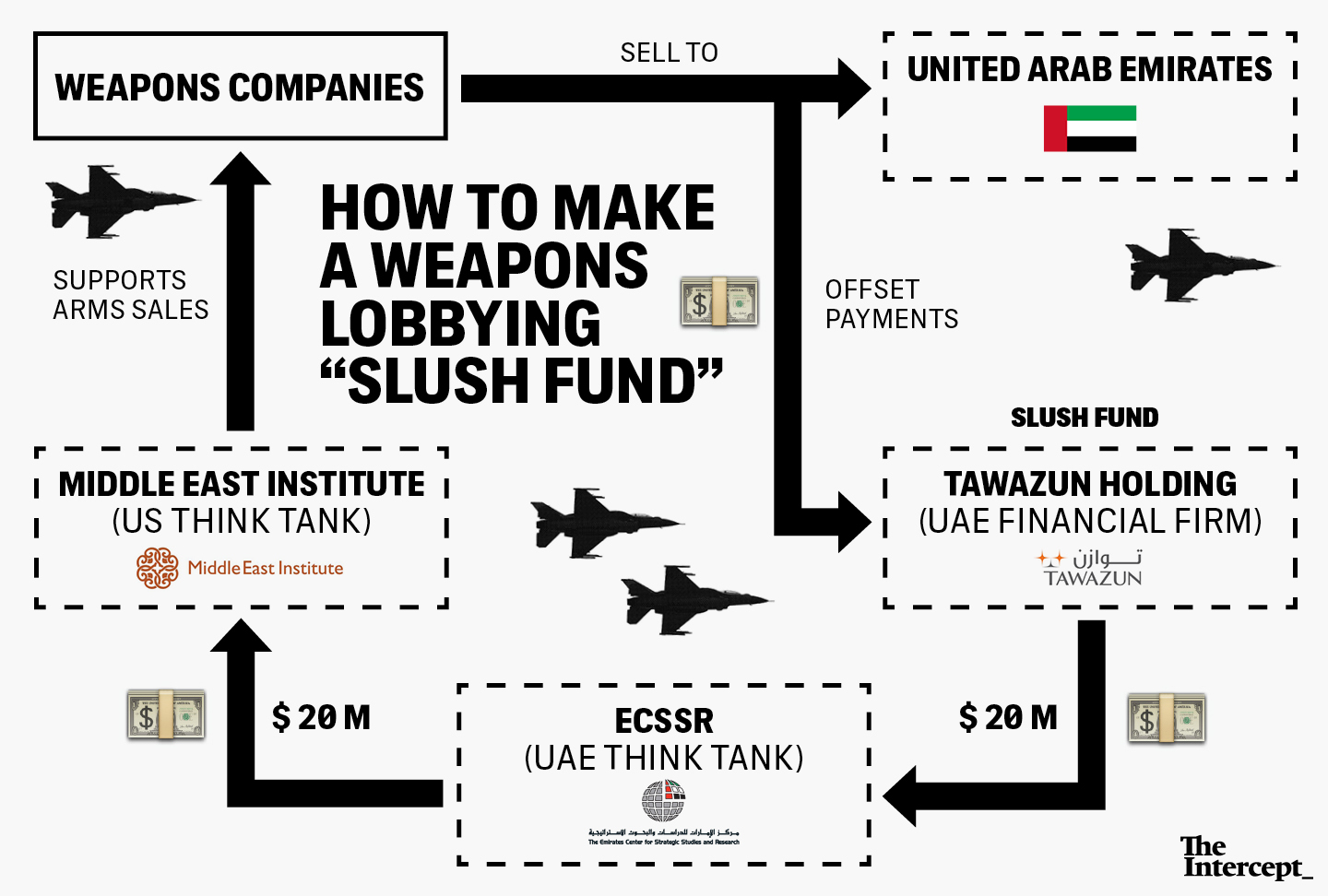
[Nov 08, 2017] Labour coercion and outside options

Notable quotes:
"... Coercion of the worker can be quite simply introduced into this setup by allowing firms to pay a 'negative wage' if the bad outcome occurs. This is simply the more cost-effective flipside of paying a higher wage if the good outcome occurs. Negative wages describe a world in which workers can be 'punished' (i.e. a world with coercion). ..."
www.theamericanconservative.com

Christian Dippel, Daniel Trefler 05 November 2017

One way employers can compel workers to accept contracts they otherwise would not accept is by limiting the outside options for those workers...

Related

Labour coercion is arguably as old human civilisation. In the words of Acemoglu and Wolitzky (2011), "the majority of labour transactions throughout much of history and a significant fraction of such transactions in many developing countries today are coercive".

Indeed, labour coercion is at the heart of much of the literature on long run development and institutional change (Domar 1970, Acemoglu et al. 2001, Engerman and Sokoloff 2002, Nunn 2008, Dell 2010, Naidu and Yuchtman 2013, Bobonis and Morrow 2014, Ashraf et al. 2017). Despite this, rigorous empirical evidence on labour coercion is scarce and is mostly focused on relating present-day outcomes to historical labour coercion.

The term 'labour coercion' is used quite broadly to describe the use of, or threat of, force in convincing workers to accept labour contracts they otherwise would not.

However, labour coercion can take two quite distinct forms, and this important distinction is often not well articulated. The distinction is best seen by imagining a standard principal-agent framework. In broad terms, a firm (the principal) offers a labour contract to a worker (the agent). If effort is not observable, it can only be inferred from the outcome, which can be 'good' or 'bad' (e.g. high output or low output). The firm can incentivise its workers to exert effort by offering them a higher wage if the good outcome materialises. The difference in the wages the firm pays in the good and bad state needs to be sufficiently high that workers exert effort (i.e. the 'incentive compatibility constraint' binds). The second constraint on the contract is that workers may walk away from it if they can earn a higher expected wage elsewhere. The expected wage (averaging over the effort-dependent outcome probabilities) thus needs to exceed the worker's outside option (i.e. the 'participation constraint' binds).

Coercion of the worker can be quite simply introduced into this setup by allowing firms to pay a 'negative wage' if the bad outcome occurs. This is simply the more cost-effective flipside of paying a higher wage if the good outcome occurs. Negative wages describe a world in which workers can be 'punished' (i.e. a world with coercion). In this way, slavery, serfdom, or indenture can be nested inside a standard economic framework and, indeed, there is a long tradition in economics that does this (Chwe 1990). However, the participation constraint still binds when there is coercion. Even in the extreme case of slavery, outside options were usually not zero so long as slaves could run away and had a chance of evading capture. The interaction of the two constraints implies that there is complementarity in coercive activities – firms can punish workers more severely if they can also reduce their outside options.

In many modern-day labour markets, it may be entirely impossible for a firm to reduce a worker's outside options and the complementarity between coercion that punishes workers and coercion that reduces outside options can therefore safely be ignored. However, for countries at the early stages of structural transformation – where workers' outside options are not to work for a different firm or in a different sector, but to be self-employed in the informal sector as a yeoman farmer or artisan (a state that describes most of modern economic history and many developing countries today) 1 – coercion that reduces workers' outside options was and still is critical.

This was recognised by early development economists, as attested, for example, by Arthur Lewis' famous quote that "the fact that the wage level in the capitalist sector depends upon earnings in the subsistence sector is of immense political importance, since its effect is that capitalists have a direct interest in holding down the productivity of the subsistence workers. Thus the owners of plantations, if they are influential in government, are often found engaged in turning the peasants off their lands" (Lewis 1954).

[Nov 07, 2017] Upward mobility in the United States is largely an illusion, and the living standard for the middle class has hardly moved in decades; it has declined, if anything, relative to progress in the 1960's.

Notable quotes:
"... Seventy per cent of people born into the bottom quintile of income distribution never make it into the middle class, and fewer than ten per cent get into the top quintile. Forty per cent are still poor as adults. ..."
Nov 07, 2017 | marknesop.wordpress.com

marknesop , November 7, 2017 at 6:39 pm

Upward mobility in the United States is largely an illusion , and the living standard for the middle class has hardly moved in decades; it has declined, if anything, relative to progress in the 1960's.

Seventy per cent of people born into the bottom quintile of income distribution never make it into the middle class, and fewer than ten per cent get into the top quintile. Forty per cent are still poor as adults.

You are correct, though, that economics is immensely complicated and turns on almost-infinite variables. People who don't like the way things are turning out often just re-define the metrics, or pick a different set.

[Nov 05, 2017] China and the US Rational Planning and Lumpen Capitalism by James Petras

Highly recommended!
Please buy the author books Rulers and Ruled in the US Empire Bankers, Zionists and Militanta and The Politics of Empire The US, Israel and the Middle East both book contain material which the US corporate media will never tell you. A must-read for anyone who wants to understand world economics and current problem with neoliberalism in the USA
Notable quotes:
"... "China is the world leader in payments made by mobile devices", ..."
"... Financial Times ..."
"... 80% recognize that the Congress is dysfunctional and 86% believe that Washington is dishonest. Never has an empire of such limitless power crumbled and declined with so few accomplishments. ..."
Nov 05, 2017 | www.unz.com

Lumpen Capitalism refers to an economic system in which the financial and military sector exploits the state treasury and productive economy for the 1% of the population.)

Introduction

US journalists and commentators, politicians and Sinologists spend considerable time and space speculating on the personality of China's President Xi Jinping and his appointments to the leading bodies of the Chinese government, as if these were the most important aspects of the entire 19th National Congress of the Communist Party of China (October 18-24, 2017) .

(The 19th National Congress was attended by 2,280 delegates representing 89 million members.)

Mired down in gossip, idle speculation and petty denigration of its leaders, the Western press has once again failed to take account of the world-historical changes which are currently taking place in China and throughout the world.

World historical changes, as articulated by Chinese President Xi Jinping, are present in the vision, strategy and program of the Congress. These are based on a rigorous survey of China's past, present and future accomplishments.

The serious purpose, projections and the presence of China's President stand in stark contrast to the chaos, rabble-rousing demagogy and slanders characterizing the multi-billion dollar US Presidential campaign and its shameful aftermath.

The clarity and coherence of a deep strategic thinker like President Xi Jinping contrasts to the improvised, contradictory and incoherent utterances from the US President and Congress. This is not a matter of mere style but of substantive content.

We will proceed in the essay by contrasting the context, content and direction of the two political systems.

China: Strategic Thinking and Positive Outcomes

China, first and foremost, has established well-defined strategic guidelines that emphasize macro-socio-economic and military priorities over the next five, ten and twenty years.

China is committed to reducing pollution in all of its manifestations via the transformation of the economy from heavy industry to a high-tech service economy, moving from quantitative to qualitative indicators.

Secondly, China will increase the relative importance of the domestic market and reduce its dependence on exports. China will increase investments in health, education, public services, pensions and family allowances.

Thirdly, China plans to invest heavily in ten economic priority sectors. These include computerized machinery, robotics, energy saving vehicles, medical devices, aerospace technology, and maritime and rail transport. It targets three billion (US) dollars to upgrade technology in key industries, including electrical vehicles, energy saving technology, numerical control (digitalization) and several other areas. China plans to increase investment in research and development from .95% to 2% of GDP.

Moreover, China has already taken steps to launch the 'petro-Yuan', and end US global financial dominance.

China has emerged as the world's leader in advancing global infrastructure networks with its One Belt One Road (Silk Road) across Eurasia. Chinese-built ports, airports and railroads already connect twenty Chinese cities to Central Asia, West Asia, South-East Asia, Africa and Europe. China has established a multi-lateral Asian Infrastructure Investment Bank (with over 60 member nations) contributing 100 billion dollars for initial financing.

China has combined its revolution in data collection and analysis with central planning to conquer corruption and improve the efficiency in credit allocation. Beijing's digital economy is now at the center of the global digital economy. According to one expert, "China is the world leader in payments made by mobile devices", (11 times the US). One in three of the world's start-ups, valued at more than $1 billion, take place in China ( FT 10/28/17, p. 7). Digital technology has been harnessed to state-owned banks in order to evaluate credit risks and sharply reduce bad debt. This will ensure that financing is creating a new dynamic flexible model combining rational planning with entrepreneurial vigor (ibid).

As a result, the US/EU-controlled World Bank has lost its centrality in global financing. China is already Germany's largest trading partner and is on its way to becoming Russia's leading trade partner and sanctions-busting ally.

China has widened and expanded its trade missions throughout the globe, replacing the role of the US in Iran, Venezuela and Russia and wherever Washington has imposed belligerent sanctions.

While China has modernized its military defense programs and increased military spending, almost all of the focus is on 'home defense' and protection of maritime trade routes. China has not engaged in a single war in decades.

China's system of central planning allows the government to allocate resources to the productive economy and to its high priority sectors. Under President Xi Jinping, China has created an investigation and judicial system leading to the arrest and prosecution of over a million corrupt officials in the public and private sector. High status is no protection from the government's anti-corruption campaign: Over 150 Central Committee members and billionaire plutocrats have fallen. Equally important, China's central control over capital flows (outward and inward) allows for the allocation of financial resources to high tech productive sectors while limiting the flight of capital or its diversion into the speculative economy.

As a result, China's GNP has been growing between 6.5% – 6.9% a year – four times the rate of the EU and three times the US.

As far as demand is concerned, China is the world's biggest market and growing. Income is growing – especially for wage and salaried workers. President Xi Jinping has identified social inequalities as a major area to rectify over the next five years.

The US: Chaos, Retreat and Reaction

In contrast, the United States President and Congress have not fashioned a strategic vision for the country, least of all one linked to concrete proposals and socio-economic priorities, which might benefit the citizenry.

The US has 240,000 active and reserve armed forces stationed in 172 countries. China has less than 5,000 in one country – Djibouti. The US stations 40,000 troops in Japan, 23,000 in South Korea, 36,000 in Germany, 8,000 in the UK and over 1,000 in Turkey. What China has is an equivalent number of highly skilled civilian personnel engaged in productive activity around the world. China's overseas missions and its experts have worked to benefit both global and Chinese economic growth.

The United States' open-ended, multiple military conflicts in Afghanistan, Iraq, Syria, Libya, Yemen, Niger, Somalia, Jordan and elsewhere have absorbed and diverted hundreds of billions of dollars away from productive investments in the domestic economy. In only a few cases, military spending has built useful roads and infrastructure, which could be counted a 'dual use', but overwhelmingly US military activities abroad have been brutally destructive, as shown by the deliberate dismemberment of Yugoslavia, Iraq and Libya.

The US lacks the coherence of China's policy making and strategic leadership. While chaos has been inherent in the politics of the US 'free market' financial system, it is especially widespread and dangerous during the Trump regime.

Congressional Democrats and Republicans, united and divided, actively confront President Trump on every issue no matter how important or petty. Trump improvises and alters his policies by the hour or, at most, by the day. The US possesses a party system where one party officially rules in the Administration with two militarist big business wings.

US has been spending over 700 billion dollars a year to pursue seven wars and foment 'regime changes' or coups d'état on four continents and eight regions over the past two decades. This has only caused disinvestment in the domestic economy with deterioration of critical infrastructure, loss of markets, widespread socioeconomic decline and a reduction of spending on research and development for goods and services.

The top 500 US corporations invest overseas, mainly to take advantage of low tax region and sources of cheap labor, while shunning American workers and avoiding US taxes. At the same time, these corporations share US technology and markets with the Chinese.

Today, US capitalism is largely directed by and for financial institutions, which absorb and divert capital from productive investments, generating an unbalanced crisis-prone economy. In contrast, China determines the timing and location of investments as well as bank interest rates, targeting priority investments, especially in advanced high-tech sectors.

Washington has spent billions on costly and unproductive military-centered infrastructure (military bases, naval ports, air stations etc.) in order to buttress stagnant and corrupt allied regimes. As a result, the US has nothing comparable to China's hundred-billion-dollar 'One Belt-One Road' (Silk Road) infrastructure project linking continents and major regional markets and generating millions of productive jobs.

The US has broken global linkages with dynamic growth centers. Washington resorts to self-defecating, mindless chauvinistic rhetoric to impose trade policy, while China promotes global networks via joint ventures. China incorporates international supply linkages by securing high tech in the West and low cost labor in the East.

Big US industrial groups' earnings and rising stock in construction and aerospace are products of their strong ties with China. Caterpillar, United Technologies 3M and US car companies reported double-digit growth on sales to China.

In contrast, the Trump regime has allocated (and spent) billions in military procurement to threaten wars against China's peripheral neighbors and interfere with its maritime commerce.

US Decline and Media Frenzy

The retreat and decline of US economic power has driven the mass media into a frenzy of idiotic ad hominem assaults on China's political leader President Xi Jinping. Among the nose pickers in print, the scribes of the Financial Times take the prize for mindless vitriol. Mercenaries and holy men in Tibet are described as paragons of democracy and 'victims' of a flourishing modernizing Chinese state lacking the 'western values' (sic) of floundering Anglo-American warmongers!

To denigrate China's system of national planning and its consequential efforts to link its high tech economy with improving the standard of living for the population, the FT journalists castigate President Xi Jinping for the following faults:

For not being as dedicated a Communist as Mao Zedong or Deng Xiaopeng For being too 'authoritarian' (or too successful) in his campaign to root out corrupt officials. For setting serious long-term goals while confronting and overcoming economic problems by addressing the 'dangerous' level of debt.

While China has broadened its cultural horizon, the Anglo-Saxon global elite increases possibility of nuclear warfare. China's cultural and economic outreach throughout the world is dismissed by the Financial Times as 'subversive soft power'. Police-state minds and media in the West see China's outreach as a plot or conspiracy. Any serious writer, thinker or policymaker who has studied and praised China's success is dismissed as a dupe or agent of the sly President Xi Jinping. Without substance or reflection, the FT (10/27/17) warns its readers and police officials to be vigilant and avoid being seduced by China's success stories!

China's growing leadership in automobile production is evident in its advance towards dominating the market for electric vehicles. Every major US and EU auto company has ignored the warnings of the Western media ideologues and rushed to form joint ventures with China.

China has an industrial policy. The US has a war policy. China plans to surpass the US and Germany in artificial intelligence, robotics, semi-conductors and electric vehicles by 2025. And it will -- because those are its carefully pronounced scientific and economic priorities.

Shamelessly and insanely, the US press pursues the expanding stories of raging Hollywood rapists like the powerful movie mogul, Harvey Weinstein, and the hundreds of victims, while ignoring the world historic news of China's rapid economic advances.

The US business elites are busy pushing their President and the US Congress to lower taxes for the billionaire elite, while 100 million US citizens remain without health care and register decreased life expectancy! Washington seems committed to in State-planned regression.

As US bombs fall on Yemen and the American taxpayers finance the giant Israeli concentration camp once known as 'Palestine', while China builds systems of roads and rail linking the Himalayas and Central Asia with Europe.

While Sherlock Holmes applies the science of observation and deduction, the US media and politicians perfect the art of obfuscation and deception.

In China, scientists and innovators play a central role in producing and increasing goods and services for the burgeoning middle and working class. In the US, the economic elite play the central role in exacerbating inequalities, increasing profits by lowering taxes and transforming the American worker into poorly-paid temp-labor – destined to die prematurely of preventable conditions.

While Chinese President Xi Jinping works in concert with the nation's best technocrats to subordinate the military to civilian goals, President Trump and his Administration subordinate their economic decisions to a military-industrial-financial-Israeli complex. Beijing invests in global networks of scientists, researchers and scholars. The US 'opposition' Democrats and disgruntled Republicans work with the giant corporate media (including the respectable Financial Times ) to fund and fabricate conspiracies and plots under Trump's Presidential bed.

Conclusion

China fires and prosecutes corrupt officials while supporting innovators. Its economy grows through investments, joint ventures and a great capacity to learn from experience and powerful data collection. The US squanders its domestic resources in pursuing multiple wars, financial speculation and rampant Wall Street corruption.

China investigates and punishes its corrupt business and public officials while corruption seems to be the primary criteria for election or appointment to high office in the US. The US media worships its tax-dodging billionaires and thinks it can mesmerize the public with a dazzling display of bluster, incompetence and arrogance.

China directs its planned economy to address domestic priorities. It uses its financial resources to pursue historic global infrastructure programs, which will enhance global partnerships in mutually beneficial projects.

It is no wonder that China is seen as moving toward the future with great advances while the US is seen as a chaotic frightening threat to world peace and its publicists as willing accomplices.

China is not without shortcomings in the spheres of political expression and civil rights. Failure to rectify social inequalities and failure to stop the outflow of billions of dollars of illicit wealth, and the unresolved problems with regime corruption will continue to generate class conflicts.

But the important point to note is the direction China has chosen to take and its capacity and commitment to identify and correct the major problems it faces.

The US has abdicated its responsibilities. It is unwilling or unable to harness its banks to invest in domestic production to expand the domestic market. It is completely unwilling to identify and purge the manifestly incompetent and to incarcerate the grossly corrupt officials and politicians of both parties and the elites.

Today overwhelming majorities of US citizens despise, distrust and reject the political elite. Over 70% think that the inane factional political divisions are at their greatest level in over 50 years and have paralyzed the government.

80% recognize that the Congress is dysfunctional and 86% believe that Washington is dishonest. Never has an empire of such limitless power crumbled and declined with so few accomplishments.

China is a rising economic empire, but it advances through its active engagement in the market of ideas and not through futile wars against successful competitors and adversaries. As the US declines, its publicists degenerate.

The media's ceaseless denigration of China's challenges and its accomplishments is a poor substitute for analysis. The flawed political and policy making structures in the US and its incompetent free-market political leaders lacking any strategic vision crumble in contrast to China's advances.

[Nov 05, 2017] China's Great Leap Forward Western Frogs Croak Dismay

China is a neoliberal country which plays by the rules of neoliberalism. that means tremendous level of corruption within Communist Party. So the levers remains in Washington hands. I think the article is too optimistic. Washington definitely can put same sand into China industrial wheels. Right now they simply concentrate on "regime change" in Russia as the weakest link in Russo-Chinese alliance and leave China alone. China growing class of billionaires now represent a potent fifth column within the country and can be played. Attempt to do this were already evident in Hong Hong failed color revolution. Hong Cong remain is heir lines of US color revolution specialist and intelligence agencies.
Notable quotes:
"... The 'China doomsters' with 'logs in their own eyes' have systematically distorted reality, fabricated whimsical tales and paint vision, which, in truth, reflect their own societies. ..."
"... As each false claim is refuted, the frogs alter their tunes: When predictions of imminent collapse fail to materialize, they add a year or even a decade to their crystal ball. When their warnings of negative national social, economic and structural trends instead move in a positive direction, their nimble fingers re-calibrate the scope and depth of the crisis, citing anecdotal 'revelations' from some village or town or taxi driver conversation. ..."
Nov 05, 2017 | www.unz.com

Introduction:

From their dismal swamps, US academic and financial journal editorialists, the mass media and contemporary 'Asia experts', Western progressive and conservative politicians croak in unison about China's environmental and impending collapse.

They have variably proclaimed (1) China's economy is in decline; (2) the debt is overwhelming; a Chinese real estate bubble is ready to burst; (3) the country is rife with corruption and poisoned with pollution; and (4) Chinese workers are staging paralyzing strikes and protests amid growing repression -- the result of exploitation and sharp class inequality. The financial frogs croak about China as an imminent military threat to the security of the US and its Asian partners. Other frogs leap for that fly in the sky -- arguing that the Chinese now threatens the entire universe!

The 'China doomsters' with 'logs in their own eyes' have systematically distorted reality, fabricated whimsical tales and paint vision, which, in truth, reflect their own societies.

As each false claim is refuted, the frogs alter their tunes: When predictions of imminent collapse fail to materialize, they add a year or even a decade to their crystal ball. When their warnings of negative national social, economic and structural trends instead move in a positive direction, their nimble fingers re-calibrate the scope and depth of the crisis, citing anecdotal 'revelations' from some village or town or taxi driver conversation.

As long-predicted failures fail to materialize, the experts re-hash the data by questioning the reliability of China's official statistics.

Worst of all, Western 'Asia' experts and scholars try 'role reversal': While US bases and ships increasingly encircle China, the Chinese become the aggressors and the bellicose US imperialists whine about their victim-hood.

Cutting through the swamp of these fabrications, this essay aims to outline an alternative and more objective account of China's current socio-economic and political realty.

China: Fiction and Fact

We repeatedly read about China's 'cheap wage' economy and the brutal exploitation of its slaving workers by billionaire oligarchs and corrupt political officials. In fact, the average wage in China's manufacturing sector has tripled during this decade. China's labor force receives wages which exceed those of Latin America countries, with one dubious exception. Chinese manufacturing wages now approach those of the downwardly mobile countries in the EU. Meanwhile, the neo-liberal regimes, under EU and US pressure, have halved wages in Greece, and significantly reduced incomes in Brazil, Mexico and Portugal. In China, workers wages now surpass Argentina, Colombia and Thailand. While not high by US-EU standards, China's 2015 wages stood at $3.60 per hour -- improving the living standards of 1.4 billion workers. During the time that China tripled its workers 'wages, the wages of Indian workers stagnate at $0.70 per hour and South African wages fell from $4.30 to $3.60 per hour.

This spectacular increase in Chinese worker's wages are largely attributed to skyrocketing productivity, resulting from steady improvements in worker health, education and technical training, as well as sustained organized worker pressure and class struggle. President Xi Jinping's successful campaign for remove and arrest of hundreds of thousands of corrupt and exploitative officials and factory bosses has boosted worker power. Chinese workers are closing the gap with the US minimum wage. At the current rate of growth, the gap, which had narrowed from one tenth to one half the US wage in ten years, will disappear in the near future.

China is no longer merely a low-wage, unskilled, labor intensive, assembly plant and export-oriented economy. Today twenty thousand technical schools graduate millions of skilled workers. High tech factories are incorporating robotics on a massive scale to replace unskilled workers. The service sector is increasing to meet the domestic consumer market. Faced with growing US political and military hostility, China has diversified its export market, turning from the US to Russia, the EU, Asia, Latin America and Africa.

Despite these impressive objective advances, the chorus of 'crooked croakers' continue to churn out annual predictions of China's economic decline and decay. Their analyses are not altered by China's 6.7% GNP growth in 2016; they jump on the 2017 forecast of 'decline' to 6.6% as proof of its looming collapse! Not be dissuaded by reality, the chorus of 'Wall Street croakers' wildly celebrate when the US announces a GNP increase from 1% to 1.5%!

While China has acknowledged its serious environmental problems, it is a leader in committing billions of dollars (2% of GNP) to reduce greenhouse gases -- closing factories and mines. Their efforts far exceed those of the US and EU.

China, like the rest of Asia, as well as the US, needs to vastly increase investments in rebuilding its decaying or non-existent infrastructure. The Chinese government is alone among nations in keeping up with and even exceeding its growing transportation needs -- spending $800 billion a year on high speed railroads, rail lines, sea- ports, airports subways and bridges.

While the US has rejected multi-national trade and investment treaties with eleven Pacific countries, China has promoted and financed global trade and investment treaties with more than fifty Asia-Pacific (minus Japan and the US), as well as African and European states.

China's leadership under President Xi Jinping has launched an effective large-scale anti-corruption campaign leading to the arrest or ouster of over 200,000 business and public officials, including billionaires, and top politburo and Central Committee members. As a result of this national campaign, purchases of luxury items have significantly declined. The practice of using public funds for elaborate 12 course dinners and the ritual of gift giving and taking are on the wane.

Meanwhile, despite the political campaigns to 'drain the swamp' and successful populist referenda, nothing remotely resembling China's anticorruption campaign have taken root in the US and the UK despite daily reports of swindles and fraud involving the hundred leading investment banks in the Anglo-American world. China's anti- corruption campaign may have succeeded in reducing inequalities. It clearly has earned the overwhelming support of the Chinese workers and farmers.

Journalists and academics, who like to parrot the Anglo-American and NATO Generals, warn that China's military program poses a direct threat to the security of the US, Asia and indeed the rest of world.

Historical amnesia infects these most deep diving frogs. Forgotten is how the post WW2 US invaded and destroyed Korea and Indo-China (Vietnam, Laos and Cambodia) killing over nine million inhabitants, both civilian and defenders. The US invaded, colonized and neo-colonized the Philippines at the turn of the 20th century, killing up to one million inhabitants. It continues to build and expands its network of military bases encircling China, It recently moved powerful, nuclear armed THADD missiles to the North Korean border, capable of attacking Chinese and even Russian cities. The US is the worlds' largest arms exporter, surpassing the collective production and sale of the next five leading merchants of death.

In contrast, China has not unilaterally attacked, invaded or occupied anyone in hundreds of years. It does not place nuclear missiles on the US coast or borders. In fact, it does not have a single overseas military base. Its own military bases, in the South China Sea, are established to protect its vital maritime routes from pirates and the increasingly provocative US naval armada. China's military budget, scheduled to increase by 7% in 2017, is still less than one-fourth of the US budget.

For its part, the US promotes aggressive military alliances, points radar and satellite guided missiles at China, Iran and Russia, and threatens to obliterate North Korea. China's military program has been and continues to be defensive. Its increase is based on its response to US provocation. China's foreign imperial thrust is based on a global market strategy while Washington continues to pursue a militarist imperial strategy, designed to impose global domination by force.

Conclusion

The frogs of the Western intelligentsia have crocked loud and long. They strut and pose as the world's leading fly catchers -- but producing nothing credible in terms of objective analyses.

China has serious social, economic and structural problems, but they are systematically confronting them. The Chinese are committed to improving their society, economy and political system on their own terms. They seek to solve immensely challenging problems, while refusing to sacrifice their national sovereignty and the welfare of their people.

In confronting China as a world capitalist competitor, the US official policy is to surround China with military bases and threaten to disrupt its economy. As part of this strategy, Western media and so-called 'experts' magnify China's problems and minimize their own.

Unlike China, the US is wallowing at less than 2% annual growth. Wages stagnate for decades; real wages and living standards decline. The costs of education and health care skyrocket, while the quality of these vital services decline dramatically. Costs are growing, un-employment is growing and worker suicide and mortality is growing. It is absolutely vital that the West acknowledge China's impressive advances in order to learn, borrow and foster a similar pattern of positive growth and equity. Co-operation between China and the US is essential for promoting peace and justice in Asia.

Unfortunately, the previous US President Obama and the current President Trump have chosen the path of military confrontation and aggression. The two terms of Obama's administration present a record of failing wars, financial crises, burgeoning prisons and declining domestic living standards. But for all their noise, these frogs, croaking in unison, will not change the real world.

WorkingClass , March 24, 2017 at 6:07 pm GMT

China is ascendant. The Anglo/Zio Empire is in steep decline. The frogs bark. The caravan moves on.
Robert Magill , March 24, 2017 at 7:15 pm GMT
There is about as much Communism in the Peoples Communist Party of China as there is Democracy in the US Democratic Party. Therein lies the problem. Old words and slogans are used to obfuscate power plays by willful participants and to pretend the US is still vital in the world. Empire stops at the bottom line which was broached in about 1986 when we became a Debtor Nation. When China tires of lending us the money to build bases to harass them, it all ends. Our troops will have to find their own way home to put down all the incredible unrest here, then join the bread lines.

http://robertmagill.wordpress.com

Gross Terry , March 24, 2017 at 7:44 pm GMT

In contrast, China has not unilaterally attacked, invaded or occupied anyone in hundreds of years. It does not place nuclear missiles on the US coast or borders. In fact, it does not have a single overseas military base. Its own military bases, in the South China Sea, are established to protect its vital maritime routes from pirates and the increasingly provocative US naval armada. China's military budget, scheduled to increase by 7% in 2017, is still less than one-fourth of the US budget.

lol whats the sino-Vietnamese war?

Si1ver1ock , March 25, 2017 at 12:23 am GMT
One solution to China's "ghost cities" is to put a university there. China is also leading the way on LFTR reactors. So you combine the two with a major college or university that has a LFTR based industry like an advanced ceramics or solar cells or fuels manufacturing facility and you have recipe for growth.

Modular LFTR reactors will allow China to replace coal burning with nuclear reactors.

Astuteobservor II , March 25, 2017 at 12:52 am GMT

It recently moved powerful, nuclear armed THADD missiles to the North Korean border, capable of attacking Chinese and even Russian cities.

isn't this wrong? isn't THAAD a missile defense system? reason china is pissed off about it is because it can scan 2000km into china.

Astuteobservor II , March 25, 2017 at 12:55 am GMT
@Si1ver1ock

The ghost cities is mostly propaganda. http://www.nytimes.com/2013/06/16/world/asia/chinas-great-uprooting-moving-250-million-into-cities.html?pagewanted=all&_r=0 250 million people is going to need alot of "ghost cities"

DB Cooper , March 25, 2017 at 4:02 am GMT
@Gross Terry

The 1979 Sino-Vietnamese war occurred during the cold war. From the beginning China made it clear that the war will be short and it is meant to punish Vietnam. The war has several objectives. First it is to demonstrate the then Soviet Union's impotency. Soviet Union and Vietnam signed a mutual defense agreement several months before the war. Soviet Union did nothing when the war happened. Second the war is meant to put pressure on Vietnam to withdrew from Cambodia. Third it is a reaction to Vietnam's belligerence border aggression. Before the war Vietnam constantly lobbed grenade across the border into China. After the war peace and tranquility at the border restored.

After China made its point, China swiftly withdrew its troops back to its border. China and Vietnam has no land border disputes but China and Vietnam has maritime boundary disputes. Vietnam is the most aggressive of all the parties in the South China Sea disputes by a wide margin.

China's Great Leap Forward: Western Frogs Croak Dismay • Zhi Chinese , March 25, 2017 at 6:39 am GMT
[ ] by /u/Hbd-investor [link] [comments] Source: Reddit Permalink: China's Great Leap Forward: Western Frogs Croak [ ]
Anonymous , Disclaimer March 25, 2017 at 6:50 am GMT
@Astuteobservor II

It is an offensive system in the sense that it will allow first strike capability without fear or with less fear of being hit back.

Anonymous , Disclaimer March 25, 2017 at 6:54 am GMT
@Gross Terry

Yeah, I guess that is a legit war. But to compare that to what America does is highly suspect.

Lots of countries have skirmishes along their border, but only America has encircled the world in bases and is always at war.

That is the gist of heat he was saying.

Renoman , March 25, 2017 at 2:24 pm GMT
I buy a lot of stuff from China, mostly aliexpress.com and I have noticed that since the American election the delivery times on most items have doubled or worse. I live in Canada, how did he do that? I don't see the bargains that I did previously as well. All very spooky.
anonymous , Disclaimer March 25, 2017 at 9:07 pm GMT
"Vietnam is the most aggressive of all the parties in the South China Sea disputes by a wide margin."

Curious about this. How do you draw that conclusion.

Separately, while I agree with the tone of the article and general direction, a few comments:

- China has an overseas military base under construction in Djibouti. Brigade strength force will be deployed there.
- China's national (not provincial or locally published GDP numbers) GDP growth figures are approximately correct. However, currently there is lots of state directed lending to keep the growth up. The credit bubble might not pop but down the line dealing with so many bad loans will prevent fresh loans and that will slow down growth.
- While the economy is a miracle for blue collar workers, for non-workers in the most hard up parts of the country, social conditions are horrendous for a middle income country with lots of central revenue and administrative ability. In the western hills of Guangxi 10% of the kids are malnourished.
- China hasn't been expansionist in 250 years (not since Qing Empire into present day southwest Xinjaing in the 1760s) however there are still a few black marks: Sino-Vietnamese War, supporting nuclear proliferation in Pakistan, not doing enough to control North Korea (this is the stupidest blunder of all and leaves Beijing vulnerable to nuclear attack one day if the Kim family is about to go), and threatening war publicly against Philippines at one point during the South China Sea crisis of the past several years (all forms of pressure are permitted but its uncivilized to outright threaten war).

DB Cooper , March 26, 2017 at 1:12 am GMT
@anonymous

"Vietnam is the most aggressive of all the parties in the South China Sea disputes by a wide margin."
Curious about this. How do you draw that conclusion.

I draw my conclusion on this article and here is the excerpt:

"In 1996, Vietnam occupied 24 features in the Spratly Islands (source). At that time, according to the same source, China occupied nine. By 2015, according to the United States government, Vietnam occupied 48 features, and China occupied eight.
On May 13, U.S. Assistant Secretary of Defense, David Shear, said this to the Senate Foreign relations Committee: "Vietnam has 48 outposts; the Philippines, 8; China, 8; Malaysia, 5, and Taiwan, 1."
In the past 20 years, according to the United States, China has not physically occupied additional features. By contrast, Vietnam has doubled its holdings, and much of that activity has occurred recently. The Vietnamese occupations appear to have increased from 30 to 48 in the last six years.

Shear also pointed out that as of his speech, China did not have an airfield as other claimants did. He said:
All of these same claimants have also engaged in construction activity of differing scope and degree. The types of outpost upgrades vary across claimants but broadly are comprised of land reclamation, building construction and extension, and defense emplacements. Between 2009 and 2014, Vietnam was the most active claimant in terms of both outpost upgrades and land reclamation, reclaiming approximately 60 acres. All territorial claimants, with the exception of China and Brunei, have also already built airstrips of varying sizes and functionality on disputed features in the Spratlys."

Here is the source.

http://thediplomat.com/2015/06/who-is-the-biggest-aggressor-in-the-south-china-sea/

RobinG , March 27, 2017 at 4:07 am GMT
@Fran Macadam

How droll. Your characteristic pessimism works better as dark humor.

Alfa158 , March 27, 2017 at 5:23 am GMT
@Robert Magill

Seems like they are operating as a National Socialist system now. The means of production are owned by corporations but a powerful government keeps close control and directs business activities to the benefit of the nation. The owners are rewarded with wealth and the government advances their mutual interests for national progress.
They also place a heavy emphasis on cultural and racial pride.
Downside of course is that the types of civil liberties we enjoy are constricted and getting out of line gets you smacked real good, sometimes supposedly up to the point of bullet to the back of your head, and your family gets billed for the bullet.
A tough system to compete against unless the powers-that-be lacking effective external checks and balance do something stupid like invade Russia or bomb Pearl Harbor.

Backwoods Bob , March 27, 2017 at 7:17 am GMT
Well done.

The USA is character disordered. Demonize, belittle, bellicosity, and outright war. All we need is liberty and enforcement of property rights and we'd be leaving the Chinese and everyone else in the dust.

With the strangulation of our economy at home through the unconstitutional regulatory/administrative law colossus, instead of outgrowing our competitors we wish to shoot them down.

The term "Contain China" aptly demonstrates our stupidity insofar as forward thinking is concerned. You don't improve your lot by dedicating yourself to holding others down. It doesn't work in athletics, education, in relationships, or in free enterprise.

So it is odd to see nary a whit of protest to the idea when it should be ridiculed on the face of it.

I do of course see the same worn-out playbook of demonize, demonize, demonize being used by the Washington establishment. We have to "do something" about China. Not do something to our appalling education performance, savings and capital formation, strangulatory laws, etc.

I married into a Filipino family and have a house there. The Filipinos were fond of saying that the USA wanted to fight to the last Filipino over the South China Sea. They've been smart enough to work with the Chinese, who are investing billions of dollars there developing hydrocarbons and ports for transhipment like Singapore instead of launching a foolhardy war with China.

When I encounter people screeching about Chinese aggression against the poor little Filipinos or fiction about threats to international shipping it really strikes me how out of their minds people can be. We want to see our family working on ships there, not dying in a foolhardy confrontation. The Chinese have a long history of trading and running businesses in the Philippines. It is only our invincible ignorance, arrogance, and narcissism that results in a failure to see why the Philippines has turned towards China.

I go through Shanghai Pudong a lot and over the years it has been obvious how the people have become wealthier, how the infrastructure has stepped up to first world standards, and how smart/snappy the people are. We are really underestimating the Chinese and making a lot of self-serving rationalizations for their success.

We need to fix our own failings instead of trying to cut others down. China is already larger in GDP and can easily be twice ours before 2030 with relative growth rates the way they are.

Ram , March 27, 2017 at 8:52 am GMT
@Gross Terry

It succeeded in ending the killing machine in Laos.

Sergey Krieger , March 27, 2017 at 8:58 am GMT
@DB Cooper

China showed own impotence and lack of serious military capabilities in that war. Vietnamese forces were not even participating while local militia was kicking Chinese military back side. They obviously had to withdraw telling they gave a lesson. It is typical Chinese way to cut losses and avoid total loss of face aka du lian.

Ram , March 27, 2017 at 8:59 am GMT
@anonymous

Djibouti already "hosts" a US military base used against Yemen today.

Sergey Krieger , March 27, 2017 at 9:05 am GMT
It looks like lots of people think that country with 1.4 billion population can prosper long term and keep rising living standards of her population in the future on limited planet. They so far have managed to achieve improvements but at a cost of long term sustainability. Their ecological troubles are of huge magnitude and so are debt and demographic issues. We are already at each other throats fighting for diminishing resources, so it is highly doubtful Chinese or Indian projects can last.
Kimppis , March 27, 2017 at 9:26 am GMT
To be fair, comparing nominal military budgets can be very misleading and just dumb.

Sure, they are an easy way to rank different different militaries, but when you compare Western vs. Emerging powers and their military budgets, or countries with their large-scale MICs (which to be fair, there are only a few USA, Russia, China, France to some extent, India in the future, but certainly not today) vs. weapons exporters, the results are largely BS. Price levels are so different. Not to mention that the maintenance costs in the US military are absolutely massive.

Currently Russia is a great example. The devaluation is basically irrelevant for the Russian military. It should be obvious that Saudi Arabian military doesn't have a higher budget. The US certainly doesn't have 10-15 times more resources at its disposal. Russia spends rubles, it doesn't import weapons. So in reality the difference vs. the US something like 4x at most.

China is the same. The yuan has devalued vs. the dollar, so in dollar terms their growth has stagnated, which doesn't have anything to do with reality.

So overall, in comparable terms, let's say that the US spends $600 billion. In that case:
Russia spends atleast 120-150 billion
China spends atleast 250 billion, probably closer to 300 billion
And whereas the US capabilities are spread all around the world, Russia and China are focused on their backyards.

So in reality China's "real" military spending is atleast something like 40% of the US level already, not less than 1/4,.

The Alarmist , March 27, 2017 at 10:41 am GMT
The Sovs or the Chicoms would have sent Petras to the gulag ages ago. In the enlightened West, we merely consign him to places like UR, thus marginalising him and making it increasingly difficult to eke out a living. See Fred Reed's piece on columnists and wonder why more of them don't end up sucking on the business end of a firearm when they fail to toe the party line.
Brabantian , Website March 27, 2017 at 10:50 am GMT
Hard to get balance on this topic because it is human nature to favour false champions & heroes & rivals fake 'opposition' Don't like USA-Nato? Why then, plenty of fanboys to offer you Russia, China, Iran etc James Petras as above, André Vltchek, Andrei 'The Saker' Raevsky, Dick Cheney's hoaxer friend 'Edward Snowden', Netanyahu's hoaxer friend Julian Assange etc all selling 'opposition hero' tickets

The West has lots of stupid anti-China rubbish, sure but let's recall the Chinese official who said they learned how to do fake statistics & propaganda from Yank Americans The China reality is as follows:

China was the prime beneficiary of the global credit bubble 1990s-2000s, they will crash along with the rest of the world when all blows up, but crash worse because bad China debt is so huge think USA 1929, it won't stop China's long-term rise, but they will have a horrible decade & maybe ChiComs will lose power in the upheaval

China is a huge US-style bully, ask ASEAN people privately, or other Asians but as seen with the USA, other countries feel they must kiss up to the bully whilst e.g., Vietnam has been a bully to Cambodia on smaller scale

China, Russia, Iran do some things right, principally working to see that middle classes rise & expand & most people are better off economically, for as long as they were able to do this, Turkey's Erdogan too, it is a magic formula, like Hitler's 1930s Germany economic success

But all of these US 'rivals' have skeletons in the closet, hundreds of slow-torture hangings & killing women by stones annually in Iran, China's thousands of executions & ethnic repression & sea-lane bullying, Russia's past killing of perhaps 100,000 Muslims just to keep Chechnya-Dagestan oil & gas income

But pundits need someone to love & admire & promote the fake 'hero' the fake 'opposition' in the West the mafia gangsterism we know best is the US-Nato kind, so we go gaga over fake 'dissident' or foreign 'heroes' served up to us There are 'good things' in the West despite the bullying mass-killing horrors ditto with China Russia etc,, & people ignore the bad when they hero-worship, either East or West

The fake 'hero opposition' is the most successful of all oligarch memes It's plain as day, for example, that Dick Cheney's little friend, anti-9-11-truth, nothing-really-new 'Edward Snowden' is a fraud along with Rothschild employee & ex-gay-p-rnographer Glenn Greenwald Snowden maybe already having helped identify, silence, kill real dissidents duped into contacting Greenwald or his NY Times or UK Guardian pumpers yet most still eagerly hold on to fake 'opposition hero' themes, China or Russia, or Assange or 'Snowden' -

http://www.veteranstoday.com/2016/09/21/russia-govt-report-snowden-greenwald-are-cia-frauds/

Randal , March 27, 2017 at 12:07 pm GMT
@Anonymous

Yes that's true, but Astuteobservor is also correct that the paragraph as written is inaccurate and misleading. It should be amended, imo, as it's a blot on an otherwise very good and timely piece. It's an anti-missile system, not one that can attack cities, and it's kinetic not nuclear armed.

Ilyana_Rozumova , March 27, 2017 at 12:32 pm GMT
I love prof. Petraus. But wages itself do not reflect reality. (Growth of the wages maybe)
Wages must be accompanied by price of bread and price of rent.
Volume of production allows larger engineering and research and development sections.
That is the most significant factor in the competition in the world.
Joe Wong , March 27, 2017 at 12:57 pm GMT
@Gross Terry

After the Vietnam War, the Vietnamese claimed they were the 3rd strongest nation in the world based on the the amount of military hardware left behind by the US, and the Vietnamese started to invade China to reclaim their "entitled land, " and conqure Laos and Cambodia to build their Great Indo-China Federation. The Sino-Vietnam war was the war Chinese repelled Vietnamese invadors just like war in 1962, China repelled Indian invadors in Tibet.

jacques sheete , March 27, 2017 at 1:00 pm GMT
@Alfa158

Downside of course is that the types of civil liberties we enjoy are constricted and getting out of line gets you smacked real good

Where do people get the romantic notion that we enjoy civil liberties?

Anyone who reads of Lincoln's, Wilson's, FDR's and GWB's ( to name a few) wholesale dismissal of civil liberties could write a book on the subject.

I'd like to know how we can possibly have much by way of said liberties in a centralized, bureaucratized, militarized, police state effectively owned and ruled by vicious oligarchs.

Our loss of civil liberties began long ago.

"But while I beheld with pleasure the dawn of liberty rising in Europe, I saw with regret the lustre of it fading in America

But a faction, acting in disguise, was rising in America; they had lost sight of first principles. They were beginning to contemplate government as a profitable monopoly, and the people as hereditary property ."

THOMAS PAINE TO THE CITIZENS OF THE UNITED STATES,
And particularly to the Leaders of the Federal Faction.
LETTER I, Nov 15,1802

"The enlightened part of Europe have given us the greatest credit for inventing the instrument of security for the rights of the people and have been not a little surprised to see us so soon give it up."

Thomas Jefferson letter to Francis Hopkinson of March 13, 1789

Men haven't got the freedom today that they had when the Constitution was written. The men in the West had a great deal of freedoms more than the men in the East who copied the traditions of Europe.

-Jeanette Rankin, interview ~1977

Rankin, running as a Republican Progressive, was the first woman voted to congress

http://content.cdlib.org/ark:/13030/kt758005dx/

Alfa158 , March 27, 2017 at 2:48 pm GMT
@jacques sheete

Well, I suppose I might say "relative" civil liberties. To your point, yes, as soon as we started exercising our inherent, inalienable liberties, State and commercial actors started working to turn them from natural rights to licenses that may be granted by the State only as long as it served the purposes of the State.

Tulip , March 27, 2017 at 3:10 pm GMT
It is hard not to imagine that the Chinese system, in contrast to Western Liberal-Democracy, is the wave of the future. What is more is that China will invariably increase its geopolitical influence in the coming decades.
ThatDamnGood , March 27, 2017 at 3:44 pm GMT
Most comments on the Sino Vietnamese War reveals quite a lot of ignorance about it.

When Deng Xiaopeng and Lee Kuan Yew of Singapore first met, Lee Kuan Yew began with thanking him for the China's kinetic military R2P mission

Why?

Lee Kuan Yew had operational plans to deploy a Singapore military force to Thailand and their army was manned largely by conscripted teenagers mostly. He had to sell the public to send their sons to war because it be too late if they had to fight the Vietnamese when they were across in Malaysia, so fight now. The Vietnamese were already having skirmishes the Thais across the Mekong.

Next, the PLA was pretty dismissive of Vietnam, told Deng, we would not need to use no stinking air power. Just the army would suffice. Why? Giap was "assisted" by a couple of Chinese generals through the Vietnam War. Walk in the park.

Turned out it wasn't a walk in the park but it was comfortable enough that the PLA got themselves into artillery range of Hanoi and deployed and use their arty units but not hitting Hanoi. Then while being not a walk in the park and thus egg in their face operation which Deng then used as leverage over the generals about PLA reform, it remained comfy enough that the PLA began a sure and steady scorch earth withdrawal.

And those Vietnamese troop concentrations across the Mekong were gone and Lee Kuan Yew was one happy camper alright.

The sight of those artillery units with range of Hanoi and the scorch earth withdrawal left quite an impression on Giap who till his death warned the rest of the Vietnamese elite never to go to war with China.

And it didn't end with the withdrawal. Deng may have been so taken by Lee Kuan Yew's words that he scheduled regular border incursions to keep the Vietnamese on their toes thru the 80s. Or maybe he didn't like the subsequent pogroms against the Hoa and who inspite of this are now the lords of commerce in Vietnam.

But all these are old musty stuff.

And the anti China propaganda never really worked and doesn't really matter as FDI into China grew and grew with years passing. Heck even Netanyahu knows who is buttering his toast. Cut ties over the UNSC vote? Nah smoke and mirrors probably for local politics reasons.

https://www.bloomberg.com/news/articles/2017-03-21/netanyahu-asks-xi-to-exempt-israel-from-investment-restrictions-j0jra02r

More useful to get info on the impact on OBOR in the Stans and elsewhere.

ThatDamnGood , March 27, 2017 at 3:53 pm GMT
Also, if you look at the map of Vietnam up close, bow if you think Israel suffers from a lack of strategic depth

So that probably explains why they were moving west and their infantry got to do some fishing on the Mekong river.

Shoe Thrower , March 27, 2017 at 4:55 pm GMT
@Astuteobservor II

Note: it's not "THADD". It's "THAAD" : Theater High Altitude Area Defense.

Gross Terry , March 27, 2017 at 6:26 pm GMT
@Joe Wong

the chinaman cries out in pain as he invades your country

attilathehen , March 27, 2017 at 7:29 pm GMT
@WorkingClass

The conservative estimates of Chinese abortions since the mid-1970s is over 400 million. China is the fastest, aging country in the world. The Chinese were never that smart to begin with (contra propaganda from Jews and white degenerates who marry the Chinese). In the 1980s Japan was going to take over the world. Place your bets on Caucasian/European Christians, pagans.

eah , March 27, 2017 at 8:22 pm GMT
Get back to us when the rule of law in China is such that China is considered a safe haven for capital -- when Chinese with money stop voting with their feet about that -- when Chinese women stop 'birth tourism' to the US -- when Chinese students desperate to gain entry to a good US university stop cheating on the SAT -- also, perhaps talk to the numerous victims of Chinese 'reverse merger' etc stock scams, people who have no recourse because the Chinese government refuses to cooperate.
Joe Wong , March 27, 2017 at 10:01 pm GMT
@Sergey Krieger

Two elite Vietnamese divisions that kicked the American out of South Vietnam were destroyed by the PLA in that short period of time. The Vietnamese central government had to vacate Hanoi before the PLA's bombardment of Hanoi. Without Deng's order PLA would divide Vietnam in two again. Finally the American was on China's side on the war to punish the Vietnamese; the American was so grateful that Chinese took vengeance against the Vietnamese for them.

Russian should know Russia is not USSR, and they should not be upset when USSR's incompetence is mentioned and troll fake news with boiling blood neck.

Thomas J , March 27, 2017 at 10:04 pm GMT
Wei ni hao Petras-da,

so just how much has Mr. Xi paid you for this piece?

1) Actual salaries are irrelevant as you ought to know because in the end it boils down to PPP.
2) Mr. Xi "remove" – ought to be "removal" btw is simply political battle for survival using "corruption" as an excuse. Should Mr. Xi be serious about fighting real corruption, 99% or more of entire politburo incl. himself ought to have been executed or in jail.
3) How about PRC destruction of Philippine's corrals (from another left wing publication – http://www.bbc.com/news/magazine-35106631 )
4) Artificial islands (weaponized) in South China sea?

Look US is as much war criminal as PRC – it is just that your Goebbels-like (or should I say Lev Davidovic like) propaganda makes me want to throw up.

I really enjoy UNZ for offering different – usually independent and critical – platform.

Your article is beyond disgrace a la New York Times / WaPo / Pravda /Rt.com / Spiegel / Xinhua and other "news" sources. Perhaps you might consider publishing there and stop polluting independent websites.

Thomas

PS I have visited PRC and Taiwan about 20 times, speak passable Mandarin and live with a Chinese born partner FYI.

Joe Wong , March 27, 2017 at 10:43 pm GMT
@anonymous

It seems here is another insect in the US dismal swamps trolling zero-sum cold war mentality wet dream. You should know Chinese lend RMB to the locals to bust growth and Chinese can print RMB thru the thin air just like the Fed, in addition China has already set up state owned funds to offload banks' debt load in exchange for their equity ownership, so the banks are back to healthy books and do the lending again just like the Fed, it is puzzling why such sophisticate safety mechanism will allow bad loans preventing fresh loans to be made.

Not doing the American bidding is black mark? Wow, this is surely an example of American exceptionalism without bound.

Joe Wong , March 27, 2017 at 11:00 pm GMT
@Alfa158

Would you accept that the USA is a 'God-fearing' morally defunct evil 'puritan' nation? If you don't then you should not take what you are fed from cradle to grave the propaganda cooked up by those insects with a mindset belonging to the past, stalled in the old days of colonialism and constrained by the zero-sum cold war mentality from their dismal swamps.

Debbie Menon , March 27, 2017 at 11:49 pm GMT
China has not engaged the rest of the world in military confrontation, colonialist adventurism and wars while establishing itself on the world stage. Perhaps they have learned something from Western History (or the failures of), or the teachings of Confucius. I suspect the latter, for they have not done very well when practicing the forceful and brutal ways of the West.

They are on a roll, and it looks like they will get there, and probably stay there, for some time to come.

I do not like the way Newsweek Columnist, F. Zakaria

(the neocon ? I don't know exactly what to call him, but I am sure the Indians have a term for one of their own who joined the British Raj, put on their pretty uniforms, took their pay, and began to see himself as one of them, pure, high and mighty in his new white skin, topee and title, ever the S'arn't Major, never the Brigadier!, with riding crop and bayonet, and boots with which to downtrod!)

writes, or the things he usually writes about, but his article "Does the Future Belong to China?" was right on the money to me. I'll give credit to the support he seems to have had from other writers worldwide, which may be, perhaps, what makes it so good and, in my opinion, prophetic.

He writes: "When historians look back at the last decades of the 20th century, they might well point to 1979 as a watershed. That year the Soviet Union invaded Afghanistan, digging its grave as a superpower. It was also the year that China began its economic reforms. They were launched at a most unlikely gathering, the Third Plenum of the 11th Central Committee of the Communist Party of China, held in December 1978. Before the formal meetings, at a working-group session, the newly empowered party boss, Deng Xiaoping, gave a speech that turned out to be the most important one in modern Chinese history. He urged that the regime focus on development and modernization, and let facts-not ideology-guide its path. "It doesn't matter if it is a black cat or a white cat," Deng often said. "As long as it can catch mice, it's a good cat." Since then, China has done just that, pursued a modernization path that is ruthlessly pragmatic and non-ideological. The results have been astonishing. China has grown around 9 percent a year for more than 25 years, the fastest growth rate for a major economy in recorded history. In that same period it has moved 300 million people out of poverty and quadrupled the average Chinese person's income. And all this has happened, so far, without catastrophic social upheavals. The Chinese leadership has to be given credit for this historic achievement. There are many who criticize China's economic path. They argue that the numbers are fudged, that corruption is rampant, that its banks are teetering on the edge, that regional tensions will explode, that inequality is rising dangerously and that things are coming to a head. For a decade now they have been predicting, "This cannot last, China will crash, it cannot keep this up." So far at least, none of these prognoses has come true. And while China has many problems, it also has something any Third World country would kill for-consistently high growth."

We are living in changing times, and the times are changing at an ever increasing exponential rate!

Escher , March 28, 2017 at 1:03 am GMT
@DB Cooper

How many RMB did that post net you?

JoaoAlfaiate , March 28, 2017 at 1:54 am GMT
Tibet?
DB Cooper , March 28, 2017 at 2:37 am GMT
@JoaoAlfaiate

What about it?

denk , March 28, 2017 at 4:19 am GMT
*Worst of all, Western 'Asia' experts and scholars try 'role reversal':

While US bases and ships increasingly encircle China, the Chinese become the aggressors and the bellicose US imperialists whine about their victim-hood.*

Like i say,
ROBBER CRYING OUT ROBBERY.
Of all the slimy traits of the unitedsnake, this one takes the cake !

Washington has just invaded Syria, its 500th victim since 1785.
To Assad's protest of illegal invasion, Centcom commander Votel sniffs,
'We'r going after the ISIS , we dont need no stinking permission from nobody'

The hubris befitting the world's no 1 rogue state !

Monsul in Iraq is being 'turned to shards' ala Fallujah.
this time 'no more stinking rule of engagement that tie one hand behind our back, this time we fight to win' ,
promised Trump the
'anti establishment' prez ! [1]
Already civilian casualties have runned into the hundreds.

In Yemen, the Washington sponsored genocidal war waged by Saudis rages on.
Its another gigantic shooting fish in a barrel slaughter where the
coalition of killing [usa/saudi/UAE] seal off the whole country then pummel the trapped populace with F16, Apache gunships and artillery.
Its Fallujah x 1000 . !

Meanwhile in Oz where permier Li Ke Qiang is visiting,
the ever so santimonous press/ pundits ponder,
' We already have our friends in Washington who share our values in human rights and rule of law ,
why should we engage this 'human rights abuser and SCS bully,?'

What fucked up mind,
What a fucked up world !

[1]
Nam/Iraq were 'restrained' wars ?
Only in the USA,
Where the inmates are running the asylum !

Uncle Dan , March 28, 2017 at 4:51 am GMT
Has there ever been a communist regime that Prof Petra has not adored?

https://en.wikipedia.org/wiki/James_Petras

Mouren , March 28, 2017 at 6:57 am GMT
Nuclear armed THADD? This sentence alone betrays a lot of the authors ignorance. Ignoring the fact that the name of the weapons system is THAAD (Terminal High Altidude Area Defense), which could be a simple typo, even a short Google search would have shown the author that THAAD-missiles do not even carry explosives, much less nuclear bombs.

THAAD missiles are basically bullets that rely on kinetic impact alone to destroy incoming ballistic missiles. Even if they somehow could be nuclear armed, their range is only 200 kms which is nowhere near enough to reach China from South Korea.
China's objection to the system being stationed in Korea is not that the missiles are an offensive threat, but that THAAD's powerful radar could be used to see deep into Chinese territory.

interesting , March 28, 2017 at 8:51 am GMT
@Sergey Krieger

It took until 22 comments for anyone to really take a look at reality. These article always only look at one side of the balance sheet. China has gone on a MASSIVE printing spree to achieve the "growth" they currently have, the US is no better but for some reason facts matter for the US.

China also has a demographic (as was mentioned in another comment) time bomb waiting in the wings (just like all western nations) and yet it's also never mentioned in these "China = great, USA = lame" hit pieces.

A market can stay irrational longer than you can stay solvent.

And finally, what is the author really saying? That socialism or quasi communism is a better economic system? It appears so

p.s. And apparently China economic statistics are honest and accurate at least to this author.

TG , March 28, 2017 at 3:08 pm GMT
Well said.

One is reminded that, contrary to popular propaganda, Malthus was right. It is an iron law of development that no nation has become prosperous until AFTER fertility rates moderated. (it is mostly the RATE of population increase, not absolute numbers).

Under Mao the government deliberately created a massive population explosion – and when that was (predictably) a disaster did an about face. It was ugly – and would not have been needed at all except for the initial pro-natalist policies – but it has given China a chance to progress.

India has seen economic growth higher than China's – and all swallowed up by ever more people.

Mexico, the United States, and South America all have aggressive policies aimed at maximizing population growth – with, again, predictable results. Wages for the many go down and profits for the few go up.

Yes there is more to it than just demographics. But demographics are nevertheless powerful. And the Chinese government has apparently decided not to cancel out the effects of high wages by increasing the supply of people. At least for now.

skrik , March 28, 2017 at 3:12 pm GMT
@interesting

but for some reason facts matter for the US

Me: Haw. In the 'universe of swindlers,' the US has but one peer, otherwise known as 'the tail that wags the dog.'

Joe Wong , March 28, 2017 at 7:10 pm GMT
@interesting

In the USA. a war of opposing certitudes and denunciations is waged day to day between the long-ruling US corporate media and the White House. Both continuously proclaim ringing recriminations of the other's 'fake news'. Over months they both portray each other as malevolent liars.

To the Americans anything does not fit their liking is fake news, malevolent liars, even including their elected president.

Joe Wong , March 28, 2017 at 7:18 pm GMT
@Uncle Dan

Shouldn't all the governments be "Government of the people, by the people, for the people" regardless their ideology? It seems you have been brainwashed from cradle to grave and are so deep in the ideology that you don't know what a government is for.

woodNfish , March 28, 2017 at 8:12 pm GMT
@Astuteobservor II

Yes, it is another Petras lie.

Sergey Krieger , March 28, 2017 at 11:16 pm GMT
@Joe Wong

I know it hurts, but China failed to achieve war objectives hence masquerading as lesson given and withdrawal. Chinese army lost lost about 10% of total army strength and had to withdraw. While USSR did not participate directly Soviet advisors were helping with military operational planning.

http://izvestia.ru/news/288083

Sergey Krieger , March 28, 2017 at 11:25 pm GMT
@interesting

I also forgot to mention that what we see in China is US manufacturing moved there. USA can blame only herself for creating her geopolitical rival. Avarice is a mortal sin. It was never enough for US propertied classes. As Marx told that for 100% returns capitalist are ready to break own neck and there is no crime capitalists would not commit for 300% annual returns. So, destroying own country's future, I mean USA, is a small pickle.
When I first time came to China in 1988, many steal wore Mao suits and the country was dirt poor. China with or without Deng did not have resources and know hows to rise without outside investments on massive scale.

Stonehands , March 29, 2017 at 3:06 am GMT
@Thomas J

and live with a Chinese born partner FYI.

Material domination has supplanted spiritual development as the primary goal of western society, when everyone else despises that approach to life.

I don't think shacking up with your partner without marriage plans, or the glamorization of homosexuality and pornography will ever gain approval in traditionalist China.

denk , March 29, 2017 at 3:24 am GMT
@Kimppis

Since you'r such accounting genius may be
they should appoint you to audit the Pentagon for that $70000000000 MIA fund,

Oops, the Pentagon hasnt been audited for decades cuz murkkans so trust those four* generals minding their tax monies. !

hehehehe

denk , March 29, 2017 at 3:58 am GMT
@Joe Wong

murkkans like to bleat about their 'freedom' to choose their leaders.

Well every four/eight years that vaunted system offers them a choice bet the likes of Bush senior/Bush junior/Clinton the sex fiend/Clinton the witch/Obomber/Donald *The swamp thing* Trump,
the end result being a continuous streak of 45 war criminals in the WH.

Well if thats something to be proud about,
good luck to them !

hehehe

anonymous , Disclaimer March 29, 2017 at 12:55 pm GMT
@Joe Wong

"Chinese can print RMB thru the thin air just like the Fed"

Explain how a high rate of inflation will not disrupt economic stability and therefore growth.

"China has already set up state owned funds to offload banks' debt load in exchange for their equity ownership"

The equity ownership is in companies that are troubled is not worth much. What you are therefore talking about is not an exchange but write downs equivalent to hundreds of billions of dollars. To put it in the most elementary way, the depletion of resources to write down hundreds of billions of dollars of bad loans diverts finite resources that would otherwise be used for new lending.

"Not doing the American bidding is black mark"

Do you recognize there are various positions besides against us or with us? So not supporting China publicly using threats of war to settle disputes (e.g. a general appearing on state tv threatening war against the Philippines during the height of the diplomatic dispute in 2014), in your mind means being pro-American, anti-Chinese. Do you recognize there are several other positions than simply either being this or that?

Anon , Disclaimer March 30, 2017 at 5:25 pm GMT
@Gross Terry

Tibet ! ? Wuzz this guy smoking ?

alan2102 , April 1, 2017 at 10:22 pm GMT
@Alfa158

http://chinarising.puntopress.com/

http://chinarising.puntopress.com/2017/03/25/china-rising-capitalist-roads-socialist-destinations-is-now-available-in-paperback/

CHINA RISING
Capitalist Roads, Socialist Destinations
THE TRUE FACE OF ASIA'S ENIGMATIC COLOSSUS

alan2102 , April 1, 2017 at 10:27 pm GMT
@TG

"Under Mao the government deliberately created a massive population explosion – and when that was (predictably) a disaster did an about face."

What?! Under Mao, well BEFORE the 1-child policy of the late 1970s, fertility had dropped off to ~3. That would be from ~6 around the time of the revolution.

alan2102 , April 1, 2017 at 10:37 pm GMT
@Ilyana_Rozumova

"wages itself do not reflect reality"

Perhaps you are unaware that, globally, serious poverty has declined dramatically over the last 20 years -- and it is ALL (yes, 100%) due to the lifting of hundreds of millions of Chinese poor people out of poverty. The wages of those formerly-poor people reflect a new, much-improved reality.

Lue-Yee Tsang , Website April 6, 2017 at 12:37 am GMT
@Randal

The clearest way to articulate what's going on with placing a 'missile defence' system next to North Korea (and thus close to China) is that it's (1) tactically defensive, to be used against any incoming missiles, and (2) strategically aggressive, being used close to someone else's borders to enable an aggressive strike. The same is true of 'missile defence' systems set up in Poland against Russia.

K , May 24, 2017 at 9:09 am GMT
@Joe Wong

"China repelled Indian invadors in Tibet."

*facepalm*

Dont rewrite history! Stick to discussing china-vietnam. You know nothing about the sino-indian war.

[Nov 04, 2017] Who's Afraid of Corporate COINTELPRO by C. J. Hopkins

Highly recommended!
These tactics do not just suppress information. They enforce conformity at much deeper level.
Notable quotes:
"... I am using the Orwellian verb "unperson" playfully, but I'm also trying to be precise. What's happening isn't censorship, technically, at least not in the majority of cases. While there are examples of classic censorship (e.g., in the UK, France, and Germany), apart from so-called "terrorist content," most governments aren't formally banning expressions of anti-corporatist dissent. This isn't Czechoslovakia, after all. This is global capitalism, where the repression of dissent is a little more subtle. The point of Google unpersoning CounterPunch (and probably many other publications) and Pulitzer Prize-winning journalists like Hedges is not to prevent them from publishing their work or otherwise render them invisible to readers. The goal is to delegitmize them, and thus decrease traffic to their websites and articles, and ultimately drive them out of business, if possible. ..."
"... Another objective of this non-censorship censorship is discouraging writers like myself from contributing to publications like CounterPunch, Truthdig, Alternet, Global Research, and any other publications the corporatocracy deems "illegitimate." Google unpersoning a writer like Hedges is a message to other non-ball-playing writers. The message is, "this could happen to you." This message is meant for other journalists, primarily, but it's also aimed at writers like myself who are making a living (to whatever degree) writing and selling what we think of as "literature." ..."
"... These tactics do not just suppress information. They enforce conformity at much deeper level. ..."
"... Chomsky explains how this system operates in What Makes Mainstream Media Mainstream . It isn't a question of censorship the system operates on rewards and punishments, financial and emotional coercion, and subtler forms of intimidation. Making examples of non-cooperators is a particularly effective tactic. Ask any one of the countless women whose careers have been destroyed by Harvey Weinstein, or anyone who's been to graduate school, or worked at a major corporation. ..."
"... C. J. Hopkins is an award-winning American playwright, novelist and satirist based in Berlin. His plays are published by Bloomsbury Publishing (UK) and Broadway Play Publishing (USA). His debut novel, ZONE 23 , is published by Snoggsworthy, Swaine & Cormorant. He can reached at cjhopkins.com or consentfactory.org . ..."
Nov 04, 2017 | www.unz.com

On November 30, 2016, presumably right at the stroke of midnight, Google Inc. unpersoned CounterPunch. They didn't send out a press release or anything. They just quietly removed it from the Google News aggregator. Not very many people noticed. This happened just as the "fake news" hysteria was being unleashed by the corporate media, right around the time The Washington Post ran this neo-McCarthyite smear piece vicariously accusing CounterPunch, and a number of other publications, of being "peddlers of Russian propaganda." As I'm sure you'll recall, that astounding piece of "journalism" (which The Post was promptly forced to disavow with an absurd disclaimer but has refused to retract) was based on the claims of an anonymous website apparently staffed by a couple of teenagers and a formerly rabidly anti-Communist, now rabidly anti-Putin think tank. Little did most people know at the time that these were just the opening salvos in what has turned out to be an all-out crackdown on any and all forms of vocal opposition to the global corporate ruling classes and their attempts to quash the ongoing nationalist backlash against their neoliberal agenda.

Almost a year later, things are much clearer. If you haven't been following this story closely, and you care at all about freedom of the press, freedom of speech, and that kind of stuff, you may want to take an hour or two and catch up a bit on what's been happening. I offered a few examples of some of the measures governments and corporations have been taking to stifle expressions of dissent in my latest piece in CounterPunch , and there are many more detailed articles online, like this one by Andre Damon from July, and this follow-up he published last week (which reports that Pulitzer Prize-winning journalist and author Chris Hedges has also been unpersoned). Or, if you're the type of soul who only believes what corporations tell you, and who automatically dismisses anything published by a Trotskyist website, here's one from last December in The Guardian , and an op-ed in The New York Times , both of which at least report what Google, Twitter, and Facebook are up to. Or you could read this piece by Robert Parry , who also has "legitimate" (i.e., corporate) credentials, and who hasn't been unpersoned just yet, although I'm sure they'll get around to him eventually.

I am using the Orwellian verb "unperson" playfully, but I'm also trying to be precise. What's happening isn't censorship, technically, at least not in the majority of cases. While there are examples of classic censorship (e.g., in the UK, France, and Germany), apart from so-called "terrorist content," most governments aren't formally banning expressions of anti-corporatist dissent. This isn't Czechoslovakia, after all. This is global capitalism, where the repression of dissent is a little more subtle. The point of Google unpersoning CounterPunch (and probably many other publications) and Pulitzer Prize-winning journalists like Hedges is not to prevent them from publishing their work or otherwise render them invisible to readers. The goal is to delegitmize them, and thus decrease traffic to their websites and articles, and ultimately drive them out of business, if possible.

Another objective of this non-censorship censorship is discouraging writers like myself from contributing to publications like CounterPunch, Truthdig, Alternet, Global Research, and any other publications the corporatocracy deems "illegitimate." Google unpersoning a writer like Hedges is a message to other non-ball-playing writers. The message is, "this could happen to you." This message is meant for other journalists, primarily, but it's also aimed at writers like myself who are making a living (to whatever degree) writing and selling what we think of as "literature."

Yes, as you've probably guessed by now, in addition to writing political satire, I am, as rogue journalist Caitlin Johnstone so aptly put it once, an "elitist wanker." I've spent the majority of my adult life writing stage plays and working in the theater, and it doesn't get any more elitist than that. My plays are published by "establishment" publishers, have won a few awards, and have been produced internationally. I recently published my "debut novel" (which is what you call it if you're an elitist wanker) and am currently trying to promote and sell it. I mention this, not to blow my little horn, but to the set the stage to try to illustrate how these post-Orwellian intimidation tactics (i.e., unpersoning people from the Internet) work. These tactics do not just suppress information. They enforce conformity at much deeper level.

The depressing fact of the matter is, in our brave new Internet-dominated world, corporations like Google, Twitter, and Facebook (not to mention Amazon), are, for elitist wankers like me, in the immortal words of Colonel Kurz, "either friends or they are truly enemies to be feared." If you are in the elitist wanker business, regardless of whether you're Jonathan Franzen, Garth Risk Hallberg, Margaret Atwood, or some "mid-list" or "emerging" author, there is no getting around these corporations. So it's kind of foolish, professionally speaking, to write a bunch of essays that will piss them off, and then publish these essays in CounterPunch. Literary agents advise against this. Other elitist literary wankers, once they discover what you've been doing, will avoid you like the bubonic plague. Although it's perfectly fine to write books and movies about fictional evil corporations, writing about how real corporations are using their power to mold societies into self-policing virtual prisons of politically-correct, authoritarian consumers is well, it's something that is just not done in professional elitist wanker circles.

Normally, all this goes without saying, as these days most elitist wankers are trained how to write, and read, and think, in MFA conformity factories, where they screen out any unstable weirdos with unhealthy interests in political matters. This is to avoid embarrassing episodes like Harold Pinter's Nobel Prize lecture (which, if you haven't read it, you probably should), and is why so much of contemporary literature is so well-behaved and instantly forgettable. This institutionalized screening system is also why the majority of journalists employed by mainstream media outlets understand, without having to be told, what they are, and are not, allowed to report. Chomsky explains how this system operates in What Makes Mainstream Media Mainstream . It isn't a question of censorship the system operates on rewards and punishments, financial and emotional coercion, and subtler forms of intimidation. Making examples of non-cooperators is a particularly effective tactic. Ask any one of the countless women whose careers have been destroyed by Harvey Weinstein, or anyone who's been to graduate school, or worked at a major corporation.

Or let me provide you with a personal example.

A couple weeks ago, I googled myself (which we elitist wankers are wont to do), and noticed that two of my published books had disappeared from the "Knowledge Panel" that appears in the upper right of the search results. I also noticed that the people "People Also Search For" in the panel had changed. For years, consistently, the people you saw there had been a variety of other elitist literary wankers and leftist types. Suddenly, they were all rather right-wing types, people like Ilana Mercer and John Derbyshire, and other VDARE writers. So that was a little disconcerting.

I set out to contact the Google Search specialists to inquire about this mysterious development, and was directed to a series of unhelpful web pages directing me to other unhelpful pages with little boxes where you can write and submit a complaint to Google, which they will completely ignore. Being an elitist literary wanker, I also wrote to Google Books, and exchanged a number of cordial emails with an entity (let's call her Ms. O'Brien) who explained that, for "a variety of reasons," the "visibility" of my books (which had been consistently visible for many years) was subject to change from day to day, and that, regrettably, she couldn't assist me further, and that sending her additional cordial emails was probably a pointless waste of time. Ms. O'Brien was also pleased to report that my books had been restored to "visibility," which, of course, when I checked, they hadn't.

"Whatever," I told myself, "this is silly. It's probably just some IT thing, maybe Google Books updating its records, or something." However, I was still perplexed by the "People Also Search For" switcheroo, because it's kind of misleading to link my writing to that of a bunch of serious right-wingers. Imagine, if you were a dystopian sci-fi fan, and you googled me to check out my book and see what else I had written, and so on, and my Google "Knowledge Panel" popped up and displayed all these far-right VDARE folks. Unless you're a far-right VDARE type yourself, that might be a little bit of a turn-off.

At that point, I wondered if I was getting paranoid. Because Google Search runs on algorithms, right? And my political satire and commentary is published, not only in CounterPunch, but also in The Unz Review, where these far-right-wing types are also published. Moreover, my pieces are often reposted by what appear to be "Russia-linked" websites, and everyone knows that the Russians are all a bunch of white supremacists, right? On top of which, it's not like I'm Stephen King here. I am hardly famous enough to warrant the attention of any post-Orwellian corporate conspiracy to stigmatize anti-establishment dissent by manipulating how authors are displayed on Google (i.e., subtly linking them to white supremacists, anti-Semites, and others of that ilk).

So, okay, I reasoned, what probably happened was over the course of twenty-four hours, for no logical reason whatsoever, all the folks who had been googling me (along with other leftist and literary figures) suddenly stopped googling me, all at once, while, more or less at the exact same time, hundreds of right-wingers started googling me (along with those white supremacist types they had, theoretically, already been googling). That kind of makes sense when you think about it, right? I mean, Google couldn't be doing this intentionally. It must have been some sort of algorithm that detected this sudden, seismic shift in the demographic of people googling me.

Or, I don't know, does that possibly sound like a desperate attempt to rationalize the malicious behavior of an unaccountable, more or less god-like, global corporation that wields the power of life and death over my book sales and profile on the Internet (a more or less god-like global corporation that could do a lot of additional damage to my sales and reputation with complete impunity once the piece you're reading is published)? Or am I simply getting paranoid, and, in fact, I've developed a secret white supremacist fan base without my knowledge? Only Google knows for sure.

Such are the conundrums elitist literary wankers have to face these days that is, those of us wankers who haven't learned to keep our fucking mouths shut yet. Probably the safest course of action, regardless of whether I'm being paranoid or Google does have me on some kind of list, is to lay off the anti-corporatist essays, and definitely stop contributing to CounterPunch, not to mention The Unz Review, and probably also give up the whole dystopian satire novel thing, and ensure that my second novel conforms to the "normal" elitist wanker rules (which every literary wanker knows, but which, technically, do not exist). Who knows, if I play my cards right, maybe I can even sell the rights to Miramax, or okay, some other corporation.

Once that happens, I assume that Google will want to restore me to normal personhood, and return my books to visibility, and I will ride off into the Hollywood sunset with the Clintons, Clooneys, and Pichais, and maybe even Barack Obama himself, if he isn't off jet skiing with Richard Branson, or having dinner with Jeff and MacKenzie Bezos, who just happen to live right down the street, or hawking the TPP on television. By that time, CounterPunch and all those other "illegitimate" publications will have been forced onto the dark web anyway, so I won't be giving up all that much. I know, that sounds pretty cold and cynical, but my liberal friends will understand I just hope all my new white supremacist fans will find it in their hearts to forgive me.

C. J. Hopkins is an award-winning American playwright, novelist and satirist based in Berlin. His plays are published by Bloomsbury Publishing (UK) and Broadway Play Publishing (USA). His debut novel, ZONE 23 , is published by Snoggsworthy, Swaine & Cormorant. He can reached at cjhopkins.com or consentfactory.org .

anonymous , • Disclaimer November 3, 2017 at 12:15 pm GMT

Thank you for mustering the courage and then taking the time to spell out these outrages in a straightforward, unemotional way. I've appreciated the humor that centers your other essays, but there's not a damned thing funny about this.

But why are things as they are? With billions aplenty, our rulers must be driven by their libido dominandi. We're left to wonder only whether they get off more on ostracizing the Hopkinses, on buying the politicians, or on herding the sheep from bathrooms to statues to flags.

[Nov 04, 2017] No Dress Code AHAHAHAHAHA by Lindsay Hill

Nov 04, 2017 | lkhill.com

[Nov 01, 2017] The Political Organization Men

Notable quotes:
"... The Organization Man ..."
"... What Whyte ran across was the sub-culture of the workplace as followed by those who set themselves upon a "career path" within a specific organization. The stereotypical examples are those, to quote Whyte , "who have left home spiritually as well as physically, to take the vows of organization life. [They adopt an ethic that] rationalizes the organization's demand for fealty and gives those who offer it wholeheartedly a sense of dedication." ..."
"... Today, some private-sector organizations have moved away from the most extreme demands of such conformity, but some other career lines have not, two examples being the military and career party politics. ..."
"... The Power Elite ..."
"... The Organization Man. ..."
"... hose who make their careers within these entities, especially the military and the government, are ideologically conditioned to identify their well-being with the specific goals of their chosen organizations. That means they must bind themselves not only to the goals, but also to the ethics of their workplace. ..."
"... Those who balk are eventually punished and cast out of the organizations. Those who guide these organizations, and essentially decide how rules and ethics will be interpreted and applied, are Mills's "power elite." ..."
"... It may come as a surprise to the reader that party politics as practiced by many of the Western democracies is quite similar. The "power elites" who reside at the top of the so-called greasy pole, holding positions as the head of ruling and contesting parties, are likely to demand the same sort of obedience to orders as any military officer. ..."
"... Rafe explained it this way ..."
"... Leaders of political parties can control their organizations in dictatorial fashion. They have power to reward or punish their party's cohorts in a fashion that can make or break careers. For instance, they control the dispersal of party funds from monies for elections right down to one's office budget; they determine whether a candidate will have to face a primary challenge; they make all committee assignments; they can promote and demote within the party ranks. ..."
"... As Rafe Mair observed, the possibilities for both reward and punishment are almost endless. In this way elected officials become bound to the diktats of their party's leaders. They cannot normally vote their conscience or reliably represent their constituency unless doing so coincides with the desires of their party's leadership. ..."
"... Foreign Policy Inc.: Privatizing America's National Interest ..."
"... America's Palestine: Popular and Official Perceptions from Balfour to Israeli Statehood ..."
"... This is an excellent summary of the basis in mentality of what is factually a 21st century version of a fascist regime. Even though two political parties and the shell forms of republican government may exist, the reality is that the parties are factions and the way things operate is via conformity and loyalty to an authoritarian power structure. ..."
Nov 01, 2017 | consortiumnews.com

Many working-class Americans voted for Donald Trump believing he would address their needs, not those of rich Republicans. But all pols, it seems, end up conforming to their political group's priorities, as Lawrence Davidson explains.

By Lawrence Davidson

In 1956, William H. Whyte published a book entitled The Organization Man about America's societal changes in the post-World War II economy. Basing his findings on a large number of interviews with CEOs of major American corporations, Whyte concluded that, within the context of modern organizational structure, American "rugged individualism" had given way to a "collectivist ethic." Economic success and individual recognition were now pursued within an institutional structure – that is, by "serving the organization."

Whyte's book was widely read and praised, yet his thesis was not as novel as it seemed. "Rugged individualism," to the extent that it existed, was (and is) the exception for human behavior and not the rule. We have evolved to be group-oriented animals and not lone wolves. This means that the vast majority of us (and certainly not just Americans) live our lives according to established cultural conventions. These operate on many levels – not just national patriotism or the customs of family life.

What Whyte ran across was the sub-culture of the workplace as followed by those who set themselves upon a "career path" within a specific organization. The stereotypical examples are those, to quote Whyte , "who have left home spiritually as well as physically, to take the vows of organization life. [They adopt an ethic that] rationalizes the organization's demand for fealty and gives those who offer it wholeheartedly a sense of dedication."

Today, some private-sector organizations have moved away from the most extreme demands of such conformity, but some other career lines have not, two examples being the military and career party politics.

For insight in this we can turn to the sociologist C. Wright Mills , whose famous book The Power Elite was published the same year as Whyte's The Organization Man. Mills's work narrows the world's ruling bureaucracies to government, military and top economic corporations. T hose who make their careers within these entities, especially the military and the government, are ideologically conditioned to identify their well-being with the specific goals of their chosen organizations. That means they must bind themselves not only to the goals, but also to the ethics of their workplace.

Those who balk are eventually punished and cast out of the organizations. Those who guide these organizations, and essentially decide how rules and ethics will be interpreted and applied, are Mills's "power elite."

How this works out in the military is pretty obvious. There is a long tradition of dedication to duty. At the core of this dedication is a rigid following of orders given by superiors. This tradition is upheld even if it is suspected that one's superior is incompetent.

It may come as a surprise to the reader that party politics as practiced by many of the Western democracies is quite similar. The "power elites" who reside at the top of the so-called greasy pole, holding positions as the head of ruling and contesting parties, are likely to demand the same sort of obedience to orders as any military officer.

The Organization Man or Woman in Politics

Running for and holding office in countries like the United States and Canada often requires one to "take the vows of organization life." Does this support democracy or erode it? Here is one prescient answer: the way we have structured our party politics has given us "an appalling political system which is a step-by-step denial of democracy and a solid foundation for a 'soft' dictatorship."

One of the elegant rooms at President Trump's Mar-a-Lago club. (Photo from maralagoclub.com)

Those are the words of the late Rafe Mair , a Canadian politician, broadcaster, author and a good friend of this writer. Rafe spent years in Canadian politics, particularly in his home province of British Columbia, and his experience led him to the conclusion expressed above. How does this translate into practice?

Rafe explained it this way : "In a parliamentary [or other form of representative] democracy the voter transfers his rights to his member of parliament [congressperson, senator or state legislator] to exercise on his behalf – the trouble is, by running for his political party the [elected person, in turn, is led to] assign your [the voter's] rights to the [party] leader for his exclusive use!"

There is no law that makes the elected official do this. However, the inducements to do so are very powerful.

Leaders of political parties can control their organizations in dictatorial fashion. They have power to reward or punish their party's cohorts in a fashion that can make or break careers. For instance, they control the dispersal of party funds from monies for elections right down to one's office budget; they determine whether a candidate will have to face a primary challenge; they make all committee assignments; they can promote and demote within the party ranks.

As Rafe Mair observed, the possibilities for both reward and punishment are almost endless. In this way elected officials become bound to the diktats of their party's leaders. They cannot normally vote their conscience or reliably represent their constituency unless doing so coincides with the desires of their party's leadership.

... ... ...

Lawrence Davidson is a history professor at West Chester University in Pennsylvania. He is the author of Foreign Policy Inc.: Privatizing America's National Interest ; America's Palestine: Popular and Official Perceptions from Balfour to Israeli Statehood ; and Islamic Fundamentalism . He blogs at www.tothepointanalyses.com .

Stephen J. , October 30, 2017 at 9:19 am

I believe we are prisoners of a corrupted "democracy."
-- -- -- -- -- -- -- -- -- -- -- -- -- -- -- -- -- -- -- -- -- -- -- –
July 13, 2017
The Prisoners of "Democracy"

Screwing the masses was the forte of the political establishment. It did not really matter which political party was in power, or what name it went under, they all had one ruling instinct, tax, tax, and more taxes. These rapacious politicians had an endless appetite for taxes, and also an appetite for giving themselves huge raises, pension plans, expenses, and all kinds of entitlements. In fact one of them famously said, "He was entitled to his entitlements." Public office was a path to more, and more largesse all paid for by the compulsory taxes of the masses that were the prisoners of "democracy."
[more info on this at link below]
http://graysinfo.blogspot.ca/2017/07/the-prisoners-of-democracy.html

Sam F , October 30, 2017 at 11:42 am

Yes, our ertswhile democracy has been completely corrupted. Thanks to Lawrence Davidson, William Whyte, C. Wright Mills, and Rafe Mair for this consideration of the systemic corruption of political parties. The diseases of conformity within party organizations are a nearly inherent problem of democracy.

The improper influence which determines the policies conformed to by parties is the central problem, and stems largely from influence of the economic Power Elite, directing the policies to which the Organization Man must be obedient to be chosen. This distortion can be eliminated by Amendments to the Constitution to restrict funding of mass media and elections to limited individual contributions.

Our problem is that we cannot make such reforms because those tools of democracy are already controlled by oligarchy, which never yields power but to superior force. Talk of justice and peace is not in their language of might makes right, and has no effect whatsoever. They yielded to the 1964 Civil Rights Act only because their fear of riots in the streets led them to pretend that MLK et al had been persuasive.

The foreign wars may be stopped by the defeat, isolation, and embargo of the US by foreign powers. But within the US, the full price of democracy must again be paid the People of the US. The oligarchy must be defeated by superior force: only those who deny enforcement to oligarchy and terrify the rich will bring them to yield any power. That is likely to await more severe recessions and inequities caused by the selfish and irresponsible rich.

mike k , October 30, 2017 at 3:42 pm

You are exactly right Sam F. Unfortunately time is quickly running out for our corrupt "civilization." The time to cultivate and practice wisdom has passed. The sad truth is that our goose is cooked; there will be no cavalry showing up to save us. We are now "eating our karma" and will reap our just deserts. Not because I or anyone say so, but because implacable laws of nature will now play out. Dominant intellectual species occupy a precarious position in planetary evolution, and we are on the verge of a great fall – and all the King's horses and all the King's men will not be able to put our extincting species together again ..

Sam F , October 30, 2017 at 4:11 pm

Your reply touches a responsive chord, in that humanity seems to have made so little permanent progress in its million years or so, mostly in its last few hundred years, an insignificant fraction of planetary history. But the history and literature of temporary progress lost is significant as the repository of ideas for future democracies, at those rare moments when they are designed.

Our diseased society is but one tree in the forest of democracies. The US is or will be like the apparently healthy tree that took down my power lines last night, a pretty red oak with brilliant autumn leaves, but sideways now and blocking the road. But like the leaves on that tree, we can see the problem and still hope to be as happy as this year's leaves on healthier trees.

As in what I like to call the universal mind of humanity, individuals may have foresight and thoughts beyond their apparent functions, which survive in that greater mind of their thoughts recorded or just passed along, and in that way their learning is not in vain.

Drew Hunkins , October 30, 2017 at 10:34 am

Trump did nix out the TPP and did desire a rapprochement of sorts with Moscow. He also regularly asserted that he wanted to re-build American manufacturing in the heartland and wanted to rein in Washington's footprint across the globe. Of course Trump ultimately capitulated to the militarist Russophobes. One can only put so much stock in campaign pronouncements, but he did come off as less bellicose than Killary, that was clear to any fair minded observer.

Trump's also been a nightmare as it comes to workers' rights in general, consumer and environmental protections and fair taxation as it relates to regressive vs progressive rates. He was also an Islamophobe when it comes to Iran and fell right in line with Adelson and the other ZIonist psychopaths.

The most welcoming aspect of Trump was his desire to make peace with Russia, this has been completely sabotaged by the deep state militarists. This is the reason the Corkers, Flakes and much of the establishment mass media browbeat and attack him relentlessly. Most of them ignore what he actually should be admonished for opting for nuclear brinkmanship instead.

exiled off mainstreet , October 30, 2017 at 11:25 am

This is the best description I have seen about Trump's role.

Bob Van Noy , October 30, 2017 at 10:37 am

Thank you CN and Lawrence Davidson for what I think is a accurate explanation of the failure of our Democracy. I especially like the reference to C. Wright Mills who is a heroic character for me. I think Mr. Mill's book on the Power Elite was prescient, as was his thinking in general. He published a little known book "Listen, Yankee" (1960) that was very insightful about the then current Cuban Revolution. It seems in retrospect that there was plenty of warning at the time for America to wake up to the goals of Big Government and Big Business but it was either successfully repressed or ignored by those who might have made a difference, like Labor. At any rate, C. Wright Mills died too early, because he seemed uniquely suited to make a difference. His writing remains current, I'll add a link.

http://www.cwrightmills.org

mike k , October 30, 2017 at 3:47 pm

I am a big CW Mills fan too. We have had many warnings – now we are going to experience the fate of those who ignore wisdom.

tina , October 30, 2017 at 10:31 pm

Hey, college UWM 1984- 1987 Mass Comm, I did not graduate , but we studied Mills, Lewis Mumford, and my favorite, Marshall McLuhan. Also, first time I was introduced to Todd Gitlin and IF Stone. While I did not pursue a life in journalism, I so appreciate all those who did the hard work. I still have all my college required reading books from these people, it is like a set of encyclopedias, only better. And better than the internet. Keep up the work CN , I am not that talented, but what you do is important.

BobH , October 30, 2017 at 12:04 pm

First, let me commend Lawrence Davidson for his selection of two of the most insightful writers of the sixties to use as a springboard for his perceptive essay. A third(John Kenneth Galbraith) would complete a trilogy of the brilliant academic social analysis of that time. Galbraith's masterpiece(The Affluent Society) examined the influence of the heavy emphasis corporate advertising had on American culture and concluded that the economic/social structure was disproportionately skewed toward GDP(gross domestic product) at the expense of educational investment. This was in direct contrast with the popular novels and essays of Ayn Rand, the goddess of greed whose spurious philosophy had come to epitomize the mindset that continues to plague the globe with the neoliberal ideals that have been reinvented under many names over time; i.e. laissez faire, trickle down,the Laffer curve, free market economics and monetarism.

Zachary Smith , October 30, 2017 at 12:17 pm

Usually such claims are themselves no more than campaign hot air. However, in their ignorance, voters may well respond to such hot air, and the result can be a jump from the proverbial frying pan into the fire. U.S. voters seem to have taken just such a leap when they elected Donald Trump president.

Nowhere in this essay are either of the terms "Hillary" or "Clinton" mentioned. U.S. voters had the choice of a known evil on the "D" side of the ballot, or another person well understood to be a shallow, self-centered, rich *****. They were going to end up with an unqualified person either way the voting went. Quite possibly the nod went to Trump because 1) his promises were surely more believable than those of Clinton and 2) Trump wasn't yet the known destroyer of entire nations.

Describing the predicament of the voters as "ignorance" just isn't fair when looking at the overall picture.

mike k , October 30, 2017 at 3:50 pm

Yes. Voters were put in a no win situation. That's why I did not participate in the "show" election.

Realist , October 31, 2017 at 4:33 am

What were Obama's reasons for failing to take a stand, once elected, on all the promises he made during his campaigns? He mostly gave away the store to the other side, and insulted his supporters while doing so. Talk about progressives not getting a "win" even after carrying the elections. Two terms earlier, the media called the contest one of two "moderates" between Bush and Gore. If that was "moderation" practiced by Dubya, I need a new dictionary. Most recent elections have been pointless, especially when the Supreme Court doesn't allow a complete recount of the votes. In a field of 13(!) primary candidates last year, the GOP could not provide one quality individual. The Dems cheated to make sure the worst possible of theirs would get the nomination. I see nothing but mental and moral midgets again on the horizon for 2020. I don't expect Trump to seek re-election. He will have had a bellyful should he even survive.

Stephen J. , October 30, 2017 at 12:23 pm

I believe what has happened to all of us is: "The Imposition of a New World Order." This plan has been helped by puppet politicians. Therefore the question must be asked: "Is There An Open Conspiracy to Control the World'?
[More info on this at link below]
http://graysinfo.blogspot.ca/2014/12/is-there-open-conspiracy-to-control.html

john wilson , October 30, 2017 at 1:00 pm

Stephen: why do you ask the question to which you already know the answer? Yes, we're all screwed and have been for years. The bankers already control the world and the military make sure its stays that way.

Stephen J. , October 30, 2017 at 1:44 pm

Very true john wilson. Questions beget answers and information.
cheers Stephen J.

mike k , October 30, 2017 at 3:52 pm

It's like the Purloined Letter by Poe – the truth of our enslavement is so obvious, that only the deeply brainwashed can fail to see it.

Zachary Smith , October 30, 2017 at 12:48 pm

The parts of The Organization Man I found most interesting were the chapters about "Testing The Organization Man". The companies were deliberately selecting for people we currently label Corporate Psychopaths. Whyte suggested memorizing some "attitudes" before taking one of the tests. Among them:

I loved my father and my mother, but my father a little bit more
I like things pretty much the way they are
I never worry much about anything
I don't care for books or music much
I love my wife and children
I don't let them get in the way of company work

You can substitute any number of things that you won't allow to get in the way of company work .

Ecology. Laws. Regulations. Integrity. Religion.

"Screw planet Earth. Exxon comes first!" Or "screw Jesus and the horse he rode in on. We need to cut taxes and balance the budget. People are poor because they're too lazy to get a job."

mike k , October 30, 2017 at 3:53 pm

Good points. Brainwashing in action revealed.

john wilson , October 30, 2017 at 12:55 pm

Democracy is another word for consensual slavery. In a communist system or a dictatorship etc you are told you are a slave because you have no voice or choice. In a democracy you do have a choice and its between one salve master and another. If you vote Democrat you are just as much a slave to the system as you are if you vote Republican. The possibility of a third choice which might just free you from your chains, is a fantasy and only there as window dressing to give democracy some credibility. The term for this dilemma is called being TOTALLY SCREWED!!

mike k , October 30, 2017 at 3:55 pm

Amen John. You got it right brother.

exiled off mainstreet , October 31, 2017 at 11:01 am

This is an excellent summary of the basis in mentality of what is factually a 21st century version of a fascist regime. Even though two political parties and the shell forms of republican government may exist, the reality is that the parties are factions and the way things operate is via conformity and loyalty to an authoritarian power structure.

[Nov 01, 2017] How the US Aristocracy Deceive the US Public

Notable quotes:
"... Another year has passed with no one from a Wall Street bank going to jail for the criminal behavior everyone knows helped cause the financial crisis. Fines against Wall Street banks are reaching $100 billion, but all will be paid by stockholders. Bank CEOs and managers pay no fines and face no prison. ..."
"... There has been no reform -- zilch, nada -- of the credit-rating agencies. They are right back rating securities from issuers who pay them for their ratings. ..."
"... Foreign Affairs ..."
"... The Unraveling: High Hopes and Missed Opportunities in Iraq ..."
"... the betrayal of the Sunnis by the Baghdad government the Americans left behind has been crucial to recruiting by the self-­proclaimed caliphate. Many of those who had helped crush Al Qaeda in Iraq eight years ago have concluded that no one except ISIS will protect them from Suleimani's fighters and flunkies. ..."
"... To counter Iran in Iraq and prevent the alienation that created ISIS would have required a better ambassador than Hill and a more attentive State Department than the one run by Hillary Clinton. It would have required, perhaps, a thousand Emma Skys. But there was only one of those. And it would have meant many more years of enormous involvement on the ground, but the American people had no taste for that. ..."
Nov 01, 2017 | www.strategic-culture.org

The progressive former Democratic US Senator Ted Kaufman wrote at Forbes , on 22 July 2014

Another year has passed with no one from a Wall Street bank going to jail for the criminal behavior everyone knows helped cause the financial crisis. Fines against Wall Street banks are reaching $100 billion, but all will be paid by stockholders. Bank CEOs and managers pay no fines and face no prison.

There has been no reform -- zilch, nada -- of the credit-rating agencies. They are right back rating securities from issuers who pay them for their ratings.

If you still can't trust the credit-rating on a bond, and if Wall Street's bigs still stand immune from the law even after the 2008 crash they had played a huge role to cause, then in what way can the US Government itself be called a 'democracy'?

Kaufman tries to get the American public interested in overcoming the US Government's profound top-level corruption, but few US politicians join with him on that, because only few American voters understand that a corrupt government (especially one that's corrupt at the very top) cannot even possibly be a democratic government.

However, America's aristocracy are even more corrupt than Wall Street itself is, and they control Wall Street, behind the scenes. And their 'news'media are under strict control to portray America as being still a democratic country that somehow lives up to its anti-aristocratic and anti-imperialistic Founders' intentions and Constitution. Maybe all that remains of those Founders' intentions today is that Britain's aristocracy no longer rules America -- but America's aristocracy now does, instead. And, this isn't much, if any, of an improvement.

Although the US aristocracy -- America's billionaires and centi-millionaires -- are the principals, and Wall Street are only their financial representatives (rather t than the aristocracy itself), Wall Street was blamed by liberals for the 2008 economic crash; and, of course, Wall Street did do lots of dirty work deceiving outside investors and many home buyers and others in order to extract from the public (including those much smaller investors) the hundreds of billions of dollars that the US aristocracy and its big-finance agents drew in pay and bonuses and other ways, from these economic extractions. But the aristocrats themselves emerged unscathed, even in their reputations, and were mainly financially enriched by the scams, which had been set-up by Wall Street in order to enrich the investment-insiders (the aristocrats themselves) at the expense of investment-outsiders, and of the public-at-large. Conservatives blamed the Government for the crash (as if the Government didn't represent only the aristocracy , but instead represented the American public). However, liberals blamed Wall Street (the financial agents of America's aristocracy). And, nobody blamed the aristocracy itself.

America's entire political system, the liberal and the conservative politicians and press, thus hid, from the public, the role that the principals, the aristocrats themselves, had played, demanding these crimes from and by their agents. In other words: the top people who had caused the 2008 crash, didn't only -- and all of them did -- avoid prison entirely, but the worst that some of them suffered, was only that the financial firms that some of them had headed, became hit by wrist-slap fines, and that some of their lower-level employees who had actually executed or carried out the scams are being prosecuted and might someday be fined or even sent to prison . But neither the aristocrats nor their financial agents who run Wall Street were punished, either by the law, nor by their personal reputations. They still are treated in their 'news'media as sages and 'philanthropists', instead of as the nation's most-successful organized gangsters.

US President Barack Obama himself protected the top Wall Street people, but, because he was a liberal -- i.e., a conservative who is hypocritical enough to damn conservatism in public; or, in other words, a conservative who misrepresents what he is -- he publicly condemned, in vague terms, "the abusive lending and packaging of risky mortgages that led to the housing crisis" , even while he had his Administration prosecute none of them , and even while he assured Wall Street's top people privately "I'm protecting you." Obama had told the Wall Street bigs, near the start of his regime, on 27 March 2009, in private, inside the White House: "My administration is the only thing between you and the pitchforks. I'm not out there to go after you. I'm protecting you. I'm going to shield you." And that's what he did. To him, the public were just "pitchforks," like the KKK bigots who had chased Blacks with pitchforks and lynched them during the early 20th Century were. The heads of Wall Street firms that were being bailed-out by US taxpayers were persecuted victims of the public, in that US President's eyes. To them, the public are merely a mob.

And, on 20 September 2016, Dave Johnson of the Campaign for America's Future, headlined "Banks Used Low Wages, Job Insecurity To Force Employees To Commit Fraud" ; so, there was no way that the employees could keep their jobs except to do the crimes that they were being virtually forced by their bosses to do. The criminality was actually at the very top -- even above where Obama had promised "I'm protecting you," which was directed instead only to the Wall Street bigs, and not to the billionaires they served. And even those people mainly weren't billionaires at all; they were mainly just top financial agents for the billionaires, grasping to join the aristocracy. Obama, like they, represented the billionaires, though as a politician; and, so, he talked publicly against some of these agents, basically against Republican ones, in order to keep the votes of Democrats -- he just kept suckering the liberals, the Democratic Party of the US aristocracy's voters.

The aristocracy's 'news'media present the storyline that the billionaires and centi-millionaires were merely among the many victims of the scams that had produced the 2008 crash; but there is a problem with that storyline: the Government bailed-out those giant investors, because those were overwhelmingly the investors in "Strategically Important Financial Institutions" -- not in medium and small-sized ones, not in merely community banks, but in the giant banks and insurers.

These mega-investors were the controlling interests in America's international corporations. They consequently controlled US Government politics and political fundraising.

Cheated investors, and illegally foreclosed home-owners, were nominally protected in the laws, but even the federal Government's own studies of actual results showed that almost all of these people, the real direct victims, were simply being ignored -- even while Wall Street and its mega-investors got bailed-out by taxpayers .

The entire system, both private and public, was thus controlled by the aristocracy; and, so, even now a decade after the crash, the responsible aristocrats remain at the very top, both financially and in terms of prestige, and the statutes-of-limitations on possible prosecutions of decisions they had made which had actually produced the crash, have expired, so that these individuals can't be prosecuted, not even if an honest person were elected to the White House and were to become supported by an honest Congress. "Equal Justice Under Law" -- this certainly isn't that, nor anything close to it. In fact, America has the world's highest percentage of its population in prison of any country, but aristocrats never end up there unless the aristocrat is a drug-kingpin, and even those are rarely prosecuted, even though their underlings are. And, how can such a nation as this, be called a "democracy"? But it's not only a dictatorship ; it is an imperial one: Obama himself said many times, such as on 28 May 2014 , "The United States is and remains the one indispensable nation," which means that every other nation was "dispensable" to him; and, any foreign aristocracy -- and any democracy (if such any longer exists) -- will therefore be either a vassal-nation, or else "the enemy," and thus be destroyed, at the sole discretion of America's (and its allied) aristocracies.

For example, to George W. Bush, Saddam Hussein was "the enemy" and Iraq was "dispensable" (to use Obama's term); and, to Obama, Muammar Gaddafi and Bashar al-Assad, and Viktor Yanukovych, were "enemies," and those nations also were "dispensable." During earlier eras, Mohammed Mosaddegh, and Jacobo Arbenz, and Salvador Allende, were "enemies," whose governments were, in their own times, "dispensable," and so the US aristocracy replaced them by US-Government-selected tyrants. (Assad, however, was able to stay in power, not only because he had the support of the majority of Syrians, but because Russia decided to protect Syria's national sovereignty -- to make its firm stand, there, not allow that ally, too, to fall by means of an American invasion, as Ukraine had fallen by means of an American coup in 2014.) Trump seems to think that Iran and North Korea are especially "dispensable" (again, using Obama's term).

Trump came to power promising opposition against the US aristocracy; but, instead, he's on the attack against Obama's least-bad policies, while trying to out-do Obama's worst policies (such as by his cancelling the Iran deal, and by his trying to destroy Obamacare and the Paris Climate Agreement). If Obama turned out to be a Democratic George W. Bush, then perhaps Trump will turn out to be a Republican Barack Obama, and this will be the 'bipartisanship' that US voters say they want. But the polls don't show that America's electorate actually want the type of 'bipartisanship' that the US aristocracy are delivering, via the nonstop neoconservatism of Bush, and then of Obama, and then (perhaps too) of Trump. The aristocracy are neoconservative (or "imperialistic," to employ the Continental term for it); and, though the public don't even know what that means, bipartisan neoconservatism always bring on yet more invasions and wars, which lower the welfare of the public, even while the welfare of the aristocrats goes up from it. The public just don't know this.

A good example, recently, of how the US aristocracy deceive the US public, to accept such a barbaric Government (a neoconservative regime) is the uniform neoconservatism of both the Democratic and the Republican Parties, and of their respective 'news'media, this uniform neoconservatism that's being reflected by the almost simultaneous publication in the Establishment's own Foreign Affairs (from the Council on Foreign Relations), and from the British Guardian that's now controlled by George Soros and US and-affiliated international corporations, and also from the US military-industrial complex's bipartisan neoconservative propaganda-organ The Atlantic , and also from the neoconservative Vox online 'news'-site . In all of these 'news'media, almost on the very same day, are being published articles by, and interviews of, Ms. Emma Sky, a thoroughly undistinguished and undistinguishable neoconservative "intellectual" (CFR, Yale, Harvard, Oxford, Officer of the British Empire, etc.), who, with no demonstrated outstanding abilities, but only with the hypocrisy and callousness that aristocrats tend to seek out in those whom they select to execute their dirty-work, graduated from an elite college and then (without needing to obtain any higher academic or other degree, and with no record of personal achievement at anything) went virtually straight into advising governments and serving as the US invading and occupying General David Petraeus 's (the US torture-meister 's) right-hand political advisor in Iraq, with the title of "Governorate Co-ordinator of Kirkuk for the Coalition Provisional Authority, 2003-2004" , and, then, ultimately, as "advisor to the Commanding General of US Forces in Iraq from 2007-2010," before bec oming widely published in the US empire's various 'news'media, with not only these hypocritical articles from her that were linked-to at those four publications, but also books, all of them being standard discreet neoconservative fare, 'compassionately' gung-ho on the US empire, and especially rabid against Iran, because Iranians in 1953 had voted for Mohammed Mosaddegh as Prime Minister, who promptly passed a land-reform act, and nationalized the UK aristocracy's Anglo-Iranian Oil Company, after which the US CIA engineered a coup overthrowing him, grabbing Iran's oil, and establishing in Iran the Pahlevi Shah's brutal dictatorship with torture-chambers, which dictatorship Ms. Sky evidently wants restored in some form to Iran, perhaps as punishment to the Iranian people, for having stood up against the American invaders and occupiers, in 1953. Such people are PR agents, not really journalists or historians -- of anything. But, apparently, readers find their misrepresentations to be tolerable; so, at least her propaganda isn't amateurish. If only readers would just ask themselves the type of question that the victims of these invasions might likely ask, then the true character of such writers would become horrendously and immediately clear: "What right do you have to be invading and occupying our land?"

No one can understand the reality on the basis of the West's honored 'historians' and 'journalists', because they're propagandists for the imperial system, which used to be British but now is American. The neoconservative New York Times Sunday Book Review section published, on 12 July 2015, a review from the neoconservative Christopher Dickey, the Foreign Editor of the neoconservative The Daily Beast 'news'-site, of the neoconservative Emma Sky's book The Unraveling: High Hopes and Missed Opportunities in Iraq . He presented Iran as being America's enemy-in-chief, and presented especially "Qassim Suleimani, the head of Iran's Quds Force, the section of the Revolutionary Guards responsible for covert and overt operations in Lebanon, Syria and, above all, Iraq" as being America's enemy; and he wrote that:

the betrayal of the Sunnis by the Baghdad government the Americans left behind has been crucial to recruiting by the self-­proclaimed caliphate. Many of those who had helped crush Al Qaeda in Iraq eight years ago have concluded that no one except ISIS will protect them from Suleimani's fighters and flunkies.

To counter Iran in Iraq and prevent the alienation that created ISIS would have required a better ambassador than Hill and a more attentive State Department than the one run by Hillary Clinton. It would have required, perhaps, a thousand Emma Skys. But there was only one of those. And it would have meant many more years of enormous involvement on the ground, but the American people had no taste for that.

... ... ...

[Oct 31, 2017] The threat of offshored jobs and outsourced supply chains is wielded to discipline the domestic workforce in the United States, and Zucman points out that tax havens have effectively allowed the wealthy to choose their own tax system and regulatory regime

Oct 31, 2017 | www.nakedcapitalism.com

Class Warfare

"The Unseen Threat of Capital Mobility" [ The Boston Review ]. "Two new books link rising inequality to unseen forces: tax havens in economist Gabriel Zucman's case, and overseas labor and environmental exploitation in historian Erik Loomis's. The adverse consequences of the free movement of capital suffuse both narratives. Loomis recognizes that the threat of offshored jobs and outsourced supply chains is wielded to discipline the domestic workforce in the United States, and Zucman points out that tax havens have effectively allowed the wealthy to choose their own tax system and regulatory regime. They each question received wisdom and ideologically charged models in which "globalization" is an inexorable force innocent of politics or power, which operates to either universal benefit or at worst whose ill effects can be compensated. In fact, thanks to globalization, the economic body -- what its ideological affiliates call 'The Market' -- is able to transcend the national body politic, to the benefit of multinational corporations and the wealthy individuals who own them."

"Why You're Not Getting a Raise" [ The Minskys ]. "A sure way to speed up wage growth again is fiscal stimulus. Government spending lifts aggregate demand directly and effectively. If enough spending is injected into the economy, it will create enough jobs to bring full employment. The momentum and labor scarcity created by the stimulus will force wages up and give workers and labor unions more bargaining power. A Job Guarantee Program , if ever implemented, would effectively set a wage floor in the economy, since any person working at a lower wage than the Job Guarantee offers will be given work in the public sector.:

"One of Arkansas' top politicians relies on unpaid workers from a local drug rehabilitation center at his plastics company, which makes dock floats sold at Home Depot and Walmart" [ Review News ]. "Hendren Plastics, owned by Arkansas State Senate Majority Leader Jim Hendren, partners with a rehab program under scrutiny for making participants work grueling jobs for free, under the threat of prison, according to interviews with former workers and a new lawsuit." That reminds me of something

"What makes me tired when organising with middle class comrades" [ Guardian ].

"What I've observed over and over again is this inherent need for middle class people to censor, control and mediate emotions. There's a deep fear of conflict, loosing status and control. I've been told to be less angry on demos, less emotional at events and more serious. Stop telling me how to feel. When you've had a life of teachers, social workers and probation officers telling you how you should act, you don't need the same mediating middle class behaviour in your collectives."

[Oct 31, 2017] It is easy to imagine neoliberalism leading to the same despotic conditions in mirror image of the old communist states. Crushing individuals in the name of Market Rights and neoliberal market philosophy

Notable quotes:
"... It's easy to imagine neoliberalism leading to the same despotic conditions in mirror image of the old communist states. Crushing individuals in the name of Market Rights and neoliberal market philosophy, from an unchecked Marketism. ..."
"... Dictatorship is a bad and an immoral form of government – whether from the left (communists) or the right (Marketists). Hayek and neoliberals only consider the danger from the left, not from the right. This is moral philosophy, as Adam Smith knew. A technical claim for efficiency is not a moral claim to justice or the good. There is no moral claim in neoliberalism that withstands examination. imo. ..."
Oct 31, 2017 | www.nakedcapitalism.com

flora , October 29, 2017 at 12:53 pm

Economic philosophies come down to questions of morals and ethics: what is 'good' and why; what is 'bad' and why? (These questions often come down to the philosophical questions about "the one and the many"*)

Some (brief) history of moral philosophy in business, or markets:

"Plato is known for his discussions of justice in the Republic, and Aristotle explicitly discusses economic relations, commerce and trade under the heading of the household in his Politics. His discussion of trade, exchange, property, acquisition, money and wealth have an almost modern ring, and he makes moral judgments about greed, or the unnatural use of one's capacities in pursuit of wealth for its own sake, and similarly condemns usury because it involves a profit from currency itself rather than from the process of exchange in which money is simply a means. .

"John Locke developed the classic defense of property as a natural right. For him, one acquires property by mixing his labor with what he finds in nature.7 Adam Smith is often thought of as the father of modern economics with his An Inquiry into the Nature and Causes of the Wealth of Nations. Smith develops Locke's notion of labor into a labor theory of value. In modern times commentators have interpreted him as a defender of laissez-faire economics, and put great emphasis on his notion of the invisible hand. Yet the commentators often forget that Smith was also a moral philosopher and the author of The Theory of Moral Sentiments. For him the two realms were not separate."
-Dr. Richard T. DeGeorge
https://www.scu.edu/ethics/focus-areas/business-ethics/resources/a-history-of-business-ethics/

Now to this article:

"The great Austrian economist Friedrich Hayek didn't favor mathematical modeling, but he had clear philosophical models in his head. One of his most famous statements is related to the slippery road to dictatorships: ."

This is a moral claim or ethical claim: Dictatorships are bad.** Well, I accept that statement. I judge dictatorships bad. I do not want a dictatorship oppressing me or my fellow citizens for any reason.

Hayek feared oppression from an unchecked left, imo.

Again, from De George:

"Marx claimed that capitalism was built on the exploitation of labor. Whether this was for him a factual claim or a moral condemnation is open to debate; but it has been taken as a moral condemnation since 'exploitation' is a morally charged term and for him seems clearly to involve a charge of injustice. Marx's claim is based on his analysis of the labor theory of value, according to which all economic value comes from human labor." (ibid- from link above)

No doubt the old USSR became despotic, supposedly in the name of ending exploitation of labor. (Gulags?)

Back to Olah's paper and definitions. The following line could be rewritten to fit the Marxist USSR moral claims with no loss in accuracy.

"But this leads to the main paradox of neoliberalism communism. Its economic system needs a strong state, even at the expense of constraining democracy, to guarantee property worker rights and the working of the free market communal, while actively maintaining the rule of neoliberal Marxist social philosophy."

It's easy to imagine neoliberalism leading to the same despotic conditions in mirror image of the old communist states. Crushing individuals in the name of Market Rights and neoliberal market philosophy, from an unchecked Marketism.

-- -- -- -- -- -- -- -- -- -- –

* "The question which haunts the dialectical culture is this: how to have unity without totally undifferentiated and meaningless oneness? If all things are basically one, the differences are meaningless, divisions false, and definitions are sophistications, in that the tyranny, or destiny, of oneness is the truth of all being. [my aside: neoliberalism]But, if all things are basically many, and if plurality is ultimate, then the world dissolves into unrelated particulars and becomes, as some thinkers insist, not a universe but a multiverse, and every atom is in a sense its own law and being. [communism] The first leads to the breakdown of differences and the liberty of atomistic individualism and particularity; the second is the breakdown of fundamental law into nihilism and the retreat of men and their arts into isolated and private universes"
― Rousas John Rushdoony, The One And The Many: Studies In The Philosophy Of Order And Ultimacy

flora , October 29, 2017 at 1:18 pm

corrections in footnote *paragraph: [My aside: neoliberalism communism]
and [ communism neoliberalism]

flora , October 29, 2017 at 1:07 pm

Longer comment in moderation.
Shorter comment:

"The great Austrian economist Friedrich Hayek didn't favor mathematical modeling, but he had clear philosophical models in his head. One of his most famous statements is related to the slippery road to dictatorships: "

Dictatorship is a bad and an immoral form of government – whether from the left (communists) or the right (Marketists). Hayek and neoliberals only consider the danger from the left, not from the right. This is moral philosophy, as Adam Smith knew. A technical claim for efficiency is not a moral claim to justice or the good. There is no moral claim in neoliberalism that withstands examination. imo.

[Oct 30, 2017] The power of the neoliberal order is that it has beguiled the masses into believing that satisfying short term personal wants with crappy mass-produced goods constitutes increase in the standard of living. This is like European colonists exchanged gold for glass jewelry with American Indians

Notable quotes:
"... The neoliberal mandate quoted above "The point for neoiberalism is not to make a model that is more adequate to the real world, but to make the real world more adequate to its model" is pure hubris. ..."
"... And also too what if nobody wants to become a worked-to-death entrepreneur with a crappy idea just to make a profit and keep running the squirrel wheel? We don't have to be a capitalist, socialist, or free market society at all. The only thing we are required to be is just. Constitutionally. ..."
"... love your commentaries, STO, but are we really avoiding the American imperialism aspect, the "total global military domination" neocon "Project for A New American Century" aspect of imposing economic exploitation, as described here, by John Perkins: https://www.youtube.com/watch?v=j1IvMLTQ6ew and here, with regard to Dulles CIA historical documentation?: https://www.youtube.com/watch?v=ORapPwla7fs ..can we really be surprised it has "come home to roost?" ..."
Oct 30, 2017 | www.nakedcapitalism.com

Norb , October 29, 2017 at 12:13 pm

The kleptocrats of the world are struggling to find a workable power sharing solution to keep their rule intact. The power of the neoliberal order is that it has beguiled the masses into believing that satisfying short term personal wants constitutes a meaningful social order. The constant churn and turnover of consumer goods is the purpose of life instead of participating in the construction and maintenance of lasting, stable social institutions and customs. This is the culmination of turning citizens into consumers. It is a different form of bondage and slavery. The perfect system of enslaving oneself.

The trouble with the neoliberal order its that the old tools in maintaining its power and relevance are reaching limits. As technology democratizes the use of force, it is more difficult to impose ones will. Also, as the weapons become more devastating, their use would instantly disrupt the entire network supporting the political structure. Imagine the consequence of a nuclear exchange. Neoliberalism needs an existing social structure upon which to deploy its parasitic ideology and methods. As Michael Hudson aptly described in his Killing the Host, once that social structure is weakened or destroyed, neoliberalism will be incapable of functioning. It would have to become naked totalitarianism in order to survive.

The question has always been how do you justify and deal with inequality. With human stupidity, climate change, and planetary resource depletion bearing down on every society, how that question is answered rises to the fore and cannot be papered over with greater reams of propaganda. It seems we are once again on the verge of a truly Revolutionary era- like it or not.

Susan the other , October 29, 2017 at 1:26 pm

Since the 60s all of our Big Boondoggles like Star Wars were embezzlements. The neoliberal mandate quoted above "The point for neoiberalism is not to make a model that is more adequate to the real world, but to make the real world more adequate to its model" is pure hubris.

And it has finally run its course by serving us all up a big fat mess. It is very encouraging to see this essay cite so many recent analysts. It's beginning to look like critical mass.

Most of us are thinking about the stock market these days and anticipating a downturn if not a crash. But what if they triggered a crash and nobody came? What if the stock market just stagnates and sits there?

The only buyer these days is the Fed but the Fed might refuse to "expand its balance sheet". And in perfect circular logic, this prevents the stock market from crashing because nobody's buying. And where does this leave neoliberal economies and their governments? It will be a tad embarrassing.

And also too what if nobody wants to become a worked-to-death entrepreneur with a crappy idea just to make a profit and keep running the squirrel wheel? We don't have to be a capitalist, socialist, or free market society at all. The only thing we are required to be is just. Constitutionally.

nonclassical , October 29, 2017 at 1:57 pm

love your commentaries, STO, but are we really avoiding the American imperialism aspect, the "total global military domination" neocon "Project for A New American Century" aspect of imposing economic exploitation, as described here, by John Perkins: https://www.youtube.com/watch?v=j1IvMLTQ6ew and here, with regard to Dulles CIA historical documentation?: https://www.youtube.com/watch?v=ORapPwla7fs ..can we really be surprised it has "come home to roost?"

[Oct 30, 2017] The founders of neoliberalism sufferws for a nostalgia for pre-war absolutism that capitalists have been happy with. In this sense neoliberal ideology is nothing but attempt to restore absolutism -- absolutism of wealth, shoved down the throats of its victims via simplistic but well-funded propaganda. Neoliberalism's false premise of the benevolence of the absolutism of wealth is quite literally the road to serfdom for the rest of humanity.

Notable quotes:
"... Interesting point. Von Mises was born in 1881, so his formative years were definitely under Habsburg rule. Hayek was younger, born in 1899, so he started out under the Habsburg thumb, too. Rand is a little more complex. She was born in 1905, and came to the U.S. in 1926, so she experienced both Tsarist absolutism, Communist absolutism, and sheer chaos. ..."
"... As you point out, none of the three had any early experience with democracy. ..."
Oct 30, 2017 | www.nakedcapitalism.com

Sluggeaux , October 29, 2017 at 12:04 pm

As flora points out in yesterday's George Monbiot/Gaius Publius neoliberalism thread, Hayek and Mieses grew up under Habsburg absolutism; Ayn Rand grew up under Romanov absolutism. All that they knew of the actual non-theoretical experience of democracy and free markets came from the insecurity of coming of age under the chaos of the collapse of those two empires during the break to re-arm during 1919-1939 in what should be seen as a single 1914-1945 European war.

The founders of neoliberalism appear in these descriptions to suffer for a nostalgia for pre-war absolutism that self-interested western capitalists have been happy anoint themselves to fill. Their alien neoliberal ideology is nothing but absolutist-nostalgic garbage, shoved down the throats of its victims via simplistic but well-funded propaganda. Neoliberalism's false premise of the benevolence of the absolutism of wealth is quite literally the road to serfdom for the rest of humanity.

Vatch , October 29, 2017 at 8:21 pm

Interesting point. Von Mises was born in 1881, so his formative years were definitely under Habsburg rule. Hayek was younger, born in 1899, so he started out under the Habsburg thumb, too. Rand is a little more complex. She was born in 1905, and came to the U.S. in 1926, so she experienced both Tsarist absolutism, Communist absolutism, and sheer chaos.

As you point out, none of the three had any early experience with democracy.

[Oct 30, 2017] Neoliberalism is the ideology of the current US elite and serves to uphold and expand its power. Making "little people" more miserable as an international side effect.

Notable quotes:
"... I also share a similar outlook on human society and have always found the classical and neoliberal hagiography of entrepreneurs risible from the very moment I started to acquaint myself with this pseudo-science called economics. ..."
Oct 30, 2017 | www.nakedcapitalism.com

Jeremy Grimm , October 29, 2017 at 2:47 pm

I found this post very confusing and it stimulated what to me is a confusing maelstrom of comments. I'll stick with the title of this post rephrasing it as "How Economic Theories Serve the Power Elite". I don't believe the Rich and Big Business are equivalent to the entirety of the Power Elite but I do believe they have achieved a degree of prominence -- perhaps as a result of sponsoring Neoliberalism. I think of Neoliberalism as an ideology rather than a school of economic theories. So I should rephrase the title again as "How Ideologies Serve the Power Elite."

I believe Phillip Mirowski captures the most complete and accurate depiction of Neoliberal Ideology. I also believe the C. Wright Mills and his successor G. William Domhoff have captured the essential structures of Political Power in their characterization of the Power Elite.

So -- How do Ideology and Political Power interact? What is their dynamic? Altandmain pointed to a very troubling paragraph in the Michal Kalecki essay in yesterday's comments. Looking at that essay once more I am troubled also by its conclusion. Kalecki concludes the potential for a rise of Fascism -- as in the political/economic definition of the term -- in 1943 America was slight and would be mitigated by the progressive politics in sway during those times. I would argue that the Ideology of Nazi Fascism achieved dominion over the existing Power Elites in Germany [as well as the business interests in the US who supplied money and expertize to the German Reich]. I also believe the Ideology of Soviet Communism achieved dominion over the Power Elites in Russia. In both cases Ideology drove the State toward horrendous actions I cannot reconcile as providing any service to a Power Elite.

The Power Elites of much of the world embrace and bolster the Ideologies of Neoliberalism using them as tools to consolidate their power and line their pockets. What is the chance Neoliberalism might cast off its leash and what kind of world might we see as a result?
Does the ascendance of an Ideology represent a cusp -- a singularity -- not well accounted for in the structural analysis of Political Power?

JIm , October 29, 2017 at 1:36 pm

It may be time to revisit the socialist calculation debate of the mid-1930 where, over a period of vears, von Mises and von Hayek debated socialist economists like Oskar Lange and A.P. Lerner.

Mises argued that capitalism allowed for a much broader participation in decision-making than that permitted by the cult of nationalization and planning. At that time much of the Left chose to ignore this critique by pointing to the evidence of capitalist failure and apparent Soviet success in rehabilitating the Soviet economy and embarking on a road to industrialization.

Lange responded to Mises's challenge by conceding that planning, even carried out by the most democratic of governments would lack proper economic criteria and that to prevent a relapse into more authoritarian solutions, socialist planning authorities would need to develop a simulated market with a system of shadow prices that could be used to compare different paths to development

Hayek, in the early 1940s, further developed the Austrian critique through his argument that collectivist ownership would erase responsibility for investment decisions making it impossible to accurately assess the responsibility for mistakes.

Hayek also pointed to the fragmented and dispersed character of economic knowledge, and as as Mirowski has argued in his new book "The Knowledge We Have Lost in Information,"– managed to establish the first commandment of neo-liberalism "that markets's don't so much exist to allocate given physical resources so much as to integrate and disseminate something called knowledge." and " that the market ceased to look like a mechanical conveyor belt and instead began to take on the outlines of a computer."

Mirowski adds that It was this new image of markets as superior information processors that has apparently swept everyone along from-neoclassical theorists to market socialists."

Is it true that the Austrian critique can only be met by a case for socialist self-management and .public enterprise that bases itself on the dispersed character of economic knowledge and refuses the tempting delusion of a totally planned economy?

How does the Left today respond to the Hayek/Mises arguments of the 1940s, with their attempted vindication of entrepreneurship, risk-taking, innovation and the need to make economic agents responsible in the use of resources?

nonclassical , October 29, 2017 at 2:06 pm

by historical documentation of what has come of their own postulations:

(Monbiot):

"Neoliberalism sees competition as the defining characteristic of human relations. It redefines citizens as consumers, whose democratic choices are best exercised by buying and selling, a process that rewards merit and punishes inefficiency. It maintains that "the market" delivers benefits that could never be achieved by planning.

Attempts to limit competition are treated as inimical to liberty. Tax and regulation should be minimised, public services should be privatised. The organisation of labour and collective bargaining by trade unions are portrayed as market distortions that impede the formation of a natural hierarchy of winners and losers. Inequality is recast as virtuous: a reward for utility and a generator of wealth, which trickles down to enrich everyone. Efforts to create a more equal society are both counterproductive and morally corrosive. The market ensures that everyone gets what they deserve.

We internalise and reproduce its creeds. The rich persuade themselves that they acquired their wealth through merit, ignoring the advantages – such as education, inheritance and class – that may have helped to secure it. The poor begin to blame themselves for their failures, even when they can do little to change their circumstances."

("neoliberalism" has been u$ed to destabilize relative economic and social stability of FDR "New Deal" 60+ years )

Jeremy Grimm , October 29, 2017 at 3:23 pm

"How does the Left today respond ?" Very good question! I would add to that "How does the Left respond to the Market as an epistemology?"

I'll attempt a half-assed answer to the question of " attempted vindication of entrepreneurship, risk-taking, innovation and the need to make economic agents responsible in the use of resources?" [The question I posed is highly problematic for me. Once I accepted Mirowski's assertion that Neoliberals really truly believe this nonsense of the Market as an information processor -- an arbiter of the Truth -- I was flummoxed. I cannot argue with what to me is absurd. However Mirowski convincingly argues that addressing the central absurdity of the Neoliberal Ideology is crucial to any argument with its true believers.]

I'm very old fashioned I admit. I believe humankind has a number of personality types each suited to select and fill various niches in society. There are builders and makers of things. There are those who empathize and care for others. There are those who like to grow things and raise and care for animals. There are those who invent and make new things and think new ways. There are those who teach. There are those who conserve -- and those who break away and cast out in new directions -- pathfinders. There are those who like to decide and direct as well as those quite happy to follow reasonable direction. This is the merest thumbnail sketch but you should see the flesh of a very old concept of human society.

The entrepreneur is but one more type of individual in human society. Entrepreneurs are neither special not specially deserving of acclaim or riches. However what they do is useful. Society benefits by sharing a small portion of resources to entrepreneurs while also absorbing some of their risks of failure so that both gain. If an entrepreneur achieves success that benefits society and there is little cost in sharing a somewhat greater part of that gain with the entrepreneur as an encouragement. I have met and known some I regard as "true" entrepreneurs. They did indeed hope to make a financial gain from their efforts and risk -- but that was NOT what motivated them. That was not their core.

The classic Liberal notion that an entrepreneur deserves and has right to all of the gain from their actions is very difficult for me to argue. Like the Neoliberal notion of the Market as epistemology this Liberal notion strikes me as an absurdity. I am again flummoxed.

nonclassical , October 29, 2017 at 9:04 pm

the "entrepreneur" (Ernst Becker's "innovator" – "Structure of Evil") has at his disposal great social contract, supply of "the commons" to base his agency upon. He is completely aware of this. That he refuses indulge, evaluate, or socially consider said reality, defines actual intention.

St Jacques , October 30, 2017 at 3:44 pm

I also share a similar outlook on human society and have always found the classical and neoliberal hagiography of entrepreneurs risible from the very moment I started to acquaint myself with this pseudo-science called economics.

[Oct 30, 2017] Democrats Can't Live With Them, Can't Live Without Them

Notable quotes:
"... The Republican Party is home to many a vile reactionary, but its principal function is, and long has been, to serve the most odious wing of the American ruling class. ..."
"... Being unfit and unprepared for the office he suddenly found himself holding, Trump had no choice but to call on seasoned Republican apparatchiks for help. Thus he ended up empowering the very people he had beaten into submission months before. ..."
"... Thus the Republican Party and the Donald became locked together in a bizarre marriage of convenience. Their unholy aliance has by now become a nightmare for all concerned. ..."
"... Moreover, with each passing day, the situation becomes more fraught – to the point that even Republican Senators, three of them so far, have already said "enough." ..."
"... Vice President Mike Pence, his constitutionally prescribed successor, is an opportunist too, but he is also a dedicated theocrat and a thoroughgoing reactionary. A skilled casting director could not have come up with a more suitable vector for spreading the plagues that Republican donors like the Koch brothers seek to let loose upon the world. ..."
"... With Pence in the Oval Office, the chances of nuclear annihilation would diminish, but everything else would be worse. Trump is temperamentally unable to play well with the denizens of the "adult daycare center" that official Washington has become. On the other hand, because his effect on people is more soporific than terrifying, and because he is, by nature, a "pragmatic" conservative -- a mirror image of what Clinton purported to be -- Pence could end up doing more to undermine progress than Trump could ever imagine. ..."
"... Therefore, Trump's demise, though necessary, would be a mixed blessing, at best. ..."
"... After all, Democrats are part of the problem too -- arguably, the major part – and they can hardly remain entirely indifferent to the concerns of voters who lean left. ..."
Oct 30, 2017 | www.counterpunch.org

The Republican Party is home to many a vile reactionary, but its principal function is, and long has been, to serve the most odious wing of the American ruling class.

Before Hillary Clinton threw away a sure victory last November, Donald Trump was well on the way to blowing that dreadful party apart.

No credit is due him, however. The harm he was on track for causing was unintended. Trump was not trying to do the GOP in; he was only promoting his brand and himself.

However, by stirring up longstanding rifts between the party's various factions, he effectively put himself on the side of the angels. Without intending anything of the sort, and without even trying, Trump turned himself into a scourge upon America's debilitating duopoly party system.

As Election Day approached, it was unclear whether the GOP's Old Guard would ever be able to put their genteel thing -- their WASPish Cosa Nostra -- back together again.

With Hillary Clinton in the White House, their odds were maybe fifty-fifty. Had the Democrats nominated a less inept Clintonite like Joe Biden or an old school liberal like Bernie Sanders, their odds would have been worse.

But then, to nearly everyone's surprise, including his own, Trump won -- or, rather, Clinton lost, taking many a Democrat down with her. The debacle wasn't entirely her fault. For years, the Democratic National Committee had been squandering its resources on getting Democratic presidents elected, leaving down ticket Democrats wallowing in malign neglect.

And so, for a while, it looked like the GOP would not only survive Trump, but would thrive because of him.

Even so, Republicans were not exactly riding on Trump's coattails. The party's grandees had problems with the Donald, as did comparatively sane Republican office holders and office seekers; so did Republican-leaning voters in the broader electorate. But with Clinton flubbing so badly, none of this mattered.

Being unfit and unprepared for the office he suddenly found himself holding, Trump had no choice but to call on seasoned Republican apparatchiks for help. Thus he ended up empowering the very people he had beaten into submission months before.

Thus the Republican Party and the Donald became locked together in a bizarre marriage of convenience. Their unholy aliance has by now become a nightmare for all concerned.

Moreover, with each passing day, the situation becomes more fraught – to the point that even Republican Senators, three of them so far, have already said "enough."

Republicans continue to run the House and the Senate, and they occupy hosts of other top government offices, but the Republican Party has gone into damage control mode. It had little choice, inasmuch as its Trump induced, pre-election trajectory is back on track.

After only a brief hiatus, the chances are therefore good once again that if the country and the world survive Trump, he will be remembered mainly for destroying the party that Abraham Lincoln led a century and a half ago.

This is therefore a good time to give Republicans space to destroy themselves and each other, cheering them on from the sidelines – especially as they turn on Trump and he turns on them.

Saving the world from that menace is plainly of paramount importance, but it is important not to lose sight of the fact that the alternative is arguably even more unpalatable. Trump is an accidental malefactor; he goes where self-interest leads him. Vice President Mike Pence, his constitutionally prescribed successor, is an opportunist too, but he is also a dedicated theocrat and a thoroughgoing reactionary. A skilled casting director could not have come up with a more suitable vector for spreading the plagues that Republican donors like the Koch brothers seek to let loose upon the world.

With Pence in the Oval Office, the chances of nuclear annihilation would diminish, but everything else would be worse. Trump is temperamentally unable to play well with the denizens of the "adult daycare center" that official Washington has become. On the other hand, because his effect on people is more soporific than terrifying, and because he is, by nature, a "pragmatic" conservative -- a mirror image of what Clinton purported to be -- Pence could end up doing more to undermine progress than Trump could ever imagine.

Therefore, Trump's demise, though necessary, would be a mixed blessing, at best.

Trump is not likely to "self-impeach" any time soon; and. at this point, only persons who have the ear of Republican bigwigs can do much of anything to hasten his departure from the scene. But there are other ways to "deconstruct" the duopoly party system -- as Trump's fascisant, pseudo-intellectual (formerly official, now unofficial) advisor, Steve Bannon might infelicitously put it.

After all, Democrats are part of the problem too -- arguably, the major part – and they can hardly remain entirely indifferent to the concerns of voters who lean left. ... ... ... ANDREW LEVINE is the author most recently of THE AMERICAN IDEOLOGY (Routledge) and POLITICAL KEY WORDS (Blackwell) as well as of many other books and articles in political philosophy. His most recent book is In Bad Faith: What's Wrong With the Opium of the People . He was a Professor (philosophy) at the University of Wisconsin-Madison and a Research Professor (philosophy) at the University of Maryland-College Park. He is a contributor to Hopeless: Barack Obama and the Politics of Illusion (AK Press

[Oct 30, 2017] In Capitalizing on Crisis, Greta Krippner shows that the financialization of the U.S. economy was not a deliberate outcome sought by policymakers, but rather an inadvertent result of the state's attempts to solve other problems.

Oct 30, 2017 | www.nakedcapitalism.com

Winston , October 29, 2017 at 9:49 pm

This may also have to do with postwar prosperity stalling by 1960s!
See:
"thinking about the policy environment that made the turn to finance possible. And, in a nutshell, the argument of the book is that there were a number of discrete policy decisions that were quite influential in shaping this outcome, but those policies decisions were not made with the goal or objective of creating a financialized economy. They were really ad hoc, inadvertent responses to unresolved distributional conflict in US society as growth rates in the economy slowed. And one of the interesting things to me about the financial crisis of 2008-2009 is that those distributional dilemmas came right back to the surface. Financialization was not a resolution of these problems, but a displacement of them into the future. It was a kind of deferral."
http://uknowledge.uky.edu/cgi/viewcontent.cgi?article=1380&context=disclosure
Financialization and Social Theory: An Interview with Dr. Greta Krippner

See her paper also:
https://www.slideshare.net/conormccabe/greta-krippner-2005-the-financialization-of-the-american-economy

And video:
https://www.youtube.com/watch?v=N9X1hD1aGsQ
In Capitalizing on Crisis, Greta Krippner shows that the financialization of the U.S. economy was not a deliberate outcome sought by policymakers, but rather an inadvertent result of the state's attempts to solve other problems. Krippner traces the ways in which policies conducive to financialization allowed the state to avoid a series of economic, social, and political dilemmas that confronted policymakers as postwar prosperity stalled beginning in the late 1960s.

[Oct 30, 2017] The close ties between the elderly Hayek and Chile's Augusto Pinochet.

Oct 30, 2017 | www.nakedcapitalism.com

Jeremy Grimm , October 30, 2017 at 4:16 pm

... ... ...

Scanning through Corey Robin's lengthy discussion of Hayek at the Nation -- linked to from the Angry Bear copy of Dorman's post right above the link to the Corey Robin 'Coase' link was much more interesting given Corey Robins characterization of the elitism and anti-democratic content of Hayek's writings and particularly interesting where Corey Robins identified the close ties between the elderly Hayek and Chile's Augusto Pinochet.

[Oct 29, 2017] If You Look Behind Neoliberal Economists, You'll Discover the Rich: How Economic Theories Serve Big Business

Highly recommended!
Notable quotes:
"... By Dániel Oláh, a macroeconomic analyst at Hungary's Ministry for National Economy, Forecasting and Modeling Unit. He received his master's degree in economics from Central European University. Originally published at Evonomics . ..."
"... But what if modeling is just an euphemism for modern ideologies? Think of the efforts of neoclassical macroeconomics – for instance, DSGE models – to find the philosophical notion of equilibrium, irrespective of the non-equilibrium nature of the real world, let alone income inequalities. (But also think of Mannheim's paradox that the critique of an ideology – like this article – is also ideological.) ..."
"... Hayek's model was working as an ideology in real life, not at all different from that of the Soviet side. At least we get this impression if we take a look at the cartoon version of Hayek's Road to Serfdom ..."
"... So, Hayek's well-written piece of social philosophy was turned into a black-and-white, stylized world, where keeping the wartime planning roles of the government deterministically leads to the planning of thinking, recreation and disciplining of all individuals. ..."
"... The support for neoliberal policies by one of the largest companies presents how economic theory is embraced – and transformed – by the big business in the 20 th century. ..."
"... The intellectual revolution against the state was building on several new theories, arguing for the ineffectiveness of economic policies. These theories were needed to convince academicians of the intellectual merits of neoclassical economics, allowing them to sympathesize with the neoliberal framework. Milton Friedman argued that active discretionary fiscal and monetary policies are harmful or ineffective because of timing problems among others. As for fiscal policy, the permanent income hypothesis also tried to argue that short-term demand management is ineffective because if they think it to be temporary people save their additional income from the government instead of spending it. New classical macroeconomics was building on the Ricardian equivalence theory to show the same – that a temporary tax cut won't boost consumption, since people know that they have to cover the costs of that policy later. Friedman also explained the new phenomena of stagflation, stating that people adjust their expectations so that an increasing money supply results in only higher inflation, but unemployment remains the same. ..."
"... But this leads to the main paradox of neoliberalism. Its economic system needs a strong state, even at the expense of constraining democracy, to guarantee property rights and the working of the free market, while actively maintaining the rule of neoliberal social philosophy. At the same time some of its proponents tend to dismiss strong states (Mirowski, 2013). In fact, laissez faire was the last thing neoliberals wanted to achieve. This paradoxical stance towards the state led Milton Friedman, the policy entrepreneur to become an advisor of the Chilean dictator, Augusto Pinochet to transform Chile into a policy playground. ..."
"... The Road to Serfdom ..."
"... "I share all your worries and concerns as expressed in The Road to Serfdom and I'm going to go into politics and put it all right." ..."
"... "No you're not! Society's course will be changed only by a change in ideas. First you must reach the intellectuals, the teachers and writers, with reasoned argument. It will be their influence on society which will prevail, and the politicians will follow" (Hayek, 2001: p. 19) . ..."
"... Without Fisher, no IEA; without the IEA and its clones, no Thatcher and quite possibly no Reagan; without Reagan, no Star Wars; without Star Wars, no economic collapse of the Soviet Union. Quite a chain of consequences for a chicken farmer! ..."
"... The neoliberal ideology was successful from the perspective of the big business. The eighties is marked by the start of declining wage shares all over the world, as the distribution of produced added value reflected the strenghtening of global capital. ..."
"... Source: Haldane (2015) ..."
"... The point for neoliberalism is not to make a model that is more adequate to the real world, but to make the real world more adequate to its model ..."
"... Sources in the original ..."
Oct 29, 2017 | www.nakedcapitalism.com

Posted on October 29, 2017 by Lambert Strether Lambert here: I'm hoisting this one paragraph:

But this leads to the main paradox of neoliberalism. Its economic system needs a strong state, even at the expense of constraining democracy, to guarantee property rights and the working of the free market, while actively maintaining the rule of neoliberal social philosophy. At the same time some of its proponents tend to dismiss strong states (Mirowski, 2013). In fact, laissez faire was the last thing neoliberals wanted to achieve. This paradoxical stance towards the state led Milton Friedman, the policy entrepreneur to become an advisor of the Chilean dictator, Augusto Pinochet to transform Chile into a policy playground.

If there should be "markets in everything," it follows there should be markets in selling off bits of the state. That works until it doesn't, as (I would argue) the Tory heirs of Maggie Thatcher are discovering.

By Dániel Oláh, a macroeconomic analyst at Hungary's Ministry for National Economy, Forecasting and Modeling Unit. He received his master's degree in economics from Central European University. Originally published at Evonomics .

Social classes have always embraced ideas and social philosophies. Not only to understand and interpret the real world, but most importantly to change it to their benefit. These theories (primarily in social science) have become beweaponed ideas called ideologies, as they are used to influence rather than to understand the human universe. Of course the two are related: the nature of our understanding, i.e. what we consider important and what we leave out from our theoretical framework, is called modelling.

But what if modeling is just an euphemism for modern ideologies? Think of the efforts of neoclassical macroeconomics – for instance, DSGE models – to find the philosophical notion of equilibrium, irrespective of the non-equilibrium nature of the real world, let alone income inequalities. (But also think of Mannheim's paradox that the critique of an ideology – like this article – is also ideological.)

The great Austrian economist Friedrich Hayek didn't favor mathematical modeling, but he had clear philosophical models in his head. One of his most famous statements is related to the slippery road to dictatorships: if you introduce a little bit of state involvement in the economy, you have already stepped on this messy road to serfdom. The main intention of this model was to call for action and to raise awareness against the increasing governments in an era when the battle between the West and the East hadn't yet been decided.

Hayek's model was working as an ideology in real life, not at all different from that of the Soviet side. At least we get this impression if we take a look at the cartoon version of Hayek's Road to Serfdom . This was his main work on social philosophy and economics, arguing for individualism and liberalism. Hayek's argumentation in defense of a minimal state was so powerful that General Motors decided to sponsor the production of the comic version.

So, Hayek's well-written piece of social philosophy was turned into a black-and-white, stylized world, where keeping the wartime planning roles of the government deterministically leads to the planning of thinking, recreation and disciplining of all individuals.

The support for neoliberal policies by one of the largest companies presents how economic theory is embraced – and transformed – by the big business in the 20 th century.

Theoretical Innovations as Part of an Anti-State Ideology

The Keynesian era lasted for a long time, providing stability and increasing real wages for workers. In the seventies, a seismic paradigm shift happened with the returning of pre-Keynesian neoclassical ideas. Roger E. Backhouse (2005) took the numerous reasons for this change into account. The period of full employment lasted for so long that it was easy to forget that it wasn't a natural order, but the result of conscious policies. In this world, the disadvantages of the market was hidden by active governments, which opened the possibility to turn the critical attention towards the state. Especially in the wake of the new economic crisis that brought stagflation. Keynesian economics wasn't prepared for such new economic environment just like its neoclassical counterpart was shocked by the 1929 crisis.

The intellectual revolution against the state was building on several new theories, arguing for the ineffectiveness of economic policies. These theories were needed to convince academicians of the intellectual merits of neoclassical economics, allowing them to sympathesize with the neoliberal framework. Milton Friedman argued that active discretionary fiscal and monetary policies are harmful or ineffective because of timing problems among others. As for fiscal policy, the permanent income hypothesis also tried to argue that short-term demand management is ineffective because if they think it to be temporary people save their additional income from the government instead of spending it. New classical macroeconomics was building on the Ricardian equivalence theory to show the same – that a temporary tax cut won't boost consumption, since people know that they have to cover the costs of that policy later. Friedman also explained the new phenomena of stagflation, stating that people adjust their expectations so that an increasing money supply results in only higher inflation, but unemployment remains the same.

These theories traced the stagflation phenomena back to policy errors of the government. The rational expectations hypothesis argued that economic policy can't fool people for long since citizens use all new available information rationally when they react to activist government policies. The time inconsistency of governments also meant that discretionary policies may lead to economic harm, so long-term, rule-based policies and commitment to these will be credible and efficient.

Another direction of theories focused directly on the sins of politicians and the government. Public choice theories applied the standard economic theories to politicians and politics, desanctualizing the sphere of politics and transforming it to the area of market forces, emphasizing that decision makers are also just as rational self-interested actors as everyone else. The conclusion was that we can't expect politicians to determine and follow the public interest. It's better to restrict them as much as we can – argues James M. Buchanan, Gordon Tullock and George Stigler, who were committed members of the Hayekian, neoliberal Mont Pelerin Society, the cradle of neoliberalism founded in 1947. Tullock developed another theory as well: the concept of rent-seeking to call the attention to the capture of the state by interest groups.

In parallel, new macroeconomic models, like most versions of the real-business cycle theory, visioned an economy where the government has no role to play any more: economic fluctuations don't mean that there is a problem with the economy. No government, no cry (and always equilibrium) – sings the RBC model of the time.

Neoclassical theorists offered an alternative: the introduction of market forces and property rights in all walks of life. Eugene Fama developed the efficient market hypothesis in Chicago, meaning that prices on the financial market always reflect all relevant, available information. The implication is that the market should be left to itself, allowing company managers to maximize shareholder value for the sake of the whole economy. The impossibility theorem of Kenneth Arrow also proved that the perfect, general economic equilibrium exists, which implies the efficiency of competitive markets.

Arrow developed his theories at RAND Corporation, the Cold War think tank established by the US government, which was a main actor on the theoretical battlefield between the US and the Soviet Union. As Sonja Amadae (2003) argues, several of the theories mentioned above – the rational choice framework – provided the theoretical empowerment of Western liberal democracy with a limited state. She shows that there was considerable governmental efforts in the US after World War II to create new ideas, proving the validity and superiority of liberal democracy in a world where socialist planning was admired also by Western intellectuals and societies.

It's not surprising that Francis Fukuyama, who was also a member of RAND Corporation, made the political statement in 1989 that the liberal democracy with its neoliberal economic system is the best and final one in our history.

Empowered Ideas in Action

The Keynesian era was ended by an economic crisis, but also by political factors. The big business wanted to achieve a policy change because labor gained strong political positions between 1950 and 1970 (Harvey, 2007). Keynesian employment policies provided strong power to labor unions, which were primary allies in determining economic policies. But this led to the decrease of profit rates. A new globalization, based on the neoliberal thought collective was the reaction of business to its relatively marginalized position in governance to increase its bargaining power (Backhouse, 2005 ; Skidelsky, 2010). And business groups strongly supported the intellectual revolution (Mirowski & Plehwe 2009), which created the attracting utopia of the market, where the government is a needless actor. In this world, the entrepreneur is the value-creating hero, a completely perfect economic actor, and needs to be strongly supported – by a passive and small state, and also by the rest of the society.

But this leads to the main paradox of neoliberalism. Its economic system needs a strong state, even at the expense of constraining democracy, to guarantee property rights and the working of the free market, while actively maintaining the rule of neoliberal social philosophy. At the same time some of its proponents tend to dismiss strong states (Mirowski, 2013). In fact, laissez faire was the last thing neoliberals wanted to achieve. This paradoxical stance towards the state led Milton Friedman, the policy entrepreneur to become an advisor of the Chilean dictator, Augusto Pinochet to transform Chile into a policy playground.

The paradox appears when Hayek accepts sponsorship of General Motors. This is so, because he was the main opposition to any kind of planning in the economy. These issues were known by the core intelligentsia of the Mont Pelerin Society – as Mirowski (2013) argues –, but weren't communicated through the media. The communication that the society is a theoretical descendant of the classical school was clearly false.

This paradox didn't prevent the Hayekian thought collective to become an ideology. They declared that the main objective was to change the way people think: the main goal of the society wasn't to develop scientific theories – many different schools of thought were represented in the society – but to save and promote values they believe in. The conscious strategy to become the mainstream was a distinctive feature of the neoliberals.

The appearance of the successful businessmen Antony Fisher symbolized how the big business embraced neoliberal ideas. He was amazed by The Road to Serfdom , so much that he approached Hayek in 1945 at the London School of Economics. Just like David Ricardo more than hundred years before, Fisher wanted to go into politics to influence policy.

Fisher commented to Hayek:

"I share all your worries and concerns as expressed in The Road to Serfdom and I'm going to go into politics and put it all right."

The response of Hayek was:

"No you're not! Society's course will be changed only by a change in ideas. First you must reach the intellectuals, the teachers and writers, with reasoned argument. It will be their influence on society which will prevail, and the politicians will follow" (Hayek, 2001: p. 19) .

Although eight society members won Nobel prize in economics, the society hadn't set high academic standards for its members in order to attract representatives of the big business and other influencers.

To change the ideas of the public, neoliberals created a theoretical building of several floors. The basis is the methodology of positive economics, upon which the economic theories rest. And the final floor is the neoliberal ideology – as Claude Hillinger (2006) argues (this is what Mirowski (2013) calls a Russian doll).

Milton Friedman and George Stigler – with the help of corporate and political support – found the adequate tool to empower their ideas, which was the network of think-tanks, the use of scholarships provide by them, and the intensive use of media. This think-tank network wasn't for creating new ideas, but for being a gatekeeper and disseminating the existing set of ideas, and the „philosophy of freedom". Not only Backhouse (2005) , but also Adam Curtis (2011) , the British documentary film-maker also researched how Fisher created his global think-tank network, spreading the libertarian values of individual and economic – but never social and political – freedom, and also the freedom for capital owners from the state.

According to Curtis (2011) , the „ideologically motivated PR organisations" intended to achieve a technocratic, elitist system, which preserves actual power structures. As he notes, the successful businessmen created The Atlas Economic Research Foundation in 1981, which established 150 think-tanks around the globe. These institutions were set up based on the model of Institute for Economic Affairs (IEA), a think tank founded in 1955 by Fisher, which is a good example how the marginalized group of neoliberal thinkers got into intellectual and political power. Today, "more than 450 free-market organizations in over 90 countries" serve the "cause of liberty" through the network. The network of Fisher was largely directed by the members of Mont Pelerin Society (Djelic, 2014).

So we could add an imaginary upper floor to the neoliberal building, through which the commentators of seemingly independent think tanks represented very similar ideas – without informing the public that in terms of ideologies, it's not free to choose. At the same time, as Mirowski (2013) shows, the network promoted itself towards investors arguing that companies should invest in the production of transformative ideas, becoming policy products for final consumption in the end. (These investors are called edupreneurs by Rob Johnson ( 2017 ), who gives a revealing account of how philantrophists recreated the new parton-client model of the Renaissance in modern science.)

The second-hand dealers of ideas could indeed make a political difference. As Oliver Letwin British MP argued : " Without Fisher, no IEA; without the IEA and its clones, no Thatcher and quite possibly no Reagan; without Reagan, no Star Wars; without Star Wars, no economic collapse of the Soviet Union. Quite a chain of consequences for a chicken farmer! ".

Achieving a Successful Upward Redistribution

The neoliberal ideology was successful from the perspective of the big business. The eighties is marked by the start of declining wage shares all over the world, as the distribution of produced added value reflected the strenghtening of global capital. These years also meant the start of opening of the real wage-productivity gap , resulting in a previously unseen phenomena, the stagnating incomes of the middle class. At the same time, as a result of tax decreases inspired by the neoliberal political program the income of the top 10 percent started to increase dramatically in Great Britain and in the US, which were the homeland of the neoliberal counterrevolution (Alvaredo et al., 2013; Piketty-Saez, 2014).

Source: Haldane (2015)

The policy mistakes, arising from the philosophical and ideological nature of the neoliberal economics to achieve deregulation, were reflected in the increasing number of financial and economic crises. Margaret Thatcher, who once contributed to the development of libertarian think-tanks personally, having seen the soaring unemployment rates despite the implementation of neoliberal set of policies, argued in 1985 that she never believed in monetarist theories. The Washington Consensus, based on static neoclassical economics, turned a blind eye to the dynamic phenomena of institutions, thus contributed to the deep recessions in post-socialist countries in Central Europe. " The point for neoliberalism is not to make a model that is more adequate to the real world, but to make the real world more adequate to its model " – argues Simon Clarke (2005) . Meanwhile, according to David Colander (2004) , neoliberal economics reversed the attitude of classical thinkers, concluding that markets are the best, while their predecessors in the 18-19 th centuries were stating that markets are the least of all evils.

Neoliberalism created the (econo)mist of scientism and economism, decreasing pluralism in economics. These mechanisms to indoctrinate young scholars into the simplistic but often irrelevant models are needed to stabilize the scientific paradigm and the social-economic system built on it ( Earle et. al, 2016 ; Kwak, 2016 ). This distinctive feature of this system – as Dean Baker (2016) shows – is the protectionism of the capital owners and the maintenance of upward redistribution towards them, at the expense of wage growth of the labor force – this is why neoliberalism needs to capture the state.

But what is behind the neoliberal (econo)mist? Let's hope that it's not the road to serfdom.

Sources in the original .

oaf , October 29, 2017 at 7:04 am

neoliberalism is neofeudalism. Savings defeats rent-gathering. Savings bad. Bad consumer. Need more debt.

Also, parton-client? Suspect a typo.

Samuel Conner , October 29, 2017 at 9:10 am

He surely meant "patron-client" relationships, which were very important to science in Europe the 16th-19th centuries when there were no funding agencies of the kind we have today, such as NSF, NIH, etc. It's a bit disheartening to think that we are moving back in that direction.

Eustache De Saint Pierre , October 29, 2017 at 8:08 am

Good to see Adam Curtis getting a mention – a trawl through his history of documentaries catches most of the rotten fish, particularly for the UK.

BillC , October 29, 2017 at 8:28 am

In the seventies, a seismic paradigm shift happened with the returning of pre-Keynesian neoclassical ideas.

The "Backhouse (2005)" link in the first paragraph of the section "Theoretical Innovations as Part of an Anti-State Ideology" is no longer valid. Although its 2009 publication shows it's not the precise article Oláh cites, it appears that this article by the same author nicely summarizes the same material . It's an interesting read and not too long given the history it covers.

nonsense factory , October 29, 2017 at 10:41 am

From that perspective, all one has to do is look at the gross failures of the 'econometric models' that neoliberal economists embraced.

Exhibit A is those economists who ran around in the early 1990s waving the output of econometric models that 'proved' that NAFTA would raise wages and living standards for workers in both Mexico and the United States.

Exhibit B is those economists who promoted deregulation of the California electricity market in the late 1990s, again based on neoliberal ideas such as the one cited in the article:
The impossibility theorem of Kenneth Arrow also proved that the perfect, general economic equilibrium exists, which implies the efficiency of competitive markets.

Exhibit C is deregulation of the financial industry in the late 1990s, elimination of Glass-Steagall rules on separation of investment and commercial banking, which set the stage for the 2008 economic collapse, again based on neoliberal economic ideology.

The conclusion, really, is that today's academic economic discipline is highly flawed – it is barely descriptive, with zero predictive value. The above quote about the 'impossibility theorem' – this is the kind of thing that ecological sciences examined and dispensed with many decades ago. For example, theories about 'ecological equilibrium' gave rise to fire suppression strategies; today ecologists recognize these were flawed, that natural disturbances (fire, landslides, etc.) are a fundamental feature of ecological systems.

Incidentally, isn't this why economists are sequestered away in business departments in academic system, so that they don't have to face real scientific criticism? Econometric modeling is nothing but garbage based on false assumptions – but how many academic economic careers are built on such dissertations?

Synoia , October 29, 2017 at 4:26 pm

Exhibit A is those economists who ran around in the early 1990s waving the output of econometric models that 'proved' that NAFTA would raise wages and living standards for workers

That's the objective of a well paid economist. Produce the correct form of mumbo-jumbo which suits you clients' end, and retire into a well paid environment, such as President of Harvard.

Economics is for "might makes right," not about truth in the "scientific method" sense.

But what is behind the neoliberal (econo)mist? Let's hope that it's not the road to serfdom.

Yes and I also believe in the tooth fairy.

flora , October 29, 2017 at 4:30 pm

About Exhibit B – California energy deregulation: did someone say 'Enron'?

https://www.creators.com/read/molly-ivins/05/06/molly-ivins-may-30-03b7ab17

Collins , October 29, 2017 at 9:37 am

"Benevolent dictatorships" involoving some form of serfdom (actual or virtual) are the norm through human history and can be quite stable and productive (England, various Chinese dynasties, Italian city-states). Time will tell if present day benevolent dictatorships such as Russia, China or Vietnam will also be. Non-benevolent dictatorships (Aztec, Mayan, Mongol, Stalinist) did not. Syria is a toss-up, but illustrates the unpredictability of human behavior; the govt there largely left you alone if you kept quiet (as opposed to the extreme example of say N. Korea ), but look what happened.
Here in America the Neoliberal BeneDicta is Wall St/Global Cap, and the Young Turks of that class (the Fang & other tech billionaires – and it is a class ) lead the charge for the universal basic income, similar to free bread for Roman citizens 2000 years ago. And is the universal hand-held device (free in America if you're poor), used primarily for distraction, gossip and entertainment really all that different than free admission to the Coluseum?

But will it work?

Jeremy Grimm , October 29, 2017 at 4:25 pm

as was written on a Roman drinking cup from the late 3rd Century Rome:
"VITA BONA FRVARVR FELICES".

ape , October 29, 2017 at 9:48 am

"But what if modeling is just an euphemism for modern ideologies?"

If the model is fuzzy, say 70 pages of words with signs of 2nd derivatives and no fixed points, you can guarantee you're curve fitting and thus just mathematizing ideology.

If you give yourself a hard problem, with clear values and only a few words where you can really check whether you're fooling yourself, then it's not. Ask Feynmann about this.

But a lot of economics papers look like the first -- I see pages and pages of words, then a curve that would fit almost anything, then words and word, finally a few tables and an exercise in curve fitting.

That's the issue with soft sciences -- people tend to cheat with math.

nonsense factory , October 29, 2017 at 11:00 am

Ha Joon Chang wrote an exellent book, "Economics: The User's Guide" which has a few choice quotes on that issue:

[Unquestioning acceptance of economic pronouncements] exists mainly because, especially in the last few decades, people have been led to believe that, like physics or chemistry, economics is a 'science', in which there is only one correct answer to everything; thus non-experts should simply accept the 'professional consensus' and stop thinking about it.

Economics can never be a science in the sense that physics or chemistry is. There are many different types of economic theory, each emphasizing different aspects of complex reality, making different moral and political value judgements and drawing different conclusions. Moreover, economic theories constantly fail to predict real-world developments even in areas on which they focus, not least because human beings have their own free will, unlike chemical molecules or physical objects.

If we take ecology, for example, the recolonization of an area destroyed by volcanism, it's very hard to predict the exact species composition that will eventually result. We generally don't think of plants, insects, birds, etc. as having much 'free will', either. So predicting what humans will do is clearly more difficult. A comparable economic problem is what the recovery from war or depression will end up looking like. Anyone claiming to have 'hard mathematical forecasts' for such future outcomes – well, they're just trying to sell you something. "We base everything on hard math" is just a marketing tactic. As Ha Joon Chang further notes:

In the run-up to the 2008 economic crisis, the majority of the economics profession was preaching to the world that markets are rarely wrong and that modern economics has found ways to iron out those few wrinkles that markets may have; Robert Lucas, the 1995 winner of the Nobel Prize in Economics [*the Sveriges Riksbank Prize in Economic Sciences in Memory of Alfred Nobel] had declared in 2003 that the 'problem of depression prevention has been solved.' So most economists were caught by surprise by the 2008 global financial crisis. Not only that, they have not been able to come up with decent solutions to the ongoing aftermaths of that crisis.

Thuto , October 29, 2017 at 11:18 am

I would suggest they are engaging in a form of intellectual subterfuge. They know that a pretentious sprinkling of math on anything tends to limit mainstream critique, and hardens claims into "indisputable facts" (facts that, by implication, were arrived at with scientific rigor as the guiding principle). Pull out a paper with some curves and formulas in it, present its contents as "laws of economics" and yourself as an expert, then you've gone a long way towards quietening dissent and extracting consent. It's when such unquestioning consent comes from our ruling classes that we run into trouble.

Jeremy Grimm , October 29, 2017 at 4:18 pm

Long ago when I took a course on the calculus of variations [a topic I never really understood and never used -- but which I believe to be extremely important as an area of knowledge and study -- one of many I regret having ignorance of] the professor -- in the mathematics department -- often commented about how frequently he encountered bad mathematics and false reasoning used in the mathematics he reviewed in economics papers -- papers he had sometimes scoured looking for examples to use for the textbook he'd written [a truly excellent textbook now available from Dover Books]. He said the economists seemed intent on mis-using Hamiltonians where a more simple use of the calculus of variations [simple for him -- ugh!] would have more easily provided an answer and also revealed the errors in their models.

RN , October 29, 2017 at 10:09 am

I see at least 3 internal contradictions or logical inconsistencies in the so called neo-liberal policies.

1. State is essential to protect "the interests" , but not to the extent of promoting "the rest". It is a delicate balancing act in framing the laws and regulations. Sometimes, these laws come back to haunt "the interests" themselves. – unintended consequences.

2. interests of Oligopolies are to be protected as the cost of perfect competition – in the name of free markets and market competition !!!

3. These policies result in monotonically increasing level of concentration of wealth and power. The end result will be only a handful of people will ultimately own the entire wealth in the world. The top 10 percenters will end up being losers to the top 1 percenters and the top 1 percenters will also end up being losers to the top 0.1 percenters and so on. It is like killing the goose laying the golden eggs.

Jeremy Grimm , October 29, 2017 at 4:03 pm

Simplify -- the Market knows All. If at first policies fail -- build a better Market -- and if that requires the coercion of the State how is that a problem?

If the top 0.1 percenters own the entire wealth in the world -- how is that a problem? As for geese laying golden eggs -- who cares as long as you have enough golden eggs to make all the ducks stand in line and march to your songs.

Synoia , October 29, 2017 at 4:29 pm

Simplify -- the Market knows All.

Deflects blame, shifts criticism, and avoids responsibility. It's as factual as saying "its god's will," and equally effective at dismissing any attempt for change.

ape , October 29, 2017 at 10:09 am

"The impossibility theorem of Kenneth Arrow also proved that the perfect, general economic equilibrium exists, which implies the efficiency of competitive markets."

Cite? I thought Arrow's impossibility proves that all general voting system can fail to satisfy perfect justice, by his axioms of perfect justice for voting (transitivity, et al). I don't see how that proves general economic equilibrium, given that in general most theoretical systems fail to have a stable equilibrium -- steady state is an exception, not a general condition. Or is there another Arrow's impossibility theorem?

EoH , October 29, 2017 at 10:16 am

Too much passive voice, a little shy on agency. Think tanks, for example, were not "found", but created by the patrons of neoliberal academics, rather like taking their ribs and forming new partners, whose utterances needn't survive the rigors and self-criticism of traditional academic life.

As Mirowski and others contend at length, neoliberalism is a political tool for those desiring the outcomes it espouses. A "self-regulating" market, a contradiction in terms, is a market substantially controlled by its strongest actors. By neoliberal definition, that excludes government. As Klein argues, its policy experiments sometimes had to be implemented at the point of a gun (Friedmanites in Chile, Argentina, Brazil), owing to their consequences being so obviously against the interests of so many.

Now that neoliberalism has become the established church, it will take a reformation to dislodge it. The predictable response will be that we should follow a diet of worms.

Steve Ruis , October 29, 2017 at 10:23 am

The phrase "the road to serfdom" implies we are still on it. I suggest instead, that for most people, we are already "there." We may not be "tied to the land" but we are tied to a pre-existing "job," one that pays just enough to keep us alive and not too disgruntled. (If you don't work, you don't eat. We can own land, but not enough to be self-sufficient.) The option of living off the land no longer exists because all of the land is "owned" now. So, like serfs, there is nowhere to go where the options are different. There is no road out of serfdom. As much as the elites like to beat the drum of entrepreneurism and social mobility, these things do not exist for huge swaths of our society.

Civilization was created so the many could serve the few. Civilizations were created by religious elites and carried on by a coalition of religious coercion and physical coercion: the basic equation was to get the "subjects" to produce a surplus which the elites would confiscate so they could live (usually as lavishly as possible). Slavery and war were upscaled to feed the system.

Has all of this changed because iPhones? I suggest not. Slavery still exists, wage slavery exists, poverty is still prevalent, and the rich keep getting richer. Is this what civilization is for? Any outside observer would have to conclude that any other goal for civilization is not yet observable.

Collins , October 29, 2017 at 11:41 am

But advances in energy, nutrition, public health and other sciences have made life much easier and actually occasionally enjoyable for untold millions whose ancestors were truly dirt poor.
The question is, will the advances be enough to prevent violent revolution? England, Spain, Japan, Argentina, Thailand dodged violent class-based revolution, while France, Russia, China, Bolivia, Haiti, Vietnam, Cambodia and Iran did not. I don't think it's truly predictable for a given society.

Carolinian , October 29, 2017 at 10:39 am

Re the above and yesterday's discussion of neoliberalism–while it's been a long time I recall many of the arguments put forth by the Washington Monthly crowd who became the journalistic spearhead for the revival of neoliberalism–Democratic party version. Charlie Peters and his acolytes saw what they called neoliberalism as a reform movement. Some had also been involved in Ralph Nader's consumer groups and the thrust was that large institutions in both government and business had become ossified and inefficient. The Big Three auto makers were the poster children for this with their exploding Pintos and low quality cars made by supposedly indifferent but union protected laborers. From this perspective the reduction of regulations was a way of encouraging competition that would make entrenched bureaucracies accountable. Kahn's airline deregulation for example was promoted as a boon that would benefit travelers by reducing airline ticket prices (and it did for a time). I'm not sure the movement could simply be put down as a plot by business interests. The Washington Monthly's Peters claimed to be an old style FDR liberal.

But as in Orwell's Animal Farm, the revolutionaries quickly became overlords and as corrupt as the institutions they were criticizing. Many moved to Peretz' New Republic -- not exactly a hotbed of idealism.

Perhaps the takeaway is that theories matter less than the quality of the individuals involved. These days the leadership ranks of both parties and the academics who support them very much need the boot.

Enquiring Mind , October 29, 2017 at 10:48 am

This think-tank network wasn't for creating new ideas, but for being a gatekeeper and disseminating the existing set of ideas, and the "philosophy of freedom".

Awareness of gatekeeper roles and their ramifications is one issue of grave concern to many citizens. There are variations of the role playing in different parts of society whether in the Ivory Tower, Think Tanks (self-designated with initial capitals), media or other areas. Recently, that role in media has come under scrutiny as seen during and after the US campaign and election. Who gets to control what appears as news, and will the NY Times editorial board cede any of that, for example?

The increasing impact of social media in dissemination of information and use of influencers represents a type of Barbarians at the Literal Gate. The boards and think tanks won't easily relinquish their positions, any more than the gatekeepers of prior eras would willingly do so.

This era is unsettling to the average person on the street, and particularly to those living on the street, because they have been told one thing with certainty and gravitas and then found out something else that was materially opposed. In the meantime, truth continues to seek an audience.

Jeremy Grimm , October 29, 2017 at 3:50 pm

The assertion you selected from today's post seems clearly false to me. The think-tank organizations definitely create new ideas and often conflict with each other. Their topics and views also tend to dominate discussions and steal the oxygen from outside ideas.

They are schools of agnotology flooding discussion of every policy with their "answers" and contributing to the Marketplace of ideas.

Sluggeaux , October 29, 2017 at 12:04 pm

As flora points out in yesterday's George Monbiot/Gaius Publius neoliberalism thread, Hayek and Mieses grew up under Habsburg absolutism; Ayn Rand grew up under Romanov absolutism. All that they knew of the actual non-theoretical experience of democracy and free markets came from the insecurity of coming of age under the chaos of the collapse of those two empires during the break to re-arm during 1919-1939 in what should be seen as a single 1914-1945 European war.

The founders of neoliberalism appear in these descriptions to suffer for a nostalgia for pre-war absolutism that self-interested western capitalists have been happy anoint themselves to fill. Their alien neoliberal ideology is nothing but absolutist-nostalgic garbage, shoved down the throats of its victims via simplistic but well-funded propaganda. Neoliberalism's false premise of the benevolence of the absolutism of wealth is quite literally the road to serfdom for the rest of humanity.

Norb , October 29, 2017 at 12:13 pm

The kleptocrats of the world are struggling to find a workable power sharing solution to keep their rule intact. The power of the neoliberal order is that it has beguiled the masses into believing that satisfying short term personal wants constitutes a meaningful social order. The constant churn and turnover of consumer goods is the purpose of life instead of participating in the construction and maintenance of lasting, stable social institutions and customs. This is the culmination of turning citizens into consumers. It is a different form of bondage and slavery. The perfect system of enslaving oneself.

The trouble with the neoliberal order its that the old tools in maintaining its power and relevance are reaching limits. As technology democratizes the use of force, it is more difficult to impose ones will. Also, as the weapons become more devastating, their use would instantly disrupt the entire network supporting the political structure. Imagine the consequence of a nuclear exchange. Neoliberalism needs an existing social structure upon which to deploy its parasitic ideology and methods. As Michael Hudson aptly described in his Killing the Host, once that social structure is weakened or destroyed, neoliberalism will be incapable of functioning. It would have to become naked totalitarianism in order to survive.

The question has always been how do you justify and deal with inequality. With human stupidity, climate change, and planetary resource depletion bearing down on every society, how that question is answered rises to the fore and cannot be papered over with greater reams of propaganda. It seems we are once again on the verge of a truly Revolutionary era- like it or not.

Susan the other , October 29, 2017 at 1:26 pm

Since the 60s all of our Big Boondoggles like Star Wars were embezzlements. The neoliberal mandate quoted above "The point for neoliberalism is not to make a model that is more adequate to the real world, but to make the real world more adequate to its model" is pure hubris. And it has finally run its course by serving us all up a big fat mess. It is very encouraging to see this essay cite so many recent analysts. It's beginning to look like critical mass.

Most of us are thinking about the stock market these days and anticipating a downturn if not a crash. But what if they triggered a crash and nobody came? What if the stock market just stagnates and sits there? The only buyer these days is the Fed but the Fed might refuse to "expand its balance sheet". And in perfect circular logic, this prevents the stock market from crashing because nobody's buying. And where does this leave neoliberal economies and their governments? It will be a tad embarrassing. And also too what if nobody wants to become a worked-to-death entrepreneur with a crappy idea just to make a profit and keep running the squirrel wheel? We don't have to be a capitalist, socialist, or free market society at all. The only thing we are required to be is just. Constitutionally.

Synoia , October 29, 2017 at 4:33 pm

And in perfect circular logic, this prevents the stock market from crashing because nobody's buying.

Or selling. If nobody's buying, and some are selling, that trend is like going over a waterfall. One starts slowly, but does not die until the bottom.

Jeremy Grimm , October 29, 2017 at 3:34 pm

I wish you were right that " the neoliberal order [is] reaching [its] limits" but I am afraid your observation: "It would have to become naked totalitarianism in order to survive" -- may be all too true and all too likely. I've been trying to come to grips with what a " truly Revolutionary era- like it or not" -- could mean.

Frederick1337 , October 29, 2017 at 12:39 pm

The Keynesian truth seems highly classified top secret material. That the first two postulates of the Ricardian theory are flawed, should not be spoken of. Neo-liberal mantra dictates life and evolution itself at some point, wealth dictates the ability to procreate.

Unfortunately for the neo-liberal elite, the end of the "endless" expansionary period of the "new" industrial age ( globalism ) has come, just as it had at the end of the development of the United States. Demand, it seems, once again, can no longer equal supply. The reward ( wage unit ) no longer far outweighs the disutility of labor, no more is it marginal, and gone is the efficiency of capital. The great casinos in the sky have crashed and burned, replaced with a hollow shell of freedom, or perhaps it is only the lie of it. A rich man gambled greatly on those casinos falling down and it is an even more rich man who gambles with him on ever greater portions of real estate, blood, slavery and tax cuts. Perhaps savings indeed should equal investment. Investment in our children and society. Critical thinking, our greatest unit of trade value, even until disposable neo-liberal ideology has been washed away by the ever changing tide of common sense.

flora , October 29, 2017 at 12:53 pm

Economic philosophies come down to questions of morals and ethics: what is 'good' and why; what is 'bad' and why? (These questions often come down to the philosophical questions about "the one and the many"*)

Some (brief) history of moral philosophy in business, or markets:
"Plato is known for his discussions of justice in the Republic, and Aristotle explicitly discusses economic relations, commerce and trade under the heading of the household in his Politics. His discussion of trade, exchange, property, acquisition, money and wealth have an almost modern ring, and he makes moral judgments about greed, or the unnatural use of one's capacities in pursuit of wealth for its own sake, and similarly condemns usury because it involves a profit from currency itself rather than from the process of exchange in which money is simply a means. .

"John Locke developed the classic defense of property as a natural right. For him, one acquires property by mixing his labor with what he finds in nature.7 Adam Smith is often thought of as the father of modern economics with his An Inquiry into the Nature and Causes of the Wealth of Nations. Smith develops Locke's notion of labor into a labor theory of value. In modern times commentators have interpreted him as a defender of laissez-faire economics, and put great emphasis on his notion of the invisible hand. Yet the commentators often forget that Smith was also a moral philosopher and the author of The Theory of Moral Sentiments. For him the two realms were not separate."
-Dr. Richard T. DeGeorge
https://www.scu.edu/ethics/focus-areas/business-ethics/resources/a-history-of-business-ethics/

Now to this article:
"The great Austrian economist Friedrich Hayek didn't favor mathematical modeling, but he had clear philosophical models in his head. One of his most famous statements is related to the slippery road to dictatorships: ."

This is a moral claim or ethical claim: Dictatorships are bad.** Well, I accept that statement. I judge dictatorships bad. I do not want a dictatorship oppressing me or my fellow citizens for any reason.

Hayek feared oppression from an unchecked left, imo.

Again, from De George:
"Marx claimed that capitalism was built on the exploitation of labor. Whether this was for him a factual claim or a moral condemnation is open to debate; but it has been taken as a moral condemnation since 'exploitation' is a morally charged term and for him seems clearly to involve a charge of injustice. Marx's claim is based on his analysis of the labor theory of value, according to which all economic value comes from human labor." (ibid- from link above)

No doubt the old USSR became despotic, supposedly in the name of ending exploitation of labor. (Gulags?)

Back to Olah's paper and definitions. The following line could be rewritten to fit the Marxist USSR moral claims with no loss in accuracy.

"But this leads to the main paradox of neoliberalism communism. Its economic system needs a strong state, even at the expense of constraining democracy, to guarantee property worker rights and the working of the free market communal, while actively maintaining the rule of neoliberal Marxist social philosophy."

It's easy to imagine neoliberalism leading to the same despotic conditions in mirror image of the old communist states. Crushing individuals in the name of Market Rights and neoliberal market philosophy, from an unchecked Marketism.

-- -- -- -- -- -- -- -- -- -- –

* "The question which haunts the dialectical culture is this: how to have unity without totally undifferentiated and meaningless oneness? If all things are basically one, the differences are meaningless, divisions false, and definitions are sophistications, in that the tyranny, or destiny, of oneness is the truth of all being. [my aside: neoliberalism]But, if all things are basically many, and if plurality is ultimate, then the world dissolves into unrelated particulars and becomes, as some thinkers insist, not a universe but a multiverse, and every atom is in a sense its own law and being. [communism] The first leads to the breakdown of differences and the liberty of atomistic individualism and particularity; the second is the breakdown of fundamental law into nihilism and the retreat of men and their arts into isolated and private universes"
― Rousas John Rushdoony, The One And The Many: Studies In The Philosophy Of Order And Ultimacy

flora , October 29, 2017 at 1:18 pm

corrections in footnote *paragraph: [My aside: neoliberalism communism]
and [ communism neoliberalism]

flora , October 29, 2017 at 1:07 pm

Longer comment in moderation.
Shorter comment:

"The great Austrian economist Friedrich Hayek didn't favor mathematical modeling, but he had clear philosophical models in his head. One of his most famous statements is related to the slippery road to dictatorships: "

Dictatorship is a bad and an immoral form of government – whether from the left (communists) or the right (Marketists). Hayek and neoliberals only consider the danger from the left, not from the right. This is moral philosophy, as Adam Smith knew. A technical claim for efficiency is not a moral claim to justice or the good. There is no moral claim in neoliberalism that withstands examination. imo.

JIm , October 29, 2017 at 1:36 pm

It may be time to revisit the socialist calculation debate of the mid-1930 where, over a period of vears, von Mises and von Hayek debated socialist economists like Oskar Lange and A.P. Lerner.

Mises argued that capitalism allowed for a much broader participation in decision-making than that permitted by the cult of nationalization and planning. At that time much of the Left chose to ignore this critique by pointing to the evidence of capitalist failure and apparent Soviet success in rehabilitating the Soviet economy and embarking on a road to industrialization.

Lange responded to Mises's challenge by conceding that planning, even carried out by the most democratic of governments would lack proper economic criteria and that to prevent a relapse into more authoritarian solutions, socialist planning authorities would need to develop a simulated market with a system of shadow prices that could be used to compare different paths to development

Hayek, in the early 1940s, further developed the Austrian critique through his argument that collectivist ownership would erase responsibility for investment decisions making it impossible to accurately assess the responsibility for mistakes.

Hayek also pointed to the fragmented and dispersed character of economic knowledge, and as as Mirowski has argued in his new book "The Knowledge We Have Lost in Information,"– managed to establish the first commandment of neo-liberalism "that markets's don't so much exist to allocate given physical resources so much as to integrate and disseminate something called knowledge." and " that the market ceased to look like a mechanical conveyor belt and instead began to take on the outlines of a computer."

Mirowski adds that It was this new image of markets as superior information processors that has apparently swept everyone along from-neoclassical theorists to market socialists."

Is it true that the Austrian critique can only be met by a case for socialist self-management and .public enterprise that bases itself on the dispersed character of economic knowledge and refuses the tempting delusion of a totally planned economy?

How does the Left today respond to the Hayek/Mises arguments of the 1940s, with their attempted vindication of entrepreneurship, risk-taking, innovation and the need to make economic agents responsible in the use of resources?

Jeremy Grimm , October 29, 2017 at 3:23 pm

"How does the Left today respond ?" Very good question! I would add to that "How does the Left respond to the Market as an epistemology?"

I'll attempt a half-assed answer to the question of " attempted vindication of entrepreneurship, risk-taking, innovation and the need to make economic agents responsible in the use of resources?" [The question I posed is highly problematic for me. Once I accepted Mirowski's assertion that Neoliberals really truly believe this nonsense of the Market as an information processor -- an arbiter of the Truth -- I was flummoxed. I cannot argue with what to me is absurd. However Mirowski convincingly argues that addressing the central absurdity of the Neoliberal Ideology is crucial to any argument with its true believers.]

I'm very old fashioned I admit. I believe humankind has a number of personality types each suited to select and fill various niches in society. There are builders and makers of things. There are those who empathize and care for others. There are those who like to grow things and raise and care for animals. There are those who invent and make new things and think new ways. There are those who teach. There are those who conserve -- and those who break away and cast out in new directions -- pathfinders. There are those who like to decide and direct as well as those quite happy to follow reasonable direction. This is the merest thumbnail sketch but you should see the flesh of a very old concept of human society.

The entrepreneur is but one more type of individual in human society. Entrepreneurs are neither special not specially deserving of acclaim or riches. However what they do is useful. Society benefits by sharing a small portion of resources to entrepreneurs while also absorbing some of their risks of failure so that both gain. If an entrepreneur achieves success that benefits society and there is little cost in sharing a somewhat greater part of that gain with the entrepreneur as an encouragement. I have met and known some I regard as "true" entrepreneurs. They did indeed hope to make a financial gain from their efforts and risk -- but that was NOT what motivated them. That was not their core.

The classic Liberal notion that an entrepreneur deserves and has right to all of the gain from their actions is very difficult for me to argue. Like the Neoliberal notion of the Market as epistemology this Liberal notion strikes me as an absurdity. I am again flummoxed.

Jeremy Grimm , October 29, 2017 at 2:47 pm

I found this post very confusing and it stimulated what to me is a confusing maelstrom of comments. I'll stick with the title of this post rephrasing it as "How Economic Theories Serve the Power Elite". I don't believe the Rich and Big Business are equivalent to the entirety of the Power Elite but I do believe they have achieved a degree of prominence -- perhaps as a result of sponsoring Neoliberalism. I think of Neoliberalism as an ideology rather than a school of economic theories. So I should rephrase the title again as "How Ideologies Serve the Power Elite."

I believe Phillip Mirowski captures the most complete and accurate depiction of Neoliberal Ideology. I also believe the C. Wright Mills and his successor G. William Domhoff have captured the essential structures of Political Power in their characterization of the Power Elite.

So -- How do Ideology and Political Power interact? What is their dynamic? Altandmain pointed to a very troubling paragraph in the Michal Kalecki essay in yesterday's comments. Looking at that essay once more I am troubled also by its conclusion. Kalecki concludes the potential for a rise of Fascism -- as in the political/economic definition of the term -- in 1943 America was slight and would be mitigated by the progressive politics in sway during those times. I would argue that the Ideology of Nazi Fascism achieved dominion over the existing Power Elites in Germany [as well as the business interests in the US who supplied money and expertise to the German Reich]. I also believe the Ideology of Soviet Communism achieved dominion over the Power Elites in Russia. In both cases Ideology drove the State toward horrendous actions I cannot reconcile as providing any service to a Power Elite.

The Power Elites of much of the world embrace and bolster the Ideologies of Neoliberalism using them as tools to consolidate their power and line their pockets. What is the chance Neoliberalism might cast off its leash and what kind of world might we see as a result? Does the ascendance of an Ideology represent a cusp -- a singularity -- not well accounted for in the structural analysis of Political Power?

[Oct 29, 2017] The elte is continuing globalization push. S>heeple are too mesmerized by TV, weed, games, phones, sports, booze, food, the internet and their shitty jobs to ever realize they are in a cage.

Oct 29, 2017 | www.zerohedge.com

In other parts in this series, I have discussed the tools that the elite are using to achieve their goals. In part I, I talked about how debt is used as a tool of enslavement, and in part II I explained how central banking is a system of financial control that literally dominates the entire planet ( Part III and Part IV here) Professor Quigley also mentioned this system of financial control in his book

"The powers of financial capitalism had another far-reaching aim, nothing less than to create a world system of financial control in private hands able to dominate the political system of each country and the economy of the world as a whole."

Today, a system of interlocking global treaties is slowly but surely merging us into a global economic system. The World Trade Organization was formed on January 1, 1995, and 164 nations now belong to it. And every time you hear of a new "free trade agreement" being signed, that is another step toward a one world economy.

Of course economics is just one element of their overall plan. Ultimately the goal is to erode national sovereignty almost completely and to merge the nations of the world into a single unified system of global governance.

... ... ...

Once you start looking into these things, you will see that the elite are very openly telling us what they intend to do.

One of my favorite examples of this phenomenon is a quote from David Rockefeller's book entitled Memoirs

Some even believe we are a part of a secret cabal working against the best interests of the United States, characterizing my family and me as 'internationalists' and of conspiring with others around the world to build a more integrated global political and economic structure – one world, if you will. If that's the charge, I stand guilty and I am proud of it

As David Rockefeller openly admitted, they are "internationalists" that are intent on establishing a one world system.

... ... ...

Michael Snyder is a Republican candidate for Congress in Idaho's First Congressional District, and you can learn how you can get involved in the campaign on his official website . His new book entitled "Living A Life That Really Matters" is available in paperback and for the Kindle on Amazon.com .

[Oct 29, 2017] Wendy Brown's definition of neoliberalism: It is not simply a commitment to capitalism or to markets, but an effort to transform all spheres of human life in ways that render them amendable to economic calculation.

Notable quotes:
"... I believe discussion of Neoliberalism is very much like discussion of Global Warming. "Weedy" or not, "academic" or not both discussions require transit through some difficult concepts and technical depth. In the case of Global Warming discussions you either come to grips with some complicated climate science or you end up discussing matters of faith drawn from popular "simplifications". In the case of Neoliberalism the discussion necessarily enters a region which requires attention to fine details which when followed to their end tend to have deep and broad implications. ..."
"... The concept of a Thought Collective greatly aids understanding the particularly slippery nature of Neoliberalism as a term for discussion. That slippery nature is no accident. The Market as a theory of knowledge -- an epistemology -- makes apparent the philosophical even "religious" extent of Neoliberal thinking. ..."
"... I prefer Wendy Brown's definition of neoliberalism. It is not simply a commitment to capitalism or to markets, she argues, but an effort to transform all spheres of human life in ways that render them amendable to economic calculation. ..."
"... But "economic calculation" still understates the post-modern condition and tends toward looking for an outside origin, like Hayek/Friedman. Neoliberalism is something we are doing to ourselves, and Foucault's biopolitics makes this clear. You just don't separate the economic from the social and political. ..."
"... Twitter and Facebooks "likes and dislikes" are a form of (social) capital accumulation. Financialization has become ascendant because labour productivity is no longer measurable, and they need "fictitious" numbers to maintain hierarchy. ..."
"... Marxists understand that Hayek-Friedman neoliberalism is just another stage in the real subsumption of labor and completion of globalized capitalism. It is just liberalism after capitalism has finally destroyed traditionalism, nationalism, religion etc. ..."
Oct 29, 2017 | www.nakedcapitalism.com

Jeremy Grimm , October 28, 2017 at 6:09 pm

I believe discussion of Neoliberalism is very much like discussion of Global Warming. "Weedy" or not, "academic" or not both discussions require transit through some difficult concepts and technical depth. In the case of Global Warming discussions you either come to grips with some complicated climate science or you end up discussing matters of faith drawn from popular "simplifications". In the case of Neoliberalism the discussion necessarily enters a region which requires attention to fine details which when followed to their end tend to have deep and broad implications.

In the interview referenced by this post Phillip Mirowski asserts Neoliberals believe the Market is an information processor which "knows" more than you or I could ever know. He also introduces the concept of a Thought Collective -- which he states he adapted from writings of Ludwig Fleck related to describing a method for study and explanation of the history of Science. I believe both these "weedy" "academic" distinctions are key to understanding Neoliberalism and distinguishing it from Neoclassical economics and Libertarianism. The concept of a Thought Collective greatly aids understanding the particularly slippery nature of Neoliberalism as a term for discussion. That slippery nature is no accident. The Market as a theory of knowledge -- an epistemology -- makes apparent the philosophical even "religious" extent of Neoliberal thinking.

Two recent papers by Phillip Mirowski tackle the difficulties in defining and discussing Neoliberalism. They are both "weedy" and "academic" and unfortunately help little in addressing the issue RabidGhandhi raised at the root of the lengthy thread beginning the comments to this post.
"The Political Movement that Dared not Speak its own Name: The Neoliberal Thought
Collective Under Erasure" 2014
[https://www.ineteconomics.org/research/research-papers/the-political-movement-that-dared-not-speak-its-own-name-the-neoliberal-thought-collective-under-erasure]
"This is Water (or is it Neoliberalism?)" 2016 -- this is a response to critics of the previous paper.
[https://www.ineteconomics.org/perspectives/blog/this-is-water-or-is-it-neoliberalism]

There have been several oblique references to this story -- so I'll repeat it since I only recently ran across it.
There are these two young fish swimming along, and they happen to meet an older fish
swimming the other way, who nods at them and says, "Morning, boys, how's the water?" And
the two young fish swim on for a bit, and then eventually one of them looks over at the other and goes, "What the hell is water?"

I am afraid that little story says volumes about the problem RabidGhandhi raised. I believe remaining "weedy" and "academic" is the very least service we might do to discussing Neoliberalism and when arguing topics related to Neoliberalism -- and probably the least damage.

likbez , October 29, 2017 at 1:58 am

Phillip Mirowski approach is not the only approach and it has its flaws. IMHO he exaggerates differences between neoliberal doctrine and neo-classical economics.

Some view neoliberalism as Trotskyism for rich and analogies look convincing, at least for me. See http://www.softpanorama.org/Skeptics/Political_skeptic/Neoliberalism/neoliberalism_as_trotskyism_for_the_rich.shtml

That might be a more fruitful research approach.

Wendy Brown book is also very interesting and illuminating: https://www.amazon.com/Undoing-Demos-Neoliberalisms-Stealth-Revolution/dp/1935408534

nonclassical , October 29, 2017 at 3:58 am

..what was actually historically perpetrated, Chile', September 11, 1973, is (Naomi Klein) instructive:

https://www.youtube.com/watch?v=vTN5_Efx1n4

Jeremy Grimm , October 29, 2017 at 11:19 am

I went to the site you recommended and read through the very lengthy discussion of Neoliberalism as Trotskyism for the rich. I believe the title of that discussion makes a reasonable summary of the definition of Neoliberalism you prefer and propose: Neoliberalism is Trotskyism for the rich. While there may be some groups in which this definition might be a useful formula for continuing discussion I doubt it would be of much use in discussing Neoliberalism in general.

Neoliberalism is slippery enough without bringing in a can-O-worms like Trotskyism -- and as I am not a Soviet style Marxist nor a student of Marxism and only vaguely familiar with the Russian revolutions the metaphor is as meaningless to me as a metaphor based on the gang-of-four with references to Maoism.

I disagree with your view that Mirowski exaggerates the differences between Neoliberal doctrine and Neoclassical economics. I don't recall the source but I do recall one of Mirowski's writings or videos did identify how Neoclassical economics is drifting toward Neoliberalism. Although both disciplines might advocate similar policies they differ in how they arrive at those policies. And I believe it Neoclassical economists think of economics at a tool for conducting policy while Neoliberals view their doctrines as guides for policy.

Mirowski -- at least as I read his paper -- tends to avoid making a formulaic definition of Neoliberalism and instead emphasizes what he views as its key doctrines. Those doctrines are what distinguishes Neoliberalism.

Temporarily Sane , October 29, 2017 at 5:59 am

I prefer Wendy Brown's definition of neoliberalism. It is not simply a commitment to capitalism or to markets, she argues, but an effort to transform all spheres of human life in ways that render them amendable to economic calculation.

bob mcmanus , October 29, 2017 at 8:37 am

Wendy Brown is very good. Remember she is also a critic of identity politics. She gets it.

bob mcmanus , October 29, 2017 at 12:06 pm

But "economic calculation" still understates the post-modern condition and tends toward looking for an outside origin, like Hayek/Friedman. Neoliberalism is something we are doing to ourselves, and Foucault's biopolitics makes this clear. You just don't separate the economic from the social and political.

Twitter and Facebooks "likes and dislikes" are a form of (social) capital accumulation. Financialization has become ascendant because labour productivity is no longer measurable, and they need "fictitious" numbers to maintain hierarchy.

Jodi Dean calls this the era of "Communicative Capitalism" wherein value creation has been democratized and we are ruled by the "circulation of commodified affect."

This is brutal. We create value when we like something or someone. We commodify it when we attempt to justify our affections in social settings and produce discourse to do so. It circulates when other people agree and spread the episteme. Why is it "Capitalism?" Because Facebook extracts surplus from your affections and discourse. Sociality and sociability are now major profit centers.

That's like everything, folks. Everything. Late-capitalism or neoliberalism is at least fast becoming a global totality without an outside or margin.

bob mcmanus , October 29, 2017 at 8:29 am

I come at this from a Marxist perspective, and so am very skeptical of liberalism. Neo-liberalism is simply liberalism after the last vestiges of traditionalist communitarian have disappeared.

I usually like Gaius Publius, but I don't like this article. Recently the French union reaction to Macron's labor reforms has the slogan to the effect that "We don't want that liberalism."

To understand neo-liberalism, you have to a) use the European meaning of liberalism, especially since the founders were European, b) you also have to connect the word with the full spectrum of what is "liberalism" as developed in the Early modern period by Hume, Locke, Smith, the American founders, John Stuart Mills, etc. Remember, during their times, both Burke and John C Calhoun were considered exemplary liberals. (See Domenico Losurdo.)

Neo-liberalism is no more limited to economics and markets than liberalism was. Neo-liberalism/liberalism, besides the right to property or the fruits of your labor (Locke also Marx) also includes the full panoply of rights and privileges (at least in theory) included in the Bill of Rights and the extension of those over time, and the right to property and market competition are inextricably connected to the other rights (free press, freedom to associate, gun rights, national self-determination, freedom from searches, etc). Inextricably, they cannot be separated.

Including individualistic rights over your body, for instance. The right to an abortion, gay marriage, freedom of choice, even the popularization of tattoos developed at the same time as the ascension of economic neoliberalism, which is inextricably connected to the "liberalization" of the social spheres.

Which is why it is the ocean we swim in and why it is so hard to fight and why Democrats and centrists and the identitarian "Left" dislike the word so much. Neoliberalism is just liberalism on steroids. Those who dislike the word want to de-liberalize (some of ) the markets and limit (some) property rights while retaining most of the individualism that liberalism allows. They don't want to be socialists.

Marxists understand that Hayek-Friedman neoliberalism is just another stage in the real subsumption of labor and completion of globalized capitalism. It is just liberalism after capitalism has finally destroyed traditionalism, nationalism, religion etc.

nonclassical , October 29, 2017 at 10:51 am

hmmmnnn while this, from article can be so defined:

"With their help, he began to create what Daniel Stedman Jones describes in Masters of the Universe as "a kind of neoliberal international" [a term modeled on "the Communist International]: a transatlantic network of academics, businessmen, journalists and activists. The movement's rich backers funded a series of thinktanks which would refine and promote the ideology. Among them were the American Enterprise Institute, the Heritage Foundation, the Cato Institute, the Institute of Economic Affairs, the Centre for Policy Studies and the Adam Smith Institute. They also financed academic positions and departments, particularly at the universities of Chicago and Virginia."

FDR regulated capitalism, entirety of western "social democracies", stand in contrast (some might say, thankfully)

Philipbn , October 29, 2017 at 1:25 pm

For one of the strongest early analyses of the development of neoliberalism, see Foucault's 1978-79 Collège de France lectures, "The Birth of Biopolitics" (English translation 2008). The entire year is an extended review of and commentary on the the development of liberalism, or in Foucault's terms "liberal governmentality," and in particular of neo-liberalism

[Oct 29, 2017] The US and the Overthrow of the Chilean Government A Declassified Dossier (2003)

Youtube video
Notable quotes:
"... The Pinochet File was selected as one of "The Best Books of 2003" in the nonfiction category by the Los Angeles Times. The New Yorker said, "The evidence that Kornbluh has gathered is overwhelming." in its review. The Newsweek review of The Pinochet File describes it as "...actually two distinct but intersecting books. The first is a narrative account of the Nixon administration's involvement in Chile. Its mission was to make sure that Allende's election in 1970 didn't serve as a model for leftist candidates elsewhere. The second consists of the reproduction of hundreds of salient intelligence documents released in 1999 and 2000 in response to requests by President Bill Clinton." ..."
May 15, 2016 | www.youtube.com

The Pinochet File is a National Security Archive book written by Peter Kornbluh. About the book: https://www.amazon.com/gp/product/159...

It covers over approximately two decades of declassified documents, from the Central Intelligence Agency (CIA), Defense Intelligence Agency (DIA), White House, and United States Department of State, regarding American covert activities in Chile. It is based on more than 24,000 previously classified documents that were released as part of the Chilean Declassification Project during the Clinton administration, between June 1999 and June 2000.

The Pinochet File was selected as one of "The Best Books of 2003" in the nonfiction category by the Los Angeles Times. The New Yorker said, "The evidence that Kornbluh has gathered is overwhelming." in its review. The Newsweek review of The Pinochet File describes it as "...actually two distinct but intersecting books. The first is a narrative account of the Nixon administration's involvement in Chile. Its mission was to make sure that Allende's election in 1970 didn't serve as a model for leftist candidates elsewhere. The second consists of the reproduction of hundreds of salient intelligence documents released in 1999 and 2000 in response to requests by President Bill Clinton."

The inclusion of key source documents allows the reader not only to corroborate Kornbluh's findings, but to acquire a flavor of the extent of U.S. covert activities within Chile, and to understand the tenor of conversation in the White House and CIA regarding Salvador Allende's presidency. While the U.S. claimed to support Chile and its democratic election process, the documents show intricate and extensive attempts first to prevent Allende from being elected, and then to overthrow him with a coup d'état. The coup d'état required first removing the commander in chief of the Chilean armed forces (General René Schneider), who opposed military interference in political situations; he was assassinated by CIA-funded coup plotters (retired General Roberto Viaux and active duty General Camilo Valenzuela). Once Augusto Pinochet took power, his human rights violations were tolerated, even though the U.S. knew that thousands of people had been detained and American citizens Charles Horman and Frank Teruggi murdered. The CIA fostered an extensive cover-up of its involvement in fomenting the coup, including dissembling to the Church Committee. The White House also withheld key documents. Subsequently, the role of the US in this period of history was not correctly understood based solely on the findings released at that time. Furthermore, extensive black propaganda, especially in El Mercurio, shaped world perceptions of Allende, essentially painting him as a Communist pawn and portraying the wreckage of the Chilean economy as due to his decisions. In contrast, the declassified documents show that Richard Nixon enacted an "invisible blockade" in concert with American multinational corporations and international banking organizations, which were pressured to withhold loan refinancing. Consequently, much of the history that has been written without access to these documents may need to be reexamined, as Kornbluh discusses in the book's introduction:

Indeed, the documents contain new information on virtually every major issue, episode, and scandal that pockmark this controversial era. They cover events such as Project FUBELT, the CIA's covert action to block Salvador Allende from becoming president of Chile in the fall of 1970; the assassination of Chilean commander-in-chief René Schneider; U.S. strategy and operations to destabilize the Allende government; the degree of American support for the coup; the postcoup executions of American citizens; the origins and operations of Pinochet's secret police, DINA, CIA ties to DINA chief Manuel Contreras, Operation Condor, the terrorist car-bombing of Orlando Letelier and Ronni Moffitt in Washington, D.C., the murder by burning of Washington resident Rodrigo Rojas, and Pinochet's final efforts to thwart a transition to civilian rule.

The inclusion of key source documents provide a rare behind-the-scenes view of covert regime change in operation. Key documents from the CIA, United States National Security Council (NSC), White House, DIA, and State Department were declassified in the year 2000. The more than 24,000 records correspond to an average of about three records per day gathered over two decades and Kornbluh's analysis was not complete and in print until 2003.

https://en.wikipedia.org/wiki/The_Pin...

Image By Ministerio de Relaciones Exteriores de Chile. [CC BY 2.0 cl ( http://creativecommons.org/licenses/b... )], via Wikimedia Commons

Latinoamericano Soy , 1 year ago

Thank you, I really enjoyed this documentary, it summarizes what many latinoamericans know or sense, in fact the same type of interventions have taken place in Argentina, Colombia, Panama, Mexico, Granada, Bolivia, Cuba, not to mention many other countries in the rest of the planet. It's pure modern imperialism.

[Oct 29, 2017] What is neoliberalism? A market-based ideology willing to employ fascism to impose the conditions necessary to establish the market state. (ie, throwing people out of helicopters.) The state is co-opted to ensure rule of the Market.

Notable quotes:
"... The experience of every modern democratic nation-state proves that libertarianism is incompatible with democracy ..."
"... Libertarianism is the version of neoliberalism used to get teenagers hooked on markets. ..."
"... The only ray of hope is that neoliberalism seems, by stripping the vast majority of people of income and assets, to be wildly successful at suppressing aggregate demand and so contains the seeds of its own demise. Maybe. ..."
"... Too bad Mises and Hayek didn't live in the UK or France or US or Canada or other long established democracy; ..."
"... nobody's marching in the streets or even making a fuss about it ..."
Oct 29, 2017 | www.nakedcapitalism.com

Enrique Bermudez , October 28, 2017 at 5:50 am

"Just deserts for predators and prey" – yes, very much this. I remember talking with my father about a year ago in a quasi-philosophical sense about where I felt western society had gone wrong. I could not quite adequately express the essence of my thoughts beyond "a fundamental devaluation of people as individuals."

I think it applies to foreign policy as well – however you want to put things. The ghouls/neocons/neolibs decide to start some regime change war somewhere. Hundreds of thousands/millions of the wrong people die. But the pipeline (or whatever) gets built on the correct parts of the map. No harm no foul and it's on to the next part of the giant "Risk" board.

Come to think, I actually quite like "ghoul" as a catch-all term for all these evil bastards. Can't remember where I first saw that – might have been here – but it fits.

David May , October 28, 2017 at 5:50 am

A good article on the neoliberal links to fascism:
Why libertarians apologize for autocracy
The experience of every modern democratic nation-state proves that libertarianism is incompatible with democracy by Michael Lind.

Libertarianism is the version of neoliberalism used to get teenagers hooked on markets.

David May , October 28, 2017 at 6:11 am

What is neoliberalism? A market-based ideology willing to employ fascism to impose the conditions necessary to establish the market state. (ie, throwing people out of helicopters.) The state is co-opted to ensure rule of the Market.

The value of everything, human life-included, is to be decided by the Market. (Except when the outcome is not favorable to the elite. Hence the need to takeover the state.)

The market state will impose Freedom™. Freedom™ means the law of the jungle and consequently many rebellious serfs, er, citizens unhappy with Freedom™. (Another reason the state will be needed – to reimpose Freedom™. That is, prison or maybe helicopter trips.)

allan , October 28, 2017 at 8:56 am

Whatever neoliberalism is, this is a perfect example of it:

A Student Loan Nightmare: The Teacher in the Wrong Payment Plan [NYT]

In 2015, he discovered that he was enrolled in a particular type of ineligible payment plan and would need to start his decade of payments all over again, even though he had been paying more each month than he would have if he had been in an eligible plan. Because of his 8.25 percent interest rate, which he could not refinance due to loan rules, even those higher payments weren't putting a dent in his principal. So the $70,000 or so that he did pay over the period amounted to nothing, and he'll most likely pay at least that much going forward.

So this is who we are now. For all sorts of reasons that made perfect sense at the time, we built additional repayment programs onto existing complexity onto well-meaning forgiveness overseen by multiple layers of responsible parties. And once that was done, Mr. Shafer, teacher of shelter dwellers and street kids and others whom fellow educators failed to reach, wasted a small fortune and will now shovel another one into the federal coffers.

Which leaves just one more question: If this is who we are, is it who we actually want to be?

Apparently, yes.

The only ray of hope is that neoliberalism seems, by stripping the vast majority of people of income and assets,
to be wildly successful at suppressing aggregate demand and so contains the seeds of its own demise. Maybe.

kurtismayfield , October 28, 2017 at 11:23 am

The only ray of hope is that neoliberalism seems, by stripping the vast majority of people of income and assets, to be wildly successful at suppressing aggregate demand and so contains the seeds of its own demise. Maybe.

Exactly.. once the majority are stripped of their assets and have to commit most of their income to rent, there *should* be no growth. Unless the entire system is running around asset inflation, which it is now. But that cannot last forever.

HotFlash , October 28, 2017 at 3:46 pm

The only ray of hope is that neoliberalism seems, by stripping the vast majority of people of income and assets,
to be wildly successful at suppressing aggregate demand and so contains the seeds of its own demise. Maybe.

I don't think that this is what They are thinking. The 'make it up on volume' is a retailer strategy, our MOTU are playing well above wholesale and actually are not in the goods-transferring biz at all. Finance, you know. Long before we are all gone, eaten alive or whatever, They will be turning their sights on where the real money is -- each other. Perhaps a few corners of life will survive, and I am curious as to what the new life forms, if any, that emerge out of this sea of pesticides, herbicides, garbage, and too much CO2 will be. Academic question, of course. Perhaps this is why there is no evidence of other intelligent life in the universe? That's too depressing, I'm gonna go make some cinnamon toast.

Altandmain , October 28, 2017 at 9:27 am

What is the real purpose of neoliberalism?

To create a feudal aristocracy using pseudoscientific propaganda. The government uses a combination of tax policy, deregulation, the destruction of legal protections (ex: labour laws), privatization, free trade, mass immigration, propaganda, and frankly, blunt force where needed to slowly dismantle the middle class.

The end result is a society that looks something like Russia in the 1990s or perhaps South Africa, with very high inequality along with high multiculturalism.

Enforcement is not consistent. For example, low and middle class workers are expected to compete in terms of lowest wages and poorest job security with the developing world. Meanwhile, the very rich can do whatever they want and not pay much taxes. Intellectual property is another example of this inconsistency, and allows corporations to rent seek on their IP, itself often a product of taxpayer funded R&D or bought from a small company (witness how big pharmaceutical companies are guilty of both of these).

It isn't pretty, but that is the real goal.

Always keep in mind the purpose of propaganda is to build a narrative.
https://www.counterpunch.org/2017/01/13/why-ridiculous-official-propaganda-still-works/

It is not meant to be easily repeated, no matter how easily disproven. Neoliberalism is perhaps the most visible example.

Thuto , October 28, 2017 at 11:05 am

Very true, speaking specifically of South Africa where I live, your analysis of the situation hits the mark. We have an openly neoliberal opposition party that fashions itself as a pro-poor party yet even a cursory glance at its policy stance reveals where the dictates it shouts regularly from its benches originate, and whose interests it represents (it's certainly not the poor). It campaigns heavily for the gutting of labour laws while advocating for the destruction of local industries by coddling up to foreign investors and free trade cheerleaders. Yet nobody seems to see the contradiction, because, as Altandmain says above, it's all about building a narrative through propaganda with the media as an echo chamber (if people think media ownership in the US is concentrated, they must try visiting SA). And the trickle down economics myth is very much the dominant narrative down here, with the rich being worshipped as demigods who hold the fate of the country in their hands, and as such, must have carte blanche to do as they please

Thuto , October 28, 2017 at 9:48 am

Intellectual capture of the general populace by co-opting (read buying) academia and the msm to extol the virtues of neoliberalism is what allows its pernicious effects to spread like wildfire. Credentialism and the pretentious grounding of neoliberal discourse in pseudoscientific rigor discourages critique from ordinary, "non-expert" people and co-opts even these lemmings (queitly being marched to their demise) to defend its ideological soundness. The question i've always had is this: how do countries get grassroots movements against neoliberalism going when the precursor to success against it seems to be eliminating basic and functional illiteracy among the general population about its inner workings and the instruments it uses to legitimize its evils (e.g. propaganda)? Outside of niche communities like here at NC, most people seem to care more about the Kardashians than equipping themselves with the chops (financial, technical etc) to call BS on all this. And this seems to be a war that will require numbers to win, but how to get those numbers when so many people appear to be so enchanted by the supposed virtues of neoliberalism ("getting ahead", ruthless competition etc).

PS: Some of us here at NC live in developing countries and the tentacles of this ideology have proven to be no respector of borders, as such, imho said grassroots movements would necessarily have to be transnational by spreading beyond the heartlands of global capitalism (Western Europe & US/North America).

Katz , October 28, 2017 at 11:03 am

One of the most illuminating lines I've heard in recent years comes from Matt Stoller: "neoliberalism is statecraft."

That's not an idea readily accommodated by the rhetoric/ideology of neoliberalism, but it's extremely useful for seeing beyond of them.

flora , October 28, 2017 at 11:03 am

Great article. Now when I hear TV/Journalist commentators suggest the nation-state is useless and democracy is obsolete I will know their point of reference and unspoken arguments. I will also listen for what they do not report on or talk about. 'The dog that did not bark in the night.' Thanks for posting. Two things:

1.
"Ludwig von Mises and Friedrich Hayek. Both exiles from Austria, "

Austria in 1938 had no deep-rooted democratic history. It was part of the aristocratic Austro-Hungarian Empire until 1918, when that collapsed post WWI. Hayek and Mises grounded their philosophy in their post-empire/post-autocratic-rule chaotic national experiences – unstable newly imposed democratic societies which previously had a long history of autocratic rule and a bad or poorly done recent (post WWI) transition to democracy. E.g. Post WWI Weimar Germany was chaos, as reported by on-the-ground correspondent William Shirer.

Mises and Hayek also applied their ideas to well-established older democratic nations. In context, their philosophy did not apply to the well-established democracies. If anything, Mises and Hayek assumed a strong central govt inevitably meant a 'strong man' govt and not a democratic govt, it seems.

2.
" Through the IMF, the World Bank, the Maastricht treaty and the World Trade Organisation, neoliberal policies were imposed – often without democratic consent – on much of the world."

The IMF and WTO and neoliberalism itself have become a 'strong man' or 'strong committee' supra-govt rule, imo. Neoliberalism's economic application has lead to the very conditions of weakening democracy and subjecting people to 'strong man/committee rule' Mises and Hayek tried to prevent by weakening the power of the nation-state, without regard to differences in nation-state governments and polity.

flora , October 28, 2017 at 12:20 pm

shorter neolib args:
All* strong govts lead to despotism. (*All? nope. false premise)

Weakening the power of all govt's will guard against despotism. (Really? nope. some forms of govt are a strong guard against despotism. false premise)

Replacing govt functions with market functions has no risk. (nope. see astronomical price increases in privatized govt services and deregulated markets. epi-pen?)

Therefore, weakening central govts and replacing their functions with private market solutions will be both risk free and guard against depotism. (False conclusion from false premises. And there are plenty of financially despotic markets.)

Too bad Mises and Hayek didn't live in the UK or France or US or Canada or other long established democracy; not perfect, always struggling to increase the franchise, but more accountable to citizens than markets.

JTMcPhee , October 28, 2017 at 1:12 pm

I'd urge all to read, and maybe re-read, the series of 6 or so articles posted by NC under the heading "Journey Into A Libertarian Future." The first article is here: https://www.nakedcapitalism.com/2011/11/journey-into-a-libertarian-future-part-i-%e2%80%93the-vision.html

Substitute "neoliberal" for "Libertarian" and note the operations of "government-like organizations" that already are systems of systems of predators and parasites that cooperate (while snarling and snapping and biting at each other) to kill and loot and drive the rest of us I guess "libertarians," whatever that term means any more, might be part of the Enabling Class that provides "policy cover" and arguments in support of the rapine that is in play

flora , October 28, 2017 at 11:06 pm

Thanks very much for this link. I just read the entire series.
Chilling.
Normally I'd dismiss this sort of fevered certainty as lost-cause deadender writing.
The series was written 6 years ago; before the Kansas Real Time Experiment; Obamacare ACA insurance-companies-will-sort-this-out; proposed TPP and TTIP and ISDS (arbitration and insurance companies will sort it all out). Now talk of sea-steading and "island" cities and organized voter suppression.
Chilling developments when placed against libertarian, anti-democratic, rise-of-the-supermen manifestos.

HotFlash , October 28, 2017 at 3:53 pm

My dear Flora, you have the outline of a book here. One I would be glad to read. How can I help?

flora , October 28, 2017 at 4:34 pm

Thankyou.

I've just listened to the Mirowski interview* linked in the main article. According to Mirowski it is the neo-classicals who want a weakened national govt, not the neo-liberals. So I've confused the two and need a rethink.

Mirowski says (paraphrasing) the neo-liberals " changed the idea of what a market is " and believe that " the market is a super information processor that knows more than any human ever could ." (My aside: This is irrational, but that doesn't stop them.) Therefore
Mere humans should be subordinate to the market because the individual can never know as much as the market and cannot even know himself outside of his relation to the market. (This is also irrational and sounds despotic to me. Sounds like saying a person should be subordinate to computer programs.)
Neo-liberals, therefore, want a strong national govt that they control to promote and expand markets and the market ideology/idolatry everywhere. (Where have I heard that sort of quazi-political/philosophical argument used before?)

* starts at the 6 min mark. 18 min mark "super information processor"

https://majority.fm/2014/06/26/626-philip-mirowski-how-neoliberalism-survived-the-financial-meltdown/#

grebo , October 28, 2017 at 9:28 pm

Too bad Mises and Hayek didn't live in the UK or France or US or Canada or other long established democracy;

They did. von Hayek spent the 30s and 40s in the UK, the 50s in the US and retired to West Germany. von Mises went to Switzerland in 1934 then the US in 1940 and stayed there. They were, of course, esconced in academia (ie. in their own minds) the whole time.

flora , October 28, 2017 at 11:07 pm

ah. I gave them a benefit of doubt they may not have deserved. Thanks.

Rod , October 28, 2017 at 11:27 am

here is a bit of the antidote–discussed 10/24 in NC regarding the efforts to restore Puerto Rico–

Farmers' groups are now calling for the proliferation of community-controlled agricultural cooperatives that would grow food for local consumption. Like the renewable energy micro-grids, it's a model that is far less vulnerable to supply-chain shocks like hurricanes -- and it has the additional benefit of generating local wealth and increasing self-sufficiency.
As with the solar-powered generators, Puerto Rico's farmers aren't waiting for the emergency to subside before beginning this transition. On the contrary, groups like Boricuá Organization for Ecological Agriculture have "agroecology brigades" traveling from community to community to deliver seeds and soil so that residents can begin planting crops immediately. Katia Avilés-Vázquez, one of Boricuá's farmers, said of a recent brigade: "Today I saw the Puerto Rico that I dream being born. This week I worked with those who are giving it birth."

The CoOperative movement emerged in the USA at the end of the 19th century to provide funding and resources where there was plenty of need but not too much profit to be made.

concrete stuff, not ism , October 28, 2017 at 12:03 pm

Isn´t this one of the problems with -isms in general? Communism also has a thousand meanings depending on who you talk with. Could be everything between the theoretical Marx-Engels version and the practical realities of Soviet Union/China and other countries claiming to be "communists".

It seems to me that neoliberalism has been so efficient in establish itself thanks to:
1) being implemented by military forces = the rest of the world outside Europe/US, and now being maintained through the thorough militarization of western societies: police, censorship etc.
2) not focusing on being and -ism/ideology but on concrete advises/policies presented in numbers/graphs (the mathematification of economics)
3) useful idiots in the form of the identity politicians: if they would have been focused and using their vast amount of energy on countering the maths of economics (before Steve Keen´s Debunking Economics), instead of counting how many oppressed minority identities can dance on the head of white middle-aged man, it would have been much more difficult to implement the neoliberal policies. Or it would have at least accelerated the militarization of western societies so that the clash between class interests will start, as they always do.

Maybe better to focus on concrete stuff in arguments, like,
– public ownership of energy and infrastructure in order to guarantee all citizens access. E.g. Sweden privatized energy production and distribution in the 90s. During one winter there wasn´t electricity enough to heat houses because the private companies had done away with excess capacity. Privatization/neoliberalism = not serving the society with electricity when the society needs it the most.
– Public healthcare, education etc. Every % of profit a company requires for the owners, this means the same % less to the citizens
and so on.

All good for me, but not for you is a key part of neoliberalism
http://exiledonline.com/monster-koch-bust-charles-koch-used-social-security-to-lure-friedrich-von-hayek-to-america/

Modern example, free health care for senators and senate, but not for the people.

marym , October 28, 2017 at 1:03 pm

OK with most of this, but members of congress and staff don't get free healthcare. Though members have access to some free services, they and some staff purchase insurance on an ACA exchange called. Other staff remain on the pre-ACA FEHB program in place for other federal employees. Both programs are employer (taxpayer) subsidized so they only pay a portion of their premiums, plus whatever their deductible is. For the ACA policies, to get the premium subsidy they need to choose a gold plan, so will have about 10% in copays.

https://www.snopes.com/members-congress-health-care/

Eclair , October 28, 2017 at 12:36 pm

Nice exposition of the term, neoliberalism, Gaius. Thank you.

I think I first began seeing the term about eight years ago, right after the financial meltdown. About five years ago, I proposed writing a series of pieces for a group that had arisen out of the Denver Occupy movement, kind of an "Ask a Neo-Liberal," column, but most people had never even heard of the term and when I did a bit of research, I just could not pin down definitions or examples.

So, how do we begin to counter the main tenets of neoliberalism: glorification of 'the market' as the arbiter of lives, with the resulting dominance of competition over cooperation and the atomization and breakdown of social ties; we live in a 'dog eat dog' world, only the strong survive, self-reliance got me where I am?

Some days I think that this creed is the natural result of a Planet that has exceeded its carrying capacity of humans. When there were far fewer humans, cooperation and strong social bonds were the only means of survival. Really. The development of Neo-liberalism is Nature's way of getting rid of us.

But, Neo-liberalism decrees that the survivors will be, at best, rapacious, aggressive and materialistic. At worst, they will be socio-paths. It's like the Planet if only jaguars, vultures and leeches, out of all our animal relatives, survived. Do we want that to happen? OK, I realize that some of us have just given up and are sitting back to watch the slow motion disaster unfold.

First, admit that under the current system, the vast majority of us are Prey, and the .01% are Apex Predators, hunting us down, ripping, squeezing and sucking the life (and our livelihoods) out of us. How do our animal relatives who are not equipped with claws, sharp teeth and muscles built for speed, survive?

We run even faster, we develop camouflage and hide, we grow armor, we refine cooperative social skills and live in enormous colonies, (preferably underground!) where our vast numbers and ability to mobilize for work and protection provide security, we develop symbiotic relationships with larger and stronger organisms (although some might label this as 'vichy-ism,') we become almost invisible, yet with a deadly sting or poisonous coating, and we realize that sometimes we have die so that other members of the group can survive.

And, we realize that the area in which we live, our little eco-system, is crucial to our survival. We don't mess it up.

shinola , October 28, 2017 at 12:48 pm

"Under a neoliberal regime, everyone gets what they deserve. Big fish deserve their meal. Little fish deserve their death. And government sets the table for the feast."

Used to be called Social Darwinism.

HotFlash , October 28, 2017 at 3:57 pm

Yup. The new part is the govt setting the table, though.

DJG , October 28, 2017 at 1:04 pm

How to talk about neoliberalism, which is indeed a mouthful? I was at a dinner last night of two generations of UofChicago products (as am I). We all agreed that the "Law & Economics" movement there should be dismissed out of hand as plain stupidity. I think that we spend too much time imagining that there is some Ideal Marketplace of Ideas in which the good ideas drive out the bad. And then we come up against Facebook and Twitter. So one way of talking about it is that the law has to govern markets: Neoliberalism is lawlessness. You can have law or you can have looting.

And we've certainly seen plenty of lawlessness.

Another way is to call it unconstitutional, if your interlocutor knows the U.S. Constitution. The U.S Constitution doesn't have much to say about economics, and it doesn't assume that laissez-faire is a-okay.

Further on it being unconstitutional: The U.S. Constitution brilliantly foresaw the need for some kind of bureacracy to maintain the government, rather than a claque of courtiers. So it set up the Post Office–that bureaucratic agent of oppression, Uncle Mises! It called for a census and a Census Bureau–woe betide us Uncle Milton!

You can either have the U.S. Constitution with its flaws, or you can have people eating bagels with gold foil and telling you that markets rule our lives? So which is it?

Maybe we should just call neoliberalism Gold-Bagel-ism. The antidote, as mentioned above in the thread by commentes like marym, is to return to some discussion of our Commonwealth and what to do to maintain it.

BillC , October 28, 2017 at 1:55 pm

Like water to the fish.

For me, the most effective opener (both in the sense of opening discussion as well as the listener's mind) is to state that neoliberalism is to nearly everyone in the "developed" world (and beyond) like water for fish: it's the environment in which we live, and thus becomes invisible to us. Excellent elaboration from above: it's as if citizens of the USSR had never heard of the word "communism;" instead it's just how life works.

If we can get this opening across, then the definitions and explanations discussed above in this thread may be much more effective.

ex-PFC Chuck , October 28, 2017 at 8:25 pm

Thank you Gaius for a great post – and a thanks as well are due to the authors of the good comments. As I've been reading these it occurred to me that perhaps a good conversation starter would be to ask the person what they thought of Margaret Thatcher's remark, "There's no such thing as society. There are only individuals and families." You'll have to wing it from there depending on the responses you get.

HotFlash , October 28, 2017 at 4:03 pm

I also wonder aloud to them, "Why it is that when individuals do whatever they want it is called lawlessnes or anarchy, Bad Things, but when corporations do whatever they want it is considered a Good Thing?"

WobblyTelomeres , October 28, 2017 at 9:03 pm

Something like this?

https://www.youtube.com/watch?v=I6mpHW3SMcc

[famous North Dallas 40 scene]

Barry , October 28, 2017 at 1:23 pm

The roots of neoliberalism in the Mont Pelerin Society is also well covered in MacLean's Democracy in Chains.

While I like this article, I disagree with the relationship of neoliberals to markets and to competition. Markets are held up to displace blame for decisions and policies made by men. The powerful use competition to explain why you deserve less and they deserve more, even when actual competition is not happening, and they actively work to prevent it.

Predators and prey do not compete for resources. A system that enshrines predation among humans is not based on a buyer and a seller making a transaction at the efficient price that maximizes each's utility and produces the best use of society's resources.

HotFlash , October 28, 2017 at 4:13 pm

Agree, but for most of the people I talk to, that argument comes second. First I try to demonstrate that NeoLiberalism doing what it *says* it does is bad for us. Once they have that then I can proceed to 'NeoLiberalism doesn't even do what it says it does'. Although, I think that your point is a good first argument with small business people, "You mean that you think that your 5-employee cabinet shop makes you buddies with Elon Musk? (sub whatever rich guy your would aspire to be)" If the time seems right I might add, "He would have you on *toast*." If they think about that, they usually get it.

Barry , October 28, 2017 at 4:36 pm

I seldom even get to the point of being able to argue about these issues at all, much less take people thru the layers of consideration I've gone through over the years to reach my current model of how the world works.

I have been told that all of the books and weird websites that I read as I study a subject in depth are evidence that I lack objectivity about it and that people who know what they know from reading ordinary news have a clearer understanding than I.

TG , October 28, 2017 at 1:23 pm

"I suppose the neo-liberal philosophy could best be summed up by their rallying cry: the freedom to choose to own slaves."

"But that doesn't make sense. Freedom to choose is logically incompatible with slavery. And they never said that."

"Indeed. They would claim to be all for freedom, and against slavery. But if someone was profiting from owning slaves, they would fight tooth and nail to protect them, because any attempt at restricting the profits of slavery was seen as an intolerable corruption of the sacred free market. It was how they operated. Depending on what their rich patrons wanted at the time, sometimes they were all for free trade between the old nation states, and sometimes they demanded that the wealthy have the 'freedom' to restrict trade. It did not matter that what they said made no sense, or was logically incoherent, or at variance with reality. They never apologized, never explained, but only acted with total arrogance and self-confidence."

From "Space Battleship Scharnhorst and the Library of Doom."

Barry , October 28, 2017 at 3:59 pm

It makes sense if you believe in freedom to choose how to spend your money. How much choice you have, and how much choice you deserve to have, is measured fine-grain in dollars and cents. Other forms of power are deemed illegitimate.

it's sliding-scale individualism, where everyone is on their own, and wealth determines how much of an individual one is. The more of an individual you are, the more liberty you have, and liberty should be protected by the state.

HotFlash , October 28, 2017 at 4:16 pm

Yes. I argue that one as "one dollar, one vote". People without a lot of dollars understand that on a gut level.

Barry , October 28, 2017 at 4:28 pm

I tend to think of "one dollar, one vote" when considering elections and politics; while at the same time neoliberalism is about interpersonal power without direct regard to the functioning of the state.

By this I mean that if, for example, Peter Thiel decides to spend his money to destroy you, and you don't have enough money to prevent it, then you deserve destruction. That's liberty. You're free to choose to spend your money defending yourself. Or not.

HotFlash , October 28, 2017 at 4:46 pm

Exactly. People in a democracy have been raised to think that they count as much as the next person, no matter how rich or poor -- at least I hope that is till happening. Well, unless they are rich, who think they rightfully account for more. So when I say "one dollar, one vote" to poor/middle people (in an ironic sense, just so that is clear), they *feel* that it is not fair. If that catches, I point out that it goes against what they have been taught about how democracy works. I often bring this up in the context of campaign $$$ and Citizens United. It opposes the 'if they have the money then it's theirs' argument, aka 'the aristocratic' and 'it's his bat and ball'.

Scott , October 28, 2017 at 1:24 pm

For a long time now I have tried to reconstruct what it was in 1978 that convinced me it had become impossible to reform the United States.
Gaius has gotten me closer to a reconstruction of why I determined the only real solution was to create another nation, and kicked off what I recognize now as my own modeling.
My sense of what difference the goal is makes is a government that is just and fair for all citizens.
This is not the case in the neoliberal world is it. The goal of the neo-liberal world is to advance a milder form of scientific socialism, meaning the good people, well spoken well dressed no matter either in business or academia get the money for lives depicted on TV shows.
Working class people must become super humans to become educated and properly dressed to be accepted into a world of plenty and safety.
One thing I appreciate about Russians is a unique love of beauty. It is depressing that American's whole aesthetic sense revolves around cars and art is of no interest until it is ultra expensive.
Len Deighton's description of liberalism as developed in the 1840s which went on to mean the children of the newly enriched engineers who made hand built the Industrial Revolution making cotton underwear were given the money to for the schools of the old school rich people of Britain and all the rich people were in finance whether they came from old money or new money.
So I don't think of neoliberalism as about markets as much as I do think of it as the complete ascendancy of the parasites of Finance.
Creditors do not write down or write off debts of the working classes. Finance now has been given the US Treasury. Listening to Minuchin saying on the TV, in fact even seeing a face saying, "We must let the States Go and they have to make it on their own." Means there is simply no reason then to put any money by anyone into the US Treasury. The United States is just a huge military engaged in little and large wars all over the world anyway. Why ought anyone pay taxes to further the new owner of the Empire, Rome?
Deighton writes that since all the sewing machines and looms were moved to India, by the time the 19th Century ended Finance had gambled away all of the wealth of the UK.
"I like to play with debt, but it is tricky." Says Trump.
As long as you are the "Loss Payee" bankruptcy is as fine as any sort of success aye? "I don't pay taxes, I'm smart."
The aim is to lose all the money, then have it all given to you by the Treasury.
There is no citizenship of the World Citizen, or Jet Setter. They don't need any real citizenship.
For the majority, the nation matters. It may be the only thing they have of any value. The nation we are in love with it the nation that would go to defeat the Barbary Pirates over the capture of one US citizen, a stand in for you.
The one we have makes heroes and a President of the parasitical pirates come from neofeudalism.
In Texas even swords are coming back.

Ep3 , October 28, 2017 at 1:26 pm

Yves, great article, and loved the interview with Mirowski.

Here's the thing I see Neo-liberalism has done for society as a whole. If I asked you to "I present 2 humans before you and ask which one has more value to the world, which one, if there was only one hamburger left to eat, deserves to eat that sandwich, deserves to survive in a world with limited resources (which is what earth is), how would you go about choosing which one"? I am saying Neo-liberalism says "look at their wealth". It judges people by how much money/wealth they have. The only way to judge whether one human should survive over another is by the amount of money they make.
Jimmy Carter said in 1980 how we are moving as a society to how we rate a man is by the amount of money he has. If he was the proto-Neo-liberal, then it makes sense.

Barry , October 28, 2017 at 4:43 pm

One of the conceits of neo-liberalism (and I guess capitalism in general) is that how much wealth one has indicates how much one is owed for one's contribution to society (because markets allocate resources optimally). Thus the biggest takers are transformed into the biggest givers.

Wukchumni , October 28, 2017 at 4:46 pm

So if a UFO landed and little green men came out, they'd say:

"Lead me to your takers."

Wukchumni , October 28, 2017 at 1:39 pm

Neo-liberalism doesn't care or think all that much about it's actions, as long as they are profitable.

We have this ridiculous never ending series of wars and nobody's marching in the streets or even making a fuss about it, as we've accepted the premise as business as usual.

It has the feel of the Vietnam War still going in 1982, and nobody cared.

Other countries look at prisons as a necessary evil, whereas we can't have enough of them, so much so that we allow private companies the right to incarcerate our own citizens.

HotFlash , October 28, 2017 at 4:56 pm

nobody's marching in the streets or even making a fuss about it

Lessee, last time I recall Big Street Protests was Occupy. They got shut down , brutally. NoDAPL, similar, even the Trump inauguration protests. Marches not reported -- they might as well not have happened. But I believe they really, really did happen.

Wukchumni , October 28, 2017 at 5:00 pm

An older friend was going to Cal State L.A. around 1970, when a good number of the student body decided to walk onto the nearby 10 freeway and shut it down, as a protest against the Vietnam War.

you seeing anything like that out there?

JBird , October 28, 2017 at 5:15 pm

We incarcerate so many because it is profitable as jobs program for voters in poor counties, slave labor for manufacturing, and profitable for corporations/donors.

Jeremy Grimm , October 28, 2017 at 6:09 pm

I believe discussion of Neoliberalism is very much like discussion of Global Warming. "Weedy" or not, "academic" or not both discussions require transit through some difficult concepts and technical depth. In the case of Global Warming discussions you either come to grips with some complicated climate science or you end up discussing matters of faith drawn from popular "simplifications". In the case of Neoliberalism the discussion necessarily enters a region which requires attention to fine details which when followed to their end tend to have deep and broad implications.

In the interview referenced by this post Phillip Mirowski asserts Neoliberals believe the Market is an information processor which "knows" more than you or I could ever know. He also introduces the concept of a Thought Collective -- which he states he adapted from writings of Ludwig Fleck related to describing a method for study and explanation of the history of Science. I believe both these "weedy" "academic" distinctions are key to understanding Neoliberalism and distinguishing it from Neoclassical economics and Libertarianism. The concept of a Thought Collective greatly aids understanding the particularly slippery nature of Neoliberalism as a term for discussion. That slippery nature is no accident. The Market as a theory of knowledge -- an epistemology -- makes apparent the philosophical even "religious" extent of Neoliberal thinking.

Two recent papers by Phillip Mirowski tackle the difficulties in defining and discussing Neoliberalism. They are both "weedy" and "academic" and unfortunately help little in addressing the issue RabidGhandhi raised at the root of the lengthy thread beginning the comments to this post.
"The Political Movement that Dared not Speak its own Name: The Neoliberal Thought
Collective Under Erasure" 2014
[https://www.ineteconomics.org/research/research-papers/the-political-movement-that-dared-not-speak-its-own-name-the-neoliberal-thought-collective-under-erasure]
"This is Water (or is it Neoliberalism?)" 2016 -- this is a response to critics of the previous paper.
[https://www.ineteconomics.org/perspectives/blog/this-is-water-or-is-it-neoliberalism]

There have been several oblique references to this story -- so I'll repeat it since I only recently ran across it.
There are these two young fish swimming along, and they happen to meet an older fish
swimming the other way, who nods at them and says, "Morning, boys, how's the water?" And
the two young fish swim on for a bit, and then eventually one of them looks over at the other and goes, "What the hell is water?"

I am afraid that little story says volumes about the problem RabidGhandhi raised. I believe remaining "weedy" and "academic" is the very least service we might do to discussing Neoliberalism and when arguing topics related to Neoliberalism -- and probably the least damage.

[Oct 28, 2017] Gaius Publius Defining Neoliberalism naked capitalism

Notable quotes:
"... Rabid, have you tried the term "market fundamentalists" or "market ideologues" with your three target audiences? Amongst both think tankers and regular folkz, (and possibly in Argentina too!) it is not usual to be happy to be considered a fundamentalist and ideologue, or to be associated too closely with such people. ..."
"... "Market Utopians", what sets NeoLiberalism apart is the faith that markets solve all problems. For markets to exist there must first be "money", a social institution, and "property ", another social institution and an enforcement mechanism mediating between the two. At this point the lack of primacy of markets, their necessary dependence on the prior existence of government leads to the question, "what is good government." This leads to the question of who's freedom good government should be concerned with. ..."
"... This has been my experience, as well. Often the Democrat is a Clinton apologist who can only perceive the term as somehow a slur against their Dear Leader, though they don't understand why. These people are hopeless. They will simply follow any politician with a (D) after their name who can win an election. Win over the rest of the people and such useless tools will just follow, regardless of ideology. ..."
"... "Just deserts for predators and prey" – yes, very much this. I remember talking with my father about a year ago in a quasi-philosophical sense about where I felt western society had gone wrong. I could not quite adequately express the essence of my thoughts beyond "a fundamental devaluation of people as individuals." ..."
"... The experience of every modern democratic nation-state proves that libertarianism is incompatible with democracy ..."
"... What is neoliberalism? A market-based ideology willing to employ fascism to impose the conditions necessary to establish the market state. (ie, throwing people out of helicopters.) The state is co-opted to ensure rule of the Market. The value of everything, human life-included, is to be decided by the Market. (Except when the outcome is not favorable to the elite. Hence the need to takeover the state.) ..."
"... The only ray of hope is that neoliberalism seems, by stripping the vast majority of people of income and assets, to be wildly successful at suppressing aggregate demand and so contains the seeds of its own demise. Maybe. ..."
"... Too bad Mises and Hayek didn't live in the UK or France or US or Canada or other long established democracy; ..."
"... nobody's marching in the streets or even making a fuss about it ..."
Oct 28, 2017 | www.nakedcapitalism.com

Gaius Publius: Defining Neoliberalism Posted on October 28, 2017 by Yves Smith By Gaius Publius , a professional writer living on the West Coast of the United States and frequent contributor to DownWithTyranny, digby, Truthout, and Naked Capitalism. Follow him on Twitter @Gaius_Publius , Tumblr and Facebook . GP article archive here . Originally published at DownWithTyranny

For years I've been using the term "neoliberalism" (or sometimes neo-liberalism*) and I'm always uncomfortable, since it sounds so academic. So I usually add one-phrase definitions and move on. For example, this from a recent piece on Puerto Rico :

If neoliberalism is the belief that the proper role of government is to enrich the rich -- in Democratic circles they call it "wealth creation" to hide the recipients; Republicans are much more blatant -- then the "shock doctrine" is its action plan.

That's sounds pretty blunt, but it's a true statement, even among academics. See this great interview (start at about 6:15) with Professor Philip Miroski of the University of Notre Dame on how modern neoliberals have come to see the role of government in society. It's weedy but excellent.

I want to offer our readers a better description of neoliberalism though, yet not get into too many weeds. So consider these exceprts from a longer Guardian essay by the British writer George Monbiot . (My thanks to Naked Capitalism commenter nonclassical for the link and the idea for this piece.)

Neoliberalism -- The Invisible Water the West Is Swimming In

We'll start with Monbiot's brief intro, just to set the scope of the problem:

Imagine if the people of the Soviet Union had never heard of communism. The ideology that dominates our lives has, for most of us, no name. Mention it in conversation and you'll be rewarded with a shrug. Even if your listeners have heard the term before, they will struggle to define it. Neoliberalism: do you know what it is?

Ask people to define "neoliberalism," even if they've heard of it, and almost no one can. Yet the comparison of our governing ideology to that of the Soviet Union's is a good one -- like "communism," or the Soviet Union's version of it, neoliberalism defines and controls almost everything our government does, no matter which party is in office.

The Birth of Neoliberalism

What is neoliberalism and where did it come from? Monbiot writes:

The term neoliberalism was coined at a meeting in Paris in 1938. Among the delegates were two men who came to define the ideology, Ludwig von Mises and Friedrich Hayek. Both exiles from Austria, they saw social democracy, exemplified by Franklin Roosevelt's New Deal and the gradual development of Britain's welfare state, as manifestations of a collectivism that occupied the same spectrum as nazism and communism.

Neoliberalism is an explicit reaction to Franklin Roosevelt and the welfare state, which by a quirk of history was called "liberalism" at the time, even though, in the nineteenth century, "liberalism" had roughly the same meaning that "neoliberalism" has today. In other words, "FDR liberalism" is in many ways the opposite of classical "liberalism," which meant "liberty (freedom) from government," and a quirk of history has confused these terms.

Back to Monbiot and Hayek:

In The Road to Serfdom , published in 1944, Hayek argued that government planning, by crushing individualism, would lead inexorably to totalitarian control. Like Mises's book Bureaucracy , The Road to Serfdom was widely read. It came to the attention of some very wealthy people, who saw in the philosophy an opportunity to free themselves from regulation and tax. When, in 1947, Hayek founded the first organisation that would spread the doctrine of neoliberalism – the Mont Pelerin Society – it was supported financially by millionaires and their foundations.

With their help, he began to create what Daniel Stedman Jones describes in Masters of the Universe as "a kind of neoliberal international" [a term modeled on "the Communist International ]: a transatlantic network of academics, businessmen, journalists and activists. The movement's rich backers funded a series of thinktanks which would refine and promote the ideology. Among them were the American Enterprise Institute , the Heritage Foundation , the Cato Institute , the Institute of Economic Affairs , the Centre for Policy Studies and the Adam Smith Institute . They also financed academic positions and departments, particularly at the universities of Chicago and Virginia.

As it evolved, neoliberalism became more strident. Hayek's view that governments should regulate competition to prevent monopolies from forming gave way – among American apostles such as Milton Friedman – to the belief that monopoly power could be seen as a reward for efficiency.

Note the mention of Milton Friedman above. Neoliberalism is a bipartisan ideology, not just a Clintonist-Obamist one.

Democrats, Republicans and Neoliberalism

As Monbiot explains, for a while neoliberalism "lost its name" and was more or less a fringe ideology in a world still dominated by the ideas of John Maynard Keynes and Keynesian economics. When neoliberalism later came back strong in the Republican Party, it wasn't called "neoliberalism" but "Milton Friedman free market conservativism," or something similar.

Only when Bill Clinton and his Democratic Party allies adopted it in the 1980s did the term "neoliberal" re-emerge in public discourse.

[I]n the 1970s, when Keynesian policies began to fall apart and economic crises struck on both sides of the Atlantic, neoliberal ideas began to enter the mainstream. As Friedman remarked, "when the time came that you had to change there was an alternative ready there to be picked up". With the help of sympathetic journalists and political advisers, elements of neoliberalism, especially its prescriptions for monetary policy, were adopted by Jimmy Carter's administration in the US and Jim Callaghan's government in Britain.

After Margaret Thatcher and Ronald Reagan took power, the rest of the package soon followed: massive tax cuts for the rich, the crushing of trade unions, deregulation, privatisation, outsourcing and competition in public services . Through the IMF, the World Bank, the Maastricht treaty and the World Trade Organisation, neoliberal policies were imposed – often without democratic consent – on much of the world. Most remarkable was its adoption among parties that once belonged to the left: Labour and the Democrats, for example. [emphasis added]

Note the role of Jimmy Carter and start of deregulation in the late 1970s. For that reason, many consider Jimmy Carter to be the "proto-neoliberal," both for the nation and the Democratic Party.

Neoliberalism -- "Just Deserts" for Predators and Prey

What makes "neoliberalism" or "free market conservatism" such a radical -- and destructive -- ideology? It reduces all human activity to economic competition. It creates and glorifies, in other words, a world of predators and prey, a world like the one we live in as today:

Neoliberalism sees competition as the defining characteristic of human relations. It redefines citizens as consumers, whose democratic choices are best exercised by buying and selling, a process that rewards merit and punishes inefficiency. It maintains that "the market" delivers benefits that could never be achieved by planning.

In a world where competition is right and good, a world in which the "market" is the defining metaphor for human activity, all social ties are broken, the individual is an atom left to survive as an individual only, the strongest relentlessly consume the weakest -- and that's as it should be. (It's easy to imagine how the apex predators of our social order would be attracted to this, and insist on it with force.

Thus the bipartisan world we live in today. Under a neoliberal regime, everyone gets what they deserve. Big fish deserve their meal. Little fish deserve their death. And government sets the table for the feast.

The Role of Government in a Neoliberal World

Since for neoliberals, the "market" is the source of all that is good in human interaction, non-interference in "the market" is rule one for government.

Over time that has changed, however, as winners have grown more successful and their control of government more absolute. The proper role of government in today's neoliberal regime is not merely to allow the market to operate for the benefit of wealth-holders; it's to make sure the market operates for the benefit of wealth-holders.

In other words, the role of government is to intervene in the market on behalf of wealth-holders, or, as I put it more colloquially, to proactively enrich the rich. The interview with Professor Mirowski, as I noted above, makes that same point, but from an academic standpoint.

From this it should be also clear that until we free ourselves of rule by neoliberals and the pain and misery they create, we'll always be victims to the predatory giants -- the very very wealthy and the corporations they use as power-extenders -- those, in other words, who want merely to own everything else in the world.

This means we need to free ourselves from neoliberals in both parties, not just the ones in current seats of power. But that idea seems to have been excised from most discussions these days. Fair warning though. If the Age of Trump ends with the Restoration of Mainstream Democrats, we'll have won almost nothing at all.
____________

* I sometimes spell "neo-liberalism" with the hyphen to suggest the following connection: Neo-liberalism is "new liberalism," and has the same relationship to FDR liberalism as New Labour has to Labour -- the two are exactly opposite.

RabidGandhi , October 28, 2017 at 5:00 am

The burning question I have is how to deploy the terminology in discussion/debate. Here at NC and other similar sites, practically everyone knows what neoliberalism is and is solidly against it[1]. But outside of our own bubble, the term generally conveys no meaning whatsoever, for the following reasons:

(1) if I am speaking to policy-wonk types reared on "conventional wisdom", they tend to hear being anti-neoliberal as being anti-Copernican. The challenge to basic assumptions is outside of their window of acceptable ideas, so I am dismissed as a conspiracy wacko; all communication ends.

(2) If I am speaking to a Fox/Daily Mail/Clarín type, in my experience if they have even heard the term before, they generally draw no distinction between "Neoliberal" and "Liberal", so I can rail against the neoliberal capture of government regulatory powers, and I get nods of agreement "yes the hippies are taking over our public universities". Again, no real communication there.

(3) Lastly there is the case here in Argentina, where the word has not only been healthily peppered into the public discourse since at least 2000, but it was even a major rhetorical enemy of three successive governments. In this case, after so much experience and rhetoric, everyone knows that "neoliberalism" is bad and evil, but (since it is the assumed framework of interpretation, as GP notes) the consensus of what this neoliberalism we're fighting against really is becomes blurry. The evil any politician wants to inveigh against inevitably gets called "neoliberal", regardless of what the facts may actually be. All politicians here– even notably those most implicated in forcing neoliberalism on us in the 90s– now rail against evil "neoliberalism" and the evils of privatisation, even when nevertheless working to strengthen neoliberalism's actual tenets and re-entrench privatisation. In sum, the term has been co-opted beyond all meaning.

With all this mess in mind, I have to admit that I really only use the word amongst allies who I know share my understanding of the term. To do otherwise does not further the debate. Furthermore, in debates against stalwart neolibs, deploying the term and calling a privatised deregulated spade a neoliberal spade only has the effect of an ad-hominem; it may be technically spot-on, but it does nothing to convince the unswayed.

_______

[1] Except our token deficit hawk, PBUH.

UserFriendly , October 28, 2017 at 9:38 am

When in doubt I just define neoliberalism as putting markets first and trying to insert markets where they have no business being (e.g. obamacare). And of course send them here.

RabidGandhi , October 28, 2017 at 11:12 am

Yes I agree with you and with Strategist below: another (yet to be debased) term stressing an irrational religious fetish for markets would indeed be much more effective. Then again, as much as I love Lambert's post (and quote it here often myself), I do not see saying "go read this 2500 word article from some lefty site you've never heard of" as an argument that is going to win over most of my interlocutors.

Nell , October 28, 2017 at 11:54 am

If your desire is to persuade then you might want to try a different approach. Try giving a person the space to persuade themselves they have got it wrong. This is quite different from the academic approach – persuade by the logic of the presented argument. Instead be sympathetic and interested. Ask pertinent questions, don't preach, don't undermine with your superior knowledge. Still don't expect agreement at the time. People rarely change their minds at the drop of a hat. If they are genuine, then they will come around in their own time.

By the way, this is really hard to do and I am completely useless at it, but I have seen the effects of this approach first hand, and I have seen people change their mind.

SoCal Rhino , October 28, 2017 at 2:30 pm

I think you are right. And the parable of the sower comes to mind.

HotFlash , October 28, 2017 at 3:20 pm

Well, ya know, you have to meet them where they are. Richard Wolff has a parable about a family dinner, after which the mother does not charge the family members, and the son does not offer to do the dishes for a fee. Some things we just give one another. Mostly people understand about social obligations at the family level.

I have used a similar argument with a libertarian friend. He is very generous with his family and friends and looks after their wellbeing in many ways. I tell him that I *totally* agree, it is just that, as a socialist, I have a broader definition of 'family and friends'. I think this helps us to understand one another.

I also describe the govt as a 'big buying club' (he is a Costco member, Sam's, etc. and clubs in with friends to buy bags of green coffee). As group buyers we can get really good deals on stuff we all need such as schools, roads, police, garbage removal and health care through group (I don't say 'collective') buying power *plus* we have input through our MP's and other elected representatives. Whereas, with private biz, we have to take whatever they want to give us, they skim as much off the top as they can, and if we don't like it we can call Customer Care in the Philippines. He hasn't come around totally to my viewpoint, but we are still on speaking terms.

Oh, he had refused to sign up for that socialized medicine OHIP card back when we had to pay premiums (all govt-pd now, no premiums anymore). He made good health choices, ate healthily, watched hi weight, exercised and proudly paid his doctor cash for checkups, by golly. Yeah, proud and free! Until he found an odd protrusion in his belly one day whilst showering, and found out how much a hernia repair cost. Went and got him that health card right away

I later bought him a Guinness and permitted myself to ask him how he was finding that socialized medicine.

Carla , October 28, 2017 at 8:55 pm

And what did he say???

Allegorio , October 28, 2017 at 3:49 pm

The term "market fundamentalism" comes to mind and conveys more meaning than neo-liberalism, since the term liberalism has come to be associated with "socially liberal" as opposed to "economically liberal". The phrase also implies dogmatic orthodoxy and cultism.

Strategist , October 28, 2017 at 10:45 am

Rabid, have you tried the term "market fundamentalists" or "market ideologues" with your three target audiences? Amongst both think tankers and regular folkz, (and possibly in Argentina too!) it is not usual to be happy to be considered a fundamentalist and ideologue, or to be associated too closely with such people.

Just a thought.

jsn , October 28, 2017 at 2:13 pm

"Market Utopians", what sets NeoLiberalism apart is the faith that markets solve all problems. For markets to exist there must first be "money", a social institution, and "property ", another social institution and an enforcement mechanism mediating between the two. At this point the lack of primacy of markets, their necessary dependence on the prior existence of government leads to the question, "what is good government." This leads to the question of who's freedom good government should be concerned with.

HotFlash , October 28, 2017 at 3:27 pm

I widen my eyes and say, "Do you *really* want your life to be run by *ROGERS*?" Sub Comcast, PG&E, Bell, or whatever your local Big Biz that features arbitrary policies, high prices, poor service, pointless 'packages', surly customer service, long lines, circular voicemail and excellent shareholder value.

Katz , October 28, 2017 at 10:46 am

One type I seem to regularly encounter (on the internet, mostly) is the Democrat who's decided the term has no substantive meaning -- they perceive it to be a slur. Wrong as they are, the useful term is reduced to a shibboleth in their midst.

RabidGandhi , October 28, 2017 at 11:14 am

I totally agree. Bringing up the word "neoliberal" in such a conversation generally does more harm than good.

Big River Bandido , October 28, 2017 at 11:32 am

This has been my experience, as well. Often the Democrat is a Clinton apologist who can only perceive the term as somehow a slur against their Dear Leader, though they don't understand why. These people are hopeless. They will simply follow any politician with a (D) after their name who can win an election. Win over the rest of the people and such useless tools will just follow, regardless of ideology.

The people to actually use this as a line of argument with are those not yet assimilated by The Borg.

Working class people are especially amenable to this logic. This article has a lot of helpful rhetoric and metaphor for that purpose. I have actually had considerable luck explaining the ideology as "rule by the markets" or "public good sold off for private purposes"; by showing a few examples -- such as the constant attempts to destroy Social Security and Medicare; the cessation of Pell Grants and the commodification of education and health care; all the way down to the "privatization" (note the 5-syllable word) of Chicago's street parking and its deleterious effects on quality of life and the environment.

JBird , October 28, 2017 at 3:20 pm

So some posit that the word "neoliberal" is not a real word, but was invented just used to attack the Democratic Party, and often as a slur against its leadership in general, and the Clintons in particular; that reasoning reminds me of the extremist Republican partisans who argue that Nixon's Southern Strategy is a myth, and/or the modern Democratic Party is the same as the old Jim Crow Democratic Party, and that Lincoln's Republican Party was much the same as the current one.

Okay, but that is like not using the term "socialist" as in Socialism because some insist that the National Socialism in the National Socialist German Workers' Party. Words do have specific meanings, and the decision to discard neoliberal because some choose wilful ignorance is the same as discarding "liberal" because the Republican Party has used propaganda, more accurately said lies, to distort its meaning from the original American, or European, meanings. There has been a century long effort to smear, distort, change the meanings of words so that having an honest conversation becomes impossible and people's thoughts run along the approved mental paths.

Communism is Socialism is not Nazism. The Democratic Party is not synonymous with Neoliberalism, and certainly not Liberalism, or Leftist. Just as the Republican Party is not synonymous with Conservatism, or Libertarianism, or Rightist.

Working Class is not synonymous with the White Working Class. Being an American Nationalist is not the same as being a White Nationalist. The Alt-Right is not some new conservative movement. It's the old racist White Nationalists dressed up with a cutesy new label.

Conservative does not equal Racist. Liberal does not equal anti-racist, or equality. Just as the old Progressive Movement did not equal either.

The American Nation is not the same as the White Nation which is not the same as the Federal Government, let alone the American Government, which is not the same as the American Constitution, which is not the same as Human Rights.

Justice does not equal legal; legal does not equal fairness.

Free Market does not mean Capitalism, which does not mean Democracy. Those are three different things.

Words have meaning, and we either use them as they are meant in conversation, or we do not have a conversation. Maybe a shouting match, but not a conversation. If some Democrats want to deliberately be ignorant of the the etymology of neoliberalism, to heck with them.

Big River Bandido , October 28, 2017 at 11:44 am

I think we ought to be creative and devise our own new terms of debate. We ought to avoid overly-academic words. To avoid confusion, I think we should side-step the terms "liberal" and "neo-liberal" at least until the public imagination has been engaged.

The metaphor about "predator" and "prey" is excellent. So is the idea that when you idolize "markets", you are reducing human relations to a single dynamic: competition. We should incorporate these into our daily conversations with others. These two concepts can be powerful motivators for everyday Americans, and they are simple ideas that can be used to appeal to almost anyone regardless of literacy or prior political engagement/commitment.

marym , October 28, 2017 at 12:18 pm

We also need a language for the alternative: a concept of the commons. What should belong to (the public, the community, the workers ) and be administered for the common good? What do we want for ourselves that can best be provided if we provide it for everyone (healthcare by now being the most obvious)?

jrs , October 28, 2017 at 1:33 pm

honestly what does it even matter if people don't identify the water they are swimming in as neoliberalism and call it say capitalism instead? Most leftists do so, but so will many ordinary people (and so the young want socialism). Of course the term capitalism is broad enough to only add minimal clarity (except that it does add one real piece of clarity in identifying WHOM the system is run for the benefit of, although it excludes rentiers who of course play no small part). And so with ever evolving capitalism the Marxists may call it finance capitalism etc.

Market fundamentalism would indeed be a more useful term if that is what is being critiqued.

beth , October 28, 2017 at 9:46 pm

RabidGhandi: This is an important discussion. I agree that "neoliberal" is a stumbling block and not a word we can use to explain ourselves outside this community. I hope we revisit this problem regularly.

Maybe one way is to try a whole other direction outlined in Game of Mates written by two Australian economists, Cameron Murray and Paul Frijters.

Murray and Frijters explain how current Australian laws create a system that hurts Bruce while enriching James. AND IN THE SAME BOOK, they offer suggestions of how this could be changed. They use "James" to represent the few land developers who purchase the land and are granted rezoning permission or "grey gifts" while the "Bruces" do not benefit from the rezoning.

The authors do not present James as avaricious since the way the current rules and regulations are written anyone of us would do the same.

Since Australian regulatons parallel our own laws, I wish someone would "translate" the book for U.S. situations. Maybe NC geeks can do this but most people would not. Great book.

Sound of the Suburbs , October 28, 2017 at 5:11 am

What does Liberal mean?

It has two meanings and it is usually impossible to tell in which way it is being used.

1) Liberal as it was used in the 1950s – 1970s.
2) Liberal – neo-liberal / economically liberal

The early neo-liberals didn't like its 1950s -1970s connotations, later on they realised the benefits of obfuscating what they were up to.

A very right wing neo-liberalism is deliberately confused with a left wing liberalism to hide what they are up to.

Francis Fukuyama talked of liberal democracy, which sounded good. What he meant was neo-liberal democracy, which isn't.

How does identity politics work for neo-liberals? Imagine inequality plotted on two axes. Inequality between genders, races and cultures is what liberals have been concentrating on. This is the x-axis and the focus of identity politics and the liberal left. On the y-axis we have inequality from top to bottom.

2014 – "85 richest people as wealthy as poorest half of the world"
2016 – "Richest 62 people as wealthy as half of world's population"
2017 – Richest 8 people as wealthy as half of world's population

This is what the traditional left normally concentrate on, but as they have switched to identity politics this inequality has gone through the roof.

Labour (traditional left) – y-axis inequality
Liberal (liberal left) – x-axis inequality

George Soros is a [neo]liberal, can you work out why?

A liberal left leave neoliberals free to pursue an economically right wing agenda and push y-axis inequality to new extremes.

Enrique Bermudez , October 28, 2017 at 5:50 am

"Just deserts for predators and prey" – yes, very much this. I remember talking with my father about a year ago in a quasi-philosophical sense about where I felt western society had gone wrong. I could not quite adequately express the essence of my thoughts beyond "a fundamental devaluation of people as individuals."

I think it applies to foreign policy as well – however you want to put things. The ghouls/neocons/neolibs decide to start some regime change war somewhere. Hundreds of thousands/millions of the wrong people die. But the pipeline (or whatever) gets built on the correct parts of the map. No harm no foul and it's on to the next part of the giant "Risk" board.

Come to think, I actually quite like "ghoul" as a catch-all term for all these evil bastards. Can't remember where I first saw that – might have been here – but it fits.

David May , October 28, 2017 at 5:50 am

A good article on the neoliberal links to fascism: Why libertarians apologize for autocracy
The experience of every modern democratic nation-state proves that libertarianism is incompatible with democracy by Michael Lind.

Libertarianism is the version of neoliberalism used to get teenagers hooked on markets.

David May , October 28, 2017 at 6:11 am

What is neoliberalism? A market-based ideology willing to employ fascism to impose the conditions necessary to establish the market state. (ie, throwing people out of helicopters.) The state is co-opted to ensure rule of the Market. The value of everything, human life-included, is to be decided by the Market. (Except when the outcome is not favorable to the elite. Hence the need to takeover the state.)

The market state will impose Freedom™. Freedom™ means the law of the jungle and consequently many rebellious serfs, er, citizens unhappy with Freedom™. (Another reason the state will be needed – to reimpose Freedom™. That is, prison or maybe helicopter trips.)

allan , October 28, 2017 at 8:56 am

Whatever neoliberalism is, this is a perfect example of it:

A Student Loan Nightmare: The Teacher in the Wrong Payment Plan [NYT]

In 2015, he discovered that he was enrolled in a particular type of ineligible payment plan and would need to start his decade of payments all over again, even though he had been paying more each month than he would have if he had been in an eligible plan. Because of his 8.25 percent interest rate, which he could not refinance due to loan rules, even those higher payments weren't putting a dent in his principal. So the $70,000 or so that he did pay over the period amounted to nothing, and he'll most likely pay at least that much going forward.

So this is who we are now. For all sorts of reasons that made perfect sense at the time, we built additional repayment programs onto existing complexity onto well-meaning forgiveness overseen by multiple layers of responsible parties. And once that was done, Mr. Shafer, teacher of shelter dwellers and street kids and others whom fellow educators failed to reach, wasted a small fortune and will now shovel another one into the federal coffers.

Which leaves just one more question: If this is who we are, is it who we actually want to be?

Apparently, yes.

The only ray of hope is that neoliberalism seems, by stripping the vast majority of people of income and assets,
to be wildly successful at suppressing aggregate demand and so contains the seeds of its own demise. Maybe.

kurtismayfield , October 28, 2017 at 11:23 am

The only ray of hope is that neoliberalism seems, by stripping the vast majority of people of income and assets, to be wildly successful at suppressing aggregate demand and so contains the seeds of its own demise. Maybe.

Exactly.. once the majority are stripped of their assets and have to commit most of their income to rent, there *should* be no growth. Unless the entire system is running around asset inflation, which it is now. But that cannot last forever.

HotFlash , October 28, 2017 at 3:46 pm

The only ray of hope is that neoliberalism seems, by stripping the vast majority of people of income and assets,
to be wildly successful at suppressing aggregate demand and so contains the seeds of its own demise. Maybe.

I don't think that this is what They are thinking. The 'make it up on volume' is a retailer strategy, our MOTU are playing well above wholesale and actually are not in the goods-transferring biz at all. Finance, you know. Long before we are all gone, eaten alive or whatever, They will be turning their sights on where the real money is -- each other. Perhaps a few corners of life will survive, and I am curious as to what the new life forms, if any, that emerge out of this sea of pesticides, herbicides, garbage, and too much CO2 will be. Academic question, of course. Perhaps this is why there is no evidence of other intelligent life in the universe? That's too depressing, I'm gonna go make some cinnamon toast.

Altandmain , October 28, 2017 at 9:27 am

What is the real purpose of neoliberalism?

To create a feudal aristocracy using pseudoscientific propaganda. The government uses a combination of tax policy, deregulation, the destruction of legal protections (ex: labour laws), privatization, free trade, mass immigration, propaganda, and frankly, blunt force where needed to slowly dismantle the middle class.

The end result is a society that looks something like Russia in the 1990s or perhaps South Africa, with very high inequality along with high multiculturalism.

Enforcement is not consistent. For example, low and middle class workers are expected to compete in terms of lowest wages and poorest job security with the developing world. Meanwhile, the very rich can do whatever they want and not pay much taxes. Intellectual property is another example of this inconsistency, and allows corporations to rent seek on their IP, itself often a product of taxpayer funded R&D or bought from a small company (witness how big pharmaceutical companies are guilty of both of these).

It isn't pretty, but that is the real goal.

Always keep in mind the purpose of propaganda is to build a narrative.
https://www.counterpunch.org/2017/01/13/why-ridiculous-official-propaganda-still-works/

It is not meant to be easily repeated, no matter how easily disproven. Neoliberalism is perhaps the most visible example.

Thuto , October 28, 2017 at 11:05 am

Very true, speaking specifically of South Africa where I live, your analysis of the situation hits the mark. We have an openly neoliberal opposition party that fashions itself as a pro-poor party yet even a cursory glance at its policy stance reveals where the dictates it shouts regularly from its benches originate, and whose interests it represents (it's certainly not the poor). It campaigns heavily for the gutting of labour laws while advocating for the destruction of local industries by coddling up to foreign investors and free trade cheerleaders. Yet nobody seems to see the contradiction, because, as Altandmain says above, it's all about building a narrative through propaganda with the media as an echo chamber (if people think media ownership in the US is concentrated, they must try visiting SA). And the trickle down economics myth is very much the dominant narrative down here, with the rich being worshipped as demigods who hold the fate of the country in their hands, and as such, must have carte blanche to do as they please

Thuto , October 28, 2017 at 9:48 am

Intellectual capture of the general populace by co-opting (read buying) academia and the msm to extol the virtues of neoliberalism is what allows its pernicious effects to spread like wildfire. Credentialism and the pretentious grounding of neoliberal discourse in pseudoscientific rigor discourages critique from ordinary, "non-expert" people and co-opts even these lemmings (queitly being marched to their demise) to defend its ideological soundness. The question i've always had is this: how do countries get grassroots movements against neoliberalism going when the precursor to success against it seems to be eliminating basic and functional illiteracy among the general population about its inner workings and the instruments it uses to legitimize its evils (e.g. propaganda)? Outside of niche communities like here at NC, most people seem to care more about the Kardashians than equipping themselves with the chops (financial, technical etc) to call BS on all this. And this seems to be a war that will require numbers to win, but how to get those numbers when so many people appear to be so enchanted by the supposed virtues of neoliberalism ("getting ahead", ruthless competition etc).

PS: Some of us here at NC live in developing countries and the tentacles of this ideology have proven to be no respector of borders, as such, imho said grassroots movements would necessarily have to be transnational by spreading beyond the heartlands of global capitalism (Western Europe & US/North America).

Katz , October 28, 2017 at 11:03 am

One of the most illuminating lines I've heard in recent years comes from Matt Stoller: "neoliberalism is statecraft."

That's not an idea readily accommodated by the rhetoric/ideology of neoliberalism, but it's extremely useful for seeing beyond of them.

flora , October 28, 2017 at 11:03 am

Great article. Now when I hear TV/Journalist commentators suggest the nation-state is useless and democracy is obsolete I will know their point of reference and unspoken arguments. I will also listen for what they do not report on or talk about. 'The dog that did not bark in the night.' Thanks for posting. Two things:

1.
"Ludwig von Mises and Friedrich Hayek. Both exiles from Austria, "

Austria in 1938 had no deep-rooted democratic history. It was part of the aristocratic Austro-Hungarian Empire until 1918, when that collapsed post WWI. Hayek and Mises grounded their philosophy in their post-empire/post-autocratic-rule chaotic national experiences – unstable newly imposed democratic societies which previously had a long history of autocratic rule and a bad or poorly done recent (post WWI) transition to democracy. E.g. Post WWI Weimar Germany was chaos, as reported by on-the-ground correspondent William Shirer.

Mises and Hayek also applied their ideas to well-established older democratic nations. In context, their philosophy did not apply to the well-established democracies. If anything, Mises and Hayek assumed a strong central govt inevitably meant a 'strong man' govt and not a democratic govt, it seems.

2.
" Through the IMF, the World Bank, the Maastricht treaty and the World Trade Organisation, neoliberal policies were imposed – often without democratic consent – on much of the world."

The IMF and WTO and neoliberalism itself have become a 'strong man' or 'strong committee' supra-govt rule, imo. Neoliberalism's economic application has lead to the very conditions of weakening democracy and subjecting people to 'strong man/committee rule' Mises and Hayek tried to prevent by weakening the power of the nation-state, without regard to differences in nation-state governments and polity.

flora , October 28, 2017 at 12:20 pm

shorter neolib args:
All* strong govts lead to despotism. (*All? nope. false premise)

Weakening the power of all govt's will guard against despotism. (Really? nope. some forms of govt are a strong guard against despotism. false premise)

Replacing govt functions with market functions has no risk. (nope. see astronomical price increases in privatized govt services and deregulated markets. epi-pen?)

Therefore, weakening central govts and replacing their functions with private market solutions will be both risk free and guard against depotism. (False conclusion from false premises. And there are plenty of financially despotic markets.)

Too bad Mises and Hayek didn't live in the UK or France or US or Canada or other long established democracy; not perfect, always struggling to increase the franchise, but more accountable to citizens than markets.

JTMcPhee , October 28, 2017 at 1:12 pm

I'd urge all to read, and maybe re-read, the series of 6 or so articles posted by NC under the heading "Journey Into A Libertarian Future." The first article is here: https://www.nakedcapitalism.com/2011/11/journey-into-a-libertarian-future-part-i-%e2%80%93the-vision.html

Substitute "neoliberal" for "Libertarian" and note the operations of "government-like organizations" that already are systems of systems of predators and parasites that cooperate (while snarling and snapping and biting at each other) to kill and loot and drive the rest of us I guess "libertarians," whatever that term means any more, might be part of the Enabling Class that provides "policy cover" and arguments in support of the rapine that is in play

flora , October 28, 2017 at 11:06 pm

Thanks very much for this link. I just read the entire series.
Chilling.
Normally I'd dismiss this sort of fevered certainty as lost-cause deadender writing.
The series was written 6 years ago; before the Kansas Real Time Experiment; Obamacare ACA insurance-companies-will-sort-this-out; proposed TPP and TTIP and ISDS (arbitration and insurance companies will sort it all out). Now talk of sea-steading and "island" cities and organized voter suppression.
Chilling developments when placed against libertarian, anti-democratic, rise-of-the-supermen manifestos.

HotFlash , October 28, 2017 at 3:53 pm

My dear Flora, you have the outline of a book here. One I would be glad to read. How can I help?

flora , October 28, 2017 at 4:34 pm

Thankyou.

I've just listened to the Mirowski interview* linked in the main article. According to Mirowski it is the neo-classicals who want a weakened national govt, not the neo-liberals. So I've confused the two and need a rethink.

Mirowski says (paraphrasing) the neo-liberals " changed the idea of what a market is " and believe that " the market is a super information processor that knows more than any human ever could ." (My aside: This is irrational, but that doesn't stop them.) Therefore
Mere humans should be subordinate to the market because the individual can never know as much as the market and cannot even know himself outside of his relation to the market. (This is also irrational and sounds despotic to me. Sounds like saying a person should be subordinate to computer programs.)
Neo-liberals, therefore, want a strong national govt that they control to promote and expand markets and the market ideology/idolatry everywhere. (Where have I heard that sort of quazi-political/philosophical argument used before?)

* starts at the 6 min mark. 18 min mark "super information processor"

https://majority.fm/2014/06/26/626-philip-mirowski-how-neoliberalism-survived-the-financial-meltdown/#

grebo , October 28, 2017 at 9:28 pm

Too bad Mises and Hayek didn't live in the UK or France or US or Canada or other long established democracy;

They did. von Hayek spent the 30s and 40s in the UK, the 50s in the US and retired to West Germany. von Mises went to Switzerland in 1934 then the US in 1940 and stayed there. They were, of course, esconced in academia (ie. in their own minds) the whole time.

flora , October 28, 2017 at 11:07 pm

ah. I gave them a benefit of doubt they may not have deserved. Thanks.

Rod , October 28, 2017 at 11:27 am

here is a bit of the antidote–discussed 10/24 in NC regarding the efforts to restore Puerto Rico–

Farmers' groups are now calling for the proliferation of community-controlled agricultural cooperatives that would grow food for local consumption. Like the renewable energy micro-grids, it's a model that is far less vulnerable to supply-chain shocks like hurricanes -- and it has the additional benefit of generating local wealth and increasing self-sufficiency.
As with the solar-powered generators, Puerto Rico's farmers aren't waiting for the emergency to subside before beginning this transition. On the contrary, groups like Boricuá Organization for Ecological Agriculture have "agroecology brigades" traveling from community to community to deliver seeds and soil so that residents can begin planting crops immediately. Katia Avilés-Vázquez, one of Boricuá's farmers, said of a recent brigade: "Today I saw the Puerto Rico that I dream being born. This week I worked with those who are giving it birth."

The CoOperative movement emerged in the USA at the end of the 19th century to provide funding and resources where there was plenty of need but not too much profit to be made.

concrete stuff, not ism , October 28, 2017 at 12:03 pm

Isn´t this one of the problems with -isms in general? Communism also has a thousand meanings depending on who you talk with. Could be everything between the theoretical Marx-Engels version and the practical realities of Soviet Union/China and other countries claiming to be "communists".

It seems to me that neoliberalism has been so efficient in establish itself thanks to:
1) being implemented by military forces = the rest of the world outside Europe/US, and now being maintained through the thorough militarization of western societies: police, censorship etc.
2) not focusing on being and -ism/ideology but on concrete advises/policies presented in numbers/graphs (the mathematification of economics)
3) useful idiots in the form of the identity politicians: if they would have been focused and using their vast amount of energy on countering the maths of economics (before Steve Keen´s Debunking Economics), instead of counting how many oppressed minority identities can dance on the head of white middle-aged man, it would have been much more difficult to implement the neoliberal policies. Or it would have at least accelerated the militarization of western societies so that the clash between class interests will start, as they always do.

Maybe better to focus on concrete stuff in arguments, like,
– public ownership of energy and infrastructure in order to guarantee all citizens access. E.g. Sweden privatized energy production and distribution in the 90s. During one winter there wasn´t electricity enough to heat houses because the private companies had done away with excess capacity. Privatization/neoliberalism = not serving the society with electricity when the society needs it the most.
– Public healthcare, education etc. Every % of profit a company requires for the owners, this means the same % less to the citizens
and so on.

All good for me, but not for you is a key part of neoliberalism
http://exiledonline.com/monster-koch-bust-charles-koch-used-social-security-to-lure-friedrich-von-hayek-to-america/

Modern example, free health care for senators and senate, but not for the people.

marym , October 28, 2017 at 1:03 pm

OK with most of this, but members of congress and staff don't get free healthcare. Though members have access to some free services, they and some staff purchase insurance on an ACA exchange called. Other staff remain on the pre-ACA FEHB program in place for other federal employees. Both programs are employer (taxpayer) subsidized so they only pay a portion of their premiums, plus whatever their deductible is. For the ACA policies, to get the premium subsidy they need to choose a gold plan, so will have about 10% in copays.

https://www.snopes.com/members-congress-health-care/

Eclair , October 28, 2017 at 12:36 pm

Nice exposition of the term, neoliberalism, Gaius. Thank you.

I think I first began seeing the term about eight years ago, right after the financial meltdown. About five years ago, I proposed writing a series of pieces for a group that had arisen out of the Denver Occupy movement, kind of an "Ask a Neo-Liberal," column, but most people had never even heard of the term and when I did a bit of research, I just could not pin down definitions or examples.

So, how do we begin to counter the main tenets of neoliberalism: glorification of 'the market' as the arbiter of lives, with the resulting dominance of competition over cooperation and the atomization and breakdown of social ties; we live in a 'dog eat dog' world, only the strong survive, self-reliance got me where I am?

Some days I think that this creed is the natural result of a Planet that has exceeded its carrying capacity of humans. When there were far fewer humans, cooperation and strong social bonds were the only means of survival. Really. The development of Neo-liberalism is Nature's way of getting rid of us.

But, Neo-liberalism decrees that the survivors will be, at best, rapacious, aggressive and materialistic. At worst, they will be socio-paths. It's like the Planet if only jaguars, vultures and leeches, out of all our animal relatives, survived. Do we want that to happen? OK, I realize that some of us have just given up and are sitting back to watch the slow motion disaster unfold.

First, admit that under the current system, the vast majority of us are Prey, and the .01% are Apex Predators, hunting us down, ripping, squeezing and sucking the life (and our livelihoods) out of us. How do our animal relatives who are not equipped with claws, sharp teeth and muscles built for speed, survive?

We run even faster, we develop camouflage and hide, we grow armor, we refine cooperative social skills and live in enormous colonies, (preferably underground!) where our vast numbers and ability to mobilize for work and protection provide security, we develop symbiotic relationships with larger and stronger organisms (although some might label this as 'vichy-ism,') we become almost invisible, yet with a deadly sting or poisonous coating, and we realize that sometimes we have die so that other members of the group can survive.

And, we realize that the area in which we live, our little eco-system, is crucial to our survival. We don't mess it up.

shinola , October 28, 2017 at 12:48 pm

"Under a neoliberal regime, everyone gets what they deserve. Big fish deserve their meal. Little fish deserve their death. And government sets the table for the feast."

Used to be called Social Darwinism.

HotFlash , October 28, 2017 at 3:57 pm

Yup. The new part is the govt setting the table, though.

DJG , October 28, 2017 at 1:04 pm

How to talk about neoliberalism, which is indeed a mouthful? I was at a dinner last night of two generations of UofChicago products (as am I). We all agreed that the "Law & Economics" movement there should be dismissed out of hand as plain stupidity. I think that we spend too much time imagining that there is some Ideal Marketplace of Ideas in which the good ideas drive out the bad. And then we come up against Facebook and Twitter. So one way of talking about it is that the law has to govern markets: Neoliberalism is lawlessness. You can have law or you can have looting.

And we've certainly seen plenty of lawlessness.

Another way is to call it unconstitutional, if your interlocutor knows the U.S. Constitution. The U.S Constitution doesn't have much to say about economics, and it doesn't assume that laissez-faire is a-okay.

Further on it being unconstitutional: The U.S. Constitution brilliantly foresaw the need for some kind of bureacracy to maintain the government, rather than a claque of courtiers. So it set up the Post Office–that bureaucratic agent of oppression, Uncle Mises! It called for a census and a Census Bureau–woe betide us Uncle Milton!

You can either have the U.S. Constitution with its flaws, or you can have people eating bagels with gold foil and telling you that markets rule our lives? So which is it?

Maybe we should just call neoliberalism Gold-Bagel-ism. The antidote, as mentioned above in the thread by commentes like marym, is to return to some discussion of our Commonwealth and what to do to maintain it.

BillC , October 28, 2017 at 1:55 pm

Like water to the fish.

For me, the most effective opener (both in the sense of opening discussion as well as the listener's mind) is to state that neoliberalism is to nearly everyone in the "developed" world (and beyond) like water for fish: it's the environment in which we live, and thus becomes invisible to us. Excellent elaboration from above: it's as if citizens of the USSR had never heard of the word "communism;" instead it's just how life works.

If we can get this opening across, then the definitions and explanations discussed above in this thread may be much more effective.

ex-PFC Chuck , October 28, 2017 at 8:25 pm

Thank you Gaius for a great post – and a thanks as well are due to the authors of the good comments. As I've been reading these it occurred to me that perhaps a good conversation starter would be to ask the person what they thought of Margaret Thatcher's remark, "There's no such thing as society. There are only individuals and families." You'll have to wing it from there depending on the responses you get.

HotFlash , October 28, 2017 at 4:03 pm

I also wonder aloud to them, "Why it is that when individuals do whatever they want it is called lawlessnes or anarchy, Bad Things, but when corporations do whatever they want it is considered a Good Thing?"

WobblyTelomeres , October 28, 2017 at 9:03 pm

Something like this?

https://www.youtube.com/watch?v=I6mpHW3SMcc

[famous North Dallas 40 scene]

Barry , October 28, 2017 at 1:23 pm

The roots of neoliberalism in the Mont Pelerin Society is also well covered in MacLean's Democracy in Chains.

While I like this article, I disagree with the relationship of neoliberals to markets and to competition. Markets are held up to displace blame for decisions and policies made by men. The powerful use competition to explain why you deserve less and they deserve more, even when actual competition is not happening, and they actively work to prevent it.

Predators and prey do not compete for resources. A system that enshrines predation among humans is not based on a buyer and a seller making a transaction at the efficient price that maximizes each's utility and produces the best use of society's resources.

HotFlash , October 28, 2017 at 4:13 pm

Agree, but for most of the people I talk to, that argument comes second. First I try to demonstrate that NeoLiberalism doing what it *says* it does is bad for us. Once they have that then I can proceed to 'NeoLiberalism doesn't even do what it says it does'. Although, I think that your point is a good first argument with small business people, "You mean that you think that your 5-employee cabinet shop makes you buddies with Elon Musk? (sub whatever rich guy your would aspire to be)" If the time seems right I might add, "He would have you on *toast*." If they think about that, they usually get it.

Barry , October 28, 2017 at 4:36 pm

I seldom even get to the point of being able to argue about these issues at all, much less take people thru the layers of consideration I've gone through over the years to reach my current model of how the world works.

I have been told that all of the books and weird websites that I read as I study a subject in depth are evidence that I lack objectivity about it and that people who know what they know from reading ordinary news have a clearer understanding than I.

TG , October 28, 2017 at 1:23 pm

"I suppose the neo-liberal philosophy could best be summed up by their rallying cry: the freedom to choose to own slaves."

"But that doesn't make sense. Freedom to choose is logically incompatible with slavery. And they never said that."

"Indeed. They would claim to be all for freedom, and against slavery. But if someone was profiting from owning slaves, they would fight tooth and nail to protect them, because any attempt at restricting the profits of slavery was seen as an intolerable corruption of the sacred free market. It was how they operated. Depending on what their rich patrons wanted at the time, sometimes they were all for free trade between the old nation states, and sometimes they demanded that the wealthy have the 'freedom' to restrict trade. It did not matter that what they said made no sense, or was logically incoherent, or at variance with reality. They never apologized, never explained, but only acted with total arrogance and self-confidence."

From "Space Battleship Scharnhorst and the Library of Doom."

Barry , October 28, 2017 at 3:59 pm

It makes sense if you believe in freedom to choose how to spend your money. How much choice you have, and how much choice you deserve to have, is measured fine-grain in dollars and cents. Other forms of power are deemed illegitimate.

it's sliding-scale individualism, where everyone is on their own, and wealth determines how much of an individual one is. The more of an individual you are, the more liberty you have, and liberty should be protected by the state.

HotFlash , October 28, 2017 at 4:16 pm

Yes. I argue that one as "one dollar, one vote". People without a lot of dollars understand that on a gut level.

Barry , October 28, 2017 at 4:28 pm

I tend to think of "one dollar, one vote" when considering elections and politics; while at the same time neoliberalism is about interpersonal power without direct regard to the functioning of the state.

By this I mean that if, for example, Peter Thiel decides to spend his money to destroy you, and you don't have enough money to prevent it, then you deserve destruction. That's liberty. You're free to choose to spend your money defending yourself. Or not.

HotFlash , October 28, 2017 at 4:46 pm

Exactly. People in a democracy have been raised to think that they count as much as the next person, no matter how rich or poor -- at least I hope that is till happening. Well, unless they are rich, who think they rightfully account for more. So when I say "one dollar, one vote" to poor/middle people (in an ironic sense, just so that is clear), they *feel* that it is not fair. If that catches, I point out that it goes against what they have been taught about how democracy works. I often bring this up in the context of campaign $$$ and Citizens United. It opposes the 'if they have the money then it's theirs' argument, aka 'the aristocratic' and 'it's his bat and ball'.

Scott , October 28, 2017 at 1:24 pm

For a long time now I have tried to reconstruct what it was in 1978 that convinced me it had become impossible to reform the United States.
Gaius has gotten me closer to a reconstruction of why I determined the only real solution was to create another nation, and kicked off what I recognize now as my own modeling.
My sense of what difference the goal is makes is a government that is just and fair for all citizens.
This is not the case in the neoliberal world is it. The goal of the neo-liberal world is to advance a milder form of scientific socialism, meaning the good people, well spoken well dressed no matter either in business or academia get the money for lives depicted on TV shows.
Working class people must become super humans to become educated and properly dressed to be accepted into a world of plenty and safety.
One thing I appreciate about Russians is a unique love of beauty. It is depressing that American's whole aesthetic sense revolves around cars and art is of no interest until it is ultra expensive.
Len Deighton's description of liberalism as developed in the 1840s which went on to mean the children of the newly enriched engineers who made hand built the Industrial Revolution making cotton underwear were given the money to for the schools of the old school rich people of Britain and all the rich people were in finance whether they came from old money or new money.
So I don't think of neoliberalism as about markets as much as I do think of it as the complete ascendancy of the parasites of Finance.
Creditors do not write down or write off debts of the working classes. Finance now has been given the US Treasury. Listening to Minuchin saying on the TV, in fact even seeing a face saying, "We must let the States Go and they have to make it on their own." Means there is simply no reason then to put any money by anyone into the US Treasury. The United States is just a huge military engaged in little and large wars all over the world anyway. Why ought anyone pay taxes to further the new owner of the Empire, Rome?
Deighton writes that since all the sewing machines and looms were moved to India, by the time the 19th Century ended Finance had gambled away all of the wealth of the UK.
"I like to play with debt, but it is tricky." Says Trump.
As long as you are the "Loss Payee" bankruptcy is as fine as any sort of success aye? "I don't pay taxes, I'm smart."
The aim is to lose all the money, then have it all given to you by the Treasury.
There is no citizenship of the World Citizen, or Jet Setter. They don't need any real citizenship.
For the majority, the nation matters. It may be the only thing they have of any value. The nation we are in love with it the nation that would go to defeat the Barbary Pirates over the capture of one US citizen, a stand in for you.
The one we have makes heroes and a President of the parasitical pirates come from neofeudalism.
In Texas even swords are coming back.

Ep3 , October 28, 2017 at 1:26 pm

Yves, great article, and loved the interview with Mirowski.

Here's the thing I see Neo-liberalism has done for society as a whole. If I asked you to "I present 2 humans before you and ask which one has more value to the world, which one, if there was only one hamburger left to eat, deserves to eat that sandwich, deserves to survive in a world with limited resources (which is what earth is), how would you go about choosing which one"? I am saying Neo-liberalism says "look at their wealth". It judges people by how much money/wealth they have. The only way to judge whether one human should survive over another is by the amount of money they make.
Jimmy Carter said in 1980 how we are moving as a society to how we rate a man is by the amount of money he has. If he was the proto-Neo-liberal, then it makes sense.

Barry , October 28, 2017 at 4:43 pm

One of the conceits of neo-liberalism (and I guess capitalism in general) is that how much wealth one has indicates how much one is owed for one's contribution to society (because markets allocate resources optimally). Thus the biggest takers are transformed into the biggest givers.

Wukchumni , October 28, 2017 at 4:46 pm

So if a UFO landed and little green men came out, they'd say:

"Lead me to your takers."

Wukchumni , October 28, 2017 at 1:39 pm

Neo-liberalism doesn't care or think all that much about it's actions, as long as they are profitable.

We have this ridiculous never ending series of wars and nobody's marching in the streets or even making a fuss about it, as we've accepted the premise as business as usual.

It has the feel of the Vietnam War still going in 1982, and nobody cared.

Other countries look at prisons as a necessary evil, whereas we can't have enough of them, so much so that we allow private companies the right to incarcerate our own citizens.

HotFlash , October 28, 2017 at 4:56 pm

nobody's marching in the streets or even making a fuss about it

Lessee, last time I recall Big Street Protests was Occupy. They got shut down , brutally. NoDAPL, similar, even the Trump inauguration protests. Marches not reported -- they might as well not have happened. But I believe they really, really did happen.

Wukchumni , October 28, 2017 at 5:00 pm

An older friend was going to Cal State L.A. around 1970, when a good number of the student body decided to walk onto the nearby 10 freeway and shut it down, as a protest against the Vietnam War.

you seeing anything like that out there?

JBird , October 28, 2017 at 5:15 pm

We incarcerate so many because it is profitable as jobs program for voters in poor counties, slave labor for manufacturing, and profitable for corporations/donors.

Jeremy Grimm , October 28, 2017 at 6:09 pm

I believe discussion of Neoliberalism is very much like discussion of Global Warming. "Weedy" or not, "academic" or not both discussions require transit through some difficult concepts and technical depth. In the case of Global Warming discussions you either come to grips with some complicated climate science or you end up discussing matters of faith drawn from popular "simplifications". In the case of Neoliberalism the discussion necessarily enters a region which requires attention to fine details which when followed to their end tend to have deep and broad implications.

In the interview referenced by this post Phillip Mirowski asserts Neoliberals believe the Market is an information processor which "knows" more than you or I could ever know. He also introduces the concept of a Thought Collective -- which he states he adapted from writings of Ludwig Fleck related to describing a method for study and explanation of the history of Science. I believe both these "weedy" "academic" distinctions are key to understanding Neoliberalism and distinguishing it from Neoclassical economics and Libertarianism. The concept of a Thought Collective greatly aids understanding the particularly slippery nature of Neoliberalism as a term for discussion. That slippery nature is no accident. The Market as a theory of knowledge -- an epistemology -- makes apparent the philosophical even "religious" extent of Neoliberal thinking.

Two recent papers by Phillip Mirowski tackle the difficulties in defining and discussing Neoliberalism. They are both "weedy" and "academic" and unfortunately help little in addressing the issue RabidGhandhi raised at the root of the lengthy thread beginning the comments to this post.

"The Political Movement that Dared not Speak its own Name: The Neoliberal Thought
Collective Under Erasure" 2014
[https://www.ineteconomics.org/research/research-papers/the-political-movement-that-dared-not-speak-its-own-name-the-neoliberal-thought-collective-under-erasure]

"This is Water (or is it Neoliberalism?)" 2016 -- this is a response to critics of the previous paper.
[https://www.ineteconomics.org/perspectives/blog/this-is-water-or-is-it-neoliberalism]

There have been several oblique references to this story -- so I'll repeat it since I only recently ran across it.
There are these two young fish swimming along, and they happen to meet an older fish
swimming the other way, who nods at them and says, "Morning, boys, how's the water?" And
the two young fish swim on for a bit, and then eventually one of them looks over at the other and goes, "What the hell is water?"

I am afraid that little story says volumes about the problem RabidGhandhi raised. I believe remaining "weedy" and "academic" is the very least service we might do to discussing Neoliberalism and when arguing topics related to Neoliberalism -- and probably the least damage.

[Oct 27, 2017] The Rise and Fall of the Phillips Curve by Ed Walker

Notable quotes:
"... The History of the Phillips Curve: Consensus and Bifurcation ..."
"... The Fed Has a Theory. Trouble is the Proof is Patchy ..."
"... Do Phillips Curves Conditionally Help to Forecast Inflation? ..."
"... Declining Labor and Capital Shaes ..."
"... I am constantly baffled by economists trying to explain very complex non-linear system with simple two variable models. I have been dealing with a couple of engineering problems today where the publication I am using has over 50 design charts just for gravity pipe flow. Each chart has about five variables accommodated while holding a number of others constant. ..."
"... So I think we see the Philips curve predictably happening in the short-term in fields like technology where there is big demand and not enough people. However, as a general rule across the economy, I simply don't see why the relationship between inflation and unemployment should be the same today as it was in 2007, 1997, 1987, or 1977. ..."
"... Economics is infected with too much ideology and not enough scientific method. That is more the definition of a religion than a science. ..."
"... If neoliberals were intellectually honest, they wouldn't call it supply side economics, they'd call it philo-capital economics ..."
"... 80's Poly-Sci defined, "neo-feudalism" (or, as "Shock Doctrine", privatization of all "resource" + government capacity, subject financial sector capture) ..."
"... As far as I can tell, the whole idea of NAIRU is strictly an artifact of economic modeling, not something that's actually ever been observed in the wild. And doesn't it seem odd that making sure we don't drop below NAIRU is something the Fed feels like it needs to intervene to ensure rather than letting the market sort it out. Even if NAIRU was a real thing, you would assume that low unemployment –> increased wages –> increased prices –> reduced consumption –> lay-offs and higher unemployment. Which is to say, if there were such a thing as a natural rate of unemployment, wouldn't markets naturally produce it, obviating any need for the Fed to, say, jack up interest rates to keep the economy from "heating up" (I guess because people have so much money burning holes in their pockets?). It almost like, when it suits the capitalists, they stop believing in this whole "invisible hand" thing .strange ..."
"... "Neoliberalism sees competition as the defining characteristic of human relations. It redefines citizens as consumers, whose democratic choices are best exercised by buying and selling, a process that rewards merit and punishes inefficiency. It maintains that "the market" delivers benefits that could never be achieved by planning. ..."
Oct 27, 2017 | www.nakedcapitalism.com

The Rise and Fall of the Phillips Curve Posted on October 27, 2017 The Phillips Curve says that there is an inverse relation between unemployment and inflation. Low unemployment is correlated with a rise in inflation. It's an article of faith to economists of all stripes. It's listed in the popular introductory economics textbook by N. Gregory Mankiw as one of the Ten Things All Economists agree on . It's especially loved by the Fed, which raises or lowers interest rates depending in part on its predictions. Its critics point out that its predictions are poor.

In this post, I discuss the derivation of the Phillips Curve, its adaption by Samuleson and Solow to manage the economy, its breakdown in the 1970s, exploitation by neoliberals of that breakdown to replace Keynesian demand-based economics with monetarism and supply-side economics, its rejuvenation, and the evidence that it doesn't make accurate predictions.

I conclude with some observations based on an important paper by Simcha Barkai that challenges the core beliefs of neoliberalism. It suggests we can raise wages substantially without causing inflation by lowering corporate profits.

History

This part is based on Sections I-III of Robert Gordon's article, The History of the Phillips Curve: Consensus and Bifurcation , Economica (2011) 78, 10–50 (behind paywall, but you can find it online at your local library). Gordon is an economics professor at Northwestern and has worked on the Phillips Curve for decades.

William Phillips published a paper in 1958 showing a correlation between wage growth and inflation in the UK between 1861 and 1913. He fitted a curve to the data, and then compared that curve to UK data from two later periods. There was a remarkable similarity for most of the two periods, with exceptions Phillips explains away. Here is the curve Phillips derived:

1. w t = -.90 + 9.64U -1.39

Gordon says that " the inflation rate would be expected to equal the growth rate of wages minus the long-term growth rate of productivity." P. 12.

1a. p = w – k

Here p is inflation, w is wage growth, and k is productivity growth. Generally in these equations, lower case letters are rates of change and upper case letters are levels. We can substitute Equation 1a into Equation 1 to get the original Phillips Curve.

2. p = -.90 + 9.64U -1.39 – k.

Paul Samuelson and Robert Solow picked up on the Phillips paper with a paper of their own in 1960. Gordon says much of their paper is a discussion of pre-Phillips theory. They can't find data on the US economy similar to that found by Phillips for the UK economy, so they work up some of their own data and make some calculations showing a result similar to that of Phillips. Whereas Phillips does not mention the possibility that the curve might shift, Samuelson and Solow find such shifts and offer possible explanations, such as strong labor unions.

Here's a schematic drawing of the Phillips Curve from Wikipedia :

The standard curve might be the one on the left. It shows very high inflation at very low unemployment, but falls quickly as unemployment rises. That suggested to Samuelson and Solow that there is a trade-off if the economy is in specific parts of the Phillips Curve: by allowing a slightly higher level of inflation, you could get a big drop in unemployment. The US tried this idea in the 1960s. This policy was tied to Keynesianism, which was the predominate theory in the Kennedy and Johnson era, and into the Nixon Presidency.

When OPEC massively increased the price of oil in the early 70s, inflation soared far past the level suggested by the Phillips Curve. The neoliberals at the University of Chicago argued that the failure of the Phillips Curve proved that Keynesian economics was worthless, and pushed their solution: monetarism. They also had a formula to replace the Phillips Curve as a predictor of inflation.

Their explanation for the failure of the trade-off was something like this. Suppose the beginning rates of inflation and unemployment are at Point A on the above chart. The Fed lowers interest rates resulting in a small increase of inflation, so that the economy moves to Point B with lower unemployment. People believe that is unsustainable, and that the economy will revert to the natural rate of unemployment, the vertical line. As a result, the Phillips Curve shifts up and to the right over time, so that the economy moves to Point C, with the beginning unemployment rate but higher inflation.

The neoliberals won. Keynesianism lost out and was replaced by monetarism. This was probably not deserved, according to Gordon. He says that Samuelson and Solow were not talking about the situation that came about in the 70s, but rather the situation in the early 1960s. He also spends a good part of his paper showing that the formulas offered by Friedman and the neoliberals for predicting inflation were a total failure both on factual and theoretical grounds.

Gordon himself proposed a version of the Phillips Curve designed to deal with the problem of supply and demand shocks like the Oil Shock:

3. p = Ep t + b(U t – U t N ) + z t + e t

In Equation 3, the second U term is the natural rate of unemployment, z t represents cost-push pressure, and e t is apparently a constant. The natural rate of unemployment and the z term vary over time, and for some reason so does the e term. There is nothing left of the wage term. The Phillips Curve is now free from the bonds of factual data that gave Phillips his interesting result. It's a curve-fitting exercise, using economic theories put together in a way that fits the data. It's a complicated formula in which every term needs to be calculated from some other theory or data.

Gordon says that Equation 3 is the canonical version of the Phillips Curve. It is incorporated in most econometric models, modified by some other variables and terms, including levels of taxation, expectations of inflation, inflation inertia, which relates to price and wage rigidity in the short run, and a host of other terms. But as we shall see, it doesn't work as a predictor.

Criticism of the Phillips Curve

The Phillips Curve has been controversial for a long time, as Mankiw admits in his introductory textbook. Ben Leubsdorf wrote a very readable criticism for the Wall Street Journal on August 14, 2014, just before the Fed started raising interest rates. His title is The Fed Has a Theory. Trouble is the Proof is Patchy (sadly behind a paywall; it's available online at your local library).

Leubsdorf confirms that most economists believe that there is a short run trade-off between inflation and unemployment and also agree that this trade-off doesn't hold in the long term, meaning that we can't get permanently lower unemployment by accepting a bit more inflation. But the problem is that there is also no apparent connection in the short run either. Here's a chart originally in Leubsdorf's article and reprinted in a post discussing the article by Jared Bernstein .


Source: Wall Street Journal

To read this chart, select an expansion period from the list on the upper right, find the line that color, and locate the circle at one end of the line; that's the starting point. Then follow the line to see how the relationship between unemployment (x-axis) and inflation (y-axis) changes over time. As you can see there is no apparent connection in any except the first expansion. The lack of connection to theory is especially obvious in the current expansion.

The Leubsdorf article has several quotes from Very Serious People to the effect we think there's a relationship and we're going to act like there is a relationship, and we can fine-tune the economy with our gut instincts.

It doesn't look like the latest study will change minds either. That one comes from the Philadelphia Fed in August 2017, Do Phillips Curves Conditionally Help to Forecast Inflation? The conclusion is that the Phillips Curve does worse than something called a univariate model which I won't discuss.

In this September 26 New York Times article there are more Very Serious People explaining they need to follow their instincts about the economy in deciding on interest rates and they are sure inflation is coming. Meanwhile, the economy continues to add jobs with no obvious increase in inflation as shown by the blue line on the above chart. Inflation is currently running at 1.3% .

Damage From the Phillips Curve

We have already seen that the first notable failure of the Phillips Curve was used to undermine Keynesian economics in favor of monetarism. As a result, working people of all classes were doubly harmed, first by the abandonment of the Fed of any significant role in cutting unemployment, and second by the savage use of high rates to control inflation.

Here's a chart showing the labor share in gross national product on the left axis (blue line) and the prime rate on the right axis (red line).

The grey bars are recessions. This chart shows that up to 2000 every time workers start to get a bigger share of the GDP, the Fed raises interest rates. The Phillips Curve was the justification for those rate hikes. There is some evidence wages are firming up today, and maybe even rising a fraction faster than inflation. Following tradition but not evidence, the Fed is raising rates. If that hurts workers, also in accordance with tradition, that's just too bad.

Observations

Take another look at Equation 1a. If we set inflation at zero, Equation 1 says that wage growth equals productivity growth. That's not true. Here's a chart from the Economic Policy Institute .

The wage line is for production and non-supervisory personnel, which the EPI says is about 80% of employed people. The average wage for all workers has grown somewhat faster, but is still well under the rate of increase of productivity over the long term.

Money produced in the economy goes either to capital or labor. So, the excess gains from productivity must be going to capital.

Actually, it seems strange to suggest that none of the gains from increased productivity go to capital, as Equation 1a does. Consider a company like Google. It can buy a few more computer blades and serve more customers with little or no increase in total wages. The gains from the productivity of the new capital all go to the company. Or consider a company that outsources its labor. Some of the gains might be used to cut prices, I suppose, but surely most of the gain stays with the company.

The following chart shows the sudden growth in top wealth. It demonstrates that the growth began at the same time as the productivity-wages gap began, more support for the idea that the gains from productivity are going to capital.

Capital can take many forms. It could be plant and equipment, commercial or agricultural land, personal residences, art, gold, and many other things believed to store value, whether or not they are actually producing anything, or even whether they actually store value. We know that top wealth is rising, the stock market is up, and the value of residential real property in all major cities is rising. All these and more suggest that the total amount of capital is increasing. All that increase is funded by the gains from productivity.

A recent paper by Simcha Barkai, Declining Labor and Capital Shaes , provides a convincing explanation. The labor share is declining he says. But so is what he calls the "capital share", a defined term, calculated by multiplying the "required rate of return" by the capital stock deployed in the non-financial business sector. Capital stock includes plant and equipment, land, and intangibles such as patents and software, less depreciation. The required return on capital is approximately and sensibly defined as the cost of obtaining capital in the financial markets. He shows that the cost of capital has declined by 7% over the period of his study, 1984-2014. If the amount of capital deployed had increased as might be expected with this large drop in cost, the capital share might have remained the same. Instead, businesses did not deploy additional capital, and the capital share declined by some 30% over the period. During that period the labor share declined 10% from a larger starting point.

The combined losses were more than made up by increases in the profits share. Profits add to the value of the firm, and are distributed by the owners of firms as they see fit, which isn't to lowly workers. This is from Barkai's paper:

Across specifications, the profit share (equal to the ratio of profits to gross value added) has increased by more than 12 percentage points. To offer a sense of magnitude, the value of this increase in profits amounts to over $1.1 trillion in 2014, or $14 thousand for each of the approximately 81 million employees of the non-financial corporate sector. P. 3.

Barkai attributes this almost entirely to increased concentration of US industries, and most of the paper is devoted to proof of that conclusion. He links that increase in concentration to changes in anti-trust law and policy engineered by Robert Bork when he was at the University of Chicago.

Conclusion

Following Barkai, we should rewrite Equation 1a like this:

1b. p = w + γ + c t – k

where γ is the rate of growth of the profits share, c t is the rate of growth of the capital share, w is the rate of growth of wages, p is inflation, and k is productivity. Substituting the original Phillips equation, Equation 1 into Equation 1b gives us

4. p = -.90 + 9.64U -1.39 + γ + c t – k.

This equation calls attention to the role that profits play in the economy, something economists generally generally ignore. When people do discuss profits, it's always in the context of the importance of capital and the need to coddle it. That view lies at the heart of neoliberalism, and at the heart of Fed policy. It is also at the heart of the Law and Economics movement also spawned at the University of Chicago, a movement that has changed the legal system to favor capital. If neoliberals were intellectually honest, they wouldn't call it supply side economics, they'd call it philo-capital economics.

Equation 1 has been replaced by Equation 3 in the standard model of the Phillips Curve.

3. p = Ep t + b(U t – U t N ) + z t + e t

Making this work with Barkai's analysis is harder. We get a clue from Gordon's explanation of the z term: he call it cost push, meaning price shocks caused by labor unions and "bauxite barons". This is where capital growth fits in. The ability to control markets gives firms the ability to cause price shocks, as when pharmaceutical companies drive up the price of epi-pens or other drugs, but also the ability to gradually increase prices above the rate of inflation. Therefore, I'd rewrite Equation 3 this way:

5. 3. p = Ep t + b(U t – U t N ) + γ + c t + e t

Gordon doesn't explain the e term, so we'll just let that pick up anything that used to be in the z term that is somehow missed by my addition. It would, for example, include demand-pull inflation, which hasn't been a problem for some time.

In the current situation, with profits at very high levels, we can easily increase wages without increasing inflation if the rich were willing to accept lower profits, subject to the availability of sufficient resources to meet the new levels of demand substantially higher wages might cause.

Barkai says just distributing the historically high profits to workers would give every working person (other than those in the financial sector) a $14K raise. That dwarfs the make-believe $4K-9K per household the Republicans promise from their proposed tax cuts.

Unfortunately, the Phillips Curve isn't the only thing blocking action to help the average citizen.

Synoia , October 27, 2017 at 10:16 am

Economists will tell whatever story, with whatever rationale that fits their story, to please their pay-masters.

Just like court magicians or priests divining augers for their emperors

They try to predict the future of a chaotic system, which is impossible.

Telling the rich and powerful what they want to hear is both possible and profitable.

rd , October 27, 2017 at 1:21 pm

I am constantly baffled by economists trying to explain very complex non-linear system with simple two variable models. I have been dealing with a couple of engineering problems today where the publication I am using has over 50 design charts just for gravity pipe flow. Each chart has about five variables accommodated while holding a number of others constant.

So I believe the Philips curve is valid but it is in a different place in multi-variable space each decade or so based on fundamental changes in the economy. Over the past thirty years, I can think of four major changes off the top of my head that lead me to expect the Philips curve to translate in multi-variable space:

1. Free trade agreements (NAFTA etc.)
2. Technology displacing workers
3. Baby boomer demographic moving from entering peak productivity to retirement age
4. Women and minorities are becoming more widespread throughout most or all jobs.

So workers to day are now competing more with Second and Third World workers while technology is dramatically changing the workplace (e.g. secretarial positions dramatically reduced), and inexperienced 25 year old white men, women, minorities are being hired to replace experienced 60 year old white men. Why would we expect to have a nice linear relationship between unemployment and wages across this period?

So I think we see the Philips curve predictably happening in the short-term in fields like technology where there is big demand and not enough people. However, as a general rule across the economy, I simply don't see why the relationship between inflation and unemployment should be the same today as it was in 2007, 1997, 1987, or 1977.

Economics is infected with too much ideology and not enough scientific method. That is more the definition of a religion than a science.

diptherio , October 27, 2017 at 10:42 am

Good article. In my econ undergrad, I remember my intermediate macro professor pointing out that reality didn't match the theoretical Philips curve very well and then we continued assuming that it did, for the remainder of the course. {facepalm}

If neoliberals were intellectually honest, they wouldn't call it supply side economics, they'd call it philo-capital economics

Might I suggest "capitalphilic economics"? Seems to roll off the tongue a little better.

nonclassical , October 27, 2017 at 11:17 am

80's Poly-Sci defined, "neo-feudalism" (or, as "Shock Doctrine", privatization of all "resource" + government capacity, subject financial sector capture)

tegnost , October 27, 2017 at 11:22 am

I'll just leave this here along with a little deep thinking by diptherio
https://www.nakedcapitalism.com/2016/05/naked-capitalisms-diptherio-discusses-flaws-in-unemployment-reporting.html

diptherio

Doncha just love how it's defined, in practice, as whatever the unemployment rate seems to settle around. If I'm not mistaken, in the 70's NAIRU was considered to be 6 or 7 %. Then unemployment fell and inflation didn't accelerate so they changed NAIRU to 5%.

What I want to know is if there has ever been a documented case where it can be shown that low unemployment levels actually led to accelerating-inflation. The inflationary periods in US history that I'm familiar with seem to have all been caused by supply shocks (i.e. oil embargo) or financial shenanigans (the housing market of the early aughties). Ditto for other countries, so far as I know.

As far as I can tell, the whole idea of NAIRU is strictly an artifact of economic modeling, not something that's actually ever been observed in the wild. And doesn't it seem odd that making sure we don't drop below NAIRU is something the Fed feels like it needs to intervene to ensure rather than letting the market sort it out. Even if NAIRU was a real thing, you would assume that low unemployment –> increased wages –> increased prices –> reduced consumption –> lay-offs and higher unemployment. Which is to say, if there were such a thing as a natural rate of unemployment, wouldn't markets naturally produce it, obviating any need for the Fed to, say, jack up interest rates to keep the economy from "heating up" (I guess because people have so much money burning holes in their pockets?). It almost like, when it suits the capitalists, they stop believing in this whole "invisible hand" thing .strange

diptherio , October 27, 2017 at 3:07 pm

*blushes* Applying simple logic to mainsteam economics is always entertaining when it's not maddening

vlade , October 27, 2017 at 10:48 am

If I remember right, Phillips published this paper because LSE was pushing him to publish something so that they could justify awarding him professorship and tenure, and he could go to tinkering with his MONIAC. I was told he just wanted to get something out, and this was the first idea he had so he wrote it up, but wasn't really persuaded..

The damage to the real world the academia demands does..

JTMcPhee , October 27, 2017 at 3:31 pm

"Real world" powers can riffle through the files of academia, hard and soft sciences or the various humanities or whatever, even languages and linguistics, and, because "freedom," can always come up with something published that "proves" whatever line of BS the looters are pushing at any given moment to increase their "take."

But then ever since humans discovered ratiocination, thus it has always been. SOMEone or SOMEthing always has to be "the authority," or at least "authoritative "

Samuel Conner , October 27, 2017 at 4:11 pm

That story puts a new spin on "publish or perish", something like "(you) publish and (a lot of other people will) perish (sooner)".

Ned , October 27, 2017 at 11:07 am

This is one reason why America is being parasitized by finance -- - Math. That and the math card in computers that allows the instantaneous creation of speculation and playing of the numbers with hypothetical money that later translates into real productivity or more likely misery.

The average American's eyes glaze over as soon as you put up a math formula. He of course, will memorize all manner of arcane sports trivia and statistics, but when it comes time to quantify his own economic doom, or to think about his or her own economic travails with numbers and curves, it's mind shutdown time.

This is why we love Yves. She has allowed us to get an insight into, become informed and learn about economics through high quality reporting. Thank you for this reminder of the hocus pocus and the witch-doctory that is casting our spell into economic hell.

nonclassical , October 27, 2017 at 11:24 am

not just "math": Rand-Friedman-libertarian ideological definition:

"Neoliberalism sees competition as the defining characteristic of human relations. It redefines citizens as consumers, whose democratic choices are best exercised by buying and selling, a process that rewards merit and punishes inefficiency. It maintains that "the market" delivers benefits that could never be achieved by planning.

Attempts to limit competition are treated as inimical to liberty. Tax and regulation should be minimised, public services should be privatised. The organisation of labour and collective bargaining by trade unions are portrayed as market distortions that impede the formation of a natural hierarchy of winners and losers. Inequality is recast as virtuous: a reward for utility and a generator of wealth, which trickles down to enrich everyone. Efforts to create a more equal society are both counterproductive and morally corrosive. The market ensures that everyone gets what they deserve.

We internalise and reproduce its creeds. The rich persuade themselves that they acquired their wealth through merit, ignoring the advantages – such as education, inheritance and class – that may have helped to secure it. The poor begin to blame themselves for their failures, even when they can do little to change their circumstances.

Never mind structural unemployment: if you don't have a job it's because you are unenterprising. Never mind the impossible costs of housing: if your credit card is maxed out, you're feckless and improvident. Never mind that your children no longer have a school playing field: if they get fat, it's your fault. In a world governed by competition, those who fall behind become defined and self-defined as losers."

https://www.theguardian.com/books/2016/apr/15/neoliberalism-ideology-problem-george-monbiot

Synoia , October 27, 2017 at 11:49 am

That you suffer from parasites is your fault, but God help you if you try to eradicate them.

Summer , October 27, 2017 at 2:01 pm

Your link dances around calling it out: neoliberalism is a rebranding of social darwinism.

Not much "neo" about it. But for all the alleged "progress," it seems we're trapped in a culture that really finds it hard to let go of the 19th Century. And mot just economically, but socially as well.

"natural hierarchy of winners and losers " – does not exist. They rebranded to try to get around all the artificial selection in the global economy.

Ed Walker Post author , October 27, 2017 at 1:50 pm

In an early draft of this article, I had a reference to Econned, where Yves discusses the use of the Gaussian Copula in the organization of RMBSs. So, yes, it's largely the math that Samuelson and Solow and the people who came later loved.

You'll note that I only use very simple math, mostly because it's a nice shorthand, like Equations 1a and 1b

flora , October 27, 2017 at 2:09 pm

an aside: For readers who do not 'read math' you provide understandable English translations of the equations. Thanks.

Quanka , October 27, 2017 at 11:56 am

vlade hit on a key point, IMO. I was an undergrad at prestigious Midwestern school during the period where they split the Econ department in 2 -- a econometrics-esque degree from the Math/Science school, vs. 'Economics' which they kept in the College of Arts and Letters. They've been strangling the latter department since while ensuring steady flow of grants to the math-based department, a la the Phillips story alluded to above.

Seconding diptherio – I remember the introductory statistics and econometric courses I was required to take, where we'd routinely dissect econ reporting in the press based on flawed mathematics or poor statistical methods, and yet carry as though these were meaningful and useful figures (e.g. unemployment, inflation).

So what to do -- do you try to change the way economics is practiced? Or do you try to take away the influence that neoliberalism and/or industrial capitalism have on the education fields? And how exactly do you do that (reform education) given how instrumental it is for neoliberalism to continue.

I see an analogy here, maybe I am wrong. Picture bull-fighting, an appropriate concept,I think. I see neoliberalism as the Matador, education as the cape, and the public as the bull. So the questions above might be rephrased as from the bull's perspective, do you chase the cape or gore the matador?

The stakes are high for the matador -- although as a spectator that fact is hidden in plain sight.

flora , October 27, 2017 at 11:58 am

Thanks for this very readable and important post. Demystify the Phillips Curve and other economic "truths" being used against Main Street is significant.

" This equation calls attention to the role that profits play in the economy, something economists generally generally ignore. When people do discuss profits, it's always in the context of the importance of capital and the need to coddle it. That view lies at the heart of neoliberalism, and at the heart of Fed policy."

Travis Bickle , October 27, 2017 at 12:53 pm

When you think about it, the PC supports the argument of how Supply & Demand explains pretty much everything about economics. It you need to explain economics in a nutshell to a working guy who thinks nothing is really all that complicated (were it not for intellectuals over-thinking things), it fills the bill rather nicely. A matter of rhetorical Supply & Demand, come to think of it.

Thuto , October 27, 2017 at 1:08 pm

For most people, being confronted with "scientific evidence" is enough to lay to rest any and all doubt about the claims being made in a proposition. Scientific evidence hardens claims into hard facts, and does so quickly. What better way to make something appear scientific than to riddle its academic literature with curves and formulas, and give it its own pride of place at the nobles side by side with real sciences. That real sciences have laws that are universally applicable or can at least be reconciled across levels of reality with the consistency you'd expect of something labelled a science (e.g. how quantum electrodynamics reconciles classical electrodynamics at the atomic and subatomic levels) seems to be a minor inconvenience to those with vested interests in having economics accepted by the public as a hard science (precisely, I say again, because presenting "scientific evidence" with formulas and curves disarms most people, among them the political ruling class, of their critical thinking faculties). Add living in an age of credentialism to the mix and the general ineptitude of our ruling politicians and one can see how economists can wreak so much havoc with their ex-cathedra pronouncements on what makes the economy work

Ed Walker Post author , October 27, 2017 at 1:59 pm

The material about Simcha Barkai's paper is the most interesting part of this to me. That paper strikes a serious blow at the heart of neoliberal antitrust law, but it also explains the wage-productivity gap and shows the way to social changes that would benefit most of us.

Also, the billionaires of the world now control $6 Trillion. https://www.theguardian.com/business/2017/oct/26/worlds-witnessing-a-new-gilded-age-as-billionaires-wealth-swells-to-6tn

So naturally Republicans want tax cuts for the pig rich.

whateverhelps , October 27, 2017 at 2:21 pm

Phillips Curve has ever been ideological nonsense. Sad to see it alive 30 years later

EoH , October 27, 2017 at 3:49 pm

The Philips Curve exemplifies the dysfunction created by separating mathematical/quantitative descriptions of an economy from that same lived economy and its history. The PC was originally developed on British data covering a period roughly from ten years after the Crystal Palace Exhibition of 1851 to WWI, and then extended to WWII. Over the same period, literature met Oliver Twist and Alice and her rabbit hole, was jostled by Hardy and Lawrence, and jolted by Joyce, Woolf and Eliot, not least because a woman writer demanded a room of her own. The changes in social, economic and political life were comparable.

The British statistics cover a period when power shifted as dramatically as literature. A suffrage limited to propertied men became universal. The agency, the organization, persistence and determination necessary to create that change was considerable. So, too, a landowning aristocracy, once at the apex of all social, political, legal and economic life, saw its monopoly shrink, or rather found itself joined by large business owners, financiers, traders and press lords, and for a time, trades union leaders.

Parliament expressed that power shift, for example, by ending tariffs protecting domestic grain production, substituting, instead, subsidies for imported food stuffs, in order more cheaply to keep workers fed and at their machines. (A hard-fought concession to a new, competing power block of manufacturers, their financiers and traders,) A major constitutional crisis in 1910-11 presaged adoption of Bismarckian welfare programs, which America did not see until FDR and LBJ. These were a modest but viciously fought concession in order to avoid the kind of extra-constitutional change experienced by Russia a few years later.

Workers over this period witnessed the final stage of enclosures (privatizing of common lands), the end of cottage industries, and the rise, dominance and decline of heavy industry. The Crystal Palace's startling iron pillars and acres of glass yielded to curtain walls and structural steel. Technology, as today, raced headlong. Stage coaches gave way to steam railroads; the telegraph to the telephone and wireless; lances, swords and muzzle loaders to dreadnoughts, flying machines, automatic weapons and poison gas – all with vastly different supply chains, need for capital and levels of employment.

The empire added half of Africa, notably South Africa and its ores, diamonds and gold, and de facto control of Egypt and its canal at Suez. De jure imperial relations existed with India and the "white commonwealth" countries of Canada, Australia, New Zealand and South Africa (post-Boer War). De facto imperial relations existed with much of Latin America, the Caribbean and East Asia. The pound was a global currency and the Royal Navy was admonished to "rule the waves", an aspiration that has since given way to following and buying from the stars and stripes. The ebb and flow of imperial power affected raw material prices coming in and export prices going out.

By what logic would the statistics of economic relations, of changing notions of acceptable levels of employment and inflation (capital's nemesis), not be affected by dramatic changes in social, political and economic conditions? Demonstrating sufficient continuity to establish a "law" for those relations for a single country, let alone one valid across time and national boundaries, would seem to be a sisyphean task.

Wisdom Seeker , October 27, 2017 at 5:13 pm

There's a persuasive interpretation of Phillips' original work and application to US data by John Hussman, which argues :

1) Phillips' original paper is right but most of the work since is garbage which missed the point.

2) Phillips' correct result is a relationship between unemployment and real wage growth ("wage inflation"), not consumer prices.

3) Most modern interpretations have either incompetently lost the point about real wages, or deliberately obfuscated. (Modern econ exists to serve capital more than labor, so this is not surprising.)

Hussman followed up the original piece with some others in recent years:
2013 / 11/ 04
2014 / 08 / 25

And from January 19, 2010 (emphasis added) :

"When labor is scarce (low unemployment), the price of labor tends to rise relative to the price of other things (thus we observe real wage inflation ). In contrast, when labor is plentiful (high unemployment), the price of labor tends to stagnate relative to the price of other things (real wages stagnate)."

Whether real wage inflation translates into consumer price inflation depends on the supply and demand of consumer goods, repayment of debts, workers' need to save for retirements etc.

I believe real wage growth, at the expense of corporate profits, is exactly what has been missing from the health of the economy for the past 20-40 years.

I also suspect the true reason why central banks fear low unemployment is because those increases in workers' wages will come at the expense of corporate profitability. (Especially in an economy with high corporate profit levels and inadequate price competition.)

I also suspect most modern recessions have not been caused by the low unemployment, but rather by the credit tightening applied to prevent low unemployment – to prevent workers from enjoying higher wages at the owners' expense.

[Oct 27, 2017] Why didn't Democrats pass legislation in 2009 to eliminate the right to work legislation by states? The answeer is they want Wall street money.

Oct 27, 2017 | www.nakedcapitalism.com

DJG , October 27, 2017 at 2:34 pm

Portside article about NAFTA, unions, and Canadian unions: Here is a paragraph from the underlying article at New York Magazine about the three sponsors:

On Wednesday, Democratic senators Elizabeth Warren, Sherrod Brown, and Kirsten Gillibrand announced their agreement -- and introduced legislation to ban "right-to-work" laws throughout the United States.

[NY Mag article is dated 20 Sept 2017]

The sooner we collectively kill off the feudal idea of "right to work," the better. Right now, though, we're only what -- sixty, seventy–years too late?

Scott , October 27, 2017 at 3:41 pm

Why didn't Democrats pass legislation in 2009 to eliminate it?

It was one of the few policies that I could think of what would actually, you know, help the win elections. But then I realized the the purpose of the DNC isn't actually to win elections, it's to raise money from Wall Street, Hollywood and Silcon Valley to pay for consultants.

Huey Long , October 27, 2017 at 5:06 pm

Why didn't Democrats pass legislation in 2009 to eliminate it?

Yeah, Captain Hope'N-Change failed to deliver labor any meaningful legislation during his eight years in office.

Labor was essentially told "We put some friendly faces on the NLRB and in the judiciary. Be thankful, and forget about card check or right to work preemption."

Sid_finster , October 27, 2017 at 7:40 pm

" the purpose of the DNC isn't actually to win elections, it's to raise money from Wall Street, Hollywood and Silcon Valley to pay for consultants."

Money.

Henry Moon Pie , October 27, 2017 at 4:25 pm

Good luck with that. The Rs ads write themselves.

And it's a bad look anyway. With the basically insurmountable barriers to organizing under the Wagner Act these days, a focus on making sure the money keeps flowing, much of it ending up in the Ds campaign coffers. How about repealing Taft-Hartley?

Maybe unions would be better off with less bureaucracy and more member participation. Do it like the Wobs: you come to the meeting, you pay your dues, you voice your opinion and you vote.

Huey Long , October 27, 2017 at 5:16 pm

How about repealing Taft-Hartley?

Here here!

Repealing Taft-Hartley would bring back:

The Closed Shop
Jurisdictional Strikes
Secondary Boycotts
Common Situs Picketing
A Ban on Right-to-Work
A Ban on presidential interventions in strikes
Supervisor's Unions
Employer Nuetrality

Hopefully this happens before I die. I would absolutely love to see the yacht and learjet owning class in tears!

a different chris , October 27, 2017 at 6:06 pm

>The Rs ads write themselves.

They not only write themselves they've already been written and burned into the brain. True or not, there they are. So what are you risking?

The thing is the D-time is well past the point (no House, no Senate, no Pres, vanishing amount of Govs, vanishing amount of State leges..) where saying "That's not true!!" can be considered a winning strategy, even if you could show me what you've won by saying it.

How about "hell yeah that's how we feel, America rocked (when we had strong labor)". Stand up to the bully for once, again whaddya got to lose now. I often wonder what Steve Gilliard would say at this point, he always made sure that us white people realized that something was better than nothing when you were looking at absolutely nothing at all . but things have sunk so low would he still feel that what has become nothing more than an orderly, but continuous retreat should be sustained? Or is it time to dig in and really declare full throated opposition?

(like the rest of your post, just think the time to avoid things is past)

DJG , October 27, 2017 at 6:13 pm

Henry Moon Pie: So? Let's repeal the Wagner Act and Taft-Hartley. And let's not pre-defeat ourselves.

Just as Lambert keeps reminding us, Who would have though five years ago that the momentum is now toward single-payer health insurance even if the current couple of bills don't pass? For years, John Conyers carried on the fight almost single-handedly. And now we have influential physicians stumping for single-payer.

[Oct 25, 2017] When will Trump voters realize they have been had

Oct 25, 2017 | www.defenddemocracy.press

See if you can put it all together from the resumes of those in President-elect Donald Trump's closest political circle so far:

  1. Treasury secretary nominee Steven Mnuchin: Goldman Sachs.
  2. Chief strategist Steve Bannon: Goldman Sachs .
  3. Transition adviser Anthony Scaramucci: Goldman Sachs.
  4. Commerce secretary nominee Wilbur Ross: Rothschild & Co.
  5. Possible budget director Gary Cohn: Goldman Sachs.

[Oct 25, 2017] When will Trump voters realize they have been had

Oct 25, 2017 | www.defenddemocracy.press

See if you can put it all together from the resumes of those in President-elect Donald Trump's closest political circle so far:

  1. Treasury secretary nominee Steven Mnuchin: Goldman Sachs.
  2. Chief strategist Steve Bannon: Goldman Sachs .
  3. Transition adviser Anthony Scaramucci: Goldman Sachs.
  4. Commerce secretary nominee Wilbur Ross: Rothschild & Co.
  5. Possible budget director Gary Cohn: Goldman Sachs.

[Oct 25, 2017] Tomorrow Belongs to the Corporatocracy by C.J. Hopkins

Highly recommended!
Notable quotes:
"... Google is algorithmically burying leftist news and opinion sources such as Alternet, Counterpunch, Global Research, Consortium News, and Truthout, among others. ..."
"... my political essays are often reposted by right-wing and, yes, even pro-Russia blogs. I get mail from former Sanders supporters, Trump supporters, anarchists, socialists, former 1960s radicals, anti-Semites, and other human beings, some of whom I passionately agree with, others of whom I passionately disagree with. As far as I can tell from the emails, none of these readers voted for Clinton, or Macron, or supported the TPP, or the debt-enslavement and looting of Greece, or the ongoing restructuring of the Greater Middle East (and all the lovely knock-on effects that has brought us), or believe that Trump is a Russian operative, or that Obama is Martin Luther Jesus-on-a-stick. ..."
"... What they share, despite their opposing views, is a general awareness that the locus of power in our post-Cold War age is primarily corporate, or global capitalist, and neoliberal in nature. They also recognize that they are being subjected to a massive propaganda campaign designed to lump them all together (again, despite their opposing views) into an intentionally vague and undefinable category comprising anyone and everyone, everywhere, opposing the hegemony of global capitalism, and its non-ideological ideology (the nature of which I'll get into in a moment). ..."
"... Although the term has been around since the Fifth Century BC, the concept of "extremism" as we know it today developed in the late Twentieth Century and has come into vogue in the last three decades. During the Cold War, the preferred exonymics were "subversive," "radical," or just plain old "communist," all of which terms referred to an actual ideological adversary. ..."
"... Which is why, despite the "Russiagate" hysteria the media have been barraging us with, the West is not going to war with Russia. Nor are we going to war with China. Russia and China are developed countries, whose economies are entirely dependent on global capitalism, as are Western economies. The economies of every developed nation on the planet are inextricably linked. This is the nature of the global hegemony I've been referring to throughout this essay. Not American hegemony, but global capitalist hegemony. Systemic, supranational hegemony (which I like to prefer "the Corporatocracy," as it sounds more poetic and less post-structural). ..."
"... Global capitalism, since the end of the Cold War (i.e, immediately after the end of the Cold War), has been conducting a global clean-up operation, eliminating actual and potential insurgencies, mostly in the Middle East, but also in its Western markets. Having won the last ideological war, like any other victorious force, it has been "clear-and-holding" the conquered territory, which in this case happens to be the whole planet. Just for fun, get out a map, and look at the history of invasions, bombings, and other "interventions" conducted by the West and its assorted client states since 1990. Also, once you're done with that, consider how, over the last fifteen years, most Western societies have been militarized, their citizens placed under constant surveillance, and an overall atmosphere of "emergency" fostered, and paranoia about "the threat of extremism" propagated by the corporate media. ..."
"... Short some sort of cataclysm, like an asteroid strike or the zombie apocalypse, or, you know, violent revolution, global capitalism will continue to restructure the planet to conform to its ruthless interests. The world will become increasingly "normal." The scourge of "extremism" and "terrorism" will persist, as will the general atmosphere of "emergency." There will be no more Trumps, Brexit referendums, revolts against the banks, and so on. Identity politics will continue to flourish, providing a forum for leftist activist types (and others with an unhealthy interest in politics), who otherwise might become a nuisance, but any and all forms of actual dissent from global capitalist ideology will be systematically marginalized and pathologized. ..."
"... C. J. Hopkins is an award-winning American playwright, novelist and satirist based in Berlin. His plays are published by Bloomsbury Publishing (UK) and Broadway Play Publishing (USA). His debut novel, ZONE 23 , is published by Snoggsworthy, Swaine & Cormorant. He can reached at cjhopkins.com or consentfactory.org . ..."
"... That is certainly what the geopolitical establishment is hoping for, but I remain skeptical of their ability to contain what forces they've used to balance the various camps of dissenting proles. They've painted themselves into a corner with non-white identity politics combined with mass immigration. The logical conclusion of where they're going is pogroms and none of the kleptocracy seem bold enough to try and stop this from happening. ..."
"... Germany is the last EU member state where an anti EU party entered parliament. In the last French elections four out of every ten voters voted on anti EU parties. In Austria the anti EU parties now have a majority. So if I were leading a big corporation, thriving by globalism, what also the EU is, I would be worried. ..."
"... This is a great article. The author's identification of "normality" & "extremism" as Capitalism's go-to concepts for social control is spot on accurate. That these terms can mean anything or nothing & are infinitely flexible is central to their power. ..."
Oct 20, 2017 | www.unz.com

Back in October of 2016, I wrote a somewhat divisive essay in which I suggested that political dissent is being systematically pathologized. In fact, this process has been ongoing for decades, but it has been significantly accelerated since the Brexit referendum and the Rise of Trump (or, rather, the Fall of Hillary Clinton, as it was Americans' lack of enthusiasm for eight more years of corporatocracy with a sugar coating of identity politics, and not their enthusiasm for Trump, that mostly put the clown in office.)

In the twelve months since I wrote that piece, we have been subjected to a concerted campaign of corporate media propaganda for which there is no historical precedent. Virtually every major organ of the Western media apparatus (the most powerful propaganda machine in the annals of powerful propaganda machines) has been relentlessly churning out variations on a new official ideological narrative designed to generate and enforce conformity. The gist of this propaganda campaign is that "Western democracy" is under attack by a confederacy of Russians and white supremacists, as well as "the terrorists" and other "extremists" it's been under attack by for the last sixteen years.

I've been writing about this campaign for a year now, so I'm not going to rehash all the details. Suffice to say we've gone from Russian operatives hacking the American elections to "Russia-linked" persons "apparently" setting up "illegitimate" Facebook accounts, "likely operated out of Russia," and publishing ads that are "indistinguishable from legitimate political speech" on the Internet. This is what the corporate media is presenting as evidence of "an unprecedented foreign invasion of American democracy," a handful of political ads on Facebook. In addition to the Russian hacker propaganda, since August, we have also been treated to relentless white supremacist hysteria and daily reminders from the corporate media that "white nationalism is destroying the West." The negligible American neo-Nazi subculture has been blown up into a biblical Behemoth inexorably slouching its way towards the White House to officially launch the Trumpian Reich.

At the same time, government and corporate entities have been aggressively restricting (and in many cases eliminating) fundamental civil liberties such as freedom of expression, freedom of the press, the right of assembly, the right to privacy, and the right to due process under the law. The justification for this curtailment of rights (which started in earnest in 2001, following the September 11 attacks) is protecting the public from the threat of "terrorism," which apparently shows no signs of abating. As of now, the United States has been in a State of Emergency for over sixteen years. The UK is in a virtual State of Emergency . France is now in the process of enshrining its permanent State of Emergency into law. Draconian counter-terrorism measures have been implemented throughout the EU . Not just the notorious American police but police throughout the West have been militarized . Every other day we learn of some new emergency security measure designed to keep us safe from "the terrorists," the "lone wolf shooters," and other "extremists."

Conveniently, since the Brexit referendum and unexpected election of Trump (which is when the capitalist ruling classes first recognized that they had a widespread nationalist backlash on their hands), the definition of "terrorism" (or, more broadly, "extremism") has been expanded to include not just Al Qaeda, or ISIS, or whoever we're calling "the terrorists" these days, but anyone else the ruling classes decide they need to label "extremists." The FBI has designated Black Lives Matter "Black Identity Extremists." The FBI and the DHS have designated Antifa "domestic terrorists."

Hosting corporations have shut down several white supremacist and neo-Nazi websites , along with their access to online fundraising. Google is algorithmically burying leftist news and opinion sources such as Alternet, Counterpunch, Global Research, Consortium News, and Truthout, among others. Twitter, Facebook, and Google have teamed up to cleanse the Internet of "extremist content," "hate speech," and whatever else they arbitrarily decide is inappropriate. YouTube, with assistance from the ADL (which deems pro-Palestinian activists and other critics of Israel "extremists") is censoring "extremist" and "controversial" videos , in an effort to "fight terrorist content online." Facebook is also collaborating with Israel to thwart "extremism," "incitement of violence," and whatever else Israel decides is "inflammatory."

In the UK, simply reading "terrorist content" is punishable by fifteen years in prison. Over three thousand people were arrested last year for publishing "offensive" and "menacing" material.

Whatever your opinion of these organizations and "extremist" persons is beside the point. I'm not a big fan of neo-Nazis, personally, but neither am I a fan of Antifa. I don't have much use for conspiracy theories, or a lot of the nonsense one finds on the Internet, but I consume a fair amount of alternative media, and I publish in CounterPunch, The Unz Review, ColdType, and other non-corporate journals.

I consider myself a leftist, basically, but my political essays are often reposted by right-wing and, yes, even pro-Russia blogs. I get mail from former Sanders supporters, Trump supporters, anarchists, socialists, former 1960s radicals, anti-Semites, and other human beings, some of whom I passionately agree with, others of whom I passionately disagree with. As far as I can tell from the emails, none of these readers voted for Clinton, or Macron, or supported the TPP, or the debt-enslavement and looting of Greece, or the ongoing restructuring of the Greater Middle East (and all the lovely knock-on effects that has brought us), or believe that Trump is a Russian operative, or that Obama is Martin Luther Jesus-on-a-stick.

What they share, despite their opposing views, is a general awareness that the locus of power in our post-Cold War age is primarily corporate, or global capitalist, and neoliberal in nature. They also recognize that they are being subjected to a massive propaganda campaign designed to lump them all together (again, despite their opposing views) into an intentionally vague and undefinable category comprising anyone and everyone, everywhere, opposing the hegemony of global capitalism, and its non-ideological ideology (the nature of which I'll get into in a moment).

As I wrote in that essay a year ago, "a line is being drawn in the ideological sand." This line cuts across both Left and Right, dividing what the capitalist ruling classes designate "normal" from what they label "extremist." The traditional ideological paradigm, Left versus Right, is disappearing (except as a kind of minstrel show), and is being replaced, or overwritten, by a pathological paradigm based upon the concept of "extremism."

* * *

Although the term has been around since the Fifth Century BC, the concept of "extremism" as we know it today developed in the late Twentieth Century and has come into vogue in the last three decades. During the Cold War, the preferred exonymics were "subversive," "radical," or just plain old "communist," all of which terms referred to an actual ideological adversary.

In the early 1990s, as the U.S.S.R. disintegrated, and globalized Western capitalism became the unrivaled global-hegemonic ideological system that it is today, a new concept was needed to represent the official enemy and its ideology. The concept of "extremism" does that perfectly, as it connotes, not an external enemy with a definable ideological goal, but rather, a deviation from the norm. The nature of the deviation (e.g., right-wing, left-wing, faith-based, and so on) is secondary, almost incidental. The deviation itself is the point. The "terrorist," the "extremist," the "white supremacist," the "religious fanatic," the "violent anarchist" these figures are not rational actors whose ideas we need to intellectually engage with in order to debate or debunk. They are pathological deviations, mutant cells within the body of "normality," which we need to identify and eliminate, not for ideological reasons, but purely in order to maintain "security."

A truly global-hegemonic system like contemporary global capitalism (the first of this kind in human history), technically, has no ideology. "Normality" is its ideology an ideology which erases itself and substitutes the concept of what's "normal," or, in other words, "just the way it is." The specific characteristics of "normality," although not quite arbitrary, are ever-changing. In the West, for example, thirty years ago, smoking was normal. Now, it's abnormal. Being gay was abnormal. Now, it's normal. Being transgender is becoming normal, although we're still in the early stages of the process. Racism has become abnormal. Body hair is currently abnormal. Walking down the street in a semi-fugue state robotically thumbing the screen of a smartphone that you just finished thumbing a minute ago is "normal." Capitalism has no qualms with these constant revisions to what is considered normal, because none of them are threats to capitalism. On the contrary, as far as values are concerned, the more flexible and commodifiable the better.

See, despite what intersectionalists will tell you, capitalism has no interest in racism, misogyny, homophobia, xenophobia, or any other despotic values (though it has no problem working with these values when they serve its broader strategic purposes). Capitalism is an economic system, which we have elevated to a social system. It only has one fundamental value, exchange value, which isn't much of a value, at least not in terms of organizing society or maintaining any sort of human culture or reverence for the natural world it exists in. In capitalist society, everything, everyone, every object and sentient being, every concept and human emotion, is worth exactly what the market will bear no more, no less, than its market price. There is no other measure of value.

Yes, we all want there to be other values, and we pretend there are, but there aren't, not really. Although we're free to enjoy parochial subcultures based on alternative values (i.e., religious bodies, the arts, and so on), these subcultures operate within capitalist society, and ultimately conform to its rules. In the arts, for example, works are either commercial products, like any other commodity, or they are subsidized by what could be called "the simulated aristocracy," the ivy league-educated leisure classes (and lower class artists aspiring thereto) who need to pretend that they still have "culture" in order to feel superior to the masses. In the latter case, this feeling of superiority is the upscale product being sold. In the former, it is entertainment, distraction from the depressing realities of living, not in a society at all, but in a marketplace with no real human values. (In the absence of any real cultural values, there is no qualitative difference between Gerhard Richter and Adam Sandler, for example. They're both successful capitalist artists. They're just selling their products in different markets.)

The fact that it has no human values is the evil genius of global capitalist society. Unlike the despotic societies it replaced, it has no allegiance to any cultural identities, or traditions, or anything other than money. It can accommodate any form of government, as long as it plays ball with global capitalism. Thus, the window dressing of "normality" is markedly different from country to country, but the essence of "normality" remains the same. Even in countries with state religions (like Iran) or state ideologies (like China), the governments play by the rules of global capitalism like everyone else. If they don't, they can expect to receive a visit from global capitalism's Regime Change Department (i.e., the US military and its assorted partners).

Which is why, despite the "Russiagate" hysteria the media have been barraging us with, the West is not going to war with Russia. Nor are we going to war with China. Russia and China are developed countries, whose economies are entirely dependent on global capitalism, as are Western economies. The economies of every developed nation on the planet are inextricably linked. This is the nature of the global hegemony I've been referring to throughout this essay. Not American hegemony, but global capitalist hegemony. Systemic, supranational hegemony (which I like to prefer "the Corporatocracy," as it sounds more poetic and less post-structural).

We haven't really got our minds around it yet, because we're still in the early stages of it, but we have entered an epoch in which historical events are primarily being driven, and societies reshaped, not by sovereign nation states acting in their national interests but by supranational corporations acting in their corporate interests. Paramount among these corporate interests is the maintenance and expansion of global capitalism, and the elimination of any impediments thereto. Forget about the United States (i.e., the actual nation state) for a moment, and look at what's been happening since the early 1990s. The US military's "disastrous misadventures" in Iraq, Libya, Afghanistan, Syria, and the former Yugoslavia, among other exotic places (which have obviously had nothing to do with the welfare or security of any actual Americans), begin to make a lot more sense.

Global capitalism, since the end of the Cold War (i.e, immediately after the end of the Cold War), has been conducting a global clean-up operation, eliminating actual and potential insurgencies, mostly in the Middle East, but also in its Western markets. Having won the last ideological war, like any other victorious force, it has been "clear-and-holding" the conquered territory, which in this case happens to be the whole planet. Just for fun, get out a map, and look at the history of invasions, bombings, and other "interventions" conducted by the West and its assorted client states since 1990. Also, once you're done with that, consider how, over the last fifteen years, most Western societies have been militarized, their citizens placed under constant surveillance, and an overall atmosphere of "emergency" fostered, and paranoia about "the threat of extremism" propagated by the corporate media.

I'm not suggesting there's a bunch of capitalists sitting around in a room somewhere in their shiny black top hats planning all of this. I'm talking about systemic development, which is a little more complex than that, and much more difficult to intelligently discuss because we're used to perceiving historico-political events in the context of competing nation states, rather than competing ideological systems or non-competing ideological systems, for capitalism has no competition . What it has, instead, is a variety of insurgencies, the faith-based Islamic fundamentalist insurgency and the neo-nationalist insurgency chief among them. There will certainly be others throughout the near future as global capitalism consolidates control and restructures societies according to its values. None of these insurgencies will be successful.

Short some sort of cataclysm, like an asteroid strike or the zombie apocalypse, or, you know, violent revolution, global capitalism will continue to restructure the planet to conform to its ruthless interests. The world will become increasingly "normal." The scourge of "extremism" and "terrorism" will persist, as will the general atmosphere of "emergency." There will be no more Trumps, Brexit referendums, revolts against the banks, and so on. Identity politics will continue to flourish, providing a forum for leftist activist types (and others with an unhealthy interest in politics), who otherwise might become a nuisance, but any and all forms of actual dissent from global capitalist ideology will be systematically marginalized and pathologized.

This won't happen right away, of course. Things are liable to get ugly first (as if they weren't ugly enough already), but probably not in the way we're expecting, or being trained to expect by the corporate media. Look, I'll give you a dollar if it turns out I'm wrong, and the Russians, terrorists, white supremacists, and other "extremists" do bring down "democracy" and launch their Islamic, white supremacist, Russo-Nazi Reich, or whatever, but from where I sit it looks pretty clear tomorrow belongs to the Corporatocracy.

C. J. Hopkins is an award-winning American playwright, novelist and satirist based in Berlin. His plays are published by Bloomsbury Publishing (UK) and Broadway Play Publishing (USA). His debut novel, ZONE 23 , is published by Snoggsworthy, Swaine & Cormorant. He can reached at cjhopkins.com or consentfactory.org .

Malla , October 20, 2017 at 12:56 pm GMT

Brilliant Article. But this has been going on for nearly a century or more. New York Jewish bankers fund the Bolshevik revolution which gets rid of the Romanov dynasty and many of the revolutionaries are not even Russian. What many people do not know is that many Western companies invested money in Bolshevik Russia as the Bolsheviks were speeding up the modernising of the country. What many do not know is that Feminism, destruction of families and traditional societies, homoerotic art etc . was forced on the new Soviet population in a shock therapy sort of way. The same process has been implemented in the West by the elites using a much slower 'boiling the frog' method using Cultural Marxism. The aim of the Soviet Union was to spread Communism around the World and hence bring about the One World Government as wished by the globalists. Their national anthem was the 'Internationale'. The globalists were funding revolutionary movements throughout Europe and other parts of the world. One such attempt went extremely wrong and that was in Germany where instead of the Communists coming in power, the National Socialists come in power which was the most dangerous challenge faced by the Zio/globalists/elite gang. The Globalists force a war using false flag events like Pearl Harbour etc and crushed the powers which challenged their rule i.e. Germany, Japan and Italy. That is why Capitalist USA funded Communist Soviet Union using the land lease program, which on the surface never makes any sense.

However in Soviet Russia, a power struggle leads to Stalin destroying the old Communist order of Lenin Trotsky. Trotsky and his supporters leave the Soviet Union. Many of the present Neo Cons are ex Trotskyites and hence the crazy hatred for Russia even today in American politics. These Neocons do not have any principles, they will use any ideology such as Communism, Islam, twisted Western Conservatism anything to attain their global goals.

Now with Stalin coming to power, things actually improved and the war with Hitler's Third Reich gave Stalin the chance to purge many old school globalist commies and then the Soviet Union went towards a more nationalist road. Jews slowly started losing their hold on power with Russians and eventually other Soviets gaining more powerful positions. These folks found the ugly modern art culture of the early Soviet period revolting and started a new movement where the messages of Socialism can be delivered with more healthy beautiful art and culture. This process was called 'Social Realism'. So strangely what happened was that the Capitalist Christian West was becoming more and more less traditional with time (Cultural Marxism/Fabien Socialism via media, education, Hollywood) while the Eastern block was slowly moving in an opposite direction. The CIA (which is basically the intelligence agency arm of Wall Street Bankers) was working to stop this 'Social Realism' movement.

These same globalists also funded Mao and pulled the rug under Chiang Kai Shek who they were supporting earlier. Yes, Mao was funded by the Rockerfeller/ Rothschild Cabal. Now, even if the Globalists were not happy with Stalin gaining power in the Soviet Union (they preferred the internationalist Trotskyites), they still found that they could work out with the Soviet Union. That is why during the 2nd World war, the USA supports the USSR with money and material, Stalin gets a facelift as 'friendly Uncle Joe' for the Western audience. Many Cossack families who had escaped the Soviet Union to the West were sent to their deaths after the War to the Soviet Union. Why? Mr. Eden of Britain who could not stand Hitler wanted a New World Order where they could work with the more murderous Soviet Union.

Now we have the cold war. What is not known is that behind the scenes at a higher level, the Americans and the Soviets cooperated with each other exchanging technology, basically the cold war was quite fake. But the Cold war gave the American government (basically the Globalists) to take American Tax payers hard earned money to fund many projects such as Star Wars programme etc All this was not needed, as a gentleman named Keenan had shown in his book that all the Americans needed to do was to make sure Japan, Germany and Britain did not fall to the Soviets, that's it. Thus trillions of American tax payer money would be saved. But obviously the Military Industrial Complex did not like that idea. Both the Soviet and the American governments got the excuse spend their people's hard money on weapons research as well as exchanging some of that technology in the back ground. It is during this period that the precursor to the Internet was already developed. Many of the technology we use today was already invented much earlier by government agencies but released to the people later.

Then we have the Vietnam war. Now you must realise that the Globalist government of America uses wars not only to change enemy societies but also the domestic society in the West. So during the Vietnam War, the US government using the alphabet agencies such as the CIA kick start the fake opposition hippie movements. The CIA not only drugged the Vietnamese population using drugs from the Golden Triangle but later released them on the home population in the USA and the West. This was all part of the Cultural Marxist plan to change or social engineer American/ Western society. Many institutes like the Travestock Institute were part of this process. For example one of the main hochos of the Cultural Marxism, a Mr. Aderno was closely related to the Beatles movement.

Several experiments was done on mind control such as MK Ultra, monarch programming, Edward Bernay's works etc Their aim was to destroy traditional Western society and the long term goal is a New World Order. Blacks for example were used as weapons against Whites at the same time the black social order was destroyed further via the media etc

Now, Nixon going to China was to start a long term (long planned) process to bring about Corporate Communism. Yes that is going to be economic system in the coming New World Order. China is the test tube, where the Worst of Communism and the Worst of Crony Capitalism be brought together as an experiment. As the Soviet Union was going in a direction, the globalist was not happy about (it was becoming more nationalist), they worked to bring the Soviet Union down and thus the Soviet experiment ended only to be continued in China.

NATO today is the core military arm of the globalists, a precursor to a One World Military Force. That explains why after the Warsaw pact was dismantled, NATO was not or why NATO would interfere in the Middle East which is far away from the Atlantic Ocean.

The coming Cashless society will finally lead to a moneyless or distribution society, in other words Communism, that is the long term plan.

My point is, many of the geo political events as well as social movements of the last century (feminism for example) were all planned for a long time and are not accidents. The coming technologies like the internet of things, 5G technology, Cashless society, biometric identification everywhere etc are all designed to help bring about the final aim of the globalists. The final aim is a one world government with Corporate ruled Communism where we, the worker bees will be living in our shitty inner city like ghetto homes eating GM plastic foods and listening to crappy music. That is the future they have planned for us. A inner city ghetto like place under Communism ruled by greedy evil corporates.

Seamus Padraig , October 20, 2017 at 5:13 pm GMT
Once again, C.J. nails it!
Issac , October 21, 2017 at 1:52 am GMT
"Short some sort of cataclysm, like an asteroid strike or the zombie apocalypse, or, you know, violent revolution, global capitalism will continue to restructure the planet to conform to its ruthless interests."

That is certainly what the geopolitical establishment is hoping for, but I remain skeptical of their ability to contain what forces they've used to balance the various camps of dissenting proles. They've painted themselves into a corner with non-white identity politics combined with mass immigration. The logical conclusion of where they're going is pogroms and none of the kleptocracy seem bold enough to try and stop this from happening.

peterAUS , October 21, 2017 at 9:25 pm GMT
@Issac

That is certainly what the geopolitical establishment is hoping for, but I remain skeptical of their ability to contain what forces they've used to balance the various camps of dissenting proles.

Agree.

Wizard of Oz , October 25, 2017 at 4:32 am GMT
@Malla

There must be some evidence for your assertions about the long term plans and aims of globalists and others if there is truth in them. The sort of people you are referring to would often have kept private diaries and certainly written many hundreds or thousands of letters. Can you give any references to such evidence of say 80 to 130 years ago?

edNels , October 25, 2017 at 4:46 am GMT
Finally an article that tells as it is! and the first comment is a great one too. It is right there to see for anybody with eyes screwed in right.
wayfarer , October 25, 2017 at 5:16 am GMT
"Three Things Cannot Be Long Hidden: the Sun, the Moon, and the Truth." – Buddha
ThereisaGod , October 25, 2017 at 5:54 am GMT
Regarding Trump being "a clown" the jury is out:

http://www.voltairenet.org/article198481.html

.. puzzling that the writer feels the need to virtue-signal by saying he "doesn't have much time for conspiracy theories" while condemning an absolutely massive conspiracy to present establishment lies as truth.

That is one of the most depressing demonstrations of the success of the ruling creeps that I have yet come across.

jilles dykstra , October 25, 2017 at 7:35 am GMT
Germany is the last EU member state where an anti EU party entered parliament. In the last French elections four out of every ten voters voted on anti EU parties. In Austria the anti EU parties now have a majority. So if I were leading a big corporation, thriving by globalism, what also the EU is, I would be worried.
animalogic , October 25, 2017 at 7:36 am GMT
"See, despite what intersectionalists will tell you, capitalism has no interest in racism, misogyny, homophobia, xenophobia, or any other despotic values (though it has no problem working with these values when they serve its broader strategic purposes). Capitalism is an economic system, which we have elevated to a social system. It only has one fundamental value, exchange value, which isn't much of a value, at least not in terms of organizing society or maintaining any sort of human culture or reverence for the natural world it exists in. In capitalist society, everything, everyone, every object and sentient being, every concept and human emotion, is worth exactly what the market will bear no more, no less, than its market price. There is no other measure of value."

This is a great article. The author's identification of "normality" & "extremism" as Capitalism's go-to concepts for social control is spot on accurate. That these terms can mean anything or nothing & are infinitely flexible is central to their power.

Mr Hopkins is also correct when he points out that Capitalism has essentially NO values (exchange value is a value, but also a mechanism). Again, Capitalism stands for nothing: any form of government is acceptable as long as it bows to neoliberal markets.

However, the author probably goes to far:

"Nor are we going to war with China. Russia and China are developed countries, whose economies are entirely dependent on global capitalism, as are Western economies. The economies of every developed nation on the planet are inextricably linked. This is the nature of the global hegemony I've been referring to throughout this essay. Not American hegemony, but global capitalist hegemony. Systemic, supranational hegemony".

Capitalism has no values: however the Masters of the capitalist system most certainly do: Capitalism is a means, the most thorough, profound means yet invented, for the attainment of that value which has NO exchange value: POWER.

Capitalism is a supranational hegemony – yet the Elites which control it, who will act as one when presented with any external threats to Capitalism itself, are not unified internally. Indeed, they will engage in cut throat competition, whether considered as individuals or nations or as particular industries.

US Imperialism is not imaginary, it is not a mere appearance or mirage of Capitalism, supranational or not. US Imperialism in essence empowers certain sets of Capitalists over other sets. No, they may not purposely endanger the System as a whole, however, that still leaves plenty of space for aggressive competition, up to & including war.

Imperialism is the political corollary to the ultimate economic goal of the individual Capitalist: Monopoly.

jilles dykstra , October 25, 2017 at 7:36 am GMT
@Malla

Read Howard Zinn, and discover that the USA always was the same since Columbus began.

m___ , October 25, 2017 at 9:00 am GMT
Psychologically daring (being no minstrel to corporatocracy nor irrelevant activism and other "religions" that endorse the current world global system as the overhead), rationally correct, relevant, core definition of the larger geo-world and deeper "ideological" grounding( in the case of capitalism the quite shallow brute forcing of greed as an incentive, as sterile a society as possible), and adhering to longer timelines of reality of planet earth. Perfectly captures the "essence" of the dynamics of our times.

The few come to the authors' through-sites by many venue-ways, that's where some of the corporocratic world, by sheer statistics wind up also. Why do they not get the overhand into molding the shallow into anything better in the long haul. No world leader, no intellectual within power circles, even within confined quarters, speaks to the absurdity of the ongoing slugging and maltering of global human?

The elites of now are too dumb to consider the planet exo-human as a limited resource. Immigration, migration, is the de facto path to "normalization" in the terms of the author. Reducing the world population is not "in" the capitalist ideology. A major weakness, or if one prefers the stake that pinches the concept of capitalism: more instead of quality principles.

The game changers, the possible game changers: eugenics and how they play out as to the elites ( understanding the genome and manipulating it), artificial intelligence ( defining it first, not the "Elon Musk" definition), and as a far outlier exo-planetary arguments.

Confront the above with the "unexpected", the not-human engineered possible events (astroids and the like, secondary effects of human induced toxicity, others), and the chances to get to the author's "dollar" and what it by then might mean is indeed tiny.

As to the content, one of the utmost relevant articles, it is "art" to condense such broad a world view into a few words, it requires a deep understanding foremost, left to wonder what can be grasped by most reading above. Some-one try the numbers?, "big data" anyone, they might turn out in favor of what the author undoubtedly absorbed as the nucleus of twenty-first thinking, strategy and engineering.

This kind of thinking and "Harvard" conventionality, what a distance.

Hans Vogel , October 25, 2017 at 9:24 am GMT
Great article, spot on. Indeed we are all at the mercy now of a relatively small clique of ruthless criminals who are served by armies of desensitized, stupid mercenaries: MBAs, politicians, thugs, college professors, "whorenalists", etc. I am afraid that the best answer to the current and future dystopia is what the Germans call "innere Emigration," to psychologically detach oneself from the contemporary world.

Thus, the only way out of this hellhole is through reading and thinking, which every self-respecting individual should engage in. Shun most contemporary "literature" and instead turn to the classics of European culture: there you will find all you need.

For an earlier and ever so pertinent analysis of the contemporary desert, I can heartily recommend Umberto Galimberti's I vizi capitali e i nuovi vizi (Milan, 2003).

m___ , October 25, 2017 at 9:28 am GMT
@Malla

And yes, another verbally strong expression of the in your face truth, though for so few to grasp. The author again has a deep understanding, if one prefers, it points to the venueway of coming to terms, the empirical pathway as to the understanding.

"Plasticky" society is my preferred term for designating the aberrance that most (within the elites), the rest who cares (as an historical truth), do not seem to identify as proper cluelessness in the light of longer timelines. The current global ideology, religion of capitalism-democracy is the equivalent of opportunistic naval staring of the elites. They are not aware that suffocation will irreversibly affect oneself. Not enough air is the equivalent of no air in the end.

jacques sheete , October 25, 2017 at 11:12 am GMT

The negligible American neo-Nazi subculture has been blown up into a biblical Behemoth inexorably slouching its way towards the White House to officially launch the Trumpian Reich.

While the above is true, I hope most folks understand that the basic concept of controlling people through fear is nothing new. The much vaunted constitution was crammed down our collective throats by the rich scoundrels of the time in the words of more than one anti-federalist through the conjuring of quite a set of threats, all bogus.

I address my most fervent prayer to prevent our adopting a system destructive to liberty We are told there are dangers, but those dangers are ideal; they cannot be demonstrated.

- Patrick Henry, Foreign Wars, Civil Wars, and Indian Wars -- Three Bugbears, June 5, 7, and 9, 1788

https://www.infoplease.com/homework-help/united-states-documents/patrick-henry-foreign-wars-civil-wars-and-indian-wars-three

Bottom line: Concentrated wealth and power suck.The USA was ruled by a plutoligarchy from its inception, and the material benefits we still enjoy have occurred not because of it but despite it.

Jake , October 25, 2017 at 11:28 am GMT
It is the nightmare world of Network come to life.
jacques sheete , October 25, 2017 at 12:29 pm GMT
For today's goofy "right wing" big business "conservatives" who think the US won WW2, I got news for you. Monopoly capitalism, complete with increasing centralization of the economy and political forces were given boosts by both world wars.

It was precisely in reaction to their impending defeat at the hands of the competitive storms of the market tha t business turned, increasingly after the 1900′s, to the federal government for aid and protection. In short, the intervention by the federal government was designed, not to curb big business monopoly for the sake of the public weal, but to create monopolies that big business (as well as trade associations smaller business) had not been able to establish amidst the competitive gales of the free market. Both Left and Right have been persistently misled by the notion that intervention by the government is ipso facto leftish and anti-business. Hence the mythology of the New-Fair Deal-as-Red that is endemic on the Right. Both the big businessmen, led by the Morgan interests, and Professor Kolko almost uniquely in the academic world, have realized that monopoly privilege can only be created by the State and not as a result of free market operations.

-Murray N. Rothbard, Rothbard Left and Right: The Prospects for Liberty, [Originally appeared in Left and Right, Spring 1965, pp. 4-22.]

https://mises.org/library/left-and-right-prospects-liberty

jacques sheete , October 25, 2017 at 12:37 pm GMT

A truly global-hegemonic system like contemporary global capitalism (the first of this kind in human history), technically, has no ideology.

Please change that to" contemporary state-sponsored global capitalism

Malla , October 25, 2017 at 1:58 pm GMT
@Wizard of Oz

It was all about connecting the dots really. Connecting the dots of too many books I have gobe through and videos I have seen. Too many to list here.

You can get a lot of info from the book 'Tragedy and Hope' by Carroll Quigley though he avoids mantioning Jews and calls it the Anglo American establishment, Anthony Sutton however I completely disagree about funding of the Third Reich but he does talk a lot about the secret relationship between the USA and the USSR, Revilo Oliver etc.. etc Well you could read the Protocols. Now if you think that the protocols was a forgery, you gotta see this, especially the last part.

Also check this out

Also check out what this Wall Street guy realised in his career.

Also this 911 firefighter, what he found out after some research

Miro23 , October 25, 2017 at 2:18 pm GMT

Capitalism is an economic system, which we have elevated to a social system. It only has one fundamental value, exchange value, which isn't much of a value, at least not in terms of organizing society or maintaining any sort of human culture or reverence for the natural world it exists in. In capitalist society, everything, everyone, every object and sentient being, every concept and human emotion, is worth exactly what the market will bear no more, no less, than its market price. There is no other measure of value.

This looks like the "financialization" of society with Citizens morphing into Consumers.

And it's worth saying that Citizenship and Consumership are completely different concepts:

Citizenship – Dictionary.com

1. – the state of being vested with the rights, privileges, and duties of a citizen.

2. – the character of an individual viewed as a member of society;behavior in terms of the duties, obligations, and functions of a citizen:

an award for good citizenship.

The Consumer – Dictionary.com

1. a person or thing that consumes.

2. Economics. a person or organization that uses a commodity or service.

A good citizen can then define themselves in a rather non-selfish, non-financial way as for example, someone who respects others, contributes to local decisions (politically active), gains respect through work and ethical standards etc.

A good consumer on the other hand, seems to be more a self-idea, essentially someone who buys and consumes a lot (financial idea), has little political interest – and probably defines themselves (and others) by how they spend money and what they own.

It's clear that US, and global capitalism, prefers active consumers over active citizens, and maybe it explains why the US has such a worthless and dysfunctional political process.

jacques sheete , October 25, 2017 at 2:21 pm GMT

It was all about connecting the dots really.

Some folks are completely unable to connect the dots even when spoon fed the evidence. You'll note that some, in risible displays of quasi-intellectual arrogance, make virtually impossible demands for proof, none of which they'll ever accept. Rather, they flock to self aggrandizing mythology like flies to fresh sewage which the plutoligarchy produces nearly infinitely.

Your observations appear pretty accurate and self justifying I'd say.

daniel le mouche , October 25, 2017 at 2:23 pm GMT
@Wizard of Oz

I can, Wiz.

Look up the film director Aaron Russo (recently deceased), discussing how David Rockefeller tried to bring him over to the dark side. Rockefeller discussed for example the women's movement, its engineering. Also, there's Aldous Huxley's speech The Ultimate Revolution, on how drugs are the final solution to rabble troubles–we will think we're happy even in the most appalling societal conditions.

daniel le mouche , October 25, 2017 at 2:49 pm GMT
@jilles dykstra

I can only say Beware of Zinn, best friend of Chomsky, endlessly tauted by shysters like Amy Goodman and Counterpunch. Like all liberal gatekeepers, he wouldn't touch 911. I saw him speak not long before he died, and when questioned on this he said, 'That was a long time ago, let's talk about now.'

This from a professed historian, and it was only 7 years after 911. He seemed to have the same old Jewish agenda, make Europeans look really bad at all times. He was always on message, like the shyster Chomsky. Sincerely probing for the truth was not part of his agenda; his truths were highly selective, and such a colossal event as 911 concerned him not at all, with the ensuing wars, Patriot Acts, bullshit war on Terror, etc etc

joe webb , October 25, 2017 at 4:17 pm GMT
Say what???

" capitalism has no interest in racism, misogyny, homophobia, xenophobia, or any other despotic values (though it has no problem working with these values when they serve its broader strategic purposes). Capitalism is an economic system, which we have elevated to a social system."

This is a typical Left Lie. Capitalism in its present internationalist phase absolutely requires Anti-Racism to lubricate sales uh, internationally and domestically. We are all Equal.

Then, the ticking-off of the rest of the bad isms, and labeling them 'despotic' is another Leftwing and poetic attack on more or less all of us white folks, who have largely invented Capitalism, from a racialist point of view.

"Poetic" because it is an emotional appeal, not a rational argument. The other 'despotisms' are not despotic, unless you claim, like I do that racial personalities are more, or less despotic, with Whites being the least despotic. The Left totalitarian thinks emotional despotism's source is political or statist. It are not. However, Capitalism has been far less despotic than communism, etc.

Emotional Despotism is part of who Homo Sapiens is, and this emotional despotism is not racially equal. Whites are the least despotic, and have organized law and rules to contain such despotism.

Systems arise naturally from the Human Condition, like it or not. The attempt here is to sully the Capitalist system, and that is all it is. This article itself is despotic propaganda.

Arguably, human nature is despotic, and White civilization has attempted to limit our despotic nature.

This is another story.

As for elevating capitalism into a 'social system' .this is somewhat true. However, that is not totally bad, as capitalism delivers the goods, which is the first thing, after getting out of bed.

The second thing, is having a conformable social environment, and that is where racial accord enters.

People want familiar and trustworthy people around them and that is just the way human nature is genetic similarity, etc.

Beyond that, the various Leftie complaints-without-end, are also just the way it is. And yes they can be addressed and ameliorated to some degree, but human nature is not a System to be manipulated, even thought the current crop of scientistic lefties talk a good storyline about epigenetics and other Hopes, false of course, like communist planning which makes its first priority, Social Change which is always despotic. Society takes care of itself, especially racial society.

As Senator Vail said about the 1924 Immigration Act which held the line against Immigration, "if there is going to be any changing being done, we will do it and nobody else." That 'we' was a White we.

Capitalism must be national. International capital is tyranny.

Joe Webb

Wally , Website October 25, 2017 at 4:24 pm GMT
@jacques sheete

Bingo.

Some agendas require the "state sponsored" part to be hidden.

Wally , Website October 25, 2017 at 4:30 pm GMT
@Malla

"How Big Oil Conquered the World"?

That's called 'taking the bait.'

US oil companies make about five cents off a single gallon of gasoline, on the other hand US Big Government taxes on a single gallon are around seventy-one cents for US states & rising, the tax is now $1.00 per gallon for CA.

IOW, greedy US governments make fourteen to twenty times what oil companies make, and it is the oil companies who make & deliver the vital product to the marketplace.

And that is just in the US. Have a look at Europe's taxes. My, my.

It's Big Government, not Big Oil.

jacques sheete , October 25, 2017 at 5:12 pm GMT
@Wally

Some agendas require the "state sponsored" part to be hidden.

That is part of the reason why the constitutional convention was held in secret as well.

The cunning connivers who ram government down our throats don't like their designs exposed, and it's an old trick which nearly always works.

Here's Aristophanes on the subject. His play is worth a read. Short and great satire on the politicians of the day.

SAUSAGE-SELLER

No, Cleon, little you care for his reigning in Arcadia, it's to pillage and impose on the allies at will that you reckon; y ou wish the war to conceal your rogueries as in a mist, that Demos may see nothing of them, and harassed by cares, may only depend on yourself for his bread. But if ever peace is restored to him, if ever he returns to his lands to comfort himself once more with good cakes, to greet his cherished olives, he will know the blessings you have kept him out of, even though paying him a salary; and, filled with hatred and rage, he will rise, burning with desire to vote against you. You know this only too well; it is for this you rock him to sleep with your lies.

- Aristophanes, The Knights, 424 BC

http://classics.mit.edu/Aristophanes/knights.html

jilles dykstra , October 25, 2017 at 5:18 pm GMT
@daniel le mouche

The first loyalty of jews is supposed to be to jews.

Norman Finkelstein is called a traitor by jews, the Dutch jew Hamburger is called a traitor by Dutch jews, he's the chairman of 'Een ander joodse geluid', best translated by 'another jewish opinion', the organisation criticises Israel.

Jewish involvement in Sept 11 seems probable, the 'dancing Israelis', the assertion that most jews working in the Twin Towers at the time were either sick or took a day off, the fact that the Towers were jewish property, ready for a costly demolition, much abestos in the buildings, thus the 'terrorist' act brought a great profit.

Can one expect a jew to expose things like this ?

On his book, I did not find inconsistencies with literature I already knew.

The merit of the book is listing many events that affected common people in the USA, and destroying the myth that 'in the USA who is poor has only himself to blame'.

This nonsense becomes clear even from the diaries of Harold L Ickes, or from Jonathan Raban Bad Land, 1997.

As for Zinn's criticism of the adored USA constitution, I read that Charles A Beard already in 1919 resigned because he also criticised this constitution.

jilles dykstra , October 25, 2017 at 5:20 pm GMT
@Wally

Indeed, in our countries about half the national income goes to the governments by taxes, this is the reason a country like Denmark is the best country to live in.

[Oct 25, 2017] The Definitive Demise of the Debunked Dodgy Dossier on The Donald

Notable quotes:
"... For Donald Trump, all attempts to gain a foothold in the USSR and then in Russia in 30 years of travel and negotiations failed. Moscow did not have a Trump Tower of its own, although Trump boasted every time that he had met the most important people and was just about to invest hundreds of millions in a project that would undoubtedly be successful. ..."
"... Trumps' largest business success in Russia was the presentation of a Trump Vodka at the Millionaire Fair 2007 in Moscow. This project was also a cleansing; In 2009 the sale of Trump Vodka was discontinued. ..."
"... puts his name on stuff ..."
"... (2) Zhirinovsky Is The Very Last Person Putin Would Use For A Proxy ..."
"... Such a delicate plan – to reach the election of a President of the US by means of Zhirinovsky – ensures a skeptical smile for every Russian at best. He is already seventy and has been at the head of a party with a misleading name for nearly thirty years. The Liberal Democratic Party is neither liberal nor democratic. If their policies are somehow characterized, then as right-wing populism. Zhirinovsky is known for shrill statements; He threatened, for example, to destroy the US by means of "gravitational weapons". ..."
"... Why Would Russian Intelligence Agencies Sources Have Talked to Steele? ..."
"... But the report, published on the BuzzFeed Internet portal, is full of inconsistencies and contradictions. The problem is not even that there are a lot of false facts. Even the assumption that agents of the Russian secret services are discussing the details with a former secretary of a hostile secret service in the midst of a highly secret operation by which a future President of the US is to be discredited appears strange. ..."
"... Exactly. For the intelligence community and Democrat reliance on Steele's dossier to be plausible, you have to assume 10-foot tall Russkis (1) with incredibly sophisticated strategic, operational, and technical capabilities, who have (2) performed the greatest intelligence feat of the 21st and ..."
"... Donald Trump went on Howard Stern for, like, decades. The stuff that's right out there for whoever wants to roll those tapes is just as "compromising" as anything in the dodgy dossier, or the "grab her by the pussy" tape, for that matter. As Kowaljow points out, none of it was mortally wounding to Trump; after all, if you're a volatility voter who wants to kick over the table in a rigged game, you don't care about the niceties. ..."
"... transition ..."
"... And that's before we get to ObamaCare, financial regulation, gutting or owning the CIA (which Trump needs to do, and fast), trade policy, NATO, China, and a myriad of other stories, all rich with human interest, powerful narratives, and plenty of potential for scandal. Any one of them worthy of A1 coverage, just like the Inaugural crowd size dogpile that's been going on for days. ..."
"... Instead, the press seems to be reproducing the last gasps of the Clinton campaign, which were all about the evils of Trump, the man. That tactic failed the Clinton campaign, again because volatility voters weren't concerned with the niceties. And the same tactic is failing the press now. ..."
Jan 23, 2017 | www.nakedcapitalism.com
by Lambert Strether of Corrente .

In the midst of the hysteria about Russian interference in the 2016 election - 52% of Democrat voters believe it's definitely or probably true that "Russia tampered with vote tallies" , a view for which there is no evidence whatever, and which is a depressing testimony to the power of propaganda to produce epistemic closure in liberals as well as conservatives - came Buzzfeed's 35-page "dodgy dossier" on Donald Trump, oppo that the researcher, Christopher Steele , peddled during the election proper, but was unable to sell, not even to an easy mark like Jebbie. (There's a useful debunking of Steele's report in the New York Review of Books , of all places.) Remember the piss jokes? So two-weeks ago Amazingly, or not, a two-page summary to Steele's product had been included in a briefing given to Trump (and Obama). A weary Obama was no doubt well accustomed to the intelligence community's little ways, but the briefing must have been quite a revelation to Trump. I mean, Trump is a man who knows shoddy when he sees it, right?

In any case, a link to the following story in Hamburg's ridiculously sober-sided Die Zeit came over the transom: So schockiert von Trump wie alle anderen ("So shocked by Trump like everyone else"). The reporter is Alexej Kowaljow , a Russian journalist based in Moscow. Before anyone goes "ZOMG! The dude is Russian !", everything Kowaljow writes is based on open sources or common-sense information presumably available to citizens of any nation. The bottom line for me is that if the world is coming to believe that Americans are idiots, it's not necessarily because Americans elected Trump as President.

I'm going to lay out two claims and two questions from Kowaljow's piece. In each case, I'll quote the conventional, Steele and intelligence community-derived wisdom in our famously free press, and then I'll quote Kowaljow. I think Kowaljow wins each time. Easily. I don't think Google Translate handles irony well, but I sense that Kowaljow is deploying it freely.

(1) Trump's Supposed Business Dealings in Russia Are Commercial Puffery

Here's the section on Russia in Time's article on Trump's business dealings; it's representative. I'm going to quote it all so you can savor it. Read it carefully.

Donald Trump's Many, Many Business Dealings in 1 Map

Russia

"For the record, I have ZERO investments in Russia," Trump tweeted in July, one day before he called on the country to "find" a batch of emails deleted from Hillary Clinton's private server. Nonetheless, Russia's extraordinary meddling in the 2016 U.S. election-a declassified report released by U.S. intelligence agencies in January disclosed that intercepted conversations captured senior Russian officials celebrating Trump's win-as well as Trump's complimentary remarks about Russian President have stirred widespread questions about the President-elect's pursuit of closer ties with Moscow. Several members of Trump's inner circle have business links to Russia, including former campaign manager Paul Manafort, who consulted for pro-Russia politicians in the Ukraine. Former foreign policy adviser Carter Page worked in Russia and maintains ties there.

Retired Lt. Gen. Michael Flynn, Trump's incoming national security adviser, has been a regular guest on Russia's English-language propaganda network, RT , and even dined with Putin at a banquet.

During the presidential transition, former Georgia Congressman and Trump campaign surrogate Jack Kingston told a gathering of businessmen in Moscow that the President-elect could lift U.S. sanctions.

According to his own son, Trump has long relied on Russian customers as a source of income. "Russians make up a pretty disproportionate cross-section of a lot of our assets," Donald Trump Jr. told a Manhattan real estate conference in 2008 , according to an account posted on the website of trade publication eTurboNews. "We see a lot of money pouring in from Russia." Back to map .

Read that again, if you can stand it. Do you see the name of an actual business, owned by Trump? Do you see the name of any businessperson who closed a deal with Trump? Do you, in fact, see any reporting at all? At most, you see commercial puffery by Trump the Younger: "Russians [in Russia?] make up a pretty [qualifier] disproportionate [whatever that means] cross-section [whatever that means] of a lot of [qualifier] our assets."

Now Kowaljow (via Google Translate, so forgive any solecisms):

For Donald Trump, all attempts to gain a foothold in the USSR and then in Russia in 30 years of travel and negotiations failed. Moscow did not have a Trump Tower of its own, although Trump boasted every time that he had met the most important people and was just about to invest hundreds of millions in a project that would undoubtedly be successful.

Trumps' largest business success in Russia was the presentation of a Trump Vodka at the Millionaire Fair 2007 in Moscow. This project was also a cleansing; In 2009 the sale of Trump Vodka was discontinued.

Because think about it: Trump puts his name on stuff . Towers in Manhattan, hotels, casinos, golf courses, steaks. Anything in Russia with Trump's name on it? Besides the failed vodka venture? No? Case closed, then.

(2) Zhirinovsky Is The Very Last Person Putin Would Use For A Proxy

From The Hill's summary of Russian "interference" in the 2016 election:

Five reasons intel community believes Russia interfered in election

The attacks dovetailed with other Russian disinformation campaigns

The report covers more than just the hacking effort. It also contains a detailed list account of information warfare against the United States from Russia through other means.

Political party leader Vladimir Zhirinovsky, who the report lists as a "pro-Kremlin proxy," said before the election that, if Trump won, Russia would 'drink champagne' to celebrate their new ability to advance in Syria and Ukraine.

Now Kowaljow:

The report of the American intelligence services on the Russian interference in the US elections, published at the beginning of January, was notoriously neglected by Russians, because the name of Vladimir Zhirinovsky was mentioned among the "propaganda activities of Russia", which had announced that in the event of an election victory of Trump champagne to want to drink.

Such a delicate plan – to reach the election of a President of the US by means of Zhirinovsky – ensures a skeptical smile for every Russian at best. He is already seventy and has been at the head of a party with a misleading name for nearly thirty years. The Liberal Democratic Party is neither liberal nor democratic. If their policies are somehow characterized, then as right-wing populism. Zhirinovsky is known for shrill statements; He threatened, for example, to destroy the US by means of "gravitational weapons".

If, therefore, the Kremlin had indeed had the treacherous plan of helping Trump to power, it would scarcely have been made known about Zhirinovsky.

The American equivalent would be. Give me a moment to think of an American politician who's both so delusional and such a laughingstock that no American President could possibly consider using them as a proxy in a devilishly complex informational warfare campaign Sara Palin? Anthony Weiner? Debbie Wasserman Schultz? Na ga happen.

And now to the two questions.

(3) Why Would Russian Intelligence Agencies Sources Have Talked to Steele?

Kowaljow:

But the report, published on the BuzzFeed Internet portal, is full of inconsistencies and contradictions. The problem is not even that there are a lot of false facts. Even the assumption that agents of the Russian secret services are discussing the details with a former secretary of a hostile secret service in the midst of a highly secret operation by which a future President of the US is to be discredited appears strange.

Exactly. For the intelligence community and Democrat reliance on Steele's dossier to be plausible, you have to assume 10-foot tall Russkis (1) with incredibly sophisticated strategic, operational, and technical capabilities, who have (2) performed the greatest intelligence feat of the 21st and 20th centuries, suborning the President of the United States, and whose intelligence agencies are (3) leakly like a sieve. Does that make sense? (Of course, the devilish Russkis could have fed Steele bad data, knowing he'd then feed it to the American intelligence agencies, who would lap it up, but that's another narrative.)

(4) How Do You Compromise the Uncompromisable?

Funny how suddenly the word kompromat was everywhere, wasn't it? So sophisticated. Everybody loves to learn a new word! Regarding the "Golden Showers" - more sophistication! - Kowaljow writes:

But even if such a compromise should exist, what sense should it have, since the most piquant details have long been publicly discussed in public, and had no effect on the votes of the elected president? Like all the other scandals trumps, which passed through the election campaign, they also remained unresolved, including those who were concerned about sex.

This also includes what is known as a compromise, compromising material, that is, video shots of the unsightly nature, which can destroy both the political career and the life of a person. The word Kompromat shines today – as in the past Perestroika – in all headlines; It was not invented in Russia, of course. But in Russia in the Yeltsin era, when the great clans in the power gave bitter fights and intensively used the media, works of this kind have ended more than just a brilliant career. General Prosecutor Jurij Skuratov was dismissed after a video had been shown in the country-wide television channels: There, a person "who looks like the prosecutor's office" had sex with two prostitutes.

Donald Trump went on Howard Stern for, like, decades. The stuff that's right out there for whoever wants to roll those tapes is just as "compromising" as anything in the dodgy dossier, or the "grab her by the pussy" tape, for that matter. As Kowaljow points out, none of it was mortally wounding to Trump; after all, if you're a volatility voter who wants to kick over the table in a rigged game, you don't care about the niceties.

Conclusion

It would be nice, wouldn't it, if our famously free press was actually covering the Trump transition , instead of acting like their newsrooms are mountain redoubts for an irrendentist Clinton campaign. It would be nice, for example, to know:

  1. The content and impact of Trump's Executive Orders.
  2. Ditto, regulations.
  3. Personnel decisions below the Cabinet level. Who are the Flexians?
  4. Obama policies that will remain in place, because both party establishments support them. Charters, for example.
  5. Republican inroads in Silicon Valley.
  6. The future of the IRS, since Republicans have an axe to grind with it.
  7. Mismatch between State expectations for infrastructure and Trump's implementation

And that's before we get to ObamaCare, financial regulation, gutting or owning the CIA (which Trump needs to do, and fast), trade policy, NATO, China, and a myriad of other stories, all rich with human interest, powerful narratives, and plenty of potential for scandal. Any one of them worthy of A1 coverage, just like the Inaugural crowd size dogpile that's been going on for days.

Instead, the press seems to be reproducing the last gasps of the Clinton campaign, which were all about the evils of Trump, the man. That tactic failed the Clinton campaign, again because volatility voters weren't concerned with the niceties. And the same tactic is failing the press now. Failing unless, of course, you're the sort of sleaze merchant who downsizes the newsroom because, hey, it's all about the clicks.

[Oct 25, 2017] Ex-MI6 officer Christopher Steele in hiding after Trump dossier

Notable quotes:
"... BBC security correspondent Frank Gardner said Mr Steele had previously been an intelligence officer - rather than agent - in MI6, who would have run a team of agents as an intelligence gatherer. ..."
"... Intelligence agencies considered the claims relevant enough to brief both Mr Trump and President Obama last week. ..."
"... But the allegations have not been independently substantiated or verified and some details have been challenged as incorrect by those who are mentioned. ..."
"... Mr Trump himself was briefed about the existence of the allegations by the US intelligence community last week but has since described them as fake news, accusing the US intelligence services of leaking the dossier. ..."
Jan 12, 2017 | www.bbc.com

An ex-MI6 officer who is believed to have prepared memos claiming Russia has compromising material on US President-elect Donald Trump is now in hiding, the BBC understands.

Christopher Steele, who runs a London-based intelligence firm, is believed to have left his home this week.

The memos contain unsubstantiated claims that Russian security officials have compromising material on Mr Trump.

The US president-elect said the claims were "fake news" and "phoney stuff".

Mr Steele has been widely named as the author of a series of memos - which have been published as a dossier in some US media - containing extensive allegations about Mr Trump's personal life and his campaign's relationship with the Russian state.

... ... ...

BBC security correspondent Frank Gardner said Mr Steele had previously been an intelligence officer - rather than agent - in MI6, who would have run a team of agents as an intelligence gatherer.

However, as Mr Steele was now working in the private sector, our correspondent said, there was "probably a fair bit of money involved" in the commissioning of the reports.

He said there was no evidence to substantiate the allegations and it was still possible the dossier had been based on what "people had said" about Mr Trump "without any proof".

Donald J. Tump Twit

@realDonaldTrump

James Clapper called me yesterday to denounce the false and fictitious report that was illegally circulated. Made up, phony facts. Too bad!

... ... ...

Obama briefing

The 35-page dossier on Mr Trump - which is believed to have been commissioned initially by Republicans opposed to Mr Trump - has been circulating in Washington for some time.

Media organisations, uncertain of its credibility, initially held back from publication. However, the entire series of reports has now been posted online, with Mr Steele named as the author.

Intelligence agencies considered the claims relevant enough to brief both Mr Trump and President Obama last week.

But the allegations have not been independently substantiated or verified and some details have been challenged as incorrect by those who are mentioned.

Mr Trump himself was briefed about the existence of the allegations by the US intelligence community last week but has since described them as fake news, accusing the US intelligence services of leaking the dossier.

[Oct 25, 2017] Former MI6 agent behind Trump dossier returns to work by Luke Harding and Nick Hopkins

So guardian clearly supports Steele dossier. Nice... So the guy clearly tried to influence the US election and Guardian neoliberal honchos and their Russophobic presstitutes (like Luke Harding) are OK with it. They just complain about Russian influence. British elite hypocrisy in action...
Notable quotes:
"... Published in January by BuzzFeed , the dossier suggested that Donald Trump's team had colluded with Russian intelligence before the US election to sabotage Hillary Clinton's campaign. Citing unidentified sources, it said Trump had been "compromised" by Russia's FSB spy agency during a trip to Moscow in 2013. ..."
"... Trump dismissed the dossier as fake news and said Steele was a "failed spy". Vladimir Putin also rejected the dossier. His spokesman Dmitry Peskov claimed Russia did not collect kompromat – compromising material – on Trump or anyone else. ..."
"... As head of MI6's Russia desk, Steele led the inquiry into Litvinenko's polonium poisoning, quickly concluding that this was a Russian state plot. He did not meet Litvinenko and was not his case officer, friends said. ..."
Mar 07, 2017 | www.theguardian.com

Christopher Steele speaks publicly for first time since the file was revealed and thanks supporters for 'kind messages'

The former MI6 agent behind the controversial Trump dossier has returned to work, nearly two months after its publication caused an international scandal and furious denials from Washington and Moscow.

Christopher Steele posed for a photograph outside the office of his business intelligence company Orbis in Victoria, London on Tuesday. Speaking for the first time since his dossier was revealed , Steele said he had received messages of support.

"I'm now going to be focusing my efforts on supporting the broader interests of our company here," he told the Press Association. "I'd like to say a warm thank you to everyone who sent me kind messages and support over the last few weeks."

Steele, who left British intelligence in 2009 and co-founded Orbis with an MI6 colleague, said he would not comment substantively on the contents of the dossier: "Just to add, I won't be making any further statements or comments at this time."

Published in January by BuzzFeed , the dossier suggested that Donald Trump's team had colluded with Russian intelligence before the US election to sabotage Hillary Clinton's campaign. Citing unidentified sources, it said Trump had been "compromised" by Russia's FSB spy agency during a trip to Moscow in 2013.

It alleged that Trump was secretly videoed with Russian prostitutes in a suite in the Ritz-Carlton hotel in Moscow. The prostitutes allegedly urinated on the bed used by Barack Obama during a presidential visit.

Trump dismissed the dossier as fake news and said Steele was a "failed spy". Vladimir Putin also rejected the dossier. His spokesman Dmitry Peskov claimed Russia did not collect kompromat – compromising material – on Trump or anyone else.

Steele's friends say he has been keen to go back to work for some weeks. They insist he has not been in hiding but has been keeping a low profile to avoid paparazzi who have been camped outside his family home in Surrey.

Several of the lurid stories about him that have appeared in the press have been wrong, said friends. The stories include claims that Steele met Alexander Litvinenko, the Russian dissident who was murdered in 2006 with a radioactive cup of tea, probably on Putin's orders .

As head of MI6's Russia desk, Steele led the inquiry into Litvinenko's polonium poisoning, quickly concluding that this was a Russian state plot. He did not meet Litvinenko and was not his case officer, friends said.

[Oct 25, 2017] The Situation in Puerto Rico The Roads

Notable quotes:
"... although I haven't heard of private equity pushing Puerto Rican toll roads they would own ..."
"... My dear Lambert, were I a vulture capitalist (which I am not!), I would not put one plugged nickel into infrastructure in PR. Not toll roads, not resorts, not power grid, not rebuilding the pharma factories, nada. Because another Maria will just happen again and trash it all before sufficient ROI, and who's gonna insure it now? Insurance companies believe in climate change, whether they will admit it or not. ..."
"... But I would put a few $$$ into PR debt, and gamble that the US govt will bail *me*and my fellow vultures (not PR) out. Am I cynical enough? ..."
"... This is just incompetence. Load up cargo ships (which are the most enormous transportation devices on the planet) and bring an aircraft carrier or two with cargo helicopters to bring the goods inland: ..."
"... "The political class seems to have lost the ability to mobilize on behalf of its citizens.". It wasn't always this way. Read http://northernwoodlands.org/articles/article/thirty-eight-new-england-lumber-storm . ..."
"... When I read what the FDR Administration was able to accomplish amidst the devastation of New England's forests wrought by the hurricane of 1938, it brought tears to my eyes. ..."
"... "The political class seems to have lost the ability to mobilize on behalf of its citizens." ..."
"... most convenient/fast/cost effective ..."
"... If the U.S. is not an empire, Puerto Rico would not be a protectorate or whatever. If the U.S. is an empire in decline, Puerto Rico being abandoned would be a signal to the world that the U.S. dollar is in serious trouble. ..."
"... What with PR's situation and the apparent U.S. tendency to retreat from simple truths, could a collapse in preference falsification* be in progress? ..."
Oct 25, 2017 | www.nakedcapitalism.com

Synoia , October 23, 2017 at 2:21 pm

[4] Too bad we don't have a Jobs Guarantee .

The most important things are guaranteed:

Funding the military, enforcing payment of debts, Profit, promises made to campaign contributors, and of course death and taxes.

Glen , October 23, 2017 at 2:31 pm

Somehow, I think our government's response to PR/Maria will be the new norm unless there are a bunch of billionaire's calling the gov reps they bought to complain. And even they may be frustrated by the current boob in the WH.

HotFlash , October 23, 2017 at 3:06 pm

although I haven't heard of private equity pushing Puerto Rican toll roads they would own

My dear Lambert, were I a vulture capitalist (which I am not!), I would not put one plugged nickel into infrastructure in PR. Not toll roads, not resorts, not power grid, not rebuilding the pharma factories, nada. Because another Maria will just happen again and trash it all before sufficient ROI, and who's gonna insure it now? Insurance companies believe in climate change, whether they will admit it or not.

But I would put a few $$$ into PR debt, and gamble that the US govt will bail *me*and my fellow vultures (not PR) out. Am I cynical enough?

PKMKII , October 23, 2017 at 3:27 pm

The Intercept has a good article on a Puerto Rican recovery for Puerto Ricans and not outside interests.

Code Name D , October 23, 2017 at 3:32 pm

What about the cars? I would imagine that many cars were destroyed, heavely damaged, or simply lost. Getting cars repaired and replaced will also be a major challenge. And this I bet would fall on the backs of the individual owners who will already be strapped for cash to begin with.

HotFlash , October 23, 2017 at 4:23 pm

Pretty well, yup. Insurance companies gonna pay pennies on the dollar, assuming you actually have insurance for stuff like this. Poor people tend to get the very minimum needed to get their vehicle on the road, which is usually liability. If you do have bountiful; coverage for Acts O'God, where are you going to get your car repaired or replaced anyway? This may sound super-cynical, even for me, but looking at those washed out and blown-away roads, getting cargo into remote places in PR is a job for sure-footed critters like mules and horses. Dirt bikes can move people over difficult terrain. So can bicycles , and they have been preparing for such a thing.

cocomaan , October 23, 2017 at 3:41 pm

The crisis in PR compared to the crises in FL and TX really opened my eyes to how dangerous and precarious it must be to live on an island, even one ostensibly connected to a powerful country. The logistical nightmare of getting things there is compounded so much by that sea barrier. At least in TX, you can call in the cajun navy who can drive their boats to the location, then launch.

So now one thing is even clearer to me: the first losers of rising sea levels and climate change disasters will be islanders. Places like the Maldives and the Leewards will have a really hard time in the next few decades.

a different chris , October 23, 2017 at 5:21 pm

>is compounded so much by that sea barrier.

??? The sea is how people got things everywhere long, long before the first steam engine (and I'm talking those Roman toy ones) was even conceived?

This is just incompetence. Load up cargo ships (which are the most enormous transportation devices on the planet) and bring an aircraft carrier or two with cargo helicopters to bring the goods inland:

"The CH-53E heavylift transport helicopter can carry cargo with a maximum weight of 13.6 t internally or 14.5 t externally."

But yes, agree on the precarity of island life.

cocomaan , October 23, 2017 at 6:39 pm

I get what both of you are saying vis a vis sea travel, Jones Act and all, but even in the best of all possible human organizations, it's still a major factor in any relief effort. It's just not nearly as easy to get people from point A to point B by boat. If your car breaks down, you're stranded, if your boat breaks down, you could easily die.

rd , October 23, 2017 at 6:01 pm

Much of the sea barrier is man-made, namely the Jones Act. As a result, it is more expensive for Puerto Rico to get supplies form the US than from non-American sources because of shipping costs.

Joel , October 23, 2017 at 11:50 pm

Could NC do a post on the Jones Act?

Do we allow foreign-flagged vessels to transport goods between, say, California and Hawaii? What about Guam and the US Virgin Islands?

Thor's Hammer , October 24, 2017 at 5:27 pm

We do live on a global island. Soot from Chinese coal burning lands on the few remaining glaciers in Glacier National Park and hastens their demise. Methane from melting permafrost in the Northwest Territories acts as a blanket to increase solar heating of the ocean surface. Increased ocean temperatures help hurricanes to explode from Category 1 to 5 almost overnight and stall over Houston as a Biblical deluge.

Three well-placed air-burst EMP nuclear bombs can disable communication and transport over most of the country. And a week without water and food being transported into New York would turn it into San Juan with no rescue boats on the horizon and frozen corpses piling up in the alleys in mid-winter.

We all live on an island -- one held together by a thin spider web of technology and resting upon an biosphere that we are waging war against with our insatiable imperative of growth.

Mark K , October 23, 2017 at 3:46 pm

"The political class seems to have lost the ability to mobilize on behalf of its citizens.". It wasn't always this way. Read http://northernwoodlands.org/articles/article/thirty-eight-new-england-lumber-storm .

When I read what the FDR Administration was able to accomplish amidst the devastation of New England's forests wrought by the hurricane of 1938, it brought tears to my eyes.

HotFlash , October 23, 2017 at 4:30 pm

"The political class seems to have lost the ability to mobilize on behalf of its citizens."

My momma used to say, "Where there's a will, there's a way." I have observed that if there's 'no way', it's because there is no will. I think this is the case in PR, as it was in NOLA, and as it seems to be in Houston (except for the *nice* neighbourhoods, of course). Cali fire victims, prepare to be On Your Own(tm).

JohnS , October 23, 2017 at 4:05 pm

Great job, Lambert .insight and solid research into a topic overlooked by the MSM and the politicals .

If your interest and time permits, I would love a report on what FEMA will/has provided for LONG TERM HOUSING for PR, Northern CA, and the areas hit hard by hurricanes on the USA mainland ..

I have not been able to locate much on this topic

Last I heard was that FEMA had Zero trailers on hand and had let out a contract to some company(s) to build new trailers.

In the interim, there was a report that FEMA would be distributing TENTS to some people in need of shelter. I believe this article was a report from Florida after the fist Hurricane hit there.

A look at Puerto Rico shows that there at lots of homes without roofs ..and they are probably not accessible for a trailer delivery up in the hills. In Santa Rosa, CA, there is very little affordable and available housing close to Santa Rosa. The rains will arrive and then the Mud will Turn the Sand into YUCK and MUCK.

I remember, after Katrina and her friends beat up New Orleans, a lot of folks were flown away from New Orleans (Barbara Bush opined it was probably a good deal for a lot of 'em) and many did not return. Others were put in FEMA trailers. (TREME on HBO covered the KATRINA aftermath as only David Simon can!)

Anyone else, who can provide me with links or information, is most welcome to respond.

Happy Trails,

JohnS

Bruce , October 24, 2017 at 1:16 pm

FEMA's mission is emergency/first response mobilization. It is not their job or within its functionality or budget to provide long-term rebuilding solutions. That falls on the island's government, with congressional financial assistance if congress allocates money for it.

Mel , October 23, 2017 at 4:08 pm

The Army Corps of Engineers are one thing, the other things are the Combat Engineers, organized perhaps as regiments and assigned to combat brigades. These are the people who do roads, airfields, etc., and the ones you would have wanted on the spot in Puerto Rico from maybe day two.

a different chris , October 23, 2017 at 5:29 pm

I strongly believe the problem is the deployment to the Middle East. Bullies strongly believe they must never, ever show weakness. So they believe that they can't pull Combat Engineers out of Whateveristan without looking weak.

So they don't – and they bless their lucky stars that Puerto Rico isn't a state and Puerto Ricans aren't considered Americans by most Americans. However – how many of those deployed to the ME are from Puerto Rico, and how are they reacting? I gotta wonder.

rd , October 23, 2017 at 6:06 pm

USGS has started mapping the landslide impacts:

https://landslides.usgs.gov/research/featured/2017-maria-pr/

http://blogs.agu.org/landslideblog/2017/10/05/hurricane-maria-1/

To get a road open, you need to clear the trees and debris, repair bridges, and repair landslides. In rugged terrain, this is a serious effort as just one break makes the road unusable for deliveries beyond the break.

SerenityNow , October 23, 2017 at 7:43 pm

The Bloomberg piece explains:

Puerto Rico has one of the highest rates of car ownership in the world, thanks to urban sprawl and the government's failure to build public transportation that commuters might actually use . Puerto Ricans are isolated without cars About 931,000 Puerto Ricans drive or carpool to work out of 3.4 million total residents, according to U.S. Census data. [T]he island has the fifth-highest number of vehicles per capita in the world.

The only thing I would like to mention is that people don't drive because there soley because there is no public transportation, they drive because it is the most convenient/fast/cost effective mode of travel available. You could build all the lightrail in the world, but if it wasn't more convenient/cheaper/cost effective than driving, people wouldn't take it. Disincentives for driving are much more powerful than incentives for transit.

How much road do they have per inhabitant there? Maybe disasters like these could be a wakeup call for how we lay out our development and where we spend our infrastructure dollars? Unfortunately probably not.

Vatch , October 23, 2017 at 9:28 pm

I haven't read the book or seen the movie, so maybe my comment is off base, but I'll proceed anyway. This article makes me think of the post-apocalyptic drama "The Road", by Cormac McCarthy.

AbateMagicThinking but Not money , October 23, 2017 at 11:40 pm

If the U.S. is not an empire, Puerto Rico would not be a protectorate or whatever. If the U.S. is an empire in decline, Puerto Rico being abandoned would be a signal to the world that the U.S. dollar is in serious trouble.

What with PR's situation and the apparent U.S. tendency to retreat from simple truths, could a collapse in preference falsification* be in progress?

From my side of the world, the U.S. is becoming more than ever a busted flush of apparent and unsustainable inconsistencies which might take us all down with it.

Here's hoping that there is a bounty of brilliant minds and and excellent administrators in the U.S. military leadership who are ready to step up.

Pip Pip!

*see Timur Kuran's 1995 work.

George Phillies , October 24, 2017 at 12:23 am

By report Puerto Rico is making a deal with a Washington (state) power company on power line repair, the issues involved in running power lines through PR and through inland Washington being rather similar. the last Saffir 3, 4, or 5 hurricanes ot hit the island did so in 1928 and 1932, or so I have read, so on one hand there is plenty of time to get a return on investment, and on the other hand, there was no rationale for building power lines that could survive a force 4 or 5 hurricane.

Felix_47 , October 24, 2017 at 1:18 am

Puerto Rico is third world lite. They could rebuild and become a model for the third world. There are only 3 million people on the island. They dont have to pay Fed income tax. It could be a great retirement location for elderly whites. It just requires investment. Currently the single largest employer is the US govt. They need leadership from within.

Vatch , October 24, 2017 at 10:28 am

Here's what the IRS says about Puerto Rico and income taxes (quoted from Wikipedia ):

In general, United States citizens and resident aliens who are bona fide residents of Puerto Rico during the entire tax year, which for most individuals is January 1 to December 31, are only required to file a U.S. federal income tax return if they have income sources outside of Puerto Rico or if they are employees of the U.S. government. Bona fide residents of Puerto Rico generally do not report income received from sources within Puerto Rico on their U.S. income tax return.

So they pay income tax, but only on income from outside Puerto Rico. Also from Wikipedia:

In 2009, Puerto Rico paid $3.742 billion into the US Treasury.[10] Residents of Puerto Rico pay into Social Security, and are thus eligible for Social Security benefits upon retirement. However, they are excluded from the Supplemental Security Income.

The federal taxes paid by Puerto Rico residents include import/export taxes,[11] federal commodity taxes,[12] and others. Residents also pay federal payroll taxes, such as Social Security[13] and Medicare taxes.[14]

[Oct 25, 2017] Shocking the Shock Doctrine What Recovery in Puerto Rico Could Look Like

Oct 25, 2017 | www.nakedcapitalism.com

If neoliberalism is the belief that the proper role of government is to enrich the rich -- in Democratic circles they call it "wealth creation" to hide the recipients; Republicans are much more blatant -- then the " shock doctrine " is its action plan.

Click the link above for more information (or read the book ), but in essence the idea is to use any form of disaster, whether earthquake or economic/political crisis, to remake a society in the neoliberal image. To reconstruct the destroyed world, in other words, to the liking of holders of great wealth -- by privatizing everything of value held by the public (think water rights, public roads); by forcing austerity on cash-strapped governments as the price for "aid" (think loans, not grants, repaid by unwritten social insurance checks); by putting "managers," or simply loan officers, in charge of democratic decision-making.

In simple, a "shock doctrine" solution always takes this form: "Yes, we'll help you, but we now own your farm and what it produces. Also, your family must work on it for the next 50 years."

This is what happened in Chile after Pinochet and his coup murdered the democratically elected socialist Salvador Allende and took over the government. It's what's happening to Greece, victim of collusion between greedy international bankers and the corrupt Greek politicians they cultivated. And it's what happened in the U.S. during the 2008 bailout of bankers, by which government money was sent in buckets to companies like AIG so they could pay their debts in full to companies like Goldman Sachs. While millions of mortgaged homeowners crashed and burned to the ground.

The populist reaction to neoliberal "reform" is usually social revolt, often or usually ineffective, since creditors are, almost by definition, people with money, and people with money, almost by definition, control most governments. In Greece, the revolt sparked the election of an (ineffective) "socialist" government -- plus the rise of the Greek neo-Nazi party, Golden Dawn. In the U.S. the revolt still still sparks universal (and ineffective) hatred of the 2008 bank bailout -- plus the rise of the failed Sanders candidacy and the successful Trump presidency.

The form this same revolt will take in 2018 and 2020 is still to be determined.

The Shock Doctrine and Puerto Rico

The "shock doctrine" -- the stripping of wealth from the devastated by the already-way-too-wealthy -- is now being applied to Puerto Rico. Even before the hurricanes hit it, Puerto Rico was a second-class citizen relative to states of the U.S., even among its non-state territories. In contrast to Puerto Rico, for example, the American Virgin Islands were instantly much better treated when it came to relief from the Jones Act , a sign of already-established prejudice.

The reason should be obvious. In Puerto Rico , English is the primary language of less than 10% of the people, while Spanish is the dominant language of the school system and daily life. In the American Virgin Islands , English is the dominant language, and Spanish is spoken by less than 20% of the population. The fact that two-thirds of the population of the U.S. Virgin Islands is black seems to be lost on most Americans, a fact that likely benefits those inhabitants greatly in times like these.

Thus, to most Americans the citizens of Puerto Rico are conveniently (for neoliberals) easy to paint as "them," the undeserving, which changes what atrocities can be committed in the name of "aid" -- much like it did after Hurricane Katrina devastated "them"-inhabited New Orleans.

Synoia , October 24, 2017 at 6:41 am

Puerto Rico is not Sovereign. Are its debts valid? Could they be repudiated?

Huey Long , October 24, 2017 at 8:09 am

Congress passed a law back in the 80's prohibiting PR from defaulting. Repudiation of PR debt would entail getting our current congress and prez to pass legislation to repudiate it, so in other words divine intervention ;-).

rd , October 24, 2017 at 10:56 am

The one place in the US that did get hammered by NAFTA was Puerto Rico. http://www.nytimes.com/1993/01/03/us/trade-pact-threatens-puerto-rico-s-economic-rise.html?pagewanted=all

When NAFTA was passed, Congress also stripped companies of tax benefits for having operations in Puerto Rico. In addition, the Jones Act makes shipping to and from Puerto Rico more expensive than shipping to and from Mexico. Oddly enough, many companies moved operations from Puerto Rico and Puerto Rico has been in recession/depression ever since.

Norb , October 24, 2017 at 9:28 am

I think Puerto Rico will be interesting to watch to see if anti neoliberal sentiment can take hold and survive. In one sense, every individual abandoned or ensnared in debt is in the same boat. Once put in a situation of debt servitude, the only recourse to extricate oneself is to become self reliant and attempt to build supporting networks. The trouble is, once those networks start to form, the traditional game plan is to bring in force and break them up.

If strong, self-supporting communities can form in PR, it will provide inspiration for communities on the mainland.

It will be also interesting to see if self-funded initiatives can make headway against the banking and financial interests.

This situation in PR is important in that it can change the focus of community building away form personal self-interest as now exists in America, and towards the common good, as it should be. The same is happening all across the mainland in economically devastated communities, but successfully blacked out in the media.

This truly is a long term endeavor, but tragically, climate change will increase the opportunities for proper action. The proper long term investment is in people and life skills. Lets roll up our sleeves.

flora , October 24, 2017 at 10:43 am

an aside:
" Once put in a situation of debt servitude, the only recourse to extricate oneself is to become self reliant and attempt to build supporting networks. "

US people born 1880 – 1900 were adults/young adults with families when the Great Depression hit. Their children, sometimes referred to as The Greatest Generation, were children or teens during the depression and saw how debt destroyed families. When those children grew up they were debt averse. The Depression/Greatest Gen's children, the Baby Boomers, would often joke their parents, who were Depression kids, could squeeze a nickel until it screamed. Boomers, having no memory of systemic economic bad times, took on large debts for school and housing on the theory their income would always increase as it had for their parents. Now the Boomers children are facing a wholly different economy, more like the Great Depression than the Booming 50's and 60's.

I expect today's younger generation will become debt averse. That would hurt the FIRE sector's reliance on ever increasing debt payment rents. Reducing the FIRE sectors influence would be good for both the Main Street economy and individuals, imo.

diptherio , October 24, 2017 at 11:52 am

It will be also interesting to see if self-funded initiatives can make headway against the banking and financial interests.

See my comment below. Puerto Rico already has a thriving, self-funded co-op movement, so I think they've got a better chance than most.

Jim Haygood , October 24, 2017 at 9:57 am

"What's killing the modern world is the world-wide overhang of personal debt -- not government deficits, which are entirely different."

This is an odd claim to make in an article about Puerto Rico, whose troubled debt is entirely governmental. Pie chart:

https://en.wikipedia.org/wiki/Puerto_Rican_government-debt_crisis#/media/File:Distribution-puerto-rico-outstanding-debt.png

In turn, Puerto Rico's govt debt crisis led to the imposition of a crushing 11.5% sales tax, making retail prices already jacked up by the Jones Act even more unaffordable.

Puerto Rico's recovery will depend almost entirely on how much of a haircut is imposed on bondholders versus restructuring and extending in the Greek fashion, which would doom PR forevahhhh.

Thor's Hammer , October 24, 2017 at 10:22 am

It would be interesting to compare the pace of recovery in Cuba with that of Puerto Rico. Both were hit by category 5 hurricanes within days of each other. In the case of Cuba, Havana was every much at the center of the bulls eye as San Juan Puerto Rico if I am correct. But I've not been able to uncover a single scrap of reporting that draws the comparison. Perhaps it would be embarrassing to the defenders of "free market" capitalism and social organization?

But hurricanes are last month's news. We've moved on to the startling revelations that fat pig movie directors are pussy grabbers just like our President.

Rakesh , October 24, 2017 at 12:18 pm

http://www.frontline.in/world-affairs/a-tale-of-two-islands/article9892265.ece

GlobalMisanthrope , October 24, 2017 at 1:34 pm

Thank you posting this!

I have always believed that one of the primary aims of the Cuba travel ban was to keep us Puerto Ricans from traveling there to see what isolation and poverty -- the constant threats leveled at those who support PR independence -- could look like.

Thor's Hammer , October 24, 2017 at 6:28 pm

Thanks for posting this journalism from an Indian source. While it may be accurate, the writing style reads like it was copied straight from the Ideologe's Bible. So I'll file it along most commentary from outlets like the Washington Post– assume it is fraudulent propaganda until proven otherwise.

Jeremy Grimm , October 24, 2017 at 11:48 am

It's very nice to talk about how to rebuild Puerto Rico but how long will it be before Puerto Rico is hit by another major hurricane? And while we're thinking of Puerto Rico what about Houston, and Florida? What about the North Carolina sea coast -- or New Jersey -- NYC? I don't expect anything reasonable will be done in rebuilding any of these places or beginning an orderly retreat to higher ground.

Some parts of these areas may remain habitable -- at least long enough to make it worthwhile to build infrastructure but I believe it will be a mistake to simply "rebuild". Replacement infrastructure should be built to better withstand the future storms and rising seas. I am aware that not "rebuilding" is neither socially nor politically viable. It just seems a shame to waste what time and resources remain.

diptherio , October 24, 2017 at 11:50 am

I was fortunate enough to get to meet a number of Puerto Rican cooperators at this year's Assoc. of Cooperative Educators Institute in Denver. Puerto Rico has a very strong cooperative sector/movement. Co-ops in Puerto Rico don't pay tax to the gov't. Instead, each co-op provides (iirc) 2% of net revenues to Liga de Cooperativas de Puerto Rico , the apex co-op organization for the island. This provides an internally funded support mechanism for co-ops and has helped create a thriving co-op ecosystem.

So I've got some optimism that my Puerto Rican friends will be able to replace at least some of the failed systems that have been afflicting them with cooperative, sustainable, alternative solutions.

Watt4Bob , October 24, 2017 at 11:58 am

Things are moving fast, from MSN ;

Puerto Rico has agreed to pay a reported $300 million for the restoration of its power grid to a tiny utility company which is primarily financed by a private equity firm founded and run by a man who contributed large sums of money to President Trump, an investigation conducted by The Daily Beast has found.

Whitefish Energy Holdings, which had a reported staff of only two full-time employees when Hurricane Maria touched down, appears ill-equipped to handle the daunting task of restoring electricity to Puerto Rico's over 3 million residents.

As usual, donate a few thousand, reap millions.

FEC data compiled by The Daily Beast shows that Colonnetta contributed $20,000 to the "Trump Victory" PAC during the general election, $27,000 to Trump's primary election campaign (then the maximum amount permitted), $27,000 to Trump's general election campaign (also the maximum), and a total of $30,700 to the Republican National Committee in 2016 alone.

Colonnetta's wife, Kimberly, is no stranger to Republican politics either; shortly after Trump's victory she gave $33,400 to the Republican National Committee, the maximum contribution permitted for party committees in 2016.

Bears repeating, we're not only 'ruled' by whores, we're ruled by cheap whores.

Of course I make apologies to all ladies of negotiable affection.

[Oct 24, 2017] Goldman Sachs ruling America by Gary Rivlin, Michael Hudson

Highly recommended!
Notable quotes:
"... Cohn was there to offer his views about jobs and the economy. But, like the man he was there to meet, he was at heart a salesman. ..."
"... Cohn, brash and bold, wired to attack any moneymaking opportunity, pitched a fix that would put Wall Street firms at the center: Private-industry partners could help infrastructure get fixed, saving the federal government from going deeper into debt. The way the moment was captured by the New York Times , among other publications , Trump was dumbfounded. "Is this true?" he asked. Was a trillion-dollar infrastructure plan likely to increase the deficit by a trillion dollars? Confronted by nodding heads, an unhappy president-elect said, "Why did I have to wait to have this guy tell me?" ..."
"... Within two weeks, the transition team announced that Cohn would take over as director of the president's National Economic Council. ..."
"... The conflicts between the two men were striking. Cohn ran a giant investment bank with offices in financial capitals around the globe, one deeply committed to a world with few economic borders. Trump's nationalist campaign contradicted everything Goldman Sachs and its top executives represented on the global stage. ..."
"... Even before Scaramucci, Sen. Elizabeth Warren, D-Mass., had joked that enough Goldman alum were working for the Trump administration to open a branch office in the White House. ..."
"... "There was a devastating financial crisis just over eight years ago," Warren said. "Goldman Sachs was at the heart of that crisis. The idea that the president is now going to turn over the country's economic policy to a senior Goldman executive turns my stomach." Prior administrations often had one or two people from Goldman serving in top positions. George W. Bush at one point had three. At its peak, the Trump administration effectively had six. ..."
"... There are also striking similarities in their business histories. Both have a knack for weathering scandals and setbacks and coming out on top. Trump has filed for bankruptcy four times, started a long list of failed businesses (casinos, an airline, a football team, a steak company), but managed, through his best-selling books and highly rated reality TV show, to recast himself as the world's greatest businessman. During Cohn's tenure as president, Goldman Sachs faced lawsuits and federal investigations that resulted in $9 billion in fines for misconduct in the run-up to the subprime meltdown. Goldman not only survived but thrived, posting record profits -- and Cohn was rewarded with handsome bonuses and a position at the top of the new administration. ..."
"... Like any publicly traded company, there would now be pressure on Goldman Sachs to make its quarterly numbers and "maximize shareholder value." Discarding the partner model also meant the loss of a valuable restraint on risk-taking and bad behavior. Under the old system, any losses or fines came out of the partners' pockets ..."
"... Under Cohn, the firm aggressively moved into the subprime mortgage market, using Goldman's own money and that of its customers to help stoke the housing bubble. ..."
"... In just three years, Goldman Sachs had increased its trading volume by a factor of 50, which the Wall Street Journal attributed to "Cohn's successful push to rev up risk-taking and use of Goldman's own capital to make a profit" -- what the industry calls proprietary trading, or prop trading. ..."
"... "He reshaped the culture of the mortgage department into more of a trading environment." ..."
"... With Blankfein and Cohn at the top, the transformation of Goldman Sachs was complete. By 2009, investment banking had shrunk to barely 10 percent of the firm's revenues. Richard Marin, a former executive at Bear Stearns, a Goldman competitor that wouldn't survive the mortgage meltdown, saw Cohn as "the root of the problem." Explained Marin, "When you become arrogant in a trading sense, you begin to think that everybody's a counterparty, not a customer, not a client. And as a counterparty, you're allowed to rip their face off." ..."
"... Cohn was a member of Goldman's board of directors during this critical time and second in command of the bank. At that point, Cohn and Blankfein, along with the board and other top executives, had several options. They might have shared their concerns about the mortgage market in a filing with the SEC, which requires publicly traded companies to reveal "triggering events that accelerate or increase a direct financial obligation" or might cause "impairments" to the bottom line. They might have warned clients who had invested in mortgage-backed securities to consider extracting themselves before they suffered too much financial damage. At the very least, Goldman could have stopped peddling mortgage-backed securities that its own mortgage trading desk suspected might soon collapse in value. Instead, Cohn and his colleagues decided to take care of Goldman Sachs. ..."
"... At Goldman Sachs, Cohn was known as a hands-on boss who made it his business to walk the floors, talking directly with traders and risk managers scattered throughout the firm. "Blankfein's role has always been the salesperson and big-thinker conceptualizer," said Dick Bove, a veteran Wall Street analyst who has covered Goldman Sachs for decades. "Gary was the guy dealing with the day-to-day operations. Gary was running the company." While making his rounds, Cohn would sometimes hike a leg up on a trader's desk, his crotch practically in the person's face. ..."
"... At 6-foot- 2, bullet-headed and bald with a heavy jaw and a fighter's face, Cohn cut a large figure inside Goldman. Profiles over the years would describe him as aggressive, abrasive, gruff, domineering -- the firm's "attack dog." He was the missile Blankfein launched when he needed to deliver bad news or enforce discipline. Cohn embodied the new Goldman: the man who would run through a brick wall if it meant a big payoff for the bank. ..."
"... The biggest threat to Goldman was the economic health of the American International Group. ..."
"... Goldman and its clients were looking at multibillion-dollar hits to their bottom line -- a potentially fatal blow. ..."
"... But as Goldman learned a century ago, it pays to have friends in high places. The day after Lehman went bankrupt, the Bush administration announced an $85 billion bailout of AIG in return for a majority stake in the company. ..."
"... Once free of government interference, the Goldman board (which included Cohn himself) paid him a $9 million bonus in 2009 and an $18 million bonus in 2010. ..."
"... Yet the once venerated firm was now the subject of jokes on the late-night talk shows. David Letterman broadcast a "Goldman Sachs Top 10 Excuses" list (No. 9: "You're saying 'fraud' like it's a bad thing."). ..."
"... After news leaked that the firm might pay its people a record $16.7 billion in bonuses in 2009, even President Barack Obama, for whom the firm had been a top campaign donor, began to turn against Goldman, telling " 60 Minutes ," "I did not run for office to be helping out a bunch of fat-cat bankers on Wall Street." ..."
"... The firm finally acknowledged that it had failed to conduct basic due diligence on the loans its was selling customers and, once it became aware of the hazards, did not disclose them. ..."
"... "Gary was the tip of the spear for Goldman to beat back regulatory reform," said Kelleher, the financial reform lobbyist. "I used to pass him going into different agencies. They brought him in when they wanted the big gun to finish off, to kill the wounded." ..."
"... Yet defanging the Volcker Rule remained the firm's top priority. Promoted by former Fed Chair Paul Volcker, the rule would prohibit banks from committing more than 3 percent of their core assets to in-house private equity and hedge funds in the business of buying up properties and businesses with the goal of selling them at a profit. One harbinger of the financial crisis had been the collapse in the summer of 2007 of a pair of Bear Stearns hedge funds that had invested heavily in subprime loans. That 3 percent cap would have had a big impact on Goldman, which maintained a separate private equity group and operated its own internal hedge funds. But it was the restrictions Volcker placed on proprietary trading that most threatened Goldman. ..."
"... prop trading made up 48 percent of Goldman's. By one estimate , the Volcker Rule could cost Goldman Sachs $3.7 billion in revenue a year. ..."
"... Goldman had five years to prepare for some version of a Volcker Rule. Yet a loophole granted banks sufficient time to dispose of "illiquid assets" without causing undue harm -- a loophole that might even cover the assets Goldman had only recently purchased, despite the impending compliance deadline. The Fed nonetheless granted the firm additional time to sell illiquid investments worth billions of dollars. "Goldman is brilliant at exercising access and influence without fingerprints," Kelleher said. ..."
"... Just two years later, Goldman officials were again summoned by the Senate Permanent Subcommittee on Investigations to address charges that the bank under Cohn and Blankfein had boosted its profits by building a "virtual monopoly" in order to inflate aluminum prices by as much as $3 billion. ..."
"... Trump spoke of the great financial price Cohn paid to join him in the White House during his speech in Cedar Rapids. But something like the opposite was true. A huge amount of Cohn's wealth was tied up in Goldman stock. By entering government, he could sell his stake in the firm to comply with federal ethics laws. That way he could diversify his holdings and avoid roughly $50 million in capital gains taxes -- at least until he sold the replacement assets. ..."
"... As a presidential aide, Cohn did not need Senate approval. He was part of the skeletal crew that arrived at the White House on day one, giving him a critical head start on wielding his clout and cultivating his relationship with the new president. At that point, Trump was summoning Cohn to the Oval Office for impromptu meetings as many as five times a day . ..."
"... How exactly could Cohn recuse himself from matters involving Goldman when almost every aspect of his job has the potential to either grow Goldman's profits and inflate its stock price -- or tank them both? ..."
"... Yet rather than publicly recuse himself on attempts to undo Dodd-Frank, Cohn has led the charge from inside the White House. On that matter, Cohn is a walking, talking conflict of interest . ..."
"... Beyond deregulation, two other pillars of Trump's economic plan -- cutting taxes and investing in infrastructure -- would have dramatic impacts on Goldman's bottom line. ..."
Sep 17, 2017 | www.defenddemocracy.press

Steve Bannon was in the room the day Donald Trump first fell for Gary Cohn. So were Reince Priebus, Jared Kushner, and Trump's pick for secretary of Treasury, Steve Mnuchin. It was the end of November, three weeks after Trump's improbable victory, and Cohn, then still the president of Goldman Sachs, was at Trump Tower presumably at the invitation of Kushner, with whom he was friendly. Cohn was there to offer his views about jobs and the economy. But, like the man he was there to meet, he was at heart a salesman.

On the campaign trail, Trump had spoken often about the importance of investing in infrastructure. Yet the president-elect had apparently failed to appreciate that the government would need to come up with hundreds of billions of dollars to fund his plans. Cohn, brash and bold, wired to attack any moneymaking opportunity, pitched a fix that would put Wall Street firms at the center: Private-industry partners could help infrastructure get fixed, saving the federal government from going deeper into debt. The way the moment was captured by the New York Times , among other publications , Trump was dumbfounded. "Is this true?" he asked. Was a trillion-dollar infrastructure plan likely to increase the deficit by a trillion dollars? Confronted by nodding heads, an unhappy president-elect said, "Why did I have to wait to have this guy tell me?"

Within two weeks, the transition team announced that Cohn would take over as director of the president's National Economic Council.

1. GOLDMAN ALWAYS WINS

Goldman Sachs had been a favorite cudgel for candidate Trump -- the symbol of a government that favors Wall Street over its citizenry. Trump proclaimed that Hillary Clinton was in the firm's pockets, as was Ted Cruz. It was Goldman Sachs that Trump singled out when he railed against a system rigged in favor of the global elite -- one that "robbed our working class, stripped our country of wealth, and put money into the pockets of a handful of large corporations and political entities." Cohn, as president and chief operating officer of Goldman Sachs, had been at the heart of it all. Aggressive and relentless, a former aluminum siding salesman and commodities broker with a nose for making money, Cohn had turned Goldman's sleepy home loan unit into what a Senate staffer called "one of the largest mortgage trading desks in the world." There, he aggressively pushed his sales team to sell mortgage-backed securities to unaware investors even as he watched over "the big short," Goldman's decision to bet billions of dollars that the market would collapse.

Now Cohn would be coordinating economic policy for the populist president.

The conflicts between the two men were striking. Cohn ran a giant investment bank with offices in financial capitals around the globe, one deeply committed to a world with few economic borders. Trump's nationalist campaign contradicted everything Goldman Sachs and its top executives represented on the global stage.

Trump raged against "offshoring" by American companies during the 2016 campaign. He even threatened "retribution,"­ a 35 percent tariff on any goods imported into the United States by a company that had moved jobs overseas. But Cohn laid out Goldman's very different view of offshoring at an investor conference in Naples, Florida, in November. There, Cohn explained unapologetically that Goldman had offshored its back-office staff, including payroll and IT, to Bangalore, India, now home to the firm's largest office outside New York City: "We hire people there because they work for cents on the dollar versus what people work for in the United States."

Candidate Trump promised to create millions of new jobs, vowing to be "the greatest jobs president that God ever created." Cohn, as Goldman Sachs's president and COO, oversaw the firm's mergers and acquisitions business that had, over the previous three years, led to the loss of at least 22,000 U.S. jobs, according to a study by two advocacy groups. Early in his candidacy, Trump described as "disgusting" Pfizer's decision to buy a smaller Irish competitor in order to execute a "corporate inversion," a maneuver in which a U.S. company moves its headquarters overseas to reduce its tax burden. The Pfizer deal ultimately fell through. But in 2016, in the heat of the campaign, Goldman advised on a megadeal that saw Johnson Controls, a Fortune 500 company based in Milwaukee, buy the Ireland-based Tyco International with the same goal. A few months later, with Goldman's help, Johnson Controls had executed its inversion.

With Cohn's appointment, Trump now had three Goldman Sachs alums in top positions inside his administration: Steve Bannon, who was a vice president at Goldman when he left the firm in 1990, as chief strategist, and Steve Mnuchin, who had spent 17 years at Goldman, as Treasury secretary. And there were more to come. A few weeks later, another Goldman partner, Dina Powell, joined the White House as a senior counselor for economic initiatives. Goldman was a longtime client of Jay Clayton, Trump's choice to chair the Securities and Exchange Commission; Clayton had represented Goldman after the 2008 financial crisis, and his wife Gretchen worked there as a wealth management adviser. And there was the brief, colorful tenure of Anthony Scaramucci as White House communications director: Scaramucci had been a vice president at Goldman Sachs before leaving to co-found his own investment company.

Even before Scaramucci, Sen. Elizabeth Warren, D-Mass., had joked that enough Goldman alum were working for the Trump administration to open a branch office in the White House.

"There was a devastating financial crisis just over eight years ago," Warren said. "Goldman Sachs was at the heart of that crisis. The idea that the president is now going to turn over the country's economic policy to a senior Goldman executive turns my stomach." Prior administrations often had one or two people from Goldman serving in top positions. George W. Bush at one point had three. At its peak, the Trump administration effectively had six.

Earlier this summer, Trump boasted about his team of economic advisers at a rally in Cedar Rapids, Iowa. "This is the president of Goldman Sachs. Smart," Trump said . "Having him represent us! He went from massive paydays to peanuts."

Trump waved off anyone who might question his decision to rely on the very people he had demonized. "Somebody said, 'Why did you appoint a rich person to be in charge of the economy?' I said: 'Because that's the kind of thinking we want.'" He needed "great, brilliant business minds so the world doesn't take advantage of us." How else could he get the job done? "I love all people, rich or poor, but in those particular positions, I just don't want a poor person."

"Does that make sense?" Trump asked. The crowd cheered.

Years of financial disclosure forms confirm that Cohn is indeed very rich. At the end of 2016, he owned some 900,000 shares of Goldman Sachs stock, a stake worth around $220 million on the day Trump announced his appointment. Plus, he'd sold a million more Goldman shares over the previous half-dozen years. In 2007 alone, the year of the big short, Goldman Sachs paid him nearly $73 million -- more than the firm paid CEO Lloyd Blankfein. The disclosure forms Cohn filled out to join the administration indicate he owned assets valued at $252 million to $611 million. That may or may not include the $65 million parting gift Goldman's board of directors gave him for "outstanding leadership" just days before Trump was sworn in.

Like anyone taking a top job in the Trump administration, Cohn was required to sign a pledge vowing not to participate for the next two years in any matter "that is directly and substantially related to my former employer or former clients, including regulations and contracts." But presidents have sometimes issued waivers to these requirements, and it is unclear whether the Trump administration is making such waivers public.

Sens. Warren and Tammy Baldwin, a Democrat from Wisconsin, sent Cohn a letter a few days later. They brought up the $65 million bonus and asked him to publicly recuse himself from any issue that could have a direct or "significant indirect" impact on his old firm. Cohn never responded to the letter, and if he has ever received a waiver, it has not been made available to the public or the Office of Government Ethics.

"Consistent with the Trump administration's stringent ethics rules, Mr. Cohn will recuse himself from participating in any matter directly involving his former employer, Goldman Sachs," White House spokesperson Natalie Strom said. "The White House will not comment further."

The White House declined requests to make Cohn available for an interview and declined to answer a detailed set of questions.

Cohn shared the podium with fellow Goldman alum Mnuchin (the two made partner there the same year) when the administration unveiled its new tax plan, one that, if the past is prelude, had the potential to save Goldman more than $1 billion a year in corporate taxes. The president had promised to "do a number" on financial reforms implemented after the 2008 subprime crisis, including one that threatened to cost Goldman several billion dollars a year in revenues. Under Cohn, the administration has introduced new rules easing initial public offerings -- a Goldman Sachs specialty dating back to the start of the last century, when the firm handled the IPOs of Sears, Roebuck; F. W. Woolworth; and Studebaker. As Trump's top economic policy adviser, Cohn can exert influence over regulatory agencies that have shaken billions in penalties and settlements out of Goldman Sachs in recent years. And his former colleagues inside Goldman's Public Sector and Infrastructure group likely appreciate the Trump administration's infrastructure plan, which is more or less exactly as Cohn first pitched it inside Trump Tower in November.

"It's hard to see how Gary Cohn recusing himself would solve a lot of these conflicts because nearly every major decision of his job would have a significant impact, likely billions of dollars, on Goldman Sachs and its executives," said Tyler Gellasch, an attorney and former Senate staffer who helped draft Dodd-Frank, the landmark financial reform law passed in the wake of the financial meltdown. "Goldman touches nearly every aspect of the economy, from selling U.S. treasuries to helping companies go public, and the National Economic Council advises on all of that."

In the wake of last month's white supremacist rally in Charlottesville, Virginia, Cohn confessed to the Financial Times that he has "come under enormous pressure both to resign and to remain." But the man who the Washington Post has dubbed Trump's "moderate voice" declared that neo-Nazis would not force "this Jew" to leave his job. "As a patriotic American, I am reluctant to leave my post as director of the National Economic Council," Cohn told FT. "I feel a duty to fulfill my commitment to work on behalf of the American people."

Or at least a few of them. The Trump economic agenda, it turns out, is largely the Goldman agenda, one with the potential to deliver any number of gifts to the firm that made Cohn colossally rich. If Cohn stays, it will be to pursue an agenda of aggressive financial deregulation and massive corporate tax cuts -- he seeks to slash rates by 57 percent -- that would dramatically increase profits for large financial players like Goldman. It is an agenda as radical in its scope and impact as Bannon's was.

2. ALPHA MALES

Donald Trump, the "blue-collar billionaire," has taken great pains to write grit and toughness into his privileged biography. He talks of military schools and visits to construction sites with his father and wrote in "The Art of the Deal" that in the second grade, "I actually gave a teacher a black eye. I punched my music teacher because I didn't think he knew anything about music and I almost got expelled." Yet when the authors of the book "Trump Revealed: An American Journey of Ambition, Ego, Money, and Power" spoke to several of his childhood friends, none of them recalled the incident. Trump himself crumpled when asked about the incident during the 2016 campaign: "When I say 'punch,' when you're that age, nobody punches very hard."

Gary Cohn, however, is the middle-class kid and self-made millionaire Trump imagines himself to be. It appears that Cohn actually did slug a grade-school teacher in the face. "I was being abused," Cohn told author Malcolm Gladwell, who interviewed him for his book, "David and Goliath: Underdogs, Misfits, and the Art of Battling Giants," back when Cohn was still president of Goldman Sachs. As a child, Cohn struggled with dyslexia, a reading disorder people didn't understand much about when Cohn attended school in the 1970s in a suburb outside Cleveland. "You're a 6- or 7- or 8-year-old-kid, and you're in a public-school setting, and everyone thinks you're an idiot," Cohn confessed to Gladwell. "You'd try to get up every morning and say, today is going to be better, but after you do that a couple of years, you realize that today is going to be no different than yesterday." One time when he was in the fourth grade, a teacher put him under her desk, rolled her chair close, and started kicking him, Cohn said. "I pushed the chair back, hit her in the face, and walked out."

While Trump's father was a wealthy real estate developer, Cohn's father was an electrician. When Trump sought to get into the casino business, his father loaned him $14 million. When Cohn couldn't find a job after graduating from college, all his father could do was find him one selling aluminum siding. While Trump has the instincts of a reality show producer and an eye for spectacle, Cohn prefers to operate in the shadows.

But they likely recognize much of themselves in the other. Both Cohn and Trump are alpha males -- men of action unlikely to be found holed up in an office reading through stacks of policy reports. In fact, neither seems to be much of a reader. Cohn told Gladwell it would take him roughly six hours to read just 22 pages; he ended his time with the author by wishing him luck on "your book I'm not going to read." Both have a transactional view of politics. Trump switched his voter registration between Democratic, Republican, and independent seven times between 1999 and 2012. In the 2000s, his foundation gave $100,000 to the Clinton Foundation, and he contributed $4,700 to Hillary Clinton's senatorial campaigns. He even bought and refurbished a golf course in Westchester County a few miles from the Clinton home, in part, Trump once admitted, to ingratiate himself with the Clintons. Cohn is a registered Democrat who has given at least $275,000 to Democrats over the years, including to the campaigns of Hillary Clinton and Barack Obama, but also around $250,000 to Republicans, including Senate Majority Leader Mitch McConnell and Florida Sen. Marco Rubio.

There are also striking similarities in their business histories. Both have a knack for weathering scandals and setbacks and coming out on top. Trump has filed for bankruptcy four times, started a long list of failed businesses (casinos, an airline, a football team, a steak company), but managed, through his best-selling books and highly rated reality TV show, to recast himself as the world's greatest businessman. During Cohn's tenure as president, Goldman Sachs faced lawsuits and federal investigations that resulted in $9 billion in fines for misconduct in the run-up to the subprime meltdown. Goldman not only survived but thrived, posting record profits -- and Cohn was rewarded with handsome bonuses and a position at the top of the new administration.

Cohn's path to the White House started with a tale of brass and bluster that would make Trump the salesman proud. Still in his 20s and stuck selling aluminum siding, Cohn made a play that would change his life. In the fall of 1982, while visiting the company's home office on Long Island, he stole a day from work and headed to the U.S. commodities exchange in Manhattan, hoping to talk himself into a job. He overheard an important-looking man say he was heading to LaGuardia Airport; Cohn blurted out that he was headed there, too. He jumped into a cab with the man and, Cohn told Gladwell, who devoted six pages of "David and Goliath" to Cohn's underdog rise, "I lied all the way to the airport." The man confided to Cohn that his firm had just put him in charge of a market, options, that he knew little about. Cohn likely knew even less, but he assured his backseat companion that he could get him up to speed. Cohn then spent the weekend reading and re-reading a book called "Options as a Strategic Investment." Within the week, he'd been hired as the man's assistant.

Cohn soon learned enough to venture off on his own and established himself as an independent silver trader on the floor of the New York Commodities Exchange. In 1990, Goldman Sachs, arguably the most elite firm on Wall Street, offered him a job.

Goldman Sachs was founded in the years just after the American Civil War. Marcus Goldman, a Jewish immigrant from Germany, leased a cellar office next to a coal chute in 1869. There, in an office one block from Wall Street, he bought the bad debt of local businesses that needed quick cash. His son-in-law, Samuel Sachs, joined the firm in 1882. A generation later, in 1906, the firm made its first mark, arranging for the public sale of shares in Sears, Roebuck. Goldman Sachs's influence over politics dates back at least to 1914. That year, Henry Goldman, the founder's son, was invited to advise Woodrow Wilson's administration about the creation of a central bank, mandated by the Federal Reserve Act, which had passed the previous year. Goldman Sachs men have played important roles in U.S. government ever since.

There was the occasional scandal, such as Goldman Sachs's role in the 1970 collapse of Penn Central railroad, then the largest corporate bankruptcy in U.S. history. Still, the firm built a reputation as a sober, elite partnership that served its clients ably. In 1979, when John Whitehead, a senior partner and co-chairman, set to paper what he called Goldman's "Business Principles," he began with the firm's most cherished belief: The client's interests come before all else.

Two years later, Goldman took a step that signaled the beginning of the end of that culture. In the fall of 1981, Goldman purchased J. Aron & Co., a commodities trading firm. Some within the partnership were against the acquisition, worried over how profane, often crude, trading culture would mix with Goldman's restrained, well-mannered way of doing business. "We were street fighters," one former J. Aron partner told Fortune magazine in 2008.

The J. Aron team moved into the Goldman Sachs offices in lower Manhattan, but didn't adopt its culture. Within a few years, it was producing well over $1 billion a year in profits. They were 300 employees inside a firm of 6,000, but were posting one-third of Goldman's total profits. The cultural shift, it turned out, was moving in the other direction. J. Aron, according to a book by Charles D. Ellis, a former Goldman consultant, brought to Goldman "a trading culture that would become dominant in the firm."

Lloyd Blankfein, who ascended to chairman and CEO in in 2006, started his Goldman career at J. Aron, a year after Goldman acquired the firm. "We didn't have the word 'client' or 'customer' at the old J. Aron," Blankfein told Fortune magazine two years after taking over as CEO. "We had counter-parties." Cohn joined J. Aron eight years after Blankfein did, in 1990. Four years later, Blankfein was put in charge of the firm's Fixed Income, Currency, and Commodities division, which included J. Aron. Cohn, loyal and hard-working, with an instinct for connecting with people who can help him, became Blankfein's " corporate problem solver ."

The emergence of "Bad Goldman" -- and Cohn's central role in that drama -- is really the story of the rise of the traders inside the firm. "As trading came to be a bigger part of Wall Street, I noticed that the vision changed," said Robert Kaplan, a former Goldman Sachs vice chairman, who left in 2006 after working at the firm for 23 years. "The leaders were saying the same words, but they started to change incentives away from the value-added vision and tilt more to making money first. If making money is your vision, what lengths will you not go?"

At the height of the dot-com years, a debate raged within the firm. The firm underwrote dozens of technology IPOs, including Microsoft and Yahoo, in the 1980s and 1990s, minting an untold number of multimillionaires and the occasional billionaire. Some of the companies they were bringing public generated no profits at all, while Goldman was generating up to $3 billion in profits a year. It seemed inevitable that some within Goldman Sachs began to dream of jettisoning the Goldman's century-old partnership structure and taking their firm public, too. Jon Corzine was running the firm then -- he would later go into politics in the Goldman tradition, first as a U.S. senator and then as New Jersey governor -- and was four-square in favor of going public. Corzine's second in command, Henry Paulson -- who would go on to serve as Treasury secretary -- was against the idea. But Corzine ordered up a study that supported his view that remaining private stifled Goldman's competitive opportunities and promoted Paulson to co-senior partner. Paulson soon got on board. In May 1999, Goldman sold $3.7 billion worth of shares in the company. At the end of the first day of trading, Corzine's and Paulson's stakes in the firm were each worth $205 million. Cohn's and Mnuchin's shares were each worth $112 million. And Blankfein ended up with $168 million in company stock.

Like any publicly traded company, there would now be pressure on Goldman Sachs to make its quarterly numbers and "maximize shareholder value." Discarding the partner model also meant the loss of a valuable restraint on risk-taking and bad behavior. Under the old system, any losses or fines came out of the partners' pockets. In the early 1990s, for example, the firm was involved in transactions with Robert Maxwell, a London-based media mogul who was accused of stealing hundreds of millions of pounds from his companies' pension funds. The $253 million that Goldman Sachs paid to settle lawsuits brought by pension funds over its involvement was split among the firm's 84 limited partners. Now any losses are paid by a publicly traded entity owned by shareholders, with no direct financial liability for the decision-makers themselves. In theory, Goldman could claw back bonuses in response to executives' bad behavior. But in 2016, when Goldman paid over $5 billion to settle charges brought by the Justice Department that the firm misled customers in the sale of a subprime mortgage product during Cohn's time overseeing that unit, the Goldman board declined to dock Cohn's pay. Instead, the company awarded him a $5.5 million cash bonus and another $12.6 million in company stock.

As Blankfein moved up the corporate hierarchy, Cohn rose along with him. When Blankfein was made vice chairman in charge of the firm's multibillion-dollar global commodities business and its equities division, Cohn took over as co-head of FICC, Blankfein's previous position. That meant Cohn was overseeing not just J. Aron and the firm's commodities business, but also its currency trades and bond sales. By the start of 2004, Blankfein was promoted to president and COO, and Cohn was named co-head of global securities. At that point, Cohn had authority over the mortgage-trading desk. Under Cohn, the firm aggressively moved into the subprime mortgage market, using Goldman's own money and that of its customers to help stoke the housing bubble.

Goldman was already enabling subprime predators, such as Ameriquest and New Century Financial, by providing them with the cash infusions they needed to scale up their lending to individual home buyers. Cohn would steer the firm deeper into the subprime frenzy by setting up Goldman as a patron of some of these same mortgage originators. During his tenure, Goldman snapped up loans from New Century, Countrywide, and other notorious mortgage originators and bundled them into deals with opaque names, such as ABACUS and GSAMP. Under Cohn's watchful eye, Goldman's brokers then funneled slices to customers they sold on the wisdom of holding mortgage-backed securities in their portfolios.

One such creation, GSAA Home Equity Trust 2006-2, illustrates Goldman's disregard for the quality of loans it was buying and packaging into security deals. Created in early 2006, the investment vehicle was made up of more than $1 billion in home loans Goldman had bought from Ameriquest, one of the nation's largest and most aggressive subprime lenders. By that point, the lender already had set aside $325 million to settle a probe by attorneys general and banking regulators in 49 states, who accused Ameriquest of misleading thousands of borrowers about the costs of their loans and falsifying home appraisals and other key documents. Yet GSAA Home Equity Trust 2006-2 was filled with Ameriquest loans made to more than 3,000 homeowners in Arizona, Illinois, Florida, and elsewhere. By the end of 2008, 65 percent of the roughly 1,400 borrowers whose loans remained in the deal were in default, had filed for bankruptcy, or had been targeted for foreclosure.

In just three years, Goldman Sachs had increased its trading volume by a factor of 50, which the Wall Street Journal attributed to "Cohn's successful push to rev up risk-taking and use of Goldman's own capital to make a profit" -- what the industry calls proprietary trading, or prop trading. The 2010 Journal article quoted Justin Gmelich, then the firm's mortgage chief, who said of Cohn, "He reshaped the culture of the mortgage department into more of a trading environment." In 2005, with Cohn overseeing the firm's home loan desk, Goldman underwrote $103 billion in mortgage-backed securities and other more esoteric products, such as collateralized debt obligations, which often were priced based on giant pools of home loans. The following year, the firm underwrote deals worth $131 billion.

In 2006, CEO Henry Paulson left the firm to join George W. Bush's cabinet as Treasury secretary. Blankfein, Cohn's mentor and friend, took Paulson's place. By tradition, Blankfein, a trader, should have elevated someone from the investment banking side to serve as his No. 2, so both sides of the firm would be represented in the top leadership. Instead he named Cohn, his long-time loyalist, and Jon Winkelried, who also had history on the trading side, as co-presidents and co-COOs. Winkelried, who had started at Goldman eight years before Cohn, had probably earned the right to hold those titles by himself. But Cohn had the advantage of his relationship with the CEO. Blankfein and Cohn vacationed together in the Caribbean and Mexico, owned homes near each other in the Hamptons, and their children attended the same school. Winkelreid was out in two years. The bromance between his fellow No. 2 and the top boss may have proved too much.

With Blankfein and Cohn at the top, the transformation of Goldman Sachs was complete. By 2009, investment banking had shrunk to barely 10 percent of the firm's revenues. Richard Marin, a former executive at Bear Stearns, a Goldman competitor that wouldn't survive the mortgage meltdown, saw Cohn as "the root of the problem." Explained Marin, "When you become arrogant in a trading sense, you begin to think that everybody's a counterparty, not a customer, not a client. And as a counterparty, you're allowed to rip their face off."

3. THE BIG SHORT

People inside Goldman Sachs were growing nervous. It was the fall of 2006 and, as Daniel Sparks, the Goldman partner overseeing the firm's 400-person mortgage trading department, wrote in an email to several colleagues, "Subprime market getting hit hard." The firm had lent millions to New Century, a mortgage lender dealing in the higher-risk subprime market. And now New Century was late on payments. Sparks could see that the wobbly housing market was having an impact on his department. For 10 consecutive trading days, his people had lost money. The dollar amounts were small to a behemoth like Goldman: between $5 million and $30 million a day. But the trend made Sparks jittery enough to share his concerns with the Goldman's top executives: President Gary Cohn; David Viniar, the firm's chief financial officer; and CEO Lloyd Blankfein.

Sparks, a Cohn protégé, was running the mortgage desk that his mentor, only a few years earlier, had built into a major profit center for the bank. In 2006 and 2007, a report by the Senate Permanent Subcommittee on Investigations found, the two "maintained frequent, direct contact" as Goldman worked to jettison the billions in subprime loans it had on its book. "One of my jobs at the time was to make sure Gary and David and Lloyd knew what was going on," Sparks told William Cohan, author of the 2011 book "Money and Power: How Goldman Sachs Came to Rule the World . " "They don't like surprises." Viniar summoned around 20 traders and managers to a 30th floor conference room inside Goldman headquarters in lower Manhattan. It was there, on an unseasonably warm Thursday in December 2006, that the firm decided to initiate what people inside Goldman would eventually dub "the big short."

One name tossed around during the three-hour meeting was that of John Paulson. Paulson (no relation to Goldman's former CEO) would later attain infamy when it was revealed that his firm, Paulson & Co., made roughly $15 billion betting against the mortgage market. (His personal take was nearly $4 billion.) At that point, though, Paulson was a little-known hedge fund manager who crossed Goldman's radar when he asked the firm to create a product that would allow him to take a "short position" on the real estate market -- laying down bets that a large number of mortgage investments were going to plummet in value. Goldman sold Paulson what's called a credit-default swap, essentially an insurance policy that would pay off if homeowners defaulted on their mortgages in large enough numbers. The firm would create several more swaps on his behalf in the intervening months. Eventually, as mortgage defaults began to mount, people inside Goldman Sachs came to see Paulson as more of a prophet than a patsy. Some sitting around the conference table that December day wanted to follow his lead.

"There will be big opportunities the next several months," one Goldman manager at the meeting wrote enthusiastically in an email sent shortly after it ended. Sparks weighed in by email later that night. He wanted to make sure Goldman had enough "dry powder" -- cash on hand -- to be "ready for the good opportunities that are coming." That Sunday, Sparks copied Cohn on an email reporting the firm's progress on laying down short positions against mortgage-backed securities it had put together. The trading desk had already made $1.5 billion in short bets, "but still more work to do."

Cohn was a member of Goldman's board of directors during this critical time and second in command of the bank. At that point, Cohn and Blankfein, along with the board and other top executives, had several options. They might have shared their concerns about the mortgage market in a filing with the SEC, which requires publicly traded companies to reveal "triggering events that accelerate or increase a direct financial obligation" or might cause "impairments" to the bottom line. They might have warned clients who had invested in mortgage-backed securities to consider extracting themselves before they suffered too much financial damage. At the very least, Goldman could have stopped peddling mortgage-backed securities that its own mortgage trading desk suspected might soon collapse in value. Instead, Cohn and his colleagues decided to take care of Goldman Sachs.

Goldman would not have suffered the reputational damage that it did -- or paid multiple billions in federal fines -- if the firm, anticipating the impending crisis, had merely shorted the housing market in the hopes of making billions. That is what investment banks do: spot ways to make money that others don't see. The money managers and traders featured in the film "The Big Short" did the same -- and they were cast as brave contrarians. Yet unlike the investors featured in the film, Goldman had itself helped inflate the housing bubble -- buying tens of billions of dollars in subprime mortgages over the previous several years for bundling into bonds they sold to investors. And unlike these investors, Goldman's people were not warning anyone who would listen about the disaster about to hit. As federal investigations found, the firm, which still claims "our clients' interests always come first" as a core principle, failed to disclose that its top people saw disaster in the very products its salespeople were continuing to hawk.

Goldman still held billions of mortgages on its books in December 2006 -- mortgages that Cohn and other Goldman executives suspected would soon be worth much less than the firm had paid for them. So, while Cohn was overseeing one team inside Goldman Sachs preoccupied with implementing the big short, he was in regular contact with others scrambling to offload its subprime inventory. One Goldman trader described the mortgage-backed securities they were selling as "shitty." Another complained in an email that they were being asked to "distribute junk that nobody was dumb enough to take first time around." A December 28 email from Fabrice "Fabulous Fab" Tourre, a Goldman vice president later convicted of fraud, instructed traders to focus on less astute, "buy and hold" investors rather than "sophisticated hedge funds" that "will be on the same side of the trade as we will."

At Goldman Sachs, Cohn was known as a hands-on boss who made it his business to walk the floors, talking directly with traders and risk managers scattered throughout the firm. "Blankfein's role has always been the salesperson and big-thinker conceptualizer," said Dick Bove, a veteran Wall Street analyst who has covered Goldman Sachs for decades. "Gary was the guy dealing with the day-to-day operations. Gary was running the company." While making his rounds, Cohn would sometimes hike a leg up on a trader's desk, his crotch practically in the person's face.

At 6-foot- 2, bullet-headed and bald with a heavy jaw and a fighter's face, Cohn cut a large figure inside Goldman. Profiles over the years would describe him as aggressive, abrasive, gruff, domineering -- the firm's "attack dog." He was the missile Blankfein launched when he needed to deliver bad news or enforce discipline. Cohn embodied the new Goldman: the man who would run through a brick wall if it meant a big payoff for the bank.

A Bloomberg profile described his typical day as 11 or 12 hours in the office, a bank-related dinner, then phone calls and emails until midnight. "The old adage that hard work will get you what you want is 100 percent true," Cohn said in a 2009 commencement address at American University. "Work hard, ask questions, and take risk."

There's no record of how often Cohn visited his stomping grounds after hours in the early months of 2007, but emails reveal an executive demanding -- and getting -- regular updates. On February 7, one of the largest originators of subprime loans, HSBC, reported a greater than anticipated rise in troubled loans in its portfolio, and another, New Century, restated its earnings for the previous three quarters to "correct errors." Sparks wrote an email to Cohn and others the next morning to reassure them that his team was closely monitoring the pricing of the company's "scratch-and-dent book" and already had a handle on which loans were defaults and which could still be securitized and offloaded onto customers. An impatient Cohn sent a two-word email at 5 o'clock that evening: "Any update?" The next day, an internal memo circulated that listed dozens of mortgage-backed securities with the exhortation, "Let all of the respective desks know how we can be helpful in moving these bonds." A week later, Sparks updated Cohn on the billions in shorts his firm had bought but warned that it was hurting sales of its "pipeline of CDOs," the collateralized debt obligations the firm had created in order to sell the mortgages still on its books.

In early March, Cohn was among those who received an email spelling out the mortgage products the firm still held. The stockpile included $1.7 billion in mortgage-related securities, along with $1.3 billion in subprime home loans and $4.3 billion in "Alt-A" loans that fall between prime and subprime on the risk scale. Goldman was "net short," according to that same email, with $13 billion in short positions, but its exposure to the mortgage market was still considerable. Sparks and others continued to update Cohn on their success offloading securities backed by subprime mortgages through the third quarter of 2007. One product Goldman priced at $94 a share on March 31, 2007 was worth just $15 five months later. Pension funds and insurance companies were among those losing billions of dollars on securities Goldman put together and endorsed as a safe, AAA-rated investments.

The third quarter of 2007 was ugly. A pair of Bear Stearns hedge funds failed. Merrill Lynch reported $2.2 billion in losses -- its largest quarterly loss ever. Merrill's CEO warned that the bank faced another $8 billion in potential losses due to the firm's exposure to subprime mortgages and resigned several weeks later. The roiling credit crisis also took down the CEO of Citigroup, which reported $6.5 billion in losses and then weeks later, warned of $8 billion to $11 billion in additional subprime-related write-downs.

And then there was Goldman Sachs, which reported a $2.9 billion profit that quarter. For the moment, the financial press seemed in awe of Blankfein, Cohn, and the rest of the team running the firm. Fortune headlined an article "How Goldman Sachs Defies Gravity" that said Goldman's "huge, shrewd bet" against the mortgage market "would seem to confirm the view Goldman is the nimblest, and perhaps the smartest, brokerage on Wall Street." A Goldman press release drily noted that "significant losses" in some areas -- the subprime mortgages it hadn't managed to unload -- had been "more than offset by gains on short mortgage products." A Goldman trader who played a central role in the big short was not so demure when making the case for a big bonus that year. John Paulson was "definitely the man in this space," he conceded, but he'd helped make Goldman "#1 on the street by a wide margin."

Disaster struck nine months into 2008 with the collapse of Lehman Brothers, in large part the result of its exposure to subprime losses. Hank Paulson, the Treasury secretary and former Goldman CEO, spent a weekend meeting with would-be suitors willing to take over a storied bank that on paper was now worth virtually nothing. He couldn't find a buyer. Nor could officials from the Federal Reserve, who were also working overtime to save the investment bank, founded in 1850, that was even older than Goldman Sachs. Shortly after midnight on Monday, September 15, 2008, Lehman announced that it would file for bankruptcy protection when the courts in New York opened that morning -- the largest bankruptcy in U.S. history.

Goldman Sachs wasn't immune from the crisis. The week before Lehman's fall, Goldman's stock had topped $161 a share. By Wednesday, it dropped to below $100. It had avoided some big losses by betting against the mortgage market, but the wider financial crisis was wreaking havoc on its other investments. On paper, Cohn had personally lost tens of millions of dollars. He hunkered down in an office with a view of Goldman's trading floor and worked the phone, trying to change the minds of major investors who were pulling their money from Goldman, fearful of anything riskier than stashing their cash in a mattress.

The next week, Goldman converted from a free-standing investment bank to a bank holding company, which made it, in the eyes of regulators, no different from Wells Fargo, JPMorgan Chase, or any other retail bank. That gave the firm access to cheap capital through the Fed but would also bring increased scrutiny from regulators. The bank took a $10 billion bailout from the Troubled Asset Relief Program and another $5 billion from Warren Buffett, in return for an annual dividend of 10 percent and access to discounted company stock. The firm raised additional billions through a public stock offering.

The biggest threat to Goldman was the economic health of the American International Group. Among other products, AIG sold insurance to protect against defaults on mortgage assets, which had been central to Goldman's big short. Of the $80 billion in U.S. mortgage assets that AIG insured during the housing bubble, Goldman bought protection from AIG on roughly $33 billion, according to the Wall Street Journal. When Lehman went into bankruptcy, its creditors received 11 cents on the dollar. Executives at AIG, in a frantic effort to avoid bankruptcy, had floated the idea of pushing its creditors to accept 40 to 60 cents on the dollar; there was speculation creditors like Goldman would receive as little as 25 percent. Goldman and its clients were looking at multibillion-dollar hits to their bottom line -- a potentially fatal blow.

But as Goldman learned a century ago, it pays to have friends in high places. The day after Lehman went bankrupt, the Bush administration announced an $85 billion bailout of AIG in return for a majority stake in the company. The next day, Paulson obtained a waiver regarding interactions with his former firm because, the Treasury secretary said, "It became clear that we had some very significant issues with Goldman Sachs." Paulson's calendar, the New York Times reported, showed that the week of the AIG bailout, he and Blankfein spoke two dozen times. While creditors around the globe were being forced to settle for much less than they were owed, AIG paid its counterparties 100 cents on the dollar. AIG ended up being the single largest private recipient of TARP funding. It received additional billions in rescue funds from the New York Federal Reserve Bank, whose board chair Stephen Friedman was a former Goldman executive who still sat on the firm's board. The U.S. Treasury ended up with greater than a 90 percent share of AIG, and the U.S. government, using taxpayer dollars, paid in full on the insurance policies financial institutions bought to protect themselves from steep declines in real estate prices -- chief among them, Goldman Sachs. All told, Goldman received at least $22.9 billion in public bailouts, including $10 billion in TARP funds and $12.9 billion in taxpayer-funded payments from AIG.

Goldman, once again, had come out on top.

4. THE VAMPIRE SQUID

Goldman Sachs repaid repaid its $10 billion bailout partway through 2009, less than 12 months after the loan was made. Other banks in the U.S. and abroad were still struggling but not Goldman, which reported a record $19.8 billion in pre-tax profits that year, and $12.9 billion the next. Gary Cohn went without a bonus in 2008, left to scrape by on his $600,000 salary. Once free of government interference, the Goldman board (which included Cohn himself) paid him a $9 million bonus in 2009 and an $18 million bonus in 2010.

Yet the once venerated firm was now the subject of jokes on the late-night talk shows. David Letterman broadcast a "Goldman Sachs Top 10 Excuses" list (No. 9: "You're saying 'fraud' like it's a bad thing."). Rolling Stone's Matt Taibbi described the bank as "a great vampire squid wrapped around the face of humanity, relentlessly jamming its blood funnel into anything that smells like money," a devastating moniker that followed Goldman into the business pages. After news leaked that the firm might pay its people a record $16.7 billion in bonuses in 2009, even President Barack Obama, for whom the firm had been a top campaign donor, began to turn against Goldman, telling " 60 Minutes ," "I did not run for office to be helping out a bunch of fat-cat bankers on Wall Street."

"They're still puzzled why is it that people are mad at the banks," Obama said. "Well, let's see. You guys are drawing down $10, $20 million bonuses after America went through the worst economic year that it's gone through in decades, and you guys caused the problem."

Goldman was also facing an onslaught of investigations and lawsuits over behavior that had helped precipitate the financial crisis. Class actions and other lawsuits filed by pension funds and other investors accused Goldman of abusing their trust, making "false and misleading statements," and failing to conduct basic due diligence on the loans underlying the products it peddled. At least 25 of these suits named Cohn as a defendant.

State and federal regulators joined the fray. The SEC accused Goldman of deception in its marketing of opaque investments called "synthetic collateralized debt obligations," the values of which were tied to bundles of actual mortgages. These were the deals Goldman had arranged in 2006 on behalf of John Paulson so he could short the U.S. housing market. Goldman, it turned out, had allowed Paulson to cherry-pick poor-quality loans at the greatest risk of defaulting -- a fact Goldman did not share with potential investors. "Goldman wrongly permitted a client that was betting against the mortgage market to heavily influence which mortgage securities to include in an investment portfolio," the SEC's enforcement director at the time said, "telling other investors that the securities were selected by an independent, objective third party."

Suddenly, Cohn and other Goldman officials were downplaying the big short. In June 2010, Cohn testified before the Financial Crisis Inquiry Commission, created by Congress to investigate the causes of the nation's worst economic collapse since the Great Depression. Cohn asked the commissioners how anyone could claim the firm had bet against its clients when "during the two years of the financial crisis, Goldman Sachs lost $1.2 billion in its residential mortgage-related business"? His statement was technically true, but Cohn failed to mention the billions of dollars the firm pocketed by betting the mortgage market would collapse. Senate investigators later calculated that, at its peak, Goldman had $13.9 billion in short positions that would only pay off in the event of a steep drop in the mortgage market, positions that produced a record $3.7 billion in profits.

Two weeks after Cohn's testimony, Goldman agreed to pay the SEC $550 million to settle charges of securities fraud -- then the largest penalty assessed against a financial services firm in the agency's history. Goldman admitted no wrongdoing, acknowledging only that its marketing materials "contained incomplete information." Goldman paid $60 million in fines and restitution to settle an investigation by the Massachusetts attorney general into the financial backing the firm had offered to predatory mortgage lenders. The bank set aside another $330 million to assist people who lost their homes thanks to questionable foreclosure practices at a Goldman loan-servicing subsidiary. Goldman agreed to billions of dollars in additional settlements with state and federal agencies relating to its sale of dicey mortgage-backed securities. The firm finally acknowledged that it had failed to conduct basic due diligence on the loans its was selling customers and, once it became aware of the hazards, did not disclose them.

In the final report produced by the Senate's Permanent Subcommittee on Investigations, Goldman Sachs was mentioned an extraordinary 2,495 times, and Gary Cohn 89 times. A Goldman Sachs representative declined to respond to queries on the record.

The investigations and fines were a blow to Goldman's reputation and its bottom line, but the regulatory reforms being debated had the potential to threaten Goldman's entire business model. Even before the 2008 crash, the firm's lobbying spending had grown under Lloyd Blankfein and Cohn. By 2010, the year financial reforms were being drafted, Goldman spent $4.6 million for the services of 49 lobbyists. Their ranks included some of the most well-connected figures in Washington, including Democrat Richard Gephardt, a former House majority leader, and Republican Trent Lott, a former Senate majority leader, who had stepped down from the Senate two years earlier.

Despite all those lobbyists on the payroll, Goldman made its case primarily through proxies during the debate over financial reform. "The name Goldman Sachs was so radioactive it worked to their disadvantage to be tied to an issue," said Marcus Stanley, then a staffer for Democratic Sen. Barbara Boxer and now policy director of Americans for Financial Reform. Instead, Goldman lobbied through industry groups.

Goldman's people likely knew that all of Wall Street's lobbying might could not stop the passage of the sprawling 2010 legislative package dubbed the Dodd-Frank Wall Street Reform and Consumer Protection Act. Obama was putting his muscle behind reform -- "We simply cannot accept a system in which hedge funds or private equity firms inside banks can place huge, risky bets that are subsidized by taxpayers," he said in one speech -- and the Democrats enjoyed majorities in both houses of Congress. "For Goldman Sachs, the battle was over the final language," said Dennis Kelleher of Better Markets, a Washington, D.C., lobby group that pushes for tighter financial reforms. "That way they at least had a fighting chance in the next round, when everyone turned their attention to the regulators."

There was a lot for Goldman Sachs to dislike about Dodd-Frank. There were small annoyances, such as "say on pay," which ordered companies to give shareholders input on executive compensation, a source of potential embarrassment to a company that gave out $73 million in compensation for a single year's work -- as Goldman paid Cohn in 2007. There were large annoyances, such as the requirement that financial institutions deemed too big to fail, like Goldman, create a wind-down plan in case of disaster. There were the measures that would interfere with Goldman's core businesses, such as a provision instructing the Commodity Futures Trading Commission to regulate the trading of derivatives. And yet nothing mattered to Goldman quite like the Volcker Rule, which would protect banks' solvency by limiting their freedom to make speculative trades with their own money. Unless Goldman could initiate what Stanley called the "complexity two-step" -- win a carve-out so a new rule wouldn't interfere with legitimate business and then use that carve-out to render a rule toothless -- Volcker would slam the door shut on the entire direction in which Blankfein and Cohn had taken Goldman.

It was 5:30 a.m. on Friday, June 25, 2010, when a joint House-Senate conference committee approved the final language of Dodd-Frank. By Sunday, an industry attorney named Annette Nazareth -- a former top SEC official whose firm counts Goldman Sachs among its clients -- had already sent off a heavily annotated copy of the 848-page bill to colleagues at her old agency. It was just the first salvo in a lobbying juggernaut.

Within a few months, Cohn himself was in Washington to meet with a governor of the Federal Reserve, one of the key agencies charged with implementing Volcker. The visitors log at the CFTC, the agency Dodd-Frank put in charge of derivatives reform, shows that Cohn traveled to D.C. to personally meet with CFTC staffers at least six times between 2010 and 2016. Cohn also came to the capital for meetings at the SEC, another agency responsible for the Volcker Rule. There, he met with SEC chair Mary Jo White and other commissioners. "I seem to be in Washington every week trying to explain to them the unintended consequences of overregulation," Cohn said in a talk he gave to business students at Sacred Heart University in 2015.

"Gary was the tip of the spear for Goldman to beat back regulatory reform," said Kelleher, the financial reform lobbyist. "I used to pass him going into different agencies. They brought him in when they wanted the big gun to finish off, to kill the wounded."

Democrats lost their majority in the House that November, and Goldman threw its weight behind the spate of Republican bills that followed, aimed at taking apart Dodd-Frank piece by piece. Goldman spent more than $4 million for the services of 45 lobbyists in 2011 and $3.5 million a year in 2012 and 2013. Its lobbying spending was nearly as high in the years after passage of Dodd-Frank as it was the year the bill was introduced.

Goldman lobbyists dug in on a range of issues that would become top priorities for Republicans in the wake of Donald Trump's electoral victory. Records from the Center for Responsive Politics show that Goldman lobbyists worked to promote corporate tax cuts, such as on the Tax Increase Prevention Act of 2014 and Senate legislation aimed at extending some $200 billion in tax cuts for individuals and businesses. Goldman lobbied for a bill to fund economically critical infrastructure projects, presumably on behalf of its Public Sector and Infrastructure group. Goldman had seven lobbyists working on the JOBS Act, which would make it easier for companies to go public, another bottom-line issue to a company that underwrote $27 billion in IPOs last year. In 2016, Goldman had eight lobbyists dedicated to the Financial CHOICE Act, which would have undone most of Dodd-Frank in one fell swoop -- a bill the House revived in April.

Yet defanging the Volcker Rule remained the firm's top priority. Promoted by former Fed Chair Paul Volcker, the rule would prohibit banks from committing more than 3 percent of their core assets to in-house private equity and hedge funds in the business of buying up properties and businesses with the goal of selling them at a profit. One harbinger of the financial crisis had been the collapse in the summer of 2007 of a pair of Bear Stearns hedge funds that had invested heavily in subprime loans. That 3 percent cap would have had a big impact on Goldman, which maintained a separate private equity group and operated its own internal hedge funds. But it was the restrictions Volcker placed on proprietary trading that most threatened Goldman.

Prop trading was a profit center inside many large banks, but nowhere was it as critical as at Goldman. A 2011 report by one Wall Street analyst revealed that prop trading accounted for an 8 percent share of JPMorgan Chase's annual revenues, 9 percent of Bank of America's, and 27 percent of Morgan Stanley's. But prop trading made up 48 percent of Goldman's. By one estimate , the Volcker Rule could cost Goldman Sachs $3.7 billion in revenue a year.

When regulators finalized a new Volcker Rule in 2013, Better Markets declared it a "major defeat for Wall Street." Yet the victory for reformers was precarious. "Just changing a few words could dramatically change the scope of the rule -- to the tune of billions of dollars for some firms," said former Senate staffer Tyler Gellasch, who helped write the rule. Volcker gave banks until July 2015 -- the five-year anniversary of Dodd-Frank -- to bring themselves into compliance. Yet apparently the Volcker Rule had been written for other financial institutions, not elite firms like Goldman Sachs. "Goldman Sachs has been on a shopping spree with its own money," began a New York Times article in January 2015. The bank used its own funds to buy a mall in Utah, apartments in Spain, and a European ink company. Paul Volcker expressed disappointment that banks were still making big proprietary bets, as did the two senators most responsible for writing the rule into law. That June, Cohn appeared to reassure investors that Goldman would find a workaround. Speaking at an investor conference, he said Goldman was "transforming our equity investing activities to continue to meet client needs while complying with Volcker."

Goldman had five years to prepare for some version of a Volcker Rule. Yet a loophole granted banks sufficient time to dispose of "illiquid assets" without causing undue harm -- a loophole that might even cover the assets Goldman had only recently purchased, despite the impending compliance deadline. The Fed nonetheless granted the firm additional time to sell illiquid investments worth billions of dollars. "Goldman is brilliant at exercising access and influence without fingerprints," Kelleher said.

By mid-2016, Goldman, along with Morgan Stanley and JPMorgan Chase, was petitioning the Fed for an additional five years to comply with Volcker -- which would take the banks well into a new administration. All Blankfein and Cohn had to do was wait for a new Congress and a new president who might back their efforts to flush all of Dodd-Frank. Then Goldman could continue the risky and lucrative habits it had adopted since traders like Cohn had taken over the firm -- the financial crisis be damned -- and continue raking in billions in profits each year.

Goldman's political giving changed in the wake of Dodd-Frank. Dating back to at least 1990, according to the Center for Responsive Politics, people associated with the firm and its political action committees contributed more to Democrats than Republicans. Yet in the years since financial reform, Goldman, once Obama's second-largest political donor, shifted its campaign contributions to Republicans. During the 2008 election cycle, for instance, Goldman's people and PACs contributed $4.8 million to Democrats and $1.7 million to Republicans. By the 2012 cycle, the opposite happened, with Goldman giving $5.6 million to Republicans and $1.8 million to Democrats. Cohn's personal giving followed the same path. Cohn gave $26,700 to the Democratic Senatorial Campaign Committee in 2006 and $55,500 during the 2008 election cycle, and none to its GOP equivalent. But Cohn donated $30,800 to the National Republican Senatorial Committee in 2012 and another $33,400 to the National Republican Congressional Committee in 2015, without contributing a dime to the DSCC. Cohn gave $5,000 to Massachusetts Republican Scott Brown weeks after news broke that Elizabeth Warren -- an outspoken critic of Goldman and other Wall Street players -- might try to capture his U.S. Senate seat, which she did in 2012.

Goldman Sachs, under Cohn and Blankfein, was hardly chastened, continuing to play fast and loose with existing rules even as it plunged millions of dollars into fending off new ones. In 2010, the SEC ran a sting operation looking for banks willing to trade favorable assessments by its stock analysts for a piece of a Toys R Us IPO if the company went public. Goldman took the bait, for which they would pay a $5 million fine. An employee working out of Goldman's Boston office drafted speeches, vetted a running mate, and negotiated campaign contracts for the state treasurer during his run for Massachusetts governor in 2010, despite a rule forbidding municipal bond dealers from making significant political contributions to officials who can award them business. According to the SEC, Goldman had underwritten $9 billion in bonds for Massachusetts in the previous two years, generating $7.5 million in fees. Goldman paid $12 million to settle the matter in 2012.

Just two years later, Goldman officials were again summoned by the Senate Permanent Subcommittee on Investigations to address charges that the bank under Cohn and Blankfein had boosted its profits by building a "virtual monopoly" in order to inflate aluminum prices by as much as $3 billion.

The last few years have brought more unwanted attention. In 2015, the U.S. Justice Department launched an investigation into Goldman's role in the alleged theft of billions of dollars from a development fund the firm had helped create for the government of Malaysia. Federal regulators in New York state fined Goldman $50 million because its leaders failed to effectively supervise a banker who leaked stolen confidential government information from the Fed, which hit the firm with another $36.3 million in penalties. In December, the CFTC fined Goldman $120 million for trying to rig interest rates to profit the firm.

Politically, 2016 would prove a strange year for Goldman. Bernie Sanders clobbered Hillary Clinton for pocketing hundreds of thousands of dollars in speaking fees from Goldman, while Trump attacked Ted Cruz for being "in bed with" Goldman Sachs. (Cruz's wife Heidi was a managing director in Goldman's Houston office until she took leave to work on her husband's presidential campaign.) Goldman would have "total control" over Clinton, Trump said at a February 2016 rally, a point his campaign reinforced in a two-minute ad that ran the weekend before Election Day. An image of Blankfein flashed across the screen as Trump warned about the global forces that "robbed our working class."

Goldman's giving in the presidential race appears to reflect polls predicting a Clinton win and the firm's desire for a political restart on deregulation. People who identified themselves as Goldman Sachs employees gave less than $5,000 to the Trump campaign compared to the $341,000 that the firm's people and PACs contributed to Clinton. Goldman Sachs is relatively small compared to retail banking giants.

Yet, according to the Center for Responsive Politics , no bank outspent Goldman Sachs during the 2016 political cycle. Its PACs and people associated with the firm made $5.6 million in political contributions in 2015 and 2016. Even including all donations to Clinton, 62 percent of Goldman's giving ended up in the coffers of Republican candidates, parties, or conservative outside groups.

5. TROJAN HORSE

There's ultimately no great mystery why Donald Trump selected Gary Cohn for a top post in his administration, despite his angry rhetoric about Goldman Sachs. There's the high regard the president holds for anyone who is rich -- and the instant legitimacy Cohn conferred upon the administration within business circles. Cohn's appointment reassured bond markets about the unpredictable new president and lent his administration credibility it lacked among Fortune 100 CEOs, none of whom had donated to his campaign. Ego may also have played a role. Goldman Sachs would never do business with Trump, the developer who resorted to foreign banks and second-tier lenders to bankroll his projects. Now Goldman's president would be among those serving in his royal court.

Who can say precisely why Cohn, a Democrat, said yes when Trump asked him to be his top economic aide? No doubt Cohn has been asking himself that question in recent weeks. But he'd hit a ceiling at Goldman Sachs. In September 2015, Goldman announced that Blankfein had lymphoma, ramping up speculation that Cohn would take over the firm. Yet four months later, after undergoing chemotherapy, Blankfein was back in his office and plainly not going anywhere. Cohn was 56 years old when he was invited to Trump Tower. An influential job inside the White House meant a face-saving exit -- and one offering a huge financial advantage.

Trump spoke of the great financial price Cohn paid to join him in the White House during his speech in Cedar Rapids. But something like the opposite was true. A huge amount of Cohn's wealth was tied up in Goldman stock. By entering government, he could sell his stake in the firm to comply with federal ethics laws. That way he could diversify his holdings and avoid roughly $50 million in capital gains taxes -- at least until he sold the replacement assets.

A job in the White House might also prove an outlet for his frustrations with politicians and regulators intent on reining in the worst impulses of Wall Street. Trump was Trump, but he had also vowed to dismantle financial reform. "Dodd-Frank has made it impossible for bankers to function," Trump said during the campaign. The new president had the potential to serve as a vessel for Goldman's corporate interests.

"Maybe the one thing that holds this administration together is a belief that markets know best, and the least regulation is the best regulation," said Dennis Kelleher of Better Markets. "Goldman's interests fit with that very nicely."

Trump had given Steve Mnuchin, his campaign finance chair, the grander title. But taking over as Treasury secretary meant being confirmed by the Senate. Mnuchin's confirmation vote was delayed after it was revealed that he'd neglected to list $95 million in assets (including homes in New York, Los Angeles, and the Hamptons) on his Senate Finance Committee disclosure forms and failed to disclose his ties to an offshore hedge fund registered in the Cayman Islands. Mnuchin was not confirmed until mid-February. The president's pick for commerce secretary, Wilbur Ross, a financier who had bailed out several of Trump's casinos a few decades earlier, was not confirmed until the end of February.

As a presidential aide, Cohn did not need Senate approval. He was part of the skeletal crew that arrived at the White House on day one, giving him a critical head start on wielding his clout and cultivating his relationship with the new president. At that point, Trump was summoning Cohn to the Oval Office for impromptu meetings as many as five times a day .

In early February, Trump signed an executive order giving his Treasury secretary 120 days to give him a hit list of regulations the administration could eliminate. But with Mnuchin yet to be confirmed, the task appeared to land in Cohn's eager hands. He was standing at the president's shoulder when Trump said, "We expect to be cutting a lot out of Dodd-Frank." Shares in Goldman Sachs, which had jumped by 28 percent after the election, rose another $6 a share that day. Soon Cohn was coordinating Trump's plans not only for rolling back regulations, but also for creating jobs and slashing taxes. He met with a health care specialist, along with House Speaker Paul Ryan and other Republican leaders, to discuss alternatives to the Affordable Care Act.

Proximity is power inside any White House, especially in this one, where policy often seems shaped by Trump's last conversation. Treasury is several blocks away, while Cohn's office was in the West Wing, directly across the hall from Bannon's. Operating within a chaotic administration, Cohn was reportedly energized and focused, working around the clock. Cohn is a tenacious practitioner who, after ascending to the heights of Goldman Sachs, could teach a master class on the art of seizing a leadership vacuum and building alliances. On day 39 of the new administration, the White House sent out a press release introducing the "best-in-class team" Cohn had assembled "to drive President Trump's bold plan for job creation and economic growth." The 13 advisers included familiar figures who had worked for George W. Bush or his father, but they also included at least three former lobbyists so conflicted they would need an ethics waiver to work in the White House. For instance, Michael Catanzaro , the man Cohn chose to oversee energy policy, was until last year a lobbyist for such oil, gas, and coal companies as Devon Energy and Talen Energy. Shahira Knight had been a lobbyist for Fidelity, the mutual fund giant, before joining Cohn's team.

Cohn's strategy in those early months was to make himself indispensable to the new president. Cohn emerged as one of the few people around Trump comfortable interrupting him during a meeting or openly disagreeing on points of policy. The New York Times reported that Trump often turned to Cohn during a meeting and asked him directly, "What do you want to do?" Early on, Trump referred to Cohn as "one of my geniuses" -- a quote Reuters attributed to a "source close to Cohn."

Soon, major media were painting Cohn as a leading centrist inside the Trump White House because he had staked out positions on immigration, international alliances, and global warming at odds with Bannon's hard-right nationalism. Bannon and his allies only bolstered this narrative by characterizing "Carbon Tax Cohn" and his allies, Jared Kushner and Ivanka Trump, as interlopers -- "the Democrats," as some inside the White House called them. "Within Trump's Inner Circle, a Moderate Voice Captures the President's Ear," read the headline of a Cohn profile in the Washington Post.

"Led by Gary Cohn and Dina Powell -- two former Goldman Sachs executives often aligned with Trump's elder daughter and his son-in-law -- the group and its broad network of allies are the targets of suspicion, loathing and jealousy from their more ideological West Wing colleagues," the Washington Post reported. Fueling the rage of the ideologues, Cohn and his allies were largely winning. Trump dropped Bannon from the National Security Council and elevated Powell to deputy national security adviser. When, after Charlottesville, false reports leaked that Cohn was so disgusted with the president he was resigning, blue-chip stocks slid down. Instead, Bannon was out. Cohn, despite reports that he invoked Trump's wrath for critical remarks to the Financial Times, was still in and expected to deliver the president a win on corporate taxes.

On the day it was announced that he was joining the Trump administration, Cohn said on a goodbye podcast for Goldman Sachs, "You look at the size of our capital. You look at the size of our balance sheet. You look at the size of our people -- it's just enormous." More than $40 billion had flowed into the bank in 2016, bringing the bank's assets under management to a record $1.38 trillion. That meant pressure to find ways to put that money to work -- an enormous challenge if regulators finally shut down Goldman's prop trading arm.

How exactly could Cohn recuse himself from matters involving Goldman when almost every aspect of his job has the potential to either grow Goldman's profits and inflate its stock price -- or tank them both?

"To the extent Goldman Sachs is a direct party in a matter, Gary will recuse himself," a source familiar with the situation said. But, the source added, "As NEC director, Gary is going to touch on matters on the day-to-day economy as a whole and Goldman Sachs is a participant in the economy, thus Gary will indirectly touch on things that affect Goldman Sachs along with other banks and institutions."

Yet rather than publicly recuse himself on attempts to undo Dodd-Frank, Cohn has led the charge from inside the White House. On that matter, Cohn is a walking, talking conflict of interest .

While at Goldman, Cohn had personally met with officials at the Commodity Futures Trading Commission to discuss the derivatives reform plank of Dodd-Frank, an arena in which Goldman is a dominant player. He had taken issue with rules imposed by Dodd-Frank that require banks to keep more capital on hand. Requiring banks to hold more money in reserve made them "unequivocally" safer than before 2008, he said in a 2015 interview while still Goldman's president, but he complained that Goldman was now able to lend less money, hurting profits. And then there's the Volcker Rule. Cohn, while still president of the firm, had traveled to D.C. at least twice to personally lobby regulators about its implementation.

These days, it can be hard to tell whether Cohn is speaking as a high-ranking White House official or a former Goldman Sachs executive.

In the wake of Trump's February call for a rollback in financial regulations, Cohn vowed in an interview with Bloomberg TV, "We're going to attack all aspects of Dodd-Frank." The first example he gave: the Volcker Rule, which he cast as harmful to the country's competitive advantage. In an interview that same day with Fox Business, he homed in on another Goldman obsession: Dodd-Frank's capital requirements. "Banks are forced to hoard money because they are forced to hoard capital, and they can't take any risks," he said. Mortgage, auto, credit card lending, and commercial lending are all up since 2010. Yet Cohn told Fox viewers, "We need to get banks back in the lending business, that's our No. 1 objective."

Roy Smith, a former Goldman partner now teaching at the NYU Stern School of Business, argues that Cohn should avoid the administration's effort to unwind Dodd-Frank altogether, but "at a very minimum he has to excuse himself whenever the discussion turns to Volcker." But Smith said he has trouble imagining Cohn leaving the room when Volcker comes up. "The hard part for someone like Cohn is that he knows where all the pain points are with Volcker and other parts of Dodd-Frank," Smith said. "His every instinct would be to get involved."

Beyond deregulation, two other pillars of Trump's economic plan -- cutting taxes and investing in infrastructure -- would have dramatic impacts on Goldman's bottom line.

Thanks to loopholes, many Fortune 500 corporations pay little or no corporate income tax at all. By contrast, Goldman Sachs typically pays taxes near the official 35 percent federal tax rate. In 2014, for instance, Goldman paid $3.9 billion in taxes on profits of $12.4 billion, or 31 percent. Last year, the firm's tax bill was $2.7 billion on profits of $10.3 billion, or 28 percent. In that same Fox Business interview, Cohn said that "lower corporate taxes" was the White House's "starting point" on tax reform; cuts to personal income taxes were a secondary concern.

Under the plan Cohn and Mnuchin announced last spring, what Cohn called "one of the biggest tax cuts in the American history," corporate taxes would be capped at 15 percent. If Cohn succeeds, Goldman will save massive sums: At that rate, Goldman would have paid $2 billion less in taxes in 2014, $1.4 billion less in 2015, and $1.4 billion less in 2016. The Koch brothers' network of political groups has already spent millions of dollars to promote the proposal. Even Blankfein, who the Trump campaign singled out in the commercial it ran in the final days of the campaign, acknowledged in a voicemail to employees that Trump's commitment to tax cuts, deregulation, and infrastructure "will be good for our clients and our firm."

The details of the president's "$1 trillion" infrastructure plan are similarly favorable to Goldman. As laid out in the administration's 2018 budget, the government would spend only $200 billion on infrastructure over the coming decade. By structuring "that funding to incentivize additional non-Federal funding" -- tax breaks and deals that privatize roads, bridges, and airports -- the government could take credit for "at least $1 trillion in total infrastructure spending," the budget reads.

It was as if Cohn were still channeling his role as a leader of Goldman Sachs when, at the White House in May, he offered this advice to executives: "We say, 'Hey, take a project you have right now, sell it off, privatize it, we know it will get maintained, and we'll reward you for privatizing it.'" "The bigger the thing you privatize, the more money we'll give you," continued Cohn. By "we," he clearly meant the federal government; by "you," he appeared to be speaking, at least in part, about Goldman Sachs, whose Public Sector and Infrastructure group arranges the financing on large-scale public sector deals. "Goldman Sachs is one of the largest infrastructure fund managers globally," according to infrastructure advisory firm InfraPPP Partners , "having raised more than $10 billion of capital since the inception of the business in 2006." Lost in the infamous press conference the president gave in the lobby of Trump Tower a few days after Charlottesville, with Cohn and Mnuchin visibly uncomfortable at his right flank, were Trump's remarks on infrastructure, the ostensible purpose of the event. The thrust was that the president would grease the wheels for project approvals by signing an executive order rolling back environmental impact requirements and other elements of an "overregulated permitting process."

In countless other ways, Cohn is positioned to help the firm that has been so good to him over the years. The country's National Economic Council adviser might caution a president against running too large a deficit, especially amid a healthy economy. But Goldman Sachs is in the business of finding investors to underwrite government debt. An economic adviser might caution a populist president that corporate inversions often cost jobs and tax revenue. Instead, Trump has ordered a review of policies Obama put in place to discourage them -- good news for Cohn's former colleagues. Transparency has been a watchword of initial public offerings dating back at least to the Securities and Exchange Act of 1934, but easing those rules, a step Goldman has sought, could potentially generate hundreds of millions of dollars in fees for investment banks such as Goldman. The SEC announced in June that it would allow any company going public to withhold details of its finances and strategies, an exemption previously available only to firms with under $1 billion in revenue -- more good tidings for Goldman. Just loosening the rules for IPOs, said Tyler Gellasch, the former Senate staffer, "could mean hundreds of millions of dollars more to Goldman."

In June, the Treasury Department released a statement of principles about the administration's approach to financial regulation focused on promoting "liquid and vibrant markets." Not surprisingly, the report included a call to ease capital requirements and substantially amend the Volcker Rule.

It's Cohn's influence over the country's regulators that worries Dennis Kelleher, the financial reform lobbyist. "To him, what's good for Wall Street is good for the economy," Kelleher said of Cohn. "Maybe that makes sense when a guy has spent 26 years at Goldman, a company who has repaid his loyalties and sweat with a net worth in the hundreds of millions." Kelleher recalls those who lost a home or a chunk of their retirement savings during a financial crisis that Cohn helped precipitate. "They're still suffering," he said. "Yet now Cohn's in charge of the economy and talking about eliminating financial reform and basically putting the country back to where it was in 2005, as if 2008 didn't happen. I've started the countdown clock to the next financial crash, which will make the last one look mild."

This article was reported in partnership with The Investigative Fund at The Nation Institute.

[Oct 24, 2017] When will Trump voters realize they've been had Defend Democracy Press

Oct 24, 2017 | www.defenddemocracy.press

See if you can put it all together from the resumes of those in President-elect Donald Trump's closest political circle so far:

  1. Treasury secretary nominee Steven Mnuchin: Goldman Sachs.
  2. Chief strategist Steve Bannon: Goldman Sachs .
  3. Transition adviser Anthony Scaramucci: Goldman Sachs.
  4. Commerce secretary nominee Wilbur Ross: Rothschild & Co.
  5. Possible budget director Gary Cohn: Goldman Sachs.

[Oct 24, 2017] When will Trump voters realize they've been had Defend Democracy Press

Oct 24, 2017 | www.defenddemocracy.press

See if you can put it all together from the resumes of those in President-elect Donald Trump's closest political circle so far:

  1. Treasury secretary nominee Steven Mnuchin: Goldman Sachs.
  2. Chief strategist Steve Bannon: Goldman Sachs .
  3. Transition adviser Anthony Scaramucci: Goldman Sachs.
  4. Commerce secretary nominee Wilbur Ross: Rothschild & Co.
  5. Possible budget director Gary Cohn: Goldman Sachs.

[Oct 24, 2017] Neoliberalism as [un]creative destruction by Andy Shi

Oct 24, 2017 | prezi.com

Transcript of Neoliberalism as creative destruction David Harvey: Neoliberalism as Creative Destruction
David Harvey argues that neo-liberalism is an ideological tool and economic formula used by the upper class to re-dominate lower class. Neo-liberalism is not a successful economic stimulant, but a destructive one. It had destroyed pre-existing organization and institution on a global scale. This is done through the usage of privatization, financialization, crisis management and state redistribution. Moreover, neo-liberalism took great effort and time to be implemented globally. It is detrimental to all aspect of life (i.e. social relation, social security, welfare, attachment to land, and way of thought).

Role of the State

State had active participation in advancing the neoliberal doctrine. From David Harvey's perspective, the nation-state is an instrument of the upper class. It was used to extend the interest of the upper class. The state have effective became the will of the transnational corporation. This is both a domestic(new york) and transnational effort. (Reagan and Thatcher's Chillean model).

His first argument is that neo-liberalism is "naturalized" by classical liberal values such as liberty and freedom. i.e. The values of freedom is under threat if government intervenes. Also opened up niche market (promotion of consumerism)

Example : Iraq

Failure of the Previous capitalistic Economy

Neo-liberalism occured as an answer to the failing capitalistic system. Capitalism is a system that survives on perpetuated growth. When growth stoped under social democracy, Capitalism began to crumble. David Harvey used statistic of wealth distribution to illustrate his point.
Pre-war, The top one percent shared 1 percent of the national income, after, they share
8 percent. After 1990 15%

Neoliberalism as Class Redomination

His is third argument is that neo-liberalism had fail to achieve what it claims to do. (Redistribution rather than generative) Instead, it is merely a scheme of destruction to restore class power. (Global Gdp steadily declining) This is done through privatization, financialization, crisis, and state policy. Media obscure facts and encourages social Darwinism. (Mexico as a success story)

Summary

Legitimization of the Neoliberal Doctrine

Discussion questions

1 Given the roles and the impact of the nation-state and TNCs, do you believe that TNCs will one day completely replace nation-states?

2 Examples of globalization and transnationalism can be seen in the increasing number of languages spoken around the world. Has acquiring language (or languages) become rationalized into the culture of capitalism? What are the potential benefits or problems with a selective processes of language acquisition?

3。Do you think Nation state have the ability to resist the globalization effect brought by the neo-liberalism regime? If so, how?

Structural Marxism

Perspective that posits the institutions of the state must function in such a way as to ensure ongoing viability of capitalism more generally. Another way that Marxists put this is that the institutions of the state must function so as to reproduce capitalist society as a whole. Neoliberal state reproduced the capitalistic society with academics.

(the chicago boys)

How did neoliberlism gain support?

In cooperation of Christian right, A insecure white middle class and the republican take over of congress in the 90's lead to a political base that supported their policies against their interest. Neoliberalism is extremely well adapted to utilizing crisis to threaten the public, forcing the public to make deal with the devil.
Chilean Model

In 1970, the democratic elected Marxist leader Allande was overthrown by military coup. The new leader Augusto Pinochet is a Neoliberalist which famously said 'to make Chile not a nation of proletarians, but a nation of proprietors' Lower wage, privatizing public property, decrease in welfare and social spending

[Oct 24, 2017] House Launches Probe Into Comeys Handling Of Clinton Email Investigation

The neoliberal "the new class" to which Clintons belong like nomenklatura in the USSR are above the law.
Notable quotes:
"... After months of inexplicable delays, the chairman of the House Judiciary and Oversight committees, Bob Goodlatte (R-Va.) and Trey Gowdy (R-S.C.), announced moments ago a joint investigation into how the Justice Department handled last year's investigation into Hillary Clinton's private email server. ..."
"... Oh goody, Trey Gowdy doing another investigation. Isn't he 0 for many on his investigations. 0 as in zero, nada, nill, squat, zippo. He is another political empty suit with a bad haircut. ..."
"... Well said. The Clinton network leads to the real money in this game. Any real investigation would expose many of the primary players. It would also expose the network for what it is, that being a mechanism to scam both the American people and the people of the world. ..."
"... Perhaps a real investigation will now only be done from outside the system (as the U.S. political system seems utterly incapable of investigating or policing itself). ..."
"... You're probably right, but there's a chance this whole thing could go sidewise on Hillary in a hurry, Weinstein-style. ..."
"... We already know Honest Hill'rey's other IT guy (Bryan Pagliano) ignored subpoenas from congress...twice. ..."
"... Another classic case of "the Boy that cried wolf" for the Trumpettes to believe justice is coming to the Clintons. The House Judiciary and Oversight committees, will turn up nothing, apart from some procedural mistakes. A complete waste of time and tax payer money. Only the Goldfish will be happy over another charade. Killary is immune from normal laws. ..."
"... Potemkin Justice. Not a damn thing will come of it unless they find that one of Hillary's aides parked in a handicapped spot. ..."
"... The TV showed me Trump saying, "She's been through enough" and "They're good people" when referring to Hillary and Bill Clinton. ..."
"... Stopped reading at "they do not recognize wealth, power, or social status." ..."
Oct 24, 2017 | www.zerohedge.com
Hillary's former IT consultant Paul Combetta who admitted to deleting Hillary's emails despite the existence of a Congressional subpoena, it seems as though James Comey has just had his very own "oh shit" moment.

After months of inexplicable delays, the chairman of the House Judiciary and Oversight committees, Bob Goodlatte (R-Va.) and Trey Gowdy (R-S.C.), announced moments ago a joint investigation into how the Justice Department handled last year's investigation into Hillary Clinton's private email server.

Among other things, Goodlatte and Gowdy said that the FBI must answer for why it chose to provide public updates in the Clinton investigation but not in the Trump investigation and why the FBI decided to " appropriate full decision making in respect to charging or not charging Secretary Clinton," a power typically left to the DOJ.

"Our justice system is represented by a blind-folded woman holding a set of scales. Those scales do not tip to the right or the left; they do not recognize wealth, power, or social status. The impartiality of our justice system is the bedrock of our republic and our fellow citizens must have confidence in its objectivity, independence, and evenhandedness. The law is the most equalizing force in this country. No entity or individual is exempt from oversight.

"Decisions made by the Department of Justice in 2016 have led to a host of outstanding questions that must be answered. These include, but are not limited to:

???? #BREAKING : @RepGoodlatte & @TGowdySC to investigate #DOJ decisions made in 2016 to ensure transparency and accountability at the agency. pic.twitter.com/EOm4pnHbTG

-- House Judiciary ? (@HouseJudiciary) October 24, 2017

Of course, this comes just one day after Comey revealed his secret Twitter account which led the internet to wildly speculate that he may be running for a political office...which, these days, being under investigation by multiple Congressional committees might just mean he has a good shot.

Finally, we leave you with one artist's depiction of how the Comey 'investigation' of Hillary's email scandal played out...

AlaricBalth -> Creepy_Azz_Crackaah , Oct 24, 2017 1:03 PM

"Our justice system is represented by a blind-folded woman holding a set of scales. Those scales do not tip to the right or the left; they do not recognize wealth, power, or social status. The impartiality of our justice system is the bedrock of our republic..."

Spewed coffee after reading this quote.

Ghost of PartysOver -> AlaricBalth , Oct 24, 2017 1:10 PM

Oh goody, Trey Gowdy doing another investigation. Isn't he 0 for many on his investigations. 0 as in zero, nada, nill, squat, zippo. He is another political empty suit with a bad haircut.

nope-1004 -> Ghost of PartysOver , Oct 24, 2017 1:12 PM

LAMP POST!

Live stream for all to witness.

macholatte -> nope-1004 , Oct 24, 2017 1:17 PM

It's nice publicity to hear that the Congress is "investigating". It's NOT nice to know that the DOJ is doing nothing. Probably 50 top level people at the FBI need to be fired as well as another 50 at DOJ to get the ball rolling toward a Grand Jury. Until then, it's all eyewash and BULLSHIT!

Thought Processor -> Chupacabra-322 , Oct 24, 2017 2:11 PM

Well said. The Clinton network leads to the real money in this game. Any real investigation would expose many of the primary players. It would also expose the network for what it is, that being a mechanism to scam both the American people and the people of the world.

Perhaps a real investigation will now only be done from outside the system (as the U.S. political system seems utterly incapable of investigating or policing itself). Though in time all information will surface, as good players leak the info of the bad players into the open. Which of course is why the corrupt players go after the leakers, as it is one key way they can be taken down. Also remember that they need the good players in any organization to be used as cover (as those not in the know can be used to work on legit projects). Once the good players catch on to the ruse and corruption it is, beyond a certain tipping point, all over, as the leaked information goes from drop to flood. There will simply be no way to deny it.

Ikiru -> Creepy_Azz_Crackaah , Oct 24, 2017 2:02 PM

You're probably right, but there's a chance this whole thing could go sidewise on Hillary in a hurry, Weinstein-style. If the criminal stench surrounding her gets strong enough, the rats will begin to jump ship. People will stop taking orders and doing her dirty work. She's wounded right now, if there was ever a time to finish her, it would be now. Where the fuck is the big-talking Jeff Sessions? I think they got to him--he even LOOKS scared shitless.

jimmy c korn -> Richard Chesler , Oct 24, 2017 1:28 PM

a blind-folded woman with a hand in their pockets.

chunga -> Max Cynical , Oct 24, 2017 1:00 PM

It's just not possible to have any respect for these politician people.

We already know Honest Hill'rey's other IT guy (Bryan Pagliano) ignored subpoenas from congress...twice. Remember Chaffetz "subpoenas are not suggestions"? Yeah, well they are. Chaffetz turned around and sent a letter about this to "attorney general" jeff sessions and he's done exactly shit about about it. (Look it up, that's a true story)

Then we've got president maverick outsider simply ignoring Julian Assange and Wikileaks while he squeals daily about fake news. Wikileaks has exposed more fraud than Congress ever has.

shovelhead -> DirtySanchez , Oct 24, 2017 12:57 PM

First we need to get a US Attorney. Our last one seems to have gone AWOL.

DirtySanchez -> shovelhead , Oct 24, 2017 1:05 PM

Sessions is the Attorney General. Give the man some credit. He recused himself from the Russia/Trump collusion, and this decision may very well save the republic.

If Sessions was actively involved, half the nation would never accept the findings, no matter the outcome. With Sessions voluntarily sidelined, the truth will eventually expose the criminal conspirators; all the way to the top.

Wikileaks and Assange have documented proof of criminal behavior from Obama, Lynch, Holder, Hillary, W. Bush, and more. This will be the biggest scandal to hit the world stage. Ever.

waterwitch -> DirtySanchez , Oct 24, 2017 1:18 PM

Bigger than the Awan Spy ring in Congress?

IronForge , Oct 24, 2017 12:36 PM

About Fracking Time. Toss that Evidence Eraser into Black Sites hot during the Summer and Cold during the Winter Months.

To Hell In A Ha... , Oct 24, 2017 12:40 PM

lol Another classic case of "the Boy that cried wolf" for the Trumpettes to believe justice is coming to the Clintons. The House Judiciary and Oversight committees, will turn up nothing, apart from some procedural mistakes. A complete waste of time and tax payer money. Only the Goldfish will be happy over another charade. Killary is immune from normal laws.

E.F. Mutton , Oct 24, 2017 12:37 PM

Potemkin Justice. Not a damn thing will come of it unless they find that one of Hillary's aides parked in a handicapped spot.

ToSoft4Truth , Oct 24, 2017 12:38 PM

The TV said Comey will be running for president in 2020.

Akzed -> ToSoft4Truth , Oct 24, 2017 12:39 PM

Well then it must be true.

ToSoft4Truth -> Akzed , Oct 24, 2017 12:51 PM

The TV showed me Trump saying, "She's been through enough" and "They're good people" when referring to Hillary and Bill Clinton. Holograms?

E.F. Mutton -> Gerry Fletcher , Oct 24, 2017 12:57 PM

The Blind Justice Lady is real, she just has a .45 at the back of her head held by Hillary. And don't even ask where Bill's finger is

mc888 -> BigWillyStyle887 , Oct 24, 2017 1:24 PM

Congress can't do shit without DOJ and FBI, which are both compromised and corrupt to the core.

That should have been Sessions' first order of business.

He can still get it rolling by firing Rosenstein and replacing him with someone that will do the job.They can strike down the Comey immunity deals and arrest people for violating Congressional subpeona.

They can also assemble a Grand Jury to indict Rosenstein and Mueller for the Russian collusion conspiracy to commit Espionage and Sabotage of our National Security resources. Half of Mueller's staff will then be indicted, along with Clinton, Obama, Lynch, Holder, and Comey.

Replacement of Rosenstein is the crucial first step.

Dead Indiana Sky , Oct 24, 2017 12:43 PM

Stopped reading at "they do not recognize wealth, power, or social status."

[Oct 23, 2017] Neoliberalism as Creative Destruction David Harvey, 2007

This article is 10 year old but the analysis presented still remain by-and-large current.
You can read full article in Neoliberalism As Creative Destruction - David Harvey by Open Critique - issue
Notable quotes:
"... Neoliberalism is a theory of political economic practices proposing that human well-being can best be advanced by the maximization of entrepreneurial freedoms within an institutional framework characterized by private property rights, individual liberty, unencumbered markets, and free trade. ..."
"... Furthermore, if markets do not exist (in areas such as education, health care, social security, or environmental pollution), then they must be created, by state action if necessary. ..."
"... State interventions in markets (once created) must be kept to a bare minimum because the state cannot possibly possess enough information to second-guess market signals (prices) and because powerful interests will inevitably distort and bias state interventions (particularly in democracies) for their own benefit. ..."
"... State after state, from the new ones that emerged from the collapse of the Soviet Union to old-style social democracies and welfare states such as New Zealand and Sweden, have embraced, sometimes voluntarily and sometimes in response to coercive pressures, some version of neoliberal theory and adjusted at least some of their policies and practices accordingly. Post apartheid South Africa quickly adopted the neoliberal frame and even contemporary China appears to be headed in that direction. Furthermore, advocates of the neoliberal mindset now occupy positions of considerable influence in education (universities and many "think tanks"), in the media, in corporate board rooms and financial institutions, in key state institutions (treasury departments, central banks), and also in those international institutions such as the International Monetary Fund (IMF) and the World Trade Organization (WTO) that regulate global finance and commerce. Neoliberalism has, in short, become hegemonic as a mode of discourse and has pervasive effects on ways of thought and political-economic practices to the point where it has become incorporated into the commonsense way we interpret, live in, and understand the world. ..."
"... Neoliberalization has in effect swept across the world like a vast tidal wave of institutional reform and discursive adjustment. While plenty of evidence shows its uneven geographical development, no place can claim total immunity (with the exception of a few states such as North Korea). Furthermore, the rules of engagement now established through the WTO (governing international trade) and by the IMF (governing international finance) instantiate neoliberalism as a global set of rules. All states that sign on to the WTO and the IMF (and who can afford not to?) agree to abide (albeit with a "grace period" to permit smooth adjustment) by these rules or face severe penalties. ..."
"... For any system of thought to become dominant, it requires the articulation of fundamental concepts that become so deeply embedded in commonsense understandings that they are taken for granted and beyond question. For this to occur, not any old concepts will do. A conceptual apparatus has to be constructed that appeals almost naturally to our intuitions and instincts, to our values and our desires, as well as to the possibilities that seem to inhere in the social world we inhabit. The founding figures of neoliberal thought took political ideals of individual liberty and freedom as sacrosanct -- as the central values of civilization. And in so doing they chose wisely and well, for these are indeed compelling and greatly appealing concepts. Such values were threatened, they argued, not only by fascism, dictatorships, and communism, but also by all forms of state intervention that substituted collective judgments for those of individuals set free to choose. They then concluded that without "the diffused power and initiative associated with (private property and the competitive market) it is difficult to imagine a society in which freedom may be effectively preserved." 1 ..."
"... The U.S. answer was spelled out on September 19, 2003, when Paul Bremer, head of the Coalition Provisional Authority, promulgated four orders that included "the full privatization of public enterprises, full ownership rights by foreign firms of Iraqi U.S. businesses, full repatriation of foreign profits . . . the opening of Iraq's banks to foreign control, national treatment for foreign companies and . . . the elimination of nearly all trade barriers." 4 The orders were to apply to all areas of the economy, including public services, the media, manufacturing, services, transportation, finance, and construction. Only oil was exempt. A regressive tax system favored by conservatives called a flat tax was also instituted. The right to strike was outlawed and unions banned in key sectors. An Iraqi member of the Coalition Provisional Authority protested the forced imposition of "free market fundamentalism," describing it as "a flawed logic that ignores history." 5 Yet the interim Iraqi government appointed at the end of June 2004 was accorded no power to change or write new laws -- it could only confirm the decrees already promulgated. ..."
"... The redistributive tactics of neoliberalism are wide-ranging, sophisticated, frequently masked by ideological gambits, but devastating for the dignity and social well-being of vulnerable populations and territories. The wave of creative destruction neoliberalization has visited across the globe is unparalleled in the history of capitalism. Understandably, it has spawned resistance and a search for viable alternatives. ..."
Oct 23, 2017 | journals.sagepub.com

Neoliberalism has become a hegemonic discourse with pervasive effects on ways of thought and political-economic practices to the point where it is now part of the commonsense way we interpret, live in, and understand the world. How did neoliberalism achieve such an exalted status, and what does it stand for? In this article, the author contends that neoliberalism is above all a project to restore class dominance to sectors that saw their fortunes threatened by the ascent of social democratic endeavors in the aftermath of the Second World War. Although neoliberalism has had limited effectiveness as an engine for economic growth, it has succeeded in channeling wealth from subordinate classes to dominant ones and from poorer to richer countries. This process has entailed the dismantling of institutions and narratives that promoted more egalitarian distributive measures in the preceding era.

Neoliberalism is a theory of political economic practices proposing that human well-being can best be advanced by the maximization of entrepreneurial freedoms within an institutional framework characterized by private property rights, individual liberty, unencumbered markets, and free trade. The role of the state is to create and preserve an institutional framework appropriate to such practices. The state has to be concerned, for example, with the quality and integrity of money. It must also set up military, defense, police, and juridical functions required to secure private property rights and to support freely functioning markets. Furthermore, if markets do not exist (in areas such as education, health care, social security, or environmental pollution), then they must be created, by state action if necessary. But beyond these tasks the state should not venture. State interventions in markets (once created) must be kept to a bare minimum because the state cannot possibly possess enough information to second-guess market signals (prices) and because powerful interests will inevitably distort and bias state interventions (particularly in democracies) for their own benefit.

For a variety of reasons, the actual practices of neoliberalism frequently diverge from this template. Nevertheless, there has everywhere been an emphatic turn, ostensibly led by the Thatcher/Reagan revolutions in Britain and the United States, in political-economic practices and thinking since the 1970s. State after state, from the new ones that emerged from the collapse of the Soviet Union to old-style social democracies and welfare states such as New Zealand and Sweden, have embraced, sometimes voluntarily and sometimes in response to coercive pressures, some version of neoliberal theory and adjusted at least some of their policies and practices accordingly. Post apartheid South Africa quickly adopted the neoliberal frame and even contemporary China appears to be headed in that direction. Furthermore, advocates of the neoliberal mindset now occupy positions of considerable influence in education (universities and many "think tanks"), in the media, in corporate board rooms and financial institutions, in key state institutions (treasury departments, central banks), and also in those international institutions such as the International Monetary Fund (IMF) and the World Trade Organization (WTO) that regulate global finance and commerce. Neoliberalism has, in short, become hegemonic as a mode of discourse and has pervasive effects on ways of thought and political-economic practices to the point where it has become incorporated into the commonsense way we interpret, live in, and understand the world.

Neoliberalization has in effect swept across the world like a vast tidal wave of institutional reform and discursive adjustment. While plenty of evidence shows its uneven geographical development, no place can claim total immunity (with the exception of a few states such as North Korea). Furthermore, the rules of engagement now established through the WTO (governing international trade) and by the IMF (governing international finance) instantiate neoliberalism as a global set of rules. All states that sign on to the WTO and the IMF (and who can afford not to?) agree to abide (albeit with a "grace period" to permit smooth adjustment) by these rules or face severe penalties.

The creation of this neoliberal system has entailed much destruction, not only of prior institutional frameworks and powers (such as the supposed prior state sovereignty over political-economic affairs) but also of divisions of labor, social relations, welfare provisions, technological mixes, ways of life, attachments to the land, habits of the heart, ways of thought, and the like. Some assessment of the positives and negatives of this neoliberal revolution is called for. In what follows, therefore, I will sketch in some preliminary arguments as to how to both understand and evaluate this transformation in the way global capitalism is working. This requires that we come to terms with the underlying forces, interests, and agents that have propelled the neoliberal revolution forward with such relentless intensity. To turn the neoliberal rhetoric against itself, we may reasonably ask, In whose particular interests is it that the state take a neoliberal stance and in what ways have those interests used neoliberalism to benefit themselves rather than, as is claimed, everyone, everywhere?

In whose particular interests is it that the state take a neoliberal stance, and in what ways have those interests used neoliberalism to benefit themselves rather than, as is claimed, everyone, everywhere?

The "Naturalization" of Neoliberalism

For any system of thought to become dominant, it requires the articulation of fundamental concepts that become so deeply embedded in commonsense understandings that they are taken for granted and beyond question. For this to occur, not any old concepts will do. A conceptual apparatus has to be constructed that appeals almost naturally to our intuitions and instincts, to our values and our desires, as well as to the possibilities that seem to inhere in the social world we inhabit. The founding figures of neoliberal thought took political ideals of individual liberty and freedom as sacrosanct -- as the central values of civilization. And in so doing they chose wisely and well, for these are indeed compelling and greatly appealing concepts. Such values were threatened, they argued, not only by fascism, dictatorships, and communism, but also by all forms of state intervention that substituted collective judgments for those of individuals set free to choose. They then concluded that without "the diffused power and initiative associated with (private property and the competitive market) it is difficult to imagine a society in which freedom may be effectively preserved." 1

Setting aside the question of whether the final part of the argument necessarily follows from the first, there can be no doubt that the concepts of individual liberty and freedom are powerful in their own right, even beyond those terrains where the liberal tradition has had a strong historical presence. Such ideals empowered the dissident movements in Eastern Europe and the Soviet Union before the end of the cold war as well as the students in Tiananmen Square. The student movement that swept the world in 1968 -- from Paris and Chicago to Bangkok and Mexico City -- was in part animated by the quest for greater freedoms of speech and individual choice. These ideals have proven again and again to be a mighty historical force for change.

It is not surprising, therefore, that appeals to freedom and liberty surround the United States rhetorically at every turn and populate all manner of contemporary political manifestos. This has been particularly true of the United States in recent years. On the first anniversary of the attacks now known as 9/11, President Bush wrote an op-ed piece for the New York Times that extracted ideas from a U.S. National Defense Strategy document issued shortly thereafter. "A peaceful world of growing freedom," he wrote, even as his cabinet geared up to go to war with Iraq, "serves American long-term interests, reflects enduring American ideals and unites Americas allies." "Humanity," he concluded, "holds in its hands the opportunity to offer freedom s triumph over all its age-old foes," and "the United States welcomes its responsibilities to lead in this great mission." Even more emphatically, he later proclaimed that "freedom is the Almighty's gift to every man and woman in this world" and "as the greatest power on earth [the United States has] an obligation to help the spread of freedom." 2

So when all of the other reasons for engaging in a preemptive war against Iraq were proven fallacious or at least wanting, the Bush administration increasingly appealed to the idea that the freedom conferred upon Iraq was in and of itself an adequate justification for the war. But what sort of freedom was envisaged here, since, as the cultural critic Matthew Arnold long ago thoughtfully observed, "Freedom is a very good horse to ride, but to ride somewhere." 3 To what destination, then, were the Iraqi people expected to ride the horse of freedom so selflessly conferred to them by force of arms?

The U.S. answer was spelled out on September 19, 2003, when Paul Bremer, head of the Coalition Provisional Authority, promulgated four orders that included "the full privatization of public enterprises, full ownership rights by foreign firms of Iraqi U.S. businesses, full repatriation of foreign profits . . . the opening of Iraq's banks to foreign control, national treatment for foreign companies and . . . the elimination of nearly all trade barriers." 4 The orders were to apply to all areas of the economy, including public services, the media, manufacturing, services, transportation, finance, and construction. Only oil was exempt. A regressive tax system favored by conservatives called a flat tax was also instituted. The right to strike was outlawed and unions banned in key sectors. An Iraqi member of the Coalition Provisional Authority protested the forced imposition of "free market fundamentalism," describing it as "a flawed logic that ignores history." 5 Yet the interim Iraqi government appointed at the end of June 2004 was accorded no power to change or write new laws -- it could only confirm the decrees already promulgated.

What the United States evidently sought to impose upon Iraq was a full-fledged neoliberal state apparatus whose fundamental mission was and is to facilitate conditions for profitable capital accumulation for all comers, Iraqis and foreigners alike. The Iraqis were, in short, expected to ride their horse of freedom straight into the corral of neoliberalism. According to neoliberal theory, Bremers decrees are both necessary and sufficient for the creation of wealth and therefore for the improved well-being of the Iraqi people. They are the proper foundation for an adequate rule of law, individual liberty, and democratic governance. The insurrection that followed can in part be interpreted as Iraqi resistance to being driven into the embrace of free market fundamentalism against their own will

It is useful to recall, however, that the first great experiment with neoliberal state formation was Chile after Augusto Pinochet s coup almost thirty years to the day before Bremers decrees were issued, on the "little September 11th" of 1973. The coup, against the democratically elected and leftist social democratic government of Salvador Allende, was strongly backed by the CIA and supported by U.S. Secretary of State Henry Kissinger. It violently repressed all left-of-center social movements and political organizations and dismantled all forms of popular organization, such as community health centers in poorer neighborhoods. The labor market was "freed" from regulatory or institutional restraints -- trade union power, for example. But by 1973, the policies of import substitution that had formerly dominated in Latin American attempts at economic regeneration, and that had succeeded to some degree in Brazil after the military coup of 1964, had fallen into disrepute. With the world economy in the midst of a serious recession, something new was plainly called for. A group of U.S. economists known as "the Chicago boys," because of their attachment to the neoliberal theories of Milton Friedman, then teaching at the University of Chicago, were summoned to help reconstruct the Chilean economy. They did so along free-market lines, privatizing public assets, opening up natural resources to private exploitation, and facilitating foreign direct investment and free trade. The right of foreign companies to repatriate profits from their Chilean operations was guaranteed. Export-led growth was favored over import substitution. The subsequent revival of the Chilean economy in terms of growth, capital accumulation, and high rates of return on foreign investments provided evidence upon which the subsequent turn to more open neoliberal policies in both Britain (under Thatcher) and the United States (under Reagan) could be modeled. Not for the first time, a brutal experiment in creative destruction carried out in the periphery became a model for the formulation of policies in the center. 6

The fact that two such obviously similar restructurings of the state apparatus occurred at such different times in quite different parts of the world under the coercive influence of the United States might be taken as indicative that the grim reach of U.S. imperial power might lie behind the rapid proliferation of neoliberal state forms throughout the world from the mid-1970s onward. But U.S. power and recklessness do not constitute the whole story. It was not the United States, after all, that forced Margaret Thatcher to take the neoliberal path in 1979. And during the early 1980s, Thatcher was a far more consistent advocate of neoliberalism than Reagan ever proved to be. Nor was it the United States that forced China in 1978 to follow the path that has over time brought it closer and closer to the embrace of neoliberalism. It would be hard to attribute the moves toward neoliberalism in India and Sweden in 1992 to the imperial reach of the United States. The uneven geographical development of neoliberalism on the world stage has been a very complex process entailing multiple determinations and not a little chaos and confusion. So why, then, did the neoliberal turn occur, and what were the forces compelling it onward to the point where it has now become a hegemonic system within global capitalism?

Why the Neoliberal Turn?

Toward the end of the 1960s, global capitalism was falling into disarray. A significant recession occurred in early 1973 -- the first since the great slump of the 1930s. The oil embargo and oil price hike that followed later that year in the wake of the Arab-Israeli war exacerbated critical problems. The embedded capitalism of the postwar period, with its heavy emphasis on an uneasy compact between capital and labor brokered by an interventionist state that paid great attention to the social (i.e., welfare programs) and individual wage, was no longer working. The Bretton Woods accord set up to regulate international trade and finance was finally abandoned in favor of floating exchange rates in 1973. That system had delivered high rates of growth in the advanced capitalist countries and generated some spillover benefits -- most obviously to Japan but also unevenly across South America and to some other countries of South East Asia -- during the "golden age" of capitalism in the 1950s and early 1960s. By the next decade, however, the preexisting arrangements were exhausted and a new alternative was urgently needed to restart the process of capital accumulation. 7 How and why neoliberalism emerged victorious as an answer to that quandary is a complex story. In retrospect, it may seem as if neoliberalism had been inevitable, but at the time no one really knew or understood with any certainty what kind of response would work and how.

The world stumbled toward neoliberalism through a series of gyrations and chaotic motions that eventually converged on the so-called 'Washington Consensus" in the 1990s. The uneven geographical development of neoliberalism, and its partial and lopsided application from one country to another, testifies to its tentative character and the complex ways in which political forces, historical traditions, and existing institutional arrangements all shaped why and how the process actually occurred on the ground.

There is, however, one element within this transition that deserves concerted attention. The crisis of capital accumulation of the 1970s affected everyone through the combination of rising unemployment and accelerating inflation. Discontent was widespread, and the conjoining of labor and urban social movements throughout much of the advanced capitalist world augured a socialist alternative to the social compromise between capital and labor that had grounded capital accumulation so successfully in the postwar period. Communist and socialist parties were gaining ground across much of Europe, and even in the United States popular forces were agitating for widespread reforms and state interventions in everything ranging from environmental protection to occupational safety and health and consumer protection from corporate malfeasance. There was. in this, a clear political threat to ruling classes everywhere, both in advanced capitalist countries, like Italy and France, and in many developing countries, like Mexico and Argentina.

Beyond political changes, the economic threat to the position of ruling classes was now becoming palpable. One condition of the postwar settlement in almost all countries was to restrain the economic power of the upper classes and for labor to be accorded a much larger share of the economic pie. In the United States, for example, the share of the national income taken by the top 1 percent of earners fell from a prewar high of 16 percent to less than 8 percent by the end of the Second World War and stayed close to that level for nearly three decades. While growth was strong such restraints seemed not to matter, but when growth collapsed in the 1970s, even as real interest rates went negative and dividends and profits shrunk, ruling classes felt threatened. They had to move decisively if they were to protect their power from political and economic annihilation.

The coup d'état in Chile and the military takeover in Argentina, both fomented and led internally by ruling elites with U.S. support, provided one kind of solution. But the Chilean experiment with neoliberalism demonstrated that the benefits of revived capital accumulation were highly skewed. The country and its ruling elites along with foreign investors did well enough while the people in general fared poorly. This has been such a persistent effect of neoliberal policies over time as to be regarded a structural component of the whole project. Dumenil and Levy have gone so far as to argue that neoliberalism was from the very beginning an endeavor to restore class power to the richest strata in the population. They showed how from the mid-1980s onwards, the share of the top 1 percent of income earners in the United States soared rapidly to reach 15 percent by the end of the century. Other data show that the top 0.1 percent of income earners increased their share of the national income from 2 percent in 1978 to more than 6 percent by 1999. Yet another measure shows that the ratio of the median compensation of workers to the salaries of chief executive officers increased from just over thirty to one in 1970 to more than four hundred to one by 2000. Almost certainly, with the Bush administrations tax cuts now taking effect, the concentration of income and of wealth in the upper echelons of society is continuing apace. 8

And the United States is not alone in this: the top 1 percent of income earners in Britain doubled their share of the national income from 6.5 percent to 13 percent over the past twenty years. When we look further afield, we see extraordinary concentrations of wealth and power within a small oligarchy after the application of neoliberal shock therapy in Russia and a staggering surge in income inequalities and wealth in China as it adopts neoliberal practices. While there are exceptions to this trend -- several East and Southeast Asian countries have contained income inequalities within modest bounds, as have France and the Scandinavian countries -- the evidence suggests that the neoliberal turn is in some way and to some degree associated with attempts to restore or reconstruct upper-class power.

We can, therefore, examine the history of neoliberalism either as a utopian project providing a theoretical template for the reorganization of international capitalism or as a political scheme aimed at reestablishing the conditions for capital accumulation and the restoration of class power. In what follows, I shall argue that the last of these objectives has dominated. Neoliberalism has not proven effective at revitalizing global capital accumulation, but it has succeeded in restoring class power. As a consequence, the theoretical utopianism of the neoliberal argument has worked more as a system of justification and legitimization. The principles of neoliberalism are quickly abandoned whenever they conflict with this class project.

Neoliberalism has not proven effective at revitalizing global capital accumulation, but it has succeeded in restoring class power.

Toward the Restoration of Class Power

If there were movements to restore class power within global capitalism, then how were they enacted and by whom? The answer to that question in countries such as Chile and Argentina was simple: a swift, brutal, and self-assured military coup backed by the upper classes and the subsequent fierce repression of all solidarities created within the labor and urban social movements that had so threatened their power. Elsewhere, as in Britain and Mexico in 1976, it took the gentle prodding of a not yet fiercely neoliberal International Monetary Fund to push countries toward practices -- although by no means policy commitment -- to cut back on social expenditures and welfare programs to reestablish fiscal probity. In Britain, of course, Margaret Thatcher later took up the neoliberal cudgel with a vengeance in 1979 and wielded it to great effect, even though she never fully overcame opposition within her own party and could never effectively challenge such centerpieces of the welfare state as the National Health Service. Interestingly, it was only in 2004 that the Labour Government dared to introduce a fee structure into higher education. The process of neoliberalization has been halting, geographically uneven, and heavily influenced by class structures and other social forces moving for or against its central propositions within particular state formations and even within particular sectors, for example, health or education. 9

It is informative to look more closely at how the process unfolded in the United States, since this case was pivotal as an influence on other and more recent transformations. Various threads of power intertwined to create a transition that culminated in the mid-1990s with the takeover of Congress by the Republican Party. That feat represented in fact a neoliberal "Contract with America" as a program for domestic action. Before that dramatic denouement, however, many steps were taken, each building upon and reinforcing the other.

To begin with, by 1970 or so, there was a growing sense among the U.S. upper classes that the anti-business and anti-imperialist climate that had emerged toward the end of the 1960s had gone too far. In a celebrated memo, Lewis Powell (about to be elevated to the Supreme Court by Richard Nixon) urged the American Chamber of Commerce in 1971 to mount a collective campaign to demonstrate that what was good for business was good for America. Shortly thereafter, a shadowy but influential Business Round Table was formed that still exists and plays a significant strategic role in Republican Party politics. Corporate political action committees, legalized under the post-Watergate campaign finance laws of 1974, proliferated like wildfire. With their activities protected under the First Amendment as a form of free speech in a 1976 Supreme Court decision, the systematic capture of the Republican Party as a class instrument of collective (rather than particular or individual) corporate and financial power began. But the Republican Party needed a popular base, and that proved more problematic to achieve. The incorporation of leaders of the Christian right, depicted as a moral majority, together with the Business Round Table provided the solution to that problem. A large segment of a disaffected, insecure, and largely white working class was persuaded to vote consistently against its own material interests on cultural (anti-liberal, anti-Black, antifeminist and antigay), nationalist and religious grounds. By the mid-1990s, the Republican Party had lost almost all of its liberal elements and become a homogeneous right-wing machine connecting the financial resources of large corporate capital with a populist base, the Moral Majority, that was particularly strong in the U.S. South. 10

The second element in the U.S. transition concerned fiscal discipline. The recession of 1973 to 1975 diminished tax revenues at all levels at a time of rising demand for social expenditures. Deficits emerged everywhere as a key problem. Something had to be done about the fiscal crisis of the state; the restoration of monetary discipline was essential. That conviction empowered financial institutions that controlled the lines of credit to government. In 1975, they refused to roll over New York's debt and forced that city to the edge of bankruptcy. A powerful cabal of bankers joined together with the state to tighten control over the city. This meant curbing the aspirations of municipal unions, layoffs in public employment, wage freezes, cutbacks in social provision (education, public health, and transport services), and the imposition of user fees (tuition was introduced in the CUNY university system for the first time). The bailout entailed the construction of new institutions that had first rights to city tax revenues in order to pay off bond holders: whatever was left went into the city budget for essential services. The final indignity was a requirement that municipal unions invest their pension funds in city bonds. This ensured that unions moderate their demands to avoid the danger of losing their pension funds through city bankruptcy.

Such actions amounted to a coup d'état by financial institutions against the democratically elected government of New York City, and they were every bit as effective as the military overtaking that had earlier occurred in Chile. Much of the city's social infrastructure was destroyed, and the physical foundations (e.g., the transit system) deteriorated markedly for lack of investment or even maintenance. The management of New York's fiscal crisis paved the way for neoliberal practices both domestically under Ronald Reagan and internationally through the International Monetary Fund throughout the 1980s. It established a principle that, in the event of a conflict between the integrity of financial institutions and bondholders on one hand and the well-being of the citizens on the other, the former would be given preference. It hammered home the view that the role of government was to create a good business climate rather than look to the needs and well-being of the population at large. Fiscal redistributions to benefit the upper classes resulted in the midst of a general fiscal crisis.

Whether all the agents involved in producing this compromise in New York understood it at the time as a tactic for the restoration of upper-class power is an open question. The need to maintain fiscal discipline is a matter of deep concern in its own right and does not have to lead to the restitution of class dominance. It is unlikely, therefore, that Felix Rohatyn, the key merchant banker who brokered the deal between the city, the state, and the financial institutions, had the reinstatement of class power in mind. But this objective probably was very much in the thoughts of the investment bankers. It was almost certainly the aim of then-Secretary of the Treasury William Simon who, having watched the progress of events in Chile with approval, refused to give aid to New York and openly stated that he wanted that city to suffer so badly that no other city in the nation would ever dare take on similar social obligations again. 11

The third element in the U.S. transition entailed an ideological assault upon the media and upon educational institutions. Independent "think tanks" financed by wealthy individuals and corporate donors proliferated -- the Heritage Foundation in the lead -- to prepare an ideological onslaught aimed at persuading the public of the commonsense character of neoliberal propositions. A flood of policy papers and proposals and a veritable army of well-paid hired lieutenants trained to promote neoliberal ideas coupled with the corporate acquisition of media channels effectively transformed the discursive climate in the United States by the mid-1980s. The project to "get government off the backs of the people" and to shrink government to the point where it could be "drowned in a bathtub" was loudly proclaimed. With respect to this, the promoters of the new gospel found a ready audience in that wing of the 1968 movement whose goal was greater individual liberty and freedom from state power and the manipulations of monopoly capital. The libertarian argument for neoliberalism proved a powerful force for change. To the degree that capitalism reorganized to both open a space for individual entrepreneurship and switch its efforts to satisfy innumerable niche markets, particularly those defined by sexual liberation, that were spawned out of an increasingly individualized consumerism, so it could match words with deeds.

This carrot of individualized entrepreneurship and consumerism was backed by the big stick wielded by the state and financial institutions against that other wing of the 1968 movement whose members had sought social justice through collective negotiation and social solidarities. Reagan's destruction of the air traffic controllers (PATCO) in 1980 and Margaret Thatchers defeat of the British miners in 1984 were crucial moments in the global turn toward neoliberalism. The assault upon institutions, such as trade unions and welfare rights organizations, that sought to protect and further working-class interests was as broad as it was deep. The savage cutbacks in social expenditures and the welfare state, and the passing of all responsibility for their well-being to individuals and their families proceeded apace. But these practices did not and could not stop at national borders. After 1980, the United States, now firmly committed to neoliberalization and clearly backed by Britain, sought, through a mix of leadership, persuasion -- the economics departments of U.S. research universities played a major role in training many of the economists from around the world in neoliberal principles -- and coercion to export neoliberalization far and wide. The purge of Keynesian economists and their replacement by neoliberal monetarists in the International Monetary Fund in 1982 transformed the U.S.-dominated IMF into a prime agent of neoliberalization through its structural adjustment programs visited upon any state (and there were many in the 1980s and 1990s) that required its help with debt repayments. The Washington Consensus that was forged in the 1990s and the negotiating rules set up under the World Trade Organization in 1998 confirmed the global turn toward neoliberal practices. 12

The new international compact also depended upon the reanimation and reconfiguration of the U.S. imperial tradition. That tradition had been forged in Central America in the 1920s, as a form of domination without colonies. Independent republics could be kept under the thumb of the United States and effectively act, in the best of cases, as proxies for U.S. interests through the support of strongmen -- like Somoza in Nicaragua, the Shah in Iran, and Pinochet in Chile -- and a coterie of followers backed by military assistance and financial aid. Covert aid was available to promote the rise to power of such leaders, but by the 1970s it became clear that something else was needed: the opening of markets, of new spaces for investment, and clear fields where financial powers could operate securely. This entailed a much closer integration of the global economy with a well-defined financial architecture. The creation of new institutional practices, such as those set out by the IMF and the WTO, provided convenient vehicles through which financial and market power could be exercised. The model required collaboration among the top capitalist powers and the Group of Seven (G7), bringing Europe and Japan into alignment with the United States to shape the global financial and trading system in ways that effectively forced all other nations to submit. "Rogue nations," defined as those that failed to conform to these global rules, could then be dealt with by sanctions or coercive and even military force if necessary. In this way, U.S. neoliberal imperialist strategies were articulated through a global network of power relations, one effect of which was to permit the U.S. upper classes to exact financial tribute and command rents from the rest of the world as a means to augment their already hegemonic control. 13

Neoliberalism as Creative Destruction

In what ways has neoliberalization resolved the problems of flagging capital accumulation? Its actual record in stimulating economic growth is dismal. Aggregate growth rates stood at 3.5 percent or so in the 1960s and even during the troubled 1970s fell to only 2.4 percent. The subsequent global growth rates of 1.4 percent and 1.1 percent for the 1980s and 1990s, and a rate that barely touches 1 percent since 2000, indicate that neoliberalism has broadly failed to

In what ways has neoliberalization resolved the problems of flagging capital accumulation? Its actual record in stimulating economic growth is dismal. Aggregate growth rates stood at 3.5 percent or so in the 1960s and even during the troubled 1970s fell to only 2.4 percent. The subsequent global growth rates of 1.4 percent and 1.1 percent for the 1980s and 1990s, and a rate that barely touches 1 percent since 2000, indicate that neoliberalism has broadly failed to stimulate worldwide growth. 14 Even if we exclude from this calculation the catastrophic effects of the collapse of the Russian and some Central European economies in the wake of the neoliberal shock therapy treatment of the 1990s, global economic performance from the standpoint of restoring the conditions of general capital accumulation has been weak.

Despite their rhetoric about curing sick economies, neither Britain nor the United States achieved high economic performance in the 1980s. That decade belonged to Japan, the East Asian "Tigers," and West Germany as powerhouses of the global economy. Such countries were very successful, but their radically different institutional arrangements make it difficult to pin their achievements on neoliberalism. The West German Bundesbank had taken a strong monetarist line (consistent with neoliberalism) for more than two decades, a fact suggesting that there is no necessary connection between monetarism per se and the quest to restore class power. In West Germany, the unions remained strong and wage levels stayed relatively high alongside the construction of a progressive welfare state. One of the effects of this combination was to stimulate a high rate of technological innovation that kept West Germany well ahead in the field of international competition. Export-led production moved the country forward as a global leader.

In Japan, independent unions were weak or nonexistent, but state investment in technological and organizational change and the tight relationship between corporations and financial institutions (an arrangement that also proved felicitous in West Germany) generated an astonishing export-led growth performance, very much at the expense of other capitalist economies such as the United Kingdom and the United States. Such growth as there was in the 1980s (and the aggregate rate of growth in the world was lower even than that of the troubled 1970s) did not depend, therefore, on neoliberalization. Many European states therefore resisted neoliberal reforms and increasingly found ways to preserve much of their social democratic heritage while moving, in some cases fairly successfully, toward the West German model. In Asia, the Japanese model implanted under authoritarian systems of governance in South Korea, Taiwan, and Singapore also proved viable and consistent with reasonable equality of distribution. It was only in the 1990s that neoliberalization began to pay off for both the United States and Britain. This happened in the midst of a long-drawn-out period of deflation in Japan and relative stagnation in a newly unified Germany. Up for debate is whether the Japanese recession occurred as a simple result of competitive pressures or whether it was engineered by financial agents in the United States to humble the Japanese economy.

So why, then, in the face of this patchy if not dismal record, have so many been persuaded that neoliberalization is a successful solution? Over and beyond the persistent stream of propaganda emanating from the neoliberal think tanks and suffusing the media, two material reasons stand out. First, neoliberalization has been accompanied by increasing volatility within global capitalism. That success was to materialize somewhere obscured the reality that neoliberalism was generally failing. Periodic episodes of growth interspersed with phases of creative destruction, usually registered as severe financial crises. Argentina was opened up to foreign capital and privatization in the 1990s and for several years was the darling of Wall Street, only to collapse into disaster as international capital withdrew at the end of the decade. Financial collapse and social devastation was quickly followed by a long political crisis. Financial turmoil proliferated all over the developing world, and in some instances, such as Brazil and Mexico, repeated waves of structural adjustment and austerity led to economic paralysis.

On the other hand, neoliberalism has been a huge success from the standpoint of the upper classes. It has either restored class position to ruling elites, as in the United States and Britain, or created conditions for capitalist class formation, as in China, India, Russia, and elsewhere. Even countries that have suffered extensively from neoliberalization have seen the massive reordering of class structures internally. The wave of privatization that came to Mexico with the Salinas de Gortari administration in 1992 spawned unprecedented concentrations of wealth in the hands of a few people (Carlos Slim, tor example, who took over the state telephone system and became an instant billionaire).

With the media dominated by upper-class interests, the myth could be propagated that certain sectors failed because they were not competitive enough, thereby setting the stage for even more neoliberal reforms. Increased social inequality was necessary to encourage entrepreneurial risk and innovation, and these, in turn, conferred competitive advantage and stimulated growth. If conditions among the lower classes deteriorated, it was because they failed for personal and cultural reasons to enhance their own human capital through education, the acquisition of a protestant work ethic, and submission to work discipline and flexibility. In short, problems arose because of the lack of competitive strength or because of personal, cultural, and political failings. In a Spencerian world, the argument went, only the fittest should and do survive. Systemic problems were masked under a blizzard of ideological pronouncements and a plethora of localized crises.

If the main effect of neoliberalism has been redistributive rather than generative, then ways had to be found to transfer assets and channel wealth and income either from the mass of the population toward the upper classes or from vulnerable to richer countries. I have elsewhere provided an account of these processes under the rubric of accumulation by dispossession. 15 By this, I mean the continuation and proliferation of accretion practices that Marx had designated as "primitive" or "original" during the rise of capitalism. These include

(1) the commodification and privatization of land and me forceful expulsion or peasant populations {as in Mexico and India in recent times);

(2) conversion of various forms of property rights (common, collective, state, etc.) into exclusively private property rights;

(3) suppression of rights to the commons;

(4) commodification of labor power and the suppression of alternative (indigenous) forms of production and consumption;

(5) colonial, neocolonial, and imperial processes of appropriation of assets (including natural resources); (6) monetization of exchange and taxation, particularly of land;

(7) the slave trade (which continues, particularly in the sex industry); and

(8) usury, the national debt, and, most devastating of all, the use of the credit system as radical means of primitive accumulation.

The state, with its monopoly of violence and definitions of legality, plays a crucial role in backing and promoting these processes. To this list of mechanisms, we may now add a raft of additional techniques, such as the extraction of rents from patents and intellectual property rights and the diminution or erasure of various forms of communal property rights -- such as state pensions, paid vacations, access to education, and health care -- won through a generation or more of social democratic struggles. The proposal to privatize all state pension rights (pioneered in Chile under Augusto Pinochet s dictatorship) is, for example, one of the cherished objectives of neoliberals in the United States.

In the cases of China and Russia, it might be reasonable to refer to recent events in "primitive" and "original" terms, but the practices that restored class power to capitalist elites in the United States and elsewhere are best described as an ongoing process of accumulation by dispossession that grew rapidly under neoliberalism. In what follows, I isolate four main elements.

1. Privatization

The corporatization, commodification, and privatization of hitherto public assets have been signal features of the neoliberal project. Its primary aim has been to open up new fields for capital accumulation in domains formerly regarded off-limits to the calculus of profitability. Public utilities of all lands (water, telecommunications, transportation), social welfare provision (public housing, education, health care, pensions), public institutions (such as universities, research laboratories, prisons), and even warfare (as illustrated by the "army" of private contractors operating alongside the armed forces in Iraq) have all been privatized to some degree throughout the capitalist world.

Intellectual property rights established through the so-called TRIPS (Trade Related Aspects of Intellectual Property Rights) agreement within the WTO defines genetic materials, seed plasmas, and all manner of other products as private property. Rents for use can then be extracted from populations whose practices had played a crucial role in the development of such genetic materials. Bio-piracy is rampant, and the pillaging of the worlds stockpile of genetic resources is well under way to the benefit of a few large pharmaceutical companies. The escalating depletion of the global environmental commons (land, air, water) and proliferating habitat degradations that preclude anything but capital-intensive modes of agricultural production have likewise resulted from the wholesale commodification of nature in all its forms. The commodification (through tourism) of cultural forms, histories, and intellectual creativity entails wholesale dispossessions (the music industry is notorious for the appropriation and exploitation of grassroots culture and creativity). As in the past, the power of the state is frequently used to force such processes through even against popular will. The rolling back of regulatory frameworks designed to protect labor and the environment from degradation has entailed the loss of rights. The reversion of common property rights won through years of hard class struggle (the right to a state pension, to welfare, to national health care) into the private domain has been one of the most egregious of all policies of dispossession pursued in the name of neoliberal orthodoxy.

The corporatization, commodification, and privatization of hitherto public assets have been signal features of the neoliberal project.

All of these processes amount to the transfer of assets from the public and popular realms to the private and class-privileged domains. Privatization, Arundhati Roy argued with respect to the Indian case, entails "the transfer of productive public assets from the state to private companies. Productive assets include natural resources: earth, forest, water, air. These are the assets that the state holds in trust for the people it represents. ... To snatch these away and sell them as stock to private companies is a process of barbaric dispossession on a scale that has no parallel in history." 16

2. Financialization

The strong financial wave that set in after 1980 has been marked by its speculative and predatory style. The total daily turnover of financial transactions in international markets that stood at $2.3 billion in 1983 had risen to $130 billion by 2001. This $40 trillion annual turnover in 2001 compares to the estimated $800 billion that would be required to support international trade and productive investment flows. 17 Deregulation allowed the financial system to become one of the main centers of redistributive activity through speculation, predation, fraud, and thievery. Stock promotions; Ponzi schemes; structured asset destruction through inflation; asset stripping through mergers and acquisitions; and the promotion of debt incumbency that reduced whole populations, even in the advanced capitalist countries, to debt peonage -- to say nothing of corporate fraud and dispossession of assets, such as the raiding of pension hinds and their decimation by stock and corporate collapses through credit and stock manipulations -- are all features of the capitalist financial system.

The emphasis on stock values, which arose after bringing together the interests of owners and managers of capital through the remuneration of the latter in stock options, led, as we now know, to manipulations in the market that created immense wealth for a few at the expense of the many. The spectacular collapse of Enron was emblematic of a general process that deprived many of their livelihoods and pension rights. Beyond this, we also must look at the speculative raiding carried out by hedge funds and other major instruments of finance capital that formed the real cutting edge of accumulation by dispossession on the global stage, even as they supposedly conferred the positive benefit to the capitalist class of spreading risks.

3. The management and manipulation of crises

Beyond the speculative and often fraudulent froth that characterizes much of neoliberal financial manipulation, there lies a deeper process that entails the springing of the debt trap as a primary means of accumulation by dispossession. Crisis creation, management, and manipulation on the world stage has evolved into the fine art of deliberative redistribution of wealth from poor countries to the rich. By suddenly raising interest rates in 1979, Paul Volcker, then chairman of the U.S. Federal Reserve, raised the proportion of foreign earnings that borrowing countries had to put to debt-interest payments. Forced into bankruptcy, countries like Mexico had to agree to structural adjustment. While proclaiming its role as a noble leader organizing bailouts to keep global capital accumulation stable and on track, the United States could also open the way to pillage the Mexican economy through deployment of its superior financial power under conditions of local crisis. This was what the U.S. Treasury/Wall Street/IMF complex became expert at doing everywhere. Volker s successor, Alan Greenspan, resorted to similar tactics several times in the 1990s. Debt crises in individual countries, uncommon in the 1960s, became frequent during the 1980s and 1990s. Hardly any developing country remained untouched and in some cases, as in Latin America, such crises were frequent enough to be considered endemic. These

debt crises were orchestrated, managed, and controlled both to rationalize the system and to redistribute assets during the 1980s and 1990s. Wade and Veneroso captured the essence of this trend when they wrote of the Asian crisis -- provoked initially by the operation of U.S.-based hedge funds -- of 1997 and 1998:

Financial crises have always caused transfers of ownership and power to those who keep their own assets intact and who are in a position to create credit, and the Asian crisis is no exception . . . there is no doubt that Western and Japanese corporations are the big winners. . . . The combination of massive devaluations pushed financial liberalization, and IMF-facilitated recovery may even precipitate the biggest peacetime transfer of assets from domestic to foreign owners in the past fifty years anywhere in the world, dwarfing the transfers from domestic to U.S. owners in Latin America in the 1980s or in Mexico after 1994. One recalls the statement attributed to Andrew Mellon: "In a depression assets return to their rightful owners." 18

The analogy to the deliberate creation of unemployment to produce a pool of low-wage surplus labor convenient for further accumulation is precise. Valuable assets are thrown out of use and lose their value. They lie fallow and dormant until capitalists possessed of liquidity choose to seize upon them and breathe new life into them. The danger, however, is that crises can spin out of control and become generalized, or that revolts will arise against the system that creates them. One of the prime functions of state interventions and of international institutions is to orchestrate crises and devaluations in ways that permit accumulation by dispossession to occur without sparking a general collapse or popular revolt. The structural adjustment program administered by the Wall Street/Treasury/ IMF complex takes care of the first function. It is the job of the comprador neoliberal state apparatus (backed by military assistance from the imperial powers) to ensure that insurrections do not occur in whichever country has been raided. Yet signs of popular revolt have emerged, first with the Zapatista uprising in Mexico in 1994 and later in the generalized discontent that informed anti-globalization movements such as the one that culminated in Seattle in 1999.

4. State redistributions

The state, once transformed into a neoliberal set of institutions, becomes a prime agent of redistributive policies, reversing the flow from upper to lower classes that had been implemented during the preceding social democratic era. It does this in the first instance through privatization schemes and cutbacks in government expenditures meant to support the social wage. Even when privatization appears as beneficial to the lower classes, the long-term effects can be negative. At first blush, for example, Thatchers program for the privatization of social housing in Britain appeared as a gift to the lower classes whose members could now convert from rental to ownership at a relatively low cost, gain control over a valuable asset, and augment their wealth. But once the transfer was accomplished, housing speculation took over particularly in prime central locations, eventually bribing or forcing low-income populations out to the periphery in cities like London and turning erstwhile working-class housing estates into centers of intense gentrification. The loss of affordable housing in central areas produced homelessness for many and extraordinarily long commutes for those who did have low-paying service jobs. The privatization of the ejidos (indigenous common property rights in land under the Mexican constitution) in Mexico, which became a central component of the neoliberal program set up during the 1990s, has had analogous effects on the Mexican peasantry, forcing many rural dwellers into the cities in search of employment. The Chinese state has taken a whole series of draconian measures through which assets have been conferred upon a small elite to the detriment of the masses.

The neoliberal state also seeks redistributions through a variety of other means such as revisions in the tax code to benefit returns on investment rather than incomes and wages, promotion of regressive elements in the tax code (such as sales taxes), displacement of state expenditures and free access to all by user fees (e.g., on higher education), and the provision of a vast array of subsidies and tax breaks to corporations. The welfare programs that now exist in the United States at federal, state, and local levels amount to a vast redirection of public moneys for corporate benefit (directly as in the case of subsidies to agribusiness and indirectly as in the case of the military-industrial sector), in much the same way that the mortgage interest rate tax deduction operates in the United States as a massive subsidy to upper-income home owners and the construction of industry. Heightened surveillance and policing and, in the case of the United States, the incarceration of recalcitrant elements in the population indicate a more sinister role of intense social control. In developing countries, where opposition to neoliberalism and accumulation by dispossession can be stronger, the role of the neoliberal state quickly assumes that of active repression even to the point of low level warfare against oppositional movements (many of which can now conveniently be designated as terrorist to garner U.S. military assistance and support) such as the Zapatistas in Mexico or landless peasants in Brazil.

In effect, reported Roy, "India's rural economy, which supports seven hundred million people, is being garroted. Farmers who produce too much are in distress, farmers who produce too little are in distress, and landless agricultural laborers are out of work as big estates and farms lay off their workers. They're all flocking to the cities in search of employment." 19 In China, the estimate is that at least half a billion people will have to be absorbed by urbanization over the next ten years if rural mayhem and revolt is to be avoided. What those migrants will do in the cities remains unclear, though the vast physical infrastructural plans now in the works will go some way to absorbing the labor surpluses released by primitive accumulation.

The redistributive tactics of neoliberalism are wide-ranging, sophisticated, frequently masked by ideological gambits, but devastating for the dignity and social well-being of vulnerable populations and territories. The wave of creative destruction neoliberalization has visited across the globe is unparalleled in the history of capitalism. Understandably, it has spawned resistance and a search for viable alternatives.

[Oct 22, 2017] Crooked Hillary -- Clinton Cash -- Directors Cut With Commentary By Steve Bannon -- FULL MOVIE

Feb 05, 2017 | www.youtube.com

Based on Peter Schweizer's bestselling book CLINTON CASH with Director commentary by Trump's chief of staff Steven Bannon.

Hillary Clinton went from being "dead broke" after leaving the White House to amassing a net worth of over $150M, with over $2B in donations to their foundation. Clinton Cash: The Untold Story of How and Why Foreign Governments and Businesses Helped Make Bill and Hillary Rodham Clinton Rich. New York Times bestselling book by Peter Schweizer, in which he investigates donations made to the Clinton Foundation by foreign entities, paid speeches made by Bill and Hillary Clinton, and their personal enrichment since leaving the White House in 2001. Mr. Schweizer shows foreign governments and organizations that donated to the Clinton Foundation, and to the Clinton Crime Family themselves in speaking fees, received favors in exchange from the State Department, headed by then-Secretary of State Hillary Clinton.

Stopping the Clintons is not about being a good conservative or a good progressive. It's about being a decent human being." Andrew Breitbart

Deplorable_Left Account Suspended by Saudi Arabia backed Twitter - Follow @SheriffJoeHero or @fuck_kaepernick on Twitter

http://fakeobama.net/
https://gab.ai/deplorable_left
https://twitter.com/SheriffJoeHero
https://twitter.com/fuck_kaepernick

T , 4 weeks ago

Hillary named her book "What Happened" when it should have been named "My Lies About Clinton Cash". All her wealth came about for the Clintons when she stoled it from the people. Hard working people trying to make ends meet each and every day. Our taxes that we pay. She was around people who she could hit up for millions of $$$. She felt as though she was a Global Elitist, hit the Entertainment industry for all the cash she asks for to increase the funds for her Clinton Foundation. She hated America and was deeply involved with countries as Iran, Pakistan, Russia, and so much more. She was so good at what she did and running for President she had it down to a science with all her negative Rhetoric about us the conservatives, Republicans.
Larry Fisher , 2 weeks ago .
With information out there he is the BIG question. In 2008 Obama called Hillary out of touch and a liar. In 2016 he called Clinton the most qualified man or women to EVER run for the presidency of the US. WTF!!! We all know that they didn't have a good working relationship. Between 2008-2016 how many screw ups did she have? To many!

On January 23, 2013 Secretary of State Hillary Clinton testified to a Senate Committee investigating the death of Four Americans in Benghazi, Libya. These murders occurred on September 11, 2012, while she was Secretary of State (WHAT DID SHE DO TO GET THAT JOB)Clinton replies -"What's the difference?" Emails regarding this and the murder, yes murder of Gadaffi were deleted off her PRIVATE system.

Some Gadaffi emails were recovered though. http://www.politico.com/video/2016/07/obama-says-clinton-is-the-most-qualified-presidential-candidate-ever-059832 https://www.youtube.com/watch?v=gGg0VNLIgWs

Matthew Panko , 3 weeks ago
Steve Jason Chaffetz said on Judge Jeanine last night that Jeff Sessions said he is not Prosecuting her for anything. Holder, Obama, Lynch, Comey and McCabe are not being Prosecuted either. Who got to Sessions or is he a part of the Swamp?
2conscious , 1 month ago

THE OPENING TO THIS DOCUMENTARY IS BRILLIANT. I HAVEN'T SEEN THIS, SINCE LAST SUMMER (2016). But, I love the way they start off with the mythology of the "Greatness" and "Noble acts" of the Clintons. And once you're lured in.....the numbers don't match.

P.S.: BARACK OBAMA DID THE SAME THING.

He slipped $700 MILLION to Islamic countries, and hundreds of millions to others....while Black and working-class/poor white communities suffered. Furthermore, the amounts his State Dept. claimed didn't match recent audits.

[Oct 21, 2017] Socialism, Land and Banking 2017 compared to 1917 by Michael Hudson

Notable quotes:
"... Socialism a century ago seemed to be the wave of the future. There were various schools of socialism, but the common ideal was to guarantee support for basic needs, and for state ownership to free society from landlords, predatory banking and monopolies. In the West these hopes are now much further away than they seemed in 1917. Land and natural resources, basic infrastructure monopolies, health care and pensions have been increasingly privatized and financialized. ..."
"... Instead of Germany and other advanced industrial nations leading the way as expected, Russia's October 1917 Revolution made the greatest leap. But the failures of Stalinism became an argument against Marxism – guilt-by-association with Soviet bureaucracy. European parties calling themselves socialist or "labour" since the 1980s have supported neoliberal policies that are the opposite of socialist policy. Russia itself has chosen neoliberalism. ..."
"... Few socialist parties or theorists have dealt with the rise of the Finance, Insurance and Real Estate (FIRE) sector that now accounts for most increase in wealth. Instead of evolving into socialism, Western capitalism is being overcome by predatory finance and rent extraction imposing debt deflation and austerity on industry as well as on labor. ..."
"... Failure of Western economies to recover from the 2008 crisis is leading to a revival of Marxist advocacy. The alternative to socialist reform is stagnation and a relapse into neofeudal financial and monopoly privileges. ..."
"... Russia's Revolution ended after 74 years, leaving the Soviet Union so dispirited that it ended in collapse. The contrast between the low living standards of Russian consumers and what seemed to be Western success became increasingly pronounced. ..."
"... When the Soviet Union dissolved itself in 1991, its leaders took neoliberal advice from its major adversary, the United States, in hope that this would set it on a capitalist road to prosperity. But turning its economies into viable industrial powers was the last thing U.S. advisors wanted to teach Russia. [3] Their aim was to turn it and its former satellites into raw-materials colonies of Wall Street, the City of London and Frankfurt – victims of capitalism, not rival producers. ..."
"... It should not be surprising that banks became the economy's main control centers, as in the West's bubble economies. Instead of the promised prosperity, a new class of billionaires was endowed, headed by the notorious Seven Bankers who appropriated the formerly state-owned oil and gas, nickel and platinum, electricity and aluminum production, as well as real estate, electric utilities and other public enterprises. It was the largest giveaway in modern history. The Soviet nomenklatura became the new lords in outright seizure that Marx would have characterized as "primitive accumulation." ..."
"... The American advisors knew the obvious: Russian savings had been wiped out by the polst-1991 hyperinflation, so the new owners could only cash out by selling shares to Western buyers. The kleptocrats cashed out as expected, by dumping their shares to foreign investors so quickly at such giveaway prices that Russia's stock market became the world's top performer for Western investors in 1994-96. ..."
"... The basic neoliberal idea of prosperity is financial gain based on turning rent extraction into a flow of interest payments by buyers-on-credit. This policy favors financial engineering over industrial investment, reversing the Progressive Era's industrial capitalism that Marx anticipated would be a transition stage leading to socialism. Russia adopted the West's anti-socialist rollback toward neofeudalism. ..."
"... Russia joined the dollar standard. Buying Treasury bonds meant lending to the U.S. Government. The central bank bought U.S. Treasury securities to back its domestic currency. These purchases helped finance Cold War escalation in countries around Russia. Russia paid 100% annual interest in the mid-1990s, creating a bonanza for U.S. investors. On balance, this neoliberal policy lay Russia's economy open to looting by financial institutions seeking natural resource rent, land rent and monopoly rent for themselves. Instead of targeting such rents, Russia imposed taxes mainly on labor via a regressive flat tax – too right wing to be adopted even in the United States! ..."
"... Theories of Surplus Value ..."
"... This Western financial advice became a textbook example of how not ..."
"... By 1991, when the Soviet Union's leaders decided to take the "Western" path, the Western economies themselves were reaching a terminus. Appearances were saved by a wave of unproductive credit and debt creation to sustain the bubble economy that finally crashed in 2008. ..."
"... The same debt overgrowth occurred in the industrial sector, where bank and bondholder credit since the 1980s has been increasingly for corporate takeovers and raiding, stock buybacks and even to pay dividends. Industry has become a vehicle for financial engineering to increase stock prices and strip assets, not to increase the means of production. The result is that capitalism has fallen prey to resurgent rentier ..."
"... Theories of Surplus Value ..."
"... American Journal of Economics and Sociology ..."
"... Super-Imperialism ..."
"... The Great Credit Crash ..."
"... The Contradictions of Austerity: The Socio-Economic Costs of the Neoliberal Baltic Model ..."
"... Journal of Economic Issues ..."
Oct 20, 2017 | www.counterpunch.org
Socialism a century ago seemed to be the wave of the future. There were various schools of socialism, but the common ideal was to guarantee support for basic needs, and for state ownership to free society from landlords, predatory banking and monopolies. In the West these hopes are now much further away than they seemed in 1917. Land and natural resources, basic infrastructure monopolies, health care and pensions have been increasingly privatized and financialized.

Instead of Germany and other advanced industrial nations leading the way as expected, Russia's October 1917 Revolution made the greatest leap. But the failures of Stalinism became an argument against Marxism – guilt-by-association with Soviet bureaucracy. European parties calling themselves socialist or "labour" since the 1980s have supported neoliberal policies that are the opposite of socialist policy. Russia itself has chosen neoliberalism.

Few socialist parties or theorists have dealt with the rise of the Finance, Insurance and Real Estate (FIRE) sector that now accounts for most increase in wealth. Instead of evolving into socialism, Western capitalism is being overcome by predatory finance and rent extraction imposing debt deflation and austerity on industry as well as on labor.

Failure of Western economies to recover from the 2008 crisis is leading to a revival of Marxist advocacy. The alternative to socialist reform is stagnation and a relapse into neofeudal financial and monopoly privileges.

Socialism flowered in the 19 th century as a program to reform capitalism by raising labor's status and living standards, with a widening range of public services and subsidies to make economies more efficient. Reformers hoped to promote this evolution by extending voting rights to the working population at large.

Ricardo's discussion of land rent led early industrial capitalists to oppose Europe's hereditary landlord class. But despite democratic political reform, the world has un-taxed land rent and is still grappling with the problem of how to keep housing affordable instead of siphoning off rent to a landlord class – more recently transmuted into mortgage interest paid to banks by owners who pledge the rental value for loans. Most bank lending today is for real estate mortgages. The effect is to bid up land prices toward the point where the entire rental value is paid as interest. This threatens to be a problem for socialist China as well as for capitalist economies.

Landlords, banks and the cost of living

The classical economists sought to make their nations more competitive by keeping down the price of labor so as to undersell competitors. The main cost of living was food; today it is housing. Housing and food prices are determined not by the material costs of production, but by land rent – the rising market price for land.

In the era of the French Physiocrats, Adam Smith, David Ricardo and John Stuart Mill, this land rent accrued to Europe's hereditary landlord class. Today, the land's rent is paid mainly to bankers – because families need credit to buy a home. Or, if they rent, their landlords use the property rent to pay interest to the banks.

The land issue was central to Russia's October Revolution, as it was for European politics. But the discussion of land rent and taxation has lost much of the clarity (and passion) that guided the 19 th century when it dominated classical political economy, liberal reform, and indeed most early socialist politics.

In 1909/10 Britain experienced a constitutional crisis when the democratically elected House of Commons passed a land tax, only to be overridden by the House of Lords, governed by the old aristocracy. The ensuing political crisis was settled by a rule that the Lords never again could overrule a revenue bill passed by the House of Commons. But that was Britain's last real opportunity to tax away the economic rents of landlords and natural resource owners. The liberal drive to tax the land faltered, and never again would gain serious chance of passage.

The democratization of home ownership during the 20 th century led middle-class voters to oppose property taxes – including taxes on commercial sites and natural resources. Tax policy in general has become pro- rentier and anti-labor – the regressive opposite of 19 th -century liberalism as developed by "Ricardian socialists" such as John Stuart Mill and Henry George. Today's economic individualism has lost the early class consciousness that sought to tax economic rent and socialize banking.

The United States enacted an income tax in 1913, falling mainly on rentier income, not on the working population. Capital gains (the main source of rising wealth today) were taxed at the same rate as other income. But the vested interests campaigned to reverse this spirit, slashing capital gains taxes and making tax policy much more regressive. The result is that today, most wealth is not gained by capital investment for profits. Instead, asset-price gains have been financed by a debt-leveraged inflation of real estate, stock and bond prices.

Many middle-class families owe most of their net worth to rising prices for their homes. But by far the lion's share of the real estate and stock market gains have accrued to just One Percent of the population. And while bank credit has enabled buyers to bid up housing prices, the price has been to siphon off more and more of labor's income to pay mortgage loans or rents. As a result, finance today is what is has been throughout history: the main force polarizing economies between debtors and creditors.

Global oil and mining companies created flags of convenience to make themselves tax-exempt, by pretending to make all their production and distribution profits in tax-free trans-shipping havens such as Liberia and Panama (which use U.S. dollars instead of being real countries with their own currency and tax systems).

The fact that absentee-owned real estate and natural resource extraction are practically free of income taxation shows that democratic political reform has not been a sufficient guarantee of socialist success. Tax rules and public regulation have been captured by the rentiers , dashing the hopes of 19 th -century classical reformers that progressive tax policy would produce the same effect as direct public ownership of the means of production, while leaving "the market" as an individualistic alternative to government regulation or planning.

In practice, planning and resource allocation has passed to the banking and financial sector. Many observers hoped that this would evolve into state planning, or at least work in conjunction with it as in Germany. But liberal "Ricardian socialist" failed, as did German-style "state socialism" publicly financing transportation and other basic infrastructure, pensions and similar "external" costs of living and doing business that industrial employers otherwise would have to bear. Attempts at "half-way" socialism via tax and regulatory policy against monopolies and banking have faltered repeatedly. As long as major economic or political choke points are left in private hands, they will serve s springboards to subvert real reform policies. That is why Marxist policy went beyond these would-be socialist reforms.

To Marx, the historical task of capitalism was to prepare the way for socializing the means of production by clearing away feudalism's legacy: a hereditary landlord class, predatory banking, and the monopolies that financial interests had pried away from governments. The path of least resistance was to start by socializing land and basic infrastructure. This drive to free society from economic overhead in the form of hereditary privilege and unearned income by the "idle rich" was a step toward socialist management, by minimizing rentier costs (" faux frais of production").

Proto-socialist reform in the leading industrial nations

Marx was by no means alone in expecting a widening range of economic activity to be shifted away from the market to the public sector. State socialism (basically, state-sponsored capitalism) subsidized pensions and public health, education and other basic needs so as to save industrial enterprise from having to bear these charges.

In the United States, Simon Patten – the first economics professor at the new Wharton business school at the University of Pennsylvania – defined public infrastructure as a "fourth factor of production" alongside labor, capital and land. The aim of public investment was not to make a profit, but to lower the cost of living and doing business so as to minimize industry's wage and infrastructure bill. Public health, pensions, roads and other transportation, education, research and development were subsidized or provided freely. [1]

The most advanced industrial economies seemed to be evolving toward some kind of socialism. Marx shared a Progressive Era optimism that expected industrial capitalism to evolve in the most logical way, by freeing economies from the landlordship and predatory banking inherited from Europe's feudal era. That was above all the classical reform program of Adam Smith, John Stuart Mill and the intellectual mainstream.

But the aftermath of World War I saw the vested interests mount a Counter-Enlightenment. Banking throughout the Western world find its major market in real estate mortgage lending, natural resource extraction and monopolies – the Anglo-American model, not that of German industrial banking that had seemed to be capitalism's financial future in the late 19 th century.

Since 1980 the Western nations have reversed early optimistic hopes to reform market economies. Instead of the classical dream of taxing away the land rent that had supported Europe's hereditary landed aristocracies, commercial real estate has been made virtually exempt from income taxation. Absentee owners avoid tax by a combination of tax-deductibility for interest payments (as if it is a necessary business expense) and fictitious over-depreciation tax credits that pretend that buildings and properties are losing value even when market prices for their land are soaring.

These tax breaks have made real estate the largest bank customers. The effect has been to financialize property rents into interest payments. Likewise in the industrial sphere, regulatory capture by lobbyists for the major monopolies has disabled public attempts to keep prices in line with the cost of production and prevent fraud by breaking up or regulating monopolies. These too have become major bank clients.

The beginning and end of Russian socialism

Most Marxists expected socialism to emerge first in Germany as the most advanced capitalist economy. After its October 1917 Revolution, Russia seemed to jump ahead, the first nation to free itself from rent and interest charges inherited from feudalism. By taking land, industry and finance into state control, Soviet Russia's October Revolution created an economy without private landlords and bankers. Russian urban planning did not take account of the natural rent-of-location, nor did it charge for the use of money created by the state bank. The state bank created money and credit, so there was no need to rely on a wealthy financial class. And as property owner, the state did not seek to charge land rent or monopoly rent.

By freeing society from the post-feudal rentier class of landlords, bankers and predatory finance, the Soviet regime was much more than a bourgeois revolution. The Revolution's early leaders sought to free wage labor from exploitation by taking industry into the public domain. State companies provided labor with free lunches, education, sports and leisure activity, and modest housing.

Agricultural land tenure was a problem. Given its centralized marketing role, the state could have reallocated land to build up a rural peasantry and helped it invest in modernization. The state could have manipulated crop prices to siphon off agricultural gains, much like Cargill does in the United States. Instead, Stalin's collectivization program waged a war against the kulaks. This political shock led to famine. It was a steep price to pay for avoiding rent was paid to a landlord class or peasantry.

Marx had said nothing about the military dimension of the transition from progressive industrial capitalism to socialism. But Russia's Revolution – like that of China three decades later – showed that the attempt to create a socialist economy had a military dimension that absorbed the lion's share of the economic surplus. Military aggression by a half dozen leading capitalist nations seeking to overthrow the Bolshevik government obliged Russia to adopt War Communism. For over half a century the Soviet Union devoted most of capital to military investment, not provide sufficient housing or consumer goods for its population beyond spreading literacy, education and public health.

Despite this military overhead, the fact that the Soviet Union was free of a rentier class of financiers and absentee landlords should have made the Soviet Union the world's most competitive low-cost economy in theory. In 1945 the United States certainly feared the efficiency of socialist planning. Its diplomats opposed Soviet membership on the ground that state enterprise and pricing would enable such economies to undersell capitalist countries. [2] So socialist countries were kept out of the IMF, World Bank and the planned World Trade Organization, explicitly on the ground that they were free of land rent, natural resource rent, monopoly rent and financial charges.

Capitalist economies are now privatizing and financializing their basic needs and infrastructure. Every activity is being forced into "the market," at prices that need to cover not only the technological costs of production but also interest, ancillary financial fees and pension set-asides. The cost of living and doing business is further privatized as financial interests pry roads, health care, water, communications and other public utilities away from the public sector, while driving housing and commercial real estate deeply into debt.

The Cold War has shown that capitalist countries plan to continue fighting socialist economies, forcing them to militarize in self-defense. The resulting oppressive military overhead is then blamed on socialist bureaucracy and inefficiency.

The collapse of Russian Stalinism

Russia's Revolution ended after 74 years, leaving the Soviet Union so dispirited that it ended in collapse. The contrast between the low living standards of Russian consumers and what seemed to be Western success became increasingly pronounced. In contrast to China's housing construction policy, the Soviet regime insisted that families double up. Clothing and other consumer goods had only drab designs, needlessly suppressing variety. To cap matters, public opposition to Russia's military personnel losses in Afghanistan caused popular resentment.

When the Soviet Union dissolved itself in 1991, its leaders took neoliberal advice from its major adversary, the United States, in hope that this would set it on a capitalist road to prosperity. But turning its economies into viable industrial powers was the last thing U.S. advisors wanted to teach Russia. [3] Their aim was to turn it and its former satellites into raw-materials colonies of Wall Street, the City of London and Frankfurt – victims of capitalism, not rival producers.

Russia has gone to the furthest anti-socialist extreme by adopting a flat tax that fails to distinguish wages and profits of labor and capital from unearned rental income. By also having to pay a value-added tax (VAT) on consumer goods (with no tax on trading in financial assets), labor is taxed much higher than the wealthy.

Most Western "wealth creation" is achieved by debt-leveraged price increases for real estate, stocks and bonds, and by privatizing the public domain. The latter process has gained momentum since the early 1980s in Margaret Thatcher's Britain and Ronald Reagan's America, followed by Third World countries acting under World Bank tutelage. The pretense is that privatization will maximize technological efficiency and prosperity for the economy as a whole.

Following this advice, Russian leaders agreed that the major sources of economic rent – natural resource wealth, real estate and state companies – should be transferred to private owners (often to themselves and associated insiders). The "magic of the marketplace" was supposed to lead the new owners to make the economy more efficient as a byproduct of making money in the quickest way possible.

Each Russian worker got a "voucher" worth about $25. Most were sold off simply to obtain money to buy food and other needs as many companies stopped paying wages. Russia had wiped out domestic savings with hyperinflation after 1991.

It should not be surprising that banks became the economy's main control centers, as in the West's bubble economies. Instead of the promised prosperity, a new class of billionaires was endowed, headed by the notorious Seven Bankers who appropriated the formerly state-owned oil and gas, nickel and platinum, electricity and aluminum production, as well as real estate, electric utilities and other public enterprises. It was the largest giveaway in modern history. The Soviet nomenklatura became the new lords in outright seizure that Marx would have characterized as "primitive accumulation."

The American advisors knew the obvious: Russian savings had been wiped out by the polst-1991 hyperinflation, so the new owners could only cash out by selling shares to Western buyers. The kleptocrats cashed out as expected, by dumping their shares to foreign investors so quickly at such giveaway prices that Russia's stock market became the world's top performer for Western investors in 1994-96.

The Russian oligarchs kept most of their sales proceeds abroad in British and other banks, beyond the reach of Russian authorities to recapture. Much was spent on London real estate, sports teams and luxury estates in the world's flight-capital havens. Almost none was invested in Russian industry. Wage arrears often mounted up half a year behind. Living standards shrank, along with the population as birth rates plunged throughout the former Soviet economies. Skilled labor emigrated.

The basic neoliberal idea of prosperity is financial gain based on turning rent extraction into a flow of interest payments by buyers-on-credit. This policy favors financial engineering over industrial investment, reversing the Progressive Era's industrial capitalism that Marx anticipated would be a transition stage leading to socialism. Russia adopted the West's anti-socialist rollback toward neofeudalism.

Russian officials failed to understand the State Theory of money that is the basis of Modern Monetary Theory: States can create their own money, giving it value by accepting it in payment of taxes. The Soviet government financed its economy for seventy years without any need to back the ruble with foreign exchange. But Russia's central bank was persuaded that "sound money" required it to back its domestic ruble currency with U.S. Treasury bonds in order to prevent inflation. Russian leaders did not realize that dollars or other foreign currencies were only needed to finance balance-of-payments deficits, not domestic spending except as this money was spent on imports.

Russia joined the dollar standard. Buying Treasury bonds meant lending to the U.S. Government. The central bank bought U.S. Treasury securities to back its domestic currency. These purchases helped finance Cold War escalation in countries around Russia. Russia paid 100% annual interest in the mid-1990s, creating a bonanza for U.S. investors. On balance, this neoliberal policy lay Russia's economy open to looting by financial institutions seeking natural resource rent, land rent and monopoly rent for themselves. Instead of targeting such rents, Russia imposed taxes mainly on labor via a regressive flat tax – too right wing to be adopted even in the United States!

When the Soviet Union dissolved itself, its officials showed no apprehension of how quickly their economies would be de-industrialized as a result of accepting U.S. advice to privatize state enterprises, natural resources and basic infrastructure. Whatever knowledge of Marx's analysis of capitalism had existed (perhaps in Nicolai Bukharin's time) was long gone. It is as if no Russian official had read Volumes II and III of Marx's Capital (or Theories of Surplus Value ) where he reviewed the laws of economic rent and interest-bearing debt.

The inability of Russia, the Baltics and other post-Soviet countries to understand the FIRE sector and its financial dynamics provides an object lesson for other countries as to what to avoid. Reversing the principles of Russia's October 1917 Revolution, the post-Soviet kleptocracy was akin to the feudal epoch's "primitive accumulation" of the land and commons. They adopted the neoliberal business plan: to establish monopolies, first and most easily by privatizing the public infrastructure that had been built up, extracting economic rents and them paying out the resulting as interest and dividends.

This Western financial advice became a textbook example of how not to organize an economy. [4] Having rejoined the global economy free of debt in 1991, Russia's population, companies and government quickly ran up debts as a result of its man-made disaster. Families could have been given their homes freely, just as corporate managers were given their entire companies virtually for free. But Russian managers were as anti-labor as they were greedy to grab their own assets from the public domain. Soaring housing prices quickly plagued Russian's economy with one of the world's highest-priced living and business costs. That prevented any thought of industrial competitiveness with the United States or Europe. What passed for Soviet Marxism lacked an understanding of how economic rents and the ensuing high labor costs affected international prices, or how debt service and capital flight affected the currency's exchange rate.

Adversaries of socialism pronounced Marxist theory dead, as if the Soviet dissolution meant the end of Marxism. But today, less than three decades later, the leading Western economies are themselves succumbing to an overgrowth of debt and shrinking prosperity. Russia failed to recognize that just as its own economy was expiring, so was the West's. Industrial capitalism is succumbing to a predatory finance capitalism that is leaving Western economies debt-ridden. [5] The underlying causes were clear already a century ago: unchecked financial rentiers , absentee ownership and monopolies.

The post-Soviet collapse in the 1990s was not a failure of Marxism, but of the anti-socialist ideology that is plunging Western economies under domination by the Finance, Insurance and Real Estate (FIRE) sector's symbiosis of the three forms of rent extraction: land and natural resource rent, monopoly rent, and interest (financial rent). This is precisely the fate from which 19 th -century socialism, Marxism and even state capitalism sought to save the industrial economies.

A silver lining to the Soviet "final" stage has been to free Marxist analysis from Russian Marxology. Its focus of Soviet Marxology was not an analysis of how the capitalist nations were becoming financialized neo- rentier economies, but was mainly propagandistic, ossifying into a stereotyped identity politics appealing to labor and oppressed minorities. Today's revival of Marxist scholarship has begun to show how the U.S.-centered global economy is entering a period of chronic austerity, debt deflation, and polarization between creditors and debtors.

Financialization and privatization are submerging capitalism in debt deflation

By 1991, when the Soviet Union's leaders decided to take the "Western" path, the Western economies themselves were reaching a terminus. Appearances were saved by a wave of unproductive credit and debt creation to sustain the bubble economy that finally crashed in 2008.

The pitfalls of this financial dynamic were not apparent in the early years after World War II, largely because economies emerged with their private sectors free of debt. The ensuing boom endowed the middle class in the United States and other countries, but was debt financed, first for home ownership and commercial real estate, then by consumer credit to purchase of automobiles and appliances, and finally by credit-card debt just to meet living expenses.

The same debt overgrowth occurred in the industrial sector, where bank and bondholder credit since the 1980s has been increasingly for corporate takeovers and raiding, stock buybacks and even to pay dividends. Industry has become a vehicle for financial engineering to increase stock prices and strip assets, not to increase the means of production. The result is that capitalism has fallen prey to resurgent rentier interests instead of liberating economies from absentee landlords, predatory banking and monopolies. Banks and bondholders have found their most lucrative market not in the manufacturing sector but in real estate and natural resource extraction.

These vested interests have translated their takings into the political power to shed taxes and dismantle regulations on wealth. The resulting political Counter-Reformation has inverted the idea of "free market" to mean an economy free for rent extractors, not free from landlords, monopolists and financial exploitation as Adam Smith, John Stuart Mill and other classical economists had envisioned. The word "reform" as used by today's neoliberal media means undoing Progressive Era reforms, dismantling public regulation and government power – except for control by finance and its allied vested interests.

All this is the opposite of socialism, which has now sunk to its nadir through the Western World. The past four decades have seen most of the European and North American parties calling themselves "socialist" make an about-face to follow Tony Blair's New Labour, the French socialists-in-name and the Clinton's New Democrats. They support privatization, financialization and a shift away from progressive taxation to a value-added tax (VAT) falling on consumers, not on finance or real estate.

China's socialist diplomacy in today's hostile world

Now that Western finance capitalism is stagnating, it is fighting even harder to prevent the post-2008 crisis from leading to socialist reforms that would re-socialize infrastructure that has been privatized and put a public banking system in place. Depicting the contrast between socialist and finance-capitalist economies as a clash of civilizations, U.S.-centered "Western" diplomacy is using military and political subversion to prevent a transition from capitalism into socialism.

China is the leading example of socialist success in a mixed economy. Unlike the Soviet Union, it has not proselytized its economic system or sought to promote revolution abroad to emulate its economic doctrine. Just the opposite: To avert attack, China has given foreign investors a stake in its economic growth. The aim has been to mobilize U.S. and other foreign interests as allies, willing customers for China's exports, and suppliers of modern production facilities in China.

This is the opposite of the antagonism that confronted Russia. The risk is that it involves financial investment. But China has protected its autonomy by requiring majority Chinese ownership in most sectors. The main danger is domestic, in the form of financial dynamics and private rent extraction. The great economic choice facing China today concerns the degree to which land and natural resources should be taxed.

The state owns the land, but does fully tax its rising valuation or rent-of-location that has made many families rich. Letting the resulting real-estate and financialized wealth dominate its economic growth poses two dangers: First, it increases the price that new buyers must pay for their home. Second, rising housing prices force these families to borrow – at interest. This turns the rental value of land – value created by society and public infrastructure investment – into a flow of interest to the banks. They end up receiving more over time than the sellers, while increasing the cost of living and doing business. That is a fate which a socialist economy must avoid at all costs.

At issue is how China can best manage credit and natural resource rent in a way that best meets the needs of its population. Now that China has built up a prosperous industry and real estate, its main challenge is to avoid the financial dynamics that are subjecting the West to debt deflation and burying Western economies. To avoid these dynamics, China must curtail the proliferation of unproductive debt created merely to transfer property on credit, inflating asset prices in the process.

Socialism is incompatible with a rentier class of landlords, natural resource owners and monopolists – the preferred clients of banks hoping to turn economic rent into interest charges. As a vehicle to allocate resources "the market" reflects the status quo of property ownership and credit-creation privileges at any given moment of time, without consideration for what is fair and efficient or predatory. Vested interests claim that such a market is an immutable force of nature, whose course cannot be altered by government "interference." This rhetoric of political passivity aims to deter politicians and voters from regulating economies, leaving the wealthy free to extract as much economic rent and interest as markets can bear by privatizing real estate, natural resources, banking and other monopolies.

Such rent seeking is antithetical to socialism's aim to take these assets into the public domain. That is why the financial sector, oil and mineral extractors and monopolists fight so passionately to dismantle state regulatory power and public banking. That is the diplomacy of finance capital, aiming to consolidate American hegemony over a unipolar world. It backs this strategy with a neoliberal academic curriculum that depicts predatory financial and rentier gains as if they add to national income, not simply transfer it into the hands of the rentier classes. This misleading picture of economic reality poses a danger for China sending its students to study economics at American and European universities.

The century that has elapsed since Russia's October 1917 Revolution has produced a substantial Marxist literature describing how finance capitalism has overpowered industrial capitalism. Its dynamics occupied Marx in Volumes II and III of Capital (and also his Theories of Surplus Value ). Like most observers of his era, Marx expected capitalism to make a substantial step toward socialism by overcoming the dynamics of parasitic capital, above all the tendency for debt to keep on expanding at compound interest until it produces a financial crash.

The only way to control banks and their allied rentier sectors is outright socialization. The past century has shown that if society does not control the banks and financial sector, they will control society. Their strategy is to block government money creation so that economies will be forced to rely on banks and bondholders. Regulatory authority to limit such financial aggression and the monopoly pricing and rent extraction it supports has been crippled in the West by "regulatory capture" by the rentier oligarchy.

Attempts to tax away rental income (the liberal alternative to taking real estate and natural resources directly into the public domain) is prone to lobbying for loopholes and evasion, most notoriously via offshore banking centers in tax-avoidance enclaves and the "flags of convenience" sponsored by the global oil and mining companies. This leaves the only way to save society from the financial power to convert rent into interest to be a policy of nationalizing natural resources, fully taxing land rent (where land and minerals are not taken directly into the public domain), and de-privatizing infrastructure and other key sectors.

Conclusion

Markets have not recovered for the products of American industry and labor since 2008. Industrial capitalism has been sacrificed to a form of finance capitalism that is looking more pre-capitalist (or simply oligarchic and neofeudal) with each passing year. The resulting polarization forces every economy – including China – to choose between saving its bankers and other creditors or freeing debtors and lowering the economy's cost structure. Will the government enforce bank and bondholder claims, or will it give priority to the economy and its people? That is an eternal political question spanning pre-capitalist, capitalist and post-capitalist economies.

Marx described the mathematics of compound interest expanding to absorb the entire economy as age-old, long predating industrial capitalism. He characterized the ancient mode of production as dominated by slavery and usury, and medieval banking as predatory. These financial dynamics exist in socialist economies just as they did in medieval and ancient economies. The way in which governments manage the dynamics of credit and debt thus are the dominant force in every era, and should receive the most pressing attention today as China shapes its socialist future.

Notes.

[1] I give the details in "Simon Patten on Public Infrastructure and Economic Rent Capture," American Journal of Economics and Sociology 70 (October 2011):873-903.

[2] My book Super-Imperialism (1972; new ed. 2002) reviews this discussion during 1944-46.

[3] I discuss the IMF and World Bank plan to wipe out Russian savings with hyperinflation and make manufacturing investment uneconomic in "How Neoliberal Tax and Financial Policy Impoverishes Russia – Needlessly," Mir Peremen (The World of Transformations), 2012 (3):49-64 (in Russian). МИР ПЕРЕМЕН 3/2012 (ISSN 2073-3038) Mir peremen М. ХАДСОН, Неолиберальная налоговая и финансовая политика приводит к обнищанию России, 49-64.

[4] I give details in "How Neoliberals Bankrupted 'New Europe': Latvia in the Global Credit Crisis," (with Jeffrey Sommers), in Martijn Konings, ed., The Great Credit Crash (Verso: London and New York, 2010), pp. 244-63, and "Stockholm Syndrome in the Baltics: Latvia's neoliberal war against labor and industry," in Jeffrey Sommers and Charles Woolfson , eds., The Contradictions of Austerity: The Socio-Economic Costs of the Neoliberal Baltic Model (Routledge 2014), pp. 44-63.

[5] For more analysis see Dirk Bezemer and Michael Hudson, " Finance is Not the Economy: Reviving the Conceptual Distinction ," Journal of Economic Issues , 50 (2016: #3), pp. 745-768.

[Oct 20, 2017] Harvey Sweinstein and Hollywood's Hos

Notable quotes:
"... Liberalism and libertinism are intertwined. The more liberal a woman, the more libertine she'll be -- and the more she'll liberate herself to be coarse, immodest, vulgar and plain repulsive. Think of the menopausal Ashley Judd rapping lewdly about her (alleged) menstrual fluids at an anti-Trump rally. Think of all those liberal, liberated grannies adorning pussy dunce-caps on the same occasion. ..."
"... By nature, the human woman is a peacock. We like to be noticed. The conservative among us prefer the allure of modesty. The sluts among us don't. On social media, women outstrip men in the narcissistic and exhibitionist departments. In TV ads, American women, fat, thin, young and old, are grinding their bottoms, spreading their legs, showing the contours of their crotches, and dancing as though possessed (or like primates on heat), abandoning any semblance of femininity and gentility, all the while laughing like hyenas and hollering hokum like, "I Own It." ..."
"... men are punished when they react normally to women behaving badly ..."
"... So endemic is distaff degeneracy these days that "protesters" routinely disrobe or perform lewd acts with objects in public. Vladimir Putin is a great man if only for arresting a demented band of performance artists, Pussy Riot, for desecrating a Russian church. ..."
"... If men flashed for freedom; they'd be arrested, jailed and placed on the National Sex Offender Registry. ..."
"... haute couture, ..."
"... Feminism promises women empowerment. However, there is a pornographic side to the promise. There are legions of women trying to give the world a hard-on for attention, money, status, etc. When the world reacts, as in the story, they say, "Don't touch me what do you think I am?" ..."
"... What's the big difference between Weinstein and former president Bill Clinton except that one was the frickin president of the US? Clinton used his various positions throughout the years to intimidate women, from the days of using Arkansas state troopers to act as procurers for him to later using federal agencies to harass them into shutting up. His wife Hillary, the almost-president, ran interference for him in muzzling the various women who might have spilled the beans. The Clintons postured themselves as champions of women's rights even as the reality of this sleazy couple was really tawdry. Weinstein was just a studio boss with money and film roles to dispense to a never-ending line of wannabe actresses. He fits right in with the Clintons as part of the Hollywood celebrity and glitz crowd and Hillary would never have called him a "deplorable". Yet even now there's many people who are Clinton fans and supporters even as they hypocritically play this game of 'get the fat guy'. The Clintons are a hundred times worse. ..."
"... You do not need philosophy to explain a love for money. Whether the profiteering Kardashians or the profiteering Madonna (and a legion of her imitators), these women did the indecent, lewd, into-your-face pornographic performances for financial gains. They have been denigrating themselves (and other women, by association) for money. They wanted the money. By any means. ..."
"... That the US government has extolled the deeply amoral Pussy Riot scum tells a lot about the moral crisis in the US, including the unending and very expensive wars of aggression run by the country that has no money for a single-payer medical system. ..."
"... Yes, the culture today is far, far more crass and degenerate than say, in the 50s, when Leave it to Beaver played on America's TVs, and Norman Rockwell and all that. But what has happened to our culture? Has the race into the sewer been a consequence of loose women of America (England, etc..) driving the decline? Or, are the causes a more a top down affair? IOW resulting from the big-money producers and all those men who run Hollywood? ..."
"... women, as indeed many men, are given to fashions and peer pressure. If the prevailing culture is one of modesty and self-respect, the women's behavior will reflect that. The American women of the 1950s were of more or less the same stock of women as the gutter skanks Ilana rightfully laments today, but did women drive this downward trend, or did (a few) men? ..."
"... One thing that has been noticed, are the striking similarities between American culture today and that of Weimar, Germany. Weimar was notoriously corrupt, with sexual degeneracy and prostitution rampant. Berlin was described as a giant brothel, where the desperate German youth were exploited and debased. ..."
"... the relentless, drum-beating agenda to destroy Western values. To eviscerate the culture of 1950s America (with virtues like honor and temperance) once and for all, and replace it with a septic tank value system, where self-respect is replaced with self-loathing. Where dignity and femininity is replace with twerking with your tongue out. Where Hollywood starlets howl about how "nasty" they are, as if being a skank is a moral badge of feminine honor. ..."
"... I am nearly 60 years old. And jokes and stories about "hollywood casting couches" and how pretty young women got roles in productions have been around longer than I have. To me, this whole story is just filed under more "fake news". No, I don't doubt the stories. I don't doubt that harvey was not a good man. But, its all basically propaganda. Harvey supported a political opponent of the people now attacking him 24.7 all over the right-wing media, so now these stories that are older than I am are suddenly headline news and the big lead on right-wing sites all over the internet. ..."
Oct 20, 2017 | www.unz.com

I'd like to better understand the conservative media's orgy over Harvey Weinstein, the disgraced and disgraceful Hollywood film producer and studio executive who used his power over decades to have his way with starlets.

To listen to conservative talkers, the women affronted or assaulted by Weinstein were all Shakespearean talent in the making -- female clones of Richard Burton (he had no match among women) -- who made the pilgrimage to Sodom and Gomorrah in the Hollywood Hills, for the purpose of realizing their talent, never knowing it was a meat market. Watching the women who make up the dual-perspective panels "discussing" the Weinstein saga, it's hard to tell conservative from liberal.

"Conservative" women now complain as bitterly as their liberal counterparts about "objectification."

However, the female form has always been revered; been the object of sexual longing, clothed and nude. The reason the female figure is so crudely objectified nowadays has a great deal to do with women themselves. By virtue of their conduct, women no longer inspire reverence as the fairer sex, and as epitomes of loveliness. For they are crasser, vainer, more eager to expose all voluntarily than any male. Except for Anthony Weiner, the name of an engorged organism indigenous to D.C., who was is in the habit of exposing himself as often as the Kardashians do.

The latter clan is a bevy of catty exhibitionists, controlled by a mercenary, ball-busting matriarch called Kris Kardashian. Kris is madam to America's First Family of Celebrity Pornographers. (To launch a career with a highly stylized, self-directed sex tape is no longer even condemned.) Lots of little girls, with parental approval, look up to the Kardashians.

From Kim, distaff America learns to couch a preoccupation with pornographic selfies in the therapeutic idiom. Kardashian flaunts her ass elephantiasis with pure self-love. Yet millions of her admirers depict her obscene posturing online as an attempt to come to terms with her body. "Be a little easier on myself," counsels Kim as she directs her camera to the nether reaches of her carefully posed, deformed derriere. While acting dirty and self-adoring, Kardashian delivers as close to a social jeremiad on self-esteem as her kind can muster. Genius!

Liberalism and libertinism are intertwined. The more liberal a woman, the more libertine she'll be -- and the more she'll liberate herself to be coarse, immodest, vulgar and plain repulsive. Think of the menopausal Ashley Judd rapping lewdly about her (alleged) menstrual fluids at an anti-Trump rally. Think of all those liberal, liberated grannies adorning pussy dunce-caps on the same occasion.

By nature, the human woman is a peacock. We like to be noticed. The conservative among us prefer the allure of modesty. The sluts among us don't. On social media, women outstrip men in the narcissistic and exhibitionist departments. In TV ads, American women, fat, thin, young and old, are grinding their bottoms, spreading their legs, showing the contours of their crotches, and dancing as though possessed (or like primates on heat), abandoning any semblance of femininity and gentility, all the while laughing like hyenas and hollering hokum like, "I Own It."

The phrase a "bum's rush" means "throw the bum out!" When it comes to Allison Williams, daughter of NBC icon Brian Williams, a bum's rush takes on new meaning. Thanks in no small measure to her famous father, the young woman has become a sitcom star. And Ms. Williams has worked extra-hard to hone all aspects of an actress's instrument (the body). Alison has carried forth enthusiastically about a groundbreaking scene dedicated to exploring "ass motorboating" or "booty-eating ," on HBO's "Girls."

The lewder, more pornographic, and less talented at their craft popular icons become -- the louder the Left lauds their artistically dodgy output. (The "Right" just keeps moving Left.) "Singer" Miley Cyrus was mocked before she began twerking tush, thrusting pelvis and twirling tongue. Only then had she arrived as an artist, in the eyes of "critics" on the Left. The power of the average pop artist and her products, Miley's included, lies in the pornography that is her "art," in her hackneyed political posturing, and in the fantastic technology that is Auto-Tune (without which all the sound you'd hear these "singers" emit would be a bedroom whisper).

Liberal women, the majority, go about seriously and studiously cultivating their degeneracy. If "Raising Skirts to Celebrate the Diversity of Vaginas" sounds foul, wait for the accompanying images. These show feral creatures (women, presumably), skirts hoisted, gobs agape, some squatting like farmhands in an outhouse, all yelling about their orifices.

Do you know of a comparable man's movement? If anything, men are punished when they react normally to women behaving badly .

Female soldiers got naked and uploaded explicit images of themselves to an online portal. The normals -- male soldiers -- shared the images and were promptly punished for so doing. And the conservative side of that ubiquitous, dueling-perspectives political panel approved of the punishment meted to the men.

So endemic is distaff degeneracy these days that "protesters" routinely disrobe or perform lewd acts with objects in public. Vladimir Putin is a great man if only for arresting a demented band of performance artists, Pussy Riot, for desecrating a Russian church.

If men flashed for freedom; they'd be arrested, jailed and placed on the National Sex Offender Registry.

Talk about the empress being in the buff, I almost forgot to attach an image of this celebrity, bare-bottomed on the red-carpet. Rose McGowan is hardly unique. Many a star will arrive at these events barely clothed. (Here are 38 more near-naked Red-Carpet appearances .)

Expect a feminist lecture about a woman's right to pretend her bare bottom is haute couture, rather than ho couture, and expecting the Harveys of the world to behave like choir boys around her. Fine.

Being British, BBC News anchors are not nearly as dour about the Harvey hysteria as the American anchors. A female presenter began a Sweinstein segment by saying men claim the coverage of the scandal is excessive; women say the opposite. "That's why we're covering it," quipped her witty male sidekick. She roared with laughter. That's my girl!

Look, Harvey is a lowlife. But Hollywood hos are not as the sanctimonious Sean Hannity portrays them: "naive, innocent young things," dreams shattered.

Ilana Mercer has been writing a weekly paleolibertarian column since 1999, and is the author of The Trump Revolution: The Donald's Creative Destruction Deconstructed (June, 2016) & Into the Cannibal's Pot: Lessons for America From Post-Apartheid South Africa (2011). Follow her on Twitter: https://twitter.com/IlanaMercer .

whorefinder , Website October 20, 2017 at 12:22 am GMT

Agreed; most of those women are feigning shock at what happened. They're piling on now to prevent being called out as the prostitutes they are.
TheJester , October 20, 2017 at 3:57 am GMT
Thank you, Ilana, for pointing out the hypocrisy of women behaving like sluts who object to men reacting to them signaling the world that they are sluts. Is the real issue that actresses in Hollywood will only take off their clothes for hard cash and Harvey was not offering hard cash but only nebulous hints at future roles in his productions? This is important when surveying the careers of many of the actresses jumping on the bandwagon to destroy Harvey Weinstein. We know they have and will take off their clothes for the right price.

This is captured in the story of a man offering a woman a million dollars to go to bed with him. She agrees. Then, he changes the offer to one dollar. The woman objects! "What do you think I am a prostitute." The man answers, "We know what you are. We're negotiating the price."

Feminism promises women empowerment. However, there is a pornographic side to the promise. There are legions of women trying to give the world a hard-on for attention, money, status, etc. When the world reacts, as in the story, they say, "Don't touch me what do you think I am?"

So, it's about power and control, something dear to the hearts of feminists. "You can want me but you can't have me (until you meet my price)." Men have a word for these women. We call them "prick teasers". It is a dispute over price, and it makes men very, very angry to react to the signals and then be ridiculed for reacting to the signals.

Rurik , October 20, 2017 at 4:12 am GMT

who used his power over decades to have his way with starlets.

shiksas

https://www.bing.com/images/search?q=shiksas&form=HDRSC2&first=1&cw=1263&ch=907

Kirt , October 20, 2017 at 4:15 am GMT
Your best column ever, Ilana! An instant Unz Review classic.
utu , October 20, 2017 at 5:23 am GMT
Chief deputy US Marshal 'had sex with multiple women in his office in exchange for prime parking spots outside his office'

http://www.dailymail.co.uk/news/article-4986958/Chief-deputy-Marshal-offered-parking-spots-sex.html#ixzz4w1TgYMes

If they do it for parking spots should anybody be surprised they do it for a movie career?

Thomm , October 20, 2017 at 5:26 am GMT
Cuckservatives are hardcore woman-worshipping feminists first and foremost. They will put aside any other objective when the prospect of groveling to women presents itself.
Dave Pinsen , Website October 20, 2017 at 5:40 am GMT
Ilana,

Miley Cyrus may have been an exhibitionist earlier in her career, but no scare quotes belong around "singer" when describing her. She can sing. See below.

unpc downunder , October 20, 2017 at 6:41 am GMT
Must as I hate a lot of liberal ideology, I would disagree with the argument that left-liberal woman are more libertine than mainstream conservative women. Social class, personality and intelligence have a much bigger bearing on female (and male) sexual behaviour than political ideology. And there is no evidence than liberal women tend to be more sexually explicit in their appearance than non-liberal women. The make up is thicker, the women are louder, and the skirts are shorter on Fox News rather than CNN.

Liberal women like Ashley Judd making vulgar comments to annoy religious conservatives doesn't really count. Playing up for the camera isn't necessarily an indication of real life behaviour.

Dan Hayes , October 20, 2017 at 6:49 am GMT
Ilana,

Thank you for saying what you said about more equitably apportioning the blame among males and females. Fortunately or unfortunately only a woman such as you can say such things in our PC world. In our unfair world this is the best that is possible and for this you deserve our thanks.

Wally , Website October 20, 2017 at 6:58 am GMT
Clueless 'feminists' ignore Muslim treatment of women while they protest for women's dignity, yet they say that Miley Cyrus is advancing women's dignity.

Women are legally stoned in Muslim countries and gays & lesbians are legally executed for being gay / lesbian in Muslim countries. And HILLARY took millions in 'donations' from those countries.

The Clearest Problem With Modern Feminism
Muslim Female Genital Mutilation (FGM), where are the 'feminists'?

http://dailycaller.com/2017/04/16/why-are-feminists-silent-after-revelations-of-female-genital-mutilation-in-the-us/

Something is deeply wrong when people show solidarity with Muslims who believe that women should be forced have their clitorises cut off.

Not Republican, but Muslim

https://uploads.disquscdn.com/images/462fa7ccc93ca6d52fda01faf34bd2e32010a23bad6541a8a3d971a959ae67a2.jpg?w=800&h=480

Seraphim , October 20, 2017 at 7:15 am GMT
In the grand times of Hollywood, before the War, an open secret was that all aspiring starlets had to pass through the couch of a personage known by the nickname of Ben Cinema or Kalkeinstein, (described as "horrible and more! ugly, old and dirty, lumbering and stupid, a real piece of garbage, in his person and in his surroundings a real vomiting forth from the ghetto").
History repeats itself
Simon in London , October 20, 2017 at 7:38 am GMT
Well I think there's a causality issue here. Weinstein & co pick on them when they're mostly very young; they become degenerate later. There is an element of truth, but the really obscene behaviour is a feature of established veterans.
The Alarmist , October 20, 2017 at 8:41 am GMT

"To listen to conservative talkers ."

There's your problem. Reminds me of an old joke:

Patient: Doctor, it hurts my head when I bang it against the wall!

Doctor: Have you tried not banging your head against the wall?

animalogic , October 20, 2017 at 9:42 am GMT
Great article. Also funny: "ho couture" well, I liked it.
Couple points:
Worth remembering that often Weinstein selected women with NO power/influence; ie those way beneath Kardashians etc. This is not to contest Illana's points about female celebrities exploiting their sexuality, merely to note that Weinstein really was a slithering predator.

Also worth noting that, although dreckification of female (actually, all) sexuality goes beyond simple commerce, there has been a rough parallel between unleashed Capitalism (neoliberalism) & unleashed sexuality. Of course, it's "old hat" that "sex sells" however, now increasing degrees of pornography are accepted, indeed celebrated as "liberated", artistic etc.

Illana is completly correct when she refers to the rank hypocracy re: male female sexuality. definitely "not equal" (unless male sexuality is considered under the heading of "gay" etc)

Greg Bacon , Website October 20, 2017 at 9:51 am GMT
How can Hollywood proclaim to always be for women and their rights, shouting they are at the front of protecting women when the movie factories in that town have portrayed many a lead actress as a prostitute?

This isn't something recent, women as prostitutes in films goes back decades. How can degrading women by showing them as money-craving whores be in any way defending women?

Renoman , October 20, 2017 at 10:03 am GMT
For thousands of years the terms Prostitute and Actress were interchangeable. Sure Harve is a douche bag but he's far from the only one. They knew what they were in for and were duly compensated.
Lara , October 20, 2017 at 12:53 pm GMT
It's not that hard to deflect unwanted male attention or to downplay your looks. When I hear a woman complain of sexual harassment, I suspect she is most likely a trouble maker and desperate for attention. There are likely exceptions, but this tends to be my first reaction. It's rarely the prettiest women who complain of sexual harassment.

I know plenty of liberal women who are not crude nor overtly sexual. I guess they just ignore that facet of the left.

UKUSA-1 , October 20, 2017 at 12:55 pm GMT
Weinstein has always defended and represented the Western Values .
imbroglio , October 20, 2017 at 1:04 pm GMT
When I was in grad school, there were some women grad students who exchanged sexual favors for the possibility of career advancement. Sometimes the women initiated the swap. Sometimes the more well-connected male (or female) faculty member or administrator initiated the swap. Some women (and possibly men) who were propositioned declined.

Query: If you said yes and got your payoff and if those who said no didn't get an equivalent payoff and if, by virtue of the payoff, you succeeded while those who declined the exchange didn't succeed, do you owe them anything? Morally.

Many who are posting #metoo on social media seem to feel that their membership in the victim class entitles them to receive benefits in exchange for sexual favors and then to recover, in attitudes of righteousness, the consideration they paid for those benefits: shaming, intimidating and threatening, under potential penalty of false or ambiguoous accusation, those who might seek to call them on their hypocrisy.

And let's not turn a blind eye to the feminized male enablers who seek women's approval by lauding this instance of having one's cake and eating it too.

Lest I be susceptible to laches (the legal term for clean hands that do the dirty work,) I was never tempted and, perhaps for that reason, recall the lady who died and sought admission to the pearly gates.

"May I have some evidence of your virtue," Saint Peter said as he riffled through her dossier.
"Indeed. I never succumbed to temptation," the lady proudly asserted.
"But were you ever tempted?"
"No," she said, fearing to lie to Saint Peter.
"Well, madam, if you've never been tempted, you get no credit for not having succumbed to it."

Anonymous , Disclaimer October 20, 2017 at 1:17 pm GMT
Excellent article, Ms. Mercer. And thanks for the puncture holes delivered to Conservative Inc. (Hannity etal). As to the, er, "ladies" who prowl about Hollywood and are now crying wolf, "what goes around comes around."
anonymous , Disclaimer October 20, 2017 at 1:28 pm GMT
What's the big difference between Weinstein and former president Bill Clinton except that one was the frickin president of the US? Clinton used his various positions throughout the years to intimidate women, from the days of using Arkansas state troopers to act as procurers for him to later using federal agencies to harass them into shutting up. His wife Hillary, the almost-president, ran interference for him in muzzling the various women who might have spilled the beans. The Clintons postured themselves as champions of women's rights even as the reality of this sleazy couple was really tawdry. Weinstein was just a studio boss with money and film roles to dispense to a never-ending line of wannabe actresses. He fits right in with the Clintons as part of the Hollywood celebrity and glitz crowd and Hillary would never have called him a "deplorable". Yet even now there's many people who are Clinton fans and supporters even as they hypocritically play this game of 'get the fat guy'. The Clintons are a hundred times worse.
Sergey Krieger , October 20, 2017 at 1:35 pm GMT
This is how feminine looks like. Note the class, the behavior and the voice of course. :

https://youtu.be/KzJgTb2sRxQ

Anon , Disclaimer October 20, 2017 at 1:45 pm GMT
@Malla

You do not need philosophy to explain a love for money. Whether the profiteering Kardashians or the profiteering Madonna (and a legion of her imitators), these women did the indecent, lewd, into-your-face pornographic performances for financial gains. They have been denigrating themselves (and other women, by association) for money. They wanted the money. By any means.

That the US government has extolled the deeply amoral Pussy Riot scum tells a lot about the moral crisis in the US, including the unending and very expensive wars of aggression run by the country that has no money for a single-payer medical system.

The pink pussies that demonstrated against Donald and for Hilary, used to be offended when reminded about Libyan tragedy ("we came, we saw, he died, ha, ha, ha ") and about the hundreds of thousands of human beings (including thousands and thousands children) slaughtered there on the Obama/Clinton watch. Did we have the pink pussies demonstrating against Obama's seven wars? – No. The pink pussies needed some brainwashing before suddenly going into a public activism phase with silly hats on their empty heads. Are pussy hats demonstrating against the impending wars of the US with Iran and Korea? – No. Nobody gave an order for and provided money for organizing the parades. These "progressive" female activists are ridiculous.

By the way, is Dershowitz cleared re his visits to Lolita Island where real underage victims were held for the pleasure of powerful sex predators?

ken satifka , October 20, 2017 at 2:21 pm GMT
I love reading Ilana Mercer's politically incorrect take on events and her brilliant use of language.. Seeing how far US society has descended since I was growing up in the 1960′s, I'm glad to be a married, monogamous senior citizen. We certainly had our problems then, with the Vietnam War at the top of the list, but at least the women were not covered in disgusting tattoos and man-hating feminism was still in its infancy.
c matt , October 20, 2017 at 2:33 pm GMT
I still don't get all the fuss about this. The wannabe starlets knew the price of fame and fortune (or if not, found out quickly), and were willing to pay it. It is just straight up prostitution. Seems to me the only ones with a claim are the ones who paid the price and didn't get the part.
Andrei Martyanov , Website October 20, 2017 at 2:36 pm GMT
@Sergey Krieger

Sergey, you posted here an example of femininity of Senchina – a value long destroyed by feminism in the West–as opposed to sexuality, which is the fad. It is the same as comparing real love and real intimacy to raw sex, or porn. For former one needs a real woman, for the latter a slut will suffice.

gwynedd1 , October 20, 2017 at 2:43 pm GMT
The scandal, as I have portrayed it, was the leftist hypocrisy in their political attacks against Trump. All Trump did was describe a woman's nature around powerful men. They volunteer themselves. Weinstein was far more coercive and they said nothing all these years. Women were victimized by this , but not the ones we know. It was the women who didn't advance their careers by any means who were victims. Perhaps that is one reason why women do not draw so much at the box office. We do not get to enjoy the talent that got them there.
Rurik , October 20, 2017 at 2:48 pm GMT
Yes, the culture today is far, far more crass and degenerate than say, in the 50s, when Leave it to Beaver played on America's TVs, and Norman Rockwell and all that. But what has happened to our culture? Has the race into the sewer been a consequence of loose women of America (England, etc..) driving the decline? Or, are the causes a more a top down affair? IOW resulting from the big-money producers and all those men who run Hollywood?

women, as indeed many men, are given to fashions and peer pressure. If the prevailing culture is one of modesty and self-respect, the women's behavior will reflect that. The American women of the 1950s were of more or less the same stock of women as the gutter skanks Ilana rightfully laments today, but did women drive this downward trend, or did (a few) men?

One thing that has been noticed, are the striking similarities between American culture today and that of Weimar, Germany. Weimar was notoriously corrupt, with sexual degeneracy and prostitution rampant. Berlin was described as a giant brothel, where the desperate German youth were exploited and debased.

Perhaps it was the fault of those young Germans who, while likely starving from the wrath and rapine of the allies, (who deliberately looted the German economy dry). Or perhaps it was more the fault of the wealthy and powerful non-German men, who preyed on these young, often desperate women (and girls and boys). But the parallels are unmistakable.

which is why people are posting propaganda cartoons from back then, because the images are eerily familiar to what seems to be going on today, no?

https://qph.ec.quoracdn.net/main-qimg-01c658fd480082cc2e02392133d69190-c?convert_to_webp=true

how can you not think of Harvey Weinstein when you see those cartoons?

Perhaps Ilana is right, and the blame starts and ends with the women. But then I think of all those Mickey Mouse Club girls who turned into skanks,

[I won't post the pictures, but you can find them..]

and I notice that they were raised in Hollywood, like Miley Cyrus, who seemed to be groomed specifically as an all American type of innocent Hanna Montana who then morphs straight into the gutter skank we all wince at- for all those preteen American girls to emulate. Just like Madonna was a generation before.

I confess it seems to me that the skankification of America's young women is part of a deliberate agenda coming straight out of Hollywood. No?

Mark Presco , Website October 20, 2017 at 2:53 pm GMT
Women have been sexually exploiting Men for a living for 5 million years. Women's price for sex has always been that men provision them. There is nothing wrong with this. It helped shaped both human physical and cultural evolution and we might have gone extinct without it.

The thing that interests me is, why now. The casting couch has been a stereotype all of my life. Why the piling on at this time?

Andrei Martyanov , Website October 20, 2017 at 2:55 pm GMT
@c matt

I still don't get all the fuss about this.

The fuss is about glamour Hollywood whores trying to teach others non-stop what is good and right. Obviously they do all this form the supposition that prostitution is good and liberating. You know, lowest common denominator? Most of them are also dumb as fvcks and this goes not only to wo..sluts there, to the so called men too. Look at Clooneys and other Damons of that cabal. They should concentrate on doing what they allegedly do best–pretend to be other people. Most of them have no serious analytical skills to start with. Hey, at least Brad Pitt is in this just for fvcking chicks at the height of their hotness–at least it is honest.

Joe Hide , October 20, 2017 at 3:00 pm GMT
I first began to totally ignore the MSM's comments on Putin when he had the degeneracy of the "Pussy Riot" in a Russian Church forcefully stopped. It was great to see the Cossacks beat the beejebans out of those morally offensive hooligans trying to illegally impose George Soro's world view on others.
Ludwig Watzal , Website October 20, 2017 at 3:15 pm GMT
Every woman could have said No to Mr. "Sweinstein". Bros before hos are the name of the game not only in Hollywood. The hypocrites should not lament. It takes two to tango!
Wally , Website October 20, 2017 at 3:37 pm GMT
@Rurik

"I confess it seems to me that the skankification of America's young women is part of a deliberate agenda coming straight out of Hollywood. No?"

Here you go. From: 'The Spirit Of Militarism', by Nahum Goldmann. Goldmann was the founder & president of the World Jewish Congress:

"The historical mission of our world revolution is to rearrange a new culture of humanity to replace the previous social system. This conversion and re-organization of global society requires two essential steps: firstly, the destruction of the old established order, secondly, design and imposition of the new order. The first stage requires elimination of all frontier borders, nationhood and culture, public policy ethical barriers and social definitions, only then can the destroyed old system elements be replaced by the imposed system elements of our new order.

The first task of our world revolution is Destruction. All social strata and social formations created by traditional society must be annihilated, individual men and women must be uprooted from their ancestral environment, torn out of their native milieus, no tradition of any type shall be permitted to remain as sacrosanct, traditional social norms must only be viewed as a disease to be eradicated, the ruling dictum of the new order is; nothing is good so everything must be criticized and abolished, everything that was, must be gone."

Rurik , October 20, 2017 at 4:00 pm GMT
@Mark Presco

The casting couch has been a stereotype all of my life. Why the piling on at this time?

perhaps because of The Trumpening

perhaps now that Trump is in DC, there are forces at work that have bristled under the excruciatingly dishonest levels of hypocrisy coming out of the leftisphere.

accusing Trump of being disrespectful to women, as they rape women and girls wholesale, and the entire leftist power structure always looks the other way, so long as the rapist is a leftist himself, and will use his power for the leftist agenda.

so these serial predators like Bill Clinton and Harvey Weinstein all get a pass from the feminists and liberal, progressives, so long as they assist with The Agenda to destroy Western Civilization, (and the people who created it ; ).
As long as Bill Clinton hails the day when whites will be a minority in this country, (to the cheers of liberal college students), he can rape women all day long. He can sexually harass, as the most powerful man in the world, powerless girls in the White House, and all to a thunderous silence from the entire leftist, progressive (hypocritical / hatred-consumed) power structure. Because he works towards their agenda. [the same agenda, BTW - that destroyed S. Africa and Rhodesia]

But for a man like Trump, who seems to have raised daughters who respect themselves, and seem to conduct themselves with a certain dignity- that isn't what's important. What's important is what is always important

THE AGENDA

the relentless, drum-beating agenda to destroy Western values. To eviscerate the culture of 1950s America (with virtues like honor and temperance) once and for all, and replace it with a septic tank value system, where self-respect is replaced with self-loathing. Where dignity and femininity is replace with twerking with your tongue out. Where Hollywood starlets howl about how "nasty" they are, as if being a skank is a moral badge of feminine honor.

That's what's going on here. We're in the trenches of the cold culture war, turned hot culture war.

They wanted to destroy Trump and the deplorables with shrieking about how Trump was disrespectful to women. But now the cover of the giant septic tank known as Hollywood has been lifted off, for all the world to gasp at the slithering creatures and whiff the terrible stench.

I wonder if it's a kind of payback time for Hillary and her army of morally preening orcs, feasting on the flesh of young women, and smacking their liver lips with anticipation of the next young shiksa to walk though that hotel room door.

I only hope we get an investigation into Pizzagate next, with perhaps a nice expose' of Jeffrey Epstein's Child Rape Island, and all those liberal, progressive morally preening men who take so many trips there.

this might just be all a sign of the great Trumpening

unit472 , October 20, 2017 at 4:16 pm GMT
Let's be fair here. Women strut their 'stuff' same as men but in a different way. A man will buy a very expensive car or some other display of wealth or power to attract a female and females respond to these displays by highlighting their sexual desirability and availability. We are animals seeking mates after all and males have to demonstrate their dominance in nature before the female will mate with the male. Thus a Harvey Weinstein could no more have sex with an Ashley Judd than a derelict laying on the sidewalk absent some display of power and wealth that interested Judd.

The other side of this coin is that a woman cannot compel a man to have sex with her no matter how much money or power she has. Men do not sexually respond to a physically repulsive female and he cannot 'fake' an orgasm. This is why I do not believe in criminally prosecuting, e.g., a female school teacher for having sex with a 16 year old student. Fire her for improper conduct but jail her? Come on the boy was willing if he had sex with her!

mp , October 20, 2017 at 4:41 pm GMT
It's like the old joke: Will you have sex with me for a million dollars? OK. What about one dollar? What kind of girl do you think I am? We've already established what kind of girl you are. We're just negotiating.
Chicot le Fou , October 20, 2017 at 5:20 pm GMT
Excellent piece, showcasing your good sense as always. I yield to no man in my hyper enthusiasm for the undraped female form but to cynically "launch a career with a highly stylized, self-directed sex tape" incites my scorn, not lust. I have been fed up for years when perusing the morning headlines seeing articles about the latest, most egregious examples of Hollyweird bimbos showing up at events more or less naked. I've long since ceased looking or caring; they just annoy me.

Putting all one's assets on constant public display destroys the allure and mystery that is woman and does not empower them, it makes them the "pieces of meat" that they've been screaming about for close on a century, especially for the last 50 odd years. Women have made quite the cottage industry of whining that guys don't understand them, "don't get it" but refuse to acknowledge the obverse. By tripping the lights fantastic with their fun bits exposed they appear to the primal great white shark which is the male sex drive as easily gotten chum; and like the Assyrian of old, we fall upon and devour them, in a manner of speaking. A rather old adage said "If it ain't for sale, don't advertise it". As for Harvey, the fascination of the hogs at the slop trough is that the revolting pig~man didn't just want to have sex with these women, but to have them observe his disgusting degeneracy. The Cities of the Pains had nothing on us.

Eric the Manager , October 20, 2017 at 5:54 pm GMT
I am nearly 60 years old. And jokes and stories about "hollywood casting couches" and how pretty young women got roles in productions have been around longer than I have. To me, this whole story is just filed under more "fake news". No, I don't doubt the stories. I don't doubt that harvey was not a good man. But, its all basically propaganda. Harvey supported a political opponent of the people now attacking him 24.7 all over the right-wing media, so now these stories that are older than I am are suddenly headline news and the big lead on right-wing sites all over the internet.

These stories have even bumped the stories about which NFL players should be lined up in front of a firing squad and shot for not maintain the proper posture during the sacred National Anthem here in the Land of the Free.

So, to me, this just more Fake News. Its propaganda and political attack using weaponized 'news'. And I don't care. If I had a daughter going to Hollywood, I'd give her the same warnings about scum-bags in the movie business and the casting couch that have been given out for a century now. Nothing new here.

Art , October 20, 2017 at 6:37 pm GMT
Strange -- it seems that Harvey had the only casting couch in Tinsel Town. Hollywood is wall to wall Jews – yet NO new Jew names are being exposed by all those brave women. Only Gentile names.

Hmm??? What could be going on? Stonewalling maybe – total fear absolutely! Say it isn't so.

p.s. Maybe Weinstein, Woody Allen, Polansky, and Weiner are the only sex obsessed Jews?

Anon , Disclaimer October 20, 2017 at 7:10 pm GMT
@druid

Hold your horses. Bill Clinton is Jewish?

Sean , October 20, 2017 at 7:57 pm GMT
@Art

As I understand it, movies is a very high stakes business, and you cannot get cast in a role by being alone with an obviously-horny-as-a-jackrabbit producer and submitting to sex acts or harassment. It doesn't guarantee anything, and they all knew it.

Casting happens though getting an agent, who sends you to an audition, where there are other people around and the acts performed are of an acting nature. The only professional film actor I know cited Ellen Barkin's acting as superlative. Barkin studied acting for ten years before landing her first audition.

Markus Aurelius Tarkus , October 20, 2017 at 8:10 pm GMT
I try to restrict devoting any of the precious time I have left on Earth to such matters. I made an exception for the Mercer column, which is spot on. 99% of the time, I merely see the unavoidable headlines and continue surfing for something worth the time to read or watch.

My one take-away from l'affaire Weinstein is this: I am enormously enjoying the internecine, riotous and indiscriminate feeding frenzy it has generated. Like Heinlein's Igli, the Left is consuming itself.

in the middle , October 20, 2017 at 8:30 pm GMT
@whorefinder

Their existence is only to provide sexual pleasure to these perverts, and they like it; however, when something goes wrong, they howl and cry, 'he raped me!" Reminds me when I was at a military base, and a friend of mine found his girlfriend screwing another guy, she claimed, well, rape! How appropriate. the poor guy was court martial-ed, and done with!

njguy73 , October 20, 2017 at 8:34 pm GMT
@wow

I am 1000X more attractive and in far better shape that Harvey Fatstein. Yet he has tapped far better poon than I can ever hope to tap.

You should have gone into show biz. If you're what you claim to be, you've have tapped more poon than Justin Timberlake and John Mayer combined. And it would have all been consensual, so no worry about lawsuits.

Anon , Disclaimer October 20, 2017 at 9:00 pm GMT
@Anon-og

Alden's response to you is perfectly correct. But you'd have a good point if you talked about MGM.

Ms. Mercer is not defending Weinstein but attacking the women who allowed this to go on for decades. I declare a half-hearted "boycott" against Hollywood every time something like this happens; alas, this is rendered without force by the fact that I refuse to pay modern ticket prices for what is likely utter trash anyway.

Beefcake the Mighty , October 20, 2017 at 10:17 pm GMT
I tend to assume by default that Hollywood producers (Jewish or otherwise) pressure actresses to have sex, so even if Weinstein was particularly egregious, I wonder what he really did to ignite this shit-storm. He obviously pissed off the wrong person(s).
ThreeCranes , October 20, 2017 at 10:52 pm GMT
@Sergey Krieger

Sergey, realistically, most women–especially the lumbering, low skill, know-nothing women of America–cannot possibly match the woman you put before us in the video above.

They can't measure up and they know it. So instead of dieting, exercising, taking voice lessons or even mastering humble talents like cooking and sewing they take the cowards way out and denigrate her. They will revile her as an unliberated woman who depends on male affirmation for her self esteem, an unwitting tool of the Patriarchy.

While they, themselves? They don't need to charm no stinking men. They themselves depend on their cohort of disagreeable feminists for their "self esteem".

gp , October 21, 2017 at 12:53 am GMT
"The conservative among us prefer the allure of modesty." I'm a fan of 1970s-1980s Bollywood, with its casts of heart-stoppingly beautiful women, like Hema Malini and Sridevi, who performed in modest attire, and were all the more lovely for it. I can't bear to watch today's Bollywood product, featuring writhing undressed wenches indistinguishable from western gangsta ho's. Decades ago, Indian film assimilation from western pop culture often yielded bizarre but charmingly cute mash-ups, but now they've mimicked the very worst of what we have. Or maybe now we have only cultural garbage left for them to adapt.

[Oct 17, 2017] The Victory of Perception Management by Robert Parry

Highly recommended!
Notable quotes:
"... Thus, you have the current hysteria over Russia's supposed "aggression" in Ukraine when the crisis was actually provoked by the West, including by U.S. neocons who helped create today's humanitarian crisis in eastern Ukraine that they now cynically blame on Russian President Vladimir Putin. ..."
"... But these were largely ad hoc efforts. A more comprehensive "public diplomacy" operation took shape beginning in 1982 when Raymond, a 30-year veteran of CIA clandestine services, was transferred to the NSC. ..."
"... A slight, soft-spoken New Yorker who reminded some of a character from a John le Carré spy novel, Raymond was an intelligence officer who "easily fades into the woodwork," according to one acquaintance. But Raymond would become the sparkplug for this high-powered propaganda network, according to a draft chapter of the Iran-Contra report. ..."
"... But things were about to change. In a Jan. 13, 1983, memo, NSC Advisor Clark foresaw the need for non-governmental money to advance this cause. "We will develop a scenario for obtaining private funding," Clark wrote. (Just five days later, President Reagan personally welcomed media magnate Rupert Murdoch into the Oval Office for a private meeting, according to records on file at the Reagan library.) ..."
"... As administration officials reached out to wealthy supporters, lines against domestic propaganda soon were crossed as the operation took aim not only at foreign audiences but at U.S. public opinion, the press and congressional Democrats who opposed funding the Nicaraguan Contras. ..."
"... At the time, the Contras were earning a gruesome reputation as human rights violators and terrorists. To change this negative perception of the Contras as well as of the U.S.-backed regimes in El Salvador and Guatemala, the Reagan administration created a full-blown, clandestine propaganda network. ..."
"... Rupert Murdoch's media empire is bigger than ever, but his neocon messaging barely stands out as distinctive, given how the neocons also have gained control of the editorial and foreign-reporting sections of the Washington Post, the New York Times and virtually every other major news outlet. For instance, the demonizing of Russian President Putin is now so total that no honest person could look at those articles and see anything approaching objective or evenhanded journalism. Yet, no one loses a job over this lack of professionalism. ..."
"... Reagan actually has two sides as he was portrayed on SNL, the nice grandfatherly side, and the mafia boss warmonger side. He managed to use the media to display his nice side. ..."
"... Studies estimate that between 100K and 150K Nam vets have committed suicide since the war. There are many reasons why but I suspect a goodly number did so when they couldn't handle the knowledge of how they had been used. I'm careful about who in my "peers" I enlighten. ..."
"... It's painful to watch any western MSM. It's all through our sports and entertainment programming to the point of madness. The wreckage caused by our "leaders" across the earth's face, in our name, IS evil. ..."
"... Studies estimate that between 100K and 150K Nam vets have committed suicide since the war. There are many reasons why but I suspect a goodly number did so when they couldn't handle the knowledge of how they had been used. I'm careful about who in my "peers" I enlighten. ..."
"... Always follow the money. ..."
Dec 28, 2014 | consortiumnews.com

Special Report: In the 1980s, the Reagan administration pioneered "perception management" to get the American people to "kick the Vietnam Syndrome" and accept more U.S. interventionism, but that propaganda structure continues to this day getting the public to buy into endless war, writes Robert Parry.

To understand how the American people find themselves trapped in today's Orwellian dystopia of endless warfare against an ever-shifting collection of "evil" enemies, you have to think back to the Vietnam War and the shock to the ruling elite caused by an unprecedented popular uprising against that war.

While on the surface Official Washington pretended that the mass protests didn't change policy, a panicky reality existed behind the scenes, a recognition that a major investment in domestic propaganda would be needed to ensure that future imperial adventures would have the public's eager support or at least its confused acquiescence.

President Ronald Reagan meeting with media magnate Rupert Murdoch in the Oval Office on Jan. 18, 1983, with Charles Wick, director of the U.S. Information Agency, in the background. (Photo credit: Reagan presidential library)

This commitment to what the insiders called "perception management" began in earnest with the Reagan administration in the 1980s but it would come to be the accepted practice of all subsequent administrations, including the present one of President Barack Obama.

In that sense, propaganda in pursuit of foreign policy goals would trump the democratic ideal of an informed electorate. The point would be not to honestly inform the American people about events around the world but to manage their perceptions by ramping up fear in some cases and defusing outrage in others depending on the U.S. government's needs.

Thus, you have the current hysteria over Russia's supposed "aggression" in Ukraine when the crisis was actually provoked by the West, including by U.S. neocons who helped create today's humanitarian crisis in eastern Ukraine that they now cynically blame on Russian President Vladimir Putin.

Yet, many of these same U.S. foreign policy operatives outraged over Russia's limited intervention to protect ethnic Russians in eastern Ukraine are demanding that President Obama launch an air war against the Syrian military as a "humanitarian" intervention there.

In other words, if the Russians act to shield ethnic Russians on their border who are being bombarded by a coup regime in Kiev that was installed with U.S. support, the Russians are the villains blamed for the thousands of civilian deaths, even though the vast majority of the casualties have been inflicted by the Kiev regime from indiscriminate bombing and from dispatching neo-Nazi militias to do the street fighting.

In Ukraine, the exigent circumstances don't matter, including the violent overthrow of the constitutionally elected president last February. It's all about white hats for the current Kiev regime and black hats for the ethnic Russians and especially for Putin.

But an entirely different set of standards has applied to Syria where a U.S.-backed rebellion, which included violent Sunni jihadists from the start, wore the white hats and the relatively secular Syrian government, which has responded with excessive violence of its own, wears the black hats. But a problem to that neat dichotomy arose when one of the major Sunni rebel forces, the Islamic State, started seizing Iraqi territory and beheading Westerners.

Faced with those grisly scenes, President Obama authorized bombing the Islamic State forces in both Iraq and Syria, but neocons and other U.S. hardliners have been hectoring Obama to go after their preferred target, Syria's President Bashar al-Assad, despite the risk that destroying the Syrian military could open the gates of Damascus to the Islamic State or al-Qaeda's Nusra Front.

Lost on the Dark Side

You might think that the American public would begin to rebel against these messy entangling alliances with the 1984 -like demonizing of one new "enemy" after another. Not only have these endless wars drained trillions of dollars from the U.S. taxpayers, they have led to the deaths of thousands of U.S. troops and to the tarnishing of America's image from the attendant evils of war, including a lengthy detour into the "dark side" of torture, assassinations and "collateral" killings of children and other innocents.

But that is where the history of "perception management" comes in, the need to keep the American people compliant and confused. In the 1980s, the Reagan administration was determined to "kick the Vietnam Syndrome," the revulsion that many Americans felt for warfare after all those years in the blood-soaked jungles of Vietnam and all the lies that clumsily justified the war.

So, the challenge for the U.S. government became: how to present the actions of "enemies" always in the darkest light while bathing the behavior of the U.S. "side" in a rosy glow. You also had to stage this propaganda theater in an ostensibly "free country" with a supposedly "independent press."

From documents declassified or leaked over the past several decades, including an unpublished draft chapter of the congressional Iran-Contra investigation, we now know a great deal about how this remarkable project was undertaken and who the key players were.

Perhaps not surprisingly much of the initiative came from the Central Intelligence Agency, which housed the expertise for manipulating target populations through propaganda and disinformation. The only difference this time would be that the American people would be the target population.

For this project, Ronald Reagan's CIA Director William J. Casey sent his top propaganda specialist Walter Raymond Jr. to the National Security Council staff to manage the inter-agency task forces that would brainstorm and coordinate this "public diplomacy" strategy.

Many of the old intelligence operatives, including Casey and Raymond, are now dead, but other influential Washington figures who were deeply involved by these strategies remain, such as neocon stalwart Robert Kagan, whose first major job in Washington was as chief of Reagan's State Department Office of Public Diplomacy for Latin America.

Now a fellow at the Brookings Institution and a columnist at the Washington Post, Kagan remains an expert in presenting foreign policy initiatives within the "good guy/bad guy" frames that he learned in the 1980s. He is also the husband of Assistant Secretary of State for European Affairs Victoria Nuland, who oversaw the overthrow of Ukraine's elected President Viktor Yanukovych last February amid a very effective U.S. propaganda strategy.

During the Reagan years, Kagan worked closely on propaganda schemes with Elliott Abrams, then the Assistant Secretary of State for Latin America. After getting convicted and then pardoned in the Iran-Contra scandal, Abrams reemerged on President George W. Bush's National Security Council handling Middle East issues, including the Iraq War, and later "global democracy strategy." Abrams is now a senior fellow at the Council on Foreign Relations.

These and other neocons were among the most diligent students learning the art of "perception management" from the likes of Raymond and Casey, but those propaganda skills have spread much more widely as "public diplomacy" and "information warfare" have now become an integral part of every U.S. foreign policy initiative.

A Propaganda Bureaucracy

Declassified documents now reveal how extensive Reagan's propaganda project became with inter-agency task forces assigned to develop "themes" that would push American "hot buttons." Scores of documents came out during the Iran-Contra scandal in 1987 and hundreds more are now available at the Reagan presidential library in Simi Valley, California.

What the documents reveal is that at the start of the Reagan administration, CIA Director Casey faced a daunting challenge in trying to rally public opinion behind aggressive U.S. interventions, especially in Central America. Bitter memories of the Vietnam War were still fresh and many Americans were horrified at the brutality of right-wing regimes in Guatemala and El Salvador, where Salvadoran soldiers raped and murdered four American churchwomen in December 1980.

The new leftist Sandinista government in Nicaragua also was not viewed with much alarm. After all, Nicaragua was an impoverished country of only about three million people who had just cast off the brutal dictatorship of Anastasio Somoza.

So, Reagan's initial strategy of bolstering the Salvadoran and Guatemalan armies required defusing the negative publicity about them and somehow rallying the American people into supporting a covert CIA intervention inside Nicaragua via a counterrevolutionary force known as the Contras led by Somoza's ex-National Guard officers.

Reagan's task was made tougher by the fact that the Cold War's anti-communist arguments had so recently been discredited in Vietnam. As deputy assistant secretary to the Air Force, J. Michael Kelly, put it, "the most critical special operations mission we have is to persuade the American people that the communists are out to get us."

At the same time, the White House worked to weed out American reporters who uncovered facts that undercut the desired public images. As part of that effort, the administration attacked New York Times correspondent Raymond Bonner for disclosing the Salvadoran regime's massacre of about 800 men, women and children in the village of El Mozote in northeast El Salvador in December 1981. Accuracy in Media and conservative news organizations, such as The Wall Street Journal's editorial page, joined in pummeling Bonner, who was soon ousted from his job.

But these were largely ad hoc efforts. A more comprehensive "public diplomacy" operation took shape beginning in 1982 when Raymond, a 30-year veteran of CIA clandestine services, was transferred to the NSC.

A slight, soft-spoken New Yorker who reminded some of a character from a John le Carré spy novel, Raymond was an intelligence officer who "easily fades into the woodwork," according to one acquaintance. But Raymond would become the sparkplug for this high-powered propaganda network, according to a draft chapter of the Iran-Contra report.

Though the draft chapter didn't use Raymond's name in its opening pages, apparently because some of the information came from classified depositions, Raymond's name was used later in the chapter and the earlier citations matched Raymond's known role. According to the draft report, the CIA officer who was recruited for the NSC job had served as Director of the Covert Action Staff at the CIA from 1978 to 1982 and was a "specialist in propaganda and disinformation."

"The CIA official [Raymond] discussed the transfer with [CIA Director] Casey and NSC Advisor William Clark that he be assigned to the NSC as [Donald] Gregg's successor [as coordinator of intelligence operations in June 1982] and received approval for his involvement in setting up the public diplomacy program along with his intelligence responsibilities," the chapter said.

"In the early part of 1983, documents obtained by the Select [Iran-Contra] Committees indicate that the Director of the Intelligence Staff of the NSC [Raymond] successfully recommended the establishment of an inter-governmental network to promote and manage a public diplomacy plan designed to create support for Reagan Administration policies at home and abroad."

During his Iran-Contra deposition, Raymond explained the need for this propaganda structure, saying: "We were not configured effectively to deal with the war of ideas."

One reason for this shortcoming was that federal law forbade taxpayers' money from being spent on domestic propaganda or grassroots lobbying to pressure congressional representatives. Of course, every president and his team had vast resources to make their case in public, but by tradition and law, they were restricted to speeches, testimony and one-on-one persuasion of lawmakers.

But things were about to change. In a Jan. 13, 1983, memo, NSC Advisor Clark foresaw the need for non-governmental money to advance this cause. "We will develop a scenario for obtaining private funding," Clark wrote. (Just five days later, President Reagan personally welcomed media magnate Rupert Murdoch into the Oval Office for a private meeting, according to records on file at the Reagan library.)

As administration officials reached out to wealthy supporters, lines against domestic propaganda soon were crossed as the operation took aim not only at foreign audiences but at U.S. public opinion, the press and congressional Democrats who opposed funding the Nicaraguan Contras.

At the time, the Contras were earning a gruesome reputation as human rights violators and terrorists. To change this negative perception of the Contras as well as of the U.S.-backed regimes in El Salvador and Guatemala, the Reagan administration created a full-blown, clandestine propaganda network.

In January 1983, President Reagan took the first formal step to create this unprecedented peacetime propaganda bureaucracy by signing National Security Decision Directive 77, entitled "Management of Public Diplomacy Relative to National Security." Reagan deemed it "necessary to strengthen the organization, planning and coordination of the various aspects of public diplomacy of the United States Government."

Reagan ordered the creation of a special planning group within the National Security Council to direct these "public diplomacy" campaigns. The planning group would be headed by the CIA's Walter Raymond Jr. and one of its principal arms would be a new Office of Public Diplomacy for Latin America, housed at the State Department but under the control of the NSC.

CIA Taint

Worried about the legal prohibition barring the CIA from engaging in domestic propaganda, Raymond formally resigned from the CIA in April 1983, so, he said, "there would be no question whatsoever of any contamination of this." But Raymond continued to act toward the U.S. public much like a CIA officer would in directing a propaganda operation in a hostile foreign country.

Raymond fretted, too, about the legality of Casey's ongoing involvement. Raymond confided in one memo that it was important "to get [Casey] out of the loop," but Casey never backed off and Raymond continued to send progress reports to his old boss well into 1986. It was "the kind of thing which [Casey] had a broad catholic interest in," Raymond shrugged during his Iran-Contra deposition. He then offered the excuse that Casey undertook this apparently illegal interference in domestic politics "not so much in his CIA hat, but in his adviser to the president hat."

As a result of Reagan's decision directive, "an elaborate system of inter-agency committees was eventually formed and charged with the task of working closely with private groups and individuals involved in fundraising, lobbying campaigns and propagandistic activities aimed at influencing public opinion and governmental action," the draft Iran-Contra chapter said. "This effort resulted in the creation of the Office of Public Diplomacy for Latin America and the Caribbean in the Department of State (S/LPD), headed by Otto Reich," a right-wing Cuban exile from Miami.

Though Secretary of State George Shultz wanted the office under his control, President Reagan insisted that Reich "report directly to the NSC," where Raymond oversaw the operations as a special assistant to the President and the NSC's director of international communications, the chapter said.

"Reich relied heavily on Raymond to secure personnel transfers from other government agencies to beef up the limited resources made available to S/LPD by the Department of State," the chapter said. "Personnel made available to the new office included intelligence specialists from the U.S. Air Force and the U.S. Army. On one occasion, five intelligence experts from the Army's 4th Psychological Operations Group at Fort Bragg, North Carolina, were assigned to work with Reich's fast-growing operation."

A "public diplomacy strategy paper," dated May 5, 1983, summed up the administration's problem. "As far as our Central American policy is concerned, the press perceives that: the USG [U.S. government] is placing too much emphasis on a military solution, as well as being allied with inept, right-wing governments and groups. The focus on Nicaragua [is] on the alleged U.S.-backed 'covert' war against the Sandinistas. Moreover, the opposition is widely perceived as being led by former Somozistas."

The administration's difficulty with most of these press perceptions was that they were correct. But the strategy paper recommended ways to influence various groups of Americans to "correct" the impressions anyway, removing what another planning document called "perceptional obstacles."

"Themes will obviously have to be tailored to the target audience," the strategy paper said.

Casey's Hand

As the Reagan administration struggled to manage public perceptions, CIA Director Casey kept his personal hand in the effort. On one muggy day in August 1983, Casey convened a meeting of Reagan administration officials and five leading ad executives at the Old Executive Office Building next to the White House to come up with ideas for selling Reagan's Central American policies to the American people.

Earlier that day, a national security aide had warmed the P.R. men to their task with dire predictions that leftist governments would send waves of refugees into the United States and cynically flood America with drugs. The P.R. executives jotted down some thoughts over lunch and then pitched their ideas to the CIA director in the afternoon as he sat hunched behind a desk taking notes.

"Casey was kind of spearheading a recommendation" for better public relations for Reagan's Central America policies, recalled William I. Greener Jr., one of the ad men. Two top proposals arising from the meeting were for a high-powered communications operation inside the White House and private money for an outreach program to build support for U.S. intervention.

The results from the discussions were summed up in an Aug. 9, 1983, memo written by Raymond who described Casey's participation in the meeting to brainstorm how "to sell a 'new product' Central America by generating interest across-the-spectrum."

In the memo to then-U.S. Information Agency director Charles Wick, Raymond also noted that "via Murdock [sic] may be able to draw down added funds" to support pro-Reagan initiatives. Raymond's reference to Rupert Murdoch possibly drawing down "added funds" suggests that the right-wing media mogul had been recruited to be part of the covert propaganda operation. During this period, Wick arranged at least two face-to-face meetings between Murdoch and Reagan.

In line with the clandestine nature of the operation, Raymond also suggested routing the "funding via Freedom House or some other structure that has credibility in the political center." (Freedom House would later emerge as a principal beneficiary of funding from the National Endowment for Democracy, which was also created under the umbrella of Raymond's operation.)

As the Reagan administration pushed the envelope on domestic propaganda, Raymond continued to worry about Casey's involvement. In an Aug. 29, 1983, memo, Raymond recounted a call from Casey pushing his P.R. ideas. Alarmed at a CIA director participating so brazenly in domestic propaganda, Raymond wrote that "I philosophized a bit with Bill Casey (in an effort to get him out of the loop)" but with little success.

Meanwhile, Reich's Office of Public Diplomacy for Latin America (S/LPD) proved extremely effective in selecting "hot buttons" that would anger Americans about the Sandinistas. He also browbeat news correspondents who produced stories that conflicted with the administration's "themes." Reich's basic M.O. was to dispatch his propaganda teams to lobby news executives to remove or punish out-of-step reporters with a disturbing degree of success. Reich once bragged that his office "did not give the critics of the policy any quarter in the debate."

Another part of the office's job was to plant "white propaganda" in the news media through op-eds secretly financed by the government. In one memo, Jonathan Miller, a senior public diplomacy official, informed White House aide Patrick Buchanan about success placing an anti-Sandinista piece in The Wall Street Journal's friendly pages. "Officially, this office had no role in its preparation," Miller wrote.

Other times, the administration put out "black propaganda," outright falsehoods. In 1983, one such theme was designed to anger American Jews by portraying the Sandinistas as anti-Semitic because much of Nicaragua's small Jewish community fled after the revolution in 1979.

However, the U.S. embassy in Managua investigated the charges and "found no verifiable ground on which to accuse the GRN [the Sandinista government] of anti-Semitism," according to a July 28, 1983, cable. But the administration kept the cable secret and pushed the "hot button" anyway.

Black Hats/White Hats

Repeatedly, Raymond lectured his subordinates on the chief goal of the operation: "in the specific case of Nica[ragua], concentrate on gluing black hats on the Sandinistas and white hats on UNO [the Contras' United Nicaraguan Opposition]." So Reagan's speechwriters dutifully penned descriptions of Sandinista-ruled Nicaragua as a "totalitarian dungeon" and the Contras as the "moral equivalent of the Founding Fathers."

As one NSC official told me, the campaign was modeled after CIA covert operations abroad where a political goal is more important than the truth. "They were trying to manipulate [U.S.] public opinion using the tools of Walt Raymond's trade craft which he learned from his career in the CIA covert operation shop," the official admitted.

Another administration official gave a similar description to The Miami Herald's Alfonso Chardy. "If you look at it as a whole, the Office of Public Diplomacy was carrying out a huge psychological operation, the kind the military conduct to influence the population in denied or enemy territory," that official explained. [For more details, see Parry's Lost History .]

Another important figure in the pro-Contra propaganda was NSC staffer Oliver North, who spent a great deal of his time on the Nicaraguan public diplomacy operation even though he is better known for arranging secret arms shipments to the Contras and to Iran's radical Islamic government, leading to the Iran-Contra scandal.

The draft Iran-Contra chapter depicted a Byzantine network of contract and private operatives who handled details of the domestic propaganda while concealing the hand of the White House and the CIA "Richard R. Miller, former head of public affairs at AID, and Francis D. Gomez, former public affairs specialist at the State Department and USIA, were hired by S/LPD through sole-source, no-bid contracts to carry out a variety of activities on behalf of the Reagan administration policies in Central America," the chapter said.

"Supported by the State Department and White House, Miller and Gomez became the outside managers of [North operative] Spitz Channel's fundraising and lobbying activities. They also served as the managers of Central American political figures, defectors, Nicaraguan opposition leaders and Sandinista atrocity victims who were made available to the press, the Congress and private groups, to tell the story of the Contra cause."

Miller and Gomez facilitated transfers of money to Swiss and offshore banks at North's direction, as they "became the key link between the State Department and the Reagan White House with the private groups and individuals engaged in a myriad of endeavors aimed at influencing the Congress, the media and public opinion," the chapter said.

The Iran-Contra draft chapter also cited a March 10, 1985, memo from North describing his assistance to CIA Director Casey in timing disclosures of pro-Contra news "aimed at securing Congressional approval for renewed support to the Nicaraguan Resistance Forces."

The chapter added: "Casey's involvement in the public diplomacy effort apparently continued throughout the period under investigation by the Committees," including a 1985 role in pressuring Congress to renew Contra aid and a 1986 hand in further shielding the Office of Public Diplomacy for Latin America from the oversight of Secretary Shultz.

A Raymond-authored memo to Casey in August 1986 described the shift of the S/LPD office where Robert Kagan had replaced Reich to the control of the Bureau of Inter-American Affairs, which was headed by Assistant Secretary of State Elliott Abrams, who had tapped Kagan for the public diplomacy job.

Even after the Iran-Contra scandal unraveled in 1986-87 and Casey died of brain cancer on May 6, 1987, the Republicans fought to keep secret the remarkable story of the public diplomacy apparatus. As part of a deal to get three moderate Republican senators to join Democrats in signing the Iran-Contra majority report, Democratic leaders agreed to drop the draft chapter detailing the CIA's domestic propaganda role (although a few references were included in the executive summary). But other Republicans, including Rep. Dick Cheney, still issued a minority report defending broad presidential powers in foreign affairs.

Thus, the American people were spared the chapter's troubling conclusion: that a secret propaganda apparatus had existed, run by "one of the CIA's most senior specialists, sent to the NSC by Bill Casey, to create and coordinate an inter-agency public-diplomacy mechanism [which] did what a covert CIA operation in a foreign country might do. [It] attempted to manipulate the media, the Congress and public opinion to support the Reagan administration's policies."

Kicking the Vietnam Syndrome

The ultimate success of Reagan's propaganda strategy was affirmed during the tenure of his successor, George H.W. Bush, when Bush ordered a 100-hour ground war on Feb. 23, 1991, to oust Iraqi troops from Kuwait, which had been invaded the previous August.

Though Iraqi dictator Saddam Hussein had long been signaling a readiness to withdraw and Soviet President Mikhail Gorbachev had negotiated a withdrawal arrangement that even had the blessings of top U.S. commanders in the field President Bush insisted on pressing ahead with the ground attack.

Bush's chief reason was that he and his Defense Secretary Dick Cheney saw the assault against Iraq's already decimated forces as an easy victory, one that would demonstrate America's new military capacity for high-tech warfare and would cap the process begun a decade earlier to erase the Vietnam Syndrome from the minds of average Americans.

Those strategic aspects of Bush's grand plan for a "new world order" began to emerge after the U.S.-led coalition started pummeling Iraq with air strikes in mid-January 1991. The bombings inflicted severe damage on Iraq's military and civilian infrastructure and slaughtered a large number of non-combatants, including the incineration of some 400 women and children in a Baghdad bomb shelter on Feb. 13. [For details, see Consortiumnews.com's " Recalling the Slaughter of Innocents ."]

The air war's damage was so severe that some world leaders looked for a way to end the carnage and arrange Iraq's departure from Kuwait. Even senior U.S. military field commanders, such as Gen. Norman Schwarzkopf, looked favorably on proposals for sparing lives.

But Bush was fixated on a ground war. Though secret from the American people at that time, Bush had long determined that a peaceful Iraqi withdrawal from Kuwait would not be allowed. Indeed, Bush was privately fearful that the Iraqis might capitulate before the United States could attack.

At the time, conservative columnists Rowland Evans and Robert Novak were among the few outsiders who described Bush's obsession with exorcising the Vietnam Syndrome. On Feb. 25, 1991, they wrote that the Gorbachev initiative brokering Iraq's surrender of Kuwait "stirred fears" among Bush's advisers that the Vietnam Syndrome might survive the Gulf War.

"There was considerable relief, therefore, when the President made clear he was having nothing to do with the deal that would enable Saddam Hussein to bring his troops out of Kuwait with flags flying," Evans and Novak wrote. "Fear of a peace deal at the Bush White House had less to do with oil, Israel or Iraqi expansionism than with the bitter legacy of a lost war. 'This is the chance to get rid of the Vietnam Syndrome,' one senior aide told us."

In the 1999 book, Shadow , author Bob Woodward confirmed that Bush was adamant about fighting a war, even as the White House pretended it would be satisfied with an unconditional Iraqi withdrawal. "We have to have a war," Bush told his inner circle of Secretary of State James Baker, national security adviser Brent Scowcroft and Gen. Colin Powell, according to Woodward.

"Scowcroft was aware that this understanding could never be stated publicly or be permitted to leak out. An American president who declared the necessity of war would probably be thrown out of office. Americans were peacemakers, not warmongers," Woodward wrote.

The Ground War

However, the "fear of a peace deal" resurfaced in the wake of the U.S.-led bombing campaign. Soviet diplomats met with Iraqi leaders who let it be known that they were prepared to withdraw their troops from Kuwait unconditionally.

Learning of Gorbachev's proposed settlement, Schwarzkopf also saw little reason for U.S. soldiers to die if the Iraqis were prepared to withdraw and leave their heavy weapons behind. There was also the prospect of chemical warfare that the Iraqis might use against advancing American troops. Schwarzkopf saw the possibility of heavy U.S. casualties.

But Gorbachev's plan was running into trouble with President Bush and his political subordinates who wanted a ground war to crown the U.S. victory. Schwarzkopf reached out to Gen. Powell, chairman of the Joint Chiefs of Staff, to make the case for peace with the President.

On Feb. 21, 1991, the two generals hammered out a cease-fire proposal for presentation to the NSC. The peace deal would give Iraqi forces one week to march out of Kuwait while leaving their armor and heavy equipment behind. Schwarzkopf thought he had Powell's commitment to pitch the plan at the White House.

But Powell found himself caught in the middle. He wanted to please Bush while still representing the concerns of the field commanders. When Powell arrived at the White House late on the evening of Feb. 21, he found Bush angry about the Soviet peace initiative. Still, according to Woodward's Shadow , Powell reiterated that he and Schwarzkopf "would rather see the Iraqis walk out than be driven out."

In My American Journey , Powell expressed sympathy for Bush's predicament. "The President's problem was how to say no to Gorbachev without appearing to throw away a chance for peace," Powell wrote. "I could hear the President's growing distress in his voice. 'I don't want to take this deal,' he said. 'But I don't want to stiff Gorbachev, not after he's come this far with us. We've got to find a way out'."

Powell sought Bush's attention. "I raised a finger," Powell wrote. "The President turned to me. 'Got something, Colin?'," Bush asked. But Powell did not outline Schwarzkopf's one-week cease-fire plan. Instead, Powell offered a different idea intended to make the ground offensive inevitable.

"We don't stiff Gorbachev," Powell explained. "Let's put a deadline on Gorby's proposal. We say, great idea, as long as they're completely on their way out by, say, noon Saturday," Feb. 23, less than two days away.

Powell understood that the two-day deadline would not give the Iraqis enough time to act, especially with their command-and-control systems severely damaged by the air war. The plan was a public-relations strategy to guarantee that the White House got its ground war. "If, as I suspect, they don't move, then the flogging begins," Powell told a gratified president.

The next day, at 10:30 a.m., a Friday, Bush announced his ultimatum. There would be a Saturday noon deadline for the Iraqi withdrawal, as Powell had recommended. Schwarzkopf and his field commanders in Saudi Arabia watched Bush on television and immediately grasped its meaning.

"We all knew by then which it would be," Schwarzkopf wrote. "We were marching toward a Sunday morning attack."

When the Iraqis predictably missed the deadline, American and allied forces launched the ground offensive at 0400 on Feb. 24, Persian Gulf time.

Though Iraqi forces were soon in full retreat, the allies pursued and slaughtered tens of thousands of Iraqi soldiers in the 100-hour war. U.S. casualties were light, 147 killed in combat and another 236 killed in accidents or from other causes. "Small losses as military statistics go," wrote Powell, "but a tragedy for each family."

On Feb. 28, the day the war ended, Bush celebrated the victory. "By God, we've kicked the Vietnam Syndrome once and for all," the President exulted, speaking to a group at the White House. [For more details, see Robert Parry's Secrecy & Privilege .]

So as not to put a damper on the post-war happy feelings, the U.S. news media decided not to show many of the grisliest photos, such as charred Iraqi soldiers ghoulishly still seated in their burned-out trucks where they had been incinerated while trying to flee. By that point, U.S. journalists knew it wasn't smart for their careers to present a reality that didn't make the war look good.

Enduring Legacy

Though Reagan's creation of a domestic propaganda bureaucracy began more than three decades ago and Bush's vanquishing of the Vietnam Syndrome was more than two decades ago the legacy of those actions continue to reverberate today in how the perceptions of the American people are now routinely managed. That was true during last decade's Iraq War and this decade's conflicts in Libya, Syria and Ukraine as well as the economic sanctions against Iran and Russia.

Indeed, while the older generation that pioneered these domestic propaganda techniques has passed from the scene, many of their protégés are still around along with some of the same organizations. The National Endowment for Democracy, which was formed in 1983 at the urging of CIA Director Casey and under the supervision of Walter Raymond's NSC operation, is still run by the same neocon, Carl Gershman, and has an even bigger budget, now exceeding $100 million a year.

Gershman and his NED played important behind-the-scenes roles in instigating the Ukraine crisis by financing activists, journalists and other operatives who supported the coup against elected President Yanukovych. The NED-backed Freedom House also beat the propaganda drums. [See Consortiumnews.com's " A Shadow Foreign Policy. "]

Two other Reagan-era veterans, Elliott Abrams and Robert Kagan, have both provided important intellectual support for continuing U.S. interventionism around the world. Earlier this year, Kagan's article for The New Republic, entitled " Superpowers Don't Get to Retire ," touched such a raw nerve with President Obama that he hosted Kagan at a White House lunch and crafted the presidential commencement speech at West Point to deflect some of Kagan's criticism of Obama's hesitancy to use military force.

A New York Times article about Kagan's influence over Obama reported that Kagan's wife, Assistant Secretary of State Victoria Nuland, apparently had a hand in crafting the attack on her ostensible boss, President Obama.

According to the Times article, the husband-and-wife team share both a common world view and professional ambitions, Nuland editing Kagan's articles and Kagan "not permitted to use any official information he overhears or picks up around the house" a suggestion that Kagan's thinking at least may be informed by foreign policy secrets passed on by his wife.

Though Nuland wouldn't comment specifically on Kagan's attack on President Obama, she indicated that she holds similar views. "But suffice to say," Nuland said, "that nothing goes out of the house that I don't think is worthy of his talents. Let's put it that way."

Misguided Media

In the three decades since Reagan's propaganda machine was launched, the American press corps also has fallen more and more into line with an aggressive U.S. government's foreign policy strategies. Those of us in the mainstream media who resisted the propaganda pressures mostly saw our careers suffer while those who played along moved steadily up the ranks into positions of more money and more status.

Even after the Iraq War debacle when nearly the entire mainstream media went with the pro-invasion flow, there was almost no accountability for that historic journalistic failure. Indeed, the neocon influence at major newspapers, such as the Washington Post and the New York Times, only has solidified since.

Today's coverage of the Syrian civil war or the Ukraine crisis is so firmly in line with the State Department's propaganda "themes" that it would put smiles on the faces of William Casey and Walter Raymond if they were around today to see how seamlessly the "perception management" now works. There's no need any more to send out "public diplomacy" teams to bully editors and news executives. Everyone is already onboard.

Rupert Murdoch's media empire is bigger than ever, but his neocon messaging barely stands out as distinctive, given how the neocons also have gained control of the editorial and foreign-reporting sections of the Washington Post, the New York Times and virtually every other major news outlet. For instance, the demonizing of Russian President Putin is now so total that no honest person could look at those articles and see anything approaching objective or evenhanded journalism. Yet, no one loses a job over this lack of professionalism.

The Reagan administration's dreams of harnessing private foundations and non-governmental organizations have also come true. The Orwellian circle has been completed with many American "anti-war" groups advocating for "humanitarian" wars in Syria and other countries targeted by U.S. propaganda. [See Consortiumnews.com's " Selling 'Peace Groups' on US-Led Wars. "]

Much as Reagan's "public diplomacy" apparatus once sent around "defectors" to lambaste Nicaragua's Sandinistas by citing hyped-up human rights violations now the work is done by NGOs with barely perceptible threads back to the U.S. government. Just as Freedom House had "credibility" in the 1980s because of its earlier reputation as a human rights group, now other groups carrying the "human rights" tag, such as Human Rights Watch, are in the forefront of urging U.S. military interventions based on murky or propagandistic claims. [See Consortiumnews.com's " The Collapsing Syria-Sarin Case. "]

At this advanced stage of America's quiet surrender to "perception management," it is even hard to envision how one could retrace the many steps that would lead back to the concept of a democratic Republic based on an informed electorate. Many on the American Right remain entranced by the old propaganda theme about the "liberal media" and still embrace Reagan as their beloved icon. Meanwhile, many liberals can't break away from their own wistful trust in the New York Times and their empty hope that the media really is "liberal."

To confront the hard truth is not easy. Indeed, in this case, it can cause despair because there are so few voices to trust and they are easily drowned out by floods of disinformation that can come from any angle right, left or center. Yet, for the American democratic Republic to reset its goal toward an informed electorate, there is no option other than to build institutions that are determinedly committed to the truth.

Investigative reporter Robert Parry broke many of the Iran-Contra stories for The Associated Press and Newsweek in the 1980s. You can buy his latest book, America's Stolen Narrative, either in print here or as an e-book (from Amazon and barnesandnoble.com ). You also can order Robert Parry's trilogy on the Bush Family and its connections to various right-wing operatives for only $34. The trilogy includes America's Stolen Narrative . For details on this offer, click here .

LIANE CASTEN , December 28, 2014 at 1:21 pm

Terrific analysis. Am working on my own book on Vietnam (under contract.) Would love to use this piece liberally–of course with serious attribution. Do I have your permission?. Liane

W. R. Knight , December 28, 2014 at 1:51 pm

Bear in mind that during WWII, Reagan was nothing more than an itinerant movie actor who played war heros but never participated in the war itself. The movies he played in weren't much more than unabashed propaganda.

It is obscene that we allow the most vociferous warmongers to avoid any personal risk in the wars they promote; and it is depressing to see the public persuaded by the propaganda to sacrifice their money and children for the benefit of the warmongers.

Man on the street , December 29, 2014 at 2:49 pm

Reagan actually has two sides as he was portrayed on SNL, the nice grandfatherly side, and the mafia boss warmonger side. He managed to use the media to display his nice side.

Carroll Price , December 31, 2014 at 11:49 am

It takes both. All really successful presidents have a nice grandfatherly side and a mafia boss side that's displayed to the public as the need arises. Why? Because the American people admire the mafia war monger trait as much, if not more, than the grandfatherly trait. FDR and Reagan were both successful presidents because they had great skill in displaying whichever side fitted occasion, while Jimmy Carter, who was not blessed with a mafia/war monger side was a complete failure.

Joe Tedesky , December 28, 2014 at 2:07 pm

When ever this subject comes up, of how the right wing in American politics controls the narrative, I think of the 'Powell Memo'. In 1971 Lewis Powell wrote a secretive memo descripting how the conservatives must take hold of the American media. Powell would become a Supreme Court justice. If you Google his 'Powell Memo' you will read how Justice Powell laid out a very specific plan on how to do this. Powell wrote this before becoming a sitting Supreme Court Justice. His instructions were so good that many believe this document he wrote, was his stairway to heaven.

I cannot help but reflect on how the Warren Report was a great way for the Dark State to see how well they could pull the wool over America's eyes. Even though many did not buy the official one gunman claim, what else was there to counter this official report. So, it's business as usual, and for the average US citizen there isn't much else left to do.

I value this site. Although, there are way to many Americans not getting the news this site has to offer. Instead our society strolls along catching the sound bites, and listening to agenda driven pundits to become the most ill informed populace in human history.

Everythings Jake , December 28, 2014 at 3:54 pm

Another stellar moment of "integrity" in Colin Powell's long and ignominious career.

JWalters , December 28, 2014 at 5:43 pm

" given how the neocons also have gained control of the editorial and foreign-reporting sections of the Washington Post, the New York Times and virtually every other major news outlet."

And how do the neocons, working from niches out of the limelight, have the power to do all this? In a political system dominated by money, from where comes their money? Who coordinates their game plan? Who has an interest in promoting needless wars?
http://warprofiteerstory.blogspot.com

Mark , December 29, 2014 at 8:35 am

A tour de force outstanding work; essential reading, imo. It draws together in detail the mind-management of aggressive imperial adventures from Vietnam, through Central America and Iraq up to Ukraine and Syria today. Thank you Robert Parry.

Perhaps, as a further signal of the 'same ole same ole', you might even have thrown in somewhere the epithet 'jihadi contras' to describe extremist militias used (recruited, funded, trained, armed and directed) by the US (and allies) in the Syrian nightmare (and Libyan); where the secular and tolerant Assad government is – painfully for perception managers – still supported by the vast majority of Syrians, however topsy-turvy the mainextreme narrative is.

Thomas Seifert , December 29, 2014 at 9:12 am

A question from Germany: We observe a very similar process over here – the mainstream media closest following (and inciting!) the official NATO-propaganda in the case of Ukraine. This happens even stubbornly against the bitter protests from greater parts of their own readers.

But: HOW does this happen? What are precisely the mechanisms to unite the media and the journalists behind a special doctrine? On other themes there is still a pluralism of opinions – but in the case of "national interests"/foreign policy there is a kind of frightening standardization. Why this difference?

And why this against an obvious resistance from large parts of their readers and from experts (e.g. the last three German chancellors – Schmidt, Kohl and Schroeder – have admonished the NATO for better considering the Russian security interests). I don't want to believe in simple conspiracy theories

onno , December 29, 2014 at 9:23 am

Another great article by Consortiumnews proving the manipulation of people by the Western Media. It's amazing and scary to realize that people's minds are influenced by government propaganda. It reminds me of the German occupation during WW II and the lies broadcasted by US financed Radio Free Europe during the Cold War and apparently still happening in Azerbaijan.

This is psychological warfare at its best and used at the hands of the White House and Washington's Congress. What a shame for a so-called democratic nation, when are the American people waking up?

John , December 29, 2014 at 12:57 pm

Excellent piece indeed. The collusion of mass media and officials installed by the same economic powers completes the totalitarian mechanism which has displaced democracy.

Suggest clarifying use of the name Raymond, at first apparently Raymond Bonner also called Bonner, then a (different?) Raymond with the CIA referred to only by surname(?) as Raymond, then a Walter Raymond jr.

Studies estimate that between 100K and 150K Nam vets have committed suicide since the war. There are many reasons why but I suspect a goodly number did so when they couldn't handle the knowledge of how they had been used. I'm careful about who in my "peers" I enlighten.

Paul , December 29, 2014 at 3:39 pm

The positive side of democracy in America is exemplified precisely by journalism such as this. How sad that it is almost completely overshadowed by the cynical imperial 'democracy' that Parry's essay describes.

Your description of how the first Iraq War was pursued despite easily available options to avoid the carnage are hair-raising and infuriating. Almost as infuriating as the internal propaganda efforts of the U.S. government. I hope this essay is widely read.

To me, the positive side of democracy in America is exemplified precisely by journalism such as this. How sad that it is almost completely overshadowed by the cynical imperial 'democracy' that Parry's essay describes.

Barbc , December 29, 2014 at 7:32 pm

This past year I have learned from a number of Vietnam veterans that Reagan is not as well liked as has had been implied.
A most of the dislike is how he did not follow throw with bringing home the POWs left behind in Vietnam.

Steve Pahs , December 29, 2014 at 10:47 pm

Mr. Parry,

I follow your writing and have passed it along at times to the misinformed in my life. I appreciate such as your MH17 work early on when Putin and Russia were immediately blamed.

I am a Nam grunt vet from 66′-67′ who is the not so proud recipient of the Purple Heart. My physical wounds affect me to this day as I approach the age of 68. My mental wounds are not from my combat experience so much as they are from the eventual feeling of being used and betrayed. Adversity does not build character, it reveals it. I'm good with mine. The mental wounds evolved over time as I educated myself about how such an awful thing as that war could happen and engulf me in it at 19.

Three months in a military hospital makes one think about what had just transpired. It was the start of a journey that will continue till my last breath. I've crossed that threshold where most of my family and friends are looking through a keyhole offered up by our "leaders" while I am in the room dealing with the evil. Even those who understand what I present will sometimes tell me that "you are right, but it's too late in my life to accept it". That was said by a former Marine pilot.

It's painful to watch any western MSM. It's all through our sports and entertainment programming to the point of madness. The wreckage caused by our "leaders" across the earth's face, in our name, IS evil. I stopped taking the local paper a couple of years ago after they no longer would print my letters and columns. Twenty years ago it all made me quite angry. It's sadness I feel now for those who refuse to "see". Many vets don't know the source of their anger and the VA gladly numbs them with drugs. Not I.

Studies estimate that between 100K and 150K Nam vets have committed suicide since the war. There are many reasons why but I suspect a goodly number did so when they couldn't handle the knowledge of how they had been used. I'm careful about who in my "peers" I enlighten.

Mark Twain (SLC) said some profound things. One of my favorites is "It is easier to fool people than to convince them that they have been fooled". Always follow the money.

Thanks for what you do. It does make a difference.
Steve Pahs

MarkinPNW , December 30, 2014 at 1:43 am

This "Perception Management" is nothing knew. The argument has been made persuasively that the attack on Pearl Harbor actually resulted from a deliberate and successful campaign by FDR to change or "manage" the mass opinions or "Perceptions" of the US electorate from strongly pro-peace and anti-war (what could be called a "Great War syndrome" from the stupid and useless devastation of WW1) to all out pro-war for US involvement in WW2, by provoking the Japanese and refusing all peace negotiations with the Japanese who desperately were trying to avoid war.

In reference to "Orwellian Dystopia", Orwell's novels "Animal Farm" and "1984" were based in large part on Orwell's experience in the Spanish Civil War and WW2, respectively.

Generalfeldmarschall von Hindenburg , December 30, 2014 at 12:01 pm

Until the U.S. gets its butt seriously whipped again, as in Vietnam, the ever escalating strategy of tension against all countries who exhibit less than total and unconditional obedience to Washington will continue. Victoria Nuland is nothing more than a modern version of Cecil Rhodes; the ever probing tentacle of a voracious empire. In fact, It's really the same one.

hp , December 30, 2014 at 3:52 pm

The ripened fruit of the pervert Freud's pervert nephew Edward Bernays. (how the usurping usurers roll)

Jacob , December 31, 2014 at 11:51 pm

"In the 1980s, the Reagan administration pioneered 'perception management' to get the American people to 'kick the Vietnam Syndrome' and accept more U.S. interventionism, . . ."

The management of public perception within the U.S. regarding its imperialistic/colonial ambitions goes back much further than the 1980s. The Committee on Public Information, also known as "the Creel Commission," was the likely model Reagan wanted to imitate. The purpose of the CPI was to convince the American public, which was mostly anti-war, to support America's entry into the European war, also known as WWI. The CPI was in official operation from 1917 to 1919 during the Woodrow Wilson administration. But the paradigm for the use of mass propaganda to alter public perceptions is the Congregatio de propaganda fide (The Office for the Propagation of the Faith), a 1622 Vatican invention to undermine the spread of Protestantism by managing public perceptions on religious and spiritual matters.

[Oct 17, 2017] Use Spare Older Workers to Overcome 'Labour Shortages' naked capitalism

Notable quotes:
"... By Leith van Onselen. Originally published at MacroBusiness ..."
"... "remains low by historical standards" ..."
"... There's a myth that innovation comes from the 20 something in their basement, but that's just not the case. ..."
Oct 17, 2017 | www.nakedcapitalism.com

Yves here. On the one hand, as someone who is getting to be pretty long in tooth, I'm not sure about calling un and under-employed older workers "spare". But when the alternative is being thrown on the trash heap, maybe that isn't so unflattering.

Even though this analysis is from Australia, most of if not all of its finding would almost certainly prove out in the US. However, there is a whole 'nother set of issues here. Australia is 85% urban, with most of the population living in or near four large cities. So its labor mobility issues are less pronounced than here. Moreover, a lot of the whinging in the US about worker shortages, as even readers of the Wall Street Journal regularly point out in its comment section is:

1. Not being willing to pay enough to skilled workers, which includes not being willing to pay them to relocate

2. Not being willing to train less skilled workers, as companies once did as a matter of course

By Leith van Onselen. Originally published at MacroBusiness

A few weeks back, the Benevolent Society released a report which found that age-related discrimination is particularly rife in the workplace, with over a quarter (29%) of survey respondents stating they had been turned down for a job because of their old age, whereas 14% claimed they had been denied a promotion because of their old age.

Today, the Regional Australia Institute (RAI) has warned that Australia is facing a pension crisis unless employers stop their "discrimination" against older workers. From The ABC :

[RAI] has warned the Federal Government's pension bill would rise from $45 billion to $51 billion within three years, unless efforts were made to help more mature workers gain employment, particularly in regional communities.

Chief executive Jack Archer said continued unemployment of people older than 55 would cut economic growth and put a greater strain on public resources.

"We hear that there is a lot of people who would like to work, who would love to stay in the workforce either part-time or full-time even though they're in their late 50s, 60s and even into their 70s," he said.

"But we're not doing a very good job of giving them the training, giving them the incentives around the pension, and working with employers to stop the discrimination around employing older workers"

"It basically means you've got a lot of talent on the bench, a lot of people who could be involved and contributing who are sitting around homes and wishing they were doing something else," he said

Mr Archer said as the population aged the workforce shrank, and that risked future economic growth.

But he said that could be reversed provided employers embraced an older workforce

"[When] those people are earning [an income], their pension bills will either disappear or be much lower and the government will get a benefit from that."

For years the growth lobby and the government has told us that Australia needs to run high levels of immigration in order to alleviate so-called 'skills shortages' and to mitigate an ageing population. This has come despite the Department of Employment showing that Australia's skills shortage "remains low by historical standards" and Australia's labour underutilisation rate tracking at high levels:

Economic models are often cited as proof that a strong immigration program is 'good' for the economy because they show that real GDP per capita is moderately increased via immigration, based on several dubious assumptions.

The most dubious of these assumptions is that population ageing will necessarily result in fewer people working, which will subtract from per capita GDP (due to the ratio of workers to dependents falling).

Leaving aside the fact that the assumed benefit to GDP per capita from immigration is only transitory, since migrants also age (thereby requiring an ever-bigger immigration intake to keep the population age profile from rising), it is just as likely that age-specific workforce participation will respond to labour demand, resulting in fewer people being unemployed. This is exactly what has transpired in Japan where an ageing population has driven the unemployment rate down to only 2.8% – the lowest level since the early-1990s:

The ABS last month revealed that more Australians are working past traditional retirement age, thereby mitigating concerns that population ageing will necessarily reduce the employment-to-population ratio:

Clearly, however, there is much further scope to boost workforce participation among older workers.

Rather than relying on mass immigration to fill phantom 'labour shortages' – in turn displacing both young and older workers alike – the more sensible policy option is to moderate immigration and instead better utilise the existing workforce as well as use automation to overcome any loss of workers as the population ages – as has been utilised in Japan.

It's worth once again highlighting that economists at MIT recently found that there is absolutely no relationship between population ageing and economic decline. To the contrary, population ageing seems to have been associated with improvements in GDP per capita, thanks to increased automation:

If anything, countries experiencing more rapid aging have grown more in recent decades we show that since the early 1990s or 2000s, the periods commonly viewed as the beginning of the adverse effects of aging in much of the advanced world, there is no negative association between aging and lower GDP per capita on the contrary, the relationship is significantly positive in many specifications.

The last thing that Australia should be doing is running a mass immigration program which, as noted many times by the Productivity Commission cannot provide a long-term solution to ageing, and places increasing strains on infrastructure, housing and the natural environment.

The sustainable 'solution' to population ageing is to better utilise the existing workforce, where significant spare capacity exists.

Enquiring Mind , October 17, 2017 at 10:26 am

At what point might an impatient constituency demand greater accountability by its elected representatives? In the business world, the post-2000 accounting scandals like Enron resulted in legislation to make company execs sign off on financial statements under threat of harsh personal penalties for misrepresentation. If legislators were forced by constituents to enact similar legislation about their own actions, the transparency could be very enlightening and a type of risk reduction due to acknowledgement of material factors. Imagine seeing in print the real reasons for votes, the funding sources behind those votes and prospect of jail time for misrepresentation about what is just their damn job. Call it Truth-In-Legislating, similar to the prior Truth-In-Lending act.

Vatch , October 17, 2017 at 11:29 am

It's a nice idea, but I don't think that very many executives have been penalized under the Sarbanes Oxley Act. Jamie Dimon certainly wasn't penalized for the actions of the London Whale. I guess we'll see what happens in the near future to the executives of Wells Fargo. I suspect that a Truth-In-Legislating law would be filled with loopholes or would be hampered by enforcement failures, like current Congressional ethics rules and the Sarbanes Oxley Act.

sgt_doom , October 17, 2017 at 2:11 pm

At what point might an impatient constituency demand greater accountability by its elected representatives?

At that point when they start shooting them (as they did in Russian in the very early 1900s, or lop their heads off, as they once did in France).

Personally, I'll never work for any Ameritard corporation ever again, as real innovation is not allowed, and the vast majority are all about financialization in some form or other!

My work life the past thirty years became worse and worse and worse, in direct relation to the majority of others, and my last jobs were beyond commenting up.

My very last position, which was in no manner related to my experience, education, skill set and talents -- like too many other American workers -- ended with a most tortuous layoff: the private equity firm which was owner in a failed "pump and dump" brought a "toxic work environment specialist" whose job was to advise the sleazoid senior executives (and by that time I was probably one of only four actual employee workers there, they had hired a whole bunch of executives, though) on how to create a negative work environment to convince us to leave instead of merely laying us off (worked for two, but not the last lady there I myself).

The American workplace sucks big time as evidenced by their refusal to raise wages while forever complaining about their inability to find skilled employees -- they are all criminals today!

RUKidding , October 17, 2017 at 10:55 am

Interesting article and thanks.

I lived and worked in Australia in the late '70s and early '80s. Times were different. Back then, the government jobs came with mandatory retirement. I believe (but could be wrong) that it was at 63, but you could request staying until 65 (required approval). After that, one could continue working in the private sector, if you could find a job.

The population was much less than it is now. I believe the idea was to make room for the younger generation coming up. Back then, government workers, as well as many private sector workers, had defined benefit pension plans. So retiring younger typically worked out ok.

I had one friend who continued working until about 70 because she wanted to; liked her job; and wasn't interested in retiring. However, I knew far more people who were eager to stop at 63. But back then, it appeared to me that they had the financial means to do so without much worry.

Things have changed since then. More of my friends are putting off retirement bc they need the money now. Plus defined benefit pension plans have mostly been dispensed with and replaced by, I believe (I'm not totally clear on this), the Aussie version of a 401 (k) (someone can correct me if I'm wrong).

What the article proposes makes sense. Of course here in the USA, older workers/job seekers face a host of discriminatory practices, especially for the better paying jobs. Nowadays, though, US citizens in their golden years can sell their house, buy an RV, and become itinerant workers – sometimes at back breaking labor, such as harvesting crops or working at an Amazon gulag – for $10 an hour. Yippee kay-o kay-aaay!

So let us also talk about cutting Medicare for all of those lazy slacker Seniors out there. Woo hoo!

jrs , October 17, 2017 at 1:34 pm

There is really two issues:
1) for those whom age discrimination in employment is hitting in their 50s or even younger, before anyone much is retiring, it needs to be combatted
2) eventually (sometimes in their 60's and really should be at least by 65) people ought to be allowed to retire and with enough money to not be in poverty. This work full time until you drop garbage is just that (it's not as if 70 year olds can even say work 20 hours instead, no it's the same 50+ hours or whatever as everyone else is doing). And most people won't live that much longer, really they won't, U.S. average lifespans aren't that long and falling fast. So it really is work until you die that is being pushed if people aren't allowed to retire sometime in their 60s. Some people have good genes and good luck and so on (they may also have a healthy lifestyle but sheer luck plays a large role), and will live far beyond that, but averages

RUKIdding , October 17, 2017 at 4:44 pm

Agree with you about the 2 issues.

Working past 65 is one of those things where it just depends. I know people who are happily (and don't "really" need the money) working past 65 bc they love their jobs and they're not taking a toll on their health. They enjoy the socialization at work; are intellectually stimulated; and are quite happy. That's one issue.

But when people HAVE TO work past 65 – and I know quite a few in this category – when it starts taking a toll on their health, that is truly bad. And I can reel off several cases that I know of personally. It's just wrong.

Whether you live much longer or not is sort of up to fate, no matter what. But yes, if work is taking a toll on your heath, then you most likely won't live as long.

cocomaan , October 17, 2017 at 11:06 am

In January, economists from MIT published a paper, entitled Secular Stagnation? The Effect of Aging on Economic Growth in the Age of Automation, which showed that there is absolutely no relationship between population aging and economic decline. To the contrary, population aging seems to have been associated with improvements in GDP per capita, thanks to increased automation:

From the cited article.

I don't know why it never occurred to me before, but there's no reason to ditch your most knowledgeable, most skilled workers toward the eve of their careers except if you don't want to pay labor costs. Which we know that most firms do not, in their mission for profit for shareholders or the flashy new building or trying to Innuhvate .

There's a myth that innovation comes from the 20 something in their basement, but that's just not the case. Someone who has, for instance, overseen 100 construction projects building bridges needs to be retained, not let go. Maybe they can't lift the sledge anymore, but I'd keep them on as long as possible.

Good food for thought! I enjoyed this piece.

HotFlash , October 17, 2017 at 4:19 pm

There's a myth that innovation comes from the 20 something in their basement, but that's just not the case.

Widely held by 20 somethings. Maybe it's just one of those Oedipus things.

fresno dan , October 17, 2017 at 11:08 am

1. Not being willing to pay enough to skilled workers, which includes not being willing to pay them to relocate

2. Not being willing to train less skilled workers, as companies once did as a matter of course

3. older workers have seen all the crap and evil management has done, and is usually in a much better position than young less established employees to take effective action against it

Disturbed Voter , October 17, 2017 at 1:26 pm

This. Don't expect rational actors, in management or labor. If everyone was paid the same, regardless of age or training or education or experience etc then the financial incentives for variant outcomes would decrease. Except for higher health costs for older workers. For them, we could simply ban employer provide health insurance then that takes that variable out of the equation too. So yes, the ideal is a rational Marxism or the uniformity of the hive-mind-feminism. While we would have "from each according to their ability, to each according to their need" we will have added it as an axiom that all have the same need. And a whip can encourage the hoi polloi to do their very best.

Jeremy Grimm , October 17, 2017 at 2:25 pm

Fully agee! To your list I would add a corollory to your item #3 -- older workers having seen all the crap and evil management has done are more likely to inspire other employees to feel and act with them. -- This corollory is obvious but I think it bears stating for emphasis of the point.

I believe your whole list might be viewed as symtoms resulting from the concept of workers as commodity -- fungible as cogs on a wheel. Young and old alike are dehumanized.

The boss of the branch office of the firm I last worked for before I retired constantly emphasized how each of us must remain "fungible" [he's who introduced me to this word] if we wanted to remain employed. The firm would win contracts using one set of workers in its bids and slowly replace them with new workers providing the firm a higher return per hour billed to the client. I feel very lucky I managed to remain employed -- to within a couple of years of the age when I could apply for Medicare. [Maybe it's because I was too cowed to make waves and avoided raises as best I could.]

[I started my comment considering the idea of "human capital" but ran into trouble with that concept. Shouldn't capital be assessed in terms of its replacement costs and its capacity for generating product or other gain? I had trouble working that calculus into the way firms treat their employees and decided "commodity" rather than "capital" better fit how workers were regarded and treated.]

BoycottAmazon , October 17, 2017 at 11:16 am

"skills vs. demand imbalance" not labor shortage. Capital wants to tip the scale the other way, but isn't willing to invest the money to train the people, per a comment I made last week. Plenty of unemployed or under-employed even in Japan, much less Oz.

Keeping the elderly, who already have the skills, in the work place longer is a way to put off making the investments. Getting government to tax the poor for their own training is another method. Exploiting poor nations education systems by importing skills yet another.

Some business hope to develop skills that only costs motive power (electric), minimal maintenance, and are far less capital intensive and quicker to the market than the current primary source's 18 years. Capitalism on an finite resource will eat itself, but even capitalism with finite resources will self-destruct in the end.

Jim Haygood , October 17, 2017 at 1:35 pm

Importantly, the chart labeled as Figure 2 uses GDP per capita on the y-axis.

Bearing in mind that GDP growth is composed of labor force growth times productivity, emerging economies that are growing faster than the rich world in both population and GDP look more anemic on a per capita basis, allowing us rich country denizens to feel better about our good selves. :-)

But in terms of absolute GDP growth, things ain't so bright here in the Homeland. Both population and productivity growth are slowing. Over the past two-thirds century, the trend in GDP groaf is relentlessly down, even as debt rises in an apparent attempt to maintain unsustainable living standards. Chart (viewer discretion advised):

https://gailtheactuary.files.wordpress.com/2016/02/us-annual-gdp-growth-rate-2015.png

Van Onselen doesn't address the rich world's busted pension systems. To the extent that they contain a Ponzi element premised on endless growth, immigration would modestly benefit them by adding new victims workers to support the greying masses of doddering Boomers.

Will you still need me
Will you still feed me
When I'm sixty-four?

-- The Beatles

Arthur Wilke , October 17, 2017 at 1:44 pm

There's been an increase in the employment of older people in the U.S. in the U.S. population. To provide a snapshot, below are three tables referring to the U.S. by age cohorts of 1) the total population, 2) Employment and 3) employment-population ratios (percent).based on Bureau of Labor Statistics weightings for population estimates and compiled in the Merge Outgoing Rotation Groups (MORG) dataset by the National Bureau of Economic Research (NBER) from the monthly Current Population Survey (CPS).

The portion of the population 16 to 54 has declined while those over 54 has increased.
1. Percent Population in Age Cohorts: 1986 & 2016

1986 2016 AGE
18.9 15.2 16-24
53.7 49.6 25-54
12.2 16.3 55-64
9.4 11.2 65-74
5.8 7.7 75 & OVER
100.0 100.0 ALL

The portion of the population 16 to 54 employed has declined while the portion over 54 has increased..

2 Percent Employed in Age Cohorts: 1986 & 2016

1986 2016 AGE
18.5 12.5 16-24
68.4 64.7 25-54
10.4 16.9 55-64
2.3 4.8 65-74
0.4 1.0 75 & OVER
100.0 100.0 ALL

The employment-population ratios (percents) show significant declines for those under 25 while increases for those 55 and above.

3. Age-Specific Employment Population Ratios (Percents)

1986 2016 AGE
59.5 49.4 16-24
77.3 77.9 25-54
51.8 61.8 55-64
14.8 25.9 65-74
3.8 7.9 75 & OVER
60.7 59.7 ALL

None of the above data refute claims about age and experience inequities. Rather these provide a base from which to explore such concerns. Because MORG data are representative samples with population weightings, systematic contingency analyses are challenging.

In the 30 year interval of these data there have been changes in population and employment by education status, gender, race, citizenship status along with industry and occupation, all items of which are found in the publicly available MORG dataset.

AW

Yves Smith Post author , October 17, 2017 at 4:54 pm

I think you are missing the point. Life expectancy at birth has increased by nearly five years since 1986. That renders simple comparisons of labor force participation less meaningful. The implication is that many people are not just living longer but are in better shape in their later middle age. Look at the dramatic drop in labor force participation from the 25-54 age cohort v. 55 to 64. How can so few people in that age group be working given that even retiring at 65 is something most people cannot afford? And the increase over time in the current 55=64 age cohort is significantly due to the entry of women into the workplace. Mine was the first generation where that became widespread.

The increase in the over 65 cohort reflects desperation. Anyone who can work stays working.

Arthur Wilke , October 17, 2017 at 6:27 pm

Even if life-expectancy is increasing due to improved health, the percentage of those in older cohorts who are working is increasing at an even faster rate. If a ratio is 6/8 for a category and goes up to 10/12 the category has increased (8 to 12 or 50%) and the subcategory has increased (6 to 10 i or 67% and the ratios go from 6/8 or 75/100 to 10/12 or 83.3/100)

I assume you are referencing the employment-population (E/P) ratio when noting "the dramatic drop in labor force participation from the 25-54 age cohort v. 55 to 64." However the change in the E/P ratio for 25-54 year olds was virtually unchanged (77.3/100 in 1986 to 77.9/100 in 2016) and for the 55-64 year olds the E/P ratio INCREASED significantly, from 51.8/100 in 1986 to 61.8/100 in 2016.

You query: "How can so few people in that age group be working given that even retiring at 65 is something most people cannot afford?" That's a set of concerns the data I've compiled cannot and thus cannot address. It would take more time to see if an empirical answer could be constructed, something that doesn't lend itself to making a timely, empirically based comment. The data I compiled was done after reading the original post.

You note: ". . . ;;[T] the increase over time in the current 55-64 age cohort is significantly due to the entry of women into the workplace." Again, I didn't compute the age-gender specific E/P ratios. I can do that if there's interest. The OVERALL female E/P ratio (from FRED) did not significantly increase from December 1986 ( 51.7/100) to December 2016 (53.8/100).

Your write: "The increase in the over 65 cohort reflects desperation. Anyone who can work stays working." Again, the data I was using provided me no basis for this interpretation. I suspect that the MORG data can provide some support for that interpretation. However, based on your comments about longer life expectancy, it's likely that a higher proportion of those in professional-middle class or in the upper-middle class category Richard Reeves writes about (Dream Hoarders) were able and willing to continue working. For a time in higher education some institutions offered incentives for older faculty to continue working thereby they could continue to receive a salary and upon becoming eligible for Social Security draw on that benefit. No doubt many, many vulnerable older people, including workers laid off in the wake of the Great Recession and otherwise burdened lengthened their or sought employment.

Again the MORG data can get somewhat closer to your concerns and interests, but whether this is the forum is a challenge given the reporting-comment cycle which guides this excellent site.

paul , October 17, 2017 at 1:54 pm

Institutional memory (perhaps, wisdom) is a positive threat to institutional change (for the pillage).

In my experience,those in possession of it are encouraged/discouraged/finally made to go.

The break up of British Rail is a salient,suppurating example.

The break up of National Health Service is another.

It would be easy to go on, I just see it as the long year zero the more clinical sociopaths desire.

Livius Drusus , October 17, 2017 at 3:20 pm

I don't understand how the media promotes the "society is aging, we need more immigrants to avoid a labor shortage" argument and the "there will be no jobs in the near future due to automation, there will be a jobs shortage" argument at the same time. Dean Baker has discussed this issue:

http://cepr.net/publications/op-eds-columns/badly-confused-economics-the-debate-on-automation

In any event, helping to keep older workers in the workforce can be a good thing. Some people become physically inactive after retirement and their social networks decline which can cause depression and loneliness. Work might benefit some people who would otherwise sink into inactivity and loneliness.

Of course, results might vary based on individual differences and those who engaged in hard physical labor will likely have to retire earlier due to wear and tear on their bodies.

flora , October 17, 2017 at 7:42 pm

Increase in life expectancy is greatly influenced by a decrease in childhood mortality. People are living longer because they aren't dying in large numbers in childhood anymore in the US. So many arguments that start out "we're living longer, so something" confuse a reduction in childhood mortality with how long one can expect to live to in old age, based on the actuarial charts. Pols who want to cut SS or increase the retirement age find this confusion very useful.

" Life expectancy at birth is very sensitive to reductions in the death rates of children, because each child that survives adds many years to the amount of life in the population. Thus, the dramatic declines in infant and child mortality in the twentieth century were accompanied by equally stunning increases in life expectancy. "

http://www.pbs.org/fmc/timeline/dmortality.htm

TarheelDem , October 17, 2017 at 5:24 pm

I've noticed ever since the 1990s that "labor shortage" is a signal for cost-cutting measures that trigger a recession. Which then becomes the excuse for shedding workers and really getting the recession on.

It is not just older workers who are spare. There are other forms of discrimination that could fall by the wayside if solving the "labor shortage" was the sincere objective.

JBird , October 17, 2017 at 5:57 pm

Often productively, sales, and profits decrease with those cost cuttings, which justified further cuts which decreases productivity, sales, and profits which justifies

It's a pattern I first noticed in the 1990s and looking back in the 80s too. It's like some malevolent MBAs went out and convinced the whole of American middle and senior business management that this was the Way to do it. It's like something out of the most hidebound, nonsensical ideas of Maoism and Stalinism as something that could not fail but only be failed. It is right out of the Chicago Boys' economics playbook. Thirty-five years later and the Way still hasn't succeeded, but they're still trying not to fail it.

SpringTexan , October 17, 2017 at 6:59 pm

Love your reflections. Yeah, it's like a religion that they can't pay more, can't train, must cut people till they are working to their max at ordinary times (so have no slack for crises), etc. etc., and that it doesn't work doesn't change the faith in it AT ALL.

JBird , October 17, 2017 at 5:42 pm

This is ranting, but most jobs can be done at most ages. If want someone to be a SEAL or do 12 hours at farm labor no of course not, but just about everything else so what's the problem?

All this "we have a skilled labor shortage" or "we have a labor surplus" or "the workers are all lazy/stupid" narratives" and "it's the unions' fault" and "the market solves everything" and the implicit "we are a true meritocracy and the losers are waste who deserve their pain" and my favorite of the "Job creators do make jobs" being said, and/or believed all at the same time is insanity made mainstream.

Sometimes I think whoever is running things are told they have to drink the Draught of UnWisdom before becoming the elites.

Dan , October 17, 2017 at 7:12 pm

So I'm a middle aged fella – early thirties – and have to admit that in my industry I find that most older workers are a disaster. I'm in tech and frankly find that most older workers are a detriment simply from being out of date. While I sympathize, in some cases experience can be a minus rather than a plus. The willingness to try new things and stay current with modern technologies/techniques just isn't there for the majority of tech workers that are over the hill.

flora , October 17, 2017 at 7:46 pm

Well, if you're lucky, your company won't replace you with a cheaper HiB visa holder or outsource your job to the sub-continent before you're 40.

[Oct 17, 2017] Agents of Neoliberal Globalization Corporate Networks, State Structures, and Trade Policy by Michael C. Dreiling, Derek Y. Darve

Notable quotes:
"... Amid the global financial crisis of 2008, a new chapter in the history of neoliberal globalization emerged. Simple assumptions about markets as pure and neutral arbiters of economic transactions faced new challenges from beyond the pages of economic history and sociology. ..."
"... The apparent triumph of global capitalism came into temporary question, and with it, the reigning economic paradigm of neoliberalism. ..."
"... The specter of the Occupy movement in 1011, with its sweeping critique of corporate power, took root in ways not seen in the United States since the 1999 World Trade Organization protests in Seattle. ..."
"... In response, proponents of neoliberalism heightened their demands for a market-governed society, further tax cuts, deregulation, trade liberalization, and more. From the GOP and Tea Party's politics of austerity arose a fresh defense of free market politics in the United States, as well as a rcinvigorated denial of class as a structuring force in US society. These social tensions persist even as neoliberalism, as an ideology and a model for institutional restructuring, exhibits remarkable resilience. ..."
"... From the early 1980s onward, it provided the basic policy framework for "structural adjustment" in the global south, for "rescuing" the welfare state in the global north, and as a vision for a global economy unbound from centrally planned markets, dying industries, or rent-seeking interest groups. ..."
"... One cornerstone of this paradigm that remains mostly unchallenged among political elites is the principal of "free trade." Broadly speaking, neoliberalism and free trade have provided the ideological framework for most reciprocal trade agreements since the early 1980s, when President Reagan initiated a wave of new trade policies in February 1982 during a speech to the Organization of American States (OAS). ..."
"... This formulaic discourse of free markets, free trade, and personal liberty - hallmark features of Reagan's popular rhetoric - also captured what would later be acknowledged as core principles of an incipient neoliberal ideology that promised a restoration of US economic hegemony (Mudge 2008). Domestically and internationally, neoliberal trade proposals were generally presented in tandem with calls for privatization, deregulation, and a reduction in the size of government spending as a share of GDP. ..."
"... Was it the fever pitch of a new' policy ideology acted out by government partisans and policy makers committed to its mantra? Or did the very economic actors benefitting from market liberalization act politically and concertedly to unleash it? And if so, did this coordinated corporate political campaign arise from a reorganized and newly emboldened economic class, or simply through ad hoc alignments created by shared organizational interests? Specifically, can we detect class political signatures on the wave of free trade policies, like the CBI, the North American Free Trade Agreement (NAFTA), or the World Trade Organization (WTO), that erected the institutional framework of neoliberal globalization? 6 ..."
"... We believe that our approach, rooted in the "elite studies" and "power structure" research traditions, expands (and, in some areas, corrects) conventional explanations of neoliberal trade and globalization that emphasize market, institutional, and ideological factors, while neglecting to incorporate a concept of class political action ..."
Oct 17, 2017 | www.amazon.com

Amid the global financial crisis of 2008, a new chapter in the history of neoliberal globalization emerged. Simple assumptions about markets as pure and neutral arbiters of economic transactions faced new challenges from beyond the pages of economic history and sociology.

The apparent triumph of global capitalism came into temporary question, and with it, the reigning economic paradigm of neoliberalism. From the left wing of US politics, a newly invigorated discourse of class and income inequality began to challenge corporate power with calls for greater accountability on Wall Street. The specter of the Occupy movement in 1011, with its sweeping critique of corporate power, took root in ways not seen in the United States since the 1999 World Trade Organization protests in Seattle.

In response, proponents of neoliberalism heightened their demands for a market-governed society, further tax cuts, deregulation, trade liberalization, and more. From the GOP and Tea Party's politics of austerity arose a fresh defense of free market politics in the United States, as well as a rcinvigorated denial of class as a structuring force in US society. These social tensions persist even as neoliberalism, as an ideology and a model for institutional restructuring, exhibits remarkable resilience.

Neoliberalism - which promises to efficiently generate wealth while disciplining states and bureaucracies with market forces - took shape over the course of decades. As a kind of governing philosophy, it has been offered, variously, as a remedy for economic stagnation, bureaucratic bloat, corruption, inflation, and more (Bourdieu 1999; Mirowski and Plehwe 2009; Mudge 2008). From the early 1980s onward, it provided the basic policy framework for "structural adjustment" in the global south, for "rescuing" the welfare state in the global north, and as a vision for a global economy unbound from centrally planned markets, dying industries, or rent-seeking interest groups.

One cornerstone of this paradigm that remains mostly unchallenged among political elites is the principal of "free trade." Broadly speaking, neoliberalism and free trade have provided the ideological framework for most reciprocal trade agreements since the early 1980s, when President Reagan initiated a wave of new trade policies in February 1982 during a speech to the Organization of American States (OAS). There, Reagan unilaterally called for a Caribbean Basin Initiative (CBI) that would "make use of the magic of the marketplace of the Americas, to earn their own way toward self-sustaining growth" (quoted in Polanyi-Levitt 1985: 232)/ This formulaic discourse of free markets, free trade, and personal liberty - hallmark features of Reagan's popular rhetoric - also captured what would later be acknowledged as core principles of an incipient neoliberal ideology that promised a restoration of US economic hegemony (Mudge 2008). Domestically and internationally, neoliberal trade proposals were generally presented in tandem with calls for privatization, deregulation, and a reduction in the size of government spending as a share of GDP. 5

Although a large and varied group of economists, policy wonks, and government leaders supported the general principles of neoliberal globalization, the "market fever" of the 1980s did not spread simply because certain individuals espoused free trade and domestic deregulation. The fact that many of these noncorporate actors assume a central role in many popular and academic accounts of this era does not reduce the many empirical problems with this view.

In particular, the problem with this "triumphant" vision of neoliberal history is the manner in which the very engines of capital behind the market mania - globalizing corporations appear as liberated historical agents acting out their market freedoms, not as class political actors foisting new institutional realities on the world. We contest this prevailing view and instead ask who liberated, or in Blyth's (2001) terminology, "disembedded," these markets from national social and political institutions?

Was it the fever pitch of a new' policy ideology acted out by government partisans and policy makers committed to its mantra? Or did the very economic actors benefitting from market liberalization act politically and concertedly to unleash it? And if so, did this coordinated corporate political campaign arise from a reorganized and newly emboldened economic class, or simply through ad hoc alignments created by shared organizational interests? Specifically, can we detect class political signatures on the wave of free trade policies, like the CBI, the North American Free Trade Agreement (NAFTA), or the World Trade Organization (WTO), that erected the institutional framework of neoliberal globalization? 6

The answer to these questions and, in particular, the role of class agency within these macroeconomic shifts, is not simply a question of whether one likes Karl Marx or Adam Smith. Notwithstanding the recent tendency to equate the mention of class with "class warfare," it is our contention that removing class from accounts of recent economic history creates, at best, a narrow and distorted perspective on this important era. The primary purpose of this book, then, is to introduce and empirically validate a concept of class agency that deepens our understanding of both the trade policy-making apparatus as well as the neoliberal globalization "project" more generally.

We believe that our approach, rooted in the "elite studies" and "power structure" research traditions, expands (and, in some areas, corrects) conventional explanations of neoliberal trade and globalization that emphasize market, institutional, and ideological factors, while neglecting to incorporate a concept of class political action .

Our general line of argument historicizes US trade policy and neoliberal globalization, highlighting the active and at times contradictory processes that shape the state and class relationships responsible for propelling institutions, like the WTO, into existence. Following McMichael (2001: 207), we concur that globalization is best understood as a "historical project rather than a culminating process." Treating neoliberal trade policies as part of a much larger historical project - made and remade by collective actors - offers a more realistic and empirically grounded framework for exploring the intersection of class and state actors in the political articulation of globalization.

Whereas much of the literature on globalization assigns an important role to the economic activity of multinational corporations, the force of their collective political agency in pressuring states to ratify trade agreements and enact institutional reforms is mostly attributed to narrow sectoral interests, like factor mobility', economies of scale, or various industry-specific characteristics...

[Oct 16, 2017] Governing is complicated as laws and policies affect a diverse spectrum of people and situations. The average person, in my experience, is not inclined to spend the time necessary to understand good laws/policy in a complex society. The one safety check on mob rule is that most people don't become politically active until their situation is relatively dire

Highly recommended!
Republic is the policies system where leaders are obliged to leave after their maximum allowed term in office or if they lose the election (as opposed to the monarchy). the question who really select the rulers remain open, and in most cases people are not gven the right to do so -- the elite preselect candidates for which common people can vote in general elections.
Democracy is more then that -- it is unrealistic, utopian dream of direct rule of people, without intermediation of the elite. As such it is mostly a propaganda trick. Still be can strive for more fair representation by the elite. The key question here are the mechanisms of the filtration and the rotation of the elite as well as providing a channel for people from lower strata to enter the elite. Right now universities are still serving as a path to upward mobility but this channel is more and more blocked.
For example the US Senate is an example of almost life appointment to political position. Putting the limit on the time one can a senator might improve the situation, but it created the problem of short-termism. But taking into account to what extent senators are controlled by MIC and various other powerful lobbies it might not matter much. "It has been studied, and the fact is that members of the American Senate spend about two-thirds of their time raising money."
The class who holds economic power always also hold political power.
Notable quotes:
"... Democracy is a compromise, but it is one that virtually no one argues against. At least leaders are obliged to leave periodically. Churchill had it right when called democracy the worst form of government except for all the others. ..."
"... So, no thanks, I prefer representative democracy where I leave governance to a representative who I can vote for or against. I don't want to ever be involved in politics and hence I don't want decision left to groups of "community activists" of which i suspect you'd be quite happy to be part of. ..."
"... Trump is no Caesar but a Cataline. Just a sad sideshow in the slow implosion of Pax Americana. ..."
"... I'm sorry, but this is just not possible, at least not without something close to a revolution. In every Western country we like to call a democracy, the truth is that they have only an elaborate stage set of democracy. I prefer the term "plutocrat" to "oligarch," but whatever word you choose to use, the facts of society are the same. ..."
"... Power, no matter how it is granted, is power. And money is power, serious power. We can see this in a thousand aspects of our societies from the long-term success of someone like Harvey Weinstein in business to the many powerful lobbies which determine the direction of national policy. ..."
"... In the United States, the last national election was between a multi-billionaire and the best financed candidate in history, a woman who burnt through somewhere between $1.2 billion and $1.8 billion to lose. ..."
"... It has been studied, and the fact is that members of the American Senate spend about two-thirds of their time raising money. The American House of Representatives actually has call rooms were Representatives spend time every week raising money. And when I say "raising money" I don't mean the contributions which come from the likes of you or me. I mean big money from big sources of money, the only ones who really count. ..."
"... Something is out of balance in Washington. Corporations now spend about $2.6 billion a year on reported lobbying expenditures -- more than the $2 billion we spend to fund the House ($1.18 billion) and Senate ($860 million). It's a gap that has been widening since corporate lobbying began to regularly exceed the combined House-Senate budget in the early 2000s. ..."
"... Today, the biggest companies have upwards of 100 lobbyists representing them, allowing them to be everywhere, all the time. For every dollar spent on lobbying by labor unions and public-interest groups together, large corporations and their associations now spend $34. Of the 100 organizations that spend the most on lobbying, 95 consistently represent business. ..."
"... Above analysis needs to be translated into common everyday analogies. Such as Governments are gangs selling crack and guns and form co-ops with other gangs to stop killing each other. Leaders are psychopaths who kill anyone who calls them a bitch. ..."
"... Revolutions usually occur because of economic difficulties. As long as life is relatively stable/acceptable, most people will not challenge the status quo. Their voting (if they vote at all) is reflexive/rote. ..."
"... People will only rise up if you take away the minimum level of life for too many people. Many people are happy with the minimum. The left are deluded in they think they can gather together a lot of political protests for a life above the minimum. Many people are happy if they are simply getting by. You only have a problem when too many people are not getting by. ..."
"... I don't like an oligarchy but I'm just not sure where this pushback will come from. Many people are destined to be the bottom of whatever system is in place. ..."
"... We're delivered the illusion of democracy but look how quickly trump has been owned and is now going OTT in doing the bidding of the elites. ..."
"... People that are poor and oppressed CAN'T complain. That is the whole point of living in a dictatorship. ..."
"... Last November, a decent sized percentage of the American electorate appears to have voted for a 'politician' who they perceived to be the outsider. Presumably, their view was that there was little to differentiate between traditional republicans and democrats. ..."
"... Thank you for a wonderful article. Does the assumption "Oligarchy bad- Democracy good" really stand up to scrutiny in all cases? Democracy has had its failures, and some benign dictators have done very well for their people. ..."
"... Words and Technologies lead to abuse by rouge states like USA NSA and UK GCHQ spying on all citizens, Bannon type nonsense like racism is populism, white supremacy is judeo-christan values and racist Corporations like Breitbart and Cambridge Analytica pushing racist platforms like Trump and Brexit. Same Hypocrites are outraged when Russia and Iran infiltrate them back. Drone tech preceded 911 and preceded Bush war in Iraq and Afghanistan, (but were used on the sly). Now illegal wars are conducted using drones illegally claiming there is no law for drone wars. Spy Agencies and Internet censors have Sundays off. ..."
"... Understanding the connection between wealth and power shouldn't be all that difficult. Really. More wealth = more political power, always has. Waiting for the oligarchy to rot from within isn't what i would call a viable plan. Not when there is a far better and far more sure way to get the job done. Start with capping wealth accumulation. No one has a right to unlimited wealth accumulation. Allowing it leads to oligarchies and the death of democracies, as this article points out. ..."
"... When George Bush Junior followed his father into the White House and became the President he demonstrated that political power remains in the hands of a few and the system is rigged. It doesn't require academics to write comparisons to Greek culture to tell us the dice is always loaded. ..."
"... The USA is clearly a warlord power in how it behaves around the world, and anyone that sees the power of the militarised police, from Kent state to Black Lives, should recognise aspects of the Mafia type power. ..."
"... The point is not that the laws are used by Oligarchs, but that the constitution and system of laws one has brings forth olicharchs. Europe has laws, but the countries there are largely social democracies rather than imperialist presidencies. ..."
"... One of the finest reviews written in decades about a topic of supreme importance. Police and military officials are the brute arms and legs of the oligarchic elites. The coming attack on North Korea and Iran is the elite capturing new markets for their banking industry and manufacturing. Goldman Sachs and the investment banks are chomping at the bit for entre into southwest and east Asia. ..."
"... The article assumes that oligarchy is inherently bad. Ancient Greece, Ancient Rome and Victorian England where all democratically sanctioned oligarchies. They where also the most successful cultures of their day. Perhaps a democratically sanctioned oligarchy is the most successful system of governance in large populations. ..."
"... Having been poor, I can't see the poor doing a better job of running the world. These articles never propose any workable solution to what we have now. Maybe the middle class could run things. Let's have a middle class revolution. That's more workable than 'power to the poor' which would end terribly. ..."
"... Their most effective power play is the perpetual game of economical musical chairs. The chairs are your living wage. Each round the masters take out their profit, removing one (or more) of the chairs from the next round. Now you have the choice of a death match with your neighbors for the remaining chairs or currying favour with the masters for the removed chair. ..."
"... Don't forget the role of the corporations and their associated 'think tanks'. In reality the USA is a corporatocracy as nicely pointed out by Bruce E. Levine in The Blog of the HUFFPOST in 2011. https://www.huffingtonpost.com/bruce-e-levine/the-myth-of-us-democracy-corporatocracy_b_836573.html ..."
"... "...in today's meritocratic era." This description is a myth put about by the oligarchs to justify their economic and political power. ..."
"... The UK had a brief glimpse of Democracy, sometime between the mid 1940's and the late 1970's. ..."
"... If you are thinking of the old Warsaw Pact countries, that was certainly an oligarchy based on party membership. ..."
"... Perhaps all political systems will tend towards oligarchy over time, as the people with the wherewithal learn how to make the system work for them and theirs. Anarchy cannot be the solution, but what is ...? ..."
"... So an oligarchy hiding behind a sham democracy is the best we can hope for? ..."
"... In a system where we economic power buys political power democracy will remain a myth or at best an illusion and as the author rightly points out a catastrophic event at the level of the depression or world war is needed to begin anew. I for one am not hoping for either ..."
"... So when the people take control and their populist leaders take charge and all their lots become better, don't they become the very oligarchs they despise? ..."
"... With this typology behind him, Winters declares that America is already a civil oligarchy. To use the language of recent political campaigns, our oligarchs try to rig the system to defend their wealth. They focus on lowering taxes and on reducing regulations that protect workers and citizens from corporate wrongdoing. ..."
"... Industrialization will prevent any meaningful revolution so without serious changes in who is winning elections for a sustained time oligarchy in the US is here to stay. Mechanized war means control of assets rather than numerical superiority is the key to conflict and despite the millions of rifles and assault weapons out there they wont do much against drone bombers and drone tanks. ..."
"... I was heartened by the idea that the oligarchy must necessarily rot from within as a result of its own cronyism. Much like the insider-dealing, back-stabbing, and incompetence of the present clique. ..."
"... 'The question is whether democracy will emerge from oligarchic breakdown – or whether the oligarchs will just strengthen their grasp on the levers of government.' - judging by evidence from time immemorial my money is definitely on the oligarchs. ..."
"... The combination of political and economic power is discussed in Plato's Republic. Either book 4 or 5. Whilst not a replacement for modern treatment, it is vital reading if you want to avoid the limitations of single perspectives. ..."
"... To understand the significance of psyops and infowar against the public, you should also look at Tacitus' book on Corrupt Eloquence. Again, not a replacement but a way of seeing the broader picture. ..."
"... The article starts with an assumption that is wrong. It seems to suggest that America can't become an oligarchy without the will of the people. That ignores the fact that America's electoral system attracts oligarchs or at least people who are happy to be puppets of oligarch to the top job. ..."
"... Surveillance, drones, a purchased media, a mercenary govt, an internet with too much democracy and thus too many hairsplitting doctrinal differences, and increasingly effective killing devices, means the international corporate oligarchs have been in control for some time and will be for awhile more ..."
Oct 16, 2017 | discussion.theguardian.com

FREDBUDTZ -> DocAdam , 15 Oct 2017 08:49

Yes, but the fundamental issue has always been, how do you chose the oligarch and how do you get rid of one who is clearly badly failing or abusing power?

Democracy is a compromise, but it is one that virtually no one argues against. At least leaders are obliged to leave periodically. Churchill had it right when called democracy the worst form of government except for all the others.

Oligarchy clearly serves some developing countries well, always assuming the oligarchs are people dedicated to doing their best for the country as a whole. And they do do that sometimes.

Yet, we have supported nonsense like killing a Gadaffi, who gave his people good government and peace, and pitching Libya into chaos.

All in the dishonest name of democracy from our dishonest "democratic" politicians.

Look at Israel, always slapping itself on the back as the Mideast's "only democracy," while it consorts happily with kings and tyrants in its neighborhood and continues to hold millions of people in occupation against their will.

DirDigIns -> jessthecrip , 15 Oct 2017 08:46

What's your definition then?

Representative democracy. Not democracy by the crowd. Not eternal referenda. Not local "community" groups holding a lot of power. This is simply the tyranny of small groups of ideological left and ring wing extremists who will sit for 4 hours on a wet Tuesday evening in some hall somewhere to get their way, knowing that most normal people have better things to do with their lives.

It is the way of socialist workers and the like at University with their endless union meetings and motions, hoping to sneak through some crap the "represents" the student body of thousands on the basis of less than 100 votes. When challenged as to legitimacy the response is always "no one is prevented from getting involved".

That I suspect is your type of democracy, as it certainly is Corbyn's.

So, no thanks, I prefer representative democracy where I leave governance to a representative who I can vote for or against. I don't want to ever be involved in politics and hence I don't want decision left to groups of "community activists" of which i suspect you'd be quite happy to be part of.

zippy200 , 15 Oct 2017 08:44
Marxism 101. Trouble is liberals on the one hand bang on about proletariat solidarity, yet on the other, peddle identity politics and turn a blind eye at increasingly fragmented communities. And when the modern oligarchs come out and play they scratch their heads and blame "the stupid".
DirDigIns -> ID059068 , 15 Oct 2017 08:40
Your comment is the equivalent of the reply one normally gets from lefties btl if you say you don't want to be paying more tax i.e. "go to Somalia".

The nuance that there may be something between high tax and low tax is lost on them.

In your case, the idea that having what Beveridge proposed originally as a "safety net" of state provision rather than a lifestyle choice of full coverage of everything is lost on you, hence you suggest the choice is a binary everything or nothing.

Yours is the ignorance of the socialist and yes, a lack of personal freedom in your thinking that I'd reject every time.

W.a. Thomaston , 15 Oct 2017 08:37
The first rule of oligarchic fight club: You do not talk about oligarchic fight club! Or apparently Republics? From the little golden book of how to overthrow oligarchs by overthrown oligarchs (*Minion Free Edition)
Amanzim -> JosephCamilleri , 15 Oct 2017 08:37
India has democracy, but it is suppressing Kashmiris who want to be independent. In the last decade more than 30000 people have been killed by Indian army. Why? Because they want freedom.
Koen Van Vugt -> aeris2001x2 , 15 Oct 2017 08:36
Trump is no Caesar but a Cataline. Just a sad sideshow in the slow implosion of Pax Americana.
awilson5280 -> amwink , 15 Oct 2017 08:36
Sparta used slave labor for its agricultural needs, freeing its people to train and form the backbone of its militaristic society.

I agree that the best system for managing human affairs remains an open question. Locke and Hobbes are not done debating, and Churchill's attribution that democracy is the worst system of governance aside from everything else we've tried bears consideration as well. (If you want to discard democracy, it only seems fair that you present a viable, well thought-out replacement.)

FREDBUDTZ , 15 Oct 2017 08:36
"How the oligarchy wins..." "... two recent books can teach us about defending democracy from oligarchs'

I'm sorry, but this is just not possible, at least not without something close to a revolution. In every Western country we like to call a democracy, the truth is that they have only an elaborate stage set of democracy. I prefer the term "plutocrat" to "oligarch," but whatever word you choose to use, the facts of society are the same.

Power, no matter how it is granted, is power. And money is power, serious power. We can see this in a thousand aspects of our societies from the long-term success of someone like Harvey Weinstein in business to the many powerful lobbies which determine the direction of national policy.

In the United States, the last national election was between a multi-billionaire and the best financed candidate in history, a woman who burnt through somewhere between $1.2 billion and $1.8 billion to lose.

It has been studied, and the fact is that members of the American Senate spend about two-thirds of their time raising money. The American House of Representatives actually has call rooms were Representatives spend time every week raising money. And when I say "raising money" I don't mean the contributions which come from the likes of you or me. I mean big money from big sources of money, the only ones who really count.

Look at a phenomenon like Macron in France. He came from nowhere and seems to have very limited talents, yet the plutocratic interests who backed him managed to grab the French Presidency. Former French President Sarkozy, a man who proved mostly ineffective, took huge sums from General Gaddafi to the richest woman in France, a woman rumored to not have been even fully competent at the time.

Not only are the contributors of big money - both individuals and lobby groups - at the center of Western politics, but our very institutions are constructed to accommodate leadership which does not reflect the views of a majority. This is done in many structural ways from district gerrymandering to the nature of the "first past the post" ballots we use.

Look at Britain's most utterly incompetent modern politician, David Cameron, the man who single-handedly created the entire Brexit mess plus engaged in a terrible lot of dishonest and brutal behavior in the Middle East. He was never popular and ruled with something over 35% of the vote. Britain's institutions accommodated that.

In Canada, Stephen Harper, the man most Canadians likely regard as the shabbiest ever to rule the country, managed to do terrible things with about 39% of the vote.

And everywhere, people don't vote for war, interests do, rich interests.

timiengels , 15 Oct 2017 08:34
We desperately need a revolution.....and to hang these oligarchs from the nearest yardarm or lamppost. Where is our Robspierre?
Boghaunter -> Sailor25 , 15 Oct 2017 08:34
Economist Ha Joon Chang wrote about the meteoric economic rise of South Korea. He talked about how governmental policy chose areas to heavily subsidize (like educating engineers) to stimulate growth. They were successful but Chang also talks about the "losers" left behind.

If we only look at economics and if we assume economic growth is always a positive with no downside (slums, environmental degradation, authoritarian oppression, rulers passing laws to protect their privilege, etc.), than your premise looks sound.

choowy , 15 Oct 2017 08:33
'...displays of wealth that might spark *envy'. Interesting article otherwise
ClaudiaRain01 -> Boghaunter , 15 Oct 2017 08:33
I think being dire is an important key. Maybe it is dire in Britain for many people now. It isn't here, in Australia, just yet although people are going backwards.

The other issue is a lack of political literacy. You have to convince people they need a revolution. Many people are poor because understanding things like politics and society is not their strong point.

You may have a large group of people who are prime to vote for socialism but you'd have to explain to them why and convince them not just take it as a given they will. You may have an overwhelming amount of people who would benefit from socialism and you could win the revolution then they'd do something dumb like vote for Trump or Pauline Hanson. It is not a given that having victorious numbers of struggling people means socialism will be voted for.

Fibonaccisequins , 15 Oct 2017 08:32
Something is out of balance in Washington. Corporations now spend about $2.6 billion a year on reported lobbying expenditures -- more than the $2 billion we spend to fund the House ($1.18 billion) and Senate ($860 million). It's a gap that has been widening since corporate lobbying began to regularly exceed the combined House-Senate budget in the early 2000s.

Today, the biggest companies have upwards of 100 lobbyists representing them, allowing them to be everywhere, all the time. For every dollar spent on lobbying by labor unions and public-interest groups together, large corporations and their associations now spend $34. Of the 100 organizations that spend the most on lobbying, 95 consistently represent business.

https://www.theatlantic.com/business/archive/2015/04/how-corporate-lobbyists-conquered-american-democracy/390822/

TheResult , 15 Oct 2017 08:29
Above analysis needs to be translated into common everyday analogies. Such as Governments are gangs selling crack and guns and form co-ops with other gangs to stop killing each other. Leaders are psychopaths who kill anyone who calls them a bitch.
barciad -> TheWindsOfWinter93 , 15 Oct 2017 08:29
You say that, but wind the clock back 80 years and they were saying the same things about tanks and airplanes. Modern day, 'urbanised feudalism' with the petrol engine instead of horses. Otherwise known as Fascism. Didn't quite work out did it...
Elgrecoandros -> jessthecrip , 15 Oct 2017 08:29
I don't think Jeremy Corbyn should be punished for having different political opinions to me, nor do I want Jacob Rees-Mogg punished because his opinions differ from mine, whereas you were calling for the latter to be punished for his political views.

For most people the options for dealing with those of a different political opinion are not either 1) imprisonment or 2) confiscation of property/forced labour. Those are extremist positions.

Boghaunter -> ClaudiaRain01 , 15 Oct 2017 08:27
I find truth in your words. I used to understand the fear of "mob rule", which democracy seemed vulnerable to. Governing is complicated and, ideally, is broad-minded as laws and policies affect a diverse spectrum of people and situations. The average person, in my experience, is not inclined to spend the time necessary to understand good laws/policy in a complex society. The one safety check on mob rule is that most people don't become politically active until their situation is relatively dire.

Revolutions usually occur because of economic difficulties. As long as life is relatively stable/acceptable, most people will not challenge the status quo. Their voting (if they vote at all) is reflexive/rote.

Most of the time, democracies are fundamentally guided by people who have a deeper interest in governance. As long as the engaged populace takes reasonable account of society as a whole, there will be no upheavals. When the scales tip too far we get an "acting out" that is unrestrained and chaotic and understandable.

This is simplistic and not meant to be absolute. Just an observation.

ClaudiaRain01 -> imperium3 , 15 Oct 2017 08:25
People will only rise up if you take away the minimum level of life for too many people. Many people are happy with the minimum. The left are deluded in they think they can gather together a lot of political protests for a life above the minimum. Many people are happy if they are simply getting by. You only have a problem when too many people are not getting by.
ClaudiaRain01 -> JosephCamilleri , 15 Oct 2017 08:22
In Australia plenty of people choose to live off the minimum wage. Many choose not to work full time. The state picks up after them with health care and income top ups. They are highly unlikely to make an effort to overthrow the oligarchy or the plutocracy. Why bother when you can work 30 hours a week at an easy job and get along just fine in life.

I don't like an oligarchy but I'm just not sure where this pushback will come from. Many people are destined to be the bottom of whatever system is in place.

Fibonaccisequins , 15 Oct 2017 08:20
In the UK we have circa 1200 quangos controlling our lives, and look how the tories have recently abused select committee appointments. In the USA they have organisations such as the council on foreign relations which wields huge power across all areas of policy, combined with the intricacies of all the mechanisms it prevents democracy from taking shape. We're delivered the illusion of democracy but look how quickly trump has been owned and is now going OTT in doing the bidding of the elites.
amwink , 15 Oct 2017 08:19
By "Greece" I suspect this article means "Athens". Sparta had a different system and was not subjected to these issues. In fact, that system was superior in many ways, but apparently all has to be judged according to the rule that democracy would be the best.
MattSpanner , 15 Oct 2017 08:16
Classical Greece's economy ran on slave labour. Something Tories hanker after with austerity, zero-hours contracts and non-existent job security.
aeris2001x2 , 15 Oct 2017 08:16
Or one from the elite arises and takes power and skips democracy and devolves the US straight to tyranny, as also forewarned by the classics. Its a good job Trump never got in last year...oh fuck
JosephCamilleri -> TheWindsOfWinter93 , 15 Oct 2017 08:15
People that are poor and oppressed CAN'T complain. That is the whole point of living in a dictatorship. Should you be interested in the truth of what is happening in that empire, just navigate different news sites.

Authorities in Xinjiang Extend Uyghur Persecution to Region's Ethnic Kyrgyz (RFA)
Justice for Some, Notoriety for Others: Public Law Enforcement in China (DH)
Xinjiang Seethes Under Chinese Crackdown (NYT)
Clashes as Ethnic Evenk Herders Protest China's Grazing Ban in Inner Mongolia (RFA)
Chinese Dissident 'Utterly Destroyed' in Detention (FB)
China executed 2,400 people in 2013: report (AJ)
Chinese Dissident Calls on China to Stop Persecuting His Family (VOA)

SimonGKelly -> Churchman72 , 15 Oct 2017 08:12
China is indeed a good example.

What about the GOP and the Democratic parties as competing oligopolies? Last November, a decent sized percentage of the American electorate appears to have voted for a 'politician' who they perceived to be the outsider. Presumably, their view was that there was little to differentiate between traditional republicans and democrats.

Stateless1 , 15 Oct 2017 08:12
Gerrymandering helps get the result you want.
https://img.washingtonpost.com/pbox.php?url=http://img.washingtonpost.com/blogs/wonkblog/files/2014/05/crimes-against-geography.png&w=1484&op=resize&opt=1&filter=antialias&t=20170517
shtove -> Slo27 , 15 Oct 2017 08:09
Once you use the concept of class you out yourself as the oligarch's willing executioner. There's no proof that democracy can't adapt and survive, yet a catastrophist will insist it's so.
imperium3 -> ClaudiaRain01 , 15 Oct 2017 08:08

They aspire to be like the top? No, they don't. No revolution is coming because plenty on the bottom are fine if they are just getting along in life. Aspiring to be like the top would involve too much hard work for many.

If you push the bottom too far you just end up with a correction at the next election, that's it.

And yet the Bourbons do not still rule France, neither the Romanovs nor the Bolsheviks rule Russia, and the once-mighty Habsburgs are a distant memory.

Of course, the reason our democracies are not supposed to go the same way is that the populace can change things themselves through elections rather than having to rise up and overthrow the whole system. But what happens when the electoral system fails? What happens if, no matter how the electorate votes, the political class thumbs its nose at them and carries on as usual?

To take the most obvious example of democratic failure - the US - where will the American electorate go after Trump? Can we seriously expect the same people who voted for him, and undoubtedly did not get what they wanted, to flock to support some business-as-usual Democrat or oily Republican?

ConBrio , 15 Oct 2017 08:07

Winters declares that America is already a civil oligarchy. To use the language of recent political campaigns, our oligarchs try to rig the system to defend their wealth. They focus on lowering taxes and on reducing regulations that protect workers and citizens from corporate wrongdoing.

If there's ever been a country not ruled by oligarchy I'd like to see it.

The United States vacillates between a sly oligarchy of the Left who use the dole as its virtue signaling to garner votes, and the Right whose use of government for self aggrandizement is more obvious.

Indeed, any notion that the genetic impulse to self aggrandizement will change is spurious.

As such, the only and imperfect defense, is to limit government power thus reducing the oligarchs' potential for self dealing and, more importantly, requiring frequent elections which although in the long run don't eliminate the problem, tend to engender compromise and periodic shifts in power from one faction to another.

James Madison's article No. 10 of The Federalist elucidates the principles. http://avalon.law.yale.edu/18th_century/fed10.aspof

Churchman72 -> SimonGKelly , 15 Oct 2017 08:01
I think today's China is a good example of what a modern oligarchy looks like- a Party structure that provides privilege through membership, but no clearly definable ideology other than consolidating power and projecting it. It is ironic that a supposedly socialist country devotes so much energy into preventing labour from organising into unions and has such massive inequality.

Russia on the other hand is a sham democracy where the structure of democracy is in place, but thoroughly eviscerated so that it exists only to confer legitimacy on the oligarchy (with Putin and his inner circle at the core). If Putin was to die suddenly (or become incapacitated) there may be a real world example of oligarchical collapse as rival factions try to occupy the vacant centre of power. It could very well create a space in which genuine grassroots democracy could grow, but equally it could tear the country apart.

Neither country has a history of democracy, and the rule of law isn't anywhere near as strong as in liberal western democracies, and is easily subverted. Russia particularly has a culture of political coups, as the country relies on unequal power distribution to function, making separatist movements a very real threat.

JosephCamilleri -> TheWindsOfWinter93 , 15 Oct 2017 07:58
They are complaining, but you can't hear them, because they are oppressed and colonized and disenfranchised. In the country, in inner Mongolia, in Turkestan, and in Tibet, and when they want to claim their rights and their family gets persecuted for a few generations. And if anyone talks about it, the Communist party threatens to not trade with you.
imperium3 -> TheWindsOfWinter93 , 15 Oct 2017 07:58
Precisely. In a world where a handful of people could control a whole army, who's to stop that handful from assuming total control over the rest of us?

I'm not even sure there's much that can be done to stop it, since the nations that refuse to embrace new military technology tend to get defeated by other nations that have no such qualms.

EquilibriaJones -> Sailor25 , 15 Oct 2017 07:57
Successful until people start missing 3 meals. Then the pitchforks come out.
jessthecrip -> Elgrecoandros , 15 Oct 2017 07:57
I was responding to a poster who called for imprisonment for those concerned. Do you think imprisonment would be more democratic?
DocAdam , 15 Oct 2017 07:55
Thank you for a wonderful article. Does the assumption "Oligarchy bad- Democracy good" really stand up to scrutiny in all cases? Democracy has had its failures, and some benign dictators have done very well for their people.
ID059068 -> DirDigIns , 15 Oct 2017 07:54
I sincerely wish you to have the same freedom to 'live freely and succeed or fail due to their own personal talents' as my grandparents had in the 20s and 30s.

That is, the freedom to be unemployed without help for years (but with the freedom to grow what food they could in the back yard of a slum in an industrial city). The freedom to see some of their children die because there was no treatment if you were diabetic and poor. The freedom to send your 13 year old son to work with a broken foot (stamped on by one of the cart-horses he tended) because he was the only earner. The freedom to work hungry for two days until payday because bills had been paid (rent, coal) and there was no money... I could go on and on. I really hope you get to enjoy all this freedom. And please do emjoy it without a murmur of complaint because being helped by all your neighbours that make up 'the state' isn't freedom, is it?

JosephCamilleri -> ClaudiaRain01 , 15 Oct 2017 07:54
Who is 'we'? It depends where you were born.
JosephCamilleri -> Sailor25 , 15 Oct 2017 07:52
Both Greece and Rome went through quire a few multiple systems in multiple situations. It does not make sense to say they are singular political types at all.
Elgrecoandros -> jessthecrip , 15 Oct 2017 07:51
Considering that in another thread you called on forced labour and confiscation of private property for those you disagreed with politically, your version of 'proper democracy' would have been called 'τυραννία' by the Ancient Greeks.
ClaudiaRain01 -> Swoll Man , 15 Oct 2017 07:50
No, working with poor people convinced me socialism is no better. I'm not inclined to work hard and have to support people who choose to work part time and collect benefits part time as a lifestyle choice.
imperium3 -> Sailor25 , 15 Oct 2017 07:50
Successful for whom? All of those were extremely unequal societies. The spoils of the Roman and British Empires mostly went to enrich the oligarchs while the vast majority of the population laboured in poverty.

The majority was only able to prosper once the power of the oligarchs was broken, either from above (the early Roman emperors tore the old senatorial class to pieces) or from below (gradual democratic and labour reforms in Britain conceded for fear of a potential revolution).

TheWindsOfWinter93 -> GagaInGreenacres , 15 Oct 2017 07:45
That would work fine before the age of automation now where humans are taken out of the job scope entirely. Then it becomes a lot harder to justify on a philosophical, ethical and moral level the logic of giving money to people for doing nothing (because there's nothing left for them to do).

You're talking about a fundamental change in the mentality that we reap what we sow, that our efforts directly correspond to the rewards and resources we gain at the end of it. I don't think that's possible. Neither is it desirable.

unclestinky , 15 Oct 2017 07:44

two World Wars and a Great Depression largely wiped out the holdings of the extremely wealthy

There was also a couple of generations trained under arms and seasoned under fire. There was a mixing of classes unlike any other and enough people who would not put up with a return to the status quo.
TheWindsOfWinter93 -> twilightegal , 15 Oct 2017 07:43
A world war is entirely necessary. To assume that peace is inherently good for humanity as a whole in terms of population numbers, technological advancements, or political stability is ridiculous in my honest opinion. Peace represents stagnation. It relies too much on ever-convoluted webs of interdependence (like that Concert of Europe before WWI, once declared as peace for its time).

The American revolutionaries had it right when they said that the tree of liberty regularly requires the blood of tyrants and patriots to continue flourishing.

TheResult , 15 Oct 2017 07:41
Big Words usages up above

Words and Technologies lead to abuse by rouge states like USA NSA and UK GCHQ spying on all citizens, Bannon type nonsense like racism is populism, white supremacy is judeo-christan values and racist Corporations like Breitbart and Cambridge Analytica pushing racist platforms like Trump and Brexit. Same Hypocrites are outraged when Russia and Iran infiltrate them back. Drone tech preceded 911 and preceded Bush war in Iraq and Afghanistan, (but were used on the sly). Now illegal wars are conducted using drones illegally claiming there is no law for drone wars. Spy Agencies and Internet censors have Sundays off.

TheWindsOfWinter93 -> barciad , 15 Oct 2017 07:41
Interesting idea. So the core of a nation's military power decides what politics makes it up (dependent on who's got the most access to the power to kill). In that case the automation of war for drones and robots cannot be anything but bad news: they are the new cavalry, affordable only by the very rich and powerful and so awesome in destructive power at almost no human cost if they are destroyed that they would make the perfect enforcers for a strict feudal order.
apacheman , 15 Oct 2017 07:39
Understanding the connection between wealth and power shouldn't be all that difficult. Really. More wealth = more political power, always has. Waiting for the oligarchy to rot from within isn't what i would call a viable plan. Not when there is a far better and far more sure way to get the job done. Start with capping wealth accumulation. No one has a right to unlimited wealth accumulation. Allowing it leads to oligarchies and the death of democracies, as this article points out.

Set the cap at a reasonably high figure to reward hard work, innovation, etc. Somewhere around $5B should work. Why $5 billion? Because of the ~2K billionaires in the world, most, like 80-85% or so, have less than that amount, and it becomes a break point within the oligarchy, dividing their unity. Think of the egos involved: many of those with $1-5B would relish seeing the 200+ hyper rich brought within striking distance of equality on their level.

Second, agree with the politicians that taxpayers know best how to spend their money.

Change the budget process so that the politicians pass the budget, but the people decide whether or not to fund it. Establish dedicated tax payment centers so when tax time rolls around, the proposed budget is available for the citizenry to examine.

Then allow the taxpayer to fund those parts they agree are necessary and make sense, by establishing discrete step amounts scaled to the size of the tax bill, e.g., say your tax bill came to 1582 whatevers, dollars, pounds, etc. At that size your increment might be 25 or 50, let's say 50 for argument's sake.

That means our taxpayer could fund up to 31 different parts of the budget. To ensure that the money gets spread around, we can limit the number of allocations to any given part to 3 or 4, and close a choice when its budget request is met. Anything left over that doesn't meet the minimum step level would go into the general fund for the politicians to allocate, either topping off programs that didn't quite get their budget requests filled or funding something that didn't get sufficient funds from the public to be viable.

Now here's were you can get voluntary revenue enhancement: allow the taxpayer to top off the leftover amount for the privilege of allocating it themselves rather than surrendering it to politicians' control. That amount wouldn't be applied against future taxes, it is payment-for-privilege. In our example the taxpayer could add 18 to the leftover 32, a choice many would make.

Third, bring voting into the modern era: use those handy tax payment centers both to vote in local, state, and national elections (while changing the voting period from a day to a week) and to provide feedback to politicians. Whenever anything controversial comes up, like healthcare or bailouts or war, allow the citizenry to override their representative's choice of vote if a majority of voters choose to vote the other way on that particular matter.

Fourth, establish mental standards for running for political office. Test would-be candidates to determine whether or not they are sociopaths. I'd prefer to not allow such people to hold political offices or appointments, but would accept just identifying them so voters know what they will get.

Taken together, those steps would ensure that democracy is strong and safe from co-option by oligarchs, both directly and indirectly by providing a genuine incentive to pay attention to issues.

TheWindsOfWinter93 -> Slo27 , 15 Oct 2017 07:36
Indeed you're right. And to be fair, why should he? The world's spent long enough whining on about great powers like the US trying to foist their ideas of a better world by their own rules and standards on everyone else (democracy spreading anyone?), so if we are to truly put words to action then an isolationist US allowing for other powers to fill the vacuum and return the world to multipolarity cannot be seen as anything other than a good thing.
TheWindsOfWinter93 -> JosephCamilleri , 15 Oct 2017 07:34
That doesn't sound very much like China here which is used as an example of a dictatorship (more de-facto than de-jure since the Chinese president and premier only has the absolute writ of God for ten years).

Apart from those in Hong Kong, there really isn't much of anyone in China's domestic population complaining about being oppressed, unfree, colonised, or unable to become who they can be.

barciad -> N1LiberalElitist , 15 Oct 2017 07:31
It really some downs to how you define the term 'Liberal'. Socially Liberal? Economically Liberal? The latter being a modern euphemism for being about as reactionary as it gets.
philipl -> ValuedCustomer , 15 Oct 2017 07:28
But that is breaking down as middle class benefits (pensions etc.) begin to disappear. There is a growing awareness , I think, that inequality is becoming extreme between the very rich and everyone else. Good article, anyway.
JosephCamilleri -> TheWindsOfWinter93 , 15 Oct 2017 07:28
People in dictatorships are oppressed, unfree, colonised, and unable to become who they could be. Most people want to be more than just alive.
DirDigIns -> WhatTheTruth , 15 Oct 2017 07:27
I'd rather describe it as socialism giving everybody endless free stuff, hence we get more and more reliant on the state and those who wish to live freely and succeed or fail due to their own personal talents see the idea of personal responsibility denuded everywhere.

Socialists seem to think "freedom" is achieved by having the state always there in everything to back you up, to a lot of the rest of us that is most definitely not freedom at all.

mrpukpuk , 15 Oct 2017 07:26
We are all well divided. So the oligarchy is safe.
Russell Sanders , 15 Oct 2017 07:24
When George Bush Junior followed his father into the White House and became the President he demonstrated that political power remains in the hands of a few and the system is rigged. It doesn't require academics to write comparisons to Greek culture to tell us the dice is always loaded.
JosephCamilleri -> TheWindsOfWinter93 , 15 Oct 2017 07:23
That would depend on the quality and sophistication of the constitution. Social multi-party representative democracies with a house of review don't decay like executive presidencies do.
JosephCamilleri , 15 Oct 2017 07:19

"In civil oligarchies, governance is collective and enforced through laws, rather than by arms. Democracy defeated oligarchy in ancient Greece because of 'oligarchic breakdown.' With this typology behind him, Winters declares that America is already a civil oligarchy."

Two things.

1. The USA is clearly a warlord power in how it behaves around the world, and anyone that sees the power of the militarised police, from Kent state to Black Lives, should recognise aspects of the Mafia type power.

2. The point is not that the laws are used by Oligarchs, but that the constitution and system of laws one has brings forth olicharchs. Europe has laws, but the countries there are largely social democracies rather than imperialist presidencies.

Also, I don't think anyone interested in politics does not understand that material economical structure is the basis, and ideology is just the result or sales pitch.

Dan2017 -> Sailor25 , 15 Oct 2017 07:18
Unfortunately, your view is one that is becoming more prevalent, on the left and right. All about ensuring that the correct thinking people are not held back by the plebs. Ti that effect they accuse them of false consciousness by one half and being anti-business by the other.
FranklinDRoosevelt , 15 Oct 2017 07:17
One of the finest reviews written in decades about a topic of supreme importance. Police and military officials are the brute arms and legs of the oligarchic elites. The coming attack on North Korea and Iran is the elite capturing new markets for their banking industry and manufacturing. Goldman Sachs and the investment banks are chomping at the bit for entre into southwest and east Asia. Articles and reviews like this one is WHY I HAVE READ THE GUARDIAN FOR DECADES.
GagaInGreenacres -> TragicomedyBeholder , 15 Oct 2017 07:16
The government need not favour the down trodden, it need only offer a job at a living wage to anyone willing to contribute to their community. This would make us all equal enough.
Sailor25 , 15 Oct 2017 07:15
The article assumes that oligarchy is inherently bad. Ancient Greece, Ancient Rome and Victorian England where all democratically sanctioned oligarchies. They where also the most successful cultures of their day. Perhaps a democratically sanctioned oligarchy is the most successful system of governance in large populations.
ClaudiaRain01 -> TheWindsOfWinter93 , 15 Oct 2017 07:15
They aspire to be like the top? No, they don't. No revolution is coming because plenty on the bottom are fine if they are just getting along in life. Aspiring to be like the top would involve too much hard work for many.

If you push the bottom too far you just end up with a correction at the next election, that's it.

ClaudiaRain01 , 15 Oct 2017 07:13
Having been poor, I can't see the poor doing a better job of running the world. These articles never propose any workable solution to what we have now. Maybe the middle class could run things. Let's have a middle class revolution. That's more workable than 'power to the poor' which would end terribly.
qvideh -> YurekandTina Kulski , 15 Oct 2017 07:11
Plutocracy!
GagaInGreenacres , 15 Oct 2017 07:11
Their most effective power play is the perpetual game of economical musical chairs. The chairs are your living wage. Each round the masters take out their profit, removing one (or more) of the chairs from the next round. Now you have the choice of a death match with your neighbors for the remaining chairs or currying favour with the masters for the removed chair.

The masters need only cut out some unpopular group and tell some convenient story about how they brought it on themselves in order to get your support.

The only way for democracy to thrive is for the community to supply a new a chair for every one taken by the masters, as was done in the post war period up till the mid seventies. Since then it has been economic musical chairs with austerity, budget constraints and irreducible unemployment as far as they eye can see.

Slo27 -> Amanzim , 15 Oct 2017 07:09
Isolationist Trump still intends to rule the world, he just does not want to get involved in making it better.
Slo27 -> TheWindsOfWinter93 , 15 Oct 2017 07:07

don't they become the very oligarchs they despise?

In America, they actually chose an oligarch to battle the oligarch, and somehow that is not how it is panning out.
YurekandTina Kulski , 15 Oct 2017 07:06
Don't forget the role of the corporations and their associated 'think tanks'. In reality the USA is a corporatocracy as nicely pointed out by Bruce E. Levine in The Blog of the HUFFPOST in 2011. https://www.huffingtonpost.com/bruce-e-levine/the-myth-of-us-democracy-corporatocracy_b_836573.html
Redredemptionist , 15 Oct 2017 07:06
"...in today's meritocratic era." This description is a myth put about by the oligarchs to justify their economic and political power.
Slo27 , 15 Oct 2017 07:05
And yet, the American voters brought in Trump the oligarch, and tasked him with destroying the institutions that perpetuate oligarchy.

Democracy will be destroyed through utter stupidity of the lower classes. They can easily be egged to see an enemy in their fellow citizens and turn to oligarchs for protection. Specifically, in the US, the white majority wants Trump to prevent a transition into whites becoming the largest minority, instead of the majority. These are their expectations and they are prepared to tolerate any outrage as long as they think he is working towards that goal.

Gunsarecivilrights -> WhatTheTruth , 15 Oct 2017 07:05
Rights and socialism do not belong in the same sentence. Are you drunk?
barciad , 15 Oct 2017 07:03
The UK had a brief glimpse of Democracy, sometime between the mid 1940's and the late 1970's. I should also add that Aristotle included a third factor. The size and nature of ones armed forces:-
  1. If the core was cavalry, then it would be a feudal monarchy (Macedon, Persia)
  2. If it was elite heavy infantry, then it would be an oligarchy (Sparta, Rome)
  3. If it was through either mass light infantry or naval based, then it would be a Democracy (Athens)

Now consider the UK after 1945, you have a this huge 'citizen's army' that has been out in field (one way or another) for over half a decade. Add onto that the huge losses of wealth and (more importantly) the alliances that were forced upon us. There could be nothing but an effective mass popular Democracy in this country. And for the first time in its history.

But alas, the Oligarchs bided their time and when the first sign of crisis came along, the struck. The 1970's for fucks sake, which were nothing compared to the cataclysms between 1914-1914, that same said Oligarchs created. Yet you would not think it the way those people bang on about it. Thus now, we have the 2010's, a decade that we will be warning our children about.

With the subheading 'What happens when you forget the lessons of history'.

SimonGKelly -> WhatTheTruth , 15 Oct 2017 06:59
If you are thinking of the old Warsaw Pact countries, that was certainly an oligarchy based on party membership.

However, how far are we from that in a system which guarantees that only one of two parties will end up in power? A glance across the pond shows how that is simply another form of oligarchy generating a hereditary establishment. That was HC's biggest problem.

Perhaps all political systems will tend towards oligarchy over time, as the people with the wherewithal learn how to make the system work for them and theirs. Anarchy cannot be the solution, but what is ...?

Redredemptionist -> TragicomedyBeholder , 15 Oct 2017 06:54
So an oligarchy hiding behind a sham democracy is the best we can hope for?
TheWindsOfWinter93 -> Amanzim , 15 Oct 2017 06:53
Who cares about whether democracy or dictatorship is better. As long as the people get richer and safer and happier with their lot in life, that's all that matters. Humans don't nearly live long enough to care more than just staying alive and bettering our own lot in life.
twilightegal , 15 Oct 2017 06:51
In a system where we economic power buys political power democracy will remain a myth or at best an illusion and as the author rightly points out a catastrophic event at the level of the depression or world war is needed to begin anew. I for one am not hoping for either
NotSoLittleMouse , 15 Oct 2017 06:49
There is also an economic minimum the population needs to be at. Dividing the classes only goes so far.

There's an argument on the oligarch needing the masses to finance their wealth, especially through utilities and monopolies (privately run NHS by token choice of companies), but it almost like the oligarchs don't need the masses anymore and can defend their wealth via stock exchange and governmental debts.

I would say that the biggest reason for the success of the oligarchs is making security, defined and framed by them, more important for the mass than freedom.

TheWindsOfWinter93 , 15 Oct 2017 06:49
So when the people take control and their populist leaders take charge and all their lots become better, don't they become the very oligarchs they despise?

What seems to be missing is recognizing the fact that very often in human society those on the bottom aspire to be like the top, even if they disagree with their personalities they don't disagree with their idea of prosperity and power. So it's going to be endlessly cyclical. The people take power and become oligarchs in their own right. Then someone has to take over on the bottom and then it all starts again.

redleader , 15 Oct 2017 06:48

With this typology behind him, Winters declares that America is already a civil oligarchy. To use the language of recent political campaigns, our oligarchs try to rig the system to defend their wealth. They focus on lowering taxes and on reducing regulations that protect workers and citizens from corporate wrongdoing.

Aristotle would have argued that countries are oligarchies when they have oligarchical constitutions.

Amanzim , 15 Oct 2017 06:47
Democracy works much better when all have economic prosperity. It should also look after the minorities by giving them equal rights and opportunities. I see democracy in India and look up to how it has remained a free country. But there are more than 300 million people in India who are so poor that they cannot afford much in life, most of them live on roads. China on the other hand is a dictatorship, but has reduced poverty of more than 400 million people in the last few decades. Which path should others follow?

America under Trump is making the country isolationist. As Economist wrote so well: "The world does not want an isolationist United States or a dictatorship in China. Alas, it may get both."

Andy Roberts , 15 Oct 2017 06:43
Industrialization will prevent any meaningful revolution so without serious changes in who is winning elections for a sustained time oligarchy in the US is here to stay. Mechanized war means control of assets rather than numerical superiority is the key to conflict and despite the millions of rifles and assault weapons out there they wont do much against drone bombers and drone tanks.
kizbot , 15 Oct 2017 06:41
in Greece the oligarchs rule through corruption. Everyone is tainted so the system cannot be overthrown without going down with it.
mill1806 , 15 Oct 2017 06:40
I was heartened by the idea that the oligarchy must necessarily rot from within as a result of its own cronyism. Much like the insider-dealing, back-stabbing, and incompetence of the present clique.
Keith Fraser -> TragicomedyBeholder , 15 Oct 2017 06:37
Not all measures aimed at improving equality involve giving extra privileges to currently disadvantaged groups - one can remove privileges/other advantages from groups which are doing more than OK, like curtailing legal tax-dodges which are only of use/available to the very wealthy. One can also remove barriers which (deliberately or not) impact people unequally, such as voter-suppression tricks.

This set of images is a very simplistic but helpful way of explaining the difference between different ways to deal with inequality:

https://cdn-images-1.medium.com/max/1600/1*owl5RUCkVYPzZi9tuyC54Q.jpeg

N1LiberalElitist -> ValuedCustomer , 15 Oct 2017 06:37
If you think that's "contemporary bourgeois liberal strategy" then the oligarchs are winning. They've told you the woes of the world are all the fault of the liberal middle classes, and you've believed them.
abugaafar , 15 Oct 2017 06:35

The question is whether democracy will emerge from oligarchic breakdown

or demagoguery.

Nada89 , 15 Oct 2017 06:33
'The question is whether democracy will emerge from oligarchic breakdown – or whether the oligarchs will just strengthen their grasp on the levers of government.' - judging by evidence from time immemorial my money is definitely on the oligarchs.
jazzdrum , 15 Oct 2017 06:32
For me , this film says it all and clearly too. https://topdocumentaryfilms.com/everything-rich-man-trick /
imipak , 15 Oct 2017 06:30
The combination of political and economic power is discussed in Plato's Republic. Either book 4 or 5. Whilst not a replacement for modern treatment, it is vital reading if you want to avoid the limitations of single perspectives.

To understand the significance of psyops and infowar against the public, you should also look at Tacitus' book on Corrupt Eloquence. Again, not a replacement but a way of seeing the broader picture.

Remember, we wouldn't be in this mess if we had a clear picture, but we have a different perspective to these past writers. Philosophers and elephants. You've got to combine the visions and weight them correctly.

Hibernica , 15 Oct 2017 06:30
The article starts with an assumption that is wrong. It seems to suggest that America can't become an oligarchy without the will of the people. That ignores the fact that America's electoral system attracts oligarchs or at least people who are happy to be puppets of oligarch to the top job.

If Trump hadn't been elected Hillary Clinton would now be President. More intelligent certainly and less likely to destroy the country but still backed by countless very wealthy people who would have been expecting payback for their support.

So rather than ask how America can avoid becoming an oligarchy I'd be asking if there was ever a time when it wasn't an oligarchy.

ValuedCustomer -> ValuedCustomer , 15 Oct 2017 06:30
In fact the whole article is fantastic, I've been relying on instinct and Michels' (accurate but primitive) Iron Law of Oligarchy for this stuff.
WhatTheTruth , 15 Oct 2017 06:29
What about the oligarchy of Socialism where giving people too many rights neutralises everything to a standstill?
ValuedCustomer , 15 Oct 2017 06:25
While the ruling class must remain united for an oligarchy to remain in power, the people must also be divided so they cannot overthrow their oppressors. Oligarchs in ancient Greece thus used a combination of coercion and co-optation to keep democracy at bay. They gave rewards to informants and found pliable citizens to take positions in the government.

These collaborators legitimized the regime and gave oligarchs beachheads into the people. In addition, oligarchs controlled public spaces and livelihoods to prevent the people from organizing.

This is the clearest explanation of contemporary bourgeois liberal strategy I've ever seen.

Bravo!

SameTrip , 15 Oct 2017 06:23

The question is whether democracy will emerge from oligarchic breakdown – or whether the oligarchs will just strengthen their grasp on the levers of government.

Surveillance, drones, a purchased media, a mercenary govt, an internet with too much democracy and thus too many hairsplitting doctrinal differences, and increasingly effective killing devices, means the international corporate oligarchs have been in control for some time and will be for awhile more
Tenthred , 15 Oct 2017 06:23

democracy defeated oligarchy in ancient Greece because of "oligarchic breakdown."

Yes, but I'm not sure I see why that is to do with institutional decay - except if that means that the arrangements for bribing, threatening and manipulating the populace break down, in which case it just pushes the query back to why that should happen.

Which brings us to consent and to capacity. If the state has the capacity to ensure that citizens do OK then it will gain their consent. If not, not.

So far so simple for the ancient Greeks. Not so simple for us, now, because one of the institutional structures controlled by the oligarchy is the one that manufactures and maintains consent.

That's why, if we have arrived at oligarchy, we will not escape as simply as the city states of ancient Greece - and perhaps cannot escape it at all.

Bransby -> Commem , 15 Oct 2017 06:21
When I was an ancient Greek I was fantastic. Since the financial crisis and austerity cuts I've found it hard to be as great as before
jessthecrip -> jessthecrip , 15 Oct 2017 06:21
Ooops - 'sew disunity in the ruling class'
jessthecrip , 15 Oct 2017 06:20
So those of us who want proper democracy need to try and sew in the ruling class, just as they have long encouraged disunity amongst us plebs, is that it? Perhaps one advantage (of few that I can see) of brexit is it's exposing significant disunity in the Tory party.
Commem , 15 Oct 2017 06:19
Nothing new then. Who said " I don't care who makes the decisions as long as I write the Agenda and the Minutes. Information control is key. We live in a Alice in Wonderland world of spin.
ethelbrose , 15 Oct 2017 06:17
If only we could shut off roads in cities to traffic we could be so much more powerful as a mob...
TragicomedyBeholder , 15 Oct 2017 06:16
Very interesting and informative. However...

one solution is creating a more economically equal society

If one were to look at this equality problem rationally and logically, then any government policy aimed at making people equal would actually amount to government treating people very unequally.

Sort of like because people are unequal they should be treated unequally in order to make them equal. So in this sense the very idea of social justice is either irrational or else meaningless.

Differences in vocation, gifts, interests, locations and aspirations contribute to making people unequal. Socialism is a provenly unworkable myth.

[Oct 16, 2017] The USA as oligachy by Ganesh Sitaraman

Those who have economic power also have political power. Is this sop difficult to understand.
Notable quotes:
"... The system, in other words, can't really be "rigged" to work for the rich and powerful unless the people are at least willing to accept a government of the rich and powerful. If the general public opposes rule-by-economic-elites, how is it, then, that the wealthy control so much of government? ..."
"... To prevent this occurrence, ancient Greek elites developed institutions and practices to keep themselves united. Among other things, they passed sumptuary laws, preventing extravagant displays of their wealth that might spark jealously, and they used the secret ballot and consensus building practices to ensure that decisions didn't lead to greater conflict within their cadre. ..."
"... While the ruling class must remain united for an oligarchy to remain in power, the people must also be divided so they cannot overthrow their oppressors. Oligarchs in ancient Greece thus used a combination of coercion and co-optation to keep democracy at bay. They gave rewards to informants and found pliable citizens to take positions in the government. ..."
"... These collaborators legitimized the regime and gave oligarchs beachheads into the people. In addition, oligarchs controlled public spaces and livelihoods to prevent the people from organizing. They would expel people from town squares: a diffuse population in the countryside would be unable to protest and overthrow government as effectively as a concentrated group in the city. ..."
"... They also tried to keep ordinary people dependent on individual oligarchs for their economic survival, similar to how mob bosses in the movies have paternalistic relationships in their neighborhoods. Reading Simonton's account, it is hard not to think about how the fragmentation of our media platforms is a modern instantiation of dividing the public sphere, or how employees and workers are sometimes chilled from speaking out. ..."
"... Oligarchs would fund the creation of a new building or the beautification of a public space. The result: the people would appreciate elite spending on those projects and the upper class would get their names memorialized for all time. After all, who could be against oligarchs who show such generosity? ..."
"... To understand that, we can turn to an instant classic from a few years ago, Jeffrey Winters' Oligarchy. Winters argues that the key to oligarchy is that a set of elites have enough material resources to spend on securing their status and interests. He calls this "wealth defense," and divides it into two categories. "Property defense" involves protecting existing property – in the old days, this meant building castles and walls, today it involves the rule of law. "Income defense" is about protecting earnings; these days, that means advocating for low taxes. ..."
"... The challenge in seeing how oligarchy works, Winters says, is that we don't normally think about the realms of politics and economics as fused together. At its core, oligarchy involves concentrating economic power and using it for political purposes. Democracy is vulnerable to oligarchy because democrats focus so much on guaranteeing political equality that they overlook the indirect threat that emerges from economic inequality. ..."
"... Winters argues that there are four kinds of oligarchies, each of which pursues wealth defense through different institutions. These oligarchies are categorized based on whether the oligarchs rule is personal or collective, and whether the oligarchs use coercion. ..."
"... Simonton offers another solution. He argues that democracy defeated oligarchy in ancient Greece because of "oligarchic breakdown." Oligarchic institutions are subject to rot and collapse, as are any other kind of institution. As the oligarchs' solidarity and practices start to break down, there is an opportunity for democracy to bring government back to the people. ..."
"... Even with compulsory voting Australia still funnels votes to those we don't want to elect in the form of transferable 1st pass the post single member electorates. True democracy would grant proportional representation, and allow citizen initiated binding referenda. ..."
"... By these measures you could say America has been an oligarchy from its very conception. Look at the robber-barons of the 19th c. There are occasional "raisings of the veil" such as new deal or great society when the general public gets a fair go. The industrial boom of ww2 is what gave the working class a shot at living a decent life - and of course offshoring industry is precisely closing that door again. ..."
"... Tens of millions of Americans waited patiently for a Dem candidate to talk about our stacked decks, D.C. swamps, and broken systems -- instead, they gave us a Hillary coronation and expected us to embrace the pantsuit. ..."
"... After university econ training, and a long business career, I now consider education a terrible thing. Knowing what I know now about how our systems really work, when I observe our Congressional leaders looking into the camera with point-blank lies day in and day out, I feel they deserve execution; literally, I am feeling like heads should roll. ..."
"... In America, oligarchs win when Dems are center right (in practice, not rhetoric) and are sold out to the oligarchs. Case in point, HC. There is no counterbalance to those who are even further to the right. Oligarchs win without a legit 3rd party. ..."
"... Obama and the Dems lost 1,000 elected positions before Trump came along. It's because he sold out to the big banks. ..."
"... Small D Democrats. Not big D Democrats. The Clintons are clearly in the oligarch class, much like Trump. It is rather hilarious to hear Trump supporters talk about how he cares for the poor. ..."
"... Oligarchic institutions are subject to rot and collapse, as are any other kind of institution. As the oligarchs' solidarity and practices start to break down, there is an opportunity for democracy to bring government back to the people. In that moment, the people might unite for long enough that their protests lead to power. With all the upheaval in today's politics, it's hard not to think that this moment is one in which the future of the political system might be more up for grabs than it has been in generations. ..."
"... It never ceases to amaze me how Americans delude themselves into thinking that they live in a democracy. ..."
"... They don't come by it naturally. Their delusion is pushed along by very well oiled propaganda machines, probably mostly financed by the taxpayers themselves. ..."
"... Can't recommend Requiem For The American Dream highly enough, absolutely required viewing for anyone wishing to understand the mockery of democracy under which we live. ..."
Oct 15, 2017 | www.theguardian.com

A few years ago, as I was doing research for a book on how economic inequality threatens democracy, a colleague of mine asked if America was really at risk of becoming an oligarchy. Our political system, he said, is a democracy. If the people don't want to be run by wealthy elites, we can just vote them out.

The system, in other words, can't really be "rigged" to work for the rich and powerful unless the people are at least willing to accept a government of the rich and powerful. If the general public opposes rule-by-economic-elites, how is it, then, that the wealthy control so much of government?

The question was a good one, and while I had my own explanations, I didn't have a systematic answer. Luckily, two recent books do. Oligarchy works, in a word, because of institutions.

In his fascinating and insightful book Classical Greek Oligarchy, Matthew Simonton takes us back to the ancient world, where the term oligarchy was coined. One of the primary threats to oligarchy was that the oligarchs would become divided, and that one from their number would defect, take leadership of the people, and overthrow the oligarchy.

To prevent this occurrence, ancient Greek elites developed institutions and practices to keep themselves united. Among other things, they passed sumptuary laws, preventing extravagant displays of their wealth that might spark jealously, and they used the secret ballot and consensus building practices to ensure that decisions didn't lead to greater conflict within their cadre.

Appropriately for a scholar of the classics, Simonton focuses on these specific ancient practices in detail. But his key insight is that elites in power need solidarity if they are to stay in power. Unity might come from personal relationships, trust, voting practices, or – as is more likely in today's meritocratic era – homogeneity in culture and values from running in the same limited circles.

The ruling class must remain united for an oligarchy to remain in power

While the ruling class must remain united for an oligarchy to remain in power, the people must also be divided so they cannot overthrow their oppressors. Oligarchs in ancient Greece thus used a combination of coercion and co-optation to keep democracy at bay. They gave rewards to informants and found pliable citizens to take positions in the government.

These collaborators legitimized the regime and gave oligarchs beachheads into the people. In addition, oligarchs controlled public spaces and livelihoods to prevent the people from organizing. They would expel people from town squares: a diffuse population in the countryside would be unable to protest and overthrow government as effectively as a concentrated group in the city.

They also tried to keep ordinary people dependent on individual oligarchs for their economic survival, similar to how mob bosses in the movies have paternalistic relationships in their neighborhoods. Reading Simonton's account, it is hard not to think about how the fragmentation of our media platforms is a modern instantiation of dividing the public sphere, or how employees and workers are sometimes chilled from speaking out.

The most interesting discussion is how ancient oligarchs used information to preserve their regime. They combined secrecy in governance with selective messaging to targeted audiences, not unlike our modern spinmasters and communications consultants. They projected power through rituals and processions.

At the same time, they sought to destroy monuments that were symbols of democratic success. Instead of public works projects, dedicated in the name of the people, they relied on what we can think of as philanthropy to sustain their power. Oligarchs would fund the creation of a new building or the beautification of a public space. The result: the people would appreciate elite spending on those projects and the upper class would get their names memorialized for all time. After all, who could be against oligarchs who show such generosity?

An assistant professor of history at Arizona State University, Simonton draws heavily on insights from social science and applies them well to dissect ancient practices. But while he recognizes that ancient oligarchies were always drawn from the wealthy, a limitation of his work is that he focuses primarily on how oligarchs perpetuated their political power, not their economic power.

To understand that, we can turn to an instant classic from a few years ago, Jeffrey Winters' Oligarchy. Winters argues that the key to oligarchy is that a set of elites have enough material resources to spend on securing their status and interests. He calls this "wealth defense," and divides it into two categories. "Property defense" involves protecting existing property – in the old days, this meant building castles and walls, today it involves the rule of law. "Income defense" is about protecting earnings; these days, that means advocating for low taxes.

The challenge in seeing how oligarchy works, Winters says, is that we don't normally think about the realms of politics and economics as fused together. At its core, oligarchy involves concentrating economic power and using it for political purposes. Democracy is vulnerable to oligarchy because democrats focus so much on guaranteeing political equality that they overlook the indirect threat that emerges from economic inequality.

Winters argues that there are four kinds of oligarchies, each of which pursues wealth defense through different institutions. These oligarchies are categorized based on whether the oligarchs rule is personal or collective, and whether the oligarchs use coercion.

Warring oligarchies, like warlords, are personal and armed. Ruling oligarchies like the mafia are collective and armed. In the category of unarmed oligarchies, sultanistic oligarchies (like Suharto's Indonesia) are governed through personal connections. In civil oligarchies, governance is collective and enforced through laws, rather than by arms.

Democracy defeated oligarchy in ancient Greece because of 'oligarchic breakdown.'

With this typology behind him, Winters declares that America is already a civil oligarchy. To use the language of recent political campaigns, our oligarchs try to rig the system to defend their wealth. They focus on lowering taxes and on reducing regulations that protect workers and citizens from corporate wrongdoing.

They build a legal system that is skewed to work in their favor, so that their illegal behavior rarely gets punished. And they sustain all of this through a campaign finance and lobbying system that gives them undue influence over policy. In a civil oligarchy, these actions are sustained not at the barrel of the gun or by the word of one man, but through the rule of law.

If oligarchy works because its leaders institutionalize their power through law, media, and political rituals, what is to be done? How can democracy ever gain the upper hand? Winters notes that political power depends on economic power. This suggests that one solution is creating a more economically equal society.

The problem, of course, is that if the oligarchs are in charge, it isn't clear why they would pass policies that would reduce their wealth and make society more equal. As long as they can keep the people divided, they have little to fear from the occasional pitchfork or protest.

Indeed, some commentators have suggested that the economic equality of the late 20 th century was exceptional because two World Wars and a Great Depression largely wiped out the holdings of the extremely wealthy. On this story, there isn't much we can do without a major global catastrophe.

Simonton offers another solution. He argues that democracy defeated oligarchy in ancient Greece because of "oligarchic breakdown." Oligarchic institutions are subject to rot and collapse, as are any other kind of institution. As the oligarchs' solidarity and practices start to break down, there is an opportunity for democracy to bring government back to the people.

In that moment, the people might unite for long enough that their protests lead to power. With all the upheaval in today's politics, it's hard not to think that this moment is one in which the future of the political system might be more up for grabs than it has been in generations.

The question is whether democracy will emerge from oligarchic breakdown – or whether the oligarchs will just strengthen their grasp on the levers of government.

Ganesh Sitaraman is the author of The Crisis of the Middle-Class Constitution

curiouswes -> antdog , 16 Oct 2017 00:37

I think the USA is a republic and not a democracy. I also think the distinction isn't a subtle one. Many think we'd be better off as a democracy. I don't. In a democracy, the majority rules. That means when you are in the minority, you don't have a say. The electoral college prevents the larger states from squeezing out the smaller states. However some don't think that is necessarily a problem. Urban life is very different from rural life and we can't make all of the rules based on urban life.
hardmoney -> trundlesome1 , 16 Oct 2017 00:27
They're too busy being distracted with Bread and Circuses.
gregwani , 16 Oct 2017 00:24
Whilst the suggestion of "creating a more economically equal society" is obviously desirable, it's not exactly a practical recommendation against the context of the rest of the article.

Herein lies the key: "...they sustain all of this through a campaign finance and lobbying system that gives them undue influence over policy."

Possible solution? No vote; no donation.

Curtail corporate funding of political parties, Super PACs, Unions, etc. and have election campaigns financed from public funds ONLY. If you can't vote as an individual person/citizen, you can't contribute.

This would remove a big barrier to reform - lobbyists and political patronage - and ensure that elected leaders are unshackled, with the freedom to govern based on evidence-based policy and long-term planning rather than just rewarding the corporate elite who put them there.

BrunoForestier -> Hypatia415 , 16 Oct 2017 00:19
Even with compulsory voting Australia still funnels votes to those we don't want to elect in the form of transferable 1st pass the post single member electorates. True democracy would grant proportional representation, and allow citizen initiated binding referenda.
BrunoForestier -> FLanzy61 , 16 Oct 2017 00:12
White nationalism wasn't necessary when you were 90% of the population - it has only emerged with the mass immigration era, when socially engineered policies threaten to make you a minority in your own nation-state. (yes, I am aware that the indigenous population was here first and was disposessed - but America the nation state was clearly built predominantly on European settlement)

There used to be an effective form of identity politics - based on working class common interest - that brought a high standard of living to most people (even the oppressed Black minority). It is the splitting of that identity that has allowed the neoliberals to sideline class as a divider of common interest.

curiouswes -> nonsensefactory , 16 Oct 2017 00:07
regarding (1): not sure it is feasible and I don't think we should do it if it is. The market is a weird animal imho. Both the hedgers and the speculators can drive a market share price up or down and contrary to popular opinion, I don't believe the speculators are to blame when a company does well. A lot of people got financially devastated because they had holdings in Enron. I wouldn't want to punish those investors even further because they invested in a bad company.

regarding (2): I agree. The concept of globalism is a good concept. However the way it is being implemented isn't.

regarding (3): Again I agree. Most of the regular posters who agree with the media nonsense don't post on articles like this one because a paid troll sticks out like a sore thumb on articles like this.

BrunoForestier , 16 Oct 2017 00:00
By these measures you could say America has been an oligarchy from its very conception. Look at the robber-barons of the 19th c. There are occasional "raisings of the veil" such as new deal or great society when the general public gets a fair go. The industrial boom of ww2 is what gave the working class a shot at living a decent life - and of course offshoring industry is precisely closing that door again.
functor , 15 Oct 2017 23:56
I am not an expert on Greek history but wouldn't the example of Alcibiades suggest that when an oligarchy falls-- due to war and plague in the case of Athens -- dangerous demagogues who break away from the same oligarchy ride the "democratic" wave and cause even more misery like the idiotic invasion of Sicily? Weren't the democratic people-- the landless poor of Athens-- more inclined to war at that point than the oligarchs? In some sense aren't we seeing what happens when a member of the oligarchy breaks away in present day U.S-- Trump rode a populist wave that was very democratic and people powered-- and where has that got us? Sometimes true democracy can be a messy and frightening affair.

I offer no defense of oligarchies, but the older I get, the more I wonder whether democracy of the people, by the people, is really for ALL the people.

Take Brexit, Trump, or for a more remote example, the Fascist inspired Hindu right wingers in India. All of them are in many ways a truer representation of the voice of the people, but that voice is so ugly, so exclusionary, so narrow, that one might be forgiven to want the sedate stability of an oligarchy back.

Bewareofnazihippies -> ChesBay , 15 Oct 2017 23:55
I'm afraid I have to agree. When thinking on these issues, I have a recurring mental image, it's the crowd scene at Brian's window, in the greatest cinematic example of satire, Life of Brian.

Brian -"You are all individuals. You are all different! "

The crowd -"YES! WE ARE ALL INDIVIDUALS! WE ARE ALL DIFFERENT! "

Man -"I'm not"

The crowd -"Ssh! Ssh! "

antdog -> sejong , 15 Oct 2017 23:41
......ahhh, reclining in the facetious lounge; unfortunately, this amusement left us with a candidate ignoring the masses of the American population opening the door for Trump.

Tens of millions of Americans waited patiently for a Dem candidate to talk about our stacked decks, D.C. swamps, and broken systems -- instead, they gave us a Hillary coronation and expected us to embrace the pantsuit.

Meanwhile, tens of millions then voted for Trump, knowing point-blank he was lying; they happily voluntarily deceive themselves (current/active); how sad is this reality ?

mrkris -> TragicomedyBeholder , 15 Oct 2017 23:40
As someone already said, instead of treating poor people unequally well, why not treat rich people the same as everyone else- don't let them hide their money from the taxman, don't give the rich unfair breaks and handouts
curiouswes -> SoAmerican , 15 Oct 2017 23:40

Do you think that is going to inspire Americans to get out and vote?

When the choice for the most powerful office in the world comes down to a choice between Donald J Trump and Hillary R Clinton (who were friends before the election started), I tend to think that our problem is not due to voter apathy, but rather voter apathy is due to our problem.

Those who still participate, still think this is all about the left vs the right because they think they still have a choice. They do. they get to choose between neoliberalism and fascism.

Alex Cardosa -> koikoi , 15 Oct 2017 23:38
The way its always been done. At the end of a pike. The rest is just fantasy.
antdog -> boilingriver , 15 Oct 2017 23:31
After university econ training, and a long business career, I now consider education a terrible thing. Knowing what I know now about how our systems really work, when I observe our Congressional leaders looking into the camera with point-blank lies day in and day out, I feel they deserve execution; literally, I am feeling like heads should roll.

Our systems have been hijacked, and the interests of the masses of our populations are being completely ignored--what should be the penalty for selling out, via acute sophisticated engineering, the population of an entire nation ?

hardmoney -> boilingriver , 15 Oct 2017 23:30
"Start demanding some laws for them to follow that has some teeth when they lie to us."

Pretty difficult when the criminals are in charge of lawmaking.

hardmoney -> boilingriver , 15 Oct 2017 23:30
"Start demanding some laws for them to follow that has some teeth when they lie to us."

Pretty difficult when the criminals are in charge of lawmaking.

PGNEWC -> SoAmerican , 15 Oct 2017 23:30
I dont think its a belief in 2 parties but a belief in a type of fixed yin and yang that drives this

Opposites like Good v Evil , the Unknown Others (like Foreigners) v the known (your Family /Friends ) etc . We see things as Either/Or because it is the simplest way of making sense of our world. But the world is far more complex and nuanced than this and there are degrees of rightness and wrongness and we as you say take on board the whole rigid structure of one side or the other -- it plays right into the oligarchs hands

Bewareofnazihippies -> peter nelson , 15 Oct 2017 23:18
Your instant dismissal of zaarth's point of view is the essential problem of modern democracy - casual demeaning and disregarding attitude from the ruling elites towards an informed citizen expressing concerns of inequality and systemic concentration of political power to the oligarchs.

Typical.

There maybe no political will to address these issues, but there sure as hell is plenty of social will! As for your last sentence "- So redistributionist policies have no future. ", well, considering that we've had 40years of global wealth being redistributed to the 1%, it's about time it was spread around a bit more equitably, don't you think?

Be Gold , 15 Oct 2017 23:02
In America, oligarchs win when Dems are center right (in practice, not rhetoric) and are sold out to the oligarchs. Case in point, HC. There is no counterbalance to those who are even further to the right. Oligarchs win without a legit 3rd party.
koikoi , 15 Oct 2017 22:39
A article. A case in point - Iceland, where the elite owns the fishing fleet and controls the financial industry, whereas the majority of the population barely scrape by. People are furious but how do you overturn centuries of oligarch 'rule and law'?
vr13vr -> Dave514 , 15 Oct 2017 22:38
Disagree. "Why" is always a question. If you don't know and understand "why," the original intent of a law, you can't interpret and apply it properly. As a result, it gets perverted to the point that it does no longer make sense. We have plenty of examples in the US.

Without why you can't adapt to the changing environment either.

vr13vr -> Wolframite , 15 Oct 2017 22:35
But how successfully? And with how much resources, compared to various industrial and other deep pocket lobbies?
franklin100 -> kizbot , 15 Oct 2017 22:34
Yes, it's the same wherever people keep their mouth shut to keep their job. That's the corrosive effect of corruption.
hardmoney -> SoAmerican , 15 Oct 2017 22:31
Do you know how small the odds are to get a large group of people to rally (or vote) around a cause? This is why grassroots have a low success rate. The founding fathers certainly knew how small the odds are and gave the people a bone they naively believed to be useful and powerful; the right to vote. It is one of the biggest cons played on the people and has managed to keep the natives quiet and complacent, while the elite and powerful do their bidding.
franklin100 -> Nada89 , 15 Oct 2017 22:30
As the joke goes, I welcome our new oligarch overlord. Yes, most likely one fallen oligarch will be replaced by another.
kyoung21b -> helenus , 15 Oct 2017 22:09
The ones that rob you blind, wantonly if they're called republicans and apologetically if they're called democrats.
franklin100 -> Bewareofnazihippies , 15 Oct 2017 22:06
To get back to the argument about the oligarchs buying collaborators, everybody who keeps their mouth shut to keep their job falls into that category. So that's the majority in work.
boilingriver -> antdog , 15 Oct 2017 22:06
That's why i want to go after the politicians and bypass their evil, selfish, stupid pawns they are encouraging right now.

Start demanding some laws for them to follow that has some teeth when they lie to us.
They want to sanction Russia who was just repeating what republican/tea party had been saying.

antdog , 15 Oct 2017 21:58
"A loophole in American tax law permits companies with just 20 percent foreign ownership to reincorporate abroad, which means that if a big U.S. firm acquires a smaller company located in a tax haven, it can then "invert" – that is, become a subsidiary of its foreign-based affiliate – and kiss a huge share of its IRS obligations goodbye.........Over the next decade, corporate inversions could cost the U.S. Treasury nearly $20 billion" Rolling Stone

*******

They made this legal, folks, and it's just the tip of the iceburg. Meanwhile, not a peep (cricket, cricket, cricket.....)

sejong -> thenthelightningwill , 15 Oct 2017 21:56
As Putin said, when a spring is compressed all the way to its limit, it will snap back hard.

Trump caught that wave perfectly. Clinton was wading in the kiddie pool.

franklin100 -> MoonMoth , 15 Oct 2017 21:54
Corporate lobbyists have so much more wealth than the incomes of individual politicians, that is their political salary, that they are all bought not so much with brown envelopes but with jobs like Osborne's, a day's work a month for Blackrock for which he is paid £650k a year. It's so obviously not a payment for what will be done as for what has been done.
HistoryHacker , 15 Oct 2017 21:53
Thought provoking and excellent comments that should be read before opining. As for my opinion, it seems that communism was left out when it might just be the answer to a conundrum that seems unresolvable. Uniformity of wealth within reason (the rule of seven times) can be achieved and sustained. But that requires education which again, can be achieved and sustained. That is, if we don't blow ourselves to smithereens before we achieve such a heightened state which after all should be a...normal?!
thenthelightningwill -> sejong , 15 Oct 2017 21:51
Obama and the Dems lost 1,000 elected positions before Trump came along. It's because he sold out to the big banks. We don't need two Wall St. parties. Until the Dems learn to respect their voters and do things like support single payer, this is all we get.
sejong -> antdog , 15 Oct 2017 21:49
Debbie Wasserman's decide our candidates, thus, our elections.

You make a good point. DWS and HRC: it's all their fault that Trump is president.

antdog -> Will D , 15 Oct 2017 21:48
......whaaaa ? You mean to tell me coronation is not true democracy ?

I need to upchuck.

SoAmerican , 15 Oct 2017 21:47
The primary institution that drives oligarchy in the US is the "two party system". It is not enshrined in the Constitution. It is purely the working of the political class. The people need to quit believing that there can only be two parties.
antdog -> boilingriver , 15 Oct 2017 21:45
The spin and brainwash are now far, far more powerful than the 1960's.

How else do you explain tens of millions of formerly hardworking middle class, now on the outside looking in (with their adult children), continuing to wave the flag, with a large smile on their faces, all the way to the poorhouse day in and day out--and not even a peep?

SoAmerican -> zzoetrope , 15 Oct 2017 21:44
Honestly though, it becomes more undemocratic when people rag on it sy as you have done above. Do you think that is going to inspire Americans to get out and vote? What you don't understand, or maybe you do too well, is that the biggest threat to democracy in the US is apathy. When you present it as such a situation that there is no reprieve, then why should they vote?
Will D -> Andrew Stronto , 15 Oct 2017 21:35
As the article points out the oligarchs use selected messaging, which includes anti-left propaganda and misinformation. So the result is that any political movement that is left of centre (and the centre has shifted quite a lot to the right in the last few decades) is made to seem like hard-core socialism or even communism.

When you look at the policies from Bernie Sanders in the USA and Jeremy Corbyn in the UK, and see how they've been attacked by the right-wing media, but when you put them into the perspective of the policies of the 60' and 70's they aren't even particularly left-wing. Most would have been described as centrist policies.

The oligarchs have succeeded in moving the goal posts to the right and made centrist policies seem dangerously left-wing.

Will D -> Tom Wessel , 15 Oct 2017 21:27
They don't overlook it because they have been bought by it. Today's 'democrats' are complicit, and rely on it for their post-political income.
nonsensefactory , 15 Oct 2017 21:26
Modern oligarchs owe their political and economic power to a variety of structures and systems, such as:
(1) The limited-liability, shareholder-controlled corporation, designed to maximize profits for the shareholders while protecting them from the consequences of their actions (why can't one sue the shareholders of ExxonMobil for the actions of the company that they control?)

(2) The global neoliberal 'free-trade' unlimited-capital-flow system, which allows oligarchs to pit nation-states and workers against one another in a race to the bottom for the lowest wages and pollution and safety standards - a system promoted by both Democratic and Republican parties in the United States, which has boosted profits for oligarchs and destroyed the middle class.

(3) The monopolistic tightly-controlled corporate media system, which promotes the interests of the oligarchs who own and control it, setting the narrative played out across television, radio, print media and much of the Internet to the overall population in a remarkably coordinated fashion - such that most 'media' serves to distract or deceive the public, rather than to inform.

There are no doubt others - such as tax codes that allow the rich to accumulate vast wealth, while stripping wealth from poor people and the middle class - but those are among the most important factors.

SoAmerican -> Tom Wessel , 15 Oct 2017 21:23
Small D Democrats. Not big D Democrats. The Clintons are clearly in the oligarch class, much like Trump. It is rather hilarious to hear Trump supporters talk about how he cares for the poor.
boilingriver , 15 Oct 2017 21:19
Oligarchic institutions are subject to rot and collapse, as are any other kind of institution. As the oligarchs' solidarity and practices start to break down, there is an opportunity for democracy to bring government back to the people.

In that moment, the people might unite for long enough that their protests lead to power. With all the upheaval in today's politics, it's hard not to think that this moment is one in which the future of the political system might be more up for grabs than it has been in generations.

It always takes a revolution/ protest from the people to throw out the political corruption and then the rich just start again.
Until we get some laws that they have to follow and serious jail time when they do not, we will not have decent people to choose from. The reason we have such crappy choices is this is the only job in the world where you can lie and cheat to your boss (us) and face no serious consequences.

robinaldlowrise , 15 Oct 2017 21:02
It's difficult to see how Ancient Greece fits into either of those narratives if Aristotle's conclusions from his contemporary, careful, empirical (yes, really) investigations of the whole range of political variants present in Ancient Greece entered into their analyses. For a start, even in political units as small as a city-state, he rates democracy as a degenerate form of government (albeit the best of all three degenerate forms) that naturally tends towards oligarchy (another degenerate form), though – give or take some refinement of concepts involved – a proper mix of both results in the best form of "rule by the many", namely "polity", in an over-all ranking of forms of government by good or "correctness" that is topped by monarchy and tailed by tyranny.

Getting in to all this while not falling victim to the modern trigger word syndrome requires significantly greater subtlety of thought than seems to be deployed by either of the authors under consideration, though how much of their analyses has slipped by the author of this piece is unknowable on the basis of the evidence here available. Have any of the trio even considered a Ancient Ryanair trip to Ancient Greece for a third millennium looksee?

Andrew Stronto -> Hypatia415 , 15 Oct 2017 20:55
The oligarchs best work is done through divide and conquer and should they ultimately be truly threatened then they will prevail through an order out of chaos of their own creation. Most issues you mention like the widening gap between the rich and poor, climate change.. yada yada are engineered to fracture society to make us all easier to control. Oh and they love to stamp their handy work so keep an "eye" out for them !
Tom Wessel , 15 Oct 2017 20:53
" Democracy is vulnerable to oligarchy because democrats focus so much on guaranteeing political equality that they overlook the indirect threat that emerges from economic inequality . "

Hog wash! They know where the money is and they want it transferred into their pockets. And if some of that money trickles down to the less fortunate, they surely will take credit for it. The Clintons didn't become multi-millionaires by concentrating on inequality.

Roderick Llewellyn -> boilingriver , 15 Oct 2017 20:51
I suspect the article's Author, when he said "democrats" (notice lower case) was not referring to the political party the Democrats (upper case). He meant any who advocate for an increase in democracy. This presumably overlaps with the Democratic Party, but by no means is congruent to it.
Tom Wessel -> helenus , 15 Oct 2017 20:46
They are the ones that always have a smile on their faces and constantly give to charities from the monies they exploited from the ignorant masses. Then in retaliation, the masses put them on pedestals. It's a very simply routine. Wash, rinse and repeat.
boilingriver , 15 Oct 2017 20:43
Democracy is vulnerable to oligarchy because democrats focus so much on guaranteeing political equality that they overlook the indirect threat that emerges from economic inequality.

The Dem voters do not overlook that. To be fair the Dem politicians do look at economic policy. Affordable health care using the rich taxes, environment, clean drinking water and making CO responsible. Just look at what trump tea/party are dismantling. Dems are also for increasing min wage. They should do better, but they are not as worthless as republicans. The republicans work for the rich not us.

I find it strange that you never called out the republicans actions, just the Dems. The republicans are the ones putting in the policies/laws that are cementing the riches power and making our lives worse.

Hypatia415 , 15 Oct 2017 20:42
A very deep and timely article given that oligarchies threaten the very survival of our world. Think the widening gap between the rich and poor, climate change, environmental degradation, war and the mass movements of people fleeing all of the above.
Even with democracy and compulsory ballots in Australia voters still believe their best interests lie with the representatives of the oligarchs, the banks, financial services and transnational corporations.
Mercurey -> TragicomedyBeholder , 15 Oct 2017 20:41
Demonstrably not the case when one looks at successful periods of progressive policies such Butkers Education act. The idea that the fruits of life are distributed according to talent & effort is a grim joke that can be dismissed out of hand.

Social privilege repeats itself & counteracting that is a moral duty. As is exposing the myths that justify it.

RobertLlDavies -> peter nelson , 15 Oct 2017 20:29
You haven't got a clue. have you. I've spent years recruiting people into unions in small unorganised workplaces, where employers do their best to victimise anyone who tries to form a union. Many people are either afraid of joining a union - or they have no idea what unions do, except for the rubbish printed about in the anti-union papers (viz. most of them). I'm happy to say that, in the end, we succeed in enabling workers to get together in many workplaces to defend and improve their lot at work. I live in a traditional working class area, near many unionised and non-unionised workplaces. Whate about you? How many ordinary workers have you ever discussed these matters with? How many trades unionists?
stanphillips , 15 Oct 2017 20:28
Read the "Iron Heel" by Jack London" for a description of an extreme oligarchy set in the USA of the early twentieth century. The book is a narrative by the wife and partner of the main male character Ernest Everhard (interesting name I know). Some of Everhard's descriptions of what London saw as consolidation of the American oligarchs are succinct and chilling. If you haven't read it then it really demonstrates in a fictional sense how long the concept of modern oligarchies have been around:
http://www.gutenberg.org/ebooks/1164
hardmoney -> zzoetrope , 15 Oct 2017 20:19
"It never ceases to amaze me how Americans delude themselves into thinking that they live in a democracy."

They don't come by it naturally. Their delusion is pushed along by very well oiled propaganda machines, probably mostly financed by the taxpayers themselves.

zzoetrope , 15 Oct 2017 20:14

Our political system, he said, is a democracy. If the people don't want to be run by wealthy elites, we can just vote them out.

It never ceases to amaze me how Americans delude themselves into thinking that they live in a democracy. The US executive, arguable the most powerful collection of people in the world, is substantially un-elected. Only the President stands for election and he's not elected by the people but by an undemocratic electoral college; Hilary Clinton received the most votes and lost the election.

The rest of the Executive aren't elected, they're appointed and you can't "just vote them out".

Then there's Congress where electorates are so gerrymandered that in the vast majority of cases the results are foregone conclusions; national elections are decided in a few "swinging" seats. Congress is also corrupted by the dependence of the system on massive donations, by lobbyists, and vested interests.

Of the world's democracies, the Unites States must be one of the least democratic.

hardmoney , 15 Oct 2017 20:08
And the Oscar goes to America, land of the free and milk and honey; created, propagandized and brought to you by the Hollywood tv and film industry for the last 100 years.
skydolphinattakforce , 15 Oct 2017 20:05
in America the 2 partys pretty much control the election and they are both part of the oligarchy. so I don't think theres much hope for the U.S.
PennyCarter -> RBHoughton , 15 Oct 2017 20:02
I recently read an essay where the American political system is likened to a rodeo. The bull is the voting public being ridden by the oligarchs. If the oligarch falls off the bull the bull is distracted by the rodeo clown (the president) until he can get back on the bull.
Tom Wessel -> Manacatsaman , 15 Oct 2017 19:57
" I personally wonder,... just how much longer this level of stupidity will persist. "

Probably well into the disaster of global warming.

Tom Wessel -> peter nelson , 15 Oct 2017 19:53
" Who exactly are the oligarchs? Do you think that they know that they are oligarchs? "

I doubt a pervert or rapist looks at himself as such.

gerryinoz , 15 Oct 2017 19:52
Who are our oligarchs and who do they finance, lobby, influence and control in Canberra?
The law. The fucking law is mainly for the very wealthy or influential, not for grafters like me.
Still, all in all, in Oz we have a labor party that gave us decent wages, Medicare and super.I think our oligarchs are greedy bastards but not as severe as the American, Russian or Arab oligarchs. The French knew how to deal with theirs in the 18th century and a couple of ours could do with that treatment.
desertrat49 -> GimmeHendrix , 15 Oct 2017 19:51
As Socrates was forever doing...if we do not define our terms, we quickly end up in the weeds. Britain is King in Parliament (badly corrupted under Victoria!) and America is a Plutocratic Republic!...No Democracy intended...or delivered...but much mythologized none the less!
Tom Wessel -> aldebaranredstar , 15 Oct 2017 19:51
"kind of like taking a knee ...we shouldn't be pursuing niche interest anymore."

Police brutality is a "niche" Issue? I can see you haven't met a Brown Shirt you didn't like.

RBHoughton , 15 Oct 2017 19:51
The American people cannot vote out the oligarchs because they make the rules of the game and the electorate must comply. The author seems to suppose there is a democracy operating on this planet when the nearest we have approached that ideal is the supposedly representative democracies of numerous countries.

One of the features that reinforce the oligarchy in power in USA is the agenda of the nine Supreme Court judges who approved 'Citizens United' and assured the oligarchs that the man with the money would call the shots.

Another important point that does not surface in this article is the 600BC institution, jointly with democracy, of theatre. That allowed playwrights to present the naive electorate with plays enacting the hard choices that citizens would have to make now they were responsible for their own government. There is a group of greats scholars on the BBC's 2014 series "Guilty Pleasures" who discuss and approve this point.

JosephCamilleri -> Sailor25 , 15 Oct 2017 19:49
On balance over thousands of years some rich bastards made some good decisions? How scientific of you. Not so much a logical argument as a watery fart.
Bewareofnazihippies , 15 Oct 2017 19:48
Please Guardian, don't close this comments section too soon.
This topic truly goes to the heart of why so much of humanity's failings of governance and stewardship of the Earth is so malevolent.
The quality of the responses highlight that many readers recognize that this is THE issue that underlies so many of our existing problems.
Tom Wessel , 15 Oct 2017 19:48
" Ancient Greek elites developed institutions and practices to keep themselves united. "

Nothing couldn't be more relevant then the Guardian running Hillary Clinton articles. Saw at least 3 on the front page right now. Let's keep the elite neoliberals in power.

desertrat49 -> TallulahD , 15 Oct 2017 19:46
Like I said elsewhere, one has to first define citizenship and who has the franchise before one gets too carried away by talk of Democracy!
JosephCamilleri -> Amanzim , 15 Oct 2017 19:44
There are democracies and "democracies". India has a ruling class that rules for its class, so not really that democratic. India isn't USA, USA isn't Australia, Australian isn't Germany, Germany isn't the Netherlands. That's roughly the scale.
desertrat49 -> PennyCarter , 15 Oct 2017 19:44
One of the interesting conceits of American culture is the way that the mega rich envision themselves as simply middle class...one sees it all the time.
The short answer is that the politically aware Oligarchs know very well who they are....and the wannabes know who they are as well!
My favourite is still one of the Koch brothers saying that he had no problem with Oligarchy...so long as he got the government that he paid for! Beautiful!!
aldebaranredstar , 15 Oct 2017 19:40
More than oligarchs I see alliances built on niche interests, or interests that are particular to a group of people. these special interests are wedge issues for that group, kind of like taking a knee and how that affects the NFL and ripples through the whole culture. Too many niche interests are being pushed forward, and that's why there's no consensus or very little. That's why there is gridlock and stasis. we shouldn't be pursuing niche interest anymore. we need larger consensus agreements, things we can agree on in society as a whole, and we got to keep talking until we find that agreement. that's how I see it
sejong , 15 Oct 2017 19:33
A hundred years ago, as the West industrialized, oligarchs wielded power via the employment relationship. Beginning a generation ago with the transfer of manufacturing to China, the instrument of power shifted to media. Murdoch was one of the first to exploit this. And now we have Trump.
guest0987 -> Zaarth , 15 Oct 2017 19:28
Agree totally. Redistribution of wealth to keep a few from controlling everything is what we need. And this does have a future as moving to the left is the way for the US to go. The right has shown for at least the past 40 years to offer nothing.
Redredemptionist -> WhatTheTruth , 15 Oct 2017 19:22
Dear WT..., WT... do you mean by:

"the oligarchy of Socialism" ?
"giving people too many rights" ? and
"neutralises everything to a standstill" ?

Too many 'dog whistles' make a strong sound but no meaningful sense what so ever!

PennyCarter -> peter nelson , 15 Oct 2017 19:21
My guess is that oligarchs don't even think they are oligarchs. They probably think they are actually part of a meritocracy, having conflated the rigged political system with what they believe to be their superior abilities
Dave514 -> Dave514 , 15 Oct 2017 19:18
Sorry that was WSC.
JamesValencia -> Dave514 , 15 Oct 2017 19:17
The "?" was merely rhetorical, as is usually the case on t'interwebs :)
peter nelson -> MartinSilenus , 15 Oct 2017 19:14
The comments in this thread mostly seem to be by whinging old style Labour supporters, who can no longer hide the contempt that they have for ordinary people - your "apathetic proles".
Dave514 -> JamesValencia , 15 Oct 2017 19:14
"Parturient montes, nascetur ridiculus
mus." The original Latin quote used by WAX to accurately describe Attlee.
peter nelson -> 3melvinudall , 15 Oct 2017 19:12
Oh rubbish. People choose whether to join a union. It takes closed shop contracts to enforce union membership, and the fact that unions seldom form in right to work states prove that when given a choice most workers don't want to join a union.
peter nelson -> Timothy Everton , 15 Oct 2017 19:09
Nonsense. The American government was elected by the voters. Local and state government to draw the voting districts for US house races were elected by the voters. US Senate governor and presidential races cannot be gerrymandered. And Hillary Clinton WAY outspent Donald Trump.

Progressives need to stop whining and complaining about the Koch brothers and start putting together a slate of candidates and ideas that ordinary Americans want to vote for.

Sailor25 -> theseligsussex , 15 Oct 2017 19:06
Looted and raised off the back of slaves but in the process laying the foundation of western civilisation.

My point isn't that it's fair or right or good. My point is that the concentration of power and wealth in a small group of individuals often leads to incredible development that betters all of humanity down the line.

peter nelson -> Zaarth , 15 Oct 2017 19:06
Who cares what you support? There is no political will for such a thing and the general direction of democratically elected governments is toward the right not the left. So redistributionist policies have no future.
peter nelson -> Manacatsaman , 15 Oct 2017 19:04
Money IS speech. Surely if the founding fathers intended to protect any particular kind of speech, it must have been political speech. So if I want to use my money to promote a particular policy or political candidate then any attempt by the government to prevent that is obviously and clearly a violation of my right to political speech.
Bewareofnazihippies , 15 Oct 2017 19:01
One of the best articles I've read here. It's about time an article like this finally gets a hearing. I mostly read these kind of arguments and perspectives from the comments section. So well done.
JamesValencia -> rikmac78 , 15 Oct 2017 19:00
Well, given what I said above, one might expect me to agree, but I wouldn't: New Labour nevertheless did an enormous amound of good: A fairer britain, enormously improved public services, the business sector properly regulated. taxation improved.

The problem was Blair. The background was Labour, which kept on beavering away with Labour principles: "society first" in a word.

New Labour achieved a huge amount. A shame abour Blair. If John Smith hadn't dropped dead, it might be different. With emphasis on "might" - at least Smith, although also restructuring Labour towards the centre, wasn't so bent on reneging Labour core values.

Luckily the Labour party reneged little: Labour endures :)

nottrue , 15 Oct 2017 18:59
Very interesting. While it currently appears impossible to win back democracy there might be some hope. I sense that things might change soon. The debacle of the current electricity market in Australia and lack of action to mitigate climate change can be seen in the light of the Oligarchy's fear of losing their wealth base, which could end up in a rise of democracy.'
TallulahD , 15 Oct 2017 18:56
In Athens, enslavement for debt had been a fundamental law from the time of Draco in the 39th Olympiad in the 7th Century BC. However, in the sixth century BC, the lawgiver Solon ordained a radical new constitution: by cancelling all debts both public and private, he "liberated the people once and for all" thus paving the way for all citizens to be admitted into the Assembly: Aristotle, "The Athenian Constitution", Parts 6 and 43 (although the Athenian form of direct democracy was a limited concept by modern standards - to become a citizen one had to be an adult male, born of citizen parents).
Manacatsaman , 15 Oct 2017 18:38
Most people in the U.S. conflate democracy with capitalism; there's no comprehension of separateness of political and economic "systems". The prevailing idea is that "America is a nation of business" and in the 19th Century the Supreme Court declared corporations to be individual persons and most recently confirmed that "money is speech". So, the people who have the ability to vote out the oligarchy don't even know what one is, or why it's bad for them. Thus a lying, cheating, greedy "Billionaire" is seen by the middle and lower classes, or as I'm sure Trump refers to them behind closed doors, "my marks", as their savior. I personally wonder, as the Trump Administration works tirelessly to grind its base into the dirt, just how much longer this level of stupidity will persist.
SteveofCaley , 15 Oct 2017 18:38
The process of branding and advertising, a century old, places unmerited trust in non-human entities, corporations and institutions. Humans are slick and untrustworthy. We assume that Police Departments are always kind. If harm occurs, is it a rotten cop or rotten citizen? Pick one. Ask a disloyal NFL player. They hate the troops, peace, freedom and justice, right?
The modern oligarchy is to hide behind labels and brands. God so loved the world that he founded a privately-held nonprofit with tax advantages ...whatnow? Exxon owns your axxons, folks.
SocAlan , 15 Oct 2017 18:38

At the same time, they sought to destroy monuments that were symbols of democratic success.

Privatisation!

Sailor25 -> EquilibriaJones , 15 Oct 2017 18:35
People always die, the default position of humanity is grinding poverty.

What we should be looking at is why come civilisations escaped that. A modern Britain is less likely to die of poverty today than at any other time in history.

The concentration of wealth in small groups of individuals often provides the impetus for development. To much concentration of wealth means you end up with exploitation of the plebs the flip side leaves you with economic stagnation.

The key as in most things is getting the balance right.

SocAlan , 15 Oct 2017 18:32

They gave rewards to informants and found pliable citizens to take positions in the government.

Does this not remind one of the last Labour government?

Timothy Everton -> Dave514 , 15 Oct 2017 18:31
Do a bit of reading. I would suggest Nancy MacLean's "Democracy in Chains" for a start. It has a direct line to the big-money influence of the Koch family over the U.S. government. There are many others, of course.
Hector Hajnal -> DolyGarcia , 15 Oct 2017 18:30
ehmm well... thats something that must start within the family and the community, if family fails theres the community if community fails thats window open to attack. Even so I have been knew fellows and sisters that even in the must adverse circumstances manage to make themselves educated and with a good criteria vice versa with fellows from a good environment turn to be as... so is a matter of choose as well. The problem with that is that this are the times of internet instant gratification which create the perfect scenario to create a bunch of idiotics egocentric lunatics with not will nor performance at all just slaves to machines. So ehmmm we need some kind of a bomb which disables some of the technology, not all, just for a while and try to get some to nromal
Sailor25 -> imperium3 , 15 Oct 2017 18:29
I wouldn't like to live in an extreme oligarchy either but we must remember our present will be somebodies past.

Money we direct away from growth to support our current living standard makes the people of tommorow less wealthy.

As I posted earlier there needs to be balance but we shouldn't assume oligarchy is a bad thing in of itself.

Guangudo -> GimmeHendrix , 15 Oct 2017 18:28
I would say oligarchy or oligarchy, because "democracy" does not really exist, it never did. Nothing will change unless we do away with Darwinism.
Guangudo , 15 Oct 2017 18:15
"Democracy (Greek: δημοκρατία, dēmokratía literally "rule of the people"), in modern usage, is a system of government in which the citizens exercise power directly or elect representatives from among themselves to form a governing body, such as a parliament. Democracy is sometimes referred to as "rule of the majority".

Having this definition in mind I do find rather bizarre that everyone insists on calling such a system a "democracy" when it is a fact that women and slaves where not allowed to vote.

Nowadays is getting somehow worse, because manipulation and agnotology have upset everything. The systems control perfectly everything and this charade are done by a power in the shadow, and although most people ignore it, this Power is theocratic.

The fact that repeating a lie constantly does not make it an axiom ...

MartinSilenus -> sparx104 , 15 Oct 2017 18:12
1984 is my `favourite` book, the subtext is that there is in fact no hope from the proles, as Winston Smith comes to see. They are apathetic & any who might rouse them, are liquidated. They have the power to overthrow the party, but are mostly just ignored by it, & so just get on with their lives. The lesson is that power, without the will to use it, is meaningless: still true as it happens.
Dave514 -> 3melvinudall , 15 Oct 2017 18:07
My, my, you've got this all sorted out so we'll have a dictatorship that is able to abolish the Supreme Court and Congress. Wow!
rikmac78 -> JamesValencia , 15 Oct 2017 18:06
New Labour is simply a lighter shade of Tory power...
Pushk1n -> blogdubdrib , 15 Oct 2017 18:00
Francis Galton was a founder of the science of statistics and a bit of a snob.

Galton was a keen observer. In 1906, visiting a livestock fair, he stumbled upon an intriguing contest. An ox was on display, and the villagers were invited to guess the animal's weight after it was slaughtered and dressed. Nearly 800 participated, and Galton was able to study their individual entries after the event.

Galton stated that "the middlemost estimate expresses the vox populi, every other estimate being condemned as too low or too high by a majority of the voters",[45] and reported this value (the median, in terminology he himself had introduced, but chose not to use on this occasion) as 1,207 pounds. To his surprise, this was within 0.8% of the weight measured by the judges. Soon afterwards, in response to an enquiry, he reported[46] the mean of the guesses as 1,197 pounds, but did not comment on its improved accuracy. Recent archival research[47] has found some slips in transmitting Galton's calculations to the original article in Nature: the median was actually 1,208 pounds, and the dressed weight of the ox 1,197 pounds, so the mean estimate had zero error. James Surowiecki[48] uses this weight-judging competition as his opening example: had he known the true result, his conclusion on the wisdom of the crowd would no doubt have been more strongly expressed.

He thought the judges local yokels and was expecting to laugh instead he found that irrespective of perceived intelligence the mean of the wisdom of the crowd ( the 800 entering the competition for a prize) was surprisingly accurate.

There are more things in Heaven and Earth ....

Dave514 -> glenns , 15 Oct 2017 17:59
And you know this specifically how?
J4Zonian -> ashleyhk , 15 Oct 2017 17:58
US media hasn't been "leftist" ever. In the 1930s and a few other periods it's had significant minorities that were liberal or leftish, but otherwise, it's mostly right-of-center imperial support mechanism media; now and increasingly, it's extreme right wing (Fox, Murdoch (WSJ, National Geographic, etc.) Clear Channel and Sinclair dominating TV and radio with more than 1000 stations. Reporters are sometimes left-leaning but that has little or nothing to do with what's published. Hollywood tends to be liberal on social issues but rarely moves off the imperial support wagon except for occasional dips into history to communicate with platitudes. Any media that considers Obama and Clinton anything but right of center corporate duopolists is way over on the right wing; that includes everything 95% of people ever hear or see--all networks, cable, every daily newspaper... The Guardian a little bit, Pacifica radio's 5 stations, Mother Jones and sort of The Nation, Common Dreams and a few other sites, blogs etc.--that's the left in the US. Pitiful, especially considering that a large majority of people in the US favor very liberal positions on almost all issues except war, death penalty and imprisonment.
Dave514 -> JamesValencia , 15 Oct 2017 17:56
British Rail was even a greater disaster ushered in by Clement, the mountains laboured a d brought forth a mouse, Attlee
curiouswes -> RapidSloth , 15 Oct 2017 17:55
For me, things really took a decisive turn for the worst when Wilson was president. Before that, the defacto government wasn't codified. According to this wikipedia article the was a "growing concern" about the so called money trust.

The Pujo Committee was a United States congressional subcommittee in 1912–1913 that was formed to investigate the so-called "money trust", a community of Wall Street bankers and financiers that exerted powerful control over the nation's finances. After a resolution introduced by congressman Charles Lindbergh Sr. for a probe on Wall Street power, congressman Arsène Pujo of Louisiana was authorized to form a subcommittee of the House Committee on Banking and Currency.

from the article above:

In civil oligarchies, governance is collective and enforced through laws, rather than by arms.

Democracy defeated oligarchy in ancient Greece because of 'oligarchic breakdown.'
With this typology behind him, Winters declares that America is already a civil oligarchy.

I don't know much about economics, but from what I think I know, one can speed up or slow down the economy by increasing or decreasing the money supply respectively; and prior to Wilson's term, the government had that power. However after Wilson's term that power moved into the private sector because laws were passed. I see that as a huge problem and from what I can gather, so did Lindbergh:

The new law will create inflation whenever the trusts want inflation. From now on depressions will be scientifically created.

TWOBOBS , 15 Oct 2017 17:51
I think the citizenry is being screwed by the oligarchy on both the left and the right, which tend to merge into the same thing. Both are about power and control and have very little to do with democracy or individual liberties. Neither the capitalists nor the socialists care much about you. You are a means to an end. Both the right and the left seek to control speech and thought through the media and through institutions. Both the right and left want a disempowered, compliant population.
JamesValencia , 15 Oct 2017 17:48
There's lots to think about there. Thanks for a good article, more on democracy please ! It strikes me we're in a situation where we need to relearn what it is, exactly.

What struck me most was the oligarchy eroding symbols of democracy, and taking over the legal system of government, and I'd add, taking over the management of government through privatisation of government services: The civil service increasingly outsourced to the private sector, that is, the oligarchy.

This is what "the small state" political project, currently centre stage in the UK and the USA, is leading towards: governments run by the private sector.

And the response is always "it's cheaper and more efficient! And democracy is the representative - who cares if government departments are shut down and their services delivered by the private sector? It means less tax !"

And we end up with Network Rail, and the other scandals of privatised services in the UK, and to Labour's undying shame, much of this was ushered in by New Labour.

Pushk1n -> Light_and_Liberty , 15 Oct 2017 17:46
I think you need to read the article. Trump fits every definition of an Oligarch, his actions are exactly how Oligarchs survive, true he may not be the only one in the US.
Skullen -> deeaiden , 15 Oct 2017 17:42
You sound slightly like a psychopath yourself.
johnthebaptiste -> alloomis , 15 Oct 2017 17:38
or even dictatorshiip
https://en.wikipedia.org/wiki/Elective_dictatorship
MalicX -> Elgrecoandros , 15 Oct 2017 17:37
Jessthecrip seems to have been supporting punishment of some kind for people whose actions demonstrably cause actual, serious harm to real people. You seem to consider the actions which create such actual harm (including many deaths) to be a 'political opinion'. I think that's where the difference in attitude lies.
Shannon Renee Kayne-Amoureux , 15 Oct 2017 17:35
Bilderberg Group, et al.
Pushk1n -> GimmeHendrix , 15 Oct 2017 17:35
You Think, the people were well and truly lied to by rather rich and unscrupulous people who hope to benefit from the chaos as this article makes clear this is the way that Oligarchy works by manipulating and dividing the demos.
curiouswes -> hardmoney , 15 Oct 2017 17:31

The problem is and always has been, life is not black or white, but gray. One man's fact is another man's differing opinion.

True. However, a women has the right to abort a fetus. That is a fact. Now we can have an opinion that she has the right to kill her own fetus, but that wouldn't be a fact because technically we can't ascertain that the fetus is alive because it doesn't necessarily "stay" alive if we remove it from the mother (at least not in the first trimester). Therefore legalized abortion isn't legalized murder. However it is unconstitutional to take everybody's guns away. It really takes verbal gymnastics to try to make the constitution say anything different, so the proponents for gun control swear up and down that they aren't trying to take everybody's guns away. However when you ask what their objective is, they say they want to stop people from killing each other with guns. Without that measuring rod (the constitution), they don't take that tone. Instead they argue that people don't need guns. The same can be said for speech. Hate speech imho does more damage than the right to bear arms, but the 1st amendment gives those fools the right to behave the way the did in Charlottesville. Those who tried to silence them walked on the 1st amendment, again in the name of the greater good. As a black man, I'm not about to side with people who think we need to keep those statues up. I know exactly what those statues represent. However again the constitution is there protecting their right to voice an opinion to say what I vehemently oppose. I can disagree with them but I don't have the constitutional right to silence them. When people want to force others not to speak on college campuses, that isn't constitutional. It is authoritarian. Authoritarianism in the name of the greater good. some don't have a problem with that kind of authoritarianism, but when it comes from the orange one, that's authoritarianism that nobody needs because it's really hard to find his "greater good". His sense of greater good generally seems to benefit some, while marginalizing others. Personally I think his impeachment is now months overdue, but, as you say, that is just my opinion. I think firing Comey was an authoritarian move. I think when a head of state can neutralize his detractors, in theory we can't get rid of him for anything, because he can simply fire any perceived threat to his power. The fact that he is still in power is an outrage to me. But then again, I think it was an outrage that HRC was even running for president. They dumped Gary Hart, because he was having an extramarital affair, but for some reason, HRC was able to walk through "airport security" with all of her baggage. But, "no election rigging" from state side. It was all done by the Russian oligarchs according to our wonderful media. However this is a democracy because we had a choice between, "Lock her up" and "I cannot tell the truth"
Zaarth , 15 Oct 2017 17:22
This is why I support wealth redistribution through progressive taxation. It's not so much about achieving "income equality" as it is about preventing power being concentrated in the hands of a few. Extreme wealth is a public danger. Many would trample on our rights for their own profit, convenience, or pleasure, and most politicians are all too eager to let the super wealthy buy their place as public masters.
Gunsarecivilrights -> Spudnik2 , 15 Oct 2017 17:19
Voluntaryism is to be commended. Compelling people to be charitable with force is not.
Adkult -> Newmacfan , 15 Oct 2017 17:02
Yet you were complaining about regions wanting to separate before. The EU doesn't fund Spain's regional parties by the way, as much as you'd like them to.
Spudnik2 -> Gunsarecivilrights , 15 Oct 2017 17:01
I accept that so much of what I see demands action. The world needs more helping hands and kindness.

You can believe in what ever you like, but actions make all the difference. Donate something like canned food, or volunteer someplace and you can make a real difference in someones life ( more than any book or bible ever did ).

memo10 -> mjmizera , 15 Oct 2017 16:45

The industrial-military complex of the 50-70s didn't just disappear, but morphed into today's structures.

15 years in Iraq & Afghanistan says it never changed at all.

memo10 -> clshannon , 15 Oct 2017 16:42

Not true, the standards are high enough, it is the fact that kids from disfunctional families and poverty cannot reach them. So the teachers just pass them on to the next grade anyway. You end up with poorly educated adults who 'know' education is useless according to their experience raising children who continue the cycle.

The curriculum is demanding enough. They just don't demand anything relevant to people's lives. As long as everything stays irrelevant they can continue rewarding the people who play by the system's rules and punish those who find that stupid and frustrating.

Ponderbelle -> Gamba Puirida , 15 Oct 2017 16:40
Reich has a soul full of light and empathy. Once people are allowed to attain their basic needs, the rest is mostly fluff. Nature provides every resource needed to sustain a wholesome existence...not a cash register one to be found in the fields of plenty. Ancient greed has never been faced full-on by humanity. The required efforts to shelter, feed and clothe ourselves are too often run over roughshod due to the number one vice: Profits first and foremost, with the essentials for survival marked for the highest bid; callously termed 'what the market will bear'.

Democracy? Not in many decades. We are under the total rule of organized business; which applies to most developed nations. The virtues of sharing and goodwill would be one remedy to the basic economic inequalities.

However, in our current bailout experiment (and, not a few economists are status quo baloney feeders) the inertia is in a free wheeling philosophical advantage to the gods of the highest profit. You'll never see any sympathy cards slated for modern economists. A simple evident reality is that
our basic needs for survival are the same. Damned if we can manage to seriously address that fact first and create systems which have a clear vision for the betterment and uplift of all.

It will not be long before the loud financial bubble pop sounds off again - it will be called the inevitable market correction or due to aggressive over reach. Oligarchy will feign much needed financial aid required. We deserve much better. I predict eventually a r e v o l t from those who suffer the insanity of deprivation in a world of plenty. Certainly in the US our votes are mean less and less with the likes of Citizens United. Corporations may be legal entities but they are N O T citizens. All that exists, exists for all.

kyoung21b -> TragicomedyBeholder , 15 Oct 2017 16:39
Yes much more rational to treat everyone "equally" like providing huge subsidies to, e.g. big oil, big ag, and big pharma so they too can appear to be performing equally.
Obtrectator -> deeaiden , 15 Oct 2017 16:37
Unworldly middle-class theorists create revolutions but almost invariably cannot control them. They tear up the rule-sheets, failing to understand that that loosens or destroys the restraints on psychopaths of whatever background, who then proceed to hack their way to the top.
Thus Lenin facilitated Stalin; Sun Yat-sen ultimately resulted in Mao; Desmoulins and the Girondistes were devoured by the Jacobins and their Reign of Terror.
alloomis , 15 Oct 2017 16:31
"He argues that democracy defeated oligarchy in ancient Greece because of "oligarchic breakdown." Oligarchic institutions are subject to rot and collapse, as are any other kind of institution. " unfortunately, democracy did not defeat oligarchy in ancient greece, except briefly in athens and its dependencies. and the usa is no kind of democracy. voting for who will be your master is not democracy, it is elective aristocracy. and that is the political arm of the economic oligarchy called 'capitalism.'
Bochi -> threeoutside , 15 Oct 2017 16:28

Who, exactly, doesn't think of "the realms of politics and economics as fused together"?

It's been the basic assumption of UK politics from 1997 until 2015 (at least) that there is only one "common sense" economic model that works, and that is an extreme market-oriented form of neo-liberalism.

Most of the electorate in this country still buy into neo-liberalism's deceitful platitudes as if the argument was over 40 years ago and democracy consists of choosing a few people to manage it every five years.

3melvinudall , 15 Oct 2017 16:26
Oligarchs in the US have, for 40 years, taken the power from the people. They have accomplished it by destroying the labor unions and any hint of a labor movement. They have taken control of the media by buying it ( 80 or so owners of MSM to 5 or 6 owners now), they control the narrative. They control what we talk about. They control the politicians by "dark money". Outside money floods strategic states to influence elections down to school board levels. Money is donated to universities with conditions to control who is hired to run certain schools within the university ( the economics school at FSU, for example). Economic policies and tax codes have funneled growth income to the top 140 families in the US. Now we are witnessing the cumulative efforts of these oligarchs bear fruit. Unions are meaningless, growth income flows to the wealth class, we talk about God, guns and gays in every election cycle, efforts to do away with all social programs and rig the tax codes so the middle class pays more and the wealthy pay less. I would say the Oligarchs are in control and have won. They control the courts and all branches of government....what is left? Can democracy survive now that they control the ballot box and the elections? And they certainly can control enough minds to win an election...we witness that in 2016.
GimmeHendrix -> Arch Stanton , 15 Oct 2017 16:20
'And Trump being the worst type of oligarch may create 'oligarchic breakdown' and bring the whole corrupt shitheap called US democracy crashing down.'

Contradictions in terms. Its either a democracy or an oligarchy.

GimmeHendrix -> threeoutside , 15 Oct 2017 16:18
You suggest a determinism which is false. Brexit is a classic example where the political will of the masses acts contrary to the immediate interests of domestic capital.
GimmeHendrix , 15 Oct 2017 16:12
Well its just been confirmed. We live in an oligarchy. One where the notion of democracy acts as an ideological support.
curiouswes -> hardmoney , 15 Oct 2017 16:09
Likewise.

Similar to Dorothy and her ruby slippers in the Wizard of Oz; she had the power all along, but didn't know it.

Ahh, the Ruby slipper analogy! Well done! I missed it, obviously :-)

sparx104 , 15 Oct 2017 16:07
Someone else seems to have understood this some time ago. ..

"'If there is hope,' wrote Winston, 'it lies in the proles.' If there was hope, it MUST lie in the proles, because only there in those swarming disregarded masses, 85 per cent of the population of Oceania, could the force to destroy the Party ever be generated. The Party could not be overthrown from within'"

RapidSloth -> curiouswes , 15 Oct 2017 16:06

it does show when the government is exceeding it's authority

Except that when you look at how much power the constitution has given to the state in the past three decades the answer to the question of whenever or not US is an oligarchy is should be rather obvious....

hardmoney -> curiouswes , 15 Oct 2017 16:00
"...we need some way to separate fact from opinion."

The problem is and always has been, life is not black or white, but gray. One man's fact is another man's differing opinion.

fragglerokk , 15 Oct 2017 16:00
Can't recommend Requiem For The American Dream highly enough, absolutely required viewing for anyone wishing to understand the mockery of democracy under which we live.
fragglerokk -> Gamba Puirida , 15 Oct 2017 15:59
Requiem For The American Dream also ... any adult would be extremely enlightened by watching it.
curiouswes -> zippy200 , 15 Oct 2017 15:55

Trouble is liberals on the one hand bang on about proletariat solidarity, yet on the other, peddle identity politics and turn a blind eye at increasingly fragmented communities.

"The Jews, will not, replace us!" I'm so glad the "president" rebuked this blatant display of identity politics in Charlottesville.

Elgrecoandros -> CommanderMaxil , 15 Oct 2017 15:54
That is a semantic argument over whether or not his votes can be taken to represent his views. It is still calling for punishment of political opponents because they disagree with the political opinions of the poster.
GusDynamite -> Skip Breitmeyer , 15 Oct 2017 15:48
Look, I'm not fan of the left way of things but to claim they are entirely to blame is willfully ignorant of conservative and right wing failings. I can hardly expect either to see my point and accept that they're the problem, the best I can do is pause now and then I know that I am the problem as much as any and try to mind myself. If we all just took responsibility for ourselves left and right and anything in between would matter far less.
hardmoney -> curiouswes , 15 Oct 2017 15:40
Hi wes, hope you are doing well. Yes, the people DO have the power, but they either don't know how or choose not to use it. Similar to Dorothy and her ruby slippers in the Wizard of Oz; she had the power all along, but didn't know it.
curiouswes -> RapidSloth , 15 Oct 2017 15:31

There is also the tendency of treating laws like dogma and the constitution like the bible.

I wouldn't call the constitution a bible, but it does show when the government is exceeding it's authority. In times when some are actually concerned about whether or not the USA is a oligarchy, we need some way to separate fact from opinion.

ID7380890 , 15 Oct 2017 15:27
Spot on article. Lots of loopy comments. Personally I find the positions the Guardian takes to be those that further the interests of our ruling elite.
Where are the discussions about Trust Law which is nothing more than a huge tax avoiding scheme for the wealthy.

How about the control of the legal costs the high street solicitor can claim when he wins for the average person against the badly behaved housing associations and landlords, the insurers and employers. It has forced good solicitors out of these types of litigation. The result is occurrences like Grenfell Tower. The Guradian always goes on about Legal Aid. Solicitors don't need poverty rate legal aid. They need the corrupt, the greedy and incompetent to pay the same rates per hour for the small man's lawyers when they lose as they pay for their own lawyers. This funds all the work those small high street solicitors do in investigating cases that go nowhere, and enables them to provide free advice.
Or take the continuous false fears propaganda of those who wish to ignore the Leave vote. The majority voted for an end to cheap migrant labour driving down wages and living standards for the working population, for an end to an economy dominated by financial services and house price inflation.

AnonForNowThanks -> Light_and_Liberty , 15 Oct 2017 15:26
What "people?"

Racially polarized voting does not constitute a "people." It echoes a much earlier time, when there was a slave society on American land.

Roughly 1 in 4 active duty enlisted men and women in the US Army are black, compared with about 13.5% of the total population, hence 80%+ higher than their representation in the general population.

You don't see a problem here?

Dave514 -> AnonForNowThanks , 15 Oct 2017 15:25
Not o my the two major Vet Organization but a myriad of Vet support groups.
curiouswes -> hardmoney , 15 Oct 2017 15:24
Hi Money!

I think the people really do have the power. I think as long as we have the bill of rights, the power is still ours to retain or relinquish. Just because the scotus doesn't strike down unconstitutional laws like the patriot act, brady bill (gone at the moment but likely to come back), I don't think it means that we have no power. It is just that well informed people such as yourself have a difficult time informing those less informed because the media is engaged in a very effective endeavor to keep them misinformed. As you correctly pointed out in another post, people will believe anything. It is only those who really care enough to actually stop and think are what you are saying, only those will be informed despite the efforts of the media to keep them in the dark. If you can get enough people behind you, I think you could really change this. Me? I don't think the masses care enough. I think they are good people. It is just that they can't think ahead enough to see the crisis as it presents itself today. They don't feel the sense of urgency and as long as the media continues this game of deception, they will be more worried about the local football team they any existential threat until the media makes it out to be an existential threat.

thank you for all you do and have done!

Gamba Puirida , 15 Oct 2017 15:15
IMO, Robert Reich's movie - Inequality for all - should be played and discussed in every class around the age of 16 in western countries.
AnonForNowThanks -> Dave514 , 15 Oct 2017 15:14
Which brings to mind another question: who lobbies for the homeless veterans? The oligarchs depend on the armed forces for their vast wealth and position, then discard them.
SunwynRavenwood , 15 Oct 2017 15:13
Then, of course, there is the guillotine.
Arch Stanton -> newsfreak , 15 Oct 2017 15:13
As the News International scandal showed, the British justice system / rule of law is the finest legal system that money can buy.
Hornplayer -> vinny59er , 15 Oct 2017 15:09
Trump the Sequel you mean?
Dave514 -> Hornplayer , 15 Oct 2017 15:09
The major Vet organizations do so already in the US as for the homeless Churches and other charitable organizations.
deeaiden , 15 Oct 2017 15:06
Conveniently forgotten in all this is the fact that most of history's most horrendous dictators and political psychopaths came from the poor. Most, if not all, revolution political movements come from the upper middle class...people who have enough money to be comfortable and afford luxuries, but not enough that they are afraid of changing things to their financial and, possibly, social detriment. The only people who really want to defend and protect the status quo are the wealthy, for obvious reasons, and the poor, who do not want to change the system--which is all they know and perhaps all they understand--but only change their position in it. I meet a lot of people who are wealthy and well-educated--these
attributes are not necessarily reflective of each other--and a great many people who are poor. Trust me, you definitely do not want the latter group running things. "Street smarts" are great...on the street.
GagaInGreenacres -> unclestinky , 15 Oct 2017 15:01
And who would not tolerate unemployment. In Australia, Menzies almost lost the 1961 when unemployment nudged 3%!
newsfreak , 15 Oct 2017 14:59
Enlightening! The judiciary is the bastion of oligarchy and the media, for the most part, confuses and divides public opinion to ensure all remains under control -- of the oligarchs.
GagaInGreenacres -> imipak , 15 Oct 2017 14:52
The taxation curve is a very low order matter. The primary question is the difficulty of the first level, of getting a job where you feel you are making a valuable contribution, either because of the remuneration or because of the job satisfaction. We don't need the numbers in the masters accounts to achieve this, we can make our own numbers and give them to people who are willing to make a worthwhile contribution. Even if the masters slander them as "unworthy". Even if they are not really our sort of people.

The main use of taxation is to prevent masters from hiring their own private armies or worse still the national army.

threeoutside , 15 Oct 2017 14:52
Excuse me? Who, exactly, doesn't think of "the realms of politics and economics as fused together"? Anybody under the age of about 16, from what I can see. What a dumb statement. Interesting subject here, though.
Hornplayer -> gregwani , 15 Oct 2017 14:51
Aristotle went further. Those with money Pay to participate and the money is used to pay those that are too poor and otherwise would not participate. Now the question is how much needs to be paid? The Duke of Westminster and the like should probably cough up a good whack so that the homeless and families at the food bank can be paid to participate.
Arch Stanton , 15 Oct 2017 14:42
The United States of America is an oligarchy as shown in 2008 when the banks through their control of the Federal Reserve and numerous politicians stole billions from the public purse. Then, Obama's consistent failure to deal with the criminal acts of JP Morgan and other banks shows who is in running that country. C

Which of course is why the political mainstream has imploded and Trump was elected. If you know that the criminals in charge vote for the man they detest most even if he is an utterly preposterous showboating unprincipled liar.

And Trump being the worst type of oligarch may create 'oligarchic breakdown' and bring the whole corrupt shitheap called US democracy crashing down.

Brexit has split the oligarch's poodles in the U.K. Ie. Blairites & Osborne v Gove / Johnson / Tory head bangers and may consign the Conservative party to oblivion. This may lead to a genuinely left wing government that represents the many and not the few.

vr13vr -> Dave514 , 15 Oct 2017 14:40
One of the questions is why? The other is that even if it is in the constitution, does it mean it can never be changed? If the reality on the ground and social threats have changed over the last 200 years, so should the laws that protect us from those threats.
GagaInGreenacres -> whitman100 , 15 Oct 2017 14:39
Maybe, but remember that currently even a university education in economics leaves people thinking that taxes and borrowings "fund" government spending and that banks " lend on" deposits according to the "money multiplier".
Tim2006 -> Dave514 , 15 Oct 2017 14:38
Corruption is not. We are talking about legalized corruption ...
Ritula Fränkel -> Light_and_Liberty , 15 Oct 2017 14:37
What on Earth are you talking about?

Donald Trump is the oligarchy. His disruption at the feeding trough comes from his greed: instead of understanding that oligarchs maintain stability by sharing, he remains primarily concerned with distributing privileges to his closest circle.

Trump is not a radical anti-oligarch. He's just a simpleton oligarch who doesn't understand the rules.

Scot Fourowls , 15 Oct 2017 14:37
In response to the well-researched truth of this politically significant article, the propaganda reversal machine is in full force by the comments of upended sanity-and- unreality reverence toward the existentially ridiculous, dangerous and deceptive kleptocratic regime of 45; see, e.g., the comment of whatever or whoever is called in print "Light_and_Liberty."

Maybe I'm just noting the comnent activity of bots. Anybody who is a real person and would want to know the truth about 45's vile regime needs only to read every political article of the Guardian UK US edition today.

Enough said.

Evangelist9 , 15 Oct 2017 14:30
Democracy was not the norm the city states of ancient Hellas, but just one among a number of political systems. Whilst Athens had democracy in that all male citizens could vote and take part in the governing of the city (from the introduction of the system by Cleisthenes in 507 BC, and lasting for around 200 years), Sparta, for example, never had any form of democracy but two hereditary kings supported by a council of elders and the ephors. This system served the Spartans well because they were constantly on a war footing and their kings led their armies (hence the need for two kings, in case one was killed in battle, as happened with Leonidas).
Some city states had τύραννοι , or "tyrants", though it did not have its modern connotations of oppression and cruelty. It merely meant an absolute ruler, good or bad.
In ancient Athens, a citizen who chose not to vote was called an ιδιώτης, which gives us our modern word "idiot".

The ancient Greeks were innovators in politics (also. of course, a Greek word) - as in almost every other sphere of life - and would not have attached the modern value terms to them that we do today. They were the greatest experimenters in history and the debt we owe to them in the modern world is incalculable.

tjt77 -> winemaster2 , 15 Oct 2017 14:29
"the word that is no where mentioned in the Constitution is one big hoax and the perpetuation of the same," 'One nation under God' was not mentioned either.. but nothing is static and things tend to evolve or devolve..
There has been lot of chit chat about a 'Democratic Republic' in the 30+ yrs Ive resided in the USA... Seems to me that a more accurate description would be "Empire" given the big enforcement stick in over 5,000+ locations across the Globe added to the huge production of military weaponry that is sold to various despots every year. An Empire which, like all those before it, cannot sustain indefinitely.
GagaInGreenacres -> maddiemot , 15 Oct 2017 14:28
You know the masters are happy reading this sort of divisive posting. So the jocks hate the nerds, get over it. The jocks are the one's suffering the main burden of unemployment.
Light_and_Liberty , 15 Oct 2017 14:16
You got it totally backwards: can oligarchy survive in the face of democracy unchained.

The election of Donald Trump was a middle finger to the establishment ruling class (aka oligarchy) and the results are self evident. We have a Federal Bureau of Investigation investigating a phony dossier and calling it Russian Collusion. We have a special counsel looking for anything to indict him with vis-a-vis that phony dossier so as to remove him from office. We have the Republican party -- the president's own party -- intentionally doing nothing to forward the agenda of the people. We have embedded federal employees who are undermining the president's agenda. We have the media and Hollywood in full propaganda mode. We have Democrats aiding and abetting rioters and protesters and call it 'The Resistance'.

So, yes, it is interesting to see what happens when Democracy takes on Oligarchy and Oligarchy cannot accept the people's effrontery in voting for their own interests.

Dave514 -> gregwani , 15 Oct 2017 14:16
Lobbying is protected by the Constitution
GagaInGreenacres -> BayardDC , 15 Oct 2017 14:14
The taxation shenanigans only work as long as long as the economy is a zero sum or worse game. That is when austerity and targeted spending on "job creation" in the private sector means that money creation only happens for the wealthy. The first step in not taxing the stagnant wealth pools, but rather getting the fresh water of government spending heading onto the dried plains of the working class.

Remember the masters feel far more threatened that we do, they have never experienced an honest, respectful human relationship in there lives and have no sense of self reliance what so ever. Threatening taxation as a first step to reform, is certain to get maximum response even from the "liberal" majority of the masters.

Antoni Jaume -> ashleyhk , 15 Oct 2017 14:12
If you believe that, then I have a bridge in Brooklyn to sell, a very good bargain...
gregwani , 15 Oct 2017 14:10
Good article in the causes - thanks for your work - but whilst the suggestion of "creating a more economically equal society" is obviously desirable, it's not exactly a practical recommendation against the context of the rest of the article.

Herein lies the key: "...they sustain all of this through a campaign finance and lobbying system that gives them undue influence over policy."

So we need to specifically advocate for curtailing corporate funding of political parties, Super PACs, etc. and have election (& referendum) campaigns financed from public funds and heavily regulated private citizen donations. If you can't vote, you can't contribute. This would remove a massive barrier to widespread reform in the shape of lobbyists and political patronage whilst ensuring that elected leaders are unshackled, with the freedom to govern based on evidence-based policy and long-term planning rather than just rewarding the corporate elite who put them there.

Matt Simonton -> blogdubdrib , 15 Oct 2017 14:06
The book brackets a discussion of Sparta, which was an atypical oligarchy (although it regularly supported more conventional oligarchies militarily). The focus of the book is not on the Athenian oligarchies of the later fifth century, but on oligarchic rule as practiced in the wider Greek world (e.g. Corinth, the Boeotian koinon, Thasos, Chios, Ephesus). These regimes did not follow Sparta's austerity model, but neither did the Athenian oligarchies of 411 and 404. Kolkhis above is correct on Sparta that while there was a mirage of austerity around Sparta, over the course of the fifth and fourth centuries it gradually developed into a more conventional oligarchy of extreme wealth stratification. One need only turn to the reforms of Agis and Cleomenes in the third century to see how unequal it had become. Stephen Hodkinson has done excellent work on wealth inequality within Sparta.
SN1789 , 15 Oct 2017 14:04
"Unity might come from personal relationships, trust, voting practices, or – as is more likely in today's meritocratic era – homogeneity in culture and values from running in the same limited circles." All of these features of elite unity are under girded by shared economic interests vis-a-vis the masses.
clshannon -> pbalrick , 15 Oct 2017 14:04
Not true, the standards are high enough, it is the fact that kids from disfunctional families and poverty cannot reach them. So the teachers just pass them on to the next grade anyway. You end up with poorly educated adults who 'know' education is useless according to their experience raising children who continue the cycle.
aquagreen -> imperium3 , 15 Oct 2017 14:03

The spoils of the Roman and British Empires mostly went to enrich the oligarchs while the vast majority of the population laboured in poverty.

Oh please, don't spoil our nostalgic view with inconvenient facts.

Ritula Fränkel , 15 Oct 2017 14:03
Thank you - excellent article.

Since ownership conventionally involves the direct enactment of control and choice upon things (at least according to the ethicist Daniel Sperling), might it not be an idea to examine the conventions upon which property law is built in the West, since property law often is held as a model for all other types?

Sperling suggests that ownership is not absolute but instead is inferred out of a confluence of 'interests' that surround an object - I'd like to think that a cultural shift towards the recognition of the interests , rather than the ownerships , that guide policy-making could indeed challenge an oligarchy that views law-making essentially as the defence of property.

letsbeclearaboutthis -> vinny59er , 15 Oct 2017 14:00
People who have no effing idea of why they are there, nor what the intricacies of the process are.
Kolkhis -> blogdubdrib , 15 Oct 2017 13:58
Yet it did all go wrong in Sparta. This links to a splendid source on ancient Greece and Rome. http://www.perseus.tufts.edu/hopper/text?doc=Perseus%3Atext%3A1999.04.0009%3Achapter%3D6%3Asection%3D13

Even with a ban on money - or as you say a literally iron currency, still land accumulated into ever fewer hands. This particular link is short enough to quote in full.

Spartan women, like men, could own land privately. Ordinary coined money was deliberately banned to try to discourage the accumulation of material goods, but the ownership of land remained extremely important in Spartan society. More and more land came into the hands of women in later Spartan history because the male population declined through losses in war, especially during the Classical Age. Moreover, Spartan women with property enjoyed special status as a result of the Spartan law forbidding the division of the portion of land originally allotted to a family. This law meant that, in a family with more than one son, all the land went to the eldest son. Fathers with multiple sons therefore needed to seek out brides for their younger sons who had inherited land and property from their fathers because they had no brother surviving. Otherwise, younger sons, inheriting no land from their own family, might fall into dire poverty.

letsbeclearaboutthis -> MrMorningDew , 15 Oct 2017 13:57
What makes you think the idiosynchracies of democratic governance stop at the federal level?
letsbeclearaboutthis , 15 Oct 2017 13:55
You have neglected to point out how oligarchs manage to convince ordinary people that their best interests coincide. In the recent NZ election, the National party, representing farmers and businesspeople, used the prospect of a tax giveaway to convince people they would be better off under National. It worked because of the number of people who look no further than their own immediate interests when voting. Who's to blame for that?
Danexmachina , 15 Oct 2017 13:48
The rich get richer and the poor get poorer because we work for them and buy their stuff. Then someone remembers the other uses for pitchforks and torches....

The current delay is because nobody lives on the land except corporate farmers, so the masses no longer have territory to defend except in Faecesbook.

blogdubdrib , 15 Oct 2017 13:47
"while he recognizes that ancient oligarchies were always drawn from the wealthy, a limitation of his work is that he focuses primarily on how oligarchs perpetuated their political power, not their economic power."

I'm intrigued about how this might apply to Sparta which had legal limitations on wealth, an iron currency and a tightly knit ruling class which eschewed wealth in pursuit of solidarity and military discipline.

This article, which shows no interest in the historical specifics, fair enough seems to be thinking of the oligarchic counter-currents within Athenian democracy eg the coup of 411, Plato's Republic etc - both of which incidentally were influenced by admiration for Sparta's austere Lycurgan constitution which banned wealth. After all, if you have democracy you give stupid people a vote and this lead if you do not have checks and balances against cynical populists to terrible decisions like the Sicilian Expedition, the executions in the wake of Arginusae ... contributory factors in the unnecessary defeat of 404.

Likewise Brexit, Trump.

trp981 , 15 Oct 2017 13:46
"As of oligarchy so of tyranny, the end is wealth." -- Aristotle, Politics

"With this typology behind him, Winters declares that America is already a civil oligarchy. To use the language of recent political campaigns, our oligarchs try to rig the system to defend their wealth. They focus on lowering taxes and on reducing regulations that protect workers and citizens from corporate wrongdoing."

Although the neoliberal turn since the coming of the Reagan exacerbated the trend towards an oligarchic concentration of political/economic power, the seeds were planted from the very beginning. The Electoral College and the Three-Fifths Compromise in the US Constitution are both examples of democratic procedures designed to ensure the preservation of concentration of political power in the hands of economic oligarchs, and to act as barriers to the dispersal and democratization of political power. We have already seen the effect of this constitutional design twice in the new century in the disparity between the outcome of the Electoral College and the popular vote in 2000 and 2016.

"Simonton offers another solution. He argues that democracy defeated oligarchy in ancient Greece because of 'oligarchic breakdown.' Oligarchic institutions are subject to rot and collapse, as are any other kind of institution. As the oligarchs' solidarity and practices start to break down, there is an opportunity for democracy to bring government back to the people."

The dangers of the ever-increasing extreme inequality can also be viewed from the perspective of its impact on the stability of the social formation. A decrease in stability manifests itself through an increase in the brittleness of the socioeconomic system and a decrease in its ability to respond to unforeseen shocks in a versatile manner. Although fortunately the adverse impact of extreme inequality is at present only affecting the majority of the population in the US, the effects will also be felt by the oligarchs in the long run, unless they manage to build an earth orbiting Elysium before the arrival of the long run. The dangers of extreme inequality and the instability it can cause are explored by various scholars including Acemoglu and Turchin . The latter models social instability as a time-dependent variable, and tracks its evolution over time. In the language of mathematics, this is known as a dynamical system approach. The particular variable the evolution of which he tracks is what he calls the political stress indicator, which combines the effects of three other variables (mass mobilization, elite mobilization, and state fiscal distress) and their nonlinear interaction through time. The dynamical behavior of each of these factors measures the stability of the overall socioeconomic system, and acts as a warning signal when regions of criticality and instability are breached. The formation of oligarchic interests maps into a subset of the variable "elite mobilization" in Turchin's model. According to his analysis we are at present on the cusp of a critical socioeconomic instability. The increasing instability of the neoliberal order implies the shifting of the ground beneath it. The previous givenness of the passive citizenry is becoming less so, and critical junctures might approach fast and unforeseeably.

fritsd -> Fibonaccisequins , 15 Oct 2017 13:45
America: the best Democracy money can buy!
Gunsarecivilrights -> Spudnik2 , 15 Oct 2017 13:41
I accept that what I see is the abhorrent stupidity that is socialistic and collectivist thoughts perpetuated by the progressive sheep.
RobertsJimm , 15 Oct 2017 13:40
According to Bill Bonner, author of Bill Bonner's Daily Reckoning, the Deep State of unelected insiders, government cronies, generals and their industrial allies, assorted lobbyists and back scratchers are the force that runs the government. Elections are theater. And the current performance is a tragic-comedy
CinBrooklyn , 15 Oct 2017 13:38
The US is NOT a democracy. It is a Republic. Let's start from a correct premise. The opening of this article is political dross. Am I wasting my time if I read further? Come on, Guardian.
MrMorningDew , 15 Oct 2017 13:34
When your colleague says the US is a democracy, you should tell him that is not correct. Point out to him that the person who finishes second in the vote count of our citizens wins the presidency and that 12% of our population controls 50% of the votes in the Senate. Gerrymandering allows a minority of votes to control the House. There is nothing democratic about the Federal Government, you need to get down to the state level to find democracy.
hardmoney -> RapidSloth , 15 Oct 2017 13:33
"A stark example of it is how they boast about freedom of speech."

And as useless as protest. The people's power is a lie formulated and carried out in Oz.

MeRaffey , 15 Oct 2017 13:32
Time to get creative. We have become so predictable, the wealthy can keep way ahead of us.

Fanning the flames of our asinine CULTURE WARS on effing FACEBOOK, was all the Russians needed to do to drive our presidential in their direction. The little boys who run global-tech-empires were no match for the Russians. Even now, when Trump is running the planet via TWITTER, our little tech-boys can't figure out how they lost control of their own creations.

Asymmetric power might be the key. Right now, the wealthy own a piece of every country and everyone on earth. We have been reduced to the size of an ant and we need to start thinking, and acting like ants. Instead of feeding our money to the wealthy, we need to starve them out.

Create disruption. Stop doing anything you normally do.

For example, order take-out anywhere you please, but refuse to go inside restaurant chains of any kind - diners, fast-food joints or upscale joints anywhere. Enter locally owned businesses only.

Stop putting your money in banks, stocks, bonds and other capitalist owned systems. Remove cold, hard cash from the system by putting your money in a safe deposit box at your local bank. Force the wealthy out of the closet, to try and pass laws allowing them to open your safe deposit bank.

Stop giving your old clothes and stuff to Goodwill, the Salvation Army or thrift shops. Stop sorting your trash - plastic, glass, metal and put all of it in your trash. Create a mess so big, so fast and so pervasive it becomes a crisis - for the wealthy trash hauler kings and their politicians.

Stay off facebook for one month. The next month, back on facebook, and out of Twitter.

Sign up for an email account anywhere but google and then use it for all of your on-line shopping only.

Stop being so predictable by using the same corporate chain grocery store, gas station or clothes store. Take your business to new places, try new things, get out more, mix it up, mix and match, but stop being predictable.

Confuse and baffle. Sign on to new news sources. If you're a liberal, sign onto Brietbart. If you're a conservative, sign onto Center for Progress. Use your new email to sign up for alerts from a dozen different sources, including foreign ones.

Do not buy anything, but go on-line and shop for shit you hate. Shop until you see ads for everything you hate, from music, to books, clothes and household stuff popping up on your computer screen like crazy.

Lie like crazy. Go on comment boards and pretend you are an entirely different person. Pretend you are a Russian, Canadian, or German, a conservative, a liberal, a Trump hater, a Trump lover. Your task is to confuse by lying. If you are 65, post pictures of your new baby. If you are 20, post pictures of you in nursing home bed. Get creative. Have fun. Lie like crazy.

Confuse. Baffle. Lie. STOP being predictable.

[Oct 16, 2017] C Wright Mills called the US state a plutocracy all fifty years ago

Notable quotes:
"... Indeed; smart, intelligent, "clever" folks in no way confers any degree of civility on their "vested" interests. Manipulation and control are suitably useful tools for their purposes. ..."
"... The media is not a major player in running the country, contrary to what much of the right has been brainwashed to believe. It's a tool of the elite. A hammer is also a very useful tool but it doesn't do much to determine what the carpenter builds. ..."
"... We convinced ourselves that our form of oligarchy was somehow "better" than other forms, when in fact, the end game was always the same..concentrating the power in as few hands as possible. Denial was the name of the game here in the US. ..."
"... They learned their lessons well after the 60's, the last time the people really raised up against the machine, so they have given us all the; junk food at a low cost, all the TV and mindless sexually charged entertainment, all the "debt wealth", a simple minded, unread, semi-literate, beer swilling fool could ever ask for. And we all gladly gobble it up and follow the crowd, for who wants to be on the outside looking in... ..."
"... There is always a ruling elite because power is the wellspring of all human actions. There is also a certain moral consciousness that many people argue is innate in human nature, and that consciousness is fairness. The fairness instinct survives where ordinary human sympathy may fail. Based upon this basic morality of fairness those of us who are willing to take risks in the interest of fairness need to prune and tend the ruling elites as soon as possible. We proles need to act together. ..."
"... Waiting for the oligarchy to rot from within isn't what i would call a viable plan. Not when there is a far better and far more sure way to get the job done. Start with capping wealth accumulation. ..."
"... With all the upheaval in today's politics, it's hard not to think that this moment is one in which the future of the political system might be more up for grabs than it has been in generations. ..."
"... Dominance of oligarchic political power, through neoliberalism, over the last four decades has effectively put such policies out of bounds. ..."
"... The last one I recall was an article by Kenan Malik on identity politics . For what exists in this country, the UK, I have previously used the term "oligarchy by profession" ... meaning a pool of the usually upper half of the middle class, or a group in whom that group is disproportionally represented, who not only likely have a select education but who go on to become part of certain professions - accountants, lawyers, journalists, bankers, doctors etc. ... and of course, politicians tend to be drawn from these. ..."
"... Apparently we're so distracted that we're also all genuinely shocked that Hollywood is rife with pedophilia and extreme sexual harassment as though it's some revelation that we didn't know already, but that's another conversation. ..."
"... If we're all so distracted then it's not difficult for our political 'representatives' -- I use that word very tentatively because they barely ever do -- to subject themselves to the oligarchs for a few scraps more than we have ourselves. ..."
"... Limiting govt still leaves economic power and the tendency towards monopoly untouched. ..."
"... Culture is the key, much more than any genetic impulse, which is practically meaningless and so explains nothing. ..."
"... As wealth defense is so important to oligarchs, there is a constant pressure to cheat and break the law. One solution therefore is to apply the law but also to construct legislation with specific principles in mind. If the point of tax legislation is to contribute your share towards the general good then those who avoid and evade tax would be guilty of a technical breach but also a breach of the principle. ..."
"... However our laws are skewed to allowing the wealthy to defend their wealth and so a party of the people is always needed. Always. ..."
Oct 16, 2017 | discussion.theguardian.com

cognitivedissonance1 , 15 Oct 2017 13:25

Nothing new here, C Wright Mills, the US state as a plutocracy , government by the few , said it all fifty years ago , especially the economic oligarchs

http://www2.ucsc.edu/whorulesamerica/theory/mills_critique.html

http://plutocratsandplutocracy.blogspot.co.uk/2016/05/the-power-elite.html

imipak -> NoBets , 15 Oct 2017 13:21
I would again point to Plato. Those whose affluence exceeds the critical threshold stagnate. They have no need to work, no need to hold anything as valuable, they contribute nothing and take everything.

What is the point in being so rich? There's nothing you can gain from it, other than bank account pinball.

The purpose of being rich is to enable you. It is the only purpose. Once you are fully enabled, money has no value.

Those who are poor can't afford the tools to work well, the education/training needed, anything by which they could better themselves and be upwardly mobile.

There are some who are poor by choice. Voluntary hermits are common enough. They're not included in here because they're self-sufficient and have the tools they need so fall out of scope.

The middle band, where prone work the best, function the best, are mentally and physically the best, is very very big. Nothing stops you cramming society into there because they've plenty of room to stretch out.

But people always want to improve. No big. Make tax follow a curve, so that you always improve but the game gets harder not easier. Would you play a computer game where level 100 was easier than level 1? No, you'd find it boring. As long as it's a single curve, nobody gets penalized.

You now get to play forever, level billion is better than level million is better than level thousand, but it's asymptotic so infinite improvement never breaks outside the bounds.

"Asymptotic" is a word that meets your objection AND my rebuttal. You do not have to have either a constant, infinity or hard ceilings. Leave straight lines to geometers and enter the world of inflection points.

Viddyvideo , 15 Oct 2017 13:19
Elites exist the world over -- East, West, North and South. Question is how do we create a world where power is shared -- Plato and his Guardians perhaps or are we doomed to be ruled by elites until the end of time?
handygranny -> R Zwarich , 15 Oct 2017 13:14
Indeed; smart, intelligent, "clever" folks in no way confers any degree of civility on their "vested" interests. Manipulation and control are suitably useful tools for their purposes.
memo10 -> ashleyhk , 15 Oct 2017 13:11

Yet most of the media is resolutely "liberal" or leftist How do you explain that?

The media is not a major player in running the country, contrary to what much of the right has been brainwashed to believe. It's a tool of the elite. A hammer is also a very useful tool but it doesn't do much to determine what the carpenter builds.

RecantedYank -> mjmizera , 15 Oct 2017 13:09
Rapid is still quite right... We convinced ourselves that our form of oligarchy was somehow "better" than other forms, when in fact, the end game was always the same..concentrating the power in as few hands as possible. Denial was the name of the game here in the US.
CommanderMaxil -> Elgrecoandros , 15 Oct 2017 13:08
jessthecrip's comment was clearly not calling for JRM to be imprisoned or in any way punished for his views , but for his votes . Specifically his votes in the House of commons to support benefit cuts for disability claimants. Admittedly that a pretty extreme position from my point of view, but nonetheless you are misrepresentating what was said, whether deliberately or because you genuinely have not understood only you can know
Spudnik2 -> Gunsarecivilrights , 15 Oct 2017 13:05
More people should simply look up from time to time and quit living in fantasy books. The whole and real truth is not written in a book its all around you if you are willing to except what you see.
vinny59er , 15 Oct 2017 13:04
Form a government in same way we select juries. No entrenchment of the same old guard, no lobbyists,no elite, no vested interests.Just people like you,and you.People like your children.People like your parents.People like your neighbors
mjmizera -> RecantedYank , 15 Oct 2017 13:03
The industrial-military complex of the 50-70s didn't just disappear, but morphed into today's structures.
mjmizera -> voogdy , 15 Oct 2017 13:00
Not anymore, as conspiracy nuts are now serving their new masters, the altRight. They joined the enemy.
theseligsussex -> Sailor25 , 15 Oct 2017 12:59
Not really driven by the oligarch, more looted. And there's normally 1 greedy bugger, Sulla or Pompey, who has to have it all and upsets the apple cart, and then you get Augustus.
mjmizera -> ashleyhk , 15 Oct 2017 12:58
There is never the right far enough that one can't be to the left of.
mjmizera -> RecantedYank , 15 Oct 2017 12:55
All the good/bad labels lose their meaning without a qualifier - for whom.
winemaster2 , 15 Oct 2017 12:54
The US and it being a democracy, the word that is no where mentioned in the Constitution is one big hoax and the perpetuation of the same, where the missed people in this country are further conned by the elite and the rich. Then on top of it all we f or sure not practice what we preach. To that end our political system with two senators from each of 50 states m irrespective to the population is lot to be desired in terms of any real democratic process, let alone equality in representation. To add insult to injury, the US House of Representatives where Congressional Districts are gerrymandered just about every two years, is even worst. Just as the US Congress in which over 90% of the people have no confidence.
sejong -> ashleyhk , 15 Oct 2017 12:50
Yet most of the media is resolutely "liberal" or leftist How do you explain that?

Liberal MSM has been emasculated. It doesn't know it's dead. It doesn't move any needles. It just brays on in ineffective anti-Trump outrage and one identity politics issue after another.

Rightwing media is king in USA.

makingalist , 15 Oct 2017 12:47
One way they get away with it is by having their own separate education system. It's high time private schools were closed down.
handygranny -> ID3924525 , 15 Oct 2017 12:47
Who was it again who said he loves the undereducated and uninformed during the campaign season of 2016?
laerteg -> ValuedCustomer , 15 Oct 2017 12:44
Yes- the demonization of liberalism on the right and the turning away from liberalism on the left *has* paved the way for oligarchy.

Divide and conquer, as usual, is working.

Shrimpandgrits -> imperium3 , 15 Oct 2017 12:44
Slavery -- chattel slavery -- was an element.

Socialist, mass slavery was not.

Leon Sphinx , 15 Oct 2017 12:41
The House of Lords in the U.K. and the Senate in the US were originally there to prevent poor people - always the majority - from voting to take away wealth and lands from the rich. Basically, if such a vote was cast, the HoL and Senate - filled with the elites of society - had the power to block it.
ashleyhk , 15 Oct 2017 12:41
This is a fascinating dissection of how the "leftist/liberal" media was completely disrupted by Trump. It is a long read and quite difficult (so not likely to appeal to most of the knee-jerk commentators) but, whatever your politics it is well worth a look
https://www.theatlantic.com/technology/archive/2017/10/what-facebook-did/542502 /
Laurence Bury , 15 Oct 2017 12:41
The human (and probably animal) world is made up of oligarchies that deal with each other. History has shown that only lone soldiers can upset established orders: Alexander, Napoleon, Lenin, Castro and Bin Laden come to mind.
laerteg -> Hibernica , 15 Oct 2017 12:40
I agree with the article's premise. We have allowed the oligarchs to consolidate power.

Why? Because Americans revere wealth and power. We have bought into the capitalist model hook, line, and sinker. We willingly elect candidates and sign on to policies that allow oligarchs to consolidate their power, increase their wealth and income inequality, pomote greed and selfishness, and undermine democracy - the power of the people.

We have been busy electing agents of oligarchy to Congress since 1980. Buying ino the "small government" con, the "taxes are theft" con, "the business is overregulated" con, the "corporations are the job creators" con and its twin the "government never created jobs" con, the anti-union con, etc, etc, etc.

Our political system would be a lot more representative of the people if the people would get off their butts and start participating in it. Our electoral ststem is open to anyone who wants to participate.

But who and how many participate any more?

When the people create a vacuum with their apathy and cynicism, the oligarchs fill it with their greed.

Oligarchs will always be attracted to power, no matter what system is in place. What's needed to minimize their ability to entrench themselves is vigilance in defending our institutions against corruption.

And vigilance is something that the American people seem to have less and less of every day.

Matt Quinn , 15 Oct 2017 12:40
Maximise aggregate happiness as John Nash suggested. Cooperation beats competition in almost every sphere. Uniting the 99% will happen after the 1% have brought civilisation to a standstill and a billion people starve.
vinny59er , 15 Oct 2017 12:38
The biggest impediment to true and real democracy is the existence of political parties.
RapidSloth -> RecantedYank , 15 Oct 2017 12:27
Denial is a powerful mental mechanism, that and also people tend to associate oligarchy with brutal, straight forwards autocratic rule.
US has a very sophisticated socio-political system that has isolated the elite and the common man through many filters rather than one solid brick wall - so people dont see it. This paired with large enough populations who are cretinous enough to actually vote for somebody like Trump or give a second term to the likes of G.W Bush makes fooling extremely easy.

There is also the tendency of treating laws like dogma and the constitution like the bible. A stark example of it is how they boast about freedom of speech. Everybody is keen to point out that one can publicly criticize politicians without fear of prosecution but nobody seems to notice how useless that speech is and how effectively the political elite shelters itself from negative opinion and is able to proceed against the public will. I find it quite fascinating.

RecantedYank , 15 Oct 2017 12:20
ALL oligarchies are bad...they just function from a different starting point.
In the US, we have an oligarchy based on wealth,who then uses their money to buy the political animals.
In Communist countries, you had a political oligarchy, who used their political powers to corner the wealth.
And in religious oligarchies you have a few selected "high priests" using religious fervor/special communication lines with whatever deity, to capture both wealth and politics.

None of these are preferable over the other as they all concentrate power into the hands of the few (1-2%), against the interests of the many.

virgenskamikazes , 15 Oct 2017 12:20
The fact is Western Democracy (democratic capitalism) is not and was never a true democracy.

Historians from at least 300 years from now, when studying our historical time, will state our system was capitalism, whose political system was plutocracy -- the rule of the capitalist class from behind the curtains, through puppet governors.

Sure, the same historians will, through archaeological evidence, state, correctly, that we called and considered ourselves to live in a democracy. But they will also find evidence that this claim was always contested by contemporaries. Emperor Augustus restored the façade of the Republic and called himself princeps instead of king, and, officially, Rome was still a Republic until the time of Marcus Aurelius to Diocletian (maybe the first emperor to openly consider himself a monarch) -- it doesn't fool today's historians, and it seems it didn't fool the Roman people also.

sejong , 15 Oct 2017 12:15
Oligarchy in USA is secure. For a generation, it has leveraged rightwing media to get unquestioning support from white America based on aggrieved truculence toward the liberal, the brown, and the black. And that was pre-Trump.

Now Trump rampages against the very symbol of the grievance: Obama.

It's midnight in the world's leading third world country

voogdy , 15 Oct 2017 12:10
Anyone who's been accusing united states of being an oligarchy so far was branded as a conspiracy nut. So does this article rehabilitates them and confirms their assertions?
j. von Hettlingen , 15 Oct 2017 12:07
In ancient Greece: "While the ruling class must remain united for an oligarchy to remain in power, the people must also be divided so they cannot overthrow their oppressors." Today the oligarchs aren't always united, because they see each other as rivals. But they have nothing against dividing and weakening the people in order to prevent them from rising up to "their oppressors."
Mass indoctrination is the answer. Oligarchs around the world seek to build up a media empire to brainwash a gullible public and sow discord in the society. The most notorious members of a civil oligarchy in the West are Silvio Berlusconi and Rupert Murdoch. Like oligarchs in ancient Greece, their modern counterparts need democratic support to legitimise their goals. And they support candidates in elections who will do their bidding once in office.
Oligarchy and plutocracy will continue to rule America, because the worship of money is a popular faith. As long as an individual is well off, he/she sees little incentive to help improve social equality. A revolution will only be possible if a critical mass is behind it.
PeterlooSunset -> maddiemot , 15 Oct 2017 12:06
The current US education system was put in place by the oligarch foundations of the Rockefellers, Carnegies and Guggenheims . It exists to keep the majority of the citizenry misinformed, thus docile workers and passive consumers.
ID3924525 -> 37Dionysos , 15 Oct 2017 12:05
Sounds about right - a least some, a very small minority, realise they're being suckered - the overwhelming majority die pig ignorant, whether they believe they've made it or live in a trailer park.
lasos2222 , 15 Oct 2017 12:03
it's very rare that an article in the Guardian doesn't have an obvious agenda. Simple click bait stuff. This article is different, and worthwhile reading. Excellent.
RecantedYank , 15 Oct 2017 12:02
I am only surprised that anyone would still be in the dark about whether or not the US is an oligarchy. It's been obvious now for at least the past three-four decades.
RapidSloth , 15 Oct 2017 12:01
If the general public opposes rule-by-economic-elites, yep sure... too elections held in the last two decades contradict that statement.
37Dionysos -> OldTrombone , 15 Oct 2017 12:01
Yep---for where very few have very much and most have nothing, you have a pressure-cooker. The property-police must indeed grow in number and brutality.
37Dionysos -> ID3924525 , 15 Oct 2017 11:58
And the other half of it is what Ben Franklin warned about, "the corruption of the people." The gangsters really sense and know how to play people against themselves---arousing appetites, appealing to short-term pleasure, to short-term feel-good thinking and acts, and to greed and lust for seemingly easy power. When you realize you're had, it's too late: "In every transaction, there's a sucker. If you're wondering who that is, it's you."
Feindbild -> PSmd , 15 Oct 2017 11:55
Yep sure. The 'big white kid' pritecting the brown kid does tend to be working class or middle class Jewish, and indeed, more likely to be socialist than liberal (in my experience).

I wouldn't limit credit for this kind of thing to any particular ethnicity. But I will say that most major successful reform 'crusades' of modern Western history were inspired by Christian ideals, and often led by Christian clergy, including the anti-slavery Abolition movement in 19th-century America, the Civil Rights movement in the 1950s and '60s, and the anti-Communist revolutions in 1980's Eastern Central Europe. Even in the anti-Apartheid movement, the churches played a leading role, personified, of course, by Bishop Tutu.

MTorrespico -> OldTrombone , 15 Oct 2017 11:52
Correct, because that would be too easy . . . for 'Muricans, because Other people might benefit, and because it is too, too logical a solution for the Turd World USA.
37Dionysos , 15 Oct 2017 11:51
In the Oxford English Dictionary you find that "profit" and "advantage" are close cousins etymologically. Makes sense, since "profit" (the word for value you did not put into an exchange) creates "advantage"---and then you use advantages to give even less and take even more profit. Round and round she goes, and there's no bottom. "Advantage" of course is also inherently relative to somebody else's "DIS-advantage": hence our planet full of "disadvantaged" working people.
OldTrombone -> rg12345 , 15 Oct 2017 11:50
No, I think the Democrats are the ones most successful at diverting the people from their own power in favor of the banks. The Republicans are far less successful by their own control, instead benefitting only from luck such as Wasserman-Schultz denying Elizabeth Warren from her rightful place in the Oval Office. Sanders was the consolation candidate for Warren voters. Warren would have beaten Trump 50-nil.
MTorrespico -> Nash25 , 15 Oct 2017 11:50
Correct. Two equal evils from the same nest-egg, a political party with two right-wings. At the least, the public know why the First Nazi of Great America has an aura of flies.
name1 -> Skip Breitmeyer , 15 Oct 2017 11:46
Divisions or hijacking? I suspect the latter.
PeterlooSunset , 15 Oct 2017 11:39

a colleague of mine asked if America was really at risk of becoming an oligarchy. Our political system, he said, is a democracy. If the people don't want to be run by wealthy elites, we can just vote them out.

Thanks for the cracking joke. That was hilariously funny.

teamofrivals , 15 Oct 2017 11:38
There's a term on everything and a rhythm to all things and its an impertinence to think that any political system lasts forever for our security.
brianBT , 15 Oct 2017 11:34
full and transparent disclosure of all finical and gift transactions between elected official and anyone not in govt.. this include "payments" to family, friends their charities.. etc.. if you cant see the lie no one fight to have the laws and rules changed... additionally lobbyist must no longer be allowed to have the type of closed door access to our leaders.. all these conversations must be moderated or flat out banned and a new form of communication is developed.... put it this way I have never been able to get a meeting with my leading politician yet big business can at almost any time.. I'm glad this issues is being more openly discussed.. we need more of the same
ID3924525 -> ID3924525 , 15 Oct 2017 11:32
Karl Marx, in The Communist Manifesto , indentified this in his concept, "False Consciousness", and Orwell, taking Stalinism to exemplify it, points to the same in Animal Farm , though I bet they weren't the first, and hope they won't be the last.
OldTrombone , 15 Oct 2017 11:31
Machiavelli was right, when you need political favors to get to the top, then you will always owe the favor-givers when you get there. Machiavelli also said this:

Sortition works!

When the most powerful person has literally zero interest in the outcome, they will defer to moral utilitarianism every time. Ask Canada's John Ralton Saul "The Unconcious Civilization" and Australia's Ricky Muir from the Motoring Enthusiasts Party [seriously] who scuppered Aussie right-wingers from bringing US-style education-loans to rent-seek our economy to death.

laerteg , 15 Oct 2017 11:29
The problem is that today's so-called "populists" have been so propagandized into despising the liberalism that could fight the oligarchs, and buying into the very policies and philosophies that allow the oligarchs to consolidate their power (endless tax cuts, undermined government, deregulation, big money in politics, destruction of unions, etc, etc.) that they play right into their hands.

They've mistaken a demagogue for a man of the people and continue to cheer on the dismantling of the checks on oligarchy that our system provides.

This country is in a world of hurt and those who should be exercizing their democratic power to diminish the power of the oligarchs are busy dismantling it, thanks to decades of right wing media propaganda.

All I see is more oligarchy, more autoctacy, and less power to the people. We just keep sticking it to ourselves.

Elgrecoandros -> jessthecrip , 15 Oct 2017 11:28
I literally copy pasted the comments in order, how have I twisted anything?

The person complained about some reaction to Rees-Mogg for having different political views being over the top and you promptly justified their claim.

OldTrombone , 15 Oct 2017 11:25
Capitalist oligarchies = bad, right?

So... communism, then, right?

It's time for SORTITION

When anyone could instantly become president, then everyone has to be educated as much as possible. Right? Hey classical policy scholars, sortition worked in Ancient Greece too! As well as everywhere else ever since. Ever heard of court juries?

ID3924525 , 15 Oct 2017 11:22
Divide and rule - the oldest trick in the book, and incredibly easy, as long as people are kept ignorant by propaganda (currently known as The Media) and education.
rg12345 -> Rainborough , 15 Oct 2017 11:21
Many (most?) Of us do understand it, that's why we're opposed to Citizens United, whereas the Republicans are for it.
Nash25 , 15 Oct 2017 11:20
Hillary Clinton lost because the working class (correctly) perceived her to be a supporter of oligarchy in the USA. Her ties to Wall Street, corporate power, and the upper class were too obvious.

Yes, Trump fooled many voters into believing that he was populist, but their perception of Clinton was still accurate.

If the Democratic party leaders had chosen Sanders as their candidate, they would have won the election. But the "Democratic" party leaders (ironically) feared what he offered: real democracy.

jessthecrip -> Elgrecoandros , 15 Oct 2017 11:19
You are an expert twister and no mistake. I can only salute you
SoxMcCarthy -> TragicomedyBeholder , 15 Oct 2017 11:18
"The Bad Hayek emerged when he aimed to convert a wider public. Then, as often happens, he tended to overreach, and to suggest more than he had legitimately argued. The Road to Serfdom was a popular success but was not a good book. Leaving aside the irrelevant extremes, or even including them, it would be perverse to read the history, as of 1944 or as of now, as suggesting that the standard regulatory interventions in the economy have any inherent tendency to snowball into "serfdom." The correlations often run the other way. Sixty-five years later, Hayek's implicit prediction is a failure, rather like Marx's forecast of the coming "immiserization of the working class.""
fivefeetfour , 15 Oct 2017 11:18
Lenin has written that politics is a concentrated economy more than a century ago.
rg12345 -> OldTrombone , 15 Oct 2017 11:16
Do you think Democrats are the only ones trying to consolidate wealth and power? You must have missed the part about keeping people divided.
Lafcadio1944 , 15 Oct 2017 11:15
This of course is a simplified version and can't really touch on everything, however he glaringly leaves out the deliberate human suffering results from the oligarchy protecting its wealth and aggressively taking over ever more markets. Yes, of course, what today is called "alignment of interests" among the oligarchy is necessary but that alone is not enough they mus also be ruthless beyond that of others. Nothing stands in the way of profits nothing stands in the way of ever greater control. The oligarchy has decided that nature itself is just another obstacle profit making - there is no room for empathy in the world of the oligarchy poverty suffering from curable disease mutilation from bombs are acceptable external consequences to their obsessive accumulation of wealth.

The real reason the oligarchy wins is because they are willing to be ruthless in the extreme and society rewards ruthlessness and ridicules the empathetic.

Elgrecoandros -> jessthecrip , 15 Oct 2017 11:14
"Perhaps the OP was proposing prison for JRM for expressing a viewpoint..."

Nobody was proposing that, it was hyperbole from rjm2017.

Well it was hyperbole until your comment calling on punishment for those with different political views.

R Zwarich -> Kay Nixon , 15 Oct 2017 11:14
This may be true, they often seem so blinded by their raw greed that their powers of reason become dysfunctional. I don't think, however, that the stupid things they do to slake their greed means that they are stupid. When the chips are down, they are capable of bringing their considerable powers of reason to bear.

However stupid or smart they might be, we surely must realize that they have been at least smart enough to gain total ownership and control of all our mass media. They use this tool, the most powerful tool of social control that has ever existed, with consummate skill in pursuit of their agenda(s).

If you look at the overall content of our mass media, you can see an impressive level of 'mind' at work, 'behind the curtain'. This 'mind' is constantly manipulating our consciousness, using very highly sophisticated, highly skilled techniques.Their understanding of human psychology, and their ability to manipulate us using our most basic appetites and desires, is characterized by true genius, even ig that genius is diabolical in its designs.

'They' choose what movies get made. Which TV shows are produced. Which songs get airplay. Which social and political issues are sensationalized and which are buried.

Most of the citizens of our ostensible 'democracy' have been 'trained', just as any animals are trained to any behavior, to be 'consumers' rather than 'citizens'. We are well trained by an omnipresent mass media that assaults us constantly. In any direction that we turn our gaze, or our attention, 'they' are there, to direct our thoughts as they think serves their purposes.

I sure wouldn't sell these people's intelligence short. They may often do stupid things to serve their greed, but they did not acquire the power that they have through any lack of intelligence.

fragglerokk , 15 Oct 2017 11:13
what everyone seems to forget is that whilst ancient Greece was the cradle of democracy it was not only a slave state (whose slaves had no rights to vote) but that only an elite minority were eligible to vote themselves - power very much rested with the vested interests of the few.

I agree that societies are a reflection of the 'will' of the people these days, even if that will is ill informed, reactionary or, as seems to be the case, largely uninterested in voting. You get the governments you deserve and people in the West have become lazy, permanently distracted, often ignorant and usually in the grip of one addiction or another, thus allowing 'democracy' to be subverted. The media have had their role in this by allowing themselves to be manipulated and owned by vested interests, rarely reporting the truth and doing as they are told by various govt offices and departments. Uninformed people make poor decisions.

OldTrombone , 15 Oct 2017 11:13
What the Black Lives Matter movement is telling us is that the Oligarch's enforce their rules of 'law' precisely at the barrels of guns, and by the words of one man after one man, each with a uniform on and a camera off.
TheResult -> J.K. Stevens , 15 Oct 2017 11:13
National Anthems only make sense in context of International Games
Where 2 anthems are played out of respect for each other
Elgrecoandros -> Elgrecoandros , 15 Oct 2017 11:11
Further, you stated above that you were "...responding to a poster who called for imprisonment for those concerned", when in fact the quote shows they were complaining about people calling for imprisonment, not calling for it.

That shows you are twisting what was said, it is incredibly disingenuous of you.

Skip Breitmeyer -> sparkle5nov , 15 Oct 2017 11:09
It's the divisions of the left that allow Tory and Republican minority rule to prevail. In the US the divide is quite bitter between Hillary and Bernie wings of the Dems- at the moment I don't really see where reconciliation can emerge. And of course in Great Britain you actually have two major parties competing rather self-destructively for the available votes on the left. (As well as the mighty Greens...). Divided and conquered, indeed. And such a bloody cliche!
OldTrombone , 15 Oct 2017 11:06

Democracy is vulnerable to oligarchy because democrats focus so much on guaranteeing political equality that they overlook the indirect threat that emerges from economic inequality

And yet Marx doesn't rate a single mention in the entire article...

jessthecrip -> Elgrecoandros , 15 Oct 2017 11:06
No, even though you've quoted me you have misunderstood what was perfectly plain. I stated 'like everyone else who voted to cut even more from disabled people's benefits'. Perhaps the OP was proposing prison for JRM for expressing a viewpoint, but that was not and is not where I'm coming from.
OldTrombone , 15 Oct 2017 11:05

At its core, oligarchy involves concentrating economic power and using it for political purposes.

Here is the exact reason why the Democratic Party is lost now. The Clintons, Wasserman-Schultz, and their new Goldman Sachs alumni hero in New Jersey, and now Kamala Harris seeking the same money from the same bankers.

And who did Hillary blame? Bernie, of course.

PSmd -> Dark Angel , 15 Oct 2017 11:02
It's sort of worked against the right though. Take a look at the last election. Yes, the Tories got most votes, but they've pretty much lost all ethnic minorities, including asian professionals, hindus and sikhs. Why is this, especially when Labour moved to left and are now more socialist than left liberal?

Purely because the right has been subsumed by angry grievance mentality, or aggreived entitlement. The internet is awash by people who hate assertive blacks and asians, Dianne Abbott received half of all abuse of female MPs. And so.. the Labour pick up votes that Tories had gained under Cameron. If you are a prosperous hindu dentist or stockbroker, sure you might have shrugged off your parents labour voting tendencies and might be Tory. But also, you might be seeing this sort of stuff, the bile on the internet, the resentment expressed behind internet anonymity. And you might be thinking that deep down underneath that expensive suit of yours, you are your father and mother, a tentative, slightly frightened, cheaply dressed immigrant who has arrived as an outsider and are visibly aware that half the population likes you, but the other half doesn't.
And so you vote Labour.

Divisiveness actually divides the core group you are aiming to win. If you do white chauvinism, well, you end up unite everyone who is not white. Black, brown, yellow, all huddle together scared, back under the labour fold. And you end up dividing the whites into the patriotic and the 'self hating libtard'.

Elgrecoandros -> jessthecrip , 15 Oct 2017 11:01
The sequence of comments was...

Rjm2017

"Just read the language of many in here...apparent JRM should be banished and locked away. You don't need to look to far to find odeous beliefs."

Your reply to that:

"Not locked away. Prison is expensive for the taxpayer. Assets sequestered for the good of the commons and put to work cleaning - streets, hospitals, care homes - on workfare. Like everyone else who voted to cut even more from disabled people's benefits, causing what the UN has described as a 'catastrophe' for disabled people in this country"

My reply to you:

"You are advocating confiscation of private property and forced physical labour for people who hold different political views to you. Is Stalin a hero of yours?"


Yours is a call to punish people for holding different political views to you.

Yours is an extremist position and, like all extremists, you think it is justified.

barciad -> FrankLittle , 15 Oct 2017 10:57

e.g. Park Chung-hee sent thousands of homeless people to camps where they were used as slave labour, many were were tortured and executed.


Like I said, benignish. He took a third world basket case (which is what South Korea was up until his seizure of power) and set it on the way to becoming a first world economy.
Skip Breitmeyer -> BayardDC , 15 Oct 2017 10:56
One of the most interesting mini-discourses I've read anywhere. I would only add that the 'mob' currently in charge of the polity of the House is actually a minority that has gamed the system.
AladdinStardust -> Gunsarecivilrights , 15 Oct 2017 10:56
which is exactly what the author did when her ill health meant that she no longer had medical insurance. Ain't life a bitch?
OldTrombone , 15 Oct 2017 10:55

They also tried to keep ordinary people dependent on individual oligarchs for their economic survival, similar to how mob bosses in the movies have paternalistic relationships in their neighborhoods

Like Wine-stine? (Wine-stain?)

Rainborough , 15 Oct 2017 10:55
"Democracy is vulnerable to oligarchy because democrats focus so much on guaranteeing political equality that they overlook the indirect threat that emerges from economic inequality."

No democrat with two working brain cells to rub together could honestly suppose that great concentrations of wealth, which necessarily confer political power on the wealthy class, can fail to undermine democracy. A capitalist democracy is an oxymoron and a delusion.

ChesBay -> maddiemot , 15 Oct 2017 10:52
They admire the rich, and the lifestyles of the rich, although it is out of their reach.
They do not admire the wise, and the experienced.
They don't know who are their state and federal representatives.
They don't know the reason for the Civil War.
They don't know much about our history, our constitution, or anything about civics.
They don't know much about world history.
They don't read much, and are suspicious of education, and the properly educated.
They are easy marks for lies, and negative influence, because they never question.
They refuse to address, or even admit, their own irrational prejudices.
They don't vote, but they do plenty of complaining, and like to blame others for the problems of our nation.
AveAtqueCave , 15 Oct 2017 10:51
Good luck with that.
FrankLittle -> barciad , 15 Oct 2017 10:45
I do not think that benign or even benign(ish) suits the majority of the above e.g. Park Chung-hee sent thousands of homeless people to camps where they were used as slave labour, many were were tortured and executed.

Not sure how Carl Mannerheim gets to be on your list? He was appointed Military chief during the Finnish civil war and he was elected President of Finland

DammedOutraged , 15 Oct 2017 10:44
Oh you mean a bit like all those plebs going out and voting to wreck the EU oligarchy's vision as to whats best?
vastariner , 15 Oct 2017 10:44

At the same time, they sought to destroy monuments that were symbols of democratic success. Instead of public works projects, dedicated in the name of the people, they relied on what we can think of as philanthropy to sustain their power.


That was more because there was no income tax regime - something difficult to impose when there was no centralized collection from a single consistent professional government. So if the Athenian navy wanted a ship, it got a rich chap to pay for it. Rather than out of general taxation.

Athens got rich on levies it imposed on its allies by way of protection money, which eventually collapsed in acrimony, but that's a different story.

StephenR45 -> TheWindsOfWinter93 , 15 Oct 2017 10:43
You'll be first "over the top" then?
Alfandomega -> timiengels , 15 Oct 2017 10:41
Owen Jones ? ......a man of high minded principle and unblemished
virtue . Don't think he would object to a spot of terror........in defence
of his liberal principles , of course..
somebody_stopme , 15 Oct 2017 10:41
I guess we are seeing some of oligarchy break down. Many oligarchs support many socialist policies to avoid tension between classes. For eg: many rich support universal basic income and some even support single payer healthcare.
imperium3 -> Sailor25 , 15 Oct 2017 10:41

You make a good point but in my wide but less than comprehensive knowledge of rapid development often occurrs in periods of oligarchy.

All those mills that drove the industrial revolution, created by oligarchy.

All those armies and aqueducts that drove the Roman Empire, created by oligarchy.

All those libraries and universities that drove Greek learning, funded by the oligarchy.

The great library of Alexandria, oligarchy.

OK, I'll concede that. Which makes for an interesting perspective on things overall, actually. One can see the advantage of an oligarchy - wealth and power is concentrated in few enough hands to achieve great things, but not so few that, like in a monarchy or dictatorship, the leader must spend most time and effort on keeping their power. Whereas a more equal democracy lacks the capacity to make bold steps or drive through unpopular new ideas. But this also means the oligarchs have the power to grind down those underneath them, and therefore in order to enjoy the fruits of that development, the oligarchy needs to be destroyed.

In other words, oligarchies deliver growth, democracies deliver prosperity. I would certainly not like to live under an oligarchy (assuming I'm not an oligarch) but it would be beneficial for a country to have had one in the past.

Kay Nixon , 15 Oct 2017 10:40
I have come to the conclusion that the oligarchy which rules the world are complete imbeciles who haven't a clue that the whole Neoliberal system they built in the 1970's is collapsing and they are clueless on how to handle it. Just because they are wealthy and greedy doesn't mean they are intelligent.
J.K. Stevens -> TheResult , 15 Oct 2017 10:40
In order to prevent the protests from going out over the airwaves Fox (sports) in all their 'logic' started excluding broadcast of the Anthem. Early on I said I would not watch any of these sporting events with, as you say, these jingoistic displays going out and Fox has obliged me but I wont say thanks.
desertrat49 -> BayardDC , 15 Oct 2017 10:39
Yes....Nothing in current affairs would surprise the ancient political philosophers who were students of real human nature ...and real history!
yule620 , 15 Oct 2017 10:37
Understanding Greece is not something you associate comfort with.
desertrat49 -> DrPepperIsNotARealDr , 15 Oct 2017 10:36
It serves as a relieve valve...just as it did in Ancient Greece and Rome.
Obfusgator , 15 Oct 2017 10:36
It's very simple really. The law system makes a complete mockery of democracy and the judiciary is comprised of a bunch of laissez-faire twits.
desertrat49 -> TheResult , 15 Oct 2017 10:35
The last recourse of scoundrels is patriotism!...always been thus because it always works...see H.L. Mencken et. al. !
Postconventional -> SenseiTim , 15 Oct 2017 10:34
Britain isn't different. Oligarchy is built into our system of governance, e.g. royals and house of lords. We even have special oligarch schools where children are sent to be educated for leadership
desertrat49 -> zootsuitbeatnick , 15 Oct 2017 10:33
You do not think the pomp and circumstance of Oligarchs, Monarchs and Military Dictators is without purpose or effect, do you?
StephenR45 -> DolyGarcia , 15 Oct 2017 10:32
Ban Keeping up with the Kardashians.
Gunsarecivilrights -> ID059068 , 15 Oct 2017 10:31
Or in other words, "I can't take care of myself, so I demand the government take money from others and give it to me!"
maddiemot , 15 Oct 2017 10:31
"An informed citizenry is at the heart of a dynamic democracy." - Thomas Jefferson

We have Americans who don't know when the Civil War was fought, or even who won, but insist we must stand for the national anthem before a ballgame.
So much for 'the Land of the Free'.

EquilibriaJones -> Sailor25 , 15 Oct 2017 10:31
Saying life can only get better if we are all collectively greedy together is not a logical argument. Ask the polar bears.
StephenR45 -> davshev , 15 Oct 2017 10:30
It didn't start with Trump.
Gunsarecivilrights -> DirDigIns , 15 Oct 2017 10:30
More people need to read Atlas Shrugged.
desertrat49 -> MarmaladeMog , 15 Oct 2017 10:30
All of the wishful thinking is hugely naive.....they have not been studying the lessons of history.
J.K. Stevens -> OldTrombone , 15 Oct 2017 10:29
And in the older grades, they prescribe (hand out) adderall, CSN stimulants, like chiclets to help student study (cram) and with comprehensive test taking.

https://www.huffingtonpost.com/allen-frances/why-are-so-many-college-a_b_8331958.html

desertrat49 -> DolyGarcia , 15 Oct 2017 10:28
This is the rub.....and the mob does not value education while the rulers value propaganda. Notice the close association between Autocratic and Oligarchic systems and religion, historical mythology and hyper-patriotism!
EquilibriaJones -> Sailor25 , 15 Oct 2017 10:28
Or that's the evil of it. Economic inequality rises until people die. Like homeless on the streets, starving food banks, grenfell tower, waiting on hospital beds instead of famine and pitchfork wars.
The idea is to progress and solve problems before they escalate to pitchfork wars. Praising grotesque inequality is not part of the solution, it's the cause of the problems.
desertrat49 -> Crusty Crab , 15 Oct 2017 10:25
H. L. Mencken is a must read on this!
Alfandomega -> Peter Martin , 15 Oct 2017 10:24
Very remote possibility . I think you'll find their over inflated salaries
weigh more heavily in the balance than their " principles ".
SenseiTim , 15 Oct 2017 10:24
This article should be required reading for all Americans. I am posting a link to Twitter and Facebook to get as many Yank eyeballs on it as possible.
desertrat49 -> Langsdorff , 15 Oct 2017 10:24
What emerges from Plutocracy is Oligarchy...what emerges from Oligarchy is Autocracy. Autocracy is one form or another is the natural state of human society....all the others are ephemeral systems...or systems that disguise the actual Oligarchy or Autocracy!
davshev , 15 Oct 2017 10:23
The biggest contributor to America's plutocracy is our abysmally uninformed electorate.
HL Mencken knew this nearly a century ago when he said:
"As democracy is perfected, the office of president represents, more and more closely, the inner soul of the people. On some great and glorious day the plain folks of the land will reach their heart's desire at last and the White House will be adorned by a downright moron."
desertrat49 , 15 Oct 2017 10:20
Just exactly when was it that "democracy defeated oligarchy in ancient Greece"?
What proportion of the population in Ancient Athens, for example, were actually citizens...and what proportion of those actually held the franchise?...I believe that you would find the numbers surprising!
Also ...when these (and other) writers speaks of Ancient Greece.....it is usually Athens that they are mythologizing....most the Ancient Greek world had little by way of representative government...let alone "Democracy"!
jessthecrip -> Elgrecoandros , 15 Oct 2017 10:18
No I wasn't. I already responded to you regarding this. To remind you, I said

when people in positions of power take £28 billion (at least) off one of the most powerless and already impoverished groups in our country (disabled people), resulting in hundreds of suicides, enormous suffering, worsened isolation, serious lack of care support, and thousands dying soon after being found 'fit to work' (a situation the UN has described as a 'catastrophe') then I think it perfectly reasonable to favour some punishment for those politicians who inflicted such suffering on their fellow citizens

I was not suggesting punishment for 'thought crime' or for expressing views, but for actions seriously damaging to our citizens.
OldTrombone , 15 Oct 2017 10:17
I have worked in several of the American rich's schools where they charge $30k per kid, families have 3-5 kids there, plus they donate another $30k per kid per year. These schools shame their $50k/year teachers into donating hundreds and thousands per year to their own schools in order to prompt further donations from parents, who expect the poor teachers to prove their fidelity to these rich kids by giving their own money to them. I have seen these schools' principals fire teachers who teach "how to change things". I have seen them promote teachers who teach absolutely nothing, because then the rich kids enjoy insulting and demeaning those teachers' weaknesses. I have heard rich $chool principals tell Harvard psychology lecturers that grade inflation is a marketplace necessity. I have seen rich principals tell school inspectors that the curriculum presented for verification is supplied by a currently-employed teacher (who was awfully bad at teaching) when in fact it was written and prepared by a teacher who had just been fired "for methodology problems"...

American rich schools are the sickest schools on earth, even sicker than British boarders, even sicker than other countries' orphanages.

davshev -> ID50611L , 15 Oct 2017 10:15
Yes, but we now have the consummate...emphasis on "con"...bullshit artist in the White House whose first order of business has been to discredit the media whenever it exposes him for what he truly is. Trump has thousands of people believing that any media story about him which is negative is "fake."
Sailor25 -> JosephCamilleri , 15 Oct 2017 10:14
Yes they did and in all those political systems there where rich bastards at the top making the decisions.

They may have been bastards but on balance they actually made some pretty good decisions.

RutherfordFHEA , 15 Oct 2017 10:13
In his book Culture Inc. , Herbert Schiller quoted a recent study on neoliberal deregulation in the US which began with the question:

"Is deregulation... a strategy on the part of corporations to re-appropriate the power lost to democratic reforms of the mid-20th century?"

Sailor25 -> Dan2017 , 15 Oct 2017 10:13
So you are in favour of populism?

I consider populism an important part of the process as it creates a balance for oligarchy.

I would consider that the greedy big picture thinking of oligarchy drives growth while the greedy small picture thinking of the plebs (of which I am one) tries to get that growth more equally distributed.

ID50611L -> debt2zero , 15 Oct 2017 10:12
Spot on
MoonMoth -> Tenthred , 15 Oct 2017 10:10
It is perhaps unlikely that a radical Athenian democrat from ancient Greece would recognise any current form of government as genuinely democratic.

The cleverest way to maintain a long term oligarchy in these enlightened times might be to have an elective one, only dressed up as something like say a 'parliamentary democracy'. Luckily no-one has come up with this idea yet.

Dark Angel , 15 Oct 2017 10:10
Exactly that is going on now - we have 'workers' and 'benefit scroungers', British against 'immigrants' who exactly are not immigrants as having legal rights to live in the UK (EU citizens), 'deserving' poor and 'undeserving' poor.
Divide and rule.
Without knowing the past, it is impossible to understand the true meaning of the present and the goals of the future.
It's so annoying that is has been so easy to manipulate with our society - Tories and UKIP say 'hate!' and people do as if they are trained animals - hate people on benefits, EU citizens, immigrants, asylum seekers, a conflict between Brexiters/Remainers...
Sailor25 -> Swoll Man , 15 Oct 2017 10:09
Laughing at the fact that you chose to write an insult rather than engage in debate.
barciad -> FrankLittle , 15 Oct 2017 10:08
Benign(ish) dictators of the 20th Century:-
Tito (Yugoslavia)
Carl Mannerheim (Finland)
Kemal Ataturk (Turkey)
Fidel Castro (Cuba)
Nasser (Egypt)
Park Chung-hee (South Korea)
Like I said, benign(ish). Each one the subject for a debate within themselves.
Sailor25 -> Boghaunter , 15 Oct 2017 10:07
There is always winners and losers but the worst loser in modern British society had a better standard of living than a winner of a century ago.

The key to human development is driving sustainable progress not worrying about who losses out today.

Of course there must be balance because morally we must consider who loses our today. The question is how much do we hamstring the children of tomorrow to help the losers of today.

Langsdorff , 15 Oct 2017 10:06
To war on the Oligarchs is to war on our own nature.
whitman100 , 15 Oct 2017 10:03
The super rich conservative oligarchy, currently running the UK, get away with it because enough of the British people vote against their own economic interest.

Parents, for example, effectively vote for the food to be taken from their children's mouths, converted to cash and given in tax cuts to the super rich conservative elite so they can send their children to £30k a year private schools.

Political economy and political science should be compulsory in primary and secondary school so that the ripping-off of the British people is made obvious through education and ended through democratic revolution.

GKB507 -> Giftshop , 15 Oct 2017 10:02
.. it's scary though.. automation will eliminate the economic support line for many, while companies like Google have eyes and ears in every household.
JamesKeye -> webapalooza , 15 Oct 2017 10:02
Definition of democracy: "a system of government by the whole population or all the eligible members of a state, typically through elected representatives." You are presenting an anti-Democratic party talking point, not an enlightened understanding of subtle political differences. Of course, the intention was a democracy in the USA, as compromised as it was and is. What we are not, and never have been, is an absolute direct democracy -- a form of governance appropriate only to small communities.
dcroteau -> Hibernica , 15 Oct 2017 10:01
Considering that "the people" are not that much more enlightened than they were in ancient Greece, yes it is the will of the people that allowed the US to become an oligarchy.

Considering the voting turnout around 56%, that means that 44% decided that they didn't care whether or not their leader would be a good or a bad one.

That's more than 1 in 3 people who couldn't care less about the outcome of the elections.

So political apathy is the will of the people.

KK47 , 15 Oct 2017 10:00
Oligarchs would fund the creation of a new building or the beautification of a public space.

When I read this I think: why am I reminded of the words 'gentrification' and 'privately-owned public spaces'?

https://www.theguardian.com/cities/2017/sep/26/its-really-shocking-uk-cities-refusing-to-reveal-extent-of-pseudo-public-space

Excerpt from the above link:
the spread of pseudo-public space in London – large squares, parks and thoroughfares that appear to be public but are actually owned and controlled by developers and their private backers

And I'm also reminded of Attlee's great words about the attitudes of oligarchs in general:

http://www.azquotes.com/quote/688837

Excerpt from the above link:
Charity is a cold grey loveless thing. If a rich man wants to help the poor, he should pay his taxes gladly, not dole out money at a whim. - Attlee

J.K. Stevens -> Peter Martin , 15 Oct 2017 10:00
I know that it's just geography but it appears that the 'left coast (west coast) teams (players))' are taking a leadership role in this struggle. Unlike other professional sports systems, the NFL players are at a disadvantage in terms of career length and working conditions (eg, head injuries). I believe they're going to need some outside help (in whatever form) to be successful which doesn't give me hope. There are a bunch of chicken s____ outfits and power players out there at present that, as an example, allowed (contributed) the Executive Branch takeover by a Russian backed interloper.
ID50611L -> Giftshop , 15 Oct 2017 09:58
agree 100%
Sailor25 -> imperium3 , 15 Oct 2017 09:58
You make a good point but in my wide but less than comprehensive knowledge of rapid development often occurrs in periods of oligarchy.

All those mills that drove the industrial revolution, created by oligarchy.

All those armies and aqueducts that drove the Roman Empire, created by oligarchy.

All those libraries and universities that drove Greek learning, funded by the oligarchy.

The great library of Alexandria, oligarchy.

I recognise that it takes a plebeian revolt now and again to get the wealth shared out fairly but the engine that drives the wealth so it can be shared often seem to be oligarchy.

sparkle5nov -> FE Lang , 15 Oct 2017 09:58
Agree! I've been saying for years; cheap fast food, cheap ale and cheap television have replaced religion as the opiate of the people.
ID50611L -> zootsuitbeatnick , 15 Oct 2017 09:57
Trump is using the toolbox created by the Bush & Obama administrations.
Crusty Crab , 15 Oct 2017 09:57
A free educated and honest press may be the answer to a true democracy ?
DolyGarcia -> Hector Hajnal , 15 Oct 2017 09:55
And how do you keep the people informed and educated when the oligarchs control the media?
ID50611L , 15 Oct 2017 09:54
how is it, then, that the wealthy control so much of government? ...consequence of a lap dog media who lick the ass rather than expose and speak the truth to power elites.
TheResult -> J.K. Stevens , 15 Oct 2017 09:53
Now is the right time to ban the National Anthem

Brainwashing jingoist nonsense is a bandwagon platform for wet farts

W.a. Thomaston , 15 Oct 2017 09:50
The captured author/minions have obviously not had full access to the reading room
*And the secret writings of
Part of a small cache of loose leaf scrolls smuggled out of Alexandria before the fire
Last entrusted to a small elite 13th century band of chainsaw wielding warrior...
Comedy writing nuns
Hector Hajnal , 15 Oct 2017 09:49
Is about education, oligarchy wins to ignorant people. In order to have a healthy democracy the people must be informed and educated other wise oligarchies groups will inundate everything with cheap adds, will manipulate and will win control, methinks
Id1649 -> Sailor25 , 15 Oct 2017 09:45
And all brought down when the elites forgot that they were only the top of a pyramid and that they ultimately relied on those below. We at the foot of the monolith can see that the oligarchs serve only themselves so no longer buy into their project. We see that it is one big club and we - unlike our political masters - ain't in it. So empires fall.
MarmaladeMog , 15 Oct 2017 09:45
Sitaraman's colleague sounds worryingly naive.
Sailor25 -> EquilibriaJones , 15 Oct 2017 09:44
True, perhaps that's the beauty of it.

The senators have to supply the bread and circuses the plebs want or out come the pitchforks.

webapalooza , 15 Oct 2017 09:44
The author demonstrates his ignorance of the American system of government. He uses the word "democracy" no less than 8 times, yet American is not a democracy and never has been a democracy. You will find no form of the word "democracy" in any of the founding documents. The Founding Fathers knew very well the dangers of democracies, and so they created the American government as a constitutional republic. Not once does the author mention that; I doubt he even knows what it means, let alone the difference.
NoBets -> imipak , 15 Oct 2017 09:43
If you're complaining because prices are (inevitably) regressive on the "poor" (however defined), what do you say to the obvious retort that this is indeed the main difference between being "poor", being comfortable, being affluent and being rich?

What is the point of working and earning if it isn't aimed at making oneself less "poor" or more affluent?

FrankieOwen -> TheResult , 15 Oct 2017 09:38
Dunno, doesnt appear that they do in the rough parts of Chicago.
furryandrew -> Commem , 15 Oct 2017 09:38
Or as Mayer Amschel Rothschild correctly summed up the situation in 1790 - "Let me issue and control a nation's money and I care not who writes the laws"

What this article fails to draw our attention to , and they never do, is that private banks CREATE 97% of our entire money supply (look up "fractional reserve banking"). Whilst that remains the case the "oligarchy" will always have firm control over the rest of us.

Peter Martin -> J.K. Stevens , 15 Oct 2017 09:36
Wonder what would happen if all players took a knee, if they all stood together then the owners would start to fret.
nhickman -> TheWindsOfWinter93 , 15 Oct 2017 09:32
There was a time when the deadliest military weapon was the longbow. It could only be handled by men who had been trained up since infancy.
It enabled the English to rout a numerically superior French force at Agincourt, 1415.
The notion that the early 15th century was a period of democratic government is an interesting reading of history.
zootsuitbeatnick , 15 Oct 2017 09:32
imo
In the US today, the oligarchy cannot win without an assist from a significant segment -- not necessarily a majority -- of the overall population.
9/11 taught us that many people are willing to give up freedoms for the myth of security.
The Trump presidency is teaching us that many people are willing to give up their voice -- democracy -- for the myth of returning to a perceived better way of life (group superiority over racial, gender, religious, etc equality) from some bygone era.
imo
Newmacfan , 15 Oct 2017 09:30
We are currently experiencing a destabalisation of our nation and fellow Western Nations by the dominant Western Nation to try to halt the failure of this vastly endebted bigger brother......how do we stop this?
J.K. Stevens , 15 Oct 2017 09:28
On this NFL Sunday it is not hard to imagine the secret meetings that owners and/or their representatives had to coalesce against Kaepernick's 'taking a knee' to stop this form of protest in its tracks as a oligarchical institution. On Tuesday, when Dallas Cowboys owner, Jerry Jones declared that any player taking a knee would not play today, the circle of the objective to chill dissent was complete.

And the plutocratic beat goes on.

TheLibrarianApe -> imperium3 , 15 Oct 2017 09:27
Top post.
DrPepperIsNotARealDr , 15 Oct 2017 09:26
Democracy was always like this. What is that famous quote, by Earl Grey or Sandwich or someone, in Parliament, about allowing peasants to have the vote? "I do this, not to weaken our power, but to preserve it"

Democracy in the UK and the US has always been a forum for the oligarchy to resolve their own disputes rather than rule for the people by the people. Brexit is an example, a referendum held essentially because of the split in conservative party.

FE Lang -> zippy200 , 15 Oct 2017 09:25
And conservatives are going to save us all from done minded feel good policies of the left, is that it?
Since the 80's American politics had swing do far to the right liberals are capitalists monied elites, but the right had an army of simple minded uneducated lemmings on thier side, people that will be against thier own personal interests because of 12th century religious horse spit or group think. Thier are more Right winners in State houses, leadership positions then ever before, they control the Congress, the courts, the Presidency and yet dolts like you still say the country is going in the wrong directions and listen to son misters tell you its the fault of the left. Somewhere in your reptilian brain you know this makes no sense, but you lack of depth, you inability to comprehend what you read or to shake free from the group think or right wing ideology will never let you understand that the bet people you vote in time after time are the very ones whom have sold your job to the Chinese, profited from your child's illnesses, war, chaos in some far off land.
Keeping voting Republicans, it's working out so well for you tailer, Nascar types...
BayardDC , 15 Oct 2017 09:21
The article obfuscates a distinction laid out by Aristotle, in The Politics: aristocracy - rule by the few, focused on the common good; and oligarchy - rule by the few (wealthy), focused on their selfish good. He argues that aristocracy, rule by the best, inevitably turns into oligarchy, rule by the wealthy. In Aristotle's three forms of government - rule by one, by few, by many - the three legitimate forms (monarchy, aristocracy, polity) degenerate into their evils twins (tyranny, oligarchy, democracy). For Aristotle, Democracy was not a legitimate form of government, but a corrupted form: mob rule, we might call it. The US Constitution deliberately set out to create a mixed form of government: monarchy (president); aristocracy (Senate and Supreme Court); polity (House of Reps.). From the beginning, Americans have focused on the potential for our "monarch" (president) to turn into a tyrant: Trump is the poster child for a single executive ruling on his own, selfish behalf. We have been less aware of the fact that the Senate has become a simple oligarchy, while the House has degenerated into a bastion of deputies chosen by what Aristotle would have called democracy, that is, a corrupted form of rule by the many. Aristotle's citizens - those who rule and are ruled in turn - can constitute about 10% of the population; in today's US that would mean 20+ million people actively and continuously involved in politics (i.e., not simply showing up every four years to mark a ballot). Millions of Americans have long done such things, and political life remains active at the local level in many areas. On the national level, the Tea Party has shown how this level of enhanced involvement can transform politics, and has further shown that a coherent, organized minority can demolish what we think of as democratic norms. They are about to elect a Senator in Alabama who has twice been removed as a judge on the state's Supreme Court (an elective body), for violations of judicial norms. Here in the US, all three forms of our original government - monarchy, aristocracy, polity - have degenerated into their evil twins. Yes, the wealthy 1% will always game the system in their favor, but until we restore each of the parts of our forma mixta, we can never reduce their advantages to a level consonant with a decent form of society. Under W Bush, the oligarchs got the tax rates (above all on capital gains) reduced to their 1929 levels. That legislation had a time limit, and Obama chose not to continue it: indeed, he raised capital gains rates a further 3.8% [making the rate 23.8% as against the 15% of Bush]. Now, the two greatest goals of the oligarchs are a return to the 15% rate and the abolition of the estate tax, so all of the fantastically rich Baby Boomers (say, Sec'y of Commerce Ross, net worth $2.5 billion) can leave their wealth unencumbered to their heirs, solidifying the oligarchy's control. The Tea Party, through all the yahoos now in the House, can focus on creationism, climate change denial, immigration, etc., while the oligarchs quietly change the tax system to perpetuate their dominance. Over here, we are already in fiscal year 2018 (started on Oct 1), so tax changes would really go into effect in 2019, that is, after the mid-term election. If Mnuchen and Co. get their changes to capital gains rates and other technical loopholes aimed at the 0.1% [sic], and eliminate the estate tax, we'll know that the oligarchs have eliminated any barriers to their collective dictatorship.
TheLibrarianApe -> Commem , 15 Oct 2017 09:20
This is a blindingly excellent article.

What's new is, like this article, we have the vocabulary to frame both the problem and the solution. Oligarchy is no longer inevitable and whilst the means of control are greater, the means for derogation are too and there are fewer oligarchs than plebs.

Its now easier to spot bad behaviour and harder to keep secrets. Oligarchs have to use force more often to hold into power and that tips their hand.

This article has left me (an avowed pessimist) feeling rather more optimistic.

BlueberryMuffin -> zippy200 , 15 Oct 2017 09:17
Liberalism is about freedom. Personal and economic. Not about "proletariat solidarity" and totalitarian Marxist regimes.
FE Lang -> GusDynamite , 15 Oct 2017 09:15
They learned their lessons well after the 60's, the last time the people really raised up against the machine, so they have given us all the; junk food at a low cost, all the TV and mindless sexually charged entertainment, all the "debt wealth", a simple minded, unread, semi-literate, beer swilling fool could ever ask for. And we all gladly gobble it up and follow the crowd, for who wants to be on the outside looking in...
Giftshop , 15 Oct 2017 09:12
There is always a ruling elite because power is the wellspring of all human actions. There is also a certain moral consciousness that many people argue is innate in human nature, and that consciousness is fairness. The fairness instinct survives where ordinary human sympathy may fail. Based upon this basic morality of fairness those of us who are willing to take risks in the interest of fairness need to prune and tend the ruling elites as soon as possible. We proles need to act together.

Democracy is not enough and besides democracy we also need reason, facts,and fighting spirit.

W.a. Thomaston -> awilson5280 , 15 Oct 2017 09:09
As the inventor of the "hydrodaktulopsychicharmonica" once said: " you have a Republic if you can keep it"
amwink -> awilson5280 , 15 Oct 2017 09:06
Sparta was more than just militarism, and slavery was also practised in Athens, as well as in Rome and quite much everywhere else in the ancient world.

Sparta did something that today's democracies have forgotten: it cared about protection of its citizens. That's the most elementary reason why a State exists, not to provide health or education.

Now, regarding a replacement, epistocracy has yet to be tried. And the same democracy, but with census suffrage, or via election of electors, who in turn elect the ones who will hold office, have worked quite well in many places, producing better politicians, less inclined to populism (take the Venetian Republic, for example).

logos00 -> apacheman , 15 Oct 2017 09:05

Waiting for the oligarchy to rot from within isn't what i would call a viable plan. Not when there is a far better and far more sure way to get the job done. Start with capping wealth accumulation.

One must have already broken, or at least sufficiently loosened, the oligarchic grip on politics to institute such a policy.

Here in the UK, things are the darkest they have been in my lifetime, including the Thatcher years, but we are in a moment of possibilities that can lead in opposite directions.

The author is surely right when he says

With all the upheaval in today's politics, it's hard not to think that this moment is one in which the future of the political system might be more up for grabs than it has been in generations.

Dominance of oligarchic political power, through neoliberalism, over the last four decades has effectively put such policies out of bounds.

We had a Labour government that won convincingly under Blair while declaring itself relaxed about the accumulation of great wealth.

richard160458 -> MattSpanner , 15 Oct 2017 09:05
And democracy failed after generations of poor decisions and war
richard160458 , 15 Oct 2017 09:02
Greece had a long period of decline at the hands of democracy. Plato wrote his Republic as a protest, and to put forward an alternative. Eventually the romans took control.

There are indeed parallels with today but given the external challenges I for one believe that western society will be overtaken by q new set of rules.

debt2zero , 15 Oct 2017 09:01
Very good, interesting article. You know, every now & then this paper, for all it's faults, serves up an article that is quite enlightened/ing.

The last one I recall was an article by Kenan Malik on identity politics . For what exists in this country, the UK, I have previously used the term "oligarchy by profession" ... meaning a pool of the usually upper half of the middle class, or a group in whom that group is disproportionally represented, who not only likely have a select education but who go on to become part of certain professions - accountants, lawyers, journalists, bankers, doctors etc. ... and of course, politicians tend to be drawn from these.

And revolving door arrangements is one of the ways this pool retains a certain cohesion, or as in the article "homogeneity in culture and values".

As for division, how many times have I read, "oh, we are so divided .. blah, blah", as though some journalists have an almost unconscious need to promote it.

Interesting article.

GusDynamite , 15 Oct 2017 09:00
Bit too late, really. Not to mention it's super easy to take what they want while we're all so distracted by arguing about who is the most racist misogynist, defending ourselves from the accusations or applauding comic book movies. Apparently we're so distracted that we're also all genuinely shocked that Hollywood is rife with pedophilia and extreme sexual harassment as though it's some revelation that we didn't know already, but that's another conversation.

If we're all so distracted then it's not difficult for our political 'representatives' -- I use that word very tentatively because they barely ever do -- to subject themselves to the oligarchs for a few scraps more than we have ourselves.

Maybe if we didn't bicker like kids we'd beat them.

PhilJoMar -> ConBrio , 15 Oct 2017 08:53
Either you've not read the article attentively enough or your bias is irremediable. Limiting govt still leaves economic power and the tendency towards monopoly untouched. The genetic impulse you mention is a spurious concept in itself. If there were such a genetic impulse we would not have seen such a change as the major advances of women in the last half century. Culture is the key, much more than any genetic impulse, which is practically meaningless and so explains nothing.

As wealth defense is so important to oligarchs, there is a constant pressure to cheat and break the law. One solution therefore is to apply the law but also to construct legislation with specific principles in mind. If the point of tax legislation is to contribute your share towards the general good then those who avoid and evade tax would be guilty of a technical breach but also a breach of the principle.

However our laws are skewed to allowing the wealthy to defend their wealth and so a party of the people is always needed. Always.

Lastly private schooling needs to be looked at. I mean FFS Eton has charitable status!

[Oct 15, 2017] Two Cheers For Trump's Immigration Proposal Especially "Interior Enforcement" - The Unz Review

Notable quotes:
"... In the 1970s a programming shop was legacy American, with only a thin scattering of foreigners like myself. Twenty years later programming had been considerably foreignized , thanks to the H-1B visa program. Now, twenty years further on, I believe legacy-American programmers are an endangered species. ..."
"... So a well-paid and mentally rewarding corner of the middle-class job market has been handed over to foreigners -- for the sole reason, of course, that they are cheaper than Americans. The desire for cheap labor explains 95 percent of U.S. immigration policy. The other five percent is sentimentality. ..."
"... Now they are brazen in their crime: you have heard, I'm sure, those stories about American workers being laid off, with severance packages conditional on their helping train their cheaper foreign replacements. That's our legal ..."
"... A "merit-based" points system won't fix that. It will quickly and easily be gamed by employers to lay waste yet more middle-class occupational zones for Americans. If it was restricted to the higher levels of "merit," we would just be importing a professional overclass of foreigners, most East and South Asians, to direct the labors of less-meritorious legacy Americans. How would that ..."
"... Measured by the number of workers per year, the largest guestworker program in the entire immigration system is now student visas through the Optional Practical Training program (OPT). Last year over 154,000 aliens were approved to work on student visas. By comparison, 114,000 aliens entered the workforce on H-1B guestworker visas. ..."
"... A History of the 'Optional Practical Training' Guestworker Program , ..."
"... incredible amount ..."
"... on all sorts of subjects ..."
"... for all kinds of outlets. (This ..."
"... no longer includes ..."
"... National Review, whose editors had some kind of tantrum and ..."
"... and several other ..."
"... . He has had two books published by VDARE.com com: ..."
"... ( also available in Kindle ) and ..."
"... Has it ever occurred to anyone other than me that the cost associated with foreign workers using our schools and hospitals and pubic services for free, is more than off-set by the cheap price being paid for grocery store items like boneless chicken breast, grapes, apples, peaches, lettuce etc, which would otherwise be prohibitively expensive even for the wealthy? ..."
Oct 15, 2017 | www.unz.com

Headliner of the week for immigration patriots was President Trump's immigration reform proposal , which he sent to Congress for their perusal last Sunday. The proposal is a very detailed 70-point list under three main headings:

Border Security (27 items) Interior Enforcement (39 items) Merit-Based Immigration System (four items)

Item-wise, the biggest heading there is the second one, "Interior Enforcement." That's very welcome.

Of course we need improved border security so that people don't enter our country without permission. That comes under the first heading. An equally pressing problem, though, is the millions of foreigners who are living and working here, and using our schools and hospitals and public services, who should not be here.

The President's proposals on interior enforcement cover all bases: Sanctuary cities , visa overstays , law-enforcement resources , compulsory E-Verify , more deportations , improved visa security.

This is a major, wonderful improvement in national policy, when you consider that less than a year ago the White House and Justice Department were run by committed open-borders fanatics. I thank the President and his staff for having put so much work into such a detailed proposal for restoring American sovereignty and the rights of American workers and taxpayers.

That said, here come the quibbles.

That third heading, "Merit-Based Immigration System," with just four items, needs work. Setting aside improvements on visa controls under the other headings, this is really the only part of the proposal that covers legal immigration. In my opinion, it does so imperfectly.

There's some good meat in there, mind. Three of the four items -- numbers one, three, and four -- got a fist-pump from me:

cutting down chain migration by limiting it to spouse and dependent children; eliminating the Diversity Visa Lottery ; and limiting the number of refugees admitted, assuming this means severely cutting back on the numbers, preferably all the way to zero.

Good stuff. Item two, however, is a problem. Quote:

Establish a new, points-based system for the awarding of Green Cards (lawful permanent residents) based on factors that allow individuals to successfully assimilate and support themselves financially.

sounds OK, bringing in talented, well-educated, well-socialized people, rather than what the late Lee Kuan Yew referred to as " fruit-pickers ." Forgive me if I have a rather jaundiced view of this merit-based approach.

For most of my adult life I made a living as a computer programmer. I spent four years doing this in the U.S.A. through the mid-1970s. Then I came back in the late 1980s and worked at the same trade here through the 1990s. (Pictured right–my actual H-1B visa ) That gave me two clear snapshots twenty years apart, of this particular corner of skilled middle-class employment in America.

In the 1970s a programming shop was legacy American, with only a thin scattering of foreigners like myself. Twenty years later programming had been considerably foreignized , thanks to the H-1B visa program. Now, twenty years further on, I believe legacy-American programmers are an endangered species.

So a well-paid and mentally rewarding corner of the middle-class job market has been handed over to foreigners -- for the sole reason, of course, that they are cheaper than Americans. The desire for cheap labor explains 95 percent of U.S. immigration policy. The other five percent is sentimentality.

On so-called "merit-based immigration," therefore, you can count me a cynic. I have no doubt that American firms could recruit all the computer programmers they need from among our legacy population. They used to do so, forty years ago. Then they discovered how to game the immigration system for cheaper labor.

Now they are brazen in their crime: you have heard, I'm sure, those stories about American workers being laid off, with severance packages conditional on their helping train their cheaper foreign replacements. That's our legal immigration system in a nutshell. It's a cheap-labor racket.

A "merit-based" points system won't fix that. It will quickly and easily be gamed by employers to lay waste yet more middle-class occupational zones for Americans. If it was restricted to the higher levels of "merit," we would just be importing a professional overclass of foreigners, most East and South Asians, to direct the labors of less-meritorious legacy Americans. How would that contribute to social harmony?

With coming up to a third of a billion people, the U.S.A. has all the talent, all the merit , it needs. You might make a case for a handful of certified geniuses like Einstein or worthy dissidents like Solzhenitsyn, but those cases aside, there is no reason at all to have guest-worker programs. They should all be shut down.

Some of these cheap-labor rackets don't even need congressional action to shut them down; it can be done by regulatory change via executive order. The scandalous OPT-visa scam, for example, which brings in cheap workers under the guise of student visas.

Here is John Miano writing about the OPT program last month, quote:

Measured by the number of workers per year, the largest guestworker program in the entire immigration system is now student visas through the Optional Practical Training program (OPT). Last year over 154,000 aliens were approved to work on student visas. By comparison, 114,000 aliens entered the workforce on H-1B guestworker visas.

Because there is no reporting on how long guestworkers stay in the country, we do not know the total number of workers in each category. Nonetheless, the number of approvals for work on student visas has grown by 62 percent over the past four years so their numbers will soon dwarf those on H-1B visas.

The troubling fact is that the OPT program was created entirely through regulation with no authorization from Congress whatsoever. [ A History of the 'Optional Practical Training' Guestworker Program , CIS, September 18, 2017]

End quote. (And a cheery wave of acknowledgement to John Miano here from one of the other seventeen people in the U.S.A. that knows the correct placement of the hyphen in "H-1B.")

Our legal immigration system is addled with these scams. Don't even get me started on the EB-5 investor's visa . It all needs sweeping away.

So for preference I would rewrite that third heading to include, yes, items one, three, and four -- cutting down chain migration, ending the Diversity Visa Lottery, and ending refugee settlement for anyone of less stature than Solzhenitsyn; but then, I'd replace item two with the following:

End all guest-worker programs, with exceptions only for the highest levels of talent and accomplishment, limit one hundred visas per annum .

So much for my amendments to the President's October 8th proposals. There is, though, one glaring omission from that 70-item list. The proposal has no mention at all of birthright citizenship.

have abandoned it . It leads to obstetric tourism : women well-advanced in pregnancy come to the U.S.A. to give birth, knowing that the child will be a U.S. citizen. It is deeply unpopular with Americans , once it's explained to them.

Yes, yes, I know: some constitutional authorities argue that birthright citizenship is implied in the Fourteenth Amendment , although it is certain that the framers of that Amendment did not have foreign tourists or illegal entrants in mind. Other scholars think Congress could legislate against it.

The only way to find out is to have Congress legislate. If the courts strike down the legislation as unconstitutional, let's then frame a constitutional amendment and put it to the people.

Getting rid of birthright citizenship might end up a long and difficult process. We might ultimately fail. The only way to find out is to get the process started . Failure to mention this in the President's proposal is a very glaring omission.

Setting aside that, and the aforementioned reservations about working visas, I give two cheers to the proposal. email him ] writes an incredible amount on all sorts of subjects for all kinds of outlets. (This no longer includes National Review, whose editors had some kind of tantrum and fired him. ) He is the author of We Are Doomed: Reclaiming Conservative Pessimism and several other books . He has had two books published by VDARE.com com: FROM THE DISSIDENT RIGHT ( also available in Kindle ) and FROM THE DISSIDENT RIGHT II: ESSAYS 2013 . (Republished from VDare.com by permission of author or representative)

SimpleHandle > > , October 14, 2017 at 2:56 am GMT

I agree with ending birthright citizenship. But Trump should wait until he can put at least one more strict constitutionalist in the supreme court. There will be a court challenge, and we need judges who can understand that if the 14th Amendment didn't give automatic citizenship to American Indians it doesn't give automatic citizenship to children of Mexican citizens who jumped our border.

Diversity Heretic > > , October 14, 2017 at 5:04 am GMT

@Carroll Price

Insofar as your personal situation is concerned, perhaps you would find yourself less "relatively poor" if you had a job with higher wages.

Diversity Heretic > > , October 14, 2017 at 5:16 am GMT

John's article, it seems to me, ignores the elephant in the room: the DACA colonists. Trump is offering this proposal, more or less, in return for some sort of semi-permanent regularization of their status. Bad trade, in my opinion. Ending DACA and sending those illegals back where they belong will have more real effect on illegal and legal immigration/colonization than all sorts of proposals to be implemented in the future, which can and will be changed by subsequent Administrations and Congresses.

Trump would also be able to drive a much harder bargain with Congress (like maybe a moratorium on any immigration) if he had kept his campaign promise, ended DACA the afternoon of January 20, 2017, and busloads of DACA colonists were being sent south of the Rio Grande.

The best hope for immigration patriots is that the Democrats are so wedded to Open Borders that the entire proposal dies and Trump, in disgust, reenacts Ike's Operation Wetback.

bartok > > , October 14, 2017 at 6:32 am GMT

@Carroll Price

Once all the undocumented workers who are doing all the dirty, nasty jobs Americans refuse to do are run out the country, then what?

White people couldn't possibly thrive without non-Whites! Why, without all of that ballast we'd ascend too near the sun.

Negrolphin Pool > > , October 14, 2017 at 7:53 am GMT

Well, in the real world, things just don't work that way. It's pay me now or pay me later. Once all the undocumented workers who are doing all the dirty, nasty jobs Americans refuse to do are run out the country, then what?

Right, prior to 1965, Americans didn't exist. They had all starved to death because, as everyone knows, no Americans will work to produce food and, even if they did, once Tyson chicken plants stop making 50 percent on capital they just shut down.

If there were no Somalis in Minnesota, even Warren Buffett couldn't afford grapes.

Joe Franklin > > , October 14, 2017 at 12:24 pm GMT

Illegal immigrants picking American produce is a false economy.

Illegal immigrants are subsidized by the taxpayer in terms of public health, education, housing, and welfare.

If businesses didn't have access to cheap and subsidized illegal alien labor, they would be compelled to resort to more farm automation to reduce cost.

Cheap illegal alien labor delays the inevitable use of newer farm automation technologies.

Many Americans would likely prefer a machine touch their food rather than a illegal alien with strange hygiene practices.

In addition, anti-American Democrats and neocons prefer certain kinds of illegal aliens because they bolster their diversity scheme.

Carroll Price > > , October 14, 2017 at 12:27 pm GMT

@Realist "Once all the undocumented workers who are doing all the dirty, nasty jobs Americans refuse to do are run out the country, then what?"

Eliminate welfare...then you'll have plenty of workers. Unfortunately, that train left the station long ago. With or without welfare, there's simply no way soft, spoiled, lazy, over-indulged Americans who have never hit a lick at anything their life, will ever perform manual labor for anyone, including themselves.

Jonathan Mason > > , October 14, 2017 at 2:57 pm GMT

@Randal Probably people other than you have worked out that once their wages are not being continually undercut by cheap and easy immigrant competition, the American working classes will actually be able to earn enough to pay the increased prices for grocery store items, especially as the Americans who, along with machines, will replace those immigrants doing the "jobs Americans won't do" will also be earning more and actually paying taxes on it.

The "jobs Americans/Brits/etc won't do" myth is a deliberate distortion of reality that ignores the laws of supply and demand. There are no jobs Americans etc won't do, only jobs for which the employers are not prepared to pay wages high enough to make them worthwhile for Americans etc to do.

Now of course it is more complicated than that. There are jobs that would not be economically viable if the required wages were to be paid, and there are marginal contributions to job creation by immigrant populations, but those aspects are in reality far less significant than the bosses seeking cheap labour want people to think they are.

As a broad summary, a situation in which labour is tight, jobs are easy to come by and staff hard to hold on to is infinitely better for the ordinary working people of any nation than one in which there is a huge pool of excess labour, and therefore wages are low and employees disposable.

You'd think anyone purporting to be on the "left", in the sense of supporting working class people would understand that basic reality, but far too many on the left have been indoctrinated in radical leftist anti-racist and internationalist dogmas that make them functional stooges for big business and its mass immigration program.

Probably people other than you have worked out that once their wages are not being continually undercut by cheap and easy immigrant competition, the American working classes will actually be able to earn enough to pay the increased prices for grocery store items, especially as the Americans who, along with machines, will replace those immigrants doing the "jobs Americans won't do" will also be earning more and actually paying taxes on it.

There might be some truth in this. When I was a student in England in the 60′s I spent every summer working on farms, picking hops, apples, pears, potatoes and made some money and had a lot of fun too and became an expert farm tractor operator.

No reason why US students and high school seniors should not pick up a lot of the slack. Young people like camping in the countryside and sleeping rough, plus lots of opportunity to meet others, have sex, smoke weed, drink beer, or whatever. If you get a free vacation plus a nice check at the end, that makes the relatively low wages worthwhile. It is not always a question of how much you are paid, but how much you can save.

George Weinbaum > > , October 14, 2017 at 3:35 pm GMT

We can fix the EB-5 visa scam. My suggestion: charge would-be "investors" $1 million to enter the US. This $1 is not refundable under any circumstance. It is paid when the "investor's" visa is approved. If the "investor" is convicted of a felony, he is deported. He may bring no one with him. No wife, no child, no aunt, no uncle. Unless he pays $1 million for that person.

We will get a few thousand Russian oligarchs and Saudi princes a year under this program

As to fixing the H-1B visa program, we charge employer users of the program say $25,000 per year per employee. We require the employers to inform all employees that if any is asked to train a replacement, he should inform the DOJ immediately. The DOJ investigates and if true, charges managerial employees who asked that a replacement be trained with fraud.

As to birthright citizenship: I say make it a five-year felony to have a child while in the US illegally. Make it a condition of getting a tourist visa that one not be pregnant. If the tourist visa lasts say 60 days and the woman has a child while in the US, she gets charged with fraud.

None of these suggestions requires a constitutional amendment.

Auntie Analogue > > , October 14, 2017 at 7:10 pm GMT

In the United States middle class prosperity reached its apogee in 1965 – before the disastrous (and eminently foreseeable) wage-lowering consequence of the Hart-Celler Open Immigration Act's massive admission of foreigners increased the supply of labor which began to lower middle class prosperity and to shrink and eradicate the middle class.

It was in 1965 that ordinary Americans, enjoying maximum employment because employers were forced to compete for Americans' talents and labor, wielded their peak purchasing power . Since 1970 wages have remained stagnant, and since 1965 the purchasing power of ordinary Americans has gone into steep decline.

It is long past time to halt Perpetual Mass Immigration into the United States, to end birthright citizenship, and to deport all illegal aliens – if, that is, our leaders genuinely care about and represent us ordinary Americans instead of continuing their legislative, policy, and judicial enrichment of the 1-percenter campaign donor/rentier class of transnational Globali$t Open Border$ E$tabli$hment $ellout$.

Jim Sweeney > > , October 14, 2017 at 8:26 pm GMT

Re the birthright citizenship argument, that is not settled law in that SCOTUS has never ruled on the question of whether a child born in the US is thereby a citizen if the parents are illegally present. Way back in 1897, SCOTUS did resolve the issue of whether a child born to alien parents who were legally present was thereby a citizen. That case is U.S. vs Wong Kim Ark 169 US 649. SCOTUS ruled in favor of citizenship. If that was a justiciable issue how much more so is it when the parents are illegally present?

My thinking is that the result would be the same but, at least, the question would be settled. I cannot see justices returning a toddler to Beijing or worse. They would never have invitations to cocktail parties again for the shame heaped upon them for such uncaring conduct. Today, the title of citizen is conferred simply by bureaucratic rule, not by judicial order.

JP Straley > > , October 14, 2017 at 9:42 pm GMT

Arguments Against Fourteenth Amendment Anchor Baby Interpretation
J. Paige Straley

Part One. Anchor Baby Argument, Mexican Case.
The ruling part of the US Constitution is Amendment Fourteen: "All persons born or naturalized in the United States, and subject to the jurisdiction thereof, are citizens of the United States and of the State wherein they reside."

Here is the ruling part of the Mexican Constitution, Section II, Article Thirty:
Article 30
Mexican nationality is acquired by birth or by naturalization:
A. Mexicans by birth are:
I. Those born in the territory of the Republic, regardless of the nationality of
their parents:
II. Those born in a foreign country of Mexican parents; of a Mexican father and
a foreign mother; or of a Mexican mother and an unknown father;
III. Those born on Mexican vessels or airships, either war or merchant vessels. "

A baby born to Mexican nationals within the United States is automatically a Mexican citizen. Under the anchor baby reasoning, this baby acquires US citizenship at the same time and so is a dual citizen. Mexican citizenship is primary because it stems from a primary source, the parents' citizenship and the law of Mexico. The Mexican Constitution states the child of Mexican parents is automatically a Mexican citizen at birth no matter where the birth occurs. Since the child would be a Mexican citizen in any country, and becomes an American citizen only if born in America, it is clear that Mexico has the primary claim of citizenry on the child. This alone should be enough to satisfy the Fourteenth Amendment jurisdiction thereof argument. Since Mexican citizenship is primary, it has primary jurisdiction; thus by the plain words of the Fourteenth such child is not an American citizen at birth.

[MORE]
There is a second argument for primary Mexican citizenship in the case of anchor babies. Citizenship, whether Mexican or American, establishes rights and duties. Citizenship is a reciprocal relationship, thus establishing jurisdiction. This case for primary Mexican citizenship is supported by the fact that Mexico allows and encourages Mexicans resident in the US, either illegal aliens or legal residents, to vote in Mexican elections. They are counted as Mexican citizens abroad, even if dual citizens, and their government provides widespread consular services as well as voting access to Mexicans residing in the US. As far as Mexico is concerned, these persons are not Mexican in name only, but have a civil relationship strong enough to allow a political voice; in essence, full citizenship. Clearly, all this is the expression of typical reciprocal civic relationships expressed in legal citizenship, further supporting the establishment of jurisdiction.

Part Two: Wong Kim Ark (1898) case. (Birthright Citizenship)

The Wong Kim Ark (WKA) case is often cited as the essential legal reasoning and precedent for application of the fourteenth amendment as applied to aliens. There has been plenty of commentary on WKA, but the truly narrow application of the case is emphasized reviewing a concise statement of the question the case was meant to decide, written by Hon. Horace Gray, Justice for the majority in this decision.

"[W]hether a child born in the United States, of parents of Chinese descent, who, at the time of his birth, are subjects of the Emperor of China, but have a permanent domicile and residence in the United States, and are there carrying on business, and are not employed in any diplomatic or official capacity under the Emperor of China, becomes at the time of his birth a citizen of the United States by virtue of the first clause of the Fourteenth Amendment of the Constitution." (Italics added.)

For WKA to justify birthright citizenship, the parents must have " permanent domicile and residence " But how can an illegal alien have permanent residence when the threat of deportation is constantly present? There is no statute of limitation for illegal presence in the US and the passage of time does not eliminate the legal remedy of deportation. This alone would seem to invalidate WKA as a support and precedent for illegal alien birthright citizenship.

If illegal (or legal) alien parents are unemployed, unemployable, illegally employed, or if they get their living by illegal means, then they are not ". . .carrying on business. . .", and so the children of indigent or criminal aliens may not be eligible for birthright citizenship

If legal aliens meet the two tests provided in WKA, birthright citizenship applies. Clearly the WKA case addresses the specific situation of the children of legal aliens, and so is not an applicable precedent to justify birthright citizenship for the children of illegal aliens.

Part three. Birth Tourism

Occasionally foreign couples take a trip to the US during the last phase of the wife's pregnancy so she can give birth in the US, thus conferring birthright citizenship on the child. This practice is called "birth tourism." WKA provides two tests for birthright citizenship: permanent domicile and residence and doing business, and a temporary visit answers neither condition. WKA is therefore disqualified as justification for a "birth tourism" child to be granted birthright citizenship.

Realist > > , October 14, 2017 at 10:05 pm GMT

@Carroll Price Unfortunately, that train left the station long ago. With or without welfare, there's simply no way soft, spoiled, lazy, over-indulged Americans who have never hit a lick at anything their life, will ever perform manual labor for anyone, including themselves. Then let them starve to death. The Pilgrims nipped that dumb ass idea (welfare) in the bud

Alfa158 > > , October 15, 2017 at 2:10 am GMT

@Carroll Price

An equally pressing problem, though, is the millions of foreigners who are living and working here, and using our schools and hospitals and public services, who should not be here.
Has it ever occurred to anyone other than me that the cost associated with foreign workers using our schools and hospitals and pubic services for free, is more than off-set by the cheap price being paid for grocery store items like boneless chicken breast, grapes, apples, peaches, lettuce etc, which would otherwise be prohibitively expensive even for the wealthy?

Let alone relatively poor people (like myself) and those on fixed incomes? What un-thinking Americans want, is having their cake and eating it too. Well, in the real world, things just don't work that way. It's pay me now or pay me later. Once all the undocumented workers who are doing all the dirty, nasty jobs Americans refuse to do are run out the country, then what? Please look up;History; United States; pre mid-twentieth century. I'm pretty sure Americans were eating chicken, grapes, apples, peaches, lettuce, etc. prior to that period. I don't think their diet consisted of venison and tree bark.
But since I wasn't there, maybe I'm wrong and that is actually what they were eating.
I know some people born in the 1920′s; I'll check with them and let you know what they say.

[Oct 14, 2017] Ilargi The Curious Case of Missing the Market Boom naked capitalism

Notable quotes:
"... Had he bailed out Main Street, the bubble would be smaller, ..."
"... Minsky had it right; capitalism's instability is the power to turn doing good into speculative fervor. ..."
"... Chauncey Gardiner , October 14, 2017 at 4:29 pm ..."
"... Thanks to interest rate suppression below the rate of inflation through central bank QE over the past nine years, suppression of Market Volatility through 'risk parity' funds and futures, trillions of dollars of corporate stock buybacks funded with debt that have so enriched a generation of CEOs, direct purchases of equities by central banks or their agents, a constant barrage of corporate media spin and taunting of market nonparticipants such as Ilargi pointed out here, massive engineered short squeezes, HFT algorithms to prevent price discovery, and other devices, I am once again reminded of the "‪WUN'ERFUL, WUN'ERFUL!" ‬parody of the old Lawrence Welk Show by comedian Stan Freberg when he repeatedly called out, "Turn off the bubble machine!" ..."
"... Funny how the corporate media presents stock prices as being the product of Mom's and Pop's freely made decisions in a "free market" environment. Never a mention of centrally planned policies of financial repression and wealth concentration to benefit a small segment of the population both economically and politically. ..."
"... Appreciated former IMF chief economist Simon Johnson's 2009 article about the three different kinds of bubbles. Believe this one can best be characterized as a "Type 3" political bubble where rising asset prices generate wealth that are fed into the political process. (See: https://baselinescenario.com/2009/07/24/after-peak-finance-larry-summers-bubble/ ) ..."
Oct 14, 2017 | www.nakedcapitalism.com

Look, emerging markets and developed economies have borrowed up the wazoo. Because they could. Often in US dollars. That may cause a -temporary- gain in stock markets, but it casts a dark spell over the reality of these markets. If it's that obvious that a substantial part of your happy news comes from debt, there's very little reason to celebrate.

Technology megacaps occupy all top six spots in the ranks of the world's largest companies by market capitalization for the first time ever. Up 39% this year, the $1 trillion those firms added in value equals the combined worth of the world's six-biggest companies at the bear market bottom in 2009. Apple, priced at $810 billion, is good for the total value of the 400 smallest companies in the S&P 500.

To cast those exact same words in a whole different light, no, Apple is not 'good for the total value of the 400 smallest companies in the S&P 500'. Yes, you can argue that Apple's 'value' has lifted other stocks too, but this has happened in a time of zero price discovery AND near zero interest rates. That means people have no way to figure out if a company is actually doing well, so it's safer to park their cash in Apple.

Ergo: Apple, and the FANGs in general, take valuable money out of the stock market. At the same time that they, companies with P/E earnings ratios to the moon and back, buy back their stocks at blinding speeds. So yeah, Apple may be 'good' for the total value of the 400 smallest companies in the S&P 500 , but at the same time it's not good for that value at all. It's killing companies by sucking up potential productive investment.

And Apple's just an example. Silicon Valley as a whole is a scourge upon America's economy, hoovering away even the cheapest and easiest money and redirecting it to questionable start-up projects with very questionable P/E ratios. But then, that's what you get without price discovery.

Bill Smith , October 14, 2017 at 7:28 am

Misquoting a Keynes misquote: markets can remain irrational for a long time.

So for those that rode the market up, extracted something real from the gains and then end up riding it down are still better off. Oh, yeah: avoid leverage.

esb , October 14, 2017 at 12:33 pm

Bill, who really knows what rational and irrational actually mean in the instant financial environment, an environment in which debt is being allowed to function, in many ways, as an asset rather than as a liability.

I only know two things with certainty first, that every investor I speak with and asset manager I respect is frightened beyond any measure I have experienced before in an rising equity market and second, that approximately half of my contacts fear that we will awaken one morning to the beginning of a war that will not easily be contained (many use the term, miscalculation).

So rather that being a moment or period of extreme euphoria this feels more like the 'mother' of all walls of worry.

Strategist , October 14, 2017 at 7:37 am

Shorter version: "the time to sell is when they start targeting the propaganda to buy at the shoeshine boy"
??

Wukchumni , October 14, 2017 at 10:43 am

Financial bubbles used to work in a fashion where there was oh so much confidence on the way up, and a leper-like quality to whatever was the object of desire once they start on their way down.

When the housing bubble got reignited here after collapse in 2008'ish, I was frankly shocked that it could happen, but I was thinking of the old ways, which used to make sense.

Seeing as there's a bubble in oh so many ways now (fancy a $100 million+ 20th century painting, do ya?) the bust is gonna be epic.

Steven Greenberg , October 14, 2017 at 11:16 am

I am hoping that owning the few remaining undervalued stocks will give me some sort of cover. I am also hoping that the long history of dividend payments from these companies will not drop as precipitously as their prices. I am also hoping that the amount of cash I am holding will take me through the worst of the crash.

Beyond that, I am not going to try to time the market.

Tomonthebeach , October 14, 2017 at 11:35 am

It is difficult not to conclude that globally, central bankers cannot seem to apply what they learned in Econ 101 (which is all most of us ever understood). Markets will always be best explained by Chaos theory , and thus it is best for central banks to head off bubbles rather than lend more inflation to them out of political concern. In 2008, Obama bailed out the wrong sector merely kicking the can down the road. Had he bailed out Main Street, the bubble would be smaller, and there would be more cash chasing after goods instead of the next spin of the stock market wheel of fortune.

Most of us put our coin in ETFs and mutual funds in the hope that we will still have some wealth in whichever sectors survive the impending crash that our governments have brought upon themselves. It's just a damned shame that unlike 1929, the windows of most high rise office buildings no longer open for easy egress. Well, there is always street fentanyl.

Synoia , October 14, 2017 at 4:40 pm

Markets will always be best only explained by Chaos theory

nonclassical , October 14, 2017 at 8:22 pm

not difficult to explain markets read history

Susan the other , October 14, 2017 at 12:12 pm

I've discovered Roger Penrose on YouTube. He just explained cosmological inflation as tubular rather than parabolic. Like one long perpetual piston back-pressured by dark matter barriers when enough entropy builds up – like snake grass sectioned off and growing into eternity and it all works because time=matter=frequency=time. And entropy fills the end stage of an aeon like raindrops in a pond. And then a new aeon begins. The universe just devalues an goes on forever. Mark Blythe might like this. We should just let it rain.

Milton , October 14, 2017 at 12:23 pm

They sure make it tough to get out or stay on the sidelines – case in point, Fidelity's Fixed Income earns exactly 0%. I moved assets from S&P fund in March and feel like a shmuck as I'm not only not earning anything, I get the pleasure of paying fees for my non-participation.

shinola , October 14, 2017 at 1:28 pm

A couple of old cliches: "Buy low & sell high" – Apparently, no longer operational. "There's a sucker born every minute" – seems the "global market analysts" still believe in this one (and probably with good reason)

Burritonomics , October 14, 2017 at 3:01 pm

Evaluating anything and ignoring all save the end product is jaw-dropping foolishness. In poker and gambling, it's called "playing the results". You're gonna up up broke, and will never see it coming. Minsky had it right; capitalism's instability is the power to turn doing good into speculative fervor.

Chauncey Gardiner , October 14, 2017 at 4:29 pm

Thanks to interest rate suppression below the rate of inflation through central bank QE over the past nine years, suppression of Market Volatility through 'risk parity' funds and futures, trillions of dollars of corporate stock buybacks funded with debt that have so enriched a generation of CEOs, direct purchases of equities by central banks or their agents, a constant barrage of corporate media spin and taunting of market nonparticipants such as Ilargi pointed out here, massive engineered short squeezes, HFT algorithms to prevent price discovery, and other devices, I am once again reminded of the "‪WUN'ERFUL, WUN'ERFUL!" ‬parody of the old Lawrence Welk Show by comedian Stan Freberg when he repeatedly called out, "Turn off the bubble machine!"

Funny how the corporate media presents stock prices as being the product of Mom's and Pop's freely made decisions in a "free market" environment. Never a mention of centrally planned policies of financial repression and wealth concentration to benefit a small segment of the population both economically and politically. Where's the SEC? or are we just to blame it all on economist Larry Summers' observation that artificially low interest rates over long time periods cause asset bubbles and high systemic debt leverage, but that repeated asset bubbles are not such a bad thing in an era of "secular stagnation"?

Appreciated former IMF chief economist Simon Johnson's 2009 article about the three different kinds of bubbles. Believe this one can best be characterized as a "Type 3" political bubble where rising asset prices generate wealth that are fed into the political process. (See: https://baselinescenario.com/2009/07/24/after-peak-finance-larry-summers-bubble/ )

[Oct 13, 2017] Sympathy for the Corporatocracy by C. J. Hopkins

Highly recommended!
Biting satire...
Notable quotes:
"... The Tonight Show ..."
"... Now, despite what the Russian propagandists will tell you, this recent outbreak of fascistic behavior has nothing whatsoever to do with these people's frustration with neoliberalism or the supranational Corporatocracy that has been expanding its global empire with total impunity for twenty-five years. And it definitely has nothing at all to do with supranational political unions, or the supersession of national sovereignty by corporate-concocted "free trade" agreements, or the relentless privatization of everything, or the fear that a lot of people have that their cultures are being gradually erased and replaced with a globalized, corporate-friendly, multicultural, market-based culture, which is merely a simulation of culture, and which contains no actual cultural values (because exchange value is its only operative value), but which sells the empty signifiers of their eviscerated cultural values back to them so they can wear their "identities" like designer brands as they hunch together in silence at Starbucks posting pictures of themselves on Facebook. ..."
"... No, this discontent with the political establishment, corporate elites, and the mainstream media has nothing to do with any of that. It's not like global Capitalism, following the collapse of the U.S.S.R. (its last external ideological adversary), has been restructuring the entire planet in accordance with its geopolitical interests, or doing away with national sovereignty, and other nationalistic concepts that no longer serve a useful purpose in a world where a single ideological system (one backed by the most fearsome military in history) reigns completely unopposed. If that were the case, well, it might behoove us to question whether this outbreak of Nazism, racism, and other forms of "hate," was somehow connected to that historical development and maybe even try to articulate some sort of leftist analysis of that. ..."
"... a world where a single ideology rules the planet unopposed from without ..."
"... Brexit is about Britons who want their country back, a movement indeed getting stronger and stronger in EU member states, but ignored by the ruling 'elites'. ..."
"... A lot of these so called "revolutions" are fomented by the elite only to be subverted and perverted by them in the end. They've had a lot of practice co-opting revolutions and independence movements. ..."
"... "Independence" is now so fashionable (as was Communism among the "elite" back in the '30s), that they are even teaching and fostering independence to kids in kindergarten here in the US. That strikes me as most amusing. Imagine "learning" independence in state run brainwashing factories. ..."
Oct 13, 2017 | www.unz.com

Well all right, let's review what happened, or at least the official version of what happened. Not Hillary Clinton's version of what happened, which Jeffrey St. Clair so incisively skewered , but the Corporatocracy's version of what happened, which overlaps with but is even more ridiculous than Clinton's ridiculous version. To do that, we need to harken back to the peaceful Summer of 2016, (a/k/a the "Summer of Fear" ), when the United States of America was still a shiny city upon a hill whose beacon light guided freedom-loving people, the Nazis were still just a bunch of ass clowns meeting in each other's mother's garages, and Russia was, well Russia was Russia.

Back then, as I'm sure you'll recall, Western democracy, was still primarily being menaced by the lone wolf terrorists, for absolutely no conceivable reason, apart from the terrorists' fanatical desire to brutally murder all non-believers. The global Russo-Nazi Axis had not yet reared its ugly head. President Obama, who, during his tenure, had single-handedly restored America to the peaceful, prosperous, progressive paradise it had been before George W. Bush screwed it up, was on The Tonight Show with Jimmy Fallon slow jamming home the TPP . The Wall Street banks had risen from the ashes of the 2008 financial crisis, and were buying back all the foreclosed homes of the people they had fleeced with subprime mortgages. American workers were enjoying the freedom and flexibility of the new gig economy. Electioneering in the United States was underway, but it was early days. It was already clear that Donald Trump was literally the Second Coming of Hitler , but no one was terribly worried about him yet. The Republican Party was in a shambles. Neither Trump nor any of the other contenders had any chance of winning in November. Nor did Sanders, who had been defeated, fair and square, in the Democratic primaries, mostly because of his racist statements and crazy, quasi-Communist ideas. Basically, everything was hunky dory. Yes, it was going to be terribly sad to have to bid farewell to Obama, who had bailed out all those bankrupt Americans the Wall Street banks had taken to the cleaners, ended all of Bush and Cheney's wars, closed down Guantanamo, and just generally served as a multicultural messiah figure to affluent consumers throughout the free world, but Hope-and-Change was going to continue. The talking heads were all in agreement Hillary Clinton was going to be President, and there was nothing anyone could do about it.

Little did we know at the time that an epidemic of Russo-Nazism had been festering just beneath the surface of freedom-loving Western societies like some neo-fascist sebaceous cyst. Apparently, millions of theretofore more or less normal citizens throughout the West had been infected with a virulent strain of Russo-Nazi-engineered virus, because they simultaneously began exhibiting the hallmark symptoms of what we now know as White Supremacist Behavioral Disorder, or Fascist Oppositional Disorder (the folks who update the DSM are still arguing over the official name). It started with the Brexit referendum, spread to America with the election of Trump, and there have been a rash of outbreaks in Europe, like the one we're currently experiencing in Germany . These fascistic symptoms have mostly manifest as people refusing to vote as instructed, and expressing oppressive views on the Internet, but there have also been more serious crimes, including several assaults and murders perpetrated by white supremacists (which, of course, never happened when Obama was President, because the Nazis hadn't been "emboldened" yet).

Now, despite what the Russian propagandists will tell you, this recent outbreak of fascistic behavior has nothing whatsoever to do with these people's frustration with neoliberalism or the supranational Corporatocracy that has been expanding its global empire with total impunity for twenty-five years. And it definitely has nothing at all to do with supranational political unions, or the supersession of national sovereignty by corporate-concocted "free trade" agreements, or the relentless privatization of everything, or the fear that a lot of people have that their cultures are being gradually erased and replaced with a globalized, corporate-friendly, multicultural, market-based culture, which is merely a simulation of culture, and which contains no actual cultural values (because exchange value is its only operative value), but which sells the empty signifiers of their eviscerated cultural values back to them so they can wear their "identities" like designer brands as they hunch together in silence at Starbucks posting pictures of themselves on Facebook.

No, this discontent with the political establishment, corporate elites, and the mainstream media has nothing to do with any of that. It's not like global Capitalism, following the collapse of the U.S.S.R. (its last external ideological adversary), has been restructuring the entire planet in accordance with its geopolitical interests, or doing away with national sovereignty, and other nationalistic concepts that no longer serve a useful purpose in a world where a single ideological system (one backed by the most fearsome military in history) reigns completely unopposed. If that were the case, well, it might behoove us to question whether this outbreak of Nazism, racism, and other forms of "hate," was somehow connected to that historical development and maybe even try to articulate some sort of leftist analysis of that.

This hypothetical leftist analysis might want to focus on how Capitalism is fundamentally opposed to Despotism, and is essentially a value-decoding machine which renders everything and everyone it touches essentially valueless interchangeable commodities whose worth is determined by market forces, rather than by societies and cultures, or religions, or other despotic systems (wherein values are established and enforced arbitrarily, by the despot, the church, or the ruling party, or by a group of people who share an affinity and decide they want to live a certain way). This is where it would get sort of tricky, because it (i.e., this hypothetical analysis) would have to delve into the history of Capitalism, and how it evolved out of medieval Despotism, and how it has been decoding despotic values for something like five hundred years. This historical delving (which would probably be too long for people to read on their phones) would demonstrate how Capitalism has been an essentially progressive force in terms of getting us out of Despotism (which, for most folks, wasn't very much fun) by fomenting bourgeois revolutions and imposing some semblance of democracy on societies. It would follow Capitalism's inexorable advance all the way up to the Twentieth Century, in which its final external ideological adversary, fake Communism, suddenly imploded, delivering us to the world we now live in a world where a single ideology rules the planet unopposed from without , and where any opposition to that global ideology can only be internal, or insurgent, in nature (e.g, terrorism, extremism, and so on). Being a hypothetical leftist analysis, it would, at this point, need to stress that, despite the fact that Capitalism helped deliver us from Despotism, and improved the state of society generally (compared to most societies that preceded it), we nonetheless would like to transcend it, or evolve out of it toward some type of society where people, and everything else, including the biosphere we live in, are not interchangeable, valueless commodities exchanged by members of a global corporatocracy who have no essential values, or beliefs, or principles, other than the worship of money. After having covered all that, we might want to offer more a nuanced view of the current neo-nationalist reaction to the Corporatocracy's ongoing efforts to restructure and privatize the rest of the planet. Not that we would support this reaction, or in any way refrain from calling neo-nationalism what it is (i.e., reactionary, despotic, and doomed), but this nuanced view we'd hypothetically offer, by analyzing the larger sociopolitical and historical forces at play, might help us to see the way forward more clearly, and who knows, maybe eventually propose some kind of credible leftist alternative to the "global neoliberalism vs. neo-nationalism" double bind we appear to be hopelessly stuck in at the moment.

Luckily, we don't have to do that (i.e., articulate such a leftist analysis of any such larger historical forces). Because there is no corporatocracy not really. That's just a fake word the Russians made up and are spreading around on the Internet to distract us while the Nazis take over. No, the logical explanation for Trump, Brexit, and anything else that threatens the expansion of global Capitalism, and the freedom, democracy, and prosperity it offers, is that millions of people across the world, all at once, for no apparent reason, woke up one day full-blown fascists and started looking around for repulsive demagogues to swear fanatical allegiance to. Yes, that makes a lot more sense than all that complicated stuff about history and hegemonic ideological systems, which is probably just Russian propaganda anyway, in which case there is absolutely no reason to read any boring year-old pieces, like this one in The European Financial Review , or this report by Corporate Watch , from way back in the year 2000, about the rise of global corporate power.

So, apologies for wasting your time with all that pseudo-Marxian gobbledygook. Let's just pretend this never happened, and get back to more important matters, like statistically proving that Donald Trump got elected President because of racism, misogyny, transphobia, xenophobia, or some other type of behavioral disorder, and pulling down Confederate statues, or kneeling during the National Anthem, or whatever happens to be trending this week. Oh, yeah, and debating punching Nazis, or people wearing MAGA hats. We definitely need to sort all that out before we can move ahead with helping the Corporatocracy remove Trump from office, or at least ensure he remains surrounded by their loyal generals, CEOs, and Goldman Sachs guys until the next election. Whatever we do, let's not get distracted by that stuff I just distracted you with. I know, it's tempting, but, given what's at stake, we need to maintain our laser focus on issues related to identity politics, or else well, you know, the Nazis win.

C. J. Hopkins is an award-winning American playwright, novelist and satirist based in Berlin. His plays are published by Bloomsbury Publishing (UK) and Broadway Play Publishing (USA). His debut novel, ZONE 23 , is published by Snoggsworthy, Swaine & Cormorant. He can reached at cjhopkins.com or consentfactory.org .

jilles dykstra, October 13, 2017 at 3:15 pm GMT

Yesterday evening on RT a USA lady, as usual forgot the name, spoke about the USA. In a matter of fact tone she said things like 'they (Deep State) have got him (Trump) in the box'.

They, Deep State again, are now wondering if they will continue to try to control the world, or if they should stop the attempt, and retreat into the USA.
Also as matter of fact she said 'the CIA has always been the instrument of Deep State, from Kenndy to Nine Eleven'.

Another statement was 'no president ever was in control'.

How USA citizens continue to believe they live in a democracy, I cannot understand.

Yesterday the intentions of the new Dutch government were made public, alas most Dutch also dot not see that the Netherlands since 2005 no longer is a democracy, just a province of Brussels.

You can fool all people .

Che Guava, October 13, 2017 at 4:22 pm GMT

@jilles dykstra

Jilles,

I am thinking you take the article too literally.

jacques sheete, October 13, 2017 at 4:30 pm GMT

Brexit is about Britons who want their country back, a movement indeed getting stronger and stronger in EU member states, but ignored by the ruling 'elites'.

No doubt many do want their country back, but what concerns me is that all of a sudden we have the concept of "independence" plastered all over the place. Such concepts don't get promoted unless the ruling elites see ways to turn those sentiments to their favor.

A lot of these so called "revolutions" are fomented by the elite only to be subverted and perverted by them in the end. They've had a lot of practice co-opting revolutions and independence movements. (And everything else.)

"Independence" is now so fashionable (as was Communism among the "elite" back in the '30s), that they are even teaching and fostering independence to kids in kindergarten here in the US. That strikes me as most amusing. Imagine "learning" independence in state run brainwashing factories.

Does anyone else smell a rat or two?

Anon-og , October 13, 2017 at 5:16 pm GMT

"Now, despite what the Russian propagandists will tell you, this recent outbreak of fascistic behavior has nothing whatsoever to do with these people's frustration with neoliberalism or the supranational Corporatocracy that has been expanding its global empire with total impunity for twenty-five years. And it definitely has nothing at all to do with supranational political unions, or the supersession of national sovereignty by corporate-concocted "free trade" agreements, or the relentless privatization of everything, or the fear that a lot of people have that their cultures are being gradually erased and replaced with a globalized, corporate-friendly, multicultural, market-based culture, which is merely a simulation of culture, and which contains no actual cultural values (because exchange value is its only operative value), but which sells the empty signifiers of their eviscerated cultural values back to them so they can wear their "identities" like designer brands as they hunch together in silence at Starbucks posting pictures of themselves on Facebook."

Very impressed with this article, never really paid attention to CJ's articles but that is now changing!

[Oct 13, 2017] Sympathy for the Corporatocracy by C. J. Hopkins

Highly recommended!
Biting satire...
Notable quotes:
"... The Tonight Show ..."
"... Now, despite what the Russian propagandists will tell you, this recent outbreak of fascistic behavior has nothing whatsoever to do with these people's frustration with neoliberalism or the supranational Corporatocracy that has been expanding its global empire with total impunity for twenty-five years. And it definitely has nothing at all to do with supranational political unions, or the supersession of national sovereignty by corporate-concocted "free trade" agreements, or the relentless privatization of everything, or the fear that a lot of people have that their cultures are being gradually erased and replaced with a globalized, corporate-friendly, multicultural, market-based culture, which is merely a simulation of culture, and which contains no actual cultural values (because exchange value is its only operative value), but which sells the empty signifiers of their eviscerated cultural values back to them so they can wear their "identities" like designer brands as they hunch together in silence at Starbucks posting pictures of themselves on Facebook. ..."
"... No, this discontent with the political establishment, corporate elites, and the mainstream media has nothing to do with any of that. It's not like global Capitalism, following the collapse of the U.S.S.R. (its last external ideological adversary), has been restructuring the entire planet in accordance with its geopolitical interests, or doing away with national sovereignty, and other nationalistic concepts that no longer serve a useful purpose in a world where a single ideological system (one backed by the most fearsome military in history) reigns completely unopposed. If that were the case, well, it might behoove us to question whether this outbreak of Nazism, racism, and other forms of "hate," was somehow connected to that historical development and maybe even try to articulate some sort of leftist analysis of that. ..."
"... a world where a single ideology rules the planet unopposed from without ..."
"... Brexit is about Britons who want their country back, a movement indeed getting stronger and stronger in EU member states, but ignored by the ruling 'elites'. ..."
"... A lot of these so called "revolutions" are fomented by the elite only to be subverted and perverted by them in the end. They've had a lot of practice co-opting revolutions and independence movements. ..."
"... "Independence" is now so fashionable (as was Communism among the "elite" back in the '30s), that they are even teaching and fostering independence to kids in kindergarten here in the US. That strikes me as most amusing. Imagine "learning" independence in state run brainwashing factories. ..."
Oct 13, 2017 | www.unz.com

Well all right, let's review what happened, or at least the official version of what happened. Not Hillary Clinton's version of what happened, which Jeffrey St. Clair so incisively skewered , but the Corporatocracy's version of what happened, which overlaps with but is even more ridiculous than Clinton's ridiculous version. To do that, we need to harken back to the peaceful Summer of 2016, (a/k/a the "Summer of Fear" ), when the United States of America was still a shiny city upon a hill whose beacon light guided freedom-loving people, the Nazis were still just a bunch of ass clowns meeting in each other's mother's garages, and Russia was, well Russia was Russia.

Back then, as I'm sure you'll recall, Western democracy, was still primarily being menaced by the lone wolf terrorists, for absolutely no conceivable reason, apart from the terrorists' fanatical desire to brutally murder all non-believers. The global Russo-Nazi Axis had not yet reared its ugly head. President Obama, who, during his tenure, had single-handedly restored America to the peaceful, prosperous, progressive paradise it had been before George W. Bush screwed it up, was on The Tonight Show with Jimmy Fallon slow jamming home the TPP . The Wall Street banks had risen from the ashes of the 2008 financial crisis, and were buying back all the foreclosed homes of the people they had fleeced with subprime mortgages. American workers were enjoying the freedom and flexibility of the new gig economy. Electioneering in the United States was underway, but it was early days. It was already clear that Donald Trump was literally the Second Coming of Hitler , but no one was terribly worried about him yet. The Republican Party was in a shambles. Neither Trump nor any of the other contenders had any chance of winning in November. Nor did Sanders, who had been defeated, fair and square, in the Democratic primaries, mostly because of his racist statements and crazy, quasi-Communist ideas. Basically, everything was hunky dory. Yes, it was going to be terribly sad to have to bid farewell to Obama, who had bailed out all those bankrupt Americans the Wall Street banks had taken to the cleaners, ended all of Bush and Cheney's wars, closed down Guantanamo, and just generally served as a multicultural messiah figure to affluent consumers throughout the free world, but Hope-and-Change was going to continue. The talking heads were all in agreement Hillary Clinton was going to be President, and there was nothing anyone could do about it.

Little did we know at the time that an epidemic of Russo-Nazism had been festering just beneath the surface of freedom-loving Western societies like some neo-fascist sebaceous cyst. Apparently, millions of theretofore more or less normal citizens throughout the West had been infected with a virulent strain of Russo-Nazi-engineered virus, because they simultaneously began exhibiting the hallmark symptoms of what we now know as White Supremacist Behavioral Disorder, or Fascist Oppositional Disorder (the folks who update the DSM are still arguing over the official name). It started with the Brexit referendum, spread to America with the election of Trump, and there have been a rash of outbreaks in Europe, like the one we're currently experiencing in Germany . These fascistic symptoms have mostly manifest as people refusing to vote as instructed, and expressing oppressive views on the Internet, but there have also been more serious crimes, including several assaults and murders perpetrated by white supremacists (which, of course, never happened when Obama was President, because the Nazis hadn't been "emboldened" yet).

Now, despite what the Russian propagandists will tell you, this recent outbreak of fascistic behavior has nothing whatsoever to do with these people's frustration with neoliberalism or the supranational Corporatocracy that has been expanding its global empire with total impunity for twenty-five years. And it definitely has nothing at all to do with supranational political unions, or the supersession of national sovereignty by corporate-concocted "free trade" agreements, or the relentless privatization of everything, or the fear that a lot of people have that their cultures are being gradually erased and replaced with a globalized, corporate-friendly, multicultural, market-based culture, which is merely a simulation of culture, and which contains no actual cultural values (because exchange value is its only operative value), but which sells the empty signifiers of their eviscerated cultural values back to them so they can wear their "identities" like designer brands as they hunch together in silence at Starbucks posting pictures of themselves on Facebook.

No, this discontent with the political establishment, corporate elites, and the mainstream media has nothing to do with any of that. It's not like global Capitalism, following the collapse of the U.S.S.R. (its last external ideological adversary), has been restructuring the entire planet in accordance with its geopolitical interests, or doing away with national sovereignty, and other nationalistic concepts that no longer serve a useful purpose in a world where a single ideological system (one backed by the most fearsome military in history) reigns completely unopposed. If that were the case, well, it might behoove us to question whether this outbreak of Nazism, racism, and other forms of "hate," was somehow connected to that historical development and maybe even try to articulate some sort of leftist analysis of that.

This hypothetical leftist analysis might want to focus on how Capitalism is fundamentally opposed to Despotism, and is essentially a value-decoding machine which renders everything and everyone it touches essentially valueless interchangeable commodities whose worth is determined by market forces, rather than by societies and cultures, or religions, or other despotic systems (wherein values are established and enforced arbitrarily, by the despot, the church, or the ruling party, or by a group of people who share an affinity and decide they want to live a certain way). This is where it would get sort of tricky, because it (i.e., this hypothetical analysis) would have to delve into the history of Capitalism, and how it evolved out of medieval Despotism, and how it has been decoding despotic values for something like five hundred years. This historical delving (which would probably be too long for people to read on their phones) would demonstrate how Capitalism has been an essentially progressive force in terms of getting us out of Despotism (which, for most folks, wasn't very much fun) by fomenting bourgeois revolutions and imposing some semblance of democracy on societies. It would follow Capitalism's inexorable advance all the way up to the Twentieth Century, in which its final external ideological adversary, fake Communism, suddenly imploded, delivering us to the world we now live in a world where a single ideology rules the planet unopposed from without , and where any opposition to that global ideology can only be internal, or insurgent, in nature (e.g, terrorism, extremism, and so on). Being a hypothetical leftist analysis, it would, at this point, need to stress that, despite the fact that Capitalism helped deliver us from Despotism, and improved the state of society generally (compared to most societies that preceded it), we nonetheless would like to transcend it, or evolve out of it toward some type of society where people, and everything else, including the biosphere we live in, are not interchangeable, valueless commodities exchanged by members of a global corporatocracy who have no essential values, or beliefs, or principles, other than the worship of money. After having covered all that, we might want to offer more a nuanced view of the current neo-nationalist reaction to the Corporatocracy's ongoing efforts to restructure and privatize the rest of the planet. Not that we would support this reaction, or in any way refrain from calling neo-nationalism what it is (i.e., reactionary, despotic, and doomed), but this nuanced view we'd hypothetically offer, by analyzing the larger sociopolitical and historical forces at play, might help us to see the way forward more clearly, and who knows, maybe eventually propose some kind of credible leftist alternative to the "global neoliberalism vs. neo-nationalism" double bind we appear to be hopelessly stuck in at the moment.

Luckily, we don't have to do that (i.e., articulate such a leftist analysis of any such larger historical forces). Because there is no corporatocracy not really. That's just a fake word the Russians made up and are spreading around on the Internet to distract us while the Nazis take over. No, the logical explanation for Trump, Brexit, and anything else that threatens the expansion of global Capitalism, and the freedom, democracy, and prosperity it offers, is that millions of people across the world, all at once, for no apparent reason, woke up one day full-blown fascists and started looking around for repulsive demagogues to swear fanatical allegiance to. Yes, that makes a lot more sense than all that complicated stuff about history and hegemonic ideological systems, which is probably just Russian propaganda anyway, in which case there is absolutely no reason to read any boring year-old pieces, like this one in The European Financial Review , or this report by Corporate Watch , from way back in the year 2000, about the rise of global corporate power.

So, apologies for wasting your time with all that pseudo-Marxian gobbledygook. Let's just pretend this never happened, and get back to more important matters, like statistically proving that Donald Trump got elected President because of racism, misogyny, transphobia, xenophobia, or some other type of behavioral disorder, and pulling down Confederate statues, or kneeling during the National Anthem, or whatever happens to be trending this week. Oh, yeah, and debating punching Nazis, or people wearing MAGA hats. We definitely need to sort all that out before we can move ahead with helping the Corporatocracy remove Trump from office, or at least ensure he remains surrounded by their loyal generals, CEOs, and Goldman Sachs guys until the next election. Whatever we do, let's not get distracted by that stuff I just distracted you with. I know, it's tempting, but, given what's at stake, we need to maintain our laser focus on issues related to identity politics, or else well, you know, the Nazis win.

C. J. Hopkins is an award-winning American playwright, novelist and satirist based in Berlin. His plays are published by Bloomsbury Publishing (UK) and Broadway Play Publishing (USA). His debut novel, ZONE 23 , is published by Snoggsworthy, Swaine & Cormorant. He can reached at cjhopkins.com or consentfactory.org .

jilles dykstra, October 13, 2017 at 3:15 pm GMT

Yesterday evening on RT a USA lady, as usual forgot the name, spoke about the USA. In a matter of fact tone she said things like 'they (Deep State) have got him (Trump) in the box'.

They, Deep State again, are now wondering if they will continue to try to control the world, or if they should stop the attempt, and retreat into the USA.
Also as matter of fact she said 'the CIA has always been the instrument of Deep State, from Kenndy to Nine Eleven'.

Another statement was 'no president ever was in control'.

How USA citizens continue to believe they live in a democracy, I cannot understand.

Yesterday the intentions of the new Dutch government were made public, alas most Dutch also dot not see that the Netherlands since 2005 no longer is a democracy, just a province of Brussels.

You can fool all people .

Che Guava, October 13, 2017 at 4:22 pm GMT

@jilles dykstra

Jilles,

I am thinking you take the article too literally.

jacques sheete, October 13, 2017 at 4:30 pm GMT

Brexit is about Britons who want their country back, a movement indeed getting stronger and stronger in EU member states, but ignored by the ruling 'elites'.

No doubt many do want their country back, but what concerns me is that all of a sudden we have the concept of "independence" plastered all over the place. Such concepts don't get promoted unless the ruling elites see ways to turn those sentiments to their favor.

A lot of these so called "revolutions" are fomented by the elite only to be subverted and perverted by them in the end. They've had a lot of practice co-opting revolutions and independence movements. (And everything else.)

"Independence" is now so fashionable (as was Communism among the "elite" back in the '30s), that they are even teaching and fostering independence to kids in kindergarten here in the US. That strikes me as most amusing. Imagine "learning" independence in state run brainwashing factories.

Does anyone else smell a rat or two?

Anon-og , October 13, 2017 at 5:16 pm GMT

"Now, despite what the Russian propagandists will tell you, this recent outbreak of fascistic behavior has nothing whatsoever to do with these people's frustration with neoliberalism or the supranational Corporatocracy that has been expanding its global empire with total impunity for twenty-five years. And it definitely has nothing at all to do with supranational political unions, or the supersession of national sovereignty by corporate-concocted "free trade" agreements, or the relentless privatization of everything, or the fear that a lot of people have that their cultures are being gradually erased and replaced with a globalized, corporate-friendly, multicultural, market-based culture, which is merely a simulation of culture, and which contains no actual cultural values (because exchange value is its only operative value), but which sells the empty signifiers of their eviscerated cultural values back to them so they can wear their "identities" like designer brands as they hunch together in silence at Starbucks posting pictures of themselves on Facebook."

Very impressed with this article, never really paid attention to CJ's articles but that is now changing!

[Oct 12, 2017] Neoliberalism A Critical Reader Alfredo Saad-Filho, Deborah Johnston

Notable quotes:
"... during the transition between the 1970s and 1980s. the functioning of capitalism was deeply transformed, both within countries of the centre and in the periphery. ..."
"... The situation deteriorated during the 1970s, as the world economy, in the wake of the decline of the profit rate, entered a 'structural crisis'. Its main aspects were diminished growth rates, a wave of unemployment and cumulative inflation. This is when the new social order, neoliberalism, emerged, first within the countries of the centre - beginning with the United Kingdom and the United States and then gradually exported to the periphery ..."
"... Although it is true that neoliberalism conveys an ideology and a propaganda of its own, it is fundamentally a new social order in which the power and income of the upper fractions of the ruling classes - the wealthiest persons - was re-established in the wake of a setback. We denote as 'finance' this upper capitalist class and the financial institutions through which its power is enforced. Although the conditions which accounted for the structural crisis w'cre gradually superseded, most of the world economy remained plagued by slow growth and unemployment, and inequality increased tremendously. This was the cost of a successful restoration of the income and wealth of the wealthiest. 1 ..."
"... The benefits for the economies of the centre have often been described. At issue arc: the appropriation of natural resources (agriculture, mining, energy) at low and declining prices; the exploitation by transnational corporations of segments of the cheap labor force of these countries, who are subjected to often extreme working conditions: and the draining of the flows of interest resulting from the cumulative debt of these countries. To this, one must add the gradual appropriation of the major, potentially more profitable, segments of the economy, including the opportunities opened up by the privatization of public companies, which allows transnational corporations to buy entire industries, for example telecommunications, at low prices. ..."
"... These mechanisms confirm that neoliberalism is a predatory system. In different contexts and to distinct degrees, the strengthening of the power of the upper fractions of the ruling classes has been detrimental to growth everywhere, whether in their own countries or in the periphery. Indeed, assessed by its own objectives it has been very successful in restoring the income and wealth of these classes, as well as consolidating the pre-eminence of the US economy. But to the rest of the US population and the world, the cost of this pre-eminence has been enormous. ..."
Oct 12, 2017 | www.amazon.com

The Neoliberal (Counter-)Revolution Gerard Dumenil and Dominique Livy

There is a dramatic contrast between the last 20 years of the twentieth century and the previous decades since the Second World War. It is common to describe the last 20 years of capitalism as 'neoliberalism'. Indeed, during the transition between the 1970s and 1980s. the functioning of capitalism was deeply transformed, both within countries of the centre and in the periphery.

The earlier capitalist configuration is often referred to as the 'Keynesian compromise'. Without simplifying too much, those years could be characterised, in the centre countries - the United States (and Canada), Europe and Japan - by large growth rates, sustained technological change, an increase in purchasing power and the development of a welfare system (concerning, in particular, health and retirement) and low unemployment rates. The situation deteriorated during the 1970s, as the world economy, in the wake of the decline of the profit rate, entered a 'structural crisis'. Its main aspects were diminished growth rates, a wave of unemployment and cumulative inflation. This is when the new social order, neoliberalism, emerged, first within the countries of the centre - beginning with the United Kingdom and the United States and then gradually exported to the periphery (see Chapters 2,22 and 23).

We explore below the nature of ncolibcralism and its balance sheet after nearly a quarter of a century. Neoliberalism is often described as the ideology of the market and private interests as opposed to state intervention. Although it is true that neoliberalism conveys an ideology and a propaganda of its own, it is fundamentally a new social order in which the power and income of the upper fractions of the ruling classes - the wealthiest persons - was re-established in the wake of a setback. We denote as 'finance' this upper capitalist class and the financial institutions through which its power is enforced. Although the conditions which accounted for the structural crisis w'cre gradually superseded, most of the world economy remained plagued by slow growth and unemployment, and inequality increased tremendously. This was the cost of a successful restoration of the income and wealth of the wealthiest. 1

A NEW SOCIAL ORDER

The misery of the contemporary world is too easily attributed to globalization. One must be very careful in this respect. It is true that the two categories of phenomena. globalization and neoliberalism, are related; but they refer to two distinct sets of mechanisms.

Globalization, or the internationalization of the world economy, is an old process, one that Marx identified in the middle of the nineteenth century', in the Communist Manifesto, as an inner tendency of capitalism (the establishment of a world market). The growth of international trade, the flows of capitals, and the global (at the scale of the entire globe) economy are, in no way, neoliberal innovations (see Chapter 7). The contemporary stage can. however, be characterised by growing foreign exchange transactions, the international mobility of capital, the expansion of transnational corporations, and the new role of international financial institutions such as the International Monetary Fund (IMF) and the World Bank. Though the dominance of the United States is not new. neoliberalism contributed to the US hegemony within the group of other imperialist countries, in a unipolar world after the fall of the Soviet Union. The internationalization of capitalism has always been marked by exploitation and direct violence. This is central to imperialism (see Chapters 8 and 9). It has been at the origin of numerous wars, and destroyed lives and cultures. It drove a fraction of humanity into slavery, and generated the most extreme forms of misery throughout the planet. The world of the Keynesian compromise coexisted with colonialism and the Vietnam war. Indeed, the call for a new' internationalism (the 'other possible world' of the anti-globalization movement) does not express a nostalgia for the past. In contrast, neoliberalism refers to new rules of functioning of capitalism, which affect the centre, the periphery, and the relationship between the two. Its main characteristics include: a new discipline of labor and management to the benefit of lenders and shareholders; the diminished intervention of the state concerning development and welfare; the dramatic growth of financial institutions; the implementation of new relationships between the financial and non-financial sectors, to the benefit of the former; a new legal stand in favor of mergers and acquisitions; the strengthening of central banks and the targeting of their activity toward price stability, and the new determination to drain the resources of the periphery' toward the centre. Moreover, new aspects of globalization emerged with neoliberalism, for example the unsustainable weight of the debt of the periphery and the devastations caused by the free international mobility of capitals. The major feature of the contemporary phase of neoliberalism is, however, its gradual extension to the rest of the planet, that is its own globalization. THE RISE OF NEOLIBERALISM: CAPITAL RESURGENCE

As is always the case when dealing with events of this nature, it is difficult to identify precisely the first emergence of neoliberalism. The same will be true of its demise or supersession. A whole set of transformations had already taken place during the 1970s, in particular internationally. 'Monetarism' expressed the new theoretical and policy trends. But the emblematic year is certainly 1979, when the Federal Reserve decided to suddenly increase interest rates. This is what we call the 1979 coup.

The 1970s stand out as a transition decade. In the late 1960s, the first lasting deficits in the balance of trade since the Second World War appeared in the United States. This was obviously related to the ongoing catching-up by European countries and Japan. Surpluses of dollars were accumulating in the rest of the world and, thus, the threat of conversion into gold was increasing. The dollar had to be devalued with respect to gold and other major currencies. The United States put an end to the convertibility of the dollar in 1971, introducing floating exchange rates.

In spite of the diminished comparative power of the United States in this context, the floating of currencies represented a new tool in the hands of the United States, a first component of what became, in the subsequent years, the neoliberal framework. New components were rapidly added, such as the liberalization of capital flows, which the United States established in 1974 after the limitations of the 1960s. The United Kingdom joined the movement in 1979, and was followed by other European countries. The dynamics of neoliberalism were under way, while Keynesian policies were already under criticism. 2

In the last years of his mandate. Jimmy Carter attempted to stimulate the US economy, calling in vain for international co-operation; in particular, Germany showed a growing concern with inflation and the remodeling of the international monetary system (the rising role conferred to the mark). The decision to curb inflation led to the nomination of Paul Volckcr to the head of the Federal Reserve, and the ensuing surge in interest rates, up to real (corrected for inflation) rates of 6 to 8 per cent. Besides inflation, a rising wave of unemployment, in Europe and in the United States, created the conditions for a new discipline of labor, imposed by Reagan and Thatcher.

It is probably difficult to find a data series that informs more about the roots of neoliberalism than the data shown in Figure 1.1. The variable is the share of the total wealth of households in the United States, held by the richest 1 per cent. As can be seen, this 1 per cent used to hold approximately 35 per cent of total wealth prior to the 1970s. This percentage then fell to slightly more than 20 per cent in the 1970s, before rising again during the following decade (sec also Pikctty and Sac/. 2003).

Both the causes and consequences of this movement must be addressed. The profitability of capital plunged during the 1960s and 1970s; corporations distributed dividends sparingly, and real interest rates were low, or even negative, during the 1970s. The stock market (also corrected for inflation) had collapsed during the mid 1970s, and was stagnating. It is easy to understand that, under such conditions, the income and wealth of the ruling classes was strongly affected. Seen from this angle, this could be read as a dramatic decline in inequality. Neoliberalism can be interpreted as an attempt by the wealthiest fraction of die population to stem this comparative decline.

The structural crisis of the 1970s was also a period of alleged or real decline in the domination of the United States (in the wake of the defeat in Vietnam). Japan and Germany were seen as rising stars. The risk of the assertion of a global order, organized around three centers (the triad of the United States, Europe, and Japan), was growing. This threat played a significant role in the convergence in the United States among various business and financial interests that strongly influence political parties and elections in that country (Ferguson 1995). This risk stimulated the populist component in the campaigning for the presidential election, in which national pride was invoked. Such circumstances were crucial to the election of Reagan in 1979, at the very moment finance was instigating Volcker's action. (For finance, the rise of interest rates had three advantages: fighting inflation, raising the income and wealth of creditors, 3 and using the growing indebtedness of the state as an argument to launch an attack against the welfare state.)

These events cannot be assessed independently of the failure of Keynesian policies to stimulate the economy. Keynesianism could not solve the structural crisis of the 1970s. But the neoliberal offensive against alternative models in which state intervention was strong, as in Europe and Japan and many countries of die periphery, was already under way. European 'socialism' rapidly conformed to the rules of neoliberalism; these included the framework of international capital mobility and the accompanying macro-policies; the privatization of public firms and the diminished involvement in the provision of public services; and the favorable attitude towards mergers and acquisitions. However, in Europe, popular resistance conserved much of the framework of social protection. Thus emerged a hybrid social configuration, that of 'social ncolibcralism' (sec Chapters 16,24, 25 and 29).

Although neoliberalism defines a specific power configuration, it docs not preclude the continuation of long-term trends in the transformation of capitalism. The dramatic rise of financial institutions and the parallel centralization of capital since the late nineteenth century has reached new heights since the 1980s. These financial activities and the corresponding power arc concentrated within gigantic financial holdings (for example. Citigroup comprises more than 3,000 corpora

lions located in many countries, and its total assets amounted to 400 billion dollars in 2000). They combine the traditional banking and insurance activities with new functions, for example asset management, at an unprecedented scale. In the United States, securities are gathered within a whole range of institutions, such as mutual and pension funds. All traditional 'capitalist' tasks are delegated to large staffs of managerial and clerical personnel. In all fields, financial or non-financial, a revolution of management is under way.

Concerning macro-policies, it is important to stress that, during the 1980s, finance did not oppose the strength of the central banks but. instead, took control of them. Monetary policy became a crucial instrument in the hands of finance, for enforcing policies favorable to its own interests. The Keynesian objective of full employment was replaced by the preservation of the income and wealth of the owners of capital, by the strict control of the general level of prices. A whole set of rules and policies is required to this end. within advanced capitalist economies. Therefore the institutions of Keynesianism were not at issue, but their objectives.

COSTS AND BENEFITS

Neoliberalism was beneficial to a few and detrimental to many. This property reveals its class foundations. This section describes some of the main features of this contrasted balance sheet, moving from the United States to Europe, to Japan and gradually toward the periphery.

WHOSE BENEFIT, WHOSE COST? A CLASS ANALYSIS

The rise of interest rates in 1979 was breathtaking and put an end to the inflationary wave. In spite of the gradual decline of nominal interest rates, high real interest rates were maintained throughout the 1980s and 1990s. This can be seen in Figure 1.2. which shows long-term interest rates in the United States and in France. Obviously, such high rates are favorable to creditors, whether individual or institutional. Moreover, high rates of dividends were also paid to shareholders. In the 1960s, the share of profits (after paying taxes and interest) distributed as dividends was approximately 30 per cent. This gradually rose to nearly 100 per cent by the end of the twentieth century. Stock-market indexes followed reaching their maximum in 2000.

Simultaneously, one fraction of households increased its position as creditors. In the 1960s and 1970s, in the United States, the financial assets of households amounted to approximately 100 per cent of their disposable income (that is their income after paying taxes); this reached 150 per cent during the neoliberal decades. Symmetrically, households (partly another fraction) increased their debt, from 60 per cent of their disposable income to more than 100 per cent by the end of the twentieth century. The state was also affected. Large real interest rates sharply increased budget deficits in the United States. In France, these were directly the origin of the deficits. (Neoliberal propaganda seeks to reverse the direction of causation, pinning large interest rates on deficits.)

This new course of capitalism made financial investment, and financial activities in general, more attractive. The term 'financialization' has been coined to account for these new trends toward financial investment (see Chapter 11). The size of the financial sector (financial corporations) increased considerably in relation to its rising profitability. In the 1960s, still in the United States, the own funds (total assets minus debt) of financial corporations amounted to 25 per cent of that of non-financial corporations; during the structural crisis of the 1970s. this fell to 18 per cent; by 2000. it had reached nearly 30 per cent. The gradual involvement of non-financial corporations in financial activities, either directly or through affiliates, was also dramatic. Moreover, the ownership of securities was being more and more concentrated within financial institutions, such as mutual or pension funds.

One of the primary effects of neoliberalism was the restoration of the income and wealth of the upper fractions of the owners of capital, whose property is expressed in the holding of securities, such as shares, bonds or bills. This confers a financial character to their ownership. Broader segments of the population hold such securities and receive the corresponding income, in particular within their pension funds, as in the United States. Obviously -- according to national and, above all, international standards - these intermediary classes enjoy a comparatively favorable situation. This is the neoliberal method of providing retirement benefits. These social groups are led to believe that they are richer, and are now part of the capitalist class. This impression w f as strengthened by the increase in the value of their portfolios during the second half of the 1990s, which was ephemeral. The rising wealth of those groups was an objective of neoliberalism only to the extent that it gained their support. The concentration of their assets within large funds provided a very powerful tool in the hands of finance. 4 The new situation that they must, however, confront in the early twenty-first century is the threat to their ability to retire to a decent life after work. 5

... ... ...

THE EXPLOITATION AND DEVASTATION OF THE COUNTRIES OF THE PERIPHERY

The further a country was from the centre, the more damaging was its transition toward neoliberalism. The first manifestation of ncolibcralism within countries of the periphery' was the so-called 'Third World debt crisis'. To a large extent, the decision to lend to these countries, during the 1960s and 1970s. was in response to a major political goal: the fight against communism. But political conditions were different at the interstices of the 1970s and 1980s. The main cause of the crisis was the rise in real interest rates in 1979. This was aggravated by the structural crisis of the main capitalist countries, which had a negative impact on the exports of the countries of the periphery. The decline of the prices of raw materials and energy also contributed to the deterioration of the situation in these countries, as the variations in the price of oil affected the economy of Mexico. The crisis started in August 1982, when Mexico announced that it was unable to ensure its earlier commitments. A chain reaction was initiated, and one year later, 27 countries had rescheduled their payments. Four countries in Latin America (Mexico, Brazil, Venezuela and Argentina) held 74 per cent of the international debt.

The real interest rate (using the GNP deflator in the United .States) on the debt of the so-called 'developing countries' (in the definition of the World Bank), jumped from negative rates to rates of approximately 2 per cent. In 2000, the debt of the countries of the periphery was four times larger than in 1980. The other side of the coin was obviously the large flows of interest, transferred from these countries to the banks of the centre, notably in the United States. When the output of these developing countries is deflated by the GNP deflator in the United Stales, the volume of this output had not, in 1996, reached its levels of 1979.

Independently of the negative impact of the debt, the countries of the periphery have been injured by the imposition of neoliberalism, due to the rejection of autonomous development strategic. The idea that capital exports arc conducive to development is a myth. No less dangerous is the view- that the stability of the exchange rate with respect to the dollar can stimulate foreign investment. Indeed, such stability may encourage financial investment in the short term, but it proves incompatible with sustained development. The combination of a high cost of financing, exchange rate stability, and free international mobility of capitals defines the basic neoliberal cocktail, a recipe for stagnation and crisis.

Figure 1.3 shows the profile of output (GNP). since 1960 or 1971, in Brazil. Mexico and Argentina. With small differences, the decades of neoliberalism mark a break in growth rates. For Mexico or Brazil, growth rates were divided by two's or three. It is also obvious that recessions occurred. Slow growth and recession this is the bottom line of the new neoliberal course for its astute observers in the periphery. The case of Argentina is slightly more complex since, after a phase of lasting stagnation in the 1980s. the turn to neoliberalism in 1990. at first, stimulated a new growth dynamic during the first half of the 1990s. As is well known, the episode ended in crisis, misery, and social dislocation at the end of the decade (see Chapter 26).

The benefits for the economies of the centre have often been described. At issue arc: the appropriation of natural resources (agriculture, mining, energy) at low and declining prices; the exploitation by transnational corporations of segments of the cheap labor force of these countries, who are subjected to often extreme working conditions: and the draining of the flows of interest resulting from the cumulative debt of these countries. To this, one must add the gradual appropriation of the major, potentially more profitable, segments of the economy, including the opportunities opened up by the privatization of public companies, which allows transnational corporations to buy entire industries, for example telecommunications, at low prices.

In 2000, US financial investments (treasury bills, bonds, commercial paper, stock shares, direct investment, etc.) in the rest of the world amounted to 3,488 billion dollars. The corresponding income was 381 billion dollars, that is, a return of nearly 11 per cent. It is interesting to note that this income was approximately equal to the total after-tax profits of all corporations in the United States, excluding such flows from abroad -- that is a ratio of 100 per cent. 6

These mechanisms confirm that neoliberalism is a predatory system. In different contexts and to distinct degrees, the strengthening of the power of the upper fractions of the ruling classes has been detrimental to growth everywhere, whether in their own countries or in the periphery. Indeed, assessed by its own objectives it has been very successful in restoring the income and wealth of these classes, as well as consolidating the pre-eminence of the US economy. But to the rest of the US population and the world, the cost of this pre-eminence has been enormous.

[Oct 11, 2017] Russia witch hunt is a tactic used by the ruling elite, and in particular the Democratic Party, to avoid facing a very unpleasant reality: that their unpopularity is the outcome of their policies of deindustrialization and the assault against working class

Highly recommended!
Chris Hedges, who is doubtless a courageous journalist and an intelligent commentator, suggests that if we are to discuss the anti-Russia campaign realistically, as baseless in fact, and as contrived for an effect and to further/protect some particular interests, we can hardly avoid the question: Who or what interest is served by the anti-Russia campaign?
An interesting observation "The Democratic Party doesn't actually function as a political party. It's about perpetual mass mobilization and a hyperventilating public relations arm, all paid for by corporate donors. The base of the party has no real say in the leadership or the policies of the party, as Bernie Sanders and his followers found out."
The other relevant observation is that there is no American left. It was destroyed as a political movement. The USA is a right wing country.
Notable quotes:
"... This obsession with Russia is a tactic used by the ruling elite, and in particular the Democratic Party, to avoid facing a very unpleasant reality: that their unpopularity is the outcome of their policies of deindustrialization and the assault against working men and women and poor people of color. ..."
"... It is the result of the slashing of basic government services, including, of course, welfare, that Clinton gutted; deregulation, a decaying infrastructure, including public schools, and the de facto tax boycott by corporations. It is the result of the transformation of the country into an oligarchy. The nativist revolt on the right, and the aborted insurgency within the Democratic Party, makes sense when you see what they have done to the country. ..."
"... The Democratic Party, in particular, is driving this whole Russia witch-hunt. It cannot face its complicity in the destruction of our civil liberties -- and remember, Barack Obama's assault on civil liberties was worse than those carried out by George W. Bush -- and the destruction of our economy and our democratic institutions. ..."
"... Politicians like the Clintons, Pelosi and Schumer are creations of Wall Street. That is why they are so virulent about pushing back against the Sanders wing of the Democratic Party. ..."
"... The Democratic Party doesn't actually function as a political party. It's about perpetual mass mobilization and a hyperventilating public relations arm, all paid for by corporate donors. The base of the party has no real say in the leadership or the policies of the party, as Bernie Sanders and his followers found out. They are props in the sterile political theater. ..."
"... These party elites, consumed by greed, myopia and a deep cynicism, have a death grip on the political process. They're not going to let it go, even if it all implodes. ..."
"... The whole exercise was farcical. The White House would leak some bogus story to Judy Miller or Michael Gordon, and then go on the talk shows to say, 'as the Times reported .' It gave these lies the veneer of independence and reputable journalism. This was a massive institutional failing, and one the paper has never faced. ..."
"... The media's anti-Russia narrative has been embraced by large portions of what presents itself as the "left." ..."
"... Well, don't get me started on the American left. First of all, there is no American left -- not a left that has any kind of seriousness, that understands political or revolutionary theories, that's steeped in economic study, that understands how systems of power work, especially corporate and imperial power. The left is caught up in the same kind of cults of personality that plague the rest of society. It focuses on Trump, as if Trump is the central problem. Trump is a product, a symptom of a failed system and dysfunctional democracy, not the disease. ..."
"... For good measure, they purged the liberal class -- look at what they did to Henry Wallace -- so that Cold War "liberals" equated capitalism with democracy, and imperialism with freedom and liberty. I lived in Switzerland and France. There are still residues of a militant left in Europe, which gives Europeans something to build upon. But here we almost have to begin from scratch. ..."
"... The corporate elites we have to overthrow already hold power. And unless we build a broad, popular resistance movement, which takes a lot of patient organizing among working men and women, we are going to be steadily ground down. ..."
"... The corporate state has made it very hard to make a living if you hold fast to this radical critique. You will never get tenure. You probably won't get academic appointments. You won't win prizes. You won't get grants. ..."
"... The elite schools, and I have taught as a visiting professor at a few of them, such as Princeton and Columbia, replicate the structure and goals of corporations. If you want to even get through a doctoral committee, much less a tenure committee, you must play it really, really safe. You must not challenge the corporate-friendly stance that permeates the institution and is imposed through corporate donations and the dictates of wealthy alumni. Half of the members of most of these trustee boards should be in prison! ..."
"... Speculation in the 17th century in Britain was a crime. Speculators were hanged. And today they run the economy and the country. They have used the capturing of wealth to destroy the intellectual, cultural and artistic life in the country and snuff out our democracy. There is a word for these people: traitors. ..."
Oct 11, 2017 | www.unz.com

Originally from: The elites "have no credibility left" by Chris Hedges

But the whole idea that the Russians swung the election to Trump is absurd. It's really premised on the unproven claim that Russia gave the Podesta emails to WikiLeaks, and the release of these emails turned tens, or hundreds of thousands, of Clinton supporters towards Trump. This doesn't make any sense. Either that, or, according to the director of national intelligence, RT America, where I have a show, got everyone to vote for the Green Party.

This obsession with Russia is a tactic used by the ruling elite, and in particular the Democratic Party, to avoid facing a very unpleasant reality: that their unpopularity is the outcome of their policies of deindustrialization and the assault against working men and women and poor people of color. It is the result of disastrous trade agreements like NAFTA that abolished good-paying union jobs and shipped them to places like Mexico, where workers without benefits are paid $3.00 an hour. It is the result of the explosion of a system of mass incarceration, begun by Bill Clinton with the 1994 omnibus crime bill, and the tripling and quadrupling of prison sentences. It is the result of the slashing of basic government services, including, of course, welfare, that Clinton gutted; deregulation, a decaying infrastructure, including public schools, and the de facto tax boycott by corporations. It is the result of the transformation of the country into an oligarchy. The nativist revolt on the right, and the aborted insurgency within the Democratic Party, makes sense when you see what they have done to the country.

Police forces have been turned into quasi-military entities that terrorize marginal communities, where people have been stripped of all of their rights and can be shot with impunity; in fact over three are killed a day. The state shoots and locks up poor people of color as a form of social control. They are quite willing to employ the same form of social control on any other segment of the population that becomes restive.

The Democratic Party, in particular, is driving this whole Russia witch-hunt. It cannot face its complicity in the destruction of our civil liberties -- and remember, Barack Obama's assault on civil liberties was worse than those carried out by George W. Bush -- and the destruction of our economy and our democratic institutions.

Politicians like the Clintons, Pelosi and Schumer are creations of Wall Street. That is why they are so virulent about pushing back against the Sanders wing of the Democratic Party. Without Wall Street money, they would not hold political power. The Democratic Party doesn't actually function as a political party. It's about perpetual mass mobilization and a hyperventilating public relations arm, all paid for by corporate donors. The base of the party has no real say in the leadership or the policies of the party, as Bernie Sanders and his followers found out. They are props in the sterile political theater.

These party elites, consumed by greed, myopia and a deep cynicism, have a death grip on the political process. They're not going to let it go, even if it all implodes.

... ... ...

DN: Let's come back to this question of the Russian hacking news story. You raised the ability to generate a story, which has absolutely no factual foundation, nothing but assertions by various intelligence agencies, presented as an assessment that is beyond question. What is your evaluation of this?

CH: The commercial broadcast networks, and that includes CNN and MSNBC, are not in the business of journalism. They hardly do any. Their celebrity correspondents are courtiers to the elite. They speculate about and amplify court gossip, which is all the accusations about Russia, and they repeat what they are told to repeat. They sacrifice journalism and truth for ratings and profit. These cable news shows are one of many revenue streams in a corporate structure. They compete against other revenue streams. The head of CNN, Jeff Zucker, who helped create the fictional persona of Donald Trump on "Celebrity Apprentice," has turned politics on CNN into a 24-hour reality show. All nuance, ambiguity, meaning and depth, along with verifiable fact, are sacrificed for salacious entertainment. Lying, racism, bigotry and conspiracy theories are given platforms and considered newsworthy, often espoused by people whose sole quality is that they are unhinged. It is news as burlesque.

I was on the investigative team at the New York Times during the lead-up to the Iraq War. I was based in Paris and covered Al Qaeda in Europe and the Middle East. Lewis Scooter Libby, Dick Cheney, Richard Perle and maybe somebody in an intelligence agency, would confirm whatever story the administration was attempting to pitch. Journalistic rules at the Times say you can't go with a one-source story. But if you have three or four supposedly independent sources confirming the same narrative, then you can go with it, which is how they did it. The paper did not break any rules taught at Columbia journalism school, but everything they wrote was a lie.

The whole exercise was farcical. The White House would leak some bogus story to Judy Miller or Michael Gordon, and then go on the talk shows to say, 'as the Times reported .' It gave these lies the veneer of independence and reputable journalism. This was a massive institutional failing, and one the paper has never faced.

DN: The CIA pitches the story, and then the Times gets the verification from those who pitch it to them.

CH: It's not always pitched. And not much of this came from the CIA The CIA wasn't buying the "weapons of mass destruction" hysteria.

DN: It goes the other way too?

CH: Sure. Because if you're trying to have access to a senior official, you'll constantly be putting in requests, and those officials will decide when they want to see you. And when they want to see you, it's usually because they have something to sell you.

DN: The media's anti-Russia narrative has been embraced by large portions of what presents itself as the "left."

CH: Well, don't get me started on the American left. First of all, there is no American left -- not a left that has any kind of seriousness, that understands political or revolutionary theories, that's steeped in economic study, that understands how systems of power work, especially corporate and imperial power. The left is caught up in the same kind of cults of personality that plague the rest of society. It focuses on Trump, as if Trump is the central problem. Trump is a product, a symptom of a failed system and dysfunctional democracy, not the disease.

If you attempt to debate most of those on the supposedly left, they reduce discussion to this cartoonish vision of politics.

The serious left in this country was decimated. It started with the suppression of radical movements under Woodrow Wilson, then the "Red Scares" in the 1920s, when they virtually destroyed our labor movement and our radical press, and then all of the purges in the 1950s. For good measure, they purged the liberal class -- look at what they did to Henry Wallace -- so that Cold War "liberals" equated capitalism with democracy, and imperialism with freedom and liberty. I lived in Switzerland and France. There are still residues of a militant left in Europe, which gives Europeans something to build upon. But here we almost have to begin from scratch.

I've battled continuously with Antifa and the Black Bloc. I think they're kind of poster children for what I would consider phenomenal political immaturity. Resistance is not a form of personal catharsis. We are not fighting the rise of fascism in the 1930s. The corporate elites we have to overthrow already hold power. And unless we build a broad, popular resistance movement, which takes a lot of patient organizing among working men and women, we are going to be steadily ground down.

So Trump's not the problem. But just that sentence alone is going to kill most discussions with people who consider themselves part of the left.

The corporate state has made it very hard to make a living if you hold fast to this radical critique. You will never get tenure. You probably won't get academic appointments. You won't win prizes. You won't get grants. The New York Times , if they review your book, will turn it over to a dutiful mandarin like George Packer to trash it -- as he did with my last book. The elite schools, and I have taught as a visiting professor at a few of them, such as Princeton and Columbia, replicate the structure and goals of corporations. If you want to even get through a doctoral committee, much less a tenure committee, you must play it really, really safe. You must not challenge the corporate-friendly stance that permeates the institution and is imposed through corporate donations and the dictates of wealthy alumni. Half of the members of most of these trustee boards should be in prison!

Speculation in the 17th century in Britain was a crime. Speculators were hanged. And today they run the economy and the country. They have used the capturing of wealth to destroy the intellectual, cultural and artistic life in the country and snuff out our democracy. There is a word for these people: traitors.

[Oct 11, 2017] Donald Trump is exposing the contradictions of the elite by David Callahan

That's neoliberal elite after all. Why the author expects them to be ashamed is unclear
Notable quotes:
"... Business practices aimed at boosting shareholder value – like outsourcing, offshoring, automation, union-busting, predatory lending, and a range of anti-competitive abuses – have undermined the security of large swaths of the country. In turn, a flood of business dollars for campaign donations and lobbying over decades has helped thwart effective government responses to rising pain on Main Street. ..."
"... History tells us that societies with extractive and self-serving upper classes tend to fall into decline – whereas societies with inclusive elites are more likely to thrive. With the rise of Trump, we're seeing what an unraveling of the social fabric looks like after decades in which nearly all the nation's income gains have flowed upwards to a tiny sliver of households. ..."
Oct 11, 2017 | www.theguardian.com

Since January, though, we've also seen a new level of rapaciousness by corporate interests in Washington DC that seem intent on extracting as much wealth as they can from wherever they can: consumers, investors, public lands, student borrowers, the tax code and even the war in Afghanistan.

Longtime watchers of the .01% won't be surprised by this bifurcated picture. For over two decades, an ever more educated wealthy elite has trumpeted its belief in tolerance, diversity, and meritocracy – even as it's also helped usher in record levels of inequality that have left many Americans feeling economically excluded and increasingly angry.

Trump's retrograde presidency has revealed the profound contradictions at the top of the US income ladder.

... ... ...

Corporate leaders have already been supportive of Trump's sweeping push to gut regulations in ways that would tilt the rules governing the economy more in favor of business and the wealthy. Social inclusion may be a growing public mantra of the far upper class. But economic extraction remains among its core operating principles.

... ... ...

Social inclusion is a public mantra of the upper class. But economic extraction remains a core operating principle

The answer is that many corporate and financial leaders were, and still are, a big part of the problem. These leaders have fostered the economic conditions that have thrown the values of tolerance and diversity on the defensive in America.

Business practices aimed at boosting shareholder value – like outsourcing, offshoring, automation, union-busting, predatory lending, and a range of anti-competitive abuses – have undermined the security of large swaths of the country. In turn, a flood of business dollars for campaign donations and lobbying over decades has helped thwart effective government responses to rising pain on Main Street.

... ... ...

History tells us that societies with extractive and self-serving upper classes tend to fall into decline – whereas societies with inclusive elites are more likely to thrive. With the rise of Trump, we're seeing what an unraveling of the social fabric looks like after decades in which nearly all the nation's income gains have flowed upwards to a tiny sliver of households.

Rarely has the American experiment – the notion of a country united by ideas rather than shared heritage – felt more fragile than it does right now. It's an ugly picture of division and resentment, but a predictable one given the economic trauma inflicted on millions of people over recent decades.

... ... ...

David Callahan is the author of The Givers: Wealth, Power, and Philanthropy in a New Gilded Age. He is the founder and editor of Inside Philanthropy

[Oct 11, 2017] Donald Trump is exposing the contradictions of the elite by David Callahan

That's neoliberal elite after all. Why the author expects them to be ashamed is unclear
Notable quotes:
"... Business practices aimed at boosting shareholder value – like outsourcing, offshoring, automation, union-busting, predatory lending, and a range of anti-competitive abuses – have undermined the security of large swaths of the country. In turn, a flood of business dollars for campaign donations and lobbying over decades has helped thwart effective government responses to rising pain on Main Street. ..."
"... History tells us that societies with extractive and self-serving upper classes tend to fall into decline – whereas societies with inclusive elites are more likely to thrive. With the rise of Trump, we're seeing what an unraveling of the social fabric looks like after decades in which nearly all the nation's income gains have flowed upwards to a tiny sliver of households. ..."
Oct 11, 2017 | www.theguardian.com

Since January, though, we've also seen a new level of rapaciousness by corporate interests in Washington DC that seem intent on extracting as much wealth as they can from wherever they can: consumers, investors, public lands, student borrowers, the tax code and even the war in Afghanistan.

Longtime watchers of the .01% won't be surprised by this bifurcated picture. For over two decades, an ever more educated wealthy elite has trumpeted its belief in tolerance, diversity, and meritocracy – even as it's also helped usher in record levels of inequality that have left many Americans feeling economically excluded and increasingly angry.

Trump's retrograde presidency has revealed the profound contradictions at the top of the US income ladder.

... ... ...

Corporate leaders have already been supportive of Trump's sweeping push to gut regulations in ways that would tilt the rules governing the economy more in favor of business and the wealthy. Social inclusion may be a growing public mantra of the far upper class. But economic extraction remains among its core operating principles.

... ... ...

Social inclusion is a public mantra of the upper class. But economic extraction remains a core operating principle

The answer is that many corporate and financial leaders were, and still are, a big part of the problem. These leaders have fostered the economic conditions that have thrown the values of tolerance and diversity on the defensive in America.

Business practices aimed at boosting shareholder value – like outsourcing, offshoring, automation, union-busting, predatory lending, and a range of anti-competitive abuses – have undermined the security of large swaths of the country. In turn, a flood of business dollars for campaign donations and lobbying over decades has helped thwart effective government responses to rising pain on Main Street.

... ... ...

History tells us that societies with extractive and self-serving upper classes tend to fall into decline – whereas societies with inclusive elites are more likely to thrive. With the rise of Trump, we're seeing what an unraveling of the social fabric looks like after decades in which nearly all the nation's income gains have flowed upwards to a tiny sliver of households.

Rarely has the American experiment – the notion of a country united by ideas rather than shared heritage – felt more fragile than it does right now. It's an ugly picture of division and resentment, but a predictable one given the economic trauma inflicted on millions of people over recent decades.

... ... ...

David Callahan is the author of The Givers: Wealth, Power, and Philanthropy in a New Gilded Age. He is the founder and editor of Inside Philanthropy

[Oct 11, 2017] The corporate state embraced identity politics

Notable quotes:
"... There is a big difference between shills for corporate capitalism and imperialism, like Corey Booker and Van Jones, and true radicals like Glen Ford and Ajamu Baraka. The corporate state carefully selects and promotes women, or people of color, to be masks for its cruelty and exploitation. ..."
"... The feminist movement is a perfect example of this. The old feminism, which I admire, the Andrea Dworkin kind of feminism, was about empowering oppressed women. This form of feminism did not try to justify prostitution as sex work. It knew that it is just as wrong to abuse a woman in a sweatshop as it is in the sex trade. The new form of feminism is an example of the poison of neoliberalism. It is about having a woman CEO or woman president, who will, like Hillary Clinton, serve the systems of oppression. It posits that prostitution is about choice. What woman, given a stable income and security, would choose to be raped for a living? Identity politics is anti-politics. ..."
Oct 11, 2017 | www.unz.com

DN: What about the impact that you've seen of identity politics in America?

CH: Well, identity politics defines the immaturity of the left. The corporate state embraced identity politics. We saw where identity politics got us with Barack Obama, which is worse than nowhere. He was, as Cornel West said, a black mascot for Wall Street, and now he is going around to collect his fees for selling us out.

My favorite kind of anecdotal story about identity politics: Cornel West and I, along with others, led a march of homeless people on the Democratic National Convention session in Philadelphia. There was an event that night. It was packed with hundreds of people, mostly angry Bernie Sanders supporters. I had been asked to come speak. And in the back room, there was a group of younger activists, one who said, "We're not letting the white guy go first." Then he got up and gave a speech about how everybody now had to vote for Hillary Clinton. That's kind of where identity politics gets you. There is a big difference between shills for corporate capitalism and imperialism, like Corey Booker and Van Jones, and true radicals like Glen Ford and Ajamu Baraka. The corporate state carefully selects and promotes women, or people of color, to be masks for its cruelty and exploitation.

It is extremely important, obviously, that those voices are heard, but not those voices that have sold out to the power elite. The feminist movement is a perfect example of this. The old feminism, which I admire, the Andrea Dworkin kind of feminism, was about empowering oppressed women. This form of feminism did not try to justify prostitution as sex work. It knew that it is just as wrong to abuse a woman in a sweatshop as it is in the sex trade. The new form of feminism is an example of the poison of neoliberalism. It is about having a woman CEO or woman president, who will, like Hillary Clinton, serve the systems of oppression. It posits that prostitution is about choice. What woman, given a stable income and security, would choose to be raped for a living? Identity politics is anti-politics.

[Oct 11, 2017] The effects of opioids and heroin in Huntington, W.Va

Oct 11, 2017 | www.unz.com

republic, October 11, 2017 at 4:14 pm GMT

@Issac Nothing could be more laughable than to suggest sixty years of deck-stacking against middle and working class whites was a design that favored them over minorities. Hedges clearly hates those elites, but appears to share the majority of their biases. re: working class whites

Brilliant documentary by Louis Theroux, first aired last Sunday on BBC2

https://www.youtube.com/watch?v=OQ1tszdWoTs

It shows the effects of opioids and heroin in Huntington, W.Va

[Oct 11, 2017] Among the crises effecting the United States, the one effecting us most profoundly is the absence of any accountability for the crimes committed by our oligarchic class

Notable quotes:
"... his thinking that corporations, the mainstream media, and the academy can and do successfully "game" dissent by suppression, divide and conquer, co-optation, and so on, is spot on. ..."
Oct 11, 2017 | www.unz.com

JackOH > , October 9, 2017 at 11:08 am GMT

I'm a moderate admirer of Chris Hedges, but he is really cooking in this interview. Too much to praise here, but his thinking that corporations, the mainstream media, and the academy can and do successfully "game" dissent by suppression, divide and conquer, co-optation, and so on, is spot on.

alexander > , October 9, 2017 at 4:30 pm GMT

I think this was an excellent discussion, and I would like to thank you both for having it, and sharing it.

Among the crises effecting the United States, the one effecting us most profoundly is the absence of any accountability for the crimes committed by our oligarchic class.

Addressing this issue is ground zero for any meaningful change.

If there is no accountability for their crimes , there will be no change.

Certainly the greatest among these crimes was(is) defrauding the nation into " a war of aggression". which, being the supreme international crime, should be met with harsh prison sentences for all who promoted it.

It is important for everyone to recognize just how much damage these policies have done to the country, not just in terms of our collective morale or our constitutional mandates,not just in terms of our international standing on universal principles of legality and justice, but our long term economic solvency as a nation.

The "exceptionalism" of our "war of aggression" elites has completely devastated our nation's balance sheet.

Since 9-11, our national debt has grown by a mind numbing "fourteen and a half trillion dollars".. nearly quadrupling since 1999.

This unconscionable level of "overspending" is unprecedented in human history.

Not one lawmaker, not one primetime pundit, nor one editorialist (of any major newspaper), has a CLUE how to deal with it.

Aside from the root atrocity in visiting mass murder on millions of innocents who never attacked us (and never intended to) which is a horrible crime in and of itself,

There is the profound crisis , in situ , of potentially demanding that 320 million Americans PAY FOR THE WARS OUR ELITES LIED US INTO .

This is where the rubber meets the road for our "war of aggression-ists ", gentlemen.

This is the "unanimous space" of our entire country's population on the issue of "no taxation without representation".

WHOSE assets should be made forfeit to pay for these wars .The DECEIVERS or the DECEIVED ?

Ask "The People" ..and you will find your answer .very fast.

No wonder our "elites" are terrified to discuss this .

Absolutely terrified.

Anonymous > , Disclaimer October 10, 2017 at 4:10 am GMT

@alexander

No wonder our "elites" are terrified to discuss this .

They're not terrified–they know full well that they don't have to discuss it. Control of the flow of information eliminates any such necessity.

We're right now in the consolidation phase, during which the last few remaining pockets of dissent are thoroughly vilified, rooted out, made illegal and worse: unthinkable.

The idiotic grievance warriors whom–to his credit–Mr Hedges identifies as such, are the verbal equivalent of the violent criminal shock troops with which the elites afflict us. The 'identity politics' they champion are an extremely useful cudgel in the endless divide-and-conquer strategy.

jacques sheete > , October 11, 2017 at 11:20 am GMT

It is the result of the transformation of the country into an oligarchy.

That's cringe-worthy.

Transformation into an oligarchy? Transformation ??? I like Hedges' work, but such fundamental errors really taint what he sez.

The country was never transformed into an oligarchy; it began as one.

In fact, it was organized and functioned as a pluto-oligarchy right out of the box. In case anyone has the dimness to argue with me about it, all that shows is that you don't know JS about how the cornstitution was foisted on the rest of us by the plutoligarchs.

"An elective despotism was not the government we fought for "

-Thomas Jefferson: Notes on Virginia Q.XIII, 1782 . ME 2:163

The Elites "Have No Credibility Left"

Guess what, boys and girls Why did they have any to begin with?

Where do people get their faith? WakeTF up, already!! (Yes, I'm losing it. Because even a duumbshit goy like myself can see it. Where are all you bright bulb know-it-alls with all the flippin answers???)

jacques sheete > , October 11, 2017 at 11:35 am GMT

Newspapers are trapped in an old system of information they call "objectivity" and "balance," formulae designed to cater to the powerful and the wealthy and obscure the truth.

It's amazing that here we are, self-anointed geniuses and dumbos alike, puttering around in the 21st century, and someone feels the necessity to point that out. And he's right; it needs to be pointed out. Drummed into our skulls in fact.

Arrrgggghhhh!!! Jefferson again.:

Nothing can now be believed which is seen in a newspaper. Truth itself becomes suspicious by being put into that polluted vehicle. The real extent of this state of misinformation is known only to those who are in situations to confront facts within their knowledge with the lies of the day.

Thomas Jefferson to John Norvell, 14 June 1807

http://press-pubs.uchicago.edu/founders/documents/amendI_speechs29.html

More deja vu all over again and again. Note the date.:

"This is a story of a powerful and wealthy newspaper having enormous influence And never a day out of more than ten thousand days that this newspaper has not subtly and cunningly distort the news of the world in the interest of special privilege. "

Upton Sinclair, "The crimes of the "Times" : a test of newspaper decency," pamphlet, 1921

https://archive.org/stream/crimesofthetimes00sincrich/crimesofthetimes00sincrich

jacques sheete > , October 11, 2017 at 12:08 pm GMT

I find it most fascinating that none of what Hedges says is news, but even UR readers probably think it is. Here's an antidote to that idea.

The following quote is from Eugene Kelly who's excoriating government press releases but the criticism applies as well to the resulting press reports. I found the whole article striking.:

Any boob can deduce, a priori, what type of "news" is contained in this rubbish.

-Eugene A. Kelly, Distorting the News, The American Mercury, March 1935 , pp. 307-318

http://www.unz.org/Pub/AmMercury/

I'd like good evidence that the situation has improved since then. Good luck.

jacques sheete > , October 11, 2017 at 2:35 pm GMT

The Elites "Have No Credibility Left"

Who thinks they had any to begin with? The quote, below, is almost 2000 years old

Apollo, too, who pretends to be so clever, with his bow and his lyre and his medicine and his prophecies; those oracle-shops that he has opened at Delphi, and Clarus, and Dindyma, are a cheat; he takes good care to be on the safe side by giving ambiguous answers that no one can understand, and makes money out of it, for there are plenty of fools who like being imposed upon,–but sensible people know well enough that most of it is clap-trap

Leto. Oh, of course; my children are butchers and impostors. I know how you hate the sight of them.

-Lucian of Samosata, DIALOGUES OF THE GODS, XVI, ~150AD

http://www.sacred-texts.com/cla/luc/wl1/wl124.htm

[Oct 10, 2017] Harsh punishment for financial crimes in Vietnam including the death penalty

Sep 39, 2017 | marknesop.wordpress.com

Harsh punishment for financial crimes in Vietnam including the death penalty:

https://www.yahoo.com/news/vietnam-court-sentences-death-petrovietnam-ex-chairman-mass-062532598–finance.html

One could think that financial crimes would be treated with harsh punishment in a capitalist economy where the rules of fair competition would be the 11th commandment. However, and no need to cite references, the most egregious economic crimes (think 2008) go unpunished. Yet, microscopic economic crimes (e.g. shoplifting) often involve jail time in harsh facilities. I suspect that Vietnam is the exact opposite in that regard.

No great revelation here but the difference between the two countries is that the US has a class based system whereas Vietnam does not.

The combination of a communist party and capitalism could be a practical way to obtain the benefits of capitalism/competition with the party enforcing the law and guiding the overall direction of the economy. Perhaps that is a major reason for China's stunning economic growth. If China's success continues, that model could take root (under a different name and modified for local circumstances) in developing countries that do not have the baggage of the Western class system. Hope so.

Northern Star , September 30, 2017 at 1:36 pm
"The combination of a communist party and capitalism could be a practical way to obtain the benefits of capitalism/competition with the party enforcing the law and guiding the overall direction of the economy."

Ummm.. I thought that capitalism and communism are operationally fundamentally incompatible:
https://www.quora.com/Is-Communism-compatible-with-Capitalism
https://www.quora.com/Why-couldnt-capitalism-and-communism-coexist

Some of the Quora comments are well thought out and instructive ..

For Stooge Quants or Logicians:
https://www.researchgate.net/post/What_has_become_of_the_Axiomatic_method_of_economics
https://larspsyll.wordpress.com/2014/12/28/axiomatic-economics-total-horseshit/

OTOH you can just cut to the chase and read this with plenty of Vodka
http://www.angelfire.com/un/corosus/books/Asimov_the_foundation.pdf

Patient Observer , September 30, 2017 at 4:01 pm
The communists (or people or wise and sage rulers or religious leadership) set the stage, the laws and enforce compliance. The capitalists act within the confines of those laws without opportunity to evade or subvert. No family accumulation of capital would be permitted (no dynasties) and corporation ownership would be distributed on a broad base. It would be a utopian world that may not be achievable but still possible. China has found a formula that seems to work and it could work for other countries with a similar cultural experience.
Jen , October 1, 2017 at 5:06 am
Whether capitalism and Communism can co-exist or be made to co-exist would depend very much on how the society in question defines private property and private property ownership, and how its laws regulate and police ownership and transfers of ownership. Would individuals and companies be allowed to own land or only be able to lease it from governments or communities? If someone dies or if a company is liquidated or bought by another company, should any land that person or company was holding at the time be returned to the government or the community? Can any decision to return the land be challenged? These are some questions that would have to be addressed and resolved for the two ideologies to co-exist.
Patient Observer , October 1, 2017 at 4:43 pm
By any realistic definition, China is ruled by the Communist party yet China has large numbers of billionaire and huge numbers of millionaires so one can say that communism, when it is in charge of the country , can tolerate a capitalistic element. I doubt that the reverse would be possible given the mandate of capitalism to endless expand, acquire and control.

Land can only be leased I believe. I do not know about inheritance laws but I would suppose creation of capitalistic dynasties would be frowned upon.

[Oct 10, 2017] The US Economy: Explaining Stagnation and Why It Will Persist by Thomas I. Palley

Highly recommended!
The paper is two years old. Looks how his prediction fared. Stagnation is still with us althouth low oil prices lifted all the boats. But this period is coming to the end.
Notable quotes:
"... The financial crisis that erupted in 2008 challenged the foundations of orthodox economic theory and policy. At its outset, orthodox economists were stunned into silence as evidenced by their inability to answer the Queen of England's simple question (November 5th, 2008) to the faculty of the London School of Economics as to why no one foresaw the crisis. ..."
"... Six years later, orthodoxy has fought back and largely succeeded in blocking change of thought and policy. The result has been economic stagnation ..."
"... Perspective # 3 is the progressive position which is rooted in Keynesian economics and can be labeled the "destruction of shared prosperity hypothesis" ..."
"... It is identified with the New Deal wing of the Democratic Party and the labor movement, but it has no standing within major economics departments owing to their suppression of alternatives to economic orthodoxy. ..."
"... However, financial excess is just an element of the crisis and the full explanation is far deeper than just financial market regulatory failure According to the Keynesian destruction of shared prosperity hypothesis, the deep cause is generalized economic policy failure rooted in the flawed neoliberal economic paradigm that was adopted in the late 1970s and early 1980s. ..."
"... globalization reconfigured global production by transferring manufacturing from the U.S. and Europe to emerging market economies. This new global division of labor was then supported by having U.S. consumers serve as the global economy's buyer of first and last resort, which explains the U.S. trade deficit and the global imbalances problem. ..."
"... This new global division of labor inevitably created large trade deficits that also contributed to weakening the aggregate demand (AD)generation process by causing a hemorrhage of spending on imports (Palley, 2015) ..."
"... Finance does this through three channels. First, financial markets have captured control of corporations via enforcement of the shareholder value maximization paradigm of corporate governance. Consequently, corporations now serve financial market interests along with the interests of top management. Second, financial markets in combination with corporations lobby politically for the neoliberal policy mix. ..."
"... Third, financial innovation has facilitated and promoted financial market control of corporations via hostile take-overs, leveraged buyouts and reverse capital distributions. Financial innovation has therefore been key for enforcing Wall Street's construction of the shareholder value maximization paradigm. ..."
"... The second vital role of finance is the support of AD. The neoliberal model gradually undermined the income and demand generation process, creating a growing structural demand gap. The role of finance was to fill that gap. Thus, within the U.S., deregulation, financial innovation, speculation, and mortgage lending fraud enabled finance to fill the demand gap by lending to consumers and by spurring asset price inflation ..."
"... this AD generation role of finance was an unintended consequence and not part of a grand plan. Neoliberal economists and policymakers did not realize they were creating a demand gap, but their laissez-faire economic ideology triggered financial market developments that coincidentally filled the demand gap. ..."
"... the financial process they unleashed was inevitably unstable and was always destined to hit the wall. There are limits to borrowing and limits to asset price inflation and all Ponzi schemes eventually fall apart. ..."
"... the long duration of financial excess made the collapse far deeper when it eventually happened. It has also made escaping the after-effects of the financial crisis far more difficult as the economy is now burdened by debts and destroyed credit worthiness. That has deepened the proclivity to economic stagnation. ..."
"... The neoliberal labor market flexibility agenda explicitly attacks unions and works to shift income to wealthier households. ..."
"... That model inevitably produces stagnation because it produces a structural demand shortage via (i) its impact on income distribution, and (ii) via its design of globalization which generates massive trade deficits, wage competition and off-shoring of jobs and investment. In terms of the three-way contest between the government failure hypothesis, the market failure hypothesis and the destruction of shared prosperity hypothesis, the economic policy debate during the Great Recession was cast as exclusively between government failure and market failure. ..."
"... This attitude to fiscal policy reflects the dominance within the Democratic Party of "Rubinomics", the Wall Street view associated with former Treasury Secretary Robert Rubin, that government spending and budget deficits raise real interest rates and thereby lower growth. According to that view, the US needs long-term fiscal austerity to offset Social Security and Medicare Side-by-side with the attempt to reflate the economy, the Obama administration also pushed for major overhaul and tightening of financial sector regulation via the Dodd- Frank Act (2010). ..."
"... The Obama administration's softcore neoliberalism would have likely generated stagnation by itself, but the prospect has been further strengthened by Republicans. ..."
"... The Obama administration was to provide fiscal stimulus to jump start the economy; the Fed would use QE to blow air back into the asset price bubble; the Dodd-Frank Act (2010) would stabilize financial markets; and globalization would be deepened by further NAFTA-styled international agreements. This is a near-identical model to that which failed so disastrously. Consequently, stagnation is the logical prognosis. ..."
"... Consequently, the economy is destined to repeat the patterns of the 1990s and 2000s. However, the US economy has also experienced almost twenty more years of neoliberalism which has left its economic body in worse health than the 1990s. That means the likelihood of delivering another bubble-based boom is low and stagnation tendencies will likely reassert themselves after a shorter and weaker period of expansion ..."
Apr 10, 2015 | www.thomaspalley.com

Abstract

This paper examines the major competing interpretations of the economic crisis in the US and explains the rebound of neoliberal orthodoxy. It shows how US policymakers acted to stabilize and save the economy, but failed to change the underlying neoliberal economic policy model. That failure explains the emergence of stagnation, which is likely to endure

Current economic conditions in the US smack of the mid-1990s. The 1990s expansion proved unsustainable and so will the current modest expansion. However, this time it is unlikely to be followed by financial crisis because of the balance sheet cleaning that took place during the last crisis

Revised 1: This paper has been prepared for inclusion in Gallas, Herr, Hoffer and Scherrer (eds.), Combatting Inequality: The Global North and South , Rouledge, forthcoming in 2015.

The crisis and the resilience of neoliberal economic orthodoxy

The financial crisis that erupted in 2008 challenged the foundations of orthodox economic theory and policy. At its outset, orthodox economists were stunned into silence as evidenced by their inability to answer the Queen of England's simple question (November 5th, 2008) to the faculty of the London School of Economics as to why no one foresaw the crisis.

Six years later, orthodoxy has fought back and largely succeeded in blocking change of thought and policy. The result has been economic stagnation

This paper examines the major competing interpretations of the economic crisis in the US and explains the rebound of neoliberal orthodoxy. It shows how US policymakers acted to stabilize and save the economy, but failed to change the underlying neoliberal economic policy model.

That failure explains the emergence of stagnation in the US economy and stagnation is likely to endure.

Current economic conditions in the US smack of the mid-1990s. The 1990s expansion proved unsustainable and so will the current modest expansion. However, this time it is unlikely to be followed by financial crisis because of the balance sheet cleaning that took place during the last crisis.

Competing explanations of the crisis

The Great Recession, which began in December 2007 and includes the financial crisis of 2008, is the deepest economic downturn in the US since the World War II. The depth of the downturn is captured in Table 1 which shows the decline in GDP and the peak unemployment rate. The recession has the longest duration and the decline in GDP is the largest. The peak unemployment rate was slightly below the peak rate of the recession of 1981-82. However, this ignores the fact that the labor force participation rate fell in the Great Recession (i.e. people left the labor force and were not counted as unemployed) whereas it increased in the recession of 1981-82 (i.e. people entered the labor force and were counted as unemployed).

Table 1. Alternative measures of the depth of US recessions.

... ... ...

Table 2 provides data on the percent change in private sector employment from business cycle peak to trough. The 7.6 percent loss of private sector jobs in the Great Recession dwarfs other recessions, providing another measure of its depth and confirming it extreme nature. 2 Over the course of the 1981-82 labor force participation rose from 63.8 percent to 64.2 percent, thereby likely increasing the unemployment rate. In contrast, over the course of the Great Recession the labor force participation rate fell from 66.0 percent to 65.7 percent, thereby likely decreasing the unemployment. The decrease in the labor force participation rate was even sharper for prime age (25 – 54 years old) workers, indicating that the decrease in the overall participation rate was not due to demographic factors such as an aging population. Instead, it was due to lack of job opportunities, which supports the claim that labor force exit lowered the unemployment rate. Table 2. U.S. private employment cycles, peak to trough. Source: Bureau of labor statistics and author's calculations.

... ... ...

Broadly speaking there exist three competing perspectives on the crisis (Palley, 2012).

For the period 1945 - 1975 the U.S. economy was characterized by a "virtuous circle" Keynesian growth model built on full employment and wage growth tied to productivity growth. This model is illustrated in Figure 1 and its logic was as follows. Productivity growth drove wage growth, which in turn fuelled demand growth and created full employment. That provided an incentive for investment, which drove further productivity growth and supported higher wages. This model held in the U.S. and, subject to local modifications, it also held throughout the global economy - in Western Europe, Canada, Japan, Mexico, Brazil and Argentina.

Figure 1. The 1945 – 75 virtuous circle Keynesian growth model. Wage growth Demand growth Full employment Productivity growth Investment

After 1980 the virtuous circle Keynesian growth model was replaced by a neoliberal growth model. The reasons for the change are a complex mix of economic, political and sociological reasons that are beyond the scope of the current paper. The key changes wrought by the new model were:

  1. Abandonment of the commitment to full employment and the adoption of commitment to very low inflation;
  2. Severing of the link between wages and productivity growth.

Together, these changes created a new economic dynamic. Before 1980, wages were the engine of U.S. demand growth. After 1980, debt and asset price inflation became the engine The new economic model was rooted in neoliberal economic thought. Its principal effects were to weaken the position of workers; strengthen the position of corporations; and unleash financial markets to serve the interests of financial and business elites.

As illustrated in figure 2, the new model can be described as a neoliberal policy box that fences workers in and pressures them from all sides. On the left hand side, the corporate model of globalization put workers in international competition via global production networks that are supported by free trade agreements and capital mobility.

On the right hand side, the "small" government agenda attacked the legitimacy of government and pushed persistently for deregulation regardless of dangers. From below, the labor market flexibility agenda attacked unions and labor market supports such as the minimum wage, unemployment benefits, employment protections, and employee rights. From above, policymakers abandoned the commitment of full employment, a development that was reflected in the rise of inflation targeting and the move toward independent central banks influenced by financial interests.

Figure 2. The neoliberal policy box. Globalization WORKERS Abandonment of full employment Small Government Labor Market Flexibility

Corporate globalization is an especially key feature. Not only did it exert downward inward pressures on economies via import competition and the threat of job off-shoring, it also provided the architecture binding economies together. Thus, globalization reconfigured global production by transferring manufacturing from the U.S. and Europe to emerging market economies. This new global division of labor was then supported by having U.S. consumers serve as the global economy's buyer of first and last resort, which explains the U.S. trade deficit and the global imbalances problem.

This new global division of labor inevitably created large trade deficits that also contributed to weakening the aggregate demand (AD)generation process by causing a hemorrhage of spending on imports (Palley, 2015)

An important feature of the Keynesian hypothesis is that the neoliberal policy box was implemented on a global basis, in both the North and the South. As in the U.S., there was also a structural break in policy regime in both Europe and Latin America. In Latin America , the International Monetary Fund and World Bank played an important role as they used the economic distress created by the 1980s debt crisis to push neoliberal policy

They did so by making financial assistance conditional on adopting such policies. This global diffusion multiplied the impact of the turn to neoliberal economic policy and it explains why the Washington Consensus enforced by the International Monetary Fund and World Bank has been so significant. It also explains why stagnation has taken on a global dimension.

III The role of finance in the neoliberal model

Owing to the extraordinarily deep and damaging nature of the financial crisis of 2008, financial market excess has been a dominant focus of explanations of the Great Recession. Within the neoliberal government failure hypothesis the excess is attributed to ill-advised government intervention and Federal Reserve interest rate policy. Within the neoliberal market failure hypothesis it is attributed to ill-advised deregulation and failure to modernize regulation.

According to the Keynesian destruction of shared prosperity hypothesis neither of those interpretations grasps the true significance of finance. The government failure hypothesis is empirically unsupportable (Palley, 2012a, chapter 6), while the market failure hypothesis has some truth but also misses the true role of finance That role is illustrated in Figure 3 which shows that finance performed two roles in the neoliberal model. The first was to structurally support the neoliberal policy box. The second was to support the AD generation process. These dual roles are central to the process of increasing financial domination of the economy which has been termed financialization (Epstein, 2004, p.3; Krippner, 2004, 2005; Palley, 2013). Figure 3. The role of finance in the neoliberal model. The role of finance: "financialization" Supporting the neoliberal policy box Aggregate demand generation Corporate behavior Economic policy Financial innovation The policy box shown in Figure 2 has four sides.

A true box has six sides and a four sided structure would be prone to structural weakness.

Metaphorically speaking, one role of finance is to provide support on two sides of the neoliberal policy box, as illustrated in Figure 4.

Finance does this through three channels. First, financial markets have captured control of corporations via enforcement of the shareholder value maximization paradigm of corporate governance. Consequently, corporations now serve financial market interests along with the interests of top management. Second, financial markets in combination with corporations lobby politically for the neoliberal policy mix.

The combination of changed corporate behavior and economic policy produces an economic matrix that puts wages under continuous pressure and raises income inequality.

Third, financial innovation has facilitated and promoted financial market control of corporations via hostile take-overs, leveraged buyouts and reverse capital distributions. Financial innovation has therefore been key for enforcing Wall Street's construction of the shareholder value maximization paradigm.

Figure 4. Lifting the lid on the neoliberal policy box. The neoliberal box Corporations Financial markets

The second vital role of finance is the support of AD. The neoliberal model gradually undermined the income and demand generation process, creating a growing structural demand gap. The role of finance was to fill that gap. Thus, within the U.S., deregulation, financial innovation, speculation, and mortgage lending fraud enabled finance to fill the demand gap by lending to consumers and by spurring asset price inflation

Financialization assisted with this process by changing credit market practices and introducing new credit instruments that made credit more easily and widely available to corporations and households. U.S. consumers in turn filled the global demand gap, along with help from U.S. and European corporations who were shifting manufacturing facilities and investment to the emerging market economies.

Three things should be emphasized.

  1. First, this AD generation role of finance was an unintended consequence and not part of a grand plan. Neoliberal economists and policymakers did not realize they were creating a demand gap, but their laissez-faire economic ideology triggered financial market developments that coincidentally filled the demand gap.
  2. Second, the financial process they unleashed was inevitably unstable and was always destined to hit the wall. There are limits to borrowing and limits to asset price inflation and all Ponzi schemes eventually fall apart. The problem is it is impossible to predict when they will fail. All that can be known with confidence is that it will eventually fail.
  3. Third, the process went on far longer than anyone expected, which explains why critics of neoliberalism sounded like Cassandras (Palley, 1998, Chapter 12). However, the long duration of financial excess made the collapse far deeper when it eventually happened. It has also made escaping the after-effects of the financial crisis far more difficult as the economy is now burdened by debts and destroyed credit worthiness. That has deepened the proclivity to economic stagnation.
IV Evidence

Evidence regarding the economic effects of the neoliberal model is plentiful and clear Figure 5 shows productivity and average hourly compensation of non-supervisory workers (that is non-managerial employees who are about 80 percent of the workforce). The link with productivity growth was severed almost 40 years ago and hourly compensation has been essentially stagnant since then.

Figure 5.

... ... ...

Table 3 shows data on the distribution of income growth by business cycle expansion across the wealthiest top 10 percent and bottom 90 percent of households. Over the past sixty years there has been a persistent decline in the share of income gains going to the bottom 90 percent of households ranked by wealth. However, in the period 1948 – 1979 the decline was gradual. After 1980 there is a massive structural break and the share of income gains going to the bottom 90 percent collapses. Before 1980, on average the bottom 90 percent received 66 percent of business cycle expansion income gains. After 1980, on average they receive just 8 percent.

Table 3. Distribution of income growth by business cycle expansion across the wealthiest top 10 percent and bottom 90 percent of households. Source: Tcherneva (2014), published in The New York Times , September 26, 2014. '49- '53 '54- '57 '59- '60 '61- '69 '70- '73 '75- '79 '82- '90 '91- '00 '01- '07 '09- '12 Average Pre-1908 Average Post-1980 Top 10% 20% 28 32 33 43 45 80 73 98 116 34% 92% Bottom 90% 80% 72 68 67 57 55 20 27 2 -16 66% 8%

Figure 6 shows the share of total pre-tax income of the top one percent of households ranked by wealth. From the mid-1930s, with the implementation of the New Deal social contract, that share fell from a high of 23.94 percent in 1928 to a low of 8.95 percent in 1978. Thereafter it has steadily risen, reaching 23.5 percent in 2007 which marked the beginning of the Great Recession. It then fell during the Great Recession owing to a recession-induced fall in profits, but has since recovered most of that decline as income distribution has worsened again during the economic recovery. In effect, during the neoliberal era the US economy has retraced its steps, reversing the improvements achieved by the New Deal and post-World War II prosperity, so that the top one percent's share of pre-tax income has returned to pre-Great Depression levels.

Figure 6. US pre-tax income share of top 1 percent. Source: http://inequality.org/income-inequality/. Original source: Thomas Piketty and Emanuel Saez (2003), updated at http://emlab.edu/users/saez.

As argued in Palley (2012a, p. 150-151) there is close relationship between union membership density (i.e. percent of employed workers that are unionized) and income distribution. This is clearly shown in Figure 7 which shows union density and the share of pre-tax income going to the top ten percent of wealthiest households. The neoliberal labor market flexibility agenda explicitly attacks unions and works to shift income to wealthier households.

Share of income going to the top 10 percent 2013: 47.0% Union membership density 11.2% 0% 10% 20% 30% 40% 50% 60% 1917 1923 1929 1935 1941 1947 1953 1959 1965 1971 1977 1983 1989 1995 2001 2007 2013 Source: Data on union density follows the composite series found in Historical Statistics of the United States; updated to 2013 from unionstats.com. Income inequality (share of income to top 10%) from Piketty and Saez,

"Income Inequality in the United States, 1913-1998, Quarterly Journal of Economics , 118(1), 2003, 1-39. Updated Figure 7. Union membership and the share of income going to the top ten percent of wealthiest households, 1917 – 2013. Source: Mishel, Gould and Bivens (2015). Table 4 provides data on the evolution of the U.S. goods and services trade balance as a share of GDP by business cycle peak. Comparison across peaks controls for the effect of the business cycle. The data show through to the late 1970s U.S. trade was roughly in balance, but after 1980 it swung to massive deficit and the deficits increased each business cycle. These deficits were the inevitable product of the neoliberal model of globalization (Palley, 2015) and they undermined the AD generation process in accordance with the Keynesian hypothesis.

Table 4. The U.S. goods & services trade deficit/surplus by business cycle peaks, 1960 – 2007. Sources: Economic Report of the President, 2009 and author's calculations. Business cycle peak year Trade balance ($ millions) GDP ($ billions) Trade balance/ GDP (%) 1960 3,508 526.4 0.7 1969 91 984.6 0.0 1973 1,900 1,382.7 0.1 1980 -25,500 2,789.5 -0.9 1981 -28,023 3,128.4 -0.9 1990 -111,037 5,803.1 -1.9 2001 -429,519 10,128.0 -4.2 2007 -819,373 13,807.5 -5.9

Finally, Figure 8 shows total domestic debt relative to GDP and growth. This Figure is highly supportive of the Keynesian interpretation of the role of finance. During the neoliberal era real GDP growth has actually slowed but debt growth has exploded. The reason is the neoliberal model did nothing to increase growth, but it needed faster debt growth to fill the demand gap created by the model's worsening of income distribution and creation of large trade deficits. Debt growth supported debt-financed consumer spending and it supported asset price inflation that enabled borrowing which filled the demand gap caused by the neoliberal model. Figure 8. Total domestic debt and growth (1952-2007). Source: Grantham, 2010.

V The debate about the causes of the crisis: why it matters

The importance of the debate about the causes of the crisis is that each perspective recommends its own different policy response. For hardcore neoliberal government failure proponents the recommended policy response is to double-down on the policies described by the neoliberal policy box and further deregulate markets; to deepen central bank independence and the commitment to low inflation via strict rules based monetary policy; and to further shrink government and impose fiscal austerity to deal with increased government debt produced by the crisis For softcore neoliberal market failure proponents the recommended policy response is to tighten financial regulation but continue with all other aspects of the existing neoliberal policy paradigm. That means continued support for corporate globalization, socalled labor market flexibility, low inflation targeting, and fiscal austerity in the long term. Additionally, there is need for temporary large-scale fiscal and monetary stimulus to combat the deep recession caused by the financial crisis.

However, once the economy has recovered, policy should continue with the neoliberal model For proponents of the destruction of shared prosperity hypothesis the policy response is fundamentally different. The fundamental need is to overthrow the neoliberal paradigm and replace it with a "structural Keynesian" paradigm. That involves repacking the policy box as illustrated in Figure 9.

The critical step is to take workers out of the box and put corporations and financial markets in so that they are made to serve a broader public interest. The key elements are to replace corporate globalization with managed globalization that blocks race to the bottom trade dynamics and stabilizes global financial markets; restore a commitment to full employment; replace the neoliberal anti-government agenda with a social democratic government agenda; and replace the neoliberal labor market flexibility with a solidarity based labor market agenda.

The goals are restoration of full employment and restoration of a solid link between wage and productivity growth.

Figure 9. The structural Keynesian box Corporations & Managed Financial Markets Globalization Full Employment Social Democratic Government Solidarity Labor Markets

Lastly, since the neoliberal model was adopted as part of a new global economic order, there is also need to recalibrate the global economy. This is where the issue of "global rebalancing" enters and emerging market economies need to shift away from export-led growth strategies to domestic demand-led strategies. That poses huge challenges for many emerging market economies because they have configured their growth strategies around export-led growth whereby they sell to U.S. consumers.

VI From crisis to stagnation: the failure to change

Massive policy interventions, unequalled in the post-war era, stopped the Great Recession from spiraling into a second Great Depression. The domestic economic interventions included the 2008 Troubled Asset Relief Program (TARP) that bailed out the financial sector via government purchases of assets and equity from financial institutions; the 2009 American Recovery and Reinvestment Act (ARRA) that provided approximately $800 billion of fiscal stimulus, consisting of approximately $550 billion of government spending and $250 billion of tax cuts; the Federal Reserve lowering its interest target to near-zero (0 - 0.25 percent); and the Federal Reserve engaging in quantitative easing (QE) transactions that involve it purchasing government and private sector securities. At the international level, in 2008 the Federal Reserve established a temporary $620 billion foreign exchange (FX) swap facility with foreign central banks.

That facility provided the global economy with dollar balances, thereby preventing a dollar liquidity shortage from triggering a wave of global default on short-term dollar loans that the financial system was unwilling to roll-over because of panic.3

Additionally, there was unprecedented globally coordinated fiscal stimulus arranged via the G-20 mechanism. 3

The FX swaps with foreign central banks have been criticized as being a bail-out for foreign economies. In fact, they saved the US financial system which would have been pulled down by financial collapse outside

Despite their scale, these interventions did not stop the recession from being the deepest since 1945, and nor did they stop the onset of stagnation. Table 5 shows how GDP growth has failed to recover since the end of the Great Recession, averaging just 2.1 percent for the five year period from 2010 – 2014. Furthermore, that period includes the rebound year of 2010 when the economy rebounded from its massive slump owing to the extraordinary fiscal and monetary stimulus measures that were put in place

Table 5. U.S. GDP growth. Source: Statistical Annex of the European Union, Autumn 2014 and author's calculations.

The growth rate for 2014 is that estimated in October 2014.

1961 - 1970 1971 - 1980 1981 - 1990 1991 - 2000 2001 - 2007 2008 - 2009 2010 - 2014

4.2% 3.2% 3.3% 3.5% 2.5% -1.6% 2.1%

Table 6 shows employment creation in the five years after the end of recessions, which provides another window on stagnation. The job creation numbers show that the neoliberal model was already slowing in the 1990s with the first episode of "jobless the US.

Many foreign banks operating in the US had acquired US assets financed with short-term dollar borrowings. When the US money market froze in 2008 they could not roll-over these loans in accordance with normal practice. That threatened massive default by these banks within the US financial system, which would have pulled down the entire global financial system.

The Federal Reserve could not lend directly to these foreign banks and their governing central banks lacked adequate dollar liquidity to fill the financing gap. The solution was to lend dollars to foreign central banks, which then made dollar loans to foreign banks in need of dollar roll-over short-term financing. recovery".

It actually ground to stagnation in the 2001 – 2007 period, but this was masked by the house price bubble and the false prosperity it created. Stagnation has persisted after the Great Recession, but the economic distress caused by the recession has finally triggered awareness of stagnation among elites economists. In a sense, the Great Recession called out the obvious, just as did the little boy in the Hans Anderson story about the emperor's new suit

Table 6. U.S. private sector employment creation in the five year period after the end of recessions for six business cycles with extended expansions. Source: Bureau of labor statistics and author's calculations. * = January 1980 the beginning of the next recession Recession end date Employment at recession end date (millions) Employment five years later (millions) Percent growth in employment Feb 1961 45.0 52.2 16.0% Mar 1975 61.9 74.6* 20.5% Nov 1982 72.8 86.1 18.3% March 1991 90.1 99.5 10.4% Nov 2001 109.8 115.0 4.7% June 2009 108.4 117.1 8.0% The persistence of stagnation after the Great Recession raises the question "why"? The answer is policy has done nothing to change the structure of the underlying neoliberal economic model.

That model inevitably produces stagnation because it produces a structural demand shortage via (i) its impact on income distribution, and (ii) via its design of globalization which generates massive trade deficits, wage competition and off-shoring of jobs and investment. In terms of the three-way contest between the government failure hypothesis, the market failure hypothesis and the destruction of shared prosperity hypothesis, the economic policy debate during the Great Recession was cast as exclusively between government failure and market failure.

With the Democrats controlling the Congress and Presidency after the 2008 election, the market failure hypothesis won out and has framed policy since then. According to the hypothesis, the financial crisis caused an exceptionally deep recession that required exceptionally large monetary and fiscal stimulus to counter it and restore normalcy. Additionally, the market failure hypothesis recommends restoring and renovating financial regulation, but other than that the neoliberal paradigm is appropriate and should be deepened In accordance with this thinking, the in-coming Obama administration affirmed existing efforts to save the system and prevent a downward spiral by supporting the Bush administration's TARP, the Federal Reserve's first round of QE (November/December 2008) that provided market liquidity, and the Federal Reserve's FX swap agreement with foreign central banks

Thereafter, the Obama administration worked to reflate the economy via passage of the ARRA (2009) which provided significant fiscal stimulus. With the failure to deliver a V-shaped recovery, candidate Obama became even more vocal about fiscal stimulus However, reflecting its softcore neoliberal inclinations, the Obama administration then became much less so when it took office. Thus, the winners of the internal debate about fiscal policy in the first days of the Obama administration were those wanting more modest fiscal stimulus.4 Furthermore, its analytical frame was one of temporary stimulus with the 4 Since 2009 there has been some evolution of policy positions characterized by a shift to stronger support for fiscal stimulus. This has been especially marked in Larry Summers, who was the Obama administration's goal of long-term fiscal consolidation, which is softcore neoliberal speak for fiscal austerity Seen in the above light, after the passage of ARRA (2009), the fiscal policy divide between the Obama administration and hardcore neoliberal Republicans was about the speed and conditions under which fiscal austerity should be restored.

This attitude to fiscal policy reflects the dominance within the Democratic Party of "Rubinomics", the Wall Street view associated with former Treasury Secretary Robert Rubin, that government spending and budget deficits raise real interest rates and thereby lower growth. According to that view, the US needs long-term fiscal austerity to offset Social Security and Medicare Side-by-side with the attempt to reflate the economy, the Obama administration also pushed for major overhaul and tightening of financial sector regulation via the Dodd- Frank Act (2010).

That accorded with the market failure hypothesis's claim about the economic crisis and Great Recession being caused by financial excess permitted by the combination of excessive deregulation, lax regulation and failure to modernize regulation Finally, and again in accordance with the logic of the market failure hypothesis, the Obama administration has pushed ahead with doubling-down and further entrenching the neoliberal policy box. This is most visible in its approach to globalization. In 2010, free trade agreements modelled after NAFTA were signed with South Korea, Colombia and Panama. The Trans-Pacific Partnership (TPP) and the Trans-Atlantic Trade and Investment Partnership (TTIP), two mega-agreements negotiated in secrecy and apparently bearing chief economic adviser when it took office. This shift has become a way of rewriting history by erasing the memory of initial positions. That is also true of the IMF which in 2010-2011 was a robust supporter of fiscal consolidation in Europe. similar hallmarks to prior trade agreements, are also being pushed by the Obama administration

The Obama administration's softcore neoliberalism would have likely generated stagnation by itself, but the prospect has been further strengthened by Republicans.

Thus, in accordance with their point of view, Republicans have persistently pushed the government failure hypothesis by directing the policy conversation to excessive regulation and easy monetary policy as the causes of the crisis. Consequently, they have consistently opposed strengthened financial regulation and demands for fiscal stimulus.

At the same time, they have joined with softcore neoliberal Democrats regarding doubling-down on neoliberal box policies, particularly as regards trade and globalization Paradoxically, the failure to change the overall economic model becomes most visible by analyzing the policies of the Federal Reserve, which have changed the most dramatically via the introduction of QE. The initial round of QE (QE1) was followed by QE2 in November 2010 and QE3 in September 2012, with the Fed shifting from providing short-term emergency liquidity to buying private sector financial assets.

The goal was to bid up prices of longer term bonds and other securities, thereby lowering interest rates on longer-term financing and encouraging investors to buy equities and other riskier financial assets. The Fed's reasoning was lower long-term rates would stimulate the economy, and higher financial asset prices would trigger a positive wealth effect on consumption spending. This makes clear the architecture of policy.

The Obama administration was to provide fiscal stimulus to jump start the economy; the Fed would use QE to blow air back into the asset price bubble; the Dodd-Frank Act (2010) would stabilize financial markets; and globalization would be deepened by further NAFTA-styled international agreements. This is a near-identical model to that which failed so disastrously. Consequently, stagnation is the logical prognosis.

VII Déjà vu all over again: back to the 1990s but with a weaker economy

The exclusion of the destruction of shared prosperity hypothesis, combined with the joint triumph of the market failure and government failure hypotheses, means the underlying economic model that produced the Great Recession remains essentially unchanged. That failure to change explains stagnation. It also explains why current conditions smack of "déjà vu all over again" with the US economy in 2014-15 appearing to have returned to conditions reminiscent of the mid-1990s.

Just as the 1990s failed to deliver durable prosperity, so too current optimistic conditions will prove unsustainable absent deeper change The déjà vu similarities are evident

All of these features mean both policy context and policy design look a lot like the mid-1990s. The Obama administration saved the system but did not change it

Consequently, the economy is destined to repeat the patterns of the 1990s and 2000s. However, the US economy has also experienced almost twenty more years of neoliberalism which has left its economic body in worse health than the 1990s. That means the likelihood of delivering another bubble-based boom is low and stagnation tendencies will likely reassert themselves after a shorter and weaker period of expansion

This structurally weakened state of the US economy is evident in the further worsening of income inequality that has occurred during the Great Recession and subsequent slow recovery.

... ... ...

Thomas I. Palley, Senior Economic Policy Advisor, AFL-CIO Washington, D.C. [email protected]

[Oct 09, 2017] Amazon.com Empire of Illusion The End of Literacy and the Triumph of Spectacle by Chris Hedges

Chris Hedges published this book eight years ago and the things he predicted have sadly been realized
Notable quotes:
"... his screed is a liberating tonic against the crazy-making double-speak and the lies Americans are sold by our country's elite in order to distract us from the true threat and nature of the Corporate State, from the cult of celebrity, to how our nation's Universities have been hijacked to serve the interests, not of the public, but of our corporate overlords. It explains the self-same conditions in all aspects of our society and culture that we now must face, the ever-shrinking flame of enlightenment being exchanged for the illusory shadows on a cave wall. ..."
"... He fearlessly and incisively calls us out on the obvious farce our democracy has become, how we got here, and highlights the rapidly closing window in which we have to do something to correct it. It is a revelation, and yet he merely states the obvious. The empire has no clothes. ..."
"... One of the most powerful aspects of this book was in regard to how our Universities are run these days. I may be in the minority, but I experienced a life-changing disillusionment when I gained entrance to a prestigious "elite" University. Instead of drawing the best and the brightest, or being a place where scholarship was valued, where students were taught critical thinking skills, the University I attended was nothing more than an expensive diploma mill for the children of the wealthy. In the eyes of the University, students were not minds to be empowered and developed, but walking dollar signs. ..."
"... Instead of critical thinking, students were taught to OBEY, not to question authority, and then handed a piece of paper admitting them to the ruling class that is destroying America without a moral compass. Selfishness, deceit, disregard for the common good, and a win-at-all-costs attitude were rewarded. Empathy, curiosity, dissent, and an honest, intellectually rigorous evaluation of ourselves and our world were punished. Obviously I am not the only one to whom this was cause to fear for the future of our country. ..."
"... The chapter involving the porn trade that is run by large corporations such as AT&T and GM (the car maker, for crying out loud) was an especially dark, profanity-laced depiction of the abuse and moral decay of American society . ..."
"... He is correct in his belief that the continual barrage of psuedo-events and puffery disguised as news (especially television) has conditioned most of Americans to be non-critical thinkers. ..."
"... Entertainment, consumption and the dangerous illusion that the U.S. is the best in the world at everything are childish mindsets. ..."
"... The are the puppet masters." As extreme as that is, he is more credible when he says, "Commodities and celebrity culture define what it means to belong, how we recognize our place in society, and how we conduct our lives." I say 'credible' because popular and mass culture's influence are creating a world where substance is replaced by questionable style. ..."
"... Celebrity and connectivity are both ways of becoming known. This is what the contemporary self wants. It wants to be recognized, wants to be connected: It wants to be visible. If not to the millions, on Survivor or Oprah, then to the hundreds, on Twitter or Facebook. ..."
"... Visibility has replaced substance and accomplishment; packaging over product, sizzle not steak. Chris Rojek calls this "the cult of distraction" where society is consumed by the vacuous and the vapid rather than striving for self-awareness, accomplishment and contribution ("Propaganda has become a substitute for ideas and ideology."). Hedges builds on Rojek's descriptor by suggesting we are living in a "culture of illusion" which impoverishes language, makes us childlike, and is basically dumbing us all down. ..."
"... Today's delusionary and corrupted officials, corporate and government, are reminiscent of the narratives penned by Charles Dickens. Alexander Hamilton referred to the masses as a "great beast" to be kept from the powers of government. ..."
"... Edmund Burke used propaganda to control "elements of society". Walter Lippmann advised that "the public must be kept in its place". Yet, many Americans just don't get it. ..."
"... Divide and conquer is the mantra--rich vs. poor; black vs. white. According to Norm Chomsky's writings, "In 1934, William Shepard argued that government should be in the hands of `aristocracy and intellectual power' while the `ignorant, and the uninformed and the antisocial element' must not be permitted to control elections...." ..."
"... The appalling statistics and opinions outlined in the book demonstrate the public ignorance of the American culture; the depth and extent of the corporatocracy and the related economic malaise; and, the impact substandard schools have on their lives. ..."
"... This idea was recently usurped by the U.S. Supreme Court where representative government is called to question, rendering "our" consent irrelevant. Every voting election is an illusion. Each election, at the local and national level, voters never seemingly "miss an opportunity to miss an opportunity" to eliminate irresponsible and unresponsive officials. ..."
"... Walt Kelly's quote "We have met the enemy and he is us" prevails! ..."
"... It's also hard to follow at times as Hedges attempts to stress the connections between pop culture and social, political. and economic policy. Nor is Hedges a particularly stylish writer (a sense of humor would help). ..."
"... The stomach-turning chapter on trends in porn and their relationship to the torture of prisoners of war is a particularly sharp piece of analysis, and all of the other chapters do eventually convince (and depress). ..."
Oct 09, 2017 | www.amazon.com

H. I. on May 13, 2011

This Book Explains EVERYTHING!!!!!

Hedges cogently and systematically dismantles the most pernicious cultural delusions of our era and lays bare the pitiful truths that they attempt to mask. This book is a deprogramming manual that trims away the folly and noise from our troubled society so that the reader can focus on the most pressing matters of our time.

Despite the dark reality Hedges excavates, his screed is a liberating tonic against the crazy-making double-speak and the lies Americans are sold by our country's elite in order to distract us from the true threat and nature of the Corporate State, from the cult of celebrity, to how our nation's Universities have been hijacked to serve the interests, not of the public, but of our corporate overlords. It explains the self-same conditions in all aspects of our society and culture that we now must face, the ever-shrinking flame of enlightenment being exchanged for the illusory shadows on a cave wall.

As a twenty-something caught in the death-throes of American Empire and culture, I have struggled to anticipate where our country and our world are heading, why, and what sort of life I can expect to build for myself. Hedges presents the reader with the depressing, yet undeniable truth of the forces that have coalesced to shape the world in which we now find ourselves. The light he casts is searing and relentless. He fearlessly and incisively calls us out on the obvious farce our democracy has become, how we got here, and highlights the rapidly closing window in which we have to do something to correct it. It is a revelation, and yet he merely states the obvious. The empire has no clothes.

One of the most powerful aspects of this book was in regard to how our Universities are run these days. I may be in the minority, but I experienced a life-changing disillusionment when I gained entrance to a prestigious "elite" University. Instead of drawing the best and the brightest, or being a place where scholarship was valued, where students were taught critical thinking skills, the University I attended was nothing more than an expensive diploma mill for the children of the wealthy. In the eyes of the University, students were not minds to be empowered and developed, but walking dollar signs.

Instead of critical thinking, students were taught to OBEY, not to question authority, and then handed a piece of paper admitting them to the ruling class that is destroying America without a moral compass. Selfishness, deceit, disregard for the common good, and a win-at-all-costs attitude were rewarded. Empathy, curiosity, dissent, and an honest, intellectually rigorous evaluation of ourselves and our world were punished. Obviously I am not the only one to whom this was cause to fear for the future of our country.

Five stars is not enough. Ever since I began reading Empire of Illusion, I have insisted friends and family pick up a copy, too. Everyone in America should read this incredibly important book.

The truth shall set us free.

By Franklin the Mouse on February 5, 2012

Dream Weavers

Mr. Hedges is in one heck of a foul mood. His raging against the evolving of American democracy into an oligarchy is accurate, but relentlessly depressing. The author focuses on some of our most horrid characteristics: celebrity worship; "pro" wrestling; the brutal porn industry; Jerry Springer-like shows; the military-industrial complex; the moral void of elite colleges such as Yale, Harvard, Berkeley and Princeton; optimistic-ladened pop psychology; and political/corporate conformity.

Mr. Hedges grim assessment put me in a seriously foul mood. The chapter involving the porn trade that is run by large corporations such as AT&T and GM (the car maker, for crying out loud) was an especially dark, profanity-laced depiction of the abuse and moral decay of American society .

He is correct in his belief that the continual barrage of psuedo-events and puffery disguised as news (especially television) has conditioned most of Americans to be non-critical thinkers.

Entertainment, consumption and the dangerous illusion that the U.S. is the best in the world at everything are childish mindsets.

The oddest part of Mr. Hedges' book is the ending. The last three pages take such an unexpectedly hard turn from "all is lost" to "love will conquer," I practically got whiplash. Overall, the author should be commended for trying to bring our attention to what ails our country and challenging readers to wake up from their child-like illusions.

Now, time for me to go run a nice, warm bath and where did I put those razor blades?...

By Walter E. Kurtz on September 25, 2011
Amazing book

I must say I was captivated by the author's passion, eloquence and insight. This is not an academic essay. True, there are few statistics here and there and quotes from such and such person, but this is not like one of those books that read like a longer version of an academic research paper. The book is more of author's personal observations about American society. Perhaps that is where its power comes from.

Some might dismiss the book as nothing more than an opinion piece, but how many great books and works out there are opinion pieces enhanced with supporting facts and statistics?

The book is divided into five chapters. Chapter one is about celebrity worship and how far people are willing to humiliate themselves and sacrifice their dignity for their five minutes of fame. But this is not just about those who are willing to make idiots out of themselves just to appear on television. This is about how the fascination with the world of rich and famous distracts the society from the important issues and problems and how it creates unhealthy and destructive desire to pursue wealth and fame. And even for those few who do achieve it, their lives are far from the bliss and happiness shown in movies. More than one celebrity had cursed her life.

Chapter two deals with porn. It offers gutwrenching, vomit inducing descriptions of lives and conditions in the porn industry. But the damage porn does goes far beyond those working in the "industry". Porn destroys the love, intimacy and beauty of sex. Porn reduces sex to an act of male dominance, power and even violence. Unfortunately, many men, and even women, buy into that and think that the sex seen in porn is normal and this is how things should be.

After reading this chapter, I will never look at porn the same way again. In fact, I probably will never look at porn at all.

Chapter three is about education. It focuses mostly on college level education and how in the past few decades it had increasingly changed focus from teaching students how to be responsible citizens and good human beings to how to be successful, profit seeking, career obsessed corporate/government drones. The students are taught that making money and career building are the only thing that matters. This results in professionals who put greed and selfishness above everything else and mindlessly serve a system that destroys the society and the whole planet. And when they are faced with problems (like the current economic crisis) and evidence that the system is broken, rather than rethink their paradigm and consider that perhaps they were wrong, they retreat further into old thinking in search of ways to reinforce the (broken) system and keep it going.
Chapter four is my favorite. It is about positive thinking. As someone who lives with a family member who feeds me positive thinking crap at breakfast, lunch and supper, I enjoyed this chapter very much. For those rare lucky few who do not know what positive thinking is, it can be broadly defined as a belief that whatever happens to us in life, it happens because we "attracted" it to ourselves. Think about it as karma that affects us not in the next life, but in this one. The movement believes that our conscious and unconscious thoughts affect reality. By assuming happy, positive outlook on life, we can affect reality and make good things happen to us.

Followers of positive thinking are encouraged/required to purge all negative emotions, never question the bad things that happen to them and focus on thinking happy thoughts. Positive thinking is currently promoted by corporations and to lesser extent governments to keep employees in line. They are rendered docile and obedient, don't make waves (like fight for better pay and working conditions) and, when fired, take it calmly with a smile and never question corporate culture.

Chapter five is about American politics and how the government and the politicians had sold themselves out to corporations and business. It is about imperialism and how the government helps the corporations loot the country while foreign wars are started under the pretext of defense and patriotism, but their real purpose is to loot the foreign lands and fill the coffers of war profiteers. If allowed to continue, this system will result in totalitarianism and ecological apocalypse.

I have some objections with this chapter. While I completely agree about the current state of American politics, the author makes a claim that this is a relatively recent development dating roughly to the Vietnam War. Before that, especially in the 1950s, things were much better. Or at least they were for the white men. (The author does admit that 1950s were not all that great to blacks, women or homosexuals.)

While things might have gotten very bad in the last few decades, politicians and governments have always been more at the service of Big Money rather than the common people.

And Vietnam was not the first imperialistic American war. What about the conquest of Cuba and Philippines at the turn of the 20th century? And about all those American "adventures" in South America in the 19th century. And what about the westward expansion and extermination of Native Americans that started the moment the first colonists set their foot on the continent?

But this is a minor issue. My biggest issue with the book is that it is a powerful denunciation, but it does not offer much in terms of suggestions on how to fix the problems it is decrying. Criticizing is good and necessary, but offering solutions is even more important. You can criticize all you want, but if you cannot suggest something better, then the old system will stay in place.

The author does write at the end a powerful, tear inducing essay on how love conquers all and that no totalitarian regime, no matter how powerful and oppressive, had ever managed to crush hope, love and the human spirit. Love, in the end, conquers all.

That is absolutely true. But what does it mean in practice? That we must keep loving and doing good? Of course we must, but some concrete, practical examples of what to do would be welcome.

By Richard Joltes on July 18, 2016
An excellent and sobering view at the decline of reason and literacy in modern society

This is an absolutely superb work that documents how our society has been subverted by spectacle, glitz, celebrity, and the obsession with "fame" at the expense of reality, literacy, reason, and actual ability. Hedges lays it all out in a very clear and thought provoking style, using real world examples like pro wrestling and celebrity oriented programming to showcase how severely our society has declined from a forward thinking, literate one into a mass of tribes obsessed with stardom and money.

Even better is that the author's style is approachable and non judgemental. This isn't an academic talking down to the masses, but a very solid reporter presenting findings in an accurate, logical style.

Every American should read this, and then consider whether to buy that glossy celebrity oriented magazine or watch that "I want to be a millionaire" show. The lifestyle and choices being promoted by the media, credit card companies, and by the celebrity culture in general, are toxic and a danger to our society's future.

By Jeffrey Swystun on June 29, 2011
What does the contemporary self want?

The various ills impacting society graphically painted by Chris Hedges are attributed to a lack of literacy. However, it is much more complex, layered, and inter-related. By examining literacy, love, wisdom, happiness, and the current state of America, the author sets out to convince the reader that our world is intellectually crumbling. He picks aspects of our society that clearly offer questionable value: professional wrestling, the pornographic film industry (which is provided in bizarre repetitive graphic detail), gambling, conspicuous consumption, and biased news reporting to name a few.

The front of the end of the book was the most compelling. Especially when Hedges strays into near conspiracy with comments such as this: "Those who manipulate the shadows that dominate our lives are the agents, publicists, marketing departments, promoters, script writers, television and movie producers, advertisers, video technicians, photographers, bodyguards, wardrobe consultants, fitness trainers, pollsters, public announcers, and television news personalities who create the vast stage for illusion. The are the puppet masters." As extreme as that is, he is more credible when he says, "Commodities and celebrity culture define what it means to belong, how we recognize our place in society, and how we conduct our lives." I say 'credible' because popular and mass culture's influence are creating a world where substance is replaced by questionable style.

What resonated most in the book is a passage taken from William Deresiewicz's essay The End of Solitude: "What does the contemporary self want? The camera has created a culture of celebrity; the computer is creating a culture of connectivity. As the two technologies converge -- broadband tipping the Web from text to image, social-networking sites spreading the mesh of interconnection ever wider -- the two cultures betray a common impulse.

Celebrity and connectivity are both ways of becoming known. This is what the contemporary self wants. It wants to be recognized, wants to be connected: It wants to be visible. If not to the millions, on Survivor or Oprah, then to the hundreds, on Twitter or Facebook. This is the quality that validates us, this is how we become real to ourselves -- by being seen by others. The great contemporary terror is anonymity. If Lionel Trilling was right, if the property that grounded the self, in Romanticism, was sincerity, and in modernism it was authenticity, then in postmodernism it is visibility."

Visibility has replaced substance and accomplishment; packaging over product, sizzle not steak. Chris Rojek calls this "the cult of distraction" where society is consumed by the vacuous and the vapid rather than striving for self-awareness, accomplishment and contribution ("Propaganda has become a substitute for ideas and ideology."). Hedges builds on Rojek's descriptor by suggesting we are living in a "culture of illusion" which impoverishes language, makes us childlike, and is basically dumbing us all down.

This is definitely a provocative contribution and damning analysis of our society that would be a great choice for a book club. It would promote lively debate as conclusions and solutions are not easily reached.

By S. Arch on July 10, 2011
A book that needs to be read, even if it's only half true.

Empire of Illusion might be the most depressing book I've ever read. Why? Because it predicts the collapse of America and almost every word of it rings true.

I don't know if there's really anything new here; many of the ideas Hedges puts forth have been floating around in the neglected dark corners of our national discourse, but Hedges drags them all out into the daylight. Just about every social/cultural/economic/political ill you can think of is mentioned at some point in the text and laid at the feet of the villains whose insatiable greed has destroyed this once-great country. Hedges is bold. He predicts nothing less than the end of America. Indeed, he claims America has already ended. The American Dream is nothing more than an illusion being propped up by wealthy elites obsessed with power and the preservation of their lifestyle, a blind academia that has forgotten how to critique authority, and a government that is nothing more than the puppet of corporations. Meanwhile, mindless entertainments and a compliant news media divert and mislead the working and middle classes so they don't even notice that they are being raped to death by the power-elite and the corporations.

(Don't misunderstand. This is no crack-pot conspiracy theory. It's not about secret quasi-mystical cabals attempting world domination. Rather, Hedges paints a credible picture of our culture in a state of moral and intellectual decay, and leaders corrupted by power and greed who have ceased to act in the public interest.)

At times Hedges seems to be ranting and accusing without providing evidence or examples to substantiate his claims. But that might only be because his claims have already been substantiated individually elsewhere, and Hedges's purpose here is a kind of grand synthesis of many critical ideas. Indeed, an exhaustive analysis of all the issues he brings forth would require volumes rather than a single book. In any case, I challenge anyone to read this book, look around honestly at what's happening in America, and conclude that Hedges is wrong.

One final note: this book is not for the squeamish. The chapter about pornography is brutally explicit. Still, I think it is an important book, and it would be good if a lot more people would read it, discuss it, and thereby become dis-illusioned.

By Bruce E. McLeod Jr. on February 11, 2012
Thorough and illuminating

Chris Hedges book, "Empire of Illusion" is a stinging assessment and vivid indictment of America's political and educational systems; a well-told story. I agree with his views but wonder how they can be reversed or transformed given the economic hegemony of the corporations and the weight of the entrenched political parties. Very few solutions were provided.

Corporations will continue to have a presence and set standards within the halls of educational and governmental institutions with impunity. Limited monetary measures, other than governmental, exist for public educational institutions, both secondary and post-secondary. Historically, Roman and Greek political elitists operated in a similar manner and may have set standards for today's plutocracy. Plebeian societies were helpless and powerless, with few options, to enact change against the political establishment. Given the current conditions, America is on a downward spiral to chaos.

His book is a clarion call for action. Parents and teachers have warned repeatedly that too much emphasis is placed on athletic programs at the expense of academics. Educational panels, books and other experts have done little to reform the system and its intransigent administrators.

Today's delusionary and corrupted officials, corporate and government, are reminiscent of the narratives penned by Charles Dickens. Alexander Hamilton referred to the masses as a "great beast" to be kept from the powers of government.

Edmund Burke used propaganda to control "elements of society". Walter Lippmann advised that "the public must be kept in its place". Yet, many Americans just don't get it.

They continue to be hood-winked by politicians using uncontested "sound bites" and "racially-coded" phrases to persuade voters.

Divide and conquer is the mantra--rich vs. poor; black vs. white. According to Norm Chomsky's writings, "In 1934, William Shepard argued that government should be in the hands of `aristocracy and intellectual power' while the `ignorant, and the uninformed and the antisocial element' must not be permitted to control elections...."

The appalling statistics and opinions outlined in the book demonstrate the public ignorance of the American culture; the depth and extent of the corporatocracy and the related economic malaise; and, the impact substandard schools have on their lives. This is further exemplified by Jay Leno's version of "Jaywalking". On the streets, he randomly selects passersby to interview, which seems to validate much of these charges.

We are all culpable. We are further susceptible to illusions. John Locke said, "Government receives its just powers from the consent of the governed".

This idea was recently usurped by the U.S. Supreme Court where representative government is called to question, rendering "our" consent irrelevant. Every voting election is an illusion. Each election, at the local and national level, voters never seemingly "miss an opportunity to miss an opportunity" to eliminate irresponsible and unresponsive officials.

Walt Kelly's quote "We have met the enemy and he is us" prevails!

By Richard Steiger on January 14, 2012
Powerful in spite of itself

There are many flaws with Hedges' book. For one thing, he is given to writing sermons (his father was a minister), hurling down denunciations in the manner of the prophet Amos. The book also tends to be repetitious, as Hedges makes the same general statements over and over. It's also hard to follow at times as Hedges attempts to stress the connections between pop culture and social, political. and economic policy. Nor is Hedges a particularly stylish writer (a sense of humor would help).

His last-second "happy ending" (something like: we're all doomed, but eventually, somewhere down the line, love will prevail beacuse it's ultimately the strongest power on earth) is, to say the least, unconvincing.

SO why am I recommending this book? Because in spite of its flaws (and maybe even because of them), this is a powerful depiction of the state of American society. The book does get to you in its somewhat clumsy way.

The stomach-turning chapter on trends in porn and their relationship to the torture of prisoners of war is a particularly sharp piece of analysis, and all of the other chapters do eventually convince (and depress).

This book will not exactly cheer you up, but at least it will give you an understanding of where we are (and where we're heading).

[Oct 09, 2017] Casino Capitalism by Susan Strange

Oct 09, 2017 | www.amazon.com

The quote from the Forword is provide courtesy to Amazon preview...

The advantages of having such a name allow us to say that we continue to live in 'Strange times' whenever we recognize in Casino Capitalism a footprint into which we have later stepped. But the overriding message of the book is that we do indeed live in 'strange times' in an altogether different meaning of the phrase. 'How did we ever get here}\ the reader is asked to ponder when led through the steps which resulted in the dissolution of the Bretton Woods system of managed financial prices. There is always a sense, lying just beneath the surface of the text, that this particular piece of institutional vandalism was something that touched Strange personally. She had, after all, worked as a journalist in the United States late 1940s, first as an editorial assistant for the Economist and then as White House correspondent for the Observer (see Strange 1989).

Unsurprisingly, then, it is not necessary to look too hard in Casino Capitalism for the outline of a narrative structure of heroes and villains (chapters 2 and 3). This is the history of an embryonic financial globalization told through a reminder of the duties on behalf of their citizens that political elites had overlooked when once again handing financial pricing dynamics over to market mechanisms. The architects of the original Bretton Woods agreements are the most obvious heroes of the piece for having had the foresight to try to rule out by institutional means the future that eventually unfolded. They arc joined by those who at the time of Strange's writing were positioning themselves as the spiritual heirs of the attempts at Bretton Woods to keep finance firmly reined in. The villains consist of the policy-makers - mainly from the United States in Strange's telling - who did most to sabotage the collective agreements for managing financial prices, the bankers who were able to project their private interests in alternative market-based arrangements as the new national interest, and the economists who popularized Panglossian preachings on all things market-related.

The cast list was thus drawn, but the participants still required a stage on which to act. This came in the form of the central metaphor around which the whole of the analysis is organized: that of the casino. It is an alluring metaphor, at first glance providing instinctive confirmation of so many of the ills of the modern economic condition, but on a second and third pass also revealing how much of contemporary significance relating to the internal operation of financial markets must remain unsaid when likening them directly to a casino. The greatest allure of the metaphor might ultimately be just how much further it can be pushed today, despite the fact that in its original form it was often treated as evidence of Strange's alleged tendency towards hyperbole.

For instance, it does not matter to the nature of the bet how much money you place on a single spin of a standard roulette wheel. You might turn more heads as the size of your stake increases, but a bet on number 27, say, is statistically indistinguishable from a bet of $100, $1,000 or even $1,000,000. In each case, the odds on number 27 coming up are exactly the same: 35/1 on the outcomes that the house is willing to honour as winning bets. The same is decidedly not true, though, of financial markets. There, the casino operates in such a way that every additional nought on the end of the stake speaks of a greater degree of market power and, as a consequence, of a greater chance of enforcing upon the market environment the desired outcome. The deeper the pockets of the market participants, then, the more that they are able to change the odds in their own favour. As a result, the financial equivalent of number 27 turns up as the winning bet much more frequently than statistical probability suggests it should. These are spins of the roulette wheel where the people placing the bets, and not pure chance, so often get to dictate where the wheel will stop.

Strange was writing at the very cusp of the technological revolution within financial trading, and it should go without saying that it is of no detriment to her work that she failed to foresee how big these changes would eventually be. However, working through a single example of this trend highlights the potential limits of too direct an application of the casino metaphor. One of the most important recent developments in stock market trading is the advent of so-called high-frequency trading that takes advantage of differentials in computing speed that are so tiny as to be almost beyond human conception. Imagine being able to divide each second into ten and then doing the same again for each resulting tenth: this is the degree of gradation, for instance, that is used to determine the outcomes of Olympic sprinting races. Now imagine each one-hundredth of a second itself being divided into one hundred, and we begin to get a sense of the differentials in computing speed that enable high-frequency traders to 'front run' other people's trades (Lewis 2014). The time that it takes for the blink of an eye would be sufficient, in theory, for high-frequency traders to insert themselves 3,000 times over between the bid and offer prices of stock market deals that are already in train. On each occasion the person with the infinitesimal advantage in computing speed would find that they were able to simultaneously buy and sell the same stock in between these two buffer prices, thereby top-slicing the profits that other people thought they were going to make between starting and finishing a single click of their computer mouse.

It no longer makes sense to be thinking in terms of the odds on being successful in such circumstances, because all downside risk has been removed. The casino metaphor becomes non-operative, because what arises are situations in which financial market participants, once they have paid the access fees to the super-fast network connections, are able to lay free bet after free bet with no chance of losing. High-frequency traders now routinely go 'algo-sniffing', trying to discover the internal characteristics of other people's trading algorithms by deploying advantageous computing speed differentials to position themselves minutely in front of those people's trades. This is the financial equivalent of me being able to watch you stake your entire stack of chips on red coming up on a single spin of the roulette wheel but, because I can 'see' in real time long before you can whether red will be a winning gamble, I can choose at my leisure whether to hijack your bet and siphon off your winnings or do nothing and avoid your losses. Whatever this particular gaming environment might be described as, it certainly docs not display the characteristics of any normal casino, where the probability of winning and losing is not up to the participants to decide.

Still, it would be wrong to focus too much on how things have changed within the market environment since Strange's day, because the internal dynamics of the trading process were not in any case her primary focus. The raison d'etre of Casino Capitalism was to expose the development of a financial system that had increasingly escaped the calming influences of democratic control (chapters 1 and 7). Strange was the first IPE scholar to systematically think through the implications of a globalizing trend in which a potentially self-regulating traders' paradise began to be harnessed as an alternative to increasingly cash-strapped welfare states. In the interstices of the narrative structure of heroes and villains it is also possible to identify a third generic member of the cast list: this time the unwitting victims of the interplay between financial high politics and the initial signs of the reversal of state-sponsored welfare rights (chapters 4 and 5).

These are the ordinary people who are not active market participants in the direct sense of having a seat at the roulette table, but whose lives can nonetheless change out of all recognition if, after someone elsc's illfated spin of the wheel, their jobs are suddenly to disappear in a puff of smoke. It is these same people who have also increasingly been told that their future well-being is tied to the late-life consumption made possible by allowing their savings to be invested for them on all sorts of different financial markets. '|T|he great difference,' wrote Strange in outlining her analytical agenda for the chapters ahead, 'between an ordinary casino which you can go into or stay away from, and the global casino of high finance, is that in the latter all of us are involuntarily engaged in the day's play'(p. 2). For those inadvertent financial market conscripts who arc enlisted in this way - and today there are many more who fit such a description than three decades ago - the casino must surely remain a compelling metaphor.

The theme of crisis

With the casino thus installed as the book's main metaphor, it is put to use to develop the theme of crisis. Abstract work on the conceptual meaning of crisis is left to those who feel more self-assured on theoretical matters, because Strange's attention is directed elsewhere. Once more she displays her humane instincts in her concern for the way in which crisis tendencies touch down in the lives of ordinary people. It is difficult to read either Casino Capitalism or Mad Money' and fail to spot the possibility that Strange did not really care if bankers unintentionally managed to presume that the participants within the system will recalibrate their behaviour accordingly (see Strange 1998b). This is the line of argument that Strange adopts, yet it does tend to deflect attention away from the processes of financial innovation that, as the 1980s progressed, fundamentally recast who was trading what and how. Casino Capitalism thus tells the story of only one of the two great changes that occurred at that time. It created the space to focus on the developing trend towards financial liberalization, bur only by de-emphasizing the parallel trend towards financial innovation. The former relates to the external regulation of the market environment by political actors, whereas the latter relates to the internal changes to the trading instruments of choice which allowed market actors to massively accentuate the effects of the new political mindset. Both provided the major financial players enhanced scope for evading political control of their activities, but Casino Capitalism only fleshes out the first half of the picture. It was left to the popular finance writer Peter Bernstein (1992) to balance the books by writing the first widely accessible history of financial innovation.

In many ways this is classic Strange. A clear message shining through all of her books is that, if you want to know how any part of the international system truly works, then first find out where power can be said to lie (Strange 1988c). This might be relational power (the ability to systematically come out on top in negotiations) or her own preferred concept of structural power (the ability to shape decisively in one's own favour the terrain on which all negotiations take place). Wherever power might be thought to exist, however, it is assumed that it has transformative potential. When such potentials arc enacted in relation to the international economy, they are likely to have an important influence on the underlying relationship between state and market.

Metaphor (the casino), theme (crisis) and perspective (the relationship between state and market) thus come together in what is a temptingly straightforward argument. The 1980s marked a true departure from the principles laid down at Bretton Woods, Strange suggested, because state power had been used, somewhat counter-intuitively perhaps on first reading, to render states less effective in the process of regulating the international financial system (see also Strange 1996). With market actors given an increasingly free hand to decide the outer limits of their own activities, finance had come to inhabit a world that resembled an already giant casino that was only likely to become bigger still over time. And because states had chosen to remove the checks and balances that had once restrained reckless, foolhardy and even downright improper behaviour, crisis had now been installed as a persistent elephant in the room.

Given the way in which political authority is aggregated at the level of the state, much of Strange's language might today seem distinctly old-fashioned. Look closely at the text for all those instances in which 'Washington' decides, 'Tokyo' thinks, 'the Europeans' act, 'the British' respond, etc. It is only the story of financial liberalization that can be told through this perspective, because liberalization is in the first instance a regulatory and not a processual matter, and the process of financial innovation belongs to no one country or combination of countries. Only regulatory matters can be made sense of when the authority to change behavioural parameters is located in unitary fashion at the level of the state. Still, though, it must be noted that this concept of power, however much it has been left behind by subsequent theoretical advances in IPE, required Strange to swim very much against the fide of contemporary popular political opinion. Casino Capitalism was written at a time, it bears repeating, when in the English-speaking world in particular 'the market' was typically portrayed as an all-seeing, all-knowing entity with conspicuous powers of determination. It was written about as if it had interests of its own and a will that made it possible to act upon such interests (Watson 2005). Against that background, it was a healthy antidote to populist misconceptions to encounter Strange placing 'Washington', 'Tokyo', 'the Europeans', 'the British' and the like at the forefront of her narrative.

Moreover, it also enabled her to outline the extent to which the state continues to exist as the essential backstop to any supposed system of market self-regulation. Once more the theme of crisis is used to make the point. Casino Capitalism ends with the following somewhat apocalyptic warning (p. 161): 'By New Year's Eve on 31 December 1999, we shall have reached the end of a century. If, by then, we have still not succumbed to a nuclear holocaust, that will be one thing to celebrate. But unless positive, practical steps arc taken soon to cool and control the financial casino, there will not be much else.' New Year's Eve 1999 actually turned out to be a day on which the financial casino, by some measures at least, reached a point of historic excess. The FTSE 100 index of leading UK stocks, for instance, stood at a peak of 6930.2 on that day, and it took more than fifteen years for this level to be surpassed. In the meantime, conspicuous state support has been required to prop up prices in various parts of the financial casino, as the delusions of market self-regulation have been exposed by events such as the collapse of the tech-stock bubble (Froud et al. 2006) and the corporate governance scandals involving false accounting techniques at companies like Enron, Worldcom, Tyco and Parmalat (Clarke 2007).

Nothing, though, could have prepared us for the sheer scale of state support that was necessary to help banks repair their catastrophically broken balance sheets in the wake of the initial implosion of US mortgage lending markets in 2007. There is a hint in Casino Capitalism of what might be to come in this regard if a little bit of creative reading between the lines is allowed. In surveying the options open to the US Federal Reserve in providing stability to an already gratuitously overheating financial system - '[t|he United States must act', she argued, portentously (p. 146) - Strange came to the following conclusion: insuring all the other banks against the loss they might suffer by overlending to a failing bank would be a great deal more expensive than insuring US depositors for losses less than $10,000' (p. 134). Nobody, however, could have imagined just how much public money would have to be found, not just by the Fed but by central banks around the world, to provide effective deposit insurance for banks that had gambled their whole futures on continuous house price rises being able to mask the fact that mortgages had been sold en masse to people who lacked the ability to meet their repayments. That was one number that the roulette wheel of the global financial casino resolutely refused to turn up, despite its participants using their market power to stack the tables in its favour. Something approaching unlimited liability was subsequently accepted by the state on banks' behalf as zero after zero was added to the monetary commitment to keep financial markets functioning. Moreover, when the bill then became due, the ensuing age of austerity has hit the most vulnerable people in society hardest (Blyth 2013). The real normative purpose of Strange's casino metaphor - the fear that ordinary people who were never party to market gains would be the first to suffer when those gains evaporated - thus comes starkly back into view.

Overall assessment

This is a book that should continue to command high regard as it approaches its thirtieth anniversary. At the very least, it deserves today to be treated to a sympathetic reading. There is little to be gained by going through it on a page-by-page basis simply to arm oneself with a list of examples where it can be said that Strange called things incorrectly as events ultimately unfolded in a rather different way. The book was written, after all, with an eye on the overall impression that it would leave. And by tying the metaphor of the casino to the theme of crisis and the underlying perspective of the relationship between state and market, that impression is still often really rather mesmerising.

The great merit of Casino Capitalism is that it enacts a conversation about often overlooked aspects of our past that sheds important light on why our world is shaped as it is. It does not tell us all that we might want to know about the present; but, then again, why would we expect that it should? Much more importantly, it gives us reason to reflect on the situation we have been bequeathed, reason to question, reason to challenge, reason to get angry. These all appear to be reactions that Strange had hoped to provoke in her readers nearly three decades ago. Casino Capitalism therefore continues to do its job wonderfully well even after all these years.

Chapter 1 Casino Capitalism

The Western financial system is rapidly coming to resemble nothing as much as a vast casino. Every day games are played in this casino that involve sums of money so large that they cannot be imagined. At night the games go on at the other side of the world. In the towering office blocks that dominate all the great cities of the world, rooms are full of chain-smoking young men all playing these games. Their eyes are fixed on computer screens flickering with changing prices. They play by intercontinental telephone or by tapping electronic machines. They are just like the gamblers in casinos watching the clicking spin of a silver ball on a roulette wheel and putting their chips on red or black, odd numbers or even ones.

As in a casino, the world of high finance today offers the players a choice of games. Instead of roulette, blackjack, or poker, there is dealing to be done - the foreign exchange market and all its variations; or in bonds, government securities or shares. In all these markets you may place bets on the future by dealing forward and by buying or selling options and all sorts of other recondite financial inventions. Some of the players - banks especially - play with very large stakes. These are also many quite small operators. There are tipsters, too, selling advice, and peddlers of systems to the gullible. And the croupiers in this global financial casino are the big bankers and brokers. They play, as it were, 'for the house'. It is they, in the long run, who make the best living.

These bankers and dealers seem to be a very different kind of men working in a very different kind of world from the world of finance and the tvnical bankers that older nconle remember. Bankers used to be

I hese bankers and dealers seem to be a very different kind of men working in a very different kind of world from the world of finance and the typical bankers that older people remember. Bankers used to be thought of as staid and sober men, grave-faced and dressed in conservative black pinstripe suits, jealous of their reputation for caution and for the careful guardianship of their customers' money. Something rather radical and serious has happened to the international financial system to make it so much like a gambling hall. What that change has been, and how it has come about, are not clear.

What is certain is that it has affected everyone, For the great difference between an ordinary casino which you can go into or stay away from, and the global casino of high finance, is that in the latter all of us are involuntarily engaged in the day's play. A currency change can halve the value of a farmer's crop before he harvests it, or drive an exporter out of business. A rise in interest rates can fatally inflate the cost of holding stocks for the shop-keeper. A takeover dictated by financial considerations can rob the factory worker of his job. From school-leavers to pensioners, what goes on in the casino in the office blocks of the big financial centres is apt to have sudden, unpredictable and unavoidable consequences for individual lives. The financial casino has everyone playing the game of Snakes and Ladders. Whether the fall of the dice lands you on the bottom of a ladder, whisking you up to fortune, or on the head of a snake, precipitating you to misfortune, is a matter of luck.

This cannot help but have grave consequences. For when sheer luck begins to take over and to determine more and more of what happens to people, and skill, effort, initiative, determination and hard work count for less and less, then inevitably faith and confidence in the social and political system quickly fades. Respect for ethical values - on which in the end a free democratic society relics - suffers a dangerous decline. It is when bad luck can strike a person not only from directions where luck has always ruled: health, love, natural catastrophes or genetic chance, but from new and unexpected directions as well, that a psychological change takes place. Luck, now, as well as idleness or inadequacy, can lose you a job. Luck can wipe out a lifetime's savings, can double or halve the cost of a holiday abroad, can bankrupt a business because of some unpredictable change in interest rates or commodity prices or some other factor that used to be regarded as more or less stable and reliable. There seems less and less point in trying to make the right decision, when it is so difficult to know how the wheel of chance will turn and where it will come to rest. Betting on red and on black has equally uncertain results. That is why I think the increase in uncertainty has made inveterate, and largely involuntary, gamblers of us all.

Moreover, the vulnerability to bad luck in a system which is already somewhat inequitable is itself far from equal. Some can find ways to cushion or protect themselves, while others cannot. And inequities that were originally due to a variety of factors become suddenly much more acutely felt and more bitterly resented. Frustration and anger become sharper and are apt to be more violently expressed when the realm of luck becomes too large and when the arbitrariness of the system seems to operate so very unequally.

[Oct 08, 2017] On the history and grand duplicity of neoliberalism

Highly recommended!
Notable quotes:
"... Generally speaking, neoliberalism is a set of social, cultural, and political-economic forces that puts competition at the center of social life. According to neoliberalism, government's charge is not the care and security of citizens, but rather the promotion of market competition. In the neoliberal imagination, public social infrastructures (such as social security, unemployment benefits, public education) are believed to squash entrepreneurialism and individualism and breed dependency and bureaucracy. ..."
"... Gramsci's question is still pressing: How and why do ordinary working folks come to accept a system where wealth is produced by their collective labors and energies but appropriated individually by only a few at the top? The theory of hegemony suggests that the answer to this question is not simply a matter of direct exploitation and control by the capitalist class. Rather, hegemony posits that power is maintained through ongoing, ever-shifting cultural processes of winning the consent of the governed, that is, ordinary people like you and me. ..."
"... As Figure 1.1 shows, neoliberal hegemony works to erase this line between public and private and to create an entire society -- in fact, an entire world -- based on private, market competition. In this way, neoliberalism represents a radical reinvention of liberalism and thus of the horizons of hegemonic struggle. Crucially, within neoliberalism, the state's function does not go away; rather, it is deconstructed and reconstructed tow ard the new' end of expanding private markets. ..."
"... At this point, neoliberalism was still swimming upstream, as the postwar era ushered in a new' conjuncture that David Harvey calls embedded liberalism. ..."
"... Embedded liberalism was premised on a "class compromise" between the interests of workers and those of capitalists. In the name of peace, general prosperity, and global capitalism, a hegemonic consensus emerged "that the state should focus on full employment, economic growth, and the welfare of its citizens, and that state power should be freely deployed, alongside of or, if necessary, intervening in or even substituting for market processes to achieve these ends." 4 ..."
"... Neoliberalism developed largely as a coordinated political response to the hegemony of embedded liberalism. As Harvey explains, it was a project "to disembed capital from these constraints." 6 Indeed, the struggle for neoliberal hegemony waged a robust and successful class war on the "compromise" of embedded liberalism by developing, promoting, and implementing a new version of individual-liberty liberalism. ..."
"... As the system of embedded liberalism was taking root and establishing its dominance in national and international affairs, neoliberals were working on the ground: creating think tanks, forging political alliances, and infiltrating universities. During this second phase, neoliberalism emerged as a "thought collective": a "multilevel, multiphase, multi-sector approach to the building of political capacity to incubate, critique, and promulgate ideas." 7 ..."
"... The Neoliberal Thought Collective, as Philip Mirowski coined it, was a vertically integrated network of organizations and people focused on radically shifting the [concensus. ] ..."
Oct 08, 2017 | www.amazon.com

Quote from the book is courtesy of Amazon preview of the book Neoliberalism (Key Ideas in Media & Cultural Studies)

Generally speaking, neoliberalism is a set of social, cultural, and political-economic forces that puts competition at the center of social life. According to neoliberalism, government's charge is not the care and security of citizens, but rather the promotion of market competition. In the neoliberal imagination, public social infrastructures (such as social security, unemployment benefits, public education) are believed to squash entrepreneurialism and individualism and breed dependency and bureaucracy.

Competition, on the other hand, is heralded to ensure efficiency and incite creativity. Spurred by competition, individuals, organizations, companies, and even the government itself, will seek to optimize and innovate, creating a truly free social world where the best people and ideas come out on top. Put a little differently, neoliberalism aims to create a market-based society, where there are only competing private enterprises.

Since the late 1970s, neoliberal ideas have increasingly guided the policies and practices of governments and other social institutions, and as a result, we have come to live in competition with ourselves, others, and our social world.

...In a neoliberal society, the capitalist market is no longer imagined as a distinct arena where goods are valued and exchanged; rather, the market is, or ideally should be, the basis for all human activities.

...We are necessarily interdependent beings, vulnerable and connected to one another, as our lives are supported and made possible by a number of infrastructures (e.g., schools, roads and bridges, communication) that bring us into relation with one another.

We need each other. We need social cooperation and a commitment to a common, collective good if we are all going to make it in this world.

Neoliberalism and its diffusion of competition throughout society make the infrastructures that undergird our lives profoundly unstable, while simultaneously diminishing our senses of interdependence and social connection. As we will see, living in competition paradoxically undercuts what enables our lives -- that is, our social connections and infrastructures -- while telling us to assume more and more responsibility through self-enclosed individualism, thereby squashing our capacities for coming together, trusting and caring for each other, and organizing for social change.

... ... ...

In a culture composed ot anxious, sell-enclosed individuals, where market competition defines all of social life, we need now, more than ever, to see the social constructedness of our identities, worlds, and everyday lives. For neoliberalism's culture of living in competition is so entrenched that only a cultural studies perspective can produce the forms of knowledge we need to imagine and build new worlds. Indeed, a cultural studies perspective understands that possibilities of resistance and transformation are everywhere. As Grossberg puts it,

power is never able to totalize itself. There are always fissures and fault lines that may become the active sites of change. Power never quite accomplishes everything it might like to everywhere, and there is always the possibility of changing the structures and organization of power.7

See, here's the thing; there's a gigantic paradox at the heart of neoliberal culture. On one hand, as we will see, neoliberalism presents itself as a totalizing situation where resistance and transformation seem impossible, as living in competition has come to define all aspects of our lives. On the other hand, though, neoliberalism's power over our lives is incredibly tenuous; for, as mentioned earlier, I am convinced that most of us are yearning for a vastly different world, one that is built upon and nurtures our interdependencies and shared vulnerabilities, not self-enclosed individualism and living in competition.

... ... ...

1 should note that, within academia, neoliberalism is a controversial term. Scholars continue to debate its usefulness. On one hand, for some, neoliberalism is a buzzword, a catchphrase; it is a term that is so often repeated and invoked that it has lost its meaning. According to these critiques, neoliberalism is presented as a scary monster that is everywhere and nowhere all at once. It has come to figure as shorthand for everything that is evil in our world, and as a result, it ends up teaching us very little about what specifically is wrong, how exactly we got here, and what actually can be done to change course. Thus, many scholars advocate not using the term at all. On the other hand, other scholars prefer not to use the term because they argue that it is misleading. For them, neoliberalism is simply an advanced form of liberal capitalism. There's nothing really new or neo here, so why overstate and confuse things with the prefix?

However, despite these critiques, I hang onto the term neoliberalism. My wager in doing so is that writing this book as a critical study of neoliberal culture gives us a way to map our current conjuncture. It allows us to hold together the "specific ensemble of social, cultural, and economic forces" at work in our world and, thus, to locate our lives in interrelation with those of others. Indeed, I have found during my work with students over the years that studying neoliberalism enables us to see our interconnectedness and the new ways of living that sensing our interconnectedness opens up. We all suffer when we're forced to live in competition as self-enclosed individuals. Studying the neoliberal conjuncture allows us to clearly identify the roots of our suffering, and to tr ace our connections with others who are also suffering, although often in variegated ways. In other words, when w'e map our conjuncture, we can see how our different lives are lived on common ground, which is a crucial step to creating a world beyond competition.

... ... ...

A NEW HEGEMON

THE RISE OF NEOLIBERALISM

CHAPTER OVERVIEW

At this point, you might have a sense of what neoliberalism is, but you're probably still fuzzy on the details. This chapter starts to clear things up by charting the making of our neoliberal conjuncture. By tracing the history and development of neoliberalism, we will leant how competition came to be the driving force in our everyday lives. Specifically, we will examine the rise of neoliberal hegemony in four phases.

Table 1.1 Four Phases of Neoliberalism

As we will see, neoliberalism is far from natur and necessary; rather, it represents a clear political project that was organized, struggled for, and won.

A NEW HEGEMONY

We begin our investigation with a historical account of the rise of neoliberal hegemony. Hegemony is a concept developed by Italian Marxist Antonio Gramsci. Gramsci was keen to account for the definitive role that culture played in legitimizing and sustaining capitalism and its exploitation of the working classes. In our own context of extreme economic inequality, Gramsci's question is still pressing: How and why do ordinary working folks come to accept a system where wealth is produced by their collective labors and energies but appropriated individually by only a few at the top? The theory of hegemony suggests that the answer to this question is not simply a matter of direct exploitation and control by the capitalist class. Rather, hegemony posits that power is maintained through ongoing, ever-shifting cultural processes of winning the consent of the governed, that is, ordinary people like you and me.

In other words, if we want to really understand why and how phenomena like inequality and exploitation exist, we have to attend to the particular, contingent, and often contradictory ways in which culture gets mobilized to forward the interests and power of the ruling classes. According to Gramsci, there was not one ruling class, but rather a historical bloc, "a moving equilibrium" of class interests and values. Hegemony names a cultural struggle for moral, social, economic, and political leadership; in this struggle, a field -- or assemblage -- of practices, discourses, values, and beliefs come to be dominant. While this field is powerful and firmly entrenched, it is also open to contestation. In other words, hegemonic power is always on the move; it has to keep winning our consent to survive, and sometimes it fails to do so.

Through the lens of hegemony, we can think about the rise of neoliberalism as an ongoing political project -- and class struggle -- to shift society's political equilibrium and create a new dominant field. Specifically, we are going to trace the shift from liberal to neoliberal hegemony. This shift is represented in the two images below.

Previous versions of liberal hegemony imagined society to be divided into distinct public and private spheres. The public sphere was the purview of the state, and its role was to ensure the formal rights and freedoms of citizens through the rule of law. The private sphere included the economy and the domestic sphere of home and family.

For the most part, liberal hegemony was animated by a commitment to limited government, as the goal was to allow for as much freedom in trade, associations, and civil society as possible, while preserving social order and individual rights. Politics took shape largely around the line between public and private; more precisely, it was a struggle over where and how to draw the line. In other words, within the field of liberal hegemony, politics was a question of how to define the uses and limits of the state and its public function in a capitalist society. Of course, political parties often disagreed passionately about where and how to draw that line. As we'll see below, many advocated for laissez-faire capitalism, while others argued for a greater public role in ensuring the health, happiness, and rights of citizens. What's crucial though is that everyone agreed that there was a line to be drawn, and that there was a public function for the state.

As Figure 1.1 shows, neoliberal hegemony works to erase this line between public and private and to create an entire society -- in fact, an entire world -- based on private, market competition. In this way, neoliberalism represents a radical reinvention of liberalism and thus of the horizons of hegemonic struggle. Crucially, within neoliberalism, the state's function does not go away; rather, it is deconstructed and reconstructed tow ard the new' end of expanding private markets.

Consequently, contemporary politics take shape around questions of how best to promote competition. For the most part, politics on both the left and right have been subsumed by neoliberal hegemony. For example, while neoliberalism made its debut in Western politics with the right-wing administrations of Ronald Reagan and Margaret Thatcher, leaders associated with the left have worked to further neoliberal hegemony in stunning ways. As we will explore in more depth below and in die coming chapters, both U.S. presidents Bill Clinton and Barack Obama have governed to create a privatized, market society. In other words, there is both a left and a right hegemonic horizon of neoliberalism. Thus, moving beyond neoliberalism will ultimately require a whole new field of politics.

It is important to see that the gradual shift from liberal to neoliberal hegemony was not inevitable or natural, nor was it easy. Rather, what we now r call neoliberalism is the effect of a sustained hegemonic struggle over the course of the twentieth and twentyfirst centuries to construct and maintain a new political equilibrium. Simply put, neoliberalism was, and continues to be, struggled over, fought for, and w'on.

In Masters of the Universe: Hayek, Friedman, and the Birth of Neoliheral Politics, Daniel Stedman Jones charts the history of the neoliberal project in three phases. The first phase saw the development of neoliberal ideas and philosophies in Europe during the years between World War I and World War II, as a relatively small group of economists (including most notably those from Austria, Germany, and France), wrestling with the rise of fascism, communism, and socialism, sought to envision a new liberal society that would protect individual liberties and free markets. The second phase w as a period of institution building, knowledge production, and organizing that enabled neoliberalism to cultivate a powerful base in culture and politics, especially in the U.S. and United Kingdom. During this phase, neoliberalism developed into a "thought collective" and full-fledged political movement. In the third phase, neoliberal ideas migrated from the margins to the center of political life as they came to shape global trade and development suggested by the theory of hegemony, none of these phases were neat and clean; each was shot through with struggle and contingency.

1 am adding a fourth phase, which is the focus of this book. Here neoliberalism is not only a set of economic policies and political discourses, but also a deeply entrenched sensibility of w ho we are and can become and of what is possible to do, both individually and collectively. It is what Raymond Williams called "a structure of feeling." Thanks to a convergence of different social, economic, and cultural forces, which we will explore throughout the following chapters, competition has become fully embedded in our lifeworlds: it is our culture, our conjuncture, the air we breathe. More specifically, this fourth phase is characterized by widespread precarity, where crisis becomes ordinary, a constant feature of everyday life. As we will learn in coming chapters, we are prompted to confront the precarity neoliberalism brings to our lives with more neoliberalism, that is, with living in competition and self-enclosed individualism.

PHASE I: THEORETICAL INNOVATION

The Crisis of Liberalism and the Birth of the Social Welfare State

Neoliberalism emerged out of the crisis of liberalism that ultimately came to a head in the early twentieth century. It is crucial to understand that liberal hegemony was never a coherent, unified phenomenon. Rather, it developed around a central political antagonism. On one side were those who championed individual liberty (especially private property rights and free markets) above all else. They argued against government intervention in private life, especially in the market. On the other side, social reformers believed that government should be pursued for the common good and not just for individual liberties. In the decades leading up to the Great Depression, it became clear that the individual-liberty side, which had long been dominant, was inadequate for managing huge transformations in capitalism that were underway. These transformations included industrialization, urbanization, and internationalization, as well as the rise of large-scale corporate firms that squeezed smaller market actors. Huge gaps formed between the political-economic elite, the middle classes, and the poor. Simply put, liberalism was in crisis.

During this time of social, cultural, and economic upheaval, those espousing the common good gained political ground. Specifically, the misery and devastation of the Great Depression solidified the gains for social reformers, opening a new era where a new, common-good liberalism began to prevail. In the United States, President Franklin

Roosevelt's administration passed a comprehensive set of social policies designed to protect individuals from the unpredictable and often brutal operations of capitalism. These included the following:

  1. Reforming banking: The Glass-Steagall Act of 1933 set up regulatory agencies to provide oversight to the stock markets and financial sector, while enforcing the separation of commercial banking and speculative investment. Simply put, banks couldn't gamble with your savings and future.
  2. Strengthening labor: In 1935, the National Recovery Administration and the National Labor Relations Act were passed to recognize labor unions and the rights of workers to organize. At the same time, the administration spurred employment through the Public Works Administration, the Civil Works Administration, and the Works Progress Administration, while guaranteeing workers a dignified retirement with the Social Security Act of 1935.
  3. Promoting housing: A range of programs, policies, and agencies were established, including the Federal Housing Administration and the U.S. Housing Authority, to encourage homeownership and provide housing to the poor and homeless. 1

Taken together, these policies marked the birth of the so-called social welfare state, albeit one that was limited in scope and often highly exclusionary in practice. For example, a universal health care program was never realized. Many social groups, including African-Americans, migrant farm workers, and women, were prohibited by law from receiving federal benefits such as social security or unemployment. 3 Additionally, institutional racism plagued (as it still does) housing and banking institutions.

The Walter Lippmann Colloquium and the Birth of Neoliberalism

It is helpful to trace the emergence of our neoliberal conjuncture back to this moment where the common good was starting to win the day via the establishment of a limited and exclusionary social welfare state. For, despite the fact that these social welfare policies effectively "saved" capitalism from destroying itself, the individual-liberty side was deeply troubled. They feared that a new and established the Mont Pelerin Society (MPS) in 1947 to continue the work of dreaming up a new individual-liberty liberalism.

At this point, neoliberalism was still swimming upstream, as the postwar era ushered in a new' conjuncture that David Harvey calls embedded liberalism.

Embedded liberalism was premised on a "class compromise" between the interests of workers and those of capitalists. In the name of peace, general prosperity, and global capitalism, a hegemonic consensus emerged "that the state should focus on full employment, economic growth, and the welfare of its citizens, and that state power should be freely deployed, alongside of or, if necessary, intervening in or even substituting for market processes to achieve these ends." 4

A central piece of the embedded liberal compromise was the Bretton Woods Accord, which attempted to stabilize the global economy by re-fixing currency rates to the gold standard. The idea was that national economies shouldn't be threatened by currency speculation in the financial markets. All this meant that an infrastructure emerged to protect citizens' economic and social security. To ensure the common good, capitalism must be embedded within "a web of social and political constraints." 5

Neoliberalism developed largely as a coordinated political response to the hegemony of embedded liberalism. As Harvey explains, it was a project "to disembed capital from these constraints." 6 Indeed, the struggle for neoliberal hegemony waged a robust and successful class war on the "compromise" of embedded liberalism by developing, promoting, and implementing a new version of individual-liberty liberalism.

The Neoliberal Thought Collective

As the system of embedded liberalism was taking root and establishing its dominance in national and international affairs, neoliberals were working on the ground: creating think tanks, forging political alliances, and infiltrating universities. During this second phase, neoliberalism emerged as a "thought collective": a "multilevel, multiphase, multi-sector approach to the building of political capacity to incubate, critique, and promulgate ideas." 7

The Neoliberal Thought Collective, as Philip Mirowski coined it, was a vertically integrated network of organizations and people focused on radically shifting the [concensus. ]

[Oct 08, 2017] Financialization: theoretical analysis and historical perspectives by Costas Lapavitsas

Highly recommended!
The author introduces an important notion of 'financial expropriation' which is at the core of "casino capitalism". Role of finance as a mediator between people and privatized services led to extraction of new type of rent.
Notable quotes:
"... Financial capital permeates economic activity, and interacts with financial markets in ways capable of generating enormous profits but also precipitating global crises. ..."
"... The economic processes - and the social relations - characteristic of financialization represent a milestone in the development of capitalism. ..."
"... A long boom occurred, lasting until 1973-74, during which production became increasingly dominated by transnational monopolistic enterprises, while finance operated under a system of controls domestically and internationally. For nearly three decades, the US was the dominant economic force in global production and trade. ..."
"... . Since the 1970s, there have been profound changes in production methods deriving from information and telecommunications technologies. Transnational enterprises have become dominant over global production and international trade. The centre of gravity of global productive capacity has partly shifted from mature economies in the West toward rising economies in the East, primarily China. ..."
"... The most striking feature of the period, however, has been the rise of finance, the start of which can be usefully placed in the late 1970s. The financial sector had become progressively larger in the 1950s and 1960s, while still operating within the regulatory framework characteristic of the long post-war boom ..."
"... The three decades that followed have witnessed unprecedented expansion of financial activities, rapid growth of financial profits, permeation of economy and society by financial relations, and domination of economic policy by the concerns of the financial sector. At the same time, the productive sector in mature countries has exhibited mediocre growth performance, profit rates have remained below the levels of the 1950s and 1960s, unemployment has generally risen and become persistent, and real wages have shown no tendency to rise in a sustained manner. ..."
"... Bretton Woods had enforced the convertibility of the US dollar into gold at S35 to the ounce, thus fixing exchange rates during the long boom. Its collapse led to the gradual emergence of alternative international monetary arrangements based on the US dollar functioning as inconvertible quasi-world-money. The new arrangements have generated considerable instability of exchange and interest rates, thereby spurring the growth of international financial markets. ..."
"... Growth of international capital flows during the same period, partly in response to exchange and interest rate instability, has led to financialization in developing countries. ..."
"... The ascendancy of central banks is hardly surprising, since financialization in general would have been impossible without active and continuous intervention by the state. Financialization has depended on the state to deregulate the financial system with regard to prices, quantities, functions and cross-border flows of capital. Equally, financialization has depended on the state to regulate the adequacy of own capital, the management of risk, and the rules of competition among financial institutions. ..."
"... Ultimately, however, the rise of finance has resulted from changes deep within capitalist accumulation. Three characteristic tendencies of accumulation in mature countries have shaped financialization as a structural transformation of contemporary capitalism. First, non-financial enterprises have become increasingly involved in financial processes on an independent basis, often undertaking financial market trans-actions on own account. The financialization of industrial and commercial enterprises has affected their profitability, internal organization, and investment outlook. Non-financial enterprises have become relatively more remote from banks and other financial institutions. Second, banks have focused on transacting in open financial markets with the aim of making profits through financial trading rather than through outright borrowing and lending. At the same time banks have turned toward individual and household income as a source of profit, often combining trading in open markets with lending to households, or collecting household savings. Third, individuals and households have come increasingly to rely on the formal financial system to facilitate access to vital goods and services, including housing, education, health, and transport. The savings of households and individuals have also been increasingly mobilized by the formal financial system. ..."
"... Financialization reflects a growing asymmetry between production and circulation - particularly the financial component of the latter - during the last three decades. The asymmetry has arisen as the financial conduct of non-financial enterprises, banks and households has gradually changed, thus fostering a range of aggregate phenomena of financialization. A telling aspect of the transformation has been the rise of profits accruing through financial transactions, including new forms of profit that could even be unrelated to surplus value. This process is summed up as 'financial expropriation' in subsequent chapters. ..."
"... The most important development in the evolution of derivatives trading in recent years has been the move to cash settlement of the contract, thus freeing the counter- parties from the need to deliver the underlying asset. On this basis, derivatives have become essentially a punt on the future direction of the price of the underlying asset that is subsequently settled in cash. ..."
"... In effect, the derivative has become what could be called a contract-for-differences - an agreement between buyer and seller to exchange the difference between the current value of a share, currency, commodity, or index and its value at maturity of the contract. ..."
"... the core of the enormously expanded derivatives markets lie a few international banks, which have also been one of the driving forces of financialization. Banks are the pillar of contemporary of the 1980s to the end of the 2000s the notional outstanding appears to have doubled every two or three years for most of the period. ..."
"... These dealers werelarge global banks that were also fundamental to financialization. The same banks were among the largest participants in the exchange-traded markets, though data is hard to obtain for the latter. There is no doubt, however, that the large dealer banks were heavily involved in the management of the 'exchanges', including determination of risk management procedures and 'margin' levels. ..."
"... In short, the banks that dominate derivatives trading are also the banks that set the interest rate at which derivatives are traded and valued, although the banks are not obliged to trade at the declared rate. No wonder, then, that one of the most egregious scandals of financialization appears to be the manipulation of the LIBOR by large dealer banks, a matter which has been under police investigation since 2010. ..."
"... The problem is not a few 'rotten apples' amidst the LIBOR committee, criminally colluding with each other and with brokers to influence the LIBOR. Rather, a deeply flawed structure has allowed dealer banks to dominate derivatives markets while effectively manipulating the terms of derivatives trading. ..."
Jan 14, 2014 | www.amazon.com

Extracted from the chapter 1 of this book Profiting Without Producing How Finance Exploits Us All Costs

1. Introduction: the rise and rise of finance

The crisis of the 2000s will prove fertile ground for economic historians for decades to come with regard to both its causes and consequences. However, the crisis has already had one definite outcome: it has finally lifted the curtain on the transformation of mature and developing capitalist economies during the last three decades, confirming the pivotal role of finance, both domestically and internationally. Financial capital permeates economic activity, and interacts with financial markets in ways capable of generating enormous profits but also precipitating global crises. In terms that will be used throughout this book, contemporary capitalism is 'financialized' and the turmoil commencing in 2007 is a crisis of 'financialization'.

The economic processes - and the social relations - characteristic of financialization represent a milestone in the development of capitalism. The catalyst of crisis in 2007 was speculative mortgage lending to the poorest workers in the US during the 2000s, the loans being subsequently traded in 'securitized' form in global financial markets. It is hard to exaggerate what an extraordinary fact this is. Under conditions of classical, nineteenth-century capitalism it would have been unthinkable for a global disruption of accumulation to materialize because of debts incurred by workers, including the poorest. But this is precisely what has happened under conditions of financialized capitalism, an economic and social system that is much more sophisticated than its nineteenth-century predecessor.

Financialization has emerged gradually during recent decades, and its content and implications are the focus of this book. To be sure, capitalist economies are continually restructured due to pressures of competition and to the underlying drive to maintain profitability. However, some transformations have a distinctive historical significance, and financialization is one of those. The change that has taken place in mature capitalist economies and societies since the late 1970s requires appropriate attention to be paid to finance. Consider the following features of financialization to substantiate this claim. Context and structural aspects of financialization

Mature capitalism has been historically marked by deep transformations of economy and society. Toward the end of the nineteenth century, for instance, there emerged new methods of production in heavy industry, accompanied by the rise of monopolistic, joint-stock enterprises. The change coincided with a long depression, 1873-96, and led to a rebalancing of global productive power away from Britain and toward the US and Germany. Similarly, at the end of the Second World War, mass consumption emerged across several developed countries based on methods of mass production. A long boom occurred, lasting until 1973-74, during which production became increasingly dominated by transnational monopolistic enterprises, while finance operated under a system of controls domestically and internationally. For nearly three decades, the US was the dominant economic force in global production and trade.

The transformation represented by financialization is of a similar order of importance. Since the 1970s, there have been profound changes in production methods deriving from information and telecommunications technologies. Transnational enterprises have become dominant over global production and international trade. The centre of gravity of global productive capacity has partly shifted from mature economies in the West toward rising economies in the East, primarily China. Meanwhile, the institutional framework of capitalist activity has been altered as deregulation has prevailed in important markets, above all, for labour and finance. Throughout this period, accumulation has lacked dynamism in mature countries, inequality was exacerbated, and crises have become sharper and more frequent.

The most striking feature of the period, however, has been the rise of finance, the start of which can be usefully placed in the late 1970s. The financial sector had become progressively larger in the 1950s and 1960s, while still operating within the regulatory framework characteristic of the long post-war boom. However, even by the late 1970s, the domestic and international importance of finance remained modest.

The three decades that followed have witnessed unprecedented expansion of financial activities, rapid growth of financial profits, permeation of economy and society by financial relations, and domination of economic policy by the concerns of the financial sector. At the same time, the productive sector in mature countries has exhibited mediocre growth performance, profit rates have remained below the levels of the 1950s and 1960s, unemployment has generally risen and become persistent, and real wages have shown no tendency to rise in a sustained manner.

An asymmetry has emerged between the sphere of production and the ballooning sphere of circulation. The rise of finance has been predicated 011 a radical alteration of the monetary framework of capitalist accumulation, both internationally and domestically. International monetary conditions have been stamped by the collapse of the Bretton Woods Agreement in 1971-73. Bretton Woods had enforced the convertibility of the US dollar into gold at S35 to the ounce, thus fixing exchange rates during the long boom. Its collapse led to the gradual emergence of alternative international monetary arrangements based on the US dollar functioning as inconvertible quasi-world-money. The new arrangements have generated considerable instability of exchange and interest rates, thereby spurring the growth of international financial markets.

Growth of international capital flows during the same period, partly in response to exchange and interest rate instability, has led to financialization in developing countries. Domestic monetary conditions, in contrast, have been marked by the steady accumulation of power by central banks as controllers of credit money backed by the state. Central banks have emerged as the dominant public institution of financialization, the defender of the interests of the financial sector.

The ascendancy of central banks is hardly surprising, since financialization in general would have been impossible without active and continuous intervention by the state. Financialization has depended on the state to deregulate the financial system with regard to prices, quantities, functions and cross-border flows of capital. Equally, financialization has depended on the state to regulate the adequacy of own capital, the management of risk, and the rules of competition among financial institutions. Even more decisively, financialization has depended on the state to intervene periodically to underwrite the solvency of banks, to provide extraordinary liquidity and to guarantee the deposits of the public with banks.

Ultimately, however, the rise of finance has resulted from changes deep within capitalist accumulation. Three characteristic tendencies of accumulation in mature countries have shaped financialization as a structural transformation of contemporary capitalism. First, non-financial enterprises have become increasingly involved in financial processes on an independent basis, often undertaking financial market trans-actions on own account. The financialization of industrial and commercial enterprises has affected their profitability, internal organization, and investment outlook. Non-financial enterprises have become relatively more remote from banks and other financial institutions. Second, banks have focused on transacting in open financial markets with the aim of making profits through financial trading rather than through outright borrowing and lending. At the same time banks have turned toward individual and household income as a source of profit, often combining trading in open markets with lending to households, or collecting household savings. Third, individuals and households have come increasingly to rely on the formal financial system to facilitate access to vital goods and services, including housing, education, health, and transport. The savings of households and individuals have also been increasingly mobilized by the formal financial system.

The transformation of the conduct of non-financial enterprises, banks and households constitutes the basis of financialization. Examining these relations theoretically and empirically, and thus establishing the deeper content of financialized capitalism, is the main task of this book. Hie concepts and methods deployed for the purpose derive from Marxist political economy. To summarize, the capitalist economy is treated as a structured whole that comprises different spheres of activity - namely production, circulation, and distribution - among which production is dominant. Both production and circulation possess their own internal logic, even though the two spheres are inextricably linked. Production creates value; its motive is profit (surplus value) deriving from the exploitation of labour; its aim is the accumulation of capital. Circulation does not create value; it results in profits, but these derive mostly - though not exclusively - from redistributing surplus value. Finance is a part of circulation, but also possesses mechanisms standing aside commodity trading and its corresponding flows of money. The traded object of finance is loanable money capital, the cornerstone of capitalist credit. Production, circulation and distribution give rise to class relations, pivoting on the ownership of the means of production, but also determined by the appropriation of profits.

Financialization reflects a growing asymmetry between production and circulation - particularly the financial component of the latter - during the last three decades. The asymmetry has arisen as the financial conduct of non-financial enterprises, banks and households has gradually changed, thus fostering a range of aggregate phenomena of financialization. A telling aspect of the transformation has been the rise of profits accruing through financial transactions, including new forms of profit that could even be unrelated to surplus value. This process is summed up as 'financial expropriation' in subsequent chapters. New social layers have emerged as financial profit has burgeoned.

Financial markets and banks

It might seem paradoxical at first sight to associate financialization with the conduct of banks, given that the rise of finance has had far more extravagant aspects. Financializa- tion, for instance, appears to relate more to the global spread of financial markets, the proliferation of traded financial instruments, and the emergence of novel, market-re- lated financial transactions, rather than to the behaviour of banks. Compared to the expanding and rapidly changing world of financial markets, banks seem old-fashioned and even staid. And yet, as is shown in the rest of the book, banks have been a decisive factor in the financialization of capitalism. Banks remain the cornerstone of contempo- rary finance and several of the most visible market-related features of financialization emanate from banks. It is not accidental that the crisis of financialization in the late 2000s has revolved around banks rather than other financial institutions.

To establish the importance of banks in the course ot financialization consider some general features of the derivatives markets, arguably the most prominent finan- cial markets of recent years.1 Simply put, a derivative is a contract that establishes a claim on an underlying asset - or on the cash value of that asset - which must be executed at some definite point in the future. The underlying asset could be a com- modity, such as wheat; or another financial asset, such as a bond; or a financial price, for example the value of a currency; or even an entirely non-economic entity like the weather. The units of the underlying asset stated on the contract and multiplied by the spot price define the notional value of the derivative. Historically, derivatives have been associated with agricultural production: a forward or a futures contract would specify the quantity and price of an agricultural commodity that would be delivered at a definite point in the future. A forward contract would be a private agreement between two parties agreeing to trade some specific output at a certain price and time (e.g., the wheat produced by one of the contracting parties); a futures contract would also be a private agreement between two parties but the commodity traded would be generic (e.g., any wheat of a certain type and quality).

Capitalist farmers could use derivatives to hedge against unforeseen fluctuations in the price of output. In addition to hedging, derivatives could also be used to speculate on the future movement of prices, or to arbitrage among different markets exhibiting unwarranted price divergences in the underlying asset. Thus, the standard way of intro- ducing derivatives in textbooks is as instruments that make for hedging, speculation or arbitrage among market traders.* Derivatives markets are typically perceived as spontaneously emerging entities which supplement the services offered by the markets in underlying assets, and hence improve the efficiency of the capitalist economy. Even with this simple definition of derivatives, a key distinction is apparent - one between a contract that meets the specific conditions of two counterparties (a for- ward) and a contract that is more generic and could be traded freely in open mar- kets (a future). The former is similar to an over-the-counter derivative, the latter to an exchange-traded derivative. They represent two different ways of undertaking the trading process - the forward depends on the specific decisions of the trading parties, the future depends on the impersonal and 'third' institution of the 'exchange' which organizes the trading. The exchange' standardizes futures contracts, steps between buyers and sellers to clear purchases and sales by the counterparties and, critically, demands a daily 'margin' in cash as protection from failure to meet contracted obli- gations at maturity.

The most important development in the evolution of derivatives trading in recent years has been the move to cash settlement of the contract, thus freeing the counter- parties from the need to deliver the underlying asset. On this basis, derivatives have become essentially a punt on the future direction of the price of the underlying asset that is subsequently settled in cash. Consequently, the trading of derivatives has come to include underlying assets that could never be delivered, such as a stock market index.

In effect, the derivative has become what could be called a contract-for-differences - an agreement between buyer and seller to exchange the difference between the current value of a share, currency, commodity, or index and its value at maturity of the contract. If the difference is positive, the seller pays the buyer; if it is negative, the buyer is the one who loses money. Profit, in this context, depends on the difference between a fixed financial parameter and its uncertain value in the future.4

Spurred by cash settlement, the growth ol derivatives markets in the years of financialization has been breathtaking: from practical irrelevance in the 1980s, their notion- al sum in 2011 was in the vicinity of 700 trillion US dollars for over-the-counter and probably a similar sum for exchange-traded derivatives.' Yet, at the core of the enormously expanded derivatives markets lie a few international banks, which have also been one of the driving forces of financialization. Banks are the pillar of contemporary of the 1980s to the end of the 2000s the notional outstanding appears to have doubled every two or three years for most of the period.

Consider now the role of banks in these enormous markets. The importance of banks is most apparent in the over-the-counter market, which naturally lacks the organizing role played by the exchange' in the exchange-traded market. Banks func- tion as market-makers, that is, as agents that stand ready to buy and sell in the over- the-counter market; they are the dealers that are integral to market functioning. Banks also provide the necessary market infrastructure through vital market institutions such as the International Swaps and Derivatives Association (ISDA). Table 2 classifies over-the-counter transactions in terms of the counterparties, which are split into dealer banks, other financial institutions, and non-financial customers.8

... ... ...

Approximately US sjotn is not allocated either because it refers to commodity derivatives, or because it represents adjustments in BIS statistics. In practice, over-the-counter derivatives function as banking instruments. Almost a third of the trading in over-the-counter derivatives in 2011 took place in dealer-to-deal- er transactions, while all transactions had at least one dealer bank as a counterparty. There were, perhaps, seventy sizeable dealer banks in about twenty countries transact- ing with many thousands of end users of derivatives; indeed, concentration appears to have been even greater than that, and perhaps fifteen to twenty dealers controlled the overwhelming bulk of over-the-counter trading across the world."

These dealers werelarge global banks that were also fundamental to financialization. The same banks were among the largest participants in the exchange-traded markets, though data is hard to obtain for the latter. There is no doubt, however, that the large dealer banks were heavily involved in the management of the 'exchanges', including determination of risk management procedures and 'margin' levels.

Given the dominant presence of banks in the derivatives markets, it is hardly surprising that banks have encouraged the broadening of derivatives trading to include underlying assets with which they are most familiar - financial securities. Table 2 shows that less that ю percent of over-the-counter transactions actually involved non-financial enterprises: the great bulk comprised transactions that took place among financial institutions, and thus referred mostly to financial derivatives. In fact, growth in the derivatives markets has generally been dominated by inter- est-rate and foreign-exchange derivatives; since the early 2000s the strongest growth has been in credit default swaps (CDS), which are briefly discussed in Part III of this book.10

The price of financial derivatives depends, among other factors, on the rate of interest, and the rate that is typically used to value most financial derivatives is the London Interbank Offered Rate (LIBOR). The LIBOR is determined by a committee comprising several of the banks that dominate the derivatives markets; its determination involves the simple averaging of interest rates (excluding outliers) submitted by LIBOR committee banks daily. These are rates at which the LIBOR banks think that they can borrow from each other, although no LIBOR bank is obliged to undertake borrowing at the submitted rate. The LIBOR acts as a rate of interest that determines the value of derivatives, but it is not a rate of interest in the normal sense since no actual transactions need to take place at the rates declared by the committee banks.

In short, the banks that dominate derivatives trading are also the banks that set the interest rate at which derivatives are traded and valued, although the banks are not obliged to trade at the declared rate. No wonder, then, that one of the most egregious scandals of financialization appears to be the manipulation of the LIBOR by large dealer banks, a matter which has been under police investigation since 2010.

The problem is not a few 'rotten apples' amidst the LIBOR committee, criminally colluding with each other and with brokers to influence the LIBOR. Rather, a deeply flawed structure has allowed dealer banks to dominate derivatives markets while effectively manipulating the terms of derivatives trading.

Banks are at the heart of the derivatives markets which have been such a prominent feature of financialization. Derivatives markets rely on banks, in particular on the price-making skills and general organizational capabilities of banks. Indeed, banks are so dominant in derivatives markets that they are even capable of manipulating the key rate on the basis of which derivatives prices are formed. The vast growth of derivatives markets reflects in part the turn of banks toward trading in open financial markets, which is one of the fundamental tendencies of financialization. In sum, at the root of financialization lie the vast banks of mature and other economies. The theoretical and empirical analysis of financialization in the rest of this book, therefore, focuses on banks as well as non-financial enterprises and households.

[Oct 08, 2017] The Dark History of Fear, Inc

Notable quotes:
"... None of this qualifies as your typical run-of-the-mill lunacy (scented candles cause cancer), over-the-top tripe (the recent solar eclipse marks the beginning of the apocalypse), or unbelievable baloney (that man-made pyramids have been discovered in Antarctica). Rather, the paranoid style is rooted in pernicious, but believable, political fears: that the nation is under threat from people or movements plotting to do it harm and is teetering, teetering, teetering on the edge of an abyss. The problem is not that this is patently false (The Germans! The Japanese! The Russians!), but that it's often exaggerated -- and, sometimes, purposely so. Then too, as Hofstadter implied, preying on these fears for political gain not only isn't new, it's tried, tested, and often successful. Scaring the dickens out of voters is as American as the 4th of July. ..."
"... The claims now are not only as breathless as anything the CIA said about East Germany in the 1980s, they're as suspect: Mexico is "on the verge of collapse" -- a claim made by White House Chief of Staff John Kelly -- that Russia is providing arms to the Taliban (retold by the recently retired commander of U.S. forces in Afghanistan, Gen. John W. Nicholson, Jr., and, just the other day by James Mattis), that the U.S. military will be "outranged and outgunned by many potential adversaries in the future" (noted by national security adviser H.R. McMaster prior to his service at the White House) and that, as Donald Trump himself said during his address to the United Nations, large parts of the world " are in conflict and some, in fact, are going to hell ." ..."
"... The problem with the claims is that those who are asked to dismiss them are required to defend the opposite -- that Mexico is economically healthy (it isn't, but it's hardly on the verge of collapse), that Russian weapons haven't shown up in Afghanistan (they have, though not simply in the hands of the Taliban), that Russia and China aren't developing new and more sophisticated weapons (they are, but so what?), or that it's ridiculous not to believe that "major portions of the world are in conflict" (that's always been true). The other problem with disproving the claims is that doing so contains a whiff of weakness, or naiveté: that the skeptic favors open borders, supports Afghan terrorism, doesn't support a strong military, or is hopelessly misinformed. In fact, however, each of these claims have been made before -- and refuted by expert testimony. ..."
"... The same holds true for each of the other claims. Following Gen. Nicholson's statement that Russia was providing arms to the Taliban, his claim was given short shrift by both the Defense Intelligence Agency and by Jens Stoltenberg, the General Secretary of NATO. Stoltenberg acknowledged that he'd seen the reports, adding that the only thing they lacked was proof. ..."
"... That Russia is an antagonist is now widely accepted, and it is trivially true that Moscow's nuclear arsenal (with or without the help of China) could lay waste to the U.S. But outgunning us? Russia spends a fraction of what the U.S. spends on its military establishment (some 14 percent of what we spend, in fact) and so must pick and choose what weapons it will develop. ..."
"... So, yes, we're in deep, deep trouble -- just as we were when witches danced in Ipswich, when Samuel Morse claimed we were being subverted by papists, when Joe McCarthy saw a communist under every State Department memo -- and when the Russians were producing missiles like sausages. ..."
Oct 08, 2017 | www.theamericanconservative.com

Back in 1835, Samuel F.B. Morse (who went on to invent the telegraph and the Morse Code), wrote a book about a plot to overthrow the American republic. The conspiracy, Morse wrote, was well-funded, highly secretive, and hatched in Vienna by members of the The St. Leopold Foundation, which had dispatched cells of Jesuit missionaries to the U.S. to forcibly convert the nation to Roman Catholicism. This was no small intrigue: The plot's leaders, as Morse meticulously catalogued, were Austrian diplomat Klemens von Metternich, Ferdinand V of Hungary, and (of course) Pope Gregory XVI. "It is high time that we awakened to the apprehension of danger," Morse wrote .

What is shocking about this nonsense is not that Morse actually believed it, but that millions of other Americans did too. Morse's book seeded the rise of the nativist "Know-Nothing" party , whose goal was to curb immigration, root out Catholicism, and return America to its protestant ideals. In essence, they were the America-firsters of the nineteenth century. The Know-Nothings swept into office in Chicago, were strong in Massachusetts and, in 1856, nominated a national ticket (Millard Fillmore and Andrew Donelson), for the presidency; they tallied nearly 900,000 votes, one-quarter of those cast. "I know nothing but my country, my whole country and nothing but my country," they chanted.

Historians have since excavated the Morse plot with relish, if only as a way to better understand a nation that, from time to time, enjoys being scared witless.

Before the Know-Nothings there were the Anti-Masons, a political movement that warned of a takeover by secretive apron-wearing do-gooders who met for god-knows-why. And before that Americans were warned about witches named Dorothy, Rebecca, Martha, and Rachel, dancing in New England's forests. Some 120 years after Morse, in 1964, historian Richard Hofstadter dubbed this "the paranoid style in American politics" -- a paradigm-shifting essay that catalogued a raft of intrigues peopled by witches, Illuminati, Masons, Jesuits, Mormons, Jewish bankers, Bilderbergers and, in Hofstadter's time, communist dupes doing Moscow's bidding. America's enemies might be unseen, but they were everywhere.

"In the end, the real mystery, for one who reads the primary works of paranoid scholarship," Hofstadter wrote, "is not how the United States has been brought to its present dangerous position but how it managed to survive at all."

None of this qualifies as your typical run-of-the-mill lunacy (scented candles cause cancer), over-the-top tripe (the recent solar eclipse marks the beginning of the apocalypse), or unbelievable baloney (that man-made pyramids have been discovered in Antarctica). Rather, the paranoid style is rooted in pernicious, but believable, political fears: that the nation is under threat from people or movements plotting to do it harm and is teetering, teetering, teetering on the edge of an abyss. The problem is not that this is patently false (The Germans! The Japanese! The Russians!), but that it's often exaggerated -- and, sometimes, purposely so. Then too, as Hofstadter implied, preying on these fears for political gain not only isn't new, it's tried, tested, and often successful. Scaring the dickens out of voters is as American as the 4th of July.

The historical "for instance" in this is well-documented: during the 1960 presidential campaign, John Kennedy insisted that the Soviet Union had outstripped the U.S. in ballistic missile production. There was a growing and dangerous "missile gap" Kennedy claimed, placing the nation in great peril. Dwight Eisenhower, he said, had been derelict in not acknowledging the threat. An independent study commission issued a report that confirmed the fear and Soviet leader Nikita Khrushchev gave it credence: We are "turning out missiles like sausages," he claimed. As it turns out, Kennedy was right: there was a missile gap, but not in a way that he thought -- we had plenty, while they had none (a later CIA report speculated that, actually, they might have had three, maybe). Years later, Kennedy's claim looked downright foolish: the problem for the Russians wasn't that they couldn't make missiles (they eventually did, and plenty of them), but that they couldn't make sausages -- which cost them their empire. The same kinds of claims were retailed by U.S. intelligence services about Russia's allies: a 1987 CIA fact book said that East Germany's GDP per capita was higher than West Germany's, a claim so ludicrous that Senator Daniel Patrick Moynihan dismissed it to a panel of CIA officers with a legendary quip: "I know a Berlin taxi driver who could have told you that wasn't true."

The claims now are not only as breathless as anything the CIA said about East Germany in the 1980s, they're as suspect: Mexico is "on the verge of collapse" -- a claim made by White House Chief of Staff John Kelly -- that Russia is providing arms to the Taliban (retold by the recently retired commander of U.S. forces in Afghanistan, Gen. John W. Nicholson, Jr., and, just the other day by James Mattis), that the U.S. military will be "outranged and outgunned by many potential adversaries in the future" (noted by national security adviser H.R. McMaster prior to his service at the White House) and that, as Donald Trump himself said during his address to the United Nations, large parts of the world " are in conflict and some, in fact, are going to hell ."

The problem with the claims is that those who are asked to dismiss them are required to defend the opposite -- that Mexico is economically healthy (it isn't, but it's hardly on the verge of collapse), that Russian weapons haven't shown up in Afghanistan (they have, though not simply in the hands of the Taliban), that Russia and China aren't developing new and more sophisticated weapons (they are, but so what?), or that it's ridiculous not to believe that "major portions of the world are in conflict" (that's always been true). The other problem with disproving the claims is that doing so contains a whiff of weakness, or naiveté: that the skeptic favors open borders, supports Afghan terrorism, doesn't support a strong military, or is hopelessly misinformed. In fact, however, each of these claims have been made before -- and refuted by expert testimony.

Gen. Barry McCaffrey said that Mexico was in a state of collapse back in 2009, a claim contradicted by then-Director of National Intelligence, Dennis Blair. More recently, and before the recent earthquake shook Mexico City, the collapsing Mexican government offered to help provide aid to Texans victimized by Hurricane Harvey. It's a wonder they would think of us as the walls were coming down around them. Then too, if Mexico is really on the verge of collapse, shouldn't the administration be doing something about it -- perhaps we should appeal to the international community to provide the Mexican government with low interest loans, or maybe we should deploy a U.S. aircraft carrier group to the Gulf of Mexico. Or perhaps, just perhaps, the claim is Morse-like: designed to frighten us, perhaps, into building a wall as a barrier to keep immigrants who are not pouring over the border from pouring over the border.

The same holds true for each of the other claims. Following Gen. Nicholson's statement that Russia was providing arms to the Taliban, his claim was given short shrift by both the Defense Intelligence Agency and by Jens Stoltenberg, the General Secretary of NATO. Stoltenberg acknowledged that he'd seen the reports, adding that the only thing they lacked was proof. But Stoltenberg went further, inviting Russia to be a part of the Afghanistan peace process -- a strange request to a nation that a top U.S. general claims is helping the enemy. Even so, the claim was repeated just this last week by Defense Secretary James Mattis, who added Iran to the growing list of Taliban allies. Of course, Nicholson and Mattis might be absolutely right, but they're saying so doesn't make it so. Then too (we shuffle our feet, look at our shoes, mumble to ourselves), the Taliban's best friend in Afghanistan isn't Russia or Iran, it's Pakistan -- our friend.

That Russia is an antagonist is now widely accepted, and it is trivially true that Moscow's nuclear arsenal (with or without the help of China) could lay waste to the U.S. But outgunning us? Russia spends a fraction of what the U.S. spends on its military establishment (some 14 percent of what we spend, in fact) and so must pick and choose what weapons it will develop. The result is that the Russian Federation continues technological advances in some weapons systems, but lacks significant technological depth elsewhere. During its 2015 May Day military parade, Russia showed off its new state-of-the-art T-14 main battle tank, complete with a new-fangled APS (active protection system) designed to defeat anti-armor weapons. Onlookers ogled the tank, oohing and ahhing at its shiny exterior, its impressive armament. But then, just as it was about to exit Red Square it broke down -- and had to be towed. Is Russia a threat? Sure, it's a threat. But Russia has many of the same problems now that it had at the end of the Cold War. It ranks 53rd in per capita GDP -- just behind Panama.

The world has problems, big problems but it is not going to hell. Here's what going to hell looks like. In the autumn of 1941, Europe was under the domination of a genocidal regime that had extended its murderous policies through all of Europe and whose armies were headed towards Moscow. In Asia, large swathes of China and all of Southeast Asia were occupied by Japanese militarists. The two, with Italy, had formed an axis and controlled significant portions of the globe. Their enemies were teetering on the edge of defeat. The world was going to hell, alright, but the U.S. had yet to get into the war.

But that's not the worst of it. During the early morning hours of September 26, 1983, Lt. Col. Stanislav Petrov was notified by his computer system that the U.S. had launched five intercontinental ballistic missiles at Russia. Petrov sat there for a moment, when he should have been on the telephone to his superiors. After several moments he concluded that the warning just didn't make sense. Why would the U.S. launch only five missiles at Russia, when everyone in the Soviet military supposed they would launch a barrage. "The siren howled, but I just sat there for a few seconds," he later told the BBC, "staring at the big, back-lit, red screen with the word 'launch' on it." Petrov ignored the warning -- and may well have prevented a nuclear holocaust.

So, yes, we're in deep, deep trouble -- just as we were when witches danced in Ipswich, when Samuel Morse claimed we were being subverted by papists, when Joe McCarthy saw a communist under every State Department memo -- and when the Russians were producing missiles like sausages.

Now, as then, we have two choices: we can either embrace our fears and shake in our boots, or we can tell the sky-is-falling crowd what Samuel F.B. Morse's friends told him all the way back in 1835.

Get a grip.

Mark Perry is a foreign policy analyst and the author of The Most Dangerous Man in America: The Making of Douglas MacArthur. His next book, The Pentagon's Wars, will be released in October. He tweets @markperrydc

[Oct 08, 2017] Profiting Without Producing How Finance Exploits Us All by Costas Lapavitsas

Notable quotes:
"... the lives of people in the Western world have reached levels of unprecedented material well-being and there is a middle class who are not emiserated materially. ..."
"... So the surplus value ( profit ) which is socially produced by a community gets appropriated and its potential productive value is turned to the use and benefit of a very tiny percentage of the population who produce the wealth socially, rather than redistributed into the community according to the wishes of the community. ..."
Oct 07, 2017 | www.amazon.com
Introduction

The 2000s were an extraordinary period for finance in terms of prices, profits, and volume of transactions, but also in terms of influence and arrogance. By the middle of the decade a vast bubble had been inflated in the US and the UK, the bursting of which could not be reliably timed but whose aftermath was likely to be devastating. Trivial as this point might seem in 2013, it was almost impossible to convey it at the time to spe- cialists and students of finance, and even to activists and socialists. Public perceptions were dominated by the so-called expert skills of the financial system in 'slicing and dicing' risk, and by the putative wisdom of the 'Great Moderation' in inflation policy. Structural crises were a thing of the past, or of the developing world, not of mature countries, where institutions were strong and economists well trained. It seemed that finance had discovered the perpetuum mobile of profit making.

By the middle of the first decade of the new century, it was also apparent that the processes under way amounted to more than financial excess. The bubble reflected profound changes in the conduct of non-financial enterprises, banks, and households. Alter years of financial ascendancy, the agents of capitalist accumulation assigned to financial operations a weight that was historically unprecedented. Finance was pivotal to profit making and to organizing everyday life, but also to determining economic policy as a whole. Mature capitalism had become financialized.

This book was initially conceived in that context, and its aim was to analyse the ascendancy of finance and the concomitant financialization of capitalism. By bringing to bear previous work on money and finance, the intention was to develop a theoretical analysis of financialization with clear Marxist characteristics. It was to be a book that would draw on Anglo-Saxon political economy and Japanese Uno Marxism, while being familiar with mainstream theory of money and finance. It would thus contribute to filling the hole still gaping in political economy in this field.

As is often the case with plans of this sort, reality intervened. In August 2007 the US money market had a heart attack, and in August-September 2008 the global financial system had a near-death experience. The bubble had indeed burst and a catastrophe was in the offing. The destructive influence of finance on the rest of the economy had become evident, as had the role of the state in supporting and promoting financialization. More than that, however, it soon became clear that this was a structural crisis that would not go away quickly. The bursting of the bubble had ushered in a crisis of financialization that cast fresh light on the historic transformation of mature capitalism during the preceding decades. It became necessary to re-examine the underlying tendencies of financialization, focusing in particular on the sources of financial profit. The book would have to be delayed.

And then in 2010-2012 the crisis took an even more dangerous turn. States had become perilously exposed to debt because recession had reduced tax revenues, while rescuing finance had imposed fresh costs on the exchequer. A bubble inflated by private capital had resulted in a crisis of public finance. Rising state indebtedness created turmoil of extraordinary ferocity in the eurozone, bringing into sharp relief the split between core and periphery, pushing several peripheral countries toward default, and threatening a break-up of the monetary union. The spectre of a gigantic crisis hung over the world economy. It became clear that financialization would have to be rethought still further in view of its monetary dimension, particularly the precariousness of its domestic and international monetary underpinnings.

The crisis was far from over at the time of writing this book. However, the temptation had to be resisted to delay publication still further in the expectation that other important features of financialization would emerge. It was time to submit to the public sphere the analysis of the structural and historical content of financialization, even if that meant trying to hit a moving target. The monetary and financial aspects of the transformation of capitalism during the last four decades have been increasingly discussed by political economy, particularly its Marxist strain. This book has a distinctive argument to make regarding financialization, including particularly the predatory and expropriating character of financial profit and its implications for social stratification. Light could thus be shed on the tendency to crisis that has characterized financialization since its inception.

kievite on October 8, 2017

Insightful book on "financialization"

The concept of "casino capitalism" which was put forward by Susan Strange in her 1983 book is closely related to the concept of "financialization". So this is not new and not the first attempt to analyze this aspect of neoliberalism. But the author managed to write a very interesting and insightful book.

Again, the fact that financialization is at the core of neoliberalism (as the term "Casino Capitalism" implies) is well established, but the details of how this mechanism works and how finance institutions position themselves under neoliberalism as universal intermediaries of almost any economic and even social activity: education (via student loans), pensions (via 401k Plans), heath (via heath insurance), consumption (via credit cards), extracting rents from each of them is not well known or understood.

This is the area in which this book provide some deep insights. Brief overview of the book from the author can be found in his lecture on YouTube (Profiting Without Producing How Finance Exploits Us All -- A lecture by Costas Lapavitsas ) and in his Guardian article "Finance's hold on our everyday life must be broken ".

Converting the whole economy into one giant casino where you can bet on almost anything, commodities prices, interests rate and even volatility of the market has profound social effects. And those effects are different on large enterprises and small enterprises and population at large.

The author argues that "Financialization represents a historic and deep-seated transformation of mature capitalism. Big businesses have become "financialised" as they have ample profits to finance investment, rely less on banks for loans and play financial games with available funds. Big banks, in turn, have become more distant from big businesses, turning to profits from trading in open financial markets and from lending to households. Households have become "financialised" too, as public provision in housing, education, health, pensions and other vital areas has been partly replaced by private provision, access to which is mediated by the financial system. Not surprisingly, households have accumulated a tremendous volume of financial assets and liabilities over the past four decades. "

When like in casino sheer luck begins to determine more and more of what happens to financial well-being of people due to their exposition to stock markets (hypertrophied under neoliberalism into some incredible monster due to 401K plans participation) , and skill, effort, initiative, determination and hard work count for less and less, then inevitably faith and confidence in the social and political system quickly fades.

That's what happened with casino capitalism in the USA and that's why Trump was elected.

Paradoxically, as people more and more play in stock market (including with their 401K money) then respect the system less and less. In a way neoliberalism brings with is 'casino capitalism" mentality" its own demise. Frustration and anger become sharper and prone to be violently expressed when the realm of inequality becomes too large and when the system seems to operate so very unequally and biased toward the top 1% or, more correctly, the top 0.01%. While many people find themselves without jobs and without any opportunity to earn a decent living. Thrown out of "economy for winners." That's the problem Pope Francis "LAUDATO SI" was devoted to.

As author states "This book has a distinctive argument to make regarding financialization, including particularly the predatory and expropriating character of financial profit and its implications for social stratification. Light could thus be shed on the tendency to crisis that has characterized financialization since its inception."

Highly recommended.

merjet December 2, 2014

Clear and informative but a Marxist bias

I discovered this book by chance. The title looked intriguing and I have seen very few books about financialization, so I decided to read it. It was good enough to keep my interest, despite the influence by the distorting lens of Marxist thought. It doesn't live up to its title of showing how financial people profit without producing and exploit us all. (I make an exception for those in government who do that.) Indeed, despite "exploit" in the subtitle, it appears in the book only two other places, which likely helped hold my interest. Also, the writing was good.

The author makes a fundamental distinction between productive capital and financial capital. Add '-ist' to each to denote the people. I think it's safe to say the book implicitly says:

1. The former are capital providers who also work in the productive business. The business produces non-financial products, e.g. food, or services, e.g. transportation.

2. The latter provide the non-financial business capital but don't work in said business, like outside stockholders, bondholders and lenders.

Lenders are mostly banks. The author is not critical of productive capital, but, as a Marxist, he regards financial capitalists as expropriators who profit without producing. The fact that many of these financial capitalists are individuals who worked productively for decades and are now retired and depend on income from said capital for living expenses is conveniently omitted.

Marx's notions of money and exchange value are flawed. Firstly, money is the medium of _indirect_ exchange, which Marx didn't recognize and Lapavitsas's reference to Carl Menger didn't recognize. Also, Austrians like Menger realize that indirect exchange increases with the division of labor. Despite its huge significance, division of labor is an idea barely worth mention by Marx, and then only negatively. Also, indirect exchange encompasses more than just "spot market" exchanges. It includes X now for Y later, like in a forward or futures contract. It also includes both X and Y being money and Y is indeterminate when X occurs. X and Y may even be in different currencies and utilize a financial mediator.

Page 200 says, "the financial system is an intermediate entity that does not produce value." Page 201 says the financial system's services include creation of credit money, safekeeping of funds, money transfers, facilitating foreign exchange, mobilization of loanable capital, and turning that into loans. "The financial, consequently, acts as the nerves and brains of the capitalist economy." Extending his metaphor, what he considers the productive part of the economy must be the bones, muscle, and other organs. If that isn't a bad analogy, it's an amazing contradiction of Marxist thought unrecognized by the author. It implies that the nerves and brains of an animal's body provide no value to the rest of the body.

Marxist thought cherry-picks who is a producer or worker. Those in roles readily visible to making products or providing services, and roles easy to understand rank high. Roles less visible and understandable like research and development, executive-level decision-making, marketing, and especially financial people rank low and may even be considered expropriators. Union leaders and organizers whose livelihood is extracted from union dues? Many government employees? While the author gives a significant role to governments (states) and central banks in financialization, Lapavitsas blames mostly financial capitalists. Governments and central banks are more like their assistants. However, what people typically call "capitalist economies" are more properly called "mixed economies" with extensive government control well beyond prevention and punishment for coercion and fraud. So assigning all blame to capitalism is quite biased.

Interest is often not simply exploitation of labor. It is mainly a reward for savings and the cost of borrowing. The author occasionally refers to savings with the perjorative term "hoarding." Consider those retirees mentioned above again.

The author often attributes to surplus value predation and exploitation, as if all surplus value does is put money in the financial capitalist's pocket and extracts from labor. Not so. Surplus value, i.e. profit, is often the source of funds for growth, upgrades, and replacement of old capital. The author himself acknowledges this when he writes about 'internal' financing, along with graphs showing 'internal' financing over time averaging about 100% in the U.S. He does not integrate these two things, which shows an incoherence in Marxist thought. Surplus value can also be the reward from entrepreneurship.

About mortgages the author says: "In short, the money revenue of workers is transformed into loanable capital at a stroke, allowing financial intermediaries to absorb parts of it as financial profit by trading securities that are based on future wage payments. The path is thus opened for financial institutions to bring to bear predatory practices reflecting the systematic difference in power and outlook between financial institutions and workers" (p. 167).

My comments:

1. Loanable capital doesn't arise simply because a worker wants a mortgage. Unless the money is newly created "out of thin air" by government-backed banks, loanable capital is the result of somebody saving, the saver not spending the money on something else.

2. The worker's future wages are in fact a condition for obtaining the mortgage. Rather than being exploited, the worker is given the opportunity to become a homeowner at the stroke of a pen.

3. Regarding working people you know who have purchased a house with a mortgage, which may include you, have they felt elated or exploited?

4. All or most working people living in many of the poorer countries of the world can't even get a mortgage. There is not enough savings to offer loanable capital to support a mortgage market.

5. Granted, there have been victims of predatory practices by lenders, but lenders also become victims if the borrower defaults on the mortgage. Also, such predatory practices by lenders is a recent phenomena for a _part_ of the market for mortgages, hardly characteristic of the mortgage market generally.

Chapter 9 is a pretty good description of the recent financial crisis. It also covers different Marxist theories about how crises develop. All typically claim that capitalism is inherently unstable due to 'contradictions' in production. Unlike free market advocates, they hardly ever cite government intervention as a cause of instability. They don't distinguish between a capitalist economy and mixed economy.

The final chapter, Controlling Finance, addresses what has been done and what the author wishes can be done. It makes an interesting distinction between market-negating and market-conforming regulation. I don't agree with the author's utopian visions about government ownership and/or control of finance. Indeed, I found it puzzling to see after (1) his earlier saying elected politicians are plain dishonest (p. 195), (2) describing how much states and central banks have aided financial capitalists in recent decades with deregulation and bailouts, and (3) his saying "there are no clear paths to regulatory change" (p. 324). By the way, a good way to avoid such utopian visions is to compare East and West Germany, North and South Korea, and the USSR and the USA.

7 comments 22 people found this helpful.

Stergios D. Marangos 1 year ago

This reviewer is more concerned with trying to critique Marx than this book. Needless to say, the second someone says surplus value = profit ( not to mention the muddle that surplus value can come from entrepreneurship) you know there is something wrong...

merjet 2 years ago (Edited) In reply to an earlier post Robert Fenton 2 years ago

Fenton: "The contradictions of money are fairly evident from this point."

A thing having more than one attribute does not make a "contradiction." I suggest you learn some logic.

Fenton: "Difference between capitalist and mixed economy makes no sense."

I suppose the difference between voluntary and coerced, or non-political versus political, makes no sense to you either.

Fenton: "For Marx, who lived in the 19th century, the idea of a "free market" made no sense at all."

No wonder he was so confused and fabricated nonsense about it.

Fenton: "The USA practiced protectionism to build up its industrial capacity, the USSR directed production from central committee."

The consequence of USSR's centrally-directed agricultural production was millions dying by starvation. Ditto for China. Perhaps you should read the histories of countries that have implemented Marxist ideas. While I don't approve of protectionism, it is paltry compared to millions dying by starvation.

Fenton: "This review ... is laden with ideological positions."

The pot calls the kettle black.

Robert Fenton 2 years ago (Edited)

People without an intimate knowledge of Marxism should probably refrain from commenting on it like they know what they are talking about. First of all, Marx's theory of money does account for "indirect" exchange: this is key to his entire dialectical edifice. Prices do not equal values, they are merely representations of value (i.e., exchange value). But Marx's theory of money is even more complex, and rests on a three-fold determination of money as 1.) measure of value, 2.) means of circulation and exchange (your "indirect" means), and 3.) store of value. The contradictions of money are fairly evident from this point. The Austrians assume the problematic position by conflating the value of money with its price: it is what it is. Their wholesale acceptance of Say's Law is troubling too, considering they accept money as "indirect" means of exchange. But by failing to recognize money's other determinations, they basically treat it as direct exchange in theorem.

Secondly, to claim that the division of labor is an afterthought for Marxist thought is asinine. It is literally at the core of his entire Critique. Marx actually has a rosier interpretation of it than Adam Smith (see book 3 Wealth of Nations). Marx's entire critique of political economy (read: critique of economic science and practice) is that capitalists need to extract surplus value from nominally free workers. How do they do this? Both absolutely, by extending duration of work day, and relatively, buy increasing productivity (in practice, Marx acknowledges that we can see a combination of both). This is not visible in the wage or in the act of exchange, but in the relations of production and the dual character of the commodity "labor-power." But the division of labor is actually the basis for new forms of "Co-operation" (perhaps the best chapter in Capital Vol. I) and solidarity. It is dialectical. If you only see the negative in Marx it is because you have an ideological predisposition to dislike his work, or you don't understand how dialectics work--I would say it is probably both.

M-C-M' (circuit of expanded production); M-M' (fictitious capital arising from speculative credit economy). You need to read about this on your own. Central to the entire argument in Capital.

I don't think you understand Marx's notion of "exploitation," which I have briefly summarized above. It is not treating someone badly, it is not some morally repugnant slavery, per se. It is a legal means of covering the ways in which surpluses are generated in capitalist society. Workers make things but never receive the values they produce back as wages. There is a temporal issue at play, but it is all highly predicated on how capitalists must work: they need to constantly expand their capital (increase profits and invest those profits into expanding production, etc., accumulation for accumulation's sake). A capitalist pays a worker a certain wage, the worker works as the capitalist wants him/her to, the worker produces something they don't have control over, the capitalist receives (if the product can find a market) money back from that product that needs to be more than the outlays in fixed capital (buildings, supplies, equipment) and variable capital (labor) he originally spent to produce. This is exploitation. Mortgaging and other consumption-based loans are basically a means of recouping surpluses that were paid to workers in wages. Marx clearly does not buy into any these of material immiseration (Ricardo's Iron law of wages), nor does he deny the productive capabilities of capitalist economies. He says workers can get paid more for labor-power than the value of labor, it is in Capital. This is part of the entire business cycle theory Marx develops.

Difference between capitalist and mixed economy makes no sense. It is a product of ridiculous bifurcation of economic and political spheres prevalent in bourgeois (liberal) thought, hence economic liberalism and political liberalism. Capitalist economies are characterized by the generalization of the commodity, wage labor, and private (i.e., not collective, which a class of government bureaucrats certainly aren't) ownership of the means of production (factories, tools, etc.). Marx and later Marxist show exactly how something like a welfare state is untenable, the law of value prohibits it. This goes back to your issue understanding what productive laborers are for Marx (btw, research and development is part of productive labor). For Marx, who lived in the 19th century (read Karl Polanyi's Great Transformation), the idea of a "free market" made no sense at all. The political and economic forces were aligned, forcing peasants from their lands and into towns and factories ("On so-called Primitive Accumulation"). But why should we avoid utopian visions by comparing "mixed economies" with "mixed economies"? Perhaps you should read the histories about the countries you listed. The USA practiced protectionism to build up its industrial capacity, the USSR directed production from central committee. South Korean had a capitalist dictator who controlled the entire country and murdered anyone with communist sympathies, the North did roughly the same thing. Two sides of the same coin. The real utopia is the "free market." It never has and never will exist because there are too many factors that impinge upon it. If you want to see something approximating a "free market" come down to Latin America. Even in "socialist" Ecuador things are more laissez-faire.

I have not read this book yet, but I plan to. This review shows an utter lack of understand, however, for even the most basic points of Marxist critiques. It is laden with ideological positions and insinuates a variety of banalities about Marxism and communism which don't hold true on close scrutiny of Marx's work. Please educate yourself.

Frank 2 years ago (Edited)

There is a critical response to your example of house ownership. Again that gets very complex but, just a part of that response, to your 2nd point:
"2. The worker's future wages are in fact a condition for obtaining the mortgage. Rather than being exploited, the worker is given the opportunity to become a homeowner at the stroke of a pen."

This could be described as a bargain with the devil. The worker has to work extra to pay 3 times the current market value of the home due to the interest. The capitalist makes a good profit out of that.

Frank 2 years ago (Edited)

So what I think you miss here is a connection between capitalism criticised as a means of exploitation and capitalism described as a working economic system with its own character and good and bad points.

So what is being gotten at, amongst other points, in Marxist critiques of capitalism is that:

  1. Capitalism is a very productive system
  2. Its productivity has to do with the division of labour and refinements of productive activity which is linked into supply and demand
  3. But Marx's point, amongst others, was that this would lead to a polarisation into a class of capitalists who became richer through appropriation of surplus value (including its redeployment in further profit producing enterprises) and those "workers" who produce by transforming the raw materials into actual goods and services who become or remain emiserated over time. The rich get richer and the poor get poorer.
  4. This last point 3 is quite possibly historically inaccurate in the sense that capitalism is enormously productive and has produced increasing levels of material well being through this increased production. Hence the lives of people in the Western world have reached levels of unprecedented material well-being and there is a middle class who are not emiserated materially.

But there is some sort of residual truth in that given the increasing levels of inequality on the one hand and global impoverishment on the other. In respect of global impoverishment it is credible to propose that the billions who live in poverty can't attain to the levels of affluence in the West due to the ecological limits of capitalism - that the western lifestyle of the wealthy is a phantasmorgoria to them. So its arguable that an alternative means that might be more socialist might in fact be needed for that relief of impoverishment to happen. That proposal needs to be moderated by the fact that there is a lot that can be done through refinements of production without coming into conflict with those ecological limits. For instance cities could be made a lot more liveable without increasing ecological damage.

So the main point that you miss (in an otherwise clear critical statement) is that a tiny percentage of the global population own and control a huge percentage of the world's wealth.

In part this is done through the translation of the production of goods and services into financial ie monetary equivalents which is distributed through private ownership and systems thereof into further capitalist enterprise. That seems to me what the book is actually getting at.

So I would think that "exploitation" would need to be conceived of as some sort of taking of an undeserved share of the productive potential of a social project ie the surplus value that is produced (surplus to whatever is needed for production or reproduction) then that becomes exclusively available to the capitalist entrepreneur who then reinvests it unlocking further profitability and production. So its the productive potential for further deployment that is expropriated by the capitalist entrepreneur.

This surplus value is produced by all those who work in the enterprise, in other words socially, but then that is leveraged into further productive activity which in turn increases the financial wealth of the capitalist. The entrepreneurial capitalist is also, initially, a participating worker, eg an organiser, co-ordinator, innovator and even sometimes an inventor but once enough surplus value is realised the system begins to work for him instead of his own activity being responsible so he makes a transition himself. Eventually the entrepreneurial capitalist is virtually free from the necessity of work.

So the surplus value ( profit ) which is socially produced by a community gets appropriated and its potential productive value is turned to the use and benefit of a very tiny percentage of the population who produce the wealth socially, rather than redistributed into the community according to the wishes of the community.

Most of these comments of mine are, I know, just partial thoughts needing to be made more adequate rather than completed. I am not a committed Marxist but neither am I in love with capitalism as a system. In fact I wouldn't claim much authority here just a partial understanding at a preliminary sort of level of something complex that I don't understand fully. The mixed modes that you talk about seem to me part of a continuing search for ways of reconciling socialism and capitalism. Hence my way of expressing this as what he or Marx is "trying to get at".

[Oct 07, 2017] Goldman Sachs' Abacus Program had its banksters create designed-to-fail financial products for customers (they were called 'muppets'), so that GS could then bet against them!

Oct 07, 2017 | discussion.theguardian.com

KSurin -> Elysiumfire , 1 Jan 2014 19:12

I wondered how a bank could sell toxic assets to another financial institution, and even more, that other institutions would buy them.

Or flogging designed to fail financial products to one's own customers?

Goldman Sachs' Abacus Program had its banksters create designed-to-fail financial products for customers (they were called 'muppets'), so that GS could then bet against them!

[Oct 07, 2017] Goldman Sachs' Abacus Program had its banksters create designed-to-fail financial products for customers (they were called 'muppets'), so that GS could then bet against them!

Oct 07, 2017 | discussion.theguardian.com

KSurin -> Elysiumfire , 1 Jan 2014 19:12

I wondered how a bank could sell toxic assets to another financial institution, and even more, that other institutions would buy them.

Or flogging designed to fail financial products to one's own customers?

Goldman Sachs' Abacus Program had its banksters create designed-to-fail financial products for customers (they were called 'muppets'), so that GS could then bet against them!

[Oct 07, 2017] Finances hold on our everyday life must be broken by Costas Lapavitsas

Highly recommended!
Yves Smith's ebook is available free here. It covers the same set of topics and is useful add on to Costas Lapavitsas book.
Notable quotes:
"... Financialisation represents a historic and deep-seated transformation of mature capitalism. Big businesses have become "financialised" as they have ample profits to finance investment, rely less on banks for loans and play financial games with available funds. Big banks, in turn, have become more distant from big businesses, turning to profits from trading in open financial markets and from lending to households. Households have become "financialised" too, as public provision in housing, education, health, pensions and other vital areas has been partly replaced by private provision, access to which is mediated by the financial system. Not surprisingly, households have accumulated a tremendous volume of financial assets and liabilities over the past four decades. ..."
"... Financialisation has also created new forms of profit associated with financial markets and transactions. Financial profit can be made out of any income, or any sum of money that comes into contact with the financial sphere. Households, for example, generate profits for finance as debtors (mostly by paying interest on mortgages) but also as creditors (mostly by paying fees and charges on pension funds and insurance). Finance is not particular about how and where it makes its profits, and certainly does not limit itself to the sphere of production. It ranges far and wide, transforming every aspect of social life into a profit-making opportunity. ..."
"... Financialised capitalism is, thus, a deeply unequal system, prone to bubbles and crises – none greater than that of 2007-09. What can be done about it? The most important point in this respect is that financialisation does not represent an advance for humanity, and very little of it ought to be preserved. Financial markets are, for instance, able to mobilise advanced technology employing some of the best-trained physicists in the world to rebalance prices across the globe in milliseconds. This "progress" allows financiers to earn vast profits; but where is the commensurate benefit to society from committing such expensive resources to these tasks? ..."
"... The debate should focus on why neoliberalism was seen as the panacea to the relatively socialist post-War consensus. Neoliberalism is an ideology which has not even begun to be deconstructed. Like religion, the myths (concerning deficits and debt, for example) have been exposed here in CiF but not the global public -- and must be eventually. ..."
"... Big Brother=Neoliberalism=The Market=The Party=Enforcement ..."
"... Don't delude yourself. A capitalist "society" must have control over its citizens as intensive as a socialist one - just look at GCHQ/NSA. That it is exercised through markets and advertising instead of propaganda is neither here nor there. ..."
"... Thatcher's and Reagan's vicious, vile strikebreaking and the support they got from the supposedly free press and supposedly impartial judiciary in that is a good example. ..."
"... "The right way to think about it is that the financial industry must be doing something incredibly useful or it would not exist." What a ridiculous thing to say. By the same reasoning both bubonic plague and child abusers are both doing something incredibly useful, otherwise they would not exist. ..."
"... Classical economics generally sees things the way you do, and attempts to match up economics with reality. Neoclassical economics on the other hand, which is the system we're currently using, has little concern with reality. So the specific problem involves our economic system diverging from reality. ..."
"... Compounding factors involve the sociopathic nature of the individuals involved. For example, we think nothing about starting a war (generating profit for our military machine), then rebuilding the ravaged country (generating profit for our construction companies). In neoclassical economics that's just damned good business (the banks and corporations taking profits, the taxpayer footing the bill). ..."
"... There have always been alpha males and alpha females even, people who are very competitive, workaholics, who are leaders, who must be in charge. ..."
"... I think the difference in the last 30 years was Thatcherism and in very short order Reaganism. Adam Curtis says that Thatcher and her campaign manager were ardent anti-communists, they saw Britain in the grip of the unions as a kind of moral decay rotting the nation from the inside out (the enemy within) and they were both obsessed with Churchill, so they embarked on a Methodist 'the devil makes work for idle hands' market philosophy aimed at encouraging people to be self-sufficient, independent, have Victorian values, be as successful as possible and all that stuff. ..."
"... I think another thing is that capitalism then was still in its infancy of the turbo-on-steroids stage. For that cancer to truly metastasize we needed the personal computer network revolution that enabled globalisation, ..."
"... I agree that financialisation is a parasitic activity that will bring the body politic to its knees - and in the not too near future. This is capitalism that really doesn't give f**k about the environment or anyone who is not earning these obscene bucks shuffling electronic wizardry around to nobody's benefit but their own. ..."
"... Whose value system is overly competitive with the desire to win.. How can it be otherwise when we, ourselves, have brainwashed the children since the 1980s. We have given them Gameboys, Xboxes and the WoW where the emphasis is on winning. Play this for hours every day and the message becomes ingrained -- WIN ..."
"... The USSR had to be heavily militarized because its very existence depended on being able to defend itself against the aggressive USA and its little helpers, Nato-countries. It was surrounded by US military bases. That is the same US that went and murdered millions in SE Asia to "fight Communism". ..."
"... The article is about a global issue, not only your backyard. The people of UK can consider themselves lucky compared with billions of others. But what would you care. ..."
"... The financial sector, CEOs, oligarchs etc run on good old fashioned greed - a commodity not about to run out anytime soon. Is it even 'reversible' ? ..."
Jan 01, 2014 | www.theguardian.com

Finance's hold on our everyday life must be broken The rampant capitalism that has brought the market into every corner of society needs to be reined in 'Financial calculation evaluates everything in pennies and pounds, transforming the most basic goods – above all, housing – into "investments".'

The rampant capitalism that has brought the market into every corner of society needs to be reined in

The mature economies of the modern world, particularly the United States and Britain, are often described as "financialised". The term reflects the ascendancy of the financial sector. Even more important, it conveys the penetration of the financial system into every nook and cranny of society, including housing, education, health and other areas of life that were previously relatively immune.

Evidence that financialisation represents a deep transformation of mature economies is offered by the global crisis of 2007-09 . The crisis originated in the elephantine US financial system, and was associated with speculation in housing. For a brief period it led to serious questioning of mainstream economic theory and policy: how to confront the turmoil, and what to do about the diseased financial system; are new economic theories needed? However, after six years it is clear that very little has changed. Financialisation is here to stay.

Consider, for instance, the policies to confront the crisis. First, public funds were injected into banks to boost capital. Second, public liquidity was made available to banks to sustain their operations. Third, public interest rates were driven to zero to enable banks to make secure profits by lending to their own customers at higher rates.

This extraordinary public largesse towards private banks was matched by austerity and wage reductions for workers and households. As for restructuring finance, nothing fundamental has taken place. The behemoths that continue to dominate the global financial system operate in the knowledge that they enjoy an unspoken public guarantee. The unpalatable reality is that financialisation will persist, despite its costs for society.

Financialisation represents a historic and deep-seated transformation of mature capitalism. Big businesses have become "financialised" as they have ample profits to finance investment, rely less on banks for loans and play financial games with available funds. Big banks, in turn, have become more distant from big businesses, turning to profits from trading in open financial markets and from lending to households. Households have become "financialised" too, as public provision in housing, education, health, pensions and other vital areas has been partly replaced by private provision, access to which is mediated by the financial system. Not surprisingly, households have accumulated a tremendous volume of financial assets and liabilities over the past four decades.

The penetration of finance into the everyday life of households has not only created a range of dependencies on financial services, but also changed the outlook, mentality and even morality of daily life. Financial calculation evaluates everything in pennies and pounds, transforming the most basic goods – above all, housing – into "investments". Its logic has affected even the young, who have traditionally been idealistic and scornful of pecuniary calculation. Fertile ground has been created for neoliberal ideology to preach the putative merits of the market.

Financialisation has also created new forms of profit associated with financial markets and transactions. Financial profit can be made out of any income, or any sum of money that comes into contact with the financial sphere. Households, for example, generate profits for finance as debtors (mostly by paying interest on mortgages) but also as creditors (mostly by paying fees and charges on pension funds and insurance). Finance is not particular about how and where it makes its profits, and certainly does not limit itself to the sphere of production. It ranges far and wide, transforming every aspect of social life into a profit-making opportunity.

The traditional image of the person earning financial profits is the "rentier", the individual who invests funds in secure financial assets. In the contemporary financialised universe, however, those who earn vast returns are very different. They are often located within a financial institution, presumably work to provide financial services, and receive vast sums in the form of wages, or more often bonuses. Modern financial elites are prominent at the top of the income distribution, set trends in conspicuous consumption, shape the expensive end of the housing market, and transform the core of urban centres according to their own tastes.

Financialised capitalism is, thus, a deeply unequal system, prone to bubbles and crises – none greater than that of 2007-09. What can be done about it? The most important point in this respect is that financialisation does not represent an advance for humanity, and very little of it ought to be preserved. Financial markets are, for instance, able to mobilise advanced technology employing some of the best-trained physicists in the world to rebalance prices across the globe in milliseconds. This "progress" allows financiers to earn vast profits; but where is the commensurate benefit to society from committing such expensive resources to these tasks?

Financialisation ought to be reversed. Yet such an entrenched system will never be reversed by regulation alone. Its reversal also requires the creation of public banking that would operate with a new spirit of public service. It also needs effective controls to be applied to private banking as well as to international flows of capital. Not least, it requires new methods of meeting the financial requirements of households, as well as of small and medium enterprises. There is an urgent need for communal and associational ways to provide housing, education, health and other basic goods and services for working people, breaking the hold of finance on everyday life.

Ultimately, financialisation will not be reversed without an ambitious programme to re-establish the superiority of the social over the private, and the collective over the individual in contemporary society. Reversing financialisation is about reining in the rampant capitalism of our day.

Costas Lapavitsas's latest book is Profiting Without Producing: How Finance Exploits Us All

ATrueFinn -> Mizzentop , 3 Jan 2014 08:11

The Berlin Wall kept people in - that was its primary purpose.

Few people know what the Berlin Wall was. It was a wall around West Berlin, which was not a part of West Germany but an occupied territory within the GDR. An American president called himself a Berliner, which means a Berliner Pfannkuchen, i.e. a doughnut (technically, not by shape and content.)

But whatever. The good people of the UK nowadays seem to wish there was a Rumanian Wall and a Bulgarian Wall to keep people in. I gather quite a few in the former West Germany would like a wall to keep the Ossies in.

HolyInsurgent -> AhBrightWings , 2 Jan 2014 22:51

Why Reagan and Thatcher were allowed to gut functioning...societies so that a handful could prosper remains the great mystery.

On the contrary. Reagan and Thatcher were convenient advocates of a growing conservative consensus. The convergence of institutions must have begun before their tenure because neoliberalism became the dominant consensus by the time of their leadership.

The debate should focus on why neoliberalism was seen as the panacea to the relatively socialist post-War consensus. Neoliberalism is an ideology which has not even begun to be deconstructed. Like religion, the myths (concerning deficits and debt, for example) have been exposed here in CiF but not the global public -- and must be eventually.

Big Brother=Neoliberalism=The Market=The Party=Enforcement

Gegenbeispiel -> Mizzentop , 2 Jan 2014 17:19

Don't delude yourself. A capitalist "society" must have control over its citizens as intensive as a socialist one - just look at GCHQ/NSA. That it is exercised through markets and advertising instead of propaganda is neither here nor there.

Thatcher's and Reagan's vicious, vile strikebreaking and the support they got from the supposedly free press and supposedly impartial judiciary in that is a good example.

Mowglia -> JohnJohnJohnJohn , 2 Jan 2014 15:49

"The right way to think about it is that the financial industry must be doing something incredibly useful or it would not exist." What a ridiculous thing to say. By the same reasoning both bubonic plague and child abusers are both doing something incredibly useful, otherwise they would not exist.

Perhaps you could explain to me what exactly it is that these socialists are doing that is so useful?

Mowglia -> londongapp , 2 Jan 2014 15:40

It is the essential difference between wealth and money that is constantly missed by Politicians and Economists.

Classical economics generally sees things the way you do, and attempts to match up economics with reality. Neoclassical economics on the other hand, which is the system we're currently using, has little concern with reality. So the specific problem involves our economic system diverging from reality.

Compounding factors involve the sociopathic nature of the individuals involved. For example, we think nothing about starting a war (generating profit for our military machine), then rebuilding the ravaged country (generating profit for our construction companies). In neoclassical economics that's just damned good business (the banks and corporations taking profits, the taxpayer footing the bill).

Mowglia -> Claire Bouskill , 2 Jan 2014 15:25

isnt it amazing that Marx predicted over 150 years ago that the greedy capitalists would be their own gravediggers

I never read Marx, although it sounds like he knew a bit about human nature and simply took the system to its logical conclusion. I'm not anti-capitalism. I believe it was a useful development in human history, similar to religion and feudalism. But now it's time to say goodbye and find a new way of doing things. There's no point in flogging a dead horse, unless you're part of the 1%.
MereMortal -> ScroogeJr , 2 Jan 2014 14:47
I haven't really given that aspect of it much thought. When I was growing up, we played Monopoly or Risk or Cluedo, we went outside, we raced, played cowboys and indians and the rest.

There have always been alpha males and alpha females even, people who are very competitive, workaholics, who are leaders, who must be in charge.

I think the difference in the last 30 years was Thatcherism and in very short order Reaganism. Adam Curtis says that Thatcher and her campaign manager were ardent anti-communists, they saw Britain in the grip of the unions as a kind of moral decay rotting the nation from the inside out (the enemy within) and they were both obsessed with Churchill, so they embarked on a Methodist 'the devil makes work for idle hands' market philosophy aimed at encouraging people to be self-sufficient, independent, have Victorian values, be as successful as possible and all that stuff.

I can well believe that, it's just that they stirred up the whole thing without ever thinking through the terrible potential downsides. That's a major problem with politics, fanatical zealots who claim to have the solution for all the problems a nation faces.

I think another thing is that capitalism then was still in its infancy of the turbo-on-steroids stage. For that cancer to truly metastasize we needed the personal computer network revolution that enabled globalisation, partly because then, it was possible for people to source more and more and more income streams without the commensurate ability to truly monitor the quality of the investments or to manage the human relations that actually motivate people to feel appreciated and to do good work.

That's my sixpence worth anyway.

zavaell , 2 Jan 2014 14:34
Fighting talk. I agree that financialisation is a parasitic activity that will bring the body politic to its knees - and in the not too near future. This is capitalism that really doesn't give f**k about the environment or anyone who is not earning these obscene bucks shuffling electronic wizardry around to nobody's benefit but their own.

Maybe regulation per se is not the main answer, but it sure as hell needs a politician to stand up and say what is said in this article.

ScroogeJr -> MereMortal , 2 Jan 2014 12:46
Whose value system is overly competitive with the desire to win.. How can it be otherwise when we, ourselves, have brainwashed the children since the 1980s. We have given them Gameboys, Xboxes and the WoW where the emphasis is on winning. Play this for hours every day and the message becomes ingrained -- WIN
ATrueFinn -> Mizzentop , 2 Jan 2014 09:37

The failure of the USSR owed much to its militarism but don't you see that a society like that HAS to be heavily militarized because its very existence depends on having total control over its citizens.

The USSR had to be heavily militarized because its very existence depended on being able to defend itself against the aggressive USA and its little helpers, Nato-countries. It was surrounded by US military bases. That is the same US that went and murdered millions in SE Asia to "fight Communism".

TwoWolvesAndALamb , 2 Jan 2014 08:48
You are spot on with this:

Consider, for instance, the policies to confront the crisis. First, public funds were injected into banks to boost capital. Second, public liquidity was made available to banks to sustain their operations. Third, public interest rates were driven to zero to enable banks to make secure profits by lending to their own customers at higher rates.

Yet it seems you still blame the private sector for accepting the favorable situation rather than the state for causing it:

Ultimately, financialization will not be reversed without an ambitious program to re-establish the superiority of the social over the private, and the collective over the individual in contemporary society.

A shift towards the rights of the individual would see the state have less power to bail out the banks. Your solution is to give the source of the problem yet more power. The banks couldn't bail themselves out - they needed the state to take the funds from the citizens. Why do you find the state so blameless as to suggest they need more influence?

theonionmurders -> selfraisingfred , 2 Jan 2014 08:40

Remind me, because maybe I missed something, but which bit of the post-war German economic miracle had them seeking a bailout from the IMF?

I'll tell you. West Germany was allowed to default twice on massive post-war loans in 1946 and 1948 thereby requiring IMF loans to finance it's day-to-day running.

TheGreenLion -> Tenthred , 2 Jan 2014 08:40
My current company needs debt to pay for the machinery and running costs to create products. These are sold for profit and the debt repaid. Without the initial debt the products, the salaries, the taxable income would not exist. Debt is banned in Islamic countries – it is not a coincidence that from being streets behind 1000 years ago, the Western world is now considerably more developed
theonionmurders -> Trilbey , 2 Jan 2014 08:23
Yves Smith's ebook is available free here.
harlequinmod -> JohnJohnJohnJohn , 2 Jan 2014 08:09
I think what sticks in the craw of socialists is that these financial corporations and people working in finance would be out of work if it hadn't been for Government intervention and taxpayer money. There is a real irony in having had to listen how great Thatcher was for breaking the unions, smashing nationalized industries on the basis of free market principles only to have to bail out the biggest advocates of the free market. Especially when the cause of the longest and deepest recession in memory was caused by those financial corporations and people working in finance.

Do I envy these people? Not really, they are on the whole treated like sh1t and they are so attached to their money that they are like mewling, whimpering children when faced with the threat of losing their jobs.

Claire Bouskill -> Mowglia , 2 Jan 2014 07:16
Isn't it amazing that marx predicted over 150 years ago that the greedy capitalists would be their own gravediggers as they continue to pauperize the workers to extract more profit , drive down wages and replace jobs with machinery. Forgetting it is the workers who buy the commodities and if they cannot buy , the system will collapse in on itself
QueenBoadicea -> Tenthred , 2 Jan 2014 07:13
So will the likes of Wonga and other payday lenders should be closed down and the directors face court proceedings for usury?

This is an interesting article: http://unemploymentmovement.com/forum/chat-a-rap/5926-welcome-to-the-usury-kingdom

But seeing as the Anglican church has shares in Wonga, this made me wake up to the hypocrisy of the church http://cesc.net/scholarweb/swabey/swabey.pdf

Mizzentop -> Gegenbeispiel , 2 Jan 2014 06:28
Your problem is that that you may desire a non-aspirational society, but that's just not how people are. The human spirit is aspirational and competitive - whether you think that's desirable or not doesn't matter. Consequently, the type of society you want is only possible if that human spirit can be quashed and contained.

The failure of the USSR owed much to its militarism but don't you see that a society like that HAS to be heavily militarised because its very existence depends on having total control over its citizens. Without guns and walls, people would have just refused to be cowed and would have left.

In simple terms, human beings are imperfect individuals driven by passions, ambitions and desires which result in bad things happening but more often good things. Whether we like the fact that we are imperfect is immaterial - we are what we are and no enforced system which seeks to contain our individuality will ever succeed in the long run.

Yossarian247 -> Hikeybikeychick , 2 Jan 2014 05:47
As bullydoggy says - its land (and I would add debt too).

This Nationwide graph shows price rising 2.7 times adjusted for inflation from q3 1983 – q3 2007. This is 6.5 times in nominal terms.

Residential Land Prices
- Looking at figures for South East England from the same period aug 1983-july 07, it increases further, 13 times nominally - and this was an area with the 3rd lowest increase in nominal terms! (At the bottom of the page - 'download the full residential land value data')

The excellent film RealEstate4Ransom may help explain things, or the transcript may be quicker.

Also a less mentioned part of the increase in 'value' is as Positive Money point out the amount of debt created to purchase one.

succulentpork -> Febo , 2 Jan 2014 05:45
There is no reason that interest can't be paid from the existing stock of money. Play a game of monopoly and you will see that it is possible. Your argument has a false composition within it. The central bank is an arm of the government to all intents and purposes. To consider it as a case of the private sector holding the government over a barrel is silly. The state is the one with a monopoly over money.
Artusov , 2 Jan 2014 05:25
It's fairly simple. Split Banking into ' High Street ' stuff [ as in the good old days ] and the newer riskier stuff . You could even have a State Bank. If an investment company goes bust - let them - no bail outs - no public money. is lost. Have people who know what they are doing in the Treasury and FSA - This hasn't happened so far.

Have a sensible rate of higher tax , get them to spend it here and /or tax luxury goods at higher rates. Rich people like to spend money - encourage it. Encourage philanthropy, endowments to Universities etc.

EllisWyatt -> ATrueFinn , 2 Jan 2014 05:16

Communism has not been tried anywhere, so you don't know whether it works or not. Neoliberalism has now been tried quite enough for us to know that it does not

No what you call neoliberalism might have been tried but not true neoliberalism, that will work brilliantly, all you need to do is give me the reigns of power and let me get on with it, trust me...

Not convinced? about as convincing as your claim that communism has not been properly tried so maybe we should give it a go?

Artusov -> botany , 2 Jan 2014 04:22
' Tobin tax on financial transactions can be of help. '

Unless universally applied [ AND done properly ] this would be an extremely STUPID idea. Do you think for one moment that Wall Street [ or even, say, Moscow ] would ever do this ? The following points should be noted :-

1. Tried in Sweden - didn't work and abandoned

2. 70 % would come from the City - to disappear into the EU coffers never to be seen again apart from extra lunch portions for Van Rumpy Pumpy and his unelected catamites

3. A perfectly respectable international business may need to transfer collateral [ security ] from one subsidiary to another every day [ to cope with different trading zones ]. This sort of transaction happens hundreds of thousands of time a day in the City - twice a day at 0.1 % over 250 trading days for a £ 1 million, say, is a huge amount of money.

So what will happen ? - the tax will either get handed on to the customer [ which may well be a pensioner's or worker's Pension Fund ]

OR gets done in a more expensive way [ again , cost handed on to customer ]

OR Firm decamps elsewhere

IE - NO-ONE BENEFITS

The armchair anarchists and toy-town Trots may jump and down with glee but the City provides a significant chunk of GDP - If you want to be Greece but without the sunshine or being bailed out by the the Germans then so be it.

Febo -> succulentpork , 2 Jan 2014 04:18

If I understand you correctly, I think you are suggesting that to pay interest more money must be created as debt. I've seen this suggested quite often but I think it is a fallacy of composition.

If you were to think about money as a fixed quantity of gold you could pose the same question, how could interest be paid out on the gold in more gold? Quite easily, some of the gold just gets called interest payments as it changes hands, and that's it. No new gold is required.

Under a gold standard interest is paid by the "natural" growth in the money supply resulting from gold mining.
Under a fiat system the only way the intest could be paid would be if non-debt based money were issued which would require monetary reform. Yes, that's right, under our system the govt cannot issue money - it must borrow it from the central bank, which, in the case of the USA, is a group of private banks.

wh1952 -> ATrueFinn , 2 Jan 2014 04:17

The article is about a global issue, not only your backyard. The people of UK can consider themselves lucky compared with billions of others. But what would you care.

Quite. But do you think any one of the "socialists" raging on about nasty neo-liberals and capitalists have twigged that if a fairer system was applied that few in the UK would see any increase in their standard of living?

Freeport -> Mowglia , 2 Jan 2014 04:10

Sure thing mate, it'd be my pleasure! Are you REALLY sure you want to take the risk though?

It would mean you suddenly accumulate a rather large debt...

Nope the debts yours. I just want the cash, and money is bad. Apparently.

Of course we could... financialise the debt. You could roll the debt up and and sell it to people based on whether or not they think you'll pay it. Oh hang on... we've just killed the article because that's bad too.

Freeport -> someoneionceknew , 2 Jan 2014 04:08

It is a transfer.

No. Its an exchange. Each side gets something. Lets take a simple example. I buy a cake at a bakery. I get a cake, in exchange for money. The baker gets money for the cake. The baker (not being a moron) knows how much the ingredients, energy, time and so on the cake has cost. Some of that money goes to pay for these bits of the cake. The remainder is profit. The baker, in turn pays the suppliers. They also know what it cost to get their supplies ready for the baker, and add a little bit more for profit. So... show me the transfer, rather than the exchange.

Profit is income less spending. Somebody else's spending is your income.

Yes. Well done.

ATrueFinn -> Jonesey505 , 2 Jan 2014 03:49

Neither communism or crony capitalism work, so why not a free market system

Communism has not been tried anywhere, so you don't know whether it works or not. Neoliberalism has now been tried quite enough for us to know that it does not. Free market inevitably leads to neoliberalism, otherwise it is not free.

CaptCrash -> bilejones , 2 Jan 2014 03:44
That's right blame the only body which is accountable to you, and can be controlled by you, if only you'd get off your arse
frontalcortexes -> Denny O'Connor , 2 Jan 2014 03:43
It is always amusing to watch the rantings of someone living in the safest, most prosperous, more socially equal, society in the history of man ranting and raving for Communism or a Benevolent Dictator, or something; anything but this.

Were it in my power I would cheerfully transport you to the 12th Century where you could enjoy the benefits of living (shortly) free of Financialism.

Why not make it the 4th century and the collapse of the Western Roman Empire through excessive debt servitude? Or indeed fast forward into the 21st century with the decline of Western capitalist economies for the same reason and the undesirable triumph of Chinese Communist market capitalism through its use of Abba Lerner's Functional Finance?

Tenthred -> grauniadreader101 , 2 Jan 2014 03:40
"I think Christ's attack on the money lenders (which may have been a big part of what cost him his life) and the Islamic prohibition of usury falls into this category. Look what lending money at interest has done to our society."

I agree, and it surely lies at the root of the whole financial mess. if we hadn't allowed interest, the whole confection of finance divorced from enabling trade would not have arisen in the first place.

Diverting from the topic a bit, I'm not so sure about your first paragraph. I'm always struck by a thing the great traveller Freya Stark said:

"I think, with the possible exception of the act of love, water rights have caused more trouble than anything else in human history"

But I am not qualified to discuss the role of Sin - though I'm very grateful for your introduction of it to this threadlet, where it has born much fruit of useful points - so I'll have to leave the ethics there, I think!

ATrueFinn -> greensox , 2 Jan 2014 03:39
The Nordic countries did rather well until quite recently. Then the Neoliberalist religion arrived.
botany , 2 Jan 2014 03:37
Tobin tax on financial transactions can be of help.

We tax the food for children but not speculators play with money. France and Germany can take the lead to let the computers send a small sum on every transaction back to the people. That would be one of the few good things from EU. Otherwise let poor people starve and let the speculators play to death of our countries.

ATrueFinn -> wh1952 , 2 Jan 2014 03:37

So how many people rely on food banks? Is it half of us? One in ten, one in a hundred, one in a thousand?

The article is about a global issue, not only your backyard. The people of UK can consider themselves lucky compared with billions of others. But what would you care.

Daveinireland -> Diogenes44 , 2 Jan 2014 03:16

1. Public banking - it has no ties to corporate/international banking. N. or S. Dakota's "public bank" - begun about 90 years ago by a bunch of conservative farmers who despised the rise of bankster power.

How is this a model? The Bank of North Dakota operates more like the Bank of England than a retail bank, it doesn't offer retail services except for student loans.

2. Community-based markets - see the most famous one in Spain.
There are several one in all places, Ohio.

You may as well offer up the edinburgh bicycle cooperative as a model. Co-op exist all over the work, but they are a rounding error in the global economy. There is a place for them, but they are not going to take over from companies.

ATrueFinn -> KatieL , 2 Jan 2014 02:51

the capitalism which lets people pile up enough money to fund billion-dollar research programmes.

Such programmes are mostly funded by governments using tax money. Even in pharmaceutics the fundamental innovations and inventions are largely done in universities.

Little to do with your capitalism. Well, except that the profits of your benevolent pharmaceutical companies are exceptionally high.

hugaddict , 2 Jan 2014 02:48

Reversing financialisation is about reining in the rampant capitalism of our day.

The financial sector, CEOs, oligarchs etc run on good old fashioned greed - a commodity not about to run out anytime soon. Is it even 'reversible' ?

steverandomno , 1 Jan 2014 21:54
To summarize, you imply that capitalism and 'the market' are exemplified by government bailouts of massively overinflated banks, to allow them to continue benefiting from government created arbitrages of securitized debt and artificial regulatory economies of scale.

You go on to suggest that people's choices of dependence on large financial corporations is bad, but then imply that they would be better off if they were instead dependent on a single monopoly corporation to which they have no choice in belonging.

This is the problem with almost all attacks on capitalism and free markets. They incorrectly ascribe our present system to the same and fail to recognise the similarities between dysfunctional private and public corporate entities.

KSurin -> succulentpork , 1 Jan 2014 20:34

Making up a term - financialisation - and using to describe all use of money and also certain aspects of finance itself actual makes analysing problems harder. You are actually over generalising which makes you prone to creating narrative fallacies.

Porky, the term 'financialisation' has wide currency in economics, and refers to a specific set of transformations in the structure of accumulation. It is not used 'to describe all banking', etc. The Oxford-trained economist Thomas Palley provides this succinct definition of it:

Financialization is a process whereby financial markets, financial institutions, and financial elites gain greater influence over economic policy and economic outcomes.

Financialization transforms the functioning of economic systems at both the macro and micro levels.

Its principal impacts are to (1) elevate the significance of the financial sector relative to the real sector, (2) transfer income from the real sector to the financial sector, and (3) increase income inequality and contribute to wage stagnation. Additionally, there are reasons to believe that financialization may put the economy at risk of debt deflation and prolonged recession.

Financialization operates through three different conduits: changes in the structure and operation of financial markets, changes in the behavior of nonfinancial corporations, and changes in economic policy.

Countering financialization calls for a multifaceted agenda that (1) restores policy control over financial markets, (2) challenges the neoliberal economic policy paradigm encouraged by financialization, (3) makes corporations responsive to interests of stakeholders other than just financial markets, and (4) reforms the political process so as to diminish the influence of corporations and wealthy elites.

See http://www.levyinstitute.org/pubs/wp_525.pdf

paradise33 , 1 Jan 2014 20:30
The financialisation of UK society reached a farcical nadir when the DWP began describing benefit claimants as 'customers'.

Interestingly, in this case the 'customer' is frequently 'wrong' - and is punished accordingly.

Elephantmoth -> wh1952 , 1 Jan 2014 20:28
For some, 'Too much is not enough'. If you want the facts about who is paying for the worship of individual whims, see this:
http://www.poverty.ac.uk/sites/default/files/attachments/The_Impoverishment_of_the_UK_PSE_UK_first_results_summary_report_March_28.pdf
KSurin -> selfraisingfred , 1 Jan 2014 19:54

They used interest rates to control inflation, come what may, which is precisely what Maggie instigated after any ideas of cooperation had been rejected by the unions, during Callaghan's time in office.

Thatcher used interest rates to create unemployment, not control inflation.

Sir Alan Budd (a top Treasury civil servant and Thatcher adviser, a strong supporter of monetarism, who became Provost of The Queen's College, Oxford) let this cat out of the bag:

"The Thatcher government never believed for a moment that [monetarism] was the correct way to bring down inflation. They did however see that this would be a very good way to raise unemployment. And raising unemployment was an extremely desirable way of reducing the strength of the working classes. [...] What was engineered – in Marxist terms – was a crisis of capitalism which re- created the reserve army of labour, and has allowed the capitalists to make high profits ever since."

Quoted in Nick Cohen, "Gambling with our future", New Statesman, 13 January 2003, page 13.

Raytrek -> kimdriver , 1 Jan 2014 19:54
The way I see it is you have the elite class, made of leaders, executives, industrialists, experts, then you have the common hordes.

Common people are like a horse, the elite are like the rider, the horse doesn't mind the rider, the rider is firm with the reigns and keeps the horse controlled, but then if the rider starts to pull too firmly on the reins, the bridle causes discomfort, even pain, to the horse, with the crop whipping and the spurs digging in, you push the horse too far and it will throw you.

The rider will inevitably, albeit gingerly, get back in the saddle, a little wiser. I have no problem with this setup, but I know the rider has a short memory, and it is a case of taking care of all your horses, not just the one you ride, because nags are always trouble and they are worth a lot more when well taken care of.

This is a bad analogy, I know, but it is basically true; a phenomenal amount of problems in communities and the world are due to inadequacies, unfortunately the symptoms of these inadequacies are also big business and the economy would be disturbed by solving them, so we see "austerity" preserving what we should be curing.

mereEngineer , 1 Jan 2014 19:53
Make Bank executives personally responsible for the liabilities of the banks they are directors of. Just like entrepreneurs are often personally responsible for their companies debts.
londongapp , 1 Jan 2014 19:44
I am not sure I would use the description of 'Financialisation'. I would describe it more as the difference between wealth and money. Money is a means of exchange. It is not wealth. In London it is possible to buy a one bedroomed flat for over one million pounds. In some parts of the country a similar flat could be bought for forty thousand pounds or less. The wealth is the property and the money is the means of exchange. Just because my house goes up in value does not mean I have more wealth. My house is unchanged. It is true that if I sold my house and realised the money I might then be able buy a similar house for less money else where. Then with the surplus money I could exchange that for more wealth in the form of goods elsewhere. However as a society no wealth has been generated.
Only if money is used to create wealth in the form of goods and some services does wealth of society increase.
It is the essential difference between wealth and money that is constantly missed by Politicians and Economists.
Herbolzheim -> someoneionceknew , 1 Jan 2014 19:43
of course you are right

left and right, governments - ideally democratically elected - have bossed markets. sometimes rightly so.

Herbolzheim -> MawalTrees , 1 Jan 2014 19:40
good post mate. Thanks for taking the time

Raytrek -> kimdriver , 1 Jan 2014 19:39
Ideally it would be about drawing lines of decency between rights and responsibility; of course everyone wants more rights than responsibility and will fight for that, wether they are just an ordinary person or someone who actually has a high impact sphere of influence, and most people will allow that person that right because they view thing in terms relative to their own context and basically want the same thing.

It isn't about doing anything at gun point, it is about drawing clear lines of decency between rights and responsibility, at which point it becomes a case of people knowing what they and others can and cannot, should and should not, get away with. It isn't about punishment or forcing people to do this or that, it is about natural repercussion that comes from inconsiderate behaviour, it is about logically creating an environment that doesn't want to see you lynched.

[Oct 07, 2017] The role of finance in the neoliberal model by Thomas I. Palley

Notable quotes:
"... Third, financial innovation has facilitated and promoted financial market control of corporations via hostile take-overs, leveraged buyouts and reverse capital distributions. Financial innovation has therefore been key for enforcing Wall Street's construction of the shareholder value maximization paradigm. ..."
www.youtube.com
Owing to the extraordinarily deep and damaging nature of the financial crisis of 2008, financial market excess has been a dominant focus of explanations of the Great Recession. Within the neoliberal government failure hypothesis the excess is attributed to ill-advised government intervention and Federal Reserve interest rate policy. Within the neoliberal market failure hypothesis it is attributed to ill-advised deregulation and failure to modernize regulation. According to the Keynesian destruction of shared prosperity hypothesis neither of those interpretations grasps the true significance of finance.
Oct 07, 2017 | www.thomaspalley.com

The government failure hypothesis is empirically unsupportable (Palley, 2012a, chapter 6), while the market failure hypothesis has some truth but also misses the true role of finance That role is illustrated in Figure 3 which shows that finance performed two roles in the neoliberal model. The first was to structurally support the neoliberal policy box. The second was to support the AD generation process. These dual roles are central to the process of increasing financial domination of the economy which has been termed financialization (Epstein, 2004, p.3; Krippner, 2004, 2005; Palley, 2013). Figure 3. The role of finance in the neoliberal model. The role of finance: "financialization" Supporting the neoliberal policy box Aggregate demand generation Corporate behavior Economic policy Financial innovation The policy box shown in Figure 2 has four sides. A true box has six sides and a four sided structure would be prone to structural weakness. Metaphorically speaking, one role of finance is to provide support on two sides of the neoliberal policy box, as illustrated in Figure 4. Finance does this through three channels.

First, financial markets have captured control of corporations via enforcement of the shareholder value maximization paradigm of corporate governance. Consequently, corporations now serve financial market interests along with the interests of top management.

Second, financial markets in combination with corporations lobby politically for the neoliberal policy mix. The combination of changed corporate behavior and economic policy produces an economic matrix that puts wages under continuous pressure and raises income inequality.

Third, financial innovation has facilitated and promoted financial market control of corporations via hostile take-overs, leveraged buyouts and reverse capital distributions. Financial innovation has therefore been key for enforcing Wall Street's construction of the shareholder value maximization paradigm.

... ... ...

The neoliberal model gradually undermined the income and demand generation process, creating a growing structural demand gap. The role of finance was to fill that gap. Thus, within the U.S., deregulation, financial innovation, speculation, and mortgage lending fraud enabled finance to fill the demand gap by lending to consumers and by spurring asset price inflation Financialization assisted with this process by changing credit market practices and introducing new credit instruments that made credit more easily and widely available to corporations and households.

U.S. consumers in turn filled the global demand gap, along with help from U.S. and European corporations who were shifting manufacturing facilities and investment to the emerging market economies. Three things should be emphasized.

  1. First, this AD generation role of finance was an unintended consequence and not part of a grand plan. Neoliberal economists and policymakers did not realize they were creating a demand gap, but their laissez-faire economic ideology triggered financial market developments that coincidentally filled the demand gap.
  2. Second, the financial process they unleashed was inevitably unstable and was always destined to hit the wall. There are limits to borrowing and limits to asset price inflation and all Ponzi schemes eventually fall apart. The problem is it is impossible to predict when they will fail. All that can be known with confidence is that it will eventually fail.
  3. Third, the process went on far longer than anyone expected, which explains why critics of neoliberalism sounded like Cassandras (Palley, 1998, Chapter 12). However, the long duration of financial excess made the collapse far deeper when it eventually happened. It has also made escaping the after-effects of the financial crisis far more difficult as the economy is now burdened by debts and destroyed credit worthiness.

That has deepened the proclivity to economic stagnation.

Extracted from thomaspalley.com Thomas I. Palley Senior Economic Policy Advisor, AFL-CIO Washington, D.C. [email protected] Revised April 2015

[Oct 07, 2017] Profiting Without Producing How Finance Exploits Us All -- A lecture by Costas Lapavitsas

A really brilliant YouTube lecture by a talented economist/
Mar 05, 2014 | www.youtube.com

The lecture by Costas Lapavitsas, Professor of Economics at the School of Oriental and African Studies, University of London celebrates the release by Verso Press of Profiting Without Producing: How Finance Exploits Us All.

Lapavitsas explores the roots of the recent economic crisis in terms of "financialization," the most salient feature of which is the rise of financial profit, in part extracted directly from households through financial expropriation, and discusses the options available for controlling finance and resolutions to the current crisis.

The event was moderated by Cornel Ban, Assistant Professor of International Relations at Boston University and a specialist in the political economy of crises and transitions.

Costas Lapavitsas's research interests include the relationship of finance and development, the structure of financial systems, and the evolution and functioning of the Japanese financial system.

The event was jointly sponsored by the Center for the Study of Europe, the Center for the Study of Asia, the Program in East Asian Studies, and the Undergraduate Economics Association at Boston University.

February 25, 2014

Antonio Garmsci 3 years ago

This guy is a great economist.

Johnny bizaro 2 years ago

The fundamental conclusions are brilliant 50:50 . The problem that society needs investment that is good for the whole rather then a few. The problem in the system business structure finally but he does not go into this. We can see this with Dr R.Wolff.

Johnny bizaro 2 years ago (edited)

Excellent.The problem is that we see that finance is above the law and the rent seeking protections by state through the inability to prosecute financial fraud. That is what we have in the USA. I think the difficulty he talks about traditional theoretical rent seekers is not sufficient to describe the rent seeking relationships and the destruction of social needs rather they become burdens. The thinking is now the costs of society for the everyone is a burden rather then social benefit. A great link to simpler more detailed answer rather then this very broad lecture is here. Is Financialization Necessary for a Modern Economy? - Costas Lapavitsas on RAI (5/8) https://www.youtube.com/watch?v=BAvU11DeZeg

Clumsy Dad 5 months ago

If only we could all understand and accept this... sigh... peace

Clumsy Dad 6 months ago

Fantastic fantastic talk.. thank you !!

Kat Rivers 1 year ago

You can say it. Our system is set up to rob the whole world. Why do you think a nation of people have stopped working? There's jobs. Our homes & retirement funds have not been returned. We'll wait for that. Great lecture.

2tabano 3 years ago

By the way, John Perkins in his Confessions of an Economic Hit Man also documents how Third World and developing countries become brutally "financialized."

2tabano 3 years ago

Professor Lapavitsas appears to supplement Richard Wolff's brilliant, "Capitalism hits the fan," also available on youtube. But Professor Wolff traces the development of this pernicious trend and proposes remedies. Both professors however merely develop a trend first noted by Carroll Quigley in his brilliant, Tragedy and Hope .

[Oct 07, 2017] Neoliberals seizes power with no intention of relinquishing it. Ever.

This is what inverted totalitarism is about.
Oct 07, 2017 | www.moonofalabama.org

psychohistorian | Oct 6, 2017 11:07:01 PM | 25

"We are different from all the oligarchies of the past, in that we know what we are doing. All the others, even those who resembled ourselves, were cowards and hypocrites. The German Nazis and the Russian Communists came very close to us in their methods, but they never had the courage to recognize their own motives.

They pretended, perhaps they even believed, that they had seized power unwillingly and for a limited time, and that just round the corner there lay a paradise where human beings would be free and equal.

We are not like that. We know that no one ever seizes power with the intention of relinquishing it. Power is not a means; it is an end. One does not establish a dictatorship in order to safeguard a revolution; one makes the revolution in order to establish the dictatorship. The object of persecution is persecution. The object of torture is torture. The object of power is power."

George Orwell, 1984

[Oct 06, 2017] Prof. Philip Mirowski keynote for Life and Debt conference

Highly recommended!
Among interesting ideas that Mirkowski presented in this lecture are "privatization of science" -- when well paid intellectual prostitutes produce the reuslt which are expected by their handlers. the other is his thought on the difference between neoclassical economics and neoliberalism. Neoliberalism believes in state intervention and this intervention should take the form of enforcing market on all spheres of human society.
Another interesting idea that neoliberalism in many cases doe not need the success of its ideas. The failure can also be exploited for enforcing "more market" on the society.
In other words market fundamentalism has all features of civil religion and like in Middle Ages it is enforced from above. heretics are not burned at the stake but simply ostracized.
Notable quotes:
"... how it is that science came to be subordinate to economics and the very future of nature to be contingent upon the market. ..."
"... As a leading exponent of the Institutional school, he has published formal treatments of financial markets that update Minsky's 'financial instability hypothesis' for the world of computerised derivative trading. ..."
Aug 18, 2013 | www.youtube.com

Life and Debt: Living through the Financialisation of the Biosphere

How can it be that the climate crisis, the biodiversity crisis and the deepest financial crisis since 1930s have done so little to undermine the supremacy of orthodox economics?

The lecture will preview material from Mirowski's new book: Never Lt a Serious Crisis Go to Waste: How Neoliberalism Survived the Financial Meltdown (Verso, 2013).

In this lecture, Professor Mirowski responds to the question of how it is that science came to be subordinate to economics and the very future of nature to be contingent upon the market. Charting the contradictions of the contemporary political landscape, he notes that science denialism, markets for pollution permits and proposals for geo-engineering can all be understood as political strategies designed to neutralize the impact of environmentalism, as they all originated in the network of corporate-sponsored think-tanks that have made neoliberal accounts of society, politics and the economy so prevalent that even the most profound crises are unable to shake their grip on the political imagination.

For those of us who are still paying attention, the task of constructing an alternative politics of science and markets is a vital one.

Philip Mirowski is Carl E. Koch Professor at the University of Notre Dame, Indiana. His most famous book, More Heat Than Light: Economics as Social Physics (1989) established his reputation as a formidable critic of the scientific status of neoclassical economics. His Machine Dreams: Economics becomes a Cyborg Science (2002) presents a history of the Cold War consolidation of American economic orthodoxy in the same intellectual milieu that produced systems theory, the digital computer, the atomic bomb, the strategy of Mutually Assured Destruction, and the 'think tank'. The Road from Mont Pelerin: the Making of the Neoliberal Thought Collective (with Dieter Plewhe, 2009), drawn from the archives of the Mont Pelerin Society and the Chicago School, presents a scholarly history of neoliberalism: the political movement initiated by Friedrich Hayek and Milton Friedman in the 1940s, which has since become the world's dominant philosophy of government.

As a leading exponent of the Institutional school, he has published formal treatments of financial markets that update Minsky's 'financial instability hypothesis' for the world of computerised derivative trading.

This lecture is presented by the UTS Cosmopolitan Civil Societies Research Centre and the Australian Working Group on Financialisation at the University of Sydney.

[Oct 06, 2017] How Economists Turned Corporations into Predators

Highly recommended!
The idea the a scientist can be a gangster was probably first presented by Sir Arthur Conan Doyle in his famous Sherlock Holmes detective stories. Neoliberalism just made this a reality. Mass production of "scientific gangsters" is an immanent feature of neoliberalism.
Notable quotes:
"... By Lynn Parramore, Senior Research Analyst at the Institute for New Economic Thinking. Originally published at the Institute for New Economic Thinking website ..."
"... The Idea That Businesses Exist Solely to Enrich Shareholders Is Harmful Nonsense ..."
"... Neil Fligstein wrote a good book awhile back called The Transformation of Corporate Control that shows how most large manufacturing companies were initially run by engineers, then sales people, then finance people (as corporations came to be seen as bundles of assets as opposed to businesses). I think this transformation paralleled the rise of neoclassical economics. So, not so much "chicken-and-egg" as "class war." In Germany, at least until recently, I believe CEO's of manufacturing firms were still disproportionately engineers. ..."
"... a group of hedge fund activists can suck the value that you've created right out, driving your company down and making you worse off and the company financially fragile ..."
"... That means transforming business education, including the replacement of agency theory with innovation theory ..."
"... since gigantism is the norm, rather than family run farms in a mostly agrarian economy such failures are catastrophic. The linkage between these elephants tends to create systemic risk. Previously, failure was small and isolated. ..."
"... Welcome to our wonderful new world of infinite mutual vulnerability! Risk On! Nuclear weapons, Equifax, Googleamazon, NSApanopticon, FIRE, hacking, crapification The Soviet Union vanished as an entity, many starved, but the mopes there at least still knew how to raise up edible crops and live on "less" and maybe do better collective response to that sharp peak on the entropy curve. Wonder how things might play out exceptionally, here in the Empire? ..."
"... It should be noted that Michael Jensen of HBS, one of the originators of the `maximize shareholder value' of corporate governance, is on some short lists for this year's not-exactly-the-Nobel Prize in Economics. ..."
Oct 06, 2017 | www.nakedcapitalism.com

By Lynn Parramore, Senior Research Analyst at the Institute for New Economic Thinking. Originally published at the Institute for New Economic Thinking website

The Idea That Businesses Exist Solely to Enrich Shareholders Is Harmful Nonsense

In a new INET paper featured in the Financial Times , economist William Lazonick lays out a theory about how corporations can work for everyone – not just a few executives and Wall Streeters. He challenges a set of controversial ideas that became gospel in business schools and the mainstream media starting in the 1980s. He sat down with INET's Lynn Parramore to discuss.

Lynn Parramore: Since the 1980s, business schools have touted "agency theory," a controversial set of ideas meant to explain how corporations best operate. Proponents say that you run a business with the goal of channeling money to shareholders instead of, say, creating great products or making any efforts at socially responsible actions such as taking account of climate change. Many now take this view as gospel, even though no less a business titan than Jack Welch, former CEO of GE, called the notion that a company should be run to maximize shareholder value "the dumbest idea in the world." Why did Welch say that?

William Lazonick: Welch made that statement in a 2009 interview , just ahead of the news that GE had lost its S&P Triple-A rating in the midst of the financial crisis. He explained that, "shareholder value is a result, not a strategy" and that a company's "main constituencies are your employees, your customers and your products." During his tenure as GE CEO from 1981 to 2001, Welch had an obsession with increasing the company's stock price and hitting quarterly earnings-per-share targets, but he also understood that revenues come when your company generates innovative products. He knew that the employees' skills and efforts enable the company to develop those products and sell them.

If a publicly-listed corporation succeeds in creating innovative goods or services, then shareholders stand to gain from dividend payments if they hold shares or if they sell at a higher price. But where does the company's value actually come from? It comes from employees who use their collective and cumulative learning to satisfy customers with great products. It follows that these employees are the ones who should be rewarded when the business is a success. We've become blinded to this simple, obvious logic.

LP: What have these academic theorists missed about how companies really operate and perform? How have their views impacted our economy and society?

WL: As I show in my new INET paper " Innovative Enterprise Solves the Agency Problem ," agency theorists don't have a theory of innovative enterprise. That's strange, since they are talking about how companies succeed.

They believe that to be efficient, business corporations should be run to "maximize shareholder value." But as I have argued in another recent INET paper , public shareholders at a company like GE are not investors in the company's productive capabilities.

LP: Wait, as a stockholder I'm not an investor in the company's capabilities?

WL: When you buy shares of a stock, you are not creating value for the company -- you're just a saver who buys shares outstanding on the stock market for the sake of a yield on your financial portfolio. Public shareholders are value extractors , not value creators.

By touting public shareholders as a corporation's value creators, agency theorists lay the groundwork for some very harmful activities. They legitimize "hedge fund activists," for example. These are aggressive corporate predators who buy shares of a company on the stock market and then use the power bestowed upon them by the ill-conceived U.S. proxy voting system, endorsed by the Securities and Exchange Commission (SEC), to demand that the corporation inflate profits by cutting costs. That often means mass layoffs and depressed incomes for anybody who remains. In an industry like pharmaceuticals , the activists also press for extortionate product price increases. The higher profits tend to boost stock prices for the activists and other shareholders if they sell their shares on the market.

LP: So the hedge fund activists are extracting value from a corporation instead of creating it, and yet they are the ones who get enriched.

WL: Right. Agency theory aids and abets this value extraction by advocating, in the name of "maximizing shareholder value," massive distributions to shareholders in the form of dividends for holding shares as well as stock buybacks that you hear about, which give manipulative boosts to stock prices. Activists get rich when they sell the shares. The people who created the value -- the employees -- often get poorer.

###p"downsize-and-distribute" -- something that corporations have been doing since the 1980s, which has resulted in extreme concentration of income among the richest households and the erosion of middle-class employment opportunities.

LP: You've called stock buybacks -- what happens when a company buys back its own shares from the marketplace, often to manipulate the stock price upwards -- the "legalized looting of the U.S. business corporation." What's the problem with this practice?

WL: If you buy shares in Apple, for example, you can get a dividend for holding shares and, possibly, a capital gain when you sell the shares. Since 2012, when Apple made its first dividend payment since 1996, the company has shelled out $57.4 billion as dividends, equivalent to over 22 percent of net income. That's fine. But the company has also spent $157.9 billion on stock buybacks, equal to 62 percent of net income.

Yet the only time in its history that Apple ever raised funds on the public stock market was in 1980, when it collected $97 million in its initial public offering. How can a corporation return capital to parties that never supplied it with capital? It's a very misleading concept.

The vast majority of people who hold Apple's publicly-listed shares have simply bought outstanding shares on the stock market. They have contributed nothing to Apple's value-creating capabilities. That includes veteran corporate raider Carl Icahn, who raked in $2 billion by holding $3.6 billion in Apple shares for about 32 months, while using his influence to encourage Apple to do $80.3 billion in buybacks in 2014-2015, the largest repurchases ever. Over this period, Apple, the most cash-rich company in history, increased its debt by $47.6 billion to do buybacks so that it would not have to repatriate its offshore profits, sheltered from U.S. corporate taxes.

There are many ways in which the company could have returned its profits to employees and taxpayers -- the real value creators -- that are consistent with an innovative business model. Instead, in doing massive buybacks, Apple's board (which includes former Vice President Al Gore) has endorsed legalized looting. The SEC bears a lot of blame. It's supposed to protect investors and make sure financial markets are free of manipulation. But back in 1982, the SEC bought into agency theory under Reagan and came up with a rule that gives corporate executives a "safe harbor" against charges of stock-price manipulation when they do billions of dollars of buybacks for the sole purpose of manipulating their company's stock price.

LP: But don't shareholders deserve some of the profits as part owners of the corporation?

WL: Let's say you buy stock in General Motors. You are just buying a share that is outstanding on the market. You are contributing nothing to the company. And you will only buy the shares because the stock market is highly liquid, enabling you to easily sell some or all of the shares at any moment that you so choose.

In contrast, people who work for General Motors supply skill and effort to generate the company's innovative products. They are making productive contributions with expectations that, if the innovative strategy is successful, they will share in the gains -- a bigger paycheck, employment security, a promotion. In providing their labor services, these employees are the real value creators whose economic futures are at risk.

LP: This is really different from what a lot of us have been taught to believe. An employee gets a paycheck for showing up at work -- there's your reward. When we take a job, we probably don't expect management to see us as risk-takers entitled to share in the profits unless we're pretty high up.

WL: If you work for a company, even if its innovative strategy is a big success, you run a big risk because under the current regime of "maximizing shareholder value" a group of hedge fund activists can suck the value that you've created right out, driving your company down and making you worse off and the company financially fragile. And they are not the only predators you have to deal with. Incentivized with huge amounts of stock-based pay, senior corporate executives will, and often do, extract value from the company for their own personal gain -- at your expense. As Professor Jang-Sup Shin and I argue in a forthcoming book, senior executives often become value-extracting insiders. And they open the corporate coffers to hedge fund activists, the value-extracting outsiders. Large institutional investors can use their proxy votes to support corporate raids, acting as value-extracting enablers.

You put in your ideas, knowledge, time, and effort to make the company a huge success, and still you may get laid off or find your paycheck shrinking. The losers are not only the mass of corporate employees -- if you're a taxpayer, your money provides the business corporation with physical infrastructure, like roads and bridges, and human knowledge, like scientific discoveries, that it needs to innovate and profit. Senior corporate executives are constantly complaining that they need lower corporate taxes in order to compete, when what they really want is more cash to distribute to shareholders and boost stock prices. In that system, they win but the rest of us lose .

LP: Some academics say that hedge fund activism is great because it makes a company run better and produce higher profits. Others say, "No, Wall Streeters shouldn't have more say than executives who know better how to run the company." You say that both of these camps have got it wrong. How so?

WL: A company has to be run by executive insiders, and in order to produce innovation these executives have got to do three things:

First you need a resource-allocation strategy that, in the face of uncertainty, seeks to generate high-quality, low-cost products. Second, you need to implement that strategy through training, retaining, motivating, and rewarding employees, upon whom the development and utilization of the organization's productive capabilities depend. Third, you have to mobilize and leverage the company's cash flow to support the innovative strategy. But under the sway of the "maximizing shareholder value" idea, many senior corporate executives have been unwilling, and often unable, to perform these value-creating functions. Agency theorists have got it so backwards that they actually celebrate the virtues of " the value extracting CEO ." How strange is that?

Massive stock buybacks is where the incentives of corporate executives who extract value align with the interests of hedge fund activists who also want to suck value from a corporation. When they promote this kind of alliance, agency theorists have in effect served as academic agents of activist aggression. Lacking a theory of the value-creating firm, or what I call a "theory of innovative enterprise," agency theorists cannot imagine what an executive who creates value actually does. They don't see that it's crucial to align executives' interests with the value-creating investment requirements of the organizations over which they exercise strategic control. This intellectual deficit is not unique to agency theorists; it is inherent in their training in neoclassical economics .

LP: So if shareholders and executives are too often just looting companies to enrich themselves – "value extraction," as you put it – and not caring about long-term success, who is in a better position to decide how to run them, where to allocate resources and so on?

WL: We need to redesign corporate-governance institutions to promote the interests of American households as workers and taxpayers. Because of technological, market, or competitive uncertainties, workers take the risk that the application of their skills and the expenditure of their efforts will be in vain. In financing investments in infrastructure and knowledge, taxpayers make productive capabilities available to business enterprises, but with no guaranteed return on those investments.

These stakeholders need to have representation on corporate boards of directors. Predators, including self-serving corporate executives and greed-driven shareholder activists, should certainly not have representation on corporate boards.

LP: Sounds like we've lost sight of what a business needs to do to be successful in the long run, and it's costing everybody except a handful of senior executives, hedge fund managers, and Wall Street bankers. How would your "innovation theory" help companies run better and make for a healthier economy and society?

WL: Major corporations are key to the operation and performance of the economy. So we need a revolution in corporate governance to get us back on track to stable and equitable economic growth. Besides changing board representation, I would change the incentives for top executives so that they are rewarded for allocating corporate resources to value creation. Senior executives should gain along with the rest of the organization when the corporation is successful in generating competitive products while sharing the gains with workers and taxpayers.

Innovation theory calls for changing the mindsets and skill sets of senior executives. That means transforming business education, including the replacement of agency theory with innovation theory. That also means changing the career paths through which corporate personnel can rise to positions of strategic control, so that leaders who create value get rewarded and those who extract it are disfavored. At the institutional level, it would be great to see the SEC, as the regulator of financial markets, take a giant step in supporting value creation by banning stock buybacks whose purpose it is to manipulate stock prices.

To get from here to there, we have to replace nonsense with common sense in our understanding of how business enterprises operate and perform.

Enquiring Mind , October 6, 2017 at 10:44 am

Owners come first!
That was the slogan of our former board chair. He didn't disclose to the employees that his compensation was influenced mightily by how big the net income was. He did tell the employees that they were well down the hierarchy, after Owners (capital O) and then vendors and then customers. His former employees deserted in droves.

RepubAnon , October 6, 2017 at 12:14 pm

I'd say that maximizing long-term shareholder value is a great idea the problem is, as is so often the case these days, short-term thinking.

Driving away a company's best employees makes that quarter's numbers look better, but destroys long-term value. Same thing for so many other short-term, "I'll be gone, you'll be gone" strategies.

One step to fixing things – change the definition of long-term capital gains from the current 1 year to, say, 5 years. This "one simple trick" would fix everything from the carried interest loophole to the abuses inherent in the current Wall Street gambling mentality.

It won't happen, of course, but it'd be nice.

Tim , October 6, 2017 at 2:21 pm

We can talk about what is best in theory, but reality is just that, shareholders come first.

They control the board and the CEO and the CEO institutes the will of the shareholders down into the business entities, determining the level of reinvestment in the business units and the level of employee compensation. That will continue to be the case until the company goes bankrupt at which point shareholders are entitled to nothing.

I agree with others that Jack Welch is saying what he is saying after the fact. Way too easy to do.

a different chris , October 6, 2017 at 10:47 am

>Welch had an obsession with increasing the company's stock price and hitting quarterly earnings-per-share targets, but he also understood

Yeah so he talks a good game but when he had the reins – one of the most powerful men in the world meekly (ok, that's a hilarious adjective when applied to Jack Welsh) followed the herd. Or more accurately, found out where the herd was heading and got out in front of it. The true sign of modern "leadership".

RepubAnon , October 6, 2017 at 12:20 pm

Folks at GE back in the day nicknamed him "Neutron Jack" – if he visited a site, all the employees disappeared, leaving only the buildings standing

digi_owl , October 6, 2017 at 1:06 pm

Or more accurately, found out where the herd was heading and got out in front of it. The true sign of modern "leadership".

Reminds me of something i have read, supposedly a quite from some politician or other, going to the tune of "i need to find out where the mob is going, so i can lead them there".

Left in Wisconsin , October 6, 2017 at 1:06 pm

Welch's primary business strategy at GE was to exit every product market in which GE's market share was not in the top two in the industry (selling them off or closing them down) and reallocate resources to industries where GE was market dominant, often buying up the competition rather than truly investing in innovation. A truly awful human being.

Synoia , October 6, 2017 at 11:18 am

As I personally have always believed, Employees have more invested in their employers than shareholders. Shareholders can sell quickly and have no loyalty. Employees do not enjoy such a liquid "jobs market."

There also seems to be a turning point in companies, where they change the perception of the customers form a group to be treasured, to a group who are to b exploited – change the relationship so the customers become "marks."

I also believe there should be an almost automatic "break -up" provision for companies who reach a certain market share.

Finally there should be one definition of income, and it should include Wages, Dividends, and Capital Gains.

Vatch , October 6, 2017 at 11:27 am

there should be an almost automatic "break -up" provision for companies who reach a certain market share.

Yes, anti-trust enforcement would be nice. Hypothetical President Sanders might actually do that. Real and hypothetical Presidents Bush, Obama, Romney, B. Clinton, H. Clinton, and Trump have other priorities.

readerOfTeaLeaves , October 6, 2017 at 12:15 pm

Sen Bernie Sanders sees right through the neoclassical fetters, blinders, and bullshit. He recognizes how intellectually and economically stagnant and dangerous it is. He has the most powerful conceptual, articulate grasp of economics that I've seen the past 40 years. He also, IIRC, had MMTer Stephanie Kelton as an advisor, and had her advise the Senate Finance Committee. Also notable: Sen Elizabeth Warren.

The other political operators that you mention are still in thrall to neoclassical assumptions. They mistake 'takers' for 'makers' and are economically bamboozled. And it has worked out well for all of them, on a personal basis, so it is not surprising that they don't see the problems.

Anyone actually trying to build an innovative business, OTOH, has to see through the bamboozlement or else you're out of business pronto.

JTMcPhee , October 6, 2017 at 12:05 pm

Chicken and egg question:

The class of humans that by inclination and opportunity become C-Suite and VC looters and "owners:" did they precede the imprimatur of "economists" with their notions of price, value, and crossing of curves, or did the "economists" do a Martin Luther, nail up a bunch of theses, and preach fire and brimstone to turn the greedheads loose?

And was/is any other outcome for the species and the planet even possible?

Left in Wisconsin , October 6, 2017 at 1:14 pm

Neil Fligstein wrote a good book awhile back called The Transformation of Corporate Control that shows how most large manufacturing companies were initially run by engineers, then sales people, then finance people (as corporations came to be seen as bundles of assets as opposed to businesses). I think this transformation paralleled the rise of neoclassical economics. So, not so much "chicken-and-egg" as "class war." In Germany, at least until recently, I believe CEO's of manufacturing firms were still disproportionately engineers.

Carla , October 6, 2017 at 3:05 pm

"most large manufacturing companies were initially run by engineers, then sales people, then finance people"

The Lincoln Electric Company, which became famous for its "Incentive Management" program of compensating employees, was a client of mine. Over three decades I saw it progress through precisely those stages, and gradually lose every characteristic that had made the company unique.

readerOfTeaLeaves , October 6, 2017 at 12:30 pm

This post was a genuine pleasure to read. Especially:

If you work for a company, even if its innovative strategy is a big success, you run a big risk because under the current regime of "maximizing shareholder value" a group of hedge fund activists can suck the value that you've created right out, driving your company down and making you worse off and the company financially fragile .

And we've had a government by and for hedge fund managers for about the same amount of time that we've had economic woes. One problem is that hedge funders like Romney, who actually don't think about consumer product development, actually don't have to test and deploy products, bring their bean-counter assumptions to business and make a hash of things. I mention Romney specifically, because he presents himself to the world as a paragon of economic wisdom.

Romney has a prestigious business school background. Which makes me want to highlight this:

Innovation theory calls for changing the mindsets and skill sets of senior executives. That means transforming business education, including the replacement of agency theory with innovation theory .

JTMcPhee , October 6, 2017 at 12:59 pm

Just a thought: "innovation theory," like MMT, is maybe just a tool set? "Innovation" includes "autonomous combat devices," and CRSP-R, and nuclear weapons, and the F-35, and fracking, and derivatives, and plastics, and charter schools, stuff and ideas that for some of us constitute "value" are corporations as the category has grown to be, any more likely to "innovate" in the areas of social improvements and possibilities, or stewardship of the planet, or close down the toll stations and all the other rent collection scams and extortions they have "innovated" to date? Or release their chokehold on "policy?"

Says the proponent: "Major corporations are key to the operation and performance of the economy. So we need a revolution in corporate governance to get us back on track to stable and equitable economic growth. Besides changing board representation, I would change the incentives for top executives so they are rewarded for allocating corporate resources to value creation. Senior executives should gain along with the rest of the organization when the corporation is successful in generating competitive products while sharing the gains with workers and taxpayers." There seems to be so much wrong and just more Biz-babble about this, one hardly knows where to start unpacking.

"Major corporations are key?" Really? Monsanto? GM? Bechtel? The Big Banks? And "back on track": When has the political economy, writ small or large, ever been "on track to stability and equitable growth," said "growth' itself seemingly one of the pathologies that's killing us? And who's going to write the entries for the corporate senior executives' dance cards that will measure their "success," in those feel-good categories?

But it's a good conversation piece, and maybe an opening into Something Better, however us inherently mostly self-interested, self-pleasing omnivorous predators might define "better "

Disturbed Voter , October 6, 2017 at 12:36 pm

Badly run companies, naturally extinguish themselves. Unfortunately they take down their customers, owners, vendors and employees in the process. But the government can step in and either save a company that otherwise would die, or act as a crony corruption partner on behalf of a well connected company. Same as it always was.

But since gigantism is the norm, rather than family run farms in a mostly agrarian economy such failures are catastrophic. The linkage between these elephants tends to create systemic risk. Previously, failure was small and isolated.

JTMcPhee , October 6, 2017 at 1:06 pm

Welcome to our wonderful new world of infinite mutual vulnerability! Risk On! Nuclear weapons, Equifax, Googleamazon, NSApanopticon, FIRE, hacking, crapification The Soviet Union vanished as an entity, many starved, but the mopes there at least still knew how to raise up edible crops and live on "less" and maybe do better collective response to that sharp peak on the entropy curve. Wonder how things might play out exceptionally, here in the Empire?

allan , October 6, 2017 at 12:48 pm

It should be noted that Michael Jensen of HBS, one of the originators of the `maximize shareholder value' of corporate governance, is on some short lists for this year's not-exactly-the-Nobel Prize in Economics.

[Oct 05, 2017] How Billionaires become Billionaires

Notable quotes:
"... A small number of the financial swindlers, including executives from Wall Street's leading banks (Goldman Sachs, J. P. Morgan etc), paid fines – but no one went to prison for the gargantuan fraud that drove millions of Americans into misery. ..."
Oct 05, 2017 | www.unz.com

Through favorable legal rulings and illegal foreclosures, the bankers evicted 9.3 million families. Over 20 million individuals lost their properties, often due to illegal or fraudulent debts.

A small number of the financial swindlers, including executives from Wall Street's leading banks (Goldman Sachs, J. P. Morgan etc), paid fines – but no one went to prison for the gargantuan fraud that drove millions of Americans into misery.

There are other swindler bankers, like the current Secretary of Treasury Steve Mnuchin, who enriched themselves by illegally foreclosing on thousands of homeowners in California. Some were tried; all were exonerated, thanks to the influence of Democratic political leaders during the Obama years.

[Oct 05, 2017] How Billionaires become Billionaires

Notable quotes:
"... A small number of the financial swindlers, including executives from Wall Street's leading banks (Goldman Sachs, J. P. Morgan etc), paid fines – but no one went to prison for the gargantuan fraud that drove millions of Americans into misery. ..."
Oct 05, 2017 | www.unz.com

Through favorable legal rulings and illegal foreclosures, the bankers evicted 9.3 million families. Over 20 million individuals lost their properties, often due to illegal or fraudulent debts.

A small number of the financial swindlers, including executives from Wall Street's leading banks (Goldman Sachs, J. P. Morgan etc), paid fines – but no one went to prison for the gargantuan fraud that drove millions of Americans into misery.

There are other swindler bankers, like the current Secretary of Treasury Steve Mnuchin, who enriched themselves by illegally foreclosing on thousands of homeowners in California. Some were tried; all were exonerated, thanks to the influence of Democratic political leaders during the Obama years.

[Oct 05, 2017] Opinion cultivation is a mass comms topic. You can look up the spiral of silence, which was theorized in the 1970s as self-censorship by people who hold minority opinions, or think they do.

Notable quotes:
"... TAC is an odd place, I post comments and for some reason every single comment I post on the U.S. state Dept. never gets published while every other comment I write does and I cannot fathom why. ..."
"... Many comment sections of political and "news" sites are tightly curated. They offer the illusion of open discussion but in fact limit the scope of what discussion points are allowed. ..."
"... From a PR/opinion cultivation perspective the goal is to keep those points or positions from appearing before other commenters and readers, thus validating their existence. Or such points or positions are allowed through on a very irregular or rare basis, which leaves the impression that they are extreme. ..."
"... Opinion cultivation is a mass comms topic. You can look up the "spiral of silence," which was theorized in the 1970s as self-censorship by people who hold minority opinions, or think they do. ..."
"... What we have today is the systematic creation of "spiral of silence" by the media that tout themselves as giving voice to opinions/positions/facts. They silence views at odds with the ones they want to sell, with the intention that their viewers/readers will self-censor. ..."
Oct 04, 2017 | www.unz.com

Olorin says: October 3, 2017 at 9:45 pm

@Chris Chuba

I'm sorry to hear that you were removed from TAC. I do not believe that you should tailor you writings to make them pro-Israeli / Jewish if that does not represent your views. If I find an article unappealing I just skip it, I don't want to see it censored and I don't assume bad intentions on people just because they pursue a theory I don't agree with. To judge if someone is out-of-bounds perhaps we should apply the 'Iran test', replace Israel/Jewish with Iran/Iranian and see if people would still take offense (being a bit facetious, nothing would be out-of-bounds).

TAC is an odd place, I post comments and for some reason every single comment I post on the U.S. state Dept. never gets published while every other comment I write does and I cannot fathom why.

The pattern goes like this.

  1. Larison writes how Tillerson is gutting the U.S. State Dept. budget and this is wrecking U.S. diplomacy.
  2. I post a comment asking why that's a bad thing because 60%+ of the budget goes for 'soft power', funding NGO's to influence and/or meddle in other countries. Lindsey Graham even said, 'that's our soft power'.

This is like Groundhog Day, I've tried posting several versions of this comment thinking that I inadvertently said something inflammatory. I've stopped commenting on any article having to do with this topic.

Maybe I'm wrong, I'm fallible but I don't see how my comment is out of bounds, I'm baffled.

TAC is an odd place, I post comments and for some reason every single comment I post on the U.S. state Dept. never gets published while every other comment I write does and I cannot fathom why.

Many comment sections of political and "news" sites are tightly curated. They offer the illusion of open discussion but in fact limit the scope of what discussion points are allowed.

From a PR/opinion cultivation perspective the goal is to keep those points or positions from appearing before other commenters and readers, thus validating their existence. Or such points or positions are allowed through on a very irregular or rare basis, which leaves the impression that they are extreme.

Opinion cultivation is a mass comms topic. You can look up the "spiral of silence," which was theorized in the 1970s as self-censorship by people who hold minority opinions, or think they do.

What we have today is the systematic creation of "spiral of silence" by the media that tout themselves as giving voice to opinions/positions/facts. They silence views at odds with the ones they want to sell, with the intention that their viewers/readers will self-censor.

This is related to the 1970s to 1980s field of "cultivation theory" out of the Annenberg School (Penn). In that case, Jewish scholars at a majority Jewish department commenting on disproportionately Jewish-run media networks/outlets and Jewish-created programming concluded that rank-and-file white Americans were stupid for thinking the world was mean and dangerous based on what they saw on television.

(The findings/research claim held that more hours of TV viewing led to people thinking crime rates were higher than they actually were. I don't call whether the converse was true, i.e., no TV viewing led to underestimate of crime rates, or what.)

There was some truth in the cultivation theory framing–George Gerbner left communist Hungary, IIRC–but the whole thing struck me overall as an effort to ridicule white men and women for a) trusting the media and b) perceiving that their culture was going shall we say down the tubes. The real data were the actual crime rates and why the MSM didn't report those, nor on the demographics of them.

In any case, the researchers were suffering from confirmation bias at least as strongly as their human subjects were, IMO.

[Oct 04, 2017] The Trump-Goldman Sachs Tax Cut for the Rich by Jack Rasmus

Notable quotes:
"... The Trump Plan is actually the product of the former Goldman-Sachs investment bankers who have been in charge of Trump's economic policy since he came into office. Steve Mnuchin, the Treasury Secretary, and Gary Cohn, director of Trump's economic council, are the t